RSS Feed

Tag Archives: Disney Legend

November 17

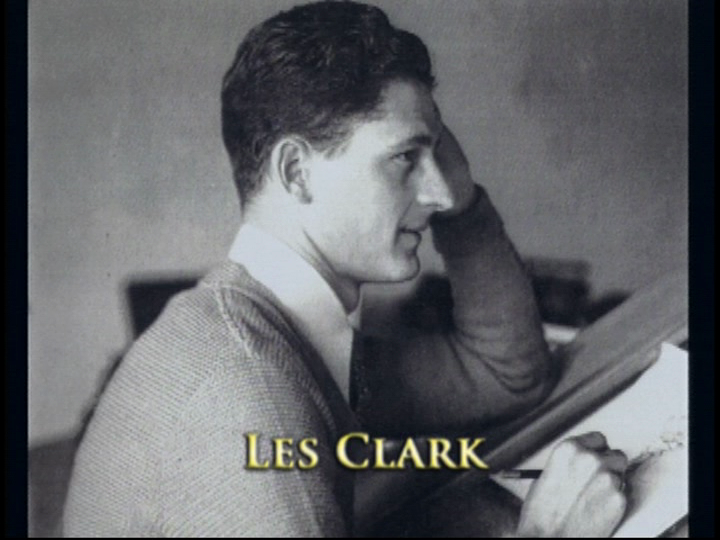
November 17, 1907 – Animator, Member of Disney’s Nine Old Men, and Disney Legend Les Clark is Born

“I remember, I was in the Annie Awards ceremony with Les Clark’s widow, and there was a picture of Walt up there with a drawing of Mickey…and she was like [whispering], ‘Les did that drawing.’”- Animation Director John Musker

On November 17, 1907, Les Clark was born in Ogden, Utah. His family moved to Los Angeles, where he graduated high school. During high school, Clark worked a summer job near the Disney Brothers Studio at a lunch counter that Walt and Roy Disney frequented. When Clark asked Walt for a job one day, Walt asked him to bring in his drawings. “He said I had a good line and why don’t I come to work on Monday,” Clark recalled. “I graduated on a Thursday and went to work [the following] Monday.” In 1927, Clark joined the studio, with Disney warning him that it might be just a temporary position. The temporary position began a lifelong career at Disney, and Clark became one of the first members of the Nine Old Men, Disney’s affectionate name for his top animators.

Clark was adept at drawing Mickey Mouse, able to draw a scene in the debut Mickey Mouse film, Steamboat Willie. One of his notable segments in Snow White and the Seven Dwarfs was the scene where the dwarves dance with Snow White. Clark was also responsible for animating and directing on nearly 20 animated features, including Pinocchio, Dumbo, Saludos Amigos, So Dear to My Heart, 101 Dalmatians, Song of the South, Fun and Fancy Free, Cinderella, Alice in Wonderland, Peter Pan, and Lady and the Tramp. Clark also contributed to more than 100 shorts. After being the sequence director for Sleeping Beauty, Clark moved to directing television specials and educational films, which included Donald in Mathmagic Land and Donald and the Wheel. Clark retired from the Disney Studios in 1976, and passed away in 1979. He was named a Disney Legend in 1989.

November 15

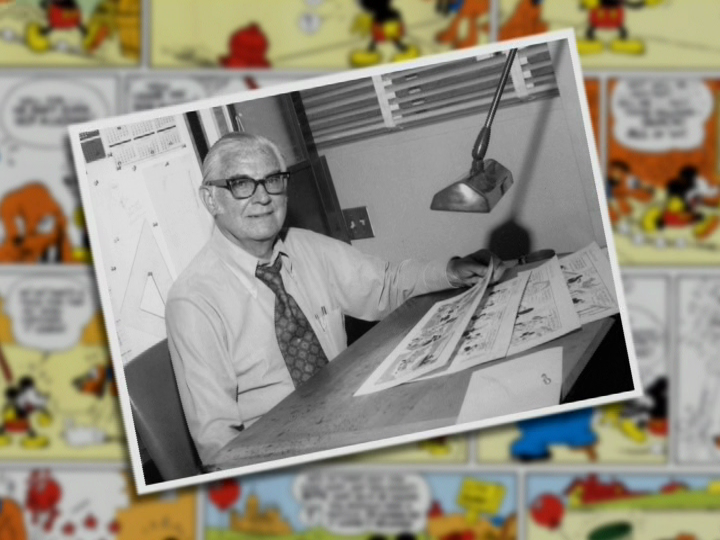
November 15, 1975 – Floyd Gottfredson’s Final Daily Strip is Published

“Floyd played a major role in getting Disney’s (then) new character, Mickey Mouse, known throughout the world by producing Mickey’s daily comic strip.” – Archivist Dave Smith

On November 15, 1975, the final daily strip drawn by comic strip artist Floyd Gottfredson was published. Gottfredson, having drawn the comic as a “temporary assignment” in 1930, retired from the Disney Company on October 1, 1975. The comics began as an adaptation of the short films, evolving into a humorous adventure. As Gottfredson continued the strip, the strip became more gag focused as the size of comics shrank.

November 10

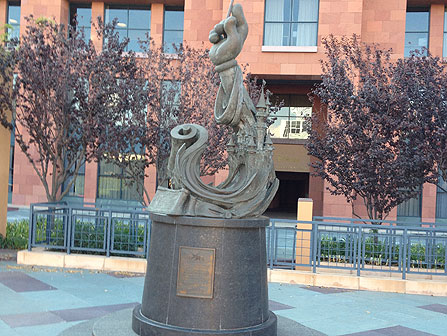
November 10, 1999 – The 1999 Disney Legends Ceremony Takes Place

Image Credit: Disney Insider

“The Walt Disney Company honors those special few who best embody the Company’s unique creative spirit, personified by its founder, as Disney Legends.”

On November 10, 1999, the Disney Legends ceremony took place, honoring nine people who have made a significant contribution to the Disney Company. Among those honored were Tim Allen (Toy Story, The Santa Clause series), Mary Costa (voice of Aurora in Sleeping Beauty), Al Konetzni (character merchandise), Dick Nunis (attractions), and Charlie Ridgway (attractions). Receiving the honor posthumously were Norm Ferguson (animator), Bill Garity (film technique), Yale Gracey (animation and imagineering), and Hamilton Luske (animation).

October 31

October 31, 1912 – Animator, Member of Disney’s Nine Old Men, and Disney Legend Ollie Johnston is Born

“I remember one morning I was lying in bed in our boardinghouse. Frank [Thomas] was shaving, and I was waiting till he finished with the razor…he turns around and says, ‘Oh, by the way, they want you to take a tryout at Disney’s.’ I thought, ‘Gee whiz. Here I am going to art school. My dad just paid my tuition. Oh, well, I’ll try it. I’ll go out there and see if I can’t make some money and pay my own way, go back to art school.’ So I went out and took the tryout. Somehow I made it. After I had been there another two weeks after that, I found out this is the only place I would ever want to be.” – Ollie Johnston

On October 31, 1912, Oliver Martin Johnston, Jr., was born in Palo Alto, California. His father was a professor of romance languages at Stanford University; it was in the Stanford art department that Johnston met Frank Thomas, who became his lifelong friend and co-animator. In his senior year, Johnston transferred to the Chouinard Art Institute in Los Angeles. In 1935, he joined the Walt Disney Studios as an inbetweener on Mickey Mouse cartoons, and worked on early shorts that included Mickey’s Garden and The Tortoise and the Hare. Johnston worked on Snow White and the Seven Dwarfs as an assistant animator. His animation roles soon grew and he got the plum role of directing animator of Bambi and Thumper in Bambi, the evil stepsisters in Cinderella, Mr. Smee in Peter Pan, and the three good fairies in Sleeping Beauty, among others. He retired in 1978, with his last film being The Rescuers, in which he was caricatured as Rufus the cat.

With Frank Thomas, Johnston published the book Disney Animation: The Illusion of Life, which discussed the 12 principles of animation. This book has become a staple in the study of the techniques of animation. Johnston was also known for his love of model trains. He built  his first backyard railroad in 1949, and inspired Walt Disney to become involved in the hobby himself. Johnston was named a Disney Legend in 1989; as the last surviving member of the Nine Old Men, Johnston was awarded the National Medal of Arts in 2005. He passed away on April 14, 2008.

October 21

October 21, 1911 – Artist and Disney Legend Mary Blair is Born

“When I think of dreams, like as a kid, I see Mary Blair-like colors…like Cinderella herself, just this innocence and a purity, a sincerity…” – Animator Glen Keane

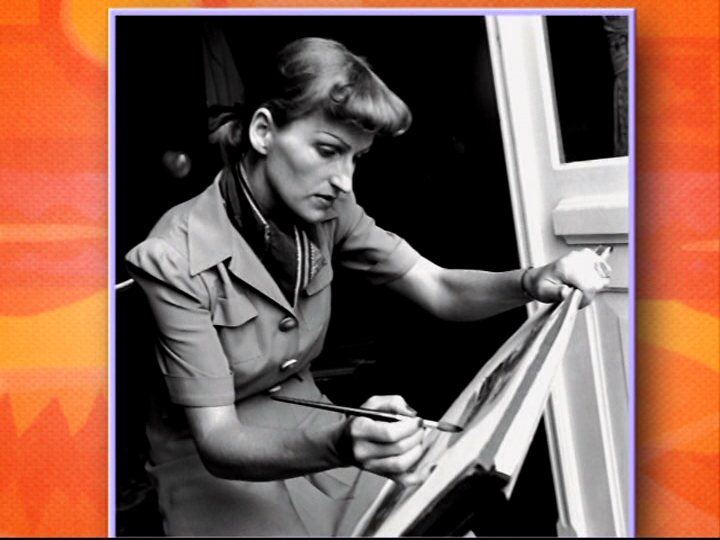
On October 21, 1911, Mary Robinson Blair was born in McAlester, Oklahoma, with her family moving to San Jose, California when she was seven. Blair’s talents were noticed early, and she was awarded a scholarship to the Chouinard Art Institute in Los Angeles. There, she would meet her husband, Lee Blair. She and Lee began to look for work as artists during the height of the Depression, and eventually found work at Metro-Goldwyn-Mayer’s animation studio. Lee eventually found a job at the Disney Studios, and Mary joined him in 1940, with everyone fascinated with Mary’s use of color in her work. Her first pieces of work were preliminary sketches for the feature film Dumbo.

In 1941, Blair and her husband were selected to be a part of a goodwill tour of South America with Walt Disney and his wife, which included several other notable Disney employees, including Frank Thomas (animator), Herb Ryman (layout and camera), Norm Ferguson (producer), and Bill Cottrell (story). The group would do research for a series of feature films that would hopefully offer friendship to South America before they were taken over by Nazi and Fascist influence. Blair’s work during this trip helped to shape her artistic style, and she was named the art supervisor for Saludos Amigos! and The Three Caballeros. One short that clearly shows Blair’s style was The Little House, released in 1952 [see August 8th entry]. The tone of pivotal scenes in the feature films she worked on were conveyed through her use of color in her concept art. Animator Andreas Deja recalled, “Marc Davis once said, ‘Mary Blair could put colors together like nobody else. She was better than Matisse.’”

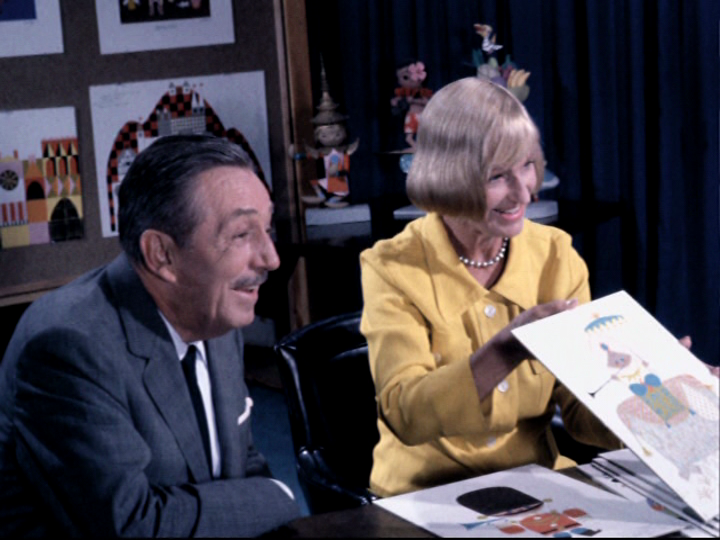
Walt was always captivated by Blair’s concept art and use of color, and asked her to come back to help create the look of the attraction It’s a Small World

Blair’s color use would be used to style such films as Song of the South, Make Mine Music, Melody Time, So Dear to My Heart, The Adventures of Ichabod and Mr. Toad, Cinderella, Alice in Wonderland, and Peter Pan. She left the studio in 1953, just after Peter Pan, to try other fields of animation, including children’s book illustrations. However, in 1963, Walt Disney asked her to come back to help design the look of a new attraction that would premiere at the 1964 World’s Fair: It’s a Small World. She was also asked to contribute to the design of other exhibits and attractions, including two grand murals, one for Tomorrowland in Disneyland, and one for the Contemporary Resort at Walt Disney World. Blair passed away on July 26, 1978, and was inducted as a Disney Legend in 1991.

October 20

October 20, 1901 – Composer and Disney Legend Frank Churchill is Born

“I began writing musical scores for these animated cartoons to get away from the cost of using stock music. Being a reader of fables, they furnish most of the ideas which I put to music.” – Frank Churchill

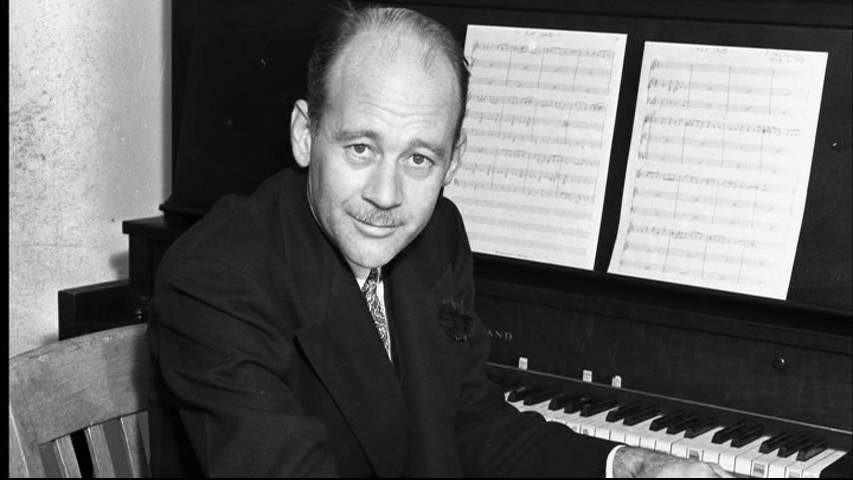
On October 20, 1901, film composer and Disney Legend Frank Churchill was born in Rumford, Maine. A gifted musician from an early age, he had his first professional job at 15, accompanying silent films at a theater in California. Although enrolled at the University of California, Los Angeles in pre-med, he dropped out to pursue his passion for music. Churchill joined the Walt Disney Studios in 1930, and eventually scored nearly 65 short films. He is most known for the song “Who’s Afraid of the Big Bad Wolf?” from the Silly Symphony The Three Little Pigs. The song sold more than three quarters of a million copies.

Churchill was asked to develop the songs for Snow White and the Seven Dwarfs; he earned an Academy Award nomination for the film’s score, and created the classic songs “Whistle While You Work,” “Heigh-Ho,” and “Someday My Prince Will Come.” He received another two nominations for his work on Dumbo, one for the score, and one for Best Song for “Baby Mine,” co-written with Ned Washington. He would also receive nominations for Bambi, one for score, and one for the song “Love is a Song,” co-written with Larry Morey. Churchill passed away on May 14, 1942 of a self-inflicted gun shot; he was inducted as a Disney Legend in 2001.

October 16

October 16, 1903 – Animator, Director, and Disney Legend Hamilton Luske is Born

Image credit: Disney Insider

“[Luske]’s expertise was evident, especially to Walt, where it mattered most, and it was thus into his lap Snow White, the most plum of all assignments, fell.” – David Johnson

On October 16, 1903, animator, director, and Disney Legend Hamilton S. Luske was born in Chicago, Illinois. Luske joined the Walt Disney Studios in 1931, and his first assignment was the animation of animals for the Mickey Mouse short The Barnyard Broadcast. He was then moved to more prominent assignments, including Max Hare in the Silly Symphony The Tortoise and the Hare, and Jenny Wren in Who Killed Cock Robin? Luske had no formal art education, but he had enough natural talent to give Walt the confidence to hire him as the supervising animator for what was considered Walt’s Folly: Snow White and the Seven Dwarfs. Luske was responsible for the animation of the title character of Snow White. To animate her properly, the technique of using live-action reference footage was soon adopted. Luske’s believable animation helped to make Snow White a box-office smash.

After the success of Snow White, Luske moved to directing during the World War II period, and continued to direct educational films, including Donald in Mathmagic Land and Donald and the Wheel. He also continued to be involved in the feature films as a sequence director on Fantasia, Cinderella, Alice in Wonderland, Peter Pan, Lady and the Tramp, 101 Dalmatians, and the animated sequences in Mary Poppins. Luske also moved into television as the associate producer and director for the Disneyland, Walt Disney Presents, and Walt Disney’s Wonderful World of Color series. Luske passed away on February 18, 1968; he was named a Disney Legend in 1999.

October 7

October 7, 1919 – Actress and Disney Legend Betty Taylor is Born

“Betty’s role as leading lady in Disneyland’s Golden Horseshoe Revue helped turn it into the longest-running stage show in entertainment history.” – George Kalogridis, Disneyland Resort President

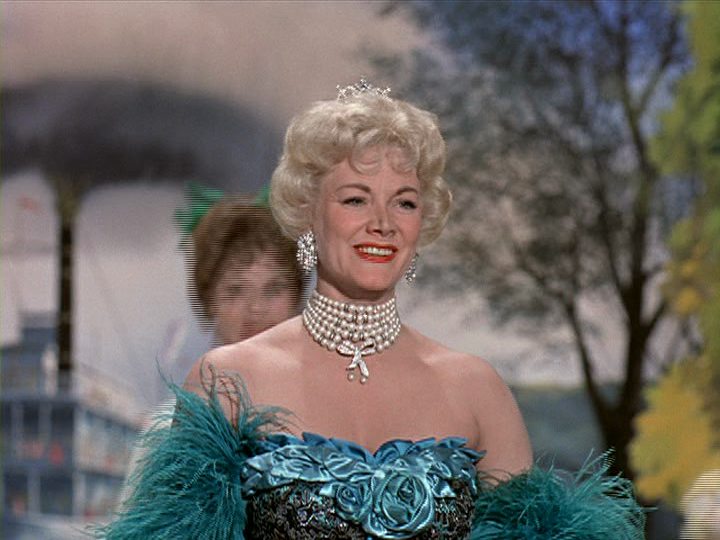
On October 7, 1919, actress Betty Taylor was born in Seattle, Washington, and begin taking dance lessons at an early age. At age 18, she led her own band known as Betty and Her Beaus. She then performed on a western radio show called “Sons of the Pioneers,” and went on to perform in Las Vegas with Frank Sinatra. In 1956, before hitting the road again, Taylor heard of auditions being held in the new Disneyland theme park, and won the role of Slue Foot Sue in the Golden Horseshoe Revue. The show became immensely popular, with the troupe appearing in an episode of “Walt Disney’s Wonderful World of Color.” Taylor retired from the show in 1987, but continued to appear in special events. She passed away on June 4, 2011, one day after her Golden Horseshoe Revue partner Wally Boag died. She was inducted into the Disney Legends in 1995.

October 1

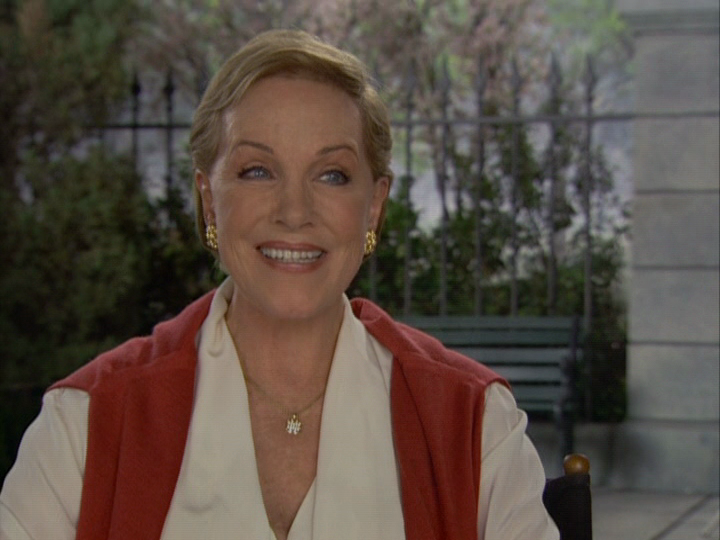
October 1, 1935 – Actress, Singer, and Disney Legend Julie Andrews is Born

“I know that I am blessed and unbelievably lucky to be asked to do [Mary Poppins], at a time in my life when the next break was just a big question mark and suddenly, there was Mary Poppins and Walt.”

On October 1, 1935, actress and singer Julie Andrews (born Julia Elizabeth Wells) was born in Walton-on-Thames, England. During World War II, Andrews’ mother and father separated, with Andrews’ mother joining Ted Andrews in entertaining the troops through the Entertainments National Service Association; they soon married, and Julie was sent to live with her mother and step-father. Julie took private voice lessons with Madame Lilian Stiles-Allen, working on her amazing vocals, which ranged five octaves. At age 12, Andrews sang at the London Hippodrome, which soon led to many other opportunities on the sate, including Cinderella and The Boy Friend, as well as one of her most well-known roles as Eliza Doolittle in My Fair Lady.

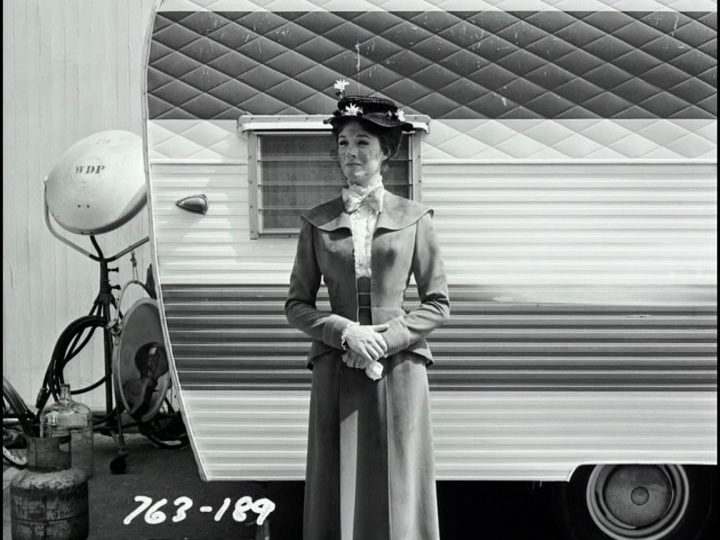
Walt Disney was in the audience one night while Andrews performed as Queen Guinevere in the Broadway production of Camelot. After the performance, he went backstage and offered her the lead role in his new feature film, Mary Poppins. She agreed tentatively, as there was a chance that she would be in the film version of My Fair Lady; when the role of Eliza went to Audrey Hepburn, Andrews began the work on Mary Poppins. The film was a success, and made Andrews a star, with her winning an Academy Award and a Golden Globe for her performance. She starred in several high-profile films after this, including The Sound Of Music, which garnered her another Golden Globe, and a nomination for another Academy Award.

Andrews is best known for playing the title character in Disney’s Mary Poppins, a role that won her the Academy Award for Best Leading Actress

In 1991, Andrews was named a Disney Legend. In 2001, Andrews returned to Disney films by playing the role of Queen Clarisse Marie Renaldi in their adaptation of the Meg Cabot series The Princess Diaries, as well as the sequel The Princess Diaries II. In 2005, Andrews was named the Official Ambassador of Disneyland’s 50th Anniversary, promoting the celebration and the park with several events.

September 24

September 24, 1936 – Creator of the Muppets and Disney Legend Jim Henson is Born
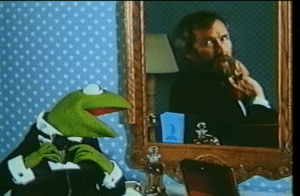
“One of the things Jim did, in that amazing career, was to really remake puppetry…and nobody had ever made that same transition with puppet theater.”- Jerry Juhl, Muppet head writer

On September 24, 1936, James Maury Henson was born in Greenville, Mississippi. In the late ’40s, the Henson family moved to Hyattsville, Maryland, and Henson later attended school at the University of Maryland. While attending college, he began working on a five-minute puppet show called Sam and Friends. “The magic of what television was is what first made me want to work in television, and puppetry was just a way of getting a job on a television station…television was in its early days,” Henson said about working in television at the time, “so I made a couple of puppets and auditioned, and got a job, and that’s kind of how it all started.” One of the characters on Sam and Friends would be the prototype for Henson’s most famous character, Kermit the Frog. The show had a huge following in the D.C. Metro area, and around this time, Henson began working with Jane Nebel, the woman who would eventually become his wife.

The success of Sam and Friends led to appearances of Henson’s Muppets on talk and variety shows, including The Jack Parr Show and The Ed Sullivan Show. The Muppets were also used for a variety of commercials, including a popular set of commercials for Wilkins Coffee in Washington D.C. In 1963, the Hensons moved to New York and set up Muppets, Inc., and Henson hired Jerry Juhl as a writer, and Frank Oz as a puppeteer. Oz would go on to create a close friendship and partnership with Henson, as seen in the pairings of Bert and Ernie, and Kermit and Fozzie. At this time, Henson created the character of Rowlf, an anthropomorphic dog that played the piano and appeared on The Jimmy Dean Show. “The exposure of Rowlf was pretty significant, I think,” Oz said. “It was the first real country-wide acceptance of one of Jim’s characters.”
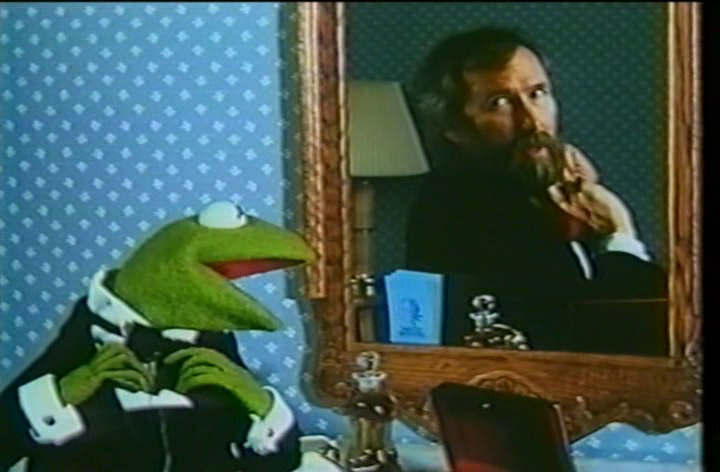
Henson and his alter-ego, Kermit

In 1969, Henson was asked by the team at the Children’s Television Workshop to work on a children’s program for public television. This would turn into the wildly successful show Sesame Street. Its success allowed Henson to get out of creating commercials. While working on Sesame Street, Henson and his team continued to develop sketches for adults, as the company did not want to be typecast as a creator of only children’s entertainment. One of the projects developed was a weekly show that was rejected by American networks, who only saw it as more children’s television. Henson convinced British media impresario Lew Grade to finance the venture, and The Muppet Show aired its first episode on September 13, 1976. The show introduced the characters of Miss Piggy, Gonzo, and Fozzie Bear, and gave Kermit the role of the host. Kermit has been seen as Henson’s alter-ego, much as Mickey Mouse has been seen as the alter-ego of Walt Disney.

In 1979, Henson made his foray into feature films with The Muppet Movie, which was a success both critically and financially. The film was followed with The Great Muppet Caper. After the success of the latter film, The Muppet Show was brought to an end so Henson could focus on more feature films, which included The Dark Crystal, The Muppets Take Manhattan, and Labyrinth. In 1989, Henson entered into negotiations with the Walt Disney Company to handle the business side of the Muppets while he spent more time on the creative side. Several projects were completed at this time, including a television special, The Muppets at Walt Disney World, and a Walt Disney World attraction called Jim Henson’s Muppet*Vision 3D (a still present and popular attraction) [See August 28th entry for more information]. Unfortunately, Henson died before the deal was completed (a new deal would be reached in 2004).

On May 16, 1990, Henson passed away at the age of 53. He was awarded as a Disney Legend in 2011.