RSS Feed

Tag Archives: Actor

June 10

June 10, 1949 – Birth of Disney Legend Kevin “Moochie” Corcoran

“…kids in the audience related more to Corcoran, who created a character who was part All-American boy and part hellion.” – Film Writer Donald Liebenson.

Born on June 10, 1949, in Santa Monica, California, Kevin Anthony Corcoran began his acting career at the tender age of two. In 1956, Corcoran auditioned for a serial on the Mickey Mouse Club called “Adventures in Dairyland,” and won the role of a character named Moochie, a nickname that would stick with him throughout his career at Disney. He was then cast specially by Walt in the sequel serial, “The Further Adventures of Spin and Marty,” as well as “The New Adventures of Spin and Marty.”

Corcoran also appeared in several popular Disney films, with his only starring role as Toby in Toby Tyler, a film about an orphan who runs away to join the circus. He played supporting roles in Old Yeller, The Shaggy Dog, Pollyanna, Swiss Family Robinson, Babes in Toyland, Bon Voyage!, Savage Sam, and A Tiger Walks. Corcoran played the younger brother to actor Tommy Kirk in five Disney films, including Swiss Family Robinson and The Shaggy Dog. Corcoran also voiced Goliath II in the short film of the same name, and was featured in several Disney mini-series and serials, such as Daniel Boone, The Mooncussers, and Johnny Shiloh. After the 1964 film A Tiger Walks, Corcoran mostly retired from acting and attended California State University, getting a degree in theater arts.

Corcoran returned to Disney after college, using his skills behind the camera instead of as an actor, and working as an assistant director and producer on several projects, including Pete’s Dragon. He has also worked as a first assistant director for many television series outside of Disney, including Quantum Leap and Murder She Wrote, also acting as an assistant producer and director on the latter series. Corcoran was inducted as a Disney Legend on October 9, 2006, alongside Tim Considine, David Stollery, and Tommy Kirk.

June 2

Posted on

June 2, 1989 – The Touchstone Film Dead Poets Society is Initially Released to Theaters
“Carpe diem. Seize the day, boys. Make your lives extraordinary.”

On June 2, 1989, the film Dead Poets Society was initially released to theaters, with a general release on June 9th. Distributed by Touchstone Pictures, it won an Academy Award for Best Screenplay for Tom Schulman, who based it on his own life at a private school in Tennessee. It was directed by Peter Weir, and stars Robin Williams as John Keating, Robert Sean Leonard as Neal Perry, Ethan Hawke as Todd Anderson, and Josh Charles as Knox Overstreet.

Set in 1959, the movie starts with the beginning of Welton Academy’s traditional opening ceremony, where several of the main characters are seen carrying in banners with the titles “Tradition,” “Excellence,” and “Discipline.” The dean brags about the school’s achievements, calling it the best preparatory school in the United States. He then introduces the new teacher of the English department, Mr. John Keating, who has been teaching in London, and is an alumnus of Welton Academy. We then catch a glimpse of a few of the boys with their parents, and Neal Perry, one of the shining stars of the academy, meets Todd Anderson, his new roommate. Todd’s brother attended Welton, and Neal remarks, “Oh, so you’re that Anderson.”
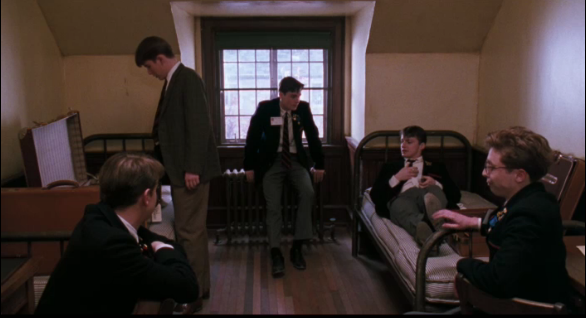
Todd meets Neal and his friends for the first time as they talk about their study group

As Neal and Todd move into their room, Neal’s friends Knox Overstreet, Charlie Dalton, and Steven Meeks appear to talk about their summer and joke about their study group, to which they reluctantly add Richard Cameron, whom they describe as a “boot-licker.” Neal mentions Todd’s brother, who was valedictorian and national merit scholar, which seems to cause Todd some embarrassment. Neal’s father enters the room, and lets Neal know that he will be dropping the school yearbook from his extracurriculars. Neal argues that he’s the assistant editor, but his father will hear none of it, letting Neal know that after Neal graduates medical school and is on his own “then you can do what you damn well please.” Until then, he is to follow only his father’s orders. Neal acquiesces, but looks hurt that he has to give up the yearbook.

The first day of school shows the boys being loaded with what appears to be more work than they can handle, from science, to Latin, to trigonometry. When the boys get into English class, Mr. Keating enters whistling the 1812 Overture, and walks out of the room, to the astonishment of the class. When he tells them to follow, they are confused, but they finally leave. Keating takes them to the main lobby, where he teaches them about the poem “O Captain! My Captain!” by Walt Whitman, and that they may call him “O Captian! My Captain!” if they feel slightly more daring. He then teaches them one of the most important lessons in the film: carpe diem. “We are food for worms, lads,” he reminds them, explaining how life is too short.
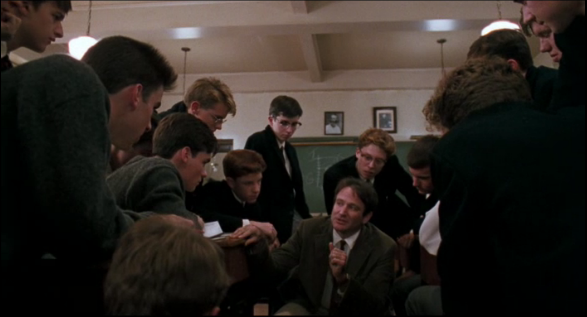
Mr. Keating pulls his class close, explaining the powerful impact language has on life

During the next English class, Neal is asked to read the introduction, and Keating tells them that he can’t stand the introduction, equating it to American Bandstand: “Well, I like Byron, I give him a 42, but I can’t dance to it.” He then asks him to rip out the entire introduction. “In my class, you will learn to think for yourselves again,” he informs them. “You will learn to savor words and language. No matter what anybody tells you, words and language can change the world.”

The boys find Keating’s yearbook, and discover that he was a member of the Dead Poets Society, leaving them to wonder what that means. They approach and ask him what it was, and Keating is a bit hesitant, as he thinks the administration might not favor it. But explains that he and his friends would sit around letting the words of poetry “drip from their mouths like honey.” Neal is inspired to begin the society again, and with the help of Keating and his old poetry book, they decide to meet. Neal asks Todd to come, but Todd is very shy and declines. But Neal persists, and finally the boys sneak out, beginning the first meeting of the Dead Poets Society.
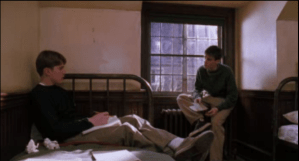
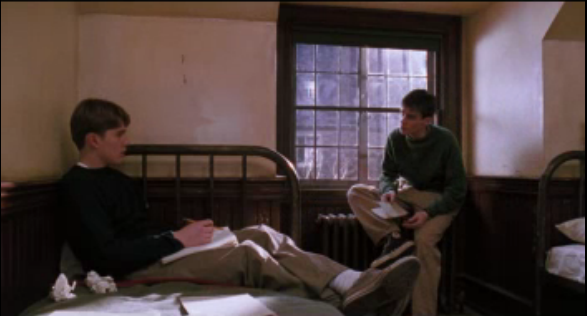
Although Neal is initially elated about discovering his passion, he becomes infuriated that the shy Todd seems to not be effected by anything Mr. Keating has to to say

The English classes continue, with Keating reading Shakespeare in humorous ways from imitating Marlon Brando and John Wayne, to having the students stand on his desk to see things in a new perspective. After class, Neal lets Todd know that he has finally decided what he wants to do with his life: he wants to become an actor. He decides to audition for a production of A Midsummer Night’s Dream, screaming “Carpe Diem!” Neal then chews Todd out for not being stirred up by anything, thinking that Todd has not been affected by anything Mr. Keating has said. Todd argues that when Neal speaks, people listen, and he’s not like Neal. But Neal won’t take that for an answer, and is determined to stir up something in Todd.

Neal then announces he got the part of Puck in A Midsummer Night’s Dream, and forges the letters of permission from his father and the dean. Todd slowly begins to discover a love of writing with Keating’s poetry assignment. Unfortunately, he was unable to come up with a poem he found acceptable to present. Keating pushes him out of his comfort zone, making him come up with a poem on the spot. Keating has finally reached him, and Todd is able to open up.
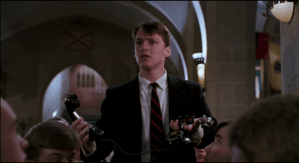
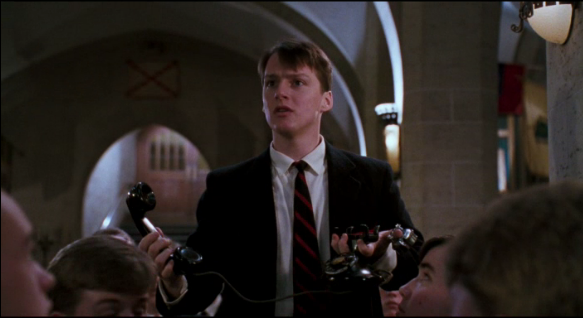
Charlie plays a prank at the assembly, pretending God has called to tell the Dean to admit women in the school

Things begin to go downhill for the Dead Poets Society, when Charlie publishes an article in the school paper in the club’s name to demand that their school go co-ed. He gets himself into trouble by pretending that God has called in the middle of an assembly, saying they should have girls at Welton. Charlie is then punished by getting paddled, but does not give up the members of the club.

Neal begins practices for the play, but comes back one night to find that his father has found out and is furious. He demands that Neal quit, although the play is the next night. “I made a great many sacrifices to get you here, Neal, and you will not let me down,” he warns his son. Neal tells him he will quit, but later that night, he goes to talk with Mr. Keating, who advises him to show his father what’s in his heart, where his passion lies, before opening night. Neal decides to stay with the play, lying to Mr. Keating, saying his father is letting him stay with the play.
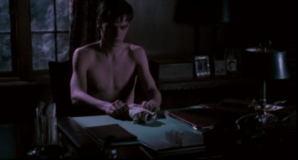
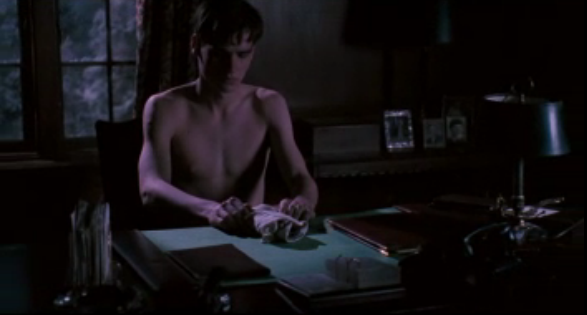
Unable to live the life his father has decided for him, and unable to have a life of his own, Neal resorts to not living at all

Neal shines in the play as Puck, and his father walks in to see the performance, and Neal’s standing ovation. Infuriated by his son’s disobedience, he pulls his Neal out of school, taking him home and informing him that he will be enrolled in military school. Unable to live the life his father has decided for him anymore, Neal takes a gun from his father’s study late that night and shoots himself.

The mood at Welton is somber as they hear the news of Neal’s death. Todd is hysterical, blaming Neal’s father. Mr. Keating is also overcome with emotion when he hears the news, sitting at Neal’s desk and crying. At the request of Neal’s family, the school conducts an investigation as to why he took his life. Charlie accuses Cameron of telling the board of directors all about the club, and Cameron doesn’t deny it, as he wants to save his own skin by putting Mr. Keating on the line. When he tells the group that they should “let Keating fry,” Charlie loses it and punches Cameron, leading to Charlie’s immediate expulsion. When Todd is questioned by the school, they say that it was Mr. Keating’s actions that led to Neal’s death. Mr. Keating is then fired by the school.
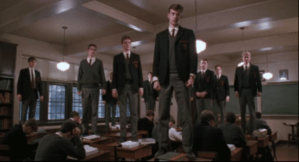
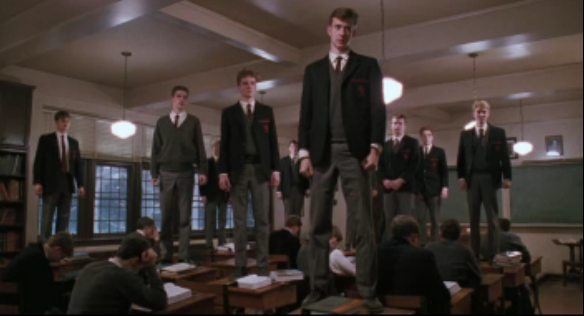
Half of the class stands on their desks, showing their admiration for Mr. Keating, their Captain

The English class is taken over by the Dean, who wants them to read the introduction that they had all ripped out. As Mr. Keating leaves the classroom after collecting his personal belongings, Todd shoots up and admits the truth to Mr. Keating, who tells Todd that he understands. Todd isn’t done, as he gets up on his desk and calls, “O Captain! My Captain!” He is then followed by most of the class, including Knox, Pitts, and Meeks. With a smile, Mr. Keating thanks them, knowing he has made a difference in their lives.

May 7

Posted on

May 7, 1917 – Actor and Disney Legend David Tomlinson is Born

“…Walt said, ‘Very good, let’s see if we can get him.’ And that’s how it was – it was as simple as that. We knew he had the right personality.” – Richard M. Sherman on casting David Tomlinson.

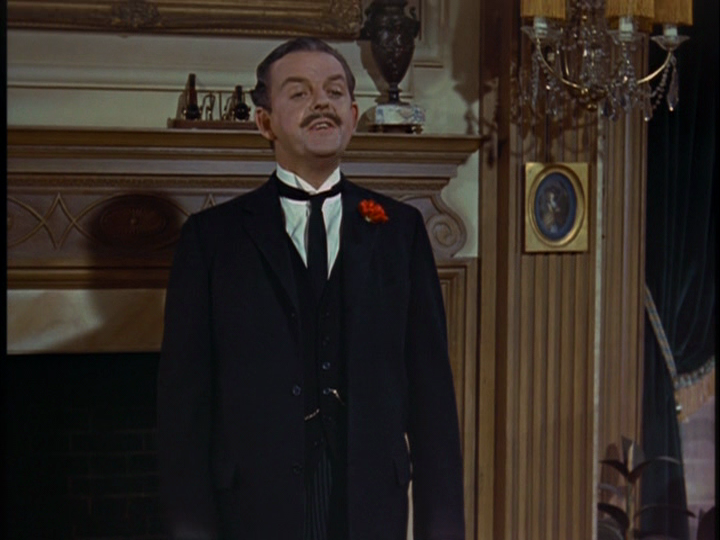
Although David Tomlinson had a prominent career in England, he will always be known to generations of children as Mr. Banks in the film Mary Poppins. Tomlinson was born on May 7, 1917, in Henley-on-Thames, Oxfordshire, England. He began his acting career with amateur stage productions, progressing to a film debut in 1940’s Quiet Wedding. He briefly left acting to serve in the RAF in World War II, but came back after the war ended, although he did not leave behind his love of flying, continuing to pilot planes, much to the chagrin of his neighbors.

Tomlinson was asked to play the part of George Banks in Mary Poppins after many of the members of staff had watched his films. Before the film, he had never sung before, but a bit of polishing soon had him singing on screen like a professional. This role would become his most well known, particularly for the character’s change of heart and song “Let’s Go Fly a Kite.” Tomlinson would go on to star in two other films for the Disney Studios: The Love Bug as the evil Thorndyke, and the professor of magical arts Emelius Brown in Bedknobs and Broomsticks alongside Angela Lansbury. Tomlinson died at the age of 83 in 2000, and was inducted as a Disney Legend in 2002.

April 17

April 17, 1961 – Hayley Mills Wins A Special Oscar for Pollyanna.

“To Hayley Mills for Pollyanna, the most outstanding juvenile performance during 1960.”

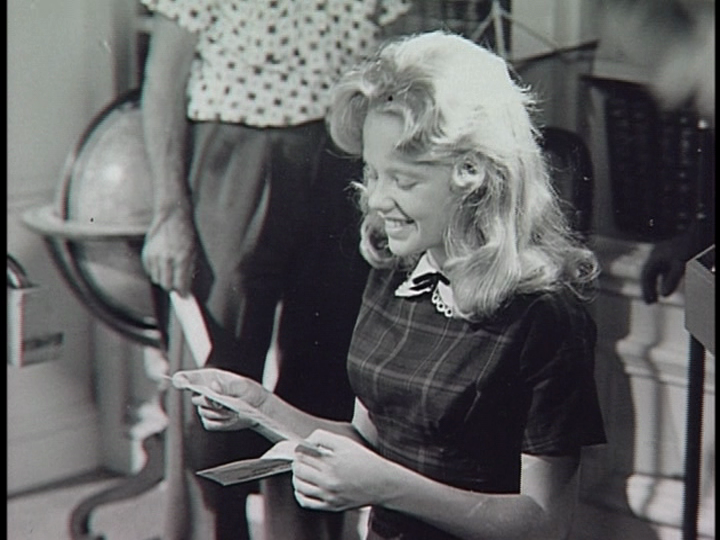
On April 17, 1961, the Academy Awards were held in Santa Monica, California. That year actress Hayley Mills would be the last actor to receive the Academy Juvenile Award, for her role in the Disney film Pollyanna. The film had propelled the young girl to stardom, and Mills went on to star in more Disney family films, including The Parent Trap.

Mills had auditioned for the lead in the film Tiger Bay, and was discovered by Lillian Disney, who suggested that Mills be cast in the lead in Pollyanna. The film was based on the book Pollyanna by Eleanor H. Porter, published in 1913. The book tells the story of a young girl who is suddenly orphaned and sent to live with her aunt in New England. The character tries to see the best in every situation, and ends up changing the entire town for the better. Not only did Mills win the Academy Juvenile Award, but she was also nominated for a BAFTA award for her role.

April 15

April 15, 1917 – Birth of Actor Hans Conried

Hans Conried as Captain Hook

“Hans Conried was inspired casting, you have to say, as Captain Hook. He was a consummate actor and had been one of the busiest and best radio actors throughout the ’30s and ’40s, so he was well schooled in how to act a part vocally.” – Leonard Maltin

Born on April 15, 1917, in Baltimore, Maryland, Hans Conried would go on to be one of the most recognizable vocal actors in Hollywood, with his most famous role, outside of the Disney Studio work, as the voice of Snidely Whiplash in the Rocky and Bullwinkle cartoon series. He studied acting at Columbia University, and after working in radio, he moved into films in 1939. Conried’s first role for the Disney Studios was in 1951, for The Walt Disney Christmas Show, in which he played the Slave in the Magic Mirror.

His recognizable and distinctive radio voice landed him one of his most well-known roles: the dual role of Captain Hook and Mr. Darling in the 1953 film adaptation of Peter Pan. Not only did he bring the vocal chops to the role, but he also acted out the role in a live-action version of the film meant for the animators to observe. After this role, Conried would go on to provide the voice of Thomas Jefferson in the 1953 short Ben and Me. Conried was also hired by the studio to appear on screen in the third installment of the Davy Crockett series, Davy Crockett at the Alamo, as the gambler Thimblerig who takes Davy and George Russel to Texas. Conried would also appear in The Cat from Outer Space as Dr. Heffel and as Professor Whatley in The Shaggy D.A. Conried passed away on January 5, 1982, and left behind a diverse collection of work. Although he has not been named as a Disney Legend, Conried’s recognizable talent through his role as Captain Hook makes him an important part of Disney History.

April 5

April 5, 1965 – Mary Poppins Wins Five Academy Awards

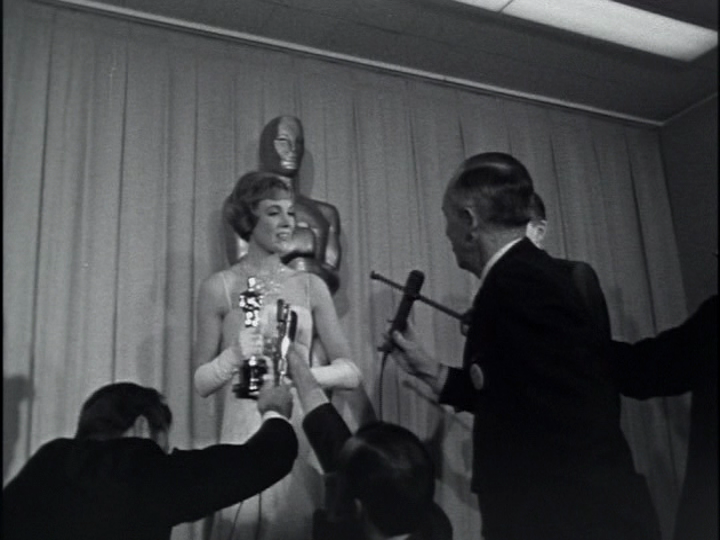
Julie Andrews after winning the Academy Award for Best Actress

“The press had made such a big deal out of it, and although I knew why I didn’t do My Fair Lady…and sure, I was sad about it, but I completely understood why I wasn’t chosen to do it…” – Julie Andrews

The 37th Academy Awards were held in Santa Monica, California on April 5, 1965. Of the 13 nominations it received – the most of that awards year – Disney’s Mary Poppins won five: Best Film Editing, Original Music Score, Best Song for “Chim Chim Cheree,” Best Visual Effects, and Best Actress for Julie Andrews.

Julie Andrews had been passed over for the lead in My Fair Lady at Warner Brothers. Time Magazine, outraged, wrote: “Someone, somewhere, made the decision to include Andrews out of the [film]. There is an evil and rampantly lunatic force at loose in the world and it must be destroyed.” Producer Jack Warner responded with, “No one in the sticks has ever heard from her,” and cast Audrey Hepburn as the lead role. Andrews remarked later that had she done My Fair Lady, she never would have been able to do Mary Poppins.

February 16

February 16, 1904 – Birth of Song of the South Actor, James Baskett

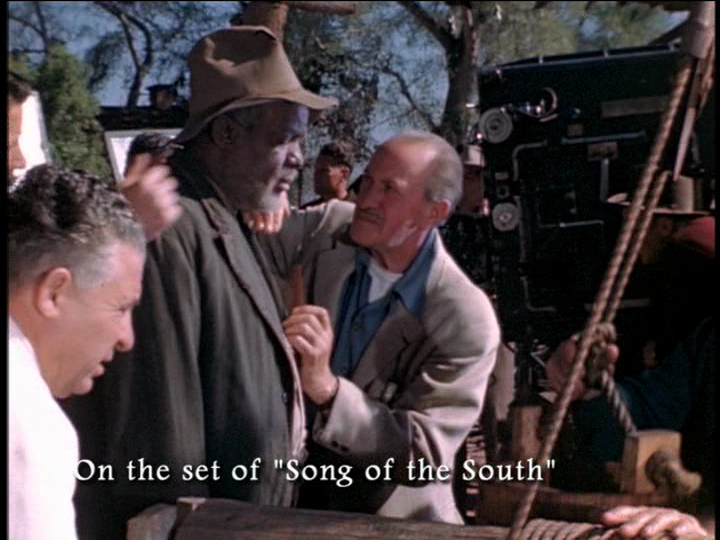
James Baskett (C), preparing for a scene in Song of the South

“[Baskett was] the best actor, I believe, to be discovered in years.” – Walt Disney

On February 16, 1904, James Baskett was born in Indianapolis, Indiana. In 1939, he moved to Los Angeles and had a supporting role in the film Straight to Heaven, followed by more supporting roles in Revenge of the Zombies in 1943 and The Heavenly Body in 1944. In 1944, he was asked to join the Amos ‘n’ Andy radio show, playing the lawyer Gaby Gibson.

In 1945, after spying an advertisement for open auditions, Baskett auditioned for a bit part in Disney’s upcoming film Song of the South, originally called Uncle Remus and based on the Joel Chandler Harris Uncle Remus stories, originally published in 1881. Baskett had little experience in film, but impressed Walt so much that he was offered the lead role of Uncle Remus. Baskett was also the voice of Brer Fox in the animated sequences, and the voice of Brer Rabbit when Johnny Lee was unable to do the voice for a sequence due to another commitment. Film critic Leonard Maltin remarked that Baskett was “ideal as Uncle Remus, eliciting just the right kind of warmth and humor, and later poignancy, from the character.”

After the film’s release, Walt continued to stay in contact with Baskett. This friendship led to Walt lobbying the Academy to give Baskett an Oscar for his portrayal, for Walt said Baskett worked “almost wholly without direction” and had devised the characterization of Remus himself. On March 20, 1948, Baskett was awarded an honorary Academy Award “for his able and heartwarming characterization of Uncle Remus, friend and storyteller to the children of the world, in Walt Disney’s Song of the South.” This made Baskett the first actor in a Disney film to win an Academy Award, as well as the first African-American man to win an Oscar. On July 9, 1948, only a few short months after this victory, Baskett died of heart disease at the age of 44. His wife, Margaret, wrote Walt Disney a thankful letter, telling Walt that he had been a “friend in deed and [we] certainly have been in need.”

Although Song of the South was the only film Baskett appeared in, due to his untimely death in 1948, the role, and film, are an important part of Disney history that should not be forgotten or brushed aside. Baskett, in my opinion, should be honored by Disney as a Disney Legend – without the warmth Baskett presented as Uncle Remus, Zip-a-Dee-Doo-Dah would not have been as memorable as it is now. The film is a victim of selective judgment by the critics: Gone With the Wind is lauded, although it truly does deal with slavery, whereas this film is set in the period of Reconstruction. Baskett’s portrayal of Uncle Remus shows a man who continues to keep a cheerful disposition, no matter what hand life has dealt him, and is truly respected by every other person in the film, from Bobby Driscoll’s Johnny, to Lucile Watson’s Grandmother. The range of emotion Baskett shows, including the dramatic scene after Jonny is attacked by a bull, only adds proof to what Walt told his sister Ruth, that Baskett was one of the greatest actors to be discovered in a long time. Baskett certainly could have achieved a lot had he lived longer, and it is a crime to let his legacy die, along with the technical and artistic merit of Song of the South by hiding this film away from the public. Baskett should be honored as a Disney Legend for his portrayal, plain and simple. He played Uncle Remus the way he should have been played: with warmth, wisdom, and a wonderful human being.


February 7

February 7, 1947 – Birth of Disney Legend Wayne Allwine, Former Special Effects Technician and Former Voice of Mickey Mouse

“Wayne was fond of saying, ‘We only carry the torch of these characters for a while, and then we pass it on.’ Well, he just carried it a little bit higher than anyone else.” – Bill Farmer, current voice of Goofy.

Wayne Allwine, best known as the third voice actor of Mickey Mouse, was born on February 7, 1947, in Glendale California. Active on stage and screen from an early age, Allwine ended up performing in bands until 1966, when he began to work for Disney in the mailroom, which was known as “traffic” in those days. Allwine recounts how he got the job at Disney, as well as how he became Mickey Mouse:


“I had wanted to work for Disney since I was a kid, but didn’t know how to get in. Well, one of the bands I was playing with, Tom Jackman’s father – Tom was the leader of the band – his father Bob Jackman ran the music department. And Bob gave me an application and a recommendation, and I started in the mailroom…way, way back when. And the thing that’s funny is a little known fact: Bob Jackman, after Pinto Colvig had left the studio, Bob supplied the voice for Goofy in several of the cartoons. So, in essence, Goofy hired the future Mickey…

“But I started out carrying mail. I saw Walt a couple of times, but we only spokeonce. He was very sick. [But] it was a magic time, it really was. 1966. John McCarthy was running traffic, as the mailroom was called back then, and just said, ‘Take a walk around, see what you wanna do.’ So I walked around, and the first thing I thought of, ‘Well, I’ve done some acting. Wardrobe looks like fun.’ Cause I love clothes, love clothes. Did that for a while. Went back into traffic and said, ‘Gee, I don’t really know what I wanna do, Mac. I might leave. I might leave for a while and just see what’s on the outside.’

“So great. I left, and I got a call about two months after I left, saying, ‘Would you like to come in and learn Jimmy MacDonald’s job?’ Now, at the time, I didn’t know who Jimmy was. ‘Sure. What am I supposed to do?’ ‘Follow Jimmy. Do everything he does.’

“So, I followed Jimmy, and I learned how to do sound effects. Jimmy only voiced Mickey for radio interviews; I think he was on the Dave Letterman show twice. But other than that, he didn’t do Mickey…he was having a rough time and couldn’t really voice Mickey any longer. And the studio had an open audition. An actor didn’t show up. There was a call from the soundstage: ‘Send the kid down. He works with MacDonald.’ Three months later Lou Debney stopped me and said, ‘Kid, you gotta join the Screen Actors Guild. They’re gonna use you.’

 “And that’s how I became Mickey Mouse.”

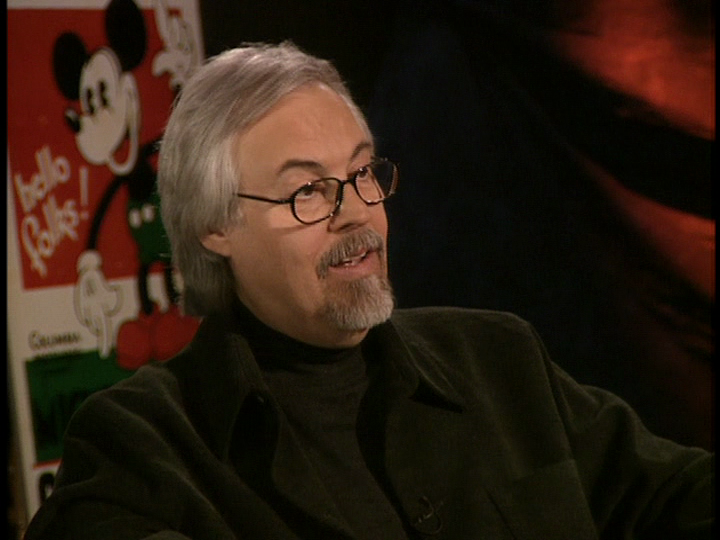
Allwine provided the voice for Mickey in Mickey’s Christmas Carol (1983), Who Framed Roger Rabbit (1988), Runaway Brain (1995), and The Three Musketeers (2004). He also voiced the character in the television shows Mickey’s Mouse Works, House of Mouse, and Mickey Mouse Clubhouse, as well as in the video game series, Kingdom Hearts. “The main piece of advice that Jim gave me about Mickey helped me keep things in perspective,” Allwine recalled in a 2004 interview with Leonard Maltin. “He said, ‘Just remember, kid, you’re only filling in for the boss.’ And that’s the way he treated doing Mickey for years and years…Mickey’s the real star. You know, you just have to love the little guy while you have him, because he won’t be yours forever.”

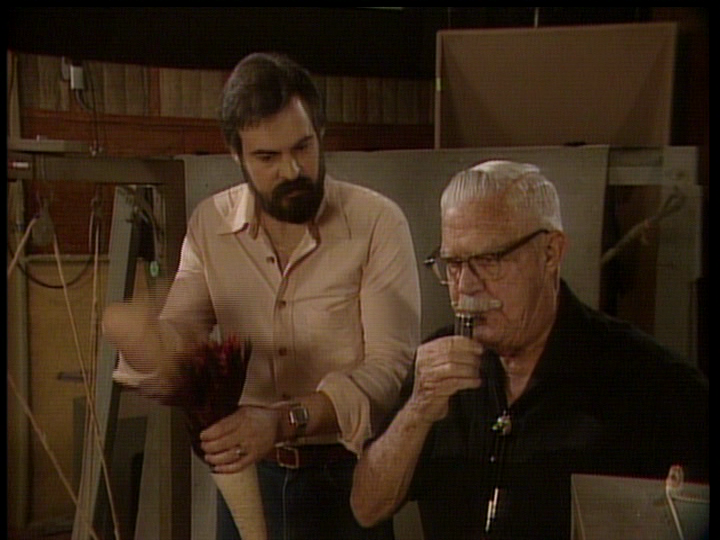
Allwine (L) working with some of the special effects tools designed by Jimmy MacDonald (R)

In addition to his voice acting, Allwine was an accomplished sound effects technician, winning an Emmy and a Golden Reel Award for his work in Steven Spielberg’s Amazing Stories, and another Golden Reel Award in 1986 for his contributions to the Disney animated feature The Great Mouse Detective.

One of the little known facts about Allwine is that in real life, he was married to the voice of Minnie Mouse, Russi Taylor. “It was just a total friendship, and the next thing you knew, we were just sort of like, always together,” Taylor said of how their relationship developed. On October 13, 2008, the couple were inducted as Disney Legends.

Mickey (Allwine) and Minnie (Taylor) together

On May 18, 2009, Allwine passed away at the age of 62. The game Kingdom Hearts 358/2 Days, his last vocal project as Mickey, was dedicated in his memory. “Wayne’s dedication to preserving the legacy of the character who began with Walt Disney himself was steadfast,” Tony Anselmo, voice of Donald Duck and close friend, said about Allwine. “He was one of the kindest men I ever knew, a true gentlemen, and funnier than any professional comedian. A truly gifted and talented man.” Allwin’s voice is still heard at parks around the world, as well as on television on the show Mickey Mouse Clubhouse. “It’s a great honor,” Allwine said of voicing Mickey. “It’s a great honor to represent what Walt loved so dearly, and what Jimmy kept alive so well.”


January 26

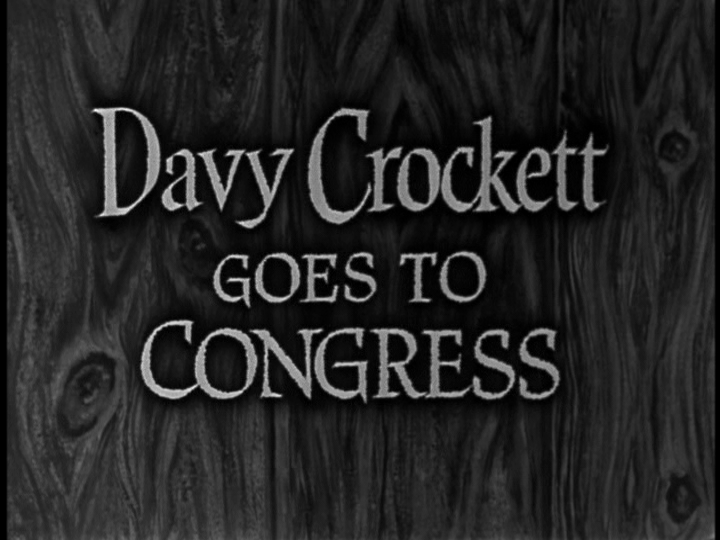
January 26, 1955 – Davy Crockett Goes to Congress Premieres on ABC.

“Now, again from Davy’s own journal, we’d like to present another story of Davy’s fabulous life. This one is called, ‘Davy Crockett Goes to Congress.’” – Walt Disney.

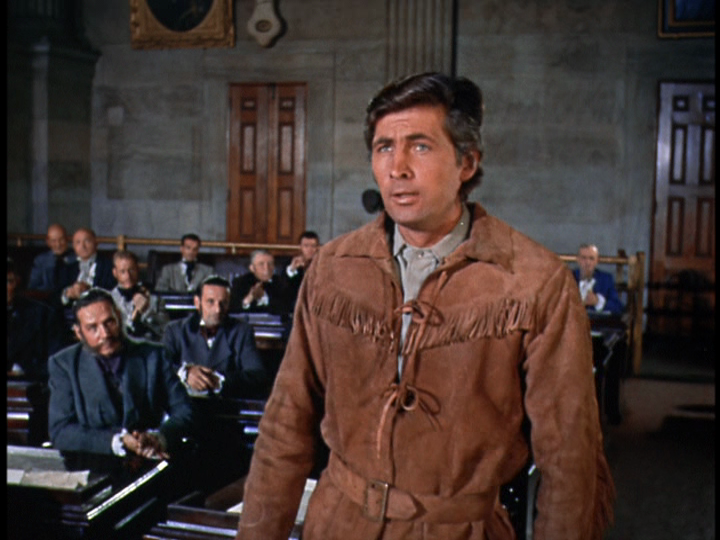
On the evening of January 26, 1955, the second installment of The Adventures of Davy Crockett premiered on the Disneyland television show on ABC. Shown a little over a month after the first installment, the series continued the Davy Crockett craze that had taken over the youth of America. This episode, entitled Davy Crockett Goes to Congress, was directed by Norman Foster, and written by Tom Blackburn. It stars Fess Parker as Davy Crockett, Buddy Ebsen as Georgie Russel, Basil Ruysdael as Andrew Jackson, William Bakewell as Tobias Norton, and former professional wrestler Mike Mazurki as Bigfoot Mason.

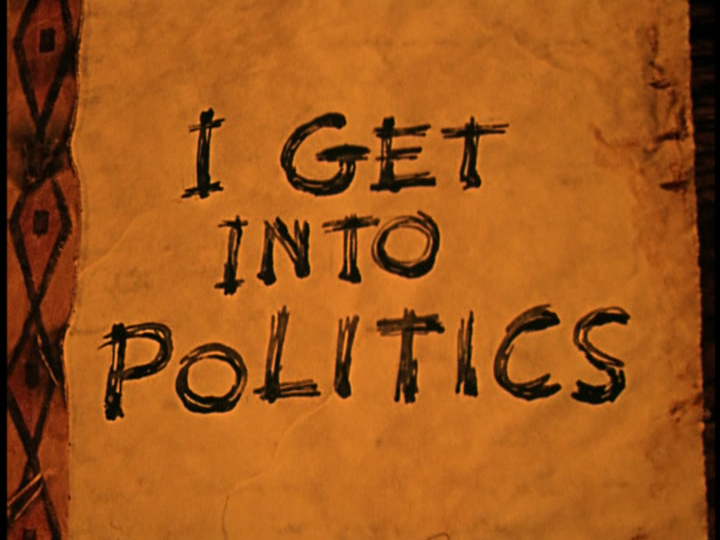
A page from Davy's own journal, as seen in the show, which introduces the story of Davy's political career

The show opens with Davy and his pal Georgie setting out to find a new piece of land to settle. Although they find the perfect spot, Georgie reminds Davy that they need to file a claim for the land. As they approach the settlement, looking for the judge to file their claim, they stumble upon a shooting match. Ever competitive, Davy challenges a man named Bigfoot Mason, wagering $15, the estimated price of the prize cow. They tie with the first round, but with their second shots, Bigfoot believes he won, as it appears that Davy completely missed the target. When it’s discovered that Davy hit the exact spot twice, he makes an unintentional enemy out of Bigfoot. The judge, discovering who Davy is, is thrilled that Davy is in town, as he may be the man that can stop Bigfoot’s schemes. The judge informs Davy and Georgie that Bigfoot and his gang have been running the Indians off of their land and selling it to newcomers who have no idea that the land has been stolen. Davy reminds the judge that there’s a treaty that guarantees the Indians their land, but the judge says that Bigfoot disregards any treaty of that nature. The few people who have tried to stop Bigfoot have disappeared, presumed dead. The judge, knowing Davy’s reputation, asks Davy to be the magistrate and serve a warrant on Bigfoot and his gang. Davy says he’d have to think about it. It doesn’t take long for Davy to decide, as he finds that the Cherokee Charlie Two Shirts has been beaten and run off his land. Davy confronts Bigfoot, and it turns into a no-holds-barred fistfight. Davy emerges victorious, and peace comes over the settlement again as the gang is brought to justice.

During one of the celebrations in town, the judge tells Davy that since the settlement is experiencing a lot of growth, they’ll be getting someone to represent them in Nashville, and the town has picked Davy as the man they want to run for the state legislature. Davy responds, “I’m plumb flutterated by the honor, but, well, I ain’t no politician.” When the judge informs him that his competition is Amos Thorpe – the lawyer who tried to get Bigfoot off, and made a lot of money from the illegal Indian land grabs – Davy considers running. The thing that sets him on his political path, however, is the sad news that his wife, Polly, came down with a fever and died. Consumed by grief and needing a distraction, he decides to run for the spot in the state legislature, proclaiming that he’ll represent the town as honestly as he can. Davy wins by a landslide.

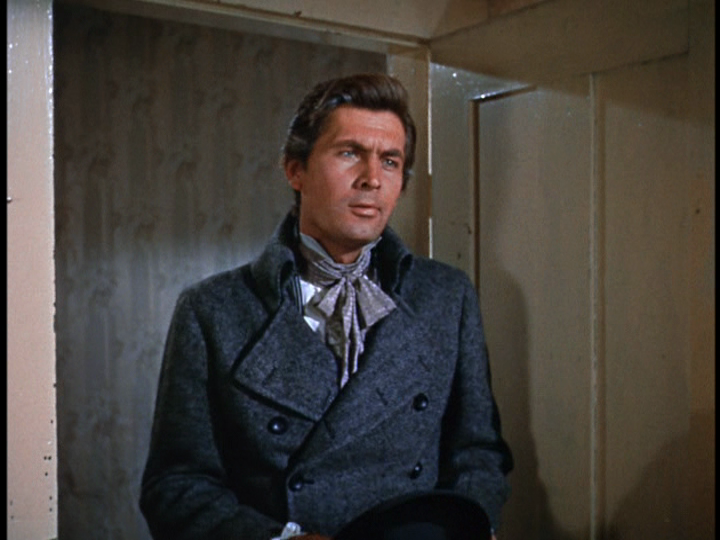
Davy in formal clothes after he's been elected to the state legislature

Davy’s political career has been watched closely by his old Major, Tobias Norton, and General Andrew Jackson. Jackson is preparing to run for the presidency, and both he and Norton want Davy to have a seat in Congress. As Jackson puts it to Davy, “I want men I can trust, men I know are with me, men that can get the rest of the country behind me.” Davy responds, “Well, if I was to do what you asked, and I did get in, I wouldn’t be taking orders from you, General. I’d be taking them from them that elected me.” Thanks to a set of books Georgie has been publishing about their adventures together, Davy is able to win the seat in Congress, and surprises the members by showing up in buckskins. Georgie is there to greet him, and Davy tells him off about having to show up as the “king of the wild frontier, thanks to you.” He introduces himself with a strange speech, but promises that he won’t be one of those politicians who doesn’t do anything more than listen, and the next time he stands before them, he’ll “have something to say worth saying.”

Davy’s career hits a snag when Norton tells Davy he’s to go on a speaking tour, calling it a “great service for the country.” Norton adds that people want to make Davy the next president of the United States. Georgie, ever suspicious of Norton, finds out the truth: Norton sent Davy out of the way so he wouldn’t be able to vote against a bill meant to take away all lands from the Indians. Georgie and Davy race back to Washington, where Davy punches Norton out as the former major tries to stall him, and storms in to Congress, giving the last great speech of his political career.

Davy giving a speech in Congress, dressed in his buckskins

Compared to most of the shows on television at the time that featured cowboys and Indians, the Davy Crockett serial was very well made, especially when it came to the matte paintings of Nashville and Washington, D.C., painted by Peter Ellenshaw. Walt Disney sent crews to picturesque areas in North Carolina to do research of the landscape, and it made the serial stand out against all the other shows. There’s also no denying the charm of Fess Parker as Davy Crockett. The last impassioned speech he gives as Congressman Davy Crockett is one that will be remembered.

.

January 18

January 18, 1941 – Birth of Disney Legend David Stollery.

David Stollery's title card from the serial Annette.

“I wonder how many Celica-driving ‘Mickey Mouse Club’ fans ever knew that ‘Marty’ designed their car?” – Tim Considine, Disney Legend and actor.

David John Stollery III was born January 18, 1941, in Los Angeles, into a show-business family, his father having been a radio announcer, and his mother a radio star while living in Portland, Oregon. At age seven, Stollery began his acting career by landing a role in a touring production of Medea, and was later voted Child Actor of the Year for his role in the production On Borrowed Time, starring actor Victor Moore. He appeared in several films, beginning with an uncredited role in the 1949 film A Connecticut Yankee in King Arthur’s Court, and getting his big boost as a feature actor in the 1951 film, Darling, How Could You! His Disney roles, however, gave him the most prominence as an actor.

Walt Disney saw Stollery perform on an episode of The Ray Milland Show, playing a young genius, and was convinced that the boy would be perfect for the role of Marty Markham in the upcoming Mickey Mouse Club serial, “The Adventures of Spin and Marty,” co-starring Tim Considine as Spin. The serial was very popular, and Stollery was quickly signed for two more “Spin and Marty” serials: “The Further Adventures of Spin and Marty” in 1956, and “The New Adventures of Spin and Marty” in 1957. Stollery also appeared in a serial starring Annette Funicello, simply titled “Annette,” in which he played the character Mike Martin. He also acted in two feature films for Disney: Westward Ho the Wagons! in 1956, and Ten Who Dared in 1960.

Stollery as Marty Markham in The Adventures of Spin and Marty.

Unlike most child actors, Stollery did not pursue acting as a fulltime career, instead opting to study design at the Art Center College of Design, and becoming an auto designer for General Motors. In 1973, he was hired by Toyota to manage the automotive design group, Calty Design Research, designing the second generation of the A40 Series Toyota Celica in 1978.

Stollery has mostly stayed out of the spotlight since his Disney days. His most recent on-screen appearance was a documentary in 2005 on the Walt Disney Treasures set, The Adventures of Spin and Marty, in which Stollery and co-star Tim Considine explore the property that was used as the set for the Triple R Ranch and share their memories of performing on the show. He was inducted into the Disney Legends at the October 9, 2006 ceremony.