RSS Feed

Tag Archives: Academy Award winning

June 5

Posted on

June 5, 2000 – The Pixar Short Film For the Birds Premieres at the Annecy International Animated Film Festival
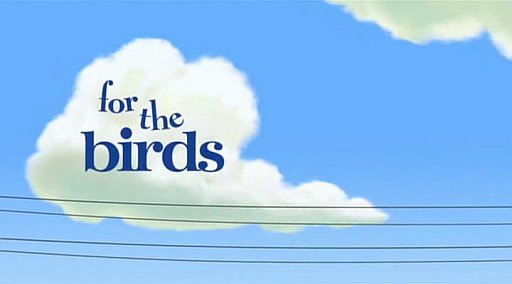
For_the_Birds

“[For the Birds] began actually as a student film, a long time ago, and I could never bring myself to draw all these little birds that are about to pop up on the screen.” – Director Ralph Eggleston

On June 5, 2000, the Pixar short film For the Birds premiered at the Annecy International Animated Film Festival in Annecy, France. After its showing, it was released alongside Pixar’s fourth animated feature, Monsters, Inc, and would go on to win several awards, including the Academy Award for Best Short Animated Film. According to Pixar, the names of the smaller birds that start the teasing are Bully, Chipper, Snob, and Neurotic. The short was re-rendered into 3D for the 3D theatrical rerelease of Monsters, Inc. in 2012. It was directed by Ralph Eggleston.

A bird flies onto the screen and perches on a nearby telephone wire and makes himself comfortable. He is soon joined by several others, and they all begin to squeak amongst themselves, before they are interrupted by a strange honking noise. They all turn to see a large, rather dopey-looking bird, and they start making fun of him. The big bird doesn’t realize that he’s being made fun of, and decides to join the birds on the wire. As he sits on the wire, it bends underneath his weight, and the birds slide into him. Annoyed, they squawk loudly, and one of the birds pecks him hard in the side, sending the big bird flying off the wire, although still holding on with his feet. The same small bird that pecked the big bird pecks one of the big bird’s toes, and it slips from the wire. The birds then get an idea to keep pecking away until the big bird has let go, with the other birds cheering the main two birds on. A bit too late, one bird realizes that once the big bird lets go, they will all be catapulted into the air. As the birds are shot out of their feathers, the big bird sits up, still rather oblivious to the teasing and the malice, and starts blowing the feathers gently. The smaller birds land on the ground, completely naked, and the big bird laughs hysterically as the birds scamper into the nearby wheat field in shame.
May 27

Posted on

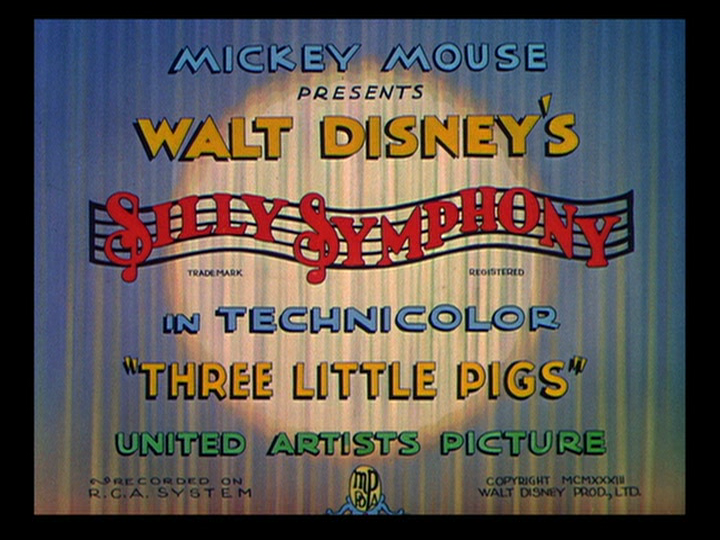
May 27, 1933 – The Silly Symphony The Three Little Pigs is Released to Theaters

vlcsnap-2013-05-27-06h01m34s96

“You can play and laugh and fiddle, don’t think you can make me sore, I’ll be safe and you’ll be sorry when the wolf comes to your door!”

On May 27, 1933, the Silly Symphony The Three Little Pigs was released to theaters. The short was based on the fable of the same name, and became a breakout hit of 1933, with Depression-weary audiences embracing the song “Who’s Afraid of the Big Bad Wolf?” as the anthem of the time, with the wolf representing the Depression and their troubles. The short was also a milestone in animation at the studio in the areas of characterization, score, and song. In most theaters, the short would be placed in top billing, lasting long after the accompanying feature had come and gone; one New York theater manager put beards on the pigs faces in their display, and had the beards “grow” the longer the run was extended. The original version of the short had the Wolf disguised as a Jewish peddler, but has since been removed. It is important to note that ethnic and racial stereotype humor were incredibly common in this time period, and many Jewish producers would incorporate these stereotypes themselves. Three Little Pigs went on to win the Academy Award for Best Cartoon. The short was directed by Burt Gillett.

Fiddler, Fifer, and Practical Pig are making their houses, with Fiddler and Fifer not taking their task too seriously. Practical Pig, however, is mostly concerned with keeping the wolf away, and builds his house of bricks. When his brothers come by to taunt him for working all day, he warns them that he will be safe when the wolf comes, but the two laugh it off, teasing Practical for being afraid of the Wolf. As the pigs dance and sing, the Wolf comes by, scaring the two back into their homes. He goes Fifer’s straw home first, and blows it clear away. Fifer runs to Fiddler’s stick home, and the two hide inside. The wolf then pretends to walk away, and the two begin to sing their song again.

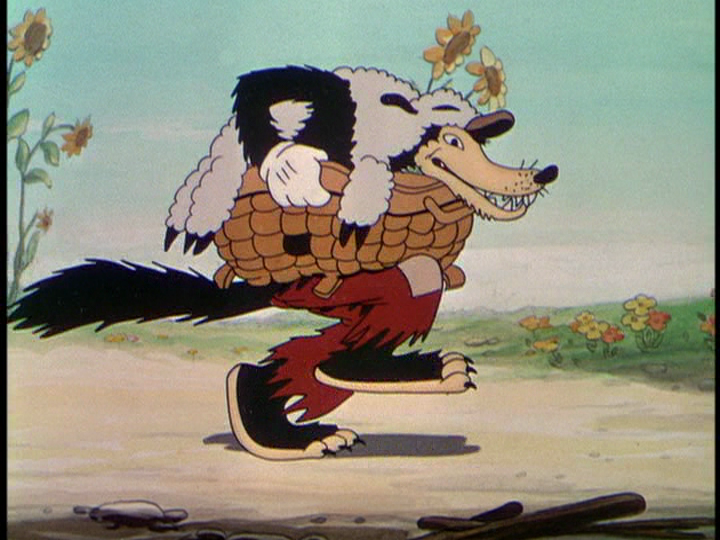
The Wolf tries to use a disguise to trick the pigs into letting him in

The Wolf tries to use a disguise to trick the pigs into letting him in

The wolf appears at the door, pretending to be a lost little sheep that needs help, but the two see right through his disguise. Angered, he blows the house down, and the two flee as fast as they can to Practical’s house. He lectures the two of their folly, but tells them he’s glad they’re safe. The Wolf then arrives as a brush salesman, but Practical Pig doesn’t fall for it. The Wolf then attempts to blow the house down, but is unable to do so. He finally decides to come down the chimney and seize the pigs, unaware that Practical Pig has a large boiling cauldron waiting below filled with turpentine. The wolf falls in and is sent shooting up again from the pain, and scurries down the road, howling. All three pigs end the short singing merrily.

May 18

Posted on

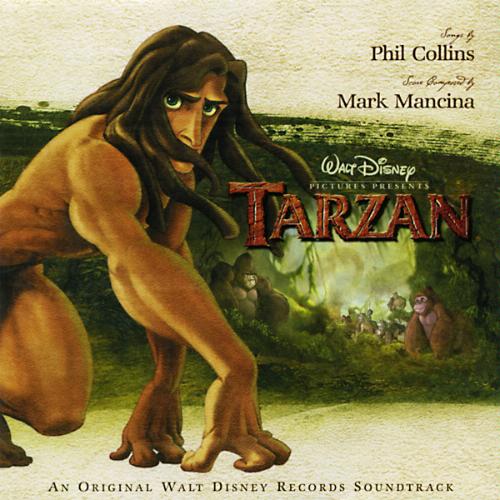
May 18, 1999 – Tarzan: An Original Walt Disney Records Soundtrack is Released

 Tarzan

“Put your faith in what you most believe in, two worlds, one family. Trust your heart, let fate decide to guide these lives we see.”

On May 18, 1999, Tarzan: An Original Walt Disney Records Soundtrack was released through Walt Disney Records. It was the soundtrack for the 37th animated feature film released by Walt Disney Animation Studios. The songs were written by singer-songwriter Phil Collins, with score composed by Mark Mancina. The album peaked at number 5 on the Billboard charts, and spawned two singles: “You’ll Be in My Heart” and “Strangers Like Me.” “You’ll Be in My Heart” would go on to win an Academy Award and a Golden Globe for Best Original Song; the soundtrack received a Grammy for Best Soundtrack Album. It is also notable as the first soundtrack to be recorded in multiple languages for foreign markets, with Collins singing the songs in the English, Italian, German, Spanish, and French versions.

April 14

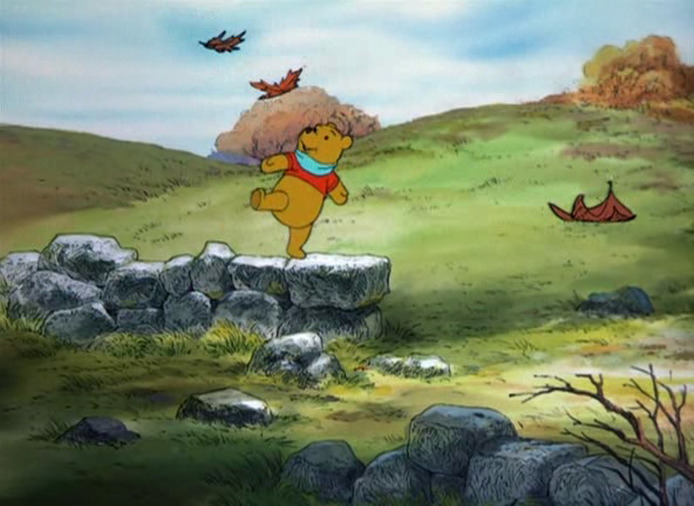
April 14, 1969 – Winnie the Pooh and the Blustery Day Wins The Academy Award for Best Short Film

winnie-the-pooh-disneyscreencaps.com-2949

“Happy ‘Winds-Day,’ Piglet.”

On April 14, 1969, the 41st Academy Awards were held in the Dorothy Chandler Pavilion in Los Angeles, California. The Disney short film Winnie the Pooh and the Blustery Day won the Academy Award for Best Short Film, beating The House That Jack Built by the National Film Board of Canada, The Magic Pear Tree by Murakami-Wolf Films, and Windy Day by Hubley Studios. The award was given posthumously to Walt Disney, who had passed away two years before the short’s release in 1968. It is also the only Winnie the Pooh short to win an award, although Winnie the Pooh and Tigger Too would be nominated in 1974. In 1977, these two short films and Winnie the Pooh and the Honey Tree were combined into the full-length feature film The Many Adventures of Winnie the Pooh.

April 7

April 7, 1939 – The Final Silly Symphony, The Ugly Duckling, is Released to Theaters

vlcsnap-2013-04-07-10h08m47s102

On April 7, 1939, the final Silly Symphony, The Ugly Duckling, was released to theaters. It is a color remake of the 1931 Silly Symphony, originally directed by Wilfred Jackson. Both shorts were based on the story by Hans Christian Andersen. The 1939 short film won an Academy Award for Best Cartoon at the 12th Academy Awards. It was directed by Jack Cutting.

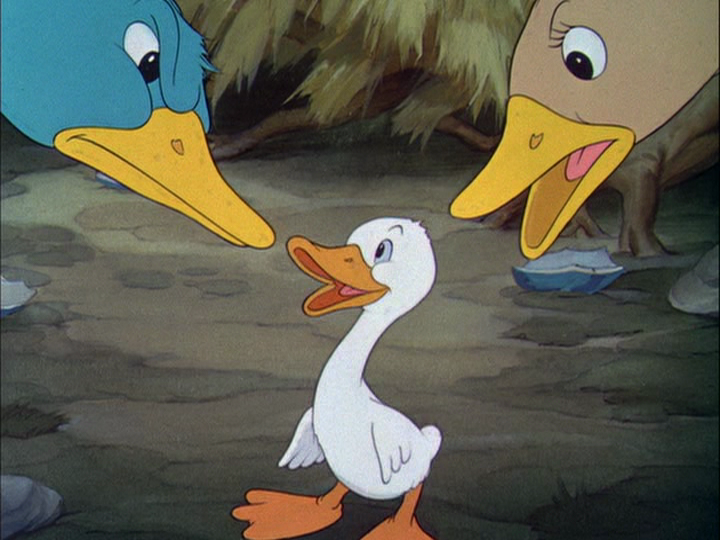
A father duck is nervously pacing the ground as he waits for his wife’s eggs to hatch. He tries to console her as she sits in the nest, bored with waiting, while the father duck paces so much he creates a hole in the ground. The sound of sudden quacking alerts him, and he is delighted to see his offspring. He gathers the ducklings into his arms and kisses them excitedly, then kisses his wife. Much to their surprise, there’s another egg in the nest that is about to hatch, and when it does, the ducks are surprised to see a strange looking and sounding “duckling” emerge from the shell.

Father and mother duck look at their strange duckling with suspicion

Father and mother duck look at their strange duckling with suspicion

The father looks at his wife accusingly, and the two argue before the mother slaps the father. He leaves angrily, and the mother has her ducklings follow her into the pond. The ugly duckling follows the ducks, but the mother wants nothing to do with him. She viciously quacks at him, and he looks at his own reflection in the pond, confused as to why he looks so different and is so unwanted. He begins to cry and wanders away, trying to find where he belongs. He stumbles upon a cuckoo bird’s nest, but is immediately chased away by the mother cuckoo as he tries to eat their food.

He soon runs into a duck decoy in another pond, and takes to it as if it were his mother. Unfortunately, the duck decoy hits him on the head, making him believe that it also does not like him. He wanders away and cries loudly. His cries are soon overheard by a mother swan and her cygnets. The cygnets try to cheer him up, and he is amazed to see birds that look like himself. The mother then calls her babies over, and he is sad once again, thinking he needs to leave, but the mother swan takes him under her wing, welcoming him to his new family. The swan family sails away, and he soon spies the duckling family, who calls him over, but he swims away, perfectly content being a swan.

March 20

March 20, 2012 – The Muppets Receive a Star on the Hollywood Walk of Fame

Muppet Star

“They call this the street of dreams, and that’s so appropriate for the Muppets. You see, from the very beginning, the Muppets have always been about having big dreams and making them come true, usually in the most unexpected and inspiring manner.” – Lisa Henson

On March 20, 2012, the Muppets were awarded a star on the Hollywood Walk of Fame in front of the El Capitan Theater in Los Angeles, California. On hand for the ceremony was Rich Ross, then-President of the Walt Disney Studios; Lisa and Brian Henson, the daughter and son of late Muppets creator Jim Henson; several Muppeteers; and Muppets Kermit, Miss Piggy, Fozzie Bear, Gonzo, Pepe, and Walter from the 2011 film The Muppets. The award coincided with the release of The Muppets on DVD and Blu-Ray. This is the fourth star overall awarded to the Muppets and Jim Henson: Henson was awarded posthumously on September 24, 1991; Big Bird from Sesame Street was inducted on April 21, 1994; and Kermit the Frog was inducted on November 14, 2002.

March 3

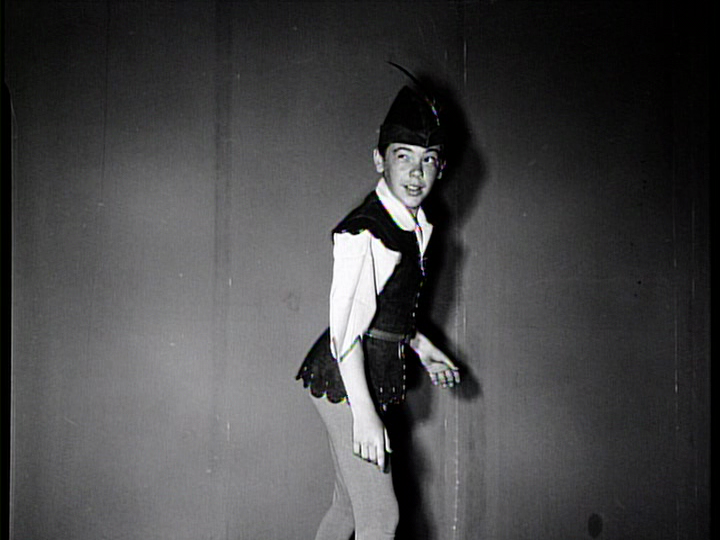
March 3, 1937 – Child Actor Bobby Driscoll is Born

vlcsnap-2013-03-02-19h55m44s251

“He’s got a great talent. I’ve worked with a lot of child players in my time, but none of them bore the promise that seems inherent in young Driscoll.” – Don Ameche

On March 3, 1937, Robert Cletus “Bobby” Driscoll was born in Cedar Rapids, Iowa. Soon after he was born, his family moved to Des Moines, and then moved to California in 1943. After their arrival, Driscoll auditioned with MGM for a small role in the 1943 film Lost Angel. This film role led to better ones; his natural acting talent and ability to memorize his lines quickly led to Driscoll’s being known as the “Wonder Child.” He soon caught the attention of Walt Disney, who was looking to cast the lead in his upcoming film Song of the South. Driscoll was not only hired, but became the first actor Disney put under contract. He and co-star Luana Patten became child stars with the success of the film, and were nicknamed the “Sweetheart Team.” They would later star together in the 1948 film So Dear to My Heart, and in the “Pecos Bill” segment of the animated feature film Melody Time, released in the same year. In 1949, Driscoll found acclaim in the RKO film The Window; this, coupled with his role in So Dear to My Heart, earned Driscoll a Juvenile Academy Award.

In 1950, Driscoll starred in the first full-length live-action film for the studio, Treasure Island, as Jim Hawkins. During filming, the British film industry claimed that due to child labor laws, and the fact that Driscoll did not have a work permit, he would have to leave the country. The judge presiding over the case gave Driscoll and his family six weeks for appeal, but instead the company used the six weeks to film his close-ups and any other important shots before he was deported. The film was another success, and Driscoll was awarded a star on the Hollywood Walk of Fame. Driscoll also appeared in smaller Disney projects on television and in short films through the early ’50s. His last major project for the studio was the voice and live-action reference model for the title character in the animated feature film Peter Pan. After the film’s release, he was terminated from his contract with the studio.

Driscoll as the live-action model for Peter Pan, his final film at the studio

Driscoll as the live-action model for Peter Pan, his final film at the studio

After leaving Disney, Driscoll found it increasingly difficult to get work as a serious character actor, as he was seen as “Disney’s kid actor.” He moved to television roles and was taken out of Hollywood Professional School by his parents, who moved him to public school. Ridiculed by the other students there for his early film career, Driscoll began to dabble with drugs. Although his parents let him return to Hollywood Professional School, where he graduated, his drug use increased. In 1965, he moved to New York City and became part Andy Warhol’s art community, known as The Factory. His last film performance was in the underground film Dirt. After leaving The Factory, Driscoll was penniless and was living in Manhattan’s underground. In 1968, two boys discovered his body, and without any identifiers, he was buried in an unmarked pauper’s grave. It was in 1969, some nineteen months later, when his mother, who was hoping to reunite with her son before his father’s death, discovered where his body was buried.

Driscoll was a rare talent and an important part of the live-action film aspect of the Disney Studios. It is important that he be remembered for his wonderful craft shown in the Disney films of the ’40s and ’50s. Although his life was sadly cut short due to some bad decisions, Driscoll should be lauded as one of the finest child actors in film history.

February 27

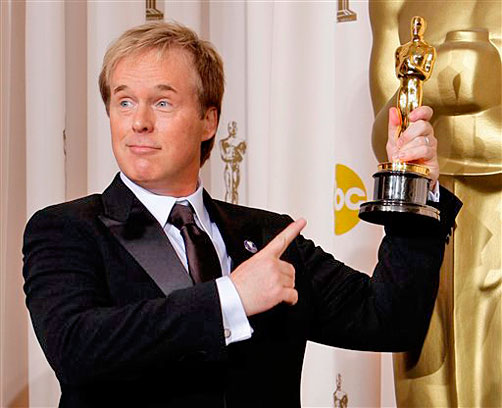
February 27, 2005 – The Pixar Film The Incredibles Wins Two Academy Awards

BradBird

“Animation is about creating the illusion of life, and you can’t create it if you don’t have one.” – Brad Bird at his acceptance speech

On February 27, 2005, the 77th Academy Awards were held at the Kodak Theater in Los Angeles, California. Nominated for four Academy Awards, the sixth Pixar film, The Incredibles, walked away with two, including Best Animated Feature, beating out DreamWorks’ Shark Tale and Shrek 2. The Academy was also awarded the Best Sound Editing Oscar to Michael Silvers and Randy Thom, who were nominated against Paul N.J. Ottosson for Spider-Man 2 and Randy Thom and Dennis Leonard for The Polar Express. This would be director Brad Bird’s first Academy Award; he would win again three years later for Ratatouille.

February 22

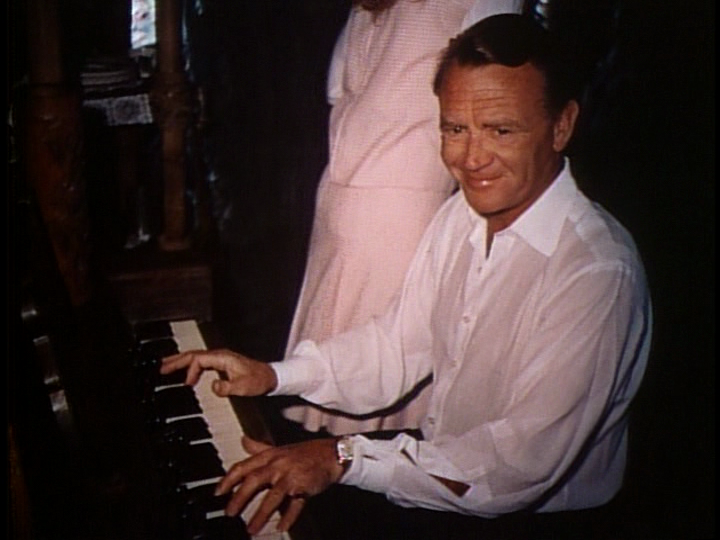
February 22, 1908 – Actor and Disney Legend Sir John Mills is Born

vlcsnap-2013-02-22-04h50m57s225

“One of the luckiest things that ever happened to me was to be born with the desperate desire to become an actor. I never remember at any age wanting to be anything else.”


On January 22, 1908, Lewis Ernest Watts Mills was born in North Elmham, Norfolk, England, and grew up in Belton. In 1929, Mills made his professional acting debut in The Five O’Clock Girl at the London Hippodrome, and made his film debut in the 1932 film The Midshipmen. He enlisted in the Royal Engineers at the beginning of World War II, but was medically discharged in 1942 due to a stomach ulcer. In the late ’40s and ’50s, Mills was known predominantly for starring in war dramas, including The Colditz Story and Above Us the Waves.

Beginning in 1959, Mills starred in several films alongside his daughter Hayley, beginning with Tiger Bay. In 1960, Mills starred in the highly successful film Swiss Family Robinson, which became the highest grossing film of the year, beating out Psycho, Spartacus, and Exodus. He was also featured in the Walt Disney’s Wonderful World of Color episode “Disneyland 10th Anniversary,” showing his family the new Swiss Family Robinson Treehouse attraction. Over his entire seven-decade career, Mills starred in more than 120 films, and was appointed a Commander of the Order of the British Empire in 1960 before being knighted in 1970. Mills was named a Disney Legend in 2002, and passed away in 2005 at the age of 97.

January 30

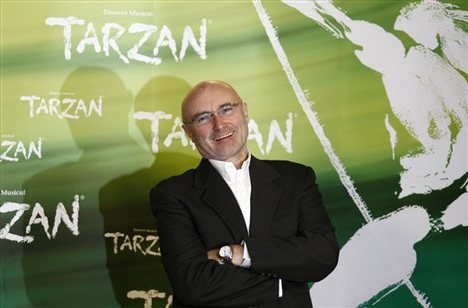
January 30, 1951 – Singer-Songwriter, Multi-Instrumentalist, Actor, and Disney Legend Phil Collins is Born

PC

“[Collins’] voice has a tendency to wrap itself around you and bring you into his world. As soon as he starts singing, it’s just magic and provides a very welcoming feeling.” – Composer Mark Mancina

On January 30, 1951, Philip David Charles Collins was born in Hounslow, London, England. At age five, he was given a toy drum set, and was presented with complete sets by his parents and makeshift ones by his uncle as he got older. Collins was also a child actor, winning the role of the Artful Dodger in the West End production of Oliver! All the while, Collins continued to focus on his music, forming a band while in school and drumming for Flaming Youth and George Harrison. Collins found his big break in 1970, when he auditioned for and won the spot as the drummer for the band Genesis. After lead singer Peter Gabriel left the band in 1975, Collins became the lead vocalist of the group. The band had great success with Collins at the helm, including reaching Top 40 Chart in America. In 1981, Collins began a solo career, scoring a hit with his first single, “In the Air Tonight.” In 1985, he was nominated for his first Academy Award for the song “Against All Odds” from the film of the same name.

Collins’ first work for Disney came with the 1999 film Tarzan, where he wrote and performed the songs for the film. The song “You’ll Be in My Heart” reached number 1 on the Adult Contemporary charts and stayed at the top for 19 weeks; it was also awarded the Golden Globe for Best Original Song and the Academy Award for Best Original Song. Collins also performed the songs for the film in German, French, Spanish, Bulgarian, and Italian. “Strangers Like Me” from the soundtrack peaked at number 10 on the Adult Contemporary Charts. In 2002, he was awarded as a Disney Legend. Collins would go on to write and perform the songs for another Disney film, 2003’s Brother Bear. In 2006, when Tarzan was adapted for the Broadway stage, Collins contributed greatly to the production, writing 11 new songs and pieces of the score.