RSS Feed

Tag Archives: 1950s

July 23

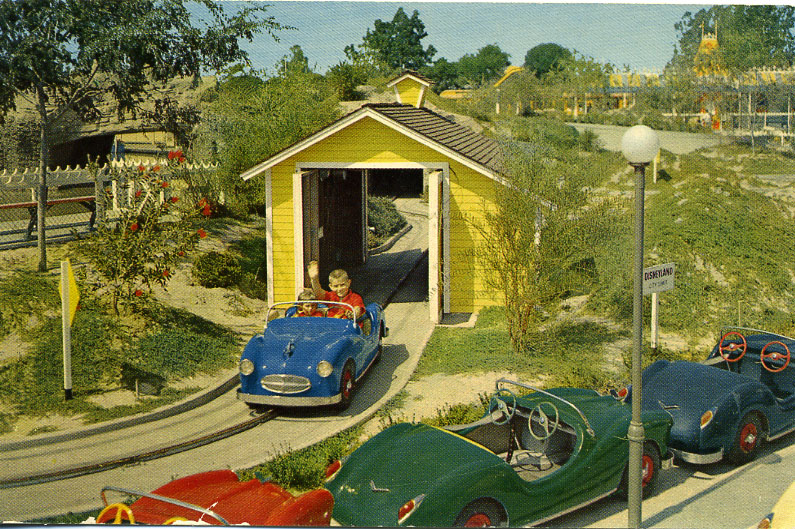
July 23, 1956 – The Junior Autopia Attraction Opens in Disneyland’s Fantasyland

JuniorAutopia_Slide

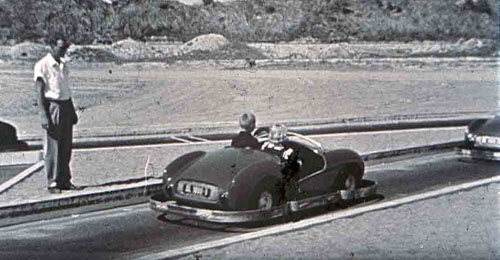
“The design of the Junior Autopia sport cars is not likely to be out of style soon.”

On July 23, 1956, the attraction Junior Autopia opened in Disneyland’s Fantasyland. An adaptation of the Autopia attraction which opened in 1955, a block of wood was added to the gas pedal to allow younger guests to drive. A center guard rail was also added to this attraction. Junior Autopia closed in December of 1958, and reopened in 1959 as a part of the expanded Fantasyland Autopia.

July 19

July 19, 1957 – The Special Short Film The Story of Anyburg, U.S.A is Released to Theaters

vlcsnap-2013-07-19-16h23m49s248

“This is the story of a certain city, and what it did about this common curse that plagued the land.”

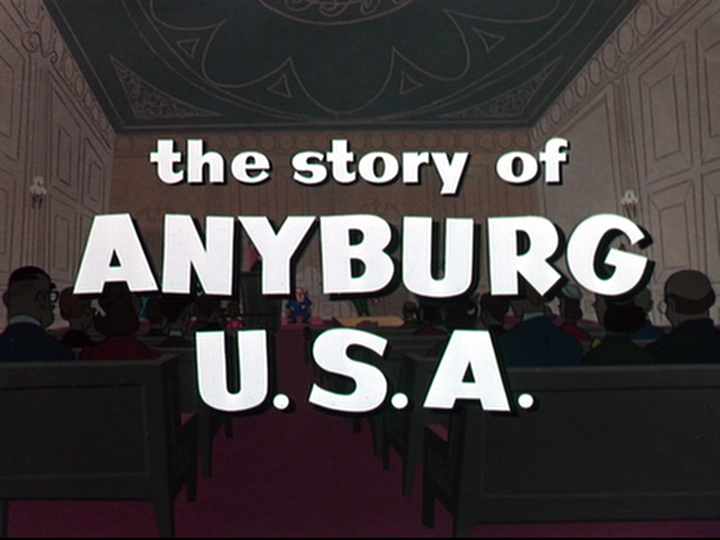
On July 19, 1957, the special short film The Story of Anyburg U.S.A. was released to theaters. It was directed by Clyde Geronimi, with story by Dick Huemer. The short stars the voices of Hans Conried, Thurl Ravenscroft, and Bill Thompson.

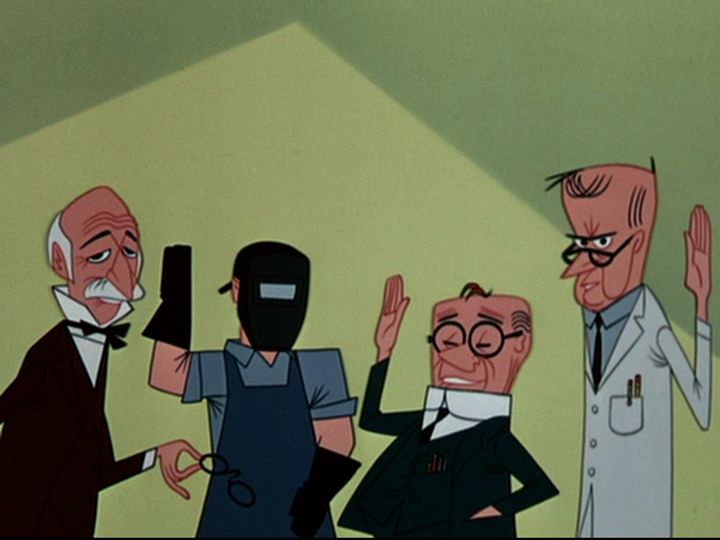
The narrator takes the audience to Anyburg, U.S.A, where the traffic situation, he explains, is normal enough. However, a feeling of dissatisfaction was growing among residents when it came to their traffic troubles. The residents decide to take their blame to court, and charge the automobile for the traffic crimes. An automobile witness starts to shake when the prosecution starts grilling it, and the judge tries to hurry things along, as his golf clubs are seen hiding under his chair. The first car is blamed for speeding into a restaurant and destroying the place, and surprisingly, the defense has no questions. The next witness is a sports car, blamed for guzzling gas and burning rubber on the road. Once again, the defense has no questions.

The safety experts vow that  they have made several safety modifications to the automobile, but to no avail

The safety experts vow that they have made several safety modifications to the automobile, but to no avail

A dilapidated old car is called next, and brought to tears by the prosecution, although the defense again has no questions. The men who build safe car parts (safety glass, safety tires, etc.) then testify, stating that although they have built such devices, accidents continue to occur at an alarming rate. The jury is then convinced that the automobile has to go. Next on the stand is Mr. Sirus P. Sliderule from the Bureau of Highways, who starts to cry once he talks about how, although he leveled hills, put up signs, and painted lines, the automobile made his beautiful highway a complete mess. The prosecution rests his case, and the defense finally speaks. He shows the audience footage of a speeding car, but proves that the man is the real culprit behind the accidents and problems on the road. He gets the judge to dismiss the case, and the people finally admit their guilt, vowing to drive with decency and courtesy – although this only lasts about two seconds.

July 18

July 18, 1952 – The Donald Duck Short Film Uncle Donald’s Ants is Released to Theaters

vlcsnap-2013-07-18-08h28m08s59

“Cute little fellow.”

On July 18, 1952, the Donald Duck short film Uncle Donald’s Ants was released to theaters. It was directed by Jack Hannah, with story by Al Bertino and Nick George.

An ant colony starts taking food out of their ant hill, marching across the pathway in Donald’s front yard. Donald has just made a trip back from the grocery store, and hasn’t realized that his sack of sugar has been leaking and leaving a trail behind him. The last ant of the colony looks up just in time to see giant sugar crystal hurtling toward him. Donald turns and notices the ant, and gives a crystal to the ant before sidestepping him to reach his front door. The ant quickly takes the crystal back and and explains what happened, and the ants call all the other ant colonies in the nearby area to get more of this sugar.

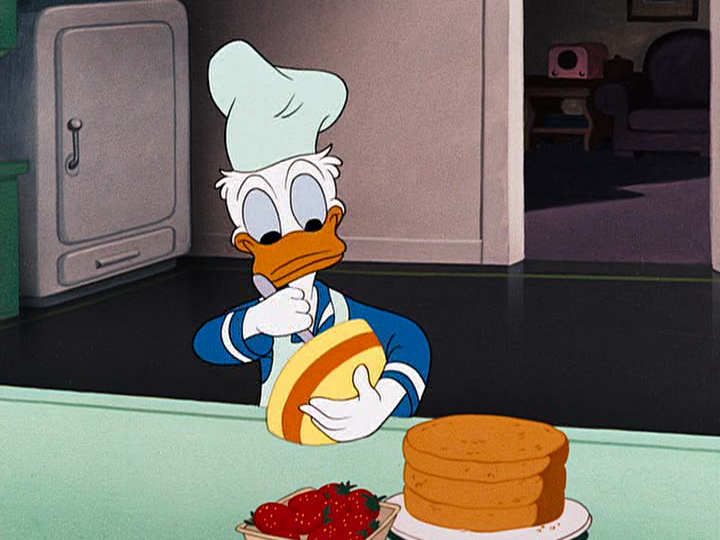
Donald finishes making a cake, unaware of the chaos he has created by his act of charity

Donald finishes making a cake, unaware of the chaos he has created by his act of charity

Inside his house, Donald is putting the finishing touches on the cake he’s been making, and thinks back to the little ant. Suddenly, he has a nightmarish vision of hundreds of ant storming his house for the sugar, and runs to the front door to see that his vision has come true. He runs back inside to hide his maple syrup, barricade the door and windows with masking tape, and wall up the chimney. He hears the whistle of the postman and rushes to the door, but remembers the ants and sneaks to the window to spy on his stoop. Seeing no ants, he takes the tape off the door and grabs the letter from his mailbox, but is angered that the letter only reads the words “BIG SALE.” He puts the letter down on a nearby table, unaware that the words have been comprised of the ants. The ants spy Donald’s cake, and distract him long enough to carry it away.

One ant finds himself in the cupboard where the maple syrup and the sugar cubes are stashed away, and calls some more ants to help him carry the sweet things out. Meanwhile, Donald is setting up traps to catch the ants, while the ants use macaroni to build an intricate plumbing system to send the maple syrup. Donald then stops the maple syrup flow by sending the flow into a nearby flower pot, but doesn’t count on the ants taking the entire jar of maple syrup. Donald chases after them, and when they hide in the garage, Donald gets a plan to pour gasoline down the other side of their macaroni pipe, then light it with a match. The ants, who have been counting on this, have already made a switch, and Donald opens the garage door to find that they’ve hooked the other end of Donald’s trap to the gas tank in his car. Donald’s car explodes, sending him sky high. All of the ants celebrate with maple syrup, safe in their colony once again.

July 17

July 17, 1955 – Disneyland, The First Disney Park, Opens

vlcsnap-2013-07-17-05h57m03s94

“To all who come to this happy place, welcome. Disneyland is your land. Here age relives fond memories of the past, and here youth may savor the challenge and promise of the future. Disneyland is dedicated to the ideals, the dreams, and the hard facts that have created America, with the hope that it will be a source of joy and inspiration to all the world.”

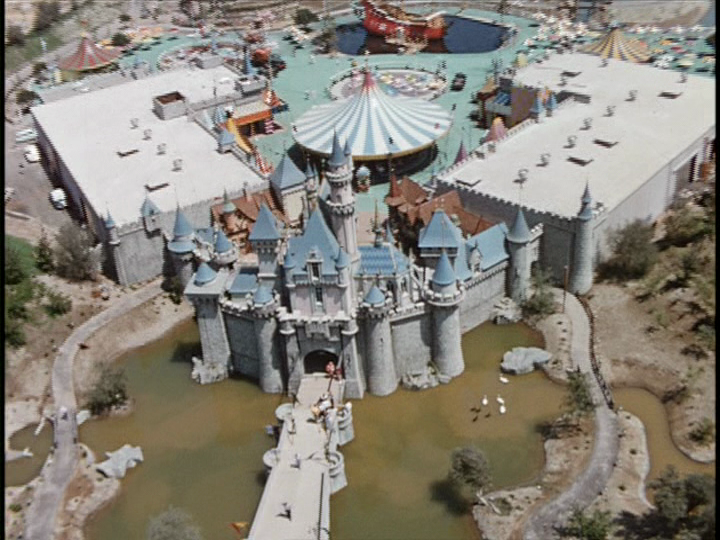
On July 17, 1955, Disneyland opened its doors to an invited number of guests, with a general opening to the public taking place on July 18. Construction began on July 16, 1954, and was built on 160 acres of former orange groves in Anaheim, California, taking an investment of $17 million to create. To get enough funding for the park, an agreement was struck with ABC Television, with ABC financing the park if Disney created a television show to be broadcast on the fledgling network. Twenty attractions were available on the first day, including Peter Pan’s Flight, Autopia, and the Jungle Cruise. The opening day was called an “International Press Preview,” with the park opened to invited guests and the press; however, 28,000 people attended, with half of these guests showing up with counterfeit tickets. The opening day was considered a total disaster, as anything that could go wrong did go wrong, with rides breaking down and vendors running out of food. There had also been a plumber’s strike, causing Disney to choose between working drinking fountains or working toilets; Disney chose the latter, which caused some negative publicity, as this was believed to be a stunt to help sponsor Pepsi sell more soda. Cables were also strewn all over the park, as the opening was being broadcast live, hosted by Art Linkletter, Bob Cummings, and Ronald Reagan. The opening was referred to in later years as “Black Sunday.” Although critics wrote a scathing review after its opening, Disney invited to the press back for another private session to experience the park properly. The next day, when it was opened to the public, people waited as early as 2:00 AM to gain admittance to the park. Approximately 50,000 people guests attended on the public opening day.

July 11

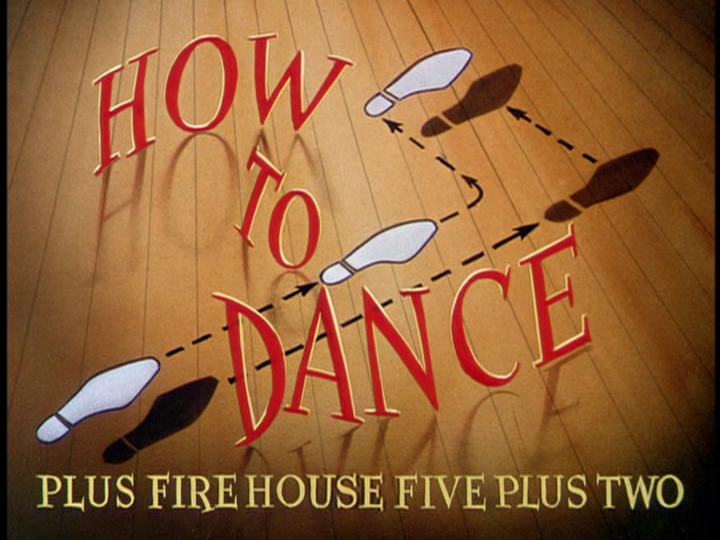
July 11, 1953 – The Goofy Short Film How to Dance is Released to Theaters

vlcsnap-2013-07-11-11h19m54s146

“Even today, dancing is still enjoyed by many, but there are those who have become so inhibited, they no longer have the ability or instinct to dance away their cares.”

On July 11, 1953, the Goofy short film How to Dance was released to theaters. This short features an animated cameo of the Dixieland jazz band Firehouse Five Plus Two, comprised of Disney artists, including Nine Old Men members Ward Kimball and Frank Thomas. It was directed by Jack Kinney, with story by Milt Schaffer and Dick Kinney.

The short opens with an explanation of dance, from the early days of rain dancing to dancing with a romantic aspect. The audience is then taken to a modern restaurant, where all the tables are empty, save for Goofy’s, as everyone else is already on the dance floor. Goofy refuses to dance, watching everyone else have a good time while he makes excuses. He then decides once and for all to learn how to dance, and grabs an instructional book while turning on a record. He then places cutouts on the ground to help him follow the steps, but they are blown away by the wind. Goofy accidentally kicks his neighbor as he tries to follow the steps, which results in getting punched.

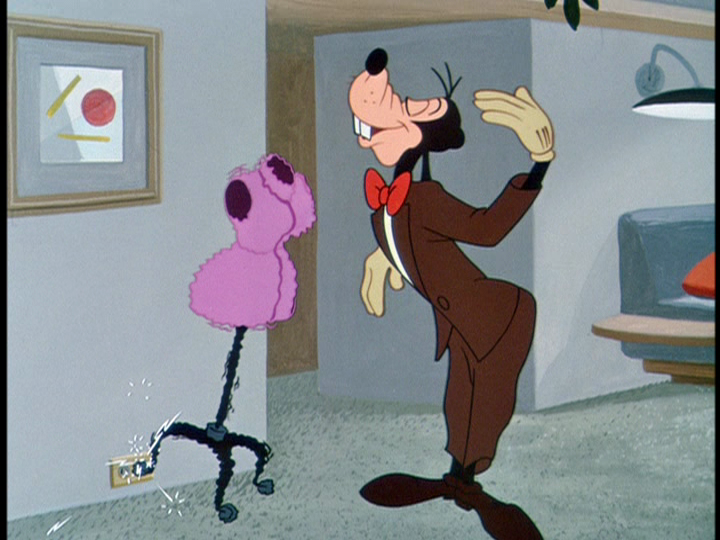
Goofy borrows a dressmaker's dummy to teach himself how to dance, with disastrous results

Goofy borrows a dressmaker’s dummy to teach himself how to dance, with disastrous results

Goofy then borrows a dressmaker’s dummy from a neighbor, and treats it like a date. In the beginning, things go smoothly, but the wheels on the dummy send Goofy spinning out of control. The wheels then get lodged in an electrical socket, and when Goofy resumes dancing with the dummy, he is shocked enough to send him into a spin, and the dummy explodes. Finally, Goofy decides to attend a dancing school, where he is trained in several styles of dance. As the days fly by, Goofy is able to become a master of dance. He attends a dance hall, and asks a lady to dance. As the band Firehouse Five Plus Two begins to play a lively jazz song, Goofy is caught in the middle of the crowd, punched and elbowed from all directions. He sinks into the dancing crowd as they continue to dance to the fast paced rhythm.

June 28

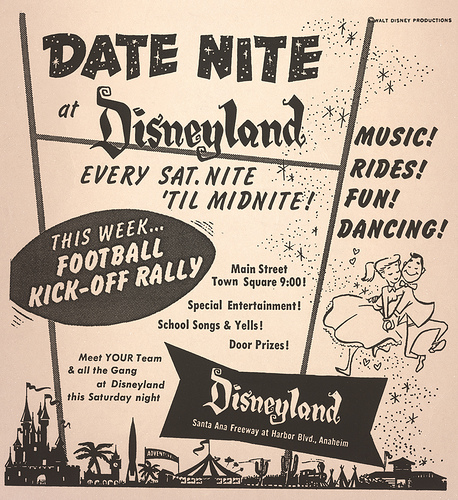
June 28, 1957 – The First Date Nite in Disneyland Event is Held

Date Nite

“Let’s dance at Disneyland! Date Nites are late nights at Disneyland!”

On June 28, 1957, the first Date Nite in Disneyland event was held in the Carnation Plaza Gardens. The park’s hours were extended until 1 AM on Fridays and Saturdays during the summer season, and couples would come in to dance the night away with some of the best names in entertainment. Several bands were invited to play in sections of the park, including The Elliott Brothers, who headlined at the Plaza Gardens. The Golden Horseshoe Saloon was also featured as a venue for dancing, as was the Space Bar in Tomorrowland. In 1958, an album by the Elliot Brothers called “Date Night at Disneyland,” which featured recordings of the band playing popular songs of the time that would have been played during the event, including a track called “Let’s Dance at Disneyland.”

June 19

June 19, 1957 – The Live Action Feature Film Johnny Tremain is Released to Theaters
vlcsnap-2013-06-19-05h55m35s70

“To the youth of the world…in whose spirit and courage rests the hope of eventual freedom for all mankind…”

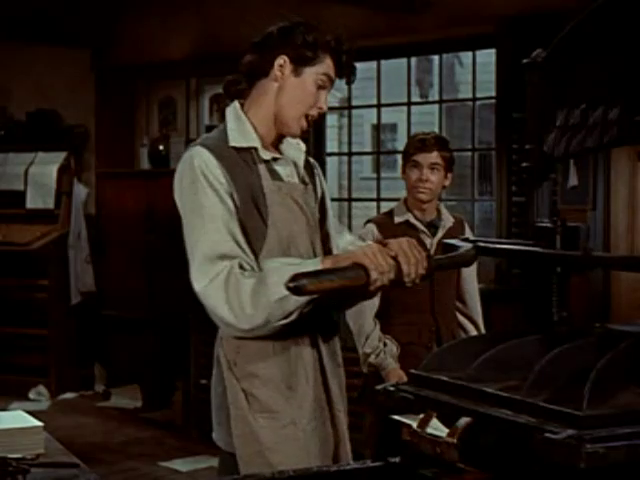
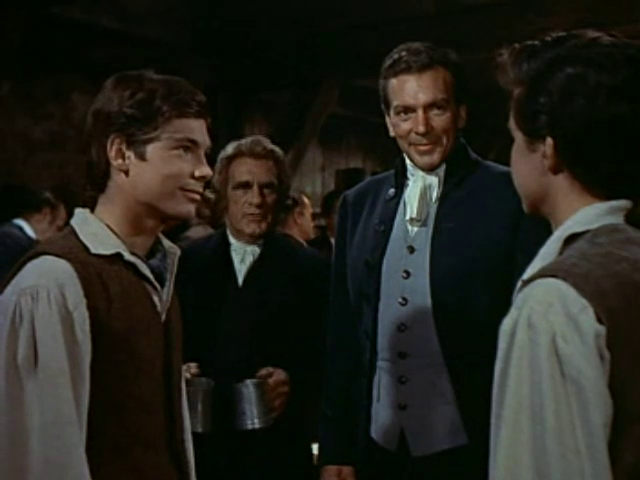
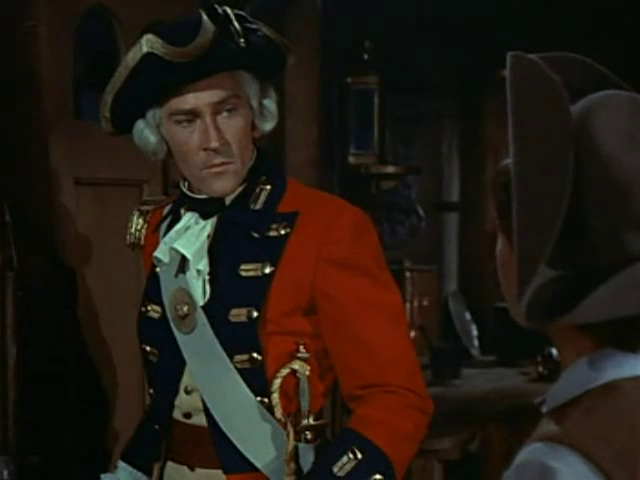
On June 19, 1957, the live action feature film Johnny Tremain was released to theaters. The film was based on the 1944 Newberry Medal winning book by Esther Forbes. Originally, the story was set to be a serial on the Disneyland anthology (much like The Scarecrow of Romney Marsh), but due to mounting production costs, Walt Disney decided to make it a feature film instead; it was aired on television the following year in two parts: The Boston Tea Party and The Shot Heard ‘Round the World. Sharon Disney, Walt’s daughter, has a small part in the film. It was directed by Robert Stevenson, who would go on to be one of Disney’s main directors in the 60s and 70s. The film stars Hal Stalmaster as Johnny Tremain, Luana Patten as Cilla Lapham, Dick Beymer as Rab Silsbee, Jeff York as James Otis, and Sebastian Cabot as Jonathan Lyte.

Set in Boston, July 1773, the film tells the story of young Johnny Tremain, who is an apprentice for the silversmith Mr. Lapham. A wealthy landowner named Jonathan Lyte enters the shop and asks Lapham to fix a broken teapot by Monday, but Lapham feels he is unable to fix the piece. Tremain convinces Lyte to let Lapham fix the piece, then works on convincing Lapham that he can fix the piece himself. Lapham tries and fails to recreate the handle of the piece, but Tremain refuses to give up. When Lapham’s granddaughter Cilla asks why Tremain is so concerned with this particular commission, he confesses a secret: he is related of the wealthy Mr. Lyte, and shows her his mother’s christening cup. He confides that he promised his mother that he will never tell Lyte of their relation, unless he is in dire need.
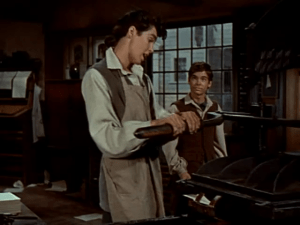
Tremain (R) goes to see Paul Revere for help, finding him at the printing press where his friend Silsbee works

Tremain (R) goes to see Paul Revere for help, finding him at the printing press where his friend Silsbee works

The next day, Tremain goes looking for his friend, Paul Revere, to ask for help in making the handle. Revere is at the printers, where Tremain learns about plans for preventing tea from entering the Boston harbor from his friend Rab Silsbee. Revere tells Tremain how to fix the handle, and Tremain sets to work. He ignores the Sabbath to keep working, and badly burns his hand, making him unable to apprentice anymore. He runs into Silsbee again as he and a few others are at the docks, preventing the tea from being brought onto Boston shores. Lapham, saddened that Tremain can no longer apprentice, offers a chance for Tremain to remain under his roof, but Tremain, very proud, refuses, as he feels he can’t earn his keep. He searches around town for work, but no one is willing to hire a boy with a disabled hand. As he sits, dejected, he runs across Mr. Lyte, and confesses his relation to him, showing him the christening cup. Lyte asks Tremain to bring the cup to his house that night, but when he does, Lyte has Tremain arrested for stealing the cup.

As Tremain sits in jail, he is visited by Revere and Silsbee, who bring a lawyer named John Quincy Adams to defend him at his trial, as they believe he is innocent. During the trial, Lyte tries to make an example of Tremain, disliking those young men that are against the King and his taxes. Adams does a good job of exposing Lyte’s prejudice, then calls Cilla to the stand as a witness. Cilla proves that Tremain did not steal the christening cup, though Lyte tries to make Cilla out to be some sort of villain as well. The judge finds Tremain innocent, and Tremain tells Silsbee that he will do anything to repay him for his help. Silsbee has an idea for Tremain to ride his uncle’s horse Goblin, as no one has been able to handle the easily spooked horse. Tremain is able to keep the horse calm, and is hired as the new horse boy. Silsbee also reveals to Tremain about a group called the Sons of Liberty, and that Tremain will also be tasked to deliver messages to and from the group.
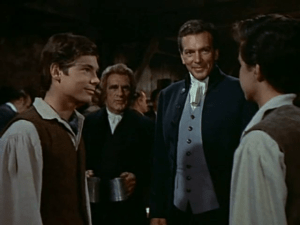
Tremain and Silsbee discuss what they've heard with members of the Sons of Liberty

Tremain and Silsbee discuss what they’ve heard with members of the Sons of Liberty

Tremain takes to his work quickly, and is soon able to observe one of the meetings for the Sons of Liberty. At this meeting, the members tell Tremain and Silsbee that they are attending another meeting about a shipment of tea that has been kept in port for 20 days, and will soon be seized and sold at auction by the governor. Tremain is then tasked to give a signal should he hears the phrase, “this meeting can do nothing more to save the country.” While Tremain waits in the church for the possible phrase, Silsbee is outside with other men, dressed as Native Americans, waiting near the ship. After the governor’s response arrives, the phrase is uttered, and Tremain heads out to sound the alarm. The men dressed as Native Americans set out, and the Boston Tea Party is launched. On the ship, Tremain stares out at the water, wishing he had two good hands to help. Dr. Warre, nthe town surgeon, reminds him that, any time he wishes to come by, he can repair his hand. The tea is dumped into the ocean, and the men head to the Liberty Tree after cleaning up the ship, hanging lanterns and posting signs.

The time then turns to the spring of 1775, and Dr. Warren has been called in to meet the Governor, and reads a newspaper that contains a speech by a prominent member of the House of Commons in England, demanding that the British leave Boston. The governor is not impressed, and refuses to open the ports until the tea that was dumped into the harbor has been paid in full. Meanwhile, Tremaine is sent over to the Lyte household, with Lyte telling him that he is moving back to England. Lyte shows himself to be a Loyalist, but is unable to sway Tremain. Finding that Tremain is a firm Patriot, Lyte informs him that he was going to adopt him into the family and take him to England to live, but Tremain tells him flatly that he would have wasted his time and returns the christening cup. Many young men and women gather with Silsbee, and plan to help Dr. Warren as best they can by finding out what the governor is planning to do. Silsbee reveals that the men old enough to carry guns have been requested to go to Lexington to join the Minutemen, and Tremain is dismayed to be asked to stay behind to watch the moves of the Redcoats. Cilla is rather happy that Tremain is kept out of danger.
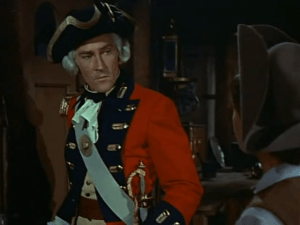
Tremain is able to get news of the British army's whereabouts from a disgruntled soldier

Tremain is able to get news of the British army’s whereabouts from a disgruntled soldier

Back at the Laphams, a Redcoat is angered by how long it will take to repair his flask, and Tremain uses this opportunity to ask questions about where the soldiers are going, and finds they are off to Portsmouth, New Hampshire. Tremain runs to tell Dr. Warren and the other Sons of Liberty, and the Patriots are able to prepare themselves at Portsmouth before the Redcoats arrive. The governor then finds that the Patriots are able to get enough arms and gunpowder to prepare themselves for any battle. The Redcoats then group together as a force to take down the Patriots, as they think that a bunch of farmers and mechanics can’t take on the British army. Cilla gets a job at a local tavern to get intelligence on the next moves the British plan to make, and by sheer luck, happens to get a copy of the governor’s latest order, although she is dismayed to find that everyone else already had a copy. A late meeting of the Sons of Liberty is called, with every single person called, as it may be the last meeting. The young men are then sent to Lexington to fight. Again, Tremain is upset that he can’t fight with the others, but Dr. Warren reassures him that he is of better use in Boston.

The last meeting of the Sons of Liberty is called to order, with the main conversation being an inevitable war. Many believe that the colonists should only go to war if war is made against them. The conclusion, thanks to a speech by Mr. Otis, is that they should go to war for the rights of men, all men. A little while later, Tremain is seen writing in the old printing house, with his hand fully repaired, thanks to Dr. Warren, and overhears the plan to find out how the British are coming using lanterns in the chapel steeple: one if by land, and two if by sea. Tremain and Cilla find out from the stable boy at the tavern that the British plan to travel by sea to get to Concorde. Tremain, pursued by British soldiers, runs to the church to make sure two lanterns are hanging as signal for Paul Revere, who soon takes off to warn everyone that the British are coming. Tremain soon sets off for Lexington, giving the worried Cilla a kiss before he goes.
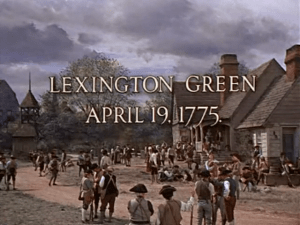
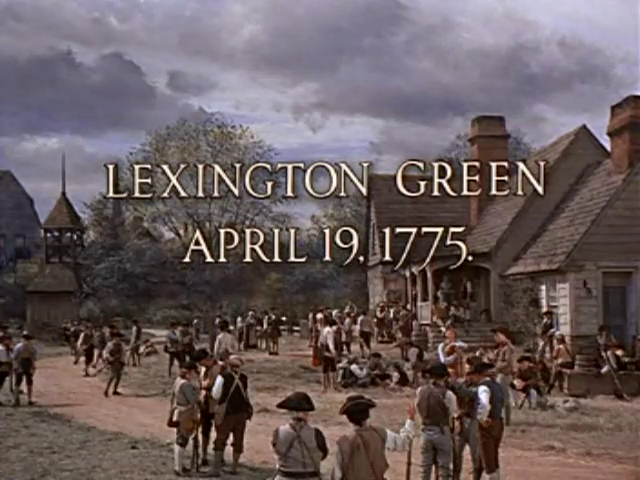
The militia gathers in Lexington Green for the first battle of the Revolutionary War

The militia gathers in Lexington Green for the first battle of the Revolutionary War

It’s April 19, 1775, and the militia is ready at Lexington Green. Tremain is reunited with Silsbee, and stands with him as they watch the Redcoats approach. The militia is ordered not to fire unless fired upon, and the British are ordered not to fire until given an order. A shot is fired, although neither side knows by whom, and the British begin shooting the militia men, killing several before the militia flees. War has begun in the colonies, and all of the able bodied Patriots gather to fight. Tremain and Silsbee catch up with the other men to head to Northbridge, where the British are trying to cut off the Patriots from reaching Concorde. Although the British fire a warning shot, it doesn’t deter the Patriots. They win the battle at the bridge, and continue to fight the British as they march on Concorde. The beaten British troops head back to Boston, informing the governor that they should not have underestimated the Patriots. The governor responds gravely that they have experienced more than defeat; they have been vanquished by an idea: a belief in human rights.

At the militia camp, Cilla finds Tremain lying on a hay bale, and, thinking he is gravely wounded, rushes to his side. He looks up in surprise and reassures her that he’s just tired after chasing redcoats all day. He tries to give her a kiss, but they are interrupted by Silsbee asking for help putting a log on the fire. Cilla then says that she’s glad it’s all over, but Mr. Otis says that it’s not over, it’s all just beginning. The camera pans out to show all of the militia camps surrounding Boston, with all of the Patriots at the ready to give their lives for liberty.
May 21

Posted on

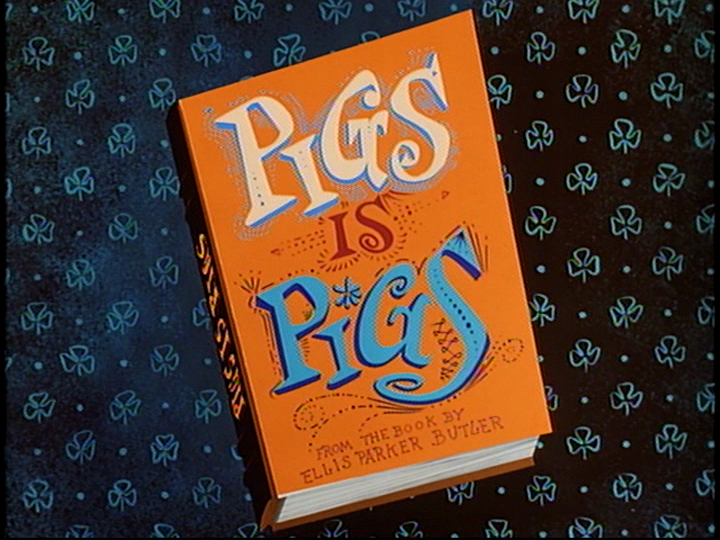
May 21, 1954 – The Special Short Film Pigs is Pigs is Released to Theaters

vlcsnap-2013-05-21-04h26m08s43

“Whenever an agent gets in a debate, and there is an argument over the rate, the agent must wire for a rule and apply, and hold onto the package until they reply.”

On May 21, 1954, the special short film Pigs is Pigs was released to theaters. The short was based on the short story by Ellis Parker Butler, which was first published in 1905. The style of animation used in the short was based on the UPA style of limited animation, which was very popular in this time period. It was directed by Jack Kinney, with story by Leo Salkin and animation by John Sibley. The short was nominated for an Academy Award.

At the Westcote Railway Station, Agent Flannery gets ready for the day. Flannery is known as the best agent there is, as he follows each rule to the letter. One day, he receives a package of two guinea pigs, and, having never seen guinea pigs before, notices that they don’t look like pigs, but he’ll follow the rules for pigs, as “it says [they] are” with “the writing plain to see.” A customer named McMorehouse arrives to pick up the guinea pigs, and is incensed to find that pigs cost four cents more than pets, and argues with Flannery that guinea pigs are pets, not pigs. McMorehouse refuses to pay the extra money, and Flannery states that in the case of a debate between the agent and customer, he’ll have to contact the main office for a ruling; until then, he will have to hold on to the package. McMorehouse storms out, saying that when Flannery finds he’s wrong, he is to send the package to his address.

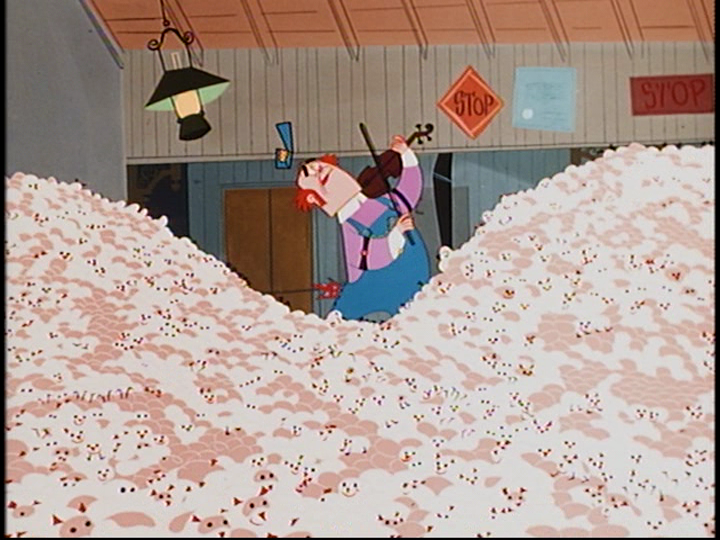
Flannery is swamped by the ever multiplying guinea pigs, and tries to calm them with Irish jigs

Flannery is swamped by the ever multiplying guinea pigs, and tries to calm them with Irish jigs

At the headquarters, the telegram arrives from Flannery and goes through a very regimented process of signing, dating, and copying. Meanwhile, Flannery tries to take care of the guinea pigs, only to find that they have started breeding. He creates a bigger crate for the guinea pigs, as there are now nine, but multiplying fast, with guinea pigs in every drawer and bursting from every place possible. At headquarters, the debate continues, with everyone up to the board of directors trying to determine whether guinea pigs are pigs or pets. They finally determine that guinea pigs are pets, and the lower rate applies. The guinea pigs multiply and multiply, bursting out of the Westcote Station. When Flannery gets the telegram, he rushes to McMorehouse’s home, only to find that that McMorehouse doesn’t live there anymore. He wires the office again, asking what he should do in this situation, as there is no rule for this. Not knowing that they pigs have multiplied into “two million and two,” the office makes a recommendation that the guinea pigs be sent there. Flannery fills six hundred boxcars with guinea pigs and sends them on their way. The guinea pigs are stored everywhere in the whole company, even the president’s office. From that day forward, Flannery refuses to follow the rules to the letter anymore, declaring that all animals will thereby be classified as pets.

April 23

April 23, 1957 – The Fantasyland Attraction Midget Autopia Opens

Midget_Autopia

On April 23, 1957, the Fantasyland attraction Midget Autopia opened in Disneyland. The attraction was meant for children who were too small for the Autopia attraction. However, Walt Disney supposedly disliked the fact that only children could ride this attraction, and it was closed on April 3, 1966. When it was removed from Disneyland to be replaced by the walkway for it’s a small world, the full attraction was donated to Disney’s hometown of Marceline, Missouri, although it has not been in operation for several years

March 28

March 28, 1953 – The Goofy Short Film Father’s Day Off is Released to Theaters

vlcsnap-2013-03-27-22h14m57s221

“Can I handle everything? Ha! What’s a little housework?”

On March 28, 1953, the Goofy short film Father’s Day Off was released to theaters. It was directed by Jack Kinney, with story by Brice Mack and Dick Kinney.

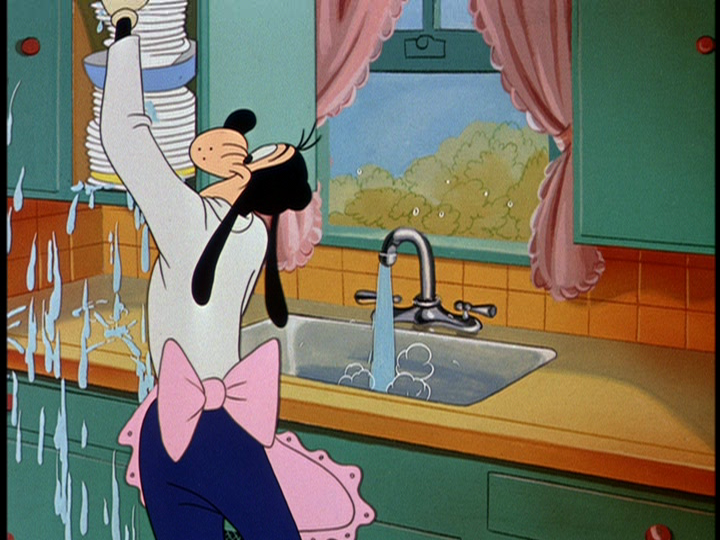
It’s another day in suburbia, and Goofy stands with his son, George, at the door of their house while his wife is preparing to head off in the car for the day. She asks if he’ll be able to handle everything while she’s away, and he scoffs at her question, thinking housework is easy. She leaves, although not without causing major damage on the way out. He starts with giving George breakfast, but spills George’s milk and gives him a rather strange haircut around the rim of his baseball cap. The doorbell buzzes, sounding the arrival of the milkman, who gives Goofy a kiss as he delivers the milk (not noticing that it is not Goofy’s wife), leaving Goofy stunned, although he brushes it off a being friendly. He then shoves the milk in the already overstuffed fridge, which causes the food to bulge out everywhere.

Goofy proclaims housework to be easy, but he only thinks so because he takes shortcuts and does a subpar job

Goofy proclaims housework to be easy, but he only thinks so because he takes shortcuts and does a subpar job

George is then sent off to school, but George informs his father that it’s Saturday. Goofy then laughs this off, and says that George will be a lot of help to him around the house. His first efforts at housecleaning are rather terrible at best, but he thinks it’s simple. He catches George drawing on the wall, but when he goes to clean it, he wipes off the paint from the wall, leaving the drawing unscathed, and decides to fix it by placing the radio in front of the scribble. The radio switches on, and Goofy gets caught up in listening to a melodrama. As he cries at the storyline, the doorbell buzzes again, this time with the grocery delivery man, who also gives Goofy a kiss (also not noticing that it is not Goofy’s wife). As groceries are thrust into a flustered Goofy’s arms, George runs through the house, and a baseball is tossed to him, breaking the window in the process. He then breaks the other half of the window throwing it back to his friends. The family dog then traipses through the living room, covered in mud.

The laundry is sent flying through the air thanks to another mishap, and Goofy decides to run it through the washing machine. He suddenly notices that his son was in the washer, and quickly retrieves him. The family dog, brought back inside, starts tearing up one of the pillows. When Goofy tries to find the vacuum cleaner in an overstuffed closet, he just creates a larger mess, and George ends up stuck in the vacuum bag. Goofy sends George to take a bath, and floods the house. As he goes to lecture his son, the cleaning man arrives at the door, preparing to give Goofy’s wife a kiss, when he is doused in the bath water, which shrinks the delivered dress. Goofy becomes more and more overwhelmed with everything he needs to do, and accidentally leaves the phone off the hook. The melodrama on the radio takes a violent turn, and the operator, thinking that she’s hearing a real murder, calls the police in a panic.

The iron Goofy left on falls through the ceiling, landing square on his head

The iron Goofy left on falls through the ceiling, landing square on his head

Goofy’s wife arrives home, and Goofy quickly tries to act like nothing happened. The fire department then arrives and starts tearing up the house, along with the police, who demand to know where the body is. The iron that Goofy had left on burns a hole through the ceiling and knocks Goofy out, while the press is there to take pictures.