RSS Feed

Tag Archives: 1940s

June 7

Posted on

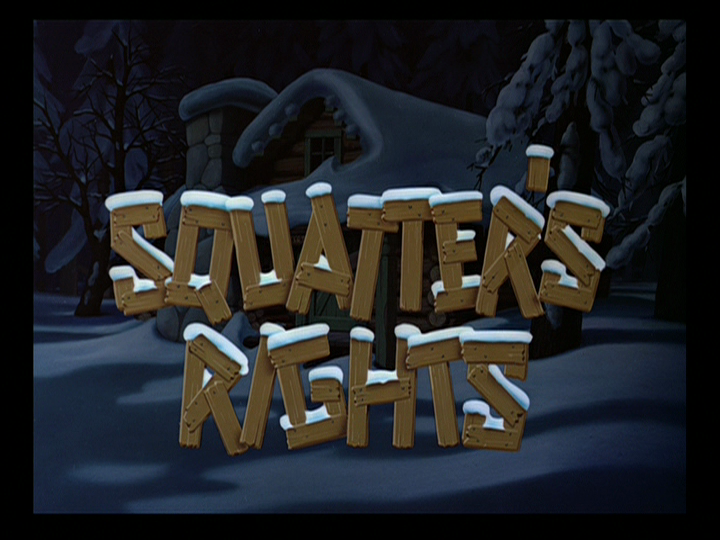
June 7, 1946 – The Mickey Mouse Short Film Squatter’s Rights Premieres in Theaters
vlcsnap-2014-06-07-20h03m29s173

“Pluto, you put some logs in the stove and we’ll build a nice, big, roaring fire.”

On June 7, 1946, the Mickey Mouse short film Squatter’s Rights premiered in theaters. Although labeled as a Mickey Mouse short, it had been labeled by Disney as a Pluto short film, as Pluto is the main character. This was the second short to feature the characters of Chip and Dale, although they have still not been identified, and are still drawn similarly. The short was nominated for an Academy Award, but lost to MGM’s The Cat Concerto. It was directed by Jack Hannah.

It’s a snowy day at Mickey’s “Hydout,” which has been locked up for quite some time, and inside, Chip and Dale are sleeping peacefully inside the cabin’s stove. The two get ready for the day when they hear the strange sound of barking. Pluto and Mickey enter the cabin, startling the chipmunks, especially when Mickey asks Pluto put logs in the stove so he can start a fire. The chipmunks start distracting Pluto from his task, but after he tries to attack them, he is told off by Mickey, who thinks the pup is just goofing off. Pluto finally gathers the logs, and Mickey attempts to build a fire. Every match he lights, however, is blown out by the chipmunks. When they see Pluto grab the kerosene, they take the drastic action of using a match to light Mickey’ shoe. Pluto catches the pair under the stove, but they plant the used match in Pluto’s mouth, making Mickey believe that Pluto was the culprit. Mickey can’t stay mad at Pluto, and goes out to chop more wood. The moment he leaves, Pluto starts chasing the chipmunks around the cabin, leaving a mess in his wake.
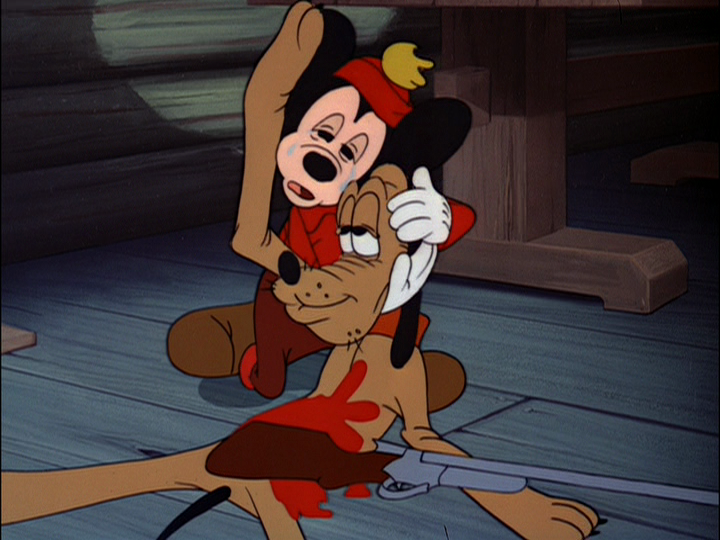
Mickey holds Pluto, thinking that the dog is dying from a gunshot wound

Mickey holds Pluto, thinking that the dog is dying from a gunshot wound

At one point, Pluto gets his nose stuck in the shotgun on the mantle, and as he triest remove it, he realizes that the trigger will be activated, and he will be shot. Pluto falls from the mantle and the gun goes off, luckily missing the dog; however, the butt of the gun hits Pluto on the head, knocking him unconscious. The chipmunks get an idea to get Pluto to believe he has indeed been shot, and use ketchup to resemble blood. Mickey enters the cabin again and, seeing Pluto lying on the ground covered in “blood,” rushes to his pal’s side. He picks Pluto up and rushes him out of the cabin, leaving Chip and Dale to celebrate their victory.
April 26

April 26, 1940 – The Mickey Mouse Short Film Tugboat Mickey is Released to Theaters

vlcsnap-2014-04-26-08h44m16s220

“SOS. SOS. Calling all ships. Steamship Gigantic sinking.”

On April 26, 1940, the Mickey Mouse short film Tugboat Mickey was released to theaters. This is one of several shorts where characters Donald Duck and Goofy were teamed up with Mickey to create a more entertaining story. The short was directed by Clyde Geronimi.

Mickey, Donald, and Goofy are cleaning their tugboat while singing sea shanties, with Mickey being hoisted to the top of the mast to varnish. His bucket of varnish, however, is accidentally swallowed by a sleepy pelican, who becomes drunk on its contents. As Mickey battles the pelican, an announcement is heard over their radio that the steamship Gigantic is sinking, and Mickey scrambles to get his crew moving to rescue the ship. Donald and Goofy quickly start the ship, although they soon run out of steam. Goofy tries to shovel coal into the boiler, but the door continuously shuts on him, sending the coal flying back in his face. Donald then breaks the pulley, and when he tries to reassemble it, he is mocked by the steam. The pulley catches on to Donald’s hat, but when he tries to retrieve it, the steam completely fills up the hat and explodes on Donald.

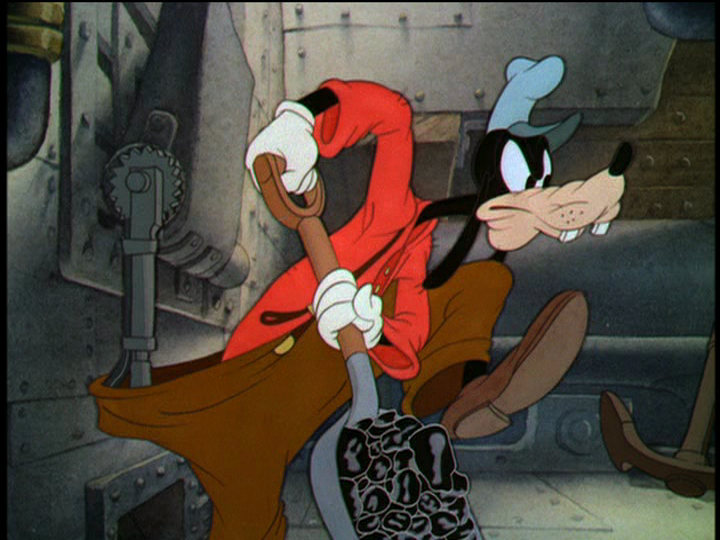
Goofy fights the boiler, unaware that he is caught on the lever for the coal release

Goofy fights the boiler, unaware that he is caught on the lever for the coal release

Mickey continues to listen to the distress signal, and calls down to Goofy for more steam. Goofy attempts to take a running start to shove the coal in the boiler, but doesn’t realize that he caught his pants on a lever that released all the coal into his pants. The coal and Goofy go flying into the boiler, and when Goofy lights a match to see where he is, he is shot out by an explosion, followed by a steady stream of flames. Goofy shuts the boiler with an anchor, and a steady stream of steam is sent flowing through the mechanics of the ship. The pulley that Donald was trying to fix fixes itself – unfortunately, it traps Donald through his shirt, and Donald is knocked around as the steam makes the tugboat work on overdrive. Mickey tries to steer the tugboat, but it seems to have a mind of its own, and the boiler explodes, leaving this ship as nothing more than a wreckage. The distress call continues, until it is cut off by a radio announcer saying that they’d just heard the final broadcast in a radio drama about the Steamship Gigantica. Angered, Mickey, Donald, and Goofy drown the radio in the ocean.

April 21

April 21, 1944 – The Donald Duck Short Film Contrary Condor is Released to Theaters

vlcsnap-2014-04-21-03h02m45s75

“One of the world’s least appreciated scientists is the ornithologist, or egg collector to you, whose trail penetrates the wildest and most difficult of mountains, the Andes.”

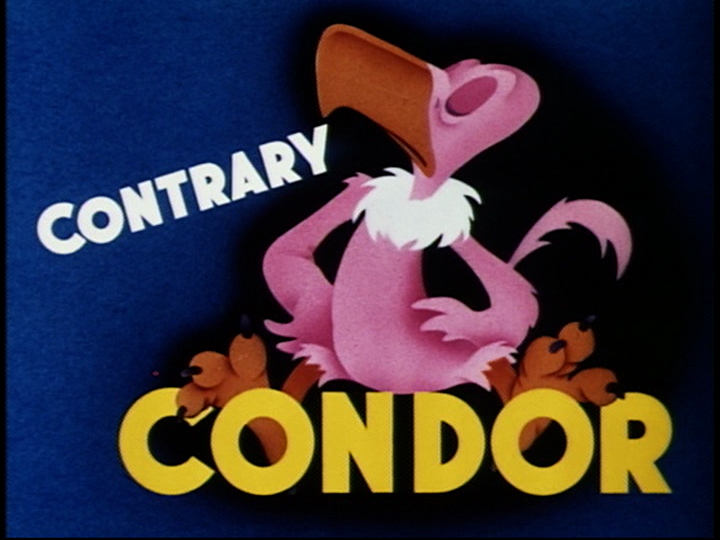
On April 21, 1944, the Donald Duck short film Contrary Condor was released to theaters. It was directed by Jack King.

The short opens on a map, with footprints belonging to Donald trailing across the border of North America to South America, making a trail through the Andes. Donald is seen climbing up a vertical side of the mountain with plungers on his feet, yodeling as he goes. He sees the nest, and quickly reaches the top, ready to take an egg from a condor. One condor hatchling has already hatched and starts squawking at Donald’s arrival, but Donald just tells the hatchling to shut up and shoves him back into his egg shell. When he spots Mother Condor flying overhead, Donald hides the other egg and hides in the other hatching’s shell, kicking the baby condor out. The mother lands and decides to sit on the egg in which Donald is hiding. The warmth she provides is almost too much for Donald, and he sweats profusely. The egg suddenly starts to crack, and he is nearly crushed by the condor. Thinking quickly, Donald decides to pretend he’s a condor. The mother is convinced, and gives Donald a hug, much to the surprise of the other hatchling.

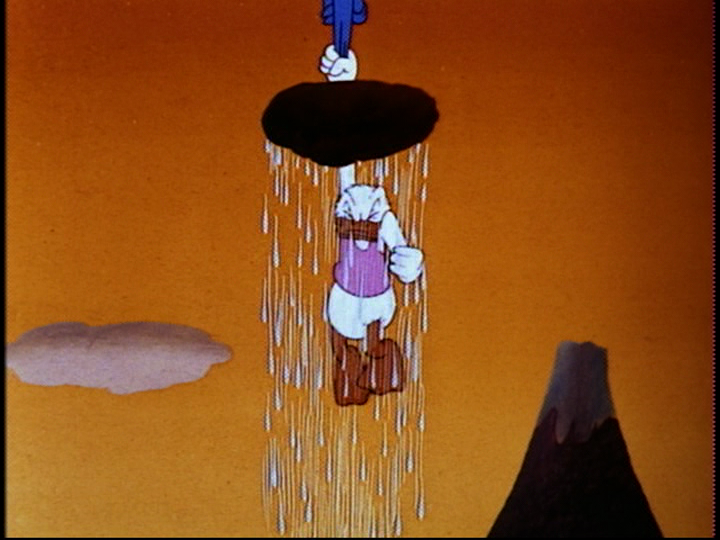
During a flying lesson, Donald hands precariously from a tree branch, getting rained on by a passing storm cloud

During a flying lesson, Donald hands precariously from a tree branch, getting rained on by a passing storm cloud

Mother Condor then sends her hatchlings off to learn how to fly. The hatchling pushes Donald off the tree branch, but he manages to hold on when his clothes catch a branch nearby, although he is not so lucky when a passing storm cloud starts to shower all over him. Mother Condor tries to teach Donald to fly, but Donald looks down and gets dizzy. He tries to slip away, but is spotted and brought back. Donald manages to convince her that he has a bum wing, and she starts cradling him. The hatchling gets jealous, and starts squawking for attention. Having had enough, he sends Donald flying into the air and he lands on a branch nearby. Trying to get out of his situation once and for all, Donald rigs up a decoy using branches and leaves, and sends it hurtling to the river below. Although Mother Condor tries to save her “hatchling,” she believes it to be too late when it falls into the river, and she starts sobbing on the nearby bank. Donald then takes the other condor egg, thinking himself victorious, but the other hatchling steals it from him. Donald takes it back, but falls down into the river, holding the egg protectively. Relieved to see him still alive, Mother Condor gathers Donald and the egg into her arms and coddles them. That night, egg, Donald, hatchling, and Mother Condor are nestled together, while Donald mutters angrily under his breath.

April 3

April 3, 1946 – The Education Short Film Planning for Good Eating is Delivered to the Coordinator of Inter-American Affairs

vlcsnap-2014-04-03-07h26m03s217

“Yes, it’s this same plan, a plan of eating the three necessary types of food that keeps our friends in fine health.”

On April 3, 1946, the educational short film Planning for Good Eating was delivered to the Coordinator of Inter-American Affairs. During wartime, the Disney Studios kept itself afloat by producing several educational and training shorts for various government offices; Disney kept up the practice after the war was over, which included several shorts featuring the likes of Donald Duck and Goofy.

The short begins with the narrator explaining the diet of several different animals, stating that their one source of food works well for them. He then introduces Careless Charlie and his family, who try to survive on one source of food. He notes their rundown condition, as they don’t seem to realize that man needs more than just beans and cornbread. Corn and beans are the same type of food, and the family is missing out on animal products, as well as fruits and vegetables. Each builds one of the three main needs of a human’s body: muscles, bones, and energy; a combination of the three builds resistance against disease. The narrator tells Charlie that he needs to eat the correct foods, and he is able to grow these foods in his own yard. His family helps him to provide the foods he needs. The family then sits down to a wonderful stew with all three types of foods, with the family looking much healthier and happier. Careless Charlie is then renamed Careful Charlie. Mrs. Charlie is then given a special shout-out, as she works to include all three types of foods into every meal she cooks. The narrator then provides a list of foods that are part of the individual food groups. He stresses the importance of eating fruits and vegetables, especially for growing children. Charlie is rewarded for his hard work, and a combination of all three protects his family from disease and granting them good health.

April 2

April 2, 1943 – The Pluto Short Film Private Pluto is Released to Theaters

vlcsnap-2014-04-02-03h17m44s211

“Private Pluto, there are saboteurs in the vicinity! Guard that pillbox with your life!”

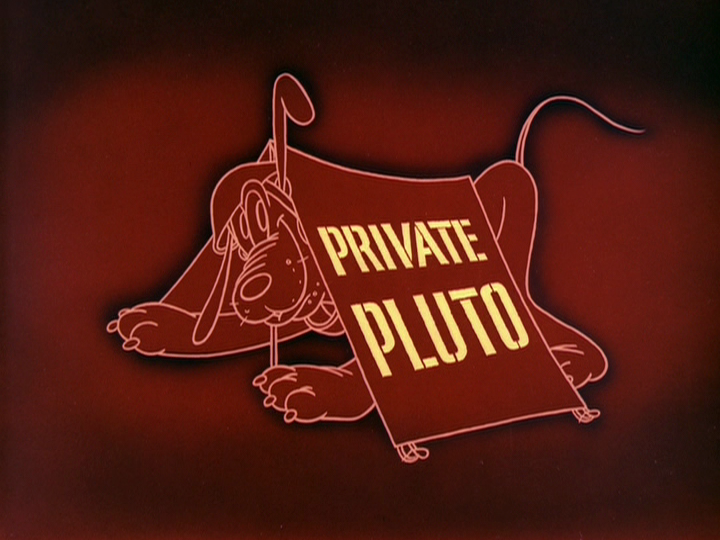
On April 2, 1943, the Pluto short film Private Pluto was released to theaters. This short marks the first appearance of chipmunk duo Chip and Dale, although they are not yet named (their official names were announced with the release of the 1947 short film Chip an’ Dale). The short was directed by Clyde Geronimi.

It’s morning at the Army camp, and Pluto marches with the other soldiers. He is then given orders to guard a pillbox from sabotage. Pluto takes his job seriously, and turns around to see a cannon being used to smash apart a nut, with a chipmunk stepping from the cannon and picking up the pieces. As Pluto goes to investigate, another acorn is sent flying from the cannon to the ground, and as he goes to sniff it, the cannon whacks him on the head. The chipmunk looks at him, unafraid, and takes the acorn from a dazed Pluto’s mouth. They then tease the dog, using his helmet to place several acorns, and once again smashes his head (and acorns) with the cannon. Pluto is finally able to see who his nemeses are, and manages to take their acorns before they can use the cannon again. He continues to steal their acorns, but they quickly catch on to his plan and seek revenge. They trap Pluto by his backside in the mouth of the cannon, and fire him high into the air. The chipmunk pair watch Pluto fall, and put one more plan into action: they place acorns in the area occupied by Pluto’s shadow. When Pluto lands on the ground, he smashes all the acorns the chipmunks placed. They remove Pluto by biting his tail, and collect all the acorns, escaping before Pluto can catch them. The short ends with Pluto whining and banging on the pillbox door.

March 20

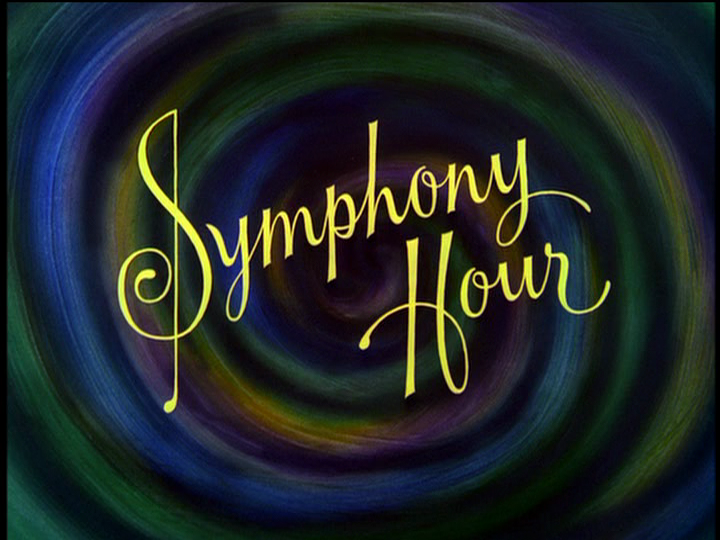
March 20, 1942 – The Mickey Mouse Short Film Symphony Hour is Released to Theaters

vlcsnap-2014-03-15-11h10m40s139

“Macaroni has got a new find! And tonight, we make history!”

On March 20, 1942, the Mickey Mouse short film Symphony Hour was released to theaters. This short contains the last appearance of Horace Horsecollar, Clarabelle Cow, and Clara Cluck in the golden age of Disney shorts; they would not appear again in film until 1983’s Mickey’s Christmas Carol. The short was directed by Riley Thompson, and features the piece Light Cavalry Overture by Franz von Suppé.

Rehearsals for Mickey’s orchestra are going very well, and Mr. Macaroni listens happily from the sponsor’s booth. At the end of the rehearsal, Macaroni heaps praise upon praise on Mickey, and declares that they will make history tonight. That night, the Macaroni Symphony Hour is highly advertised in front of the Wiz Theater, and everyone prepares for the show. As the audience takes their seats, Mickey, Donald, and Goofy run for the elevator as they hear the stage manager announce the last call. Mickey and Donald make the elevator; Goofy crashes through the elevator doors and falls to the bottom of the shaft. He drops all the instruments he was holding, and while he makes it out unscathed, the instruments are completely flattened by the elevator.

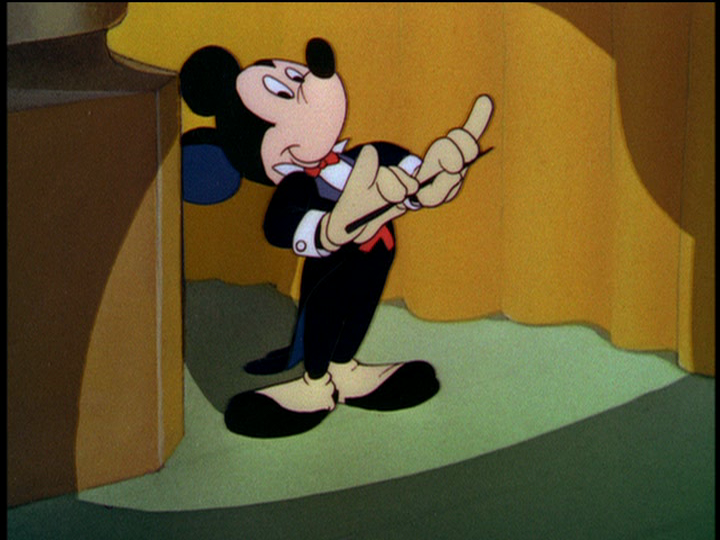
Mickey takes the stage as the announcer begins the broadcast of the "Symphony Hour"

Mickey takes the stage as the announcer begins the broadcast of the “Symphony Hour”

It’s close to air time, and Goofy, along with the instruments, are missing. Mickey panics, but when he hears Goofy call out that he’s on his way, Mickey relaxes slightly, and takes his place when it is time for the show to begin. Mickey heads out on stage while Macaroni, listening from his own private booth, smokes a cigar and thinks of all the money he will make that evening. As Mickey begins the piece, he is shocked to hear the sound coming from Horace’s flattened horn. Horace’s horn breaks, and is sent flying across the room, landing around Donald’s neck. Macaroni shakes his radio, wondering what the heck is going on with the sound. Mickey nearly faints from the disaster, but tries to keep his composure, although he continues to see Macaroni throwing a fit in the booth. Goofy’s instrument breaks apart as he plays it, and he just shrugs at Mickey. Donald, frustrated with how the piece is going, is seen looking at the “Help Wanted” ads, and mocks Mickey. Mickey steps down from the podium, rolls up his sleeves, and throws Donald back into the percussion instruments. After seeing another tantrum from Macaroni, Mickey looks back to the orchestra to find Donald packed up and walking out. After literally throwing the book at him, Mickey motions for him to get back to the percussion section. When Donald ignores him, Mickey rushes over and threatens Donald with a gun. Donald then runs back and finishes the percussion with a tantrum of his own. Macaroni starts crying that he’s a ruined man, but stops when he hears the wild applause from the audience. He then embraces Mickey, while Mickey keeps conducting in a daze.

February 6

February 6, 1948 – The Goofy Short Film The Big Wash is Released to Theaters

vlcsnap-2014-02-06-18h58m59s91

“I’m a-gonna warsh Dolorious, she’s a-gonna look glorious!”

On February 6, 1948, the Goofy short film The Big Wash was released to theaters. The name of the elephant, Dolores, is an allusion to Walt’s secretary, Dolores Voght. It was directed by Clyde Geronimi, with story by Bill Berg and Milt Banta.

It’s early morning at a circus fairground, and elephant Dolores wakes up to find that she has no food in her bowl. She peeks into Goofy’s trailer and decides to wake him by shaking him violently with her trunk. When that doesn’t work, she shakes the trailer, breaking it apart. This also doesn’t work, so she decides to trumpet loudly into his ear. He finally gets up and sets to work, singing a merry song while he does. She searches his belongings and finds a peanut he had stashed away for her. He then gets her bath ready, although she flees as she hates baths. When she sees the tub, she refuses to get in and tries to run, but Goofy chases after her with a hose. However, he gets tangled up in the hose as it pulls him back to the faucet like a yoyo.

Dolores puts on a disguise to sneak past Goofy and skip her bath

Dolores puts on a disguise to sneak past Goofy and skip her bath

Dolores disguises herself in an old clown’s outfit to escape bath time, and Goofy falls for the disguise, allowing her to slip by. She then plays a prank on Goofy, letting water go in the hose so that it fills up Goofy’s clothes. As Goofy tries to walk, his clothes give out and sends water everywhere. Goofy continues his search for Dolores and chases her across the fairground. When he finally catches her, he chains her feet to the ground to keep her in one place. However, as he climbs the ladder to reach her back, she holds the ladder up high; when he reaches the top, he plummets to the ground, dropping everything, including a box of soap. The soap powder flies everywhere, and causes Dolores to sneeze, freeing her from her chains and sending Goofy flying into an ad on the fence. Goofy finally manages to give Dolores a bath, although she continues to sneeze thanks to the soap, causing more problems for Goofy when she lands on him.

February 1

February 1, 1947 – Imagineer, Former Senior Vice President of Creative Development, and Disney Legend Tony Baxter is Born

TonyBaxter_Collection_550

“The names on those windows gave the world a very magical kingdom, but more importantly, created a yardstick by which everything that’s followed Disneyland has been measured…to be included with them here at Disneyland is, to me, the ultimate honor.”

On February 1, 1947, Tony Wayne Baxter was born in Los Angeles, California. Baxter was interested in Disney from a young age, fortuitously growing up at the time and place where Disneyland opened and flourished. At age 17, he began working at the park as an ice cream scooper at Carnation Plaza Gardens. After peeking behind the scenes of the Pirates of the Caribbean attraction, he ran into Imagineer Claude Coats, who offered to give Baxter a tour of the then-unfinished ride. His love for Disney attractions continued through college, where he created a design for a Mary Poppins-themed ride for a course project. This project was brought to the attention of WED (now known as WDI – Walt Disney Imagineering), and they offered him an in-depth look at Imagineering. After college, Baxter was given a job in WED, and his first project was the Walt Disney World version of the 20,000 Leagues Under the Sea attraction, where he served as the field art director. After this, Baxter helped develop some of the most loved attractions in the parks, the first being Big Thunder Mountain Railroad, opening in Disneyland in 1979 and designed by both Baxter and mentor Claude Coats.

In 1983, Baxter oversaw one of the biggest projects at the Disneyland – the remodeling of Fantasyland. A walk-through was added inside Sleeping Beauty’s Castle, and all the buildings were redesigned from a Renaissance theme to a Bavarian Village theme. In 1989, the attraction Splash Mountain debuted, with the initial idea for the attraction belonging to Baxter. He was also tapped to create attractions for the George Lucas partnership, which included Star Tours and Indiana Jones Adventure. Baxter is also credited for the Imagination pavilion in Walt Disney World’s Epcot park, the redesign of Disneyland’s Tomorrowland, restoration of the Disney submarines for Finding Nemo Submarine Voyage, renovation of Great Moments with Mr. Lincoln, revamp of Star Tours – The Adventure Continues, and the creation of Disneyland’s Fantasy Faire. 2013 became an important year for Baxter, as he not only announced that he would be stepping down from his role as Senior Vice President of Creative Development into a role of creative advisor and mentor, but he was awarded a window on Main Street, and honored as a Disney Legend.

January 24

January 24, 1941 – The Pluto Short Film Pluto’s Playmate is Released to Theaters

vlcsnap-2014-01-24-04h16m56s246

On January 24, 1941, the Pluto short film Pluto’s Playmate was released to theaters. It was directed by Norm Ferguson.

It’s a perfect day at the beach for Pluto as he races across the sand chasing a ball. The ball lands in the water, and as he goes after it, the ball seemingly moves on its own, avoiding Pluto’s teeth. As Pluto searches for the ball, a wave sweeps him across the shore, revealing that the ball has been taken by a playful seal. The seal wishes to play with Pluto, but Pluto is suspicious of the strange creature. Pluto tries to take the ball from the seal, but ends up burying holes in the sand in his pursuit. Pluto finally gets his ball back and tries to bury it in the sand away from the seal, but the seal sneaks under Pluto and takes the ball away again. The seal throws the ball for Pluto, and once Pluto retrieves it, he buries it in a hole several feet deep. The seal dives in to retrieve it, and Pluto sees this as his chance to bury the seal along with the ball. However, when a wave comes in, the seal pops out of the water, unable to be trapped by Pluto’s antics.

The seal plays with Pluto's ball while swimming around, which infuriates Pluto

The seal plays with Pluto’s ball while swimming around, which infuriates Pluto

The seal plays happily in the water with Pluto’s ball, infuriating the dog. Pluto decides to take a sneak attack approach and creeps through the water to catch the seal. As he travels through some seaweed, he unknowingly picks up an octopus, who traps Pluto to the edge of a barrel. Before Pluto can bark at the octopus, the octopus uses its legs to keep Pluto’s mouth closed. The octopus traps Pluto under the water, and Pluto struggles to get free. The seal sees Pluto struggling, and works to free Pluto from the clutches of the octopus through tug-of-war method. The seal wins, and he and Pluto are swept to shore by another wave. Pluto seems to have stopped breathing, and the seal quickly revives him. The seal returns to ball to Pluto, and the grateful dog plays ball with the seal up and down the beach.

January 4

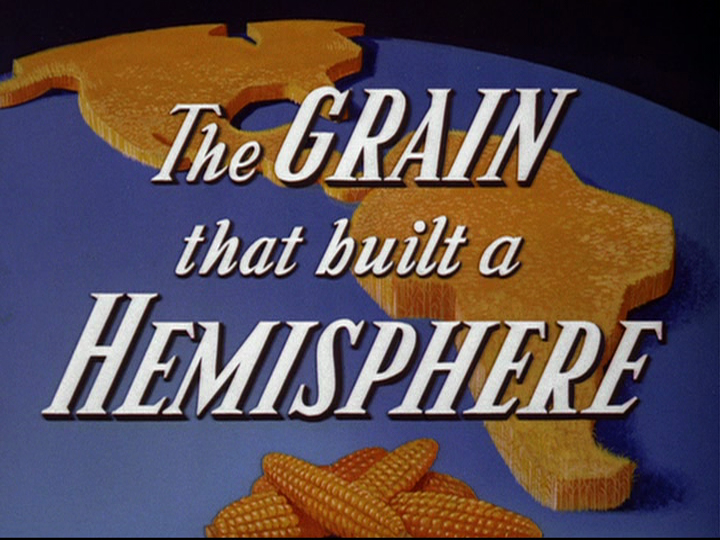
January 4, 1943 – The Educational Propaganda Short Film The Grain That Built a Hemisphere is Delivered

vlcsnap-2014-01-04-16h01m49s225

“Corn is the symbol of a spirit that links the Americas in a common bond of union and solidarity.”

On January 4, 1943, the educational short film The Grain That Built a Hemisphere was delivered to the Coordinator of Inter-American Affairs. It was nominated for an Academy Award for Best Documentary in 1943, but lost to The Battle of Midway, Kokoda Front Line!, Moscow Strikes Back, and Prelude to War. This short also includes a short segment from the 1938 Silly Symphony Farmyard Symphony. The short was directed by Bill Roberts.

The short begins with an explanation of corn, and how it possibly came to be. The earliest version of corn grew on the mountains centuries ago, but was not noticed by hunters as they searched for food. When hunters were unable to find game, they were able to find corn and use it for food; this discovery is then credited as helping begin the civilization of the Americas. The narrator then directs the attention to the Mayan civilization, which was built around the growth and worship of corn, with great temples built in dedication to the corn gods, including Yum Kaax. The Aztecs also built a civilization based on corn, with their corn goddess named Centeotl. The Incas, located in the Andes, worshipped a sun god, who provided them with all they needed to grow their corn. The crop of corn spread around South America and all the way to Canada; it was also sent over the world through the conquistadors and spread from there.

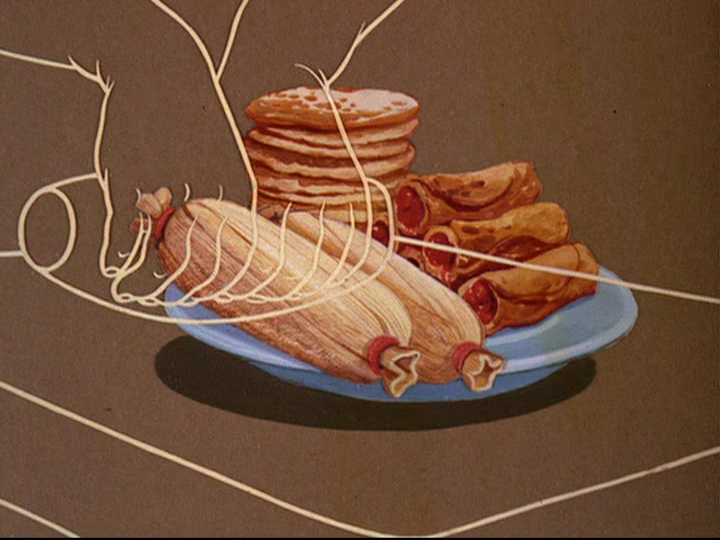
A list of foods made from corn is shown through animation

A list of foods made from corn is shown through animation

The narrator lists the various foods made from corn, including tortillas, succotash, and bourbon. Brought to present day, where it is explained that, thanks to advances in machinery, we can harvest enough corn in fifteen hours, compared to the 500 the Mayans needed. The next topic is how to inbreed corn, and the entire process is explained step by step. It produces small versions of the corn plant, but once two small unrelated inbred plants are cross-bred, that produces a stronger, larger stalk with more ears. Seventy-five percent of all corn produced in the United States goes to feed for livestock, with hogs eating the most of that percentage. After this, a scientific study of corn is presented, with an explanation of how the two parts of the corn kernel (the endosperm and the germ) are used to create oils and starches, which have a variety of uses. A hypothesis of how corn can be used to help the war effort is also presented, with the idea that corn can be used to create tough plastics, powerful fuels and explosives, tires, parachute fabrics, and more.