RSS Feed

March 16

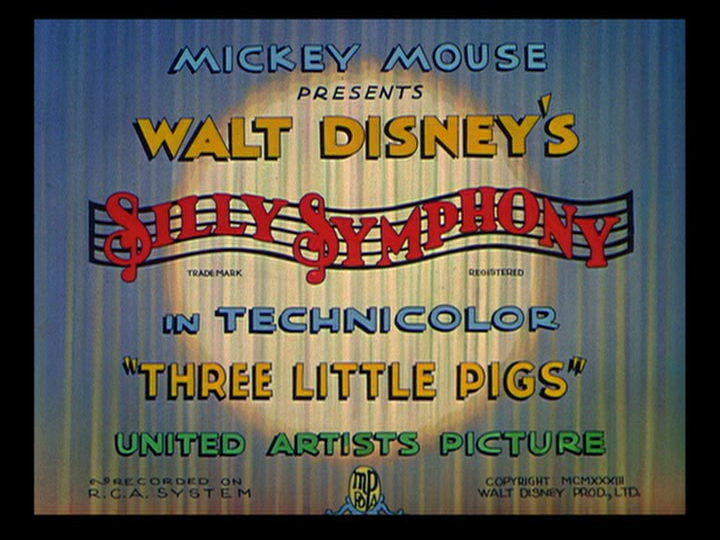
March 16, 1934 – The Silly Symphony The Three Little Pigs Wins the Academy Award


“…[The Three Little Pigs] sent a message of optimism to moviegoers who’d been battered by the Great Depression.” – Film Critic Leonard Maltin.

The 6th Academy Awards were held at The Ambassador Hotel on March 16, 1934, and the Disney Studios walked away with the Academy Award for Best Animated Short film for the wildly popular Silly Symphony The Three Little Pigs. It was in competition with the Universal Studios short The Merry Old Soul, as well as the Walt Disney and United Artists Mickey Mouse short Building a Building (see entry for January 7).

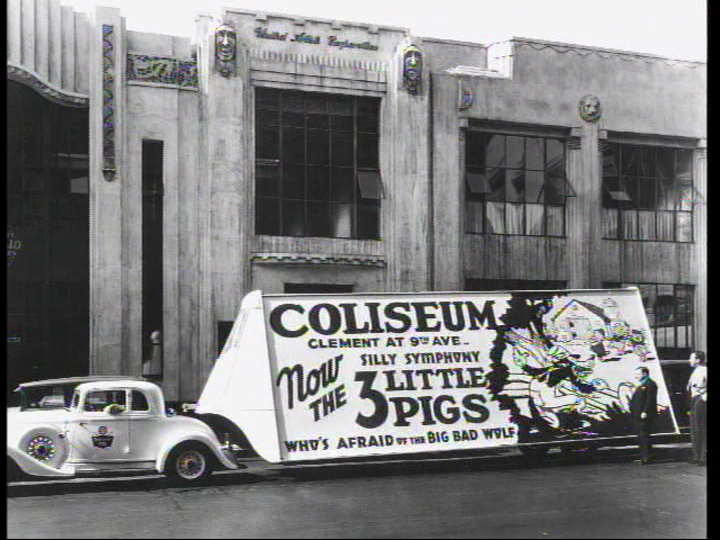
This is one of the billboards advertising the short at the Coliseum. The short was able to get top billing after a while due to its success

The short, although well done in its own right, was popular due to being released at the right time. It was considered groundbreaking in its characterization and musical score, but Depression-weary audiences adopted the song “Who’s Afraid of the Big Bad Wolf” as their fight song. The short’s immense success kept it in theaters for months with top billing, even after feature films had long left the theater. The success of the short, including the Academy Award, led to a major merchandising campaign, as well as three sequels: The Big Bad Wolf, Three Little Wolves, and The Practical Pig.

March 15

March 15, 1940 – The Donald Duck Short, The Riveter, is Released to Theaters

“Oh boy, oh boy! Am I a riveter!”

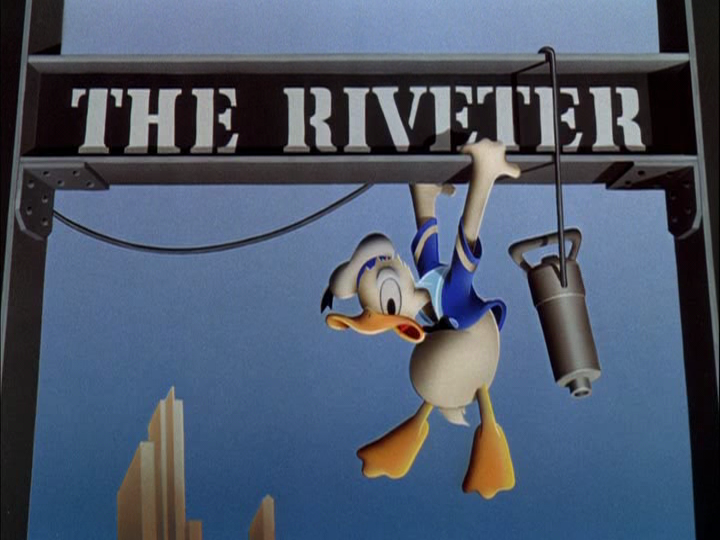
On March 15, 1940, the Donald Duck short, The Riveter, was released to theaters. Directed by Dick Lundy, and starring the voices of Clarence Nash as Donald and Billy Bletcher as Pete, the short tells the story of Donald eagerly taking a job as a riveter for Pete, even though Donald really has no clue what a riveter is.

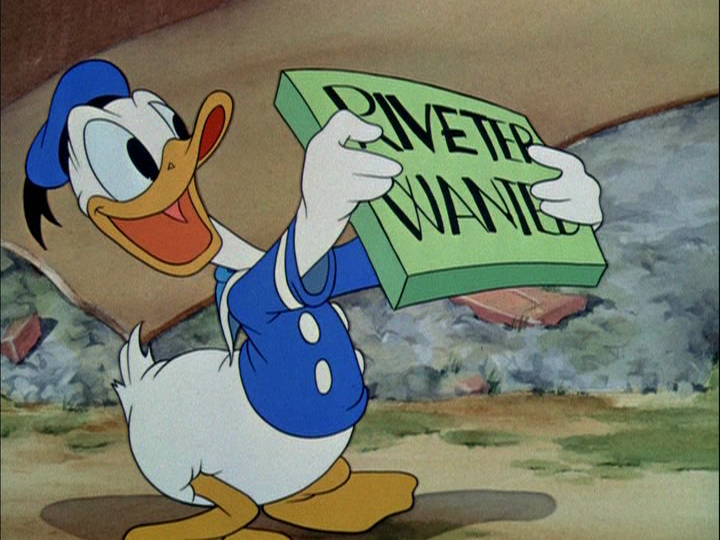
It’s a busy day at a construction site, and a fence is seen bulging from some sort of racket. Suddenly, a worker bursts through the fence, with Pete yelling off screen, “Get out! You’re fired!” The worker dashes away, leaving his lunch behind. Pete steps through the hole the worker made through the fence and looks around menacingly before hammering in a sign with his fist: Riveter Wanted. Who should turn the corner at that moment than Donald Duck, who is happily signing “Heigh Ho” from Snow White and the Seven Dwarfs. He walks past the sign, but is suddenly drawn back to it.

Donald shows Pete the sign, explaining that he's a riveter

Suddenly excited, Donald grabs the sign and decides to apply for the job. He looks up at the outline of the worker that was thrown through the fence and remarks on what a peculiar doorway it is, not realizing the danger he’s going to be in. When Donald applies for the job, Pete laughs at him, but gives him the job when Donald shows Pete he has some backbone. Elated, Donald asks where he starts, and Pete grabs him by the collar, showing him that he’ll stop on the top floor of the skyscraper, which appears to be a hundred stories high. Donald nearly passes out at seeing the great heights he has to go up.

Pete throws Donald into an elevator, and Donald tentatively asks how he gets up to the top. Pete then throws a lever, which zooms the elevator up to the top floor. Donald walks across steel beams, as if dazed, and nearly walks off the edge before getting his act together and crawling back to the safety of the elevator. Unfortunately, the elevator falls beneath him, and he grabs onto a steel beam for dear life. Suddenly he hears Pete yelling at him from the ground to get to work. Donald grumbles at him to shut up, voice very low, but Pete flies up to the top in the elevator and demands to know what he said. Donald mollifies his boss, embarrassed, and Pete goes back down again.

Donald versus the rivet gun

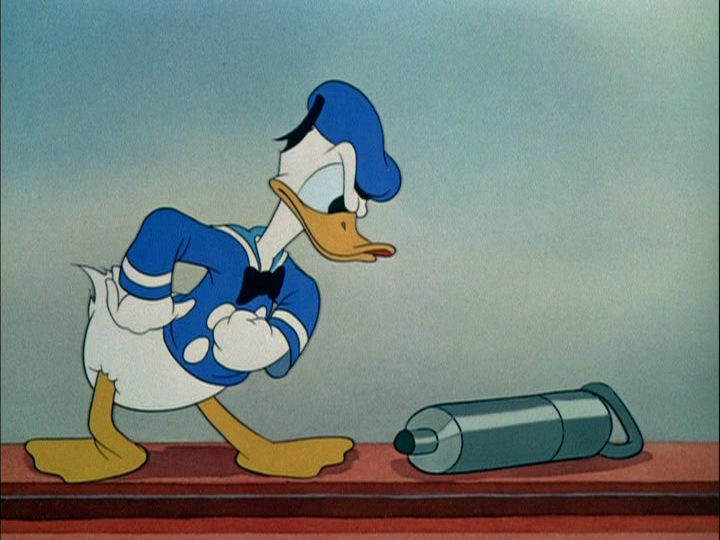
Although Donald had been excited to be a riveter, he looks at the rivet gun curiously, wondering how it works. He smashes the handle of it on the beam, demanding that it do something, which it does when it begins shooting rivets into Donald’s hat, nearly tearing his head off. As Donald tries to gain control of the strange tool, it begins to rivet with him barely hanging on to the handle. When he is able to let go, he decides to give it a good kick, but ends up catching his foot in the handle and having it start to rivet again.

Donald is carried all around the construction site at the rivet gun continues to run, and ends up accidentally riveting Pete’s blueprints to the steel beams. When Pete pulls them out, he is able to pull out only a set of paper dolls made by the rivet gun. Many strange mishaps continue to occur thanks to the rivet gun, and although Donald is able to stop its rampage, the sound of other rivet guns being used makes him nervous and he shakes uncontrollably.

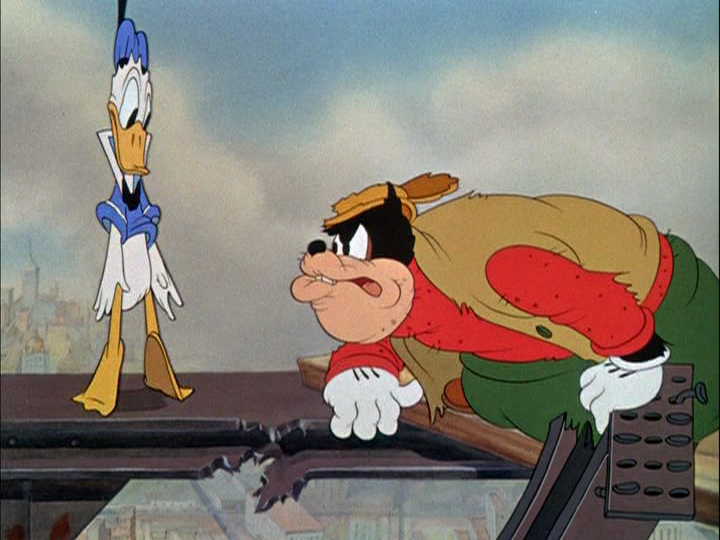
Donald's antics, however, have caused Pete's anger to grow

When Pete calls Donald over to serve him his lunch, Donald is ready to sprinkle some pepper when the rivet guns begin again, making Donald spill pepper all over the place. Pete lets out a loud, powerful sneeze, and loses his lunch in the process. Donald tries to make amends with coffee, but also loses control of it when the rivet guns start up once more. When the rivet gun sounds cause Donald to accidentally destroy Pete’s cigar, Pete has had enough, and begins to chase Donald around the construction site. The chase causes destruction of many parts of the site, but quick-thinking Donald causes Pete to fall into a vat of cement, turning Pete into a fountain as he poses with a water hose. Donald ends the short with laughter.

March 14

March 14, 1929 – The Mickey Mouse Short, The Barn Dance, is Released to Theaters

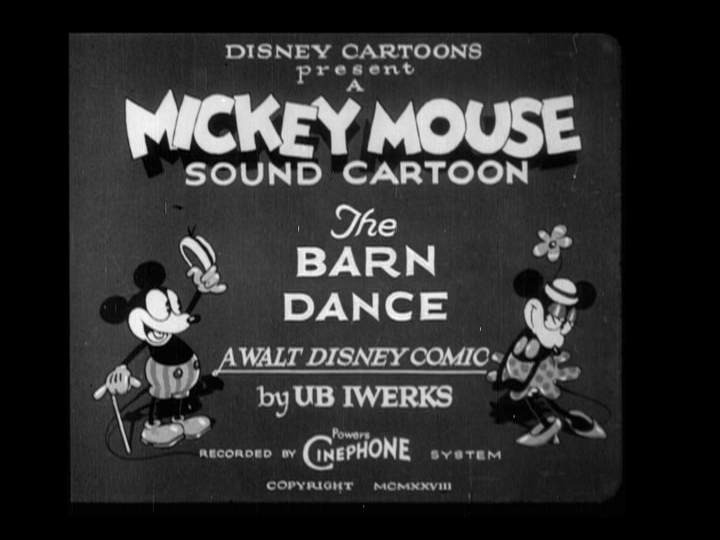
On March 14, 1929, the fourth Mickey Mouse short, The Barn Dance, was released to theaters. Directed by and using the vocal talents of Walt Disney (although this short continues to feature more “squawking” than actual dialogue), this short is one of the disastrous dates of Mickey and Minnie. Although not the first short where Minnie rebuffs Mickey’s advances, it is one of the more tragic ones, due to Mickey’s emotional outburst in the end.

Mickey is seen in the opening shot in a horse-drawn buggy, holding flowers for his sweetheart, Minnie Mouse. As he uses the whip to make the horse gallop faster, his buggy also begins to gallop, and Mickey has to hold onto his seat for dear life. They stop in front of Minnie’s house, where she is seen in the window, powdering her nose. Mickey’s heart pounds loudly before he whistles for her attention. Minnie appears in the window and waves before quickly pulling her bloomers on the laundry line inside. Mickey and his horse both look excitedly at the window, but Mickey pulled down a shade attached to the blinders on the horse, and the animal turns away to pout.

Pete arrives as a rival to Mickey for Minnie's affections

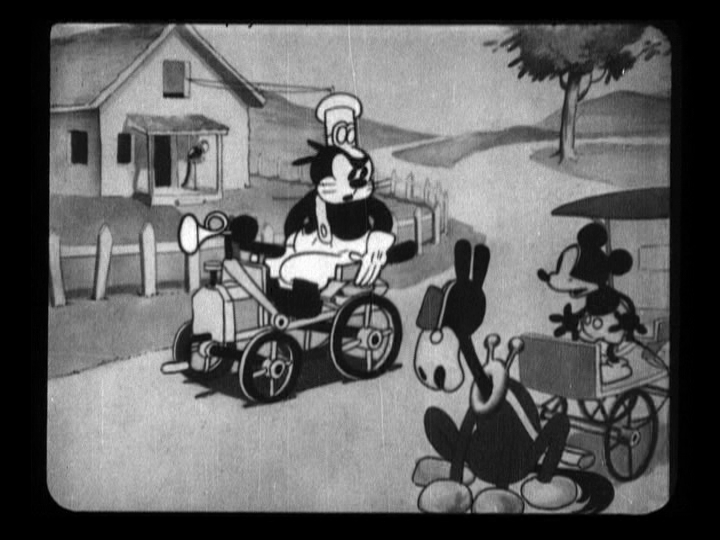
Meanwhile, Pete is driving up the road in his car, also on his way to see Minnie. He looks over at Mickey in his buggy and doesn’t think much of the mouse before he honks his horn for Minnie’s attention. Mickey is initially angered by Pete, but when he spies a duck on the road next to him, he picks up the bird and begins honking it like a horn to match Pete’s incessant honking.

Suddenly, Minnie appears, all dolled up for a night on the town. She stops at the gate while both of her admirers bow, and as she steps out to greet them, she spies Pete’s car and runs to it excitedly. As Pete starts up the car, it sputters and shakes, and Pete sends a stream of black smoke from the tailpipe in Mickey’s direction. Unfortunately, the car takes off and leaves Minnie and Pete behind before crashing into a tree and breaking into several car parts. Minnie rejects Pete and decides to go to the dance with Mickey, and the two flirt and kiss on the way there.

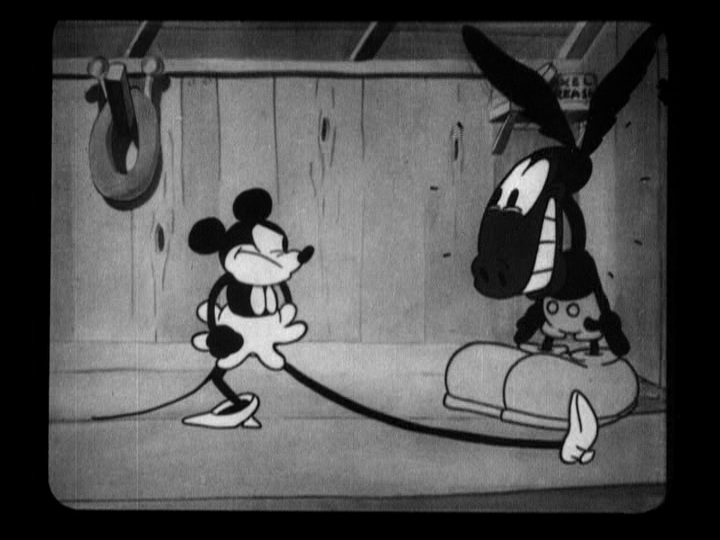
Mickey literally feels like a jackass for continually stepping on Minnie's feet and legs

The dance is already in full swing when the couple arrives. Unfortunately Mickey is so overzealous in his dancing that he keeps stepping on Minnie’s feet, with his feet growing in size for comic effect. At the end of the dance, Mickey is standing with both feet on Minnie’s leg, and she struggles to pull it out. Mickey finally notices that he’s on Minnie’s leg and gingerly steps off, with Minnie holding the limp limb sadly. As Minnie is furious and Mickey literally feels like a jackass, Minnie knots up her stretched leg just as a new dance begins. Although Mickey tries to dance with Minnie again, Minnie decides to dance with Pete, who is a much better dancer, instead.

Mickey stands in the corner, but gets the bright idea to be “light on his feet” by tucking a helium balloon into his shorts. He leaps gracefully over Pete, surprising the two, and Minnie begrudgingly agrees to dance with Mickey. Things go well for a while, until Pete realizes Mickey’s scheme and shoots a nail at the balloon in Mickey’s shorts, making Mickey fall on Minnie. Having had enough, Minnie decides to dance with Pete for the rest of the dance, leaving Mickey to cry in a corner.

March 13

March 13, 2007 – The Meet the Robinsons Single, “Little Wonders,” is Released

Image credit: Wikipedia

 “These little wonders, these twists and turns of fate.”

On March 13, 2007, as stated on iTunes, the second single for the Disney animated film Meet the Robinsons, called “Little Wonders,” was released. Written and performed by Rob Thomas, it was featured in the final scene of the film. It peaked at number 58 on the Billboard Hot 100, 57 on the Billboard Digital Songs, 11 on the Billboard Adult Contemporary, and 5 on the Billboard Adult Pop Songs.

Rob Thomas, on his Cradlesong album tour (I attended the Northern Virginia/DC leg of this tour), explained why he wrote the song:

“I wrote this song for my best friend who passed away recently, my dog Tyler, and years ago, I was with him when I was…supposed to write a song in between the last solo record and the last Matchbox record, and it was for this film, and I was finishing up being on the road and I was in a hotel in Phoenix. So my dog makes me take him for a walk and it’s a miserable night and it’s cold, and I’m upset probably about nothing at all in particular, just upset, and so I harness him up and I go outside, and I’m miserable. Again, probably for no reason. Miserable. And I look down, and I want some solidarity…but no man, I look down, and he’s [my dog is as] happy as he’s ever been his entire life, and he’s like ‘Dad, we’re freakin’ walking!’ My first thought was like, ‘Traitor’. Right? Immediately, ‘Traitor.’ I’m gonna trade him in and get a new dog, but then, I realize that this little guy knew more about life that I did cause right then, there was a moment that was happening. There was something going on and I was missing it and he wasn’t. And so this song was written about that. It’s about not letting those moments go by. Sometimes, you have an expectation, sometimes you’re waiting for something else to happen and while you’re waiting for something else to happen, life is passing you by, and these little moments are going by, just like us, right now, right here in Fairfax, man, this moment, don’t let it pass by, man. I love this night, I don’t want to forget it. Thank you very much for it. So this song goes out to Tyler.”

March 12

March 12, 1943 – The Donald Duck Short, The Flying Jalopy, is Released to Theaters

“Ah, yes, a little matter of insurance…”

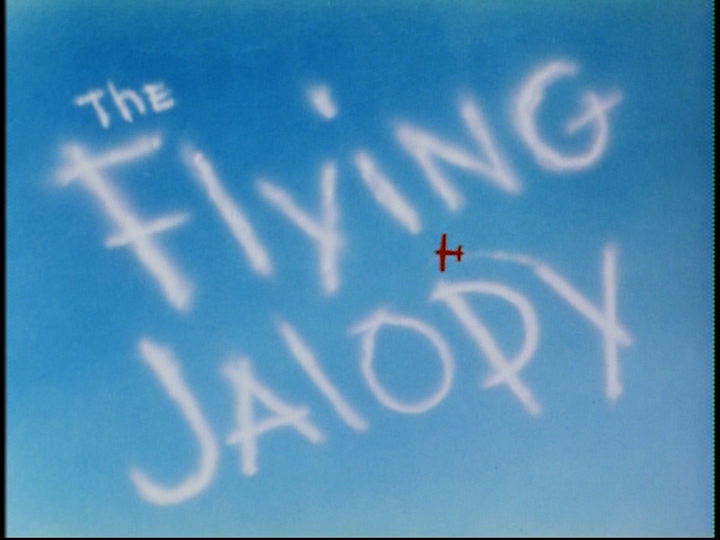
On March 12, 1943, The Flying Jalopy, a Donald Duck short, was released to theaters. Directed by Dick Lundy, the short is about Donald dealing with a shady used plane dealer, who tries to get Donald to have an accident so he can collect on a $10,000 insurance policy. Although Donald is known for being accident-prone, this short is one of the few that shows Donald avoiding a major accident, for the most part.

The short opens with a billboard sign for Ben Buzzard and his used planes (which used to be called “wrecked planes,” but the word “wrecked” is crossed out in bold back strokes). The camera zooms out and shows the airfield where the “used” planes sit as scrap sculptures, except for one last plane that is very Wright Brothers-esque. Donald is seen examining the plane, which has been marked down to a down payment of $59.98. Donald feverishly checks to see if he has enough money, but unfortunately is a bit short of the asking price.

Ben Buzzard, the proprietor, lurks in the office doorway, observing the cash in Donald’s hands. Thinking quickly, he starts the salesman act, pulling Donald back with his cane and asking Donald if he is interested in an airplane. Donald nods excitedly, and Ben launches into his sales pitch. The first one he calls attention to has its wheel burst while they are observing it, but Ben offers Donald the chance to buy it with an offer of no down payment. He hits the tail of the plane with his cane, making the tail fall off. He quickly puts it back on and rushes to get Donald to take a test flight.

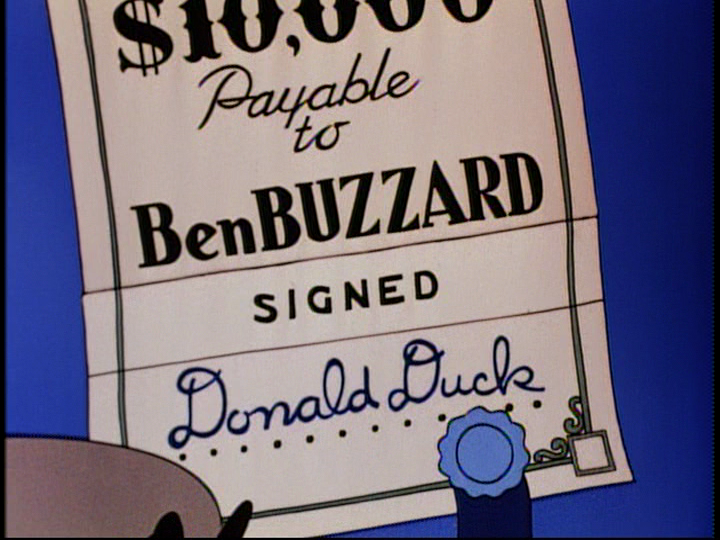
The shady insurance document Ben was able to have Donald sign

As Donald is sitting in the cockpit, ready for his test flight, Ben tells him there is one more thing: an insurance policy he unrolls from his coat pocket. Donald eagerly signs it, as it seems to say that in the event of an accident, he will be paid $10,000. As Ben takes the paper, he unfolds it, revealing that in the event of an accident, $10,000 will be paid to Ben, signed by Donald. To get this money, Ben decides that Donald will have to die.

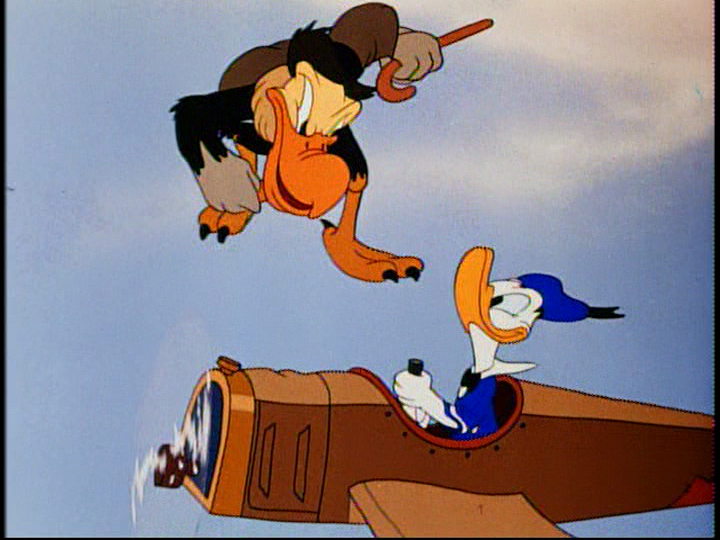
Ben begins the test flight, breaking the front propeller, and continuing his plan of making Donald have an accident. Unfortunately for him, Donald is able to avoid hitting the side of a cliff, and manages to keep the plane in the air, with Ben watching angrily from the ground as his plans are foiled. Ben swears that he will get Donald, and takes off to the sky.

Donald feels pretty good about his flying skills as he keeps the jalopy in the air

Ben greets Donald in the air, telling the beaming duck that he is rather good at flying, and suggesting a game of Follow the Leader. Donald agrees, and Ben offers to lead. He gracefully dives around the clouds, and Donald tries to follow him, but both of the plane’s wings rip from the body of the plane. Quickly, as Donald begins to plummet to the ground, he grabs the wings floating in the air and reattaches them, and is able once again to keep himself in the air.

Ben sits on a cloud and furiously tries to come up with a plan, only to be blown away by Donald, who is quickly flying by. As Ben dangles in the air from his cane that has caught a part of a cloud, he spies a small opening between two cliffs, which he knows the plane won’t possibly make it through. He then surrounds the cliff tops with cloud cover, and calls Donald over to continue the game. As he slips to the other side, Ben gives an evil grin and brags to the audience with death in his eyes, “He’ll never make it!” Unfortunately for Ben, once again, Donald is able to save himself from danger at the last minute, turning the plane sideways and slipping through quite easily.

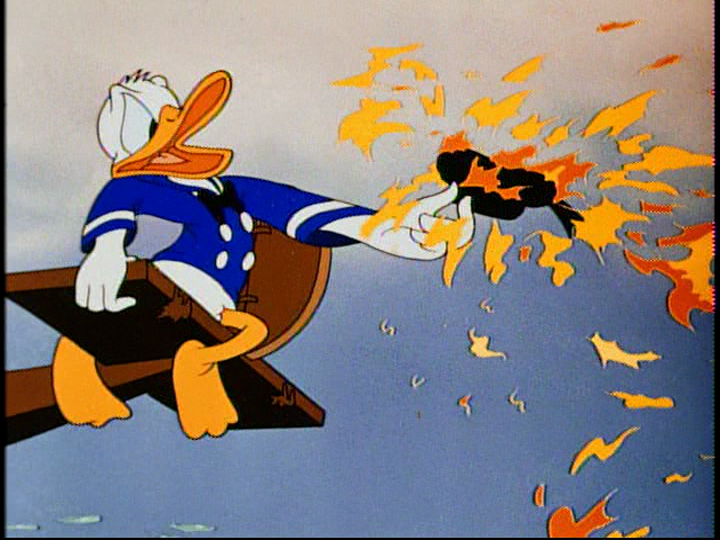
As Donald tries to put out the flames with his hat, he looks in alarm as it catches on fire

Having had enough, Ben cries out that Donald is a dirty cheat, and begins to destroy the plane outright, being done with underhanded plans. It becomes an outright war between the two, especially after Ben opens Donald’s gas tank and sets the stream of gasoline on fire. Donald tries to blow the flames out, but to no avail. Ben, meanwhile, perches on a cloud and laughs, thinking the policy will soon be his. He doesn’t count on Donald flying in his direction, and while Ben tries to make a break for it, he continues to be in the plane’s path. The plane finally meets its demise when the flames reach the gas tank, but all is not lost: Donald safely flies his new plane – Ben, who is trapped inside the last piece of the body of the plane – through the air, laughing all the way.

March 11

March 11, 1933 – The Silly Symphony Short Film, Birds in the Spring, is Released to Theaters

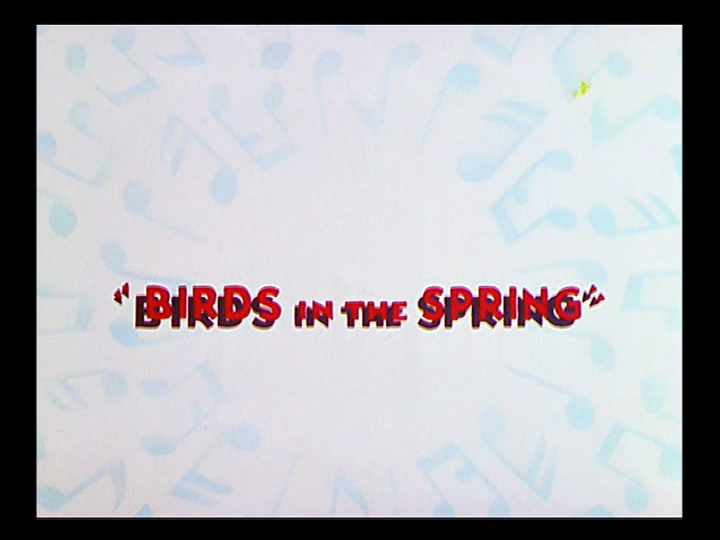
The Silly Symphony short, Birds in the Spring, was released in theaters on March 11, 1933 by United Artists. Directed by Dave Hand, with music by Bert Lewis, the short tells the story of a baby bird whose thirst for curiosity brings him a day full of adventures. The title card of the Silly Symphony attests to the popularity of Mickey Mouse in the early 1930s, as it states: “Mickey Mouse Presents Walt Disney’s Silly Symphonies.” It had been believed that, as far as animation, people would only want to see Mickey Mouse cartoons, and Mickey’s name on the title card would ensure an audience. Luckily, the Silly Symphonies were popular in their own right.

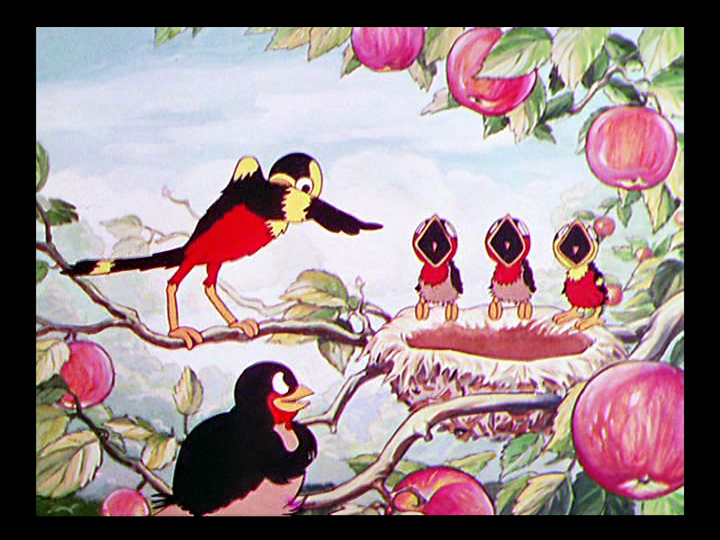
The scene opens on a beautiful spring day, in a field full of apple trees in bloom. Birds are flying about, chirping their songs as they flit around the branches, with some being romantic, while others are working on building nests. A nervous mother is seen in her nest, wondering when her eggs are going to hatch. She flips the eggs and sits on them again, hoping they will hatch soon. The father paces back and forth on a branch, looking equally anxious. Without warning, the first egg hatches underneath the mother, and the proud parents cheer when all three eggs hatch to reveal healthy chicks. The father gathers all the birds in the field to come see his newborns.

The babies have singing lessons with their father

The newborns begin to cry for food, and as they do, we suddenly see the time elapse, with the newborns becoming healthy young birds, who are learning to sing instead of crying for food. A bee buzzes around the nest, attracting the attention of the only male baby bird (named Otto, according to the Disney Archives), and causing him to depart from the music lesson to catch a quick snack. Otto hurries back to sing the final note in the song, only to let out a buzzing sound instead. Otto’s father’s disposition turns sour at this development, and while Otto tries to sing, he is still only able to let out the buzzing noise from the bee inside him.

After the bee escapes from Otto’s insides, the father decides it’s time for a flying lesson. He tries to impress his children with his grace, only to end up flying into a tree, making them laugh. Nevertheless, they follow him in their flying lesson, making a chain by grabbing each other’s tails as they fly through the air. When they let go, the birds surprise themselves by being able to fly, but unfortunately they also quickly fall. Otto then finds himself separated from the others, but decides it’s a better time to explore than to go home.

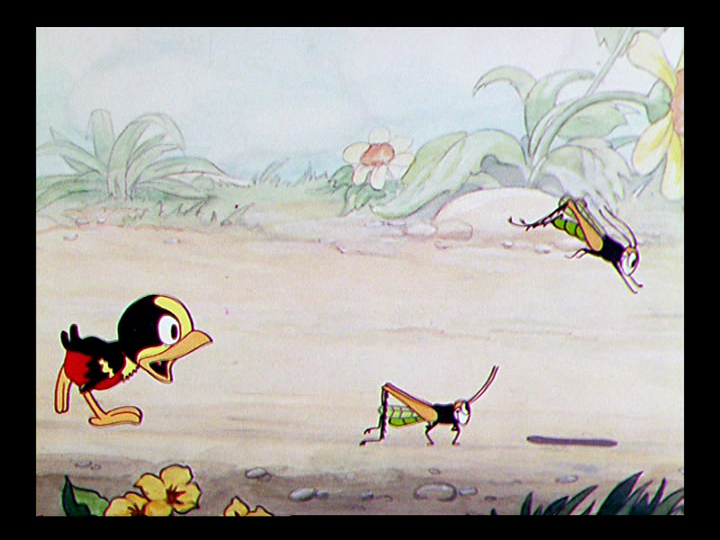
Otto excitedly watches grasshoppers at play

Otto’s first part of the adventure involves two grasshoppers playing leapfrog, and he follows them with great interest. He tries to eat one, but the grasshopper continues to jump, taking the poor baby bird with him until he jumps out of Otto’s mouth and spits in his face. Otto, not really fazed by the reaction, then follows a hummingbird, and tries to eat the way the hummingbird does, only to get poked by another hummingbird when he is inside the blossom.

Otto’s next adventure begins with a simple rattle in the bushes. He sees what is making the noise and shakes the rattle, only to find that the rattle belongs to a rattlesnake, one that is very hungry. The snake hypnotizes the baby bird, but Otto falls into nearby pond, breaking the spell. He begins to flee, with the snake following with great vigor. Otto tries to fly over the water, but his flying still needs a lot of work, and the snake is rather faster – even faster on land. Otto manages to get the snake to tie himself in knots to escape.

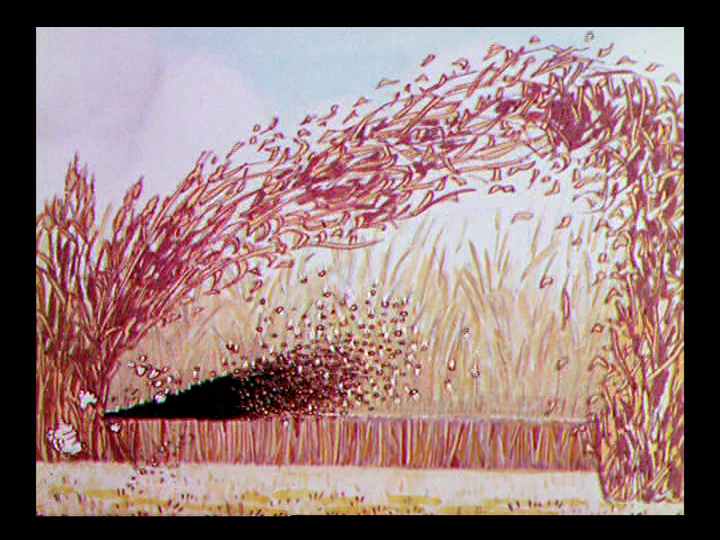
The bees harvesting wheat while trying to attack Otto

Otto attempts to dive for cover in a beehive, only to have the swarm inside chase him out and pursue him angrily, destroying everything in their path. Otto lets out frantic chirps, which alerts his family nearby, and the father races to his rescue. The birds manage to hide under their nest while the bees race past. Otto’s curiosity comes at a price, as his father takes the baby over his knee and spanks him for running away.

March 10

March 10, 2009 – The Official Disney Fan Club, D23, is Announced at the Disney Annual Meeting

Image Credit: D23 Website

“Are You 23?” – The teaser released to fans before the D23 announcement

At Disney’s annual meeting on March 10, 2009, CEO Robert Iger announced the formation of a new official club for devoted fans. The D, naturally, stands for Disney, with the 23 representing 1923, the year Walt Disney arrived in Hollywood and founded the earliest version of the Disney Studios. The goal of the club is to provide fans an inside look at the past, present, and future of Disney Studio projects.

The image used on the cover of the first issue of Disney Twenty-Three

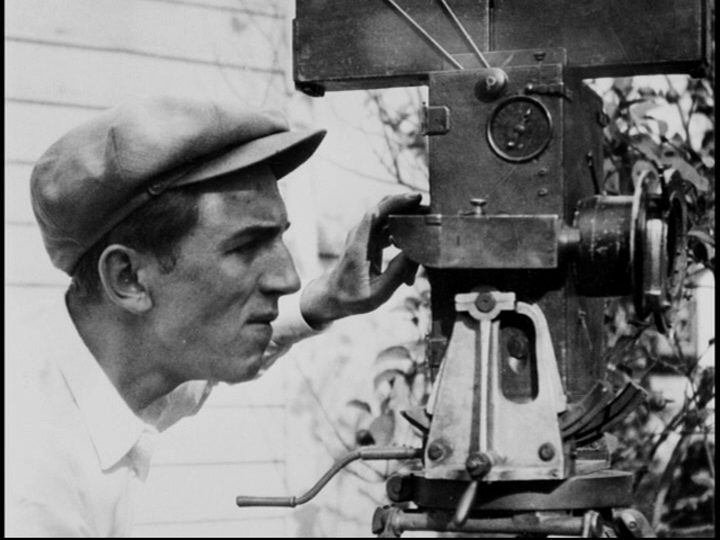
The first issue of the quarterly magazine, Disney Twenty-Three, featured a famous black-and-white image of Walt behind a camera, and included articles about the beginning of Disney archives by Dave Smith, a behind-the-scenes look at Tim Burton’s Alice in Wonderland, Pixar’s UP, the Broadway version of The Little Mermaid, and the design of the most exclusive accommodations at Disneyland and Walt Disney World. The charter membership also included a special gift from the archives—a limited-edition print of the new Mickey Mouse portrait, and a certificate of membership, as well as special offers and a special store on the online Disney Store. D23 also has a website with information, special videos, and other tidbits of history.

As a member of D23, I can tell you that the information the magazine provides is mind-blowing for any Disney fan. The scope of information each issue is broad; members can read about something from the parks in one article, to a special Disney project in another (an example being the Annie Leibovitz portraits of famous Disney scenes), to a behind-the-scenes look at a new movie. For anyone who loves Disney history and wishes to learn more, D23 is highly recommended.

March 9

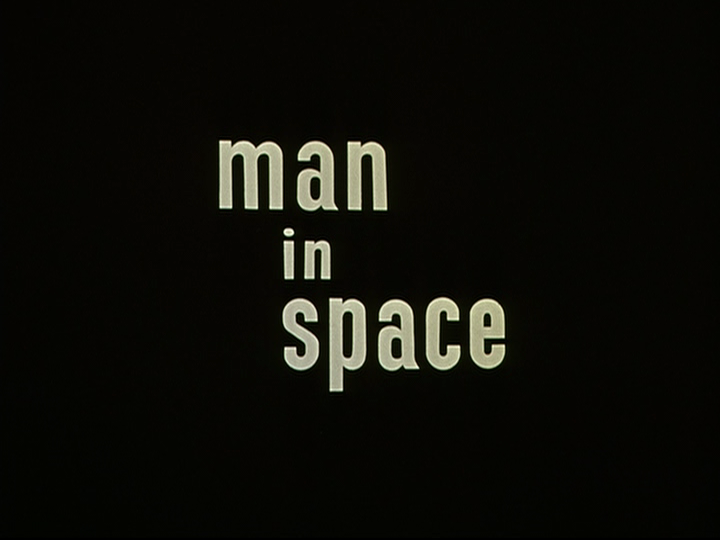
March 9, 1955 – Man in Space Premieres on the Disneyland Television Show

“One of man’s oldest dreams has been the desire for space travel, to travel to other worlds.” – Walt Disney

On March 9, 1955, audiences watching the Disneyland Television Show saw a different kind of episode, called Man in Space. The first installment of the Tomorrowland segments of the show, Man in Space was directed and produced by Ward Kimball (see March 4th entry), who had written the episode with William Bosche, and features guests Werner von Braun, Willy Ley, and Heinz Haber, who were major scientists associated with space exploration. It was so well received that President Dwight D. Eisenhower asked for a copy to present to the Pentagon, and this helped push the space program into the forefront of the public imagination. In 1956, an edited version of Man in Space was nominated for an Academy Award for Best Short Subject (Documentary), after it was released to theaters on a double bill with Davy Crockett and the River Pirates.

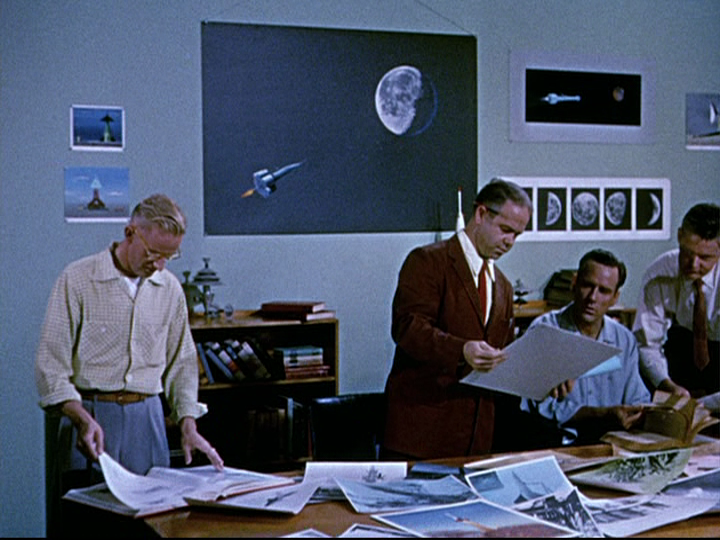
Ward Kimball (C) looking at mock-ups and prototypes in the design room

As the Man in Space episode opens, the audience is taken to a design room, where men are hard at work designing prototypes of rockets and developing methods of space travel. Walt explains that the creative talents of the Disney Studios are working with engineers and scientists to make the dream of interplanetary travel a reality. “In working with engineers and scientists,” director and producer Ward Kimball explains, “we have found that there are many different opinions as to how we will eventually cross the space frontier.” The one common point between these opinions, though, is that it will be a rocket-powered ship heading into space. Kimball then leads the viewers into a history of rocketry, beginning with China in the 13th century.

The rocket was not a modern invention, Kimball points out; the Chinese invented it at the battle of Kai-fung-fu in 1232. A brief animation segment shows two Chinese men shooting rockets at each other from far distances, with each rocket increasing in size. Kimball then jumps forward 500 years to Sir Isaac Newton and his often paraphrased “for every action force, there is always an equal but opposite reaction force.” Kimball makes this clearer by using the example of the family dog when it sneezes. The segment also shows a few examples of rocket propulsion experiments, including a steam-powered rocket, and notes that designers ultimately stuck with gunpowder-powered designs.

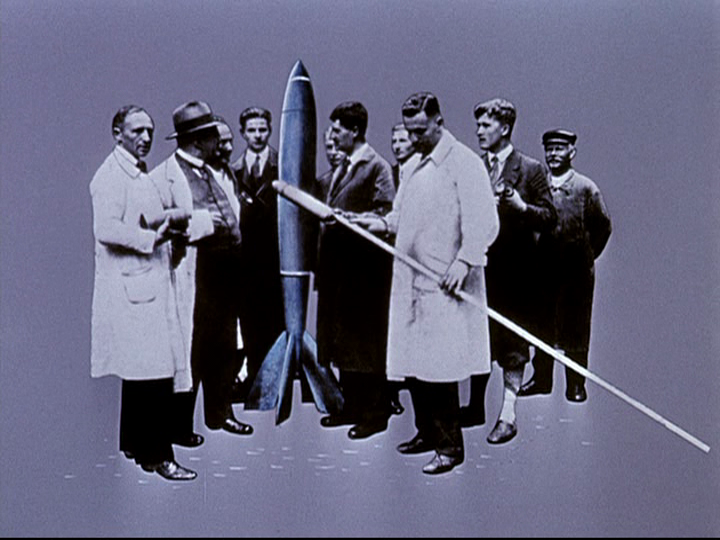
A stylized photograph of one of the early German societies dedicated to the study of rocket science

In 1865, Jules Verne published From the Earth to the Moon, which again piqued people’s interest in flying into space. Verne’s story inspired the French filmmaker Georges Melies to create the first space-travel film in 1902. Kimball shows the audience this silent film, and continues with a history of the different kinds of fuels used to power small rockets that could one day be used to send men to space. Rocket frenzy was highly evident in the 1920s and ’30s, with rockets attached to any possible vehicle. Around this time, a new society in Germany was founded, with the mission of scientifically exploring the possibility of space travel. The German army took a keen interest, and used the society’s findings to create rocket missiles and one of the forerunners of a spaceship, known as the V-2. After WWII, 75 of these V-2 rockets were taken to the U.S. for study in its newly developed rocket program.

Kimball then introduces rocket historian Willy Ley to explain how rocket firing works. Ley begins by showing a model of a rocket motor and explaining to Disney artists how it works. An animated sequence explains how the motor continues to work in space where there is no oxygen. Ley asks the animators to create a sketch of a three-stage rocket to help him explain how it would work. The animators ask some very interesting questions as Ley uses the chalkboard to help his explanations, but the section is not overly technical, so the audience is still be able to understand well.

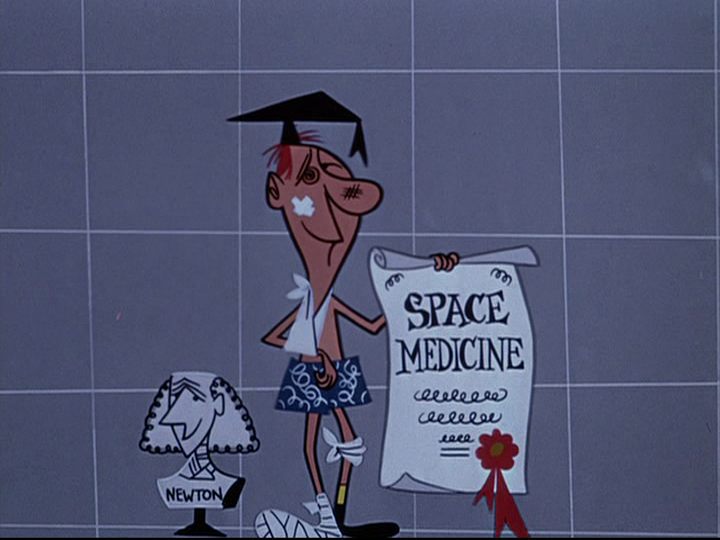
The "ordinary man" example, after going through rigorous (and humorous to the audience's perspective) training, passes the space medicine course

In the next segment of Man in Space, Kimball describes a new field of science known as space medicine, or how man will react physically and mentally in space, and introduces the expert in this field, Dr. Heinz Haber. Haber pulls down a screen to set the stage for another animated segment, this time of the “common man” who will be sent into space. As we follow this common man through his daily routine in space, Kimball’s special brand of humor keeps things light.

In the third segment of the episode, Kimball explains the two problems of space flight: building a rocket ship, and preparing and training the men to travel into outer space. Kimball then introduces Dr. Wernher von Braun, the chief of the Army’s guided missile division, who was the overall director of development for the original V-2 rocket. Von Braun is seen explaining to two other men the problems of space travel. Looking at some similar present-day situations can help come up with solutions, von Braun says. He gives a few examples of the current research, with testing performed on the ground in simulated atmospheres. The tests that von Braun describes are then presented in an animated sequence narrated by Dick Tufeld, best known as the voice of the robot in the television show, Lost in Space. The animated short ends with an accomplished mission into space, with the next goal of getting man to the moon, then the planets, and then to what lies beyond.


March 8

March 8, 1946 – The Goofy Short, A Knight for a Day, is Released to Theaters

“Stand by, everybody, as we turn the calendar back 500 years and bring you the 123rd running of the Canterbury tournament at Blunderstone Castle.”

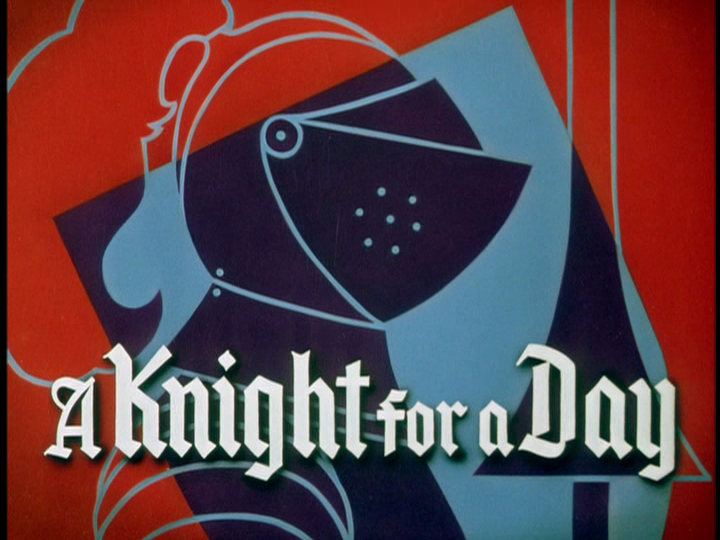
Directed by Jack Hannah, A Knight for a Day was released on March 8, 1946. This short continues the trend of having Goofy play a part in the story, rather than being the regular Goofy audiences were used to from earlier Mickey Mouse shorts. Also, all the characters in Knight for a Day are designed to look like Goofy. The story was written by Bill Peet, with music by in-house composer Oliver Wallace.

Knight for a Day relies on clever puns woven throughout the story, such as the names of the knights: Sir Loinsteak and Sir Cumference. Modern day sports-casting and a medieval setting mix as the audience is taken back in time to attend, the announcer says, the 123rd annual Canterbury jousting tournament. Everyone in town flocks to the castle for this event, and it sells out fast. The winner is to receive honor, glory, and the hand of the beautiful Princess Esmeralda, who is seen watching from her tower.

The squire Cedric, dreaming of the day he can win the favor of the princess through jousting as a knight

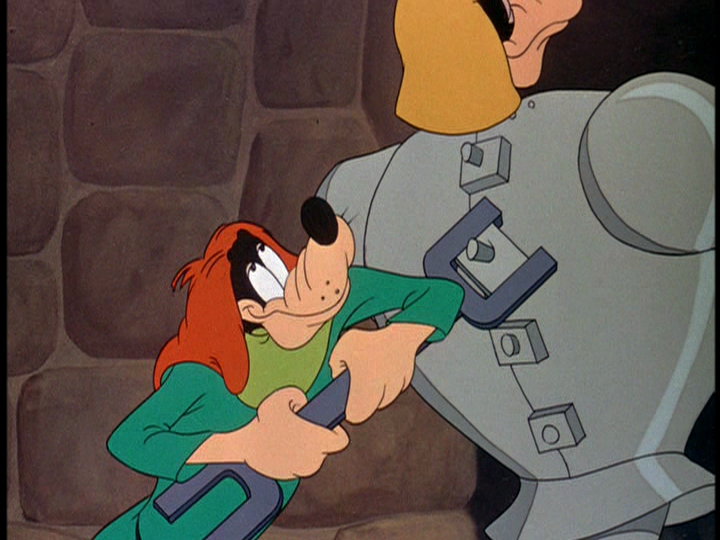
We then head to the dressing room of Sir Loinsteak, whose squire, Cedric, is busy polishing the knight’s suit of armor and preparing him for the fight. Cedric dreams that one day he shall be a knight “and face death for the smile of a lovely princess.” He takes a moment to daydream, but quickly sets back to work preparing the knight.

As the trumpet sounds, Cedric races to help Sir Loinsteak mount his horse, breaking the knight’s sword in his haste. He hides the pieces and continues to prep, but as he tries to shove the knight onto his horse, he pushes the Sir Loinsteak out of his armor (and Cedric into it) and the knight is knocked out cold when he lands on an anvil. Cedric can’t believe that Sir Loinsteak is unable to fight, and then realizes that he is wearing the armor. The narrator tells Cedric that this is his big chance—he can win the honor and glory, not to mention the hand of the fair princess.

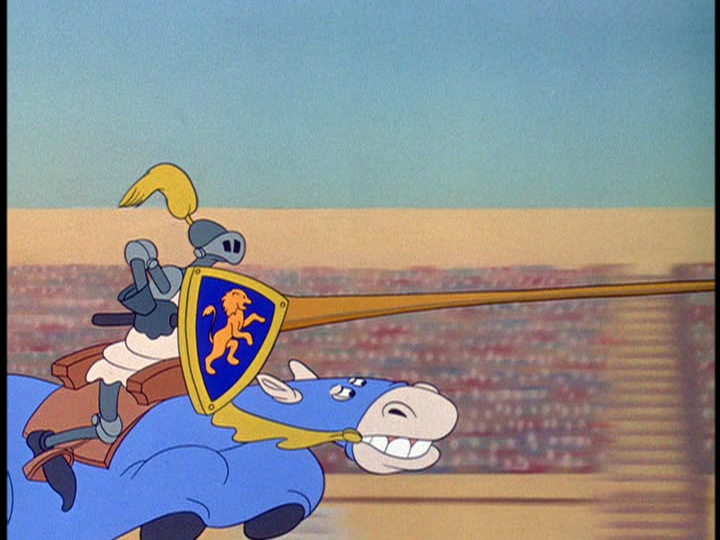
The tournament begins with the champion, Sir Cumference (“Old Iron Pants, they call him”), entering the arena. His horse has hash marks for all the gallant knights who have fallen in battle against him. Cedric enters from the other gate, and is blown a kiss by Princess Esmeralda; the narrator comments that it must be love at first sight. Cedric’s dreamy-eyed gaze is cut short when he notices that the knights are prepared to joust, with shields made of bricks and sharp points at the end of their lances. He quakes in his armor.

Although nervous, Cedric charges with all of his might

The umpire checks his wrist-sundial, and the crowd waits anxiously for his signal to begin. The umpire waves his flag, the trumpet sounds, and off they go into the joust! Cedric charges gallantly forward, but it’s no use again Sir Cumference – Cedric and his horse are pushed out through the castle wall into the moat. Sir Cumference is still the champion, but this does not please the princess, who lets out a loud shout of discontent at this outcome.

Suddenly, Cedric is seen climbing through the hole in the castle wall, still on his horse, ready to try again. The champion puts on his helmet again, charges, and sends Cedric flying into the air and landing in the bleachers. The crowd lifts him back to his horse, infuriating Sir Cumference, who pulls out his sword and charges. Cedric pulls out his sword, too—forgetting that he had destroyed it earlier. Thinking fast, he attaches the arm from his armor to the end of the broken sword and goes full speed ahead, using it to knock the champion out of his seat. He then uses the armor arm to push the challenger back as he tries in vain to hack away at Cedric.

Cedric is able to hide comfortably inside the armor as Sir Cumference beats it relentlessly with a mace

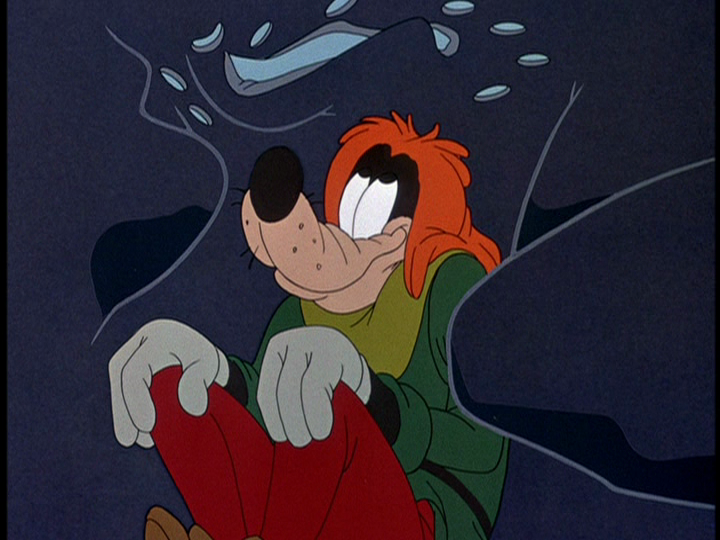
Cedric begins to throw pieces of his armor at Sir Cumfrence, and the fight becomes a no-holds-barred scuffle. Sir Cumference takes out a mace and begins to smash the Cedric’s armor, with Cedric hiding inside. Cedric, however, being a lot smaller than the armor would suggest he is, is able to hide away without being injured. The champion is exhausted from his angry work, and Cedric becomes the new champion when “Old Iron Pants” falls from his horse. The princess leaps from her balcony and begins to shower Cedric with kisses. “What a day for a knight,” the narrator ends, “and what a knight for a day.”


March 7

March 7, 1936 – The Mickey Mouse Short, Mickey’s Grand Opera, is Released to Theaters
“Pluto! Go home!”

On March 7, 1936, the Mickey Mouse short, Mickey’s Grand Opera, was released to theaters. Directed by Wilfred Jackson, the short is about Mickey directing an opera, only to have his effort ruined by Pluto’s run-in with a magic hat. Although the short was released as a Mickey Mouse short, it deals more with Pluto, Donald Duck, and, to a lesser extent, Clara Cluck, more than Mickey. The short stars the vocal talents of Walt Disney as Mickey Mouse, Pinto Colvig as Pluto, Clarence Nash as Donald Duck, and Florence Gill as Clara Cluck. This was not the only time Donald and Clara had an operatic duet, as Clarence Nash and Florence Gill were seen as themselves in The Reluctant Dragon, recording a session of their characters singing together. Mickey’s Grand Opera was also the last short film to use the original design of Donald Duck before making him a rounder character.
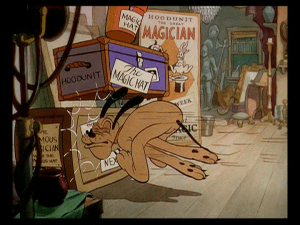
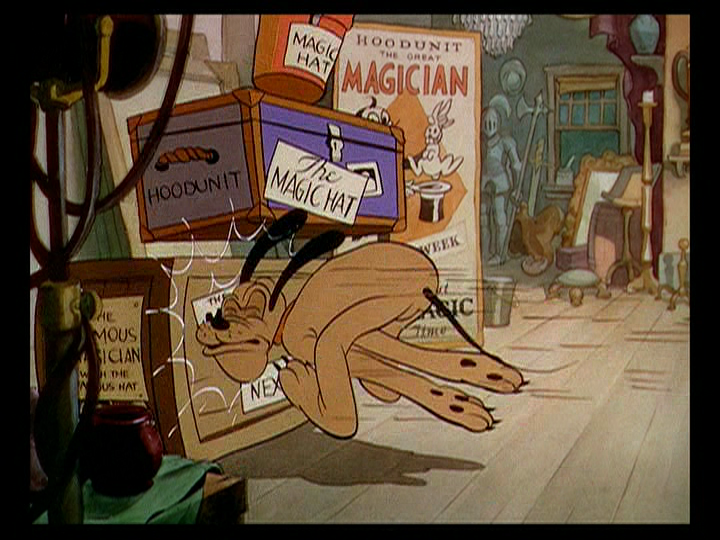
Pluto flies into the crates in the prop room after being told off by Mickey

The scene opens on a big sign proclaiming “Mickey Mouse presents GRAND OPERA featuring Mme. Clara Cluck and Donald Duck.” The viewers are taken backstage where Mickey is checking out the audience through a hole in the curtain. Suddenly his dog, Pluto, jumps on him. Mickey angrily asks him how he got into the theater, then tells him to go on home. Pluto sadly skulks away, but keeps turning back in hopes that Mickey will change his mind. When Mickey screams at him to go home, it startles Pluto to the point that he accidentally runs into the prop room and knocks into boxes for next week’s act, Hoodunit the Magician. The contents of the boxes spill everywhere, including the magician’s famous magic hat.

Pluto, still saddened by Mickey’s unfriendly manner, attempts to take a nap in the prop room, but keeps thinking he sees something pop out of the hat. As he tries to sniff the hat, a rabbit pops out and punches him on the nose. Angered, Pluto takes the hat with his teeth and shakes it, causing a flock of doves to fly out into the room. After they scare him and fly back into the hat, Pluto decides to jump on it, thinking this will stop the strange occurrences. As he tries to walk away, though, the hat pops back into shape as if nothing had happened, scaring Pluto silly. The two then play a game of cat and mouse as Pluto tries to chase the magic hat around a crate.
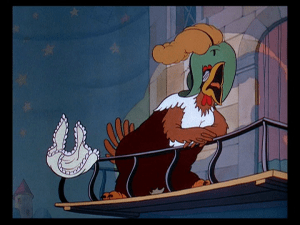
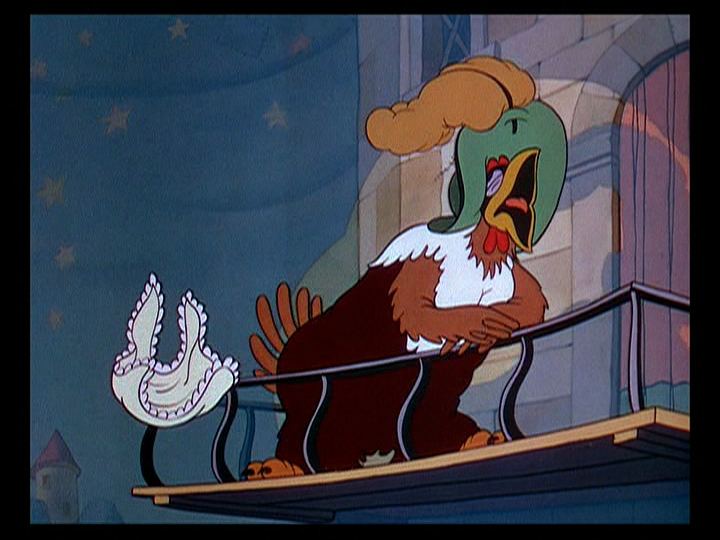
Clara Cluck, singing of her despair that her love has not come to see her

Applause marks the beginning of the opera, and Mickey takes his place at the podium. The curtains open on a balcony scene, where Clara Cluck appears in the spotlight. She begins to “sing,” looking and listening for her love. When he does not appear, she begins to cry in longing, but the gate suddenly opens, revealing none other than Donald Duck, playing her Romeo. He sneaks into the courtyard with a bouquet of flowers and trips over his own feet, making the audience laugh. This gets Clara’s attention, and she begins to sing to him. Donald then quacks his song back to her, and throws the bouquet to her.

As they continue their duet, Donald pulls out his sword dashingly, only to get it stuck in one of the trees from the set. He tries to pull it out, unsuccessfully, which leaves poor Mickey to try and conduct the orchestra to match Donald’s frustrated quacking. Donald finally does get the sword out, and the opera continues peacefully. Unbeknownst to them, Pluto is following the magic hat, which has appeared on the side of the stage. Noticing that Pluto has been following it, it hurriedly waddles onto the stage, with Pluto timidly following it.
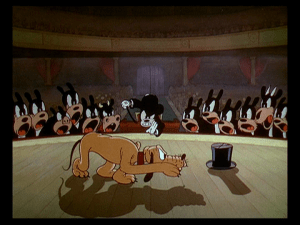
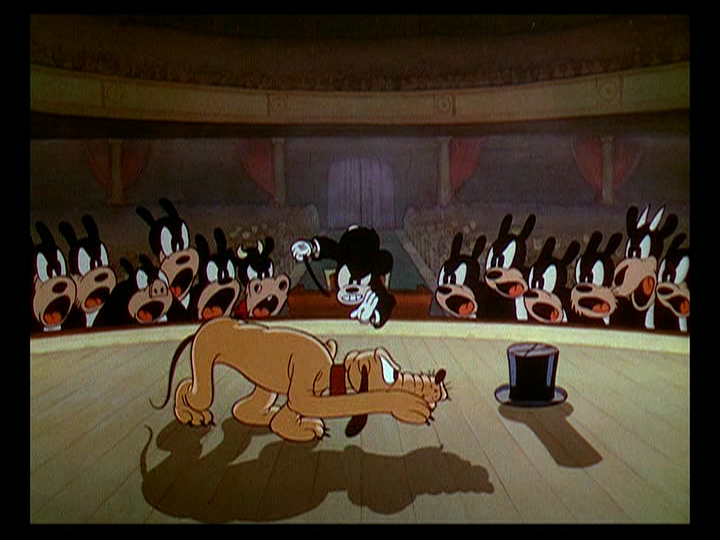
The orchestra follows Mickey's example, ordering Pluto to go home

The hat and Pluto cross the stage right in front of Mickey, with the audience breaking into peels of laughter. Mickey finally notices his dog and is furious that Pluto never went home. Mickey once again orders the dog home, but Pluto only looks at his master sadly before looking back at the suspicious hat. Once again, Mickey orders Pluto home, but Pluto won’t move away from the strange hat. Finally, the whole orchestra stands up and yells at Pluto to go home, which startles the dog and hat and they run off in different directions. As Pluto watches from the wings sadly, the hat suddenly crawls underneath him, surprising him.

Having had quite enough, Pluto begins to chase the hat, which falls into a tuba, letting loose a steady stream of doves, mice, and rabbits as the tuba player plays his instrument. Donald and Clara try to continue with the scene, although two doves attempt to take off with Donald’s cape, and the doves dart around Clara. The tuba player keeps playing, and a strange plant sprouts from inside, releasing a frog as the sunflower on top opens. Pluto follows the frog, until Donald accidentally swallows it. The frog continues to jump, taking Donald with him. With one large hop, Donald accidentally stabs Clara through the balcony, causing the hen to fly into the rafters from the surprising poke. When she comes back down, the set comes crashing to the floor. When Pluto, Clara, Donald, and the frog, break through the backdrop, they give their final high note of the night, at least bringing this strange opera to an end.