RSS Feed

Tag Archives: Short film

September 1

September 1, 1950 – The Donald Duck Short Film Hook, Lion, and Sinker is Released to Theaters
vlcsnap-2016-09-01-17h00m26s217

“Now, watch your old man!”

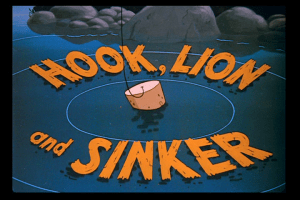
On September 1, 1950, the Donald Duck short film Hook, Lion, and Sinker premiered in theaters. It was directed by Jack Hannah, with story by Bill Berg and Nick George.

A mountain lion is fishing using his tail as the pole, but hasn’t caught a thing. His cub sneaks up behind him and starts playing with the lure, much to the father lion’s anger. The father carries the cub back to their cave, where the cub is given a spanking, before the lion returns to his task. Meanwhile, at the nearby cabin, Donald returns, having caught many fish. The cub sees the catch and, after Donald drops a fish on the dock, runs over to claim it. He takes it back to his father, who is proudly showing off a tiny fish he caught, and is surprised that his son caught something bigger. The two then work together to grab the fish that Donald caught. Unfortunately, Donald has had many run-ins with mountain lions stealing his fish, as evidenced by the heads mounted on his wall. As Donald preps the fish, he sees the paw of the mountain lion near his oven, and tricks the lion into grabbing a hot piece of coal. Angered, the lion tries to leap inside, only to come nose to muzzle with a shotgun. Donald sends the two packing, and the cub has to pull bits of pellets out of his father’s backside. Nevertheless, they continue their plan, this time with the cub working to steal the fish. Donald catches the cub and throws him outside after giving him a spanking. The lion then tries fishing out the chimney, almost getting away with it until Donald has him fish out the shotgun. Again and again the lion and cub try, only to come face to face with Donald and his shotgun. In the end, all the lion is left with are the pellets that his cub has to pull out of his backside.
August 22

August 22, 1927 – The Final Alice Comedy Alice in the Big League Premieres in Theaters

AliceInTheBigLeague

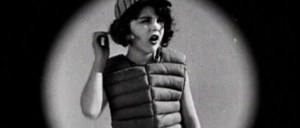
On August 22, 1927, the 57th and final Alice Comedy, Alice in the Big League, was released to theaters. It starred Lois Hardwick as the fourth and final actress to play Alice. By the time this short film was released, it had become apparent to Walt, as well as his distributor Charles Mintz, that the Alice Comedies had run their course, with Alice not serving well as a comedic figure and Julius the cat providing most of the comedic intrigue; Walt was also working with Ub Iwerks on the first cartoon of what would become Oswald the Lucky Rabbit. While Alice in the Big League is not a lost cartoon, it has not been released on home video.

August 20

August 20, 1928 – The Last Disney Oswald the Lucky Rabbit Short Film Hot Dog Premiered in Theaters

Oswald Hot Dog

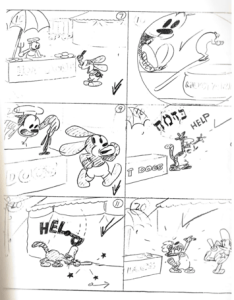
On August 20, 1928, the final Disney created Oswald the Lucky Rabbit short film, Hot Dog, was released to theaters. The short film marked the end of the working relationship between Charles Mintz and Walt Disney, with Disney losing the character to Mintz after refusing to resign with a 20% cut in profits; this would ultimately lead to the creation of Mickey Mouse. The film has since become a lost cartoon, with only the title card and a storyboard page surviving.

August 13

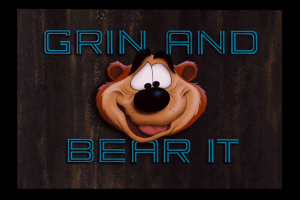
August 13, 1954 – The Donald Duck Short Film Grin and Bear It Premieres in Theaters

vlcsnap-2016-08-13-18h49m59s958

“Oh my goodness, what did I do? Uh oh, I gotta get out of here!”

On August 13, 1954, the Donald Duck short film Grin and Bear It was released to theaters. It features the first appearance of Ranger J. Audubon Woodlore and the second appearance of Humphrey the Bear (who premiered in the Goofy short film Hold That Pose). The short was directed by Jack Hannah, with story by Dave Detiege and Al Bertino.

It’s the beginning of the season at Brownstone National Park, and Donald is holding up traffic while looking at a sign. Ranger Audubon is excited at the visitors’ arrival, and shares a long list of rules before wishing them off to have fun. Audubon then calls the bears over for a few reminders of the season, warning them (mostly Humphrey) not to steal from the tourists, otherwise they face the ultimate punishment: becoming a rug. As the bears disperse to meet their tourists, Humphrey tries to entertain Donald for food, but the duck isn’t interested. Donald then makes a massive sandwich that Humphrey hopes he’ll split, but is disappointed when Donald continues to keep his food to himself. He attempts to steal some food, but ends up taking a hot pepper without knowing. Donald then packs up to go home, leaving an angry, hungry Humphrey, who comes up with a plan to trick Donald into thinking he ran over him. Donald then gives Humphrey the food but, after realizing he’d been tricked, Donald calls him a thief. The two get in trouble with Ranger Audubon, but the tables turn when Audubon is seen stealing Donald’s ham.

August 1

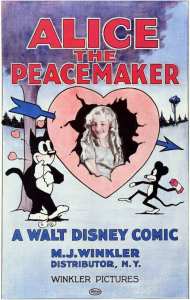
August 1, 1924 – The Alice Comedy Alice the Peacemaker is Released to Theaters

AtPM

On August 1, 1924, the seventh Alice Comedy, entitled Alice the Peacemaker, premiered in theaters. The film featured Virginia Davis as Alice. While not considered a lost film, the short has not been released through the Disney Studios for home viewing; it has, however, been shown at the San Francisco Silent Film Festival, with the original print kept in protective storage in the Disney Archives.

July 30

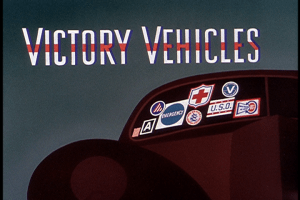
July 30, 1943 – The Goofy Wartime Short Film Victory Vehicles is Released to Theaters

vlcsnap-2016-07-30-19h33m34s832

“Who needs a limousine that’s always out of gasoline? Hop on your pogo stick and laugh your cares away!”

On July 30, 1943, the Goofy wartime short film Victory Vehicles premiered in theaters. The short takes a humorous look at rationing and shortages during wartime; it also spawned a song “Hop On Your Pogo Stick,” complete with sheet music, which was written by Ned Washington and Oliver Wallace. It also features a small cameo by Pluto in one of the early scenes. The short was directed by Jack Kinney.

The short begins with an explanation of why cars were necessary. When the gasoline and rubber shortage was started, the use of cars was limited significantly. Many citizens created their own versions of transportation, flooding the patent office with their (not-so-bright) ideas. The ideas span a variety of hobbies and work activities to help people get from point A to point B. Suddenly, the solution to this problem is made clear: the pogo stick. We then see Goofy, a defense contractor, heading to work via pogo stick, with a giant smile on his face. The narrator then talks about all the benefits of having pogo sticks instead of cars, and how it works in any condition. The short ends with everyone in town using a variety of pogo sticks.

July 23

July 23, 1928 – The Oswald the Lucky Rabbit Short Film Sleigh Bells Premieres in Theaters

SleighBells

“The restoration of [Sleigh Bells] will introduce many audiences to Disney’s work in the silent period – it clearly demonstrates the vitality and imagination of his animation at a key pint in his early career.”

On July 23, 1928, the 25th Oswald the Lucky Rabbit short film Sleigh Bells was released to theaters. Originally considered a lost film, it was discovered by the British Film Institute (BFI) in their collection in 2015. The collection had been uploaded to an online database, where a Disney researcher spotted the film. Before being spotted, the film reel was earmarked to be thrown away, but BFI’s upload ultimately saved the film. The film premiered for the public on December 12, 2015, almost 90 years after its premiere.

June 30

June 30, 1939 – The Donald Duck Short Film Sea Scouts is Released to Theaters

vlcsnap-2016-06-30-17h53m38s156

“That looks like a fish…a flying fish!”

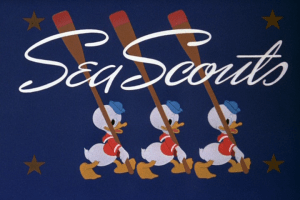
On June 30, 1939, the Donald Duck short film Sea Scouts premiered in theaters. It was the first short directed by Dick Lundy.

Donald is the captain of a ship, with his nephews serving as his crew. As his nephews sleep, he barks orders at them, quickly snapping them to attention. As they hoist the anchor, the anchor gets stuck under a rock and sends them flying. Donald tries to take over, and he too is thrown aside from the pushback. Donald then uses so much force that he almost capsizes the boat. His nephews laugh at his misfortune in raising the anchor, until he yells at them to raise the sails. Seeing that they are incorrect in the procedure, Donald orders them to lower the boom, which they do – on his head. Angered, Donald decides to do everything himself, and starts raising the sails. A strong wind comes in to carry them away, though none realize that the boat is still tied to the dock. The mast is broken from the force of the wind, and Donald gets tangled in a rope and swept away. Seeing his hat having fallen, he demands his nephews bring him down, until he spots a shark right below. Unfortunately, his calls to be brought back up come too late, but Donald manages to scramble his way back up the mast. The boys try to save him, but the shark scares them away, and Donald has to do battle with the beast. When Donald’s hat is ruined in the chase, Donald gets angry enough to fight – and win – against the shark. The boys then head back to short triumphantly.

June 28

June 28, 1940 – The Pluto Short Film Bone Trouble is Released to Theaters

vlcsnap-2016-06-28-17h43m36s936

On June 28, 1940, the Pluto short film Bone Trouble premiered in theaters. It is the second short film in Pluto’s individual series. This short features the first appearance of Pluto’s nemesis and rival for Dinah the Dachshund’s affections, Butch. The short was directed by Jack Kinney, and is notable for being his first short film as a director.

Pluto is snoozing away in his doghouse when he is woken by a rooster’s crowing. He spies his empty dog dish, with the birds having eaten all of his food, and hears a strange sound from the other side of the fence. He sees a bone in Butch the Bulldog’s bowl, and decides to dig under the fence and steal the bone. As Pluto tries not to wake Butch, he runs into difficulties in acquiring the bone. As he gets it and starts walking away, he is unaware that Butch has woken up and is in pursuit. Pluto comes face to face with Butch and tries to pretend nothing has happened, but then decides to try and make a break for it. The chase is on all across town and in a carnival, but Pluto manages to lose him in the hall of mirrors. As Pluto passes by each mirror, his appearance changes, much to his surprise. His reflection in one mirror frightens him, as does another. He plays around with the mirrors, amusing himself with each distortion. When he spies Butch, the chase begins again, but Pluto manages to use the mirrors to his advantage to scare Butch enough to send him flying away.

June 20

June 20, 1953 – The Goofy Short Film Father’s Week End Premieres in Theaters

vlcsnap-2016-06-20-18h05m07s232

“But Saturday night, ah, Saturday night! Gay, laughing, mad Saturday night!

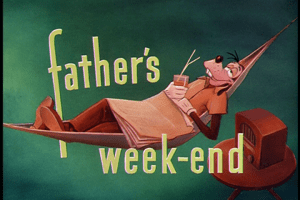
On June 20, 1953, the Goofy short film Father’s Week End was released to theaters. In this short, Goofy plays the everyday man “George Geef.” It was directed by Jack Kinney, with story by Dick Kinney and Brice Mack.

It’s morning, and George Geef is seen going through the pattern of his day, until Saturday, when he has a wild night before his day of rest on Sunday. As Geef sleeps, his son climbs into bed with him, disturbing his sleep. The day begins, with Geef trying to get his sleep while the whole house is awake and noisy. He heads outside to get his newspaper, running into the whole neighborhood. As he lounges with the paper, he quickly cleans for company, only to find that the perceived company is heading next door. After breakfast, he heads to the backyard to relax in the hammock, only to be sent to the beach with his son by his wife. Geef is distracted during the drive by his son and their dog, barely making it there. The day at the beach is continuously ruined by misfortune that causes Junior to cry, until Geef takes him to the carnival, where he promptly loses him. He chases after Junior through a fun house, catches him and tries to take him home, only to get caught in traffic. The next day, Geef is more than ready to get back to his monotonous week.