RSS Feed

Tag Archives: Short film

January 28

January 28, 1944 – Goofy Short Subject How to Be a Sailor is Released.
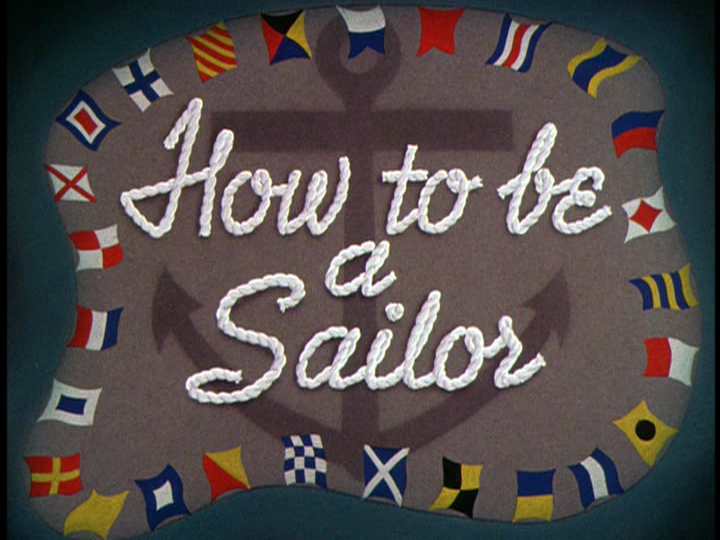
“Star light, star bright – gosh, I wish I knew where I was tonight.”

On January 28, 1944, the short How to Be a Sailor was released to theaters. Following in the tradition of the How-To series starring Goofy, the short is an entertaining quick run-through of sailing throughout the ages. The surprising thing about this short is that the ending does deal with World War II, where it is Goofy against the entire Japanese fleet. This section, coupled with the rest of the short, not only gives the audience a good laugh, but also helps establish the feeling of invincibility in the face of fear when it came to the Japanese soldiers and the war. It’s also notable for being the only short of the war shorts to deal with the Navy, as the rest were mostly dealt with Army settings. The short was directed by Jack Kinney, and stars Pinto Colvig as the voice of Goofy, with John McLeish as the narrator.

“In the beginning,” the narrator starts off, “the world was all wet. Today, it is still four-fifths wet.” We are introduced to early man – or, early Goofy, as the case would be – who tromps through the woods and through shallow water, before falling into a deep section. Struggling to swim, he comes across a log; he’s unsteady on it, but manages to gain some stability and float along, until he comes across a method of propulsion: a wooden board. Excited, Caveman Goofy takes the board and happily steers himself around in circles.
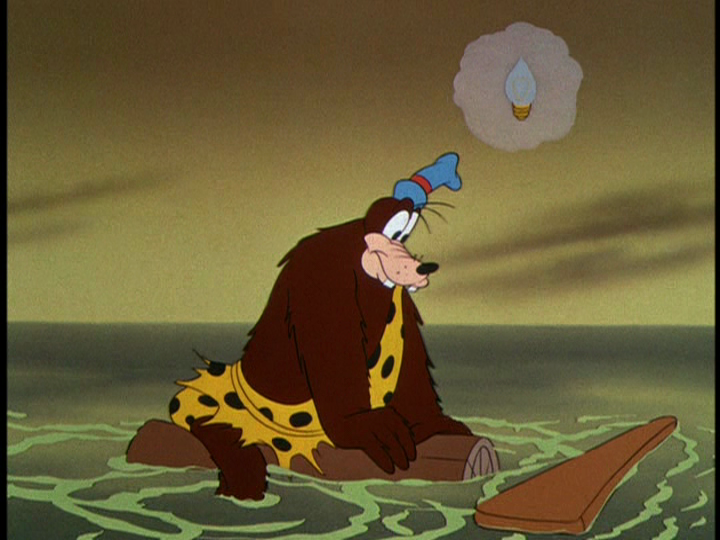
Caveman Goofy gets an idea of how to propel himself on his log

We fast-forward to Egypt, where we see a boat rowing down the Nile river, and find that Goofy is rowing it by his lonesome, with a contraption that allows him to row the at least twenty oars needed to propel the ship. Soon after, we are sent to visit Viking Goofy, who used the stars as his compass. As Goofy laments that he wish he knew where he was, a constellation of Goofy with a bow and arrow hears his plea and shoots the star arrow, sending Viking Goofy and his boat flying across the ocean to their destination.

The next sequence addresses how 13th Century people viewed the world, and wondered what shape it was in, and the audience sees various shaped globes, ranging from diamonds to cylinders. We then see one of their theories in action: sail West far enough, you would sail off the edge of the world. A Goofy version of King Neptune and two fish peek out from the edge of the world, watching the ship fall, and shake their heads.
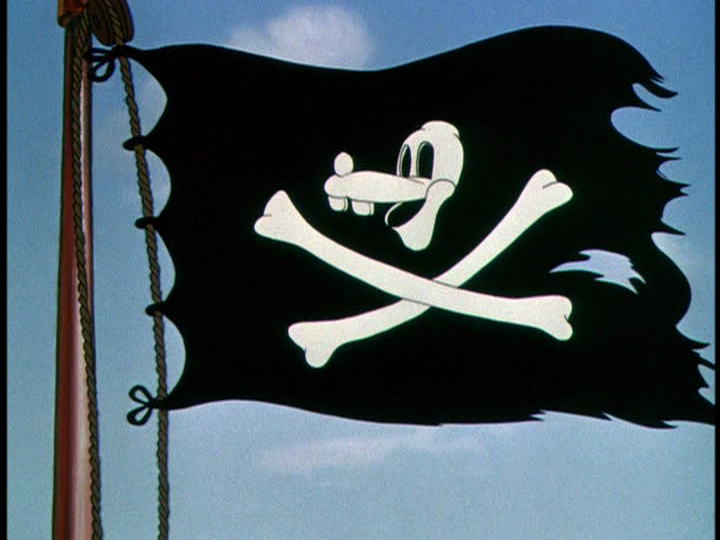
Scarier than Pirates of the Caribbean were the Goofy Pirates

“From the earliest days, sailors were preyed upon by…pirates!” the narrator yelps as the pirate flag is raised. Goofy, a perfect pirate captain with peg-leg and eye-patch, is the victim of a mutiny. His crew pushes out a board, and he is sent to walk the plank, or “feed the sharks.” But a storm hits the next boat the audience sees, and the waves play a game of passing the ship from wave to wave. “For safety’s sake,” the narrator explains, “sailors would lash themselves to the mast.” We then see Goofy tied tightly to the mast, which is unfortunately is struck by lightning and sent crashing through the ship.

The most famous sequence of the short is the flag sequence, where we are taught the alphabet through semaphoring and wigwagging. Goofy tries to keep up with the fast pace of the narrator, but unfortunately wigs where he should have wagged, and his trousers fall around his feet. After hiding behind a sail to fix his situation, he comes out and begins to dance the traditional dances of the sea, including a dance of hoisting the sail, rowing, and being a look out, only he isn’t looking out where he is going. We also see Goofy tying knots, with some literal interpretations by the animators: Goofy ties a square knot (the knots make the shape of a square), then a sheepshank (which “baas” when he pulls on it), and as he slips on the next knot, he knocks himself in the jaw, to which the narrator explains is the “slipknot.”
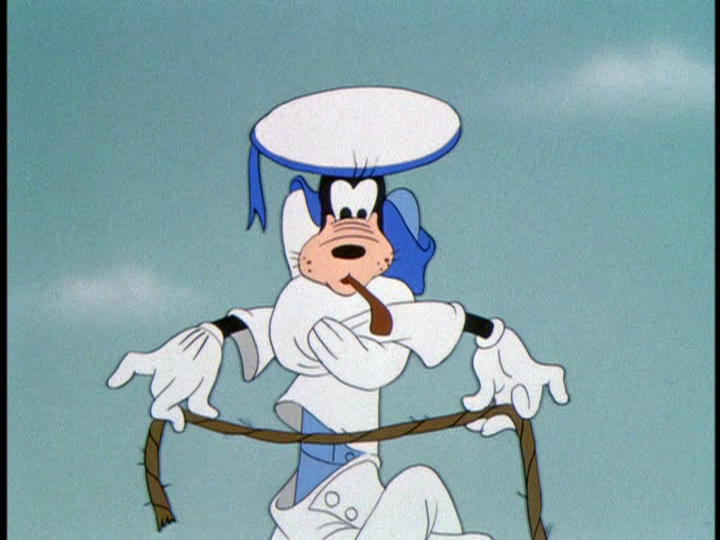
Goofy finds that knots are a little more complicated than he thought

“And now, through trial and error, the sailor has at last, mastered the sea.” We see sailors on a Navy vessel, dreaming of pin-up girls, when the call to attack is sounded. Goofy picks up a missile to fire, only he slips and is sent out of the ship instead of the weapon, and is seen single-handedly destroying the Japanese fleet, as well as the symbol of the Rising Sun, saving the day.

The real gem of this short is the music, with the use of sea tunes to add humor to the situations. For instance, in the Egypt scene, when Goofy is struggling to row by himself, there is a teasing version of Row, Row, Row Your Boat playing in the background. Goofy, when dancing, also keeps in time with a xylophone version of The Sailor’s Hornpipe, which gives a whimsical addition to the already humorous dancing.

Although considered one of the war shorts, the short can stand up well on its own without the association. The pace is quick, but not overwhelmingly so, and gives the audience one laugh after another. This short is a highly enjoyable piece, and one of the best gems of Goofy’s career.
January 23

January 23, 1948 – Goofy Short Subject, They’re Off, Released to Theaters

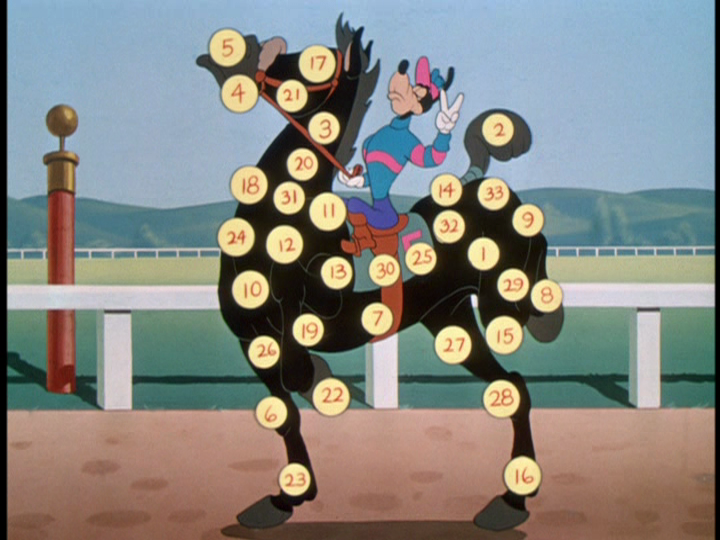
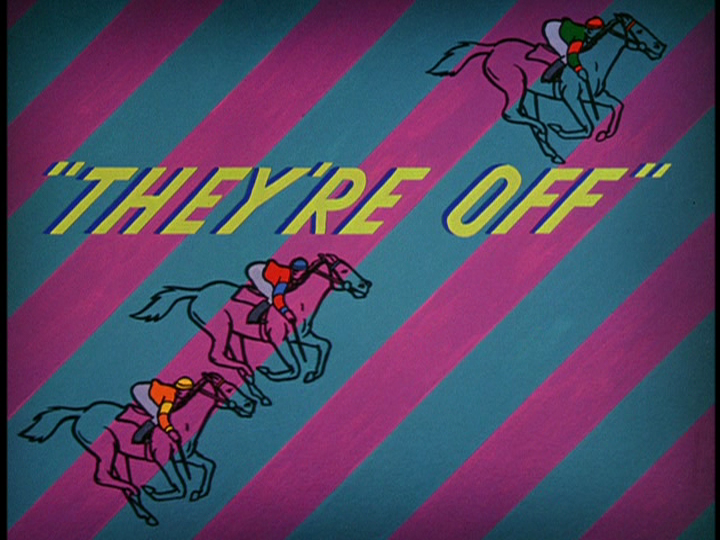
Title Card for the Short, They're Off

Since Tintype I, horses of this line have been noted for their burning speed. And they’re also noted as camera muggers, or lens louses.

On January 23, 1948, the Goofy short, They’re Off, was released to theaters. Following in the tradition of the “How To” films that began with The Art of Skiing in 1941, the short is a tongue-in-cheek how-to on horse racing and betting on the winning horse. The short was directed by Jack Hannah, with story by Reiley Thomson and Campbell Grant, and music by Oliver Wallace.

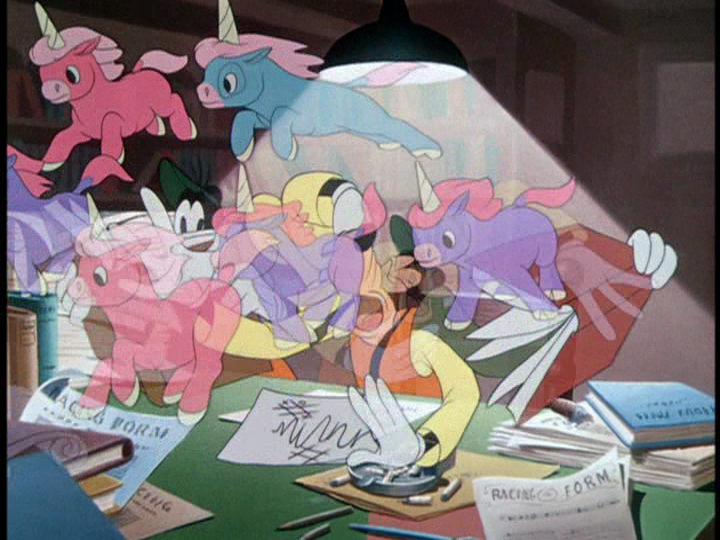
Our narrator begins the film by taking us through the research one must do to identify the winning horse. “Today horse racing has become a science,” he declares, “a science to test the skill of the professional and unprofessional handicapper.” We see Goofy surrounded by mountains of books, periodicals, and newspapers, trying to identify what makes a winning horse. He tries to consider all the elements, including wind velocity, humidity, and rotation of the earth, with comical effect. As the narrator gives a brief history of the thoroughbred, the animators seem to have taken the terms quite literally, such as the horses being referred to as “bang tails,” much to the delight of the audience. Finally Goofy picks his horse, Snapshot III, and now must determine whether this horse has the “fine points of a horse’s conformation,” as the narrator states. Throughout his explanation, the narrator’s voice gradually speeds up, and Goofy ends up overwhelmed and delusional, with animations from How To Ride a Horse and the baby unicorns from Fantasia making a cameo.

Goofy becoming delusional from all of the confusion.

We next see Snapshot III’s pedigree. This is another clever example of wordplay: Snapshot III out of Developer by Hypodeveloper, out of Bromide by Flashbulb and Hypo, out of Tintype by Negative. This wordplay reflects Snapshot’s well-known trait of being a camera mugger or a “lens louse,” a term that causes the horse to glare at the audience.

The day of the big race arrives, and our confident Goofy enters the racetrack, trying desperately not to be swayed by the whisperings of the other bettors and the touts who convince him which horse will win. The narrator explains the many systems people use to pick a winner – again, with the animators taking it quite literally for comic effect. We then see the horses coming out to line up, with Snapshot III taking a jaunty trot down the track.

A confident Snapshot III, shown portraying the perfect conditioning

At this point, we see another Goofy, who has decided to go by luck to pick his horse. With “Eeny, Meeny, Miney, Moe,” he decides that Moe means something, and picks his horse: Old Moe, the 100-1 shot. The score at this point is a comically dour version of The Old Gray Mare, blaring from a brass instrument. Both Goofys place their bets, with the confident researcher stuffing in all of his money, and the play-by-luck Goofy betting only $2.

“The atmosphere is electric,” the narrator observes, although the members of the press, the cameramen, and the jockeys contradict the atmosphere he describes. The race starts, with Snapshot still standing at the gate, calmly eating oats. With a yawn, Snapshot’s jockey tells him to go ahead and start, and he takes off at a fiery speed. The scene grows more tense and chaotic as reporters are typing like crazy, flashbulbs are constantly flashing, and the audience is fighting among themselves. Old Moe and Snapshot are “grappling it out neck and neck,” and the race becomes a photo finish between the two.

The writers and animators must have had a fun time doing this short, with little gags here and there: Jack Hannah, for instance, is seen as the owner of Snapshot III and Insomnia, and writers Reiley Thomson and Campbell Grant are the trainer and owner, respectively, of Crankcase. Even the names of the books are wonderfully tongue-in-cheek, like Know Your Nag and Mother Hubbard’s Selections. Overall, this short is a clever one; while it may not stand out as one of the best, it is definitely one to watch for the subtle gags.

January 21

January 21, 1960 – Goliath II is Released to Theaters; First Disney Film Fully Animated with the Xerox Process.

“His name was Goliath the Second, and he was hardly any bigger than one of his father’s toenails.”

Directed by Wolfgang Reitherman, with story by Bill Peet, this 1960 short film is not only an amusing lesson that size isn’t everything, but was a grand experiment by the Disney animators using the new Xerox process, effectively ending an era of old-style romantic animation. The short is narrated by Sterling Holloway, and stars Kevin “Moochie” Corcoran as Goliath II.

Goliath I is the leader of all the elephants, by virtue of being the biggest and the strongest of them all. His only source of disappointment is his son, Goliath II, who is only five inches tall. Try as Goliath II might to make his father proud, he ends up only squeaking when he tries to trumpet, and getting knocked over by the flower he tries to push over. Goliath’s size is also a problem for his mother, who has a hard time keeping an eye on him, especially when the tiger Raja wishes to try the “bite-sized” elephant. Not wanting to be treated like a baby anymore, Goliath runs away from the herd. Although he is saved by his mother when Raja almost eats him, his troubles get worse, as he is marked as a rogue elephant and branded a traitor, disgracing his great father.

Goliath meets a butterfly. This gives the audience a way to see how small he really is.

Goliath gets his chance to prove his worth when he is “left alone to face the terror of all terrors” for elephants – a mouse. Through an epic battle with the pugnacious mouse, with a crocodile hungrily licking its chops to devour the loser, Goliath wins, spares the mouse and wins the respect of the rest of the elephants. He is awarded the highest position in the herd, and a place of honor on his father’s head as the elephants lumber through the jungle.

Goliath and the foe of all foes - a mouse.

Although the Xerox process was used in the dragon scene in Sleeping Beauty, the animators used Goliath II as an experiment to see if it would work on screen. Quite simply, the Xerox process is a way of transferring the animators’ pencil drawings directly to cels, bypassing the inking and painting process. The process, after it had been successfully used in the feature film One Hundred and One Dalmatians, was used in practically every Disney film through The Little Mermaid, when the use of the computer to create the ink lines replicated the old style of inking and painting at a lower cost. The newer process also left more of the feeling that the animator tried to convey before the cleanup began by the inkers and painters.

Sleeping Beauty became the end of a style era, particularly because it had been a very expensive film to create and had not made enough money back, leaving the studio in a dire situation. Ub Iwerks, who had come back to the studio in 1940, had been thinking of ways to lessen the cost of animation. He had been fascinated with the idea of Xerox copying, wondering if he could transfer the animator’s sketch straight to the cel, instead of just a piece of paper. He did a few experiments, and concluded that it was a valid solution for the financially strapped studio.

Ub Iwerks (L) while working on the Xerox Process.

In the early days of the Xerox process, one machine took up three rooms. With a lens and an electrostatically charged plate, the lens took a picture of the drawing, and transferred it to the plate, which would then be dipped in toner. The toner would then be transferred to a clear cel. It dramatically cut costs when it came to animation, but at a price: the beautiful artwork created by the inking and painting department was no more, and the department itself was closed. The style not only replaced the more fairy-tale look of the Disney animated films, but brought in a new modern American art look to the studio.

The Xerox process had mixed reactions from those within the studio. Animator Floyd Norman remarked, “I think we did lose something because the Xerox line lacked the subtlety of the ink line which was incredible…so I guess one could debate those points back and forth. Was Xerox a step forward, or a step backwards?” But animator Andreas Deja argued that “Xerox didn’t cut the quality of the animation. They didn’t do limited animation. It’s still a fully animated film. The acting is still there, it’s still subtle.”

Although there are many opinions of the process, there is no denying the impact it had on the look of Disney films from the 1960s to the 1990s, and it was a good way to save the legacy of animated films. Without Iwerks’ invention, there may not have been The Lion King, Beauty and the Beast, or even The Little Mermaid. Goliath II, although most people may not realize it, helped bring about a turning point in animation history, and did it in a delightful way.

January 15

January 15, 1943 – Education for Death is Released to Theaters

“He sees no more than the party wants him to; he says nothing but what the party wants him to say; and he does nothing but what the party wants him to do.”

Surely the grimmest film the studio produced during World War II, Education for Death: The Making of a Nazi, was premiered in theaters on January 15, 1943. Based on the bestselling book by Gregor Ziemer, the short was directed by Clyde Geronimi and principally animated by Ward Kimball. It was narrated in English by then-popular radio personality Art Smith; however, the dialogue in the short is in German. This helps to provide a sense of distance between the viewer and the characters, further heightening the fear of the Nazi doctrine in Americans. Disney Legend Joe Grant said that by making the short, the studios hoped to make it “visible to people what was going on. And you couldn’t do it in a better way than with the graphics in a cartoon. It wasn’t a cartoon, it was actually an editorial. I think it did the job.”

The story centers on a young German boy named Hans, and how he grows up in this new Nazi order, becoming a brainwashed believer of the Nazi ideology. The story begins with Hans’ parents standing in front of a soldier, registering their child’s birth. They present birth certificates dating all the way back to their great-grandparents, proving that they are pure Aryan. The mother wishes to name her child Hans, which, fortunately, is not on the forbidden name list (which includes Franklin and Winston as its top two forbidden names). The parents are then given a hereditary passport, with twelve lines, giving them “a subtle hint that Germany needs soldiers.” As a reward for giving birth, the couple is given a copy of Germany’s bestseller, Mein Kampf.

The hereditary passport: note Hans' name at the top, with more room for future names. His mother was expected to produce a large family for Germany's sake.

The next segment is of one of the doctored fairy tales presented to Hans in kindergarten. As this film was shown to general audiences, the animators tried to present at least one moment of humor in this otherwise dark film. The fairy tale in question is the story of Sleeping Beauty, with the Wicked Witch representing democracy, vanquished by the Prince (Hitler) before he wakes the Princess (Germany) with a kiss. The Princess, however, is anything but beautiful; instead, she is portrayed as an obese Wagnerian woman holding a stein and able to sing only the words “Heil Hitler!” “Prince Hitler” is anything but dashing: He struggles to carry Germany and barely manages to plop her on his horse (with a little comedic help). The moral of this story, the narrator tells us, “seems to be that Hitler got Germany on her feet, climbed into the saddle, and took her for a ride.” It could be argued that the comedy was so strong here to show the audience the absurdity of what German children were being taught in schools.

The caricatures of Germany as the Princess, and "Prince Hitler," taking Germany for a ride.

The most emotional part of this short is the classroom scene. The students begin their day giving a pledge to a portrait of Hitler that they will fight, obey, and die for their Fuehrer. The classroom also has portraits of Hermann Goering and Joseph Goebbels (also slightly caricatured for comedic effect, although the effect is very subtle). The teacher then gives the class a lesson in “natural history,” in which a fox chases a rabbit, corners the poor creature, and devours him. When asked what his thoughts are on the subject, Hans answers, “The poor rabbit.” The teacher is furious, calling Hans an idiot, and making him sit in the corner with the dunce cap while the students are encouraged to mock him and laugh at him. The poor boy thinks he has disappointed the Fuehrer and Herren Goering and Goebbels with his answer. The teacher asks for the correct answers, which include:

The world belongs to the strong!

And to the brutal!

The rabbit is a coward and deserves to die! We spit on the rabbit!

These answers fire up Hans, who, when asked again for his opinion, declared tearfully that he hates the rabbit, and that the world has no room for weaklings. “This lesson is the basis for the Nazi creed,” the narrator declares, “for Germany will likewise destroy all weak and cowardly nations.” The film then switches to scenes of book burning and desecration of churches, with the Bible being replaced by Mein Kampf, and the crucifix being replaced with a sword bearing the swastika. The short ends with Hans marching along in Nazi lockstep, and we watch as he grows up, still heiling and marching.. “In him,” we are told, “is planted no seed of laughter, hope, tolerance, or mercy. He sees no more than the party wants him to; he says nothing but what the party wants him to say; and he does nothing but what the party wants him to do.” The soldiers are all seen with blinders, muzzles, and heavy chains around their necks. The ending of this short is one of the bleakest endings ever put on film.

Wearing blinders, muzzles, and chains, these boys have become perfect unquestioning soldiers for the Nazi warped ideology.

The short is highly staged for dramatic impact, using shadows and silhouettes to highlight the threat the party imposed on the characters. The film was meant to shock and appall audiences, and suffice it to say, the animators did their job well. This short is still an effective piece of propaganda—spreading ideas or information to further or damage a cause—meant to show the American public what Nazism was and why we were at war with Germany. While touches of humor provided small breaks between the grim messages, the film still got its point across and served its purpose well.

January 11

January 11, 1929 – The First Mickey Mouse Club is Formed

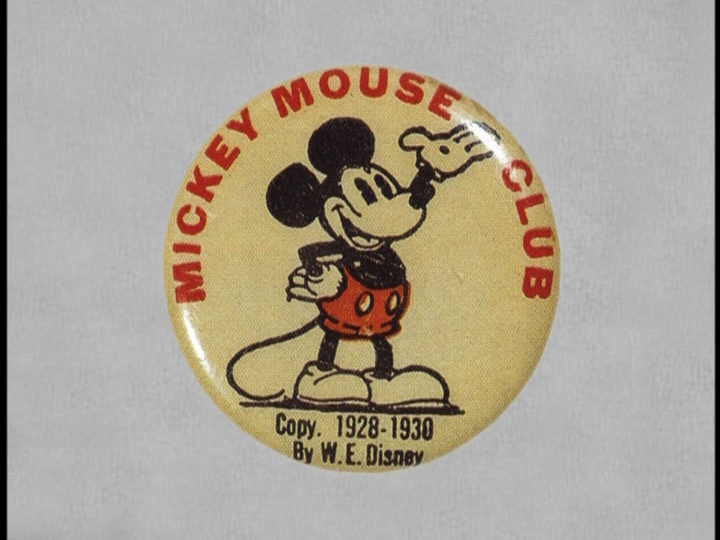
A promotional button from the original club

“Mickey Mice do not swear, smoke, cheat, or lie!”

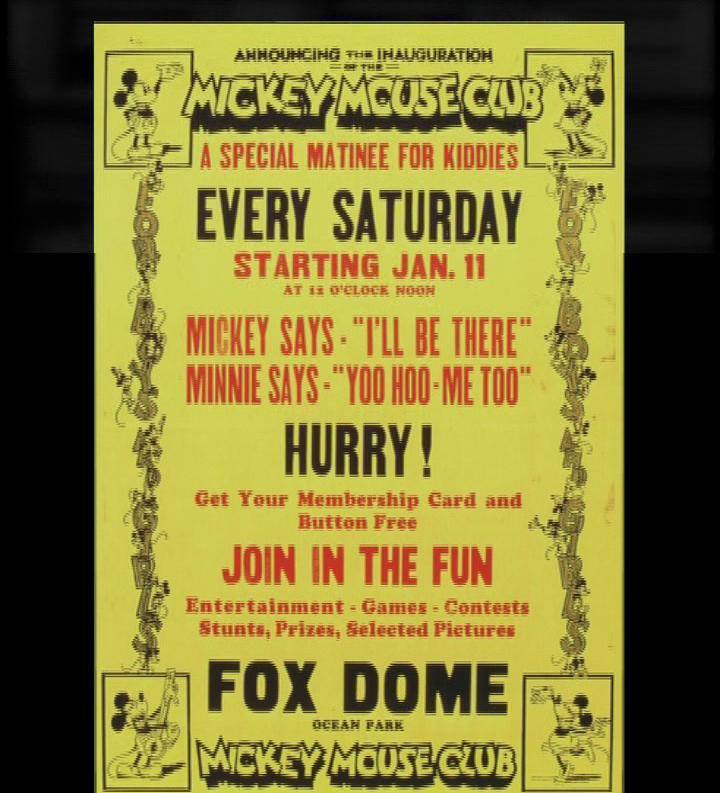
At noon on January 11, 1929, the first Mickey Mouse Club was called to order in the Fox Dome Theater in Ocean Park, California. The club was the idea of the theater’s manager, Harry W. Woodin, which he began during the children’s matinee shows on Saturdays. Soon, these clubs spread like wildfire, and by the height of their popularity in 1932, it was estimated that there were one million members worldwide, with many clubs meeting every week. During club meetings, children would watch Mickey Mouse cartoons, recite the Mickey Mouse credo, and elect a Chief Mickey and Chief Minnie Mouse.

A copy of the original flier for the Fox Dome Theater's first meeting of the Mickey Mouse Club

Intrigued with Woodin’s concept, Walt Disney saw that there were many opportunities for merchandising through the clubs, as well as convincing more children to attend the theater to see new Mickey Mouse shorts. Disney hired Woodin to be the general manager of these club gatherings. Woodin’s job included printing and sending fliers to theaters across the country, instructing them on how to develop the clubs and help local businesses through advertisements in the club bulletins. Business began to boom through the name of Mickey Mouse: Bakeries would offer free Mickey birthday cakes, banks gave away Mickey savings banks, and department stores would give away free Mickey toys to entice customers to look at their more expensive toys. Clubs were formed not only across the United States, but also in England and Canada, among other countries, by 1930. The Odeon Theatre chain in England had 160 clubs with 110,000 members by the peak of the club’s popularity.

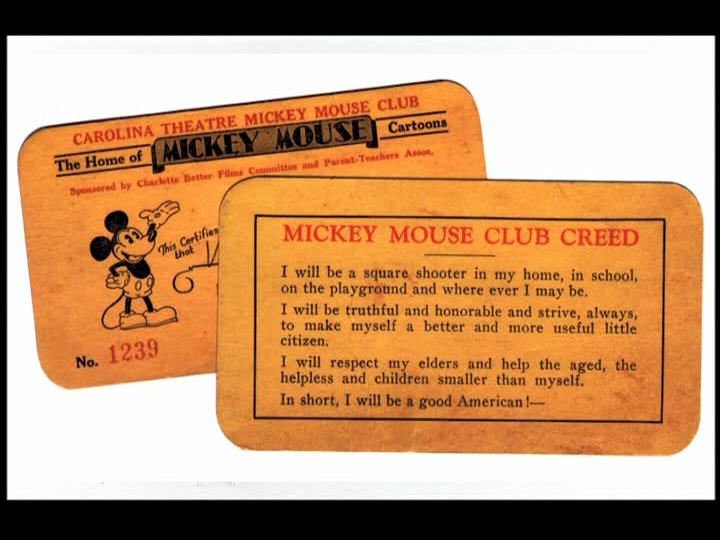
A card with the Mickey Mouse Club Creed

The club itself taught children how to be model citizens. Children would recite, “Mickey Mice do not swear, smoke, cheat, or lie!” Mickey himself would instruct the kids on topics such as how to brush their teeth and wash behind their ears, respect their parents, attend Sunday school, and on the virtues of honesty and honor. The creed of Mickey Mouse Club members was as follows:

I will be a square shooter in my home, in school, on the playground and where ever I may be.

I will be truthful and honorable and strive, always, to make myself a better and more useful little citizen.

I will respect my elders and help the aged, the helpless and children smaller than myself.

In short, I will be a good American!

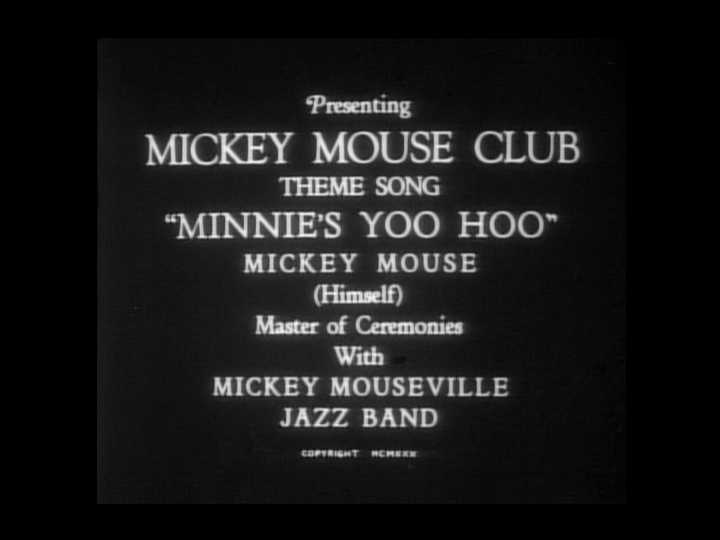
The highlight of these clubs, naturally, was the Mickey Mouse cartoons. To that end, Walt Disney had a special animated short for the club meetings of the club’s theme song, “Minnie’s Yoo-Hoo.” Written by Walt Disney and Carl Stalling, the song was the first Disney song released on sheet music. The animated short that accompanied the song had Mickey singing the first verse, before encouraging the children to sing as the lyrics would show up on the screen.

Title card for the Minnie's Yoo-Hoo short.

Mickey Mouse’s explosive popularity was a big part of American culture in the late ’20s and early ’30s. With the credo recited at these meetings, as well as the lessons Mickey would teach the children, it’s no wonder that Mickey was seen as a positive role model, and parents would object if Mickey was seen doing something reckless, as he did in many of his early shorts. The clubs held steady in their popularity with the Disney stamp of approval until 1935, when the popularity of these clubs began to wane. The clubs did continue unofficially through World War II, with Mickey and friends extolling the importance of planting Victory Gardens and donating old toys for scrap. It would be 23 years until the television version of the Mickey Mouse Club would appear in people’s homes.

January 9

January 9, 1937– Don Donald is Released to Theaters

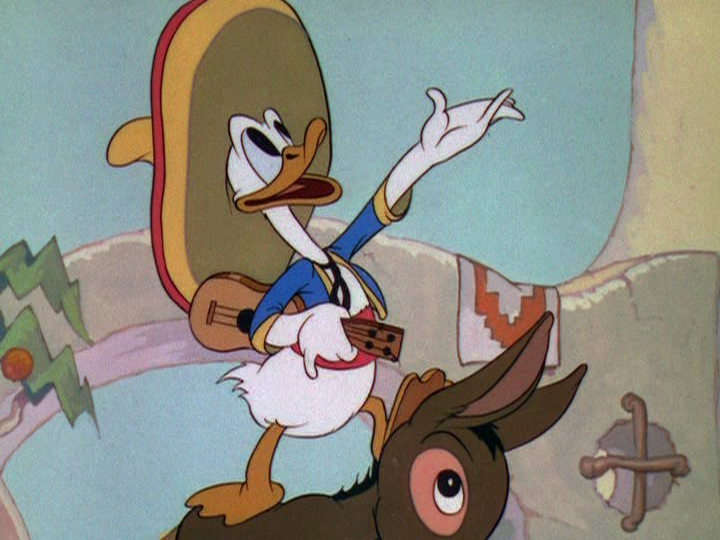
Don Donald

“Hi, toots!”

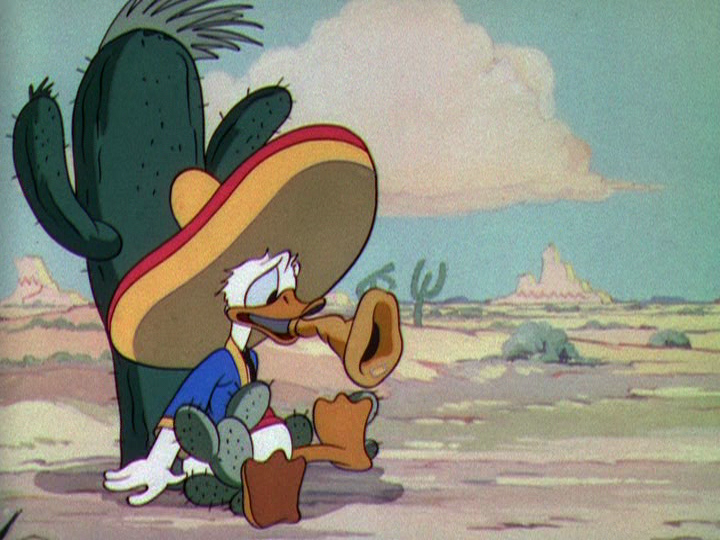
Directed by Ben Sharpsteen and featuring Clarence Nash as the voice of Donald and Donna Duck, this short features Donald riding a burro on his way to visit his girlfriend, Donna. Donna greets him with a Mexican Hat Dance – literally dancing on Donald’s large sombrero – which leads to her dancing while riding on the burro. When the burro bucks Donna off, she shows off a temper that is just as bad as Donald’s.

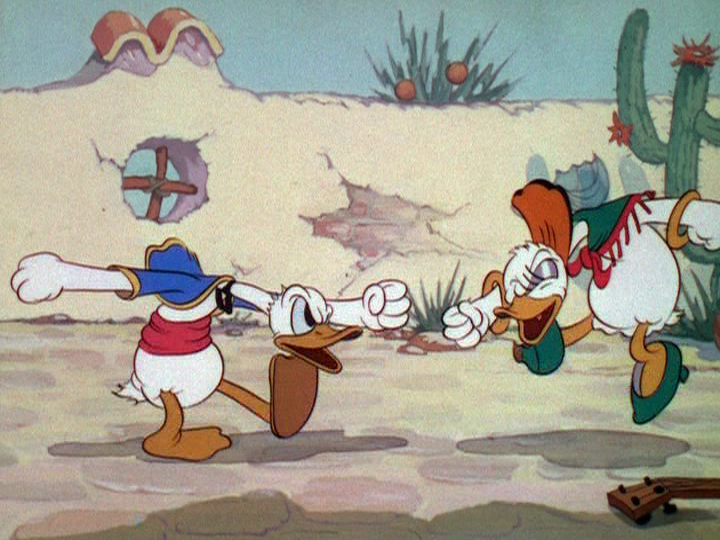
Donna exhibits the same behavior as Donald when her feathers are ruffled.

Donna is the first iteration of the character Daisy Duck, who will not appear by that name until the short Mr. Duck Steps Out, released in 1940. She is adventurous and short-tempered: When Donald begins to laugh at her misfortune, Donna not only reacts with the same arm-swinging anger that Donald is known for, but hits him over and over with his guitar, before she smashes it right over his head.

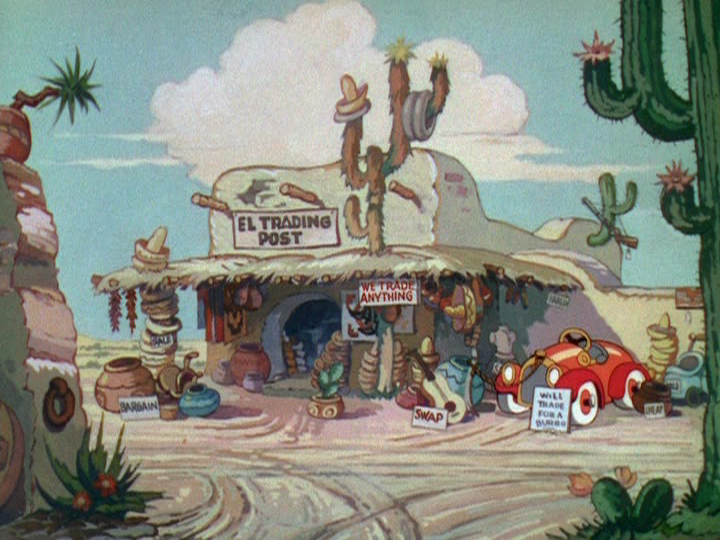
After this altercation with Donna, Donald stumbles upon “El Trading Post” and spies a car with the sign, Will Trade For A Burro. Not one to miss an opportunity, Donald trades the upset burro for the car to impress Donna.

Donald sees El Trading Post, with the car and its sign (R).

Still fuming, Donna is ready to throw a vase over Donald’s head, until she sees the car he’s driving. She immediately jumps down and kisses him, and urges him to take her for a drive. As they pass by the Trading Post, the burro is crying, and finally he breaks free from his bonds and begins to chase the two, catching up to them as trouble begins.

In the desert, the car sputters and breaks down, in the process throwing Donald out and trapping Donna in the back before it crashes, ejecting her. Donald, once again, makes the mistake of laughing at her misfortune, and she throws the car horn at him. She then pulls a unicycle from her purse and wheels away, leaving Donald alone with a horn in his mouth and the burro laughing at him.

Donald, once again, feeling the wrath of Donna.

Like many of the beginning shorts of Donald’s career, Clarence Nash’s pronunciation was still a bit unclear, which has sometimes caused censorship problems. A variation of Donald’s catchphrase, “Hiya, toots!” is used here, and is very understandable. Donald would use this catchphrase often, particularly when speaking to Daisy.

January 7

January 7, 1933 – Building a Building Released to Theaters

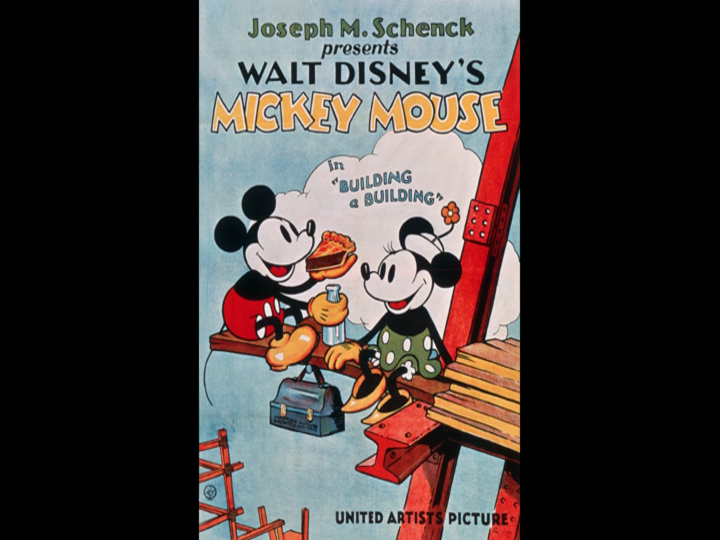
The film poster for the short 'Building a Building'

“Baloney, and macaroni, and a huckleberry pie”

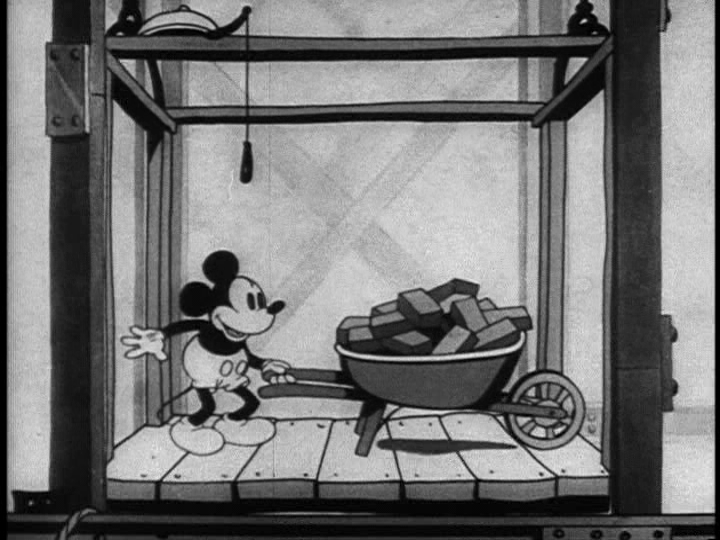
In this 1933 black-and-white short film – directed by David Hand, recorded on R.C.A. Photophone – Mickey is a construction worker on a building site, with Pegleg Pete as his foreman. Minnie comes by selling box lunches for only 15 cents (Pluto makes a cameo, pulling her lunch cart). Her presence soon attracts the attention of plucky young Mickey, who spills dirt and bricks on top of Pete and his blueprints, aggravating Pete’s already short fuse.

Mickey working on the building - also a good example of the "squash and stretch" method of animation.

Although Mickey’s actions in this era were described more as an homage to silent film star Charlie Chaplin, one can see that there are also nods to the physical comedy stylings of silent film star Harold Lloyd (see Jan. 4th entry – Mickey’s Polo Team), as Mickey falls head over heels – literally – for Minnie Mouse.

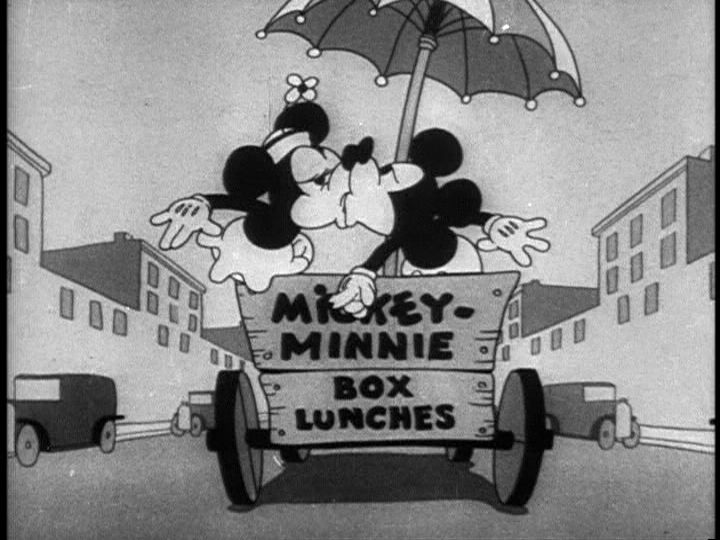
When Pete steals Mickey’s lunch, Minnie feels bad for Mickey and offers him a free lunch, which includes, as she often repeats, “Baloney, and macaroni, and a huckleberry pie,” with a corn cob as well, for only 15 cents, which is about $2.50 today – not a bad price for such a lunch. Not satisfied with stealing Mickey’s lunch, Pete tries to steal Minnie’s affections as well. This does not turn out well for Pete, as Mickey and Minnie use all available resources to outsmart the foreman, before sliding down a chute and riding off in Minnie’s lunch wagon, now co-owned with Mickey. They share a kiss while Pete ends up stuck in a tub of cement.

The kiss as the couple rides off together.

In this short, Pete was voiced by Billy Bletcher, Minnie by Marcellite Garner, and Mickey by Walt Disney. This short is entertaining, especially for the over-the-top physical comedy used to show Mickey’s affections and to outsmart Pete.

January 6

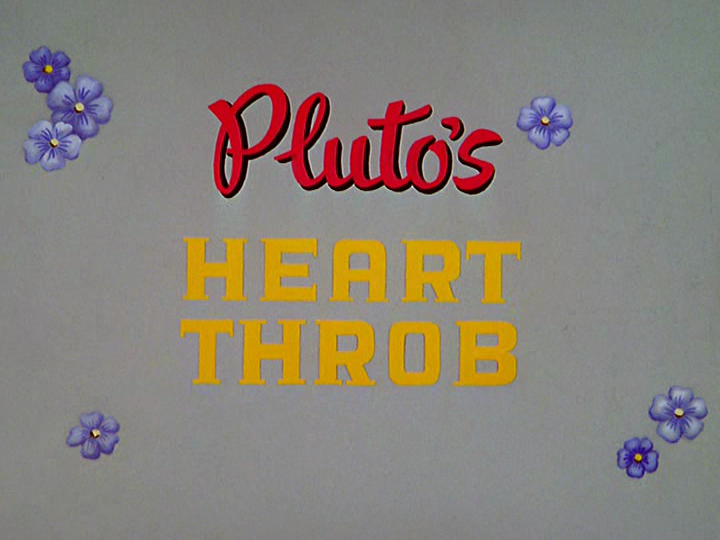
January 6, 1950 – Pluto’s Heart Throb Released to Theaters


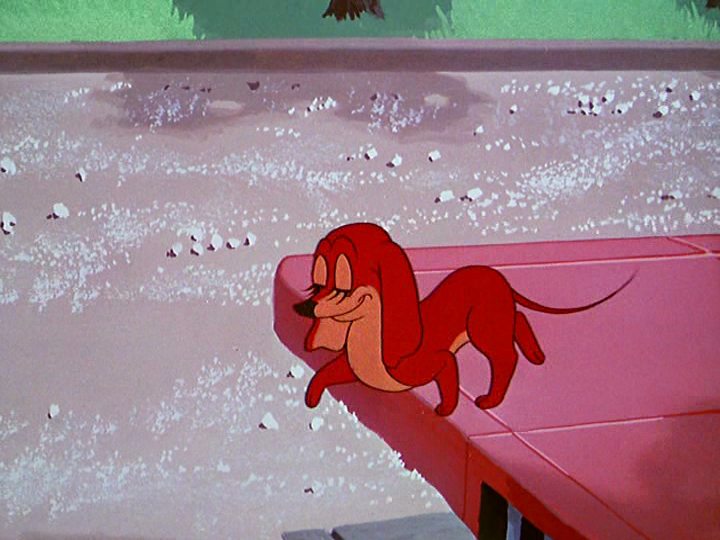
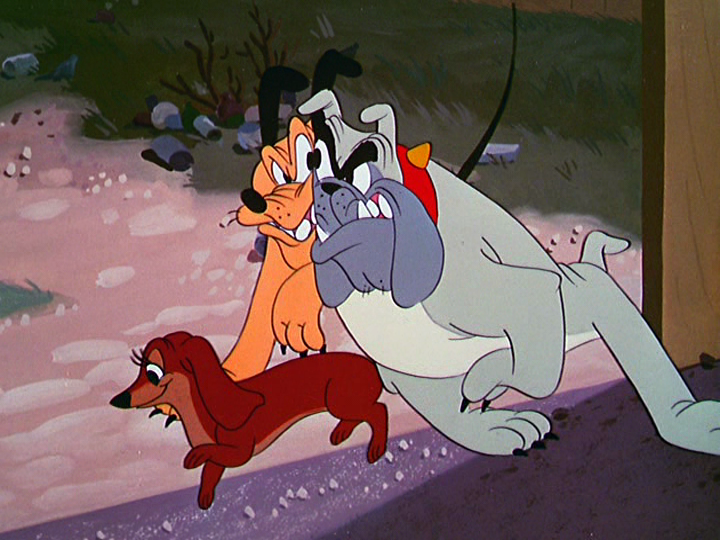
In this 1950 short film—directed by Charles Nichols, with story by Roy Williams and music by Oliver Wallace—Pluto tries to win the affections of Dinah, a dachshund, but has to compete against a bulldog named Butch. Although Butch tries to convince Dinah that he and Pluto are friends, he will stop at nothing to attack Pluto when Dinah isn’t looking.

Dinah the Dachshund

Dinah first appeared in the 1942 short The Sleep Walker, replacing Pluto’s former romantic interest Fifi the Peke. Butch had been Pluto’s antagonist since the 1940 short Bone Trouble, when Pluto tried to steal his bone. Dinah is often a source of contention between Pluto and Butch as they try to win her fickle affections.

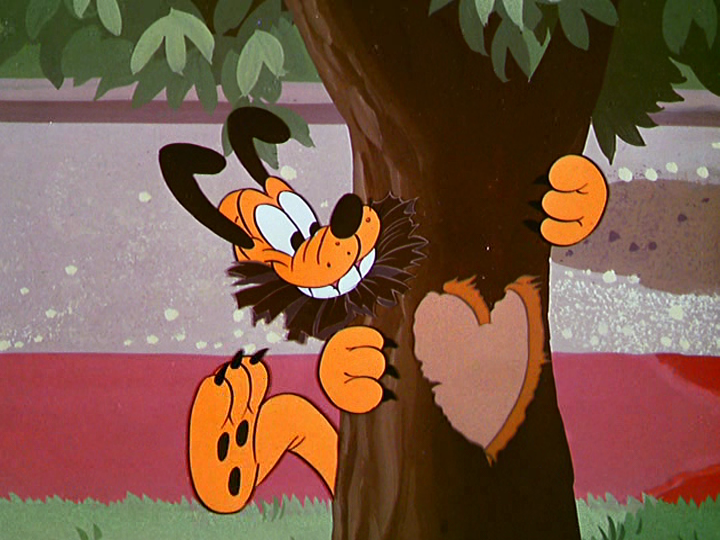
Pluto’s Heart Throb is a prime example of the physical comedy that the Pluto shorts were known for.  In most films Pluto said very little, if anything at all. The physical comedy is exaggerated for comic effect, first seen when Pluto begins to fall for Dinah. The music is synchronized with the actions of the characters, from woodwinds playing in rhythm when Pluto is waving his paw at Dinah, to trumpets when Pluto and Butch are squaring off.

Pluto and Butch square off behind Dinah's back

In the end, the good-natured and steadfast Pluto wins the heart of Dinah (this time), after she sees how Butch has been bullying Pluto, plus Butch is too afraid to save her when she accidentally falls into a pool. This is not one of the standout shorts in Pluto’s library, but it is rather a humorous look at how the good guy can win the girl in the end.

Bonus Fact: Heart throb indeed – there were 183 hearts used in this short.

January 4

January 4, 1936 – Mickey’s Polo Team is released to theaters.

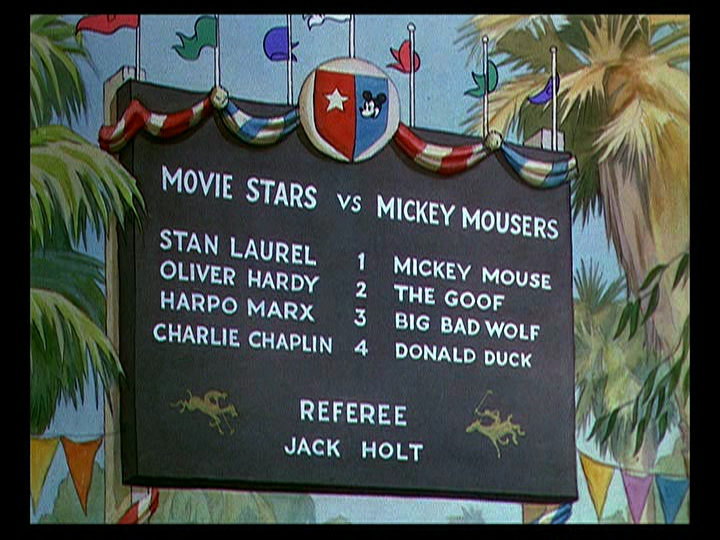
The Movie Stars versus The Mickey Mousers

A good example of the popular culture of the 1930s, Mickey’s Polo Team was released to theaters on January 4th. It was directed by David Hand, produced by Walt Disney Productions, and released by United Artists. The short features Mickey leading a team called “The Mickey Mousers,” against a team called “The Movie Stars”, featuring popular 1930s celebrities Stan Laurel, Oliver Hardy, Harpo Marx (riding an ostritch), and Charlie Chaplin. The referee is famous leading man Jack Holt, and the audience features prominent 1930s entertainment stars. One of the running gags of the short is Hardy trying to stay on and control his horse, which shows off an example of Laurel and Hardy’s slapstick comedy.

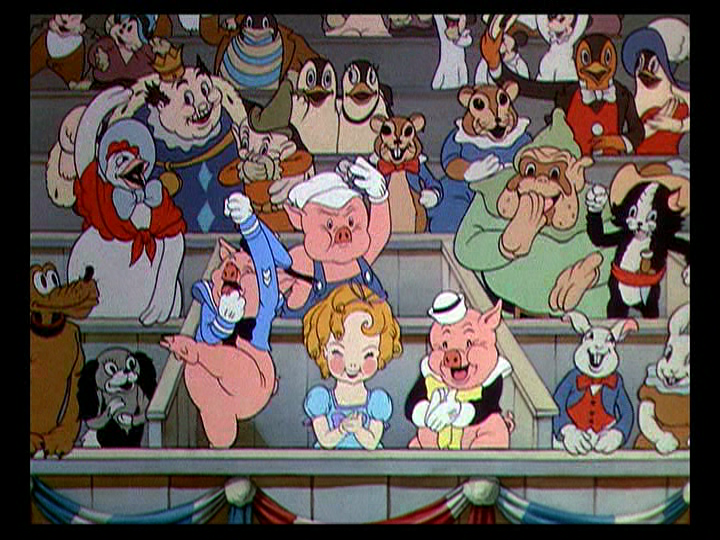
Characters from the Silly Symphonies and Shirley Temple

The short also has characters from the Silly Symphonies, including The Wise Little Hen (The Wise Little Hen), The Flying Mouse and his mother (The Flying Mouse), King Midas and Goldie (The Golden Touch), Peter and Polly (Peculiar Penguins), Ambrose and Dirty Bill (The Robber Kitten), two bunnies (Funny Little Bunnies), and Cock Robin with Jenny Wren (Who Killed Cock Robin?).

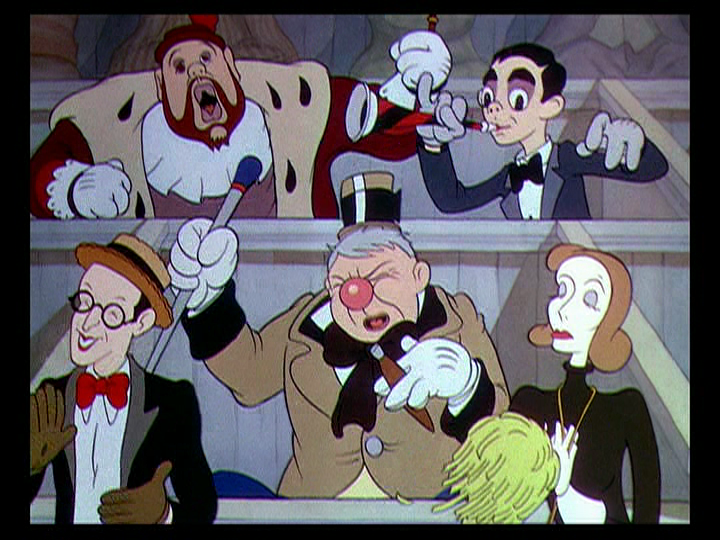
From top left going clockwise: Charles Laughton, Eddie Cantor, Greta Garbo, W.C. Fields, and Harold Lloyd.

Many famous personalities were caricatured in this short:

Stan Laurel and Oliver Hardy were an acclaimed double act in early Hollywood, mostly known for their slapstick comedy.

Harpo Marx was a member of the famous family comedy act, the Marx Brothers. Harpo never spoke, but communicated through whistling or blowing a horn – the ostrich Harpo rides in the polo match acts as his horn in this short.

Jack Holt, the referee, was Columbia Pictures’ most reliable leading man, because of his rugged personality. He was well known for staring in three Frank Capra action films: Submarine in 1928, Flight in 1929, and Dirigible in 1931.

Shirley Temple was a superstar in the 1930s, known for her work in the films Bright Eyes (featuring her signature song “On the Good Ship Lollipop”), Curly Top, and Dimples.

Charles Laughton was a British film actor, known at the time for his portrayal as the titular character in The Private Life of Henry VIII, which the animators capitalized on as they drew him.

Eddie Cantor was a Broadway star and singer turned Hollywood actor, known for his hit songs “Makin’ Whoopie” and “If You Knew Susie.” Cantor became a leading man after his work in the 1930 film Whoopee!

W.C. Fields was an American actor, known for his comic persona of a alcoholic egotist with contempt for dogs, women and children, yet was still seen as a sympathetic character to audiences. His films include David Copperfield, Alice in Wonderland, and The Fatal Glass of Beer, written by Fields himself.

Harold Lloyd was a popular silent film actor, ranked alongside Buster Keaton and Charlie Chaplin as the most popular and influential comedians in the silent era. The scene he’s most well known for is from Safety Last! in which he hangs from the hands of a clock above the city streets; this is a prime example of his daredevil physical feats.

Greta Garbo was a Swedish actress who was an international icon during the classic period of Hollywood. Her most well-known films were Anna Karenina and Camille.

Edna May Oliver was an American character actress, known for usually playing waspish spinsters. She is best known for her roles in Alice in Wonderland, A Tale of Two Cities, and David Copperfield.

Clark Gable was an American actor, known at that point for his role in the Academy Award winning film It Happened One Night, as well as his role is Mutiny on the Bounty. Nicknamed The King of Hollywood, Gable was also known for his ears, which were often caricatured by the likes of Disney and Warner Brothers.

This short is interesting for seeing what was popular in the 1930s. Polo was a popular sport with the Hollywood crowd, and Walt Disney was a fan, using the game to venture into Hollywood society. Although most of these actors would not be known by members of the general public these days, the people featured were huge stars. To be featured in a Disney short must have been seen as a form of flattery, or at least a sign that a star has “made it.” It’s a charming piece that gives the modern viewer insight to the cultural landscape of the 1930s in Hollywood.

If you are interested in seeing more Disney cartoons with caricatures of 1930s celebrities, please check out the following:

Mickey’s Gala Premiere

Mother Goose Goes Hollywood

The Autograph Hound

January 1

Welcome to 2012, the first post of the year as well as the first post of the blog! Of the many areas I could have spoken about today, I could not decide between these two. Read and enjoy!

January 1, 1904 – Birth of Disney Legend Grace Bailey

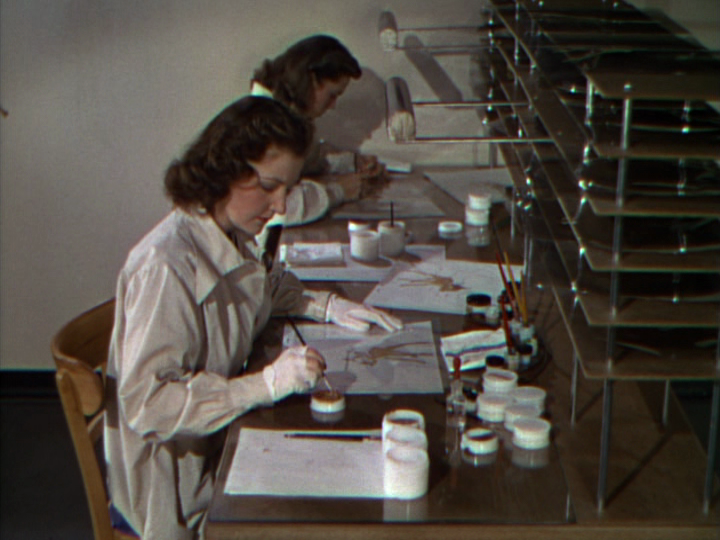
Disney Legend Grace Bailey Turner, born Elizabeth Grace Randall, is known for her work in the Ink and Paint department. She began working at Walt Disney Studios in 1932, rising through the ranks of the department to painting supervisor, then inking supervisor, and finally head of the department in 1954. She held this position until she retired in 1972, after 40 years of work with the company. She died on August 23, 1983, and was inducted posthumously into the Disney Legends on October 12, 2000.

After the success of Flowers and Trees, Disney’s first Technicolor animated short, Bailey was tasked with the important duty of expanding the studio’s catalog of colors. Walt had made a deal with Technicolor to have exclusivity of the three-color process in animation for two years, and one can only imagine the challenges Bailey faced when dreaming up new colors. Betty Kimball, former Studio painter, said in an interview that “[e]verything was so unscientific back then. We were just creating, and it was fun.”

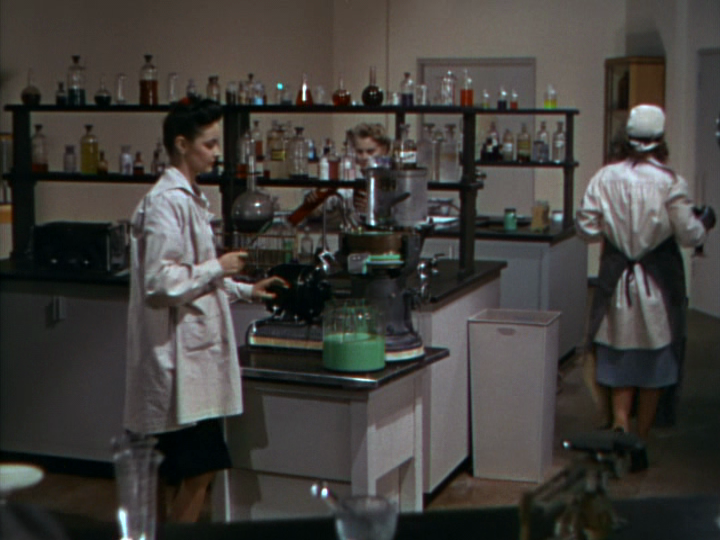
I was rather excited that my first post could be on Grace Bailey, for several reasons. Firstly, many people voiced complain that there are no important women in Disney’s history – my answer is that they’re not looking hard enough. Although the Ink and Paint Department was mostly, if not all, women, this does not mean their work was thought of as any less important. After watching scenes from The Reluctant Dragon, it’s easy to see that there was a lot of work that went into mixing and creating the new hues to bring animation to a higher level. The Ink and Paint department was highly important when it came to an animated film: inking could take about 12 months to learn properly, and one had to be very precise to preserve not only the animator’s original drawing, but also the emotion the animator wished to invoke.  To say that women did not have an important role, or that there were hardly any important women, seems to ignore all of the work these women did. Bailey was an important part of Disney history, and I’m proud to put her in the spotlight today.

January 1, 1943 – Release of Der Fuhrer’s Face to Theaters

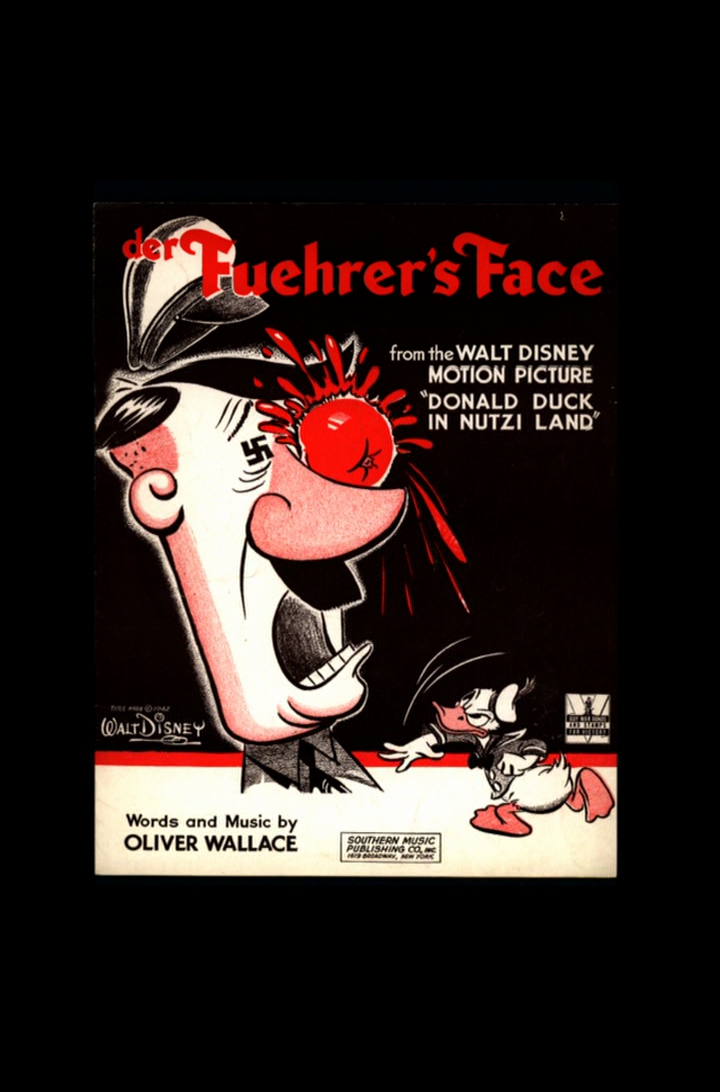
A prime example of homefront propaganda from World War II, Der Fueher’s Face was released to movie theaters on January 1st and was not only immensely popular, but it also won the Academy Award for Best Animated Short Film at the 15th Academy Awards. Directed by Jack Kinney, the short, in which Donald Duck has a nightmare that he resides in a country controlled by the Nazis, was originally called Donald Duck in Nutzi Land. The name was changed, however, when the title song for the short, written by Oliver Wallace, became a runaway hit after a record by Spike Jones was released (although the film preceded the record). According to Disney Legend Joe Grant, the short was inspired by the Charlie Chaplin film, Modern Times, especially the scene with Donald working on the belt line.

In this excerpt from the introduction to the short, film critic Leonard Maltin explains:

“It’s easy to see why the film was so popular. It’s very, very funny, reducing the serious tenets of Hitler’s Nazism to slapstick absurdities. And it gave audiences a chance to think, as Donald does, about the freedoms they might have taken for granted.”

As was common of propaganda films of the time, there are caricatures of Hirohito, Mussolini, and Nazi soldiers. This was a common tactic that is still seen today: the enemy is mocked to reduce the public fear and make the enemy less fear-inspiring. It was a good way to allow panicked Americans at that point a chance to laugh in the face of their fears.

One rumor that persisted about the film is that it was banned from being released to the public after the war. While the short was kept out of general circulation for many years because of its propagandistic content, it was released on the DVD set On the Front Lines in the third wave of Walt Disney Treasures, and was released again on the DVD set The Chronological Donald, Volume Two.

I find the work of the Disney Studios during WWII fascinating, from the propaganda shorts to the training films. All of these films helped Americans through their fear with laughter, and encouraged them to buy war bonds and support the troops through other methods. This short in particular conveys the message that Americans needed to be thankful for the freedoms they had and understand why they were fighting. America had been trying to stay out of the war until Pearl Harbor; these films helped rally the American Spirit.

One thing that also interests me about this short is the use of Donald Duck. Donald was an international star at this point, received well all over the world. Donald’s character works well for this kind of satire. His inability to keep from muttering under his breath as he deals with the insanity of Nutzi Land suits the story and creates a more humorous impact than if the usually cheerful, uncomplaining Mickey Mouse had been the main character. Audiences would have been sad to see our favorite mouse in Hitler’s clutches.

With grumpy, grousing Donald as the main character, Der Fueher’s Face allowed audiences to find humor in the face of fear.