RSS Feed

Tag Archives: Music

November 9

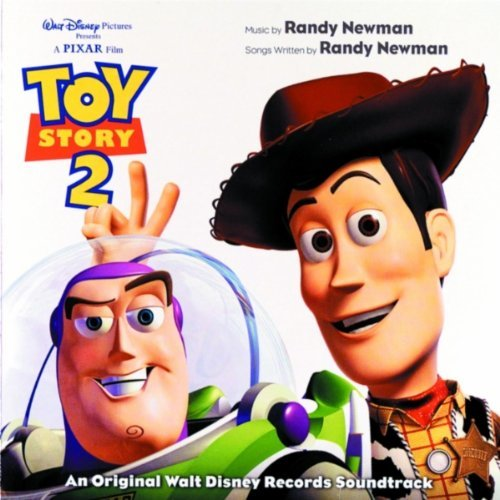
November 9, 1999 – The Soundtrack for the Pixar Film Toy Story 2 is Released on Walt Disney Records

“And when she was sad, I was there to dry her tears, and when she was happy, so was I, when she loved me.”

On November 9, 1999, the soundtrack for the third Pixar film Toy Story 2 was released on Walt Disney Records. The score and songs used in the film were written and composed by Randy Newman; he wrote two new songs for the film: “When She Loved Me” (performed by Sarah McLachlan), and “Woody’s Roundup” (performed by Riders In the Sky). “When She Loved Me” was nominated for an Academy Award for Best Song, but lost out to Phil Collins’ “You’ll Be in My Heart” from Disney’s animated film Tarzan. The soundtrack was also nominated for a Grammy Award, and won an Annie Award. The soundtrack is currently out of print in the United States.

November 2

November 2, 2004 – The Soundtrack for The Incredibles is Released Through Walt Disney Records

On November 2, 2004, the soundtrack to the sixth Pixar film The Incredibles was released through Walt Disney Records. The film was scored by Michael Giacchino, and was his first Pixar film, his other two being Ratatouille and Up. The soundtrack consists of nineteen tracks, and was awarded the IFMCA Award for Score of the Year; it was also nominated for the Grammy Award for Best Score Soundtrack Album, and for Best Instrumental Composition for “The Incredits.”

October 20

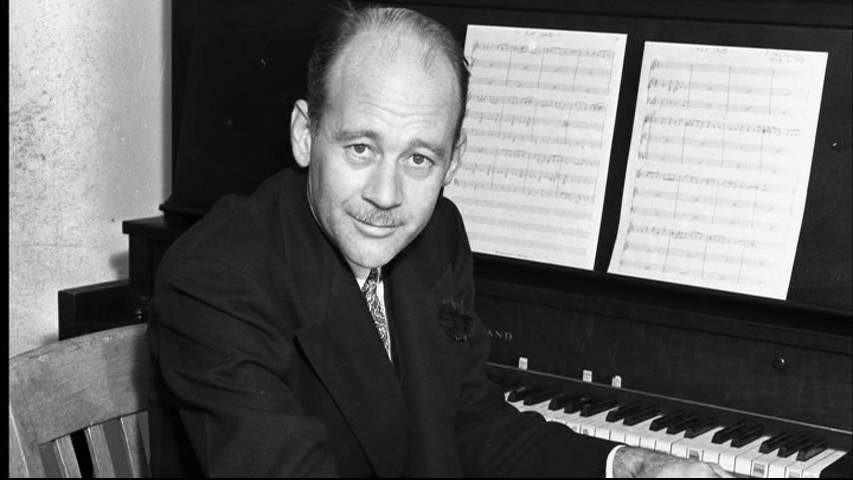
October 20, 1901 – Composer and Disney Legend Frank Churchill is Born

“I began writing musical scores for these animated cartoons to get away from the cost of using stock music. Being a reader of fables, they furnish most of the ideas which I put to music.” – Frank Churchill

On October 20, 1901, film composer and Disney Legend Frank Churchill was born in Rumford, Maine. A gifted musician from an early age, he had his first professional job at 15, accompanying silent films at a theater in California. Although enrolled at the University of California, Los Angeles in pre-med, he dropped out to pursue his passion for music. Churchill joined the Walt Disney Studios in 1930, and eventually scored nearly 65 short films. He is most known for the song “Who’s Afraid of the Big Bad Wolf?” from the Silly Symphony The Three Little Pigs. The song sold more than three quarters of a million copies.

Churchill was asked to develop the songs for Snow White and the Seven Dwarfs; he earned an Academy Award nomination for the film’s score, and created the classic songs “Whistle While You Work,” “Heigh-Ho,” and “Someday My Prince Will Come.” He received another two nominations for his work on Dumbo, one for the score, and one for Best Song for “Baby Mine,” co-written with Ned Washington. He would also receive nominations for Bambi, one for score, and one for the song “Love is a Song,” co-written with Larry Morey. Churchill passed away on May 14, 1942 of a self-inflicted gun shot; he was inducted as a Disney Legend in 2001.

October 19

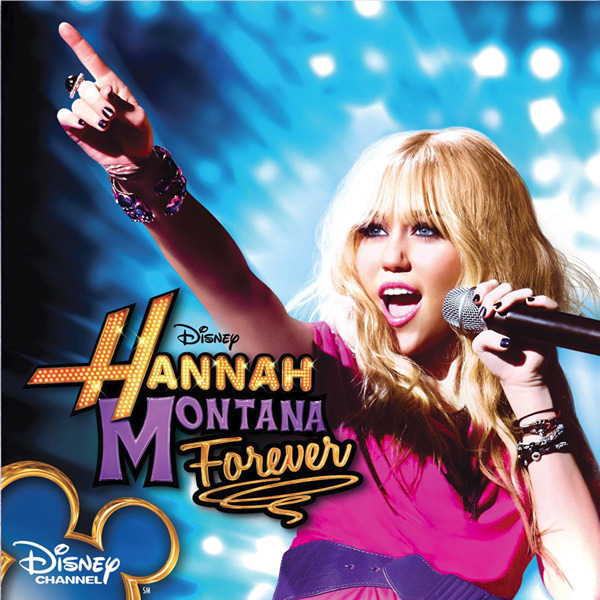
October 19, 2010 – The Hannah Montana Forever Soundtrack is Released Through Walt Disney Records

“I make wishes, I have dreams, and I still want to believe anything can happen in this world for an ordinary girl.”

On October 19, 2010, the fourth and final soundtrack for the Disney Channel original series Hannah Montana was released, titled Hannah Montana Forever. The tracks on the album are all performed by Miley Cyrus, credited to her character Hannah Montana. The album also features duets with Iyaz, Sheryl Crow, and Cyrus’ father, Billy Ray Cyrus. There were two singles released from the album: “Ordinary Girl (released July 6, 2010)” and “I’m Still Good (December 10, 2010).” “Ordinary Girl” peaked at number 91 on the Billboard Charts, and “I’m Still Good” failed to chart. The album as a whole debuted at number 11 on the Billboard 200, the first time a Hannah Montana album missed the top ten. The album gained mixed reviews from critics.

October 18

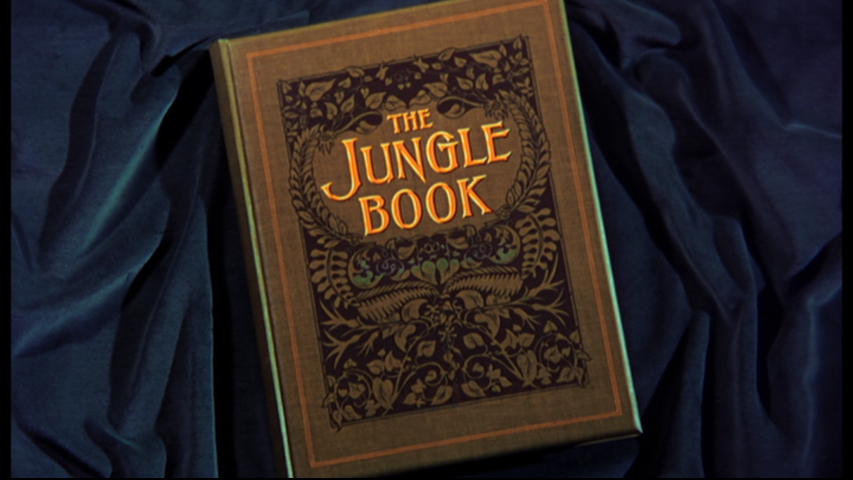
October 18, 1967 – The 19th Animated Feature Film, The Jungle Book, is Released to Theaters
“As an animator, [The Jungle Book is] probably the greatest film in terms of character development and how characters play against one another. The animators poured their whole heart and soul into every scene in that movie.” – Animator Glen Keane

On October 18, 1967, the 19th animated feature, The Jungle Book, was released to theaters. The film was based on the book of the same name by Rudyard Kipling, and was the last film which Walt Disney supervised; Disney passed away during its production. The movie was also known for the vultures being a caricature of the famous band The Beatles, as Disney wanted them to be in the film, but they turned him down due to scheduling conflicts and John Lennon’s disgust with the idea; the vultures did remain in the film without The Beatles’ involvement. The film was directed by Wolfgang Reitherman, and stars Phil Harris as Baloo, Sebastian Cabot as Bagheera, Bruce Reitherman as Mowgli, Louis Prima as King Louie, George Sanders as Shere Khan, and Sterling Holloway as Kaa.

Storyman Bill Peet was the one that suggested Kipling’s book to Disney as an animated feature, making the point that the company could do more stories with more interesting characters. Although Peet usually ran a one-man show when it came to story, and Disney liked the story sketches he was seeing for Jungle Book, Disney wanted to have more hands-on involvement in the story process after the let-down of Peet’s last project, The Sword in the Stone. The two could not reach an agreement on the film, and Peet left the studio. The story was then given to Larry Clemmons for his first writing on an animated feature film. “…[H]e launched into how he wanted to tell the story,” Richard Sherman recalled. “And he said, ‘But I want it to be fun. I want this to be a fun story; an adventure with fun. No mysterious…none of this heavy stuff…and I want to have a little heart in it, too.’”
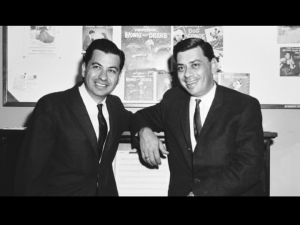
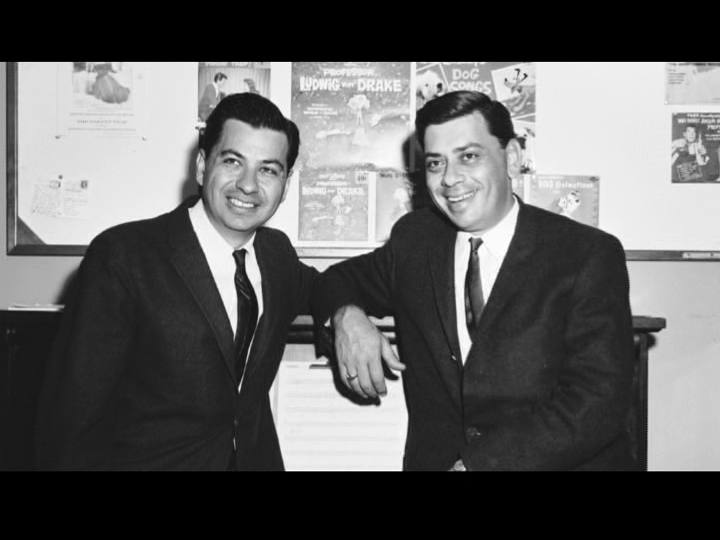
The songwriting team of the Sherman Brothers, who were brought in to write the songs for “The Jungle Book” when Walt Disney came in to rewrite the story

The music for the film is considered one of the greatest soundtracks of Disney animation. The first songs written for the film followed Peet’s darker version of the story, and was done by Terry Gilkyson. When the story went through its rewrite, the Sherman Brothers were brought in to write new songs that were more upbeat and help to progress the story. The only song to survive from Terry Gilkyson was the one that would go on to be nominated for an Academy Award: “The Bare Necessities.” One of the songs that the Sherman Brothers had written for Mary Poppins was retooled to be used for the character of Kaa, called “Trust in Me.” The film was scored by George Bruns, who was well known for writing for Davy Crockett.

The story opens with narration from Bagheera, a black panther, who stumbles upon a basket upon a riverbank in India. Inside, he finds a baby; taking pity on the poor orphan child, he places him with a wolf that had recently had cubs. The mother adopts the child, who is named Mowgli, and raises him alongside her litter. Ten years later, the wolves find out that Shere Khan, a Bengal tiger, will be returning to the jungle and killing anyone who dares protect Mowgli. Bagheera offers to take Mowgli to the man village for his own safety, although the boy is determined to stay in the jungle. While the pair rest in a tree for the night, a python named Kaa appears, who attempts to hypnotize the boy and devour him. Luckily, Bagheera wakes up and interrupts Kaa, with Mowgli sending the python flying out of the tree.
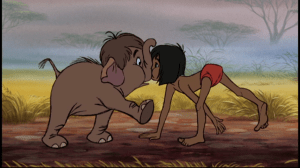
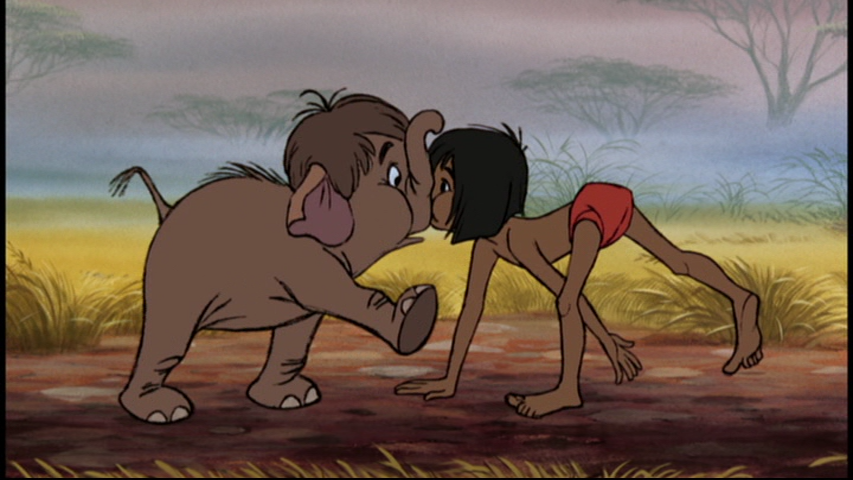
Mowgli meets up with the members of Colonel Hathi’s elephant pack, and hopes that by becoming a member, he can remain in the jungle

The next morning, Mowgli attempts to join Colonel Hathi’s elephant pack, but is quickly intercepted by Bagheera. The two get into an argument about Mowgli’s wish to remain in the jungle, which ends with Bagheera leaving Mowgli to fend for himself. As Mowgli wanders the forest, he comes across Baloo, who aims to teach Mowgli how to fight. When he tries to teach the boy how to roar, Bagheera believes the boy to be in trouble and rushes back to help. Baloo shows Mowgli the carefree life of the jungle, which only makes Mowgli more certain that he will never go back to the village. Unfortunately, just as Baloo and Mowgli begin to bond, a gang of monkeys capture Mowgli to take him back to their leader, King Louie, an orangutan.

Mowgli is brought to the ancient ruins where King Louie lives, and King Louie promises to help the boy remain in the jungle if Mowgli tells him the secret of how to make fire. Baloo, entranced by the music the monkeys are playing, disguises himself so he can sneak in and take Mowgli away. In the ensuing fight over Mowgli, the ruins fall apart, leaving King Louie without a kingdom. That night, Bagheera convinces Baloo that the best thing for Mowgli is to be taken back to the man village, so he doesn’t get killed by Shere Khan. Baloo is torn with what to do, as he loves Mowgli like he was his own cub. When Baloo tries to explain the situation, Mowgli accuses Baloo of breaking his promise and runs away. Bagheera enlists the help of Colonel Hathi to help find Mowgli before Shere Khan shows up, but Shere Khan is seen eavesdropping and is even more determined to kill the boy.
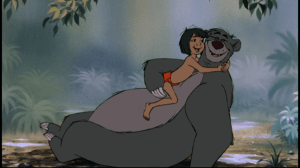
 

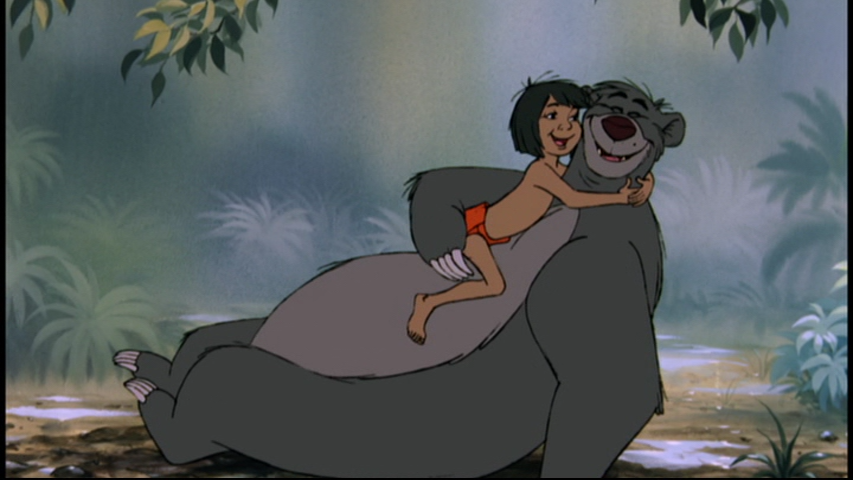
After the fight with Shere Khan, Mowgli gives Baloo a hug, with all being forgiven

As Mowgli wanders the jungle, he runs across Kaa again, who is still hungry. He hypnotizes the boy, but his plans are again interrupted, this time by Shere Khan, and Mowgli escapes. Depressed, he finds a place to sit as a storm fast approaches, and meets a group of vultures who agree to be his friends. Shere Khan finally catches up with Mowgli, scaring the vultures away. Baloo, having finally found the boy, rushes in to save him during the storm, with the vultures returning to create a diversion. When a nearby tree is struck by lightning, Mowgli grabs a flaming branch and ties to it Shere Khan’s tail. The tiger’s only fear is fire, and he flees when he is unable to remove the flaming branch. Baloo and Bagheera still maintain that Mowgli should be taken to the village, but Mowgli remains adamant that he should stay in the jungle. His mind changes, however, when he spies a beautiful girl near the river’s edge. He follows her, helping her carry her water pot. Although Baloo is saddened to lose the boy, Bagheera reminds him that Mowgli will be safe with his own kind, and the two dance off into the sunset together.
October 13

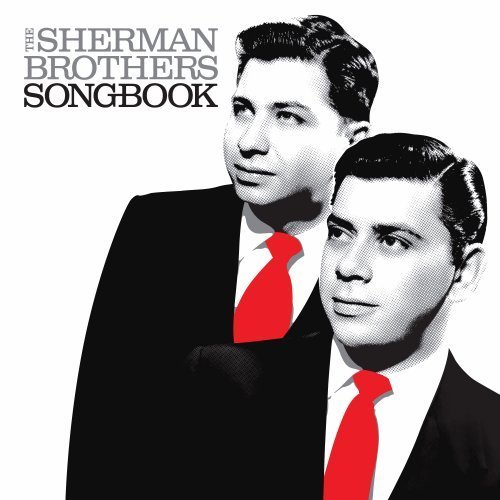
October 13, 2009 – The Compilation The Sherman Brothers Songbook is Released Through Walt Disney Records

Image credit: Amazon

“There’s a great big beautiful tomorrow, shining at the end of every day.”

On October 13, 2009, the compilation album The Sherman Brothers Songbook was released through Walt Disney Records. The two disc collection features 59 important songs from the career of the songwriting duo, from their first track for Annette Funicello (“Tall Paul”) to the song they wrote with Kenny Loggins (“Your Heart Will Lead You Home”). The compilation also includes songs that were not written for the Disney Studios.

October 4

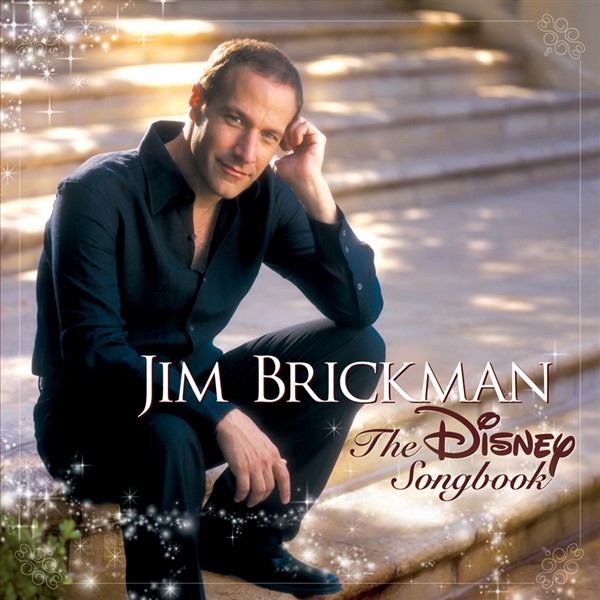
October 4, 2005 – Songwriter and Pianist Jim Brickman Releases The Disney Songbook Through Walt Disney Records

“And when it comes to shooting stars, I’ve seen a few, but I’ve never seen anything as beautiful as you.”

On October 4, 2005, songwriter and pianist Jim Brickman released the album The Disney Songbook through Walt Disney Records. The album contains 13 tracks, 11 of which are redone pieces of classic Disney songs ranging from “Beauty and the Beast” to “Someday My Prince Will Come,” with only two songs using vocals:“When I See an Elephant Fly” featuring the vocals of Josh Gracin, and “Baby Mine” featuring the vocals of Kassie de Paiva. Also included are two original songs inspired by the film Cinderella: “Beautiful” featuring the vocals of Wayne Brady, and “I’m Amazed” featuring the vocals of Lila McCann.

September 28

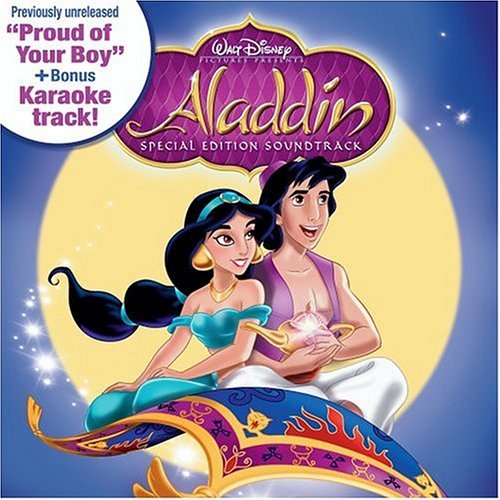
September 28, 2004 – The Special Edition Soundtrack of Aladdin is Released Through Walt Disney Records

Image credit: Amazon

“Proud of your boy, I’ll make you proud of your boy.”

On September 28, 2004, the special edition soundtrack of Disney’s 31st animated feature, Aladdin, was released through Walt Disney Records. The original soundtrack was released on November 25, 1992, with this special edition coinciding with the Platinum Edition of the film released on October 5, 2004.

The album contains 23 tracks, with 21 from the original release and the remastered version from 2001. This edition contains two demo songs – “Proud of Your Boy” and “High Adventure” – which were cut from the film when the plot was changed. “Proud of Your Boy” was written by Howard Ashman; in the original treatment of the film, Aladdin sang this song to his mother to prove that one day, he would make her proud. When the character of Aladdin’s mother was cut from the film, the song was cut as well. “High Adventure” was another song written by Ashman that didn’t make the final cut. Both songs were also included on the box set “The Music Behind the Magic.”

September 26

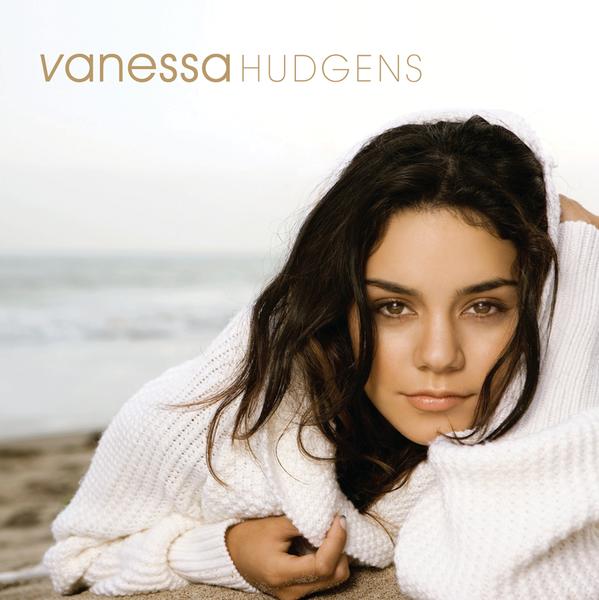
September 26, 2006 – Vanessa Hudgens’ Debut Album, V, is Released Through Hollywood Records

“When it’s not alright, when it’s not ok, will you try to make me feel better?”

On September 26, 2006, the debut album of High School Musical star Vanessa Hudgens, titled V, was released through Disney’s Hollywood Records. With two promotional singles – “Come Back to Me” and “Say OK” – the album debuted and peaked at twenty-four on the Billboard Charts. It was certified Gold on February 2, 2007. The first single, “Come Back to Me,” was released on August 25, 2006, peaking at 55 on the Billboard Hot 100 Charts and 18 on the Billboard Pop Song chart. “Say OK,” the second single, was released much later, on March 27, 2007, faring much better on the charts, as it hit number 1 on the Billboard Hot 100, and peaked at number 7 on the Billboard Pop Song chart. Overall, the album received positive feedback.

September 17

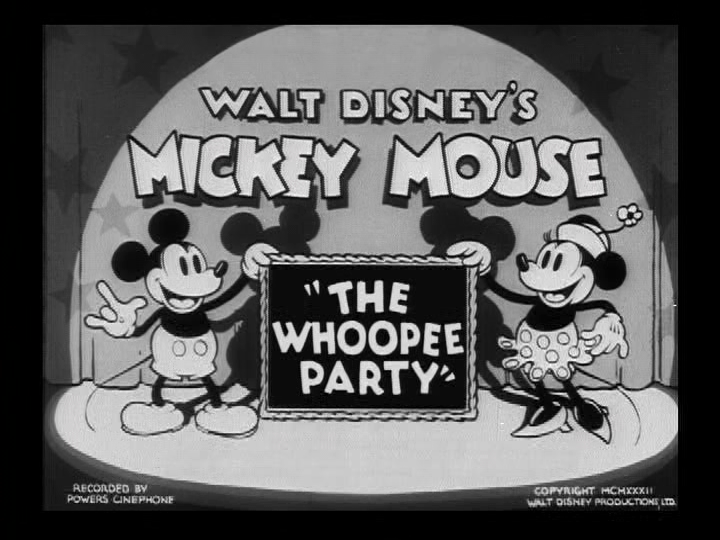
September 17, 1932 – The Mickey Mouse Short Film The Whoopee Party Premieres in Theaters

“We’re the kitchen mechanics, we fix all the refreshments.”

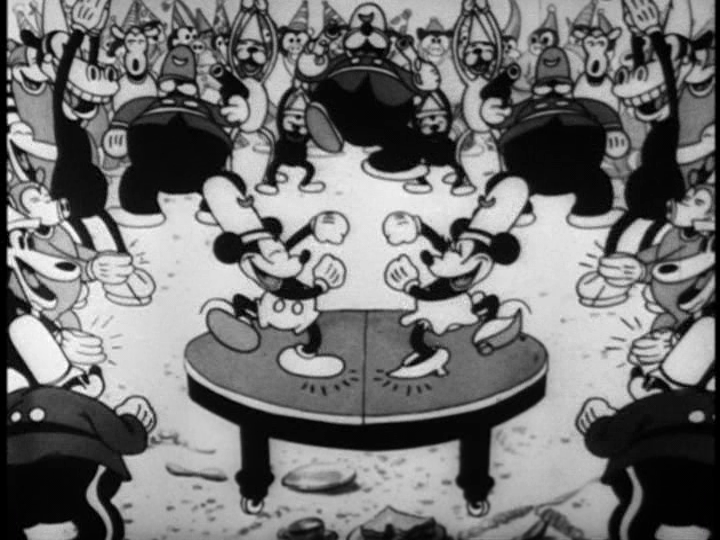
On September 17, 1932, the Mickey Mouse short film The Whoopee Party was released to theaters. The short features two popular pieces of music in the 20s and early 30s: “The Maple Leaf Rag” by Scott Joplin, and “Runnin’ Wild” by A.H. Gibbs, Joe Grey, and Leo Wood (mostly known for Marilyn Monroe’s performance in the 1959 comedy film Some Like It Hot). It was directed by Wilfred Jackson, and stars Walt Disney as the voice of Mickey Mouse, Marcellite Garner as the voice of Minnie Mouse, and Pinto Colvig as the voice of Goofy.

A splendid party is taking place, with a whole cast of characters dancing happily to the music. Minnie is at the piano playing and singing, while Clarabelle Cow accompanies her on the violin. Mickey, Goofy, and Horace Horsecollar are in the kitchen, preparing snacks for the party and singing their own version of the song as the “Kitchen Mechanics.”

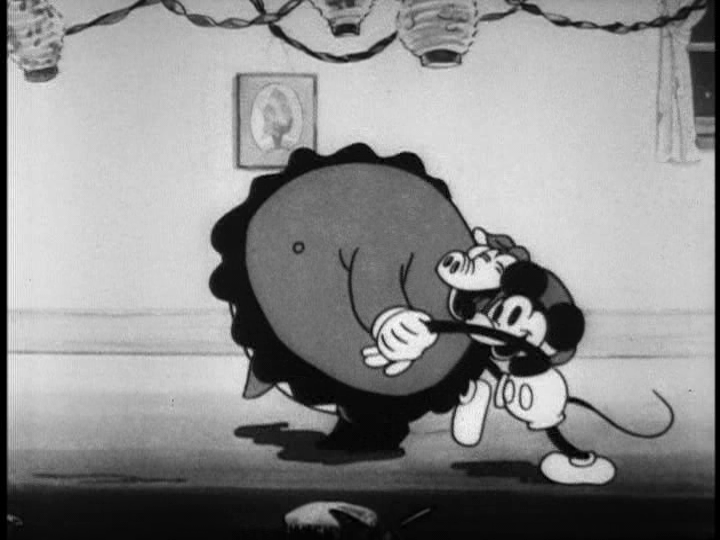
Mickey asks a rather shy pig to dance with him, and when she agrees, the two begin to dance wildly to the music

After Minnie finishes her first song, the Kitchen Mechanics come out and announce with great fanfare that the food is ready. The guests immediately swarm the table, and the band strikes up again, playing Scott Joplin’s “Maple Leaf Rag.” The guests dance and eat, and Mickey asks a rather shy pig to dance with him. The furniture and the food get involved in the dancing as well, with everyone having a wonderful time, yelling “Whoopee!” and throwing confetti.

Goofy attaches a glove to the end of his noisemaker, and uses it to scare Clarabelle as she dances. In retaliation, she places a horseshoe in a boxing glove, attaches it to her own noisemaker, and uses it to punch Goofy, sending him flying into a fishbowl. The song then changes to “Running Wild” as Mickey uses various household objects to help create the music.

The party is so successful, even the police join in with the celebrations

Suddenly, a patrol car is sent to Mickey’s house, with the police dashing inside. At first, it appears that they’re using force to subdue the party, but when the audience is taken inside, the police have joined the party, dancing wildly and blowing their whistles in time with the music. The short ends with Mickey and Minnie lifting their hats and letting out another loud “Whoopee!”