RSS Feed

Tag Archives: Live Action

April 5

April 5, 1965 – Mary Poppins Wins Five Academy Awards

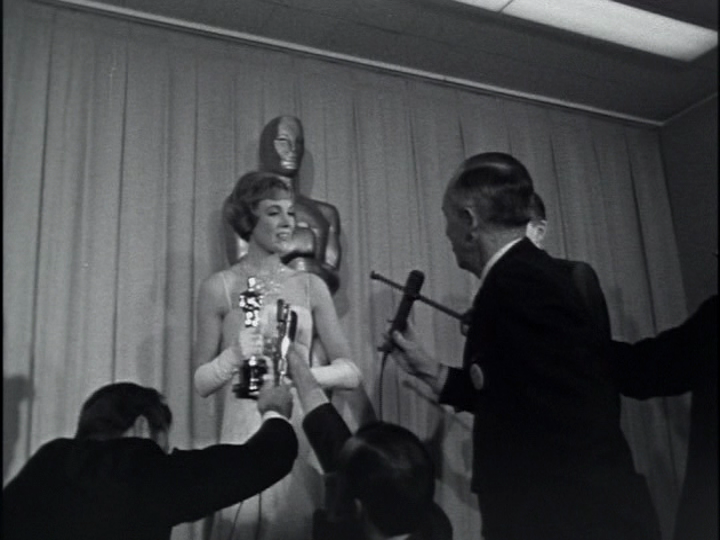
Julie Andrews after winning the Academy Award for Best Actress

“The press had made such a big deal out of it, and although I knew why I didn’t do My Fair Lady…and sure, I was sad about it, but I completely understood why I wasn’t chosen to do it…” – Julie Andrews

The 37th Academy Awards were held in Santa Monica, California on April 5, 1965. Of the 13 nominations it received – the most of that awards year – Disney’s Mary Poppins won five: Best Film Editing, Original Music Score, Best Song for “Chim Chim Cheree,” Best Visual Effects, and Best Actress for Julie Andrews.

Julie Andrews had been passed over for the lead in My Fair Lady at Warner Brothers. Time Magazine, outraged, wrote: “Someone, somewhere, made the decision to include Andrews out of the [film]. There is an evil and rampantly lunatic force at loose in the world and it must be destroyed.” Producer Jack Warner responded with, “No one in the sticks has ever heard from her,” and cast Audrey Hepburn as the lead role. Andrews remarked later that had she done My Fair Lady, she never would have been able to do Mary Poppins.

April 2

April 2, 1993 – The Adventures of Huck Finn is Released to Theaters
“Oh, sure, there’s a few stretches here and there, but then I never met anybody who didn’t lie a little when the situation suited him.”

On April 2, 1993, the movie The Adventures of Huck Finn was released to theaters. Based on the best-selling and controversial book by Mark Twain, the film was adapted and directed by Stephen Sommers, and stars Elijah Wood as Huck, Courtney B. Vance as Jim, Robbie Coltrane as The Duke, and Jason Robards as The King. Although the film is good family fare, it does cut out major plot points of the book, including scenes where Tom Sawyer is supposed to appear.

The movie opens with our main character, Huck Finn, getting punched in the face. A fight has ensued between the Huck and another student on the bank of the river, with the other students watching and cheering. After taking a few punches, Huck begins to fight back, giving the other boy a nosebleed. Just as Huck is about to lay the final blow, he notices a strange footprint in the sand. Believing it to belong to his father, he runs alongside the bank of the river and enters the cabin of a slave name Jim, who is able to tell the future. “Pap’s back,” Huck says, and asks Jim to tell him his future, and how long his father plans on staying. Jim’s advice to Huck overall is to run away for a while, and Huck decides that he needs to disappear, permanently.
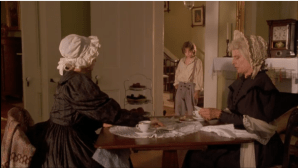
Huck is caught sneaking back in the house by the Widow Douglass (L) and Miss Watson (R)

Huck returns to the home of the Widow Douglas and Miss Watson, who have taken Huck in and raised him to be a gentleman. After being subjected to the “torture” of being dressed up, Huck sneaks out to play with his friends. When he returns, he finds his father waiting for him back in his room. His father kidnaps him from the widow’s house, and takes him to a small cabin up the river. His father has found out that Huck was left $600 in his mother’s will, and decides that Huck has to die so he can collect the money. A chase ensues, with the drunken man trying to kill Huck with a knife, but when Huck grabs his father’s shotgun, the two remain at a stalemate until morning. When Huck’s father heads to town for supplies, Huck decides to leave once and for all, faking his own death with the help of a wild boar he killed.

Huck decides to head to Jacksons Island, but is alarmed to find Jim there. Jim tells Huck that everyone thinks Huck has been killed by a robber. He also tells Huck that he has become a runaway slave, as a slave trader has offered $800 for him and he was going to be sold by Miss Watson, his owner. Jim has decided to travel to the free states to earn money for his family. Huck, with no other options, decides to help Jim. The first thing Huck does is travel to a house and steal food from a kindly woman, who informs him that everyone thinks Jim has killed Huck and run away. Huck and Jim skedaddle down the Mississippi river to Cairo. Upon finding a wanted poster with Jim’s picture on it, the two decide it will be safest to travel only at night.
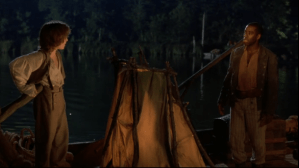
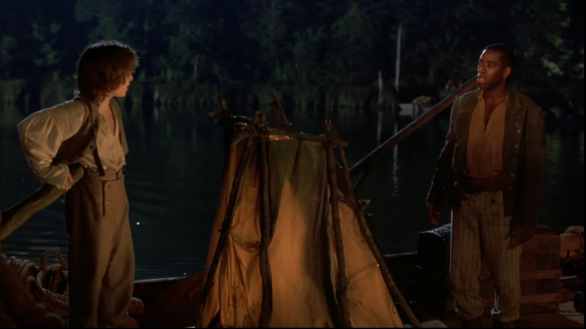
Jim tries to explain how wrong slavery is to Huck, but Huck doesn't understand, as it goes against everything he knows

The two find an abandoned ship on the rocks one stormy night, and decide to use it as shelter. As Huck goes down into the ship, he stumbles upon a robbery taking place, just as Jim discovers the corpse of Huck’s father. Huck gets caught as the ship begins to take on water, but manages to escape just in time with Jim. They discover the thieves’ boat on the river and take it. The next morning, Jim asks Huck if he would still help him escape to Cairo, even if his father was dead, but when Huck replies that he would head back home, Jim keeps the news of Huck’s father’s death a secret. Later that night, Jim excitedly declares that he is close to freedom and earning money to buy his wife and children. He adds that if his family won’t be sold to him, he’ll just steal them. Huck is alarmed by this talk, but Jim argues that it’s his family. “Selling people and using them for slaves ain’t right, Huck,” Jim explains, but Huck argues that it’s the way it is and has always been.  Jim tries to explain that all men should be free, but Huck clings to the old ways, and decides that he needs to turn Jim in.

Jim catches on to Huck’s plan, although Huck believes he’s doing the right thing, and going to hell if he helps to set Jim free. While Huck paddles away to get “help,” Jim decides to leave Huck and set out on his own. Fortunately for Jim, Huck changes his mind and lies about who is on the boat, with Jim watching with pride, and rejoins the boy. Later that night, the raft is destroyed by a riverboat, and Huck and Jim get separated. Huck is found and brought into the Grangerford house, where the women of the house clean him up. Huck sees that they found Jim and have him chained up as their new slave. The son of the Grangerford house explains to Huck that they have a feud with the Shepherdson house, and Huck finds himself involved. Although Jim wishes to continue to Cairo, Huck is reluctant, as he wants to stay with the Grangerfords. After seeing the welts on Jim’s back from the overseer’s whip, Huck feels remorse about stopping Jim’s journey, and decides that the two should set off again. Unfortunately, the feud has reached a boiling point, and Huck arrives in time to see his friend Billy, one of the last Grangerfords, get gunned down. Jim finds Huck grieving over Billy’s body, and they set off again.
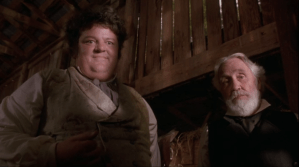
The Duke (L) and The King, threatening Huck as the con begins to unravel

The two discover they’d passed Cairo by forty miles, and decide to catch a steamboat to take them back upriver. They then find themselves entertaining two con men, known as The Duke and The King. The two see the wanted poster for Jim, and blackmail Huck and Jim into waiting on them hand and foot. The two then stage a con to collect on the will of a man, which disgusts Huck and Jim.  The con men are planning on going “all the way” with this con, stealing everything from the women of the house. Another man in the village, Dr. Robinson, has his suspicions about the conmen, but the family is too involved in conmen’s lie to listen to him. Huck decides to find Jim and leave. Unfortunately, the two men had turned Jim in for the reward. Huck decides to help him escape, until Jim finally tells the truth about Huck’s father. Jim is sorry at Huck’s reaction, and resigns himself to his fate.

As the con grows, Huck finds that he cannot participate any longer. He decides to steal the gold from the men and escape, with the intention of writing a letter to the lady of the house, Mary Jane, to let he know where he hid the treasure. He ends up stuffing the gold in the coffin, and the next day, he informs Mary Jane of the fraudulent brothers. Huck comes up with a plan to make things right, and begins to set the plan in motion. The con is uncovered when the real brothers come into town to claim their inheritance. The mob decides to dig up the grave to see who is telling the truth about being related to the late Peter Wilkes. Huck uses this moment to steal the sheriff’s keys and help Jim escape, and the two make their way to the steamboat.
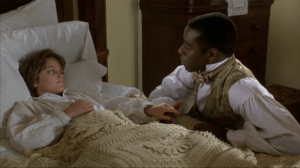
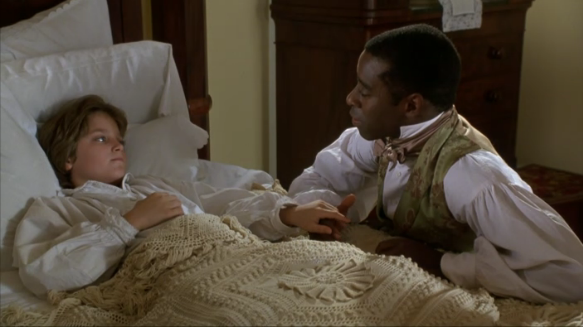
Huck recovers in bed while Jim tells him that he is now a free man

Unfortunately, as the two head toward the steamboat, the mob begins to shoot at Huck and Jim, and Huck is hit in the back with a bullet. They near the steamboat, but Huck can’t run any further with his injury. Huck urges Jim to run, but Jim gives up his chance for freedom to save Huck. Jim is taken by the mob and is set to be lynched, while Huck lies on the ground, helpless. Just as all seems lost, Mary Jane arrives on the scene, demanding that Jim and Huck be let go. Huck’s injury is treated, and he wakes up in the Wilkes house, seeing Widow Douglass by his side. Jim shows up, letting Huck know that he and his family have become free, due to the stipulations in Miss Watson’s will. Although Huck is happy, isn’t thrilled to be taken back to be civilized again. In the final scenes of the film, Huckleberry takes off to the call of the steamboat.
February 12

February 12, 1993 – Homeward Bound: The Incredible Journey is Generally Released to Theaters

“It’s my responsibility. I had a responsibility to Sassy to love her and protect her, the same as I have to you, and to Peter, and the same as you have to Jamie.”

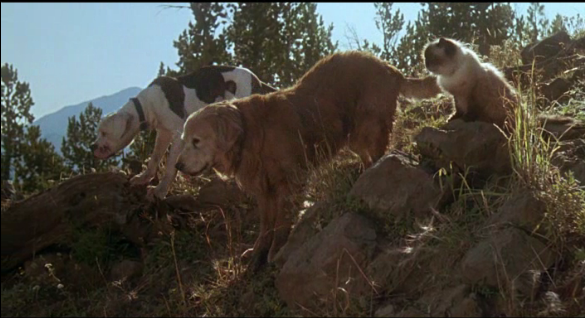
On February 12, 1993, the Walt Disney Studios had their general release of the family film Homeward Bound: The Incredible Journey. The film is a remake of the 1963 Disney film The Incredible Journey, which in turn was based on the best-selling book by Sheila Burnford. The story is of three pets – Chance, an American bulldog puppy; Sassy, a Himalayan cat; and Shadow, a golden retriever – who, afraid they’ve been abandoned by their owners, begin a journey back to their home through the California wilderness. Although the film was set in California, the filming was done in eastern Oregon. In contrast to the original film, the animals in the film speak, although this is one of the rare films were the animals mouths are not made to move in synchronization with what they say. The film stars Michael J. Fox as the voice of Chance (and the narrator of the film), Sally Field as the voice of Sassy, and Don Ameche as the voice of Shadow.  The film also stars Robert Hays as Bob Seaver, Kim Greist as Laura Seaver, Benj Thall as Peter Seaver, Veronica Lauren as Hope Seaver, and Kevin Chevalia as Jamie Seaver. It was directed by Duwayne Dunham, with the screenplay by Caroline Thompson and Linda Woolverton.

The film opens with Chance explaining his past: he was abandoned as a puppy, left to fend for himself on the streets before getting caught and sent to the pound. He was adopted by the newly combined Seaver family (Bob Seaver married Laura, a widow with three children). Chance calls it the place where he got his second chance, and his name; where he was provided with “lots of space, fresh air, plenty of interesting things to explore, and all the underwear [he] could eat.” He introduces the two other pets, Sassy the cat, and Shadow the dog, as well as their humans. Chance explains that the daughter Hope belongs to Sassy, the youngest boy Jamie belongs to Chance (although Chance explains that he doesn’t really need anybody), and Peter, the eldest, belongs to Shadow.

The pets on the porch of Kate's ranch. Shadow (L) eagerly awaits Peter's return, while Chance (M) believes they've been dumped.

The family must go to San Francisco for a little while, leaving the pets behind with a family friend named Kate at her ranch. Peter is not happy with having to leave Shadow behind, asking his new stepfather Bob, “What if he thinks I’ve abandoned him or something?” Bob responds that the time will pass before they know it, and everything will be okay. The pets, however, don’t understand what’s going on: Chance believes they’ve been abandoned, but it doesn’t seem to faze him much, since it had happened to him before. Kate leaves to go on a cattle drive, leaving a note behind for her neighbor about taking care of the pets, but part of the note falls under a table, and the neighbor mistakenly believes Kate took the pets with her. Shadow senses that something is wrong, and decides that he has to get back to Peter. “Something is keeping Peter from coming to me, so I’m gonna go to him,” he explains, and jumps the fence. Sassy follows him reluctantly, and Chance only follows, as he’s been chased by a turkey most of the time on the ranch, and decides to go where it’s turkey-less. “And so began the most perilous journey of our lives,” Chance narrates.

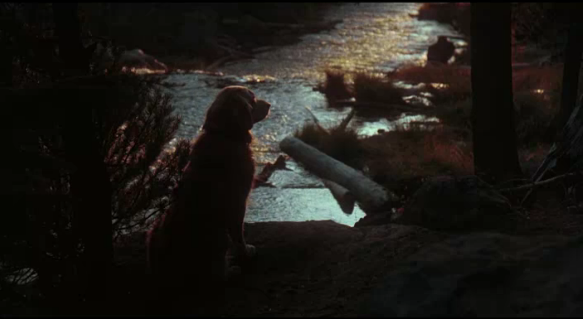
Shadow reassures the two that home is just over the mountain, but when they look over, they notice only more mountains and an expansive wilderness. But they continue, with Chance beginning to admire Shadow’s unwavering faith in Peter. As they begin, they have many brushes with nature, including a skunk and a protective mother bear. When they reach a river, Shadow and Chance have no problem swimming across, but as Sassy tries to climb a log to get to the other side, the log falls, sending Sassy traveling with the current. Although Shadow and Chance race along the riverside and Shadow tries to go into the river to catch her, Sassy ends up going over the waterfall into the rapids. The two dogs wait overnight to see if she’ll come out alive, with Shadow blaming himself for letting Sassy drown. The next morning, Shadow bids Sassy farewell, and the two continue on their journey. A birdwatcher in the woods, however, comes across Sassy washed up on the shore, and takes her in, cleaning her up and feeding her.

Shadow sits near the waterfall, blaming himself for what he believes is Sassy's death

Kate comes home to find that her neighbor believes she took the pets with her, and panics, having to call the family and let them know that the pets are gone. The children are devastated, and Peter blames Bob for making them go to San Francisco and leave the pets behind. Meanwhile, the two dogs come across their next challenge: a mountain lion has been following their tracks. Inspired by the time Chance used a see-saw to catapult Sassy in the backyard, Shadow comes up with a plan to send the lion flying, throwing it into the river. Their triumphant barking alerts Sassy, who is nearby with the birdwatcher, and she runs in their direction, with the three reuniting.

The three run across a lost little girl in the woods, and decide to watch over her during the night, while a search party wanders around, calling out the little girl’s name. In the morning, Shadow hears their calls and alerts them to where the girl is. The rangers with the search party recognize the pets from the posters Bob has made, and decide to take the pets with them to a nearby animal shelter. They alert the family that the pets have been found, but Chance thinks he’s being sent back to the pound and panics, causing Sassy to escape. She comes back to help Shadow and Chance break out, and they run away just as their family is on their way.

The pets look down on their hometown, relieved that they are so close to their family

The pets see home just over the top of a mountain, and travel through train depot, carefully crossing over the tracks, when Shadow falls into a hole as the beam he walks across breaks. At first Chance and Sassy think he may have died from the fall, but he wakes up and tries to walk, finding out his leg is badly injured. The two try to coax Shadow out of the hole, but the walls are slick with mud, and eventually, with the answer that he’s just too old, Shadow lies back on the ground and gives up. Chance tries to tell him that they need him, but Shadow says the only thing they need is to learn to say goodbye.

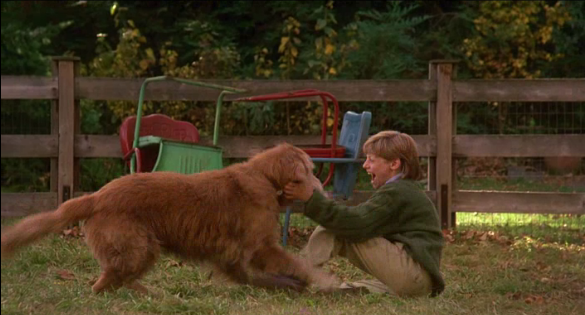
Later, when the family has returned home, still mending from what they believe is their loss, Jamie hears barking in the backyard. He calls out Chance’s name, and Chance comes over the hill, running to Jamie. Sassy appears next, running to Hope. Peter waits for Shadow to appear, but doesn’t see him, and angrily states that Shadow was just too old. Just as he turns to go in the house, a limping Shadow appears, and begins running to make his way back to Peter. Safe and sound, Chance realizes that here, he has the things he never knew he needed: a family, friends, and a home filled with love.

The joyful reunion of Peter and Shadow

February 1

February 1, 1956 – A Day in the Life of Donald Duck Premieres on Disneyland.

“You know something Donald? You’re a big international favorite.”

On February 1, 1956, Disneyland audiences spent A Day in the Life of Donald Duck. As Walt Disney explains in the introduction, there have been so many fan letters to Donald, that he thought the audience might want to spend a day with Donald at the studio. Directed by Jack Hannah, with story by Albert Bertino and Dave Detiege, we see how Donald begins his day, as well as his interactions with Jimmie Dodd, Roy Williams, the Mouseketeers, and the most important person in Donald’s life: his voice, Clarence Nash.

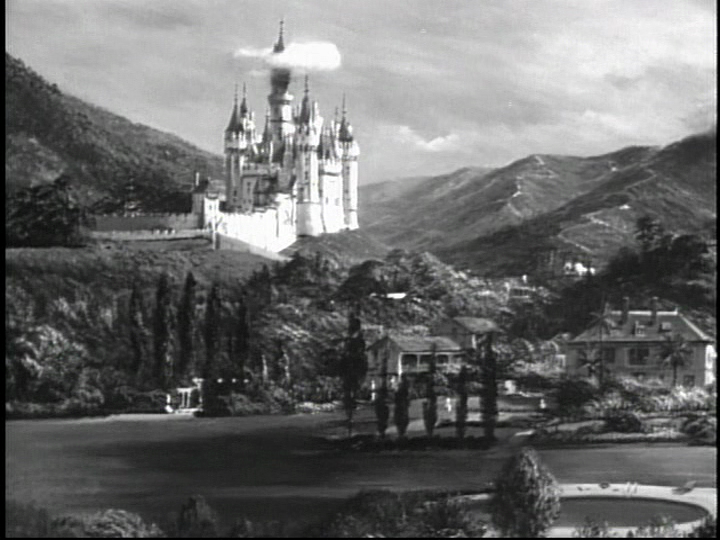
“Donald, like any other average cartoon character, lives a simple, unassuming life in a quiet residential section of Beverly Hills,” Disney tells the audience, showing pictures of the neighborhood. “He resides in a modest little cartoon house. He drives to work in a modest little cartoon car. And if he seems a bit reckless, you must remember that Mr. Duck drives with a cartoon license.” As we see Donald pull into a spot marked “No Parking,” he is immediately confronted by a police officer. Donald, however, folds the car into a tiny packet, tucks it under his hat, and walks to his office.

Donald's "modest" house in Beverly Hills

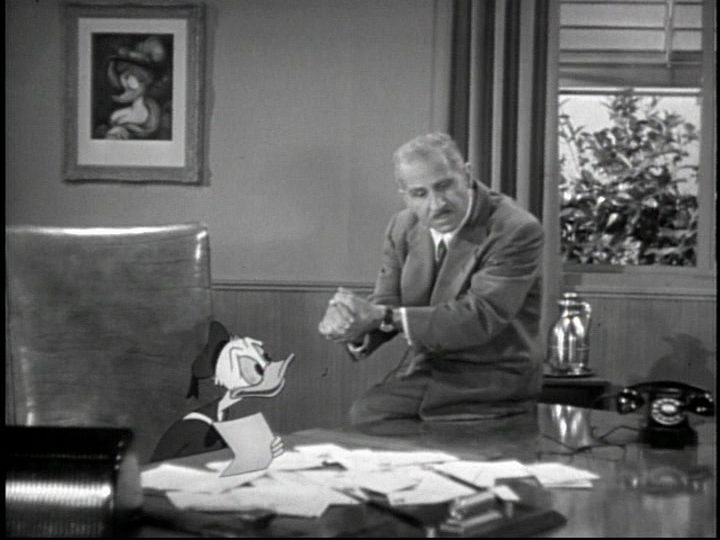
When he arrives at his office, the intercom sounds, and his secretary greets him respectfully as Mr. Duck. Donald responds with, “Just call me Donald, toots. What’s first on my schedule, tootsie?” in keeping with Donald’s personality as a bit of a wolf. She responds that he has fan mail, which he opens eagerly. The letters, however, are not pleasing in Donald’s opinion. One letter openly says, “Dear Donald, I can’t understand a word you say.” This is the last straw in Donald’s opinion, and he demands to speak with his voice, Clarence Nash. Nash comes in with a cheery attitude, which doesn’t change Donald’s mood in the slightest, no matter what Nash does to cheer him up. They end up arguing, with Nash reverting to his Donald Duck voice, even as he pulls out a coonskin cap and starts signing the Davy Crockett theme song. Donald tells him he’s a horrible singer. Nash leaves, with the two still taunting each other, and Donald vows that he’s got to get himself a new voice.

Donald and his voice, Clarence Nash, as Nash shows him a new trick

The next guest to enter is Jimmie Dodd (host of the Mickey Mouse Club), who has written a new song about Donald, inspired by fan art from children all over the world. “They’re so great, they had to have a song written about them,” Jimmie explains, and begins the song, which Donald immediately loves. There are versions of the song sung in different languages with accompanying pictures, including Spanish, French, Italian, and German. The images and tunes are stereotypical for the fifties, but somewhat sweet and fun all the same.

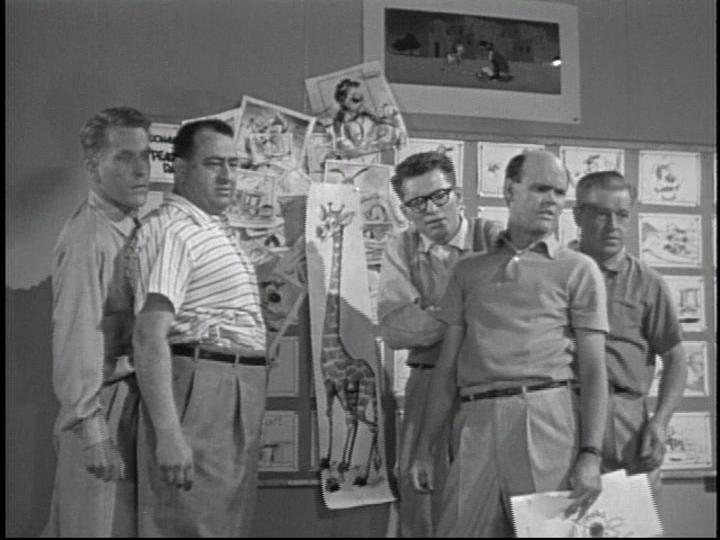
Donald then leaves for an 11 o’clock appointment at the Story Room, and when the storymen hear Donald coming down the hall, they begin to panic, as they fear his temper more than anything. They try to make Donald comfortable, and when they try to show him storyboards for a short entitled Peaceful Day, Donald asks for more birds and butterflies. The storymen overeagerly agree to his requests, to the point that Donald gets annoyed, and demands that there be a short with just him in it. This gets them to thinking, and the audience is then shown the brainstorm: the short, Drip Dippy Donald (originally released March 5, 1948).

The bewildered story team, trying to acquiesce to Donald's requests

Back in his office, Donald receives a call from Walt, who asks him to show the Mousketeers around the studio, as Mickey has remembered that they had never seen it before. Donald eagerly agrees, and runs to meet the Mouseketeers, who surprise Donald by making him an honorary Mouseketeer and giving him his own set of Mickey Mouse ears. As they run around the studio, the kids slip into the Sound Effects Department, closing the door just as Donald is about to get inside, leaving him on the outside as the kids see how sound effects were added to the Donald Duck short, Fire Chief (originally released December 13, 1940). One example they show is when a building is set on fire, the special effects team uses sparklers and crumpled plastic to create the sound of the burning ceiling.

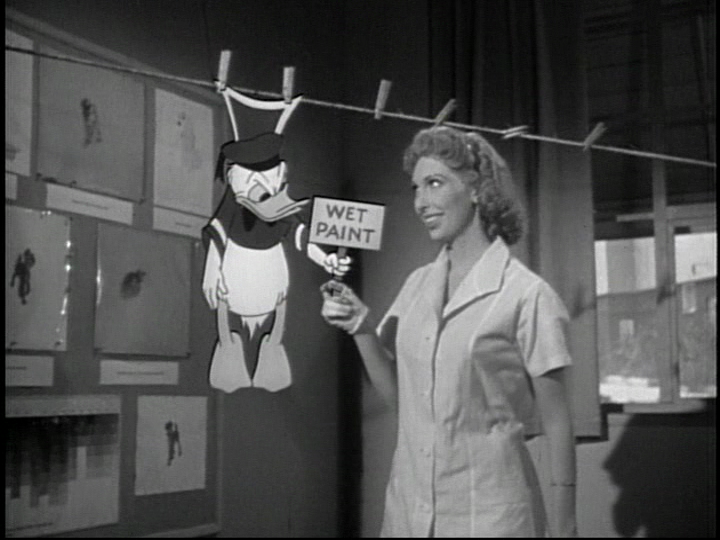
When the short ends, the door opens, and Donald is ready to step inside, until an effects man empties a bucket of water over him, which causes half of Donald’s paint to run. This necessitates a trip to the Ink & Paint Studio, where the painter quickly re-paints Donald and hangs him up to dry, an experience Donald finds quite humiliating. The painter explains that twenty gallons of paint are usually used for a Donald Duck picture, which surprises the kids and causes Donald to remark that he is “very expensive.” She also explains that in one picture, they used just one pint of paint for Donald; the audience is then shown the short The Vanishing Private (originally released September 25, 1942).

Donald and the Painter, with Donald pointing out how humiliating this is for him

After the short, we see the kids with Jimmie Dodd again, singing the new Donald Duck song he wrote. As Donald tries to sing the last line of quacks, he is cut off by Roy Williams, the other host of the Mickey Mouse Club. The kids are excited to see him, and he tells them that he’s practicing drawing the characters. To prove that anyone can draw, Roy asks one of the Mouseketeers to make a scribble on the easel. From her scribble, Roy is able to draw an ostrich. Donald, jealous of the stolen attention, challenges Roy and scribbles on the easel. Roy accepts, and ends up turning Donald’s scribble into a humorous image of Donald Duck. As Donald throws a tantrum and jumps up and down on the teasing picture, the kids flee the room and head into the projection room. “And now, in Donald’s honor – he really is a good scout,” Roy welcomes the kids, “I’d like to dedicate this picture to all you Mouseketeers.” Donald is touched by the tribute, and the audience is then shown the short, Good Scouts (originally released July 8, 1938).

This episode is a must-see for fans of Donald Duck. There are many wonderful gags, and the interaction of Donald with Clarence Nash is enough of a reason to watch. It’s a perfect example of all the temperaments of Donald, with the added bonus of it being set in the real, rather than the cartoon, world.

January 30

January 30, 1959 – The Peter Tchaikovsky Story Premieres on Disneyland

“…for just as Sleeping Beauty was held under an evil spell for a long, long time, just so did an evil spell put Tchaikovsky’s genius to sleep for many years, until something wonderful happened to awaken him to his full powers as a composer.” – Walt Disney

Straight from Fantasyland, audiences were treated on January 30, 1959, with The Peter Tchaikovsky Story, a look at the life of Peter Ilych Tchaikovsky, composer of the ballet Sleeping Beauty, whose score inspired the Disney animators to create the animated feature of the same story. The episode also gave audiences a chance to see early clips from the completed film in widescreen, a first on television. This was also the first television show to be simulcast in stereo. The stereo simulcast required the assistance of radio stations, but unfortunately, this could not be accomplished in all markets. Two versions of this episode were prepared, to accommodate those who would be able to use their stereos. Although the episode was originally shown in black and white, the main story was shot in color. The episode was directed by Charles Barton, and stars Grant Williams as the older Tchaikovsky, Rex Hill as the younger Tchaikovsky, Lilyan Chauvin as Fanny Durbach, Leon Askin as Anton Rubinstein, and Narda Onyx as Desiree Artot. The episode also features Galina Ulanova and the Corps de Ballet of the Bolshoi Theater in a production of Tchaikovsky’s Swan Lake.

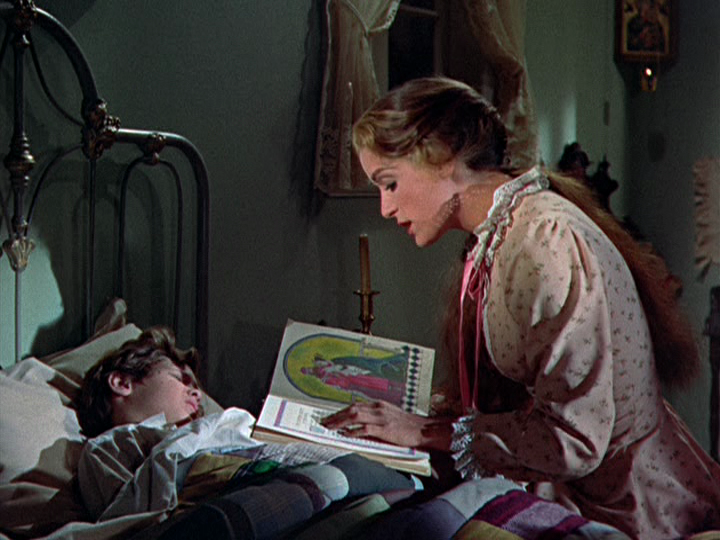
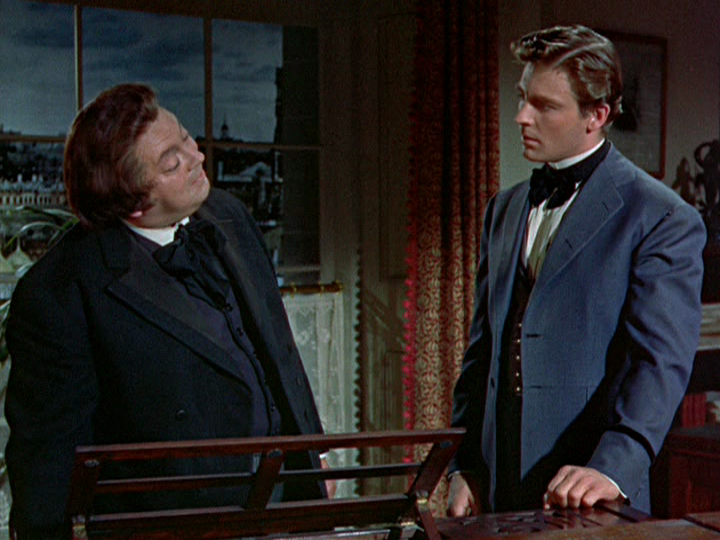
As the narrator relates, Peter Ilych Tchaikovsky was born in Votkinsk, a small provincial town in Russia, in 1840. When we first see Tchaikovsky, his siblings are running around the living room while he sits at the piano, playing. At a young age, he had found happiness in music, particularly the music of Mozart, whom he considered his idol. His mother, however, worried about how much time he spent at the piano, and hired a French governess to teach the children. The governess tries to understand the boy’s love of music, but in the end, she tries to tear him away from the piano to have him play in the sunshine. One evening, Tchaikovsky is troubled by the music that seems to play unending in his head. “Whenever the boy’s soul was stirred,” the narrator explains, “the music would throb in his head until it was almost painful.” The governess hears his painful cries, and decides to soothe him by reading him a story he had never heard before – the story of Sleeping Beauty. Unfortunately, the story did little to put him to sleep; it caused his creative juices to flow, and he snuck down to the piano to compose before being caught by the governess. The next day, Tchaikovsky is dismayed to see that the piano has been locked up, and as he tries to find another way to express the music in his head, he breaks the window after tapping emphatically on it, slicing his hand. His parents allow him to play once more, but this happiness would soon be interrupted.

Young Tchaikovsky (Rex Hill) being read the story of Sleeping Beauty by his governess, played by Lilyan Chauvin

“…contentment was never to be Peter’s fate for very long,” the narrator warns the audience. “Soon, he was to suffer the heaviest blow of his young life. His parents decided to prepare him for a government career at school in St. Petersburg.” Tchaikovsky is seen crying as his mother wishes him farewell, telling him to be a good boy and study hard. As she leaves, the audience is told that Tchaikovsky never saw his mother again, for she died soon after. After this crushing blow, “his musical genius withdrew deep inside him. It went to sleep, like Sleeping Beauty in the fairytale. And, strange to say, like Sleeping Beauty, it would stay dormant for a long time before something wonderful happened to awaken it again.” Seventeen years later, we see Tchaikovsky grown up, working as a lowly copy clerk. He toils away, feeling his life lacks meaning, until he sees an advertisement in the newspaper: the opening of a new conservatory of music, led by the great composer, Anton Rubinstein. This stirs something inside him, and Tchaikovsky decides to enroll in the evening classes for piano and composition.

One evening, as he improvises tunes of his own, he is spotted by Rubinstein himself. The composer asks Tchaikovsky if he wishes to make a career of music, to which Tchaikovsky admits he has dreamed of it, but needs to earn his bread. “Bread! Did Bach, Mozart, Beethoven think of bread?” the composer cries. “For music, an artist must be willing to starve.” He gives the young man a test: he plays a theme, and asks him to write variations on it, telling him that not only quality, but quantity counts as well. Inspired, Tchaikovsky works all night on his variations, which unfortunately gets him in trouble at work when he accidentally writes on an official decree with the signature of the prime minister. Immediately dismissed, Tchaikovsky goes back to Rubinstein to submit his variations – all 215 of them. Rubinstein offers to take Tchaikovsky under his wing, an offer Tchaikovsky immediately accepts.

Anton Rubinstein, played by Leon Askin, asks Tchaikovsky, now played by Grant Williams, about his plans in music

Tchaikovsky’s true awakening, the narrator states, was at a performance of the traveling Italian Opera Company, starring a beautiful soprano named Desiree Artot. To try to win her affections, Tchaikovsky writes her a song, which begins a relationship leading to an engagement between the two. This engagement is broken, however, by a letter from Desiree, addressing Tchaikovsky as her dearest friend and informing him that she has married a man in her troupe. Deeply wounded, he vows to never write another note of music, but this was not to be: his genius was too strong to be shut away again. Instead, his love for Desiree was replaced by a new love for the ballet. His first ballet was entitled Swan Lake, and although Tchaikovsky had great hopes for its success, it was a dismal failure. Unable to handle the criticism, Tchaikovsky fled to Europe. He was unable to find any solace while traveling, and so from Naples, he took a steamer back to Russia, where he was troubled by a dream of a memory. He remembered the time in his childhood when his governess soothed him by reading him a fairytale, and how he immediately set to work composing it. Waking with a start, he rummages through his belongings to find the manuscript of Sleeping Beauty someone had sent him, thinking it would be a good idea for a ballet. Inspired once again, he sat down to compose the entire ballet before arriving back in Russia. “And this time,” the narrator says, “his creation was headed for the bright future that was in store for all his wonderful works.”

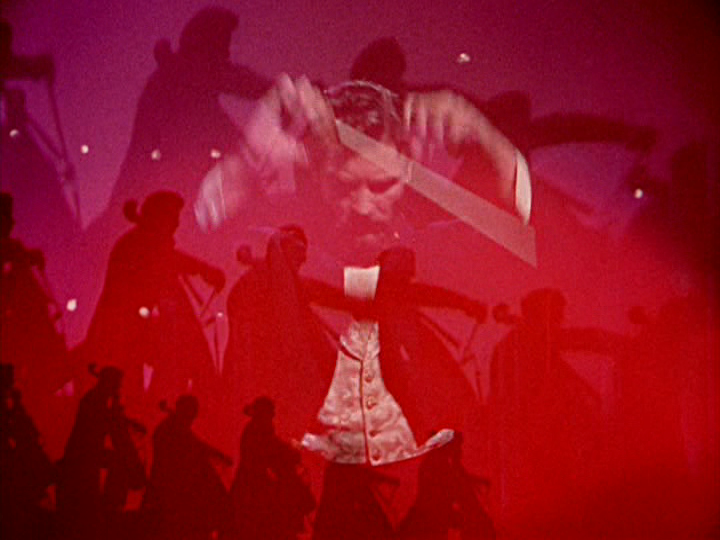
Tchaikovsky conducting the Sleeping Beauty Ballet. The orchestra scenes used are actually reused footage from Fantasia

The rest of the episode is basically an advertisement for the upcoming film version of the story of Sleeping Beauty. “Imagine your living room is a theater,” Disney urges the audience, “and your television set is the theater’s wide screen, as we bring you this romantic sequence from Sleeping Beauty.” In fact, two scenes are played for the audience: the Once Upon a Time sequence, and the rescue of Prince Phillip from the evil clutches of Maleficent, which ends as the evil fairy turns into the dragon. “Well, there’s much more to Sleeping Beauty than the few brief scenes we’ve shown you on this program,” Disney reassures us. “But I can tell you this: like all good fairytales, true love does win out.”

Although not a truly accurate depiction of Tchaikovsky’s life, the episode is a rather good watch, especially to capture the excitement of audiences seeing a new technological advancement when it came to movies. This story of Tchaikovsky’s life is a good story, and told well, even though it comes at the cost of the omission of some facts that may not have been suitable for audiences in that time period.

January 19

January 19, 1949 – So Dear to My Heart is Released to Theaters.

“The greatest wealth a man may acquire is the wisdom he gains from living.”

A film brimming with nostalgia and turn-of-the-century charm, So Dear to My Heart was released to theaters on January 19, 1949, by RKO Radio Pictures. Based on the book Midnight and Jeremiah, by Sterling North, the film is about a boy named Jeremiah Kincaid, who trades his dreams of raising a prize-winning horse for the goal of raising a black lamb named Danny to be a champion at the county fair. The film was directed by Harold Schuster, with screenplay by John Tucker Battle. The cast includes Bobby Driscoll as Jeremiah Kincaid, Beulah Bondi as Granny Kincaid, Burl Ives as Uncle Hiram, and Luana Patton as Tildy, with John Beal providing the narration as the older Jeremiah.

The story opens in an attic, where the audience is taken inside an old scrapbook, observing the seasons and essentially going back in time to an old farm in 1903. The community, especially Jeremiah, is excited that the train stopping in their town contains the famous racehorse, Dan Patch. Jeremiah dreams of raising a horse just like Dan Patch, and he tries to convince Granny to trade their old mule for a mare, for “If we had a mare, we could get a colt,” Jeremiah argues. However, he changes his mind when he helps Granny take care of the new lambs in the barn. Twin lambs had been born: one black, and one white. When the mother shuns the black lamb, Jeremiah wants to adopt it, to which Granny tries to convince him otherwise but she finally agrees to let him keep it when she sees the affection Jeremiah has for the creature.

One of the examples of how much Jeremiah cares for Danny.

The lamb, now called Danny (after Dan Patch), causes nothing but headaches for Granny, breaking screen doors and rocking chairs, and Jeremiah is so consumed with taking care of Danny that he neglects his chores. Fortunately, Jeremiah has a strong ally in his Uncle Hiram, who tries to convince Granny to let Danny compete for the blue ribbon at the county fair. Uncle Hiram’s isn’t able to convince her, however, so Jeremiah plans to raise the money to pay for travel to the fair on his own by finding a bee’s hive and selling wild honey. Jeremiah and his friend, Tildy, find the hive and with Uncle Hiram’s help, bring back two tubs full of wild honey.

Burl Ives (L) as Uncle Hiram, Bobby Driscoll (C) as Jeremiah Kincaid, and Luana Patten (R) as Tildy.

Just as things are looking up for Jeremiah, he arrives home to find that Tildy accidentally let Danny escape into the woods and is unable to find him. Jeremiah runs out looking for him during a dangerous thunderstorm, but is dragged home by Granny. As Jeremiah sulks in bed, Granny begins to lecture Jeremiah on how he no longer loves the lamb, but the material things the lamb could provide: money and blue ribbons. Granny adds that God may not provide Danny mercy throughout the night, telling him that “the Lord giveth, and the Lord taketh away.” The next morning, Jeremiah leaves at daybreak, and finds Danny, who had curled up in a log to survive the night. After he returns to the farm with Danny, he tells Tildy that they aren’t going to the fair, causing her to cry. When Granny questions him, he sheepishly tells her that he made a promise to God that if He would keep Danny safe through the storm, he wouldn’t go to the fair. Granny, touched by this turnaround in Jeremiah’s attitude, declares that she prayed that if God kept Danny safe, they would go to the fair, and since she’s known God longer, He wouldn’t mind if they go. And so the family heads off to the fair, with Danny groomed and looking impeccable, with Jeremiah certain that Danny will win the prize. The ending of the film is one of the most charming endings in Disney’s live-action film history.

The film itself is a mixture of live-action and animation, with the animation providing bookends to live-action segments rather than being interwoven in the film. The animation sections are interesting segments in themselves; a character named the Wise Old Owl, who provides some spirited advice, gives lessons of perseverance through the biblical stories of David and Goliath, and the walls of Jericho, as well as the historical stories of Christopher Columbus and Robert the Bruce. Although the animated sequences may seem a bit intrusive to the overall film, Walt Disney once explained that he “saw the cartoon characters as figments of a small boy’s imagination, and I think they were justified.”

One of the animated scrapbook segments from the film, acting more as Jeremiah's imagination than reality.

The music for the film doesn’t stand out as it would in a true movie musical, but it establishes the time period in which the film is set. Uncle Hiram, played by Burl Ives, provides many amusing ad-libbed songs. The opening song, “So Dear to My Heart,” was written by Ticker Freeman and Irving Taylor; “County Fair” was written by Robert Wells and Mel Torme; “It’s Watcha Do with Whatcha Got” was written by Don Raye and Gene DePaul. “Ol’ Dan Patch,” “Lavender Blue (Dilly Dilly),” and “Stick-to-it-ivity” were written by Eliot Daniel and Larry Morey. The song “Lavender Blue (Dilly Dilly),” based on an old English folk song, was nominated for the Academy Award for song in 1949, but lost out to “Baby, It’s Cold Outside” from Neptune’s Daughter.

Bobby Driscoll and Luana Patten were under contract with Disney, having already done the film Song of the South for the company. Driscoll himself received many positive reviews for his performance, and was awarded a special Academy Award as the “Outstanding Juvenile Actor of 1949” for his work in this film, and the non-Disney film The Window.

Luana Patten (L) and Bobby Driscoll. They were the first two contract players for the Walt Disney Studios; this was their second film together.

An interesting fact about this film concerns animator Ward Kimball: an avid railroad enthusiast, he was given the train station used on set and installed it at his Southern California home, where he would surprise the neighbors by driving around in his full-size train.

Overall, the film is a gem in the Disney library, and one that should not be missed. Because of uncertain marketing in 1948, the film didn’t make a huge profit, but it received highly positive reviews, and still shines with the well-known Disney charm.