RSS Feed

Tag Archives: Feature Film

May 29

Posted on

May 29, 2009 – The Pixar Film Up is Released to Theaters

“My name is Dug. I have just met you and I love you.”

 On May 29, 2009, the Disney Pixar film Up was released to theaters. The film was Pixar’s 10th film, and the first released in 3D format. The film holds the distinction of being the first animated film shown at the Cannes Film Festival, as well as the second animated film ever nominated for the Best Picture Academy Award. The film won the Academy Award for Best Animated Feature, and Best Score. Up was directed by Pete Docter, with story by Docter, Bob Peterson, and Thomas McCarthy, and stars the vocal talents of Ed Asner (Carl Fredericksen), Christopher Plummer (Charles Muntz), Jordan Nagai (Russell), and Bob Peterson (Dug). As usual, Pixar’s lucky charm, John Ratzenberger, has a small voice role in this film.

The film tells the story of Carl Fredericksen, which begins with him as a shy boy whose hero is legendary explorer Charles Muntz. He watches a newsreel of Muntz, and is inspired to pretend he is having his own adventure when he hears a voice saying Muntz’s famous phrase: “Adventure is out there!” He enters the dilapidated house to see a girl pretending to be Charles Muntz on an adventure. Although a mishap causes Carl to break his arm, the girl, Ellie, comes to visit him, and tells him she likes him, as they bond over a love of adventure and an admiration of Muntz. This leads to a segment showing their lives together after their wedding day until Ellie’s death. Ellie’s death is hard on Carl, especially since he was never able to take her to explore Paradise Falls as they promised.

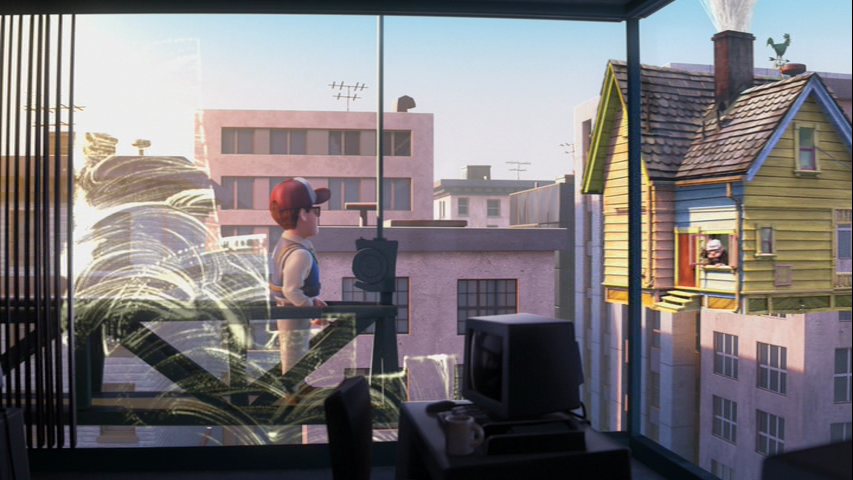
Carl greets a window-washer as his house floats through the city

A while later, all the houses around Carl’s have been torn down for urban development, but Carl refuses to sell. He also runs across a young boy named Russell, who is part of a group called the Wilderness Explorers, and wishes to get his “Assisting the Elderly Badge” by offering to help Carl “cross something,” and Carl tricks him into looking for a snipe. A mishap sends Carl to court, where is ordered to leave his house and live in a retirement home. Unable to bear with parting with his and Ellie’s home, Carl uses his skills as a balloon salesman to keep the promise of the house landing at Paradise Falls: he attaches thousands of balloons to the house, turning it into a makeshift airplane, and Carl sets sail for Paradise Falls. Unbeknownst to him, Russell was hiding under the house at the time of lift-off, and becomes Carl’s accidental co-pilot.

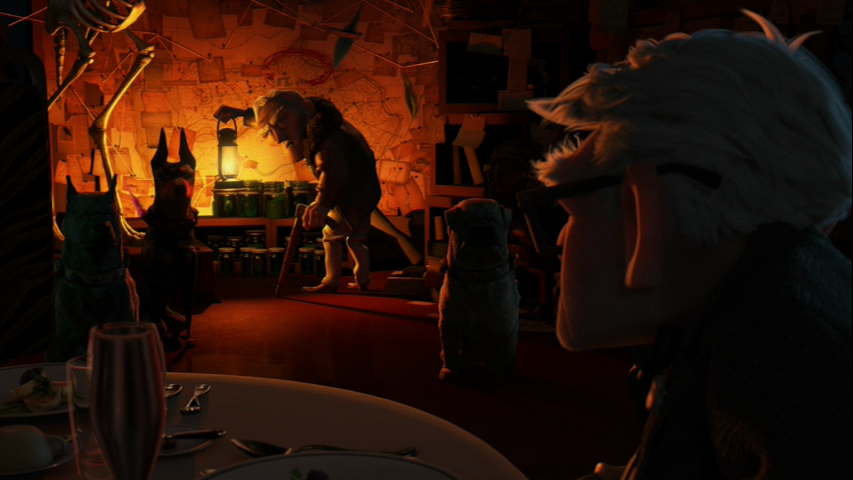
After surviving a severe thunderstorm, the two find themselves in Venezuela, a bit of a ways from the falls. They attach themselves to the still-buoyant house, intending to walk it over to the falls before the balloons deflate. On their way, they encounter a large bird that Russell believes to be a snipe and names it Kevin (although Kevin is a girl), and a dog named Dug, who is able to talk through the use of a device on his collar. Dug has been on a special mission to “capture the bird,” which causes no shortage of trouble between Dug, Kevin and Russell that annoys Carl to no end. There are other dogs in the jungle searching for the bird, and when they run across Carl and his gang, they take him to their master: the one and only, Charles Muntz.

Muntz is determined to get the bird at all costs; his demeanor changes fiercely when he finds that Carl and Russell have seen the bird

Although initially elated that his hero is alive, Carl finds out that Muntz has been driven to almost madness in his search for the bird that will clear his name. Muntz shows Carl helmets of explorers he’s met and killed, convinced they were there at the falls to steal his bird. Upon finding out that Carl has the bird, he decides he will kill Carl and Russell and steal the bird. At one point, Carl has to decide to either save Kevin or save his house, and when he picks to save his house, this allows Kevin to be captured.

Carl finally gets his house to the falls, although Russell is angry that Carl broke his promise to protect the bird. As Carl sits inside the house, he discovers Ellie’s adventure book from when she was a little girl, and finds that she has filled it with memories of their life together, and message thanking him for their adventure, and now he should find a new one. Inspired by her words, Carl resolves to rescue the bird. Russell, still angry, has decided to go on his own to rescue Kevin, and Carl has to rescue him with Dug’s help. There is a fight to the finish between Carl and his childhood hero, with Muntz falling to his death, and Carl’s house falling to the ground, which Carl accepts as for the best, as “it’s just a house.”

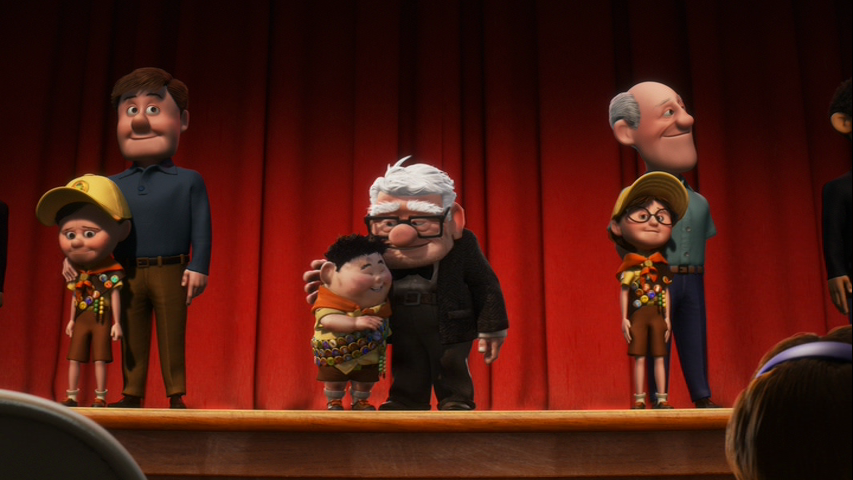
Carl stands with Russell at the boy’s Wilderness Explorers meeting, with Carl becoming Russell’s surrogate grandfather

Kevin is reunited with her chicks, and Russell and Carl head home in Muntz’s airship. At the Wilderness Explorers meeting, Carl is there to give Russell the “Assisting the Elderly Badge,” as well as a very special badge – the grape soda badge Ellie gave to Carl as a child, known as “The Ellie Badge.” After the ceremony, Carl, Russell and Dug sit on the curb at the ice cream parlor, counting cars. The house is seen again as well – landing perfectly next to the falls.

May 27

Posted on

May 27, 1948 – The 10th Animated Feature, Melody Time, is Released to Theaters

“Yes, it’s Melody Time, time to hitch your wagon to a song. Cause a song’s the one and only thing that will take you over the rainbow to the land where music is king.”

On May 27, 1948, the tenth animated feature and sixth package film, Melody Time, was released to theaters. It was directed by Clyde Geronimi, Hamilton Luske, Jack Kinney, and Wilfred Jackson. The stories were written by Winston Hibler, Erdman Penner, Harry Reeves, Homer Brightman, Ken Anderson, Ted Sears, Joe Rinaldi, Bill Cottrell, Art Scott, Jesse Marsh, Bob Moore, and John Walbridge, with “Little Toot” by Hardie Gramatky, and Carl Carmer as the Folklore Consultant. Many famous performers contributed to the film, including Roy Rogers and Trigger, Dennis Day, the Andrews Sisters, Fred Waring and his Pennsylvanians, Freddy Martin, Ethel Smith, Frances Langford, and Buddy Clark as the Master of Ceremonies.

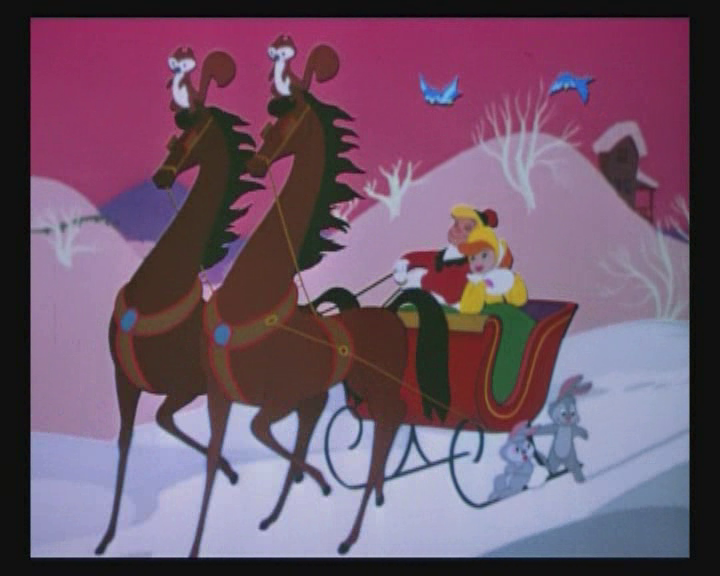
The two couples happily riding in a horse-drawn sleigh

The first segment is Once Upon a Wintertime, sung by Frances Langford. Two couples – one human, one rabbits – share an adventure on a beautiful winter day. The human couple takes a sleigh ride, and the rabbits hitch on to the cart for a ride. The couples stop near the pond to go ice skating, and both males end up upsetting their mates more than once throughout their trip. When both females end up on a dangerous patch of thin ice near a waterfall, they are saved with the help of the horses from the sleigh and a pair of squirrels, and all is well once again for the couples.

The next segment is a new take on the piece “The Flight of the Bumblebee,” known as Bumble Boogie, by Freddie Martin and his Orchestra. A frightened bumblebee is in a nightmare that involves all sorts of musical instruments, and he tries to escape as best he can while being pursued by harmonies and all sorts of strange musical creations.

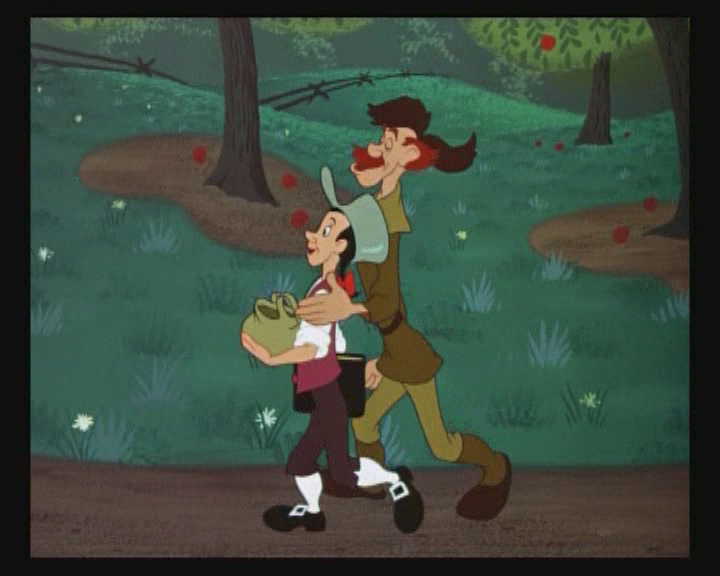
Johnny Appleseed (L) and his Angel walk down the path, with the Angel finally convincing him to go west and plant his apples.

This is followed by Dennis Day performing the tale of Johnny Appleseed, a story from “the pages of American Folklore.” Day was the narrator, Johnny, and Johnny’s Angel. This segment opens with Johnny picking apples from his apple trees, when he suddenly sees a wagon trail. Johnny feels the urge to head west, but believes himself to not be enough of a pioneer. His Angel appears, and convinces him to head west if that’s what he wants to do. Johnny decides to go west and plant his apple trees. No matter what dangers he faced, he was able to persevere, and was able to begin planting his trees wherever he found fertile soil. The settlers would honor him well for his gift of apple trees, which provided them with much needed food. Johnny continued planting for forty years, until one day, his Angel appeared to take him to Heaven, needing him to plant apple trees there.

Following that segment is Little Toot, as performed by The Andrews Sisters. Little Toot is a small tugboat who is very enthusiastic about joining the family business – unfortunately, Little Toot always finds himself in trouble, unable to behave, though he tries to be good. After nearly getting caught by a police officer, Little Toot decides to be helpful, but ends up accidentally causing trouble by turning the rudder on the boat his father is tugging and the boat crashes into the city. The police take Little Toot way out to sea as punishment, and his father is now only allowed to tow garbage. Fortunately, Little Toot is able to redeem himself by saving a ship that is in distress in a storm. Proclaimed a hero, Little Toot is able to return home.

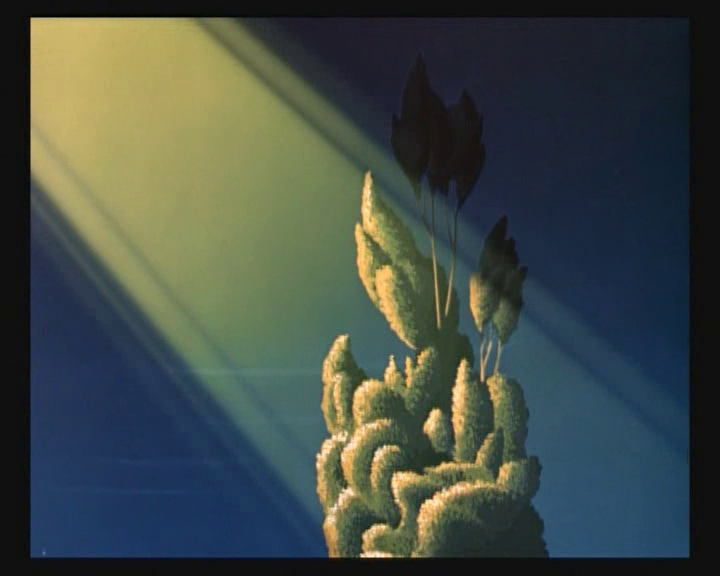
One of the beautiful illustrations used for the segment Trees.

Next is Trees, performed by Fred Waring and his Pennsylvanians, and based on the poem by Joyce Kilmer. The short is a simple homage to a tree, with a different style of animation than the rest of the film, looking like a more realistic Bambi than a regular-style Disney cartoon.

Trees is followed by the more upbeat Blame it on the Samba, performed by Ethel Smith and the Dinning Sisters, and stars Donald Duck, Jose Carioca, and the Arucuan Bird. Donald and Jose are walking in a depressing blue scene, when they stop by the Arucan Bird’s restaurant “Café de Samba.” Once the samba begins to play, the two are able to snap out of their funk and begin to dance. The short also combines live action again, where Donald and Jose dance while Ethel Smith plays the organ, and then plays the congas before breaking into her own dance to the samba. She returns to the organ by the end of the short, with everyone dancing happily.

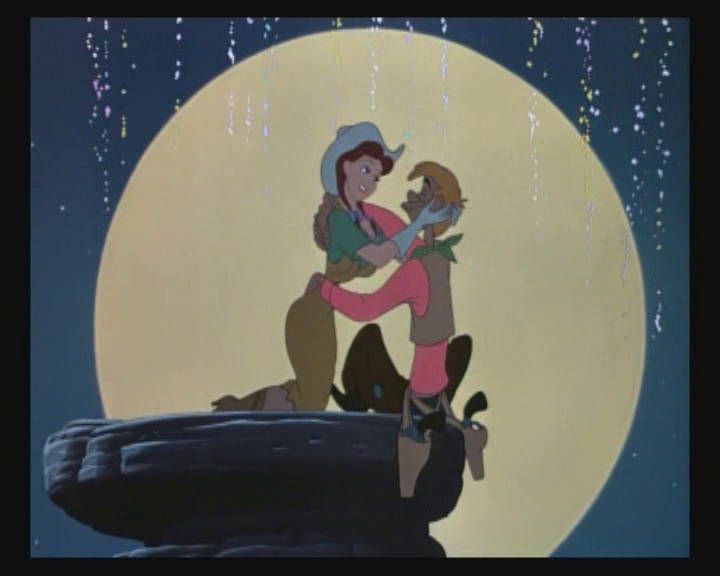
Pecos Bill and Slue-Foot Sue, proclaiming their love under a full moon

The last segment is hosted by Roy Rogers and Trigger, and also features child stars Bobby Driscoll and Luana Patten, telling one of the stories of Pecos Bill. After Bobby asks who Pecos Bill is, Roy begins to tell the story about how the bravest man of the west came to be and why the coyotes howl the way they do. Once, a wagon containing sixteen children and their parents was coming across a mean river in Texas, when a toddler popped out of the back and landed in the river. A coyote was traveling at night, and discovered the child in her den, and took to him, so Pecos Bill grew up with coyotes. One day, a pony was wandering through the desert and was saved by Bill, and this would become Bill’s best friend – Widow-Maker. Bill became the roughest, toughest cowboy in the west, with Widow-Maker by his side. Their partnership is threatened by a woman named Slue-Foot Sue, and the rest of the short tells how Widow-Maker ends their relationship, and why coyotes howl.

April 7

April 7, 1995 – The Documentary, Frank and Ollie, is Shown at the Cleveland Film Festival

“Seemed like you seldom heard Frank’s name without Ollie’s along with it, or Ollie’s without Frank’s name. It was Frank and Ollie.”

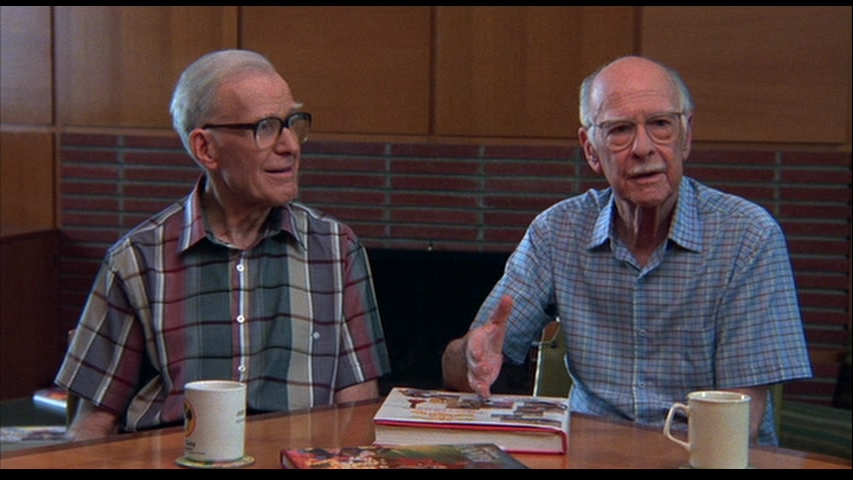
On April 7, 1995, the documentary film, Frank and Ollie, was shown at the Cleveland Film Festival. Written and directed by Frank’s son, Theodore Thomas, it tells the story of Frank Thomas and Ollie Johnston, two members of the elite group of animators at the Disney Studios known as the Nine Old Men.

The documentary is a touching tribute to the friendship of the two, which began at Stanford University in the art department. Through their long tenure at the Walt Disney Studios, the two not only helped pioneer the field of animation, but also used what they learned to help teach other artists, including Brad Bird, who gave them a cameo in The Incredibles. Frank and Ollie goes through their history with the company, from the success of Snow White and the Seven Dwarfs, the studio’s change during World War II, the unexpected death of Walt Disney, and their work on The Jungle Book. The film also shows their daily lives in California, where the two friends were also next-door neighbors.

Frank Thomas (L) and Ollie Johnston, sitting down and discussing their memories at the studio

Frank and Ollie premiered at the Sundance Film Festival on January 22, 1995, and then was shown at the Cleveland Film Festival, with a full release to theaters on October 20, 1995, so that the film could be considered for an Academy Award. The documentary received very good reviews upon release, and captures a rare history of life inside the Disney Studios.

April 2

April 2, 1993 – The Adventures of Huck Finn is Released to Theaters

“Oh, sure, there’s a few stretches here and there, but then I never met anybody who didn’t lie a little when the situation suited him.”

On April 2, 1993, the movie The Adventures of Huck Finn was released to theaters. Based on the best-selling and controversial book by Mark Twain, the film was adapted and directed by Stephen Sommers, and stars Elijah Wood as Huck, Courtney B. Vance as Jim, Robbie Coltrane as The Duke, and Jason Robards as The King. Although the film is good family fare, it does cut out major plot points of the book, including scenes where Tom Sawyer is supposed to appear.

The movie opens with our main character, Huck Finn, getting punched in the face. A fight has ensued between the Huck and another student on the bank of the river, with the other students watching and cheering. After taking a few punches, Huck begins to fight back, giving the other boy a nosebleed. Just as Huck is about to lay the final blow, he notices a strange footprint in the sand. Believing it to belong to his father, he runs alongside the bank of the river and enters the cabin of a slave name Jim, who is able to tell the future. “Pap’s back,” Huck says, and asks Jim to tell him his future, and how long his father plans on staying. Jim’s advice to Huck overall is to run away for a while, and Huck decides that he needs to disappear, permanently.

Huck is caught sneaking back in the house by the Widow Douglass (L) and Miss Watson (R)

Huck returns to the home of the Widow Douglas and Miss Watson, who have taken Huck in and raised him to be a gentleman. After being subjected to the “torture” of being dressed up, Huck sneaks out to play with his friends. When he returns, he finds his father waiting for him back in his room. His father kidnaps him from the widow’s house, and takes him to a small cabin up the river. His father has found out that Huck was left $600 in his mother’s will, and decides that Huck has to die so he can collect the money. A chase ensues, with the drunken man trying to kill Huck with a knife, but when Huck grabs his father’s shotgun, the two remain at a stalemate until morning. When Huck’s father heads to town for supplies, Huck decides to leave once and for all, faking his own death with the help of a wild boar he killed.

Huck decides to head to Jacksons Island, but is alarmed to find Jim there. Jim tells Huck that everyone thinks Huck has been killed by a robber. He also tells Huck that he has become a runaway slave, as a slave trader has offered $800 for him and he was going to be sold by Miss Watson, his owner. Jim has decided to travel to the free states to earn money for his family. Huck, with no other options, decides to help Jim. The first thing Huck does is travel to a house and steal food from a kindly woman, who informs him that everyone thinks Jim has killed Huck and run away. Huck and Jim skedaddle down the Mississippi river to Cairo. Upon finding a wanted poster with Jim’s picture on it, the two decide it will be safest to travel only at night.

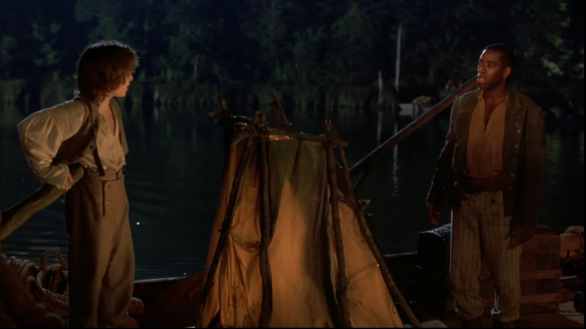
Jim tries to explain how wrong slavery is to Huck, but Huck doesn't understand, as it goes against everything he knows

The two find an abandoned ship on the rocks one stormy night, and decide to use it as shelter. As Huck goes down into the ship, he stumbles upon a robbery taking place, just as Jim discovers the corpse of Huck’s father. Huck gets caught as the ship begins to take on water, but manages to escape just in time with Jim. They discover the thieves’ boat on the river and take it. The next morning, Jim asks Huck if he would still help him escape to Cairo, even if his father was dead, but when Huck replies that he would head back home, Jim keeps the news of Huck’s father’s death a secret. Later that night, Jim excitedly declares that he is close to freedom and earning money to buy his wife and children. He adds that if his family won’t be sold to him, he’ll just steal them. Huck is alarmed by this talk, but Jim argues that it’s his family. “Selling people and using them for slaves ain’t right, Huck,” Jim explains, but Huck argues that it’s the way it is and has always been.  Jim tries to explain that all men should be free, but Huck clings to the old ways, and decides that he needs to turn Jim in.

Jim catches on to Huck’s plan, although Huck believes he’s doing the right thing, and going to hell if he helps to set Jim free. While Huck paddles away to get “help,” Jim decides to leave Huck and set out on his own. Fortunately for Jim, Huck changes his mind and lies about who is on the boat, with Jim watching with pride, and rejoins the boy. Later that night, the raft is destroyed by a riverboat, and Huck and Jim get separated. Huck is found and brought into the Grangerford house, where the women of the house clean him up. Huck sees that they found Jim and have him chained up as their new slave. The son of the Grangerford house explains to Huck that they have a feud with the Shepherdson house, and Huck finds himself involved. Although Jim wishes to continue to Cairo, Huck is reluctant, as he wants to stay with the Grangerfords. After seeing the welts on Jim’s back from the overseer’s whip, Huck feels remorse about stopping Jim’s journey, and decides that the two should set off again. Unfortunately, the feud has reached a boiling point, and Huck arrives in time to see his friend Billy, one of the last Grangerfords, get gunned down. Jim finds Huck grieving over Billy’s body, and they set off again.

The Duke (L) and The King, threatening Huck as the con begins to unravel

The two discover they’d passed Cairo by forty miles, and decide to catch a steamboat to take them back upriver. They then find themselves entertaining two con men, known as The Duke and The King. The two see the wanted poster for Jim, and blackmail Huck and Jim into waiting on them hand and foot. The two then stage a con to collect on the will of a man, which disgusts Huck and Jim.  The con men are planning on going “all the way” with this con, stealing everything from the women of the house. Another man in the village, Dr. Robinson, has his suspicions about the conmen, but the family is too involved in conmen’s lie to listen to him. Huck decides to find Jim and leave. Unfortunately, the two men had turned Jim in for the reward. Huck decides to help him escape, until Jim finally tells the truth about Huck’s father. Jim is sorry at Huck’s reaction, and resigns himself to his fate.

As the con grows, Huck finds that he cannot participate any longer. He decides to steal the gold from the men and escape, with the intention of writing a letter to the lady of the house, Mary Jane, to let he know where he hid the treasure. He ends up stuffing the gold in the coffin, and the next day, he informs Mary Jane of the fraudulent brothers. Huck comes up with a plan to make things right, and begins to set the plan in motion. The con is uncovered when the real brothers come into town to claim their inheritance. The mob decides to dig up the grave to see who is telling the truth about being related to the late Peter Wilkes. Huck uses this moment to steal the sheriff’s keys and help Jim escape, and the two make their way to the steamboat.

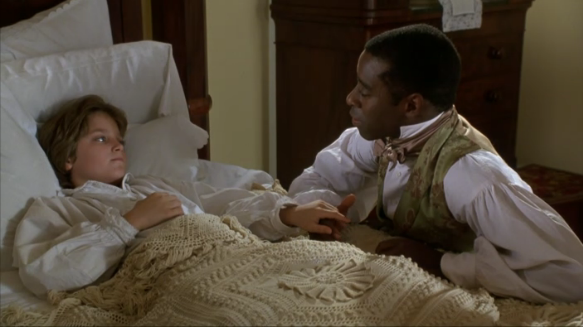
Huck recovers in bed while Jim tells him that he is now a free man

Unfortunately, as the two head toward the steamboat, the mob begins to shoot at Huck and Jim, and Huck is hit in the back with a bullet. They near the steamboat, but Huck can’t run any further with his injury. Huck urges Jim to run, but Jim gives up his chance for freedom to save Huck. Jim is taken by the mob and is set to be lynched, while Huck lies on the ground, helpless. Just as all seems lost, Mary Jane arrives on the scene, demanding that Jim and Huck be let go. Huck’s injury is treated, and he wakes up in the Wilkes house, seeing Widow Douglass by his side. Jim shows up, letting Huck know that he and his family have become free, due to the stipulations in Miss Watson’s will. Although Huck is happy, isn’t thrilled to be taken back to be civilized again. In the final scenes of the film, Huckleberry takes off to the call of the steamboat.

February 22

February 22, 2009 – Pixar’s Wall-E Wins the Academy Award for Best Animated Feature

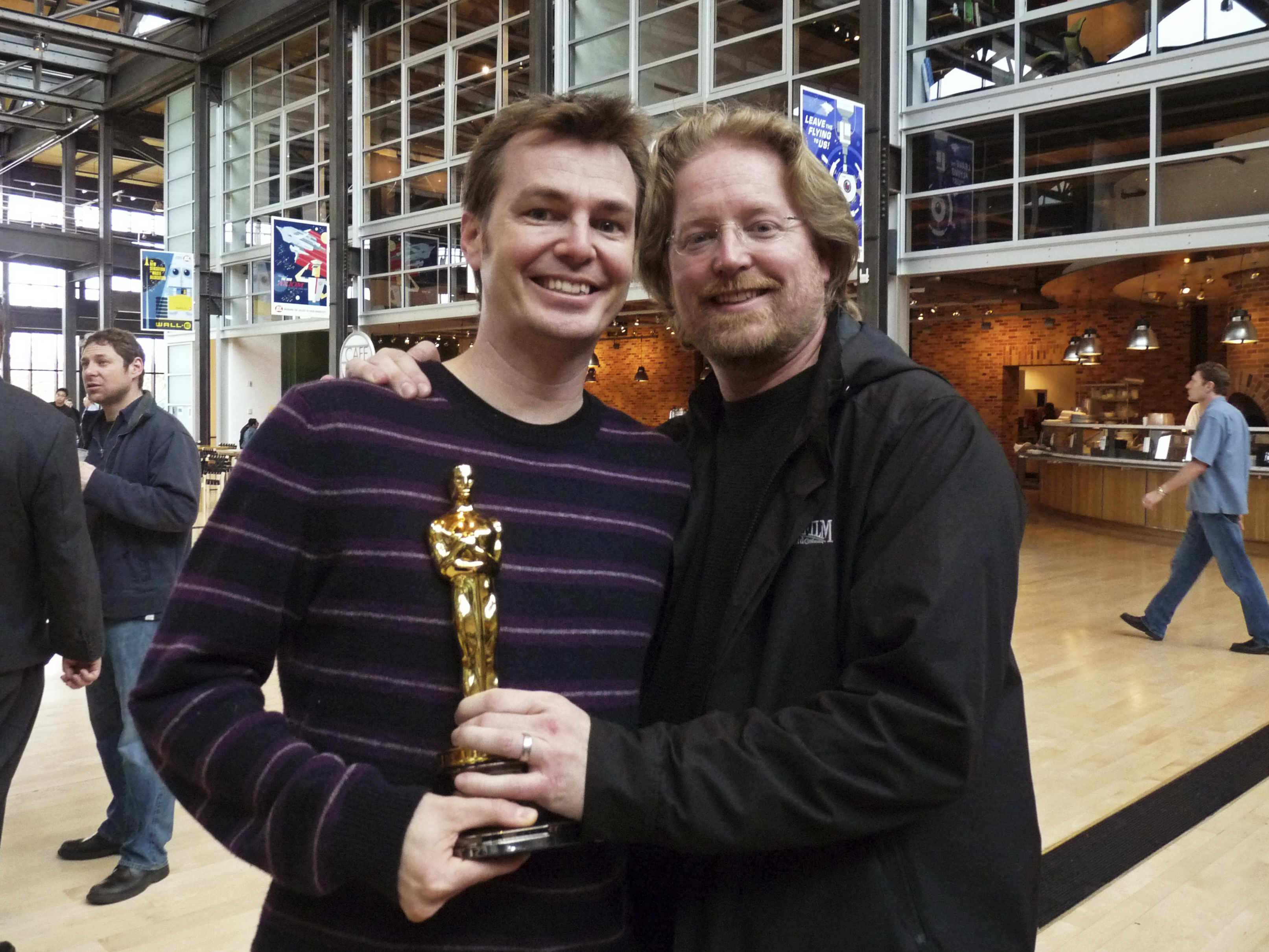
Andrew Stanton (R) with the Wall-E Academy Award. Image Credit: Wikipedia

“[We’ve] been trying for four years to make the best film possible and have it recognized in that regard in something like this – it’s huge.” – Andrew Stanton at the Academy Awards

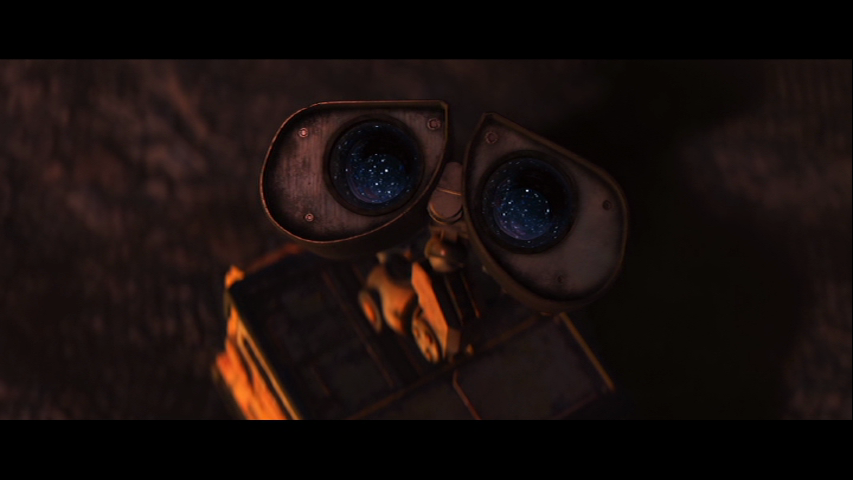
At the 81st Academy Awards, broadcast February 22, 2009, the Pixar film Wall-E won the Academy Award for Best Animated Feature. The film was also nominated for Best Original Screenplay (written by Andrew Stanton, Jim Reardon, and Pete Docter), Best Original Score (by Thomas Newman), Best Original Song (Down to Earth by Peter Gabriel and Thomas Newman), Best Sound Editing (by Ben Burtt and Matthew Wood), and Best Sound Mixing (by Tom Meyer, Michael Semanick, and Ben Burtt). This award would be the fourth win for Pixar in this category since the creation of the Best Animated Feature category in 2001. Many critics voiced their surprise that Wall-E was not nominated for Best Picture, as it was one of the highest rated films of 2008, with a 96 percent approval rating on the online rating site, Rotten Tomatoes. Only three animated films were nominated in the Best Animated Feature category that year: Wall-E, Disney’s Bolt, and Dreamworks’ Kung Fu Panda.

Image from one of the first advertisements for Wall-E

In an advertisement for the film, shortly after the release of Ratatouille, Andrew Stanton described a lunch with three of the other main players at Pixar: John Lasseter, Pete Docter, and Joe Ranft. “In the summer of 1994,” he begins, “there was a lunch…Toy Story was almost complete, and we thought, ‘Well, jeez, if we’re going to make another movie, we gotta get started now.’ So at that lunch, we knocked around a bunch of ideas that eventually became A Bug’s Life, Monsters, Inc., Finding Nemo…the last one we talked about that day was the story of a robot, named Wall-E.”

Released on June 27, 2008, the film posed the question: What if mankind had to leave Earth 700 years in the future, and somebody forgot to turn off the last robot? The film includes the voices of Ben Burtt as Wall-E and Elissa Knight as EVE, with Jeff Garlin as the Captain, John Ratzenberger as John, and Kathy Najimy as Mary. The film went on to become the ninth highest grossing film of 2008, with a total domestic gross of $223,808,164.

February 16

February 16, 1904 – Birth of Song of the South Actor, James Baskett

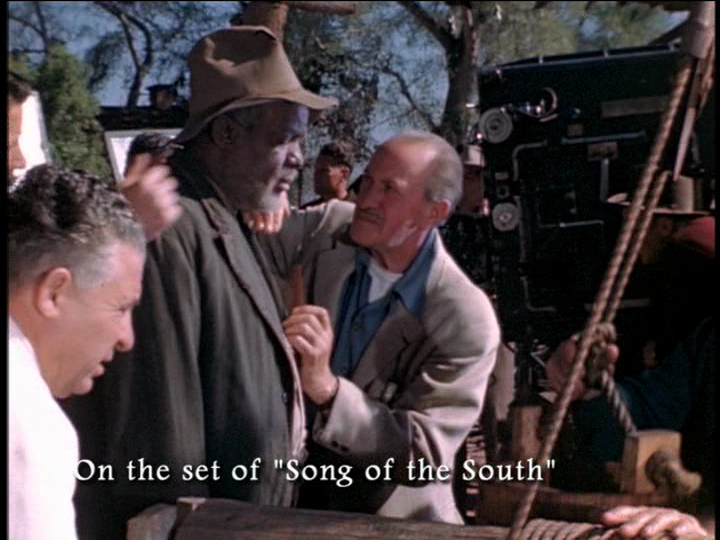
James Baskett (C), preparing for a scene in Song of the South

“[Baskett was] the best actor, I believe, to be discovered in years.” – Walt Disney

On February 16, 1904, James Baskett was born in Indianapolis, Indiana. In 1939, he moved to Los Angeles and had a supporting role in the film Straight to Heaven, followed by more supporting roles in Revenge of the Zombies in 1943 and The Heavenly Body in 1944. In 1944, he was asked to join the Amos ‘n’ Andy radio show, playing the lawyer Gaby Gibson.

In 1945, after spying an advertisement for open auditions, Baskett auditioned for a bit part in Disney’s upcoming film Song of the South, originally called Uncle Remus and based on the Joel Chandler Harris Uncle Remus stories, originally published in 1881. Baskett had little experience in film, but impressed Walt so much that he was offered the lead role of Uncle Remus. Baskett was also the voice of Brer Fox in the animated sequences, and the voice of Brer Rabbit when Johnny Lee was unable to do the voice for a sequence due to another commitment. Film critic Leonard Maltin remarked that Baskett was “ideal as Uncle Remus, eliciting just the right kind of warmth and humor, and later poignancy, from the character.”

After the film’s release, Walt continued to stay in contact with Baskett. This friendship led to Walt lobbying the Academy to give Baskett an Oscar for his portrayal, for Walt said Baskett worked “almost wholly without direction” and had devised the characterization of Remus himself. On March 20, 1948, Baskett was awarded an honorary Academy Award “for his able and heartwarming characterization of Uncle Remus, friend and storyteller to the children of the world, in Walt Disney’s Song of the South.” This made Baskett the first actor in a Disney film to win an Academy Award, as well as the first African-American man to win an Oscar. On July 9, 1948, only a few short months after this victory, Baskett died of heart disease at the age of 44. His wife, Margaret, wrote Walt Disney a thankful letter, telling Walt that he had been a “friend in deed and [we] certainly have been in need.”

Although Song of the South was the only film Baskett appeared in, due to his untimely death in 1948, the role, and film, are an important part of Disney history that should not be forgotten or brushed aside. Baskett, in my opinion, should be honored by Disney as a Disney Legend – without the warmth Baskett presented as Uncle Remus, Zip-a-Dee-Doo-Dah would not have been as memorable as it is now. The film is a victim of selective judgment by the critics: Gone With the Wind is lauded, although it truly does deal with slavery, whereas this film is set in the period of Reconstruction. Baskett’s portrayal of Uncle Remus shows a man who continues to keep a cheerful disposition, no matter what hand life has dealt him, and is truly respected by every other person in the film, from Bobby Driscoll’s Johnny, to Lucile Watson’s Grandmother. The range of emotion Baskett shows, including the dramatic scene after Jonny is attacked by a bull, only adds proof to what Walt told his sister Ruth, that Baskett was one of the greatest actors to be discovered in a long time. Baskett certainly could have achieved a lot had he lived longer, and it is a crime to let his legacy die, along with the technical and artistic merit of Song of the South by hiding this film away from the public. Baskett should be honored as a Disney Legend for his portrayal, plain and simple. He played Uncle Remus the way he should have been played: with warmth, wisdom, and a wonderful human being.


February 12

February 12, 1993 – Homeward Bound: The Incredible Journey is Generally Released to Theaters

“It’s my responsibility. I had a responsibility to Sassy to love her and protect her, the same as I have to you, and to Peter, and the same as you have to Jamie.”

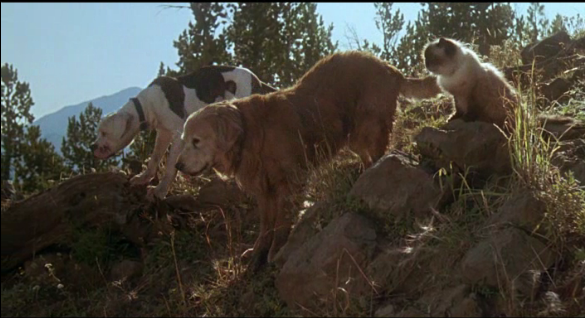
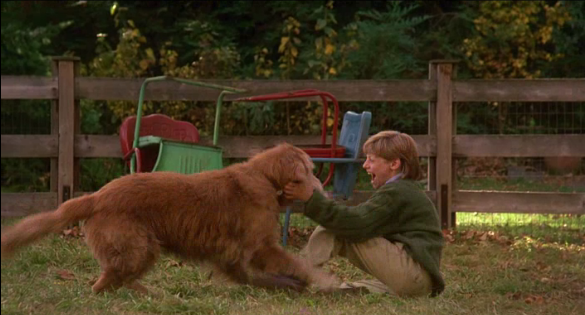
On February 12, 1993, the Walt Disney Studios had their general release of the family film Homeward Bound: The Incredible Journey. The film is a remake of the 1963 Disney film The Incredible Journey, which in turn was based on the best-selling book by Sheila Burnford. The story is of three pets – Chance, an American bulldog puppy; Sassy, a Himalayan cat; and Shadow, a golden retriever – who, afraid they’ve been abandoned by their owners, begin a journey back to their home through the California wilderness. Although the film was set in California, the filming was done in eastern Oregon. In contrast to the original film, the animals in the film speak, although this is one of the rare films were the animals mouths are not made to move in synchronization with what they say. The film stars Michael J. Fox as the voice of Chance (and the narrator of the film), Sally Field as the voice of Sassy, and Don Ameche as the voice of Shadow.  The film also stars Robert Hays as Bob Seaver, Kim Greist as Laura Seaver, Benj Thall as Peter Seaver, Veronica Lauren as Hope Seaver, and Kevin Chevalia as Jamie Seaver. It was directed by Duwayne Dunham, with the screenplay by Caroline Thompson and Linda Woolverton.

The film opens with Chance explaining his past: he was abandoned as a puppy, left to fend for himself on the streets before getting caught and sent to the pound. He was adopted by the newly combined Seaver family (Bob Seaver married Laura, a widow with three children). Chance calls it the place where he got his second chance, and his name; where he was provided with “lots of space, fresh air, plenty of interesting things to explore, and all the underwear [he] could eat.” He introduces the two other pets, Sassy the cat, and Shadow the dog, as well as their humans. Chance explains that the daughter Hope belongs to Sassy, the youngest boy Jamie belongs to Chance (although Chance explains that he doesn’t really need anybody), and Peter, the eldest, belongs to Shadow.

The pets on the porch of Kate's ranch. Shadow (L) eagerly awaits Peter's return, while Chance (M) believes they've been dumped.

The family must go to San Francisco for a little while, leaving the pets behind with a family friend named Kate at her ranch. Peter is not happy with having to leave Shadow behind, asking his new stepfather Bob, “What if he thinks I’ve abandoned him or something?” Bob responds that the time will pass before they know it, and everything will be okay. The pets, however, don’t understand what’s going on: Chance believes they’ve been abandoned, but it doesn’t seem to faze him much, since it had happened to him before. Kate leaves to go on a cattle drive, leaving a note behind for her neighbor about taking care of the pets, but part of the note falls under a table, and the neighbor mistakenly believes Kate took the pets with her. Shadow senses that something is wrong, and decides that he has to get back to Peter. “Something is keeping Peter from coming to me, so I’m gonna go to him,” he explains, and jumps the fence. Sassy follows him reluctantly, and Chance only follows, as he’s been chased by a turkey most of the time on the ranch, and decides to go where it’s turkey-less. “And so began the most perilous journey of our lives,” Chance narrates.

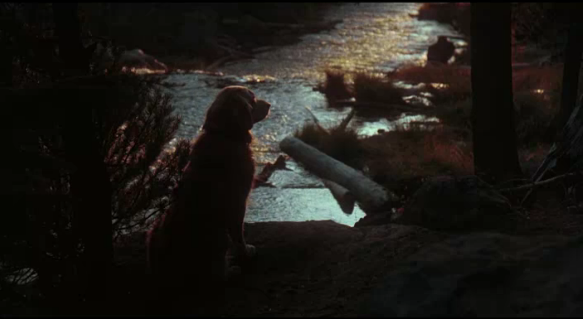
Shadow reassures the two that home is just over the mountain, but when they look over, they notice only more mountains and an expansive wilderness. But they continue, with Chance beginning to admire Shadow’s unwavering faith in Peter. As they begin, they have many brushes with nature, including a skunk and a protective mother bear. When they reach a river, Shadow and Chance have no problem swimming across, but as Sassy tries to climb a log to get to the other side, the log falls, sending Sassy traveling with the current. Although Shadow and Chance race along the riverside and Shadow tries to go into the river to catch her, Sassy ends up going over the waterfall into the rapids. The two dogs wait overnight to see if she’ll come out alive, with Shadow blaming himself for letting Sassy drown. The next morning, Shadow bids Sassy farewell, and the two continue on their journey. A birdwatcher in the woods, however, comes across Sassy washed up on the shore, and takes her in, cleaning her up and feeding her.

Shadow sits near the waterfall, blaming himself for what he believes is Sassy's death

Kate comes home to find that her neighbor believes she took the pets with her, and panics, having to call the family and let them know that the pets are gone. The children are devastated, and Peter blames Bob for making them go to San Francisco and leave the pets behind. Meanwhile, the two dogs come across their next challenge: a mountain lion has been following their tracks. Inspired by the time Chance used a see-saw to catapult Sassy in the backyard, Shadow comes up with a plan to send the lion flying, throwing it into the river. Their triumphant barking alerts Sassy, who is nearby with the birdwatcher, and she runs in their direction, with the three reuniting.

The three run across a lost little girl in the woods, and decide to watch over her during the night, while a search party wanders around, calling out the little girl’s name. In the morning, Shadow hears their calls and alerts them to where the girl is. The rangers with the search party recognize the pets from the posters Bob has made, and decide to take the pets with them to a nearby animal shelter. They alert the family that the pets have been found, but Chance thinks he’s being sent back to the pound and panics, causing Sassy to escape. She comes back to help Shadow and Chance break out, and they run away just as their family is on their way.

The pets look down on their hometown, relieved that they are so close to their family

The pets see home just over the top of a mountain, and travel through train depot, carefully crossing over the tracks, when Shadow falls into a hole as the beam he walks across breaks. At first Chance and Sassy think he may have died from the fall, but he wakes up and tries to walk, finding out his leg is badly injured. The two try to coax Shadow out of the hole, but the walls are slick with mud, and eventually, with the answer that he’s just too old, Shadow lies back on the ground and gives up. Chance tries to tell him that they need him, but Shadow says the only thing they need is to learn to say goodbye.

Later, when the family has returned home, still mending from what they believe is their loss, Jamie hears barking in the backyard. He calls out Chance’s name, and Chance comes over the hill, running to Jamie. Sassy appears next, running to Hope. Peter waits for Shadow to appear, but doesn’t see him, and angrily states that Shadow was just too old. Just as he turns to go in the house, a limping Shadow appears, and begins running to make his way back to Peter. Safe and sound, Chance realizes that here, he has the things he never knew he needed: a family, friends, and a home filled with love.

The joyful reunion of Peter and Shadow

February 5

February 5, 1953 – Peter Pan is Released to Theaters
“The Disney version of Peter Pan has another interesting first: it’s the first time a boy was shown as Peter Pan. There’d been a tradition, from the time of Maude Adams on the stage…of women playing Peter Pan. But it was…a tradition that was broken by Walt Disney by showing Peter Pan as a boy. Now, it’s an animated boy, but was really a boy’s voice and he was depicted as a boy, which is what he’s supposed to be.” – Leonard Maltin, Film Critic.

The road to Peter Pan’s release on February 5, 1953, was a long one: production started as early as 1935, with Walt planning to make it his second animated film after Snow White and the Seven Dwarfs. Disney acquired rights to Sir James M. Barrie’s play from the Great Ormond Street Hospital in London (to which Barrie had bequeathed the copyright) in 1939, but the advent of World War II halted production of the film.

In the 1950s, Disney decided it was time to bring the film back into production. Starring Bobby Driscoll as Peter, Kathryn Beaumont as Wendy, Hans Conried as Captain Hook and Mr. Darling, and Bill Thompson as Mr. Smee, the film was directed by Hamilton Luske, Clyde Geronimi, and Wilfred Jackson.

Disney first learned of the story of the boy who never grew up when he saw a touring production of Peter Pan in 1913, and he later starred as Peter Pan in a local production of the play. With almost two decades in development at Disney, the story went through many different treatments, ranging from a first, very dark version—much darker than the original play, and more sinister than a typical Disney feature—to the final product. Disney was determined to release Peter Pan as an animated feature. “The cartoon method gave us many advantages over the stagecraft of Barrie’s day,” Disney once said, “which no amount of pixie dust could cure.” Through animation, many of the play’s conventions could be abandoned: Nana could be shown as a dog instead of a person in a dog costume, the characters could fly realistically without any visible wires or tricks, and the biggest change of all, Tinker Bell was a fully formed physical character, rather than a speck of light traveling across the screen. Through the casting of Bobby Driscoll as the title character, Disney was also able to present Peter as the boy he was supposed to be, rather than a woman playing a young boy. The film was a success upon its first run in 1953, and was rereleased several times in theaters, with its first video release in 1990.
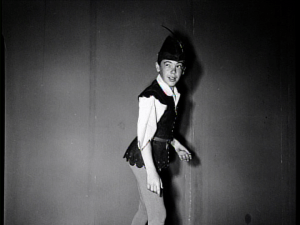
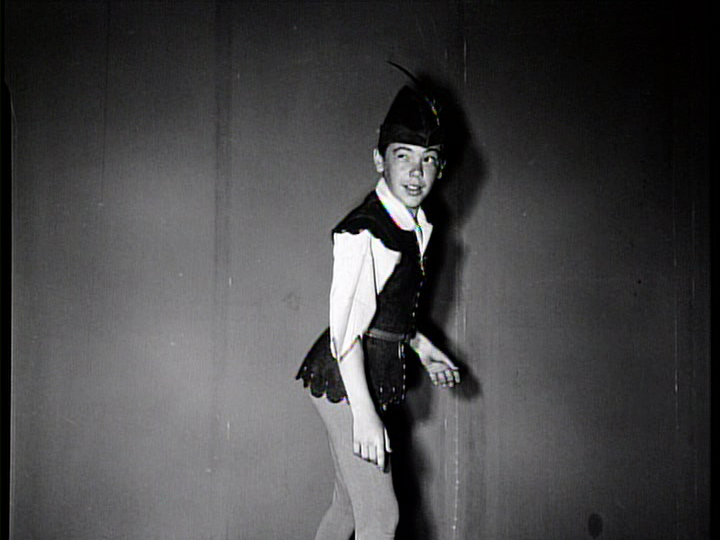
Bobby Driscoll, voice of Peter Pan, dressed for the live-action reference film

Although the actors are only heard on screen as the characters, they actually had to film a second, live-action version of the film for the animators to study. The actors dressed up and performed various scenes to show the animators the action taking place and the small, yet significant, details with each action, such as a turn of the head or how Captain Hook  would hang from a cliff by one hand. “The audience always got confused when we talked about live-action help,” animator Frank Thomas explained, “and we’d say, ‘Well, an artist needs a model, you gotta have something to guide you.’ But it’s also very helpful in little ways of a guy turning and looking back over his shoulder, how far did he turn his head. And you find if you’ve got the real person do it, you saw their arm here would come out as he’d turn, or have something come up to his chin, or some little thing you hadn’t thought of. And very often, that would make the scene come alive.”
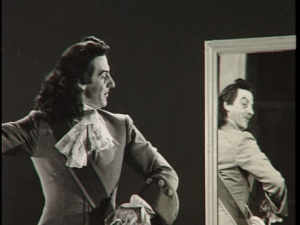
Hans Conried as Captain Hook, in a live-action reference still

Frank Thomas was assigned the role of animating Captain Hook, with Milt Kahl animating Peter Pan, and Marc Davis designing and animating Tinker Bell, a character with no lines. “She’s a pure pantomime character, which in itself I think is rather interesting,” Marc Davis said. The various story sketches of Tinker Bell over the years changed in little details, but throughout all the concept drawings, she was a representation of the current ideal of feminine beauty. One persistent rumor is that Tinker Bell was based on Marilyn Monroe. Monroe was just beginning her career when Peter Pan was in production; the Disney animators wouldn’t have been aware of her enough to base a character on her. The actual person who stood in as the live reference model for the pixie was actress Margaret Kerry, who won the role after performing the scene where Tinker Bell preens in a mirror, only to be alarmed at the size of her hips. “They knew that I had the imagination that they needed,” Kerry said, speaking of her audition.

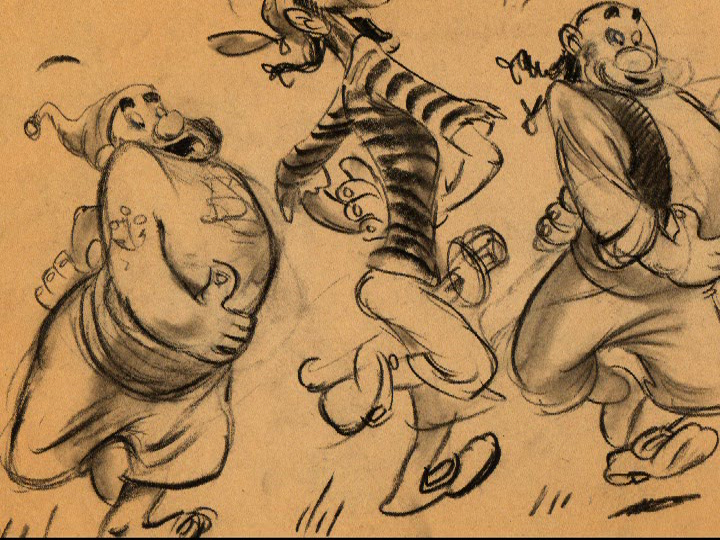
The music of Peter Pan is rather interesting, as many songs were used but ended up on the cutting room floor. One song that is still heard throughout the score, although the actual song was cut, is the crocodile’s theme, also known as “Never Smile at a Crocodile,” which would later go on to be used in a first season episode of The Muppet Show, starring Sandy Duncan. The most famous song from the film, “The Second Star to the Right,” was actually not written for the film; on the contrary, the song was written for Alice in Wonderland, and was known as “Beyond the Laughing Sky.” Another song that was written, but eventually replaced, was known as “The Pirate Song,” which had been storyboarded and demo recorded. The song was sung by the pirates as they try to convince the Lost Boys to join Captain Hook’s crew. The song was eventually replaced by “The Elegant Captain Hook,” which was a shorter song, but has a bit more of a jolly feeling around it.
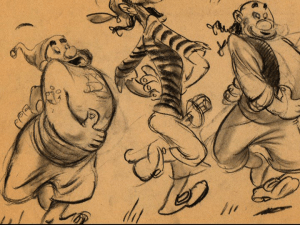
A storyboard picture from the cut song "The Pirate Song," which was replaced by "The Elegant Captain Hook"

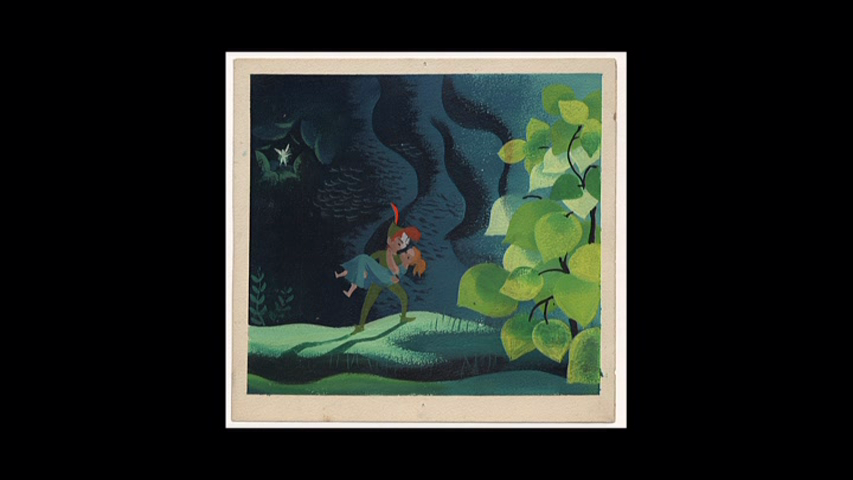
The color stylings went through many artists’ hands during the development process. In the 1930s and 1940s, renowned British artist David Hall created beautiful watercolor treatments of the story; he also did extensive work on Alice in Wonderland for the studio. The color styling that is the final film, however, was the work of Disney artist Mary Blair. Her concept art not only influences the color pallet of the film, but also helped identify the moods of certain scenes, including the scene in Mermaid Lagoon where the skies suddenly darken upon the arrival of Captain Hook. Blair’s art for this film was so popular that Disney released a pin set of images from her concept art to honor the 50th anniversary of the film in 2003.
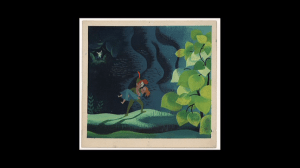
An example of concept art by Disney artist Mary Blair. Notice the color stylings of the characters, and how they compare with the color palate of the film

The story begins with a look at the Darling family, and the narrator explains what each member thinks of the story of Peter Pan. Mary Darling, the mother, believes Peter to be the spirit of youth. George Darling, the father, “Well, Mr. Darling was a practical man,” the narrator informs us. John and Michael Darling believe that Peter is a real person, making him the hero in all of their nursery games. Wendy Darling, the eldest child, not only believes in Peter Pan, but is also regarded as the expert on Peter and all of his adventures. And Nana, the nursemaid, “being a dog, kept all her opinions to herself, and viewed the whole affair with a certain…tolerance.” Mr. Darling, annoyed by Wendy’s constant stories of Peter Pan, decides that it’s time for her to grow up, and that this night would be her last in the nursery. Wendy doesn’t want to leave, especially since Nana has stolen Peter Pan’s shadow, and Wendy wants the nursery window left unlocked in case Peter returns to retrieve it. A worried Mrs. Darling tries to diffuse the situation, and as she and Mr. Darling rush off to a party, her fears are confirmed—the audience sees Peter on the roof of the Darling house.
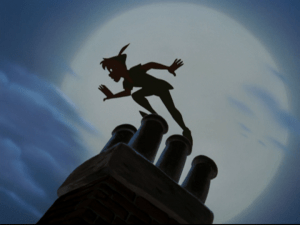
The most famous image of Peter perched on the roof of the Darling's house

When the children are asleep, Peter enters the nursery and searches for his shadow. Tinker Bell, Peter’s companion, finds it in a drawer, and as it escapes, she is trapped inside. Peter’s pursuit of his shadow around the room turns into a brawl that wakes Wendy. When she sees him trying (and failing) to reattach his shadow with soap, she offers to sew the shadow back on. As she sews, she asks how he lost his shadow in the first place. Peter replies that he comes by the house to listen to the stories. When Wendy tells him that there will be no more stories because she has to grow up and leave the nursery, an angry Peter decides that the only course of action is to take her away to Never Land, where she can continue telling stories to him and the Lost Boys. Thrilled, Wendy offers to give Peter a kiss – an action that causes an alarmed Tinker Bell to finally break out of the drawer and attack Wendy, pulling her hair. As Peter tries to catch Tinker Bell, he accidentally wakes Michael and John, who, excited about the prospect of playing games and fighting pirates, beg to go to Never Land too. Peter agrees to take them all, and teaches them how to fly with faith, trust, and a little bit of pixie dust, and off they go into the London night sky.

The audience’s first view Never Land is a pirate ship, where the crew is sitting restless, wishing that Captain Hook would give up his silly pursuit of Peter Pan and take them back to open waters to pillage and plunder again. Hook instead comes up with a plan to capture the Indian princess, Tiger Lily, and force her to tell them where Peter Pan’s hide out is. In an exchange with his first mate, Mr. Smee, Captain Hook reveals the reason for his pursuit: once when he and Peter Pan were fighting, Peter cut off Hook’s hand (which the pirate has since replaced with a hook) and fed it to a crocodile, who liked the taste of Hook so much that he follows him around hoping to devour the rest of him. Smee tries to talk Hook out of his vendetta, but the moment another crewmember announces sight of Peter Pan, Hook decides to attack him with cannon. Peter orders Tinker Bell to take Wendy and her brothers to safety as he distracts Hook, but Tinker Bell rushes off with other plans.

Tinker Bell finds her way quickly to the hideout of the Lost Boys, and tells them that Peter has sent orders to shoot the fast approaching “Wendy Bird.” Eager to please their leader, the boys rush out and throw various sticks and stones at Wendy, and she falls to the ground. Luckily, Peter arrives just in time to catch her. When the Lost Boys reveal Tinker Bell’s lie, Peter banishes the fairy forever, but makes it a week when Wendy makes a plea on Tink’s behalf. He offers to show Wendy the island, while John leads the Lost Boys on a search for the Indians.
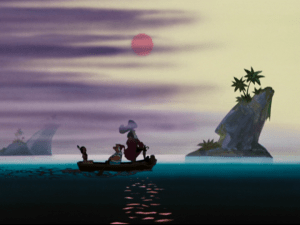
Captain Hook and Smee with the captured Tiger Lily. The coloring was taken from a piece of concept art by Mary Blair

As Peter and Wendy visit the Mermaid Lagoon, they find Hook in a rowboat with the missing princess, and discover that unless Tiger Lily reveals Peter Pan’s hideout, Hook will drown her. Following a sword fight with Hook, which ends with the pirate hanging on a cliff by his hook, with the crocodile waiting impatiently and hungrily below, Peter saves Tiger Lily and takes her back to her camp, with Wendy, forgotten by Peter, trying to fly behind them.

That evening, as Hook sits in his cabin with a horrible cold, humiliated by losing once again to Peter Pan, Smee tells him that “the cook told [him], that the first mate told him, that he heard Pan has banished Tinker Bell.” This reinvigorates Hook, who plans to use Tinker Bell’s jealousy to help him discover Peter Pan’s hideout: “a jealous female can be tricked into anything.” Meanwhile, the Indians are rewarding Peter’s bravery by giving him the name of Chief Little Flying Eagle, and everyone begins to celebrate – all except Wendy, who is sent to go get firewood. Wendy returns to see Tiger Lily flirting with Peter, and she storms away from the party. Tinker Bell, moping nearby, is captured by Smee, who tells her that Hook would like to have a word with her.

Hook tries to charm Tinker Bell, first telling her that he admits defeat and plans to leave Never Land forever, then adding in that Peter has his faults, including bringing Wendy to the island. When he mentions that he knows Wendy has come between Tinker Bell and Peter, she begins to cry, and Hook knows that he has her where he wants her. Under the ruse that the pirates will take Wendy away with them to “save Peter from himself,” Hook tricks Tinker Bell into telling him when Peter is, and then locks her away so she can’t warn Peter of the upcoming attack.
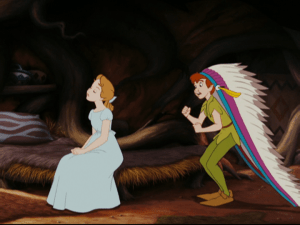
Peter trying to appease Wendy's jealousy after the celebration

Back at the hideout, Wendy, still jealous of Peter’s attention to Tiger Lily, rebuffs him and his show-off attitude. As she gets the Lost Boys ready for bed, she tells her brothers that they will head home in the morning. She tries to act as everyone’s mother, and the Lost Boys decide that they want to return with Wendy, to have a mother as well. An upset Peter tells them that they can leave if they want to grow up, but they can never return to Never Land. Before they can leave, however, they are caught by the pirates and taken to the ship. As the pirates try to convince the Lost Boys to sign up to be pirates, Wendy declares that they will never be pirates—Peter will save them. Hook tells her that a “present” he left in the hideout for Peter (with the tag reading “To Peter with love from Wendy. Do not open till 6 o’clock.”) is a bomb that will blow Peter to smithereens. Upon hearing this, Tinker Bell breaks free from her cell and speeds away to save Peter, managing to tear the bomb away from him as it blows up, destroying his hideout and nearly killing Tinker Bell herself. Peter pleads with her not to die, telling her she means more to him than anything in this world. Hearing the explosion and believing Peter to be dead, Hook makes Wendy walk the plank. The pirates listen for a splash, but when they hear nothing, the entire crew is spooked, believing that their ship is haunted. Peter, alive and well, and joined by Tinker Bell, cuts through Hook’s sails, and the fight to the finish between Hook and Pan begins.

January 31

January 31, 1986 – Down and Out in Beverly Hills is Released to Theaters

“Yeah, maybe I ought to become a bum. No job, no responsibilities…”

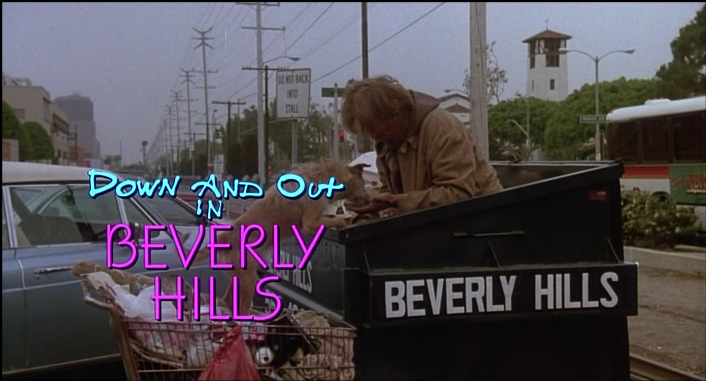
On January 31, 1986, the Touchstone Pictures film Down and Out in Beverly Hills was released to theaters. Based on the French play Boudu sauvé des eaux by Rene Fauchois, the film is about a homeless man who tries to drown himself in a pool of a rich family in Beverly Hills, only to be rescued and taken in by the family, with life-changing results for everyone involved. The film is notable for being the first R-rated film, due to several uses of profanity and nudity, released by the Disney Studios. The film was a financial success for Disney, grossing over $92 million in the U.S. during its run. The film stars Nick Nolte as Jerry Baskin, Richard Dreyfuss as Dave Whiteman, Bette Midler as Barbara Whiteman, with Little Richard as Orvis Goodnight; Little Richard’s appearance in the film, as well as the song “Great Gosh a’Mighty” that he provided for the soundtrack, helped revitalize his career.

The film begins with a gritty look at the overall homeless situation in Beverly Hills, and follows the path of one particular homeless man named Jerry Baskin, who travels with his dog, Kerouac. This is contrasted with the lives of the Whiteman family, as they wake up to begin their day. The family, consisting of Dave Whiteman, his wife Barbara, his son Max, his daughter Jenny, the family dog Matisse, and the maid Carmen, are quite dysfunctional, to say the least. Dave wakes up to see a new tape by his bed: his son is an aspiring filmmaker, who sends his father tapes to let him know how he really feels. Unfortunately, the tapes are just as confused as Max is about himself. Barbara Whiteman, obsessed with yogis, gurus, and acupuncture, has lost romantic interest in her husband, which drives Dave to an affair with Carmen. Jenny, a college student, has been starving herself, much to the concern of her father. And Matisse, the dog, is emotionally disturbed, biting everyone and having to see a dog psychiatrist.

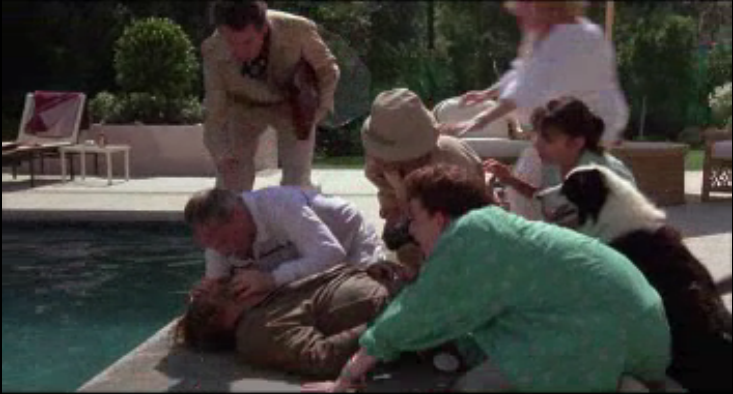
Meanwhile, Jerry is sleeping on a park bench with his dog Kerouac, when the dog spots a woman jogging with a bag of food. Tempted, he runs after her, and decides to follow her home. Jerry wakes up and, finding Kerouac gone, panics and starts roaming the streets looking for him. He ends up in a back alley in a Beverly Hills neighborhood, and decides that he does not wish to live anymore. Entering the Whiteman’s backyard, he fills his pockets with rocks and jumps into the swimming pool. Dave spots this and sprints through the house, screaming “Call 911!” Dave ends up saving Jerry’s life by pulling him out of the pool and giving him CPR. He then offers to let Jerry stay for a while, much to the annoyance of his wife. Surprisingly enough, Jerry is the first person Matisse really takes to, presumably filling the void in Jerry’s life that Kerouac left behind.

The Whiteman Family gathers around as Dave pulls Jerry out of the pool

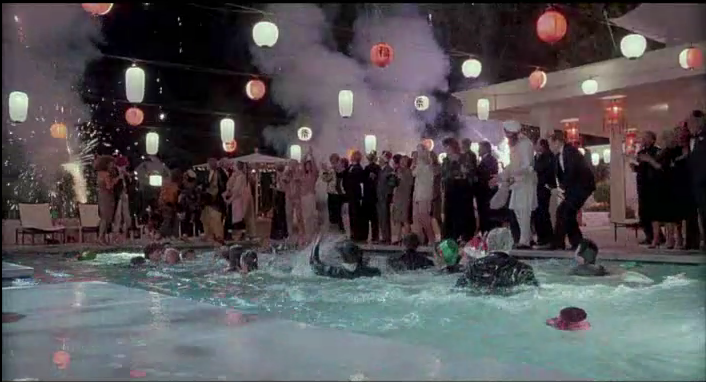
Although many members of the family don’t take too well to Jerry in the beginning, he slowly and surely works his influence throughout them, by telling them his story of how he was arrested for selling draft cards in the sixties, how he was an aspiring actor, and how his little sister died of leukemia, and other aspects of his life story. Through his stay with the Whitemans, he begins to help to solve their various problems and change how they view the world around them. Meanwhile, as open as Dave was in the beginning, his patience is beginning to wear thin when he sees how Jerry seems to be taking his place. For instance, Jerry ends up sleeping with Barbara, which in turn makes her attracted to her husband again. When Carmen sees how Barbara and Dave are intimate again, she sleeps with Jerry, rebuffing Dave’s advances. When Jenny comes home from college for the Christmas holidays, she lets Jerry know she’s on to his schemes, and in turn, he confronts her for her anorexia, and ends up seducing her. This all comes to a head at the New Year’s Party, where Dave ends up exasperated with Jerry to the point of wishing to finish the job Jerry had tried to start in the pool.

As Dave throws Jerry into the pool at the New Year's Party, this begins a chain reaction of people jumping in after them

Although set in Beverly Hills, most of the filming took place on soundstages, or were assembled sets on the Disney backlot. The house used as the Whiteman residence is an actual house in Beverly Hills, and while the daytime exterior shots were filmed at the house, the nighttime shots were filmed at the studio-created duplicate façade, because of various permit restrictions. There were many instances, however, of location work in the film, including Rodeo Drive, Venice Beach, and the Los Angeles International Airport. Overall, the film is a rather funny look at how we never seem to appreciate what we have, and how looking through another person’s eyes can change our perspective completely.
January 25

January 25, 1961 – One Hundred and One Dalmatians Released to Theaters

“One Hundred and One Dalmatians is the most modern Disney animated movie ever made. [It’s]the one that has the most guts, that says, ‘This is art,’ but it’s entertainment at the same time…it’s Picasso coming in to Disney.” – Andreas Deja, Supervising Animator, Walt Disney Studios.
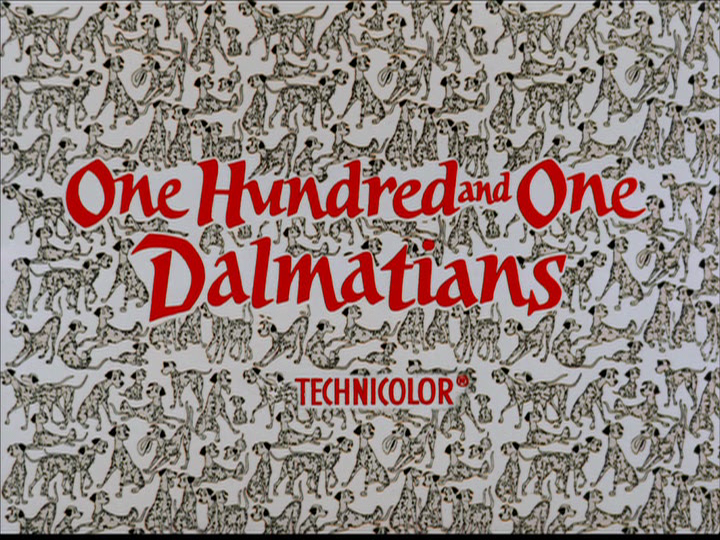
On January 25, 1961, the Disney animated feature One Hundred and One Dalmatians was released to theaters. Based on the 1956 bestselling children’s book by Dodie Smith, the story caught Walt Disney’s attention in 1957, and he soon bought the rights to the story of two Dalmatians who travel great lengths to save their stolen puppies from being turned into fur coats by the evil Cruella De Vil. Costing $4 million to make, the film was an enormous success upon release, and is known as a technical and stylistic innovation for the studio. The feature was directed by Wolfgang Reitherman, Hamilton S. Luke, and Clyde Geronimi, with story by Bill Peet, musical score by George Bruns, and songs by Mel Leven. Voice actors include Rod Taylor as Pongo, Cate Bauer as Perdita, Ben Wright as Roger, Lisa David as Anita, and Betty Lou Gerson as Cruella.
The story opens with narration by Pongo, who introduces his “pet,” Roger, a songwriter, and laments that a bachelor’s life is not as glamorous as one would think. Pongo comes up with an idea to set Roger up with a mate, and after spying many not-so-ideal candidates, he spots a female Dalmatian with her owner, Anita, and tricks Roger into following them into the park. After tying Roger and Anita together quite literally, the two happy couples move into a quiet flat in London, and Perdita lets Pongo know she is pregnant. Everyone in the household is excited about the prospect of puppies, including Anita’s old school mate, Cruella De Vil, whose curiosity about the puppies makes Pongo suspicious. Roger, who has been working on a new melody at this point, teases Anita with lyrics about Cruella, calling her a “vampire bat” and an “inhuman beast,” among other things.

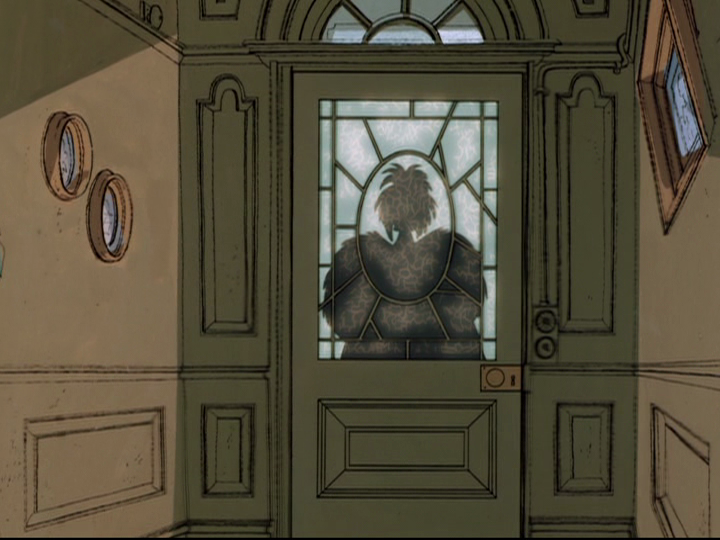
Our first viewing of Cruella De Vil, whose shadow even produces fear

Three weeks later, the puppies are born, and Cruella appears in the doorway, wishing to purchase the puppies. When Roger stands up to her and says she will not be getting a single puppy, Cruella flies into a rage and departs. Unbeknown to the two couples, Cruella hires two thugs, Horace and Jasper, who go into the house when Anita and Roger are taking Perdita and Pongo for a walk, and steal the puppies. Although Anita and Roger call Scotland Yard, Pongo concludes that the humans have failed, and the only solution left is the Twilight Bark.  While Perdita dismisses it as a gossip chain, Pongo convinces her that they have to try, and begins the barking chain while in Regents Park. The chain travels fast, causing all of the dogs in London to bark madly, much to the annoyance of all the humans.

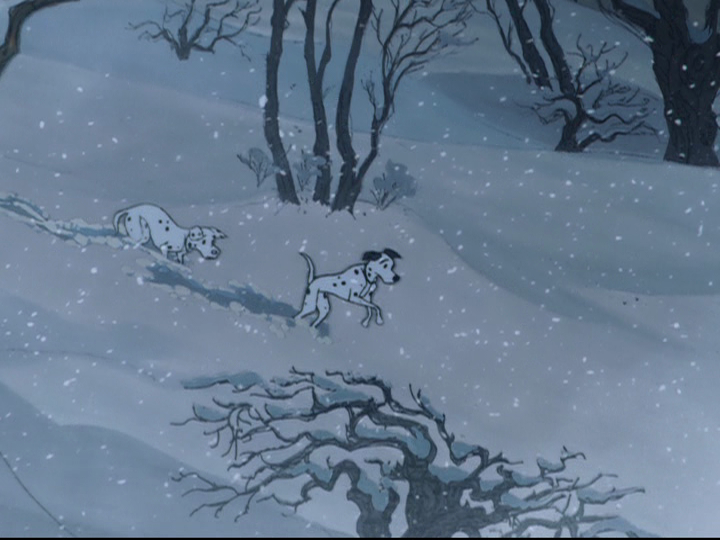
The chain makes its way to the countryside, to an old sheepdog named the Colonel, a horse known as the Captain, and a cat called Sergeant Tibs. The Colonel interprets the message, with Tibs letting the two know that he heard barking two nights before at the abandoned Hell Hall. As he makes his way into the dilapidated mansion, Tibs makes the startling discovery that there are ninety-nine Dalmatian puppies occupying Hell Hall. Although Tibs is chased out of the mansion, he reports his findings to the Colonel, who passes the message back to Pongo. Pongo and Perdita decide that the only option is to go retrieve the puppies themselves, with help along the way by dogs in the chain. “If you lose your way,” the Great Dane reminds them, “contact the barking chain. They’ll be standing by!” The two Dalmatians brave treacherous weather, Cruella’s two bungling henchmen, and Cruella herself to bring all of the puppies back to their home in London.

Pongo and Perdita traveling through the snow in order to save their puppies

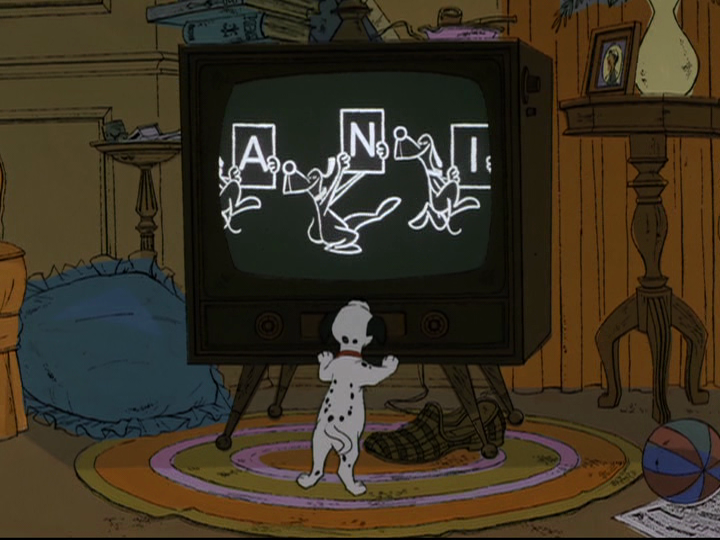
When Walt Disney contacted Dodie Smith about turning her book into a film, she responded enthusiastically, “To be quite honest, I always hoped you might – so much so that, when I was writing it, I often found myself visualizing the scenes as they would be in cartoon.” Dodie’s story was a contemporary tale, and the Disney animators took a big leap from the stylizing of the old classics like Cinderella and even Sleeping Beauty that they’d only finished two years earlier. Indeed, the movie still has a contemporary feel, with 20th century style rather than the classic romantic look favored by Disney. Even the characters were different; for example, Cruella De Vil was seen smoking cigarettes, and the puppies were seen watching television. “At this point, we feel it is going to be one of the most interesting things we have done in the cartoon feature field,” Disney wrote in one of his correspondences with Smith. “Dalmatians…has met enthusiastic audience approval. I feel we have a very successful picture.”

The biggest change in the film was the implementation of the Xerox process when it came to cel animation (see January 21st entry for more information). Created by Ub Iwerks, the process had been tested on the short film Goliath II, and created excitement among the animators, as they were seeing their own drawings up on the screen, as they had originally envisioned them. One problem, however, was the presence of what is known as construction lines – the original sketch lines when beginning to draw a character. In many instances in the film, one can tell when Milt Kahl animated a scene, as the construction lines would still be present, as he was very militant about having people come in and clean up his sketches, as sometimes they would disturb the final drawing. However, one main reason that the Xerox process worked so well for this picture is because the Dalmatians were basically black and white, and all that was needed was just a clear outline of the dogs. This also helped when it came to creating the spots of all 101 Dalmatians.

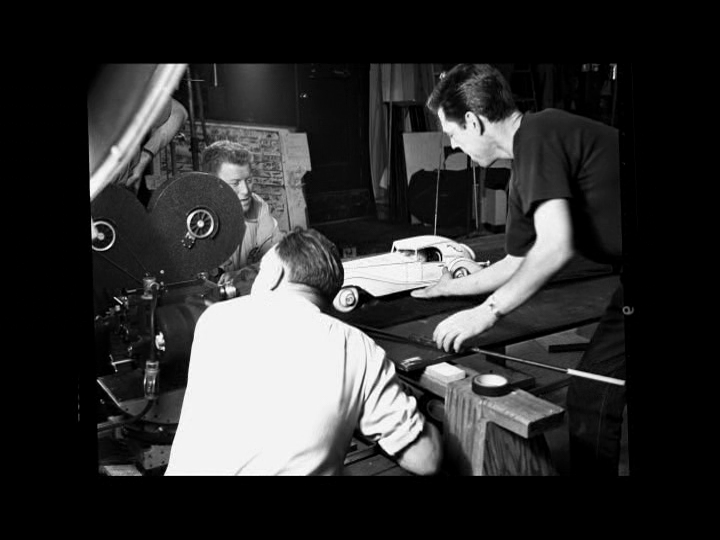
The Xerox prccess was also tested on models of the vehicles, including Cruella's car, Horace and Jasper's car, and the truck back to London

Another interesting aspect of the Xerox process were the vehicles. Iwerks had the idea that if a drawing could be copied straight to a cel, he would be able to use the same process to take a picture of a line that was drawn on the edge of a model. The animators built the cars as models out of cardboard, tracing the edges with a black line. To make the wheels move believably, they suspended the model from a kite string, and pulled it across a piece of fabric placed over wooden dowling rods. The clips of the models were then transferred directly to a Xerox plate, and were painted. In the final print, what you are seeing is the model on the screen, rather than a straight animation of a car. It was one of the many fascinating technological advances of the film.

One Hundred and One Dalmatians also has the distinction of being one of the first Disney animated features that wasn’t really a musical. This is surprising, as Roger is a songwriter by trade, which could have easily led to many musical numbers. There are only three songs in the film: Cruella De Vil, Dalmatian Plantation, and Kanine Krunchies. Mel Leven had written a different piece before before the final version of Cruella De Vil. As told by Disney Historian Russell Schroeder, “Driving to work one day, Mel thought, ‘You know, a blues tempo would really fit that character.’ So he came up with the melody line…he replaced his prior song himself.” Dalmatian Plantation had also been replaced, as story man Bill Peet came to Leven and asked him to have the song have more emphasis on rhyming. Kanine Krunchies is a delight, as it is an exaggerated spoof of the commercials played on television in those days.

Kanine Krunchies was a spoof of commercials in the early '60s, taken to its absolute silliest

Overall, the film is a delightful piece of pop culture, and while considered a contemporary piece in the early ’60s, the film hasn’t grown stale or shown its age. It was a wonderful turning point in the studio stylistically and technically, and would continue to be a success in each of its reissues into theaters.