RSS Feed

Tag Archives: Donald Duck

April 23

April 23, 1943 – The Donald Duck Short, Fall Out – Fall In, is Released to Theaters
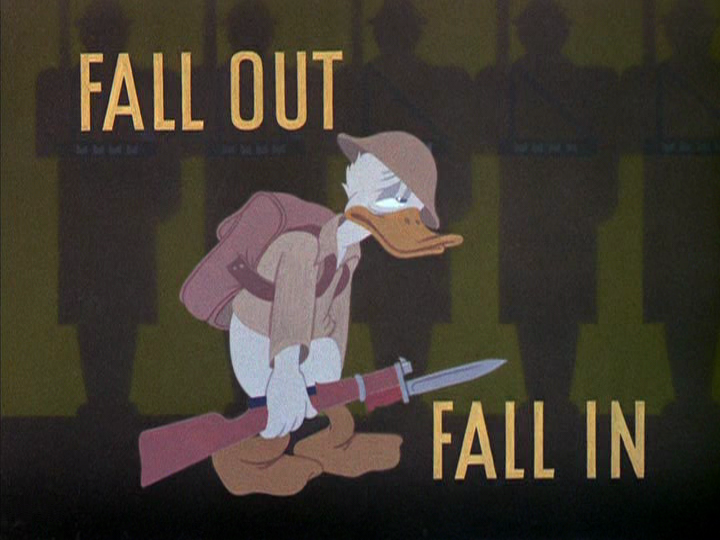
“After supper…? Please?”

On April 23, 1943, the Donald Duck wartime short, Fall Out – Fall In, was released to theaters. As with the other Donald Duck wartime shorts, it was based on the experiences many of the animators had when they were in the army during World War II. It is also one of the few times that Donald’s headshot in the opening shows him without his usual sailor hat—he’s wearing an Army hat instead. The short was directed by Jack King, with Clarence Nash as the voice of Donald Duck.

The short opens just as the sun is rising, with a rooster letting out his call. Soldiers are marching on the horizon, with Donald Duck the last one in line. When he passes a sign saying that the group has traveled five miles, Donald marks it down on the bag of the soldier in front of him, and continues marching with a smile. At the 10-mile mark, Donald’s cheer has waned slightly, and his rifle seems to be pulling his shoulder down, but he adjusts it and continues to march, though definitely not as enthusiastically as before.
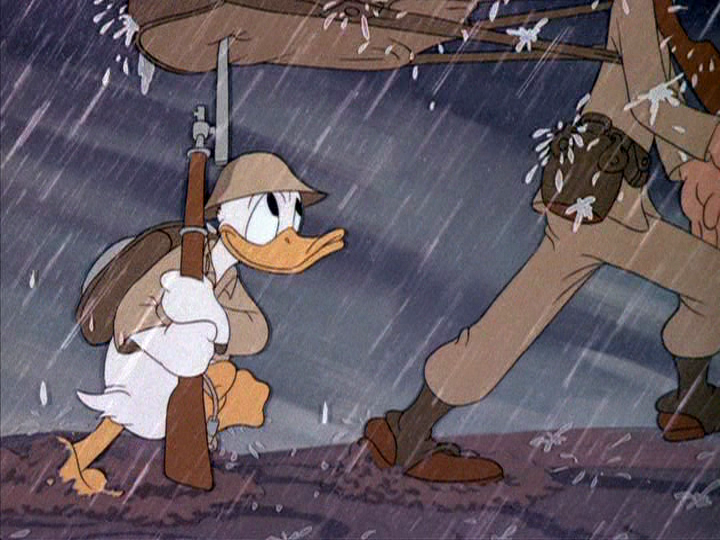
Donald using ingenuity to keep himself dry

A harsh storm hits the troops by mile 20. Donald is annoyed with the raindrops hitting his helmet, but he comes up with an idea to shield himself from the rain by using the bag of the soldier ahead of him. As they continue to march, the rain turns into snow, and icicles hang from the duck’s tail. Donald is still wearily keeping track of the miles on his fellow soldier’s bag, with the count at 35 miles traveled.

As suddenly as the snowstorm arrived, the snow disappears and is replaced by scorching hot weather, 40 miles into their march. Donald isn’t so much as marching any more as he is limping, and sweating buckets. As the sun sets on the troops, their commanding officer calls them to a halt, and we see that Donald has marked the soldier in front of him up and down with hash marks for each mile they’ve crossed. When Donald is told to fall out, he collapses.
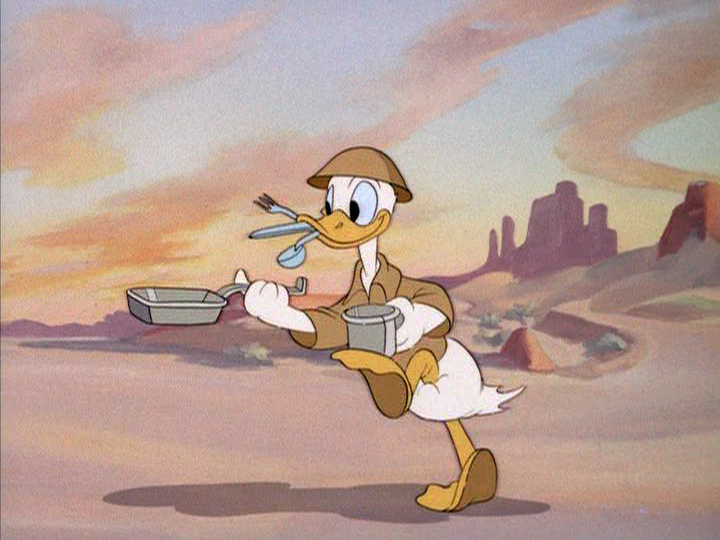
Donald rushes madly to grab his meal after the excruciating hike

When a trumpet sounds, Donald revives, knowing that the sound means that it’s dinnertime. Excited, he opens his overstuffed bag, grabs his utensils, and runs to get his food – but his commanding officer won’t let him eat until he’s made up his tent. Donald leaps to the task, driven by the promise of food; unfortunately he has the worst luck when it comes to building his tent, and we see him still trying to build it long after the other soldiers have gone to sleep. Exhausted, Donald collapses and refuses to take care of his tent, but he can’t sleep because all of the other soldiers’ snoring keeps him awake.

Donald has only closed his eyes for a second, when the trumpet again sounds, telling the soldiers that it’s time to wake up. Too exhausted to even notice that he’s tied his belongings around a tree, Donald falls in line, carrying the tree and his belongings with him for the long trek back to camp.
April 10

April 10, 1942 – The Donald Duck Short Film, Donald’s Snow Fight, is Released to Theaters

“Snow, oh boy! I’m crazy about snow!”

On April 10, 1942, the Donald Duck short film, Donald’s Snow Fight, was released to theaters. Directed by Jack King, it stars Clarence Nash as the voice of Donald and the nephews. There are many clever gags in this short, including a couple that is seen kissing underneath a mound of snow, which is swept away when Donald rushes by.

It’s a wintery day in suburbia, and Donald Duck is excited that there’s snow on the ground. He peeks outside to see how much there is, his beak turning blue in the process. Seeing the ice build up on the tip of his beak does not deter him from running to grab his overcoat.

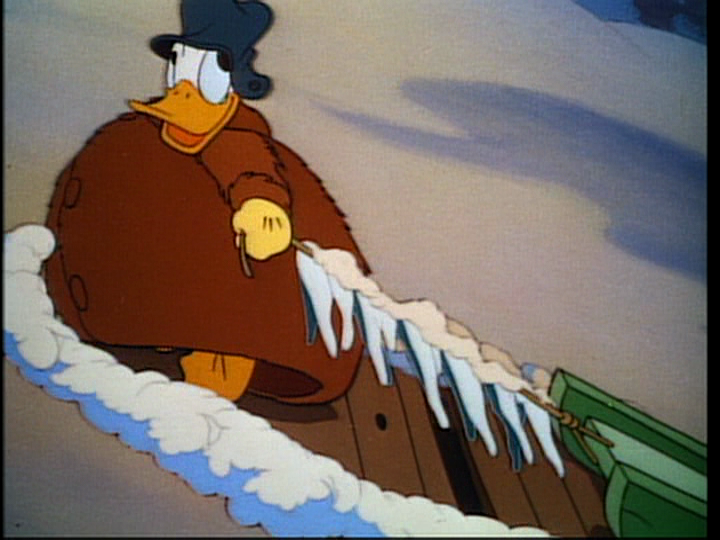
Donald merrily on his way to go sledding

Bundled up and ready for a snow day, Donald treks up a hill with his sled, singing “Jingle Bells” while jingling the icicles on his sled rope. When he reaches the top of the hill, he notices his nephews building a snowman right in the sled path. Donald decides this is the perfect moment to “have some fun,” and dive bombs into the nephews’ creation, sending snow flying everywhere. Donald cracks up with laughter and rolls around in the snow, and the nephews quickly come up with a plan for revenge.

Their first idea is to disguise a rock with another snowman, one that looks like Donald. They cry for Donald’s attention, and the duck takes the bait, flying full speed toward the “snowman.” Donald hits the rock so hard that all of the fur is shaken off his fur coat. Not to be beaten by his nephews, he chases them across the snow, only to be cut off by the nephews escaping into their elaborate snow fort, with the springs of the door bouncing Donald back into a tree where the built-up snow and icicles trap him.

Captain Donald plays a bowling game while his nephews play the part of the pins

Inside, the nephews think they’ve won, but Donald swears revenge. The next scene shows that Donald has built his own fort that looks like a boat on the ice-covered pond, and he declares war on the nephews. He shoots snowballs at the three with elaborate trick shots, covering them with snow and making them appear to be bowling pins. Donald then grabs a large ball of snow and, throwing it like a bowling ball, throws a strike. Not satisfied, Donald grabs another large mound of snow shaped like a bullet and starts dunking it into a bucket of water, turning it into a deadly ice bullet. He fires it over to the nephews’ fort, splitting their flagpole into three sections, which ends up knocking into the nephews.

“Do you surrender?” Donald asks, but the nephews refuse. They gather all the materials they have, including mousetraps and rope, and plant the mousetraps into snow sculptures shaped like rockets. They place all the rockets into a basket and let it fly from a catapult, and Donald is trapped by the mousetraps. They continue their attack with more snow cannons, even though Donald calls it “unconstitutional.”

The first set of coals and arrows spell the end for Donald Duck

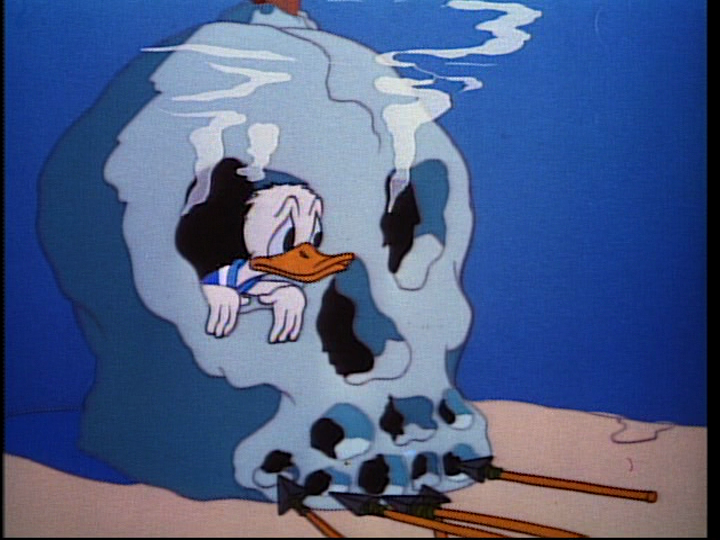
Not done with their uncle yet, the nephews gather hot coals and fire them attached to arrows, melting part of Donald’s boat. The largest arrow causes the whole boat to melt, with poor Donald stuck on the top. He falls through a hole in the ice and is seen frozen at the top of the splash of water, and the nephews are seen performing a victory war dance around the ice.

April 4

April 4, 1956 – Where Do the Stories Come From? Premieres on Television

“Potential story ideas exist all around us.” – Walt Disney

On April 4, 1956, the Disneyland episode Where Do the Stories Come From? premiered on ABC. Directed by Jack Hannah, the episode attempts to explain the most often-asked question of the members of the Disney studios: where do they get their story ideas?

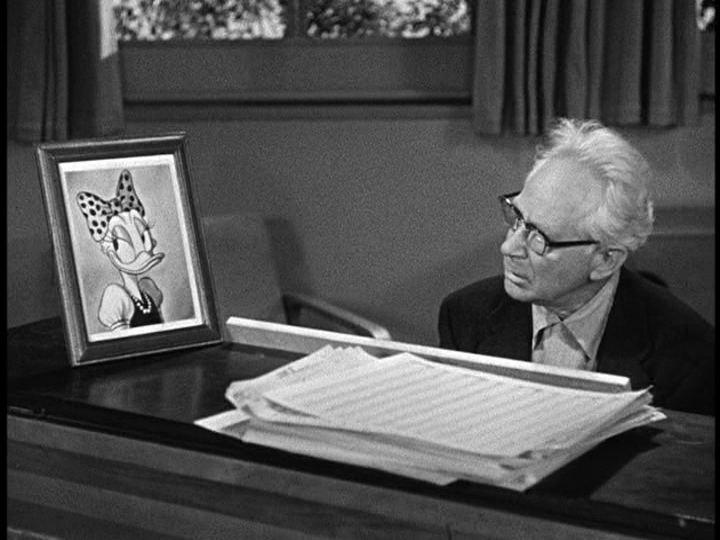
Composer Oliver Wallace studies a picture of Daisy, trying to find inspiration for a song about her

The episode opens with Walt Disney saying that the question of “Where do the stories come from?” is one that is asked a lot, and this episode will try to explain it the best he can. He tells the audience that story ideas can come from books, or are inspired by a song. The first example he gives of the latter is the song that had to be written for Daisy Duck; “she had to have a song,” since everyone else had one. The assignment for Daisy’s song was given to studio composer, Oliver Wallace. He thinks of words that rhyme with Daisy, and comes up with “crazy,” which gives him the title, “Crazy Over Daisy.” Soon, Wallace is composing an entire melody, and not long after, two men are seen listening to a record of the completed song. It then became the inspiration for a short film called Crazy Over Daisy, set in the early 1900s, which is shown next.

For the next example Disney brings up a short that was based on the True-Life Adventure series, where any interesting footage of animals could inspire the story artists to come up with a short film. “In viewing the thousands of feet of true-life adventure film that comes into the studio, we sometimes come across an animal that is a natural foil for one of our cartoon characters,” Disney explains, as he introduces the short R’Coon Dog.  Thinking a raccoon would be a match for Mickey Mouse and Pluto, the animators consult Pluto about his part in the film. Pluto is seen in the projection room, watching the footage of raccoons, and then is seen in the story room, where the animators are seen drawing the raccoon character.  Pluto takes the drawing a bit too seriously and tears it up with his teeth. The audience then sees R’Coon Dog.

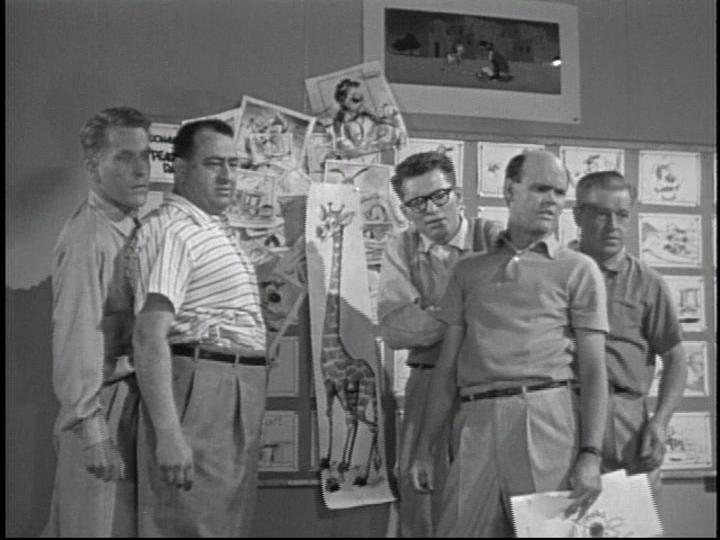
The next example Disney presents draws on the experiences of the artists during World War II, when they had to get their physicals. The animators thought “it would be fun to put Donald Duck in the same ordeal,” and they show a compilation of some of the Donald Duck wartime shorts, including Donald Gets Drafted, and Fall Out Fall In.

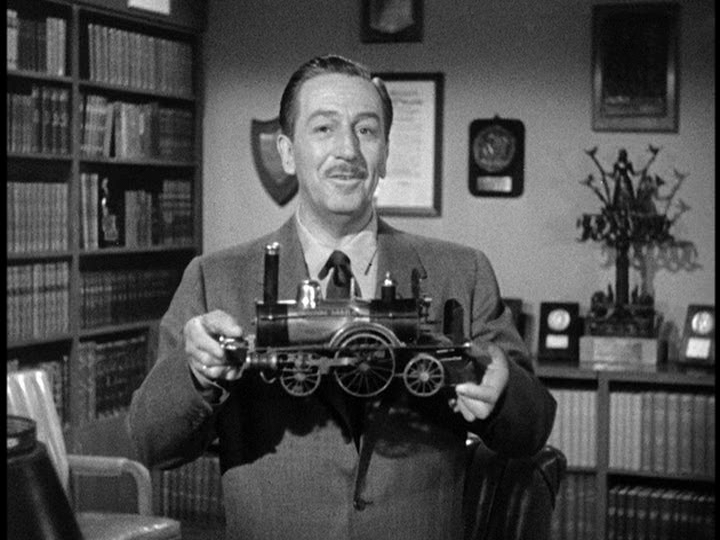
Walt Disney presents the hobby of many at the Disney Studio: model railroads

Disney then presents his own hobby of model railroads, as well as two animators who “haven’t escaped the bug” of the hobby, as Disney puts it: Ollie Johnston and Ward Kimball of the Nine Old Men. The audience sees home movies of Ollie and Ward with their model railroads.  Every detail is built to scale on Ollie’s model, and Ward has a full-size model in his own backyard. Not to be outdone by his two animators, Disney shows off his own model railroad, named the Lilly Belle, and some of the home movies of creating the track in Disney’s backyard. “The hardest part of the job was convincing my wife that the flower beds had to go,” Disney jokes. The hobby shared by these three men led to the creation of a Donald Duck short, Out of Scale.

March 31

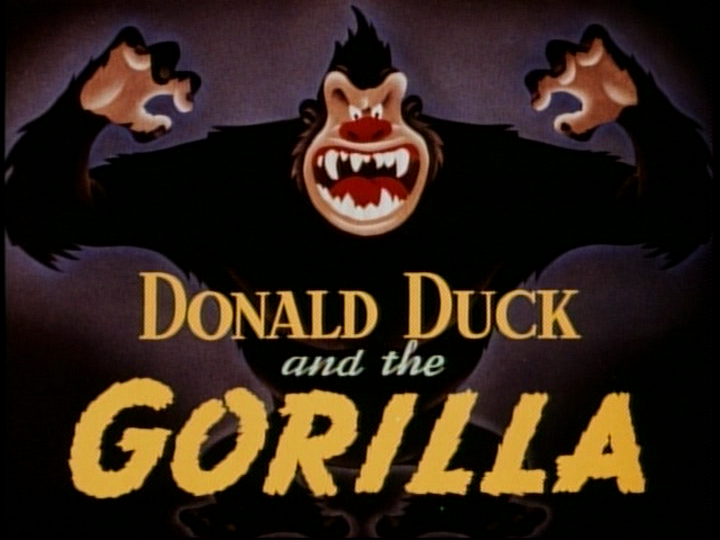
March 31, 1944 – The Donald Duck Short Film, Donald Duck and the Gorilla, is Released to Theaters.

“Where’s Uncle Donald?”

On March 31, 1944, the Donald Duck short film, Donald Duck and the Gorilla, was released to theaters. The short was directed by Jack King, with Clarence Nash voicing Donald Duck and the nephews Huey, Dewey, and Louie. As with many of the early Donald Duck shorts featuring the nephews, it was hard to tell which one was which, as the colors for their outfits were used interchangeably. This would be remedied with the show Ducktales, in which the nephews played lead roles and the stories were vastly more complicated.

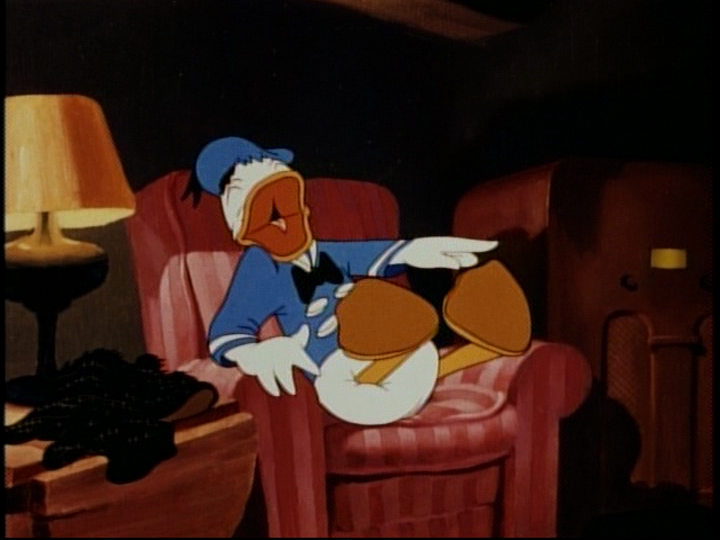
Donald laughs at the nephews' fear of the killer gorilla, Ajax

But back to Donald Duck and the Gorilla: It’s a stormy night, and Donald is sitting around the radio with his nephews Huey, Dewey, and Louie. The announcer informs the audience that the terrible gorilla, Ajax, has escaped from the city zoo. The nephews cling to each other in fear, while Donald laughs. He then notices a pair of gloves next to him that resemble gorilla hands, and gets the fiendish idea to scare the boys. He turns out the light, and the boys, frightened, call out for their uncle. When the boys turn on the light again, Donald is gone from the chair.

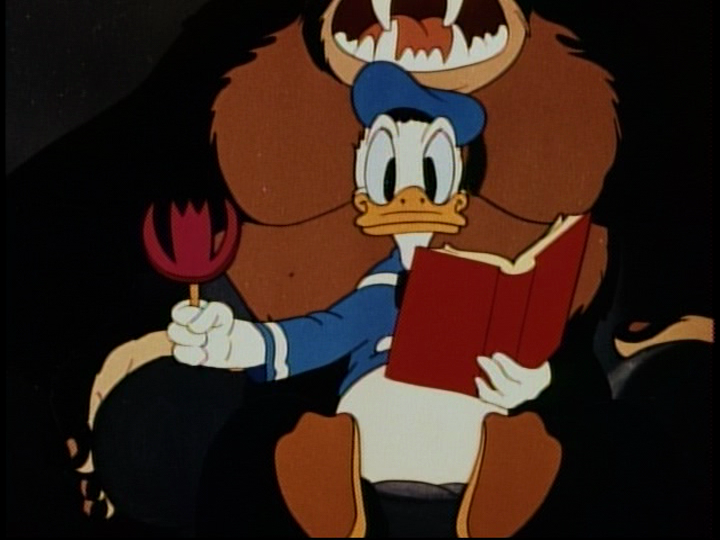
Still holding on each other, the boys are unaware of two large, hairy hands coming around the corners of the couch until the hands almost grab them. The boys scream and take off into the other room, slamming the door shut. Peering out through the keyhole, they see their Uncle Donald laughing hysterically at their flight. Angered by their uncle’s prank and bent on revenge, the three find a gorilla costume and begin to creep into the room where their uncle is getting ready to relax. Donald grabs a book and sits down in his chair to read, unaware that it is now occupied by a “gorilla.” Donald continues to be oblivious to the guest in his chair, even when the guest covers the duck’s mouth when he yawns.

Donald finally gets the hint that something may be off about the chair he's sitting in...

Donald finally gets the hint when he takes out a giant lollipop, and sets it aside for a moment while reading. The nephews take a big bite out of the lollipop with the costume’s teeth. When Donald picks up the lollipop again, he is  alarmed to see the teeth marks in the candy. He finally notices the “gorilla” in the room and bolts out of there as fast as he can, leaving the nephews to laugh at their success.

Unbeknown to both parties, the real Ajax is standing at the window, watching the scene unfold. With a menacing smile, he tears open the window and growls at the boys.  They run into their angry uncle hiding in an umbrella stand, and decide to run off in another direction, only to meet up with Ajax again. They run into separate rooms, with Donald following close behind. When Donald enters the hallway, he sees Ajax and, thinking it’s his nephews, starts pulling at the gorilla’s head, only to find that he was pulling on the head of the real gorilla.

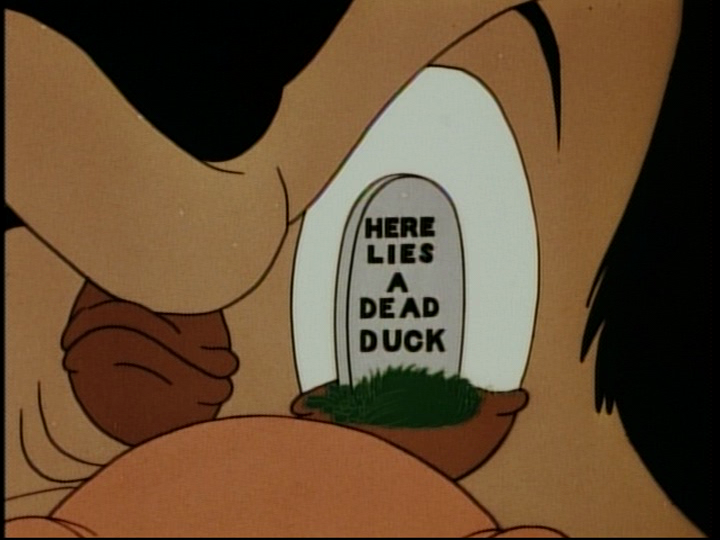
Donald sees a terrifying image when he tries to intimidate Ajax

Just as things are looking bleak for the duck, the radio announcer informs all listeners that one can tame all wild animals by looking them straight in the eye. Donald attempts to do so, only to see a tombstone in the gorilla’s eye staring back at him. Donald uses the umbrella to escape Ajax’s clutches, and rejoins his nephews to hunt down and rid themselves of their unwelcome guest. As they sneak around, there are many comical instances with the nephews’ clumsiness with the candle, including pouring wax all over Donald’s tail. Donald snatches the candle from the boys and shoves them into another room, not noticing that he has placed the flame right under the doorknob, which burns his hand.

Donald continues his search, and falls into the gorilla’s trap, but is able to escape – barely. The chase continues through the house, leaving destruction in its wake. Unfortunately, Donald is trapped by the hungry gorilla, and just as it seems that all hope is lost, the radio announcer gives another timely message: the gorilla can be subdued with tear gas. Hearing this, the nephews find some and throw the grenade in just in time. Seeing the gorilla begin to cry, Donald laughs at him, but ends up a victim of the tear gas as well. The two sit together, crying in each other’s arms.

March 15

March 15, 1940 – The Donald Duck Short, The Riveter, is Released to Theaters

“Oh boy, oh boy! Am I a riveter!”

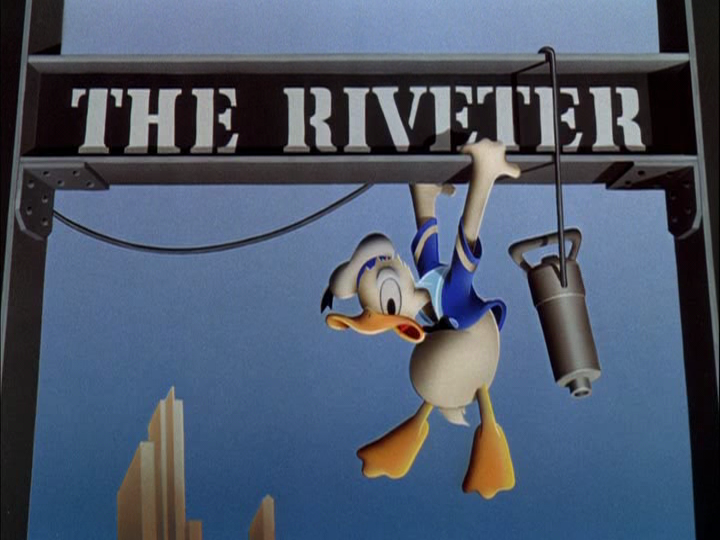
On March 15, 1940, the Donald Duck short, The Riveter, was released to theaters. Directed by Dick Lundy, and starring the voices of Clarence Nash as Donald and Billy Bletcher as Pete, the short tells the story of Donald eagerly taking a job as a riveter for Pete, even though Donald really has no clue what a riveter is.

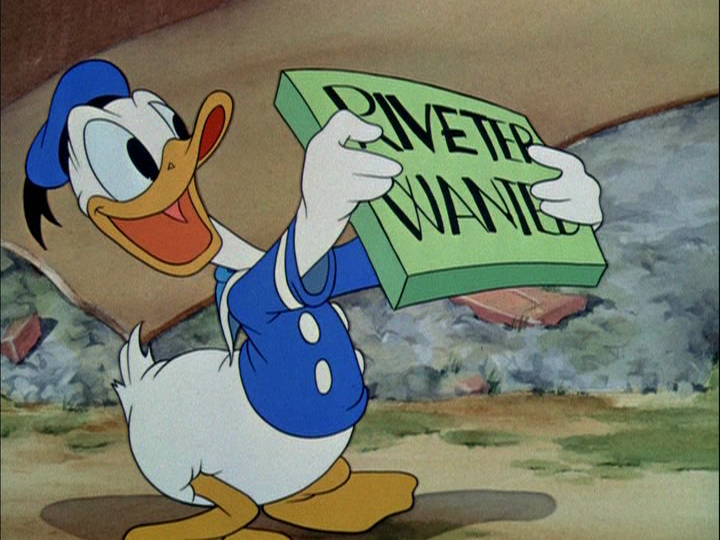
It’s a busy day at a construction site, and a fence is seen bulging from some sort of racket. Suddenly, a worker bursts through the fence, with Pete yelling off screen, “Get out! You’re fired!” The worker dashes away, leaving his lunch behind. Pete steps through the hole the worker made through the fence and looks around menacingly before hammering in a sign with his fist: Riveter Wanted. Who should turn the corner at that moment than Donald Duck, who is happily signing “Heigh Ho” from Snow White and the Seven Dwarfs. He walks past the sign, but is suddenly drawn back to it.

Donald shows Pete the sign, explaining that he's a riveter

Suddenly excited, Donald grabs the sign and decides to apply for the job. He looks up at the outline of the worker that was thrown through the fence and remarks on what a peculiar doorway it is, not realizing the danger he’s going to be in. When Donald applies for the job, Pete laughs at him, but gives him the job when Donald shows Pete he has some backbone. Elated, Donald asks where he starts, and Pete grabs him by the collar, showing him that he’ll stop on the top floor of the skyscraper, which appears to be a hundred stories high. Donald nearly passes out at seeing the great heights he has to go up.

Pete throws Donald into an elevator, and Donald tentatively asks how he gets up to the top. Pete then throws a lever, which zooms the elevator up to the top floor. Donald walks across steel beams, as if dazed, and nearly walks off the edge before getting his act together and crawling back to the safety of the elevator. Unfortunately, the elevator falls beneath him, and he grabs onto a steel beam for dear life. Suddenly he hears Pete yelling at him from the ground to get to work. Donald grumbles at him to shut up, voice very low, but Pete flies up to the top in the elevator and demands to know what he said. Donald mollifies his boss, embarrassed, and Pete goes back down again.

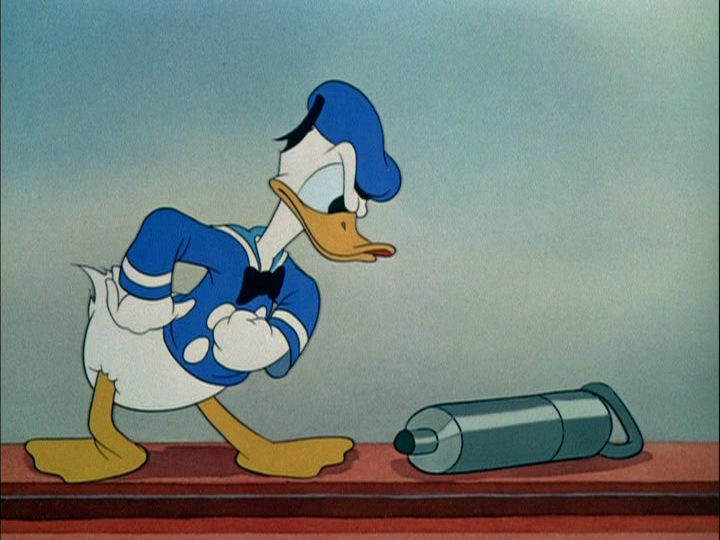
Donald versus the rivet gun

Although Donald had been excited to be a riveter, he looks at the rivet gun curiously, wondering how it works. He smashes the handle of it on the beam, demanding that it do something, which it does when it begins shooting rivets into Donald’s hat, nearly tearing his head off. As Donald tries to gain control of the strange tool, it begins to rivet with him barely hanging on to the handle. When he is able to let go, he decides to give it a good kick, but ends up catching his foot in the handle and having it start to rivet again.

Donald is carried all around the construction site at the rivet gun continues to run, and ends up accidentally riveting Pete’s blueprints to the steel beams. When Pete pulls them out, he is able to pull out only a set of paper dolls made by the rivet gun. Many strange mishaps continue to occur thanks to the rivet gun, and although Donald is able to stop its rampage, the sound of other rivet guns being used makes him nervous and he shakes uncontrollably.

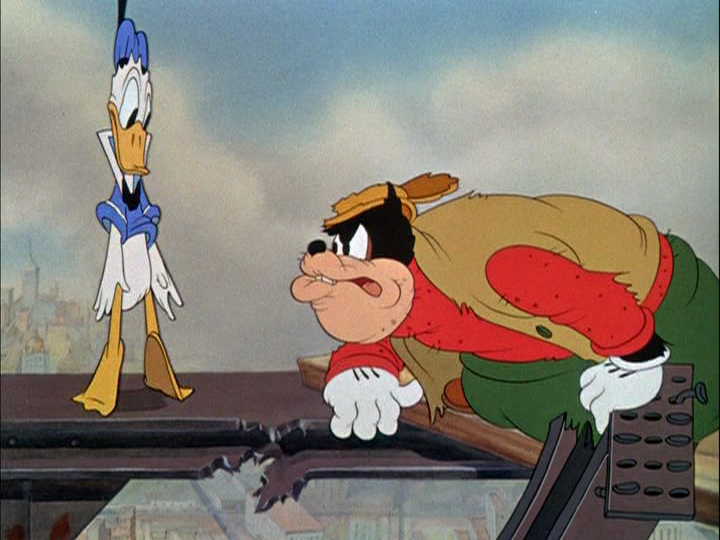
Donald's antics, however, have caused Pete's anger to grow

When Pete calls Donald over to serve him his lunch, Donald is ready to sprinkle some pepper when the rivet guns begin again, making Donald spill pepper all over the place. Pete lets out a loud, powerful sneeze, and loses his lunch in the process. Donald tries to make amends with coffee, but also loses control of it when the rivet guns start up once more. When the rivet gun sounds cause Donald to accidentally destroy Pete’s cigar, Pete has had enough, and begins to chase Donald around the construction site. The chase causes destruction of many parts of the site, but quick-thinking Donald causes Pete to fall into a vat of cement, turning Pete into a fountain as he poses with a water hose. Donald ends the short with laughter.

March 12

March 12, 1943 – The Donald Duck Short, The Flying Jalopy, is Released to Theaters

“Ah, yes, a little matter of insurance…”

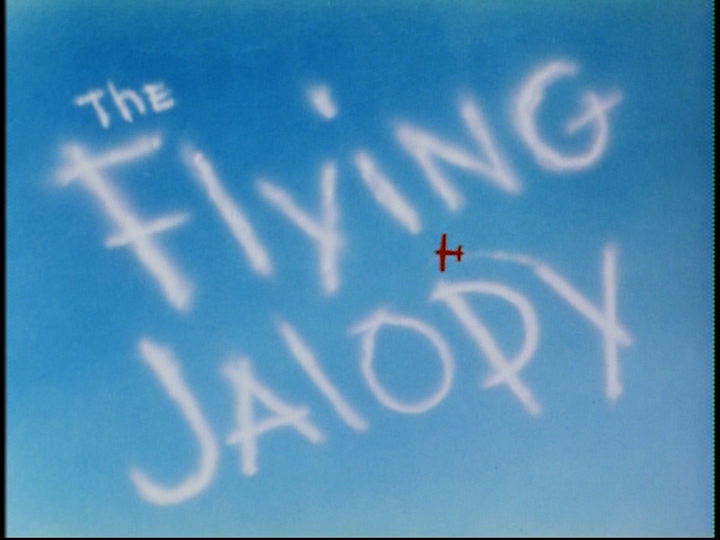
On March 12, 1943, The Flying Jalopy, a Donald Duck short, was released to theaters. Directed by Dick Lundy, the short is about Donald dealing with a shady used plane dealer, who tries to get Donald to have an accident so he can collect on a $10,000 insurance policy. Although Donald is known for being accident-prone, this short is one of the few that shows Donald avoiding a major accident, for the most part.

The short opens with a billboard sign for Ben Buzzard and his used planes (which used to be called “wrecked planes,” but the word “wrecked” is crossed out in bold back strokes). The camera zooms out and shows the airfield where the “used” planes sit as scrap sculptures, except for one last plane that is very Wright Brothers-esque. Donald is seen examining the plane, which has been marked down to a down payment of $59.98. Donald feverishly checks to see if he has enough money, but unfortunately is a bit short of the asking price.

Ben Buzzard, the proprietor, lurks in the office doorway, observing the cash in Donald’s hands. Thinking quickly, he starts the salesman act, pulling Donald back with his cane and asking Donald if he is interested in an airplane. Donald nods excitedly, and Ben launches into his sales pitch. The first one he calls attention to has its wheel burst while they are observing it, but Ben offers Donald the chance to buy it with an offer of no down payment. He hits the tail of the plane with his cane, making the tail fall off. He quickly puts it back on and rushes to get Donald to take a test flight.

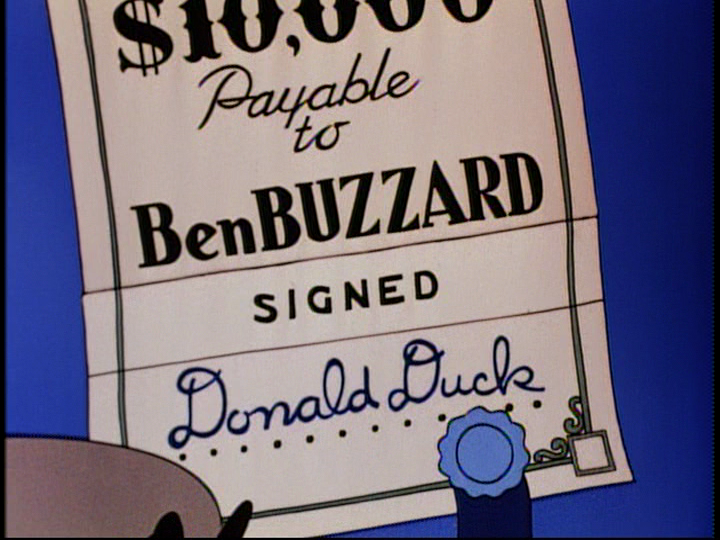
The shady insurance document Ben was able to have Donald sign

As Donald is sitting in the cockpit, ready for his test flight, Ben tells him there is one more thing: an insurance policy he unrolls from his coat pocket. Donald eagerly signs it, as it seems to say that in the event of an accident, he will be paid $10,000. As Ben takes the paper, he unfolds it, revealing that in the event of an accident, $10,000 will be paid to Ben, signed by Donald. To get this money, Ben decides that Donald will have to die.

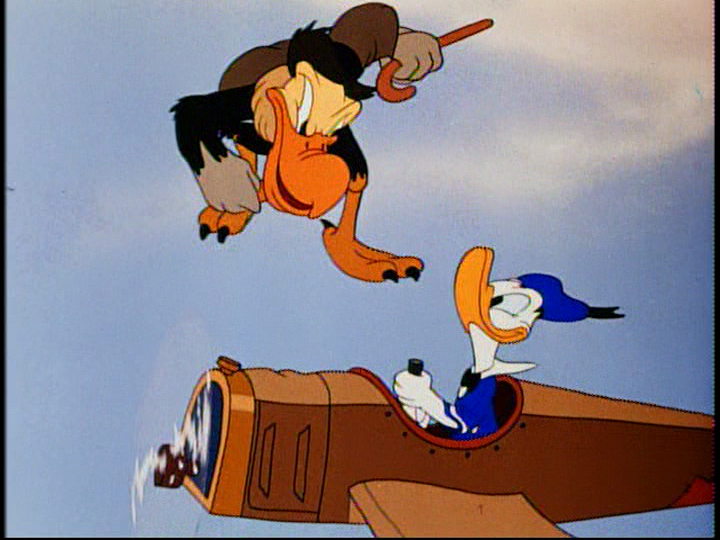
Ben begins the test flight, breaking the front propeller, and continuing his plan of making Donald have an accident. Unfortunately for him, Donald is able to avoid hitting the side of a cliff, and manages to keep the plane in the air, with Ben watching angrily from the ground as his plans are foiled. Ben swears that he will get Donald, and takes off to the sky.

Donald feels pretty good about his flying skills as he keeps the jalopy in the air

Ben greets Donald in the air, telling the beaming duck that he is rather good at flying, and suggesting a game of Follow the Leader. Donald agrees, and Ben offers to lead. He gracefully dives around the clouds, and Donald tries to follow him, but both of the plane’s wings rip from the body of the plane. Quickly, as Donald begins to plummet to the ground, he grabs the wings floating in the air and reattaches them, and is able once again to keep himself in the air.

Ben sits on a cloud and furiously tries to come up with a plan, only to be blown away by Donald, who is quickly flying by. As Ben dangles in the air from his cane that has caught a part of a cloud, he spies a small opening between two cliffs, which he knows the plane won’t possibly make it through. He then surrounds the cliff tops with cloud cover, and calls Donald over to continue the game. As he slips to the other side, Ben gives an evil grin and brags to the audience with death in his eyes, “He’ll never make it!” Unfortunately for Ben, once again, Donald is able to save himself from danger at the last minute, turning the plane sideways and slipping through quite easily.

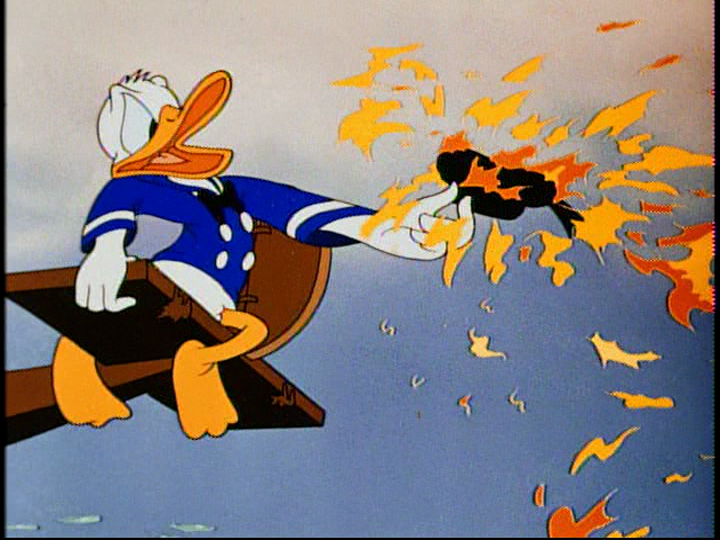
As Donald tries to put out the flames with his hat, he looks in alarm as it catches on fire

Having had enough, Ben cries out that Donald is a dirty cheat, and begins to destroy the plane outright, being done with underhanded plans. It becomes an outright war between the two, especially after Ben opens Donald’s gas tank and sets the stream of gasoline on fire. Donald tries to blow the flames out, but to no avail. Ben, meanwhile, perches on a cloud and laughs, thinking the policy will soon be his. He doesn’t count on Donald flying in his direction, and while Ben tries to make a break for it, he continues to be in the plane’s path. The plane finally meets its demise when the flames reach the gas tank, but all is not lost: Donald safely flies his new plane – Ben, who is trapped inside the last piece of the body of the plane – through the air, laughing all the way.

March 2

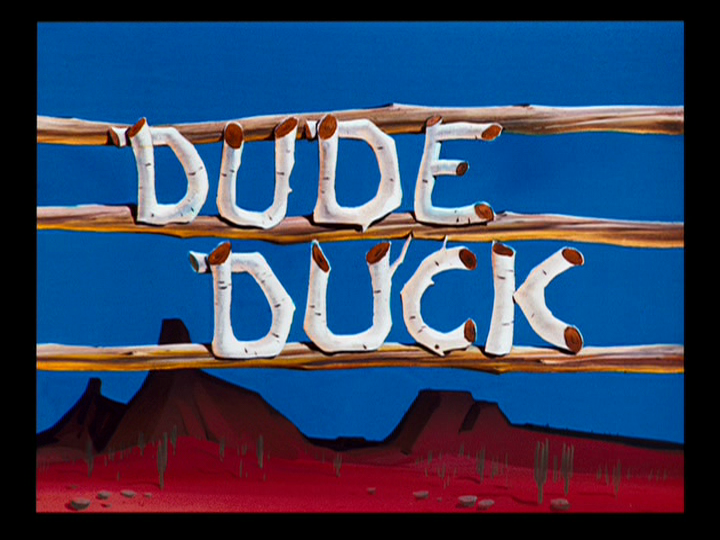
March 2, 1951 – The Donald Duck Short Film, Dude Duck, is Released to Theaters

“D. Duck, Rover Boy, number six.”

 On March 2nd, 1951, the new Donald Duck short, Dude Duck, was released to theaters. In this short, Donald takes his vacation at a dude ranch, but ends up assigned to a horse that does not want him as a rider. As with many of the shorts featuring Donald and an animal, there is a lot of humor in the mutual animosity between the duck and the horse. The short was directed by Jack Hannah, with story by Ralph Wright and Riley Thompson, and stars Clarence Nash as the voice of Donald.

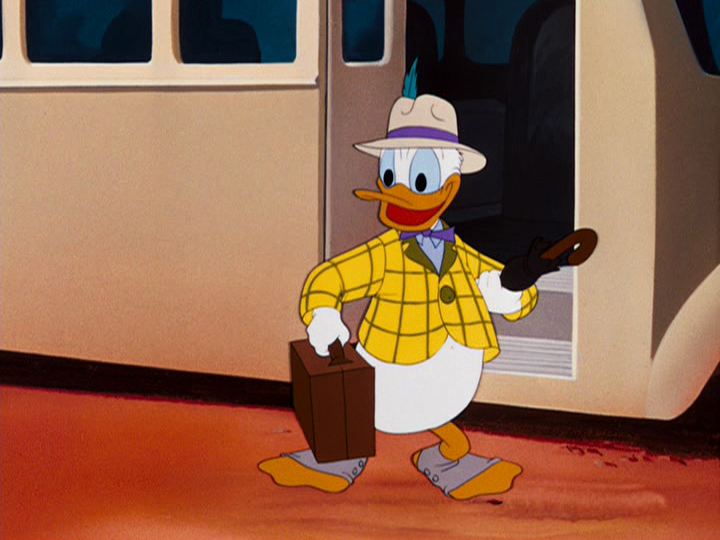
Donald steps off the bus, admiring his surroundings

The audience is taken to the Bar-None Dude Ranch, where the horses are seen relaxing in their stalls, except for one playing horseshoes with his own shoes, whose name is Rover Boy. A bus horn sounds, and a group of beautiful women step out excitedly, ready for their vacation, which causes Rover Boy to wolf whistle and quickly put his shoes back on. Donald is the last to step off the bus, and slowly begins to explore the ranch.

Meanwhile, Rover Boy is busily primping, hoping one of the girls will pick him as her steed. They take little notice of him, however; no matter how much he whistles and pounds his hooves on the fence for their attention. Soon, all the girls are off riding, while Rover Boy stands at the fence, visibly upset.

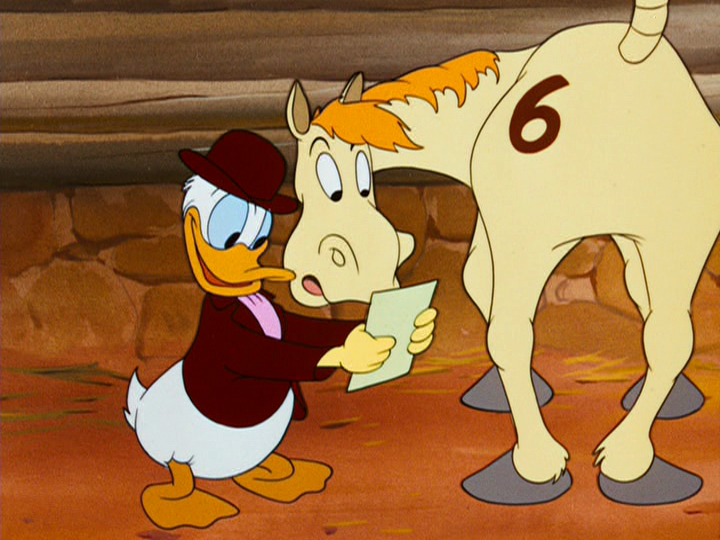
Donald has found his horse - Rover Boy can't believe Donald's his rider

He soon hears whistling, and looks up to see Donald, who is dressed in formal riding gear. Donald approaches Rover Boy, and he studies Donald’s outfit before bursting into peels of laughter. Donald doesn’t seem to notice, but instead walks in the gate and reads the sheet with his name and assigned horse. The horse stops laughing, alarmed that Donald is his assigned rider. He attempts to hide, unsuccessfully, but Donald insists that they get going.

Now desperate to be rid of Donald, Rover Boy fakes an injured leg and a broken back, as well as having no teeth, a horrible cough, heart palpitations, and ultimately, death. Donald rushes to grab some water to help revive the horse, only to have the horse quickly move out of the way as he throws the water. Donald senses something’s amiss, and pulls an apple from his pocket to tempt the horse. Rover Boy tries to fight the temptation of the treat, but ends up taking it from Donald’s hand, chewing it as he still feigns death. Donald then pulls a trumpet from his coat, and the horse quickly is revived, standing in race position. Donald pulls out a starter’s pistol and fires it, and Rover Boy takes off like a shot, before realizing that he gave up his ruse, causing Donald to begin to laugh.

Donald then throws down the saddle and points the gun at his steed, ordering him to put on the saddle. Rover Boy refuses, and Donald begins shooting at the creature’s feet, causing him to jump around the yard. Quickly, he puts on the saddle, and Donald twirls the gun, thinking he’s won, until the gun slips from his finger, leaving only a metal ring. The horse, seeing an opportunity, takes off the saddle. Donald tries to threaten him again, only to find his gun is gone.

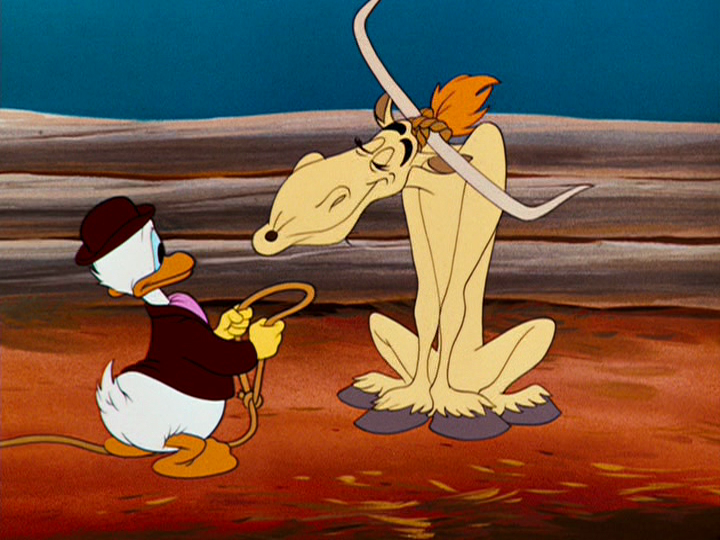
"Moo."

Undeterred, Donald grabs a lasso and begins to chase Rover Boy behind some hay bales, but stops when he sees that Rover Boy has attached bull horns to his hair, and gives his pursuer a haughty “Moo.” He whispers in Donald’s ear, presumably telling him where his “horse” has gone, and Donald races on, until he realizes he’s been duped.

Thoroughly frustrated at this point as only Donald can be, he pursues the horse again, with Rover Boy hiding behind some other hay bales and pretending that he’s gone galloping off. Donald almost falls for it, until he looks down and sees the horse. Thinking fast, Donald stands behind the other side of the bales and laments that the horse got away from him, and he’d better go home, then pretends to walk away. The horse falls for this easily, and begins to laugh, thinking he’s gotten rid of the duck. He is then alarmed at the sound of galloping, and a woman’s voice (which the audience is able to see is Donald doing a spot-on imitation) asking for that “big beautiful number 6.” Excited, Rover Boy races out, only to be caught in Donald’s lasso. Calmly, Donald ties the other end of the rope to a post and waits, while the horse is still running wildly.

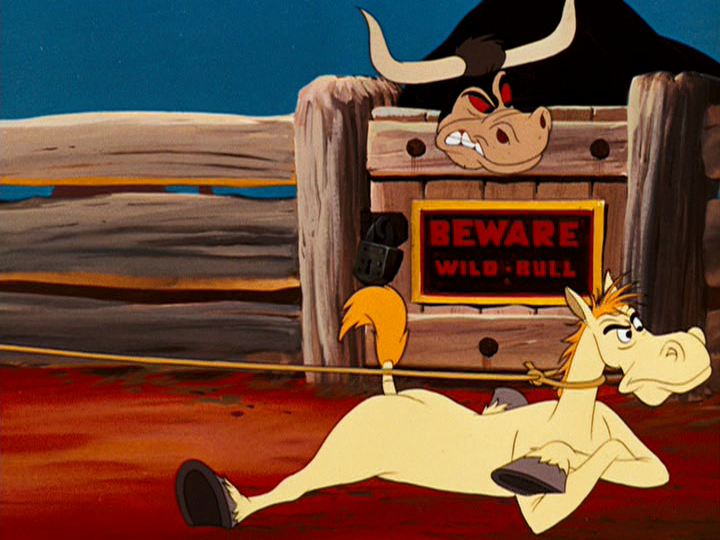
Rover Boy comes up with an evil scheme as he passes the bull pen

Rover Boy is suddenly pulled to a stop, falls to the ground, and can only say, “Oh, no.” Donald laughs at this situation and begins to pull the horse in; unfortunately, the horse passes by the wild bull pen, giving him a wicked idea. We see the horse run to the fence, quietly observing his little plan, while Donald still blissfully pulls on the rope. The horse tilts the bull’s horns in the direction of Donald’s tail, and with Donald giving the rope one final pull, the audience sees only Rover Boy’s reaction, but hears Donald give out a loud scream, and a whistle that indicates the duck shot straight up into the air. He lands on the now saddled bull and rides off into the old west, just as he wanted to in the first place.

February 23

February 23, 1935 – The Mickey Mouse Short The Band Concert is Released to Theaters

“Yet, in a funny way, The Band Concert spelled the beginning of the end for Mickey as a solo cartoon star. As good as he is in this film, and his range of expressions as the frustrated conductor is marvelous, his thunder is easily stolen by a newcomer on the scene, Donald Duck.” – Film Critic Leonard Maltin.

On February 23, 1935, audiences flocked to see a new Mickey Mouse short, only this time, it was in Technicolor. The Band Concert, Mickey’s first color short film, would not go on to win an Academy Award, but has been hailed as one of, if not the, best Mickey Mouse short of them all. From this point on, with the exceptions of Mickey’s Service Station and Mickey’s Kangaroo, all of the Disney shorts would be in Technicolor. The short also boosted the popularity of Donald Duck, who was considered to be a funny character, as opposed to Mickey’s charming personality. The film was directed by Wilfred Jackson, and has Clarence “Ducky” Nash with the only speaking role in the film as Donald. ­­­It has been noted that orchestra conductor Arturo Toscanini considered this film his favorite; it has also been said that the short film Symphony Hour (1942) may have been a more outlandish remake of this film.

With great enthusiasm, Mickey leads the orchestra in The William Tell Overture

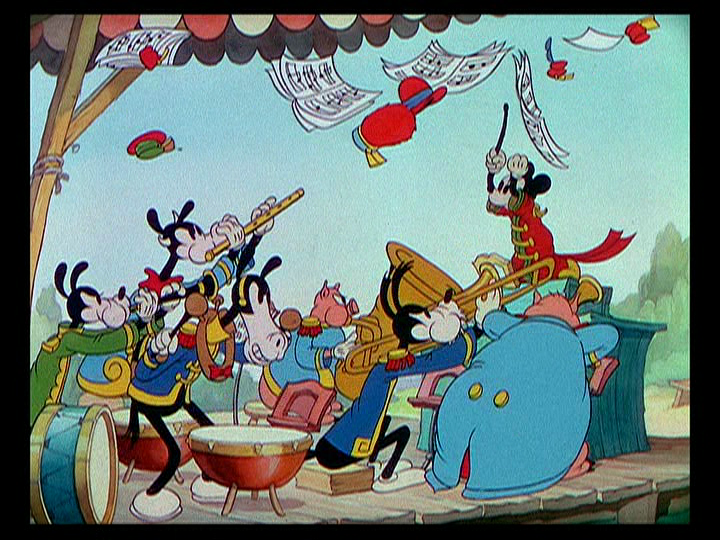
The short opens with a concert in a park, with Mickey and his orchestra taking a bow after finishing Selections from Zampa, and the audience applauding enthusiastically. When Mickey shows the card displaying the title of their next piece – The William Tell Overture – the audience is overjoyed. With great fanfare, Mickey leads his orchestra into the piece, only to get distracted by a voice calling out “Popcorn! Lemonade!”

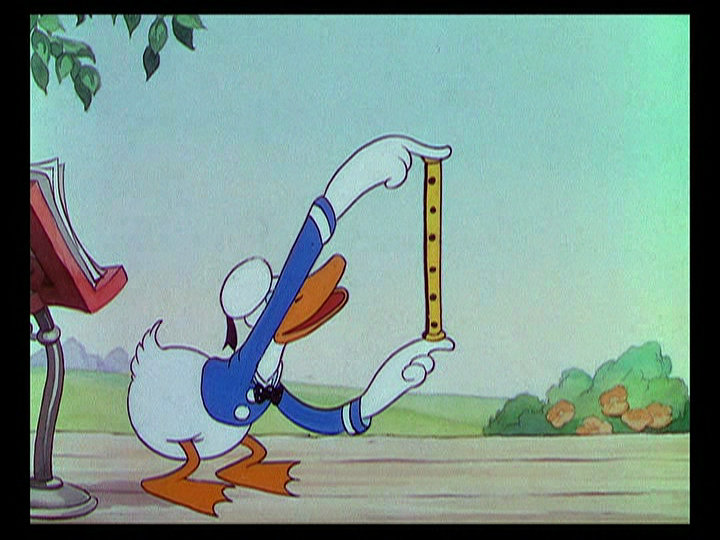
The camera moves to the distraction, and we see Donald Duck pushing an ice cream cart, with lemonade and bags of popcorn for sale as well. He stops to admire the music, then pulls a flute from the front of his uniform, wanting to join in with the orchestra. In the middle of the William Tell Overture, Donald begins to play Turkey in the Straw, which gets the orchestra to switch to the similar sounding tune. When Mickey notices the switch, he grabs Donald’s flute and breaks it in half, but Donald has another trick – or flute, rather – up his sleeve, and resumes his tune while Mickey tries to bring the concert to a halt.

Just like magic, Donald makes a flute appear out of thin air

With a wink, Donald presents another flute as the orchestra tries to get back on track, and when an aggravated Mickey tries to break the third flute, Donald decides to do it for him, sending the audience into peels of laughter. Mickey, at wits’ end, lunges at Donald, only to land on his face as the duck speeds off the stage. With renewed vigor, Mickey pulls the orchestra back to the assigned piece. As they begin to play, Donald, hiding behind a music stand, pulls out another flute, only to have the trombone player encircle the duck’s neck with the trombone slide and shake him down, revealing all the flutes Donald had hidden away, before throwing him right onto his cart, spilling food everywhere. Donald throws a tantrum, but the trombonist just laughs.

Donald grabs one of the flutes from the shake down and begins his takeover attempt again, not noticing a bee buzzing around him curiously. The bee flies into the flute, and ends up in Donald’s mouth, causing the duck to have another fit. When the bee flies away and lands on Mickey’s hat, Donald grabs an ice cream cone and throws it in the insect’s direction. The ice cream lands in a trumpet, and the trumpeter blows it out, which hits Mickey on the back of the head. As Mickey tries to shake the ice cream out, directing the orchestra along the way, the classical piece gets a somewhat interesting interpretation, and Mickey’s temper flares again.

As Mickey finally gets the orchestra back on track, the bee returns and buzzes around Mickey, and each move the mouse makes to swat it away is interpreted by the orchestra as his direction with comical results. The bee buzzes around Horace Horsecollar, playing percussion, who tries to swat him with the cymbals, only to crash around Goofy’s head.

Mickey hadn't realized how complicated this part of the piece was going to be

Mickey turns the page in his music book to the part in the overture called The Storm. He looks rather surprised at how complicated the piece is, but is determined to play it and play it well. When the orchestra starts to play, the clouds get noticeably darker, and the wind begins to blow ominously. Without warning, a tornado sweeps through the town, heading directly for the concert in the park. The audience and the benches flee the concert in a panic as the tornado devours everything in its path. Donald stands around, confused as to why everyone is running away, until he sees the tornado bearing down and tries to hide by climbing up a tree, only to have the tornado braid him within three tree trunks.

The orchestra continues to play with Mickey conducting,as they are dramatically pulled up into the storm, seemingly oblivious to their peril. As they reach the climax of the piece, they stop in midair and are once again set down to the ground for a triumphant finish. The only audience member remaining, however, is Donald, who once again tries to take over with Turkey in the Straw, only to have a tuba land on his head.


February 18

February 18, 1967 – Birth of Disney Legend, Animator, and Current Voice of Donald Duck, Tony Anselmo

“The legacy is in my heart and soul that, I feel that it’s an honor to be the guy who gets to be the keeper of the keys or the carrier, or what have you, of this legacy. I love that so much, that’s so important to me. That’s the best part [about being Donald] for me. It’s fun. It can actually be a lot of work, you know, and you have to do long sessions, especially if there’s a lot of tantrums.”

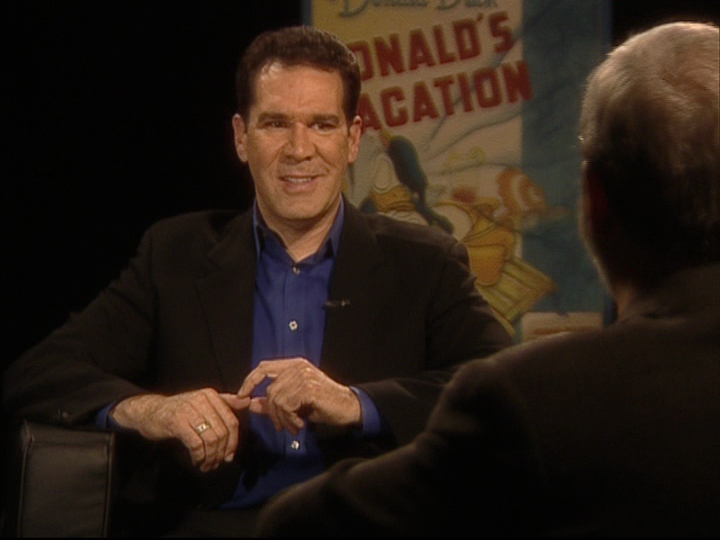
Born February 18, 1967, in Salt Lake City, Utah, Tony Anselmo loved animation from an early age. “I would write the animators, you know, Frank Thomas, and Ollie Johnston, and Jack [Hannah] about what it took to be a Disney animator,” Anselmo explained, “and they would write back, very generously with advice.” While in high school, he took night classes in figure drawing and acting, and submitted his portfolio to the studio. After Ollie Johnston and Jack Hannah saw it, they sent him to the California Institute of the Arts, where he spent three years studying animation under Hannah’s direction. “At that time, I remember telling people I wanted to be an animator, and they didn’t know what that was,” Anselmo recalled. “Since The Little Mermaid, I think there’s been a popularity of what animation is, and everybody wants to be a part of it, but before that it was a very, sort of a cultish thing, where there were very few of us who knew what Disney animation was, and who those people were, the Nine Old Men and California Institute of the Arts.”

After graduating from CalArts, Anselmo was placed into a training program with famed animator Eric Larson for eight months, studying Disney style animation and being given animation tests. After that, Anselmo became and inbetweener at the studio. Anselmo credits Jack Hannah for his entering the studio; coincidentally, Hannah became the director of the Donald Duck unit under Walt Disney, so the old director of Donald hired the new voice of the duck.

Anselmo being interviewed by Leonard Maltin in 2005

When asked how he became the voice of Donald, Anselmo responded that “It wasn’t anything I actually intended to do, but…it really was a small family, everybody knew everybody. And the first day I was on the lot, I was walking up Dopey Drive, and a man came down the steps of the animation building, five-foot-two and white hair [Clarence Nash, longtime voice of Donald Duck], and he passed me and he goes, ‘Good morning’ [in Donald’s voice], and I, in a split second, I had never met him before, and I had never seen who did Donald’s voice, so to hear that distinctive voice coming out of a man who I hadn’t met before was shocking, but at the same moment it was like, that’s Donald Duck! It would have been like being at MGM and seeing Clark Gable.

“Clarence was a good friend. And, doing voices and being the class clown, Donald was a voice that I couldn’t do. And I asked [Nash], for fun, ‘How do you do that?’ And he showed me, and I couldn’t do it. But I would practice from time to time – any voice person will tell you that the best place to practice is in the car, or in the shower – and one day it kind of clicked in, and I thought, ‘Okay, I think that I did it.’ The next time I saw Clarence I said, ‘Is this it?’ and goes, ‘That’s it!’ But it was just the sound, and there’s much more to it. You know, how to enunciate as much as possible. There’s certain words you use, certain words you try not to use, or you use something that means the same thing.

“It wasn’t until…he was supposed to the Rose Parade. In his fiftieth year, I think Ducky got the attention and the acclaim that he had, I think, always deserved. To celebrate Donald’s fiftieth birthday, he put his hand and footprints at the Chinese Theater, he was on the Tonight Show, the Academy Awards, and he was supposed to do the Rose Parade, and I didn’t know that he was sick; he had gotten leukemia. And I went to the Rose Parade and he wasn’t in the car, and Margie Nash called and said he was in the hospital. So I went to the hospital to visit…and he said, ‘You’re gonna do this.’ It all came at the same time and I thought, ‘You’re dying, and you want me to do that? No, I don’t want you to die, and no, I want you to do this.’

“The odd thing about it was, for a period of about six months before that, I thought it was just because we were friends and he thought it was fun, he would come in my room in the animation building when I was drawing, and he would say, ‘Try this,’ or ‘What would you do if Donald had to be in this situation, what would you say?’ or ‘Say this,’ and I would go, ‘Okay,’ and I thought it was fun. I really didn’t think he was spending the time, you know…I felt like he had taken me under his wing, to use a corny phrase, but I didn’t know why he was spending so much time with me. And it wasn’t until he was ill in the hospital and he told me, that it was like, ‘Oh.’ So, I’m very protective of it. It’s a legacy of not only Clarence and Jack, who were dear friends of mine, who I respected, and miss, but Walt Disney, and a legacy that I wanted to be a part of. It’s something that I watch over and I’m very protective of it, because I want to keep the integrity of not only the sound of it, but the integrity of the personality of Donald, what he does, what he doesn’t do. It’s not just the way Donald sounds, it’s how he reacts to any given situation. He would react differently to the same situation as Mickey or Goofy would act differently.”

In 1990, Anselmo put both of his skills to good use by animating and voicing Donald in Disney’s version of Mark Twain’s The Prince and the Pauper. He continues voicing Donald in various Disney projects, most recently the Kinect Disneyland Adventures game, and has said, “Pending natural disaster, I expect to be doing Donald the rest of my life.” He was named a Disney Legend in 2009 at the D23 Expo in Anaheim.

February 1

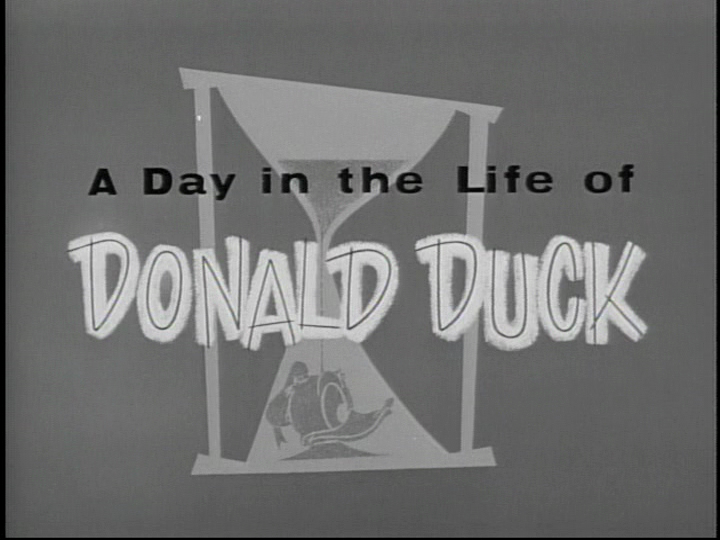
February 1, 1956 – A Day in the Life of Donald Duck Premieres on Disneyland.

“You know something Donald? You’re a big international favorite.”

On February 1, 1956, Disneyland audiences spent A Day in the Life of Donald Duck. As Walt Disney explains in the introduction, there have been so many fan letters to Donald, that he thought the audience might want to spend a day with Donald at the studio. Directed by Jack Hannah, with story by Albert Bertino and Dave Detiege, we see how Donald begins his day, as well as his interactions with Jimmie Dodd, Roy Williams, the Mouseketeers, and the most important person in Donald’s life: his voice, Clarence Nash.

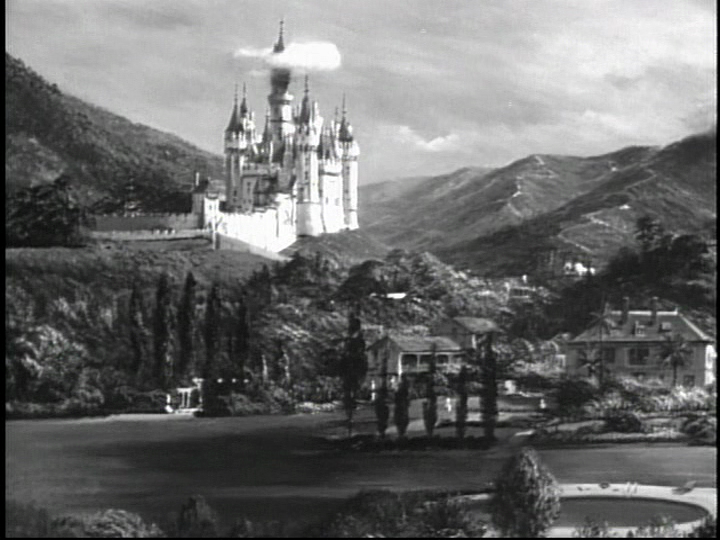
“Donald, like any other average cartoon character, lives a simple, unassuming life in a quiet residential section of Beverly Hills,” Disney tells the audience, showing pictures of the neighborhood. “He resides in a modest little cartoon house. He drives to work in a modest little cartoon car. And if he seems a bit reckless, you must remember that Mr. Duck drives with a cartoon license.” As we see Donald pull into a spot marked “No Parking,” he is immediately confronted by a police officer. Donald, however, folds the car into a tiny packet, tucks it under his hat, and walks to his office.

Donald's "modest" house in Beverly Hills

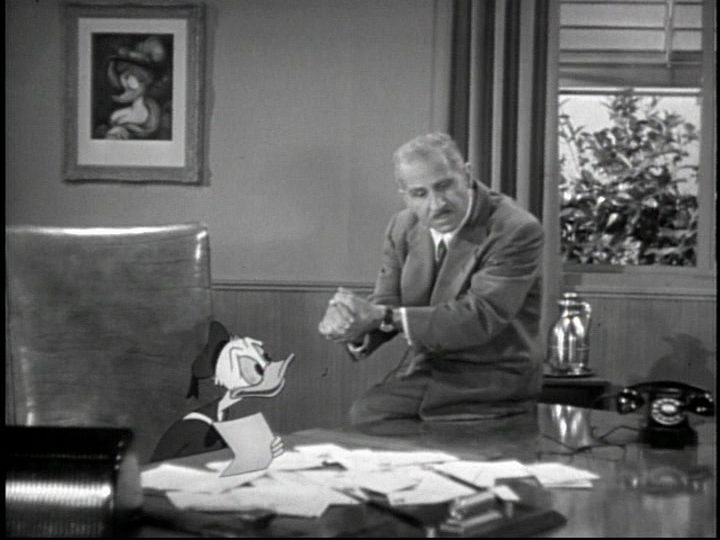
When he arrives at his office, the intercom sounds, and his secretary greets him respectfully as Mr. Duck. Donald responds with, “Just call me Donald, toots. What’s first on my schedule, tootsie?” in keeping with Donald’s personality as a bit of a wolf. She responds that he has fan mail, which he opens eagerly. The letters, however, are not pleasing in Donald’s opinion. One letter openly says, “Dear Donald, I can’t understand a word you say.” This is the last straw in Donald’s opinion, and he demands to speak with his voice, Clarence Nash. Nash comes in with a cheery attitude, which doesn’t change Donald’s mood in the slightest, no matter what Nash does to cheer him up. They end up arguing, with Nash reverting to his Donald Duck voice, even as he pulls out a coonskin cap and starts signing the Davy Crockett theme song. Donald tells him he’s a horrible singer. Nash leaves, with the two still taunting each other, and Donald vows that he’s got to get himself a new voice.

Donald and his voice, Clarence Nash, as Nash shows him a new trick

The next guest to enter is Jimmie Dodd (host of the Mickey Mouse Club), who has written a new song about Donald, inspired by fan art from children all over the world. “They’re so great, they had to have a song written about them,” Jimmie explains, and begins the song, which Donald immediately loves. There are versions of the song sung in different languages with accompanying pictures, including Spanish, French, Italian, and German. The images and tunes are stereotypical for the fifties, but somewhat sweet and fun all the same.

Donald then leaves for an 11 o’clock appointment at the Story Room, and when the storymen hear Donald coming down the hall, they begin to panic, as they fear his temper more than anything. They try to make Donald comfortable, and when they try to show him storyboards for a short entitled Peaceful Day, Donald asks for more birds and butterflies. The storymen overeagerly agree to his requests, to the point that Donald gets annoyed, and demands that there be a short with just him in it. This gets them to thinking, and the audience is then shown the brainstorm: the short, Drip Dippy Donald (originally released March 5, 1948).

The bewildered story team, trying to acquiesce to Donald's requests

Back in his office, Donald receives a call from Walt, who asks him to show the Mousketeers around the studio, as Mickey has remembered that they had never seen it before. Donald eagerly agrees, and runs to meet the Mouseketeers, who surprise Donald by making him an honorary Mouseketeer and giving him his own set of Mickey Mouse ears. As they run around the studio, the kids slip into the Sound Effects Department, closing the door just as Donald is about to get inside, leaving him on the outside as the kids see how sound effects were added to the Donald Duck short, Fire Chief (originally released December 13, 1940). One example they show is when a building is set on fire, the special effects team uses sparklers and crumpled plastic to create the sound of the burning ceiling.

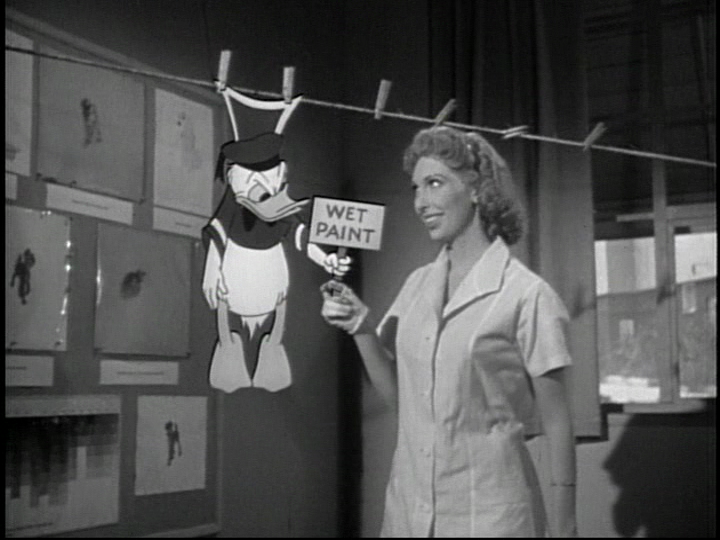
When the short ends, the door opens, and Donald is ready to step inside, until an effects man empties a bucket of water over him, which causes half of Donald’s paint to run. This necessitates a trip to the Ink & Paint Studio, where the painter quickly re-paints Donald and hangs him up to dry, an experience Donald finds quite humiliating. The painter explains that twenty gallons of paint are usually used for a Donald Duck picture, which surprises the kids and causes Donald to remark that he is “very expensive.” She also explains that in one picture, they used just one pint of paint for Donald; the audience is then shown the short The Vanishing Private (originally released September 25, 1942).

Donald and the Painter, with Donald pointing out how humiliating this is for him

After the short, we see the kids with Jimmie Dodd again, singing the new Donald Duck song he wrote. As Donald tries to sing the last line of quacks, he is cut off by Roy Williams, the other host of the Mickey Mouse Club. The kids are excited to see him, and he tells them that he’s practicing drawing the characters. To prove that anyone can draw, Roy asks one of the Mouseketeers to make a scribble on the easel. From her scribble, Roy is able to draw an ostrich. Donald, jealous of the stolen attention, challenges Roy and scribbles on the easel. Roy accepts, and ends up turning Donald’s scribble into a humorous image of Donald Duck. As Donald throws a tantrum and jumps up and down on the teasing picture, the kids flee the room and head into the projection room. “And now, in Donald’s honor – he really is a good scout,” Roy welcomes the kids, “I’d like to dedicate this picture to all you Mouseketeers.” Donald is touched by the tribute, and the audience is then shown the short, Good Scouts (originally released July 8, 1938).

This episode is a must-see for fans of Donald Duck. There are many wonderful gags, and the interaction of Donald with Clarence Nash is enough of a reason to watch. It’s a perfect example of all the temperaments of Donald, with the added bonus of it being set in the real, rather than the cartoon, world.