RSS Feed

Tag Archives: Black and white

April 8

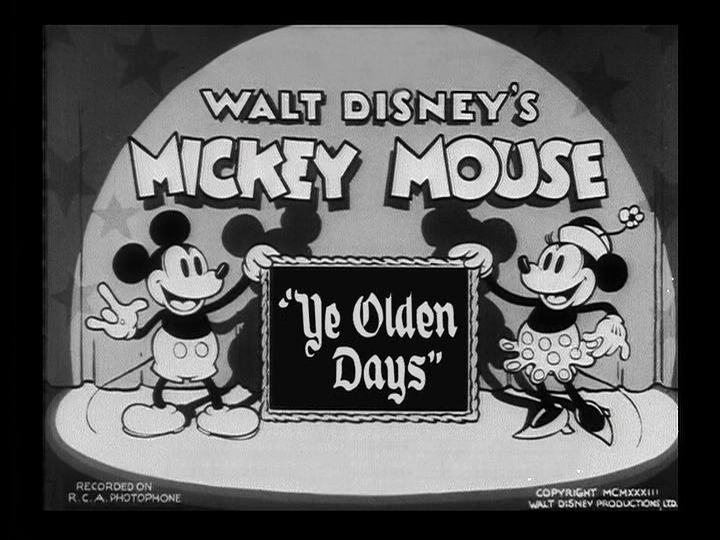
April 8, 1933 – The Mickey Mouse Short, Ye Olden Days, Premieres in Theaters

“I know you’ll learn to love me.”

On April 8, 1933, the Mickey Mouse short film, Ye Olden Days, premiered in theaters. It was directed by Burt Gillett, and starred Walt Disney as Mickey Mouse, Marcellite Garner as Minnie Mouse, and Pinto Colvig as Dippy Dawg. This is one of the few instances where the character of Dippy Dawg is referred to by that name. He grew to be an international star in his own right, but with a different moniker: Goofy.

Mickey as The Wandering Minstrel, traveling from far away

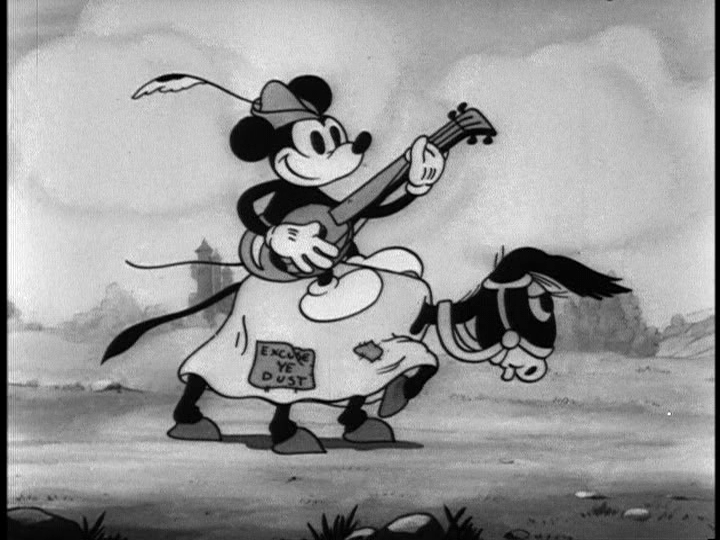
The short opens with a cast list, with Mickey playing “Ye Wandering Minstrel,” Minnie as “Ye Princess,” and Dippy Dawg as “Ye Prince.” The name of the person playing “Ye Old King” is covered up by the end roll of parchment. We then see Mickey, riding on the back of a very tired-looking donkey, holding a lute and signing a song, introducing himself as a wandering minstrel from afar.

Inside the castle, all the members of the court are raising their glasses and cheering for the king. The king informs his subjects that his daughter, the Princess of Lalapazoo, will marry the Prince of Pupupadoo. Trumpets sound, and at the doorway stands Dippy Dawg, who gives his famous laugh. Minnie appears at the other doorway after the trumpets similarly announce her arrival.

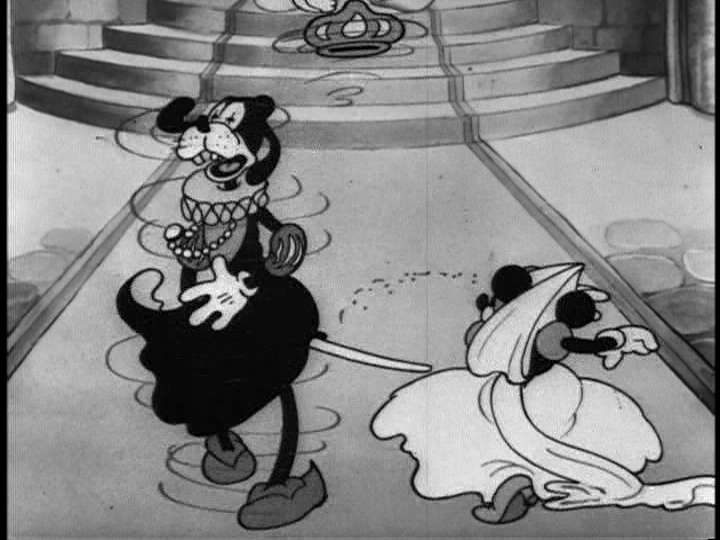
Minnie emphatically slaps Dippy Dawg across the face, refusing to marry him

Mickey arrives at the castle, in time to see the wedding between the Prince and the Princess. The king demands that Minnie marry the prince, and Dippy Dawg grabs one of Minnie’s hands and begins kissing up and down her arm. She swears she will not marry the prince, and slaps him three times. The king, angered by his daughter’s behavior, sends her to be locked in the attic.

Seeing all this, Mickey decides to rescue the princess from her fate. He spots the tower where Minnie and her handmaiden (who appears to be played by Clarabelle Cow) are locked away. Inside the tower, Minnie and Clarabelle begin to cry at their fate, until interrupted by a song at the window. Mickey sings to her:

“Cheer up, oh lovely princess

For you’ll be rescued soon

I’ll take thee away

So ye won’t have to stay

And marry that silly baboon.”

Impressed, Minnie  sends Mickey a flower from her hat with a kiss, and he jumps up from a tree branch to the window. He tells her that he’ll save her.

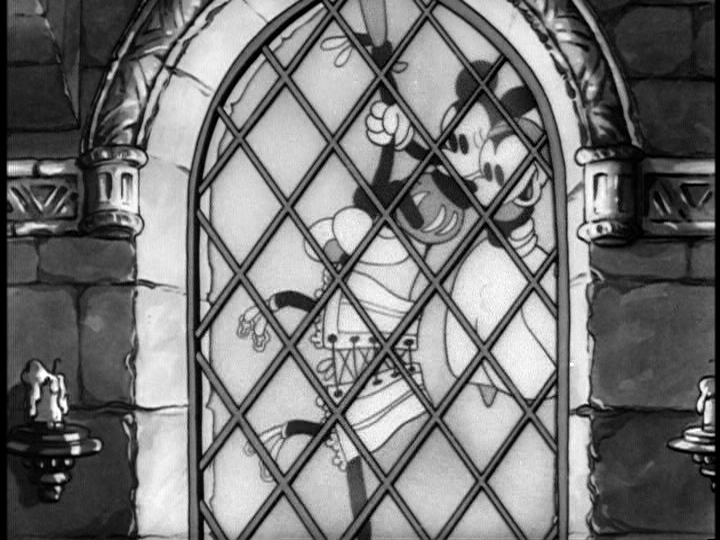
The king spies Mickey and Minnie trying escape through the window

The king continues the festivities, which includes a giant feast that everyone happily prepares and eats. Mickey and Minnie, however, using the handmaiden’s clothes as a crudely constructed rope, begin to rappel down the side of the tower. They are spotted by the king after the clips on the corset begin to tap against the window, and Mickey and Minnie are captured. Infuriated, the king orders Mickey’s head chopped off. As it looks like the end for Mickey, Minnie steps in front and declares her love for the minstrel. She suggests that there be a duel between Mickey and the prince instead.

Excited by this, the king agrees, and everyone busily prepares for the duel. With a loud clang, the duel begins. As Micky and the prince speed toward each other, both are thrown off their horses. Dippy Dawg chases Mickey around the room with his lance, but the mouse finds cunning ways to stay one step in front of him. Finally, Mickey chases the prince out the window, and is held by the crowd in victory, where he and Minnie share a kiss.

April 6

April 6, 1931 – The Mickey Mouse Short Film, The Castaway, is Released to Theaters

“Bananas! Am I hungry! Oh boy!”

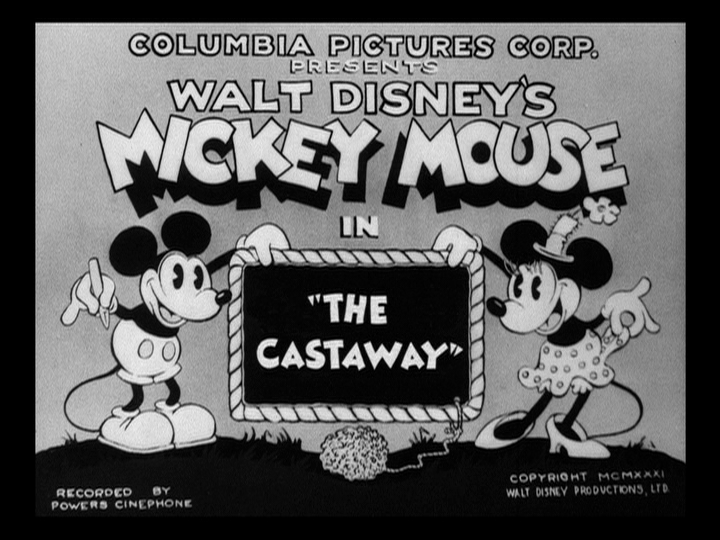
On April 6, 1931, the new Mickey Mouse short film, The Castaway, was released to theaters. It was directed by Wilfred Jackson, with Walt Disney as Mickey. It’s one of the few shorts that uses the Mickey Mouse Club theme song, “Minnie’s Yoo-Hoo,” as the title and end music.

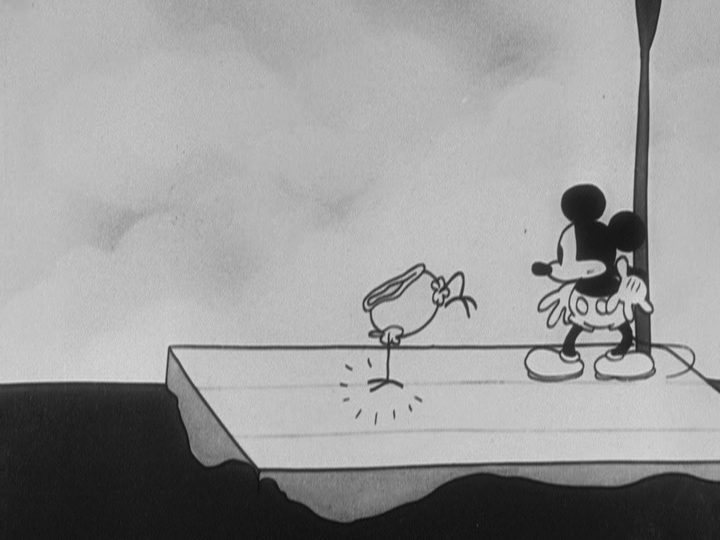
Mickey is stunned as his "sail" begins to perform a dance

The short opens with poor Mickey adrift at sea, the waves crashing wildly around him. Seagulls fly through the legs of his “sail” (a pair of bloomers), until one gets stuck and brings the sail to the boat, and Mickey watches the odd sight of dancing bloomers as the seagull tries to escape. As it flies away, Mickey spots land and tricks a swordfish into pushing his boat to shore.

Immediately after landing, Mickey spots food: he crashlanded into a banana tree. He shakes the tree, and then uses a stick to help him bring down the bananas, but the stick acts like a boomerang and sends Mickey flying into the tree, which, fortunately, brings the bananas to the ground. As Mickey tries to eat them, however, he accidentally knocks a spider from its web, and nearly into Mickey’s mouth. The mouse screams at the arachnid, and seemingly forgets about the bananas as he runs to the shoreline.

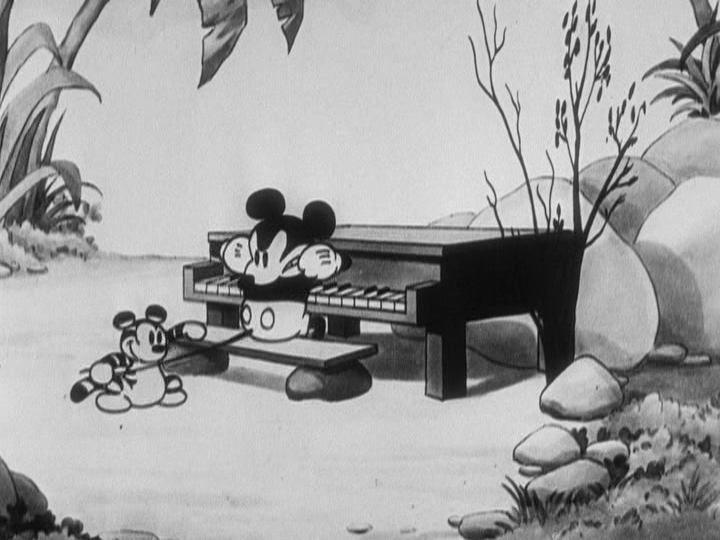
The cub continues to annoy Mickey as Mickey tries to keep playing the piano

Seeing a crate, Mickey tries to retrieve it before the tide comes in, but the tide ends up washing Mickey and the crate further inland. The crate breaks open on a rock, revealing a very soggy piano. Mickey empties the piano of the excess water, sits down, and begins to play, accompanied by three nearby seals. A tiger cub also hears the music and comes out to help Mickey play, but Mickey knocks the cub aside. The cub then tries to use Mickey’s tail as an instrument, but Mickey won’t have it and places the cub in a nearby tree.

The music also gets the attention of a gorilla nearby, and Mickey lets the gorilla play the piano with its feet. Unfortunately, the gorilla gets a little too rough with the piano, and Mickey tries to stop the animal from completely destroying it, with no success. As Mickey grabs a rock to throw at the gorilla, it turns around, and Mickey pretends to perform a few tricks with it before showing it a nervous smile.

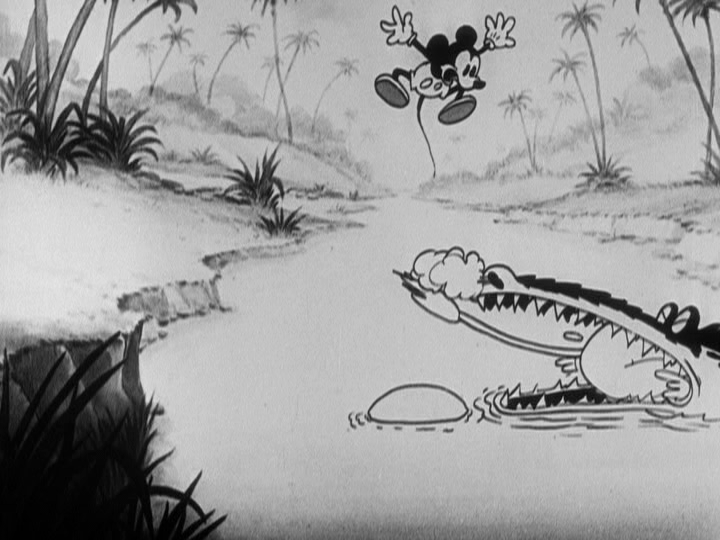
Mickey leaps into the air, as the lion leaps into the open mouth of the alligator

Mickey drops the rock onto the back of a sleeping lion, who begins to chase the frightened mouse. After jumping into a river and laughing at the roaring lion on the riverbank, Mickey thinks he’s home free, not spotting the alligator ready to eat him right behind his back. Stuck between the two dangers, Mickey leaps into the air as the lion leaps to attack. The lion ends up getting swallowed by the alligator, and Mickey cheers. The rock he’s standing on moves, however, and he finds himself riding downstream on the back of a tortoise. Mickey gives a friendly salute to the audience, and waves as he drifts away.

March 20

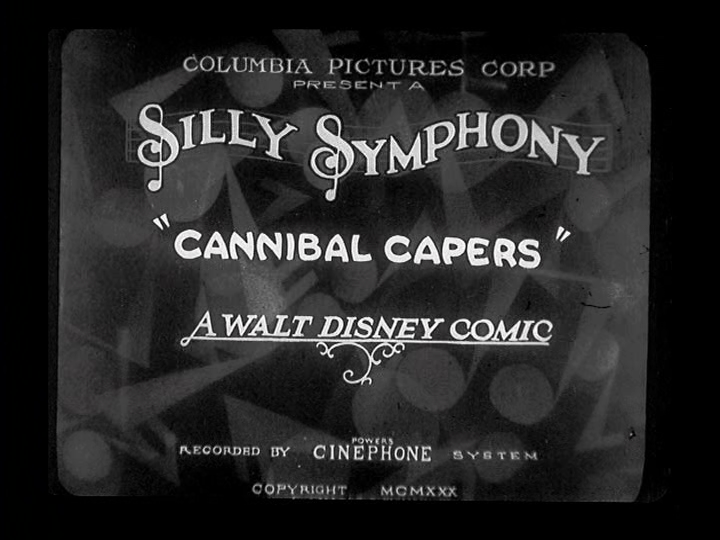
March 20, 1930 – The Silly Symphony, Cannibal Capers, is Released to Theaters

On March 20, 1930, the Silly Symphony, Cannibal Capers, was released to theaters. Directed by Burt Gillett, it was a good representation of the humor and style of movies back in the ’30s. It was normal for people to see stereotypes not just in cartoons, but also in live action films. This is the only Silly Symphony that, when shown on the Mickey Mouse Club show in the ’50s, had its ending edited out. The plot description below is of the original full short.

The Silly Symphony opens with what appears to be trees swaying in the breeze. As the camera pulls out, we see that it isn’t trees, but four cannibals, dancing and singing. They perform a dance for the audience of other cannibals, and another is seen drumming on a drum, a shield, a set of human skulls, and even his own teeth. As he grabs two of the skulls and uses them as castanets, “Habanera” from the opera Carmen begins to play.

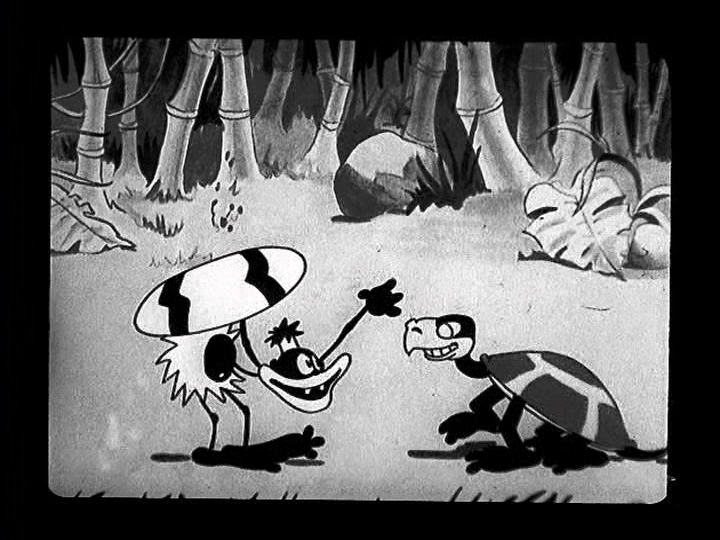
The cannibal and the turtle dancing together

The scene switches to another cannibal, who does a sort of hula, causing his grass skirt to fall to the ground. He pulls it up and begins to dance again, with the same result. Angered, he pushes his stomach to the ground, so that his skirt won’t fall anymore. He continues to dance merrily after that. The camera then moves to a turtle who is dancing to the music, and runs into a cannibal. The cannibal, using his shield like a shell, imitates the dancing of the turtle, which turns into a game of patty-cake.

In the main village, the chef is preparing the pot for a great feast, when he spots the cannibal dancing with the turtle. Although the turtle and cannibal retreat into their shells, the chef picks up the cannibal, intending to feed him to the village. The tribe cheers as the cannibal is thrown into the pot of boiling water, but are shocked when he calmly steps out and begins to cool himself down with the shield.

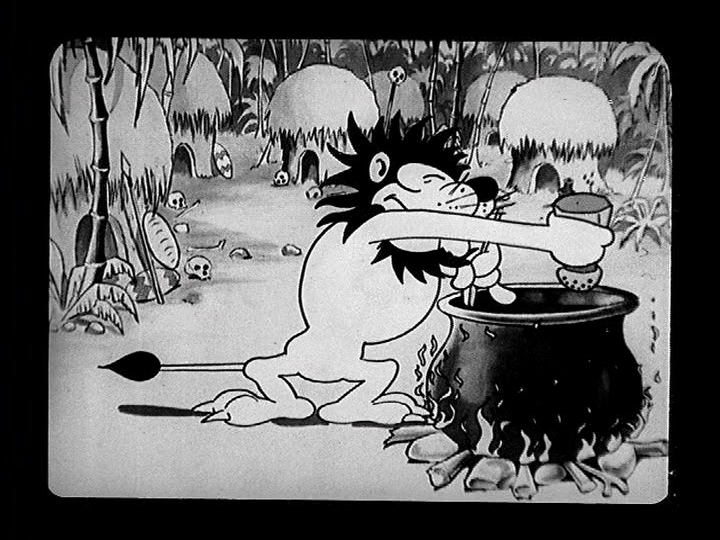
The lion preparing the cannibal for consumption

A lion roars at the edge of the village, and the cannibals flee into their homes. The cannibal that was in the pot continues to hide inside, thinking he’s safe. The lion, however, grabs a spoon, the salt, and the pepper, and begins to cook the cannibal to his liking. The lion tries to eat the cannibal, but the cannibal outsmarts him.

As the cannibal runs away, the lion pursues him. Once the lion bites down on the cannibal, however, he loses his teeth. Seeing this as an opportunity, the cannibal decides to wear the teeth and teach the defenseless lion a lesson. The cannibal chases the lion out of the village, and the cannibals are seen laughing.

March 19

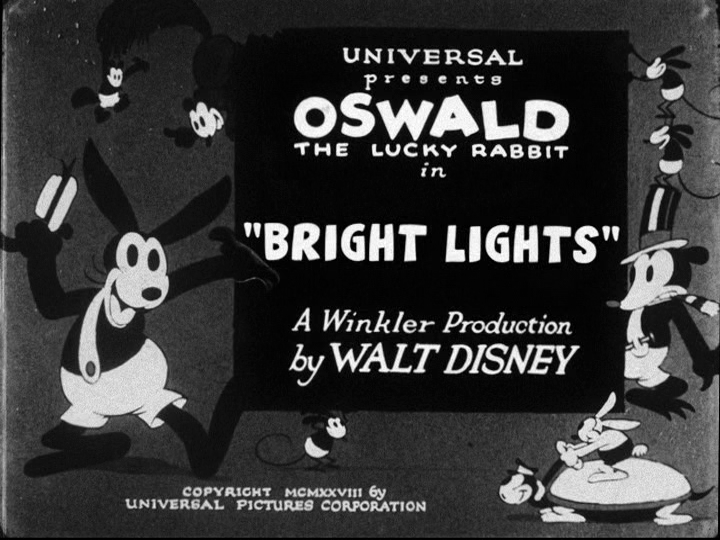
March 19, 1928 – The Oswald the Lucky Rabbit Short Film, Bright Lights, is Released to Theaters

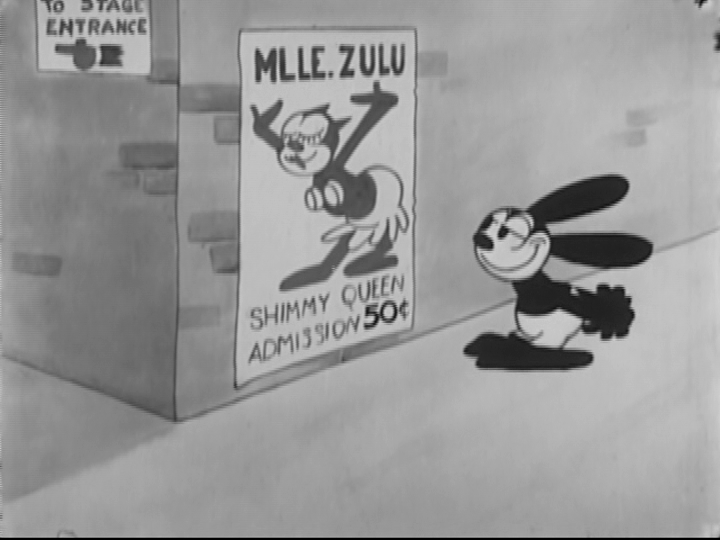
On March 19, 1928, the 16th Oswald the Lucky Rabbit short film, Bright Lights, was released to theaters through Universal. The short itself is very different from the style of the Mickey Mouse shorts that were to follow: although Mickey Mouse cartoons contained the elements of stretching limbs and comical japes, the Oswald shorts were more brash in their day (as seen with Mlle. Zulu’s dancing), and the characters seem as if they were made out of clay with the way they can split themselves in two and wrap other characters’ limbs around solid objects.

The short opens with a bright light marquee parody of Vaudeville called “Vodvil,” advertising Mlle. Zulu, the Shimmy Queen, performing at a theater. The theater is packed with spectators, watching as a line of cats performs a variety of dances on stage. After a bit of the performance, most of the girls dance offstage, leaving Mlle. Zulu behind in the spotlight.

Oswald, dreamily staring at the picture of Mlle. Zulu

Outside, we see Oswald staring at a picture of Zulu, clearly smitten, with his heart beating right out of his chest. Oswald gets a shock, however, when he sees that the price of admission to the show is 50 cents, and he is saddened to realize he doesn’t have any money. He spots the stage entrance around the corner, and comes up with a plan to just walk right in. The guard stops Oswald at every turn, although Oswald is able to slip out of his grasp so he can try again. Comically, Oswald manages to tie the guard up to a lamppost with the guard’s own foot, and walks in confidently – only to be chased out a second later by other guards and thugs.

There’s a quick shot to Zulu still performing on stage, and then we go back to Oswald, who comes up with another plan to sneak inside: hiding under the shadow of a man in an oversized fur coat. The coat is taken away to reveal both the thin man inside it and Oswald. As the guard looms over the rabbit, Oswald scampers out on the stage in the middle of a performance, with the guard chasing him.

Oswald realizes that the box was not the best place to hide

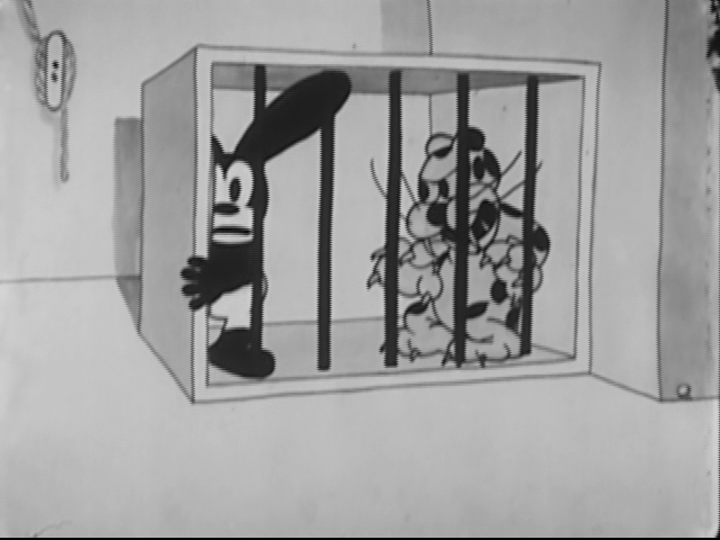
Backstage again, Oswald jumps inside a box to hide, missing the clear sign on the side that says “Danger – Keep Away.” When the guard can’t find Oswald, and and continues searching in another direction, Oswald, thinking he’s won, laughs—until he discovers the cheetah in the box with him. Oswald escapes from the box, with the cheetah in pursuit, determined to eat the rabbit. Oswald once again rushes out onto the stage in the middle of a pole-balancing act and scrambles up the pole, with the cheetah jumping up, mouth wide open to catch his snack.

The performer and Oswald climb all the way up to the rafters, holding onto a backdrop for dear life. The performer, who had been holding on to Oswald’s shorts, falls as the cheetah waits for his prey. The performer is able to fly his way back up to where Oswald is dangling and grabs his foot, pulling the limb out several feet. With the use of a nearby mallet, Oswald gets rid of the performer, but realizes a bit too late that he’s lost his hold of the backdrop and falls to the stage, landing on the head of the cheetah.

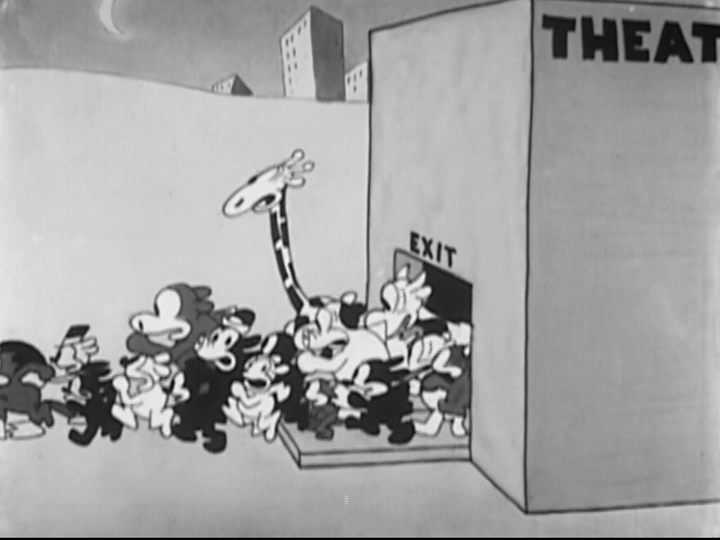
Everyone stampedes out of the theater, pursued by hungry lions

The audience and orchestra run for their lives as the cheetah goes on the rampage. Backstage, the lions break free from their cage and join the chase, scaring the performers out into the empty theater. The audience is seen breaking down the door and fleeing the theater, with the lions in close pursuit. Oswald finally appears in a nearby building, with the last lion spotting him and chasing him into town.

March 14

March 14, 1929 – The Mickey Mouse Short, The Barn Dance, is Released to Theaters

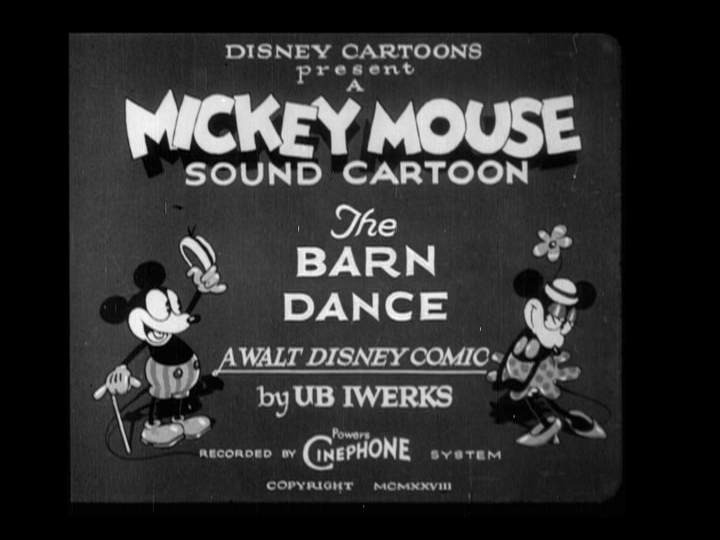
On March 14, 1929, the fourth Mickey Mouse short, The Barn Dance, was released to theaters. Directed by and using the vocal talents of Walt Disney (although this short continues to feature more “squawking” than actual dialogue), this short is one of the disastrous dates of Mickey and Minnie. Although not the first short where Minnie rebuffs Mickey’s advances, it is one of the more tragic ones, due to Mickey’s emotional outburst in the end.

Mickey is seen in the opening shot in a horse-drawn buggy, holding flowers for his sweetheart, Minnie Mouse. As he uses the whip to make the horse gallop faster, his buggy also begins to gallop, and Mickey has to hold onto his seat for dear life. They stop in front of Minnie’s house, where she is seen in the window, powdering her nose. Mickey’s heart pounds loudly before he whistles for her attention. Minnie appears in the window and waves before quickly pulling her bloomers on the laundry line inside. Mickey and his horse both look excitedly at the window, but Mickey pulled down a shade attached to the blinders on the horse, and the animal turns away to pout.

Pete arrives as a rival to Mickey for Minnie's affections

Meanwhile, Pete is driving up the road in his car, also on his way to see Minnie. He looks over at Mickey in his buggy and doesn’t think much of the mouse before he honks his horn for Minnie’s attention. Mickey is initially angered by Pete, but when he spies a duck on the road next to him, he picks up the bird and begins honking it like a horn to match Pete’s incessant honking.

Suddenly, Minnie appears, all dolled up for a night on the town. She stops at the gate while both of her admirers bow, and as she steps out to greet them, she spies Pete’s car and runs to it excitedly. As Pete starts up the car, it sputters and shakes, and Pete sends a stream of black smoke from the tailpipe in Mickey’s direction. Unfortunately, the car takes off and leaves Minnie and Pete behind before crashing into a tree and breaking into several car parts. Minnie rejects Pete and decides to go to the dance with Mickey, and the two flirt and kiss on the way there.

Mickey literally feels like a jackass for continually stepping on Minnie's feet and legs

The dance is already in full swing when the couple arrives. Unfortunately Mickey is so overzealous in his dancing that he keeps stepping on Minnie’s feet, with his feet growing in size for comic effect. At the end of the dance, Mickey is standing with both feet on Minnie’s leg, and she struggles to pull it out. Mickey finally notices that he’s on Minnie’s leg and gingerly steps off, with Minnie holding the limp limb sadly. As Minnie is furious and Mickey literally feels like a jackass, Minnie knots up her stretched leg just as a new dance begins. Although Mickey tries to dance with Minnie again, Minnie decides to dance with Pete, who is a much better dancer, instead.

Mickey stands in the corner, but gets the bright idea to be “light on his feet” by tucking a helium balloon into his shorts. He leaps gracefully over Pete, surprising the two, and Minnie begrudgingly agrees to dance with Mickey. Things go well for a while, until Pete realizes Mickey’s scheme and shoots a nail at the balloon in Mickey’s shorts, making Mickey fall on Minnie. Having had enough, Minnie decides to dance with Pete for the rest of the dance, leaving Mickey to cry in a corner.

March 6

March 6, 1992 – Tim Burton’s Short Film, Frankenweenie, is Released With the Live-Action Film, Blame it on the Bellboy.

“I guess we can’t punish Victor for bringing Sparky back from the dead.”

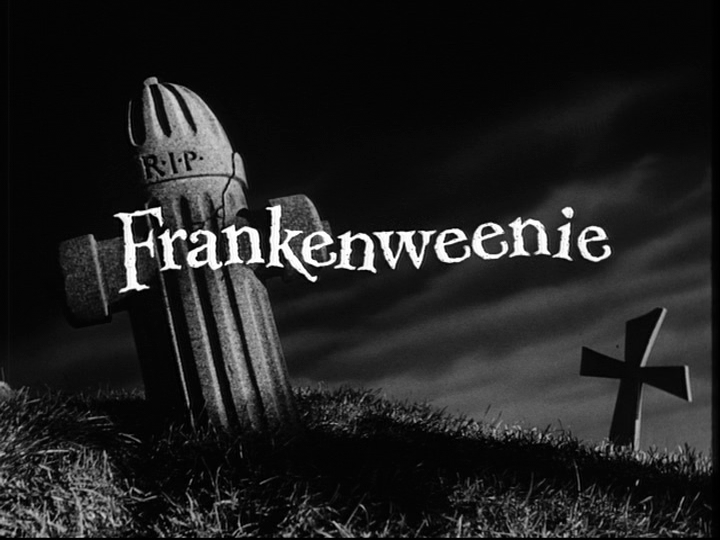
Tim Burton’s Frankenweenie, although completed in 1984, was released on a double bill with the live-action film, Blame it on the Bellboy, on March 6, 1992. Filmed in black and white, the short is an homage to horror films of the 1930s, with Mary Shelley’s Frankenstein as its base inspiration. The short is the story of a young boy named Victor Frankenstein, who brings his dog back to life after a tragic accident. The short was directed by Tim Burton, with the screenplay by Lenny Ripps, and stars Barret Oliver as Victor Frankenstein, Shelley Duvall as Susan Frankenstein, Daniel Stern as Ben Frankenstein, and Sparky as himself. Tim Burton was fired from Disney after the film was finished; studio heads felt the film was too scary for young audiences and that resources had been wasted making the short. A new full-length version of this short, which will be closer to Tim Burton’s original story idea, is set for release in October 2012.

The short opens with a film entitled “MONSTERS from Long Ago” by Victor Frankenstein, starring Sparky as the titular monster. The camera pans out to see the Frankenstein family and some friends watching a home movie. Meanwhile the son, Victor, goes outside to play with his dog, Sparky. Victor throws a baseball and Sparky, running to retrieve it, is struck by a car.

Victor is inspired by his teacher's science experiment

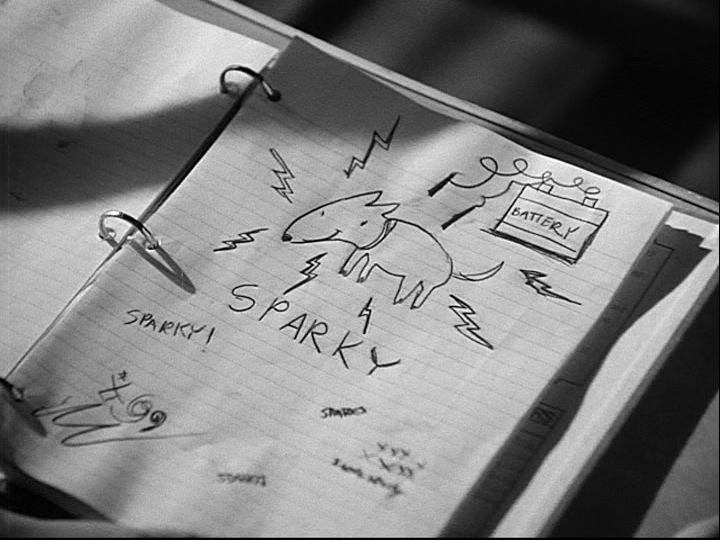
The next scene shows Victor and his parents in a pet cemetery, paying their last respects to Sparky. Victor falls into a deep depression. When his friends ask if he’ll get another dog, Victor says that he doubts that he could ever find another one like Sparky. In science class, Victor is unable to pay attention, as he draws pictures of Sparky in his notebook. The science teacher, however, is about to give a lesson on electricity and the central nervous system, pulling out a frog corpse. When the teacher proposes introducing electricity into the frog’s system, Victor suddenly pays attention. Seeing the frog’s legs move, Victor is inspired, thinking that this is the way to bring Sparky back.

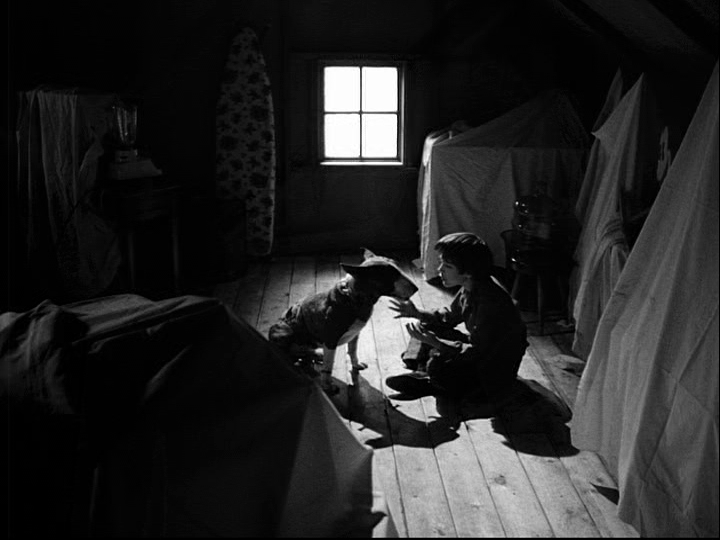
Victor reads several books for research, including Life After Death, On Death and Dying, Modern Chemistry, and Electricity and the Creation of Life. He then begins gathering appliances in the house, beginning with the toaster, until he has constructed a lab in his attic. One night, after pretending to be ready for bed, Victor pulls a shovel out from under his bed and sneaks out to the pet cemetery to dig up Sparky. He hurries home through the rain with Sparky’s corpse and sets about trying to bring the dog back to life, in the same manner as his namesake, Dr. Frankenstein. But nothing seems to happen. Victor brings the corpse back downstairs, believing that he has failed, until he feels the dog licking his hand.

Ben Frankenstein discovers Sparky and Victor hiding out in the attic, unbeknownst to the pair

The next morning, Victor claims he doesn’t feel very well and asks to stay home from school. His parents see right through his charade, and send him off, but Victor waits until they both leave for work, then stays home to play with Sparky, who stays hidden away in the attic. While Victor naps, however, Sparky leaves the attic and goes outside to explore. He climbs into the open window of the next-door neighbor’s shed, only to scare the poor man inside, who sets Sparky into accidentally terrorizing the neighborhood before running back inside the house. Victor’s parents are questioned about their dog when they come home from work, and the father offers to check their house for any dogs. He discovers that Sparky is, in fact, alive. He drags the mother inside to see for herself that Sparky has been brought back to life.

The family sits around the kitchen table, wondering how to deal with this situation, and the implications of it. They are unable to sleep that night, wondering how exactly does a parent deal with their son playing God. They decide to keep Sparky in the house and walk him at night, so people don’t see him and become alarmed. The neighbors, however, start to ignore the Frankensteins, as they know something strange is going on. The father decides that they might as well just introduce the neighbors to Sparky that night, for “the longer they wait, the worse it will be.”

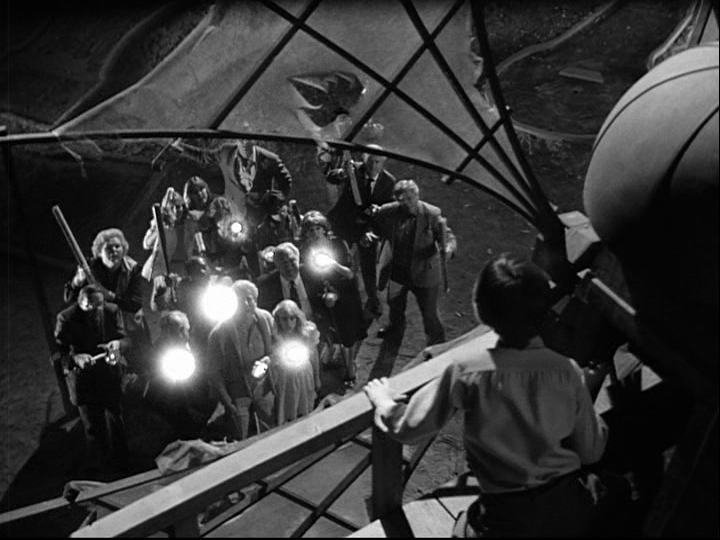
The angry mob of neighbors stands outside the old miniature golf course windmill, demanding "the monster"

The neighbors are seen gathered in the Frankenstein’s living room, with Mr. Frankenstein trying to reassure them that they’ve been seeing the same plain old Sparky. Upon seeing Sparky, however, the neighbors immediately lose their heads in fright, and Sparky runs out the dog door. Victor follows the dog, and the neighbors decide that their best course of action is to kill Sparky. Sparky escapes into the ruins of an old miniature golf course, and runs up to the windmill, with Victor calling his name from the gate. Victor slips through the gate and tries to retrieve Sparky. The neighbors stand as an angry mob outside the windmill, demanding to have their vengeance, while one neighbor pulls out a lighter and sets the old windmill ablaze. Victor and Sparky are trapped inside the burning building, and while everyone stands and watches with horror, they are suddenly amazed to see Sparky pull Victor out of the windmill. As his parents pull Victor away, the windmill suddenly begins to fall apart, trapping Sparky in the wreckage. Victor can only watch as Sparky dies once more.

Lights flash, and Victor is surrounded by car headlights, with one neighbor proclaiming that if Victor brought Sparky back to life before, he can do it again. Inspired by Sparky’s bravery at saving Victor, everyone is ready to start their engines and use their car batteries to give Sparky a jumpstart. Their plan is a success, and Sparky once again is brought back to life.

March 5

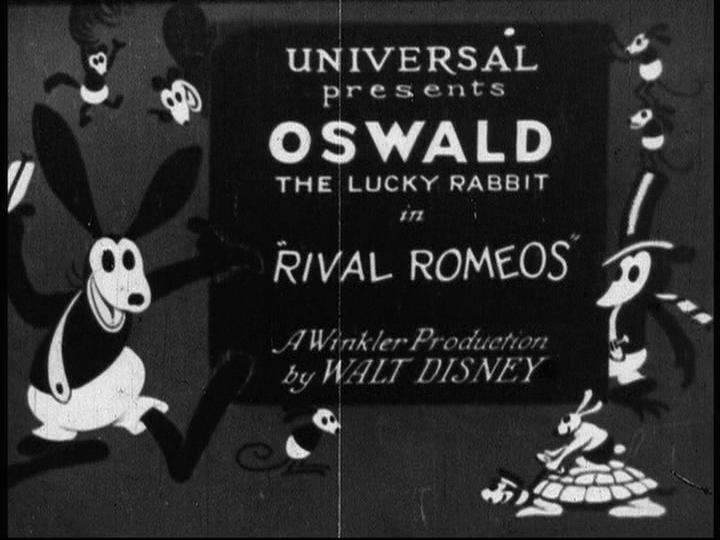
March 5, 1928 – The Oswald the Lucky Rabbit Short Film, Rival Romeos, is Released Through Universal Pictures

On March 5, 1928, Universal Pictures released a new Oswald the Lucky Rabbit short silent film entitled Rival Romeos. Oswald was Disney’s first animated hit after the Alice Comedies, and soon became very popular, along with such characters as Felix the Cat. Patterned after the leading swashbuckling actor of the day, Douglas Fairbanks, Oswald was an easily frustrated rabbit, and the shorts relied on slapstick and subtle humor: the sheet music Oswald produces, if one looks closely, include the names of Hot Lips and Hot Mama. This was the 15th of out 26 Oswald shorts created by the Disney Studios before Charles Mintz took Oswald away. Many elements in this short are seen in some of the early Mickey Mouse and Silly Symphony films, including the goat used as a gramophone (seen in Steamboat Willie), the main character fighting a rival for the lady’s affections (as seen in Mickey’s Rival), and the main characters kicking each other for being idiotic (as seen in The Wise Little Hen)

A clearly smitten Oswald is on his way to see his girlfriend, Ortensia the Cat, holding a bouquet of daisies and traveling slowly in his jalopy. He starts playing a game of “She Loves Me, She Loves Me Not” with the flowers, before dreaming of Ortensia again. Behind him, in a much nicer car, is Oswald’s rival, also armed with a bouquet, dreaming of Ortensia. His own lovestruck mood is broken by the sight of Oswald, and he angrily honks his horn at the rabbit.

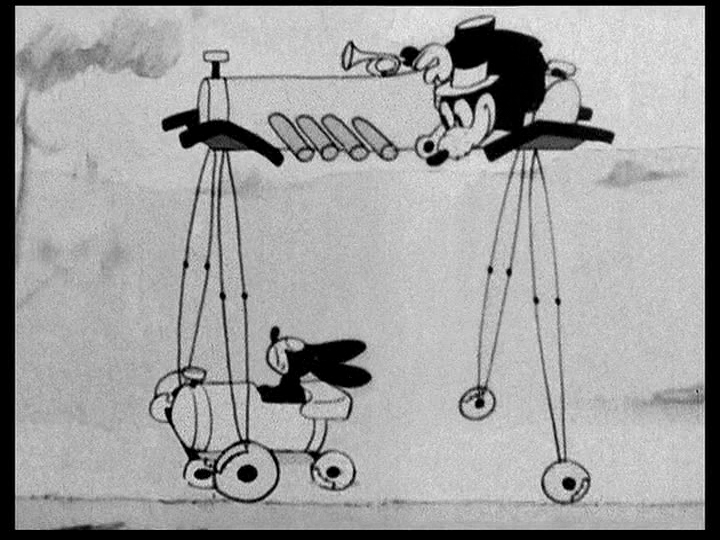
The rival finds a way to get ahead of Oswald, for now

Oswald turns to see this rival, and turns up his nose at him, unconcerned. He continues at his leisurely pace, refusing to move, though his rival starts to throw a fit. The rival pulls a lever, which raises the car, allowing the rival to sail above Oswald and land comfortably in front of him, then he speeds off like a shot.

The rival is eventually stopped by giant patch of mud covering the road. The rival orders his car to go across, but the car refuses, allowing Oswald to catch up. Oswald and his car laugh at the rival, then jump into the puddle with enthusiasm, splashing around and sending mud flying toward the rival. Oswald and his car then take off to continue the trip to his girlfriend’s house. The rival’s car carefully hikes up its skirts and treads cautiously through the mud, with the rival determined not to be beaten. Unfortunately, the car slips on some mud, and they land in the puddle with a mighty splash.

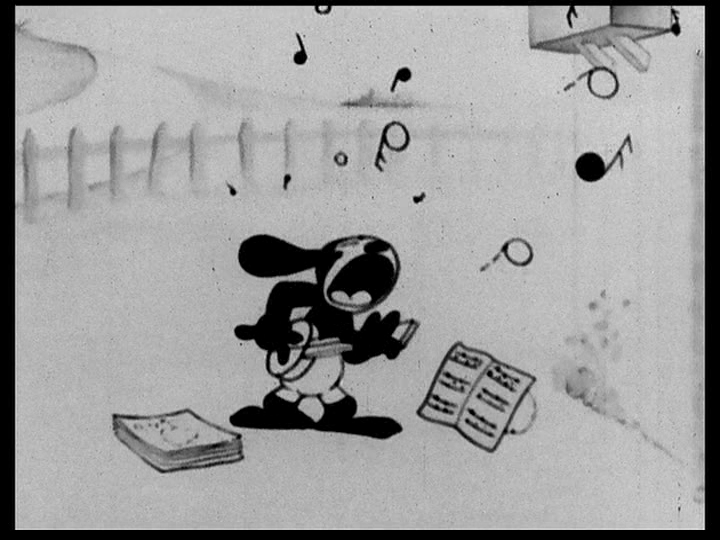
Oswald beginning to serenade Ortensia

Oswald arrives at Ortenisa’s house, heart aflutter, and begins to serenade her with on his banjo. She hears him and steps out onto the balcony, smitten by Oswald’s attempt at romance. While Oswald isn’t looking, however, a hungry goat steps into the front yard, salivating at the sheet music lying on the ground, and begins to snack on some of it, while meanwhile a gentle breeze blows around the sheet music Oswald is currently trying to play. The clearly frustrated rabbit takes out a pin to nail the music to the rock he’s using to prop the music up, only to find that the “rock” is a snoozing pig who, stabbed by the pin, runs off, taking the music with him.

Oswald then sees that the goat has eaten the rest of the music, and is now eyeing his banjo with great interest, before devouring it. Oswald grabs the bit of the banjo sticking out of the goat’s mouth to pull it out, but sends it flying down into the goat’s stomach. Oswald angrily tells off the goat, but the goat doesn’t seem to care, nor wish to give back the banjo. Oswald then tries begging and crying, explaining that he’s trying to woo Ortenisa, but the goat only laughs, infuriating the rabbit. As a last attempt, Oswald strangles the goat and sticks his hand down its throat in order to retrieve the instrument, only to get sucker-punched by the goat. He kicks the goat in the stomach, and notices that music notes come out. Inspired, he opens the goat’s mouth, pulls on his tail, and uses the goat as a sort of gramophone to play his love songs.

Poor Ortensia is caught in the middle of two unyielding suitors

Oswald’s attempts at romance are not beloved by all, for the music wakes up Ortensia’s father, who begins to throw things out the window to stop the noise. Oswald and the goat run for cover, and as Oswald hides behind his car, the rival finally makes it to Ortensia’s house and honks his horn to alert the girl. Ortensia steps outside and waves, and both suitors bow to her, but she stands between the two, with the “Romeos” pulling on her arms as they each try to convince her to date him instead of the other guy. Poor Ortensia stands there as they keep pulling and pulling out her arms like ropes, until they finally let her go. She yells at the two of them before angrily walking away, and the two suitors begin to argue. While arguing, which escalates into physical fighting, they don’t notice that Ortensia has been taken away by a third suitor, and as they watch her drive away, the two agree to kick each other for being so moronic.

March 1

March 1, 1924 – The First Alice Comedy, Alice’s Day at Sea, is Released to Theaters


“It would be a big opportunity for her and would introduce her to the profession in a manner that few children could receive.” – Walt Disney’s letter to Virginia Davis’ mother

On March 1, 1924, after a long process of putting all the pieces of the company in place, the Disney Brothers Studio had their first release of the first of the series of Alice Comedies, entitled Alice’s Day at Sea.

The first six Alice Comedies began with a long  live-action segment, then went into the cartoon. The seventh film had a change of format, when Disney scrapped the live-action introductions. In this first film, Alice goes to the seashore with her dog and falls asleep in a rowboat, and in her dreams, she battles marina wildlife and finds a shipwreck.

Disney's first star: Virginia Davis

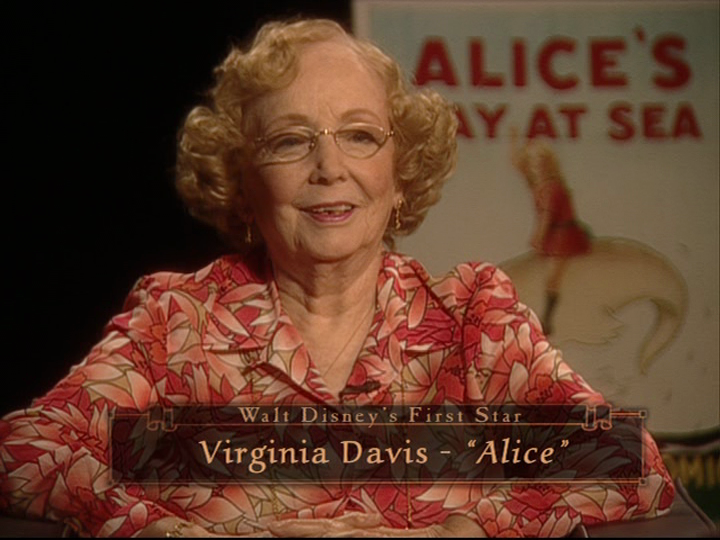
Virginia Davis, the first actress to portray Alice in the Alice comedies, was still living in Kansas City, Missouri, when Walt made his way out to California to create his animation studio. Fortunately, Disney was able to convince her family to move out to California, with Virginia recalling, “Oh, what a salesman [Disney] was…my mother fell for it, but she liked him because she sensed a sincerity in his mind. She really liked him very much; she saw great things in Walt.” When they were ready to film Alice’s Day at Sea, Virginia recalled, “…that film, we came from Missouri, I had never seen the ocean, and all of a sudden there was that sand, and all the ocean…I loved it, I just loved it.”

Walt animated the films by himself, and was able to deliver the first film on December 26, 1923, ahead of schedule, and was able to collect on the offer from Margaret Winkler of $1500. However, Walt was not happy with how it had turned out, and Winkler agreed, telling him that it was only “satisfactory,” but she encouraged Walt by telling him to inject more humor into the shorts. Fortunately, Walt kept producing the shorts, and each one was better than the one preceding it.

February 17

February 17, 1934 – Mickey Mouse Short Film Camping Out is Released to Theaters

“Hey, Pop! I was having fun, and a big guy hit me!”

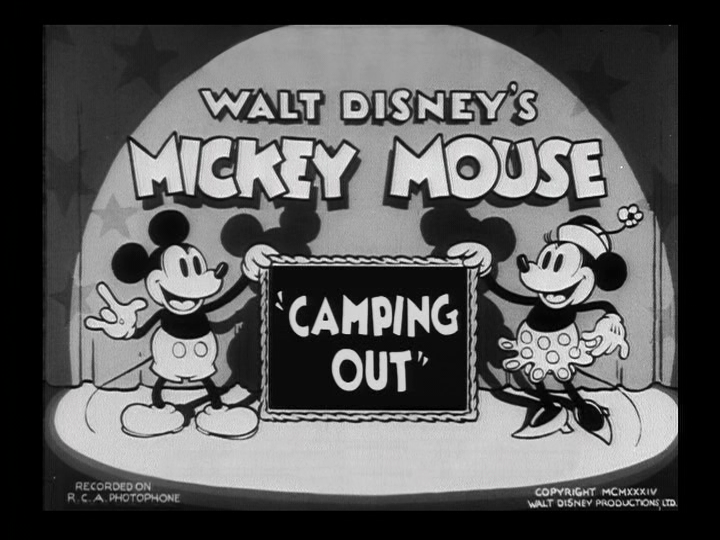
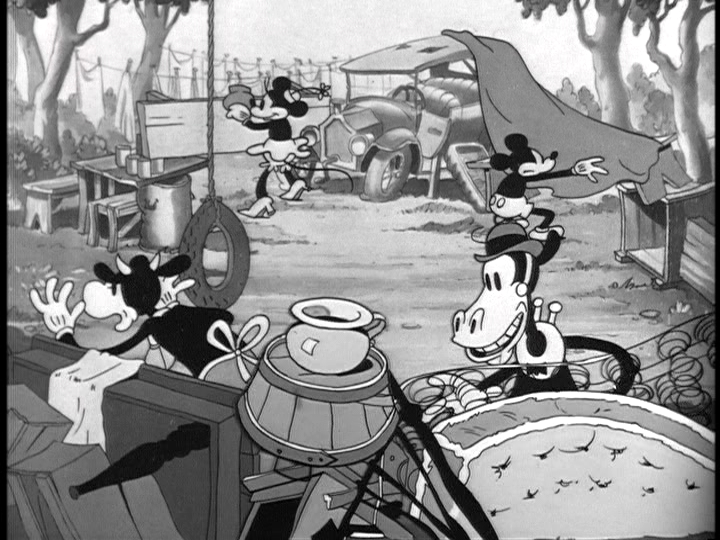
On February 17, 1934, the Disney Studios released the Mickey Mouse Short Camping Out, starring Mickey, Minnie, Horace Horsecollar, and Clarabelle Cow. Before the studio created and realized the individual star power of Mickey, Donald Duck, and Goofy, Mickey and Minnie were usually paired with Horace and Clarabelle, who were the major bit players in the short films of the ’30s. The short was directed by David Hand, with music by Bert Lewis.

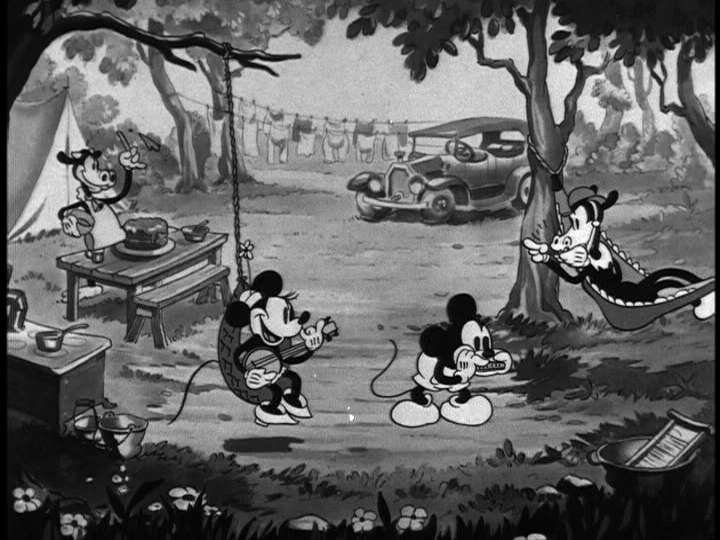
Mickey and the gang relaxing at their summer camp out

The scene opens on a lazy summer day, with the gang playing a joyful tune. Mickey is playing the harmonica, accompanied by Minnie on banjo and Horace on the mouth harp, and Clarabelle is in the background icing a couple of cakes. As they dance and play merrily, a lone mosquito flies into the picture, wanting to join in on the fun and landing on Mickey’s nose. Mickey tries to blow him away, only to end up getting stung on the nose. Angered, Mickey takes a frying pan, planning to squash the mosquito when he gets the chance. It lands on Clarabelle’s cake, and Mickey ends up flattening the cake and sending icing flying all over Clarabelle, while the mosquito flies away unscathed. Upset by Mickey’s ruining her hard work, Clarabelle takes the other cake and shoves it in Mickey’s face.

As Horace laughs at Mickey and Clarabelle, the mosquito sees an opportunity to give Horace a good sting. It winds up and flies like a fighter plane, sending Horace flying into the air from the impact. Horace swings wildly at it, and thinks he finally hit it, until he hears buzzing from inside his hat. When he removes it, he discovers a giant bump on his head from where the mosquito stung him. Completely angry at this point, Horace swats the mosquito, sending it flying to the ground with a bent nose. Shaking his fist in revenge and sobbing, he calls over his father and says that he was just having fun when a big guy hit him. Heroic music plays as the entire swarm of mosquitoes flies to seek vengeance for the poor little mosquito.

Seeing the swarm coming, the gang mans their battle stations

Minnie spies the swarm, cries out in alarm, and the gang sets up their battle stations. Horace decides to spray them with molasses, which effectively stops them and sticks them to a nearby tree. The second batch of molasses-drenched mosquitoes, however, is sent flying back to Horace, hitting him square in the face. Clarabelle takes the old fashioned method with a flyswatter, only to have the mosquitoes grab the netting and tear it apart. Minnie and Mickey team up, with Minnie opening cans of peas, and Mickey filling a bicycle pump with them, then using the pump as a sort of machine-gun with pea pellets. The mosquitoes catch the peas on their noses, causing them to fall to the ground with the weight. The swarm finds a hammer and uses it to remove the peas from their noses, then take to the air again. Horace uses corn to make his own shooter in order to break up the swarm. Believing him to be successful at driving the swarm away, everyone cheers, but the victory is short-lived as the bugs dive bomb the quartet. Horace, however, grabs an umbrella and pulls the gang to safety, with the swarm hitting the umbrella and sticking. Poor Horace is still holding on to the umbrella, and as the swarm flies away, he joins them. Mickey grabs on to try and pull him down, but is also taken away. The umbrella breaks from the weight, and Horace and Mickey crash to the ground.

The mosquitoes free themselves, pull together to form a giant mosquito, and angrily chase after the gang as they run to take refuge in their tent, with the only casualty being Horace’s hat. The swarm continues its attack, with the gang using all of their supplies as best they can to stop the menace. Mickey’s solution is to trap the mosquitoes in the only thing he can find: Clarabelle’s bloomers. As the mosquitoes buzz away, surrendering, the gang cheers at their victory.

February 13

February 13, 1957 – The Disneyland Episode Tricks of Our Trade Premieres on ABC
“Before our eyes, we have seen an entire industry grow literally from the ground up. And this growth was no accident. It was painstakingly built, step by step, by men with pioneering spirit, who loved this puzzling new art form, and believed in its future.”- Walt Disney.

On February 13, 1957, audiences were treated to a different kind of episode of Disneyland: one that focused on how animated films were able to capture things as realistically as they did. With our host, Walt Disney, we are taken through the “tricks of the trade,” where he explains some of the then-commonplace animation principles, as well as some of technical advances made in the studio, and why they needed to be created. The examples given are obviously staged, but they give the audience a great example of the process used to come to a solution. Animation examples are from Snow White and the Seven Dwarfs, Bambi, and Fantasia. The episode was written by animation veteran Dick Huemer and directed by Wilfred Jackson. It also includes cameos of four of the famed Nine Old Men: Frank Thomas, Ollie Johnston, Marc Davis, and Milt Kahl. The episode refers to the book, The Art of Animation, which was the book that inspired John Lasseter to want to be an animator (please see the January 12th entry for more information).

“Because the animated cartoon comes to life on the screen, it belongs in the field of the motion picture,” Walt explains, as he opens up the episode. “But because it is drawn and painted, it is also one of the graphic arts, like painting. As a matter of fact, it is often referred to as the last of the graphic arts.” Disney then goes to his desk and shows the audience the book The Art of Animation, which was written by Bob Thomas about the Disney Studios. Disney turns to chapter eight, entitled Tricks of Our Trade, and explains that the pupils were their own teachers when it came to the principles of animation. “They had to be, because no one in the world could give them the answer to what they wanted to know,” Disney says, adding that their overall question was: How could animation be improved?
The animators in a classroom after hours, learning more about their own medium by one of their own

The first segment shown is of a group of animators watching a film of overweight comedian Billy House performing a two-step. The animators note that an overweight man moves differently, and that the human body does not move all in one piece. When the film is slowed down, there are many details they recognize that cannot be seen at normal speed. We then see the animators use what they saw to create an animation of the dwarf Happy doing the two-step dance, with the animation principles of weight, contact, follow-through, squash and stretch, and overlapping actions being used effectively. Disney points out while it’s true that thoughts and emotions can be expressed through pantomime, who a character is and what they think can best be revealed by dialogue. The trick of using dialogue is shown through a clip from Show White and the Seven Dwarfs, where Snow White identifies which dwarf is which.
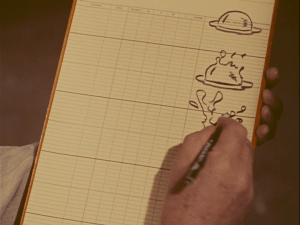
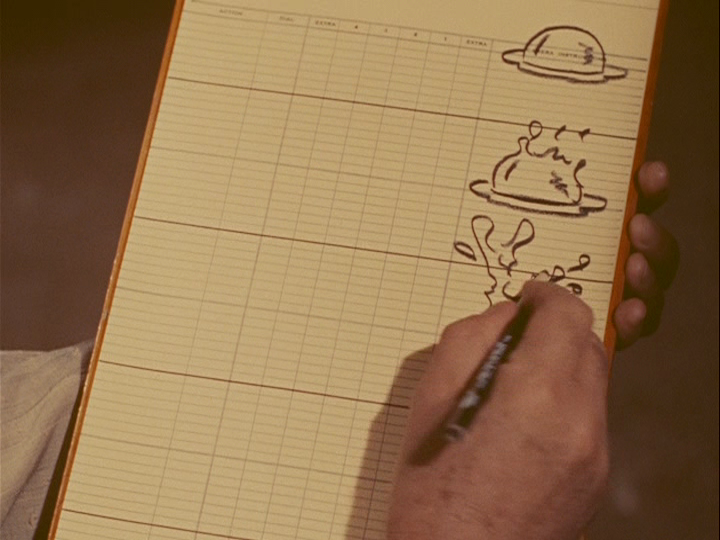
Dan MacManus sketching on an exposure sheet, trying to see how many frames it wll take to draw before the animator can draw the bubble bursting

The next animation technique we look at is effects animation: the trick of making the cartoon characters more believable by using extremely realistic animation of incidental action. There are many clips of animators watching various actions—including a baseball thrown through a window, or a bubble being blown from a pipe—and Disney explains that animating breakage required tremendous attention to detail. This leads into a clip of the earthquake from The Rite of Spring sequence in Fantasia. Continuing with that sequence, we see three effects animators looking at a tub of orange-colored mud, trying to solve three different problems for the creation of earth sequence in The Rite of Spring. Joshua Meador, head of the experiment, uses color chalks and pastels to render the sketch that would give an overall impression of the sequence. Jack Boyd’s assignment is to establish the individual action of a pair of bubbles, verifying his findings with the 2-drawing flipping action. Dan MacManus’s job is to see exactly how many drawings it would take to animate the bursting of a bubble, using an exposure sheet and a stopwatch. The audience then sees the clip from The Rite of Spring in its entirety.
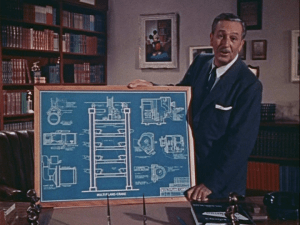
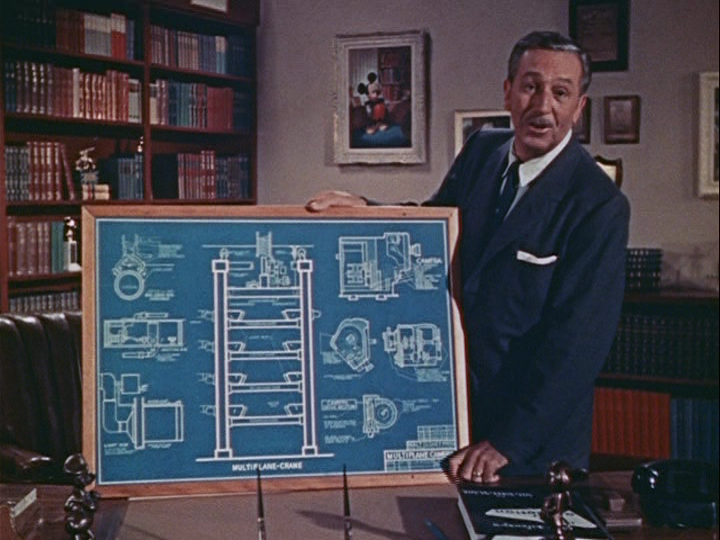
Walt with a blueprint of the Multi-Plane Camera, a Walt Disney Studios invention. Coincidentally, Ub Iwerks had created his own version at his own studio, only it was a horizontal camera

Walt pulls out a picture, calling it a different kind of drawing, which “also came out of our school of self-improvement here at the studio.” The blueprint is of the multi-plane camera, which was first used to great success in the Silly Symphony The Old Mill. Disney explains that the old process for animated films was fairly simple in construction and operation, but the biggest problem was that any dimension the character brought with him or her into the scene disappeared when the character left the frame. Another example used was a painting of a house on a moonlit night, and when the camera zoomed in on the scene, everything got larger, including the moon, which does not happen in reality. The use of the multi-plane camera shows the audience the big difference it makes in that scene. The audience next sees the opening scene of Bambi, and how the multi-plane camera works to give realism to the forest.
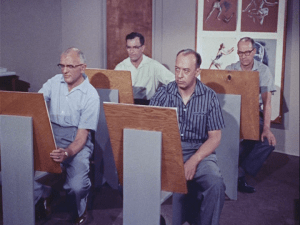
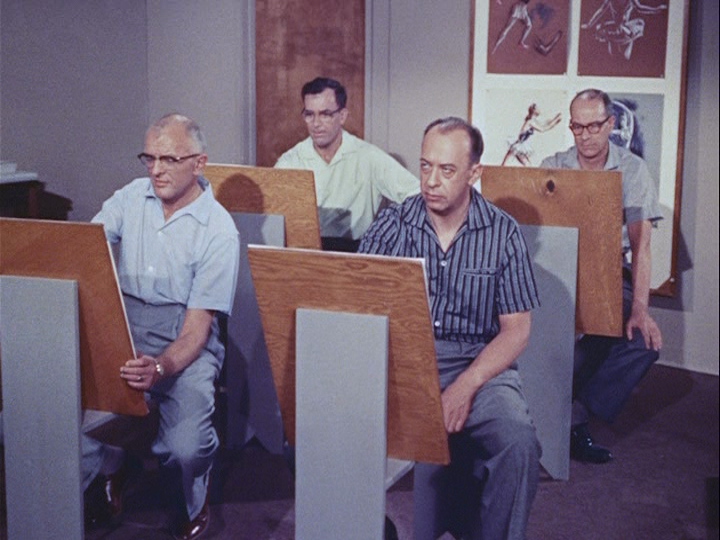
Four of the famous Nine Old Men, studying ballet moves. From Far Left: Milt Kahl, Frank Thomas, Marc Davis, and Ollie Johnston

“Perhaps the thing that distinguishes animated cartoons more than anything else is the trick of caricature,” Disney says. He tells the audience the story of the animation of Dance of the Hours from Fantasia, which involved the use of a live-action model to help the animators see the ballet movement of the dance. The ballet dancer they used was Helene Stanley, who was also the live-action model for Cinderella and Aurora in Sleeping Beauty. In this segment, we see the four of the famous Nine Old Men as they study Stanley’s movements. Kahl discovers that he may not be getting the kick right. Davis asks Stanley to perform it again, and as she does, Kahl makes a comment that the kick should be higher “in order to get all that weight off the ground. She’s no cream puff, you know.” Davis agrees, adding, “Yeah, that is a lot of beef.” These comments grab Stanley’s attention, but she keeps dancing. Thomas steps forward with his drawing and asks if he’s made the trunk too long: at this point, the audience sees that the drawings are those of the animals in the Fantasia sequence, although Stanley still thinks they are talking about her. Kahl responds to Thomas, “Oh, no, that’s what gives it that goofy look. Trunk’s way out of proportion to the rest of her body…it wouldn’t hurt to make [her legs] good and hairy.” These comments finally get the best of Stanley, who grabs her hat and cape and runs to the door, before turning around and seeing the animals they’ve been animating, and laughs before returning to the stage. The episode ends with the ballet segment from Fantasia, with all elephants, ostriches, and hippos.

The episode is wonderful for those who are fans of animation, and wish to see a dramatic look at how the animators were able to teach themselves and develop the new techniques to create better animation. Similar to “lessons learned” when creating computer animation in this generation, this highly recommended episode shows how the animators really had to, and did, step up to blaze a new trail.