RSS Feed

Tag Archives: Births

April 13

April 13, 1954 – Animator Glen Keane is Born

vlcsnap-2013-04-13-09h37m27s2

“I am convinced that animation really is the ultimate form of our time with endless new territories to explore. I can’t resist its siren call to step out and discover them.”

On April 13, 1954, Glen Keane was born in Philadelphia, Pennsylvania to cartoonist Bil Keane (known for Family Circus) and Thelma Carne Keane. The family would soon move to Paradise Valley, Arizona. Inspired by his father’s work, Keane developed an interest in drawing from an early age. Keane applied, and was accepted, to the Califormia Institute of the Arts, where he worked under animation teacher Jules Engel in the Program in Experimental Animation. Keane joined Disney in 1974; his first assignment, alongside Ollie Johnson, was animating the characters Bernard and Penny for the 1977 animated feature The Rescuers. After this film, Keane animated Elliot in Pete’s Dragon, and the climactic showdown in The Fox and the Hound. In 1982, Keane and friend John Lasseter were inspired by the new film Tron, and the two collaborated on a 30-second test sequence based on Maurice Sendak’s Where the Wild Things Are. Although the sequence was not well received at the time, it has since been considered revolutionary for the time, thanks to its experimentation of digital and hand-drawn animated characters.

In 1983, Keane left Disney to become a freelance artist, working on the character of Ratigan in The Great Mouse Detective, and on sections of the animated film The Chipmunk Adventure. He rejoined Disney to work on the characters of Fagin, Sykes, and Georgette in Oliver & Company, and was soon named Lead Character Animator. For the 1989 film The Little Mermaid, Keane designed and animated the lead character Ariel. From the moment he heard Jodi Benson (voice of Ariel) sing “Part of Your World,” Keane knew he had to animate Ariel. “I got the video of the recording and watched Jodi sing, and it was…just seeing it in her eyes, she believed it just like I believed it in listening to it,” he said. “There was this connection, it was just, ‘I’ve got to make that character as real as it is in my head.’” Keane would work as a supervising animator for Aladdin, Beauty and the Beast, and Pocahontas, and returned to his role as lead animator for Long John Silver in Treasure Planet. In 2003, Keane was named as the director of the 50th animated feature film Tangled. However, due to personal health issues, he stepped down from the role of director, but remained on the film as executive producer and animating director. After 37 years at Disney, Keane retired from the Disney Animation Studios.

April 8

April 8, 1941 – Child Actress, Singer, and Mouseketeer Darlene Gillespie is Born

vlcsnap-2013-04-07-20h53m36s156

The Mickey Mouse Club would provide a chance for the world to at last partake of [Gillespie’s] God-given vocal talent.” – Jennifer Armstong,author of Why? Because We Still Like You: An Oral History of The Mickey Mouse Club.

On April 8, 1941, Darlene Faye Gillespie was born in Montreal, Canada. At the age of two, her family moved to Los Angeles, California. She began singing lessons at age 10 after moving the church congregation to tears, and began dance lessons at age 11. In 1955, Gillespie auditioned for The Mickey Mouse Club, singing “The Ballad of Davy Crockett” for her audition piece, and was hired at the tender age of fourteen. She was on the red-string team for all three seasons of the show, and starred in several serials, including Corky and White Shadow and The New Adventures of Spin and Marty. She began a recording career after the show was cancelled, but none of her singles, though critically acclaimed, became hits. She was also cast as Dorothy in a proposed live-action film based on the Oz stories by Frank L. Baum, but this film never came to fruition. After a few stints in television, Gillespie retired from acting to become a nurse. In 1997, she came back to the public view, as she and her husband, Jerry Fraschilla, were accused of shoplifiting, and in 1999 she was sentenced to two years in prison for fraud, thanks to her involvement in a check-kiting scheme with Fraschilla, but was released after three months. Gillespie found herself in trouble once again in 2005, as she and her husband were indicted for trying to defraud a company of nearly $320,000 in class-action settlement funds.

April 6

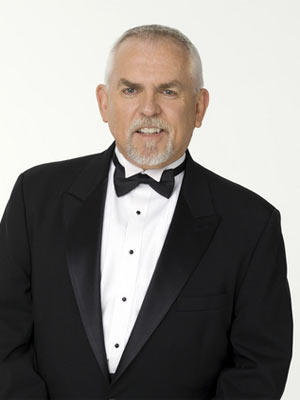
April 6, 1947 – Actor John Ratzenberger is Born

john-1

“[Ratzenberger’s] the ultimate Pixar character actor. He’s someone so clear, I know that guy after only two lines of dialogue. Having him in every film is like our Hitchcock cameo.” – Animator and Director Pete Doctor

On April 6, 1947, John Deszo Ratzenberger was born in Bridgeport, Connecticut. In 1971, he moved to London, where he worked as a house framer and began his acting career. His first role was in the 1976 film The Ritz. Throughout the ’70s and ’80s , Ratzenberger continued to score minor and major film roles in such films as Superman, Superman II, Star Wars Episode V: The Empire Strikes Back, and Ghandi. In 1982, he auditioned for a new sitcom series: Cheers. Although he originally auditioned for the role of Norm Peterson, he came up with the role of Cliff Clavin, the bar’s “know-it-all.” The series ran for eleven seasons, and reached critical acclaim. In 1995, Ratzenberger was cast in Pixar’s first full-length computer animated feature Toy Story as the piggy bank Hamm, and soon after became a recurring “lucky charm” for the studio, having a part in every Pixar film to date. Animator and director Andrew Stanton said in an interview, “We were at a press junket for Toy Story at Marino del Rey, and all the talent were invited to join us for a celebratory cigar and toast. John hung out with us all night. He was so much fun, I remember saying, ‘Let’s have him be in a film again.’” Ratzenberger has stated that “every time I get Pixar on the line, I just drop whatever I’m doing and get over to the studio.” He will soon be heard in Pixar’s Monster’s University, reprising his role of the Abominable Snowman.

April 5

April 5, 1930 – Opera Singer, Actress, and Disney Legend Mary Costa is Born

vlcsnap-2013-04-04-21h50m11s123

“Walt Disney called me, and he said, ‘You have a warm, warm voice, and it expresses love from your heart. Also, your voice is so naturally placed that you can use your signing voice as an extension of speech…I want you to drop all of the colors and the things that you feel about Briar Rose to your vocal palette, and I want you to paint with your voice.’”

On April 5, 1930, Mary Costa was born in Knoxville, Tennessee. Her family moved to Los Angeles, California, where, after high school, she entered the Los Angeles Conservatory of Music, studying with Gaston Usigli. She was featured on Edgar Bergen’s radio show with his character Charlie McCarthy. In 1952, she auditioned for the role of Princess Aurora in Sleeping Beauty. Walt Disney called her personally to let her know that she won the role. In 1958, Costa met acclaim when she filled in for Elisabeth Schwarzkopf at a concert in the Hollywood Bowl, and was then given the lead of her first operatic production, The Bartered Bride. Costa then made her debut at the Glyndebourne Festival. She would go on to perform at the Metropolitan Opera, the royal Opera House, and the Bolshoi in Moscow, as well as in several television appearances. In 1989, she received the Lifetime Achievement Award from the Licia Albanese Puccini Foundation, and in 1999, she was named a Disney Legend. In 2003, Costa was appointed to the National Council on the Arts by President George W. Bush, where she served until 2007.

April 2

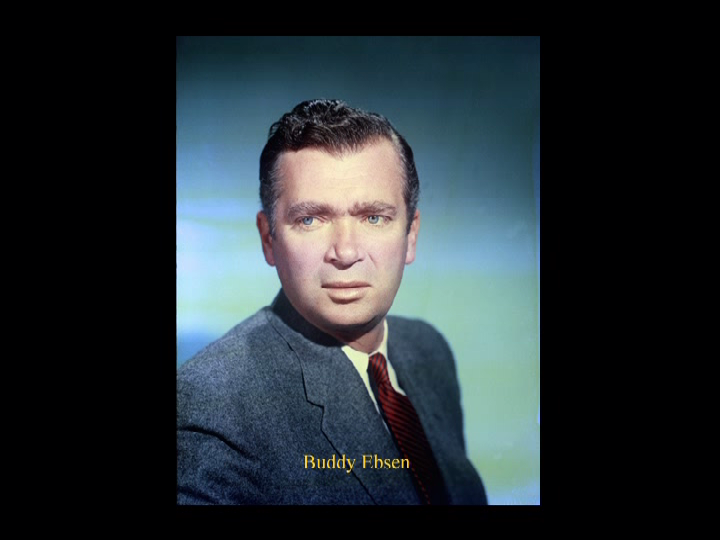
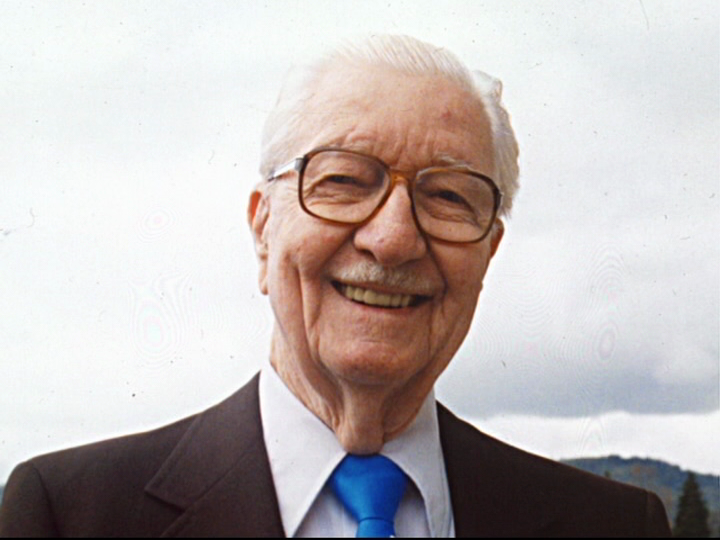
April 2, 1908 – Actor, Dancer, and Disney Legend Buddy Ebsen is Born

vlcsnap-2013-04-01-21h16m17s201

“Buddy [Ebsen] said that it was really difficult for him [to lose the role], but once he saw Fess [Parker] on screen, he knew that Walt had made the right decision.” – Paul F. Anderson, author of The Davy Crockett Craze.

On April 2, 1908, Christian Rudolph “Buddy” Ebsen, Jr., was born in Belleville, Illinois. At the age of ten, his family moved to Florida, where he and his siblings learned how to dance at their father’s dance studio in Orlando. Although he had aspirations to be a doctor, the collapse of the Florida land boom in the 1920s forced him to leave the University of Florida and head to New York City to become a dancer. He and his sister, Vilma Ebsen, became a dual act in vaudeville as “The Baby Astaires.” This led to a screen test by MGM, and they each signed a two-year contract with MGM, making their screen debut in Broadway Melody of 1936. While this would be Vilma’s only film, Ebsen’s career took off as a dancer in several films.

In 1939, Ebsen was cast in The Wizard of Oz as the Scarecrow, but swapped roles with Ray Bolger, who was originally cast as the Tin Man. However, Ebsen’s involvement in the film was short-lived, as he experienced an allergic reaction to the aluminum dust in the make-up, and was forced to leave the film. During World War II, Ebsen became a Lieutenant, Junior Grade in the Coast Guard, and after the war, he resumed his acting career in the new medium of television. In 1954, Ebsen starred in one of his more well-known roles: George Russel in Walt Disney’s Davy Crockett. Originally, Ebsen was tapped to play Davy Crockett, but Walt Disney, after seeing Fess Parker in a bit part in the sci-fi film Them was convinced that Parker was the man to play Crockett. Ebsen was then cast in the role of Russel. For Disney, Ebsen also stared in The One and Only, Genuine, Original Family Band as Calvin Bower, and the serial “Corky and White Shadow” on the Mickey Mouse Club. Ebsen would also dance on film for the staff to study and create Audio-Animatronics. In 1962, Ebsen scored his most famous role of Jed Clampett on the long-running sitcom, The Beverly Hillbillies. In 1973, he starred in another series, Barnaby Jones. In 1993, Ebsen was named a Disney Legend. He passed away in 2003 at the age of 95.

March 31

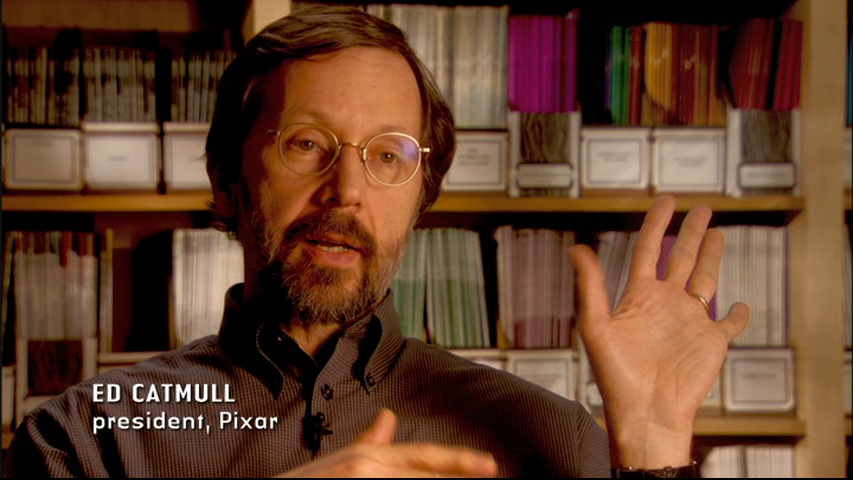
March 31, 1945 – Ed Catmull, President of Pixar Animation Studios and Walt Disney Animation Studios, is Born

vlcsnap-2013-03-31-08h17m29s92

“I drew a lot; I wanted to be an animator. I wanted to be an artist. But at the same time, I believed that I wasn’t good enough to be an animator, so I switched over to physics and computer science. As soon as I took the first class, I just fell in love with it, it just blew everything else away.”

On March 31, Edwin Earl Catmull was born on March 31, 1945, in Parkersburg, West Virginia. Although he loved to draw from an early age and dreamed of becoming an animator, he believed early on that he didn’t have the talent necessary, and decided to study physics and computer science at the University of Utah. Around the country at that time, funding was given to select universities to pursue computer science, and Catmull participated in one of the first labs in computer graphics. In this lab, Camtull created a short computer-animated film of his own left hand, which ultimately helped in the development in creating curved surfaces and eliminating jagged edges. This film was inducted into the National Archives in December, 2011 as a ground-breaking work. In 1974, Catmull graduated with his PhD. Soon after graduation, Alexander Schure, founder of the New York Institute of Technology, hired Catmull as the head of the computer graphics department in the hopes of creating new tools and products to create computer animation. There, Catmull met Alvy Ray Smith, who became a close collaborator and friend for many years. At NYIT, Catmull and his research group developed several tools that would allow animators to draw and paint directly into the computer, including Tween, Paint, and SoftCel.

The work being done by Catmull and his team was noticed by George Lucas, who hired Catmull to form a new computer division at Lucasfilm. Catmull accepted the offer, and in 1979, he became the Vice President of the computer graphics division. Catmull and Smith, however, were still working toward the goal of a completely computer animated full-length film. Tom Porter, technical director at Pixar noted that, “…Ed and Alvy realized, in order to get in the game, we’ve got to put characters up on the screen, and that meant character animation, and that changed everything right there.” As luck would have it, Catmull ran into John Lasseter at a conference, and Catmull jumped at the chance to bring a real animator to Lucasfilm to help realize the dream of a computer animated film. With Lasseter, the group created the short film The Adventures of Andre and Wally B., along with new software to replicate the squash and stretch movements of traditional animation, which was well received at the 1984 SIGGRAPH conference. Catmull and the team also developed the most powerful graphics computer of the time: the Pixar Image Computer. However, sales of this computer were stagnant, as the software was only sold in limited markets. Catmull and Smith, with Lucas’ blessing, spun off the computer division as Pixar, and struggled to find an investor.

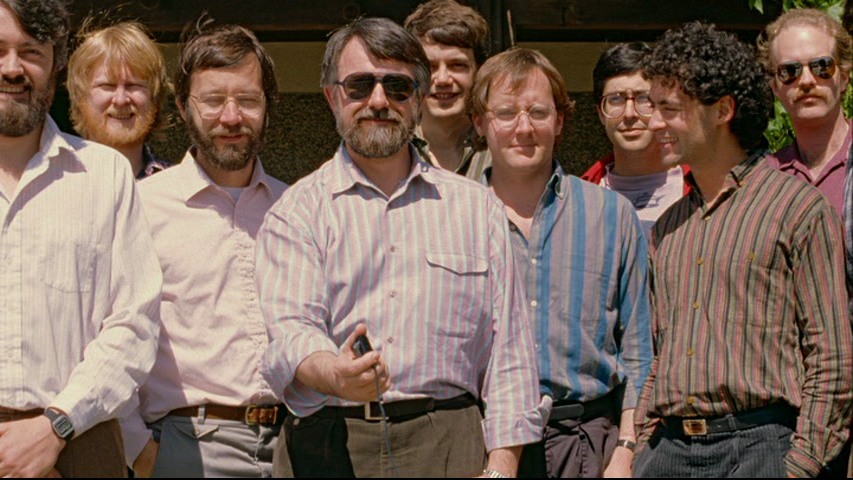
Catmull (L) with the rest of the Pixar team from Lucasfilm

Catmull (L) with the rest of the Pixar team from Lucasfilm

In 1986, their prayers were answered when Steve Jobs heard of Pixar. “That was the first time I met Ed [Catmull], and he shared with me his dream to make the world’s first computer-animated film. And I, in the end, ended up buying into that dream, both spiritually and financially,” Jobs shared in an interview. He launched Pixar, and Catmull was named as Chief Technical Officer. He also helped develop the RenderMan system used in Toy Story and Finding Nemo. In 2006, when Disney acquired Pixar, Catmull was then named the President of Pixar and Disney Animation, and with Lasseter, the two were put in the prime position of bringing the art of 2-D animation back to life. “Everybody at Pixar loves 3-D animation, you know, we helped develop it. But we also love 2-D animation, and to think that 2-D was shut down, and that [Pixar was] used as an excuse to shut it down was awful,” Catmull said about the decision of most animation studios shutting down their traditional animation studios. “We saw this art form being thrown away, so for us, it was just, it was a tragic time.” Bob Iger, CEO of the Walt Disney Studios, wanted to take the studio back to the glory days of animation, and knew that Pixar had the right people to do that. “While we will make 3-D movies, we’re also going to make 2-D movies, cause it’s part of this wonderful heritage that we’ve got here, and it’s a beautiful art form,” says Catmull. “It feels like this [partnership between Disney and Pixar] is the true culmination of the building of Pixar and this amazing company into something which will continue on and continue to make waves in the future.”

March 27

March 27, 1901 – Cartoonist and Disney Legend Carl Barks is Born

vlcsnap-2013-03-26-22h50m13s133

“I want to thank the Disney Studios for this [Disney Legends] award, not only for myself, but for all those comic book fans: the kids who used to buy those comic books for ten cents and now sell them for $2,000.”

On March 27, 1901, Carl Barks was born in Merrill, Oregon. His passion for drawing showed at an early age, and he would try to improve his style by copying the comics from the newspaper. After spending his teenage years and his twenties drifting from job to job, he decided to apply to the Disney Studios in 1935, and was hired as an inbetweener with a salary of $20 a week. He started submitting gag ideas, and was then moved over to the story department. As the Donald Duck short film series began to develop, Barks worked closely with Jack Hannah in creating several story ideas for the character, including such shorts as Donald’s Nephews and The Vanishing Private. However, the legend goes that Barks was having allergy problems from the air conditioning in the studio, and wanted to find work elsewhere within Disney that wouldn’t require him to be at the studio full time. In 1942, Barks and Hannah created a one-shot comic for Donald called “Donald Duck Finds Pirate Gold,” which became the first original Disney comic book. This was the start of Barks’ career with the Donald Duck comics.

Barks was able to flesh out not only Donald’s character through the comics, but also the characters of Donald’s nephews; he also created new characters Gladstone Gander, a rival for Daisy’s affections, and his most famous creation, Scrooge McDuck. Scrooge’s first appearance was in “Christmas on Bear Mountain.” Other characters came along, including the Beagle Boys and Morgana, which are seen in the animated series Ducktales, based on Barks’ work. Barks’ stories were epic adventures, and he was known for doing thorough research on the regions in which the stories were set. It was also said that the opening sequence in the film Raiders of the Lost Ark was based on Barks’ work. Barks retired from the comics in 1966, and in 1991, Barks was awarded as a Disney Legend. He passed away in 2000 at the age of 99.

March 25

March 25, 1956 – Child Actor and Disney Legend Matthew Garber is Born

vlcsnap-2013-03-25-04h54m22s34

“…he’s indelibly printed in all of our minds; he’s eternal from those pictures, Mary Poppins especially, and…what a cute little boy. An amazing little soul.” – Karen Dotrice

On March 25, 1956, Matthew Adam Garber was born in Stepney, London, England. Roy Dotrice, father of Karen Dotrice, was a family friend and he recommended Garber to Disney Casting. Garber was hired at the age of seven to play the role of Geordie in The Three Lives of Thomasina alongside Karen Dotrice. The film was a moderate success. In 1964, Garber was cast in the role of Michael in the smash hit Mary Poppins, making him and other members of the cast famous. In 1967, Garber was teamed up with Dotrice for a third time in the film The Gnome-Mobile. After traveling in India in 1976, Garber contracted hepatits, which quickly spread to his pancreas. He passed away at the young age of 21. In 2004, Garber was awarded as a Disney Legend, along with Dotrice.

March 22

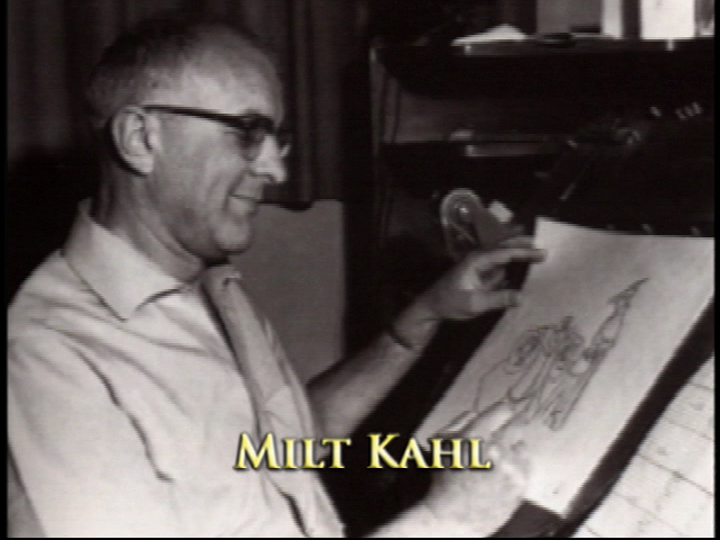
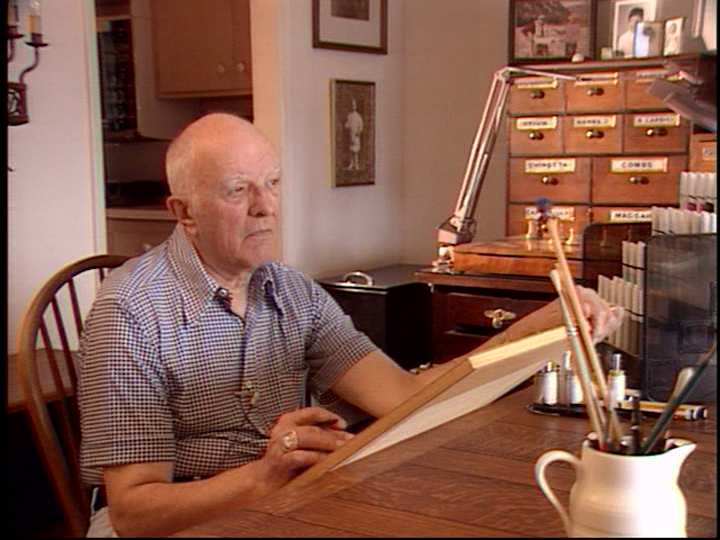
March 22, 1909 – Animator, Member of Disney’s Nine Old Men, and Disney Legend Milt Kahl is Born

vlcsnap-2013-03-22-09h07m37s234

“I don’t think it’s possible to be a top notch animator without being a very excellent draftsman. You have to be able to draw these characters in order to move them around and articulate them. There’s no way of doing it unless you draw very well.”

On March 22, 1909, animator Milton Erwin Kahl was born in San Francisco, California. At the age of 16, Kahl dropped out of high school to help provide for his family, and was hired by the Oakland Post Enquirer in the art department. After three years there, Kahl then got a job at the San Francisco bulletin, but was laid off when the Great Depression hit. He was able to find some work as a commercial artist and began to take art classes to improve his work. In late 1933, as he was struggling once again to find work in commercial art, a friend from the Oakland Post Enquirer, future Disney Legend Ham Luske, recommended that he apply to work at the Disney studios. Kahl was hired on June 25, 1934. with his first important animation assignment being the 1936 Mickey Mouse short film Mickey’s Circus. He was then assigned to animate the animals in the full-length animated feature Snow White and the Seven Dwarfs, along with Eric Larson among others.

Kahl’s talents shone in the next film, Pinocchio, when the staff of the studio were having problems trying to create the title character in terms of personality and overall design. “They were thinking in terms of a puppet all the time, naturally, because he was a puppet,” Kahl said. “And I was very critical of what they had. So I did a test scene where Pinocchio had donkey ears and a tail and was down on the sea bottom…and I handled it not thinking of so much as a puppet, as just a little boy. Walt liked it, so that became the model.” This way of thinking helped reshape the character and restart production, and Kahl was given the plumb role of directing animator on Pinocchio once he comes to life. This role also established Kahl as one of the top animators at the studio.

vlcsnap-2013-03-22-09h10m11s254

Kahl’s role grew, as he was considered one of the best draftsmen in the studio. Although his skills were being recognized before the outbreak of World War II, some of his best work was during the wartime period, including the film Saludos Amigos and the short films Education for Death and Tiger Trouble. After the war, Kahl was responsible for the final design of characters, and was given the task of animating non-comic characters, including Alice from Alice in Wonderland, Peter Pan and Wendy from Peter Pan, and the princes in Cinderella and Sleeping Beauty, with John Canemaker, author and film historian, noting that Kahl was “always stuck with the princes.” Although Kahl would complain of being “saddled” with these characters, he was secretly proud of his ability to bring these characters to life. Other highlights of Kahl’s career were the animation of character interactions in The Sword in the Stone (which Kahl considered “one hell of a picture”) and the character of Sher Kahn in The Jungle Book. His last work for the studio was animating Medusa and Snoops for the film The Rescuers, and left on April 30, 1970, although he did do a few character designs for The Black Cauldron. On April 19, 1987, Kahl passed away of pancreatic cancer. He was inducted into the Disney Legends in 1989. In 2009, the Academy of Motion Pictures held a panel to celebrate the centennial of Kahl’s life where animators Brad Bird, Andreas Deja, Ron Clements, John Musker, and Floyd Norman, as well as voice actress Kathryn Beaumont, celebrated his style and influence in the shaping of many Disney classics.

March 17

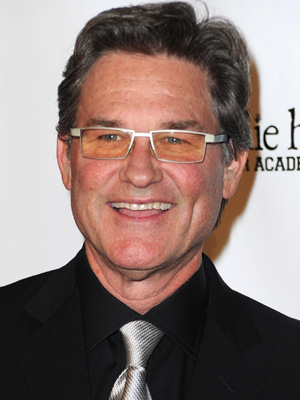
March 17, 1951 – Actor and Disney Legend Kurt Russell is Born

kurt-russell

“The script lady pulled me aside one day and said, ‘I think they’re going to offer you a contract. Do you know why Walt likes you? Because you’re not intimidated by him.’ I never could figure out why anybody would be intimidated by him.”

On March 17, 1951, Kurt Vogel Russell was born in Springfield, Massachusetts. His career as a child actor began in the late 1950s, with an appearance in the ABC western Sugarfoot. At age 11, he appeared in the Elvis Presley film It Happened at the World’s Fair in an uncredited part where Elvis’ character paid him a quarter to kick him. In 1963, he won the lead role of Jaimie in the ABC western series The Travels of Jaimie McPheeters. He appeared in other television roles around this time, and in 1966, Russell began his work with Disney, appearing in a starring role in the film Follow Me, Boys! alongside Fred MacMurray. This was the beginning of a long string of films for Disney through the ’60s and ’70s, which included The One and Only, Genuine, Original Family Band, The Horse in the Gray Flannel Suit, The Barefoot Executive, and The Computer Wore Tennis Shoes, including its sequels Now You See Him, Now You Don’t and The Strongest Man in the World. Russell also provided the voice of adult Copper in the animated feature film The Fox and the Hound, and narrated the educational film Dad, Can I Borrow the Car? Russell is one of the few child actors that has been able to transition to a successful, film career as an adult, and has still performed in several Disney films, including Miracle and Sky High. He was awarded as a Disney Legend in 1998.