RSS Feed

Tag Archives: Academy Award winning

June 2

Posted on

June 2, 1989 – The Touchstone Film Dead Poets Society is Initially Released to Theaters
“Carpe diem. Seize the day, boys. Make your lives extraordinary.”

On June 2, 1989, the film Dead Poets Society was initially released to theaters, with a general release on June 9th. Distributed by Touchstone Pictures, it won an Academy Award for Best Screenplay for Tom Schulman, who based it on his own life at a private school in Tennessee. It was directed by Peter Weir, and stars Robin Williams as John Keating, Robert Sean Leonard as Neal Perry, Ethan Hawke as Todd Anderson, and Josh Charles as Knox Overstreet.

Set in 1959, the movie starts with the beginning of Welton Academy’s traditional opening ceremony, where several of the main characters are seen carrying in banners with the titles “Tradition,” “Excellence,” and “Discipline.” The dean brags about the school’s achievements, calling it the best preparatory school in the United States. He then introduces the new teacher of the English department, Mr. John Keating, who has been teaching in London, and is an alumnus of Welton Academy. We then catch a glimpse of a few of the boys with their parents, and Neal Perry, one of the shining stars of the academy, meets Todd Anderson, his new roommate. Todd’s brother attended Welton, and Neal remarks, “Oh, so you’re that Anderson.”
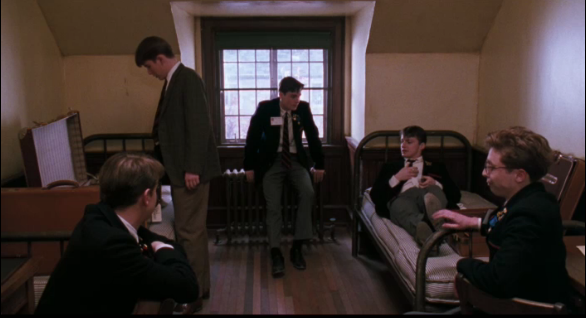
Todd meets Neal and his friends for the first time as they talk about their study group

As Neal and Todd move into their room, Neal’s friends Knox Overstreet, Charlie Dalton, and Steven Meeks appear to talk about their summer and joke about their study group, to which they reluctantly add Richard Cameron, whom they describe as a “boot-licker.” Neal mentions Todd’s brother, who was valedictorian and national merit scholar, which seems to cause Todd some embarrassment. Neal’s father enters the room, and lets Neal know that he will be dropping the school yearbook from his extracurriculars. Neal argues that he’s the assistant editor, but his father will hear none of it, letting Neal know that after Neal graduates medical school and is on his own “then you can do what you damn well please.” Until then, he is to follow only his father’s orders. Neal acquiesces, but looks hurt that he has to give up the yearbook.

The first day of school shows the boys being loaded with what appears to be more work than they can handle, from science, to Latin, to trigonometry. When the boys get into English class, Mr. Keating enters whistling the 1812 Overture, and walks out of the room, to the astonishment of the class. When he tells them to follow, they are confused, but they finally leave. Keating takes them to the main lobby, where he teaches them about the poem “O Captain! My Captain!” by Walt Whitman, and that they may call him “O Captian! My Captain!” if they feel slightly more daring. He then teaches them one of the most important lessons in the film: carpe diem. “We are food for worms, lads,” he reminds them, explaining how life is too short.
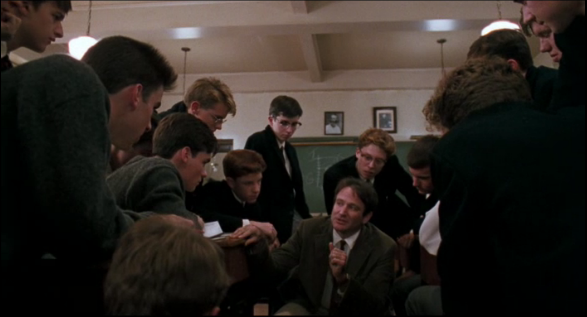
Mr. Keating pulls his class close, explaining the powerful impact language has on life

During the next English class, Neal is asked to read the introduction, and Keating tells them that he can’t stand the introduction, equating it to American Bandstand: “Well, I like Byron, I give him a 42, but I can’t dance to it.” He then asks him to rip out the entire introduction. “In my class, you will learn to think for yourselves again,” he informs them. “You will learn to savor words and language. No matter what anybody tells you, words and language can change the world.”

The boys find Keating’s yearbook, and discover that he was a member of the Dead Poets Society, leaving them to wonder what that means. They approach and ask him what it was, and Keating is a bit hesitant, as he thinks the administration might not favor it. But explains that he and his friends would sit around letting the words of poetry “drip from their mouths like honey.” Neal is inspired to begin the society again, and with the help of Keating and his old poetry book, they decide to meet. Neal asks Todd to come, but Todd is very shy and declines. But Neal persists, and finally the boys sneak out, beginning the first meeting of the Dead Poets Society.
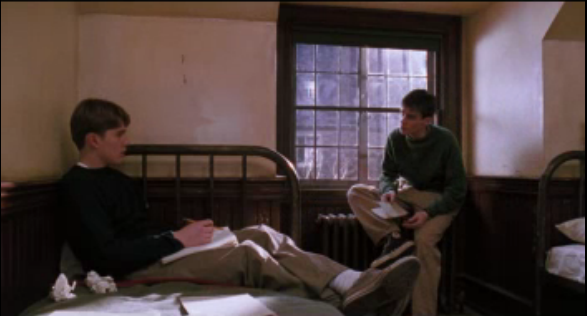
Although Neal is initially elated about discovering his passion, he becomes infuriated that the shy Todd seems to not be effected by anything Mr. Keating has to to say

The English classes continue, with Keating reading Shakespeare in humorous ways from imitating Marlon Brando and John Wayne, to having the students stand on his desk to see things in a new perspective. After class, Neal lets Todd know that he has finally decided what he wants to do with his life: he wants to become an actor. He decides to audition for a production of A Midsummer Night’s Dream, screaming “Carpe Diem!” Neal then chews Todd out for not being stirred up by anything, thinking that Todd has not been affected by anything Mr. Keating has said. Todd argues that when Neal speaks, people listen, and he’s not like Neal. But Neal won’t take that for an answer, and is determined to stir up something in Todd.

Neal then announces he got the part of Puck in A Midsummer Night’s Dream, and forges the letters of permission from his father and the dean. Todd slowly begins to discover a love of writing with Keating’s poetry assignment. Unfortunately, he was unable to come up with a poem he found acceptable to present. Keating pushes him out of his comfort zone, making him come up with a poem on the spot. Keating has finally reached him, and Todd is able to open up.
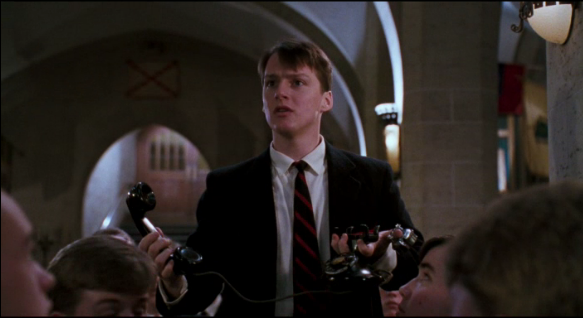
Charlie plays a prank at the assembly, pretending God has called to tell the Dean to admit women in the school

Things begin to go downhill for the Dead Poets Society, when Charlie publishes an article in the school paper in the club’s name to demand that their school go co-ed. He gets himself into trouble by pretending that God has called in the middle of an assembly, saying they should have girls at Welton. Charlie is then punished by getting paddled, but does not give up the members of the club.

Neal begins practices for the play, but comes back one night to find that his father has found out and is furious. He demands that Neal quit, although the play is the next night. “I made a great many sacrifices to get you here, Neal, and you will not let me down,” he warns his son. Neal tells him he will quit, but later that night, he goes to talk with Mr. Keating, who advises him to show his father what’s in his heart, where his passion lies, before opening night. Neal decides to stay with the play, lying to Mr. Keating, saying his father is letting him stay with the play.
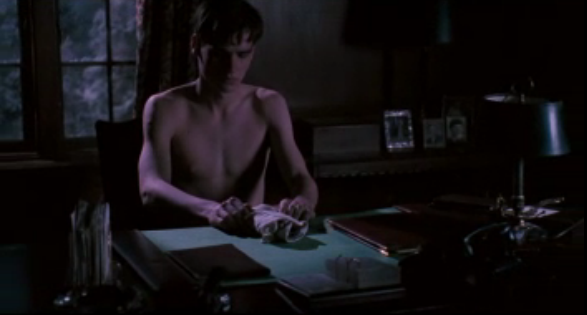
Unable to live the life his father has decided for him, and unable to have a life of his own, Neal resorts to not living at all

Neal shines in the play as Puck, and his father walks in to see the performance, and Neal’s standing ovation. Infuriated by his son’s disobedience, he pulls his Neal out of school, taking him home and informing him that he will be enrolled in military school. Unable to live the life his father has decided for him anymore, Neal takes a gun from his father’s study late that night and shoots himself.

The mood at Welton is somber as they hear the news of Neal’s death. Todd is hysterical, blaming Neal’s father. Mr. Keating is also overcome with emotion when he hears the news, sitting at Neal’s desk and crying. At the request of Neal’s family, the school conducts an investigation as to why he took his life. Charlie accuses Cameron of telling the board of directors all about the club, and Cameron doesn’t deny it, as he wants to save his own skin by putting Mr. Keating on the line. When he tells the group that they should “let Keating fry,” Charlie loses it and punches Cameron, leading to Charlie’s immediate expulsion. When Todd is questioned by the school, they say that it was Mr. Keating’s actions that led to Neal’s death. Mr. Keating is then fired by the school.
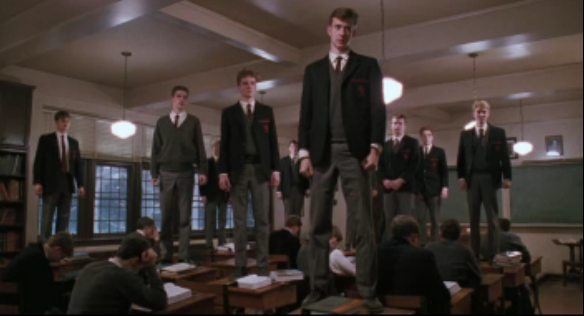
Half of the class stands on their desks, showing their admiration for Mr. Keating, their Captain

The English class is taken over by the Dean, who wants them to read the introduction that they had all ripped out. As Mr. Keating leaves the classroom after collecting his personal belongings, Todd shoots up and admits the truth to Mr. Keating, who tells Todd that he understands. Todd isn’t done, as he gets up on his desk and calls, “O Captain! My Captain!” He is then followed by most of the class, including Knox, Pitts, and Meeks. With a smile, Mr. Keating thanks them, knowing he has made a difference in their lives.

May 29

Posted on

May 29, 2009 – The Pixar Film Up is Released to Theaters

“My name is Dug. I have just met you and I love you.”

 On May 29, 2009, the Disney Pixar film Up was released to theaters. The film was Pixar’s 10th film, and the first released in 3D format. The film holds the distinction of being the first animated film shown at the Cannes Film Festival, as well as the second animated film ever nominated for the Best Picture Academy Award. The film won the Academy Award for Best Animated Feature, and Best Score. Up was directed by Pete Docter, with story by Docter, Bob Peterson, and Thomas McCarthy, and stars the vocal talents of Ed Asner (Carl Fredericksen), Christopher Plummer (Charles Muntz), Jordan Nagai (Russell), and Bob Peterson (Dug). As usual, Pixar’s lucky charm, John Ratzenberger, has a small voice role in this film.

The film tells the story of Carl Fredericksen, which begins with him as a shy boy whose hero is legendary explorer Charles Muntz. He watches a newsreel of Muntz, and is inspired to pretend he is having his own adventure when he hears a voice saying Muntz’s famous phrase: “Adventure is out there!” He enters the dilapidated house to see a girl pretending to be Charles Muntz on an adventure. Although a mishap causes Carl to break his arm, the girl, Ellie, comes to visit him, and tells him she likes him, as they bond over a love of adventure and an admiration of Muntz. This leads to a segment showing their lives together after their wedding day until Ellie’s death. Ellie’s death is hard on Carl, especially since he was never able to take her to explore Paradise Falls as they promised.

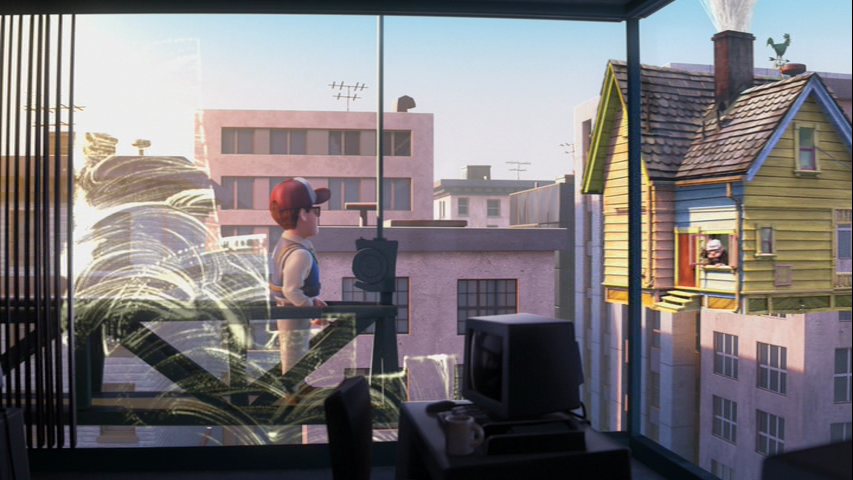
Carl greets a window-washer as his house floats through the city

A while later, all the houses around Carl’s have been torn down for urban development, but Carl refuses to sell. He also runs across a young boy named Russell, who is part of a group called the Wilderness Explorers, and wishes to get his “Assisting the Elderly Badge” by offering to help Carl “cross something,” and Carl tricks him into looking for a snipe. A mishap sends Carl to court, where is ordered to leave his house and live in a retirement home. Unable to bear with parting with his and Ellie’s home, Carl uses his skills as a balloon salesman to keep the promise of the house landing at Paradise Falls: he attaches thousands of balloons to the house, turning it into a makeshift airplane, and Carl sets sail for Paradise Falls. Unbeknownst to him, Russell was hiding under the house at the time of lift-off, and becomes Carl’s accidental co-pilot.

After surviving a severe thunderstorm, the two find themselves in Venezuela, a bit of a ways from the falls. They attach themselves to the still-buoyant house, intending to walk it over to the falls before the balloons deflate. On their way, they encounter a large bird that Russell believes to be a snipe and names it Kevin (although Kevin is a girl), and a dog named Dug, who is able to talk through the use of a device on his collar. Dug has been on a special mission to “capture the bird,” which causes no shortage of trouble between Dug, Kevin and Russell that annoys Carl to no end. There are other dogs in the jungle searching for the bird, and when they run across Carl and his gang, they take him to their master: the one and only, Charles Muntz.

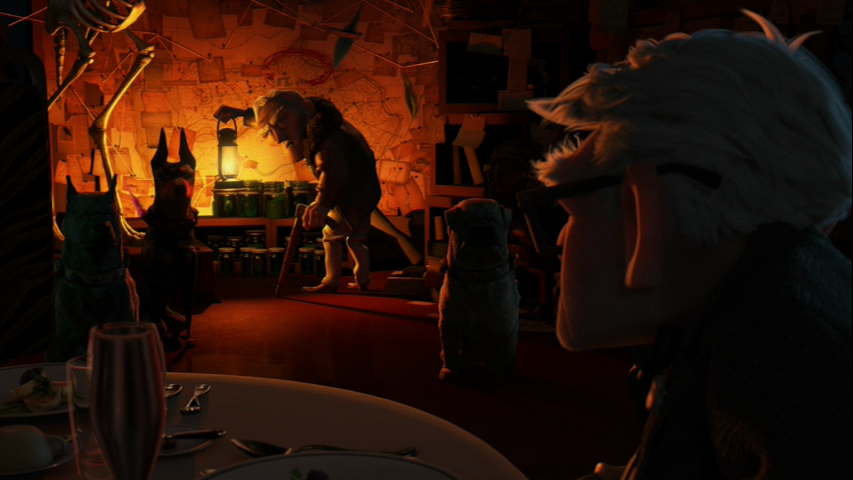
Muntz is determined to get the bird at all costs; his demeanor changes fiercely when he finds that Carl and Russell have seen the bird

Although initially elated that his hero is alive, Carl finds out that Muntz has been driven to almost madness in his search for the bird that will clear his name. Muntz shows Carl helmets of explorers he’s met and killed, convinced they were there at the falls to steal his bird. Upon finding out that Carl has the bird, he decides he will kill Carl and Russell and steal the bird. At one point, Carl has to decide to either save Kevin or save his house, and when he picks to save his house, this allows Kevin to be captured.

Carl finally gets his house to the falls, although Russell is angry that Carl broke his promise to protect the bird. As Carl sits inside the house, he discovers Ellie’s adventure book from when she was a little girl, and finds that she has filled it with memories of their life together, and message thanking him for their adventure, and now he should find a new one. Inspired by her words, Carl resolves to rescue the bird. Russell, still angry, has decided to go on his own to rescue Kevin, and Carl has to rescue him with Dug’s help. There is a fight to the finish between Carl and his childhood hero, with Muntz falling to his death, and Carl’s house falling to the ground, which Carl accepts as for the best, as “it’s just a house.”

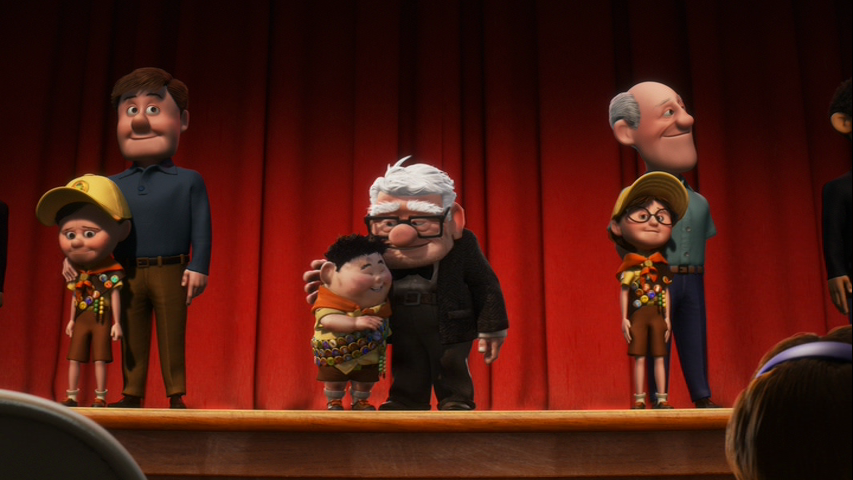
Carl stands with Russell at the boy’s Wilderness Explorers meeting, with Carl becoming Russell’s surrogate grandfather

Kevin is reunited with her chicks, and Russell and Carl head home in Muntz’s airship. At the Wilderness Explorers meeting, Carl is there to give Russell the “Assisting the Elderly Badge,” as well as a very special badge – the grape soda badge Ellie gave to Carl as a child, known as “The Ellie Badge.” After the ceremony, Carl, Russell and Dug sit on the curb at the ice cream parlor, counting cars. The house is seen again as well – landing perfectly next to the falls.

May 24

Posted on

May 24, 1913 – Birth of Disney Legend and Matte Painter Peter Ellenshaw

“[Ellenshaw’s] a pretty unique man. He had a sense of style and fantasy to his paintings that was extraordinary. If you were to look at a Peter Ellenshaw painting from Mary Poppins, it has an impressionistic quality to it.”

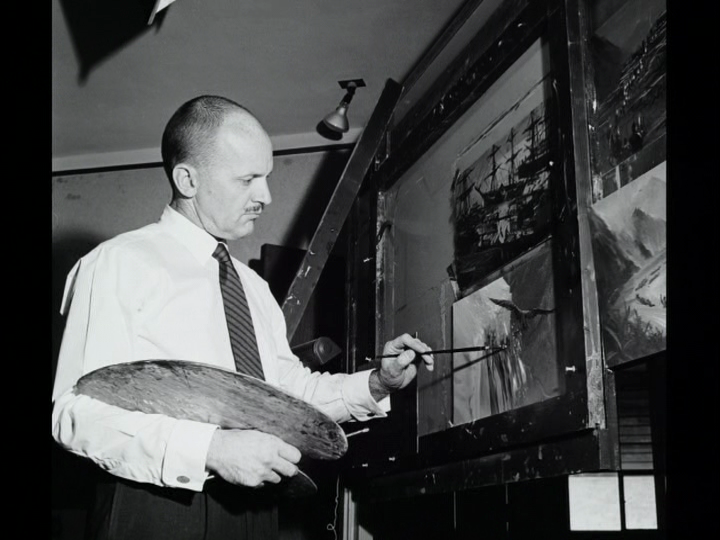
Peter Ellenshaw, best known as the matte painter on Mary Poppins, was born in London in 1913 and raised in Essex. His father died in World War I, and Ellenshaw left school at the age of 14 to support his family, but he kept up his passion for drawing. After meeting and being offered a job by matte painter Walter Percy Day, Ellenshaw worked as a painter on such films as The Thief of Baghdad, The Red Shoes, and Spartacus.

When Walt Disney set to work on making live-action films in England, he personally chose Ellenshaw to create the scenes of England during the days of Treasure Island. Disney then brought Ellenshaw to work on the production of 20,000 Leagues Under the Sea, which led to his best-known work of the background paintings in Mary Poppins, for which he won an Academy Award for Best Visual Effects.

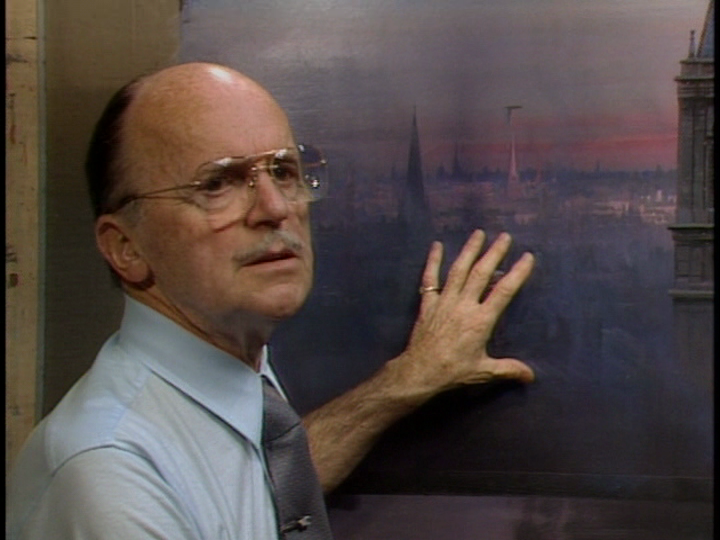
Ellenshaw explaining the special effects behind one of his matte paintings for Mary Poppins

Ellenshaw continued to contribute to Disney films as a matte artist, including Pollyanna and Swiss Family Robinson; in addition to his matte art, Ellenshaw contributed to the photographic effects on Darby O’Gill and the Little People, worked as a production designer on Island at the Top of the World and The Black Hole, and was the art director of Bedknobs and Broomsticks. Ellenshaw retired after his work on The Black Hole in 1979; however, he contributed to the matte paintings in the 1990 film Dick Tracy. He was named a Disney Legend in 2003, and passed away in 2007.

May 17

Posted on

May 17, 1950 – Disney Legend and Lyricist Howard Ashman is Born

“Howard is referred to by Roy Disney as another Walt, which shocked me when I was interviewing him, because of all people, why would Roy say this about Howard Ashman? But he was, to us and our generation, he was a Walt Disney type.” – Don Hahn

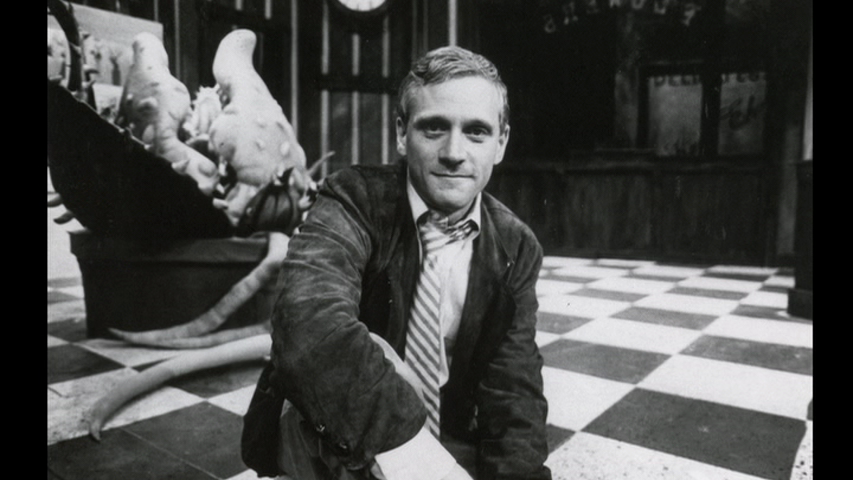
Howard Elliott Ashman was born on May 17, 1950, in Baltimore, Maryland. An early lover of theater, Ashman joined the Children’s Theater Association at age nine and remained there until he left for college in 1967. Although Ashman loved acting, in college he discovered his love of writing and directing. After school, he became the artistic director of the WPA Theater in New York, and met writing partner Alan Menken while working on a musical adaptation of Kurt Vonnegut’s God Bless You, Mr. Rosewater. The two had a major success with the show Little Shop of Horrors, and Ashman won a Drama Desk Award for Outstanding Lyrics.

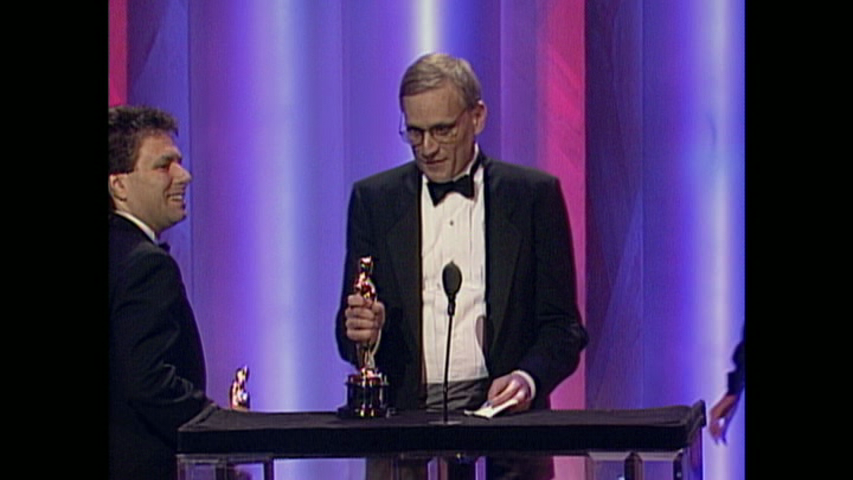
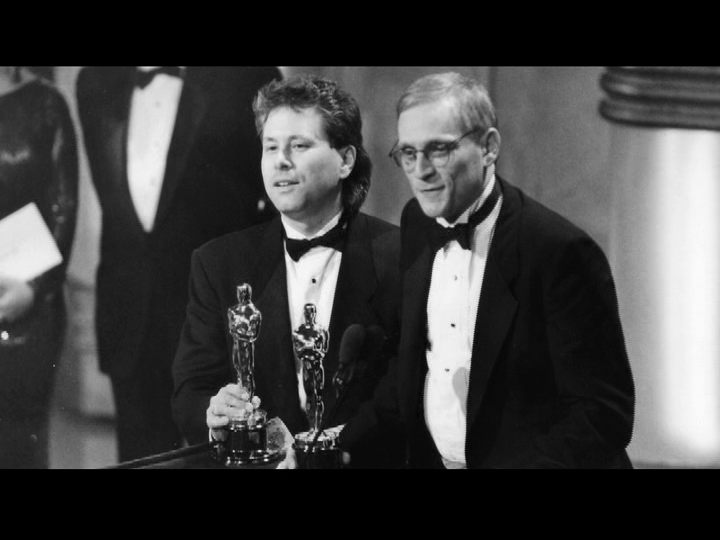
David Geffen was key in bringing Ashman and Menken to the Disney Studios. When Ashman came to Disney, he was offered three projects: an adaptation of Tina Turner’s autobiography, a live action version of The Thief of Baghdad (which would later become Aladdin), and The Little Mermaid, which he chose to work on. At the film’s crew meeting, Ashman said, “When I was approached with the opportunity to work for Disney, period, I leapt at the – I said, ‘What about animation? What about working in that department?’ That’s what I really wanted to do.” It was Ashman’s idea to make Sebastian the crab a Jamaican crab, which brought a whole different musical style to Disney animation. Ashman also brought in Jodi Benson as the voice of Ariel. He and Alan Menken won the Academy Award for Best Song for “Under the Sea.”

Ashman and Menken (L) winning the Academy Award for “Under the Sea”

In 1988, Ashman found that he was HIV positive, but continued to work for Disney on Beauty and the Beast. Disney allowed Ashman to work in New York, and he was instrumental in many aspects of the film, from the casting to some of the characterizations. The staff showed the film to the New York press, which responded with great reviews. After the showing, the staff rushed down to St. Vincent’s Hospital in Manhattan, where they saw Ashman wearing a Beauty and the Beast sweatshirt. Don Hahn recalled, “Before we left I bent over and whispered, ‘Beauty and the Beast is going to be a great success. Who’d have thought it?’ I said. And Howard lit up and whispered, ‘I would have.’”

Howard Ashman died on March 14, 1991, at the age of 40, from complications with AIDS. He never saw the completed film. The Disney animators honored Ashman at the end with a tribute at the end credits: To our friend, Howard, who gave a mermaid her voice, and a beast his soul. We will be forever grateful. Howard Ashman: 1950 – 1991. Ashman was awarded an Academy Award posthumously for the song “Beauty and the Beast.” He was also named as a Disney Legend in 2001.“Howard Ashman was the key to much of our success,” said Peter Schneider. “He was a great storyteller, he knew how to lyrically be funny…[Howard and Alan] really shaped what these movies were to become.”

April 17

April 17, 1961 – Hayley Mills Wins A Special Oscar for Pollyanna.

“To Hayley Mills for Pollyanna, the most outstanding juvenile performance during 1960.”

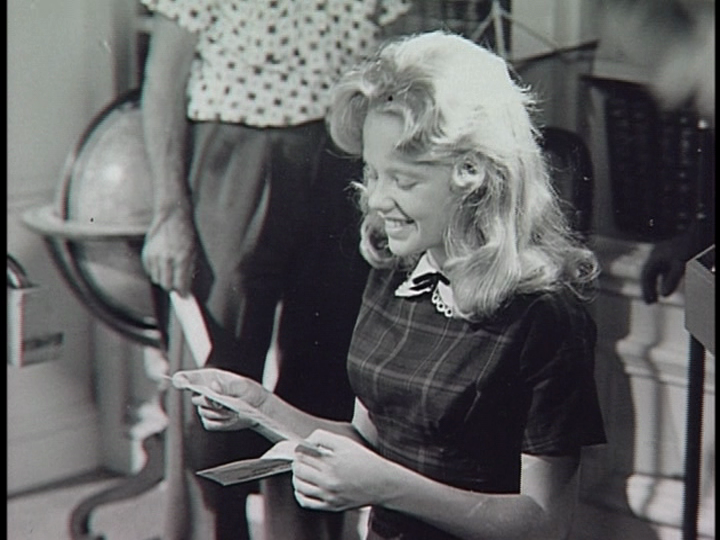
On April 17, 1961, the Academy Awards were held in Santa Monica, California. That year actress Hayley Mills would be the last actor to receive the Academy Juvenile Award, for her role in the Disney film Pollyanna. The film had propelled the young girl to stardom, and Mills went on to star in more Disney family films, including The Parent Trap.

Mills had auditioned for the lead in the film Tiger Bay, and was discovered by Lillian Disney, who suggested that Mills be cast in the lead in Pollyanna. The film was based on the book Pollyanna by Eleanor H. Porter, published in 1913. The book tells the story of a young girl who is suddenly orphaned and sent to live with her aunt in New England. The character tries to see the best in every situation, and ends up changing the entire town for the better. Not only did Mills win the Academy Juvenile Award, but she was also nominated for a BAFTA award for her role.

April 5

April 5, 1965 – Mary Poppins Wins Five Academy Awards

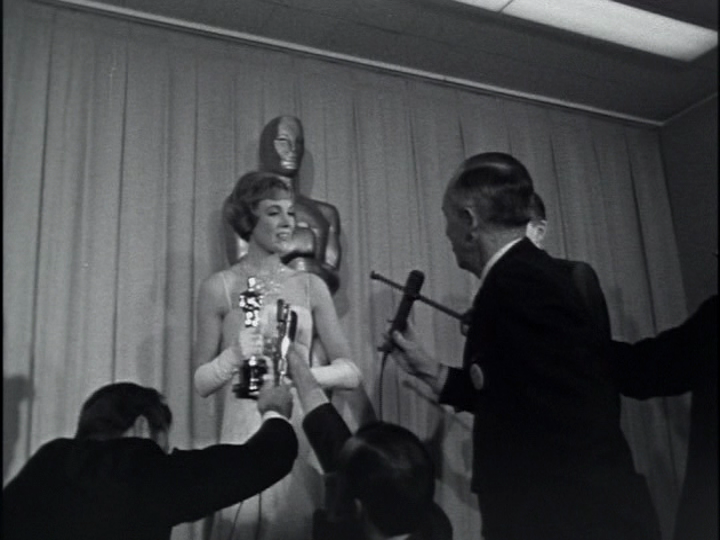
Julie Andrews after winning the Academy Award for Best Actress

“The press had made such a big deal out of it, and although I knew why I didn’t do My Fair Lady…and sure, I was sad about it, but I completely understood why I wasn’t chosen to do it…” – Julie Andrews

The 37th Academy Awards were held in Santa Monica, California on April 5, 1965. Of the 13 nominations it received – the most of that awards year – Disney’s Mary Poppins won five: Best Film Editing, Original Music Score, Best Song for “Chim Chim Cheree,” Best Visual Effects, and Best Actress for Julie Andrews.

Julie Andrews had been passed over for the lead in My Fair Lady at Warner Brothers. Time Magazine, outraged, wrote: “Someone, somewhere, made the decision to include Andrews out of the [film]. There is an evil and rampantly lunatic force at loose in the world and it must be destroyed.” Producer Jack Warner responded with, “No one in the sticks has ever heard from her,” and cast Audrey Hepburn as the lead role. Andrews remarked later that had she done My Fair Lady, she never would have been able to do Mary Poppins.

March 30

March 30, 1992 – The Walt Disney Feature Animation Department Wins the Academy Award for the Development of CAPS

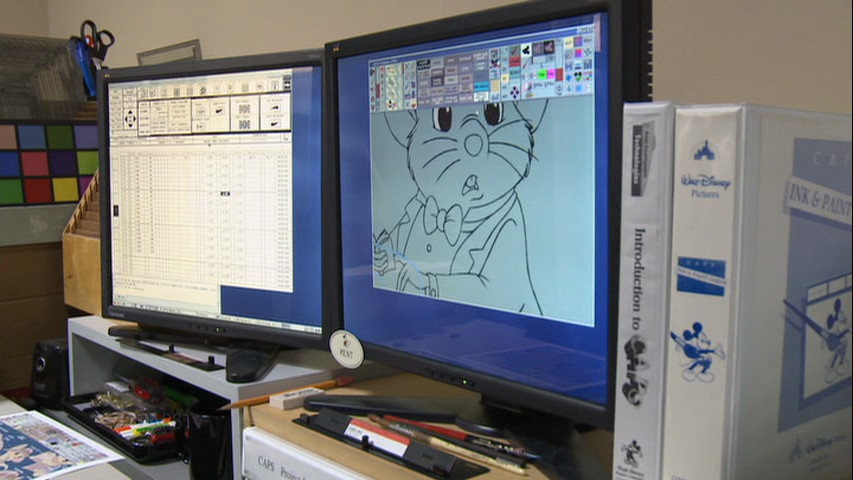
The CAPS System at work

“[CAPS] gives us not only the opportunity to do some really good art, but it also gives us the opportunity to really begin to explore what these computers and graphics things can do for us in kind of shorter pieces where we can get really a little crazy. And I’m looking forward to all of us getting a little crazy.”- Roy Disney

During the 64th Academy Awards ceremony in Los Angeles on March 30, 1992, nine men—Randy Cartwright, David B. Coons, Lem Davis, Thomas Hahn, James Houston, Mark Kimball, Peter Nye, Michael Shantzis, and David F. Wolf—shared an Oscar for a technical innovation developed jointly by the Walt Disney Feature Animation Department and Pixar Studios. Known as CAPS, or Computer Animation Production System, this innovation computerized the ink and paint process of animated films. CAPS allowed the artists to assemble the separate pieces of animation, from the background to the special effects, onto the final film directly. CAPS was first used in an animated feature in the final scene of The Little Mermaid, and was fully used in The Rescuers Down Under.

“One of the technology guys, Lem Davis, thought we could use computers to paint the characters in our films and digitally assemble all the artwork,” Don Hahn said about the CAPS project.

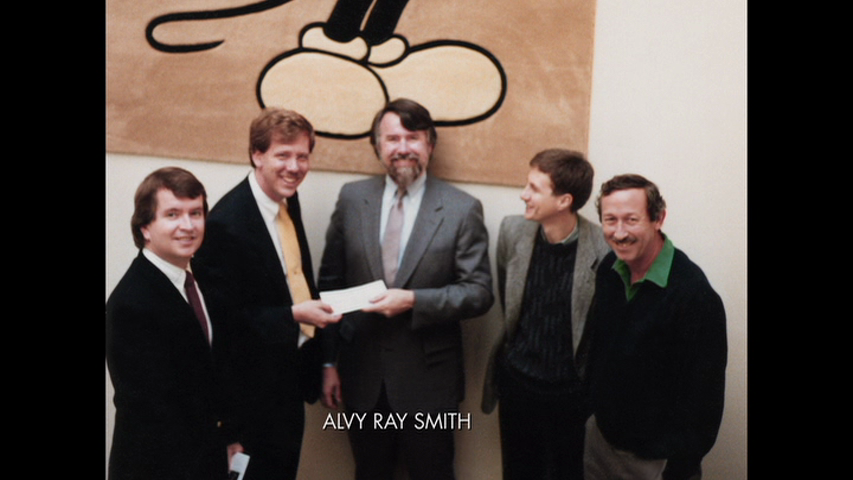
The main negotiators in the CAPS Project

Roy Disney, excited about the opportunity CAPS could give the company, asked Frank Wells, President of the Walt Disney Company, for $10 million to spend on the CAPS program, even though the risk was great, and there was no guarantee of return on the investment. The Disney check went to Alvy Ray Smith, the co-founder of Pixar, the best company to work with when bridging the gap between hand-drawn animation and computer technology. Pixar and Disney employees on the project worked around the clock on the program, with mounting deadlines and quotas. Although The Rescuers Down Under was not a huge success, CAPS received widespread critical acclaim on Beauty and the Beast.

“It was just the basis of what was to come in terms of the 3-D animation process. It was the engine that drove everything else forward,” former chairman Peter Schneider has said about the use of CAPS.

March 29

March 29, 1993 – Aladdin Wins The Academy Award for Best Original Score and Best Original Song, “A Whole New World.”

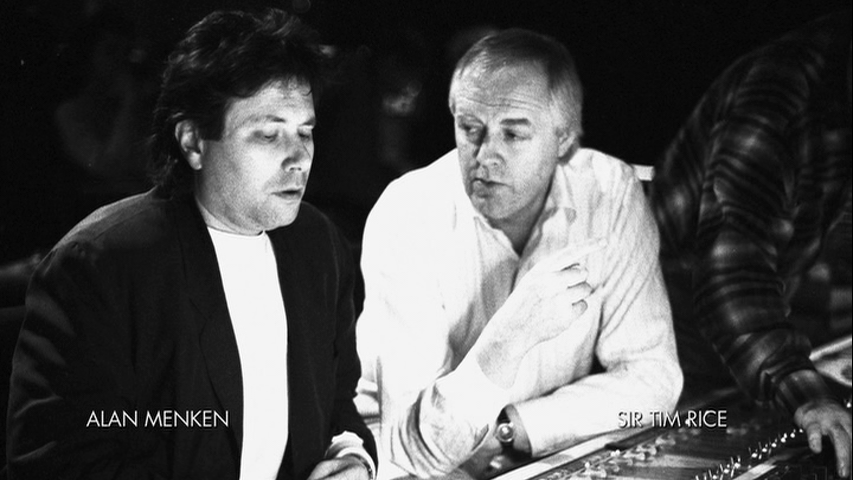
“With ‘A Whole New World,’ that’s where my whole style took a move into a new place, working with Tim [Rice]. That was also where I gained some confidence that there can be new chapters in my life.” – Alan Menken

The 65th Academy Awards were held on March 29, 1993, in Los Angeles, California. The Disney Studios struck gold again in the categories of Best Original Score and Best Original Song, winning for the animated blockbuster, Aladdin. Alan Menken won for his score for the film, competing against Jerry Goldsmith’s Basic Instinct, John Barry’s Chaplin, Richard Robbins’ Howards End, and Mark Isham’s A River Runs Through It. The song “A Whole New World,” with music by Alan Menken and lyrics by Sir Tim Rice, won for Best Original Song, competing against “I Have Nothing” and “Run to You” from The Bodyguard, “Beautiful Maria of My Soul” from The Mambo Kings, and “Friend Like Me,” also from Aladdin.

Aladdin was the idea of the lyricist Howard Ashman, and was one of his last projects before he died in 1991. Unfortunately, many of the elements in the movie were not working in the opinion of the higher ups (including Jeffery Katzenberg), so many of the songs written by Ashman and Menken were cut; fortunately, “Friend Like Me” is one of the songs that not only stayed intact, but was nominated for Best Original Song. Menken feared that once Ashman was gone, his career would be over. It was suggested that he work with lyricist Tim Rice, and the two dove right in, working on the marketplace song (“One Jump Ahead”), and a song for the magic carpet ride (“A Whole New World”). “A Whole New World” was performed by Lea Salonga and Brad Kane in the film, with a pop version released as a single, performed by Peabo Bryson and Regina Belle. The song was an immense hit, peaking at #1 on the Billboard Hot 100 chart.

March 27

March 27, 1995 – The Lion King is Awarded Two Academy Awards: Best Original Score and Best Song for “Can You Feel the Love Tonight”

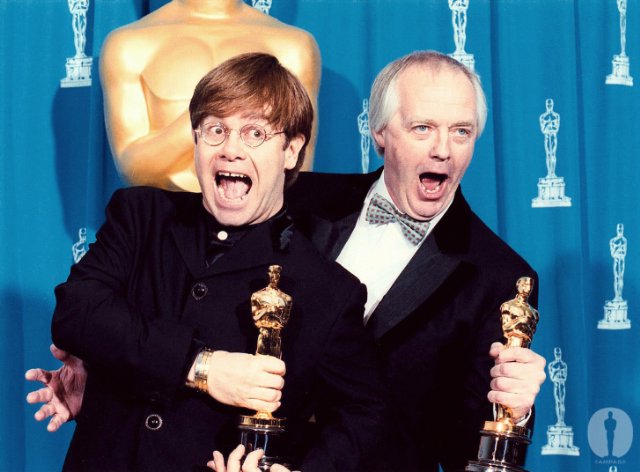
Image credit: imdb

 “There’s a rhyme and reason to the wild outdoors, when the heart of this star-crossed voyager beats in time with yours…”

The 67th Academy Awards were held on March 27, 1995, in Los Angeles, California. The Disney Studios continued their good fortune in the categories of Best Original Score and Best Original Song, winning for the animated blockbuster, The Lion King. Hans Zimmer won the award for Best Score, beating out Alan Silvestri’s score for Forrest Gump, Elliot Goldenthal’s Interview with the Vampire, and Thomas Newman’s Little Women and The Shawshank Redemption. Sirs Elton John and Tim Rice won for the song “Can You Feel the Love Tonight,” competing against “Look What Love Has Done” from Junior and “Make Up Your Mind” from The Paper, as well as “Circle of Life” and “Hakuna Matata” from The Lion King.

The version of “Can You Feel the Love Tonight” that exists in the film and the pop version sung by Sir Elton John over the end credits are vastly different lyrically. The song was originally going to be a comic song sung by Timon and Pumbaa (Nathan Lane and Ernie Sabella). After that idea was scrapped, the song was going to be cut from the film, but John insisted that it remain, following the new format of Disney songs beginning when the characters run out of words and can only use song to describe how they feel. The pop version became a hit, peaking at #4 on the Billboard Hot 100 Chart, and is one of the most recognizable Disney songs ever written.

March 26

March 26, 1990 – Alan Menken and Howard Ashman Win the Academy Award for Best Original Score and Best Original Song for The Little Mermaid.

“We were adapting Hans Christian Andersen’s fairytale in the style of Disney. And so, in a sense, we were pastiching Disney. In order to pastiche Disney, we naturally brought in styles from the outside. Calypso and reggae were clearly a new style to bring in.” – Alan Menken

The 62nd Academy Awards were held in Los Angeles, California on March 26, 1990. Disney scored a great success that night with the musical team of Alan Menken and Howard Ashman, who won the Academy Award for the score for The Little Mermaid, and the song “Under the Sea.” Their competition was The Fabulous Baker Boys by Dave Grusin, Field of Dreams by James Horner, Indiana Jones and the Last Crusade by John Williams, and Born on the Fourth of July, also by John Williams. “Under the Sea” competed against “After All” from Chances Are, “I Love to See You Smile” from Parenthood, “The Girl Who Used To Be Me” from Shirley Valentine, and another Ashman/Menken song, “Kiss the Girl.”

Ashman had been brought to Jeffery Katzenberg’s attention through David Geffen, and after meeting Ashman, everyone was excited to work with him on The Little Mermaid project. Ashman brought along Alan Menken, who had worked with him on the musical Little Shop of Horrors. The collaboration between Ashman and Menken helped usher in a new era of Disney animation, bringing elements of Broadway to the animated form. As Director John Musker remarked on the partnership between Ashman and Menken, “One of the great things with Howard and Alan’s music, I think, is the wittiness of it. It isn’t dumbed down for any audience.” Jodi Benson, the voice actress for Ariel added, “They approached it like a Broadway musical. It is something totally different; the characters actually run out of words, can’t express themselves anymore, and it has to come out in song.”