RSS Feed

Tag Archives: Silly Symphony

September 10

September 10, 1932 – The Silly Symphony King Neptune is Released to Theaters
vlcsnap-2013-09-10-18h19m39s120

“I’m Neptune, the King of the Sea, and a jolly old king am I!”

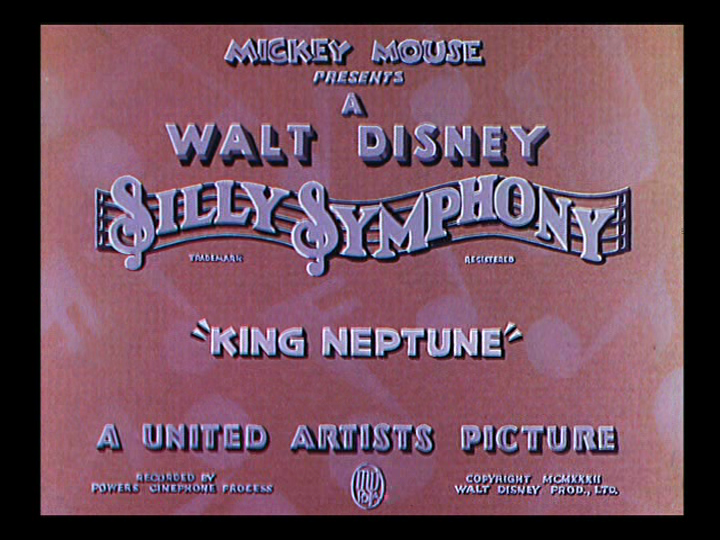
On September 10, 1932, the Silly Symphony King Neptune was released to theaters. This short briefly features the classical piece “Light Cavalry Overture” by Franz von Suppe. King Neptune was directed by Burt Gillett.

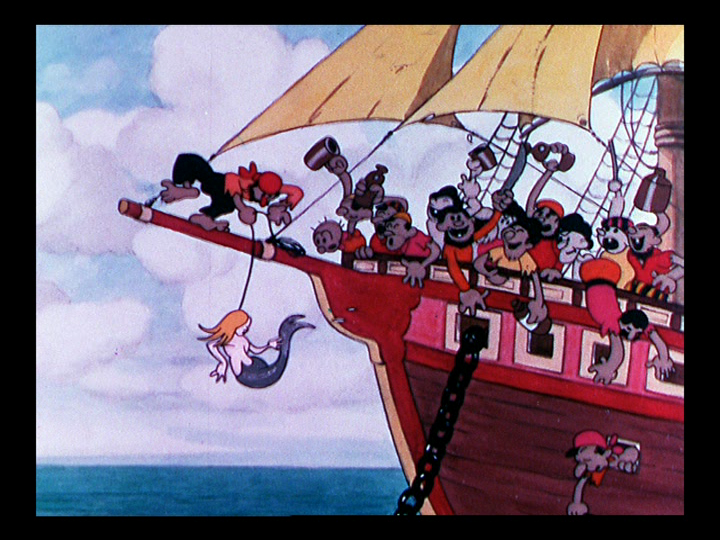
The short begins with Neptune introducing himself to the audience as a ruler with an iron hand who is friends with the sailors. A parade takes place with several sea creatures, and they bring forward some mermaids in a clam shell. They leave the shell and dance about before flirting with the King. The mermaids then travel to the surface and lounge as a pirate ship passes by with several bawdy, drunk pirates. One pirate spies the mermaids and calls out to the rest, and they quickly drop anchor in front of the rock. The mermaids scream in fright, alerting King Neptune, who is greeted with an anchor on the head.
The pirates quickly capture a mermaid and bring her on board

The pirates quickly capture a mermaid and bring her on board

The pirates manage to capture a mermaid, who fights back once she is on deck. The other mermaids sound the alarm, and every sea creature nearby runs to her rescue. A pack of swordfish cut down the mast, but one of the pirates locks the mermaid in a treasure chest amongst all the confusion. The pirates are soon overtaken by the sea creatures, and Neptune finally frees himself from the anchor and sends the ship straight into a whirlpool of his creation. He laughs at the pirates’ misfortune as they are tossed about helplessly, and Neptune lands on top of the ship, causing it to sink to the bottom. The mermaid is freed from the chest, clad in jewels and pearls. The short ends with everyone once again happy in the sea, including jolly old Neptune.
September 1

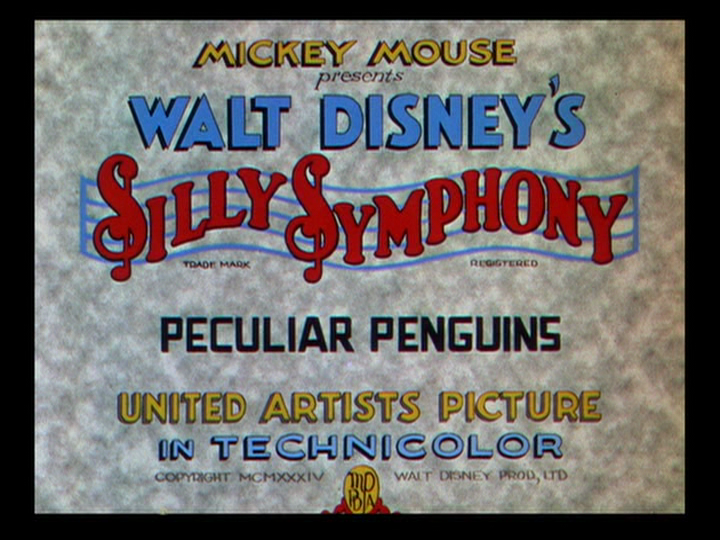
September 1, 1934 – The Silly Symphony Peculiar Penguins is Released to Theaters

vlcsnap-2013-09-01-23h38m11s59

“There’s a place called Penguin Island in the cold Antarctic Sea, where there’s 50 million penguins in a penguin colony.”

On September 1, 1934, the Silly Symphony Peculiar Penguins was released to theaters. It was directed by Wilfred Jackson.

Set on a penguin island in the middle of the Antarctic Sea, two penguins named Peter and Polly are seen getting ready for a date. Peter prepares a snow cone for Polly, which she accepts happily, giving him an Eskimo kiss for his trouble. This affection has causes Peter to turn cartwheels. After he does so, he spots fish in a nearby hole in the ice, and dives in to catch one. He eventually does and brings it back to Polly, who swallows it down happily, although they eventually find that she has eaten a puffer fish, which starts puffing up inside her. Finally, the fish escapes Polly and jumps back into the pond, but Polly reacts badly to this, slapping Peter and walking away before diving in the water and swimming away.

vlcsnap-2013-09-01-23h44m33s43

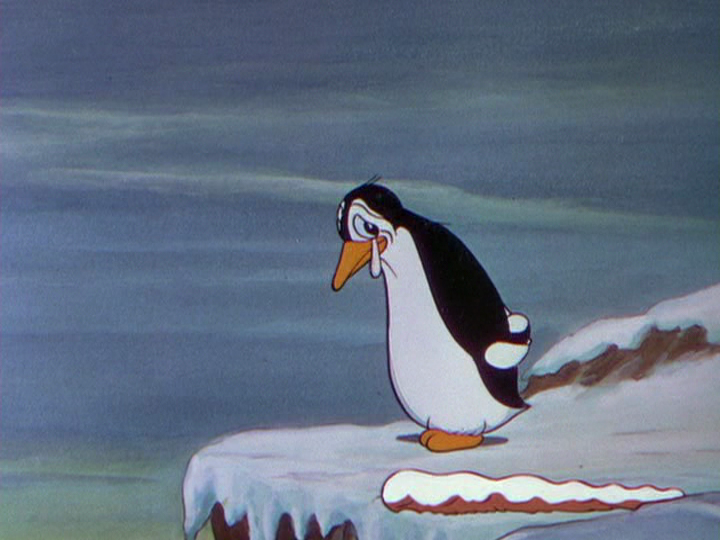
Peter tearfully watches as Polly angrily swims away after the puffer fish incident

Peter watches tearfully as Polly swims away, and is soon alarmed to see a shark following her. He calls out after her, but she will have none of it, and continues to swim away. The shark gains on her and attempts to devour her, but Polly swims away, although the shark continues to follow her. Peter dives into the water to rescue her, and beats him in the nose with a club just as the shark has Polly in his clutches. The shark then follows Peter through the water, hoping to have the penguin for a snack, but Peter uses the club to keep the shark’s mouth from chomping down. As Peter dives out of the water, he pulls on a root that releases a large boulder. The boulder is accidentally swallowed by the shark, and he sinks to the bottom of the ocean, unable to swallow anyone ever again. The short ends with Peter and Polly happily reunited, holding each other close as the sky shines with a rainbow.

August 22

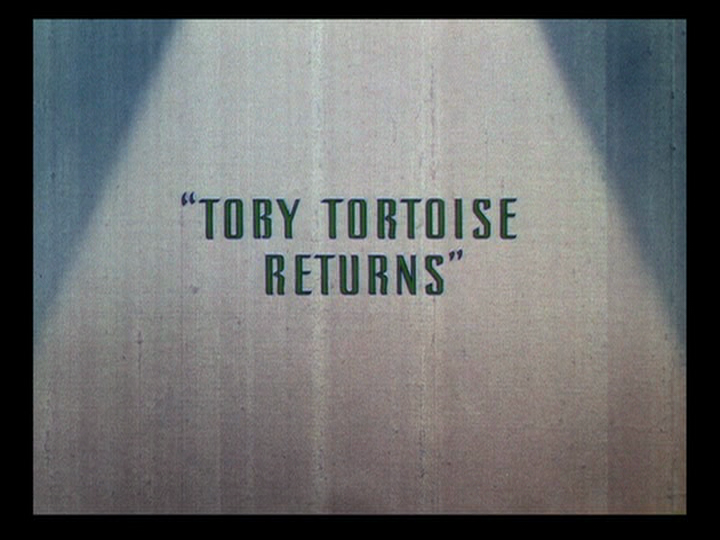
August 22, 1936 – The Silly Symphony Toby Tortoise Returns is Released to Theaters

vlcsnap-2013-08-21-20h50m56s88

“How ya doin’, Toby-Woby? I like a man that takes his time.”

On August 22, 1936, the Silly Symphony Toby Tortoise Returns was released to theaters. It is the sequel to the 1935 Silly Symphony The Tortoise and the Hare, and includes characters from other Silly Symphonies, including Practical Pig from Three Little Pigs and Jenny Wren from Who Killed Cock Robin? The short was directed by Wilfred Jackson.

The stadium is packed to see the fight between champion Max Hare and challenger Toby Tortoise. Jenny Wren sits in the front row of the fight, greeting the boys as they say hello. The fight begins, and Toby is naturally too slow to keep up with Max. Max teases Toby before making a mockery of the poor tortoise. As Toby approaches Max from behind, Max makes quick work of Toby before sending him flying out of the ring, straight into Jenny’s arms. Inspired by Jenny’s flirtation, Toby flies back into the ring and attempts to attack Max, but misses and knocks himself into a stupor, where he dreams he’s a sultan, surrounded by dancing Jenny Wrens. As the ref is about to call the match for Max, the bell rings, signaling the end of the round.

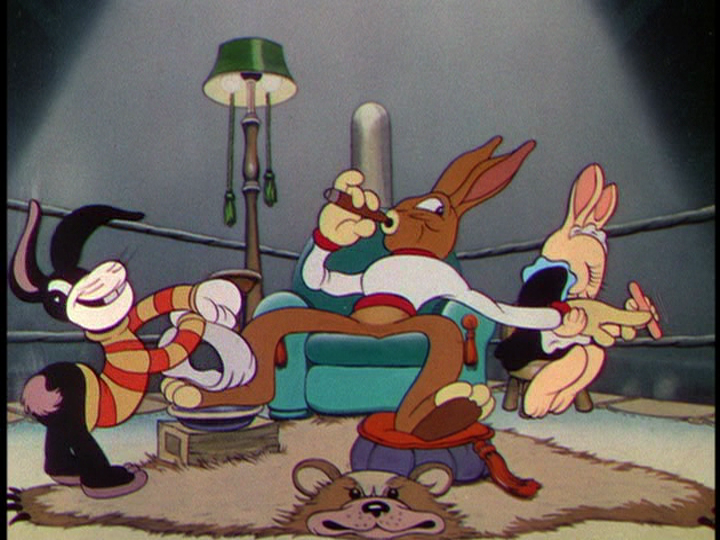
Max Hare lounges in the corner as he waits for the next round to begin

Max Hare lounges in the corner as he waits for the next round to begin

Max sits in the corner, lounging as he waits for the next round, and calls the ambulance over for Toby before turning into a punching whirlwind. As Max attacks, Toby is protected by his shell, and starts teasing Max. Max gets annoyed by Toby’s teasing, and reaches into the shell to attack him, but gets his hand caught in a mousetrap instead. The tables have turned, with Toby making a fool of Max. Max then places several fireworks into Toby’s shell and lights them up; as he is about to give Toby a knockout punch, Toby is sent skyward in a shower of sparkles. As he comes back to the ground, the fireworks send Toby spinning, which also allows Toby to give several key punches to Max’s face. Max tries to outrun Toby, but finds himself being beaten by the turtle no matter where he turns. One final rocket shoots out of Toby’s shell, which catches onto Max’s shirt and sends him flying out into the audience before shooting into the ambulance, which quickly drives away. Toby is declared the winner of the match, and the crowd cheers loudly.

June 30

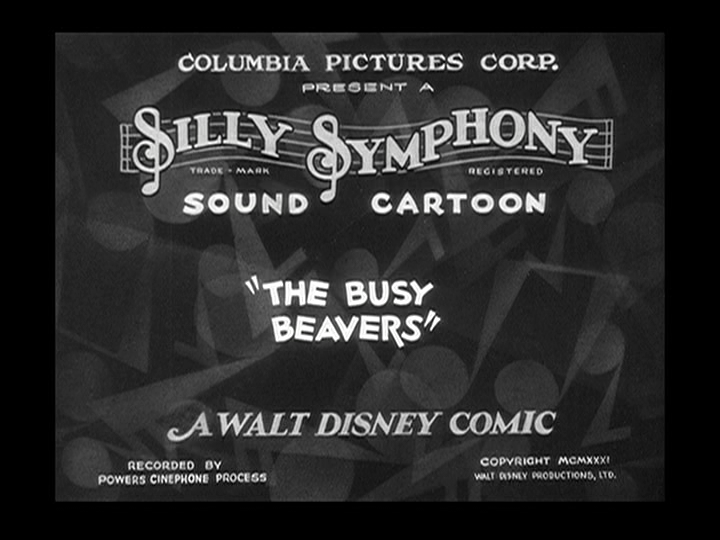
June 30, 1931 – The Silly Symphony The Busy Beavers is Released to Theaters

vlcsnap-2013-06-30-11h29m38s196

On June 30, 1931, the Silly Symphony The Busy Beavers was released to theaters. It was directed by Wilfred Jackson.

A group of beavers are diligently working together to build their dam, dancing while they work. As one gathers twigs, he accidentally disturbs a moose, thinking the antlers are twigs to use. Others mix up mud for use, while others use whatever they have on hand to create this dam. Two beavers go around chopping down trees marked for use, and when a pair of caterpillars find that their home has been marked, they quickly remove the “X,” leaving their home unscathed.

A storm quickly approaches, and the beavers scramble for cover in their dam. One little beaver, on his way home, finds a leak in the dam. He goes to plug the leak, when another one appears, followed by more. He is unable to cover them all with his own hands, and starts crying out for more help. A raincloud appears over the dam and dumps its contents into the mountains, with the water taking out everything in its path, including the recent work done by the beavers. As the animals try to scramble to safety, the young beaver quickly cuts down a large tree to stop the flow of the water. He achieves the feat, but is seemingly killed in the process. However, he appears from the top of the tree, unscathed, and is regarded as a hero for saving the day.

May 27

Posted on

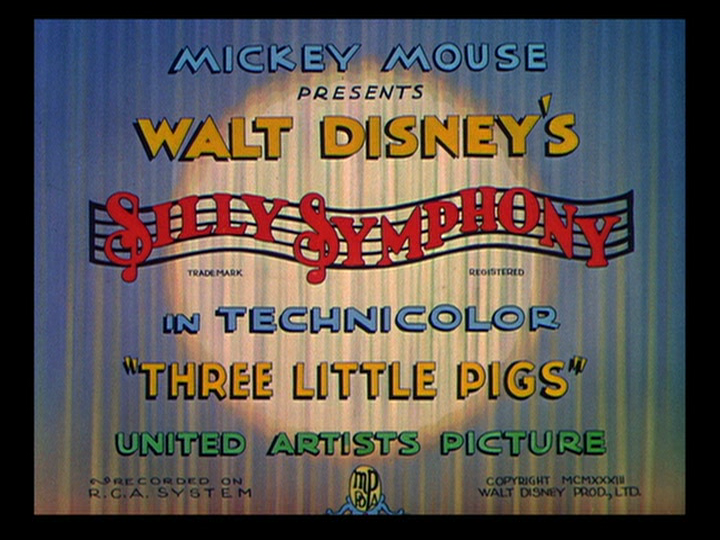
May 27, 1933 – The Silly Symphony The Three Little Pigs is Released to Theaters

vlcsnap-2013-05-27-06h01m34s96

“You can play and laugh and fiddle, don’t think you can make me sore, I’ll be safe and you’ll be sorry when the wolf comes to your door!”

On May 27, 1933, the Silly Symphony The Three Little Pigs was released to theaters. The short was based on the fable of the same name, and became a breakout hit of 1933, with Depression-weary audiences embracing the song “Who’s Afraid of the Big Bad Wolf?” as the anthem of the time, with the wolf representing the Depression and their troubles. The short was also a milestone in animation at the studio in the areas of characterization, score, and song. In most theaters, the short would be placed in top billing, lasting long after the accompanying feature had come and gone; one New York theater manager put beards on the pigs faces in their display, and had the beards “grow” the longer the run was extended. The original version of the short had the Wolf disguised as a Jewish peddler, but has since been removed. It is important to note that ethnic and racial stereotype humor were incredibly common in this time period, and many Jewish producers would incorporate these stereotypes themselves. Three Little Pigs went on to win the Academy Award for Best Cartoon. The short was directed by Burt Gillett.

Fiddler, Fifer, and Practical Pig are making their houses, with Fiddler and Fifer not taking their task too seriously. Practical Pig, however, is mostly concerned with keeping the wolf away, and builds his house of bricks. When his brothers come by to taunt him for working all day, he warns them that he will be safe when the wolf comes, but the two laugh it off, teasing Practical for being afraid of the Wolf. As the pigs dance and sing, the Wolf comes by, scaring the two back into their homes. He goes Fifer’s straw home first, and blows it clear away. Fifer runs to Fiddler’s stick home, and the two hide inside. The wolf then pretends to walk away, and the two begin to sing their song again.

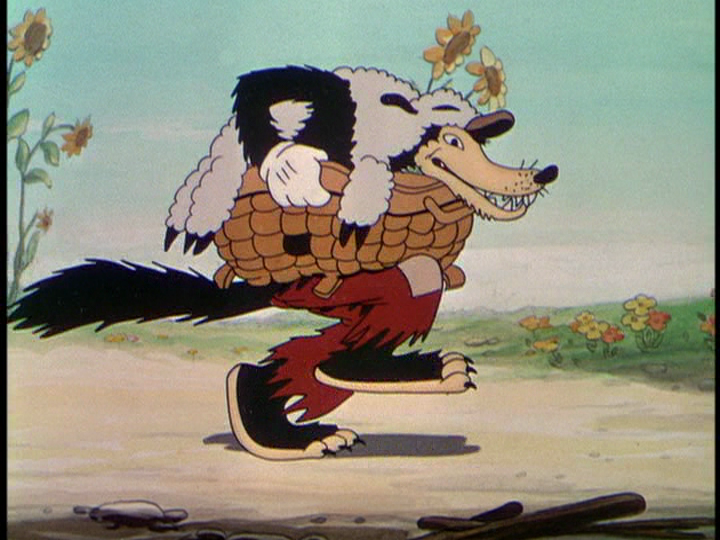
The Wolf tries to use a disguise to trick the pigs into letting him in

The Wolf tries to use a disguise to trick the pigs into letting him in

The wolf appears at the door, pretending to be a lost little sheep that needs help, but the two see right through his disguise. Angered, he blows the house down, and the two flee as fast as they can to Practical’s house. He lectures the two of their folly, but tells them he’s glad they’re safe. The Wolf then arrives as a brush salesman, but Practical Pig doesn’t fall for it. The Wolf then attempts to blow the house down, but is unable to do so. He finally decides to come down the chimney and seize the pigs, unaware that Practical Pig has a large boiling cauldron waiting below filled with turpentine. The wolf falls in and is sent shooting up again from the pain, and scurries down the road, howling. All three pigs end the short singing merrily.

April 7

April 7, 1939 – The Final Silly Symphony, The Ugly Duckling, is Released to Theaters

vlcsnap-2013-04-07-10h08m47s102

On April 7, 1939, the final Silly Symphony, The Ugly Duckling, was released to theaters. It is a color remake of the 1931 Silly Symphony, originally directed by Wilfred Jackson. Both shorts were based on the story by Hans Christian Andersen. The 1939 short film won an Academy Award for Best Cartoon at the 12th Academy Awards. It was directed by Jack Cutting.

A father duck is nervously pacing the ground as he waits for his wife’s eggs to hatch. He tries to console her as she sits in the nest, bored with waiting, while the father duck paces so much he creates a hole in the ground. The sound of sudden quacking alerts him, and he is delighted to see his offspring. He gathers the ducklings into his arms and kisses them excitedly, then kisses his wife. Much to their surprise, there’s another egg in the nest that is about to hatch, and when it does, the ducks are surprised to see a strange looking and sounding “duckling” emerge from the shell.

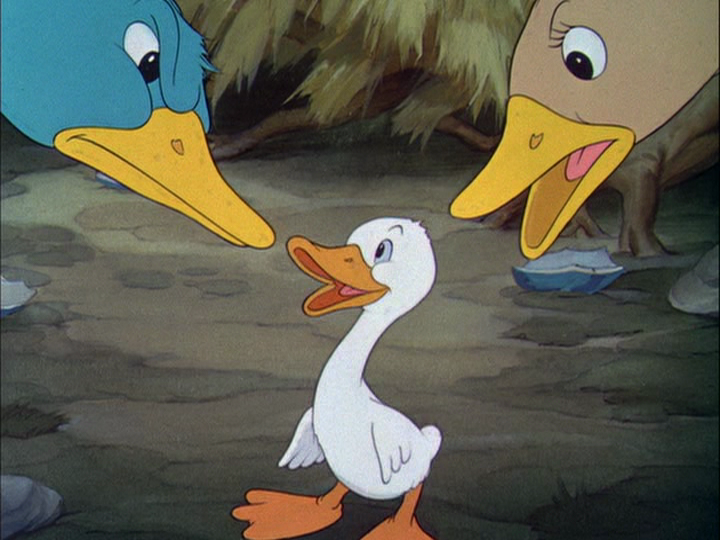
Father and mother duck look at their strange duckling with suspicion

Father and mother duck look at their strange duckling with suspicion

The father looks at his wife accusingly, and the two argue before the mother slaps the father. He leaves angrily, and the mother has her ducklings follow her into the pond. The ugly duckling follows the ducks, but the mother wants nothing to do with him. She viciously quacks at him, and he looks at his own reflection in the pond, confused as to why he looks so different and is so unwanted. He begins to cry and wanders away, trying to find where he belongs. He stumbles upon a cuckoo bird’s nest, but is immediately chased away by the mother cuckoo as he tries to eat their food.

He soon runs into a duck decoy in another pond, and takes to it as if it were his mother. Unfortunately, the duck decoy hits him on the head, making him believe that it also does not like him. He wanders away and cries loudly. His cries are soon overheard by a mother swan and her cygnets. The cygnets try to cheer him up, and he is amazed to see birds that look like himself. The mother then calls her babies over, and he is sad once again, thinking he needs to leave, but the mother swan takes him under her wing, welcoming him to his new family. The swan family sails away, and he soon spies the duckling family, who calls him over, but he swims away, perfectly content being a swan.

April 1

April 1, 1938 – The Silly Symphony Moth and the Flame is Released to Theaters

vlcsnap-2013-03-31-21h36m47s0

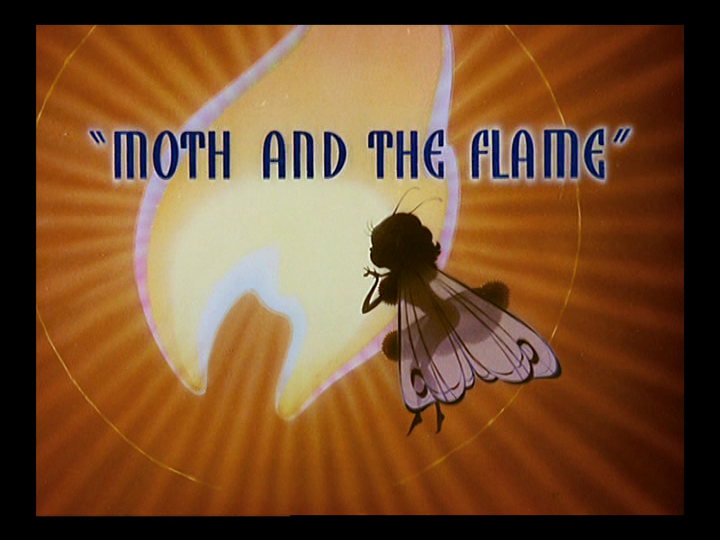
On April 1, 1938, the Silly Symphony Moth and the Flame was released to theaters. It was directed by Burt Gillett.

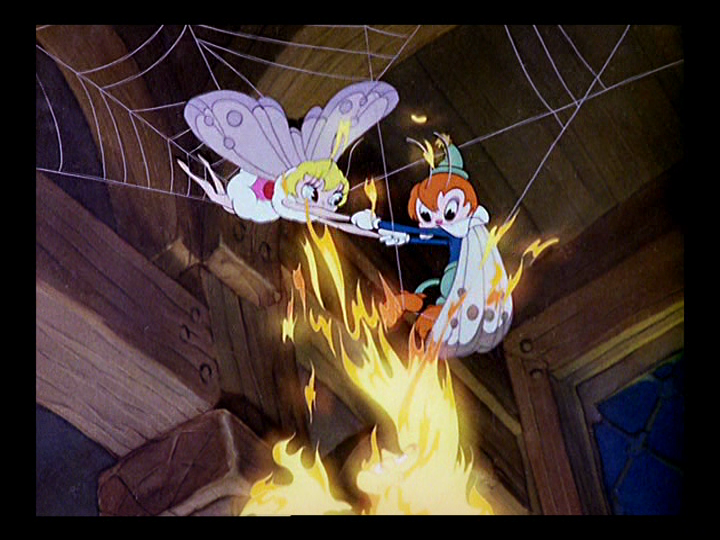
A lamp outside “Ye Olde Costume Shoppe” has attracted a swarm of moths who dance around the light. A pair lands on the windowsill and peer into the shop, thinking of the clothes inside as a massive feast. They find a way in and begin to eat, but unexpectedly attract the attention of the other moths, who quickly dive in and devour every piece of clothing in sight.

One young moth couple has a romantic date near a feathered hat, sharing a kiss. The girl tries to get the boy to chase her, and is rather put out when he decides to eat a bowler instead. Nearby, a flame on a candle spies the moth and laughs, then begins to dance, moving the girl moth’s shadow around and catching her attention. He draws her closer, and she dances dangerously close to the flame, burning the candle down to practically nothing. The flame jumps around, following her, and she puts him out with a fire insurance policy. However, he burns right through it and continues his pursuit, until she is stuck in a spider’s web.

The boy moth tries desperately to free his girlfriend, with the flame always close behind

The boy moth tries desperately to free his girlfriend, with the flame always close behind

The boy moth, seeing her in trouble, runs to her rescue, but is quickly chased away by the flame. He then uses a nearby glass of water to douse the flame, but is unsuccessful, then accidentally uses the highly flammable benzene, which gives the flame greater strength. Finally, he gathers the attention of all the other moths, who use a bagpipe filled with water to bring the flame down. Using other instruments in the shop, they work to quickly kill the flame, and the boy is able to free the girl. Together again, the two share a kiss.

March 13

March 13, 1937 – The Silly Symphony Woodland Café Premieres in Theaters

vlcsnap-2013-03-12-20h54m30s131

“All the cats get in the groove!”

On March 13, 1937, the Silly Symphony Woodland Café premiered in theaters. The short features the song “Truckin’” by Fats Waller. The café scene was a caricature of those that one would find in Hollywood around that time period. The short was directed by Wilfred Jackson.

Fireflies light up the sign for the Woodland Café, the most popular nightclub in the woods for any kind of classy bug. The grasshoppers play in the band, and the bugs jitterbug on the dance floor. The main show begins, with a pretty female fly performing on a spider’s web, trying to charm a tough spider. The two dance the tango on the web, which ends with the spider chasing the fly all over the web, until she flies away, but returns to his arms, only to turn into another chase which ends with the spider tangled in his own web. The crowd cheers, and the music starts up again.

All the bugs join in as the music starts up again

All the bugs join in as the music starts up again

Fireflies gather on a blossom to create a mirrorball effect on the floor, and the jazz band begins to sing and entertain the crowd. Snails, worms, ladybugs, and all other sorts are going crazy with the beat, and the short ends with swinging jazz music.

February 24

February 24, 1939 – The Silly Symphony The Practical Pig is Released to Theaters

vlcsnap-2013-02-24-09h34m55s144

“He’s building another wolf machine – he must be crazy in the bean!”

On February 24, 1939, the Silly Symphony short film The Practical Pig was released to theaters. It is the fourth and final “Three Little Pigs” short film, and the second to last Silly Symphony ever made. Like the other sequels, it would never reach the level of popularity that The Three Little Pigs found. It was directed by Dick Richard.

Fiddler and Fifer Pig approach Practical Pig’s home, hearing him hammer away at his new invention. The blueprints reveal that he’s working on a lie detector, and the two laugh at his toil. As they reveal their plans to go swimming, the Practical Pig warns the two not to go, as the Wolf is nearby. They dismiss his concerns and run to the local swimming hole. From the nearby reeds, the Wolf spies on the two, salivating. He disguises himself as a mermaid on a rock, luring the two close before scooping them up in a net.

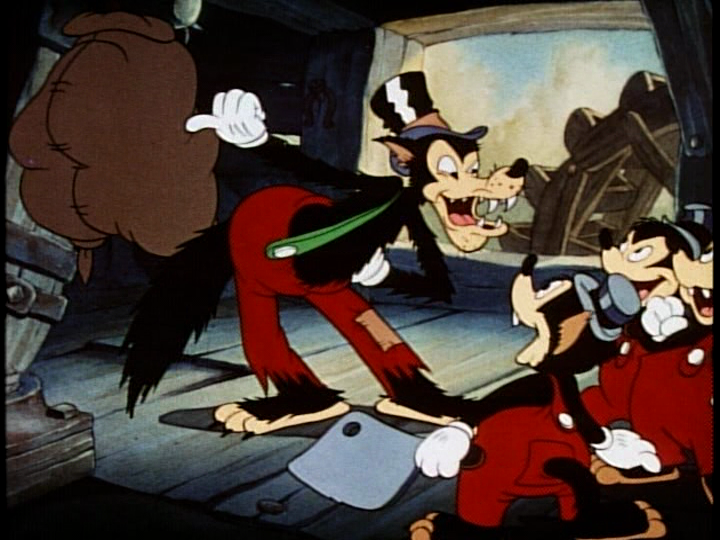
The Wolf ties up the two pigs and keeps them in a sack in front of his children

The Wolf ties up the two pigs and keeps them in a sack in front of his children

He brings the two pigs home to his family, but his kids aren’t allowed to eat the two until the Wolf captures the third pig. The kids promise not to eat the pigs until their father comes back home, but it’s an empty promise, as they start to fix them up in a pot the moment he leaves. The Wolf disguises himself as a messenger and takes a message to the Practical Pig, hoping to capture the pig when he rushes out to save his brothers. Unfortunately for the Wolf, the Practical Pig captures the wolf and uses his lie detector machine, which washes the Wolf’s mouth with soap or spanks him when he lies. The two pigs escape the kids’ clutches when too much pepper is sprinkled on them, and they sneeze, freeing themselves from the unbaked pie dough. They sprint home as fast as they can. Meanwhile the Wolf finally admits where the pigs are, and the Practical Pig sends him flying away on a firecracker before he attempts to rescue his brothers. The two pigs fly through the door, and when the Practical Pig chastises them for ignoring him, they sit down unknowingly on the lie detector and claim they never went swimming. The lie detector goes off, and the two are spanked.

February 15

February 15, 1930 – The Silly Symphony Autumn is Released to Theaters

vlcsnap-2013-02-14-21h40m26s208

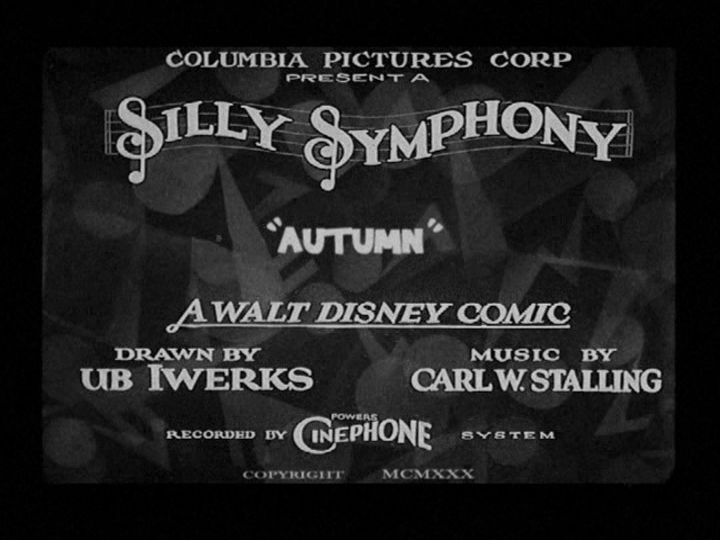
On February 15, 1930, the Silly Symphony Autumn was released to theaters. This short film was part of a series of Silly Symphonies about the seasons: Springtime released in 1929, Summer released in early 1930, and Winter released in late 1930. The short was directed by Ub Iwerks, with music by Carl Stalling.

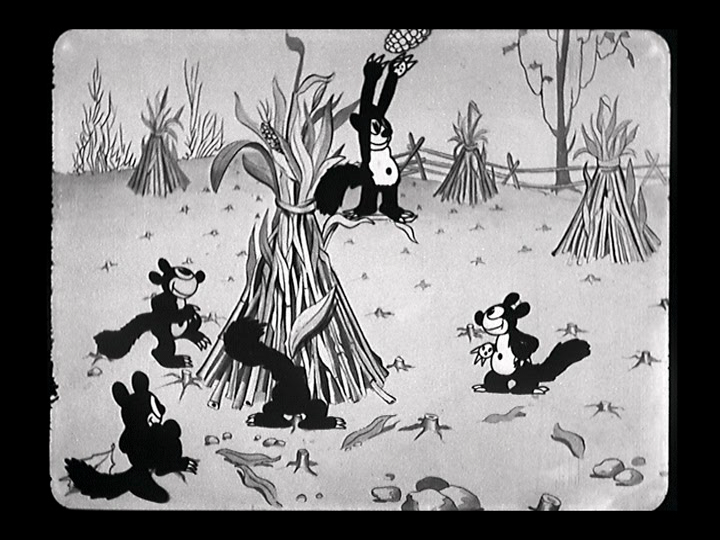
The short opens with the leaves falling from the trees, and squirrels gathering nuts before the winter approaches. One squirrel is rather upset that he can’t shake the last nut from a tree, but when it does fall, it lands on his head and hits the ground. As he reaches to pick it up, the nut begins to dance around, surprising the squirrel. He slams his paw on it, cracking it open and revealing a caterpillar, who saunters away.

The squirrels continue to gather food, even from the corn nearby

The squirrels continue to gather food, even from the corn nearby

Other squirrels gather corn from the field nearby, one using his teeth to pull out individual kernels. As they continue to pack their food away in the trees, a crow sneaks in and steals some cobs of corn, with the other crows helping to pack their food away in the scarecrow. A skunk tries to pack away a pumpkin for the winter, only to end up smashing it after he tries to shove it into a tree. A porcupine wanders over to an apple tree and collects the fruit on his quills, while beavers build their dams nearby.

A row of ducks swims in the nearby lake, eating worms; one accidentally eats a shoelace and ends up with a boot on his head. As they swim, a cold gust of wind interrupts the scene, bringing about the beginning of winter. The ducks sound the alarm and fly off into the sky as they head for warmer weather, and the other animals take shelter from the coming cold.