RSS Feed

Tag Archives: Short film

April 30

April 30, 1928 – The Oswald Short Film, Ozzie of the Mounted, is Released to Theaters
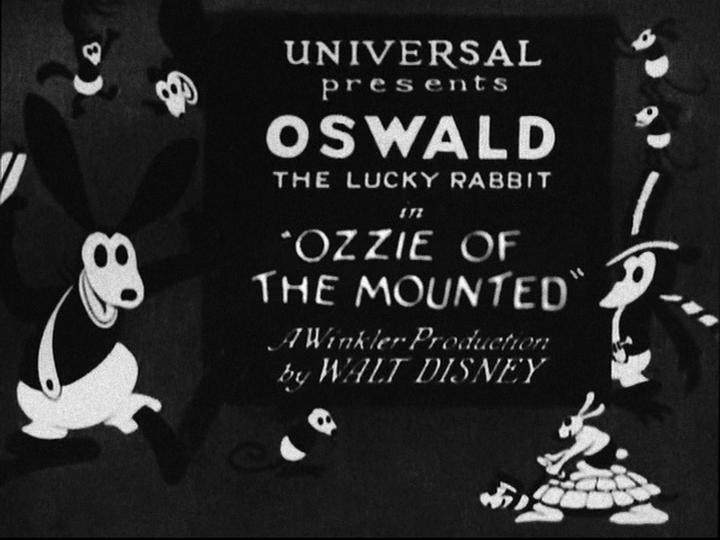
“This cartoon, as usual, is loaded with a lot of great gags. I love Oswald during this period – he looks great. He’s got lots of personality, and he was a very appealing character.” – Animation Expert Jerry Beck

On April 30, 1928, the Oswald the Lucky Rabbit short, Ozzie of the Mounted, was released to theaters. This short would actually be remade later by Hugh Harman and Rudy Ising over at Warner Brothers, which was then titled Big Man from the North. Most scenes were redone shot by shot. This short also contains the element of a mechanical animal, which Iwerks and Disney used fairly often in the Oswald cartoons.
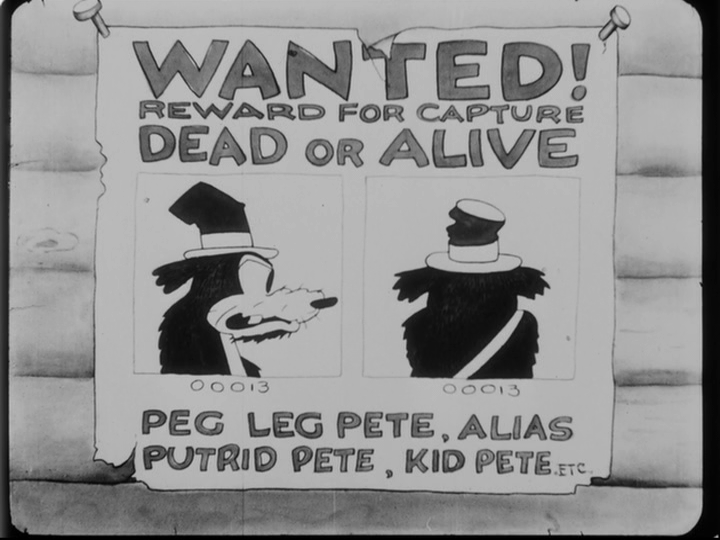
The wanted poster of Peg Leg Pete

The short opens on a blustery winter day in front of the headquarters of the Mounted Police. Inside, the police chief is pacing the floor, puffing on his corncob pipe. The door opens, and in slides Oswald, giving the chief a salute. The chief points out a wanted poster for Peg Leg Pete, which causes Oswald to shake from fear. The chief demands that Oswald go capture Pete, so Oswald screws up his courage and sets out into the blizzard.

Outside, Oswald winds up his mechanical horse and sets out to find Pete, who is then seen out in the snow with snowshoes, skulking around. Oswald, traveling the other direction, crashes into Pete around the corner of a bar, and is flung from his horse. He looks to see who he crashed into, and is surprised to see that it’s the villain he’s been looking for. He pulls out a gun and points it at Pete, who, by standing alone, is able to intimidate the rabbit. Oswald shoots the gun, only to have the bullet bounce off Pete’s stomach and knock Oswald over.
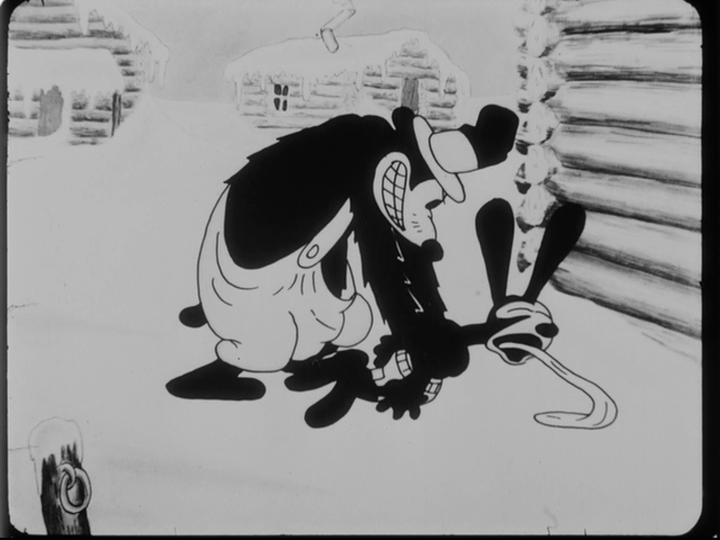
Peg Leg Pete strangling Oswald

Pete, seeing an opportunity, begins to strangle Oswald, squeezing the rabbit’s tongue out of his mouth. As Oswald appears to be dead, Pete looks up at the audience in horror and quickly slips away, hitching a ride on a nearby dogsled. Oswald finally gets up, pulls his tongue back in, and begins to fix his mechanical horse so he can give chase. After some disastrous results, Oswald finally fixes the horse, and begins to follow Pete.

Many gags ensue on this chase, including Oswald getting stuck in a loose spring from the body of his horse, and ending up flattened when the horse pulls him into a branch. Pete ends up losing his sled team and begins to slide down a hill, out of control, until he hits a rock. Unfortunately for Pete, the rock is actually a bear, who growls and runs after Pete. Oswald, seeing the bear, also tries to flee, but is caught by the pants by the bear, who sends Oswald flying to the nearby jail. Seeing his chance, Oswald flings open the door to the jail, telling Pete to run in for safety. Oswald traps Pete and the bear in the jail, and the short ends with Oswald laughing at his villain’s misfortune.
April 28

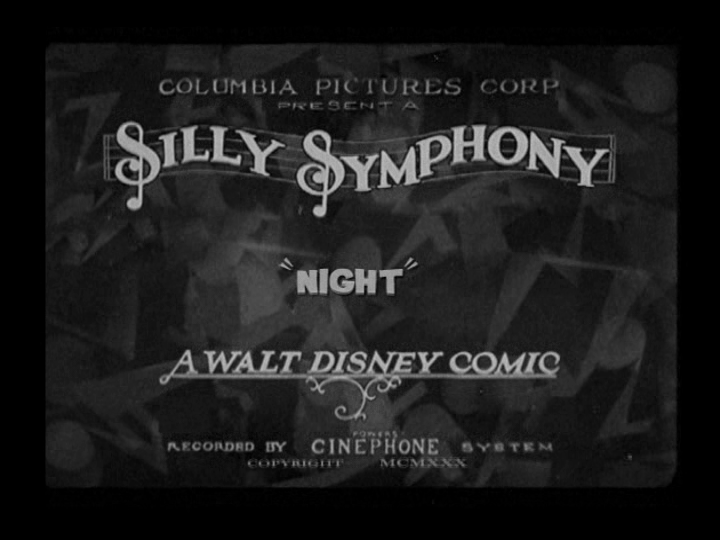
April 28, 1930 – The Silly Symphony Night is Released to Theaters.

On April 28, 1930, the Silly Symphony Night was released to theaters. Known as the early version of the award-winning short The Old Mill, the story set to music is of assorted animals in the evening near a river. It was directed by Walt Disney, and includes “Moonlight Sonata” by Beethoven among its collection of classical music used throughout the short.

The short opens on a moonlit night at a mill near a river, with the grass swaying in time to the background music. The moon gives the world a big smile, and begins singing along with the music playing. An owl flies past, flapping its wings in time with the tune, and calls out to his mate, who flies down to meet him on a branch. The two begin to dance; unfortunately, the male begins to kiss the female, who does not respond positively to his advances.

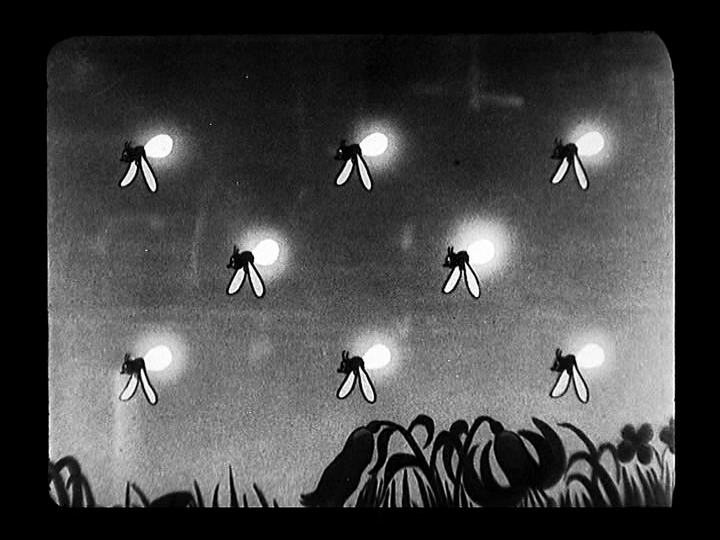
The fireflies lighting up the night in time with the music

The “bug ballet” begins with some bugs are flying around a lamp, with one teasing the candle’s flame, only to find itself burned. Fireflies begin to light up in rhythm to the new song playing, with two silly fireflies performing for the audience. Afterward, three mosquitoes begin some sort of skulking dance, which ends with them crossing over a stream and landing on a frog’s head, biting the poor frog before they fly away. The frog gets his revenge, however, by eating all mosquitoes in rhythm before dancing across the pond himself to meet his lady friend.

Around the mill’s wheel, the frog romantically rocks his lady frog while a group of other frogs croak a lullaby for the couple. The main male frog professes his love in song, while the female frog smiles and hides her face in cute embarrassment. The two begin to dance across the lily pads together, only to fall over the edge of a waterfall, ending the short with a loud, dramatic splash.

April 27

April 27, 1951 – The Goofy Short Film, Cold War, is Released to Theaters

“Now, look, Geef, a cold is nothing to be sneezed at. Beat it!”

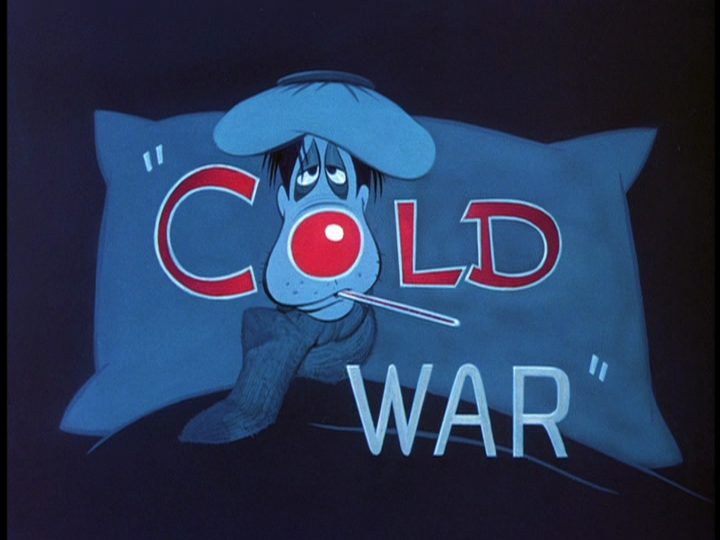
On April 27, 1951, the Goofy short film, Cold War, was released to theaters. As Goofy is seen as an “everyman” sort in many of these shorts, he was given an “everyman” name: George Geef, which is used throughout by the other characters. The short was directed by Jack Kinney, with the story by Dick Kinney and Milt Schaffer, and Goofy being voiced by Pinto Colvig.

Dejected, Goofy is sent home from the office, thanks to his cold

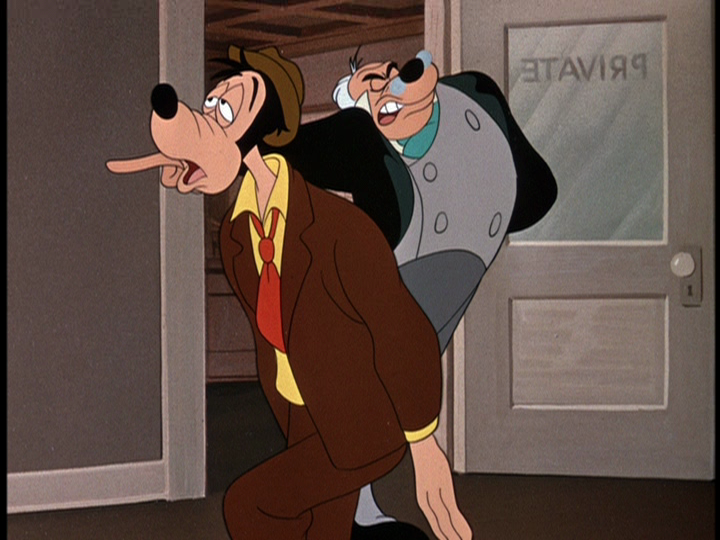
The short opens with a narration on how to spot the carrier of the common cold: a virus easily identified by his red nose. We then see Goofy at his desk on a cold winter’s day, and he opens the window to get some air, inadvertently inviting in the cold carrier. Goofy then lets out a loud sneeze, which is heard by his boss. His boss demands that he take his cold out of there Goofy protests that he doesn’t have a cold, but he loses the argument by letting out another powerful sneeze. Defeated, Goofy leaves the office, while the boss sprays the room with sanitizer to kill the germs.

Goofy comes home, looking for a little sympathy, when he spies on a nearby table a note from his wife, informing him that she’s playing bridge at her friend Mabel’s, and dinner is in the ice box. He cries out, to no one in particular, that he has been deserted, and makes his way to the bed to lie down. The cold carrier is seen tormenting poor sick Goofy, using his nose for a punching bag, among other indignities. Goofy resolves to stay strong, but is reluctant when he has to take cold pills, and finds he is unable to swallow the pill. After fighting with it, it falls down the drain, and poor Goofy is without relief.

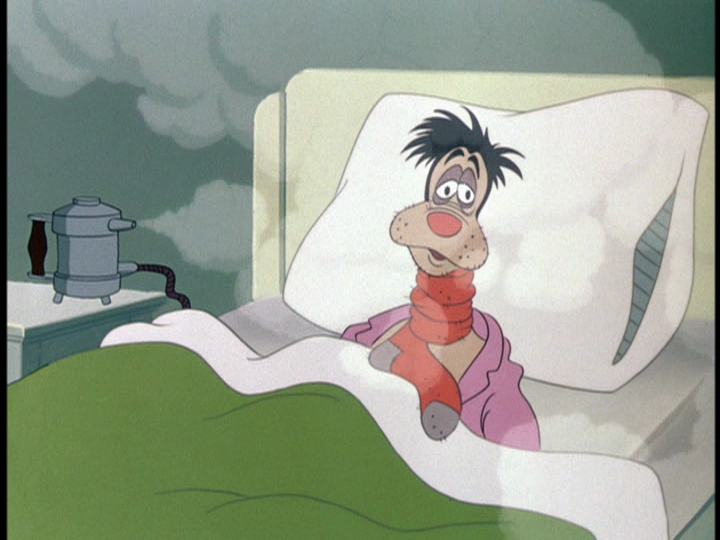
Goofy relaxing in bed as his wife continues her care of him

Goofy is in the kitchen, soaking his feet in a hot tub, when his wife returns, asking what he’s doing home. He tries to explain that he has a cold, but she isn’t listening, and continues to tell him about her day. She then accuses him of not listening – he’s tried, and his ears have gotten clogged from the cold – and realizes that he’s come down with a cold. She pushes him into bed and begins to take care of him with every remedy known to man, with comedic results. The cold is sent packing as Goofy sleeps peacefully, and the announcer lets us know that two weeks later, Goofy is well once more. Unfortunately, when he opens the window at work again to let in some cold air, the cold carrier comes racing back, causing him to sneeze loudly once again.

April 25

April 25, 1952 – The Donald Duck Short, Let’s Stick Together, is Released to Theaters

“You know, strange as it may seem, I used to be in business with that old duffer.”

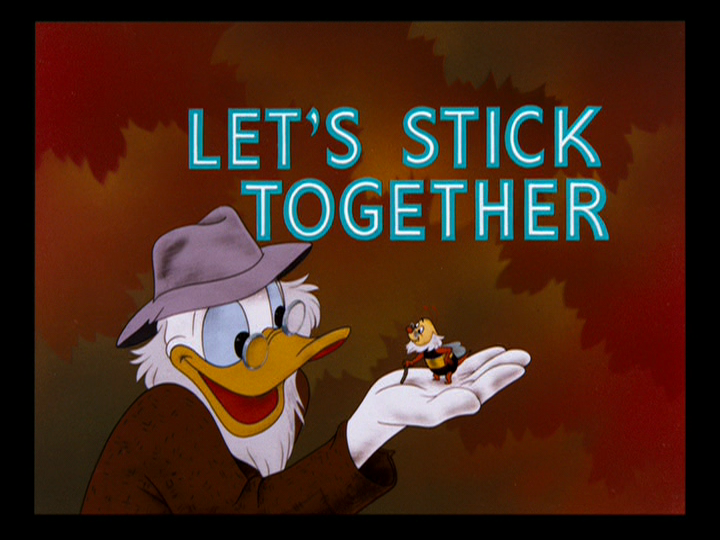
On April 25, 1952, the Donald Duck short, Let’s Stick Together, was released to theaters. It features one of Donald’s many adversaries, Spike the Bee, who made his premiere in the 1948 Donald Duck short, Inferior Decorator. The short was directed by Jack Hannah, with the story by Nick George and Al Bertino. It also stars Clarence Nash as Donald, Bill Thompson as Spike, and voice actress legend June Foray in a cameo as Spike’s wife.

The short opens on a crisp fall day in the park, where an old bee is seen sitting on a ledge of a tree in his rocking chair, smoking a corncob pipe. He is suddenly startled as something lands into the ground in front of him. As the camera pans out, we see that the item belongs to an elderly Donald Duck, who is picking up trash in the park. He sits down on a bench to rest, and the bee laughs, narrating to the audience how he knows Donald, and taking the audience with him as he reminisces.

Spike discovers that his stinger is part of his secret talent

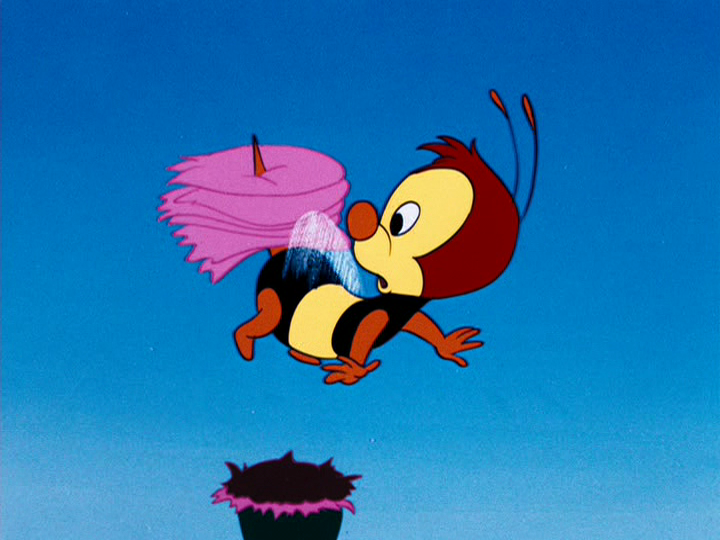
The flashback begins with Spike looking at the want ads in an abandoned newspaper. Just as he picks out what he thinks is the perfect job, the paper is snatched out from under him, flipping him into the air and dropping him harshly on the ground. Annoyed, Spike flies up to perch on a flower to look at his “attacker.” He then spies Donald, who is picking up the trash in the park, and gets an idea: he can use his stinger to pick up trash, and calls it his “hidden talent.” Excited by this discovery, he flies around Donald and shows the duck that he can help pick up trash. Donald is impressed, but is confused when Spike pushes Donald to the bench, letting him know he won’t be needed.

Spike makes quick work of the trash, and brings Donald part of a cigar he’s found. Donald pats Spike on the head and begins to relax while Elderly Spike relays to the audience that this was the beginning of a beautiful friendship. The next day, the two went into business together, beginning at a local carnival. Donald is seen selling balloons for 10 cents a balloon, and after he sells them, he sends Spike out to pop them, forcing the children to buy from Donald again. Spike is distracted, however, by an ad for a balloon dancer, and slips inside, popping the balloons that cover the girl. She lets out a shriek, and Spike flies out again, shrugging.

Spike working on creating a lace pattern

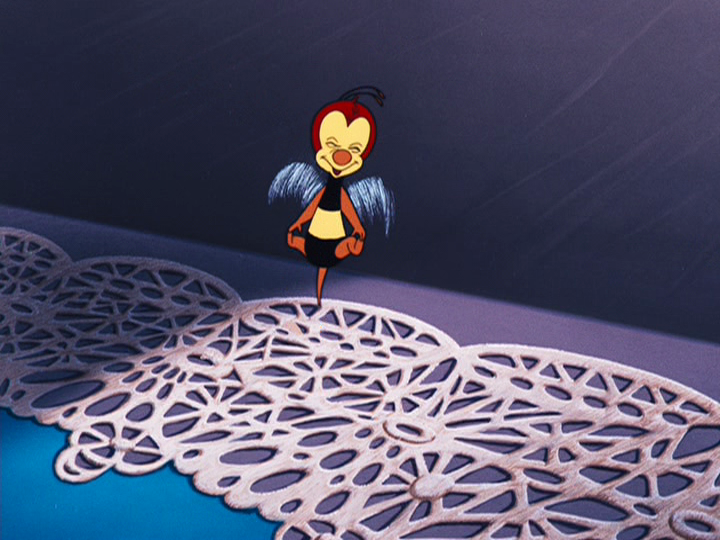
The next job the two held was a tattoo parlor, with Donald using Spike’s stinger for a needle. Donald is impressed with Spike’s work, and they move on to other projects, including making socks, lace, monogrammed handkerchiefs, and even fancy curtains. Soon, as Spike tells us, they were in full production mode. As the orders kept coming in, Spike became more and more fatigued. He pleads with Donald to let him have a vacation, and Donald surprises him with a greenhouse full of flowers, complete with a lady bee as well. Falling in love makes Spike work harder than ever, only he destroys everything by stitching hearts everywhere.

Donald, seeing as how everything has been vandalized, cries out that he’s ruined, and glares at the lovesick bee before trying to swat the lady bee. Spike runs to protect his lady, and decides to sting the duck in the tail. It was the end of their partnership, and Spike and his lady “have been happy all these years,” Spike tells the audience. The audience hears the truth, however, as Spike’s lady begins to scream at him for lounging around. Spike decides to join Donald once again in their partnership, and the two hobble down the road together.

April 23

April 23, 1943 – The Donald Duck Short, Fall Out – Fall In, is Released to Theaters

“After supper…? Please?”

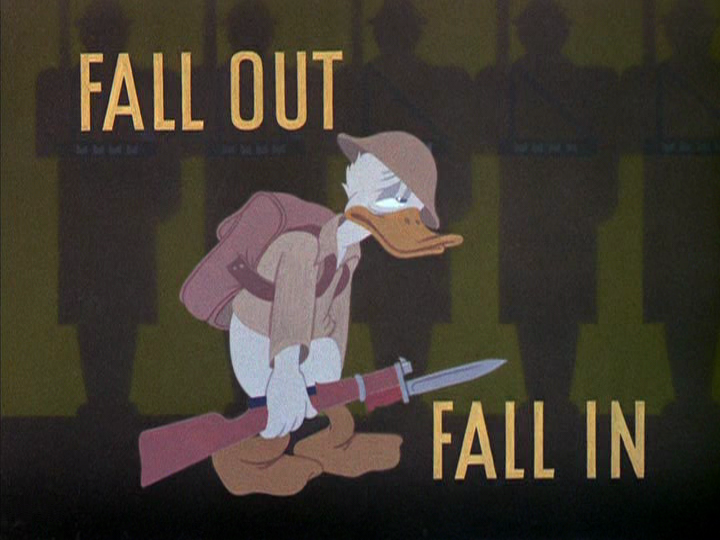
On April 23, 1943, the Donald Duck wartime short, Fall Out – Fall In, was released to theaters. As with the other Donald Duck wartime shorts, it was based on the experiences many of the animators had when they were in the army during World War II. It is also one of the few times that Donald’s headshot in the opening shows him without his usual sailor hat—he’s wearing an Army hat instead. The short was directed by Jack King, with Clarence Nash as the voice of Donald Duck.

The short opens just as the sun is rising, with a rooster letting out his call. Soldiers are marching on the horizon, with Donald Duck the last one in line. When he passes a sign saying that the group has traveled five miles, Donald marks it down on the bag of the soldier in front of him, and continues marching with a smile. At the 10-mile mark, Donald’s cheer has waned slightly, and his rifle seems to be pulling his shoulder down, but he adjusts it and continues to march, though definitely not as enthusiastically as before.

Donald using ingenuity to keep himself dry

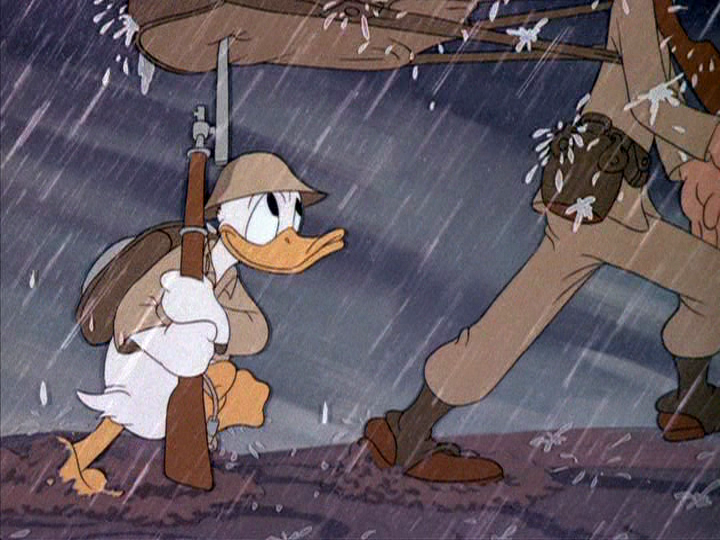
A harsh storm hits the troops by mile 20. Donald is annoyed with the raindrops hitting his helmet, but he comes up with an idea to shield himself from the rain by using the bag of the soldier ahead of him. As they continue to march, the rain turns into snow, and icicles hang from the duck’s tail. Donald is still wearily keeping track of the miles on his fellow soldier’s bag, with the count at 35 miles traveled.

As suddenly as the snowstorm arrived, the snow disappears and is replaced by scorching hot weather, 40 miles into their march. Donald isn’t so much as marching any more as he is limping, and sweating buckets. As the sun sets on the troops, their commanding officer calls them to a halt, and we see that Donald has marked the soldier in front of him up and down with hash marks for each mile they’ve crossed. When Donald is told to fall out, he collapses.

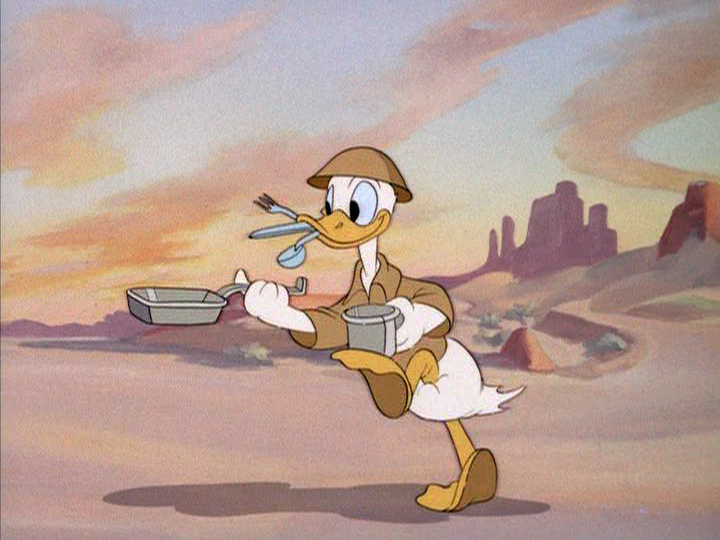
Donald rushes madly to grab his meal after the excruciating hike

When a trumpet sounds, Donald revives, knowing that the sound means that it’s dinnertime. Excited, he opens his overstuffed bag, grabs his utensils, and runs to get his food – but his commanding officer won’t let him eat until he’s made up his tent. Donald leaps to the task, driven by the promise of food; unfortunately he has the worst luck when it comes to building his tent, and we see him still trying to build it long after the other soldiers have gone to sleep. Exhausted, Donald collapses and refuses to take care of his tent, but he can’t sleep because all of the other soldiers’ snoring keeps him awake.

Donald has only closed his eyes for a second, when the trumpet again sounds, telling the soldiers that it’s time to wake up. Too exhausted to even notice that he’s tied his belongings around a tree, Donald falls in line, carrying the tree and his belongings with him for the long trek back to camp.

April 20

April 20, 1935 – The Silly Symphony, The Robber Kitten, is Released to Theaters

“I never took a bath, and I never will, oh, Dirty Bill!”

On April 20, 1935, the Silly Symphony, The Robber Kitten, was released to theaters. It was directed by Dave Hand, with the story written by William Cottrell; the short stars Billy Bletcher, best known as the voice of Pegleg Pete, as the voice of Dirty Bill the robber.

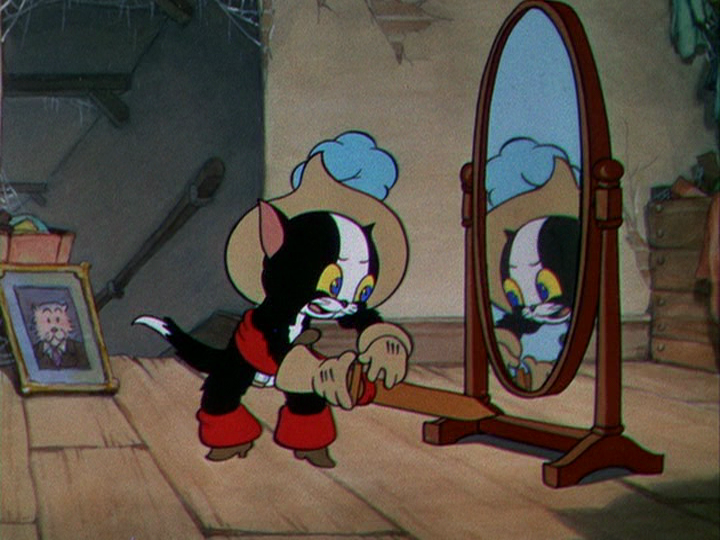
Ambrose continues his game of robber by threatening his own reflection

The Silly Symphony opens on a coach robbery, a voice telling the passengers to put their hands up. The camera zooms out to reveal a kitten named Ambrose holding two pop-guns, playing robbery with his toys. He continues to threaten his toys, and ends up shooting them because they won’t “give up the money.” Ambrose continues to play robber, until his mother is heard hollering his name from downstairs. Ambrose dismisses his mother’s call, telling no one in particular that Ambrose is no name for him, and from now on, his name is Butch.

Downstairs, his mother is preparing his bath. Ambrose sneers into the mirror and tells himself that robbers don’t take baths. He decides to run away to become a real robber, narrowly avoiding his mother as he steals cookies before heading out the open window to freedom from baths, only to land in a rain barrel. He shakes the water off before grabbing his hobby-horse and riding down the road. Unfortunately for Ambrose, his mother sees him through the kitchen window and demands that he come back, but he ignores her and rides away.

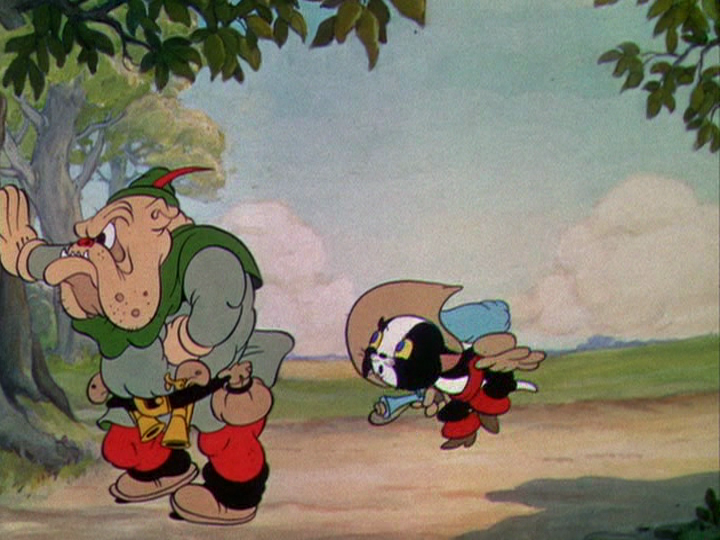
Ambrose sneaks up on Dirty Bill, attempting to rob the criminal

Meanwhile, the robber Dirty Bill is sitting in the woods, staring at his own face on a wanted poster and laughing. Ambrose spots him and attempts to rob him, but as Dirty Bill reaches for a real gun rather than Ambrose’s pop gun, Ambrose’s voice breaks. Dirty Bill turns around to see that Ambrose is only a kid, and asks Ambrose if he would really rob another robber. Ambrose is impressed that he’s really around a robber on a wanted poster.

Dirty Bill offers Ambrose a seat, and Ambrose copies the older robber exactly before asking if Dirty Bill’s mother ever made him take a bath. Dirty Bill brags in song that he’s never taken a bath, nor will he ever do so. Teasing him, Dirty Bill asks the kitten if he’s pulled any big jobs lately. Wanting to impress the robber, Ambrose tells him that of course he has, and begins to tell Dirty Bill about holding up a stagecoach (going back to the game of the morning). Unfortunately for Ambrose, his imagination and story-telling skills are too good, making the robber believe that the bag of cookies Ambrose is carrying is filled with treasure, and Dirty Bill attempts to steal it from the kitten.

Thinking the kitten is actually holding treasure, Dirty Bill suddenly turns violent

When Ambrose tries to convince Dirty Bill that he really is only holding cookies, Dirty Bill pulls out a knife, lusting for what he thinks is treasure. Scared out of his wits, Ambrose leaps out of his clothing, leaving the cookies behind as well, and sprints as fast as he can home and into the bathtub, where his mother is waiting to punish him. Sheepishly, he greets his mother, and plays with the bubbles in the tub, his robber days now behind him.

April 14

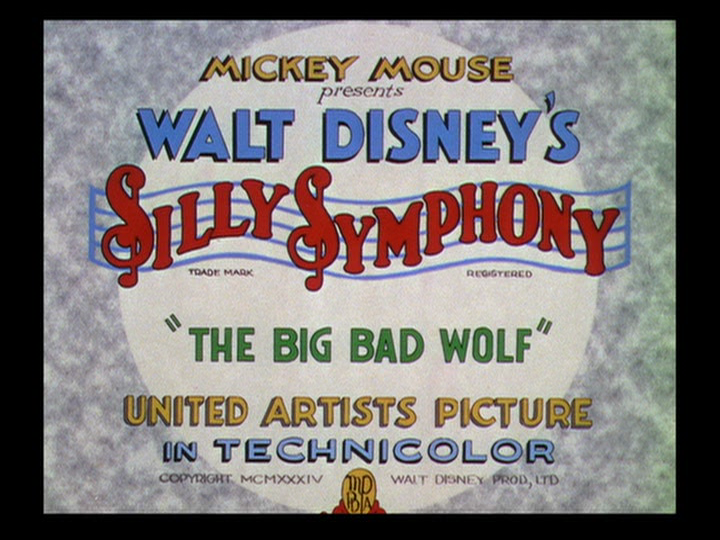
April 14, 1934 – The Silly Symphony, The Big Bad Wolf, is Released to Theaters

“There’s danger in them woods. Beware! The big Bad Wolf is lurking there!”

On April 14, 1934, the Silly Symphony, The Big Bad Wolf, was released to theaters. Capitalizing on the popularity of The Three Little Pigs Silly Symphony, it marks the return of the Three Little Pigs and the Big Bad Wolf, but the short was not nearly as successful as its parent Silly Symphony, and is today still considered inferior to the original, despite some clever gags. It was directed by Burt Gillett, and stars the vocals of Billy Bletcher as the Big Bad Wolf, Pinto Colvig as the Practical Pig, Dorothy Compton as the Fifer Pig, and Mary Moder as the Fiddler Pig.

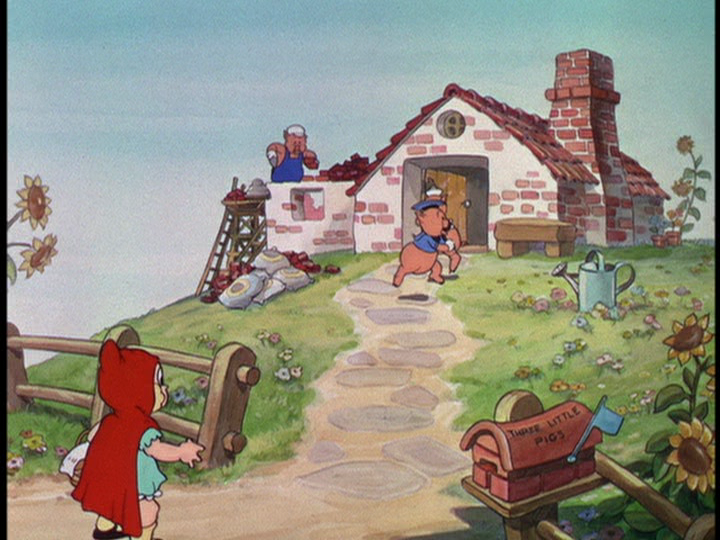
Little Red passes by the brick house of the Three Little Pigs

Little Red Riding Hood is skipping down the path to her grandmother’s house, and passes by the Three Little Pigs’ house, with the Practical Pig hard at work on an addition to the brick house, while his two brothers play their instruments and dance. The brothers greet Little Red Riding Hood, and when she explains that she is on her way to Grandma’s house, the two pigs tell her to take a shortcut through the woods. The Practical Pig, alarmed at their advice, tells her not to go through the woods, because the Big Bad Wolf is lurking there.

The two brothers begin to laugh at the Practical Pig’s advice, calling the wolf a sissy and offering to go along with Little Red to protect her before singing “Who’s Afraid of the Big Bad Wolf?” The Practical Pig just shakes his head at their folly, but continues to work on the house. Just as the three begin their journey on the short cut, the Big Bad Wolf is seen sneaking through the forest, disguised as a bush. He spies the three skipping merrily down the path, and leaves his disguise to climb up a tree and set his new plan in motion.

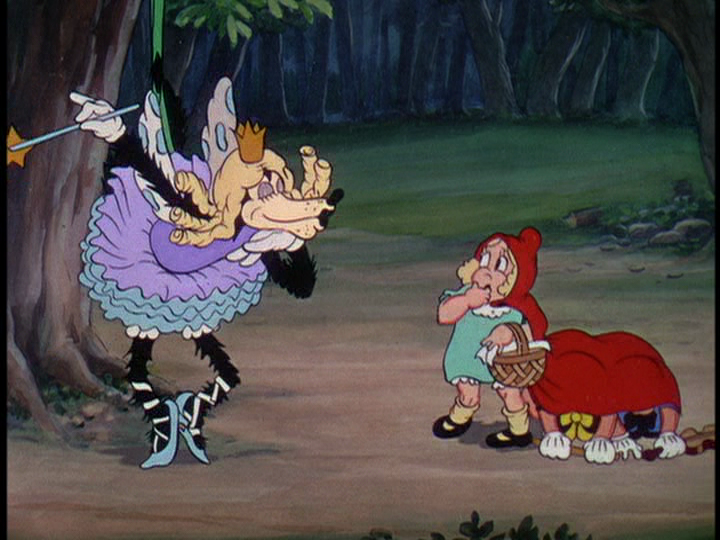
"Goldilocks, the Fairy Queen" lands in front of a frightened trio

The three are stopped suddenly by a “fairy” falling from the sky (the wolf in disguise), and the two pigs hide underneath the shivering Red’s cloak. The “fairy” introduces herself as Goldilocks, the fairy queen, and begins flying around, telling them that they’re safe with her. Unfortunately, the suspenders the Wolf used to help him fly are attached to a broken branch, which splits and lands on his head, knocking off his disguise. Alarmed, the three take off running but are separated, with the Wolf hot on Little Red’s tail. Fortunately for her, he gets stuck between two trees, giving her a chance to get away. The Wolf isn’t angry for long, for he comes up with another plan.

Using another shortcut, the Wolf reaches Grandma’s before Little Red, and peers through the window to see Grandma in bed, knitting. When she hears a knock at the door, she tells the visitor to come inside, and the Wolf enters, laughing menacingly. Grandma leaps out of bed and locks herself in the closet, with the Wolf trying to open the doors. Outside, Little Red is seen speeding through the front gate, stopping at the door to calm herself down before she enters what she thinks is the safety of Grandma’s house. Alerted by the knocking at the door, the Wolf quickly stops trying to get Grandma, and focuses his attention on getting the girl. He quickly disguises himself in Grandma’s robe and bonnet and slips into bed before calling Little Red in. Little Red notices what big eyes Grandma has, and what a big nose Grandma has (to which the Wolf looks at the audience and asks, “How am I doing?”). When Little Red points out the big mouth Grandma has, the Wolf strikes, chasing her around the room.

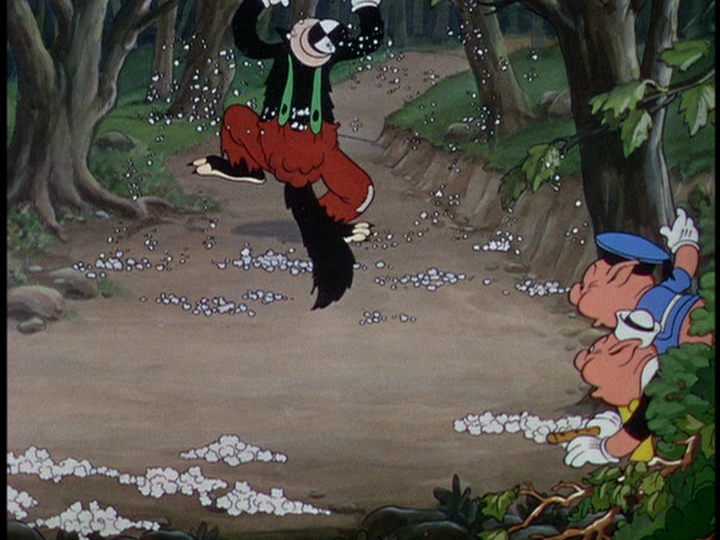
The two pigs watch the Wolf howling with pain back into the woods

Meanwhile, the two pigs have made it back home and alerted their brother about Little Red’s predicament. The Practical Pig runs to his collection of “Wolf Exterminators” and begins to load them into his bag before setting off for Grandma’s, leaving the two pigs cowering in the doorway. As the Wolf continues to chase Little Red, Grandma uses an umbrella to scoop the girl up and pull her into the closet for safety, with the Wolf once again trying to open the doors. The Practical Pig arrives just in time, and sneaks in while the Wolf isn’t noticing, and begins to place popcorn kernels down the Wolf’s pants, and then grabs some hot coals from the fire. Placing the shovel with coals in with the kernels, the Wolf cries out in pain and leaps through the ceiling of the house, and runs back into the woods, with the popcorn kernels popping wildly.

The two other pigs show up just in time to see the Wolf running away, and shake hands in happiness that the Wolf has been bested again. Inside Grandma’s house, Little Red and the Practical Pig are playing the piano while Grandma knits, with the two other pigs dancing and singing “Who’s Afraid of The Big Bad Wolf?” once more.

April 13

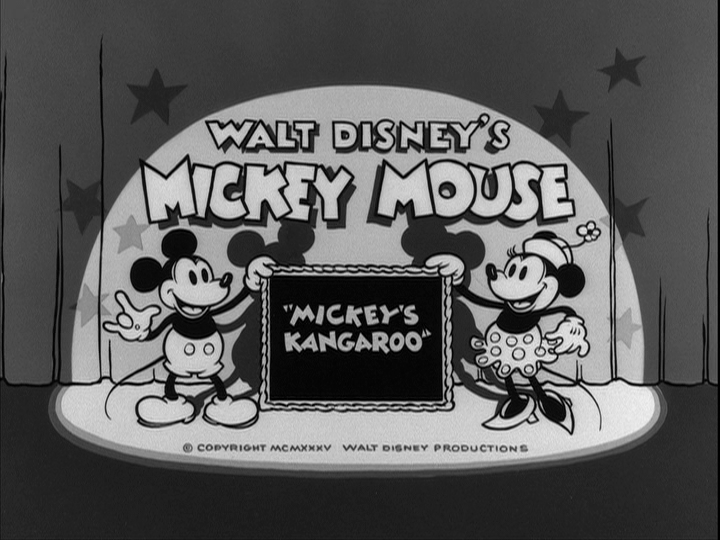
April 13, 1935 – The Mickey Mouse Short, Mickey’s Kangaroo, is Released to Theaters

“The nerve of that grasshopper! Busting up my house!”

On April 13, 1935, the Mickey Mouse short film, Mickey’s Kangaroo, was released. It was the last black-and-white Disney cartoon; the first Mickey Mouse color short had been released in February, but the studio released a few more black-and-white shorts before it realized that they had to be in color to continue Mickey’s popularity. The short was directed by David Hand, with Walt Disney providing the voice of Mickey Mouse. The short is also unusual for the fact that Pluto speaks to the audience, or at least lets the audience listen in on his thoughts.

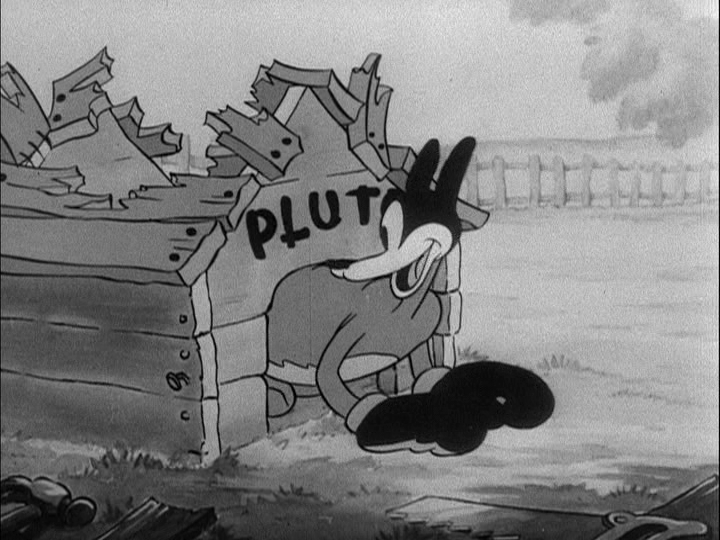
Pluto lets Mickey know how happy he is with the new doghouse

Mickey is seen painting Pluto’s name on a newly built doghouse, and Pluto barks excitedly, jumping around and leaping on Mickey, showering him with kisses. Suddenly, a whistle breaks up their happy moment as the mailman arrives with a large, unusually shaped package for Mickey. Mickey looks at the tag and sees that it’s from Australia. Curious, he decides to open it.

As Mickey tries to open the package, it hops away, and Mickey lands on his face. Pluto follows the bouncing crate, sniffing it until it jumps on his nose. Unfortunately for Pluto, after he frees his nose, the box jumps on his tail, and he lets out a loud howl of pain. The crate jumps around wildly, chasing Pluto around the yard and into the woodshed, where the crate bursts open, revealing a rather large kangaroo.

The kangaroo in the remains of Pluto's new doghouse

Mickey is excited upon seeing his new pal, shaking her hand. He runs to get his boxing gloves to spar with the kangaroo, and the kangaroo decides to make Pluto’s home her own. Pluto turns to the audience, snarling, and begins to vent before turning to see the kangaroo and the damage she’s done to the doghouse. Seeing Pluto’s name on the front, the kangaroo licks the letters off, infuriating Pluto. He runs full speed, only to meet with the kangaroo’s fist, and is thrown into a basket of clothespins.

Pluto tries again to attack, but is sucker-punched again –this time by the joey in the mother’s pouch. Pluto is confused at what had just happened, and when he sniffs at the pouch, he’s met with a harder blow to the head, sending him running to the chicken pen, howling all the way.

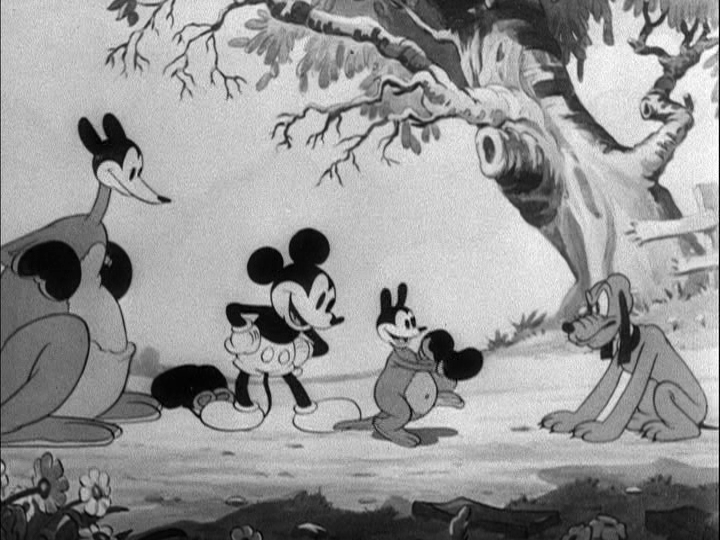
One kangaroo for Mickey, one joey for Pluto

Mickey runs out with his boxing gloves, and pulls out the joey, showing Pluto. The joey spars playfully with Mickey as Pluto carefully crawls back to meet the kangaroos and Mickey. Mickey then tells him, “One for you (the joey), and one for me (the mother).” Pluto is not amused at this situation, or that Mickey finds the joey cute. Mickey takes the mother to the gymnasium he has set up in the old barn, leaving Pluto and the joey behind.

Pluto again talks to the audience, telling them of his scheme to get rid of the joey first. He then begins to creep toward the water bowl, but is scared easily when the joey hiccups. Meanwhile, Mickey is sparring with the mother in the gym, and begins punching and teasing her, while she looks confused. Finally understanding, she lays one on him, with Mickey remarking, “Oh boy! What a wallop!” Although the kangaroo is easily winning, Mickey thinks it’s all in good fun and enjoys himself.

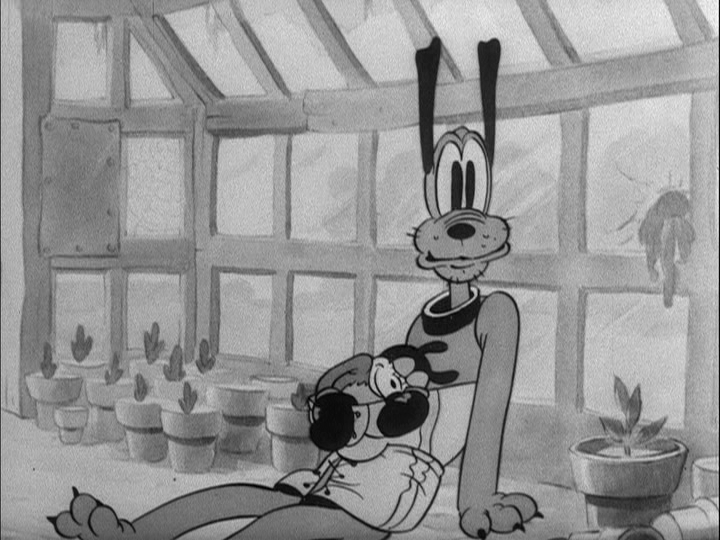
Pluto finally feels affection for the joey

Outside, Pluto is trying to go ahead with his plan to get rid of the joey, but with no success, as it outsmarts his every move just by jumping. After a particularly bad attempt, Pluto ends up in a scrap heap, with springs attached to his feet. Although he is able to jump, he isn’t able to do it well, and crash lands into a corset on the laundry line, and then falls through the ceiling of the greenhouse, where the joey finds him out cold. The joey then curls inside the corset, as if it were a pouch, and goes to sleep. Although angry when revived, Pluto is touched by the affections of the joey, and cuddles with him.

The moment is broken when they hear strange noises coming from the gymnasium, and the two rush to see the kangaroo giving Mickey a thorough walloping. With one particular hit, Mickey is sent flying into a hay baler, and when he comes out, trapped in a hay bale, he still wishes to fight. A bit later, the mother is seen reading the sports section in front of a roaring fire, with the joey and Pluto snug in her pouch, becoming one happy family.

April 10

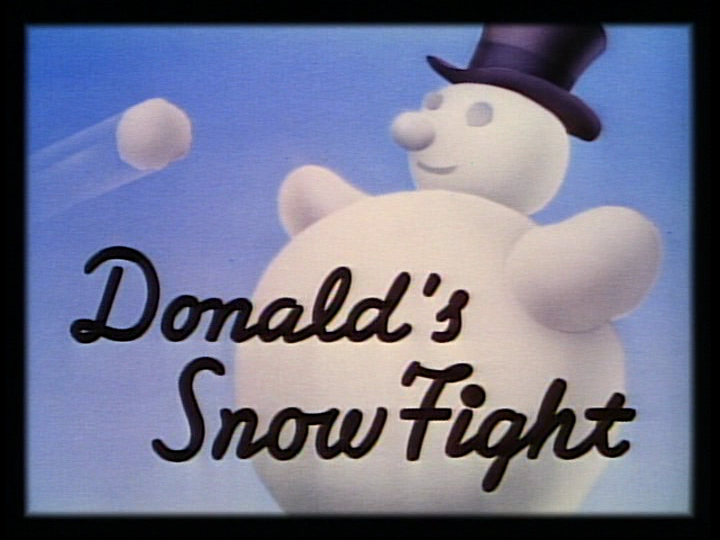
April 10, 1942 – The Donald Duck Short Film, Donald’s Snow Fight, is Released to Theaters

“Snow, oh boy! I’m crazy about snow!”

On April 10, 1942, the Donald Duck short film, Donald’s Snow Fight, was released to theaters. Directed by Jack King, it stars Clarence Nash as the voice of Donald and the nephews. There are many clever gags in this short, including a couple that is seen kissing underneath a mound of snow, which is swept away when Donald rushes by.

It’s a wintery day in suburbia, and Donald Duck is excited that there’s snow on the ground. He peeks outside to see how much there is, his beak turning blue in the process. Seeing the ice build up on the tip of his beak does not deter him from running to grab his overcoat.

Donald merrily on his way to go sledding

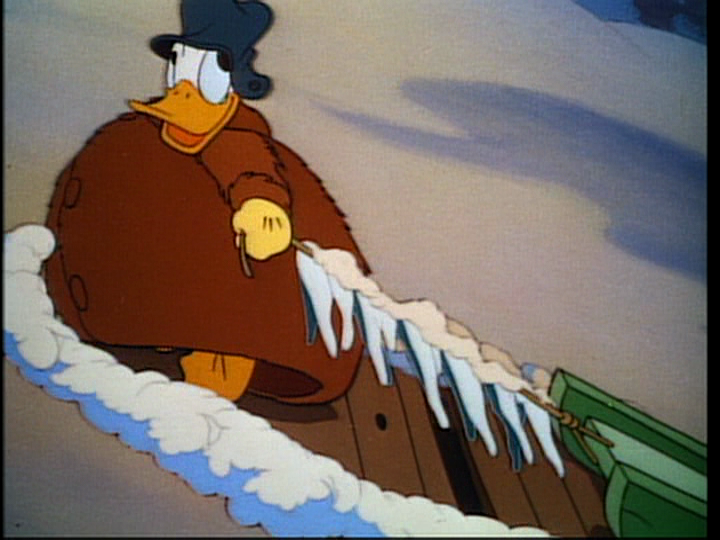
Bundled up and ready for a snow day, Donald treks up a hill with his sled, singing “Jingle Bells” while jingling the icicles on his sled rope. When he reaches the top of the hill, he notices his nephews building a snowman right in the sled path. Donald decides this is the perfect moment to “have some fun,” and dive bombs into the nephews’ creation, sending snow flying everywhere. Donald cracks up with laughter and rolls around in the snow, and the nephews quickly come up with a plan for revenge.

Their first idea is to disguise a rock with another snowman, one that looks like Donald. They cry for Donald’s attention, and the duck takes the bait, flying full speed toward the “snowman.” Donald hits the rock so hard that all of the fur is shaken off his fur coat. Not to be beaten by his nephews, he chases them across the snow, only to be cut off by the nephews escaping into their elaborate snow fort, with the springs of the door bouncing Donald back into a tree where the built-up snow and icicles trap him.

Captain Donald plays a bowling game while his nephews play the part of the pins

Inside, the nephews think they’ve won, but Donald swears revenge. The next scene shows that Donald has built his own fort that looks like a boat on the ice-covered pond, and he declares war on the nephews. He shoots snowballs at the three with elaborate trick shots, covering them with snow and making them appear to be bowling pins. Donald then grabs a large ball of snow and, throwing it like a bowling ball, throws a strike. Not satisfied, Donald grabs another large mound of snow shaped like a bullet and starts dunking it into a bucket of water, turning it into a deadly ice bullet. He fires it over to the nephews’ fort, splitting their flagpole into three sections, which ends up knocking into the nephews.

“Do you surrender?” Donald asks, but the nephews refuse. They gather all the materials they have, including mousetraps and rope, and plant the mousetraps into snow sculptures shaped like rockets. They place all the rockets into a basket and let it fly from a catapult, and Donald is trapped by the mousetraps. They continue their attack with more snow cannons, even though Donald calls it “unconstitutional.”

The first set of coals and arrows spell the end for Donald Duck

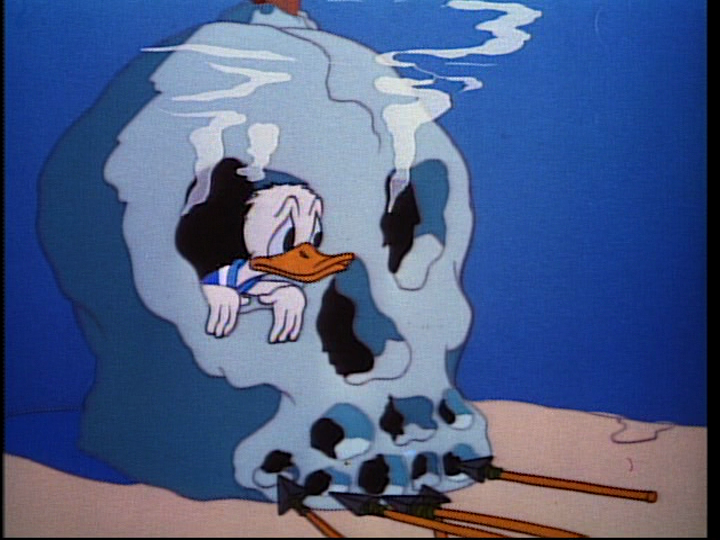
Not done with their uncle yet, the nephews gather hot coals and fire them attached to arrows, melting part of Donald’s boat. The largest arrow causes the whole boat to melt, with poor Donald stuck on the top. He falls through a hole in the ice and is seen frozen at the top of the splash of water, and the nephews are seen performing a victory war dance around the ice.

April 8

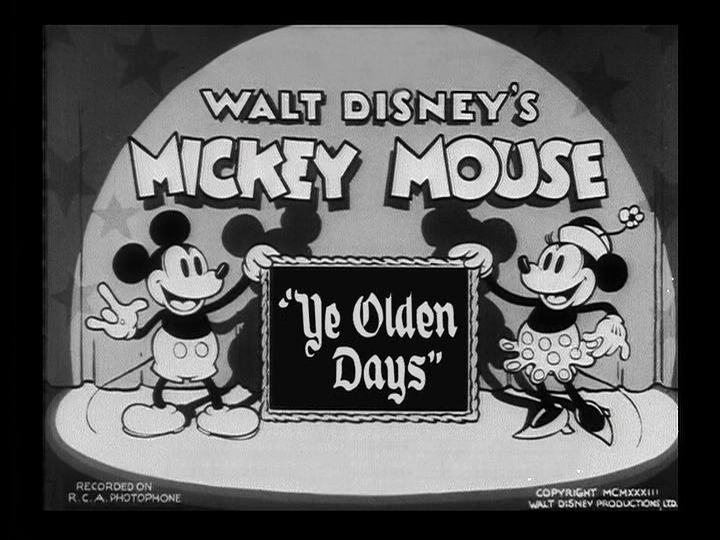
April 8, 1933 – The Mickey Mouse Short, Ye Olden Days, Premieres in Theaters

“I know you’ll learn to love me.”

On April 8, 1933, the Mickey Mouse short film, Ye Olden Days, premiered in theaters. It was directed by Burt Gillett, and starred Walt Disney as Mickey Mouse, Marcellite Garner as Minnie Mouse, and Pinto Colvig as Dippy Dawg. This is one of the few instances where the character of Dippy Dawg is referred to by that name. He grew to be an international star in his own right, but with a different moniker: Goofy.

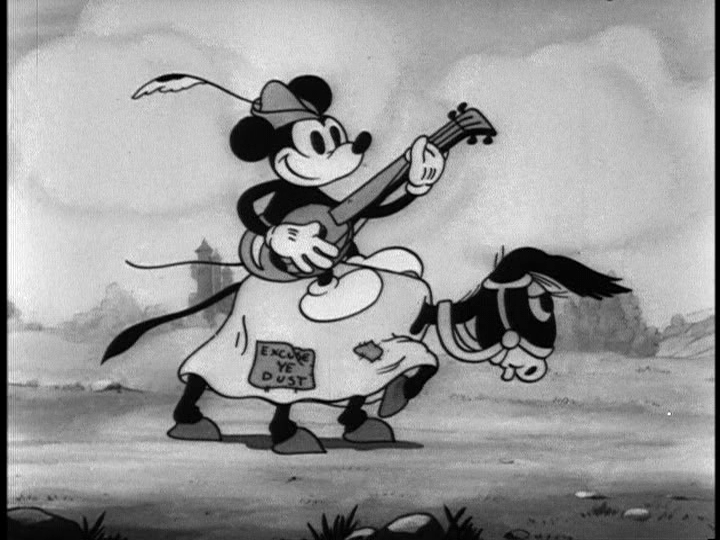
Mickey as The Wandering Minstrel, traveling from far away

The short opens with a cast list, with Mickey playing “Ye Wandering Minstrel,” Minnie as “Ye Princess,” and Dippy Dawg as “Ye Prince.” The name of the person playing “Ye Old King” is covered up by the end roll of parchment. We then see Mickey, riding on the back of a very tired-looking donkey, holding a lute and signing a song, introducing himself as a wandering minstrel from afar.

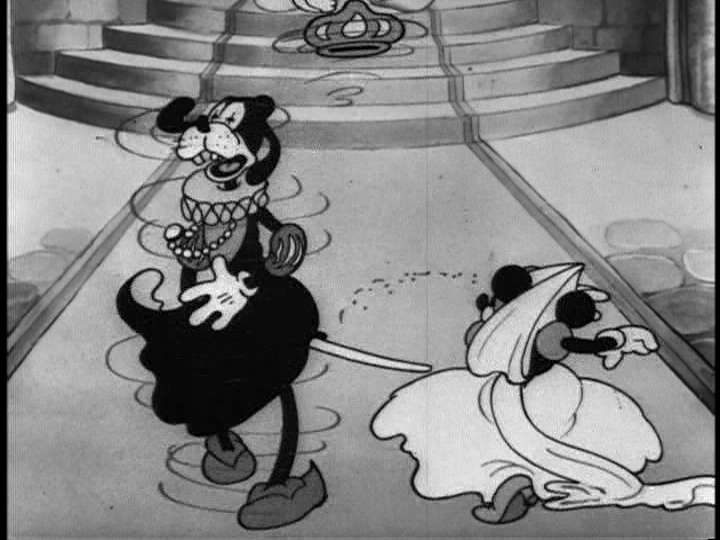
Inside the castle, all the members of the court are raising their glasses and cheering for the king. The king informs his subjects that his daughter, the Princess of Lalapazoo, will marry the Prince of Pupupadoo. Trumpets sound, and at the doorway stands Dippy Dawg, who gives his famous laugh. Minnie appears at the other doorway after the trumpets similarly announce her arrival.

Minnie emphatically slaps Dippy Dawg across the face, refusing to marry him

Mickey arrives at the castle, in time to see the wedding between the Prince and the Princess. The king demands that Minnie marry the prince, and Dippy Dawg grabs one of Minnie’s hands and begins kissing up and down her arm. She swears she will not marry the prince, and slaps him three times. The king, angered by his daughter’s behavior, sends her to be locked in the attic.

Seeing all this, Mickey decides to rescue the princess from her fate. He spots the tower where Minnie and her handmaiden (who appears to be played by Clarabelle Cow) are locked away. Inside the tower, Minnie and Clarabelle begin to cry at their fate, until interrupted by a song at the window. Mickey sings to her:

“Cheer up, oh lovely princess

For you’ll be rescued soon

I’ll take thee away

So ye won’t have to stay

And marry that silly baboon.”

Impressed, Minnie  sends Mickey a flower from her hat with a kiss, and he jumps up from a tree branch to the window. He tells her that he’ll save her.

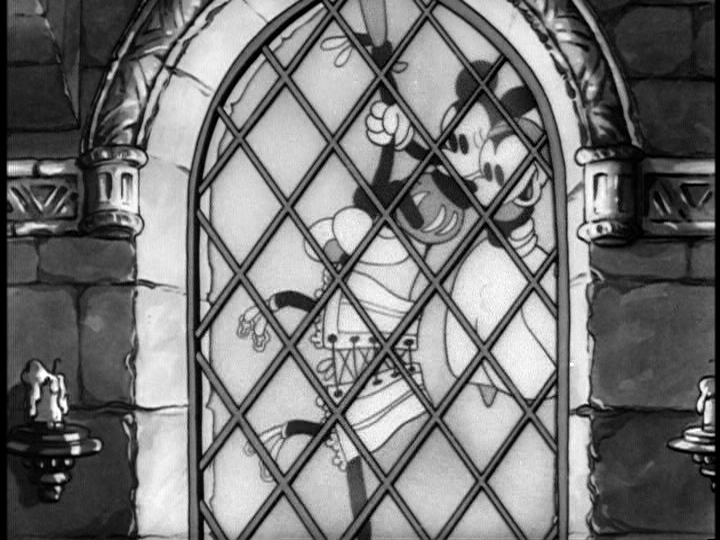
The king spies Mickey and Minnie trying escape through the window

The king continues the festivities, which includes a giant feast that everyone happily prepares and eats. Mickey and Minnie, however, using the handmaiden’s clothes as a crudely constructed rope, begin to rappel down the side of the tower. They are spotted by the king after the clips on the corset begin to tap against the window, and Mickey and Minnie are captured. Infuriated, the king orders Mickey’s head chopped off. As it looks like the end for Mickey, Minnie steps in front and declares her love for the minstrel. She suggests that there be a duel between Mickey and the prince instead.

Excited by this, the king agrees, and everyone busily prepares for the duel. With a loud clang, the duel begins. As Micky and the prince speed toward each other, both are thrown off their horses. Dippy Dawg chases Mickey around the room with his lance, but the mouse finds cunning ways to stay one step in front of him. Finally, Mickey chases the prince out the window, and is held by the crowd in victory, where he and Minnie share a kiss.