RSS Feed

Tag Archives: Short film

June 20

June 20, 1936 – The Mickey Mouse Short Film Mickey’s Rival Premieres in Theaters
“Mickey, I want you to meet Mortimer. He’s a perfect dream!”

On June 20, 1936, the Mickey Mouse short film Mickey’s Rival was released to theaters. The short was directed by Wilfred Jackson, and starred Walt Disney as the voice of Mickey and Marcellite Garner as the voice of Minnie. Oddly enough, Mortimer was the first name suggested for the character of Mickey Mouse, before Walt’s wife Lillian suggested the change to Mickey.

Mickey and Minnie are setting up a picnic, when something zooms down the country road, blowing away everything in its path, including Mickey and the picnic. As the blur slows down, we see that it’s a mouse in a car, and the mouse calls out to Minnie, calling her his “old sweetie.” He quickly reverses, crushing Mickey’s car into a tree, climbs out, and jauntily makes his way over to Minnie.
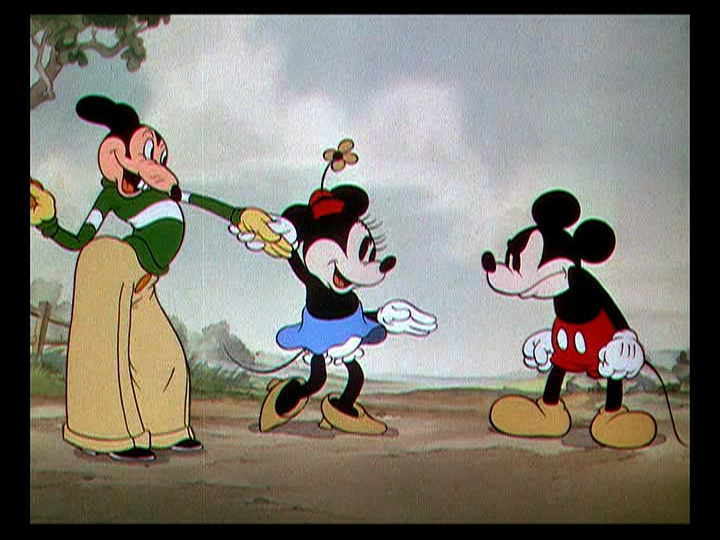
Minnie, charmed by her former flame, introduces him to Mickey

Minnie smiles and gives a fond hello to her old flame, Mortimer Mouse, who seems to be charming her once again. Minnie introduces him to Mickey, who is not charmed in the slightest, and is rather annoyed at this visitor. When Mortimer gives Mickey his hand to shake, Mickey is not amused to see that he’s fallen victim to a practical joke, as the arm he was shaking was a fake one Mortimer stuffed up his sleeve. Mortimer continues to play pranks on Mickey, with Mickey getting more and more frustrated. Mickey’s car is also experiencing some bullying by Mortimer’s car, and leaps away in fright when Mortimer’s car honks angrily.

Minnie and Mickey continue their picnic, with Mortimer as the guest, although Mickey isn’t too pleased with the situation, especially as Minnie begins to feed Mortimer. Mortimer makes a quick meal of Mickey’s food, then spots a bull in a nearby pen. He declares that he will fight the bull in Minnie’s honor, grabbing the red picnic blanket and shoving Mickey nose-first into his cup of coffee. Mortimer stands outside the pen and waves the blanket, with the bull charging head-first into the fence.
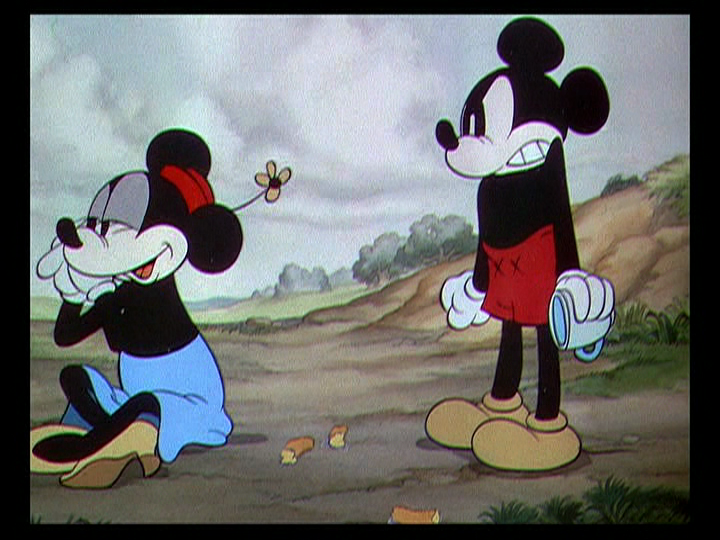
Mickey is not amused by Mortimer’s antics, nor is he pleased by Minnie’s swooning

As Mortimer continues to taunt the bull, Minnie turns to Mickey and asks if Mortimer isn’t just swell, to which Mickey sarcastically retorts that the mouse is a scream before breaking his mug and walking away. Minnie replies that he’s just jealous, and continues to cheer Mortimer on while Mickey walks off and pouts. Mortimer, however, doesn’t realize that the bullpen’s gate has been left open; when he goes to taunt the bull again, the bull rushes straight after him, and Mortimer makes a run for it into his car and speeds away as fast as he can, leaving Minnie draped in the red blanket as the bull charges for her.

When Mickey sees Minnie in danger, he runs after the bull as fast as possible and stops him, while Minnie scrambles up a tree. As the bull charges again, he knocks Minnie from her perch, but Mickey distracts the creature while Minnie escapes again. Mickey taunts the bull, and his car eventually comes to the rescue, driving the bull away. The couple are finally able to escape in the car, but Mickey is still fuming about Mortimer. He asks Minnie if she still thinks Mortimer is funny, to which she replies with a firm “No.” The two are happy together once again as they drive back home.
June 16

June 16, 1934 – The Mickey Mouse Short Film Mickey’s Steam Roller is Released to Theaters

“Oh, lookee! There’s Uncle Mickey! Yoo-hoo!”

On June 16, 1934, the Mickey Mouse short film Mickey’s Steam Roller was released to theaters. The short was directed by David Hand, and stars Walt Disney as the voice of Mickey Mouse and Marcellite Garner as the voice of Minnie Mouse.

A construction crew is working on a main street, and all the workers wave at the steam roller as it passes by. As it turns a corner, Mickey is seen driving the steam roller, waving back at the crew as he chugs along. Coming the other direction is Minnie Mouse, pushing a stroller that contains Mickey’s two nephews playing patty cake. The two begin punching each other, but when Minnie chastises them, they kiss each other on the cheek and make up, but attempt to fight again when Minnie’s back is turned. She then spots their Uncle Mickey, and all three give a little wave.

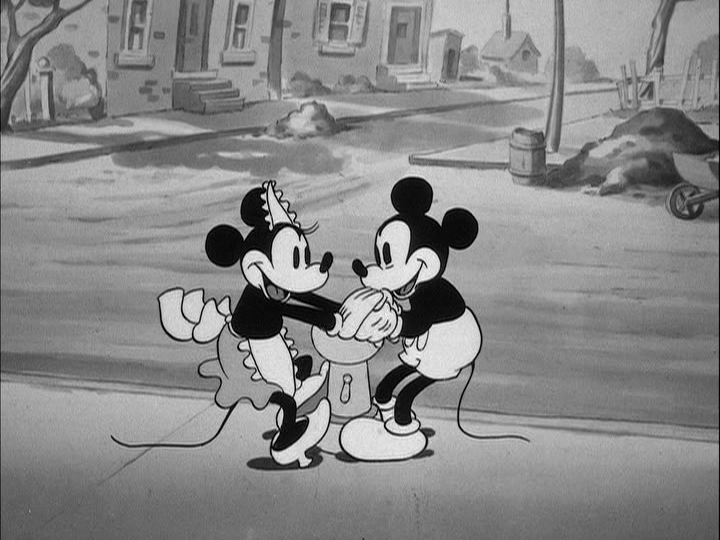
Mickey and Minnie flirt with a game involving the phrases written on candy hearts

Mickey pulls up beside them, and the kids cry out that they want “to ride choo-choo,” so Mickey attaches a hook to their stroller, pulls Minnie into the steam roller cab, and takes the kids for a ride, pretending they’ve become part of a train. After a short ride, he pulls the train to a stop and asks Minnie if she would like some candy. When she says yes, he pulls out a candy heart that has “I love you” written on it. He then pulls out another one that says “Kiss me” and asks her to read it out loud. When she does, he moves in on her, but she escapes his clutches, and their flirting continues, with Mickey chasing her down the street.

The nephews, seeing an opportunity, decide to climb into the steam roller and take it for a joyride. The steam roller runs faster than they thought, however, and they cling to the inside, while Mickey and Minnie run after them. The two nephews begin to have fun with it, with one bouncing on clouds from the stovepipe. Mickey attempts to rescue them by tying a rope to the steam roller, with the other end attached to a lamppost. Unfortunately, the lamppost isn’t strong enough, and Mickey is taken with it while it starts to drag the string of lamps down the street.

Mickey runs for his life as he is suddenly pursued by the steamroller

One of the nephews cuts the rope with a heated rod, and Mickey scrambles to stop them, ending up being chased by the steam roller down a steep hill. He finally takes refuge in a hotel, and the steam roller ends up crashing into it, knocking the building into oblivion. In the end, Mickey is just relieved to see that his nephews are all right, as they begin to see-saw on a plank of wood that landed on Mickey’s head.

June 13

June 13, 1931 – The Mickey Mouse Short The Delivery Boy is Released to Theaters

“In the shade of the old apple tree…”

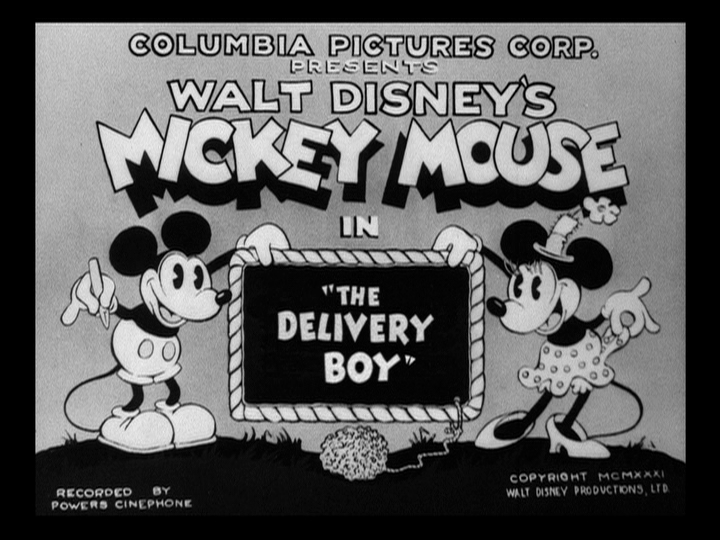
On June 13, 1931, the Mickey Mouse short film The Delivery Boy was released to theaters. The short was directed by Burt Gillett, and starred the vocals of Walt Disney as Mickey Mouse and Marcellite Garner as Minnie Mouse.

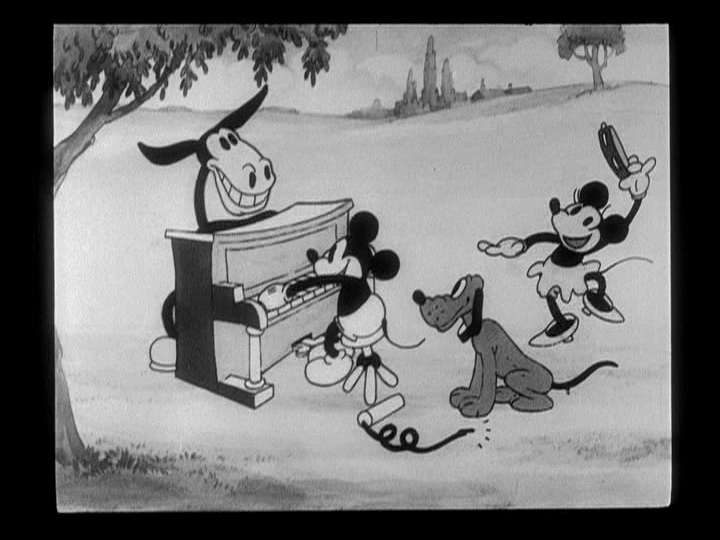
Mickey is seen sitting uncomfortably on an express wagon filled with various musical instruments, with Pluto running alongside excitedly. Mickey is sitting on the keys of a piano, playing a song as he bounces down the path. He stops the wagon as he spies Minnie Mouse, who is doing a load of laundry and singing to herself. Mickey jumps into her yard, with Minnie unaware that he’s been watching her. Unfortunately for her, a goat has been eating her clothes as she wrings them out, and she ends up fighting the goat for her girdle.

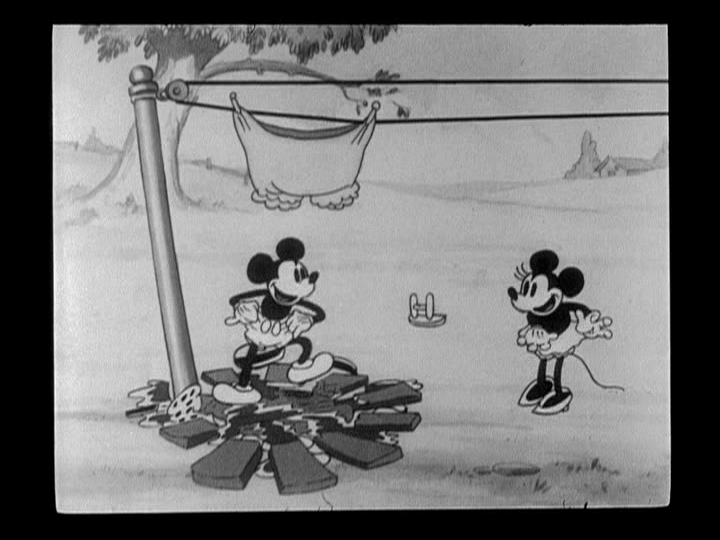
Mickey breaks the washtub after Minnie catches on to his jape, and the two begin to dance

Mickey comes up with a plan to greet Minnie: he ties one end of her bloomers on the laundry line closed, then leaps in and pushes himself as if he were in a boat. He begins to sing behind her, and hides in the bloomers when she turns around. He then pulls on her tail and plays it like a guitar string, but she catches on this time that he’s in the bloomers. She pulls him over on top of the tub and opens the closed end, making Mickey fall and break the washtub. The two then begin to dance to an upbeat song, and although Mickey ends up crashing into a tree, they continue to dance happily.

Pluto, meanwhile, has wandered into a puddle of tar, immediately getting stuck. He tries to pull himself out, but only seems to make his situation worse. While they dance, Minnie gives Mickey a kiss, and he leaps around giddily, ending up punching a beehive as if it were a punching bag before returning her kiss, then leaping away giddily again. He kicks the beehive in the end, which lands on his donkey’s tail, and the bees sting the beast, making it kick the wagon fill of instruments.

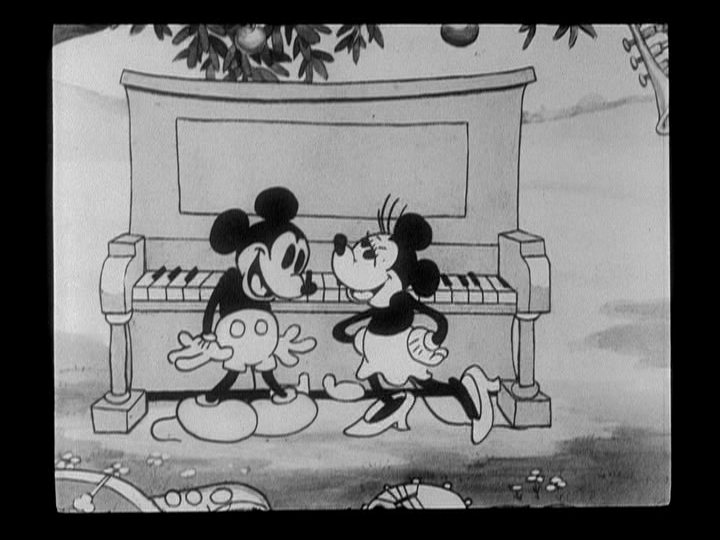
The pair has a very flirtatious conversation as Minnie coaxes him to play the piano

Most of the instruments land in a nearby farm, on the animals’ heads, and the piano lands near Mickey and Minnie. Minnie responds with glee, and asks Mickey if he can play. He responds modestly, and she eggs him on to play something. The two continue flirting, with Mickey saying he has to be coaxed to play the piano. Minnie responds with a smile that she’s coaxing him. He begins to play “Stars and Stripes Forever,” with Minnie joining him, and the two make it a jazzy duet where there share a kiss at the end.

All the farm animals join in on their rendition with the instruments that landed in their barnyard, and Mickey begins to join the barnyard animals in their playing while Minnie carries on with the piano. Pluto, on the other hand, has gotten himself out of the tar, and passes signs that say “Danger! Blasting!” “Achtung! Dynamite!” “Peligro! T.N.T!” and various other languages. But Pluto pays them no mind, and stumbles upon two men lighting a stick of dynamite and throwing it away. Thinking they want to play fetch, Pluto runs after the stick and brings it back. The men dive into a barrel of tar as they try to avoid the blast.

Mickey is oblivious to the surprise his dog has brought him as he continues to play and sing with Minnie and his donkey

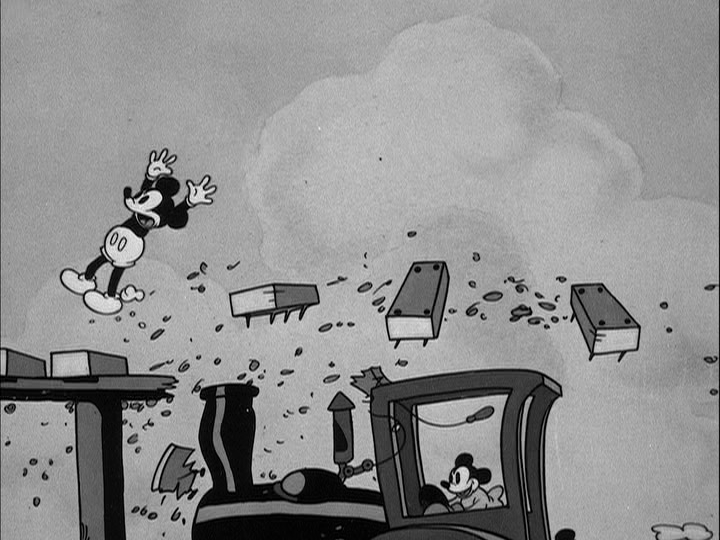
As everyone continues dancing merrily, Pluto brings the stick of dynamite to Mickey, who doesn’t notice what Pluto’s brought him. Pluto begins to chew on the stick, but gets distracted by a pack of fleas that have fled from the scene. Suddenly, the dynamite goes off, sending Mickey, Minnie, and the donkey flying sky high. Fortunately, they all land safely and continue dancing.

June 9

Posted on

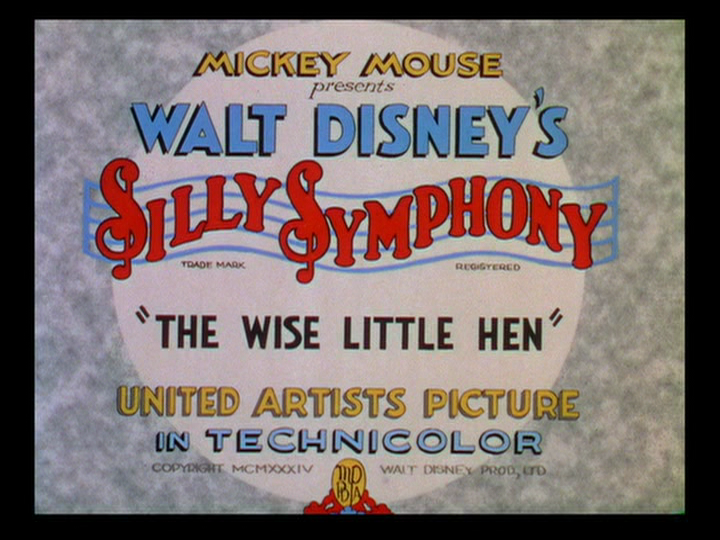
June 9, 1934 – The Silly Symphony The Wise Little Hen Premieres in Theaters

“Who, me? Oh, no! I’ve got a bellyache!”

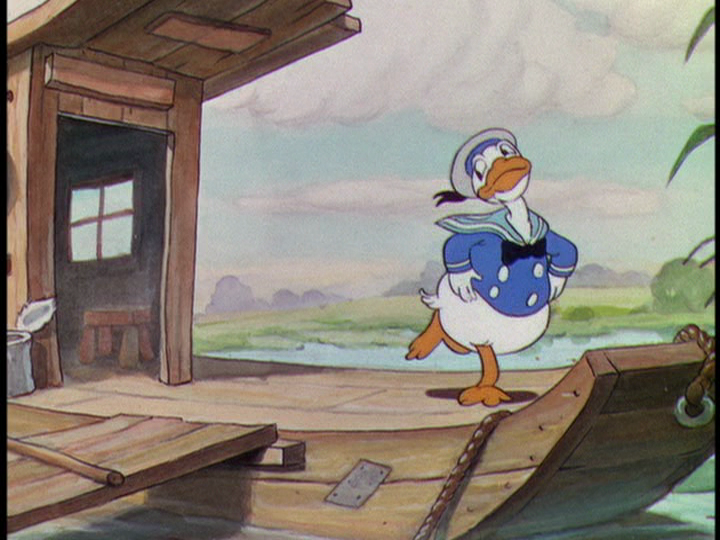
On June 9, 1934, the Silly Symphony The Wise Little Hen premiered in theaters. It was based on the folk tale The Little Red Hen, and was directed by Wilfred Jackson. It is notable for the debut of Donald Duck, voiced by Clarence “Ducky” Nash; it also stars Florence Gill as the Wise Little Hen, and Pinto Colvig as Peter Pig.

“There once was a wise little hen, who worried now and then, for fear that she’d be found in need when winter came again,” begins the narration in song for the short. The hen is seen stepping out her front door while all of her chicks play in the yard. With a basket of corn under her arm, she sets out to plant the kernels, and decides to ask her neighbors to help her plant her corn. She first stops at Peter Pig’s house, where Peter is playing an accordion and dancing a jig. But when she asks him for help, Peter feigns a stomachache and starts moaning. When she’s not looking, Peter sneaks a smile to the audience.

The first appearance of Donald Duck

Upset, but not discouraged, the hen moves on to Donald Duck’s houseboat, where he is also seen jovially dancing. When she asks for help, Donald also feigns a stomachache and begins to moan, also giving the audience a smile when she isn’t looking. Again, she is saddened by this, but decides she’ll just have to do it alone. With the help of her chicks, they dig the rows and plant the corn kernels.

The corn soon sprouts, and the hen and her chicks are excited to see how their crop has grown. She decides to visit Peter Pig and Donald Duck, to ask if they will help her harvest her crop. She finds the two at the “Idle Hour Club,” dancing and singing. When she asks for their help, once again, the two fake stomachaches, and go into their clubhouse, moaning. Part of their clubhouse wall falls down, revealing the two shaking hands and laughing at their supposed deception.

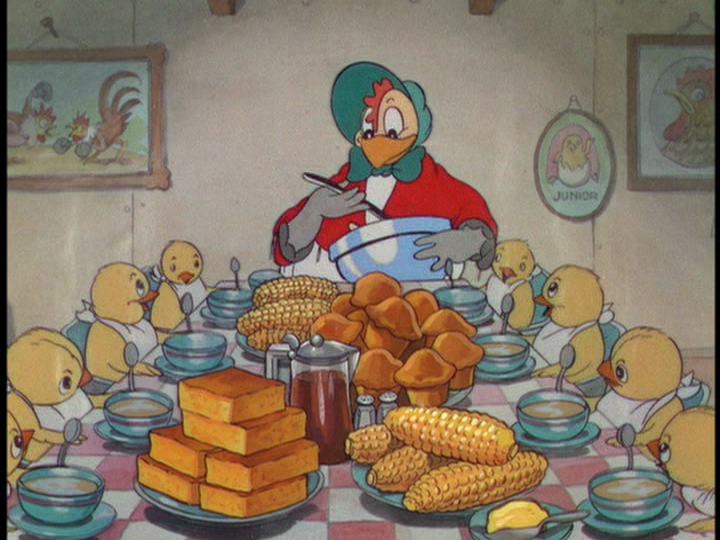
The hen and her chicks enjoying their corn feast that they alone planted and harvested

The hen winks at her chicks, getting an idea. She goes out and harvests her corn, and is soon seen at her oven, cooking and preparing many corn dishes. The entire family is shown around the dinner table, with the table piled high with delicious food, and everyone eating heartily. The Wise Little Hen looks out to see the pig and the duck dancing once again, and they feign stomachaches the moment they spot her, with more symptoms, like seeing spots. The hen asks them if they’ll help her eat her corn, and when they readily agree, she hands them a bottle of castor oil – for tummy aches. The singing narrators let us know that “she’ll eat the corn herself,” with Donald and Peter seen kicking each other for their foolishness.

June 8

Posted on

June 8, 1951 – The Donald Duck Short Test Pilot Donald Premieres in Theaters

“Get out of there, stupid. It belongs to him!”

On June 8, 1951, the Donald Duck short film Test Pilot Donald premiered in theaters. This was the 10th short in which Donald had to deal with the antics of Chip and Dale. The short was directed by Jack Hannah, with story by Bill Berg and Nick George, and music by Paul Smith.

A red airplane is zooming through the clouds, and Donald is seen manning the controls, getting ready for a dive. He successfully completes the dive, then checks off his list that the plane is able to maneuver well. As the camera pans back, the audience sees that Donald is only manning a model airplane while camping out in the middle of a park. He sets the plane in for a landing on a pillow, and showers the model with affection.

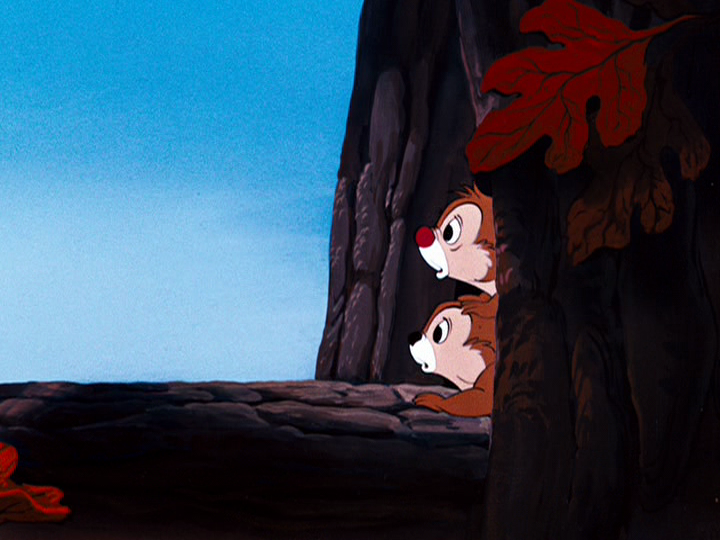
The pair scurries for cover when the model starts to fly a little too close to their tree

From a nearby tree, Chip and Dale are seen admiring the airplane, too, although they scurry for cover when it seems that the plane gets too close to their branch. The plane does eventually get stuck in the tree, with Donald angrily trying to get it free from the branches. As Donald tugs on the string, smoke shoots out of the tail, flying directly into the chipmunks’ hiding place. Dale comes out and, seeing the plane sitting there, decides that this is his chance to fly the plane.

Dale scrambles to the cockpit, only to have Chip pull on his tail. He points out that the plane belongs to Donald, who is still vigorously pulling on the string. Dale doesn’t care, and when Chip isn’t looking, Dale climbs in and starts playing around in the cockpit, when one button causes the plane to shoot off, leaving Chip stunned. Donald just thinks he got it loose, unaware that Dale is flying around happily, pretending he is a real pilot. He steps out of the cockpit and sits out on the wing, with Chip covering his eyes, thinking that Dale could fall at any second.

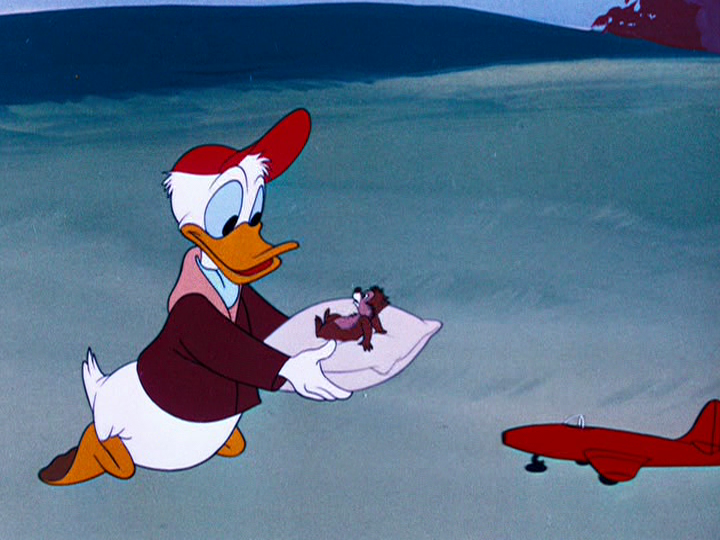
Donald is rather surprised that his plane doesn’t come in for the safe landing, but Dale does instead

Dale finally looks down to see the danger he’s in, scrambles back into the cockpit, and tries to stop the plane. Donald is confused as to why his plane is running around strangely, and when he holds the pillow out for the plane, Dale ends up tumbling out onto the pillow, much to the surprise of Donald. Donald is immediately infuriated, but soon becomes saddened to see his plane is damaged.

As he fixes the wheel, Dale takes a look inside the engine, and begins to fix the model from the inside. Donald is surprised by this, and shuts Dale inside the plane, annoyed that the critter had the nerve to mess with his model. He then plays a prank on Dale, sending the chipmunk shooting out the tailpipe into a pitcher, where Donald keeps him trapped. Chip runs down from his perch to free his best friend, but is still mad that Dale did something so foolish.

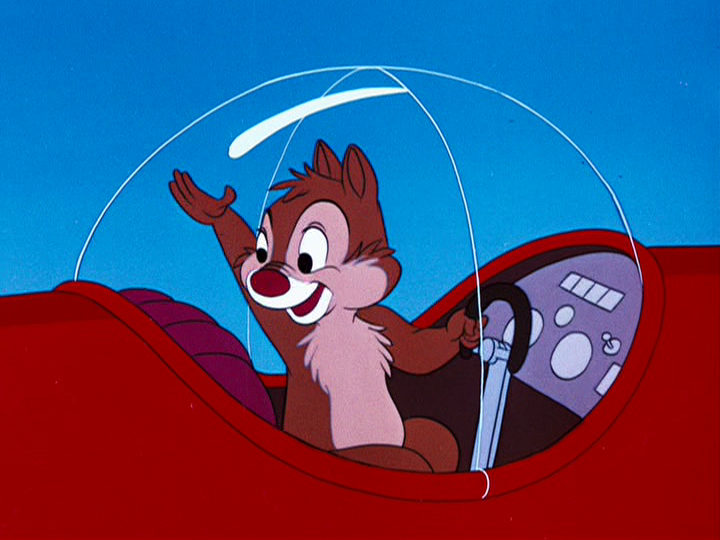
Dale gives his pal a wave as he flies past, unintentionally causing Chip more misery than joy at the situation

As Chip tries to free Dale, Dale digs his way out and gets back in the plane, taking off as Donald tries to fix it. He begins to fly around wildly, waving at Chip as he passes by and sends him flying over the grass. Donald can only watch as his plane has been taken hostage, and flees as he realizes that Dale is going to use him for target practice. Chip just gives up and goes back to his tree while Donald decides to seek revenge.

As Chip continues to taunt the duck, Donald uses a fishing rod to catch the plane and pull it to a stop. Dale, caught, continues to fight, and ends up taking Donald “water skiing” across the pond, while Chip just looks on, frustrated at his friend’s antics. Donald finally catches up with the plane in the air, but Dale parachutes out, leaving the plane without a pilot. The fishing rod gets caught around the top of a building, leaving Donald to fly around in circles for hours, all through the night. Dale points this out as the chipmunks try to sleep, but Chip is still aggravated at his friend’s stupidity.

June 6

Posted on

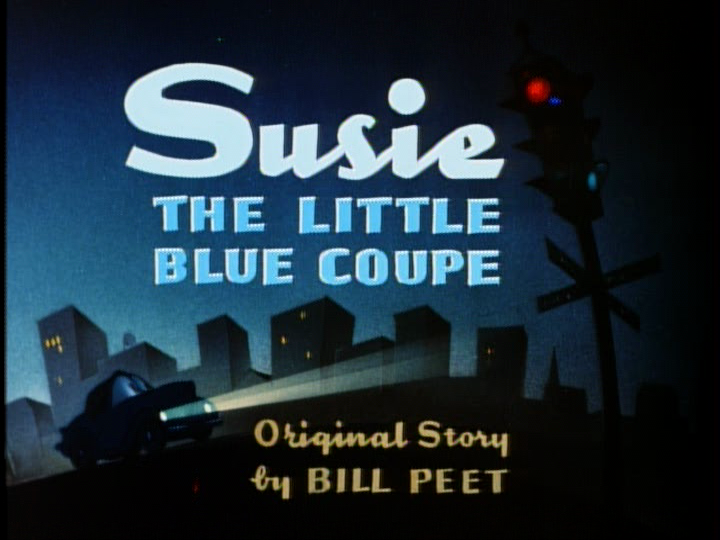
June 6, 1952 – The Special Short Susie, the Little Blue Coupe, is Released to Theaters

“Susie was a happy little car, as she glided down the avenue.”

On June 6, 1952, the special short film Susie, the Little Blue Coupe, was released to theaters. It was based on an original story by Bill Peet, with the adaptation to film done by Peet and Don da Gradi. The short was directed by Clyde Geronimi, with music by Paul Smith, and narration provided by Sterling Holloway. The anthropomorphized look of the cars is said to have been an inspiration for the look of the characters in the Pixar films Cars and Cars 2.

“This is the story of Susie,” the narrator begins, with Susie seen in the front showroom of Miller Motors. She had many admirers stop and stare, for she was a beautiful blue coupe. Susie is seen flirting through the window, even giving one of her admirers a wink. One day, a man in a brown suit spotted Susie, and fell in love with her immediately. Susie was thrilled to be sold to the man, and has a cheerful strut as she drives down the road.

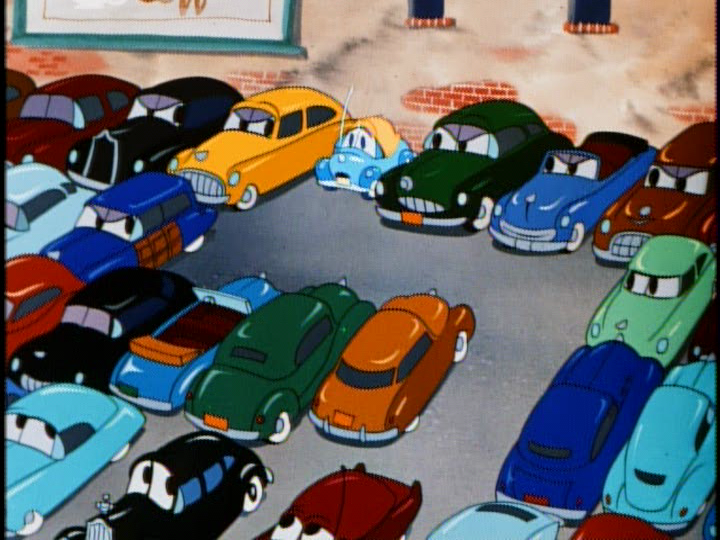
Much smaller than the other cars, Susie huddles in an empty space, intimidated by the others’ mean stares

As Susie entered the main roads, however, she was too slow for the other cars, nearly getting run off the road several times, but she was finally able to maneuver her way around with ease. She also ended up at the Parking Lot, trying to make friends with the big limousines and the big, fancy cars, although they did not take a liking to her. At the end of the day, she was just happy being back in her own garage, with the owner’s cat asleep on her roof.

Years go by, and Susie has not aged gracefully. Her carburetor is having trouble, and her slow speed causes traffic to back up for miles. She goes into Joe’s Garage for a checkup, and when the mechanic lets the owner know that she needs a new overhaul, the owner just says sadly that all he needs is a new car, leaving Susie to be abandoned in a used car lot, on sale for $95.

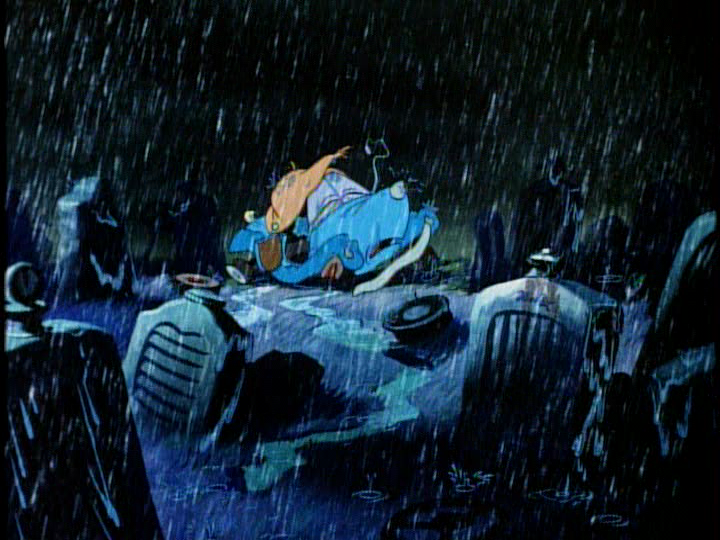
After the accident, Susie is carted off to where all cars go to die – the junkyard

A rather unsavory looking fellow walks around the car lot, checking out the cars available, when he spots Susie with a smile. He goes to check her out, and decides to buy her. Now, she was driving “back streets and dark alleys,” left out in the cold at night, feeling abused and depressed. One fateful night, as she was left alone on the street as usual, Susie is stolen, and is then pursued by the police. Susie’s captor runs a red light, sending her crashing into a trolley. Susie is then carted away to the junkyard.

Susie sits through the seasons in the junkyard, until one day she is spotted by a young boy, who buys her for $12.50. With the help of his friends, they take her apart and put her back together again, so she’s better than new. Susie speeds down the road, happy to be loved by an owner.

June 3

Posted on

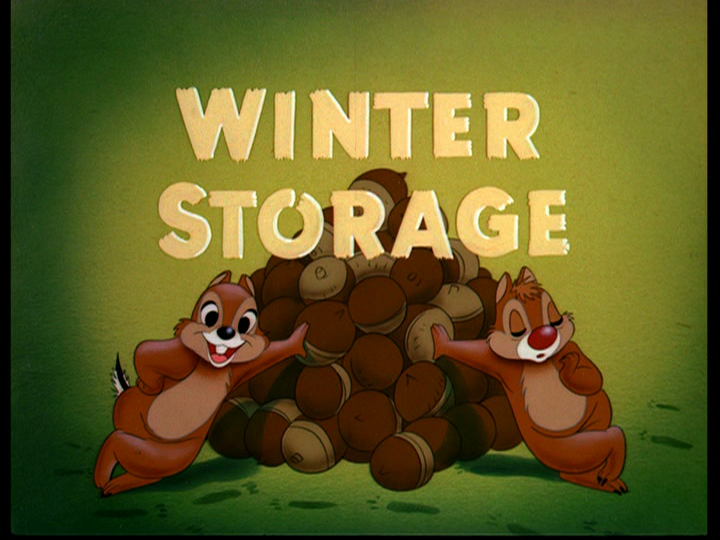
June 3, 1949 – The Donald Duck Short Winter Storage is Released to Theaters

“Oh boy, oh boy! I finally got them!”

On June 3, 1949, the Donald Duck short film Winter Storage was released to theaters. It features Chip and Dale as Donald’s adversaries, their third short with Donald. It was directed by Jack Hannah, with the story by Bill Berg and Nick George, and music by Oliver Wallace. It featured Clarence Nash as the voice of Donald, and James MacDonald as the voices of Chip and Dale.

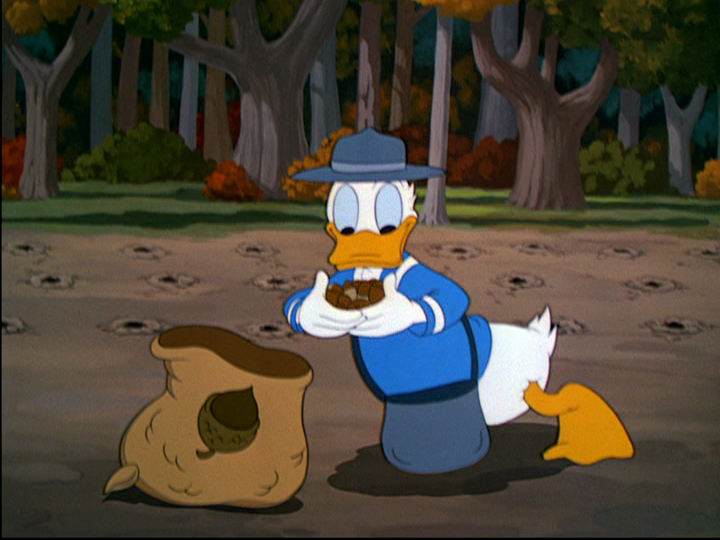
It’s autumn in the woods, and Chip is busy, storing nuts in a giant oak tree for the approaching winter. According to his calendar, it’s October 7th, and he hasn’t gotten very far with his collection. He passes by a matchbox in the tree that seems to be snoring, and opens it to find Dale fast asleep. Chip kicks the matchbox out onto the main branch, and Dale quickly sets to work picking the acorns from the tree. As Chip collects, he is suddenly thrown off stride by an acorn cap hitting his head.

Donald with his bag of acorns to plant in the area

Chip storms out to ask Dale where the acorn went, and Dale points to the tree – every acorn is gone, save for their caps. Chip grabs Dale and pulls him to the calendar, explaining that they have to collect enough food before December 1st, otherwise it will be an awful winter. He then begins to pace, wondering what they’re going to do about their food problem. The pair hears a strange sound outside, and rush out to see Donald standing near their tree, holding a map marking an area that needs to be seeded. With him is a giant bag of acorns used for planting.

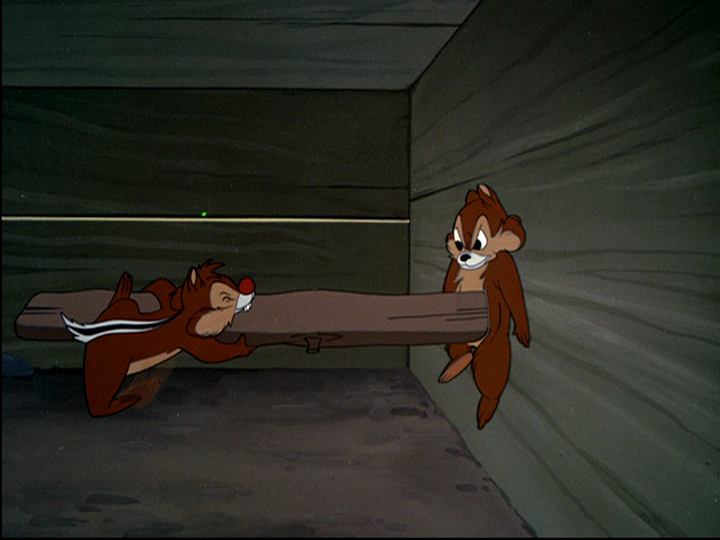
The pair becomes excited, and they rush down the tree, digging up the acorns Donald has planted, intending to them back to their food pile. Dale, being a bit slow-witted, decides to replant the acorns, following Donald’s example. When Chip finds out what Dale has done, he gives him a good hard kick before coming up with the next plan: following the acorn bag and collecting the nuts. Dale, however, pulls a loose string from the bottom of the acorn bag and lets all the nuts spill out over Chip, who is not the least bit amused.

Although he has the best intentions, Dale accidentally traps both of them in the box again

Donald looks to see that his bag is entirely empty, and spots the two chipmunks creeping away with all the acorns in their own bag. He carefully follows them and sets out a trap to catch them, after taking the bag back, but Chip is able to spot the trick. However, Dale unwittingly gets Chip caught in the box, and when Chip makes a successful attempt to free himself, it’s Dale that gets both of them trapped inside.

As Donald rushes over to see his capture, the two dig into the dirt and tunnel out of the box, only to find themselves under it again when Donald has moved it. The two begin to argue, and Donald looks under the box to see his capture. He moves the box away, just observing their little quarrel, wondering if they’ll notice that they are, this time, free. The two face away from each other, silent, and Donald provokes the fight again by pulling Chip’s tail. This causes their argument to become physical, but Dale accidentally ends up punching Donald in the eye.

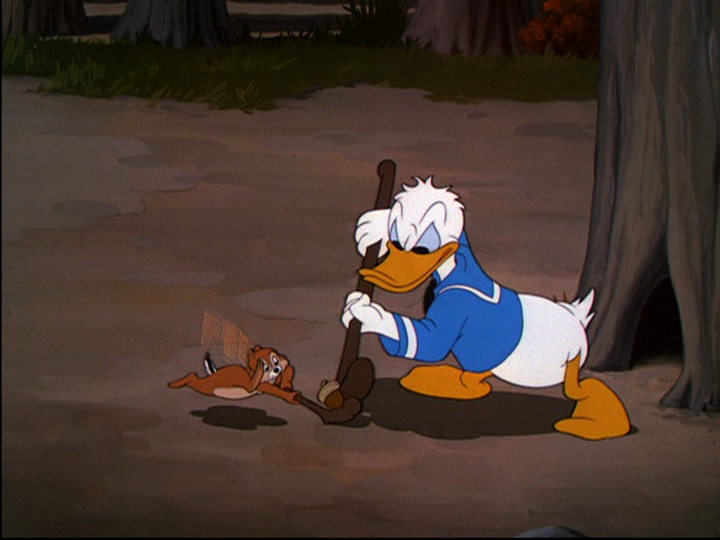
Donald begins to play a game of hockey with the pair with the stolen acorns

The two critters escape and make their way back to the tree with more acorns, and Donald hot on their tails. They begin to play a game of hockey with Donald, trying to shoot the nuts into the hole at the base of the tree. A sudden avalanche of nuts, directed by the chipmunks, approaches, and Donald has no time to prepare. The poor duck is knocked out, and seemingly driven mad, and the two chipmunks are happy they have enough food for the winter.

May 30

Posted on

May 30, 1936 – The Mickey Mouse Short Thru the Mirror is Released to Theaters

“Aw, skip it.” “Skip it? Okay.”

On May 30, 1936, the Mickey Mouse short film Thru the Mirror was released to theaters. Although written as Thru the Mirror on its title card, the official poster for the short has the title spelled Through the Mirror. The short was based on the story Alice Through the Looking Glass by Lewis Carroll. It was directed by Dave Hand and stars Walt Disney as the voice of Mickey.

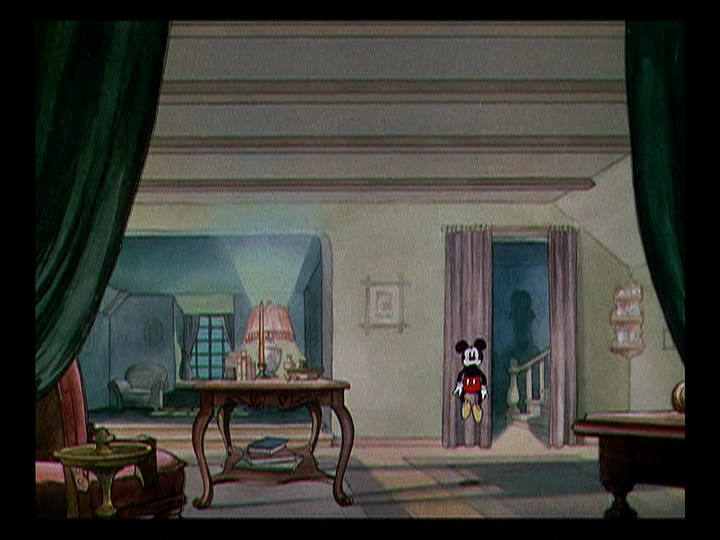
Mickey has fallen asleep reading Alice Through the Looking Glass, and his dream self gets out of bed to try to see if it’s possible for him to go through his own looking glass above his mantle. Finding that it is indeed possible, Mickey walks through the mirror, and looks in amazement at the mirror version of his own home. He jumps into his chair, startled that it is alive, and ends up stepping on the footstool, which has turned into a dog-like creature that bucks Mickey all around the room.

Just as Alice does in the story, Mickey shrinks after eating a piece of strange food

Mickey gets an even bigger shock when it seems that everything he bumps into has come to life. He spies a nutcracker cracking some walnuts, but is surprised to see that it disregards the nut and eats the shell. Mickey takes the walnut and eats it, which first causes him to grow to an alarming size before quickly shrinking to the size of a playing card.

A nearby phone begins to ring, and the phone tells Mickey it’s for him while helping him up to the desk. Their strange conversation ends with Mickey playing jump rope with the telephone cord. The radio, wishing to get involved, begins playing some upbeat music as Mickey begins to perform some tricks, before landing in an ashtray and procuring a top hat and matchstick “cane.”

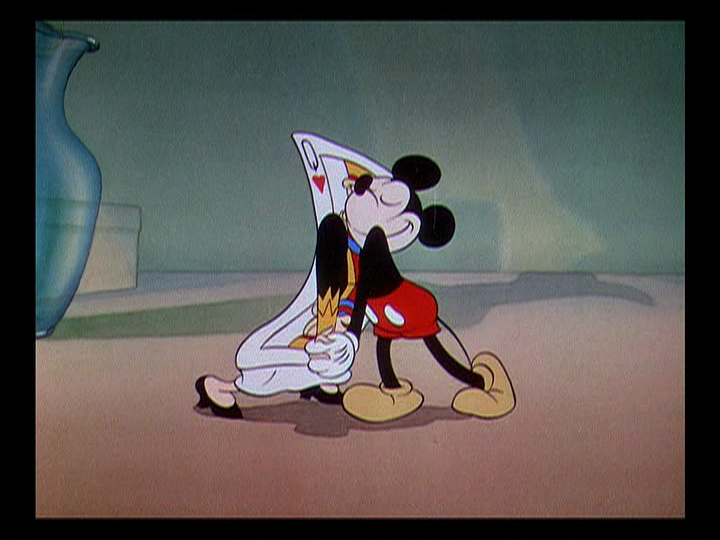
Mickey dances closely with the Queen of Hearts, which infuriates the King of Hearts

After Mickey tap dances on the top of a top hat, he is soon joined by a pair of gloves, and they begin a dance that sends Mickey flying into a deck of cards. He leads the cards into a march, which leads to them all dancing, Mickey with the Queen of Hearts. The Joker alerts the King of Hearts about Mickey’s close dancing with the Queen, and declares a duel with Mickey. Mickey grabs a nearby needle as his weapon, and begins to fight both halves of the King, sending him flying into an inkwell.

Angered by his defeat, the King calls out the cards to chase Mickey, and every single playing card in the place begins to chase the mouse. Mickey holds them off for a bit with an ink pen, but he runs out of ink and escapes through a sock. The cards take off their markings to throw at Mickey, and he gets the idea to blow them away with a nearby fan. Mickey ends up running on the top of a globe, before falling into one of the oceans, and getting thrown out by King Neptune.

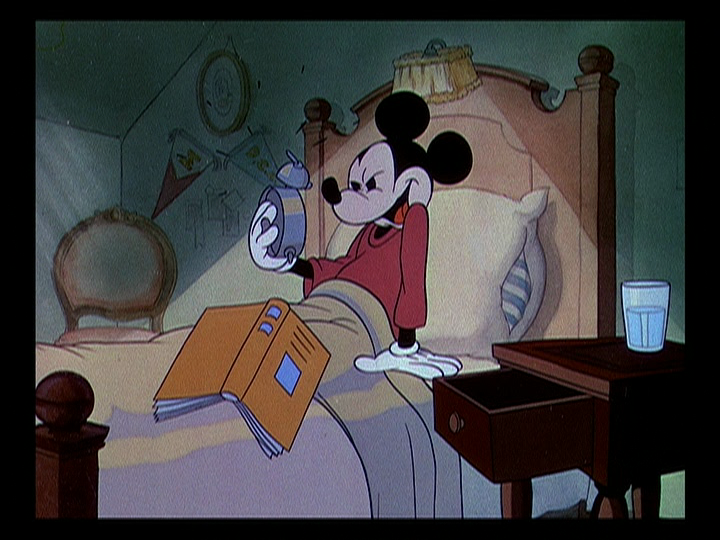
Mickey laughs when he finds he’s been thinking his alarm is his telephone in his sleepy state

Regaining his size quickly, Mickey runs back through the mirror and back into himself, who wakes up and thinks his alarm clock is his phone. He laughs and throws the clock into a drawer before rolling over and going back to sleep.

May 28

Posted on

May 28, 1928 – The Oswald the Lucky Rabbit Short Oh What a Knight is Released to Theaters

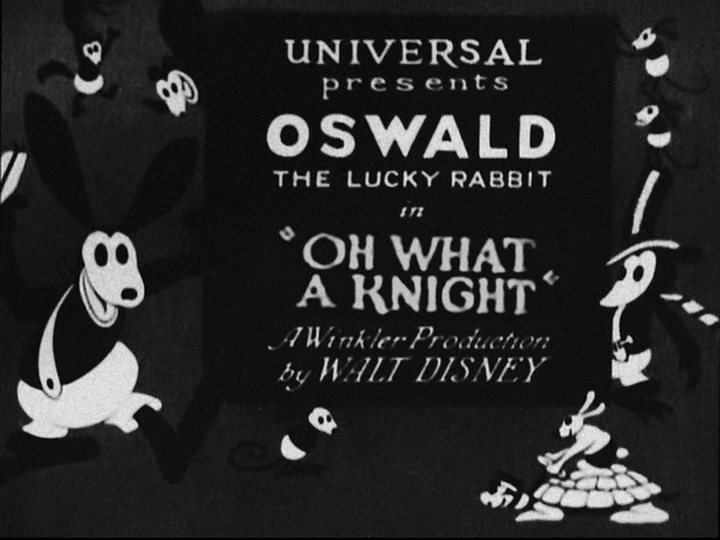
On May 28, 1928, the Oswald short film Oh What a Knight was released to theaters. The short contains some impressive shadow animation, done by Ub Iwerks, as well as some interesting gags, animated by Hugh Harman and Ham Hamilton. This short was restored by the American Film Institute, and is one of the best preserved Oswald shorts in existence today.

The audience’s first shot of Oswald is with him riding a donkey and playing an accordion rather boisterously. Unfortunately, as the donkey dances to the music, he trips, sending both rider and donkey flying down the side of a hill. The donkey hits a rock right in front of an alligator-filled moat, with Oswald ending up on shore, but the donkey diving straight into the water. The donkey narrowly manages to escape being eaten, but loses his tail in the process; as the alligator laughs at the donkey’s misfortune, the joke ends up on him, as the donkey pulls his tail out to its full length again.

Oswald and Ortensia shyly look away after a steamy kiss, while Ortensia’s father appears looking appalled, unbeknownst to the pair

Meanwhile, Oswald whistles out a tune, which catches the attention of Ortensia the Cat, who stands on the balcony and swoons, sending him a kiss. He offers to play her a song on his accordion, but it is so waterlogged that it will no longer play. With the help of his donkey, Oswald climbs up to the balcony to greet his love, only to have her try to send him away, as she warns him that the king is nearby. He gives her a kiss that makes her swoon once more, only to have the king enter, looking not too terribly pleased. As Oswald attempts another kiss, he falls off the balcony, but is able to comically make his way back so that he may rescue Ortensia.

Inside, Oswald grabs a sword, ready to fight to free Ortensia. In a daring move, Oswald hands his sword to his shadow, who continues to do battle with the king while Oswald steals a kiss from his lady fair, which gives him enough courage to go back and take his place back in the fight. Oswald continues to break from the fight to steal kisses from Ortensia, but still manages to best the king, even when his situation looks grim. After freeing Ortensia from her ball and chain, Oswald uses it as a bowling ball to knock down the king and his minions.

Ortenisa’s skirt allows the two to float to safety while sharing yet another kiss

Thinking they are finally free, Oswald opens the tower door, only to be greeted by a hungry lion. The couple flees the tower by jumping from the window. Ortensia is able to use her skirts as a parachute, and the couple kisses as they float down to safety.

May 25

Posted on

May 25, 1935 – The Silly Symphony The Cookie Carnival is Released to Theaters

“Here they come, freshly baked, covered with spice and candy flake, marching along in this parade at the Cookie Carnival.”

On May 25, 1935, the Silly Symphony The Cookie Carnival was released to theaters. The idea for the short came from the parades and bathing beauty contests held in Atlantic City during this time. The short was directed by Ben Sharpsteen, and starred the vocal talents of Pinto Colvig (best known as the voice of Goofy) as the wandering gingerbread man.

The short opens on the grand day of the Cookie Carnival, with a gingerbread marching band playing down the street, and one member holding a sign: “Beauties on Parade.” The procession of potential Cookie Queens begins with Miss Peppermint, who is followed by others the likes of Miss Cocoanut and Miss Banana Cake. All sorts of sweet treats have shown up for the festivities.

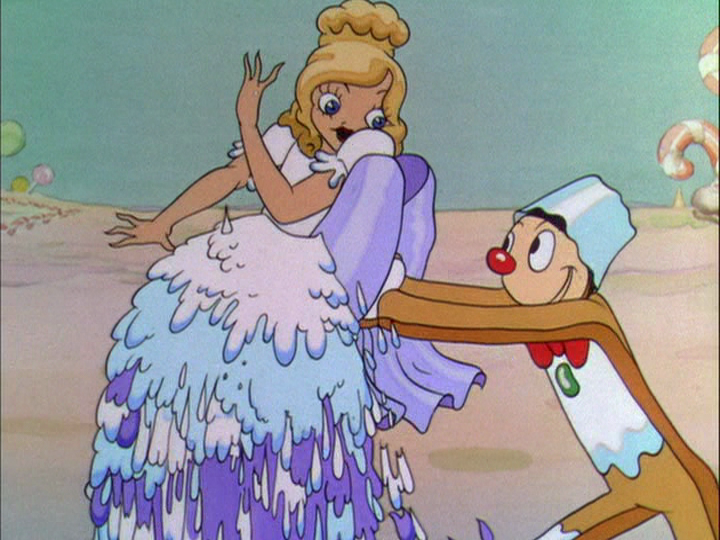
The gingerbread man decorating the girl, helping her to be the next Cookie Queen

On the peppermint railroad tracks, a wandering gingerbread man carrying a hobo sack enters the town, whistling the carnival tune. He hears crying and turns to see a young girl in rags sitting on a stump. He asks her what’s wrong, and she tells him that she’d love to be in the parade, but she doesn’t have anything pretty to wear. He tells her not to be so down, and begins to fix her up in true Cinderella fashion, telling her that she’s going to be the Cookie Queen.

Back at the parade, the judges look at each contestant, but still haven’t selected a queen. As the carnival comes to a close, the gingerbread man places the girl at the end, and upon seeing her, the judges declare her the queen. They knock the gingerbread man down to get to their queen, and the crowd carries her through the street to her throne. The judges then declare that the queen must have a king, and they pull out a collection of potential bachelors, known as the Candy Dates.

The gingerbread man is spotted by the soldiers and has to make a break for it while the Candy Dates are performing

The dates include from the Dandy Candy Kids, the Old-Fashioned Cookies, the Angel Food Cakes, the Devil’s Food Cakes, the Upside-Down Cakes, and the Jolly Rum Cookies. While the Queen is presented with the dates, the gingerbread man, who has been trying to watch the show and see the Queen, has been caught by the soldiers and is chased around the pavilion. Meanwhile the Queen rejects all the dates, and the judges conclude that she should marry one of them, or all three.

The gingerbread man steps out of his hiding place, thinking he’s safe, only to find himself pursued once more. He slips under the red carpet leading to the Queen’s throne, and has his hat broken into pieces as he steps onto the stage, bringing some of the red carpet with him. The Queen tells them to stop, that they shouldn’t crown the King that way, and everyone begins to celebrate the arrival of the new King. The Queen and King are spotted kissing, and they shyly hide behind a lollipop, which melts when they kiss again.