RSS Feed

Tag Archives: Goofy

September 4

September 4, 1942 – The Goofy Short Film How to Play Baseball is Released to Theaters
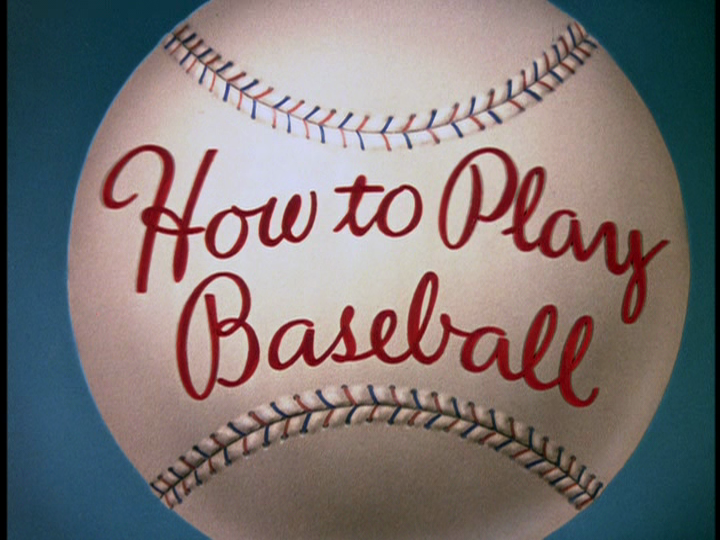
vlcsnap-2013-09-04-09h04m42s7

“Baseball: the great American game, the national pastime of millions, both young and old.”

On September 4, 1942, the Goofy short film How to Play Baseball was released to theaters. The short was produced in 12 weeks, coinciding with the release of MGM’s The Pride of the Yankees. It was directed by Jack Kinney.

The short begins with a short introduction of the game, including equipment and the field. Goofy then is seen as a baseball player, with the narrator explaining Goofy’s outfit. Goofy then acts as the pitcher, winding up his arm for the pitch enough to bring him off the ground; he then lands all knotted up and unable to pitch well. The opposing team comes up to bat, and the player rubs dirt all over himself as he prepares for the pitch. The pitcher then throws a curve ball, and the batter, no matter what he does, is unable to hit the ball. The pitcher then throws what’s known as a “spinner,” which saws through the bat and lands in the catcher’s mitt. The pitcher next tries a slow ball, slowing down his speed in a comedic fashion. Try as he might, the batter is unable to hit the ball, tiring himself out quickly.
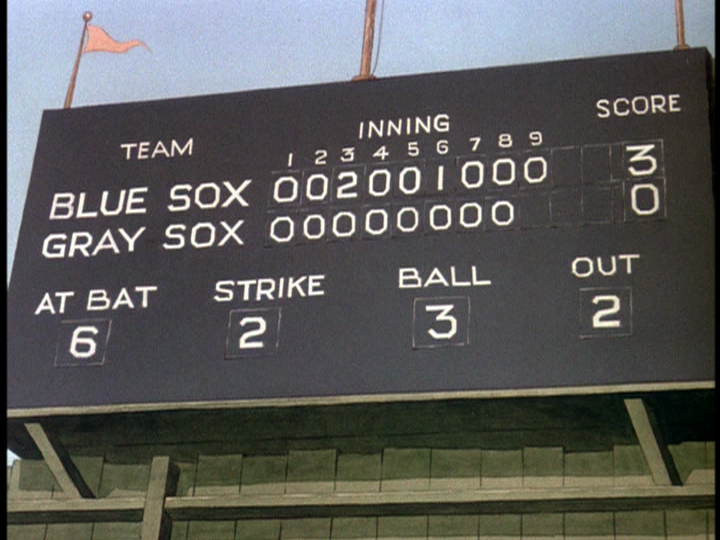
At the last inning of the World Series, the Blue Sox are leading, three to nothing

At the last inning of the World Series, the Blue Sox are leading, three to nothing

The World Series arrives, and the two teams playing are the Blue Sox and the Gray Sox, with the Blue Sox winning 3 to 0 in the ninth inning. The Gray Sox player hits the ball on the third base line and makes it safely to first base, although he trips over several bats and other pieces of equipment on his way there. He then starts to lead on first base, and finds himself caught between first and second while the ball is in motion, but is able to make it to second base. The pitcher then hits the batter, giving the batter a free trip to first base. The next batter bunts the ball, and several Blue Sox players chase after it, only to bump into each other and knock themselves out. The bases are loaded, and the pitcher is losing his nerve. The Gray Sox player hits the ball hard enough the tear the ball apart, and the score is tied as the batter runs for home. As both team members hit home base, it’s up to the umpire to make the call, and he calls the Gray Sox player out, which leads to an all-out brawl between the two teams.
 

July 13

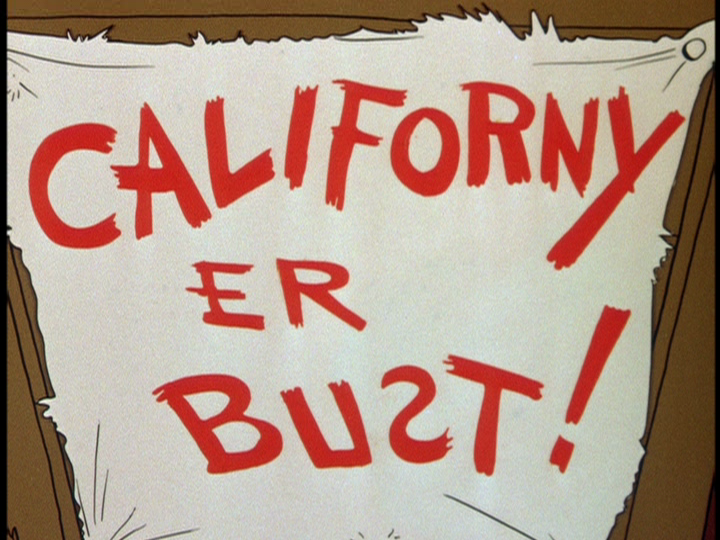
July 13, 1945 – The Goofy Short Film Californy ’er Bust is Released to Theaters

vlcsnap-2013-07-13-10h55m30s72

“Howdy, strangers. Now, I ain’t aimin’ pick no argument or nothin’, understand? Cause anybody knows them old ‘civered’ wagons look powerful slow creakin’ and a-groanin’ cross them plains.”

On July 13, 1945, the Goofy short film Californy ’er Bust was released the theaters. This short is a parody of the popular Western films of the 1940s, as the Native Americans in this short are caricatures of the caricatures in the films. A clip from this film was also reused in the 1953 short How to Dance; another clip was reused in the 1956 short A Cowboy Needs a Horse. This short was directed by Jack Kinney, with story by Bill Peed.

The short begins with the narrator setting off with a wagon train with a rather beat up wagon. The wagon train he is a part of sought a speed record when it came to traveling to California, which the narrator says hasn’t been busted yet. The narrator is then revealed to be Goofy, who leads the wagon train on a slow, beaten-down horse named Hamlet. As they pass through Buffalo, New York, a herd of Indians spots them and sends out their troops for an attack. The wagon train, asleep when the Indians arrive, wake up quickly and attempt to attack back, and a comical fight ensues. Unfortunately, the wagon train runs out of ammunition, and the Indians attack with gusto, until a tornado arrives, sucking up the wagon train and taking them out West, right where they wanted to be.

July 11

July 11, 1953 – The Goofy Short Film How to Dance is Released to Theaters

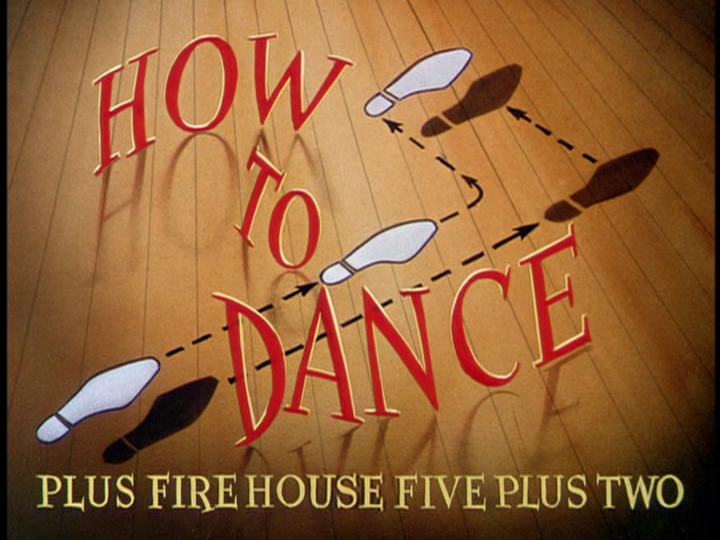
vlcsnap-2013-07-11-11h19m54s146

“Even today, dancing is still enjoyed by many, but there are those who have become so inhibited, they no longer have the ability or instinct to dance away their cares.”

On July 11, 1953, the Goofy short film How to Dance was released to theaters. This short features an animated cameo of the Dixieland jazz band Firehouse Five Plus Two, comprised of Disney artists, including Nine Old Men members Ward Kimball and Frank Thomas. It was directed by Jack Kinney, with story by Milt Schaffer and Dick Kinney.

The short opens with an explanation of dance, from the early days of rain dancing to dancing with a romantic aspect. The audience is then taken to a modern restaurant, where all the tables are empty, save for Goofy’s, as everyone else is already on the dance floor. Goofy refuses to dance, watching everyone else have a good time while he makes excuses. He then decides once and for all to learn how to dance, and grabs an instructional book while turning on a record. He then places cutouts on the ground to help him follow the steps, but they are blown away by the wind. Goofy accidentally kicks his neighbor as he tries to follow the steps, which results in getting punched.

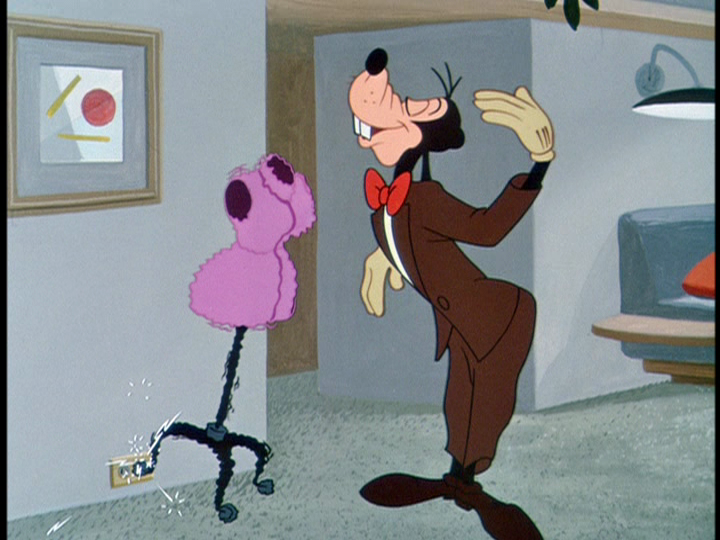
Goofy borrows a dressmaker's dummy to teach himself how to dance, with disastrous results

Goofy borrows a dressmaker’s dummy to teach himself how to dance, with disastrous results

Goofy then borrows a dressmaker’s dummy from a neighbor, and treats it like a date. In the beginning, things go smoothly, but the wheels on the dummy send Goofy spinning out of control. The wheels then get lodged in an electrical socket, and when Goofy resumes dancing with the dummy, he is shocked enough to send him into a spin, and the dummy explodes. Finally, Goofy decides to attend a dancing school, where he is trained in several styles of dance. As the days fly by, Goofy is able to become a master of dance. He attends a dance hall, and asks a lady to dance. As the band Firehouse Five Plus Two begins to play a lively jazz song, Goofy is caught in the middle of the crowd, punched and elbowed from all directions. He sinks into the dancing crowd as they continue to dance to the fast paced rhythm.

June 20

June 20, 1936 – The Mickey Mouse Short Film Moving Day is Released to Theaters

vlcsnap-2013-06-20-07h25m39s62

“Too late! I’m selling your furniture, see?”

On June 20, 1936, the Mickey Mouse short film Moving Day was released to theaters. This short is one of the many that showcased all three leading Disney stars, although was credited only to Mickey. Goofy sings a snippet of his theme song, “The World Owes Me a Living.” The short was directed by Ben Sharpsteen, and stars Walt Disney as Mickey, Clarence Nash as Donald, Pinto Colvig as Goofy, and Billy Bletcher as Pete.

Mickey and Donald are pacing the floor nervously, staring at their calendar as it announces that their rent is six months overdue. As they pace, a loud knocking and ringing of their doorbell alerts the duo, and they run to hide. Finally, Mickey screws up the courage to open the door, and Sheriff Pete bursts in, holding a notice to dispossess. Mickey and Donald stutter that they’ll get the money to pay it, but Pete tells them that it’s too late, then uses Donald’s bill to light his match for his cigar. After Pete leaves, Donald throws a tantrum, but leaps to hide in an umbrella when someone knocks on the door. Outside, the knocking is just Pete nailing a sign to the house with his bare hands, announcing that there will be a sheriff’s sale of everything inside that day.

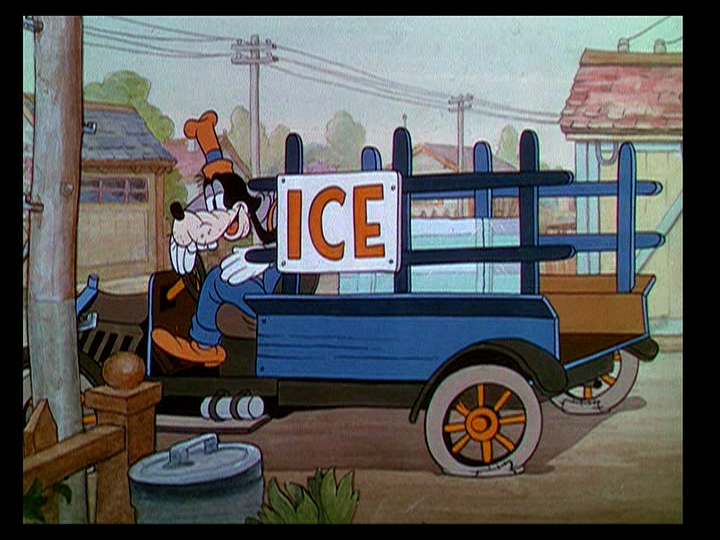
Goofy arrives as the ice delivery man

Goofy arrives as the ice delivery man

On the other side of the house, the ice delivery man Goofy pulls up in his truck and attempts to bring in a block of ice. When he calls out that he’s here, Mickey and Donald immediately shush him, and then decide they need to pack everything in a hurry and move. Mickey has trouble with over-packing a suitcase, and Goofy battles a piano that refuses to stay on his truck. Goofy and the piano chase each other around the house, with the piano purposefully trying to escape. Meanwhile, Mickey and Donald frantically pack, and when Donald shoves a plunger into a pipe to stop the air from escaping, the air builds up and sends the plunger flying onto Donald’s tail. Donald hears the plunger handle knocking against the floor and is confused by the sound, but once he sees the stuck plunger, he tries in vain to remove it. After finding himself attached to a cord on the ceiling, he finally gets unstuck from the plunger, but lands in a fishbowl. The plunger then lands itself on Donald’s head.

Goofy continues to tease the piano, which finally flies in and sends him flying into the refrigerator. He is undettered by this, however, and sits in the fridge door, enjoying a large piece of watermelon. Donald, at the same time, has managed to remove the plunger from his head, but is still stuck fast to the fishbowl. He uses a pair of suspenders to try and free himself, and when he does, he is sent flying into the pipe he tried to stop up with the plunger. After being filled with air, Donald flies around the house, crashing into Mickey’s packed suitcase, along with many other fragile items. Pete hears the commotion from outside the house and hurriedly enters, angrily demanding the trio to sit down. The three are blown into the wall from the force of Pete’s voice, causing the gas from the pipe to grow in intensity. When Pete tries to light his match for his cigar, the house explodes, leaving Pete stuck in the bathtub. Although Donald laughs at the sheriff’s predicament, he throws a tantrum when he finds that, once again, the plunger is stuck to his tail.

May 25

Posted on

May 25, 1932 – The Mickey Mouse Short Film Mickey’s Revue is Released to Theaters

vlcsnap-2013-05-25-07h34m48s48

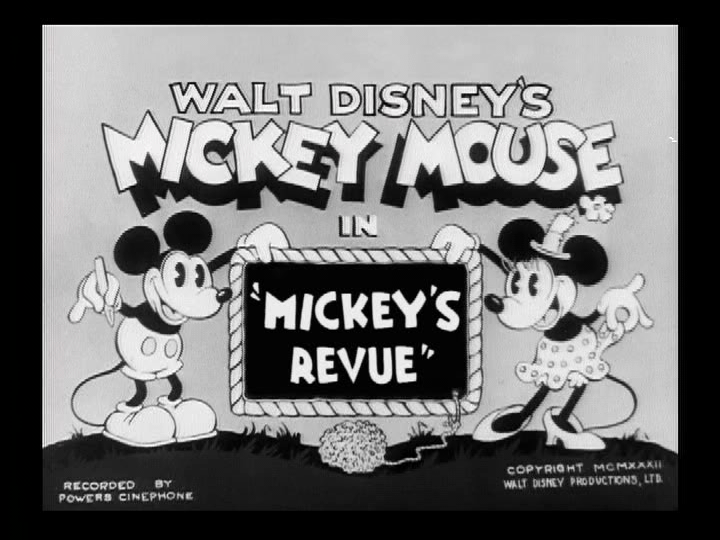
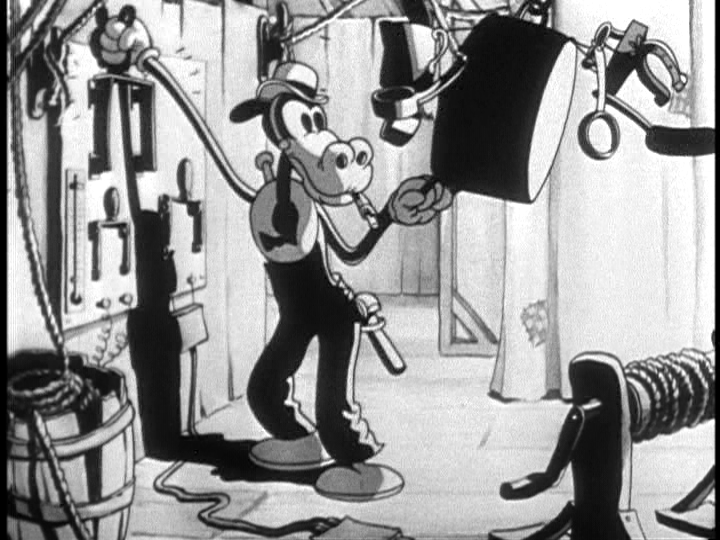
On May 25, 1932, the Mickey Mouse short film Mickey’s Revue was released to theaters. This short is notable for being Goofy’s first appearance, where he is a member of the audience, with his well-known laugh being the first sound he makes. The short was directed by Wilfred Jackson.

The band plays in the theater, with Mickey as the conductor. Meanwhile, an audience member is loudly cracking open peanuts and chomping them, much to the annoyance of the rest of the audience. The curtain then opens on the show, with Minnie playing a fairy (hoisted by Horace Horsecollar) and waving her magic wand on the flower dancers. Pluto appears on the side of the stage, barking at the dancers, until he is whisked away by a hook. The noisy audience member begins to laugh loudly, creating irritation around the audience again.

Horace Horsecollar creates a stormy scene for the dance performance

Horace Horsecollar creates a stormy scene for the dance performance

The scene changes in the show, and the dancers begin to skate around in the “snow,” which is just Horace chewing up some soda crackers. The curtain falls, and the audience cheers loudly. The next act begins with two dachshunds performing a tap show. Underneath the stage, a cat and her kittens are awakened by the tapping and peer through holes in the stage to see what is going on. Pluto still continues to wander onto the stage, getting pulled off by various means each time. The audience member’s laugh is now growing on two of the crowd members’ nerves, and they hit him on the head with a mallet, knocking him out before they surprising break out into the same kind of laughter they found so annoying.

The third act begins, with Minnie at the piano and Mickey playing various instruments in a one-man-band kind of performance. The kittens from under the stage have wandered amongst the instruments, and begin to play around, creating lively music alongside Mickey and Minnie. Pluto whines backstage, as he wants to chase the kittens, but Horace has him tied to a chair. Finally, Pluto breaks free from Horace, rushing onto the stage and breaking the piano and all of the instruments in the process. This does not prevent a successful end to the show, however, and the audience wildly applauds.

May 17

Posted on

May 17, 1940 – The Donald and Goofy Short Film Billposters is Released to Theaters

vlcsnap-2013-05-17-05h10m55s177

“Well, here we are! I’ll take this one, and you take that one.”

On May 17, 1940, the Donald and Goofy Billposters was released to theaters. This is one of the few “buddy” shorts between the characters. The song “Whistle While You Work” makes an appearance in the beginning of the short as the two characters begin their work. The short was directed by Clyde Geronimi.

Donald and Goofy have been plastering ads all over buildings in the farmland, and they stop at another farm to resume their work. Donald goes one way to a nearby barn, while Goofy takes the windmill. After he dips his brush into the paste, he accidentally places his brush on one of the sails without realizing. When he reaches for it, he finds that it has disappeared, and looks around, not realizing that his bucket of paste is caught by another sail. As he holds up his hands in confusion, the brush is returned to him, and he is quite amazed. The paste bucket lands gently on his head, pushing his hat to the ground, and he is startled when he finds the bucket gone, not realizing its current location. As he moves the bucket slightly (thinking it’s his hat), the paste spills out all over him.

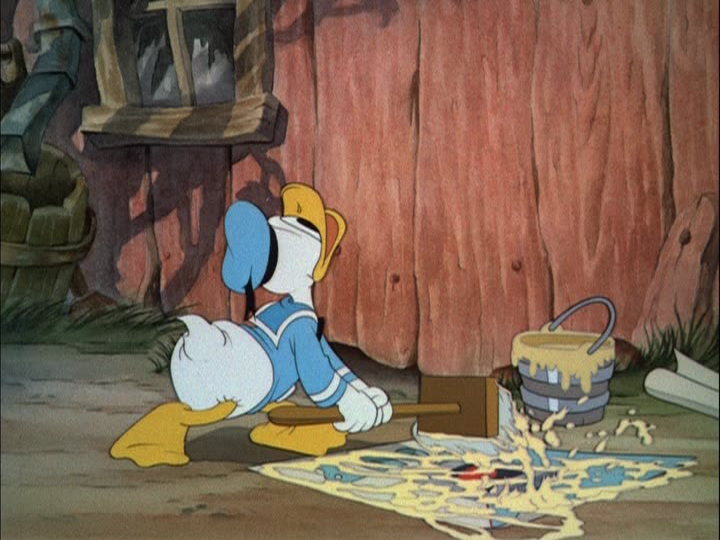
Donald is hard a work posting the bills on the side of a barn

Donald is hard a work posting the bills on the side of a barn

Donald is hard at work, and a nearby goat is eating tin cans. He spies the ad for a can of soup, and takes it from the wall. Finding it delicious, he then grabs the poster from Donald’s brush as he is about to post it. Donald is surprised to find his poster missing, and as he holds the brush back, the goat eats the brush’s bristles. Donald turns around and sees the goat, and knocks him with the broom handle, sending it flying back to its pen, with Donald locking the door and taunting it. Goofy, meanwhile, has started posting, when his poster ends up on another sail of the windmill rather than the building itself. Confused again, he looks around for it, and the sail brings it back to him, covering his face. He then gets tangled in the poster, tripping over himself to get free from it. Once he is, unfortunately, the sail knocks him right back into the glue-covered ad.

The goat has been able to free himself from his pen, and goes to eat Donald’s posters, salivating. Donald begins to beat the goat once more, when his brush gets caught in the goat’s antlers. Stuck, Donald tries to apologize, but is cornered against the wall. He tries to tempt the goat into eating another poster, but the goat is too angry. Donald manages to free himself, but his victory is short lived as the chase around the farm begins. He saves himself by grabbing a sail of the windmill, and Goofy is knocked onto another sail. The two hold on for dear life as the goat head butts them late into the evening.

April 20

April 20, 1945 – The Goofy Short Film African Diary is Released to Theaters

vlcsnap-2013-04-20-09h01m06s125

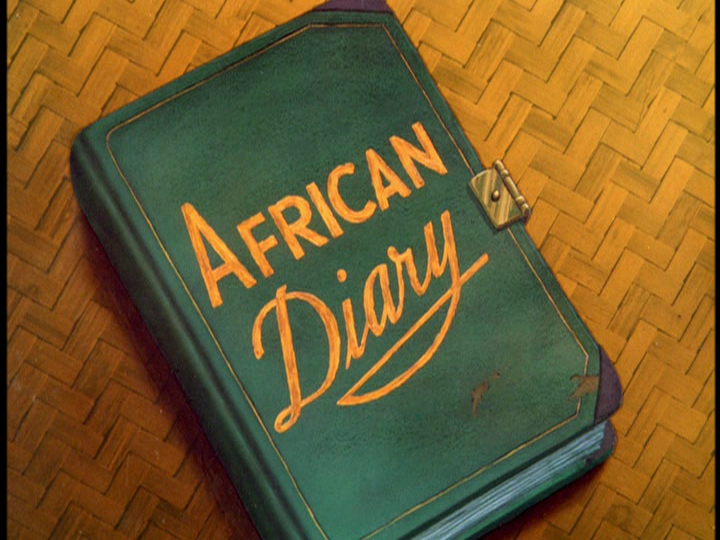
“November 23rd. After an uneventful voyage, we sighted Africa.”

On April 20, 1945, the Goofy short film African Diary was released to theaters. Goofy’s theme song, “The World Owes Me a Living,” makes an appearance in this short. It was directed by Jack Kinney, with story by Bill Peed.

The short opens on Goofy’s poorly written diary entry, dated November 23, when he first spots Africa. He lands there the next day at a spot known as the Ivory Coast, portrayed as  a set of piano keys. He gathers members for the safari, and they begin to explore the land, with the narrator still narrating Goofy’s entries. The next entry is February 11, and Goofy is seen with members of the crew, pitching camp near a watering hole. Animals appear at the water, including a zebra, hyena, and a warthog. Goofy also tries to get a drink from the water, but with much difficulty.

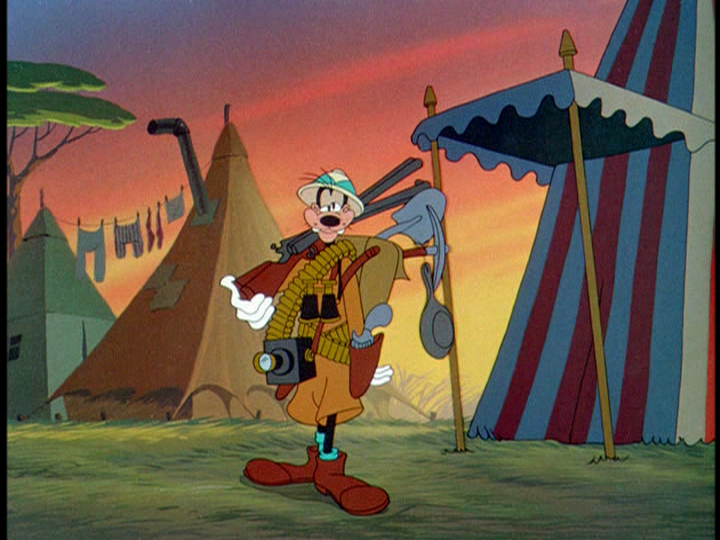
Goofy is ready to head out of safari

Goofy is ready to head out on safari

The sun rises over the camp, and Goofy heads out for a swim in the water; unfortunately, all of the water is gone, and Goofy swims in sand. After his “swim,” he returns to his tent to change for his adventure. On Friday the 13th, Goofy sets out with one member of the safari to go hunt for game. They run across a black rhinoceros, who becomes enraged at their appearance, and decides to attack. Goofy tries to defend himself with his shotgun, when he realizes he may not even have a permit to shoot a rhino, and frantically searches his paperwork. He finally finds the permit, but it is too late, as the rhino gets the shotgun attached to his nose and starts hitting Goofy over the head with it. Goofy does finally get the gun to go off, but it implodes, leaving the muzzle of the gun stuck to the rhino’s horn. The rhino continues to chase Goofy over Africa, and chases the entire safari out of Africa.

March 28

March 28, 1953 – The Goofy Short Film Father’s Day Off is Released to Theaters

vlcsnap-2013-03-27-22h14m57s221

“Can I handle everything? Ha! What’s a little housework?”

On March 28, 1953, the Goofy short film Father’s Day Off was released to theaters. It was directed by Jack Kinney, with story by Brice Mack and Dick Kinney.

It’s another day in suburbia, and Goofy stands with his son, George, at the door of their house while his wife is preparing to head off in the car for the day. She asks if he’ll be able to handle everything while she’s away, and he scoffs at her question, thinking housework is easy. She leaves, although not without causing major damage on the way out. He starts with giving George breakfast, but spills George’s milk and gives him a rather strange haircut around the rim of his baseball cap. The doorbell buzzes, sounding the arrival of the milkman, who gives Goofy a kiss as he delivers the milk (not noticing that it is not Goofy’s wife), leaving Goofy stunned, although he brushes it off a being friendly. He then shoves the milk in the already overstuffed fridge, which causes the food to bulge out everywhere.

Goofy proclaims housework to be easy, but he only thinks so because he takes shortcuts and does a subpar job

Goofy proclaims housework to be easy, but he only thinks so because he takes shortcuts and does a subpar job

George is then sent off to school, but George informs his father that it’s Saturday. Goofy then laughs this off, and says that George will be a lot of help to him around the house. His first efforts at housecleaning are rather terrible at best, but he thinks it’s simple. He catches George drawing on the wall, but when he goes to clean it, he wipes off the paint from the wall, leaving the drawing unscathed, and decides to fix it by placing the radio in front of the scribble. The radio switches on, and Goofy gets caught up in listening to a melodrama. As he cries at the storyline, the doorbell buzzes again, this time with the grocery delivery man, who also gives Goofy a kiss (also not noticing that it is not Goofy’s wife). As groceries are thrust into a flustered Goofy’s arms, George runs through the house, and a baseball is tossed to him, breaking the window in the process. He then breaks the other half of the window throwing it back to his friends. The family dog then traipses through the living room, covered in mud.

The laundry is sent flying through the air thanks to another mishap, and Goofy decides to run it through the washing machine. He suddenly notices that his son was in the washer, and quickly retrieves him. The family dog, brought back inside, starts tearing up one of the pillows. When Goofy tries to find the vacuum cleaner in an overstuffed closet, he just creates a larger mess, and George ends up stuck in the vacuum bag. Goofy sends George to take a bath, and floods the house. As he goes to lecture his son, the cleaning man arrives at the door, preparing to give Goofy’s wife a kiss, when he is doused in the bath water, which shrinks the delivered dress. Goofy becomes more and more overwhelmed with everything he needs to do, and accidentally leaves the phone off the hook. The melodrama on the radio takes a violent turn, and the operator, thinking that she’s hearing a real murder, calls the police in a panic.

The iron Goofy left on falls through the ceiling, landing square on his head

The iron Goofy left on falls through the ceiling, landing square on his head

Goofy’s wife arrives home, and Goofy quickly tries to act like nothing happened. The fire department then arrives and starts tearing up the house, along with the police, who demand to know where the body is. The iron that Goofy had left on burns a hole through the ceiling and knocks Goofy out, while the press is there to take pictures.

March 23

March 23, 1951 – The Goofy Short Film Home Made Home is Released to Theaters

vlcsnap-2013-03-22-22h49m06s73

“Since the beginning of time, man has been possessed with the desire to have a roof over his head.”

On March 23, 1951, the Goofy short film Home Made Home was released to theaters. It was directed by Jack Kinney, with story by Milt Schaffer and Dick Kinney.

On the top of a hill, Goofy is seen building the frame of a house, sawing one side of a board. He realizes that if he keeps sitting on the side he’s cutting off, he’ll fall, so he quickly changes, only to fall anyway. He then pulls out his blueprints, only to be completely rolled up inside and tangled in them. He tries to nail the blueprints down, but the sheets just tear up the boards and trap him again. He then uses a level on a board, and has a hard time keeping it straight, although he does find a trio of goldfish residing inside.

Goofy carefully carries a sheet of plate glass, with humorous results

Goofy carefully carries a sheet of plate glass, with humorous results

Goofy pulls out a sheet of plate glass, and slips on a banana, on a pipe, and on a board, but the glass miraculously stays intact and places itself in the window frame. It moves around when he accidentally touches it, and it finally breaks when he walks right through it after he thinks he’s cleaned it. Goofy then tries to paint the house, with paint buckets open everywhere. He gets in a battle with the spray painter, which attacks him like a snake, spraying him with as much paint as possible, sending Goofy running all over the house. Once the house is completely covered in yellow paint, Goofy looks up to see that his house is complete, but as he lays down the welcome mat, with his neighbors arriving to welcome him, the house completely falls apart.

March 10

March 10, 1944 – The Goofy Short Film How To Play Golf is Released to Theaters

vlcsnap-2013-03-09-20h28m18s69

“Contrary to popular belief, golf is not a waste of time.”

On March 10, 1944, the Goofy short film How to Play Golf was released to theaters. It was directed by Jack Kinney, with Fred Shields as the voice of the narrator.

The narrator begins by trying to explain why golf is not a “waste of time.” Goofy steps on the course and tries to pull out his club, and ends up pulling out all of them at the same time, sending them flying over the green. Undeterred, he grabs his tee and his ball and sets up his shot. While the narrator tries to explain the grip, Goofy ends up knotting his fingers together. As he swings, he ends up hitting himself in the jaw, and tangles himself up even more trying to free his fingers. As he bounces all over the green, the ball ends up on his nose, and he creates what the narrator calls a divot, “caused by an indirect swing.” The ball slides down the divot, and into Goofy’s mouth, where he accidentally swallows it.

The figure and Goofy square off on the ball, not realizing they are about to hit each other

The figure and Goofy square off on the ball, not realizing they are about to hit each other

The narrator then begins to explain a proper swing, separating Goofy from a diagrammatical figure that Goofy tries to emulate. The figure is alarmed that Goofy’s swing has swung the poor guy around and around. The figure then takes on the task of untangling Goofy, sending him flying through the blueprint paper behind him. He finally fixes Goofy, but the two end up smacking each other with their clubs by accident, sending the ball straight into Goofy’s eye.  Back on the green, Goofy sends the ball flying near the hole, where he needs to putt. He checks all the variables before his shot, including wind velocity, humidity, rotation of the earth, time of day, temperature, drift indication, lay of the land, trajectory angle, longitude, and latitude. However, Goofy misses the putt, with rather dramatic results.

The next shot is an incorrect shot known as a hook, which has Goofy’s ball sailing around the hole and into the woods, burying itself in the dirt near some tree roots. When Goofy tries to move his ball to a better position, the figure slaps him on the hand, as moving the ball is strictly forbidden. Another example of playing the ball where it lies is when Goofy is stuck in a sand trap, and has dug himself a hole deep into the earth, with the ball just dancing around his feet. He finally sends it flying up the side, but it just slides back down into the pit, sending Goofy into a rage. The figure helps him get the ball out of the pit, but Goofy runs into another problem when the sprinkler system turns on. However he overcomes the problem and continues the play the ball where it lies – including on a bull’s nose. Goofy and the figure sprint across the green as the bull gives chase, with Goofy still playing the ball. Finally, Goofy makes it back to the bar in the lodge, where he, the bull, and the figure sit together for a drink, singing “Auld Lang Sine.”