RSS Feed

Tag Archives: Black and white

February 3

February 3, 1931 – Silly Symphony Birds of a Feather is Released to Theaters

Directed by Burt Gillett, the Silly Symphony Birds of a Feather was released to theaters on February 3, 1931. A black and white short, the story is of several types of birds and how they react around each other, especially when a hawk steals a chick, and a brave group of crows decides to fight back to rescue it.

The short opens on a rather idyllic river scene, where three white swans are gliding down a river. They are followed by a black swan, which has two babies as passengers on its back. After the babies decide to swim away, the black swan dives into the water for something to eat, and devours a worm. When it dives again, instead of a worm, it has found a shoelace still attached to a boot, which then lands on its head. The next bird we see is a peacock, preening alongside the water’s edge. After spreading its tail feathers and admiring itself, a duck enters the picture. After observing the narcissistic peacock for a second, the duck sticks its tongue out at the bird, thoroughly distracting it before sailing away.
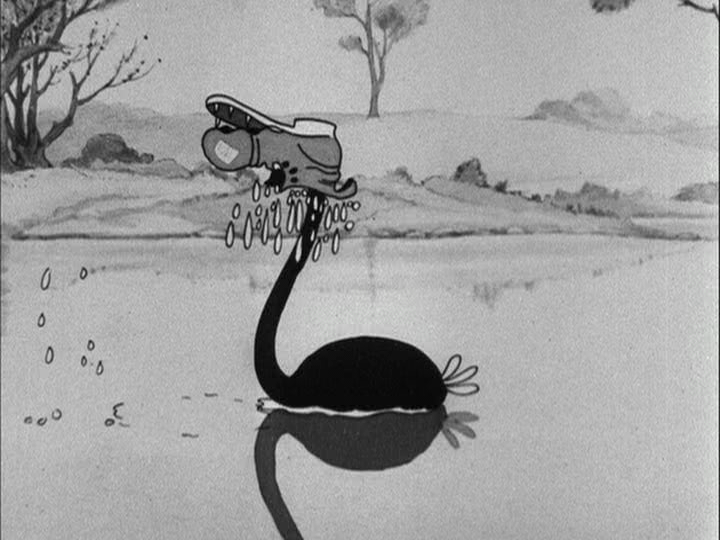
The swan that accidentally eats a shoelace

The scene then moves to two birds who appear to have harps for tails, beginning the symphony part of this Silly Symphony. The audience travels up a tree, stopping at certain moments to observe the musical habits of the occupants. First, there are several birds chirping the cheerful melody begun by the harp-tailed birds, and above them is a mother bird watching her three eggs hatching. Four hummingbirds buzz around the flowers above them, gathering nectar. The scene travels up a little more, where two birds are trying to continue the melody, but are interrupted by a cuckoo bird, who pops out of several different openings in the tree.

In another tree, a woodpecker tries to peck for food, disturbing a caterpillar that lives in the tree. Annoyed, the caterpillar knocks on the woodpecker’s head, which begins the woodpecker’s pursuit of its possible snack. The woodpecker wins the chase, eating the caterpillar segment by segment.
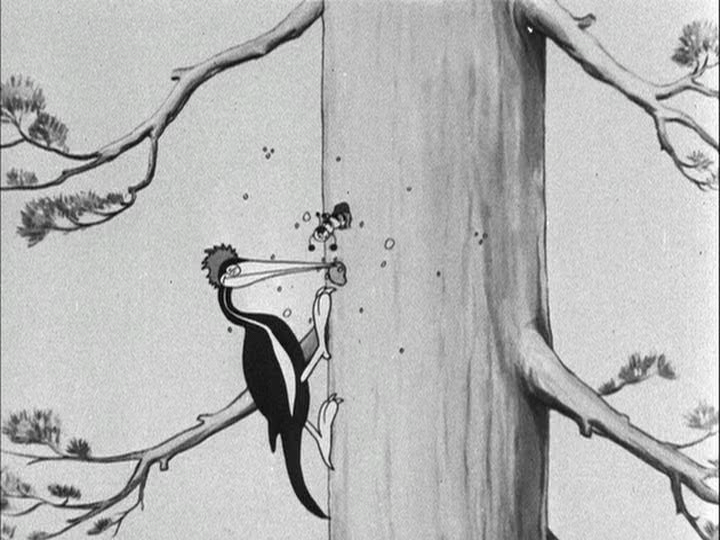
The woodpecker trying to find food. Little does he know that food is annoyed with his pecking.

A crow flies into the picture, observing another bird giving food to her babies. After the mother bird flies away, the crow climbs into the nest and steals the baby birds’ food, a worm, and flies back to her own nest in the backside of a scarecrow. Her baby crows fight over the worm, which escapes down the leg of the scarecrow and scampers away, only to be pursued by a chicken and her chicks. There are many great gags here, including the worm trying to throw the chickens off by crawling under boots, a pipe, and a can, only to have the hen lift them up with her head and have them land on her chicks. Eventually, the worm crawls into a hole, and the chickens pace and wait, but eventually give up and walk away, except for one chick, who grabs the worm by the end, only to have it crawl up through another hole and bite it on the tail.

While the chickens look for food, the hen notices the shadow of a hawk circling around them. She desperately gathers her chicks together for safety, but misses the one chick who was still after the worm, who is caught by the hawk. After a crow notices what happens, he calls together his friends, who go after the hawk in formation, dive bombing and attacking it to save the chick.
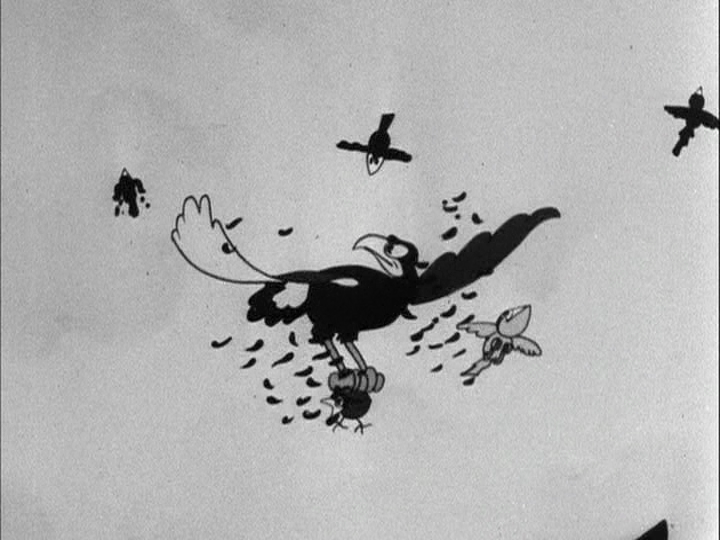
The formation of crows dive bombing the hawk

Overall, the short isn’t that memorable of all the Silly Symphonies, but there are a few good gags that make it a good short to watch. If you watch them in chronological order, you’re able to see how the animation was improving, but this short still has the more cartoony style that was present in the earlier shorts.
February 1

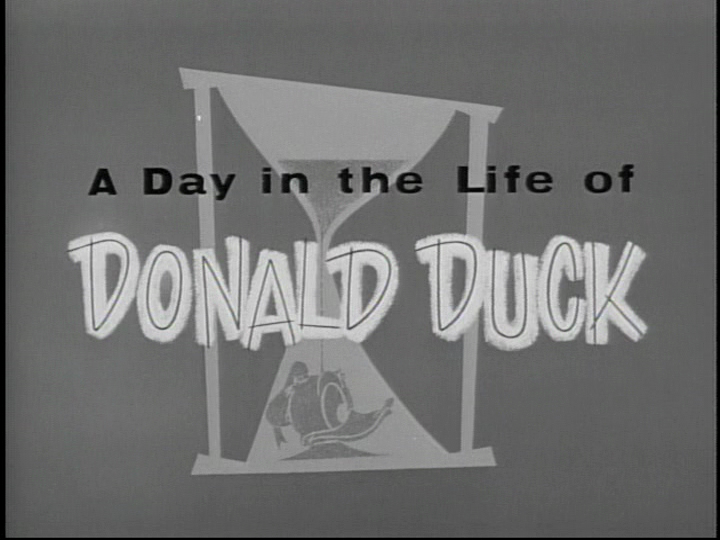
February 1, 1956 – A Day in the Life of Donald Duck Premieres on Disneyland.

“You know something Donald? You’re a big international favorite.”

On February 1, 1956, Disneyland audiences spent A Day in the Life of Donald Duck. As Walt Disney explains in the introduction, there have been so many fan letters to Donald, that he thought the audience might want to spend a day with Donald at the studio. Directed by Jack Hannah, with story by Albert Bertino and Dave Detiege, we see how Donald begins his day, as well as his interactions with Jimmie Dodd, Roy Williams, the Mouseketeers, and the most important person in Donald’s life: his voice, Clarence Nash.

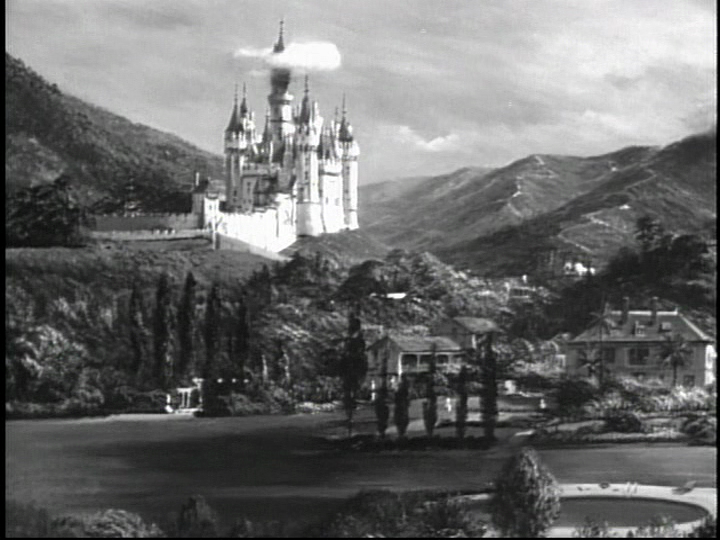
“Donald, like any other average cartoon character, lives a simple, unassuming life in a quiet residential section of Beverly Hills,” Disney tells the audience, showing pictures of the neighborhood. “He resides in a modest little cartoon house. He drives to work in a modest little cartoon car. And if he seems a bit reckless, you must remember that Mr. Duck drives with a cartoon license.” As we see Donald pull into a spot marked “No Parking,” he is immediately confronted by a police officer. Donald, however, folds the car into a tiny packet, tucks it under his hat, and walks to his office.

Donald's "modest" house in Beverly Hills

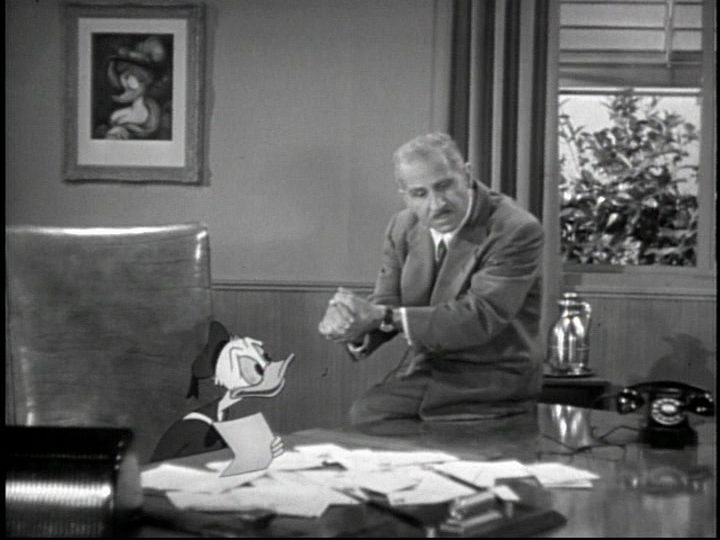
When he arrives at his office, the intercom sounds, and his secretary greets him respectfully as Mr. Duck. Donald responds with, “Just call me Donald, toots. What’s first on my schedule, tootsie?” in keeping with Donald’s personality as a bit of a wolf. She responds that he has fan mail, which he opens eagerly. The letters, however, are not pleasing in Donald’s opinion. One letter openly says, “Dear Donald, I can’t understand a word you say.” This is the last straw in Donald’s opinion, and he demands to speak with his voice, Clarence Nash. Nash comes in with a cheery attitude, which doesn’t change Donald’s mood in the slightest, no matter what Nash does to cheer him up. They end up arguing, with Nash reverting to his Donald Duck voice, even as he pulls out a coonskin cap and starts signing the Davy Crockett theme song. Donald tells him he’s a horrible singer. Nash leaves, with the two still taunting each other, and Donald vows that he’s got to get himself a new voice.

Donald and his voice, Clarence Nash, as Nash shows him a new trick

The next guest to enter is Jimmie Dodd (host of the Mickey Mouse Club), who has written a new song about Donald, inspired by fan art from children all over the world. “They’re so great, they had to have a song written about them,” Jimmie explains, and begins the song, which Donald immediately loves. There are versions of the song sung in different languages with accompanying pictures, including Spanish, French, Italian, and German. The images and tunes are stereotypical for the fifties, but somewhat sweet and fun all the same.

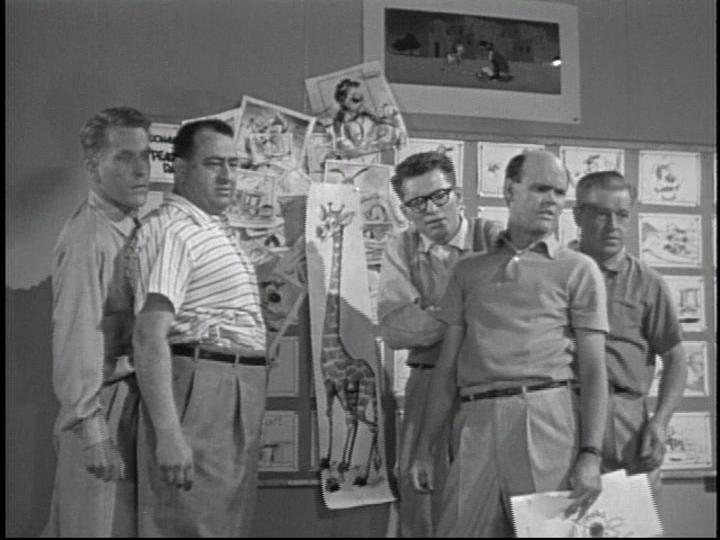
Donald then leaves for an 11 o’clock appointment at the Story Room, and when the storymen hear Donald coming down the hall, they begin to panic, as they fear his temper more than anything. They try to make Donald comfortable, and when they try to show him storyboards for a short entitled Peaceful Day, Donald asks for more birds and butterflies. The storymen overeagerly agree to his requests, to the point that Donald gets annoyed, and demands that there be a short with just him in it. This gets them to thinking, and the audience is then shown the brainstorm: the short, Drip Dippy Donald (originally released March 5, 1948).

The bewildered story team, trying to acquiesce to Donald's requests

Back in his office, Donald receives a call from Walt, who asks him to show the Mousketeers around the studio, as Mickey has remembered that they had never seen it before. Donald eagerly agrees, and runs to meet the Mouseketeers, who surprise Donald by making him an honorary Mouseketeer and giving him his own set of Mickey Mouse ears. As they run around the studio, the kids slip into the Sound Effects Department, closing the door just as Donald is about to get inside, leaving him on the outside as the kids see how sound effects were added to the Donald Duck short, Fire Chief (originally released December 13, 1940). One example they show is when a building is set on fire, the special effects team uses sparklers and crumpled plastic to create the sound of the burning ceiling.

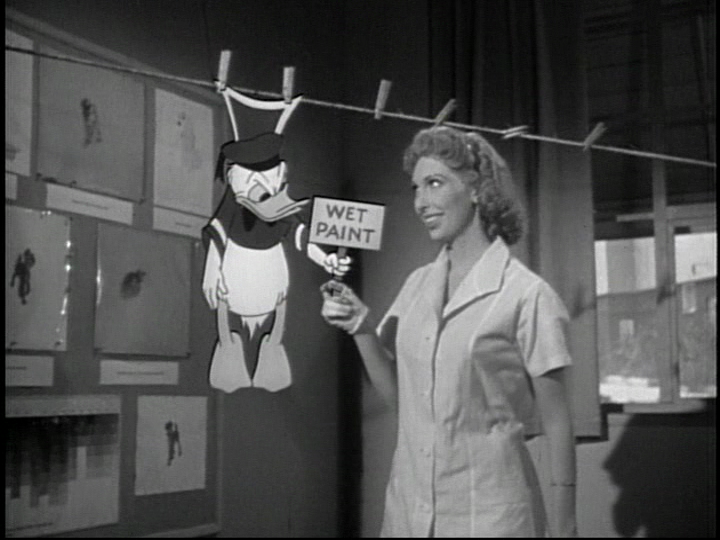
When the short ends, the door opens, and Donald is ready to step inside, until an effects man empties a bucket of water over him, which causes half of Donald’s paint to run. This necessitates a trip to the Ink & Paint Studio, where the painter quickly re-paints Donald and hangs him up to dry, an experience Donald finds quite humiliating. The painter explains that twenty gallons of paint are usually used for a Donald Duck picture, which surprises the kids and causes Donald to remark that he is “very expensive.” She also explains that in one picture, they used just one pint of paint for Donald; the audience is then shown the short The Vanishing Private (originally released September 25, 1942).

Donald and the Painter, with Donald pointing out how humiliating this is for him

After the short, we see the kids with Jimmie Dodd again, singing the new Donald Duck song he wrote. As Donald tries to sing the last line of quacks, he is cut off by Roy Williams, the other host of the Mickey Mouse Club. The kids are excited to see him, and he tells them that he’s practicing drawing the characters. To prove that anyone can draw, Roy asks one of the Mouseketeers to make a scribble on the easel. From her scribble, Roy is able to draw an ostrich. Donald, jealous of the stolen attention, challenges Roy and scribbles on the easel. Roy accepts, and ends up turning Donald’s scribble into a humorous image of Donald Duck. As Donald throws a tantrum and jumps up and down on the teasing picture, the kids flee the room and head into the projection room. “And now, in Donald’s honor – he really is a good scout,” Roy welcomes the kids, “I’d like to dedicate this picture to all you Mouseketeers.” Donald is touched by the tribute, and the audience is then shown the short, Good Scouts (originally released July 8, 1938).

This episode is a must-see for fans of Donald Duck. There are many wonderful gags, and the interaction of Donald with Clarence Nash is enough of a reason to watch. It’s a perfect example of all the temperaments of Donald, with the added bonus of it being set in the real, rather than the cartoon, world.

January 27

January 27, 1917 – Screening of the play Snow White starring Marguerite Clark

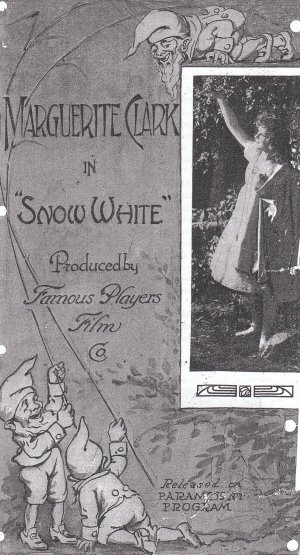
Poster for film. Image credit: wikipedia

“The world of make-believe has always delighted and absorbed me, ever since I was a little boy.” – Walt Disney

When recalling his early years in many of his interviews, Walt Disney seemed to have a wealth of inspiration as a child, from the fairy tales his grandmother read him, to touring productions of plays, such as Peter Pan, starring Maude Adams. The biggest inspiration for Disney’s choosing Snow White, it has been said, is the film version of the play Snow White, starring silent screen actress Marguerite Clark.

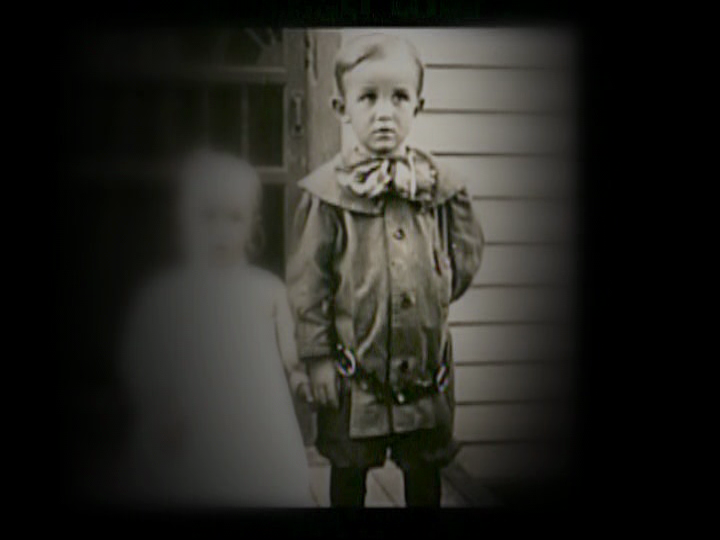
Walt as a young boy

The film, released December 25, 1916, is a silent black and white film, directed by J. Searle Dawley and distributed by Paramount Pictures. Snow White is played by Marguerite Clark, who was well known for her roles as waifs and children; the Queen was played by Dorothy Cumming, with the Prince played by Creighton Hale, and the Witch played by Alice Washburn.

On January 27 and January 28, 1917, a film version of the story was featured in the Kansas City Convention Hall, sponsored by the Kansas City Star. Disney was a newsboy for the paper at that time, and the paper decided to reward their newsboys with a screening in the hall, with 67,000 people eventually showing up. The film was presented on four different screens to oblige the crowd; unfortunately, the projections were hand-cranked, and the projectionists were not in sync. Disney later recalled that he could see on one screen what was going to happen on one of the other screens, but this still left a magical impression on the fifteen-year-old. “My impression of the picture has stayed with me through the years and I know it played a big part in selecting Snow White for my first feature production,” he explained.

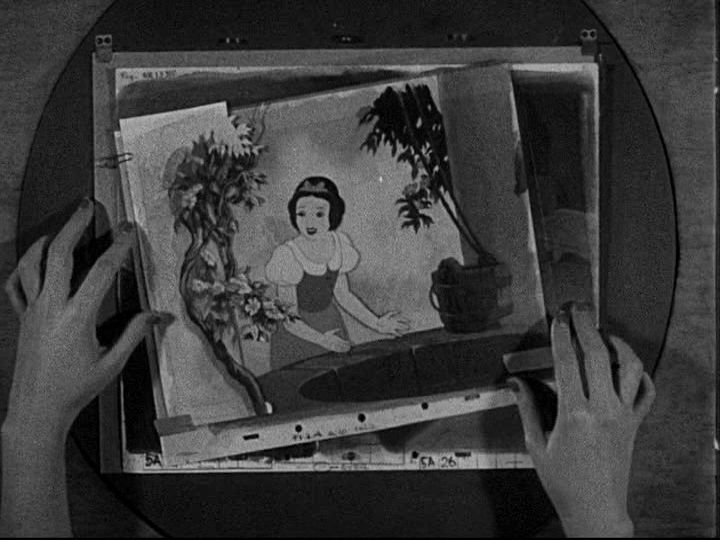
A cel and background for the "folly", Snow White and the Seven Dwarfs

Snow White had always been a favorite story of Disney’s. As he said in a 1953 magazine article in the now-defunct Brief Magazine, Disney’s fascination with fairy tales and make-believe “began when I was a child. Every evening after supper my grandmother would take down from the shelf the well-worn volumes of Grimm’s Fairy Tales and Hans Christian Andersen. We would gather around her and listen to the stories that we knew so well that we could repeat them word for word. Of all the characters in the fairy tales, I loved Snow White best. And when I planned my first full length cartoon, she inevitably was the heroine.” These readings and this film of Snow White no doubt influenced Disney to pick the fantastical story as his first film, or his “folly,” as his critics put it.


January 26

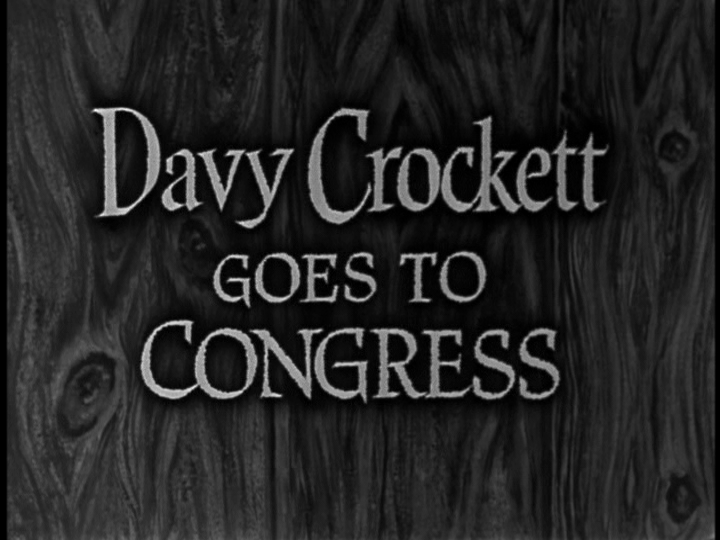
January 26, 1955 – Davy Crockett Goes to Congress Premieres on ABC.

“Now, again from Davy’s own journal, we’d like to present another story of Davy’s fabulous life. This one is called, ‘Davy Crockett Goes to Congress.’” – Walt Disney.

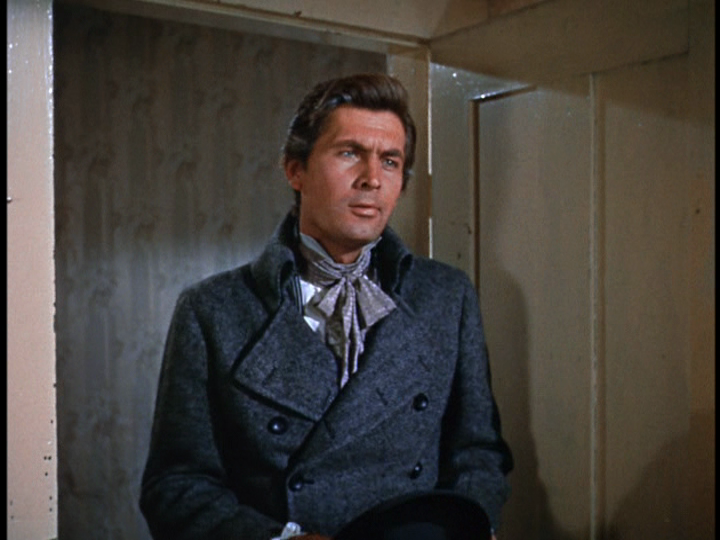
On the evening of January 26, 1955, the second installment of The Adventures of Davy Crockett premiered on the Disneyland television show on ABC. Shown a little over a month after the first installment, the series continued the Davy Crockett craze that had taken over the youth of America. This episode, entitled Davy Crockett Goes to Congress, was directed by Norman Foster, and written by Tom Blackburn. It stars Fess Parker as Davy Crockett, Buddy Ebsen as Georgie Russel, Basil Ruysdael as Andrew Jackson, William Bakewell as Tobias Norton, and former professional wrestler Mike Mazurki as Bigfoot Mason.

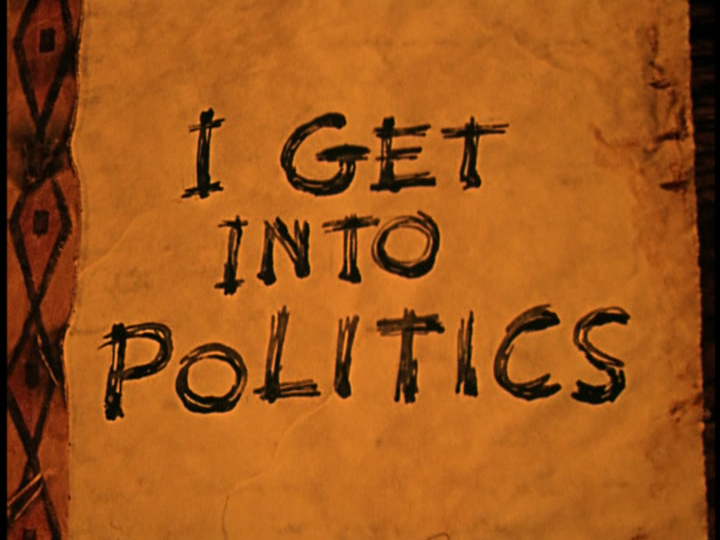
A page from Davy's own journal, as seen in the show, which introduces the story of Davy's political career

The show opens with Davy and his pal Georgie setting out to find a new piece of land to settle. Although they find the perfect spot, Georgie reminds Davy that they need to file a claim for the land. As they approach the settlement, looking for the judge to file their claim, they stumble upon a shooting match. Ever competitive, Davy challenges a man named Bigfoot Mason, wagering $15, the estimated price of the prize cow. They tie with the first round, but with their second shots, Bigfoot believes he won, as it appears that Davy completely missed the target. When it’s discovered that Davy hit the exact spot twice, he makes an unintentional enemy out of Bigfoot. The judge, discovering who Davy is, is thrilled that Davy is in town, as he may be the man that can stop Bigfoot’s schemes. The judge informs Davy and Georgie that Bigfoot and his gang have been running the Indians off of their land and selling it to newcomers who have no idea that the land has been stolen. Davy reminds the judge that there’s a treaty that guarantees the Indians their land, but the judge says that Bigfoot disregards any treaty of that nature. The few people who have tried to stop Bigfoot have disappeared, presumed dead. The judge, knowing Davy’s reputation, asks Davy to be the magistrate and serve a warrant on Bigfoot and his gang. Davy says he’d have to think about it. It doesn’t take long for Davy to decide, as he finds that the Cherokee Charlie Two Shirts has been beaten and run off his land. Davy confronts Bigfoot, and it turns into a no-holds-barred fistfight. Davy emerges victorious, and peace comes over the settlement again as the gang is brought to justice.

During one of the celebrations in town, the judge tells Davy that since the settlement is experiencing a lot of growth, they’ll be getting someone to represent them in Nashville, and the town has picked Davy as the man they want to run for the state legislature. Davy responds, “I’m plumb flutterated by the honor, but, well, I ain’t no politician.” When the judge informs him that his competition is Amos Thorpe – the lawyer who tried to get Bigfoot off, and made a lot of money from the illegal Indian land grabs – Davy considers running. The thing that sets him on his political path, however, is the sad news that his wife, Polly, came down with a fever and died. Consumed by grief and needing a distraction, he decides to run for the spot in the state legislature, proclaiming that he’ll represent the town as honestly as he can. Davy wins by a landslide.

Davy in formal clothes after he's been elected to the state legislature

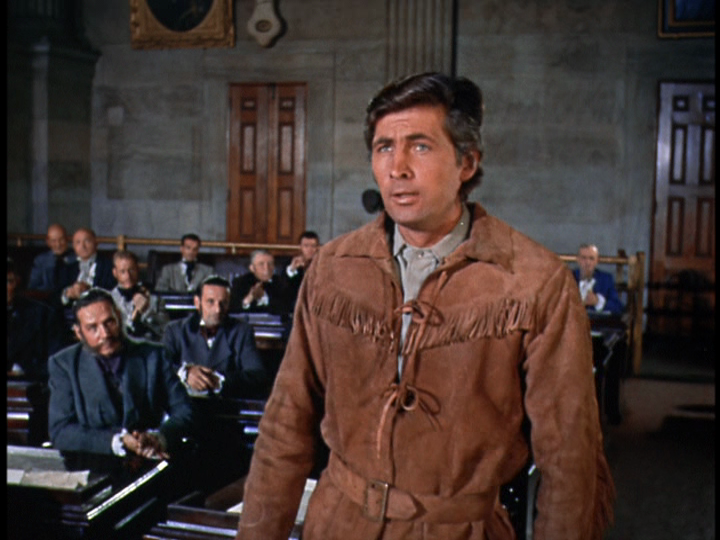
Davy’s political career has been watched closely by his old Major, Tobias Norton, and General Andrew Jackson. Jackson is preparing to run for the presidency, and both he and Norton want Davy to have a seat in Congress. As Jackson puts it to Davy, “I want men I can trust, men I know are with me, men that can get the rest of the country behind me.” Davy responds, “Well, if I was to do what you asked, and I did get in, I wouldn’t be taking orders from you, General. I’d be taking them from them that elected me.” Thanks to a set of books Georgie has been publishing about their adventures together, Davy is able to win the seat in Congress, and surprises the members by showing up in buckskins. Georgie is there to greet him, and Davy tells him off about having to show up as the “king of the wild frontier, thanks to you.” He introduces himself with a strange speech, but promises that he won’t be one of those politicians who doesn’t do anything more than listen, and the next time he stands before them, he’ll “have something to say worth saying.”

Davy’s career hits a snag when Norton tells Davy he’s to go on a speaking tour, calling it a “great service for the country.” Norton adds that people want to make Davy the next president of the United States. Georgie, ever suspicious of Norton, finds out the truth: Norton sent Davy out of the way so he wouldn’t be able to vote against a bill meant to take away all lands from the Indians. Georgie and Davy race back to Washington, where Davy punches Norton out as the former major tries to stall him, and storms in to Congress, giving the last great speech of his political career.

Davy giving a speech in Congress, dressed in his buckskins

Compared to most of the shows on television at the time that featured cowboys and Indians, the Davy Crockett serial was very well made, especially when it came to the matte paintings of Nashville and Washington, D.C., painted by Peter Ellenshaw. Walt Disney sent crews to picturesque areas in North Carolina to do research of the landscape, and it made the serial stand out against all the other shows. There’s also no denying the charm of Fess Parker as Davy Crockett. The last impassioned speech he gives as Congressman Davy Crockett is one that will be remembered.

.

January 13

January 13, 1930 – The Mickey Mouse Comic Strip is Distributed by King Features Syndicate.

A preview of the Mickey Mouse comic strip.

On January 13, 1930, two newspapers in the United States, the New York Mirror and the Oakland Post-Enquirer, debuted a new comic strip featuring the popular movie character, Mickey Mouse. It was slow to gain popularity, as the strip was an ongoing story, rather than the usual practice of a gag per strip, but it became an enduring classic lasting for decades.

The first eighteen strips were drawn by famed Disney animator Ub Iwerks. Iwerks recalled that Disney’s original ambition was to become a cartoonist, which is likely the reason the early Mickey Mouse cartoons included the byline, A Walt Disney Comic. Disney decided to write the first four months of comics, although Iwerks had been contacted first about creating a comic strip about Mickey. As Joseph Connelly, the President of King Features Syndicate, wrote in a letter that reads almost like fanmail:

“I think your mouse animation is one of the funniest features I have

ever seen in the movies. Please consider producing one in comic strip

form for newspapers. If you can find time to do one, I shall be very

interested in seeing some specimens.”

Iwerks was already spread thin with other projects for the studio, and handed the letter to Walt, claiming it “wasn’t [his] business. Walt made the deal, and I did the drawings for a few strips.” Walt, on the other hand, had this to say when asked about the comic:

“[In 1929 we were looking for] ways to exploit characters like the

Mouse. The most obvious was a comic strip. So I started work on a

comic strip hoping I could sell it to one of the syndicates. As I was

producing the first one, a letter came to me from King Features

wanting to know if I would be interested in doing a comic strip

featuring Mickey Mouse. Naturally, I accepted their offer.”

As with the story of how Mickey Mouse came to be, there were discrepancies between the recollections of Disney and Iwerks. Although it may not be clear through their statements of who was accurate, it seems that Walt was always interested in doing a comic strip, but work had not started before Iwerks received the letter from Connelly.

But Iwerks did animate the strips, and then the project was given to Win Smith for three months. Smith butted heads with Walt over seniority and age; when Walt asked Smith to write the comic as well as animate it, Smith refused, telling Walt that “No goddamn young whipper-snapper’s going to tell me what to do.” Smith quit that day, and the strip was taken over by Floyd Gottfredson.

Floyd Gottfredson

Gottfredson was asked to take over the strip for a few weeks until a replacement was found, but ended up working on the comic for forty-five years, until he retired in 1975. While the early comics were based on the cartoons in theaters, Gottfredson put his own personal spin on the strip, using contemporary events like the Great Depression and World War II as backdrops for heroic adventures in which Mickey battled corrupt politicians and assorted villains to save his friends and country.

The first comic strip, entitled “Lost on a Desert Island,” is very reflective of the attitudes of the period, with exaggerated interpretations of anyone who wasn’t Anglo-Saxon. These clichés were commonplace, used when one didn’t have the time or patience to create a fully-formed character.

The comic itself is a dry run of the adventure comics that lay ahead in the strip’s future, but it is charming for what it is. It begins with Mickey in the barnyard, trying to fly a homemade plane, which is similar to the plot of the 1928 short film, Plane Crazy. Mickey gets the plane to fly (losing Minnie Mouse in the process, who lands to safety using her bloomers as a parachute), but ends up in the middle of a typhoon and crashes on a desert island. Although this is a continuous story, there are gags to end each strip, and it has a real charm about it. If one is able to look past the attitudes of the past that are heavily featured in the strip, it’s a good read overall.

January 7

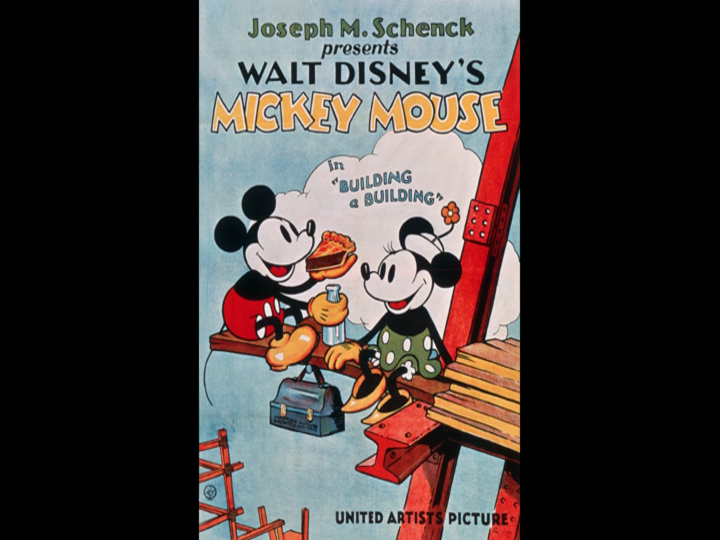
January 7, 1933 – Building a Building Released to Theaters

The film poster for the short 'Building a Building'

“Baloney, and macaroni, and a huckleberry pie”

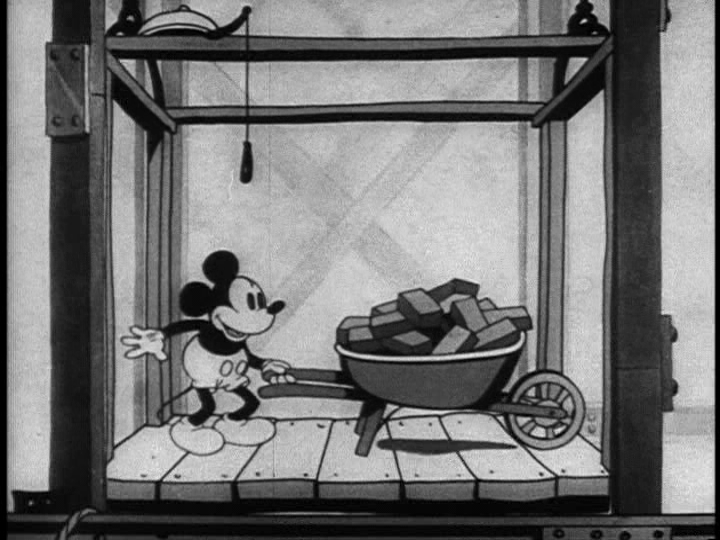
In this 1933 black-and-white short film – directed by David Hand, recorded on R.C.A. Photophone – Mickey is a construction worker on a building site, with Pegleg Pete as his foreman. Minnie comes by selling box lunches for only 15 cents (Pluto makes a cameo, pulling her lunch cart). Her presence soon attracts the attention of plucky young Mickey, who spills dirt and bricks on top of Pete and his blueprints, aggravating Pete’s already short fuse.

Mickey working on the building - also a good example of the "squash and stretch" method of animation.

Although Mickey’s actions in this era were described more as an homage to silent film star Charlie Chaplin, one can see that there are also nods to the physical comedy stylings of silent film star Harold Lloyd (see Jan. 4th entry – Mickey’s Polo Team), as Mickey falls head over heels – literally – for Minnie Mouse.

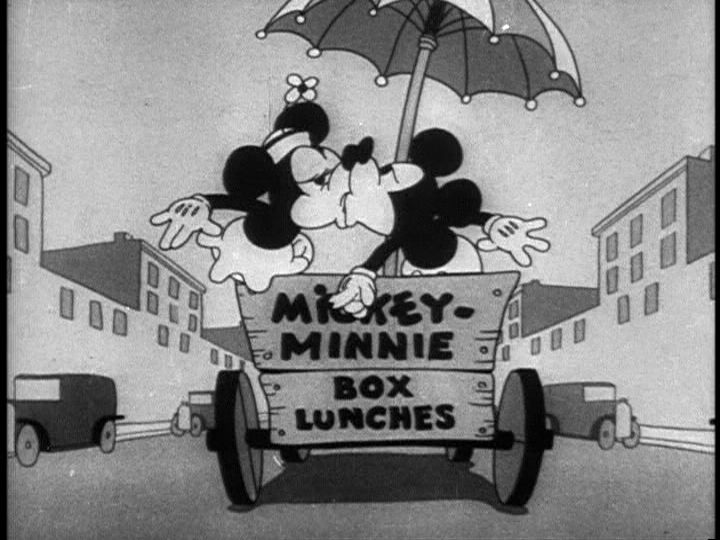
When Pete steals Mickey’s lunch, Minnie feels bad for Mickey and offers him a free lunch, which includes, as she often repeats, “Baloney, and macaroni, and a huckleberry pie,” with a corn cob as well, for only 15 cents, which is about $2.50 today – not a bad price for such a lunch. Not satisfied with stealing Mickey’s lunch, Pete tries to steal Minnie’s affections as well. This does not turn out well for Pete, as Mickey and Minnie use all available resources to outsmart the foreman, before sliding down a chute and riding off in Minnie’s lunch wagon, now co-owned with Mickey. They share a kiss while Pete ends up stuck in a tub of cement.

The kiss as the couple rides off together.

In this short, Pete was voiced by Billy Bletcher, Minnie by Marcellite Garner, and Mickey by Walt Disney. This short is entertaining, especially for the over-the-top physical comedy used to show Mickey’s affections and to outsmart Pete.