RSS Feed

Tag Archives: 1950s

August 16

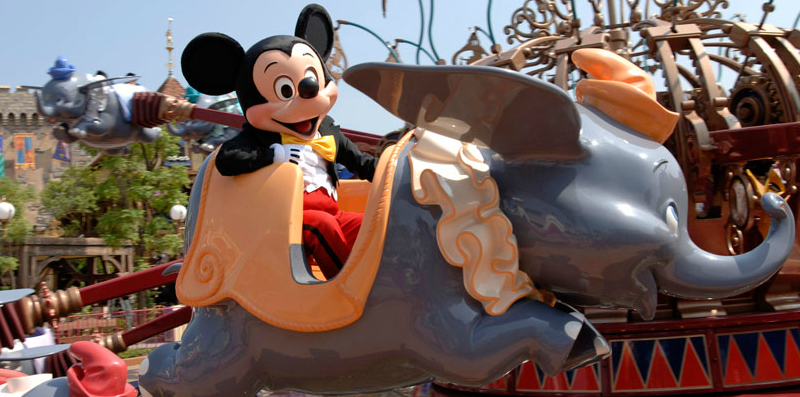
August 16, 1955 – The Fantasyland Attraction Dumbo Flying Elephants Opens in Disneyland

Image credit: official Disneyland website

“Feel a lighthearted thrill as Dumbo lifts off the ground, leaving the cares of the world behind.”

On August 16, 1955, the popular Fantasyland attraction Dumbo Flying Elephants opened at Disneyland. The ride was based on the 1941 classic animated feature Dumbo, namely the iconic scene where Dumbo learns to fly. Guests ride in Dumbo-shaped gondolas which they control with levers to move them up and down. The ride is accompanied by the music of an authentic Gavioli organ, built in 1915, playing the familiar songs of popular Disney films.

The ride was remodeled in 1990 with parts that were supposed to be shipped to EuroDisney, but were kept in Disneyland as they were not needed as early as expected. A new attraction was built in Disneyland Paris in 1992. The ride has also been built in Walt Disney World’s Magic Kingdom, opening October 1, 1971, and Tokyo Disneyland, opening April 15, 1983.

August 8

August 8, 1952 – The Special Short Film The Little House is Released to Theaters

“Once upon a time there was a little house on a little hill, way out in the country.”

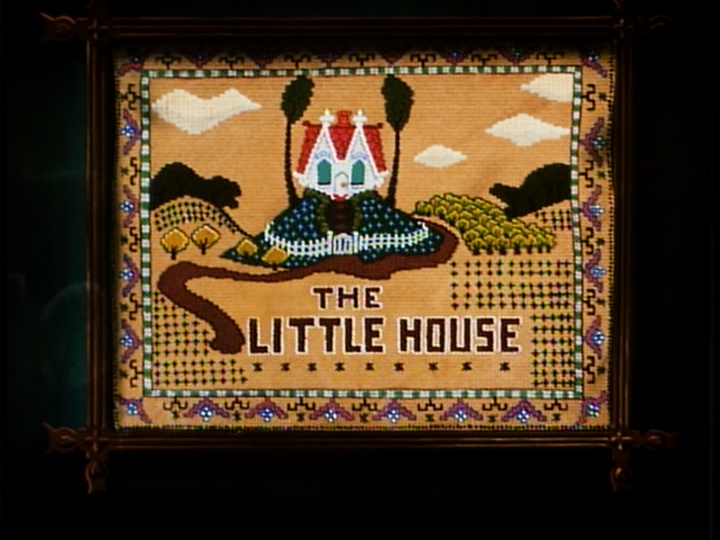
 On August 8, 1952, the special short film The Little House was released to theaters. The short was based on the 1942 children’s book by Virginia Lee Burton, and was adapted for the screen by Bill Peet and Bill Cottrell. It was directed by Wilfred Jackson and narrated by Sterling Holloway.

The short begins with the introduction of the happy little house, out in the country, who has just been bought by a young married couple. Shortly after, the house is filled with children and life, and the house loves each and every member of the family. At night, however, the house feels a bit lonely, with no other houses nearby. She gets her wish, as expansion quickly heads her way, with giant mansions built on every side. The house attempts to make friends with the houses, but they want nothing to do with her. Unfortunately for them, a large fire breaks out and destroys the mansions, with the little house left charred, but still intact.

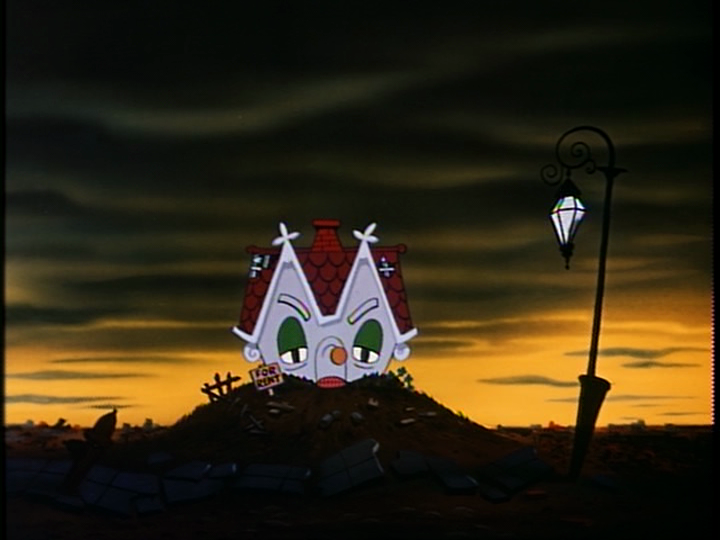
The little house finds herself amongst the debris of the “buildings of progress” as everything is built then destroyed

After those houses are gone, the little house soon finds herself surrounded by tall apartment buildings, musing to herself that she is “surrounded by progress.” The family soon moves out of the house, leaving her behind. She worries that she will never feel happy again, what with the empty feeling inside. Soon, the apartment buildings are torn down, and the house is left in the middle of a pile of debris. As she thinks she will soon have peace and quiet, a rumbling in the distance tells her otherwise.

Tall skyscrapers are built around her, with the house now boarded up, and a “For Sale” sign left in the front of her yard. The house sadly believes that she’s reached the end, and she will never see the sun again. One day, and crew comes by and pulls her from the ground, taking her away to the country. She opens her eyes to see that she’s on a little hill in the country again, all fixed up, with another newly married couple ready to begin their lives with her.

August 3

August 3, 1955 – The 20,000 Leagues Under the Sea Exhibit Opens in Disneyland

Image Credit: Vulcaniasubmarine.com

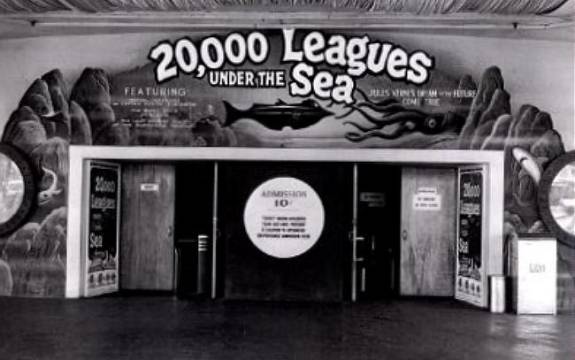
On August 3, 1955, the 20,000 Leagues Under the Sea Exhibit opened in Disneyland’s Tomorrowland, and lasted until August 28, 1966. The exhibit came about purely by accident; as the date for Disneyland drew near, Disney realized that he’d fallen behind on Tomorrowland. The film, released December 23, 1954, was immensely popular, so it was decided that the sets from the film would be used for a walkthrough attraction. This stopgap attraction proved to be more popular than expected, and lasted 11 years.

The sets were brought out of storage again in 1989 at the Disney-MGM Studios in Florida, and continued to be a popular attraction. Based on the resurgence in popularity, a similar attraction was built for Disneyland Paris in 1994, known as Les Mystères du Nautilus.

August 1

August 1, 1958 – The Special Short Film Paul Bunyan is Released to Theaters

“A job that needed a great big man, Paul Bunyan was the one.”

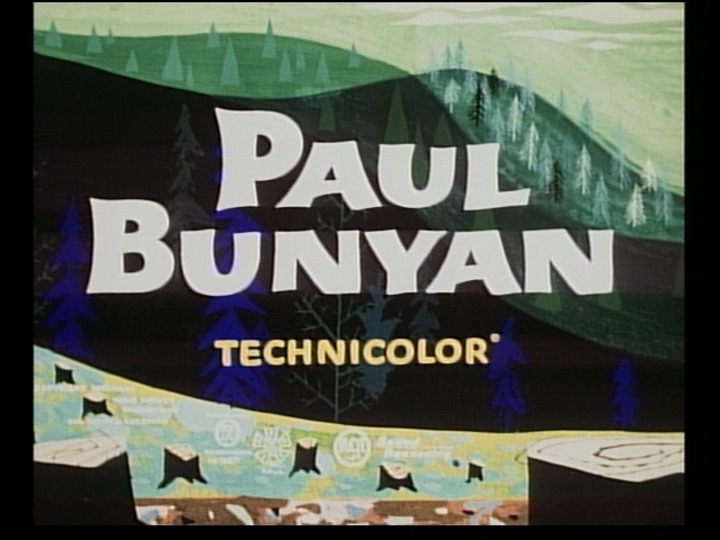
On August 1, 1958, the special short film Paul Bunyan was released to theaters. The short was directed by Les Clark, with the story adapted by Lance Nolley and Ted Berman, and voices provided by the Mellomen. The short was also nominated for an Academy Award for Best Short Subject (Cartoon) at the 31st Academy Awards.

The story of Paul Bunyan begins with his arrival in a small town on the coast of Maine, when lumberjack Cal McNab looks inside a cradle that has been left in right on the edge of town and sees a giant baby inside. The whole town adopts the baby and names him Paul Bunyan, and everyone pitches in to make his clothes and feed him. Paul quickly grows up in the town, attending school and playing with the boys of the town at the swimming hole. One Christmas, the town gave Paul a giant axe, and he took to cutting timber “like a duck takes to water.” Paul provides his town with enough timber to last a lifetime, and the town grows quickly, becoming too crowded for Paul. One morning, he leaves a note for the town, thanking them for everything, and letting them know he was looking for more room. Cal ends his part of the tale stating that the whole town was going to miss Paul.

Paul saves Babe, who is so grateful, he remains as Paul’s pet and best friend

The next part of the story is told by straw boss Chris Crosshaul, who meets Paul in the Midwest. Paul is seen cutting timber as fast as he can, and stomps the stumps back into the ground before leaving for more room and more trees to cut. As Paul leaves, he runs into the worst blizzard the country had ever seen, with the flames freezing when he tries to light a fire. In the middle of his task, he hears a sound in the distance, and sees a large ox frozen in the snow. The ox has turned blue from the cold. He thaws the ox out, and the ox, grateful for Paul’s help, becomes Paul’s pet, “Babe.” The two continue their travels in the storm, leaving behind them many tracks that filled with water and became the land of 10,000 lakes. They continue to chop down trees, dig the Missouri River to send the logs down to the sawmill, and build Pike’s Peak to view other parts of the country left to chop down. According to Crosshaul, Paul and Babe also created the Grand Tetons and Yellowstone Falls through their roughhousing.

The last chapter of the story is told by river foreman Shot Gunderson. The day Paul arrived at his camp, the camp was in trouble: they could get timber in the river, but the river was too windy and the logs couldn’t get to the mill. With Paul and Babe’s help, the river is pulled straight, and the logs go directly to the sawmill. One day, a traveling salesman comes to town, demonstrating a steam-powered chainsaw, which promises to chop down trees faster than regular chopping. A competition is set between the man versus machine, and the two set to work on the day. Unfortunately for Paul, the machine beats Paul by 1/4th inch, and discouraged, walks away from town. Gunderson tells the audience, however, not to feel sorry for Paul and Babe, as they’re in Alaska, creating the Northern Lights thanks to their roughhousing.

July 27

July 27, 1956 – The Special Short Film In the Bag Premieres in Theaters

“First you stick a rag, put it in the bag, bump bump, then you bend your back, put it in the sack, bump bump.”

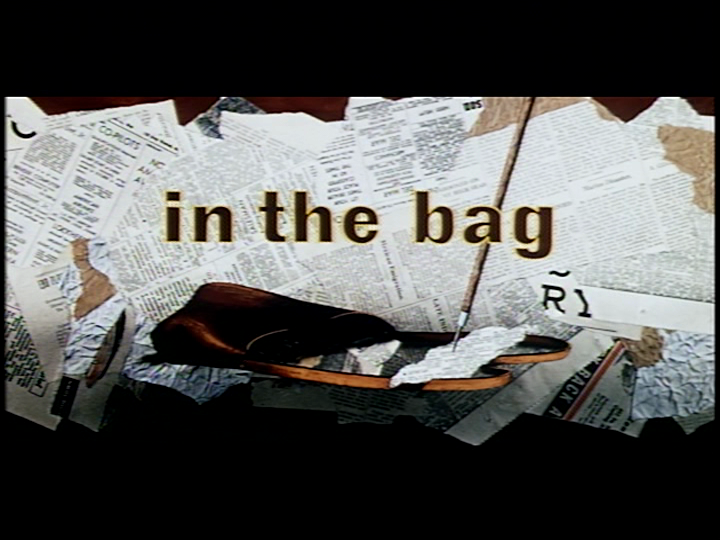
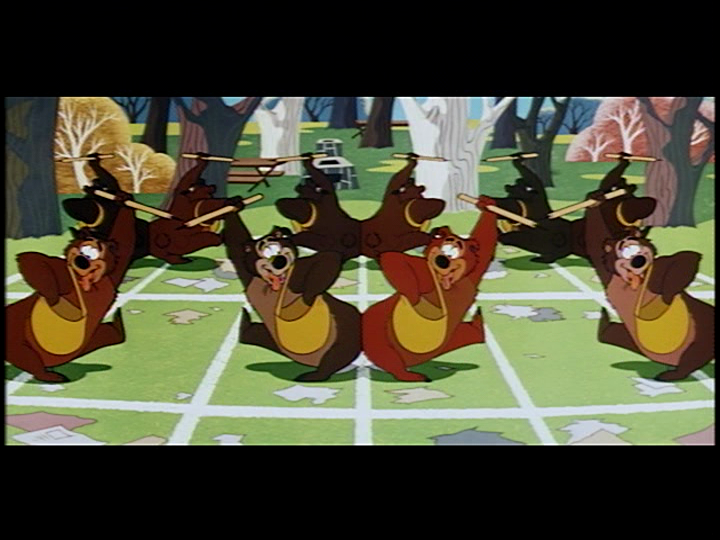
On July 27, 1956, the special short film In the Bag was released to theaters. This short was the second of what was to be a potential series for the character Humphrey the Bear, but the series was canceled when the Disney Studios stopped making short films. Humphrey was introduced in the 1950 Goofy short Hold That Pose; he then was an antagonist for Donald Duck in several shorts. In the two shorts released, Humphrey’s foil was a good-natured park ranger named J. Audubon Woodlore. The short, filmed in Cinemascope, was directed by Jack Hannah, with the story by Dave Detiege and Al Bertino. Humphrey was voiced by James MacDonald and Ranger Woodlore by Bill Thompson. Smokey the Bear also makes a cameo in this short.

The guests are leaving the campgrounds, and Ranger Woodlore steps out of the ranger station, perturbed at the mess the guests have left behind. He begins to clean, when he realizes he has all the help he needs. He calls over Humphrey, who gathers all the other bears when Woodlore offers a surprise. He tells them that they’re going to play a game, and the bears are all excited. Woodlore sets up the playing field, and has Humphrey hand out the equipment to pick up the trash.

The bears seem to enjoy their “game,” dancing to the little ditty that Ranger Woodlore invented

Ranger Woodlore begins to sing a song to inspire the bears, and they pick up trash with vigor, until they notice they’ve just been doing the ranger’s chores. They angrily dump out the trash and storm away. Woodlore has an idea to get them back – he makes his special batch of chicken cacciatore, but tells them “He who does not clean up his section of the park does not get any supper.” The bears race to put all the pieces of trash in Humphrey’s section, leaving him as the dupe. He races to clean, but his bag snags on a branch and rips open, sending trash flying everywhere.

Humphrey is sent once again to clean, but is struck by misfortune at every turn. He finds an unused match in the trash, and sets to light the pile of trash on fire, when Smokey the Bear steps on it and warns the audience that only they can prevent forest fires. Desperate, Humphrey sees a hole in the ground, shoves the trash in there, then triumphantly skips to get his supper. Just as he’s about to reach for the plate, the “hole” starts to shake, and a sign reveals that it’s actually the geyser Old Fateful. It erupts, sending trash flying all over the park. Ranger Woodlore apologizes, but reminds him that rules are rules, and Humphrey once again dances as he picks up trash around the park.

July 23

July 23, 1953 – The Live Action Film The Sword and the Rose is Released to Theaters
“Because I like him. And if I liked him not, you’d fall in love with him.”

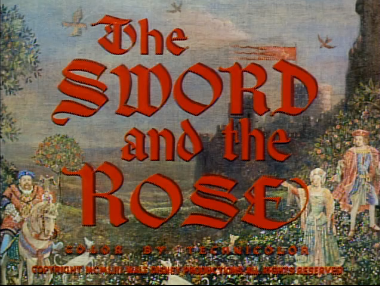
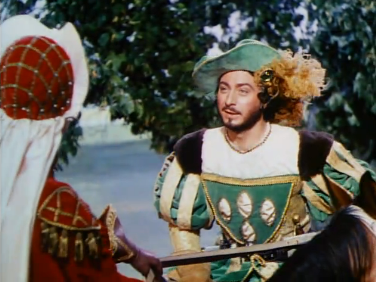
On July 23, 1953, the live-action adventure film The Sword and the Rose was released to theaters. Based on the 1898 novel When Knighthood Was in Flower by Charles Major, it was the third and most elaborate live-action film to be created with the blocked-up funds that Disney had amassed in England during World War II. A policy had been passed that money made in England during the war could not be brought back to the United States, and the Disney Studios used those funds to create Treasure Island, Robin Hood and His Merrie Men, and The Sword and the Rose. The film was directed by Ken Annakin, and starred Richard Todd as Charles Brandon, Glynis Johns as Mary Tudor, James Robertson Justice as Henry VIII, Michael Gough as the Duke of Buckingham, and Jean Mercure as King Louis.

The film is set at Windsor Castle in the early years of the reign of King Henry VIII, and begins with a wrestling match between the English and the French. Henry’s sister, Princess Mary Tudor, appears as he is watching the match, and goes to greet her brother. Henry is not happy that the English are losing to the French, and when he asks if anyone can beat the French, a newcomer to the court named Charles Brandon offers his services. The Duke of Buckingham, vying for the affections of the fair Mary, first tries to wrestle the French, and is successful. Mary, eyeing Brandon, asks her brother how he thinks the newcomer would fare against Buckingham. The two set up their scuffle, and Brandon emerges as the victor, much to the delight of Mary.
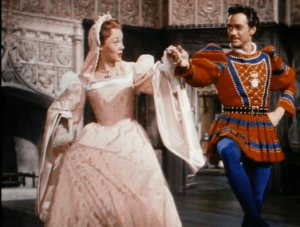
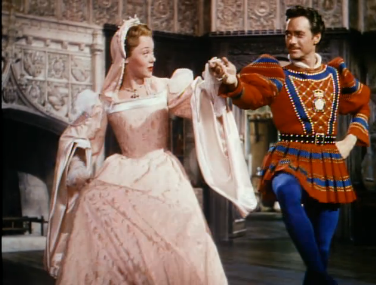
Mary invites Brandon for a private dance in her chambers, highlighting a growing attraction between the two

Brandon is made the Captain of the Guard, thanks to his efforts and the persuasion of Mary. Brandon, however, did not want to stay in England; rather, he wished to seek his fortune in the New World. One of Brandon’s friends warns him not to fall in love with Mary, but Brandon assures his friend that he will do no such thing. Mary is set up to marry King Louis of France, but clearly does not wish to be; she is also pursued by the Duke of Buckingham, who commands the Tower of London. However, Mary is rather intrigued by Brandon, and arranges to have a private dance with him in her chambers. Brandon is invited to the princess’s party, which angers Buckingham, who dislikes Brandon simply for being a commoner. When Mary picks Brandon for her dancing partner in the opening dance, this seals Brandon’s fate, as far as Buckingham is concerned.

The flirting between Brandon and Mary continues, nearly resulting in a kiss between the two during a hunting expedition. While this is going on behind King Henry’s back, he is continuing to arrange the marriage of his sister to the aging King Louis, hoping that this arrangement will provide peace between the two nations. Lady Margaret, Mary’s lady in waiting, worries about Mary’s pursuit of a commoner, but Mary angrily warns her that “Mary Tudor will marry a beggar if she chooses.” When she rushes to find Brandon, she finds that he has resigned from his post and set of for Bristol to board a ship for the New World. Heartbroken, yet determined, Mary dresses as a boy and follows him, telling him that she intends to sail away with him. The pair finally share their first kiss, and attempt to set sail, but her identity is soon exposed and the two are sent back ashore.
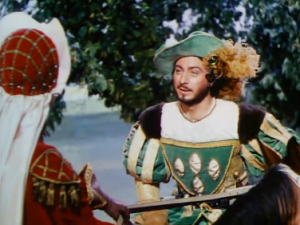
The heir to the French throne, who has not made his attempt to woo Mary subtle in the least, threatens her that she will remain to be his after King Louis dies

When King Henry gets wind of what happened, Brandon is arrested and sent to the Tower of London. Mary pleads with her brother to save Brandon, and promises to even marry King Louis. Buckingham also comes up with the promise that Mary can marry anyone she chooses after Louis dies. Brandon is to be freed after she marries Louis, and she asks Buckingham, whom she believes to be her truest friend, to inform Brandon of the deal, since she is not permitted to see him. Buckingham, however, plans to help Brandon arrange an “escape,” but then have him murdered as he does so. Mary continues to cause mischief, having King Louis drink lots of wine and be active, deteriorating his already frail health. His heir declares to Mary that she is never to leave, as he claims her for his own after the king dies. She sends Lady Margaret to England to find Buckingham and rescue Brandon, but is greeted with grim news, as Buckingham declares that Brandon’s body lies at the bottom of the Thames. Buckingham declares that he will go to France to rescue her himself. Brandon’s friends, however, find Brandon is alive and well, and retrieve him from his hiding spot.

Mary leaves with Buckingham, and he informs her that Brandon is dead. Still consumed with his love for her, Buckingham takes her to rest at a church and tries to force Mary to marry him. She tries to struggle, but he threatens to take her back to the French if she does not agree. Brandon arrives just in time to rescue Mary and the two escape. Brandon notices that they are being pursued by Buckingham’s men, and in ends with a climactic swordfight between Buckingham and Brandon, with Brandon emerging victorious. True to his word, although rather reluctant, King Henry allows Mary to marry whomever she wants, and the king makes Brandon the Duke of Suffolk.
July 20

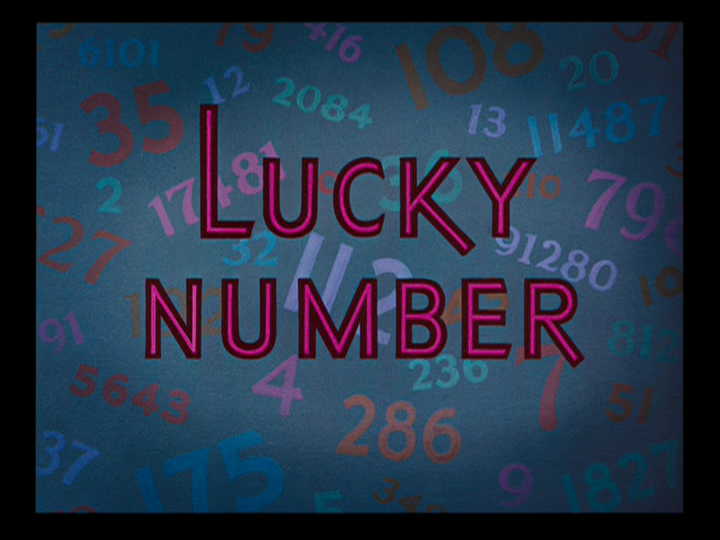
July 20, 1951 – The Donald Duck Short Film Lucky Number is Released to Theaters

“Flash! Here it is, ladies and gentlemen. Get your tickets ready for the big drawing of the new Zoom V-8, the super car of the continent!”

On July 20, 1951, the Donald Duck short film Lucky Number was released to theaters. It was directed by Jack Hannah, with the story by Nick George and Bill Berg. It stars Clarence Nash as the voices of Donald, Huey, Dewey, and Louie.

It’s a lovely day at Donald’s Service Station, and Donald is outside cleaning the pumps while his nephews are fixing a car in the garage. The radio announcer interrupts their activities, announcing that it’s time to declare a winner for the drawing of a new car. The boys call their uncle over, and he holds up his ticket excitedly; unfortunately, he is off by only one number. He drops the ticket angrily and marches back to his chores.

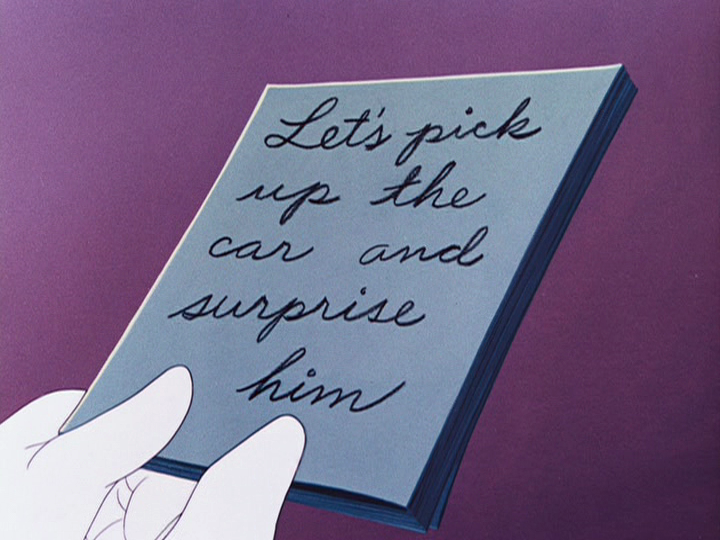
One of the nephews writes a note to the others to keep his idea a secret from Uncle Donald

Just as Donald leaves the garage, the announcer says there’s been a slight error, and declares Donald’s number the winner. The nephews grab Donald’s discarded ticket and decide to surprise him by picking up the car themselves. The announcer continues that the winner must be at the car lot by two o’clock, or a new winner will be drawn. Realizing they only have ten minutes to get there, the nephews quickly fix their car and speed out of the garage, much to the annoyance of Donald, who yells at them as they pass.

It’s smooth sailing at first for the trio, but they soon realize they’re out of gas. They quickly drive back to the service station, where Donald is not happy to see them. Without any money to pay for the gas, Donald refuses to fill their car, pushing them into a billboard of the Zoom V-8, the very car Donald has won. The nephews come up with a quick plan, and attack the billboard with a saw.

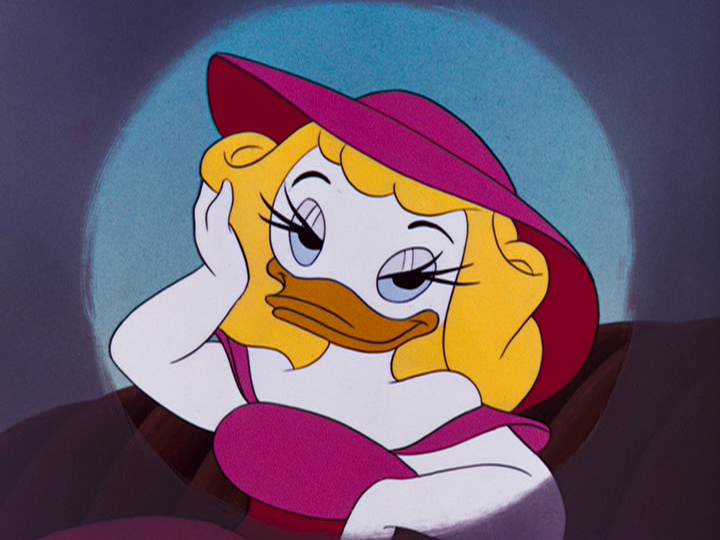
One of the nephews disguises himself as a beautiful woman so he can trick Donald into filling the car with gas

Disguised as the new car, and one of the nephews dressed as a woman, Donald doesn’t hesitate to help the “lady” out, and the nephews quickly drive away, with Donald still daydreaming. Realizing he’s been tricked, he runs inside just as the phone rings. The man on the other end lets Donald know that his nephews are coming back with a big surprise for him, and he decides he’s going to get them back.

Grabbing a big barrel of oil sludge, he waits until the trio comes back with the new car. Thinking that he’s been tricked again, he covers the new car in the sludge, then pours gasoline on the three to “wash them off.” He then overinflates the car’s tires, while the nephews can only watch in horror. The final blow is when he crushes the car, sending the wheels flying into the air. As Donald laughs at his handiwork, the radio announcer tells everyone that Donald Duck must be enjoying his new car, taking it out for a spin in the country. Realizing what he’s done, he faints, and his nephews can only shrug.

July 16

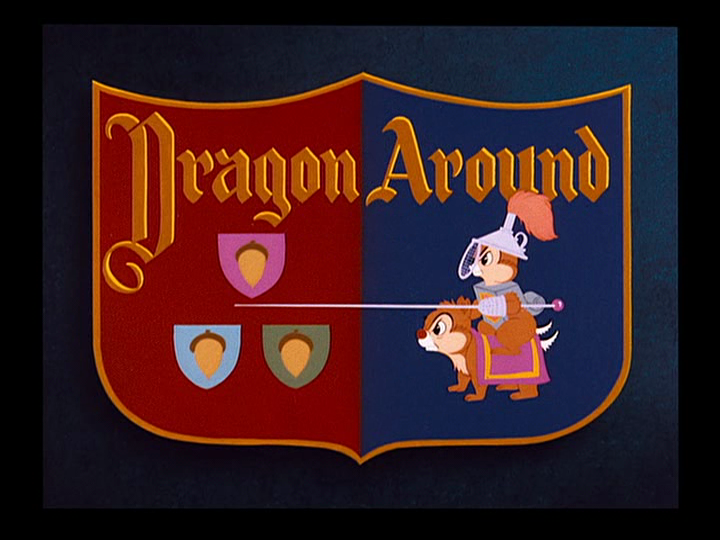
July 16, 1954 – The Donald Duck Short Film Dragon Around is Released to Theaters

“Uh oh! This tree has to go!”

On July 16, 1954, the Donald Duck short film Dragon Around was released to theaters. This is the 14th short in which chipmunks Chip and Dale play antagonists to Donald Duck. The short was directed by Jack Hannah, with story by Nick George and Roy Williams. It stars Clarence Nash as the voice of Donald, Dessie Flynn as the voice of Dale, and James MacDonald as the voice of Chip.

The short begins with Dale reading a discarded book of fairy tales at a rather unkempt area of the park. Dale is excited when he comes across a tale of a knight fighting a dragon, and he pretends to be a knight. A sudden rattling knocks him from his perch, and he looks around for the source. He sees the shadow of what appears to be a dragon on the side of a hill, and runs for cover in his tree. He tells Chip in a hurry what he saw, but when he pulls the other chipmunk to see, the “dragon” is gone. Chip chastises him for his imagination.

With a bit of ingenuity, the chipmunk duo prepare to defend their tree

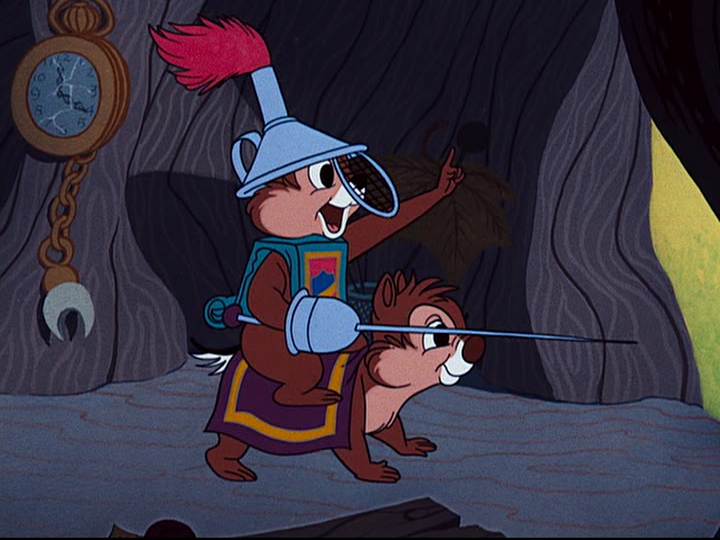
Just then, another rattling rolls around, and the two see the “dragon” on the side of a hill again. As they flee, the source of the shadow is revealed: Donald comes rolling around the hills in a steam shovel, helping prepare another freeway. The only thing in his way is the tree where Chip and Dale live. Quickly, they gather branches and try to attack the steam shovel to protect their tree, but that has little effect. Donald notices the duo’s attacks and scares them with the steam shovel. The pair lands right next to the fairy tale book, which gives Chip an idea, and the two run off to prepare. After a bit of arts and crafts, the pair emerges as a brave knight on his trusty steed, ready to protect their castle.

Donald fixes his steam shovel with a way to spurt fire from its mouth, and the fairy tale begins to become too real for the chipmunks, who flee. When Donald takes a break, they decide to sneak up on the “dragon,” unaware that Donald has been playing with them the entire time. Donald continues to attack their tree, and the duo crashes a boulder into the steam shovel, followed by barrels of tar. The tar rips out the steam shovel’s teeth, and Donald, his temper rising, captures the two and locks them in his tool box while he tries to knock down the tree.

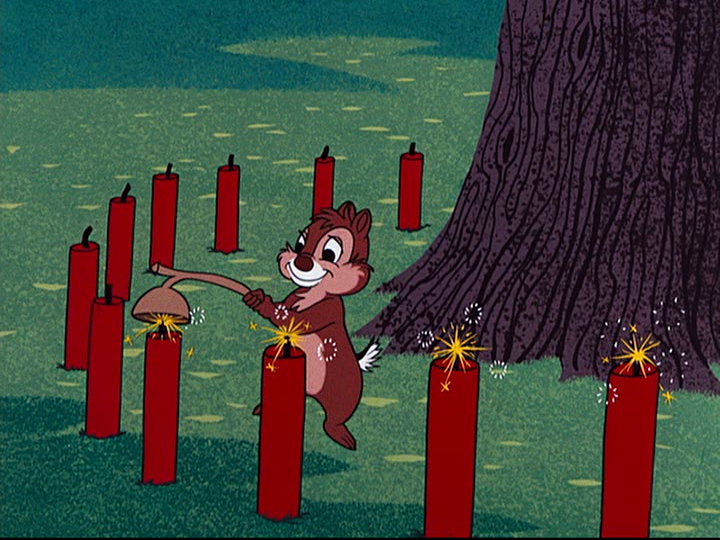
Donald uses dynamite as a last ditch effort to destroy the tree; Dale goes around and extinguishes each stick while Donald isn’t looking

Chip and Dale saw their way out of their tool box and, using a couple of wrenches, they undo every screw they can find. Donald races towards the tree at full speed, unaware that the steam shovel is falling apart as he goes. When he reaches the tree, Donald is left with nothing but his head to smack into the tree trunk. Losing his temper, Donald grabs sticks of dynamite and arranges them around the tree, getting ready to blast them out. As he covers his ears from the eventual blast, Dale goes around extinguishing each stick, and Chip gathers them up, placing them where the steps in a ladder would be. They fool Donald into chasing Dale up the ladder while Chip lights the fuses, and Donald is sent flying high into the sky as the dynamite blows.

July 12

July 12, 1957 – The Frontierland Shooting Gallery Opens in Disneyland

Image Credit: Official Disneyland Website

“Practice your sharp shooting skills at this interactive infrared-rifle arcade.”

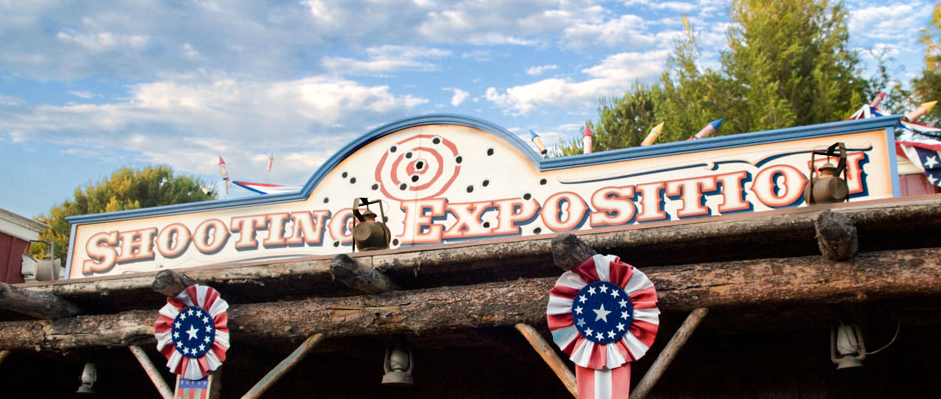
On July 12, 1957, the Frontierland Shooting Gallery attraction opened in Disneyland’s Frontierland. Set in the town of Boothill in the 1850s, guests could take a rifle and shoot various Wild West themed targets, including tombstones, cacti, and skeletons. The gallery was closed in 1985, and opened again as the Frontierland Shootin’ Arcade on March 29, 1985, with the entire attraction becoming electronic. The original attraction has guests use lead pellets with .54 caliber Hawken rifles, with the bullets chipping the paint from the targets, requiring the attraction to be repainted nightly.

June 27

June 27, 1952 – The Goofy Short Film Teachers are People is Released to Theaters

“The person upon whose capable shoulders rests the responsibility for their education is that unsung hero, the teacher.”

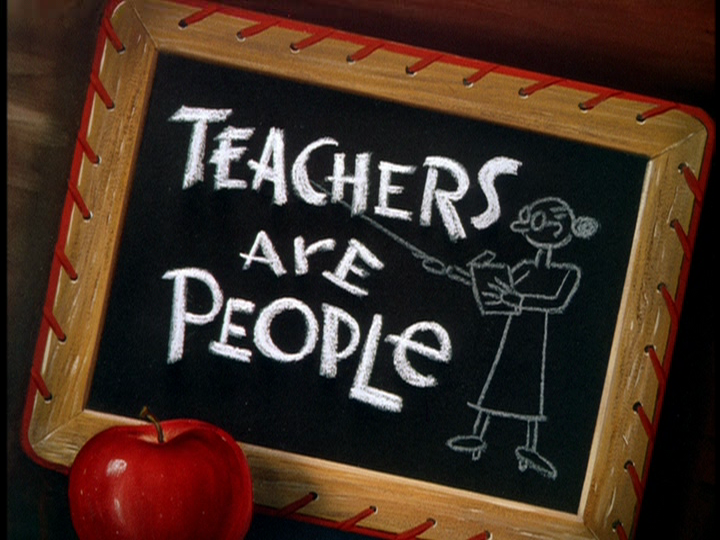
On June 27, 1952, the Goofy short film Teachers are People was released to theaters. It was directed by Jack Kinney, with story by Dick Kinney and Brice Mack. The short was narrated by Alan Reed, who would go on to fame as the voice of Fred Flintstone. When this short was released, the idea that a school would be bombed or that dangerous weapons would be brought in a school was an outlandish one; needless to say, attitudes have changed a great deal since then.

The short opens with the narrator explaining how school has become a vital part of every child’s life. We then see a mother dragging her reluctant son George to school, dressed in a smart suit and sailor cap, holding an apple for his teacher. When he reaches his clubhouse in the front yard, he quickly changes and emerges in somewhat “cooler” attire. We then see the other children walking to school, “whetting their appetites for knowledge” (splashing through rain puddles) and “forming friendships for the future” (a boy is seen carrying all of a pretty girl’s schoolbooks).

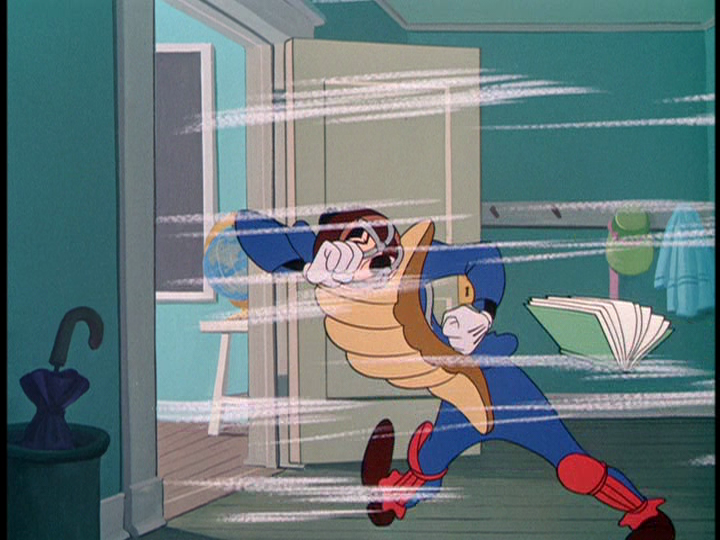
Goofy, as the brave educator, prepares himself as he enters a classroom full of chaos

As the audience’s attention turns to the school, the doors open to reveal the educator, played by Goofy. He steps forward as the crossing guard is letting the kids cross the road, but unfortunately Goofy gets stuck in the middle of the road as the cars speed past. The audience then sees his classroom: the children have gone wild, throwing books and ink, making a complete mess of the room. Before Goofy enters, he dons an umpire’s outfit, ready to tackle anything that comes his way. He calms everyone down, and the students begin to sing a good morning song.

As Goofy erases a demeaning doodle from the board, a little mirror pops out of his jacket, allowing him to see George attempting to hit the teacher with his slingshot. Goofy ducks just in time, and demands that George put all of his toys and pranks into the drawer in his desk. George reluctantly puts in his slingshot, and various weapons, including fireworks, a pocketknife, and a grenade. The grenade shocks Goofy, and he carefully places it in a nearby bucket of water. As Goofy calls roll, we see the students continuing to play pranks on each other. When he calls for George, he sees George sneaking out the window to go fishing, and quickly pulls him back inside.

An oblivious Goofy is unaware that his student George is causing mischief behind his back

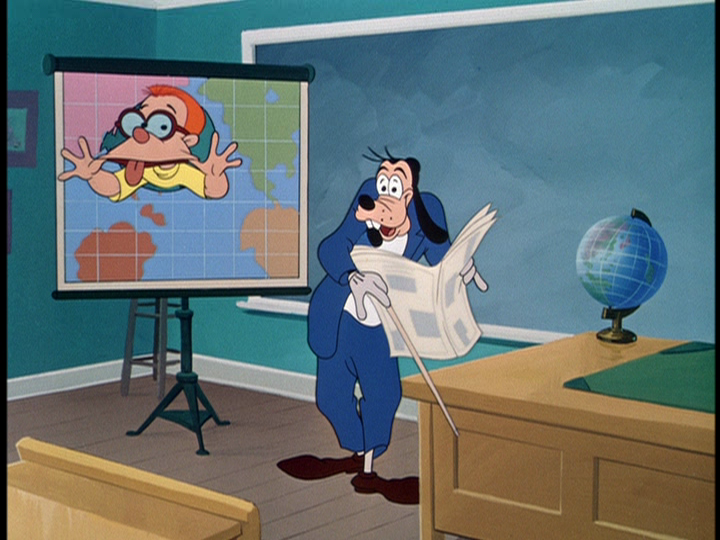
Goofy then calls for homework, and the students begin to place apples on the teacher’s desk. One apple seems to be missing, and when Goofy wonders who is absent, he looks over to see George at his place in the corner, eating his apple. George then begins to run the chalk down the chalkboard, making an annoying squeaking sound. Goofy cuts him off before the geography lesson, and pulls down the map. While he tries to give the geography lesson, the students have their books propped up, but are playing with various toys behind them. George then cuts a hole in the map, making faces at his fellow students.

When the bell sounds for lunch, the student stampede outside, making a mess of the playground. Goofy hears a group of his students whispering, and when he goes over to hear their conversation, he blushes at the obscene nature of the joke. The students return from lunch as if they were forcibly marched, and Goofy has to drag George inside. When the spelling lesson begins, Goofy asks George to spell the word “cat.” George attempts to cheat off his neighbor’s paper, but when the student pulls it away, George pulls a squirt gun on him. The student misspelled the word on purpose, so George ends up squirting the student in the face.

Poor Goofy is reaching the end of his rope as George squeaks the chalk during his punishment

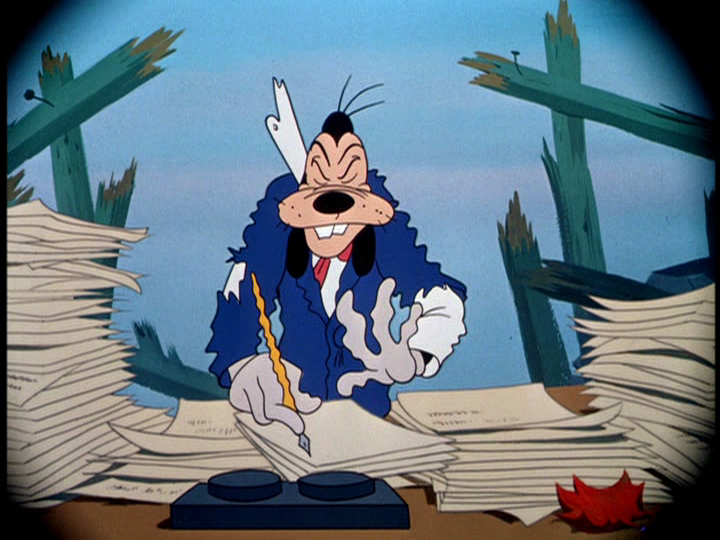
George continues to cause mischief in the classroom, and finally sets the clock ahead an hour to 3 o’clock, when the bell rings and the students take off like a shot. Goofy is left to clean up the students’ mess, and have a parent-teacher conference. In this conference, the parent grabs Goofy by his collar and demands to know “What’s the matter with my kid’s grammar?” before punching Goofy on the head. As the short draws to a close, the school building suddenly explodes, and we see “I will not bomb the school again” written several times on the chalkboard by George, still using the squeaking chalk.