RSS Feed

Tag Archives: 1940s

September 15

September 15, 1944 – The Goofy Short Film How to Play Football is Released to Theaters

vlcsnap-2014-09-15-19h59m32s196

“To the spectator, football may appear rather rough at times, but in reality, it’s a character-building game.”

On September 15, 1944, the Goofy short film How to Play Football was released to theaters. It was seventh of the popular “How To” series that Goofy became known for. The short was directed by Jack Kinney.

The short opens with the narrator listing everything one needs for football: “a college covered with ivy; a coliseum or stadium filled to overflowing with a 100,000 rabid, wildly cheering fans; great armies of vendors; managers; mascots; photographers; sportswriters; doctors; elaborate brass bands; assorted coaches; old grads; scores of Annie Oakleys; and two teams resplendent in brilliant uniforms.” After these elements are put together, the narrator tries to explain the object of the game, but is drowned out by the crowd. The game starts, and the camera tries to follow the players, but can only show the backs of the spectators. The first touchdown is scored by Taxidermy Tech against Anthropology A&M, and the star quarterback is taken out to be saved, as he is Taxidermy’s star player. The next play begins, with many well-placed puns and wordplay. The injured players are soon carted off the field, though their injuries are chalked up to “character-building.” For the next play, a foul is called for unnecessary roughness, but after Taxidermy kicks the ball, everyone seems to fumble about before Anthropology A&M is able to accidentally score a touchdown.

The game gets rather rough after Taxidermy Tech scores the first touchdown

The game gets rather rough after Taxidermy Tech scores the first touchdown

The score is 7 to 6, but A&M is able to score another touchdown, although their final kick doesn’t exactly go over the goalpost, giving A&M a score of 12.5 at the half. In the locker room, the coach for Tech surveys his weary and wounded players, and changes his moods every split second to supposedly rally their spirits. He sends in his star quarterback, who is able to make a touchdown before he is viciously sacked. The coach tries to revive his star, and they send him back in for one final play, although he makes his way around the field in a dazed stupor. By sheer luck, he manages to make the final touchdown, giving Tech the win with 13 to 12.5. The coach is seen driven mad by the game, and is tied in a straight jacket after the game is over.

September 12

September 12, 1941 – The Donald Duck Short Film Old MacDonald Duck is Released to Theaters

vlcsnap-2014-09-12-18h55m44s54

“Let’s see…eenie meenie miney mo, okay, missy, here we go.”

On September 12, 1941, the Donald Duck short film Old MacDonald Duck was released to theaters. It was directed by Jack King.

It’s a sunny day on Donald’s farm, and he is happily feeding the animals and singing “Old MacDonald,” with the animals accompanying him. He calls out for his cow Clementine, but she seems to be nowhere to be found. He finally spies her up a tree, eating leaves, and she gracefully jumps down to meet him. He sits down to milk her, and all is going well until a fly lands on Clementine’s nose. She accidentally whacks Donald with her tail, and although he is initially irritated, he resumes work until the fly lands on his own beak. After slapping it away, he tries to pull his hat down over his head, but the fly finds its way in and bugs him. He is interrupted to the point where he loses focus, and ends up milking into his hat, sitting on his pail, and wearing his stool as his hat. The fly continues to mock him, so Donald uses Clementine’s udder to shoot milk at the bug. The bug is terrified, but manages to safely get away. The bug seeks the ultimate revenge, and tricks Clementine into wrapping her tail around Donald’s neck before swishing him around to rid herself of the fly, and ends up dumping poor Donald into the milk bucket. The fly then bites the cow to make her kick Donald into the barn, with tools falling all over him. The fly laughs himself silly over his triumph.

September 1

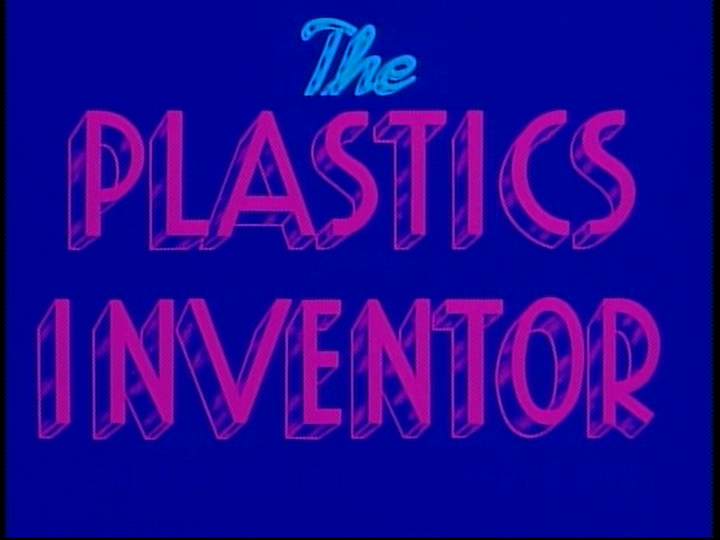
September 1, 1944 – The Donald Duck Short Film The Plastics Inventor is Released to Theaters

vlcsnap-2014-09-01-19h00m44s182

“Now, the moment we’ve been waiting for: the first flight in our plastic plane.”

On September 1, 1944, the Donald Duck short film The Plastics Inventor was released to theaters. It was directed by Jack King, with story by Jack Hannah and Dick Shaw.

Donald is listening to a radio program called “The Plastic Hour with Professor Butterfield,” of which he is a big fan. He is excited about learning how to bake an airplane out of a huge hunk of junk. He waits until the plastic is ready to be poured into the mold, and creates the parts for the motor while he waits, and is soon ready to fly his plastic plane after baking his helmet as well. Soon, he heads up into the sky with his plane, and enjoys his flight immensely. The professor warns that the plane will melt in water, so Donald should be sure not to get it wet, and should avoid all rainclouds. Unfortunately, a storm quickly brews, and Donald quickly tries to keep his plane together, to no avail. He acts quickly to avoid some mountains, but ends up quickly losing parts of his plane in the process. The plane completely disintegrates, and Donald ends up falling to the ground, covering a flock of blackbirds like a pie. Angered by the professor’s carefree attitude about Donald’s plan falling apart in the rain, Donald takes a nearby watering can and dumps it on the radio, which, like the plane, quickly disintegrates.

August 12

August 12, 1941 – The Remade Short Film Orphan’s Benefit is Released to Theaters

vlcsnap-2014-08-12-03h16m44s45

“Who did that? What’s the big idea? Am I mortified! Am I mortified!”

On August 12, 1941, the short film Orphan’s Benefit was released to theaters. It was a remake of the 1934 short film, with updated animation and the added effect of color. The updated short was directed by Riley Thomson.

It’s the night of the orphan’s benefit at Mickey’s Big Show, and all the orphans are brought inside in single file line, presumably well-behaved. Inside, however, they’re causing all sorts of chaos, which stops when Mickey and Donald enter the stage. Mickey introduces Donald, who will recite (an unintelligible version of) “Mary Had a Little Lamb.” His performance is met with much applause, and it gives him enough confidence to move onto his next poem, “Little Boy Blue.” However, he is mocked by one of the orphans, which almost incites a tantrum; Donald starts his poem again, only to be mocked by all the orphans, and has a tantrum. He is then hooked off-stage, much to the amusement of the orphans.

Clarabelle Cow, Horace Horsecollar, and Goofy begin their interesting ballet

Clarabelle Cow, Horace Horsecollar, and Goofy begin their interesting ballet

Next is the dance number, featuring Clarabelle Cow, Goofy, and Horace Horsecollar. At one point, Horace grabs Clarabelle and spins her about wildly, before throwing her over to Goofy. Her spinning spins him out of control after he grabs her, and he ends up falling on the floor. Goofy attempts to redeem himself after this by doing some acrobatics with Clarabelle, only to have her fall on his head. Momentarily blinded, Goofy grabs her tail and throws her across the room to Horace, who catches her with one finger. When Horace throws Clarabelle back, Goofy is only able to grab her leotard, which she snatches back angrily before hitting Goofy on the head with a hammer. After the act, Donald comes back on stage to mock the orphans, and ends up with a face full of ice cream, before becoming the orphans’ personal punching bag. After this, Mickey and Clara perform a number, with Mickey playing the piano to Clara’s singing. Clara is able to hit the high note in her song after being hit by one of the boys’ slingshots, but she and Mickey take this in stride and take several bows.

Donald returns to the stage once more, starting his poem and waiting for retaliation; seeing none, he discards his brick and recites “Little Boy Blue,” although he has another tantrum when they mock him once more. While throwing his tantrum, the orphans tie random objects to balloons and send them across the stage, with two other orphans hitting the balloons with their slingshots the moment the objects are over Donald’s head.

August 9

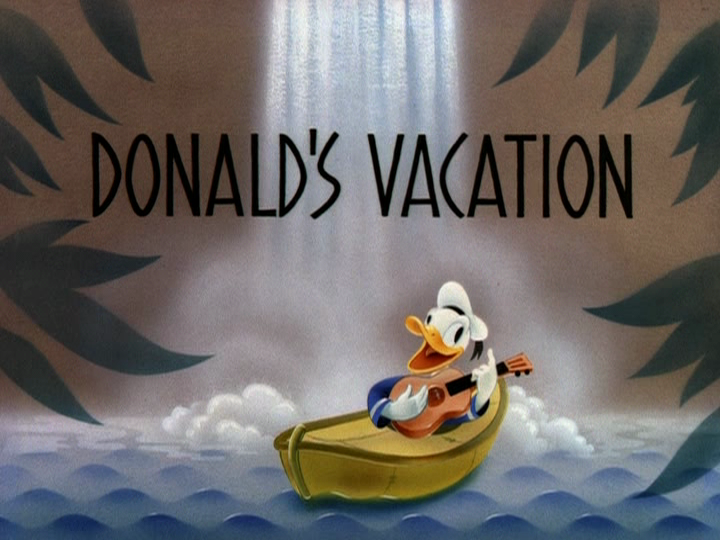
August 9, 1940 – The Donald Duck Short Film Donald’s Vacation is Released to Theaters

vlcsnap-2014-08-09-20h12m36s109

“Doggone it! Am I mortified. This is absolutely…!”

On August 9, 1940, the Donald Duck short film Donald’s Vacation was released to theaters. The short was directed by Jack King.

Donald is sailing in his canoe, singing while playing his guitar, when he falls over a waterfall. He makes his way out of the river and sets up his camp, which fits rather nicely inside his canoe contraption, which doubles as a tent. He decides to relax, and pulls out a new e-z folding model of the Comfy Vacation Chair, although for Donald, it is anything but easy. Donald ends up folded in the chair as if he were imprisoned, and is soon flung back into the river. He gets back to the chair and starts jumping on it, until it springs into shape. A herd of chipmunks, having watched the interaction, observe Donald as he sleeps in his chair, then make a break for his food supplies. They accidentally puncture Donald’s tail with a pineapple, waking him from his slumber; as he jumps in the air, he is once again trapped in his chair, helpless to watch as the chipmunks carry his food away. He uses the chair to propel him forward to chase the chipmunks, unaware that a bear has discovered his food as well. As he chases the chipmunks, he crashes into his food and ends up grabbing the bear by accident. Annoyed, the bear chases after Donald all over the woods, which ends with Donald quickly packing up his things and hightailing it down the river once again.

July 30

July 30, 1942 – The World War II Educational Short Out of the Frying Pan into the Firing Line is Delivered

vlcsnap-2014-07-30-18h30m41s40

“Your pound of waste fat will give some boy at the front an extra clip of cartridges.”

On July 30, 1942, the World War II educational short film Out of the Frying Pan into the Firing Line was delivered to the U.S. government. The short was sponsored by the Conversation Division and the War Production Board, and distributed by the War Activities Committee of the Motion Pictures Industry. It was directed by Ben Sharpsteen.

Minnie is cooking bacon and eggs in a pan on the stove, and the smell attracts Pluto, who is eating his dinner nearby. He scoffs at his dinner, but Minnie offers to give him some leftover bacon grease. As she gets ready to pour it in his bowl, they hear a voice telling them not to throw away the grease. They both turn to the radio, where an announcer informs them that the fats are needed to help win the war, much to Pluto’s annoyance. The fats are used to make glycerin, which is then used to make explosives. Every year, the announcer continues, two billion pounds of waste animal fats are thrown away, which is equivalent to enough glycerin to make 10 billion rapid-fire cannon shells. He continues to give examples about how a little grease goes a long way to helping the war effort. Hearing this, Pluto looks to a picture of solider Mickey on the wall and gives him a salute. Minnie asks Pluto again if he still wants the bacon grease, and Pluto declines. The announcer then instructs Minnie how to store her fats before donating them to the war effort. Pluto donates the fats at the butcher shop, and is rewarded with a string of sausages.

July 19

July 19, 1940 – The Donald Duck Short Film Put-Put Troubles is Released to Theaters

vlcsnap-2014-07-19-19h52m12s73

“Am I a surprised duck!”

On July 19, 1940, the Donald Duck short film Put-Put Troubles was released to theaters. It was directed by Riley Thomson.

Donald is sitting in his boat, singing a merry tune while Pluto pulls him along the side of the lake. Pluto gets distracted when a frog jumps in his path, however, and the boat crashes into him, knocking him headfirst into the sand. When he continues to chase the frog down a hill, the boat slides over him and down the hill, dropping Donald into the water with a laugh. As Pluto resumes his chase, he gets his nose caught in a spring of a broken mattress. While he struggles to break free, the spring is pulled from the mattress and wraps itself around his neck. Meanwhile, Donald is struggling with his motorboat, which doesn’t seem to want to go. He fills it with oil, but it just shoot out a lot of black smoke, which covers Donald. Donald retaliates, but the motor goes completely nuts, flying off into the air and landing in the ocean. When Donald pulls it out, it seems to pass out, and can only he revive it with smelling salts. The motor makes a whinnying sound, then wraps around the boat, taking the sides of the boat with it.

Poor Pluto is haunted by the menace that is the spring

Poor Pluto is haunted by the menace that is the spring

Pluto manages to free himself from the spring, but is now haunted by its presence. He barks at it and lands on it, trapping his front legs in it once again. As he bounces free, the spring attaches itself to his back, capturing his back legs. Donald continues his fight with the motor, and falls into the lake. He calls out to Pluto for help, and Pluto, finally free from the spring rushes off the dock, landing into the errant boat. The motor flies up in the air and lands on Donald, taking the duck all the way to the bottom of the lake. Donald is them thrown up and into the rope that was tied to the boat, taking Pluto with him on a water-skiing adventure. The poor pair end up tied around a post after they crash.


July 11

July 11, 1941 – The Donald Duck Short Film Early to Bed is Released to Theaters

vlcsnap-2014-07-11-19h28m27s127

“Doggone it. I’ll get to sleep if it kills me!”

On July 11, 1941, the Donald Duck short film Early to Bed was released to theaters. It was directed by Jack King.

Donald lets out a long yawn as he stretches and gets ready for bed. He mutters that he has to get up early and mentions how tired he is before singing himself a lullaby. As he tries to land on his pillow, he hits the bed frame with his head. Annoyed, he moves his pillow, only to have all the feathers fly out when he tries once again to rest his head. He finally is able to go to sleep, save for the ticking of his alarm clock, which seems to grow louder every second he tries to sleep. His tail begins to move in rhythm with the clock, and he finally just shoves it into a drawer. The clock, however, continues to tick loudly, and Donald loses his temper and throws it against a wall. It lands in a nearby vase and continues to beat loudly, so Donald throws the clock out the window. The clock lands in a sock on the outside laundry line, and the force of Donald’s throw carries it back into Donald’s apartment, where he accidentally swallows it as it flies through the window.

Donald is shocked to find the clock inside his stomach after throwing it out the window

Donald is shocked to find the clock inside his stomach after throwing it out the window

Donald is alarmed to find the clock in his stomach, and tries to kick it out with little success. He is able to break the clock into pieces, but doesn’t silence it. Finally, Donald is able to get the clock and all of its pieces thrown out of him, silencing the ticking forever. He tries to go back to sleep, only to find that his trundle bed has folded itself – and him – in half. The bed refuses to stay down, as the moment he turns out the light, it folds right up again. The bed’s springs also come out from the padding, launching Donald into his chandelier. The chandelier then falls back onto the bed, which folds up. Donald finally takes desperate measures when he ties down his bed with ropes and chains, and locks himself in at the top. Unfortunately, the broken clock magically reassembles itself and sets off the alarm, waking Donald up and causing the bed to self-destruct.

June 30

June 30, 1945 – The Educational Short Film Cleanliness Brings Health is Delivered

vlcsnap-2014-06-30-18h28m35s40

“This is the story of two families: one of them happy, one of them sad; one of them clean, the other, careless.”

On June 30, 1945, the educational short film Cleanliness Brings Health was delivered to the Coordinator of Inter-American Affairs.

The short introduces two families: one clean, happy, and healthy, the other careless, sick, and unhappy. The audience sees how the Clean family lives, and how they make sure everything is kept clean, including their dishes, food, and livestock. The father works in the corn field with his son, and all three members of the family are happy. The Careless family is seen doing several things that cause them to be constantly ill, including cooking on the floor and letting their livestock roam free. The son is seen on the ground with stomach cramps, and he goes into the corn field to relieve himself, although this causes his illness to spread through the crops and the dirt. The Clean family also has a problem with stomach cramps, but they create a simple latrine rather than use the old custom of going into the corn fields. The Clean family also washes themselves and their clothes to continue their health. Finally, the narrator reminds the audience that “cleanliness brings health and happiness.”

June 20

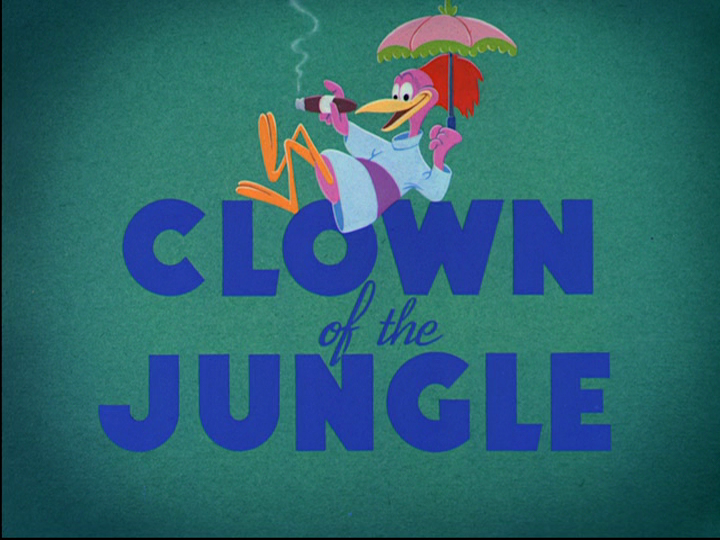
June 20, 1947 – The Donald Duck Short Film Clown of the Jungle is Released to Theaters

vlcsnap-2014-06-20-21h08m56s162

“Here in a jungle paradise, nature’s little songsters blend in unforgettable harmonies.”

On June 20, 1947, the Donald Duck short film Clown of the Jungle was released to theaters. It features the Aracuan bird, a crazy bird that was first featured in the film The Three Caballeros, tormenting Donald much as he does in this short. The Aracuan makes another appearance in the film Melody Time. Clown of the Jungle was directed by Jack Hannah, with story by Ray Patin.

The audience is introduced to the jungle paradise of the South Americas, where the bliss is interrupted by the hyperactive Aracuan bird, known as the “slap-happy clown of the jungle.” The narrator then notices a strange sight in the jungle, and introduces Donald as a member of the Bird Lovers Photographic Expedition. Donald steps out of his tent to take pictures of birds, but the birds seem determined not to be photographed. Donald finally spies a sleeping stork and attempts to take a good picture, only to have the Aracuan step into the shot. Donald tries to send the Aracuan away, but the bird responds in a melodramatic fashion, acting as though it will commit suicide. The Aracuan is amused by Donald’s reassuring handshake, and starts “shaking hands” with everything he can get his hands on.

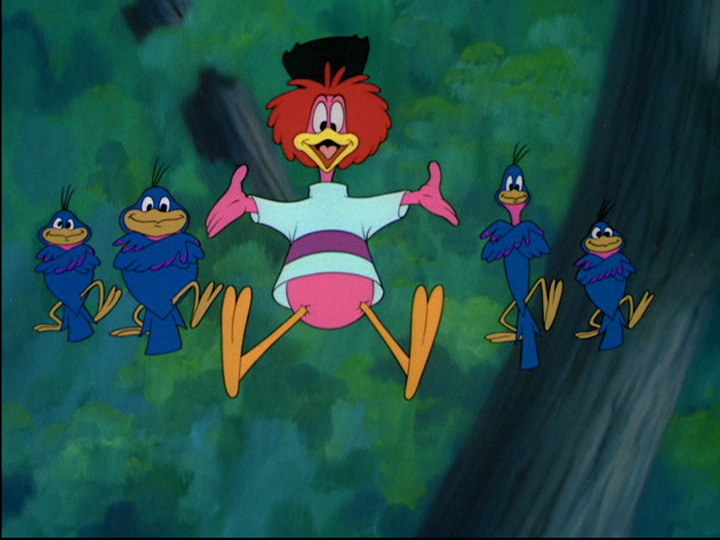
The Aracuan interrupts the hummingbirds song with a Russian-style dance

The Aracuan interrupts the hummingbirds song with a Russian-style dance

Donald, annoyed at the behavior, regains his enthusiasm for his expedition when he spots some hummingbirds. When he goes to take the shot, however, the Aracuan interrupts with a Russian dance. When Donald tries to attack the Aracuan, the Aracuan fights back, and Donald chases after the bird in a rage. Donald continues to be tricked by the comical Aracuan, including the Aracuan setting up a fake bird only to have Donald smacked with a hammer and blasted by a cigar. In the end, Donald sets up a machine gun and shoots the Aracuan, but is dismayed to find that he just destroyed his own tent, leaving the Aracuan unharmed. Donald then goes completely crazy, acting just like the Aracuan.