RSS Feed

Tag Archives: 1940s

August 26

August 26, 1949 – The Goofy Short Film Tennis Racquet is Released to Theaters

“Well, good afternoon, ladies and gentlemen. This is your sportscaster bringing today’s match to you [through] the courtesy of the BBB and BB Ball Company, which we will see in use today on this magnificently kept court, whose grassy lawn lies outspread before my very eyes.”

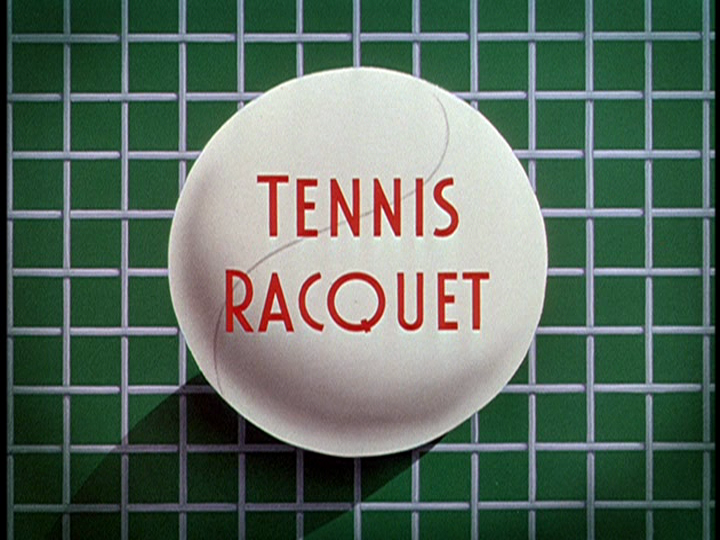
On August 26, 1949, the Goofy short film Tennis Racquet was released to theaters. It was directed by Jack Kinney, with the story by Dick Kinney.

The sportscaster begins his broadcast before the tennis match starts, as the court is being prepared for the match. As he comments on how many people are waiting to watch the match, the camera pans to the road leading to the tennis club, which is completely packed with cars. Unfortunately for the tennis club, however, everyone seems to want to go to the nearby flower show instead. We see audience members crowding into their seats, but only in one small section of the bleachers in front of the sportscaster’s booth.

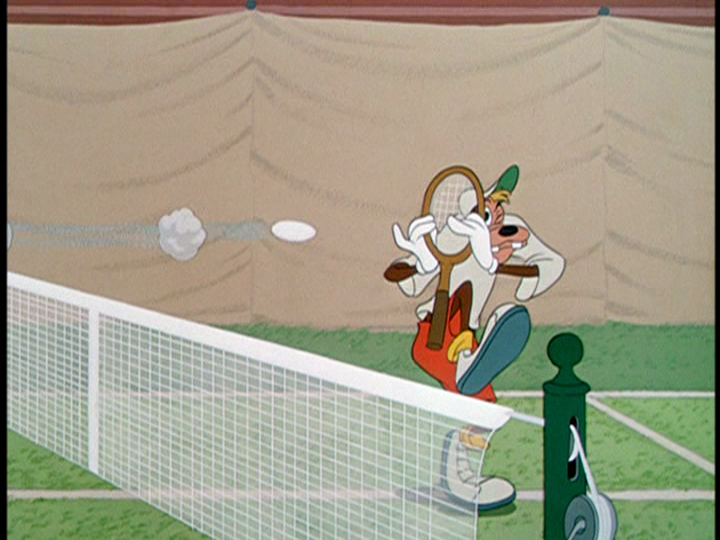
One of the competitors, Little Joe, uses his tactic of protecting himself to play the game

The contestants Little Joe and Big Ben come out to the field, and when the match starts, the sportscaster goes crazy with the descriptions, while the crowd’s heads follow the ball. The two have different styles of playing the game, the sportscaster notes, with Big Ben delivering hard and fast serves, while Little Joe tries to avoid getting hit by the ball. Little Joe wins the first game, and Big Ben wins the second. After a bit, the crowd cheers, blocking the sportscaster’s view of the game, and he has to ask a spectator for the score. While the two competitors play, a gardener continues to take care of the court, planting trees and spreading out grass seed.

The game’s pace quickens, so the sportscaster decides it’s time to view it in slow motion, with many comical side effects. Moving it back to real time, the game really heats up between the two, until the crowd cheers. The sportscaster is all ready to crown the champ, when he realizes he doesn’t know who the champ is, and has to ask the spectator again. Big Ben is the winner of the match, and Little Joe does not take this news well; however, the short ends with the two shaking hands, while the gardener hauls off the trophy and the contestants in his wheelbarrow.

August 24

August 24, 1945 – The Pluto Short Film The Legend of Coyote Rock is Released to Theaters

“Now this here hombre had one weakness: lamb chop[s].”

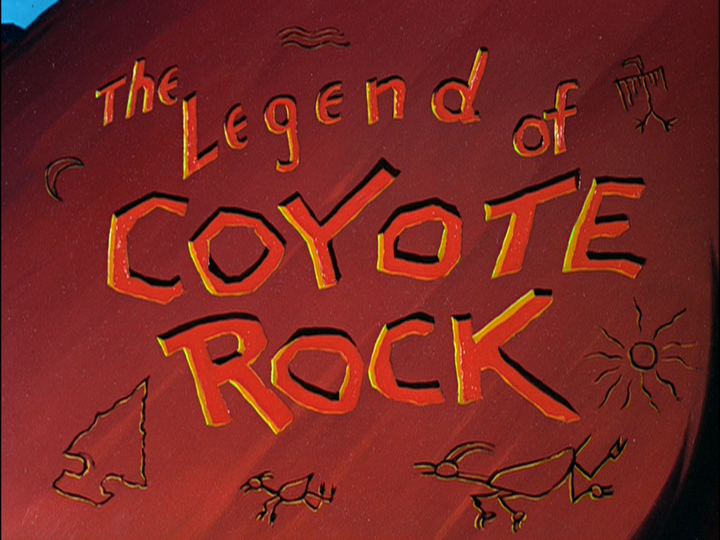
On August 24, 1945, the Pluto short film The Legend of Coyote Rock was released to theaters. It was directed by Charles Nichols, with the story by Eric Gurney.

The short is set in the Old West, with a narrator introducing the legends of the rocks in the area, including a rock shaped like a coyote. The coyote in question was one named Bent Tail, who had a voice that “would turn an opera star green with envy.” Bent Tail’s one weakness, however, was lamp chops. He spies a farm with sheep guarded by none other than Pluto, who tends to fall asleep as he counts the sheep. One little black lamb likes to cause mischief, but Pluto warns him that there’s a coyote out there who loves to eat little lambs, and scares him back into the pen.

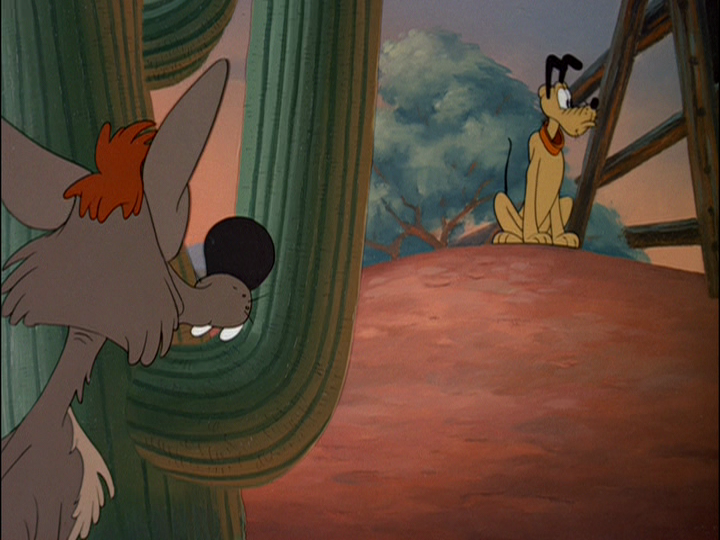
Bent Tail sneaks up on Pluto, tricking him into leaving his post, leaving the sheep vulnerable to attack

The coyote travels around the desert, hiding behind cacti and various other desert vegetation so he can get close to the sheep. He sneaks up on Pluto, who tries to chase the coyote away, although the coyote has many tricks up sleeve to fool the dog. Pluto is chased out into the desert, and when he realizes he’s left the lambs alone with the coyote, he hightails it back as fast as he can. Unfortunately, Bent Tail is already there, and tricks the lambs out of the pen by calling them out with a “baa” noise. He sends them traveling all the way to his hideout, but the black lamb is able to get free.

Pluto intercepts the coyote chasing the little black lamb, and chases the coyote all over the desert, causing many of the rock formations to collapse, and create Coyote Rock. Pluto falls from a perch and lands on the rock guarding Bent Tail’s hideout, freeing the lambs and they all run back to the pen at the farm, safe and sound once more.

August 15

August 15, 1946 – The 8th Animated Feature, Make Mine Music, is Released to Theaters
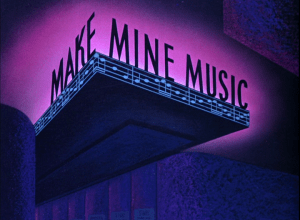
“Make mine music and my heart will sing.”

 On August 15, 1946, Disney’s eighth animated feature, Make Mine Music, was released to theaters. This was the first postwar package film released by Disney, as financial problems prevented the studio from creating a full animated feature. The talents in the film include Nelson Eddy, Dinah Shore, Benny Goodman, the Andrews Sisters, Jerry Colonna, Andy Russell, Sterling Holloway, Riabouchinska and Lichine, Pied Pipers, the King’s Men, and the Ken Darby Chorus. The music director was Charles Wolcott, with songs written by Ray Gilbert, Eliot Daniel, Allie Wrubel, and Bobby Worth. The production supervisor was Joe Grant, with sequence directors Jack Kinney, Clyde Geronimi, Hamilton Luske, Robert Cormack, and Joshua Meador. Many segments have been shown as separate entities on television and as short films before theatrical releases; the film has never been released on home video in its entirety.

The first segment is The Martins and the Coys, featuring the popular radio vocal group The King’s Men. The segment, a play on the story of the Hatfields and the McCoys where two members of the rival families meet and fall in love, was cut from the video release due to the gunplay aspect of the segment. It has yet to be released on home video.
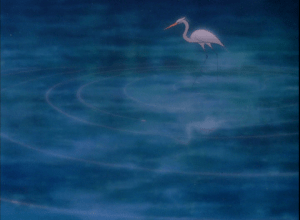
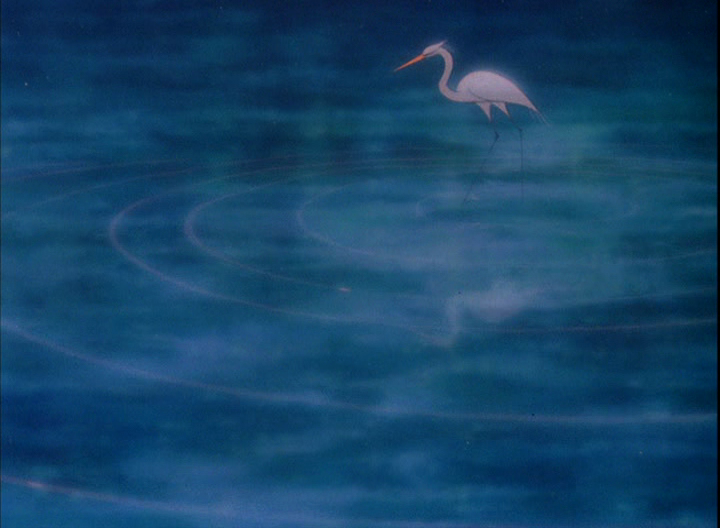
The crane in the bayou from the segment Blue Bayou

The next segment is entitled Blue Bayou, sung by the Ken Darby Chorus. It is a slow, artistic piece about a moonlit night in the bayou, and a majestic crane that explores before it flies off into the night with another crane. The artwork was originally meant for Fantasia, to be used with Claude Debussy’s “Clair de Lune.”

Blue Bayou is followed by a jazz interlude called All the Cats Join In, performed by Benny Goodman and his orchestra. A sketchbook opens on a drafting table, and a pencil springs to life and draws a jukebox and a cat, then erases the cat, and draws a teenaged boy. The boy calls his friends to meet him down at the jukebox at the malt shop. Everyone races down to dance at the malt shop, while the pencil continues to draw the story out for the audience.
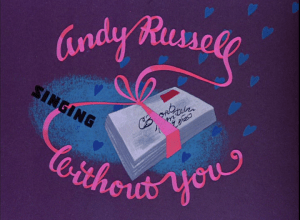
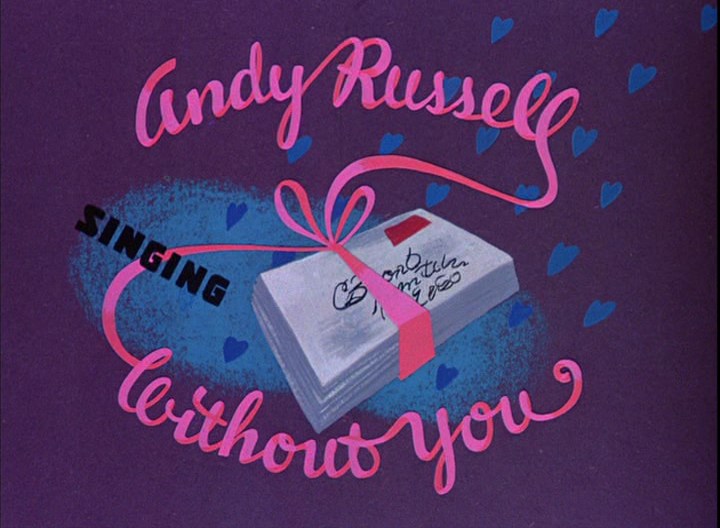
A ballad in blue follows, with Andy Russell singing Without You. The rain falls outside a window in a dark room, which lightens enough for the audience to see a love letter on a nearby desk. The focus then goes back to the window to show a rather gloomy willow tree at the side of a river. Different scenes appear on the screen to match the lyrics of the scene, including church windows and a starry night. The segment ends back at the window, showing the room once again in darkness, reflecting a lone star in the sky.

Jerry Colonna entertains the audience with the next segment, a reading of the poem Casey at the Bat. Every member of the town of Mudville is heading to the ballpark to see Casey, “the pride of them all.” The game doesn’t look so good for Mudville, as they’re losing 4 to 2. Two players manage to hit the ball when Casey comes up to bat. Casey’s a show-off, always flirting with the ladies, and cockily steps up to the plate. The tension is high in the stadium as Casey ignores two pitches and gets two strikes. Everyone watches carefully as Casey gets ready to hit the ball, but the short ends with the famous line, “…but there is no joy in Mudville – Mighty Casey has struck out,” and Casey comically crying in the rainy baseball stadium.

Dinah Shore sings for a “Ballade Ballet” entitled Two Silhouettes, performed by dancers Tania Riabouchinska and David Lichine. The dancers are seen only in silhouette in an animated world. The theme of the ballet is of a boy meeting and losing his love, only to find her again before the end.
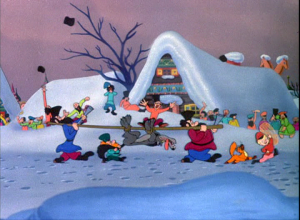
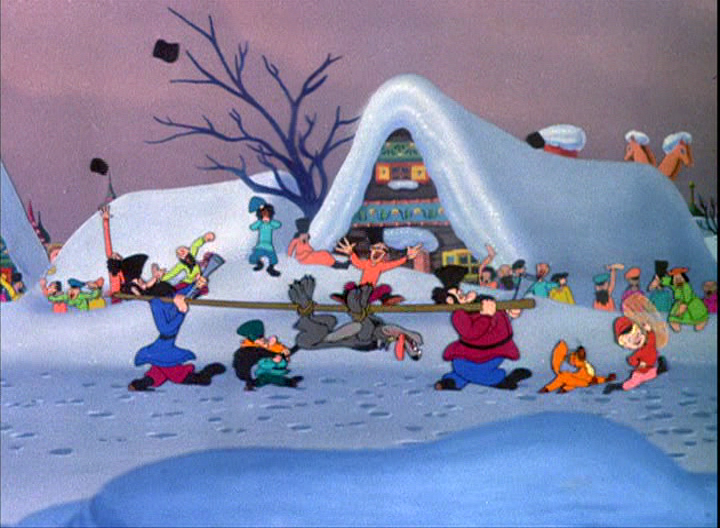
A majority of the cast of Peter and the Wolf, with the town in Russia celebrating the triumphant end

One of the more well-known segments in this film is the Sterling Holloway-narrated version of Sergei Prokofiev’s Peter and the Wolf. The story, with the characters “speaking” through corresponding musical instruments and themes, is about a young boy named Peter (string quartet), who meets with his friends Sascha the bird (flute), Sonia the duck (oboe), and Ivan the cat (clarinet) to hunt the wolf (French horns) that has been haunting the woods, against the wishes of Peter’s grandfather (bassoon). In this animated retelling of the 1936 composition, the ending has been changed to make it more child-friendly, although Peter and his friends still capture the wolf.

The next segment is entitled After You’re Gone, performed by the Benny Goodman Quartet. Animated musical instruments are seen goofing around in true animation style. This is more of an artistic musical fantasy, rather than an animated tale, as seen with the other segments. It serves as a musical interlude between one story segment and the next.
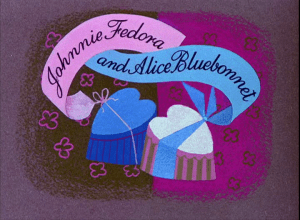
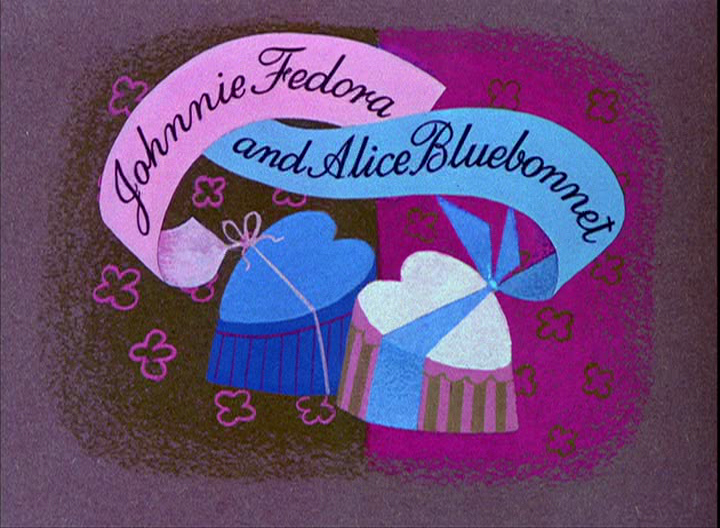
The Andrews Sisters perform the next segment, the love story of Johnny Fedora and Alice Bluebonnet. The two are hats that sit in the window of a department store, with it being love at first sight. One day, Alice is bought for $23.94, and the lovers are separated. Johnny is soon bought by another patron, and his mood improves, as he is able to look for Alice as he travels around the city of New York. The short ends with Johnny and Alice reuniting as hats for the ice-man’s horses.

The last segment of the film, known as “Opera Pathetique,” is The Whale Who Wanted to Sing At The Met, feaures Nelson Eddy, who performs as all the characters. The segment tells the tragic story of Willie the Whale, who dreams of signing at the Metropolitan Opera. The story of his singing makes front-page news. Impresario Tetti-Tatti declares that Willie must have swallowed an opera singer, and announces that he will go and save the singer. In the end, after an elaborate dream segment of Tetti-Tatti discovering Willie and making him a star, Tetti-Tatti harpoons Willie, killing him. However, Eddy reassures the audience that Willie is now performing in Heaven to a sold-out crowd.
August 10

August 10, 1945 – The Donald Duck Short Film Duck Pimples is Released to Theaters

“Are you Mr. D. Duck? I’ve been looking for you.”

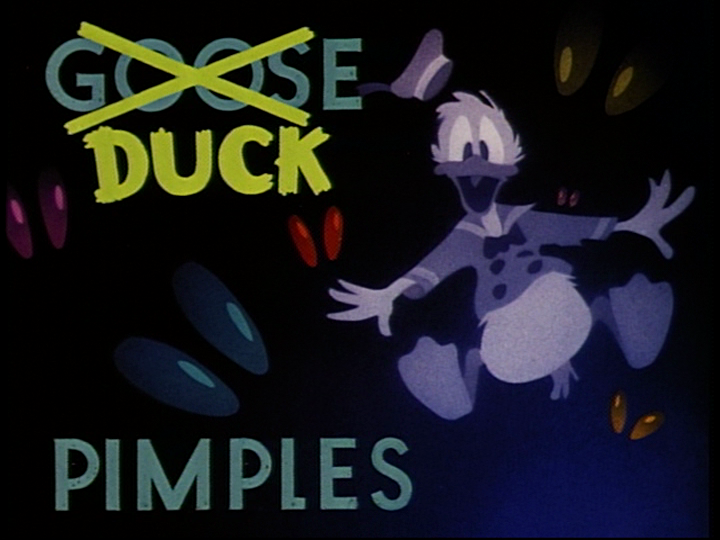
On August 10, 1945, the Donald Duck short film Duck Pimples was released to theaters. The short’s title is a play on the phrase “goose pimples,” with Donald being frightened the entire short. It was directed by Jack Kinney, with story by Virgil Partch and Dick Shaw. Donald Duck is voiced by Clarence Nash, Detective Hennessey is voiced by Billy Bletcher, and Colleen (the woman) is voiced by June Foray.

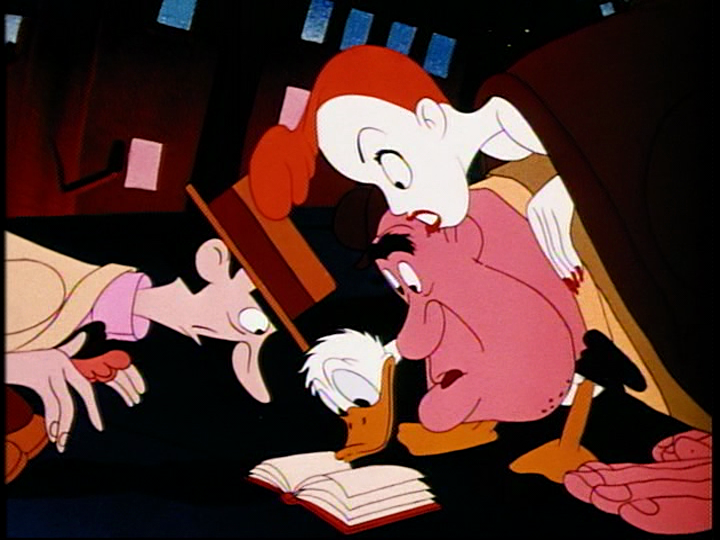
On a dark, stormy night, Donald is in his living room, listening to a murder mystery radio program. The program scares him so much that he tries to change the channel, but to no avail. Suddenly, Donald’s door opens, and a shady figure appears, saying he’s been looking for Donald. He opens his coat to reveal several books, letting Donald know that if he sells six more, he’ll be able to get a bicycle. The figure disappears like a ghost, leaving his books behind. Donald begins to read one, getting engrossed in the story. Then Donald suddenly finds himself in the story, being accused of being the thief.

The characters gather around the book, trying to see what comes next in the story

When the woman who lost her pearls goes missing, Donald is accused of kidnapping as well. The case keeps taking strange, comical turns, and Donald struggles to find a way out of his situation as characters pop in and out of the book. The cop keeps threatening Donald, demanding to know where the pearls and the woman are. Suddenly, just as the cop has Donald in a corner, the author appears from the pages of the book and announces Donald’s innocence. When the author reveals that the cop is really the thief, the cop pulls out two pistols and attempts to run, shooting Donald in the process (except the gun is fake, and Donald is just fine). Donald looks around his room, having returned to the present, and little voice tells him it was just his imagination. Donald ends the short with a nervous tick, unconvinced, as a string of pearls shines around his neck.

July 24

July 24, 1942 – The Donald Duck Short Film Donald’s Gold Mine is Released to Theaters

“Quack quack quack quack, quack quack quack quack, excavating for a mine…”

On July 24, 1942, the Donald Duck short film Donald’s Gold Mine was released to theaters. It was directed by Dick Lundy, and stars Clarence Nash as the voice of Donald.

The Lucky Duck Mine is hard at work, and Donald is inside, singing a song as he shovels rocks into his cart. His donkey decides to join in the singing (although he is very off-key), much to Donald’s annoyance, and he shoves the cart into the donkey to silence him. The donkey shoves the cart right back, sending a shovel full of rocks down Donald’s throat. Donald tries to trick the donkey into shoving all the rocks out of his stomach, but once he does, he gives the donkey a “Thanks, pal” before giving him another sharp kick.

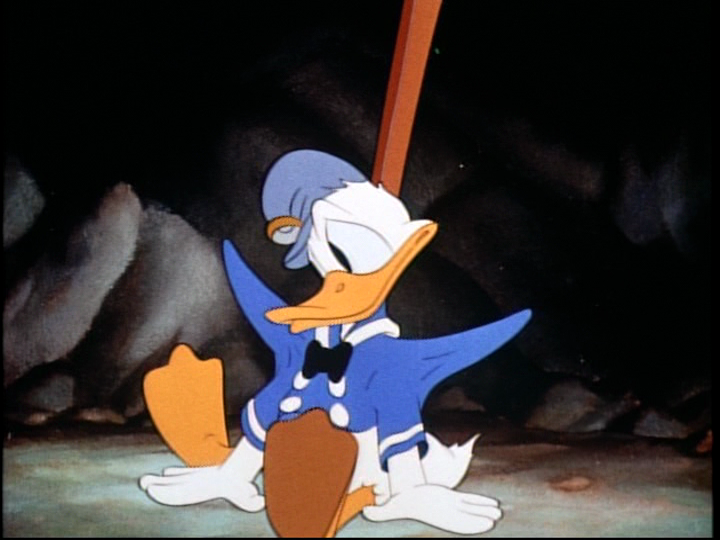
Donald finds the pickaxe stuck in his shirt after a slip from a boulder

Donald then takes a pickaxe and starts to mine, but slips on a boulder and ends up wearing the pickax, which is stuck beneath his shirt. He struggles to remove it, but to no avail, and the donkey continues to bray at the duck’s misfortune. He finally manages to remove to the pickax, which sticks into the ceiling and brings down a multitude of gold nuggets, which land in his cart.

Suddenly seeing dollar signs, Donald climbs into his cart and laughs maniacally at his good fortune, throwing pieces into the air while crying out that he’s rich. Unfortunately, the pieces spook the donkey, who takes off flying with Donald stuck in the cart; Donald and his cargo get dumped in the ore drop shaft when the donkey comes to a sudden stop. The donkey runs to see Donald getting caught in the ore drop process, narrowly missing being crushed over and over again. The donkey comes out to the finish, seeing Donald processed as a 24K gold block, and brays once again at the duck’s misfortune.

July 21

July 21, 1942 – The Animated Educational Film Food Will Win the War is Delivered to the Department of Agriculture

“In many lands, towns are ravaged – countrysides laid waste by ruthless Axis hordes. Farms, cattle, and crops have been destroyed. Ruin, destitution, hunger stalk the helpless victims of the cruel aggressor.”

On July 21, 1942, the Disney Studios delivered the animated educational film Food Will Win the War to the U.S. Department of Agriculture. At the time, the studios were producing many animated educational shorts, which still had the Disney touch in their animation and gags. These shorts, like this one, were also used to help build morale. The film was directed by Hamilton Luske, and is narrated by Fred Shields.

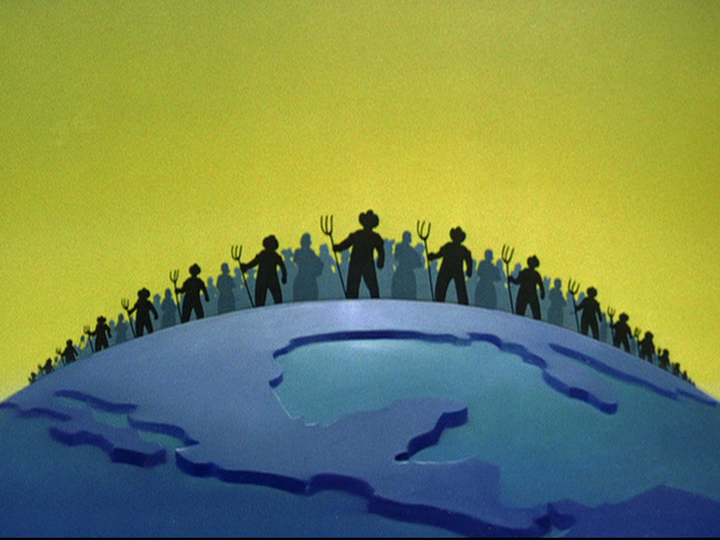
The film begins with the declaration that the world is aflame, as the members of the united nations are at war. Images cross the screen of war-torn towns, with a couple sitting, staring at what was once their home. However, a light of hope appears in the sky, called the Hope of American Agriculture. America is filled with abundant farmlands, and the animation shows that every single affected country can fit within the U.S., proving that there is enough abundant farmland and crops to help these crippled countries. There are 30 million farmers, with their wives and children, ready to help these countries in need, “twice as many as the Axis has soldiers,” the narrator states.

The farmers, their wives, and their children stand on the surface of the globe, ready to use their crops as weapons to help win the war

The farmers receive their own patriotic segment that portrays them as important soldiers in the battle, with tools (farm machinery), regiments of trucks, and divisions of corn pickers, all while working under the stress of war. One crop example is wheat; the narrator explains that the crop for the year is 52,800,000,000 pounds of wheat. “If all this wheat were made into flour,” he says, “there’d be enough to snow under the entire German Panzer Army.” The narrator moves on to the importance of corn, soybeans, potatoes, tomatoes, various vegetables and fruits, dairy, meat, and eggs, using humor for their examples. The farmers are then lauded for their important job, as a part of the war effort as much as any solider: Their food will help win the war.

July 19

July 19, 1948 – The Pluto Short Film The Purloined Pup is Released to Theaters

“Dog Stealer Takes Baby Pup! 10,000 Bones Ransom Asked”

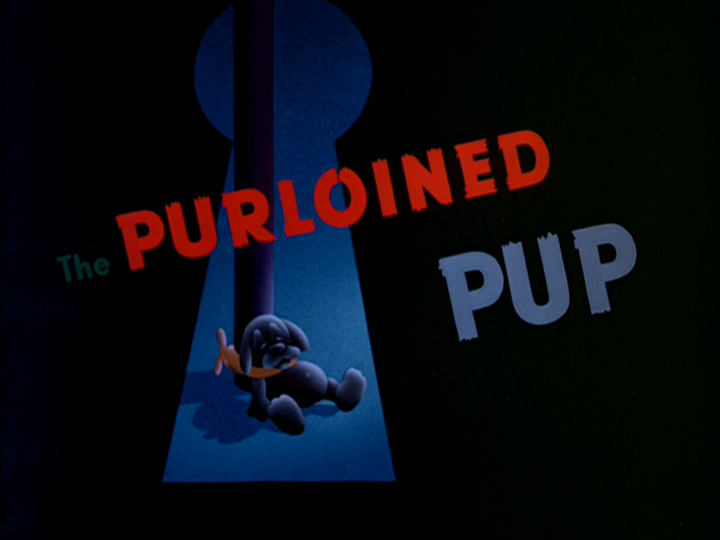
On July 19, 1948, the Pluto short film The Purloined Pup was released to theaters. In this short, Pluto’s main antagonist (and sometimes rival for a female’s affections), Butch, plays the part of a dognapper. The short was directed by Charles Nichols, with the story by Harry Reeves and Jesse Marsh.

A newspaper flashes across the screen, with the news that a puppy named Ronnie has been dognapped. The police suspect Butch, a paroled dognapper seen in the vicinity, and put rookie police dog Pluto on the case. Pluto sniffs out the trail, and comes across Ronnie’s collar. Thinking he’s close, he sneaks past some heavy pipes and spies Butch in front of an abandoned mansion, viciously chewing on a bone.

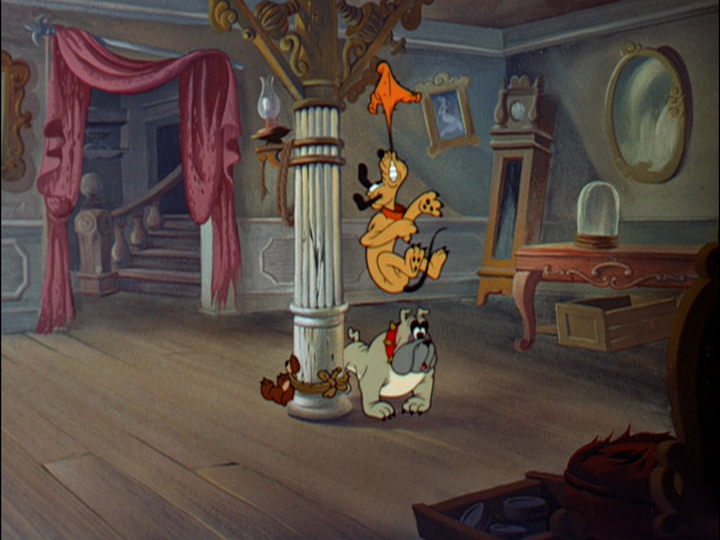
Several times, Pluto is able to avoid detection by Butch while trying to rescue Ronnie

Pluto comes up with a plan of action, buries his capture kit, and slips into the nearby moat to swim past Butch. He makes his way into the house just as Butch returns, and pretends to be a lion-skin rug to avoid detection. Butch enters a room and closes the door, and Pluto peeks through the keyhole to see Ronnie weeping and tied to a column. Butch threatens to hurt the puppy for the noise he’s making and walks out of the room, leaving the door open. Pluto sneaks in, but the sound of the door closing alerts Butch, who tries to pick up the stranger’s scent. Pluto, fortunately, is once again able to avoid detection.

As Butch leaves again, Pluto frees the puppy, who barks happily, giving away the rescue. Butch pursues the two into the pipes near the mansion, and ends up thinking that Pluto is in one of the pipes, when he is actually tormenting himself thanks to a U-shaped pipe. Butch then spies the puppy coming out of its hiding place, but Pluto is able to pull the pup away before Butch can hurt him. During a chase across the pipe-filled yard, Pluto grabs his capture kit and sets it up, trapping Butch in a straight-jacket, muzzle, and handcuffs. Ronnie, now safe, leads Butch by the rope to his muzzle to the police station where he happily turns the criminal in.

July 17

July 17, 1943 – The Film Victory Through Air Power is Released to Theaters

“Our country in the past has struggled through many storms of anguish, difficulty, and doubt. But we have always been saved by men of vision and courage, who opened our minds and showed us the way out of confusion.”

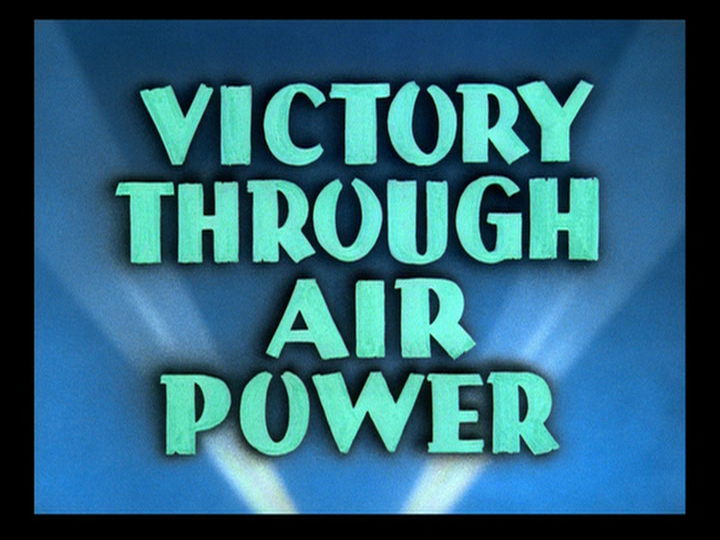
On July 17, 1943, the feature film Victory Through Air Power was released to theaters. The film was based on the book of the same name by Maj. Alexander P. de Seversky, who also served as the on-screen narrator of the film. De Seversky’s book explains how long-range air power could defeat the enemy during World War II. Walt Disney, like many who read the book, was impressed with the material, and it became one of his most ambitious projects. He used the film to educate and send a message to the public rather than to entertain, as at the time the film was released, an Allied victory was anything but certain. H.C. Potter was hired as the live-action director, and David Hand was the Animation Supervisor, with Art Baker as the animation sequence narrator. Critics did not like the film, and RKO, Disney’s film distributor, did not want to release it, so Disney released it through United Artists. The film was nominated for an Academy Award for Best Scoring of a Dramatic or Comedy Picture.

Although the film was not popular with critics, it did the job of presenting the idea of air power to win the war. “[T]he most important response to the movie came from Winston Churchill,” film critic Leonard Maltin explained. “When [Churchill] flew to Quebec for an Allied conference, and learned that President Roosevelt hadn’t seen the movie, he and Air Marshal Tedder prodded him until he ordered that a print be sent to him. H.C. Potter was told by Walt that it was only after Roosevelt saw Victory Through Air Power, that our country made the commitment to long-range bombing. And that, after all, was the reason that Walt committed to making this movie in the first place.”

The animated sequence shows the progression of air power, including the first trans-continental flight

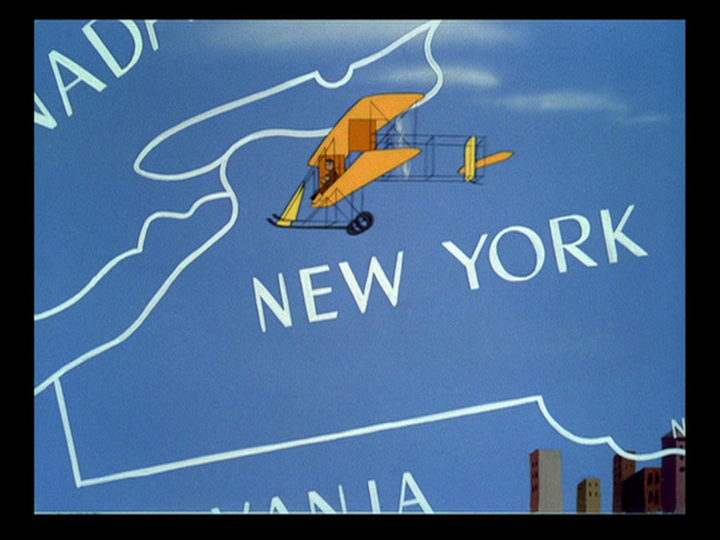
The film begins with newspaper clips from past years, beginning with 1919, where men have tried to convince the public about air warfare, and how defense depends on an air army. The film is then dedicated to Billy Mitchell, who was a pioneer in the fight for air power, and the brave airmen of the United States military. The audience then sees the history of flight in an animated sequence, beginning with Orville and Wilbur Wright, and leading into the first air corps, the first aircraft carrier, and the first trans-continental flight. When World War I began, aircraft was used only for observation service, until the installation of the machine gun turned the plane into a weapon. The bomber would soon develop from this idea.

1939 brings about a new war, and American aviation is ready to meet the challenge of the Axis powers. This then leads to the introduction of Maj. de Seversky and his book, Victory Through Air Power. De Seversky began his military education in Russia at age 10, graduating as a lieutenant, and seeking service in 1914. He became a pilot and was assigned flying duties, but was shot down on a night flying mission, resulting in the loss of his right leg at the tender age of 22. Nevertheless, de Seversky became a strong proponent of air power, and the leading ace of air warriors. In 1918, he came to the US and worked for the United States Army, becoming a major in the U.S. Army when he became a citizen in 1928.

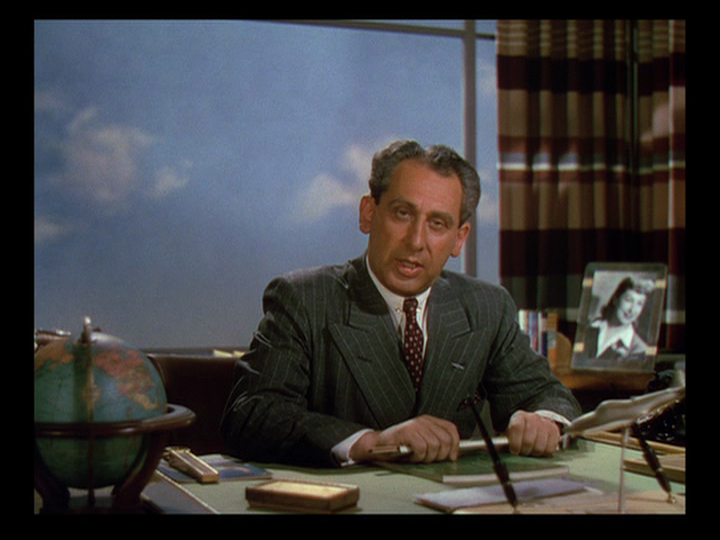
Maj. Alexander de Seversky, who explains to the audience why air power is an absolute necessity to win the war

De Seversky begins his speech to the audience, warning that it’s only a matter of time until the U.S. has its share of civilian casualties, thanks to the advances of air power by other countries. He also declares that everyone must understand the strategy of war. There were formerly two ways to destroy the enemy: one was to destroy the enemy’s entire army to grab their source of power, the other was to sink their navy and enforce a blockade. With the airplane, there is no safe place: the plane can attack quickly over the heads of the enemy forces. Those that could foresee the usefulness of air power were considered crazy and ignored. An example is then shown of how England was supposed to attack the Nazis via sea forces, and the French were to attack via the land. Hitler, however, came in with air power, which allowed him and the Nazi forces to take over France. “Only when it was too late,” de Seversky warns the public, “did the French realize that their whole plan of defense was futile.” The British thought they could stop the Nazis through a blockade, only to find their battleships destroyed by bombers. The Royal Air Force grew out of this tragedy, ready to attack Hitler’s air troops. “As long as a nation controls its own skies, it cannot be invaded,” de Seversky tells us as the moral of the British story.

The audience is then shown the first real battle between air power (Nazis) and sea power (British Navy) over the island of Crete. Crete became the first territory to be conquered completely through air power. This then leads to Pearl Harbor, and how American troops left themselves unprotected against the air power of the Japanese troops, because the American troops were instead prepared for traditional naval warfare. De Seversky explains that the Japanese were imitating the German blitzkrieg, and were able to capture most of the Pacific. American armed forces finally realized that no place on Earth was safe without gaining control of the skies above. The success of American victory through air power demanded two things: to produce a vast amount of weapons of endless variety, and to deliver this equipment to battlefronts all over the face of the Earth.

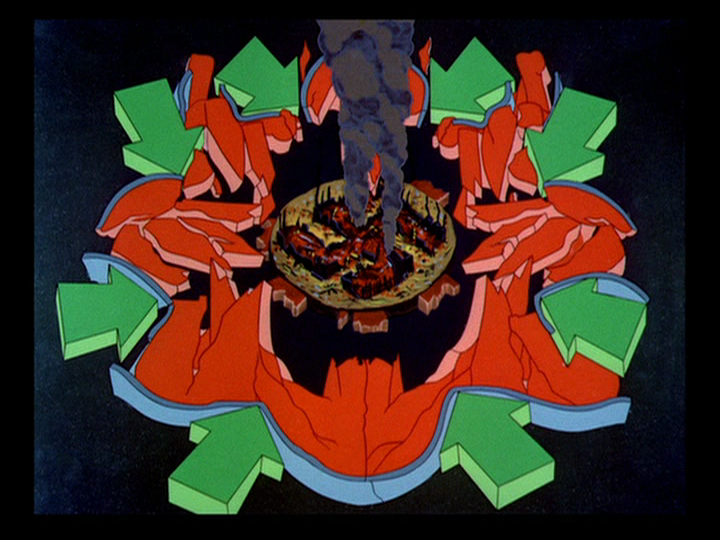
Animated sequences are used through the film to illustrate de Seversky’s points; this image shows how American air power can cut Hitler off at the source, allowing troops to invade

The audience is then introduced to another problem to consider: the transportation of these weapons. America is able to transport across the country with no problem, but gets caught in the slow speeds of shipping to overseas locations. Americans also have to contend with the German submarines. The audience is warned that if Americans fight only on the surface of the Earth, Hitler has all the advantage. Air power would give American forces an advantage and the ability to cut off Hitler’s power at the source. Success will also depend on supply lines, and where American air bases are located. The film ends with a patriotic look at how American forces can use air power and airmen’s skills to win the war. “America should not hesitate to place its destiny in the hands of [the airmen],” de Seversky explains, “for with the strategy of air power, they will make the enemy fight on our terms, against the weapons of our choosing, at our time, but on his soil.”

July 11

July 11, 1947 – The Donald Duck Short Film Donald’s Dilemma is Released to Theaters

“Donald Duck! You are the greatest singer in the world!”

On July 11, 1947, the Donald Duck short film Donald’s Dilemma was released to theaters. Surprisingly, although the title is Donald’s Dilemma, the short is really about the problems Daisy Duck faces when Donald is hit on the head by a flowerpot. The short was directed by Jack King, with the story by Roy Williams, and stars Clarence Nash as Donald Duck and Gloria Blondell as Daisy.

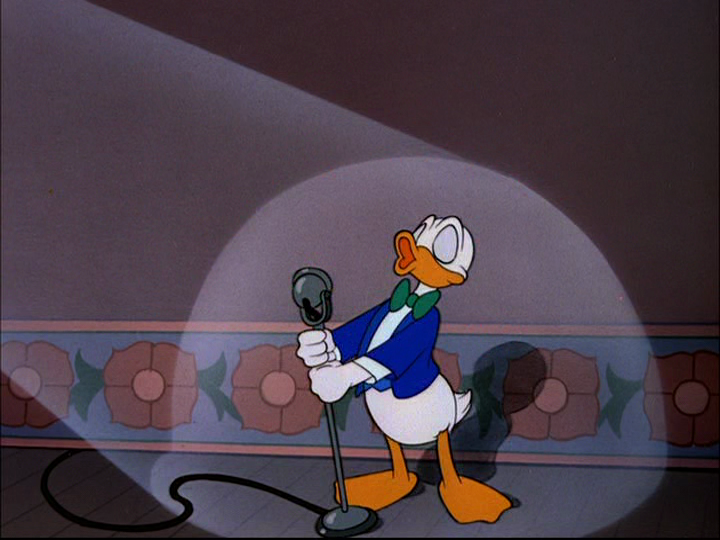
The short opens at the office of psychiatrist Dr. Sigmund Frump, P.D.Q., R.S.V.P., C.O.D., S.O.S., P.M., A.M., P.S., P.P.S., M.O. Sitting at his desk is Daisy Duck, holding a flower. She begins to explain about how she and Donald were taking a walk on a beautiful spring day, when a flowerpot fell from the 99th floor of a tall building and landed smack on Donald’s head. She tried to revive him, but Donald had somehow become someone else: the greatest singer in the world. He grabbed a broom and began to croon “When You Wish Upon a Star” like Frank Sinatra. Unfortunately, Donald has no recollection of Daisy.

Donald becomes a crooner with his rendition of “When You Wish Upon a Star” in the style of Frank Sinatra

As Daisy tried to get Donald’s attention, a theatrical agent snapped Donald up, leaving the flower that hit Donald on the head lying at Daisy’s feet, “a symbol of my lost love,” as she tells the doctor. She never saw him again after that day, except in advertisements, on labels, in society columns, and on marquees. Donald is then seen holding a concert, with the sounds of women swooning in the background. Daisy found that she could not sleep, eat, or even want to live anymore.

Hearing that Donald will sing at Radio City, Daisy rushed there, but it was too late – by the time she hit the box office, the tickets were all sold out. She waited at the stage door, but she was shut out by all the fans that rushed to meet him. Night after night, she waited by the stage door. Finally, she tried to get by the doorman by pleading, disguises, and by force, but she was still unable to see her sweetheart. Then, as luck would have it, she ran into him one night quite by chance. She pleaded with him, telling him how much she missed him, but Donald still didn’t recognize her. After he left her, she decided that maybe it was time to seek therapy to get over Donald.

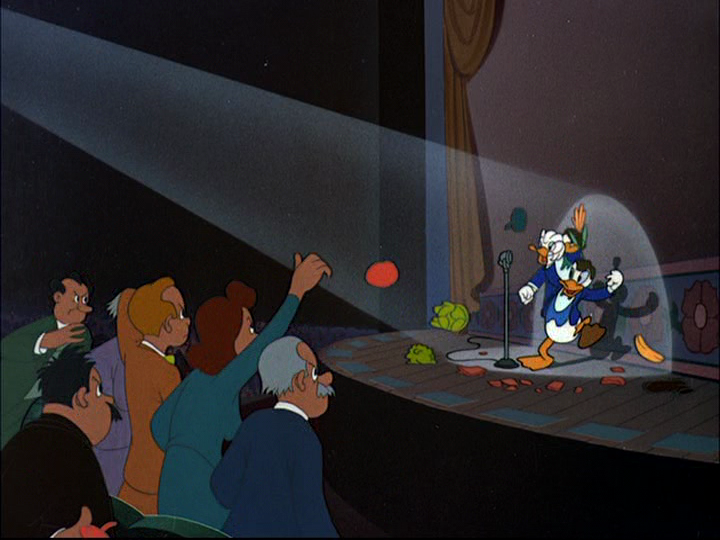
Donald immediately returns to his normal voice, and the crowd begins to throw rotten fruit and vegetables in their anger

The doctor tells her that the hit on the head undoubtedly caused the change, and he can help her, but she has a big decision to make: does she want the world to have Donald and his beautiful voice, or does she want him back again for herself? Without hesitation, Daisy responds that she wants him all to herself, getting rather violent in her haste. He then informs her how to get her Donald back. As she arrives at the stage door with the flower in a flowerpot, she climbs to the top of the theater and drops the flowerpot on his head. On impact, Donald loses his magical voice and is heckled by the audience. He is thrown outside right at Daisy’s feet, where he pulls her into his arms and asks his sweetheart where she’s been.

June 24

June 24, 1949 – The Pluto Short Film Bubble Bee is Released to Theaters

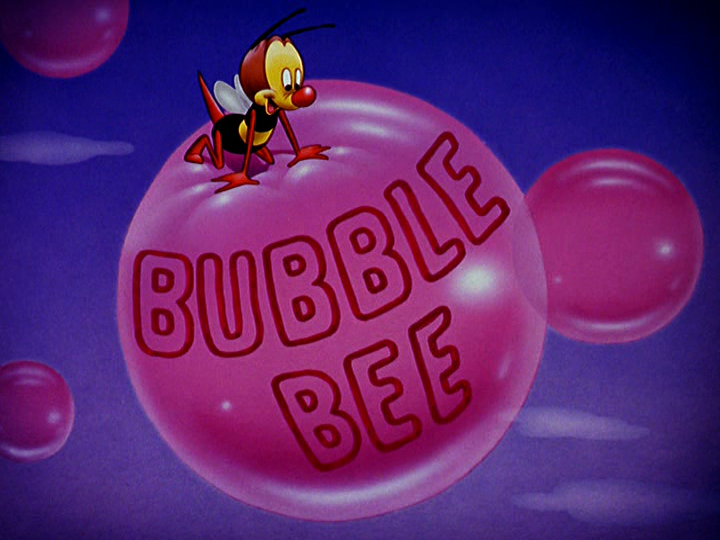
On June 24, 1949, the Pluto short film Bubble Bee was released to theaters. It was directed by Charles Nichols, with story by Milt Schaffer and Eric Gurney. The short features Spike the Bee, who usually tormented Donald Duck in various short films.

Pluto is playing with a ball in the park, when the ball lands in a patch of flowers. As Pluto leaps in after the ball, it bounces out and rolls down a path. Pluto looks around for his toy, and spies it on the top of a tall hedge. He leaps after it, only to find that he’s leapt on a bubble gum machine that looks like the design of his ball. Smelling the sweet scent of gum, Pluto decides he wants some. He looks around sneakily, then tries to shake some out of the machine.

Pluto sees Spike successfully rig the machine to retrieve a gumball

As he tries and fails with many methods to get the gum, Spike the Bee appears, buzzing around the machine, and Pluto backs away in trepidation. He watches as Spike easily rigs the machine to produce a gumball. As Spike flies away, he is weighed down by his heavy prize, and Pluto is able to follow him closely. Pluto watches as Spike throws the gumball in his beehive and flies away. With a devilish grin, Pluto tries to bat the gumball from the hive, only to knock the hive down. It breaks open, revealing about twenty pieces of gum hidden inside.

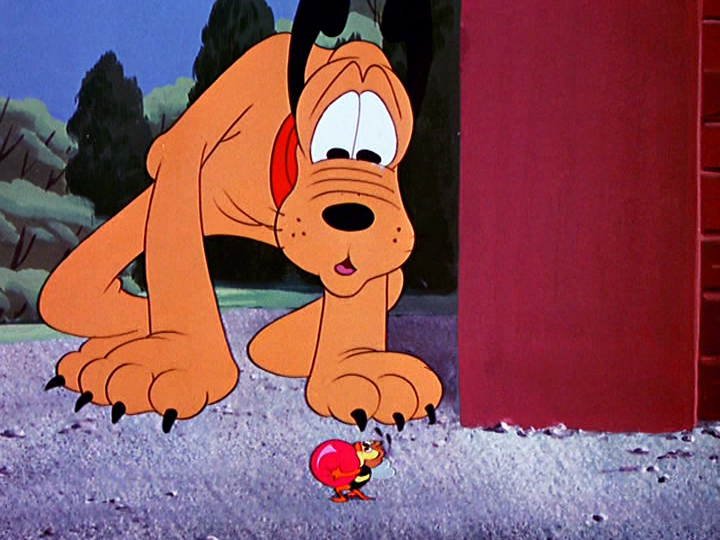
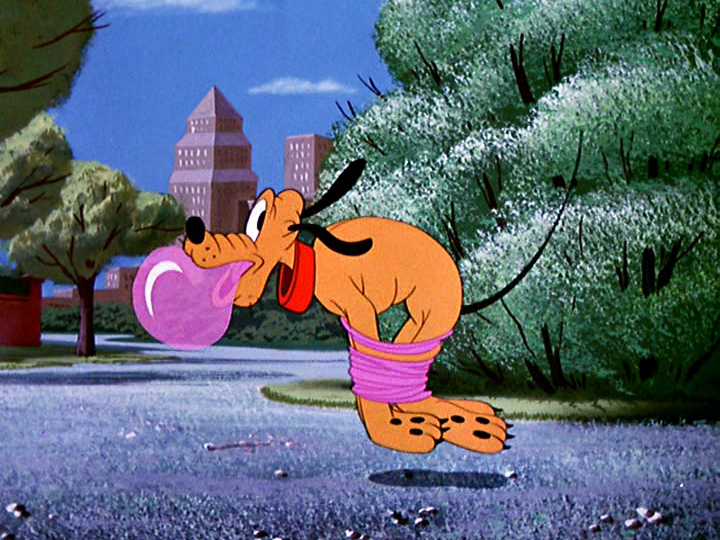
Pluto looks hungrily at his prize, and greedily laps up each piece and begins to chew them all at once. When he tries to open his mouth, the chewed gum keeps his mouth closed, and he is unable to swallow it. He continues to chew, and it rather surprised when a bubble comes out of his mouth. When he sneezes, bubbles to blow through his teeth; they all pop and cover his face with gum, but he is able to get the gum back in his mouth and keeps chewing. He then blows out a bubble, lets it fly in the air, and plays with it as a new toy.

Spike uses the gum that trapped him as a tool to trap Pluto, wrapping him up in strands of chewed gum

Meanwhile, Spike returns with another gumball, only to discover that his house is gone. He finds the ruins on the ground, as well as the footprints of the guilty party, and follows the tracks. He spies Pluto blowing bubbles, and flies after the dog in a rage, kicking him. As Pluto tries to bark, he ends up blowing another bubble, trapping Spike in the gum. Pluto lets the bubble go free, then pops it, watching in amusement as the bee is helpless in midair. The gum lands on Pluto’s nose, and Spike uses it as a tool to attack the dog, wrapping the dog’s legs in chewed gum. Spike continues chasing Pluto, and Pluto ends up accidentally swallowing the bug, who is trapped in another gum bubble. Exhausted from their chase, Spike finally gets his in the end, stinging Pluto and sending him yelping from the park.