RSS Feed

Tag Archives: 1930s

April 15

April 15, 1938 – The Donald Duck Short Film Donald’s Nephews is Released to Theaters
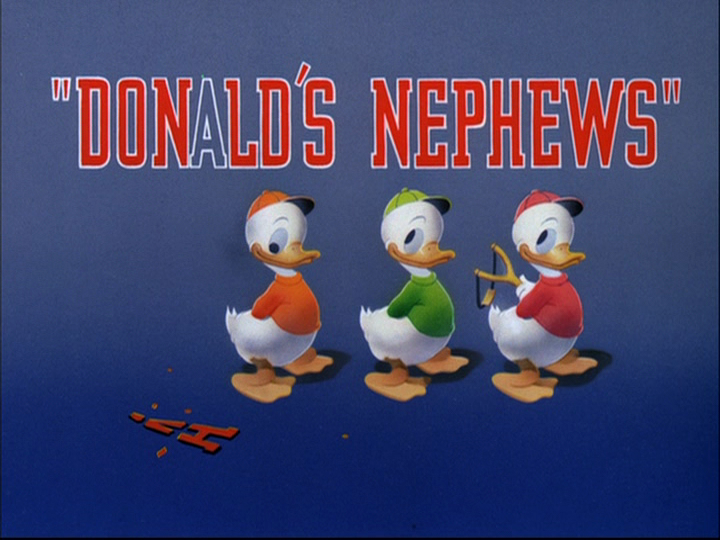
vlcsnap-2013-04-14-21h04m29s7

“Dear Brother, I am sending your angel nephews to visit you.”

On April 15, 1938, the Donald Duck short film Donald’s Nephews was released to theaters. This short marks the first on screen performance of Huey, Dewey, and Louie, sent to Donald by his sister Dumbella. The trio were created by Ted Osborne and Al Taliaferro, with their first appearance in a newspaper comic strip on October 17, 1937. The short was directed by Jack King.

Donald reads the message from his sister that his nephews are visiting, with his sister “misinforming” him that they are three angels. The moment they arrive, however, they cause nothing but trouble, from sending Donald flying into a wall and riding their tricycles all over the house in a game of tricycle polo. Through their efforts of destroying the house, Donald comes across a book called Modern Child Training, and decides to use the lessons inside to tame his nephews. The first exercise is that music will tame them, and he goes over to his piano to play. The nephews pick up some other instruments and begin to play “Pop Goes the Weasel” along with Donald, but the joy is short lived, as they use the instruments to harass Donald further.
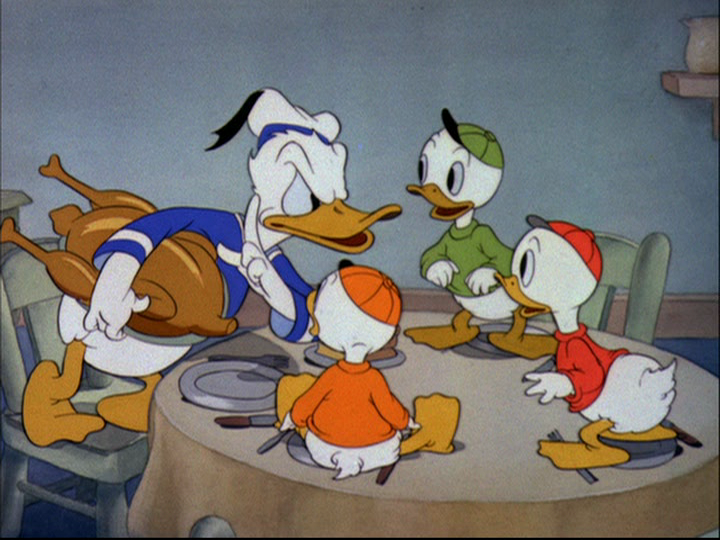
Donald attempts to regain control over his nephews at mealtime

Donald attempts to regain control over his nephews at mealtime

The book advises Donald to never lose his temper, much to their confusion. When Donald goes back to the piano, they continue to play their pranks on their uncle. He reads another lesson in the book that if the kids are quarreling, they must be hungry, and has them sit down for a meal. As he tries to say grace, the three nephews try to steal the food, with Donald getting more and more agitated. The book tells him that “if all else fails, arouse their sympathy.” Donald decides to do just that, and the nephews are alarmed to see their uncle cry. They apologize, and promise to be good boys, although they play another prank on him, replacing the filling of a pie with hot mustard. Donald cries out for water after eating the mustard pie, and the trio delights in soaking him in water and using the fire extinguisher before leaving his house. Dazed, Donald looks down at the book, with the page reading, “After all, little children are only angels without wings.” Donald throws a tantrum and rips the book into pieces.
April 7

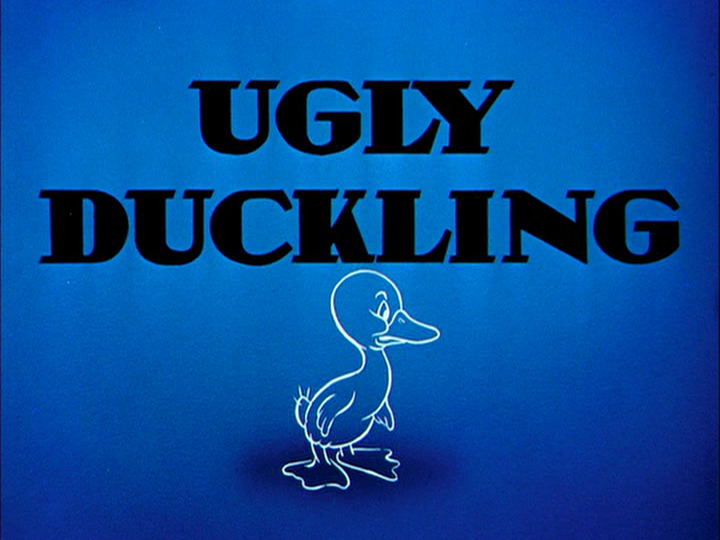
April 7, 1939 – The Final Silly Symphony, The Ugly Duckling, is Released to Theaters

vlcsnap-2013-04-07-10h08m47s102

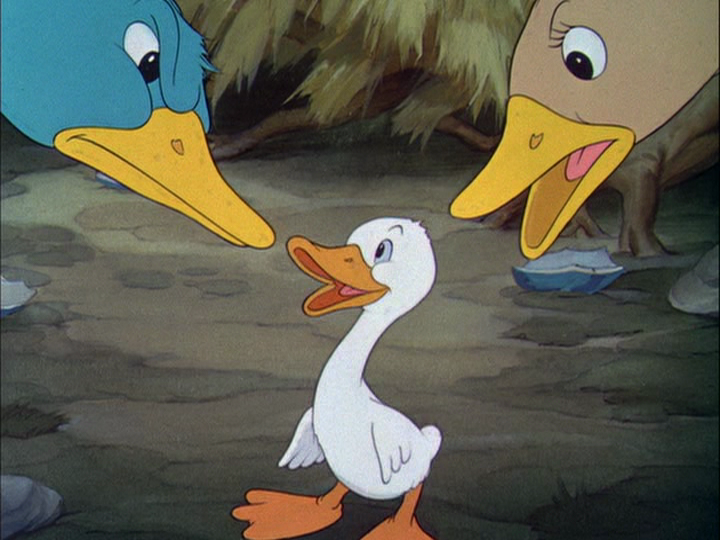
On April 7, 1939, the final Silly Symphony, The Ugly Duckling, was released to theaters. It is a color remake of the 1931 Silly Symphony, originally directed by Wilfred Jackson. Both shorts were based on the story by Hans Christian Andersen. The 1939 short film won an Academy Award for Best Cartoon at the 12th Academy Awards. It was directed by Jack Cutting.

A father duck is nervously pacing the ground as he waits for his wife’s eggs to hatch. He tries to console her as she sits in the nest, bored with waiting, while the father duck paces so much he creates a hole in the ground. The sound of sudden quacking alerts him, and he is delighted to see his offspring. He gathers the ducklings into his arms and kisses them excitedly, then kisses his wife. Much to their surprise, there’s another egg in the nest that is about to hatch, and when it does, the ducks are surprised to see a strange looking and sounding “duckling” emerge from the shell.

Father and mother duck look at their strange duckling with suspicion

Father and mother duck look at their strange duckling with suspicion

The father looks at his wife accusingly, and the two argue before the mother slaps the father. He leaves angrily, and the mother has her ducklings follow her into the pond. The ugly duckling follows the ducks, but the mother wants nothing to do with him. She viciously quacks at him, and he looks at his own reflection in the pond, confused as to why he looks so different and is so unwanted. He begins to cry and wanders away, trying to find where he belongs. He stumbles upon a cuckoo bird’s nest, but is immediately chased away by the mother cuckoo as he tries to eat their food.

He soon runs into a duck decoy in another pond, and takes to it as if it were his mother. Unfortunately, the duck decoy hits him on the head, making him believe that it also does not like him. He wanders away and cries loudly. His cries are soon overheard by a mother swan and her cygnets. The cygnets try to cheer him up, and he is amazed to see birds that look like himself. The mother then calls her babies over, and he is sad once again, thinking he needs to leave, but the mother swan takes him under her wing, welcoming him to his new family. The swan family sails away, and he soon spies the duckling family, who calls him over, but he swims away, perfectly content being a swan.

April 1

April 1, 1938 – The Silly Symphony Moth and the Flame is Released to Theaters

vlcsnap-2013-03-31-21h36m47s0

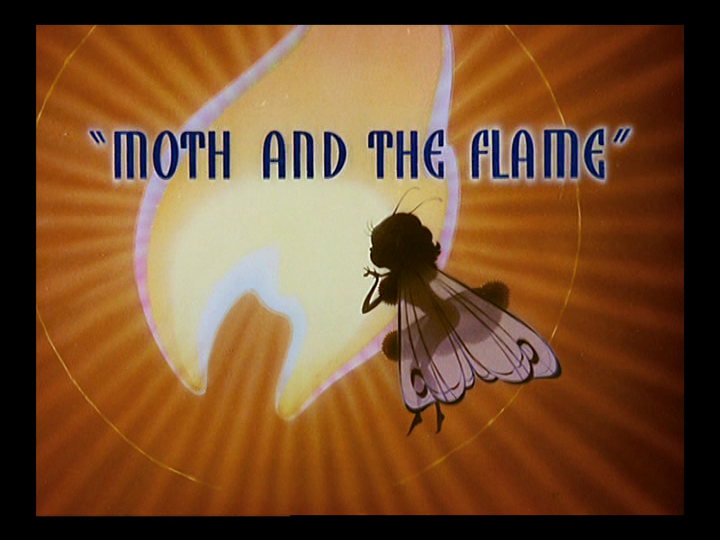
On April 1, 1938, the Silly Symphony Moth and the Flame was released to theaters. It was directed by Burt Gillett.

A lamp outside “Ye Olde Costume Shoppe” has attracted a swarm of moths who dance around the light. A pair lands on the windowsill and peer into the shop, thinking of the clothes inside as a massive feast. They find a way in and begin to eat, but unexpectedly attract the attention of the other moths, who quickly dive in and devour every piece of clothing in sight.

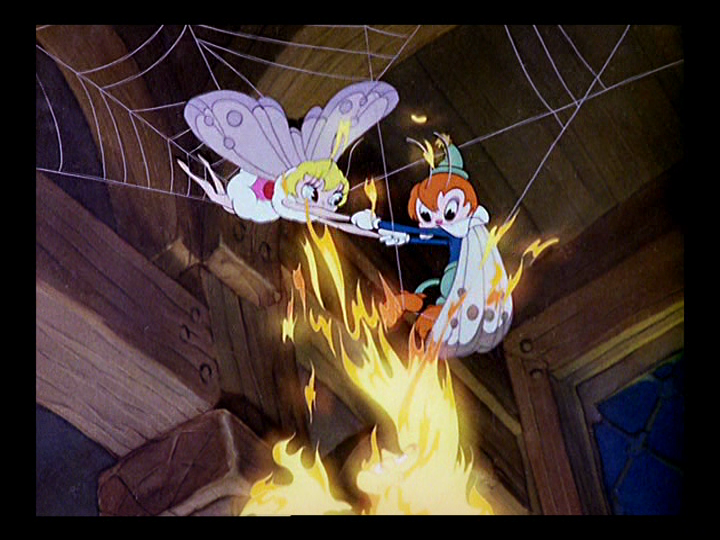
One young moth couple has a romantic date near a feathered hat, sharing a kiss. The girl tries to get the boy to chase her, and is rather put out when he decides to eat a bowler instead. Nearby, a flame on a candle spies the moth and laughs, then begins to dance, moving the girl moth’s shadow around and catching her attention. He draws her closer, and she dances dangerously close to the flame, burning the candle down to practically nothing. The flame jumps around, following her, and she puts him out with a fire insurance policy. However, he burns right through it and continues his pursuit, until she is stuck in a spider’s web.

The boy moth tries desperately to free his girlfriend, with the flame always close behind

The boy moth tries desperately to free his girlfriend, with the flame always close behind

The boy moth, seeing her in trouble, runs to her rescue, but is quickly chased away by the flame. He then uses a nearby glass of water to douse the flame, but is unsuccessful, then accidentally uses the highly flammable benzene, which gives the flame greater strength. Finally, he gathers the attention of all the other moths, who use a bagpipe filled with water to bring the flame down. Using other instruments in the shop, they work to quickly kill the flame, and the boy is able to free the girl. Together again, the two share a kiss.

March 13

March 13, 1937 – The Silly Symphony Woodland Café Premieres in Theaters

vlcsnap-2013-03-12-20h54m30s131

“All the cats get in the groove!”

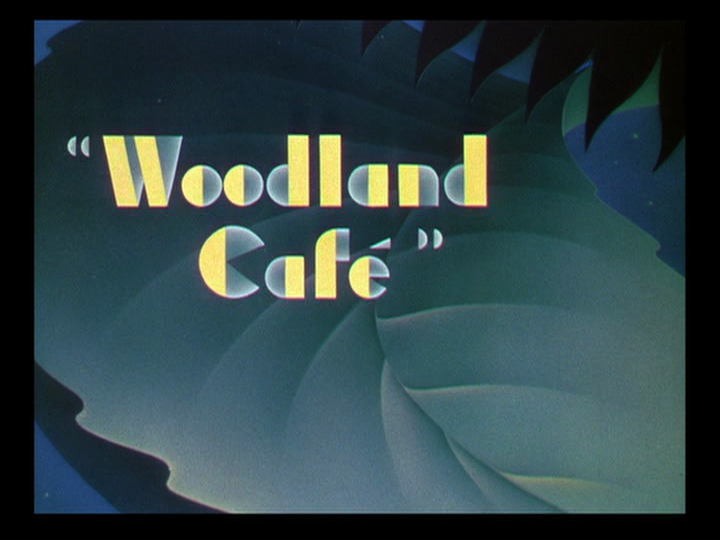
On March 13, 1937, the Silly Symphony Woodland Café premiered in theaters. The short features the song “Truckin’” by Fats Waller. The café scene was a caricature of those that one would find in Hollywood around that time period. The short was directed by Wilfred Jackson.

Fireflies light up the sign for the Woodland Café, the most popular nightclub in the woods for any kind of classy bug. The grasshoppers play in the band, and the bugs jitterbug on the dance floor. The main show begins, with a pretty female fly performing on a spider’s web, trying to charm a tough spider. The two dance the tango on the web, which ends with the spider chasing the fly all over the web, until she flies away, but returns to his arms, only to turn into another chase which ends with the spider tangled in his own web. The crowd cheers, and the music starts up again.

All the bugs join in as the music starts up again

All the bugs join in as the music starts up again

Fireflies gather on a blossom to create a mirrorball effect on the floor, and the jazz band begins to sing and entertain the crowd. Snails, worms, ladybugs, and all other sorts are going crazy with the beat, and the short ends with swinging jazz music.

February 24

February 24, 1939 – The Silly Symphony The Practical Pig is Released to Theaters

vlcsnap-2013-02-24-09h34m55s144

“He’s building another wolf machine – he must be crazy in the bean!”

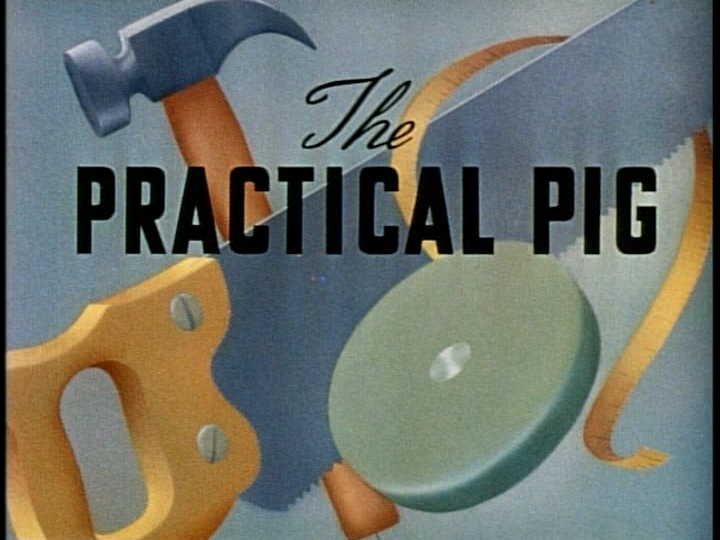
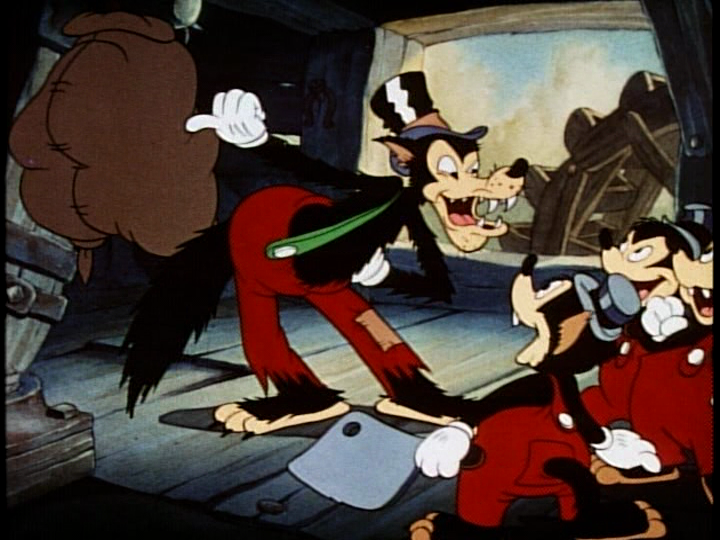
On February 24, 1939, the Silly Symphony short film The Practical Pig was released to theaters. It is the fourth and final “Three Little Pigs” short film, and the second to last Silly Symphony ever made. Like the other sequels, it would never reach the level of popularity that The Three Little Pigs found. It was directed by Dick Richard.

Fiddler and Fifer Pig approach Practical Pig’s home, hearing him hammer away at his new invention. The blueprints reveal that he’s working on a lie detector, and the two laugh at his toil. As they reveal their plans to go swimming, the Practical Pig warns the two not to go, as the Wolf is nearby. They dismiss his concerns and run to the local swimming hole. From the nearby reeds, the Wolf spies on the two, salivating. He disguises himself as a mermaid on a rock, luring the two close before scooping them up in a net.

The Wolf ties up the two pigs and keeps them in a sack in front of his children

The Wolf ties up the two pigs and keeps them in a sack in front of his children

He brings the two pigs home to his family, but his kids aren’t allowed to eat the two until the Wolf captures the third pig. The kids promise not to eat the pigs until their father comes back home, but it’s an empty promise, as they start to fix them up in a pot the moment he leaves. The Wolf disguises himself as a messenger and takes a message to the Practical Pig, hoping to capture the pig when he rushes out to save his brothers. Unfortunately for the Wolf, the Practical Pig captures the wolf and uses his lie detector machine, which washes the Wolf’s mouth with soap or spanks him when he lies. The two pigs escape the kids’ clutches when too much pepper is sprinkled on them, and they sneeze, freeing themselves from the unbaked pie dough. They sprint home as fast as they can. Meanwhile the Wolf finally admits where the pigs are, and the Practical Pig sends him flying away on a firecracker before he attempts to rescue his brothers. The two pigs fly through the door, and when the Practical Pig chastises them for ignoring him, they sit down unknowingly on the lie detector and claim they never went swimming. The lie detector goes off, and the two are spanked.

February 15

February 15, 1930 – The Silly Symphony Autumn is Released to Theaters

vlcsnap-2013-02-14-21h40m26s208

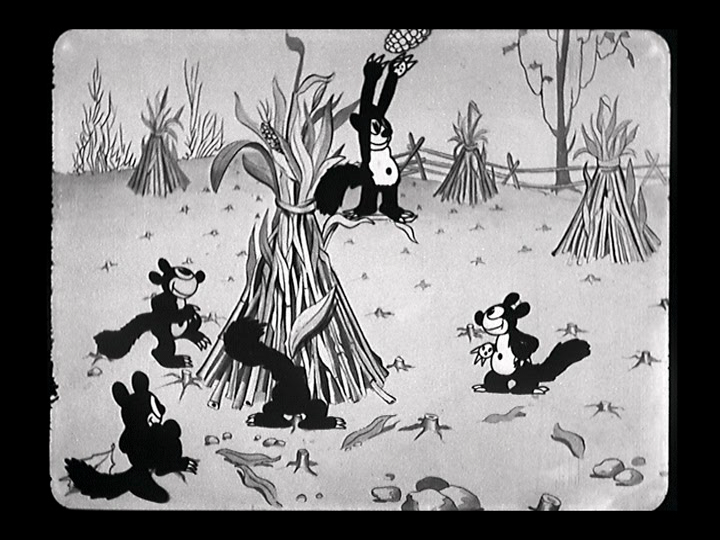
On February 15, 1930, the Silly Symphony Autumn was released to theaters. This short film was part of a series of Silly Symphonies about the seasons: Springtime released in 1929, Summer released in early 1930, and Winter released in late 1930. The short was directed by Ub Iwerks, with music by Carl Stalling.

The short opens with the leaves falling from the trees, and squirrels gathering nuts before the winter approaches. One squirrel is rather upset that he can’t shake the last nut from a tree, but when it does fall, it lands on his head and hits the ground. As he reaches to pick it up, the nut begins to dance around, surprising the squirrel. He slams his paw on it, cracking it open and revealing a caterpillar, who saunters away.

The squirrels continue to gather food, even from the corn nearby

The squirrels continue to gather food, even from the corn nearby

Other squirrels gather corn from the field nearby, one using his teeth to pull out individual kernels. As they continue to pack their food away in the trees, a crow sneaks in and steals some cobs of corn, with the other crows helping to pack their food away in the scarecrow. A skunk tries to pack away a pumpkin for the winter, only to end up smashing it after he tries to shove it into a tree. A porcupine wanders over to an apple tree and collects the fruit on his quills, while beavers build their dams nearby.

A row of ducks swims in the nearby lake, eating worms; one accidentally eats a shoelace and ends up with a boot on his head. As they swim, a cold gust of wind interrupts the scene, bringing about the beginning of winter. The ducks sound the alarm and fly off into the sky as they head for warmer weather, and the other animals take shelter from the coming cold.

February 3

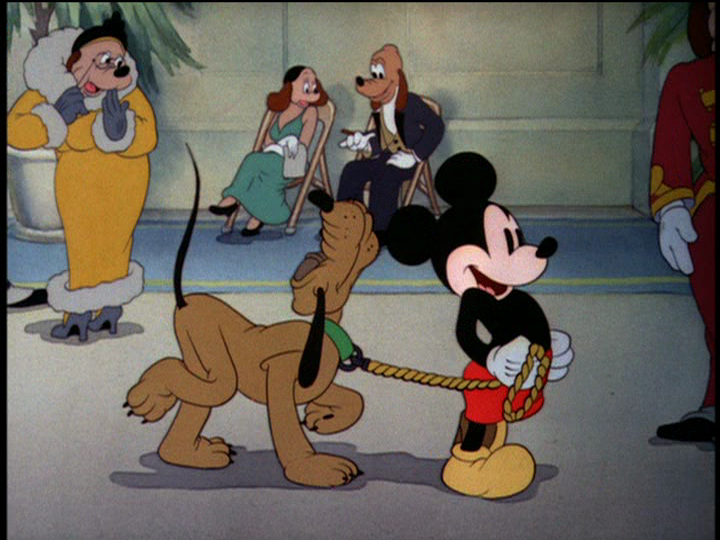
February 3, 1939 – The Mickey Mouse Short Film Society Dog Show is Released to Theaters

vlcsnap-2013-02-02-20h01m05s86

“Gosh, Pluto, we’re in society!!”

On February 3, 1939, the Mickey Mouse short film Society Dog Show was released to theaters. As was common in the Mickey Mouse shorts of this time, most of the focus is not on Mickey, but on his dog Pluto, although Pluto did have his own line of short films at this point. Fifi, Pluto’s love interest, also makes an appearance. The short was directed by Bill Roberts.

The big society dog show is in town, with much fanfare, and all of the most impressive people are arriving. Mickey shows up in a homemade cart, and the doorman looks down his nose at Mickey and Pluto as they enter the building. They reach their assigned spot – number 13 – then take a gander at all of the fancy beauty treatments the high society dogs are getting. Mickey reassures Pluto that they haven’t seen anything yet, and gets to work brushing Pluto down and shining his nose. Pluto sneezes after Mickey applies perfume, sending Mickey crashing into their supplies. As Mickey leaves to chase after a part of his kit, Pluto is distracted by the beautiful dog in the next stand, Fifi.

Mickey takes Pluto to the stand, with the two holding their heads high

Mickey takes Pluto to the stand, with the two holding their heads high

Mickey is soon called to bring Pluto to the judge’s stand, and tears Pluto away from Fifi, telling him that this is “no time for women.” The two head to the stand, where the judge is unimpressed with Pluto, even when Mickey points out that Pluto is a very fine dog, and very smart, too. However, every attempt the judge makes to study Pluto goes awry, and he calls Pluto a mutt, which angers the dog. Pluto chases the judge around the room, barking and snapping his teeth. As security runs to retrieve Pluto and Mickey, and tosses them onto the street, inside the final event is announced: trick dogs. Mickey then has the idea of making Pluto a trick skating dog and bringing him back inside. As the dogs pose for a photo, the flash powder catches on the decorations, setting them on fire. The dogs scamper away, but Fifi is trapped under a microphone and unable to leave.

Hearing Fifi’s terrified cries inside, Pluto rushes in, skates and all, and hurries to save her as the building begins to collapse. The two make it out all right, and Pluto is awarded a medal as Public Hero No. 1, and more important, wins the heart of Fifi.

January 8

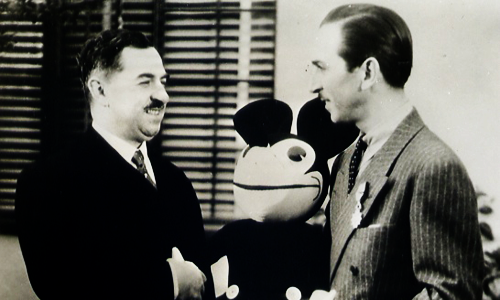
January 8, 1936 – Walt Disney is Awarded the Légion d’Honneur

Disney_LoH

“Honneur et Patrie”

On January 8, 1936, Walt Disney was awarded the Légion d’Honneur (Legion of Honor). The order, known fully as the National Order of the Legion of Honor, is the highest decoration in France, established by Napoleon Bonaparte on May 19, 1802. By 1936, the Disney Studios were firmly established in Hollywood, having had success with the Mickey Mouse short films and the Silly Symphonies. Jean Joseph Viala, the French Consul General, presented the medal to Disney at the Hyperion Studio, recognizing Disney for his work in shaping the animated art form, spreading good will around the world.

January 7

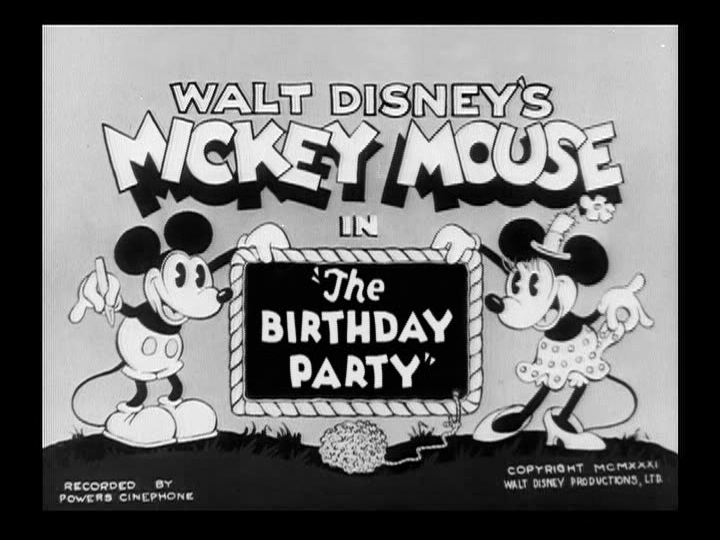
January 7, 1931 – The Mickey Mouse Short Film The Birthday Party is Released to Theaters

vlcsnap-2013-01-06-19h52m25s167

“Oh I’m fine. Heh, we’re both fine!”

On January 7, 1931, the Mickey Mouse short film The Birthday Party was released to theaters. This short is a good example of the characters that were considered an early version of the Disney gang, including Horace Horsecollar and Clarabelle Cow. The short was directed by Burt Gillett, and stars Walt Disney as Mickey Mouse and Marcellite Garner as Minnie Mouse.

Mickey strolls down the street with a straw hat and cane, whistling a merry tune. He arrives at the front porch of Minnie’s house and rings the doorbell; inside, Minnie and several of their friends are inside waiting to surprise him. They run and hide in the house, and Minnie answers the door, engaging in some flirtatious banter with Mickey. Once he steps inside, all of their friends emerge to shout out “surprise!” A cake is brought out and Mickey is asked to blow out the candles, only to blow the cake all over the chef.

After receiving a piano as his birthday gift, Mickey and Minnie play a duet for their party guests

After receiving a piano as his birthday gift, Mickey and Minnie play a duet for their party guests

Minnie calls Mickey over to a big package marked “Happy Birthday Mickey.” He opens it to reveal his own piano and stool. As it is set up right next to Minnie’s, the two begin to play a piano duet and sing along. A dance party begins, with everyone being merry, including the fish in the fishbowl. Mickey and Minnie take a break from piano to dance, much to the enjoyment of the other guests. Horace Horsecollar and Clarabelle Cow also dance for the crowd before Mickey begins to play a tune on a nearby xylophone. Minnie resumes the piano as Mickey plays another xylophone tune, with the xylophone acting of its own accord at one point, taking Mickey for a ride around the room. It bucks him, and as he hits the floor, a floorboard knocks a fishbowl down from its pedestal, landing on Mickey’s head.

January 2

January 2, 1937 – The Mickey Mouse Short Film The Worm Turns is Released to Theaters

vlcsnap-2012-12-31-14h41m00s30

“Hot dog! It works! It works!”

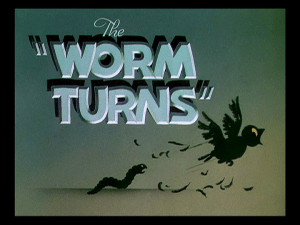
On January 2, 1937, the Mickey Mouse short film The Worm Turns was released to theaters. Although the short’s title card features a worm and a bird – creatures not featured in this short – the title itself is an old expression from Shakespeare’s Henry VI, Part 3, meaning that even the weakest of creatures will fight back if pushed too far. The short was directed by Ben Sharpsteen, and stars Walt Disney as Mickey, and Billy Bletcher as Pete.

Mickey, dressed like a mad scientist, is hard at work in his lab, creating a special concoction of “courage builder” from a book of ancient formulas. The potion sputters and spins around on the table, making various noises. Once the potion is mixed, Mickey pulls some away for a test. He spies a fly caught in a spider’s web, and applies the formula to the fly. Immediately, the fly is pure courage, beating up the spider and trapping the villain in his own web. Mickey is overjoyed at the results.

Dosed with Mickey's courage-builder potion, the mouse takes revenge on the cat

Dosed with Mickey’s courage-builder potion, the mouse takes revenge on the cat

In another room, Mickey hears the frightened squeaks of a mouse being chased by a cat, and decides that the mouse will be the next test subject. Once the mouse is sprayed with the formula, he roars like a lion and charges at the cat, sending the feline flying out the window and into Pluto’s milk bowl. Pluto charges the cat, with the cat hiding in fear in the tool shed, his nine lives deserting him. When Mickey sees the cat in trouble, he decides to give some of the courage-builder to the cat. As with the fly and the mouse, the cat is instantly more powerful, and torments his tormentor, sending Pluto flying through a brick wall.

Once away from the cat, Pluto sighs with relief, only to be immediately captured in Pete the Dogcatcher’s net. Pete attempts to throw Pluto in the back of the cart, but Pluto is able to evade him and accidentally free all the other dogs in the dogcatcher’s wagon. Pete then grabs his shotgun and chases after Pluto, screaming that he’ll murder the pup. Mickey spies this scene from his window and scrambles to his lab, grabbing the rest of the potion and spraying it on Pluto. Immediately, Pluto is filled with courage and gives Pete the scare of his life. Then Pluto sends Pete flying into the back of the dogcatcher’s wagon, and the wagon flies off the edge of a cliff. Satisfied, Pluto walks away triumphantly, stopping to smell a fire hydrant. Not quite done experimenting, Mickey sprays some formula on the hydrant, which then sprays water all over Pluto.