RSS Feed

Tag Archives: Silly Symphony

December 23

December 23, 1938 – The Silly Symphony Mother Goose Goes Hollywood is Released to Theaters
vlcsnap-2012-12-23-08h44m57s97

“Any resemblance of characters herein portrayed to persons living or dead, is purely coincidental.”

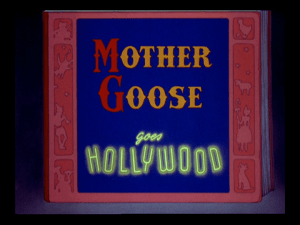
On December 23, 1938, the Silly Symphony Mother Goose Goes Hollywood was released to theaters. The film takes many of the popular actors of the time and caricatures them as characters in Mother Goose stories. The film was nominated for an Academy Award, but lost to Disney’s Ferdinand the Bull. The short was directed by Wilfred Jackson.

The short is presented in book form, going through the pages of a collection of Mother Goose’s stories. The first page opens the short with a parody of the MGM logo, using a goose rather than a lion. The page then flips to the first tale of Little Bo Peep, with Bo Peep being portrayed by Katherine Hepburn. She bemoans the loss of her sheep, then turns the page to reveal Old King Cole (Hugh Herbert) and his court jester, Ned Sparks. His fiddlers are called in, with the fiddlers being none other than the Marx Brothers. Herbert enjoys the show, but Sparks is obviously less than thrilled. Joe Penner, playing a servant, brings in a big bowl, asking if the king wants to buy a duck, with Donald Duck popping out of the bowl and repeating the question. When Herbert quickly closes the bowl, Donald throws a fit.
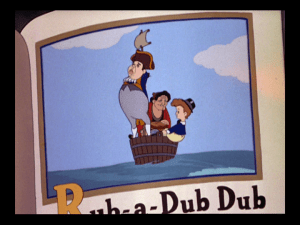
Charles Laughton, Spencer Tracy, and Freddie Bartholomew sit in a tub as they perform the nursery rhyme

Charles Laughton, Spencer Tracy, and Freddie Bartholomew sit in a tub as they perform the nursery rhyme

The page turns to the nursery rhyme, “Rub-a-Dub Dub,” with the three men played by Charles Laughton, Spencer Tracy, and Freddie Bartholomew. Bartholomew falls overboard, and Laughton remarks on this drolly. Tracy quickly retrieves Bartholomew, and Bartholomew gives his thanks before they are all alerted to Katherine Hepburn in a motorized contraption, still searching for her sheep. The three men try to hitch a ride, but are swept overboard as the page turns to Humpty Dumpty, played by W.C. Fields. He pulls down a nearby birds nest, thinking a tiny chickadee is inside, only to find that the nest is occupied by Charlie McCarthy. Charlie continues to taunt Fields, with Fields falling off the wall and into a mushroom, made to resemble an egg cup. The next story is Simple Simon, played by Stan Laurel, who is fishing in an old tin can, using a fish as bait to catch worms. The pieman, played by Oliver Hardy, is whistling nearby, and presents a a pie to Laurel, who refuses it to grab a different one. As Hardy tries the same trick Laurel performed, he ends up destroying all but one pie. When Laurel points this out, Hardy throws the pie at him, missing Laurel, but hitting Hepburn, still searching for her sheep.

See-Saw Margery Daw is the next tale, portrayed by Edward G. Robinson and Greta Garbo. Garbo asks to be alone, with Robinson replying that she asked for it. He steps away from the see-saw, letting Garbo crash to the ground as the page turns to Little Jack Horner. Eddie Cantor, playing Jack, beings singing “Sing a Song of Sixpence.” Several African-American stars begin to poke their heads out of the pie, including Cab Calloway, who leads the others in song as he asks Little Boy Blue (Wallace Beery) to blow his horn. Fats Waller and Stepin Fetchit remark about the boy, until Beery blows it until his face turns purple. The page then turns to reveal a pop-up of the old woman’s shoe, with every Hollwood star in attendance for a big old bash. A few more people show up, including Clark Gable, Edna May Oliver, ZaSu Pitts, Joan Blondell, and George Arliss. Fats Waller plays the piano, with some unnecessary help from the Marx Brothers. Fred Astaire begins to tap dance, inviting Stepin Fetchit to dance. The short ends with Katherine Hepburn still on the search.
December 14

December 14, 1935 – The Silly Symphony Broken Toys is Released to Theaters

vlcsnap-2012-12-13-21h38m34s241

“Boy, what a dump to end up in.”

On December 14, 1935, the Silly Symphony Broken Toys was released to theaters. The short features caricatures of famous actors of the time, including W.C. Fields, Ned Sparks, and Stepin Fetchit. The short was directed by Ben Sharpsteen.

A wheelbarrow rolls to a shallow area marked with a sign that says, “No Dumping.” A pile of trash, including an old sailor doll with a broken leg falls from the wheelbarrow. The sailor doll quickly reattaches his leg and looks around, seeing other broken-down and old toys in the dump. The toys are depressed that no one wants them, but the sailor doll tells them that he knows of a place where they’d all be welcome. Inspired by his words, the toys decide to fix themselves up, and finally leave the dump.

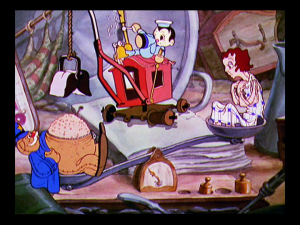
The sailor toy helps remove excess sawdust from one toy to help fill another

The sailor toy helps remove excess sawdust from one toy to help fill another

As the toys dance around helping each other make their repairs, they use the supplies around them to fix each other: a pencil replaces a toy soldier’s leg, and a stamp covers a hole in a rag doll. One little doll has no eyes, so all of the toys band together to give her a set of lovely blue eyes. The sailor, playing doctor, sews her eyes on, and she is thrilled that she is finally able to see. They all climb out of the dump, and the sailor leads them to a house in the nearby village that is the local orphanage, where they know they will be happy and loved.

November 5

November 5, 1937 – The Silly Symphony The Old Mill is Released to Theaters

On November 5, 1937, the Silly Symphony The Old Mill was released to theaters. The short film is notable for being the first film to use the multi-plane camera, which helped create a new three-dimensional look to the Disney films. The film won an Academy Award for Best Cartoon; Disney also took home a special Scientific and Technical Class II plaque for the design and application of the camera.

An old mill stands abandoned at the side of a pond at sunset, while all the animals around head to their nests for the day. A pair of bluebirds have made a nest in the old cogs, waiting for their eggs to hatch. Many animals have made the mill their home, from mice, to owls and bats. Out in the pond, frogs peek out from their lily pads and begin to croak, until they are interrupted by the sound of crickets. Fireflies also appear in the night, with one of the frogs anxious to eat one. As he does, his stomach glows from the firefly.

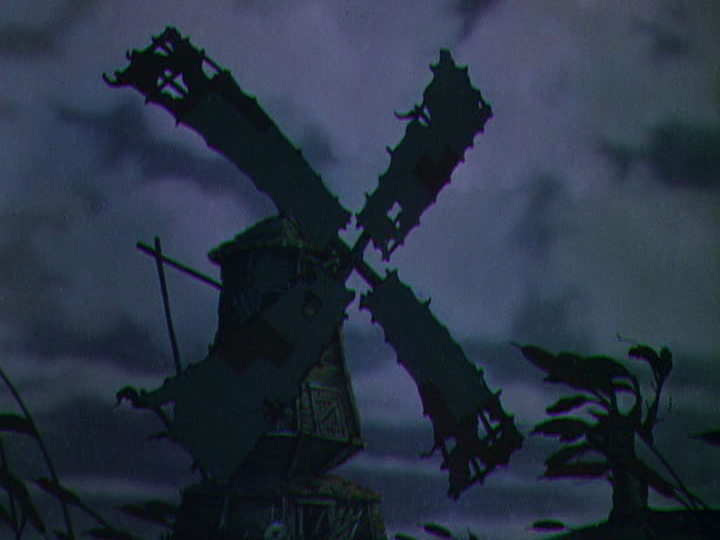
The windmill begins to spin again as storm clouds gather and the wind picks up ferociously

Suddenly, the wind begins to howl, and the windmill starts to turn. The bluebird who made her home in the cogs can’t bear to leave her eggs – luckily, the cog she is sitting under is missing, and she and the eggs ride through unharmed. The storm grows stronger, with the rain dripping through the leaky roof and open windows. A pair of doves sit together, weathering the storm on an open ledge. A group of mice shiver after the lightning strikes. Parts of the mill begin to fall apart. Without warning, the mill is struck by lightning, shifting it from its base.

The storm settles, and the bats return to the mill as dawn approaches. The bluebirds’ eggs have hatched, and mother and father return with food. As life returns to normal, the animals begin their day once again in the abandoned mill on the side of the peaceful pond.

November 3

November 3, 1934 – The Silly Symphony The Goddess of Spring is Released to Theaters

“There once was a time in the long, long ago, when there was joy and laughter everywhere.”

On November 3, 1934, the Silly Symphony The Goddess of Spring was released to theaters. It is known as one of the earliest attempts of human animation for the Disney animators, as they were preparing for the feature film Snow White and the Seven Dwarfs. The short was directed by Wilfred Jackson.

The short opens in a forest on a beautiful spring day, with all the animals frolicking in the sunshine along with several woodland elves. The Goddess of Spring herself, Persephone, also dances by before sitting on her throne of cornucopias. The flowers dance a ballet at her feet before turning themselves into a wreath and resting on her head.

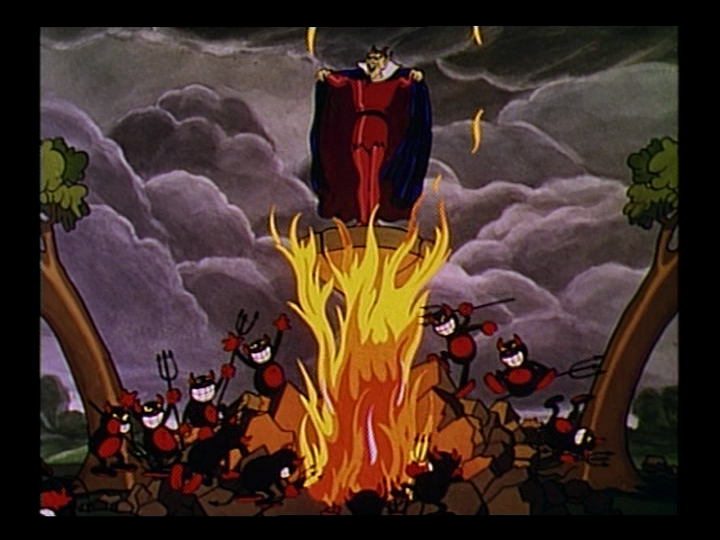
Out of the blue, the Devil bursts out of the ground, coming to claim the goddess as his bride

Suddenly, the skies grow dark, and the Devil bursts out of the ground on top of a column of flame, coming to claim Persephone as his queen. She refuses, but he grabs her and takes her to the underworld. All of Hell is celebrating the Devil’s “marriage,” but Persephone appears visibly miserable. On the surface, it is perpetually winter, with all of the woodland creatures mourning the loss of the goddess.

The Devil tries to tempt Persephone to stop crying with all the treasures of the world, and is angered that she will not stop being sad. He tells her that he will do anything she says, so long as she smiles. She asks to return to her world above, as everything above will die if she doesn’t. He acquiesces on one condition: she must spend half of every year with him below. She agrees to his terms, and is released. Everyone of the surface is overjoyed to see her, especially when she melts the snow and makes the world spring again.

October 30

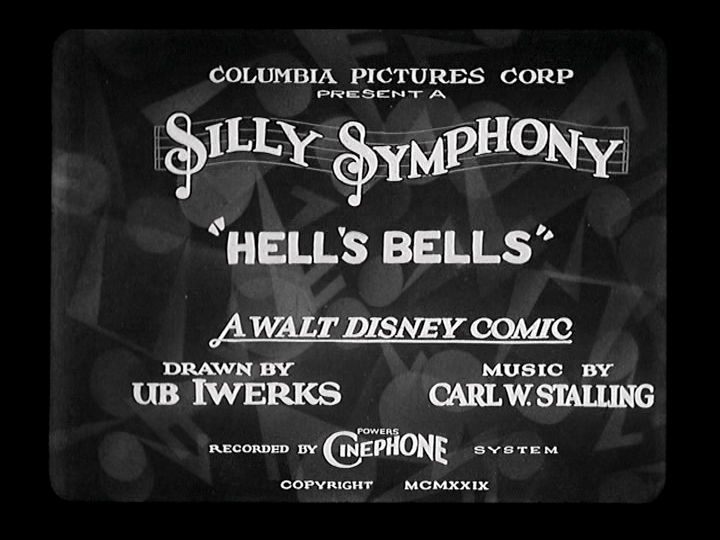
October 30, 1929 – The Silly Symphony Short Film Hell’s Bells is Released to Theaters

On October 30, 1929, the Silly Symphony short film Hell’s Bells was released to theaters. The short was drawn by Ub Iwerks, and is also notable for being Iwerks’ first foray into directing. The music for the short was done by Carl Stalling; the piece heavily featured in the short is “Funeral March of a Marionette” by Charles-Francois Gounod.

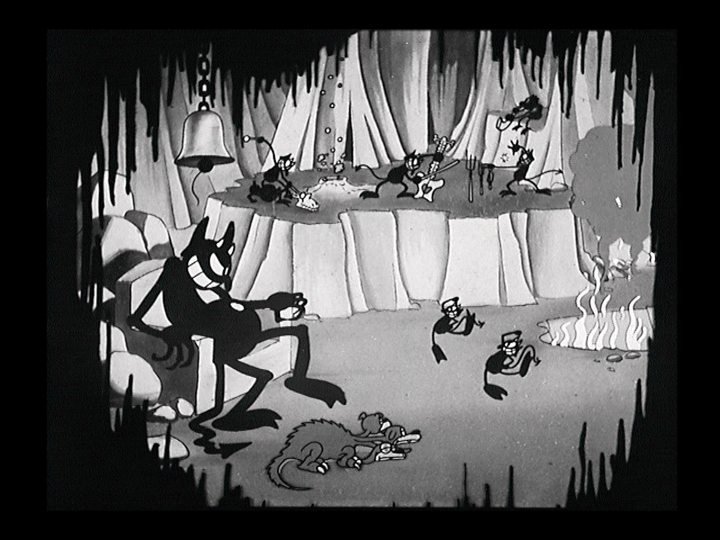
The short first erupts into a blaze of fire, which reveals an underground cavern populated by bats, spiders, and other strange creatures that introduce themselves to the camera one by one. Satan is then seen sitting in his chair, being entertained by dancing musical demons, who use skulls, volcanoes, and even each other to create the music. A troupe of demons also dance around merrily, with comical results. Satan claps with delight before ringing a bell, alerting the other demons to bring their master dinner.

Satan sits on his throne, listening to the entertaining music performed by his minions

After enjoying his dish, Satan grabs a demon and feeds him to his three-headed dog, laughing at the result. He tries to grab the other demon to feed his pet, but the demon manages to escape Satan’s grasp, sending him flying into the fiery pits below.

October 26

October 26, 1935 – The Silly Symphony Three Orphan Kittens is Released to Theaters

“Kittens! Aren’t they cute?”

On October 26, 1935, the Silly Symphony Three Orphan Kittens was released to theaters. The short is known for its remarkable animation design and perspective by animator Ken Anderson. It was directed by Dave Hand.

It’s a blustery, snowy night, and a car stops in front of a fence. A burlap bag is dumped into the yard on the other side of the fence before the car speeds away. When the bag comes to rest, three kittens tumble out of it and cuddle together in the snow. They notice an open window of the house nearby and decided to venture in to get warm. The three climb up the basement stairs and explore the house, watching as the housekeeper sings a song and brings a pie to the table.

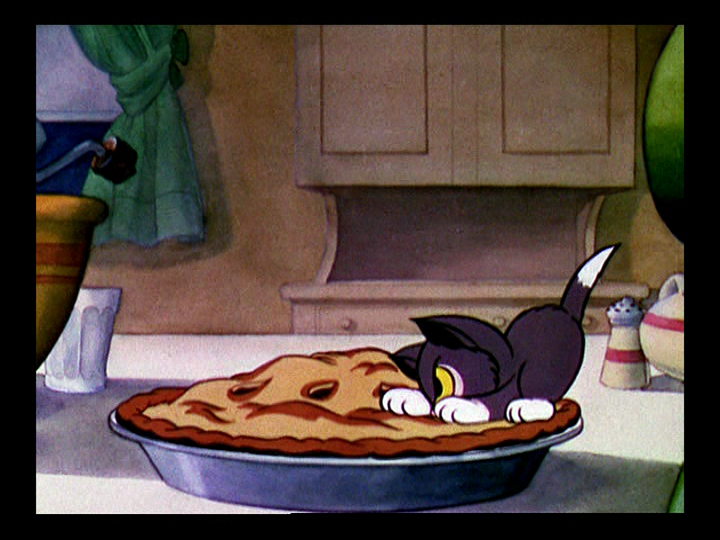
The grey kitten gets distracted by a fly, which leads to the kitten having a battle more with the pie after the fly buzzes away

Hungry, the kittens climb onto the table, where the gray kitten is distracted by a fly. When the fly lands on the pie, the gray kitten follows it, but is startled to see some of the filling fly out of the pie. The kitten begins to fight the pie, and ends up covered in the filling. The red kitten has been licking the remaining drops of milk from a bottle, and accidentally gets his head stuck inside. The black kitten plays with the pepper shaker, sneezing after he spills too much. One sneeze sends him flying backward into the red kitten, pushing him fully inside the milk bottle. The black kitten attacks the pepper once more, and sneezes powerfully enough to send him flying into the bottle just as the red kitten has escaped.

The kittens finally leave the kitchen to explore further, and end up in a nursery, delighted by the toys they find. The black kitten, however, has a bad run-in with a jack-in-the-box, and hides inside a pillow. A feather pops out, and the kitten follows it, chasing it all through the house. He chases it over the keys of a player piano, and accidentally sets off the mechanism, which plays a song called “Kitten on the Keys.” When the other kittens join him on the instrument, they are overwhelmed by the actions of the player piano. Their antics finally alert the housekeeper, who catches them and attempts to throw them out in the snow, when the little girl of the house asks to keep them, saving them from being thrown out into the snow.

October 23

October 23, 1931 – The Silly Symphony The Spider and the Fly Premieres in Theaters

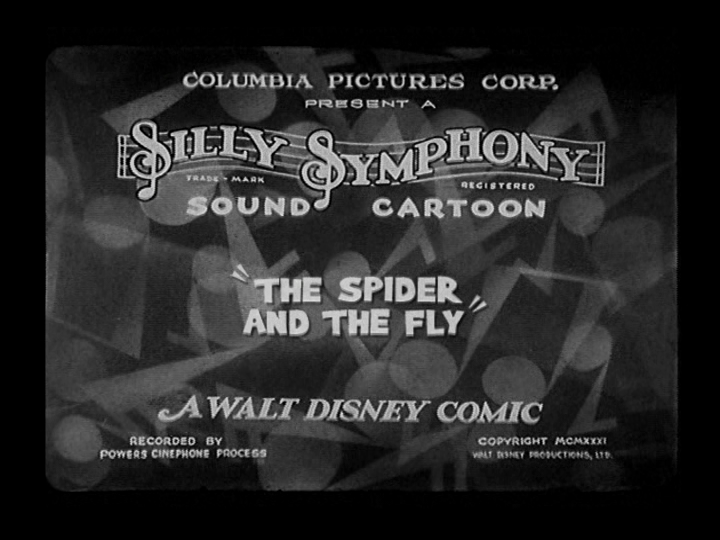
On October 23, 1931, the Silly Symphony The Spider and the Fly was released to theaters. The short was directed by Wilfred Jackson.

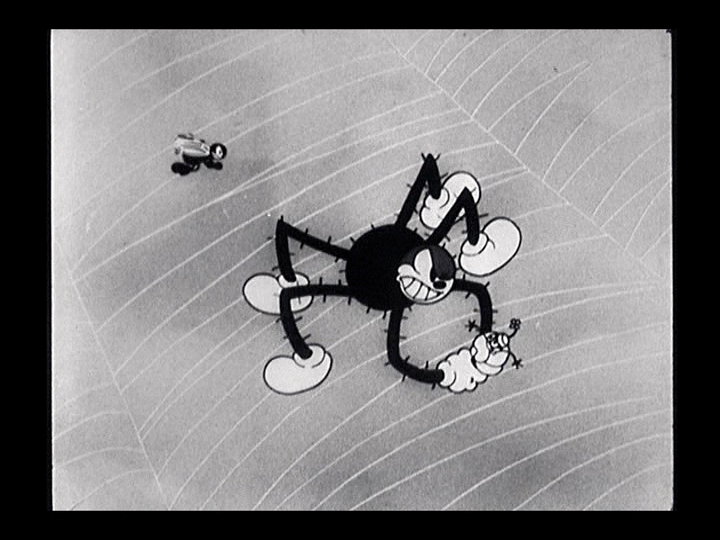
The short opens with a group of flies buzzing around an empty kitchen, snacking on an open jar of jam and playing with a bar of soap and a flyswatter. Two flies fly out an open window and explore a tap near the house. Watching hungrily nearby is a vicious spider, who spies the two flies near the tap and sets out to trap them by using his web as a harp, enticing the two to dance to the music.

The spider holds the female fly captive in his web while the male fly tries to distract him enough to let her escape

As the two dance closer and closer to the spider, the female fly is caught in his web. The male tries to rescue his mate, but the spider manages to catch him briefly before he escapes. Making his way back to the group, the fly sounds an alarm, and every fly nearby, including the horseflies in the nearby stable, gets ready for battle. The flies seize whatever they can from the house to throw on the spider, from pepper to pins. Finally, they use a match to set his web on fire, and place a piece of flypaper beneath him as he jumps, trapping him. They free the female fly, and everyone cheers.

October 5

October 5, 1935 – The Silly Symphony Music Land is Released to Theaters

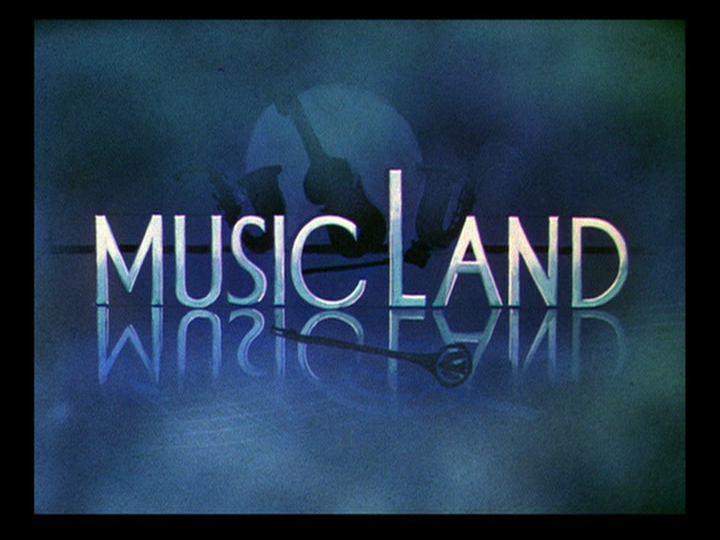
On October 5, 1935, the Silly Symphony Music Land was released to theaters. Directed by Wilfred Jackson, the short consists of dialogue done entirely by musical instruments.

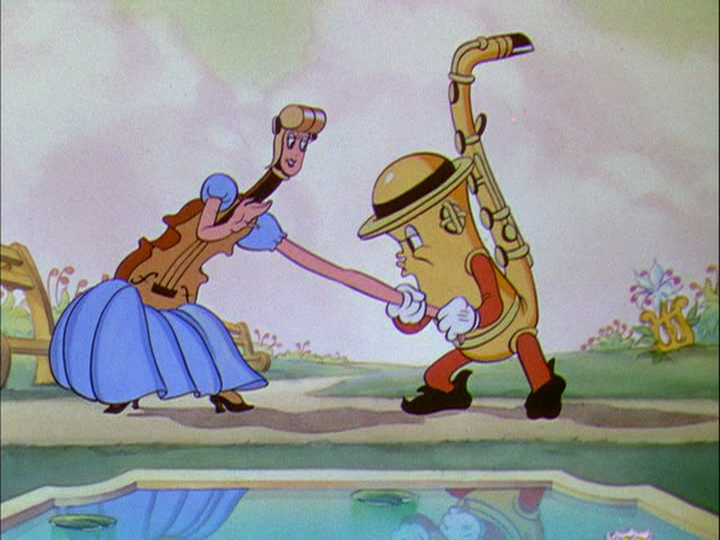
The short begins with a map showing the Land of Symphony separated from the Isle of Jazz by the Sea of Discord. The audience is first taken to the Land of Symphony, where harps and violins are dancing in a beautiful palace to classical music. The princess, seeing that her mother has fallen asleep, sneaks out of the palace to gaze at the lively Isle of Jazz. Inside the castle there, everyone is dancing merrily, except for the prince, who spies the princess through his castle window. The prince sails over to meet the princess, who greets him excitedly.

The prince and the princess meet and begin a forbidden romance while their parents are otherwise occupied

As the two begin their Romeo and Juliet-esque romance, they are soon spotted by the queen of the Land of Symphony, who demands that they stop their nonsense. The prince accidentally kisses the queen, and is taken to jail (a giant metronome). Upon finding that his son is being held prisoner, the king of the Isle of Jazz wages war. The princess climbs into a boat and races out to sea, trying to wave the flag of surrender. Seeing her in danger, the prince escapes from the prison and goes to her rescue. Seeing their children in danger, the king and the queen stop their fighting. As soon as the two rulers meet, they fall in love.

In the end, there is a double wedding between the king and the queen, and the prince and the princess. The lands are then united by the Bridge of Harmony, and both kingdoms celebrate.

August 22

August 22, 1929 – The First Silly Symphony, The Skeleton Dance, is Released to Theaters

On August 22, 1929, the first Silly Symphony, The Skeleton Dance, was released to theaters. After the success of Steamboat Willie, musical director Carl W. Stalling suggested that Walt work on a cartoon series with an accent on music, rather than character. The short was drawn mostly by Ub Iwerks.

On a dark, windy night in a graveyard, the bells toll midnight. Two cats argue as they stand perched on graves, only to be scared out of their wits when a skeleton appears. The skeleton looks around, then begins to skip merrily around the graveyard, only to be scared by the hoot of an owl. He throws his head at the bird, and it bounces back to his hiding place behind a gravestone.

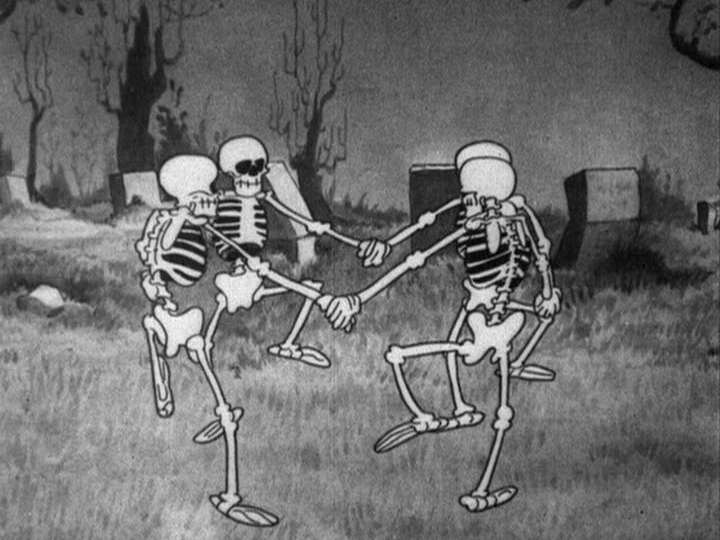
The skeletons come out from the ground for a night of dancing

More skeletons come out to join him, and the four begin to dance as a merry tune is played in the background. One skeleton uses another as a xylophone, playing eerie music on the skeleton’s vertebrae. Another uses a cat’s tail as a sort of cello. After a bit of musical celebration, the rooster crows, signaling that the party is over. The skeletons frantically look around and crash into each other as they dive back into their grave.

August 19

August 19, 1933 – The Silly Symphony Lullaby Land is Released to Theaters

“Into Lullaby Land of Nowhere, sleepyheads always go there.”

 On August 19, 1933, the Silly Symphony Lullaby Land was released to theaters. The title song, composed by Frank Churchill, was eventually released as sheet music, as were many of the popular Silly Symphonies. Lullaby Land was directed by Wilfred Jackson

The short opens with a baby being rocked to sleep by his mother, who begins to sing a lullaby. As she sings, the baby drifts off to sleep and to a dreamland called “Lullaby Land,” accompanied by his stuffed dog that has come to life. The baby begins to explore, finding flowers made of baby powder bottles, bushes made of pacifiers, and trees made of baby rattles. The baby and the dog hear the sound of trumpets, and look to see a parade of baby items march by, including a string of marching diapers and dancing castor oil.

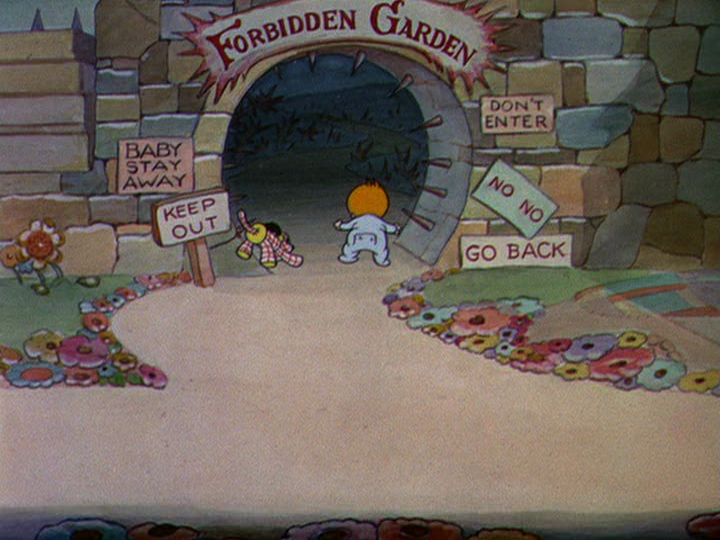
Although there are many signs warning the baby not to enter, his curiosity gets the best of him, and he goes to explore the Forbidden Garden

When the baby and dog follow the parade, the baby notices an area called the “Forbidden Garden,” marked with signs warning him to stay away. Intrigued, the baby wanders in with the dog close at his side. The garden is filled with dangerous objects for a baby, like corkscrews and fountain pens with ink. The dangerous items come to life and begin fighting each other. The baby grabs a hammer and destroys a tree made of pocket watches. The baby then accidentally lights a box of matches and the lit matches chase the baby around the garden.

The song warns the baby that the boogeyman will get him because he didn’t obey. The baby eludes the matches by crossing a small pond on a bar of soap. Three black clouds appearing at the matches’ demise, and the three clouds turn into three boogeymen, who try to scare the baby. The baby runs for his life from the boogeymen chase him who suddenly disappear into the night. As the baby and dog cower behind a tree, the Sandman greets them and helps put the two to sleep with sweet dreams. The short ends with the baby’s mother covering her son with a blanket and finishing her lullaby.