RSS Feed

Tag Archives: Short film

October 9

October 9, 1942 – The Goofy Short Film The Olympic Champ is Released to Theaters
“The ritual of the Olympiads demands that this heroic flame shall not become extinguished, but shall be kept burning at all costs, serving as a beacon whose unfailing light shall guide all athletes in fair play and clean sportsmanship…”

On October 9, 1942, the Goofy short film The Olympic Champ was released to theaters. It was directed by Jack Kinney, and stars John McLeish as the narrator.

Our narrator takes us back in time to Mt. Olympus, the birthplace of the Olympic Games. The first person we see is the torchbearer, who takes it all across the world, from Rome to China. The torch is then brought to a present day Olympic coliseum, where the narrator goes into a speech about how the Olympic flame must never be extinguished. During this, the flame burns down to Goofy’s hand, and extinguishes.
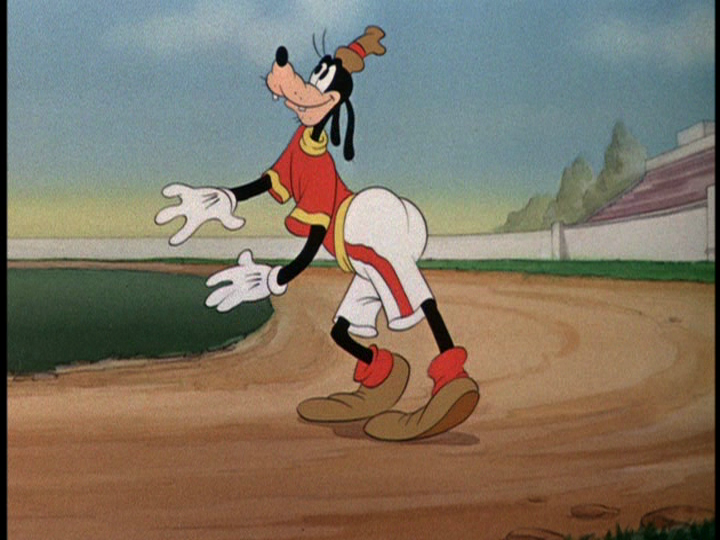
Goofy, in an attempt to show running form, ends up dancing all over the track

The first Olympic event we see is the racer, with Goofy first acting as a sprinter, then a long distance runner, a marathon runner, then a walker. Goofy then ends up dancing all over the field. After the runner is the hurdler. Goofy begins to jump the hurdles, but after catching one on his foot, he ends up carrying all the hurdles with him to the finish line. Pole vaulting follows this, with Goofy holding to the top, trying to cross the bar as he sits at the top of the pole. He is accidentally catapulted into the sky, but is able to land safely. Goofy then attempts the hammer-throw, but ends up destroying everything in the field and drilling himself into the ground, striking oil as he does so.

The last event is the decathlon, culminates in Goofy not only destroying more Olympic equipment, but landing headfirst into the scoreboard, knocking down all of the trophies. Goofy is unharmed, however, standing up with a smile and revealing a shiny trophy under his hat.
October 5

October 5, 1935 – The Silly Symphony Music Land is Released to Theaters

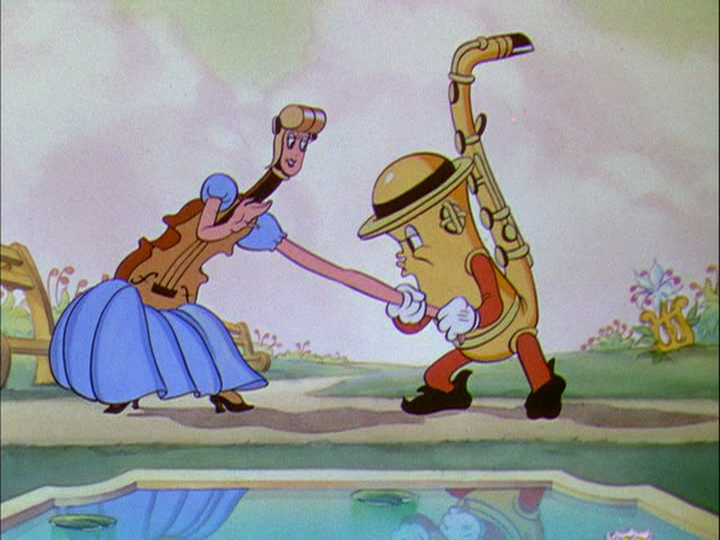
On October 5, 1935, the Silly Symphony Music Land was released to theaters. Directed by Wilfred Jackson, the short consists of dialogue done entirely by musical instruments.

The short begins with a map showing the Land of Symphony separated from the Isle of Jazz by the Sea of Discord. The audience is first taken to the Land of Symphony, where harps and violins are dancing in a beautiful palace to classical music. The princess, seeing that her mother has fallen asleep, sneaks out of the palace to gaze at the lively Isle of Jazz. Inside the castle there, everyone is dancing merrily, except for the prince, who spies the princess through his castle window. The prince sails over to meet the princess, who greets him excitedly.

The prince and the princess meet and begin a forbidden romance while their parents are otherwise occupied

As the two begin their Romeo and Juliet-esque romance, they are soon spotted by the queen of the Land of Symphony, who demands that they stop their nonsense. The prince accidentally kisses the queen, and is taken to jail (a giant metronome). Upon finding that his son is being held prisoner, the king of the Isle of Jazz wages war. The princess climbs into a boat and races out to sea, trying to wave the flag of surrender. Seeing her in danger, the prince escapes from the prison and goes to her rescue. Seeing their children in danger, the king and the queen stop their fighting. As soon as the two rulers meet, they fall in love.

In the end, there is a double wedding between the king and the queen, and the prince and the princess. The lands are then united by the Bridge of Harmony, and both kingdoms celebrate.

September 25

September 25, 1942 – The Donald Duck Short Film The Vanishing Private is Released to Theaters

“Did you see a little guy that you can’t see?”

On September 25, 1942, the Donald Duck wartime short film The Vanishing Private was released to theaters. The short was directed by Jack King, written by Carl Barks, and stars Clarence Nash as Donald Duck, and Billy Bletcher as Pete.

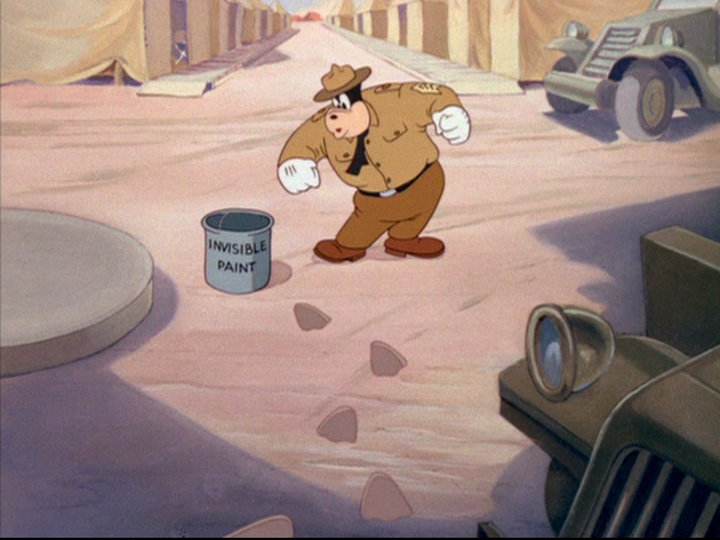
The short opens with Donald painting a cannon with yellow, green, and red stripes with black dots. Sergeant Pete finds him and grabs him, asking what he’s doing there, with Donald responding that he’s a camouflage painter. Pete chastises him, telling him that Donald needs to paint the cannon so that people don’t see it, with Donald responding that he didn’t know. Donald runs off to find some new paint, and wanders into the Experimental Laboratory – Camouflage Corps building. He looks at a particular bucket of paint, which happens to be invisible paint. Amazed at his find, he decides this is the perfect paint to use for his cannon.

Pete gets Donald out of the cannon, not realizing that the bucket of invisible paint is on the other side as Donald falls into it

Pete stops by later after Donald has finished painting the cannon invisible, thinking that Donald has stolen the cannon. He runs into the end of the cannon, alerting Donald, who informs the sergeant that he’ll be right down. Pete cautiously feels around for the end of the cannon, then sends Donald flying out of the other end, straight into the bucket of invisible paint. Donald then runs away, diving into a creek and running into a field of tall flowers, with Pete in hot pursuit. Pete throws some flowers aside, which reveal Donald’s location. Donald quickly brushes the flowers away and runs off.

Having gotten an idea of how to make the duck visible again, Pete grabs more flowers and begins throwing them everywhere, as Donald skips around a tree singing “Here We Go ’Round the Mulberry Bush.” Just as Pete imitates him, throwing flowers around, the General pulls up in his car and clears his throat to get Pete’s attention. Pete asks if he’s seen someone he can’t see, and the General, alarmed, shakes his head.

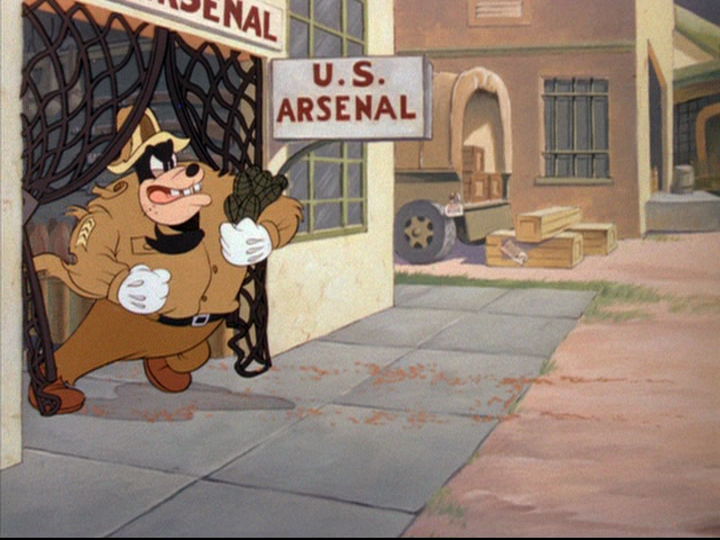
After flying into the arsenal, Pete decides that violence is the only way to catch the invisible duck

Meanwhile, Donald continues to cause mischief, grabbing a batch of pies from an open window and shoving one in Pete’s face. He leads the sergeant in a chase all around the camp, sending Pete flying into the arsenal, grabbing as many grenades as he can carry and throwing them around madly. The General tries to stop him, but Pete ends up blowing the both of them up when he drops all the grenades. Pete is then seen in solitary confinement, sitting in a padded cell with a straight jacket on. He implores Donald, his now-visible guard, to tell the General that he’s not crazy, to which Donald answers, “Do you think I’m crazy?”

September 23

September 23, 1938 – The Mickey Mouse Short The Brave Little Tailor is Released to Theaters

“I’ll be seeing you…I hope.”

On September 23, 1938, the Mickey Mouse short film The Brave Little Tailor was released to theaters. It was based on the fairy tale The Valiant Little Tailor told by the Brothers Grimm, with Mickey taking on the role of the tailor. It was nominated for an Academy Award at the 11th Academy Awards in 1939, but lost to another Disney short, Ferdinand the Bull. It was directed by Bill Roberts, and stars Walt Disney as Mickey Mouse and Eddie Holden as the king.

The short begins with the sound of nervous chatter between the villagers, scared that the giant that has been tormenting them is on the loose. The camera then pans over to the tailor shop, where Mickey is patching up a piece of clothing while being bothered by a swarm of flies. He finally takes two flyswatters and manages to swat all seven flies with one hit. Outside his window, one villager asks two others if they’ve ever killed a giant. Mickey then bursts open his window and proclaims he’s killed “seven with one blow” leaving the villagers to assume that he’s killed seven giants. The rumor spreads like wildfire, making its way up to the king.

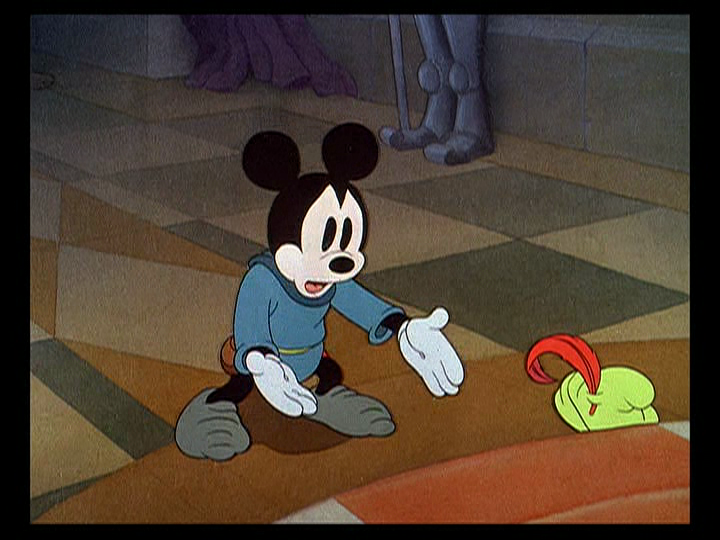
Mickey pleads with the king after being asked to be the Royal High Killer of the Giant

Mickey is soon presented to the king, who asks to hear his story. Mickey acts out the story of killing the flies in a dramatic fashion – still not explicitly stating that they were flies, not giants – amazing the entire court. The king then appoints Mickey as the Royal High Killer of the Giant, greatly surprising Mickey. The king promises to present Mickey with a great sum of money, but Mickey stutters that he can’t kill the giant; he only accepts when offered the hand of Princess Minnie.

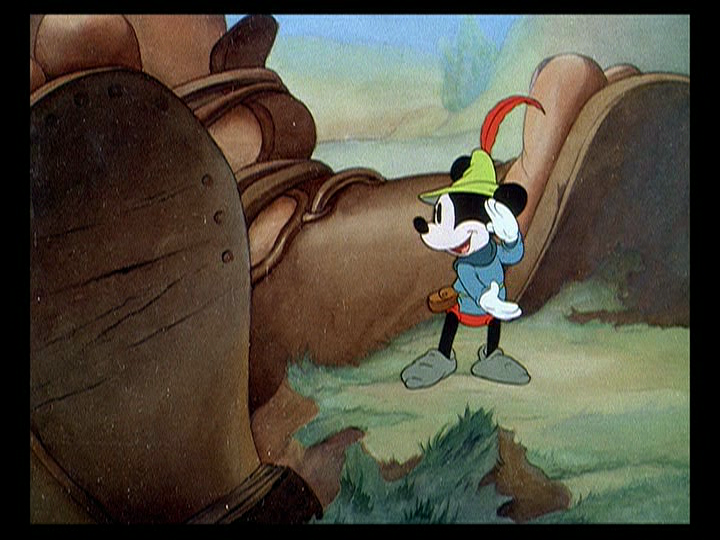
Mickey is soon off to face the giant, with the entire kingdom cheering him on. Although he puts on a brave front, he admits quietly that he doesn’t know how to catch a giant. As he sits and mopes, the giant soon approaches, stealing a farmer’s crops, destroying a farmer’s well to drink the water, and stealing a farmer’s stove to light a cigarette made from the farmer’s hay. Mickey, who had been hiding in the hay, is found by the giant, and soon springs into action, using his skills as a tailor to tie up the giant and cause him to trip.

Mickey vanquishes the giant, and looks on proudly at his work

In the end, Mickey has vanquished the giant, and the kingdom holds a festival, with the sleeping giant powering the amusements with his snoring as he is kept under heavy chains. Mickey and Minnie kiss while riding the merry-go-round, and the king lets out an excited whoop as his kingdom is once again safe.

September 19

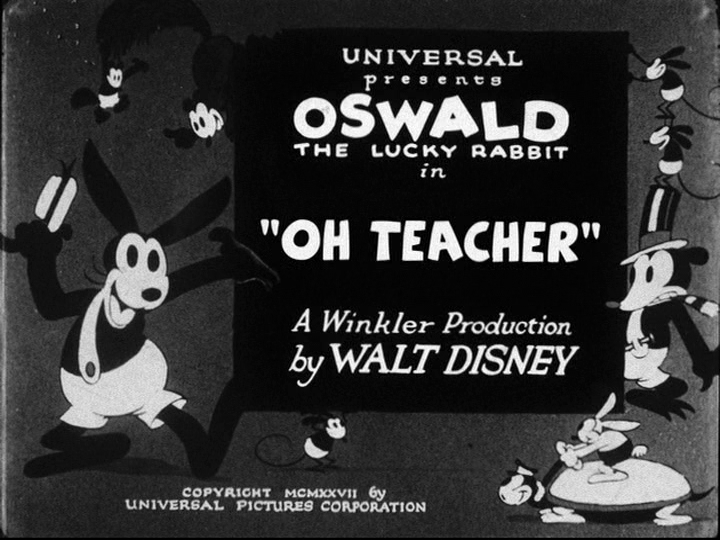
September 19, 1927 – The Oswald the Lucky Rabbit Short Oh Teacher Premieres in Theaters

On September 19, 1927, the Oswald the Lucky Rabbit short film Oh Teacher was released in theaters. It was the second Oswald short released after Trolley Troubles.

Oswald is seen riding his bike, swinging his schoolbooks around on their strap. As he rides by, he picks up a flower and begins to play a game of “She Loves Me, She Loves Me Not,” which turns out in his favor. He stops at his girlfriend’s, letting her sit in the sidecar of his bike, and the two ride off for school.

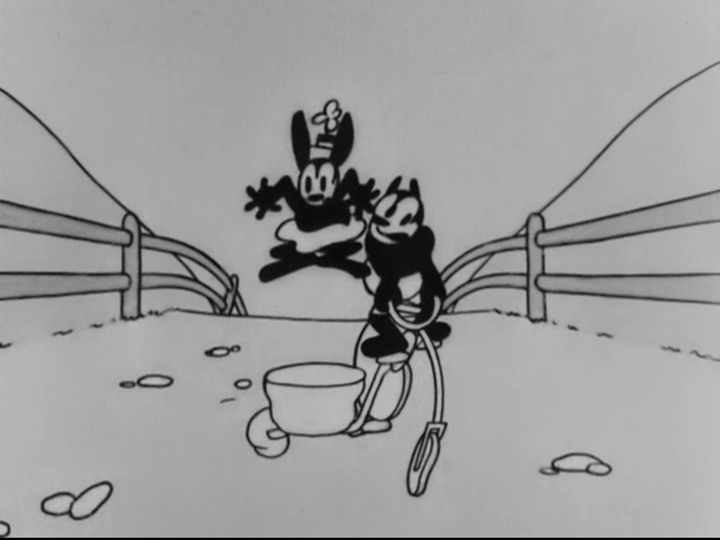
The troublemaker loses control of the bike as it winds down a rocky road

Near the schoolhouse, a mother pig stands with her child, kisses him goodbye, then places him on a hook to be picked up by the school trolley. A troublemaker grabs the child’s tail on the trolley, using it to pull him and his bike along. The conductor gets angry and uses exhaust fumes to brush the kid off. As the troublemaker sits in the middle of the road, he spies Oswald riding down the path, and decides to play a prank, pushing Oswald from his bike. The troublemaker quickly takes control of the bike (and Oswald’s girlfriend), but is unable to control it as it careens down a rocky path.

Oswald chases after the bike, but is unable to stop it as it crashes into a pole, splitting the sidecar from the bike. Oswald’s girlfriend, helpless, is sent on a one-way trip into the river, where she tries to keep her head above water and screams for help. In a clever gag, Oswald uses the cry for “help” to take him to his girlfriend, reaching out to her from the bank. The troublemaker, however, climbs on Oswald and saves the girl, taking the credit for Oswald’s hard work. The girl falls for the troublemaker, and Oswald challenges the troublemaker to a fight, which he loses.

The school bell rings, and all the students march inside. At recess, Oswald waits for the troublemaker to show his face, ready to clobber him. Once again, a fight begins between the two, with Oswald accidentally winning, and having his girlfriend fall in love with him again.

September 17

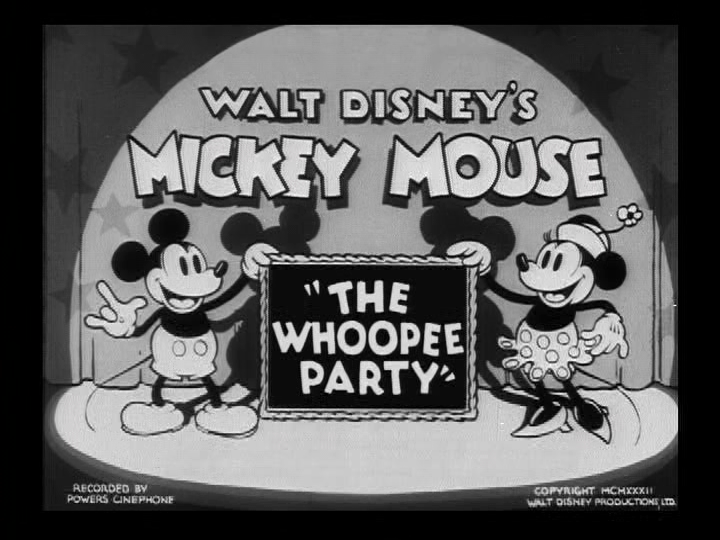
September 17, 1932 – The Mickey Mouse Short Film The Whoopee Party Premieres in Theaters

“We’re the kitchen mechanics, we fix all the refreshments.”

On September 17, 1932, the Mickey Mouse short film The Whoopee Party was released to theaters. The short features two popular pieces of music in the 20s and early 30s: “The Maple Leaf Rag” by Scott Joplin, and “Runnin’ Wild” by A.H. Gibbs, Joe Grey, and Leo Wood (mostly known for Marilyn Monroe’s performance in the 1959 comedy film Some Like It Hot). It was directed by Wilfred Jackson, and stars Walt Disney as the voice of Mickey Mouse, Marcellite Garner as the voice of Minnie Mouse, and Pinto Colvig as the voice of Goofy.

A splendid party is taking place, with a whole cast of characters dancing happily to the music. Minnie is at the piano playing and singing, while Clarabelle Cow accompanies her on the violin. Mickey, Goofy, and Horace Horsecollar are in the kitchen, preparing snacks for the party and singing their own version of the song as the “Kitchen Mechanics.”

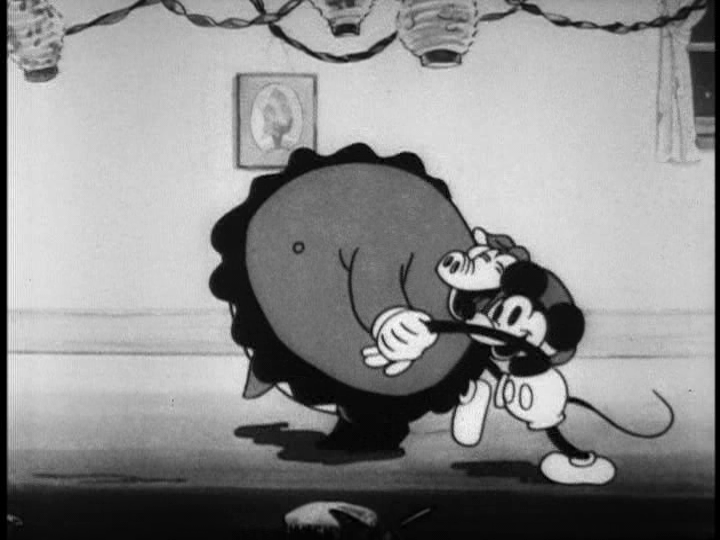
Mickey asks a rather shy pig to dance with him, and when she agrees, the two begin to dance wildly to the music

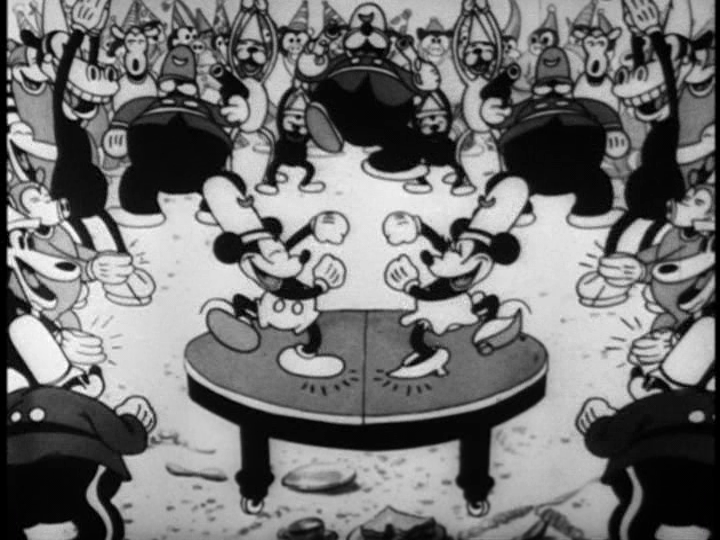
After Minnie finishes her first song, the Kitchen Mechanics come out and announce with great fanfare that the food is ready. The guests immediately swarm the table, and the band strikes up again, playing Scott Joplin’s “Maple Leaf Rag.” The guests dance and eat, and Mickey asks a rather shy pig to dance with him. The furniture and the food get involved in the dancing as well, with everyone having a wonderful time, yelling “Whoopee!” and throwing confetti.

Goofy attaches a glove to the end of his noisemaker, and uses it to scare Clarabelle as she dances. In retaliation, she places a horseshoe in a boxing glove, attaches it to her own noisemaker, and uses it to punch Goofy, sending him flying into a fishbowl. The song then changes to “Running Wild” as Mickey uses various household objects to help create the music.

The party is so successful, even the police join in with the celebrations

Suddenly, a patrol car is sent to Mickey’s house, with the police dashing inside. At first, it appears that they’re using force to subdue the party, but when the audience is taken inside, the police have joined the party, dancing wildly and blowing their whistles in time with the music. The short ends with Mickey and Minnie lifting their hats and letting out another loud “Whoopee!”

September 12

September 12, 1936 – The Mickey Mouse Short Film Donald and Pluto is Released

“So! There you are! Come on out of there!”

On September 12, 1936, the Mickey Mouse short Donald and Pluto was released to theaters. Although it was released as a Mickey Mouse short, Mickey never appears; Donald’s series wouldn’t begin until the 1937 short Don Donald. This short also shows the new design of Donald, which was a much rounder figure with a shorter bill. The short was directed by Ben Sharpsteen, and stars Clarence Nash as Donald, and Pinto Colvig as Pluto.­

Donald Duck is working as a plumber, using a magnet to grab his tools as he stays perched on a platform near the pipes. Pluto is hanging around the area, trying to chew on a bone, when Donald startles him by using the magnet to pull out his hammer from underneath the dog. As Donald angrily attacks the pipes with his hammer, he knocks the magnet to the floor, which attracts Pluto’s bone. As Pluto tires to release the bone, he ends up accidentally swallowing the magnet, and his bowl with the bone stick to his behind.

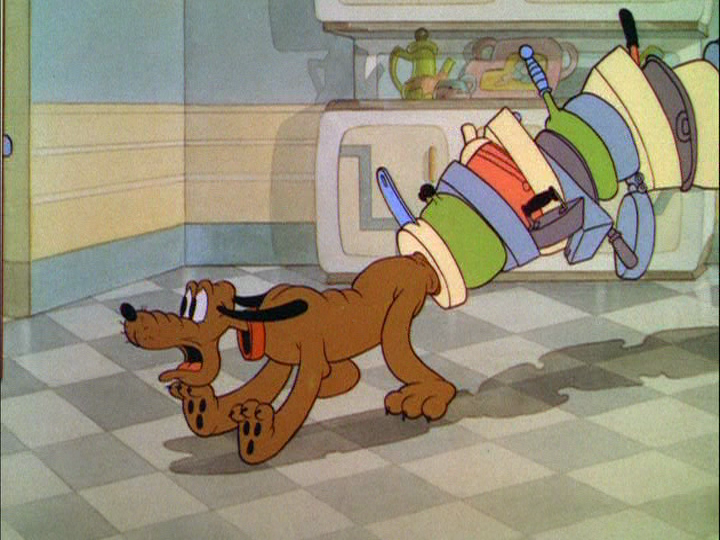
Pluto gives the term “magnetic personality” a whole new meaning when the magnet he swallowed begins attracting anything metal nearby

As Pluto tries to chase the bone attached to his rear, he accidentally knocks over the platform Donald stands on, sending the duck crashing to the floor. Pluto escapes to the kitchen, but as soon as he thinks he’s safe, the magnet inside begins to attract all the pots and pan, flying out of their cupboards and latch on to Pluto’s rear end. Pluto battles with his bowl and the magnet inside, unable to stop anything metal from latching on to him, which includes a rather traumatizing attack with an alarm clock.

As Pluto runs back to the basement to free himself from the metal objects, the magnet inside attracts the nails from Donald’s ladder, which causes Donald to fall from the ladder and land in the washing machine. When he is sent through the wringer, the hammer he holds is pulled by the forces of the magnet, and it’s all Donald can do to hold on as Pluto runs frightened up the stairs. When Pluto reaches the top, he is able to knock off the bowl, hammer, and Donald, but Donald chases after the dog, waving the hammer wildly.

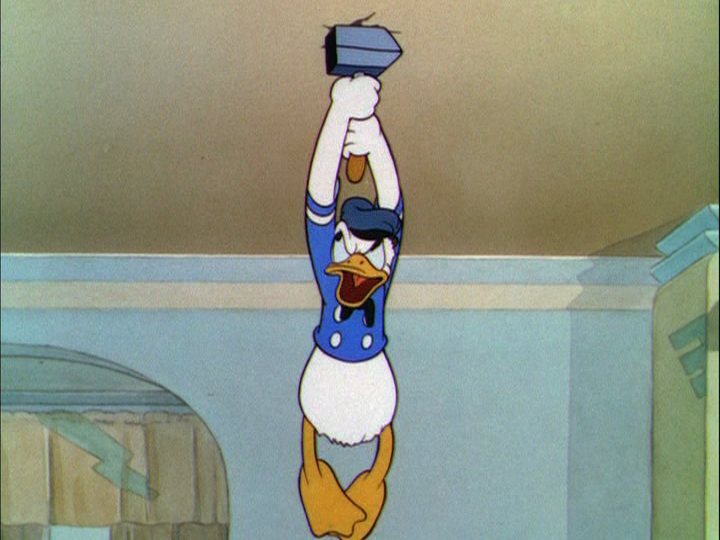
While Pluto sits on the roof, Donald’s hammer is attracted to the magnet still in Pluto, and clings to the hammer for dear life he is dragged across the ceiling

Pluto escapes to the roof and sits, relieved as he thinks it’s over. However, Donald is standing right under where Pluto sits, and the magnet pulls Donald up to the ceiling, attached to the force of the magnet. As Pluto struggles to move, Donald is dragged across the ceiling of the house. Donald tries in vain to release the ladder, as Pluto tries just as hard to release his backside. As they both fall down the basement stairs in the end, Pluto is able to cough out the magnet; it is pulled to the boiler, trapping Donald by the neck, and covering him with all of his tools and Pluto’s dish.

September 7

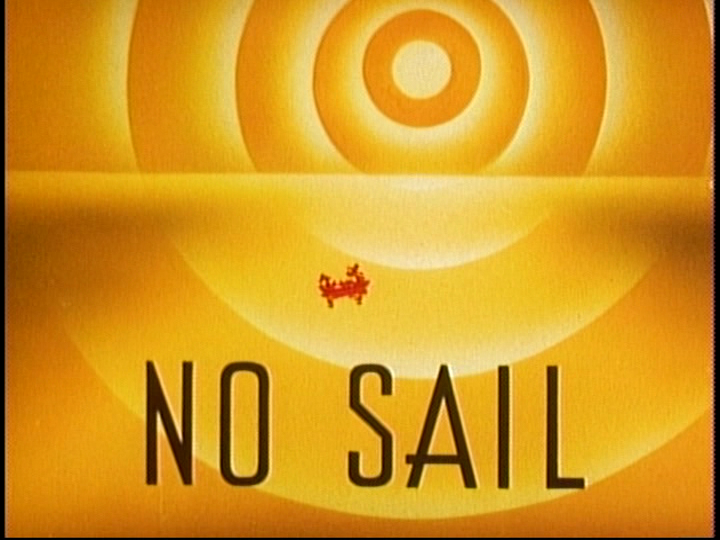
September 7, 1945 – The Donald Duck and Goofy Short Film No Sail is Released

“Oh, give me the flashing brine, the spray, and the tempest’s roar, a life on the ocean wave, a home on the rolling deep…”

On September 7, 1945, the Donald Duck and Goofy short film No Sail was released to theaters. The film is one of the few listed under only Donald Duck’s filmography, even though it’s a double-billed short film. It was directed by Jack Hannah, with story by Dick Kinney and Ralph Wright. Clarence Nash stars as Donald Duck, and Pinto Colvig stars as Goofy.

Donald and Goofy arrive at a dock with several sailboats, and Donald deposits five cents in their chosen boat. Once the money has been inserted, the mast shoots out from the deposit box, and the boat zips away into the ocean. Goofy and Donald continue to sing their sea chantey as they sail quickly; unfortunately, the five cents only covers a short amount of time, and the mast returns to the deposit box. Donald pays again, and they soon go off and running, until the time runs out again. The mast lands on his head after he pays, so he kicks it, sending it flying back into the box. As Donald searches for another nickel, he soon realizes that he is out of change, and he and Goofy are stranded.

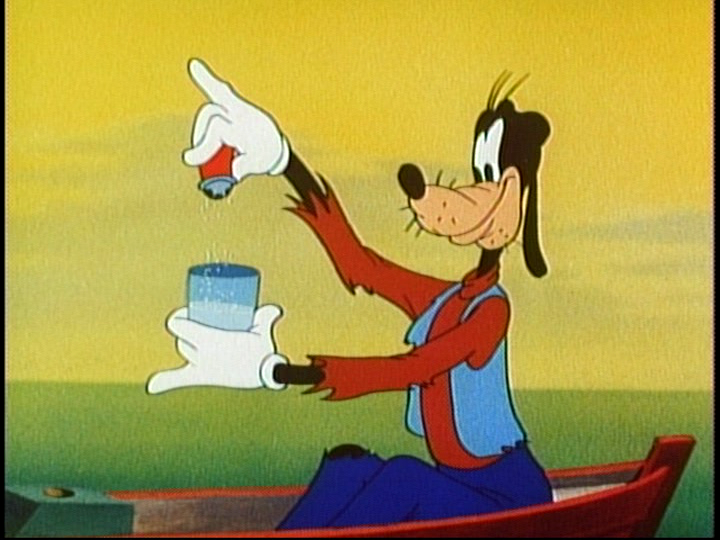
Goofy startles Donald when he declares that the ocean water he’s drinking needs more salt, then pulls a salt shaker from his pocket

Nighttime comes, and the two are still out in the open ocean. When the sun rises the next morning, Donald is nearly delirious with thirst. Goofy grabs a cup and attempts to drink the salt water, although Donald tells him not to. Goofy takes a sip and, to Donald’s surprise, proclaims it needs more salt. In the distance, Donald hears the sound of a boat approaching them, and they call out it. As Goofy waves his shirt, a nickel falls out of his shirt pocket. Donald chases after it, but it falls into the ocean, leaving them again stranded. Donald then looks up to see Goofy waving at the passengers as the ship sails by.

As the sun bears down on them, Donald is going mad. A fish lands on their boat, and the two argue over it, until a passing seagull eats it from their hands. Goofy attempts to kill the seagull for food, but the gull flies away unscathed. Out of nowhere, a shark appears, circling their boat. As Donald looks, several sharks have decided to circle their boat, until Goofy grabs one of their fins, realizing that the sharks aren’t real. Donald attempts to pick up a fin, and ends up staring a shark straight in the teeth. Goofy then decides that they can go fishing, and accidentally hooks Donald by the shirt and sends him flying into the water among the sharks. Donald tries to avoid getting eaten while Goofy attempts to untangle his line. At this point, Donald has had enough. He demands that Goofy let him down, so he does – beak first into the coin slot. This lets loose the mast, and the two sail home, although Donald isn’t too happy with how they accomplished such a feat.

September 5

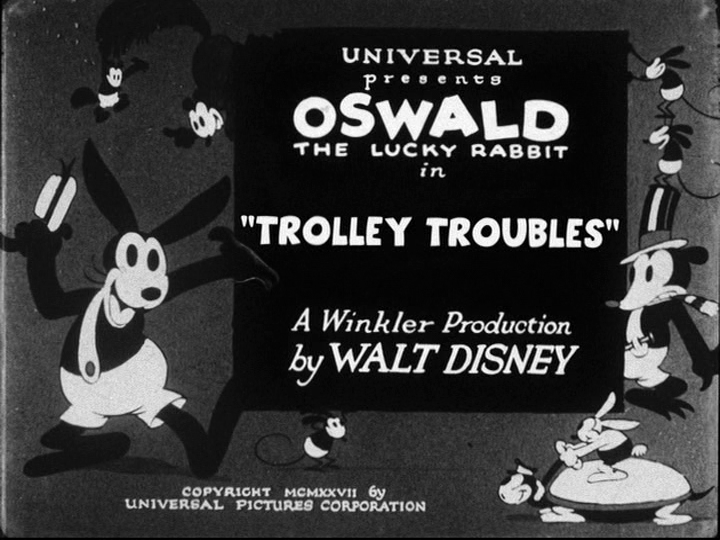
September 5, 1927 – The Oswald Short Film Trolley Troubles is Released

On September 5, 1927, the Oswald short film Trolley Troubles was released to theaters. It is known for being the first appearance of Oswald; an earlier Oswald short, Poor Papa, was rejected for release, as the distributers had expected a different kind of character rather than the older, more heavyset version Disney had produced. Trolley Troubles, however, was a success for Universal, and for Walt Disney and Ub Iwerks.

At the station, Oswald is cleaning up his trolley while children are causing mischief around him. Finally, when the trolley is wound up and ready to go, Oswald chases the kids away, but one kid sneaks aboard as Oswald drives away. Loading up the trolley at the first station he passes, Oswald and his passengers head merrily into town with many track gags along the way.

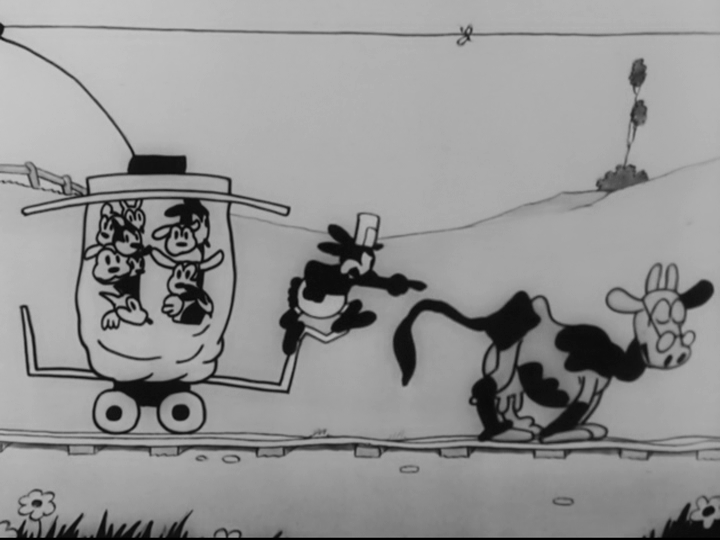
Oswald loses his temper at the stubborn cow standing in the middle of the tracks

At one point, a cow stands in the middle of the tracks, and although Oswald clanks his bell, the cow is undeterred. Oswald shouts at the cow, but the cow ignores him. Oswald then tries to calmly reason with the cow, but the cow still won’t budge. Oswald then backs up the trolley and goes full speed ahead, but fails to knock the cow from the tracks. The cow then steps sideways across the tracks, purposefully blocking the way, but Oswald gets an idea, and has the trolley go under the cow. The trolley passengers laugh at how Oswald has outsmarted the animal.

Oswald finds himself going up a very steep hill, but the trolley is unable to keep going, no matter how much Oswald pulls or pushes it. A nearby goat sees Oswald studying the trolley and decides to head-butt him, which causes the trolley to move. Although initially angry, Oswald gets the idea of using the goat to push the trolley up the hill. The plan is a success, until they realize that the hill is just as steep going down on the other side, and there seems to be no way to slow the trolley. Oswald rushes to pull the brake, but it rips off in his hands.  Passengers fall out at every curve of the track as the trolley goes over and around several hills. Oswald prays for the trolley to stop, and it finally does when it falls off the broken track and lands in the river. Oswald then paddles himself to safety on top of the trolley.

September 1

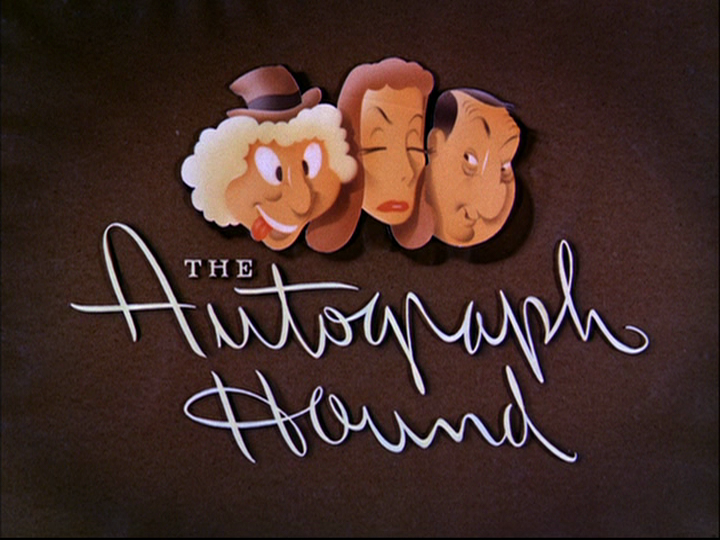
September 1, 1939 – The Donald Duck Short Film The Autograph Hound is Released to Theaters

“Get out! And stay out, you web-footed autograph hound!”

On September 1, 1939, the Donald Duck short film The Autograph Hound was released to theaters. The short contains many caricatures of famous stars of the time, including Mickey Rooney, Shirley Temple, Clark Gable, and Greta Garbo. The short was directed by Jack King, and stars Clarence Nash as Donald Duck.

In front of Hollywood Studios, a large sign is set up, proclaiming “No autograph hounds allowed.” Shortly after the audience sees the sign, the gates open up, and the security guard throws Donald out onto the street. As Donald yells at the officer, he is almost hit by a car belonging to famous actress Greta Garbo. Donald tricks the guard into thinking he’s riding in with Ms. Garbo, but when the guard finds out he’s been duped, he pursues Donald across the studio. Donald first hides in Mickey Rooney’s dressing room. He asks Rooney for an autograph, but Rooney plays practical jokes on Donald, angering the duck. Seeing the security guard again, Donald flees.

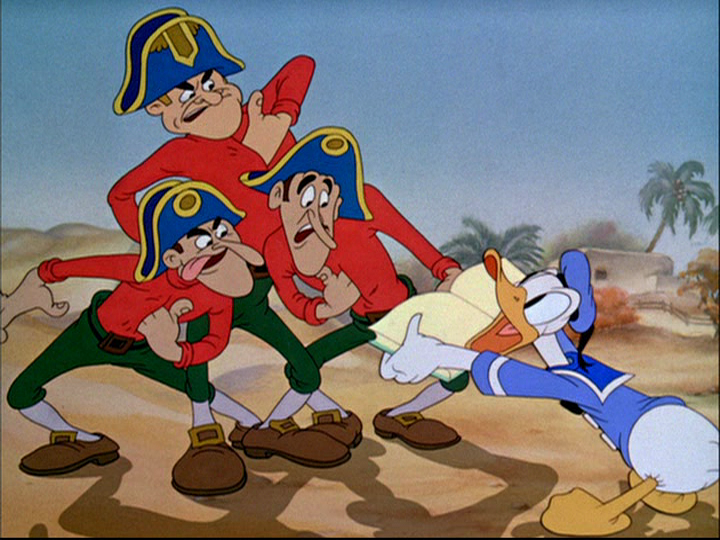
Donald runs into the Ritz Brothers, and doesn’t hesitate to ask them for an autograph

The next stop Donald makes is on the set of a film, which has an ice skating rink set up. He runs across Sonja Henie, and asks for her autograph, which she carves into the ice. Donald attempts to take it with him while crossing another set set up like the Sahara Desert, only to find the autograph melting fast in his hands. He comes across a tent with what appear to be the shadows of three belly dancers on the wall. When the “belly dancers” pass by the door of the tent, it’s revealed that it’s actually the Ritz Brothers. Donald asks for their autograph, and they provide it, but not in the manner Donald wanted. Spotting the officer again, Donald makes a run for it.

After running up the stairs of a set, Donald trips over Shirley Temple, and the two tumble down the stairs. Shirley recognizes Donald, and the two ask for each other’s autograph. As he jumps for joy over his good fortune, the officer grabs him by the neck and proclaims that he’s got him. Temple, however, chastises the officer for grabbing Donald Duck. The news that Donald Duck is in the studio passes around like wildfire, with celebrities leaving their sets to meet him, including Greta Garbo, Clark Gable, and the Marx Brothers. Donald is soon surrounded by autograph books, with the officer himself handing Donald a pen and asking for his autograph. Donald grabs the pen and gives it to him, spraying the officer’s face with ink.