RSS Feed

Tag Archives: Short film

May 17

Posted on

May 17, 1940 – The Donald and Goofy Short Film Billposters is Released to Theaters

vlcsnap-2013-05-17-05h10m55s177

“Well, here we are! I’ll take this one, and you take that one.”

On May 17, 1940, the Donald and Goofy Billposters was released to theaters. This is one of the few “buddy” shorts between the characters. The song “Whistle While You Work” makes an appearance in the beginning of the short as the two characters begin their work. The short was directed by Clyde Geronimi.

Donald and Goofy have been plastering ads all over buildings in the farmland, and they stop at another farm to resume their work. Donald goes one way to a nearby barn, while Goofy takes the windmill. After he dips his brush into the paste, he accidentally places his brush on one of the sails without realizing. When he reaches for it, he finds that it has disappeared, and looks around, not realizing that his bucket of paste is caught by another sail. As he holds up his hands in confusion, the brush is returned to him, and he is quite amazed. The paste bucket lands gently on his head, pushing his hat to the ground, and he is startled when he finds the bucket gone, not realizing its current location. As he moves the bucket slightly (thinking it’s his hat), the paste spills out all over him.
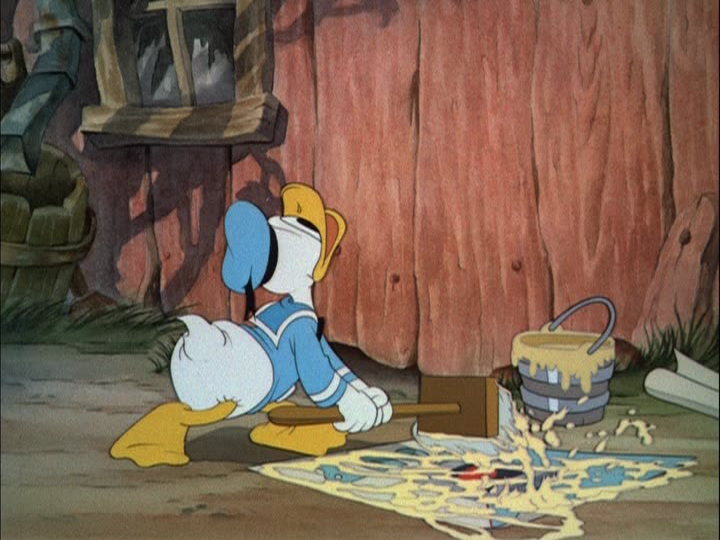
Donald is hard a work posting the bills on the side of a barn

Donald is hard a work posting the bills on the side of a barn

Donald is hard at work, and a nearby goat is eating tin cans. He spies the ad for a can of soup, and takes it from the wall. Finding it delicious, he then grabs the poster from Donald’s brush as he is about to post it. Donald is surprised to find his poster missing, and as he holds the brush back, the goat eats the brush’s bristles. Donald turns around and sees the goat, and knocks him with the broom handle, sending it flying back to its pen, with Donald locking the door and taunting it. Goofy, meanwhile, has started posting, when his poster ends up on another sail of the windmill rather than the building itself. Confused again, he looks around for it, and the sail brings it back to him, covering his face. He then gets tangled in the poster, tripping over himself to get free from it. Once he is, unfortunately, the sail knocks him right back into the glue-covered ad.

The goat has been able to free himself from his pen, and goes to eat Donald’s posters, salivating. Donald begins to beat the goat once more, when his brush gets caught in the goat’s antlers. Stuck, Donald tries to apologize, but is cornered against the wall. He tries to tempt the goat into eating another poster, but the goat is too angry. Donald manages to free himself, but his victory is short lived as the chase around the farm begins. He saves himself by grabbing a sail of the windmill, and Goofy is knocked onto another sail. The two hold on for dear life as the goat head butts them late into the evening.
May 15

Posted on

May 15, 1908 – Character Designer, Storyman, and Disney Legend Joe Grant is Born

vlcsnap-2013-05-15-04h22m20s50

“I think there was always a gentle sweetness to Joe and his work. There’s a gentility in everything he touched. But there’s also a great sophistication. He was one of the truly great craftsmen of our art, but he always saw his craft as a way to communicate ideas.” – Roy E. Disney

On May 15, 1908, Joe Grant was born in New York City. After attending the Chouinard Art Institute, he joined the Walt Disney Studios in 1933 as a character designer and a story artist, and his first assignment was the Mickey Mouse short film Mickey’s Gala Premiere. He also designed the look of the Queen and the Wicked Witch for Disney’s first feature film, Snow White and the Seven Dwarfs. The Character Model Department was created around this time, with Grant as the head, working out ideas for stories and characters through model sheets and three-dimension figures known as maquettes. Grant was also known for his work with partner Dick Huemer, working on story direction for Fantasia, and screen story for Dumbo. During World War II, Grant worked on story ideas and designs for several shorts, including Reason and Emotion, and Der Fuehrer’s Face. In 1949, Grant left the studio, due to the disbandment of the Character Model Department, and opened a ceramics studio and a greeting card company.

Almost forty years after leaving Disney, Grant received a call from the Animation Department, asking him to consult on Beauty and the Beast, and was credited for visual development on the final film. Grant then rejoined the studio as a story advisor for Pocahontas, The Hunchback of Notre Dame, and Home on the Range. Grant also contributed to the Pixar film Monsters, Inc., coining the title for the film. He was named a Disney Legend in 1992, and has been awarded a special career achievement award by the Los Angeles Film Critics Association. Grant passed away on May 6, 2005, at the age of 96.

May 13

Posted on

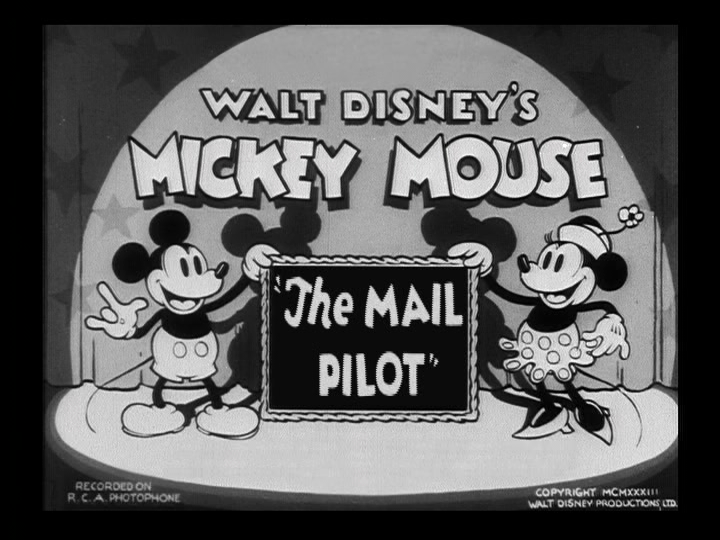
May 13, 1933 – The Mickey Mouse Short Film The Mail Pilot is Released to Theaters

vlcsnap-2013-05-13-04h17m43s211

“Through clouds and sleet, through rain and winds, a pilot never bends. We carry on, we carry on, for the mail must go through!”

On May 13, 1933, the Mickey Mouse short film The Mail Pilot was released to theaters. The short was directed by Dave Hand.

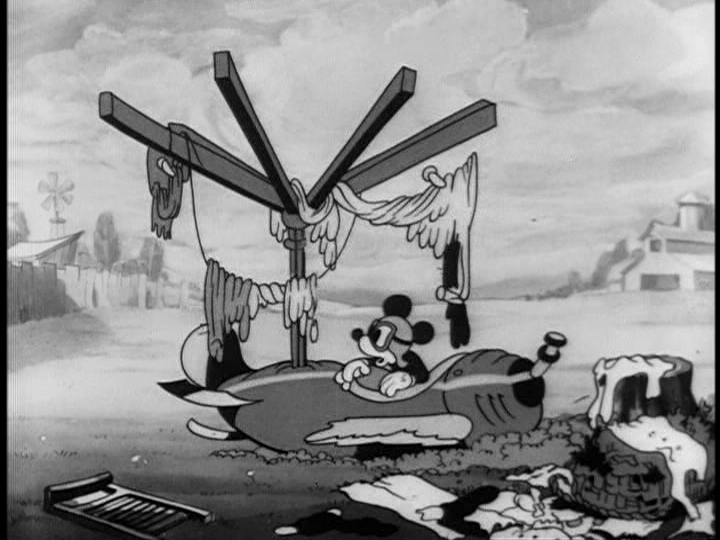
It’s a busy day at the airport, with all of the mail planes being loaded with sacks of mail. Mickey is seen oiling his plane for his journey, and an important package is delivered by armored truck for him to send. Mickey turns to the wall to see a wanted poster of mail bandit Pete, and vows to put Pete behind bars. He then starts his plane, and after some sputtering, he takes off to the sky. As he takes off, it begins to rain, but Mickey is undeterred, even more so when he is attacked by lighting, and when he comes across snow.

After being forced to the ground by Pete, Mickey uses some ingenuity to get back in the air

After being forced to the ground by Pete, Mickey uses some ingenuity to get back in the air

Unfortunately, Pete sees Mickey, and begins his attack. Mickey tries to jet away, but Pete uses a machine gun to cut up Mickey’s wings. Falling to the ground, Mickey uses some quick ingenuity to stay airborne, although he is followed closesly by Pete, who uses a harpoon to grab Mickey’s plane. Mickey refuses to be caught, and takes off, dragging Pete behind him. He lands back at the airport, Pete in tow, and Pete is soon arrested. Minnie appears at his side, and gives her brave pilot a kiss.

May 9

Posted on

May 9, 1941 – The Donald Duck Short Film A Good Time for a Dime is Released to Theaters

vlcsnap-2013-05-09-05h22m24s147

“Hurry! Hurry! Step right over here, folks, to the penny arcade, where you can have a good time for a dime! This is the place, folks, where your penny’s worth a million laughs!”

On May 9, 1941, the Donald Duck short film A Good Time for a Dime is released to theaters. One aspect of this film that reflects the time it was created is the machine playing movies in the penny arcade, which was a familiar sight in the 1940s. One machine would play a movie by a belly dancer named Little Egypt, which was the inspiration of Daisy dancing “Dance of the Seven Veils.” The short was directed by Dick Lundy.

Donald arrives at the penny arcade, and looks for a movie to watch, attracted to “Dance of the of the Seven Veils.” He begins counting veils, when the machine stops working right after the third veil. Angered, he declares he’s been robbed, but moves on to a crane machine, which has a camera as one of its prizes. Donald inserts his coin and goes after the camera, but although he is able to grab it, it slips from the crane at the last moment, leaving Donald with nothing. On his next attempt, he grabs a bottle of ink, with the crane taking off the top before dropping it down the chute, covering Donald with ink. Enough being enough, Donald decides to go for the magnet, using it to grab every other prize in the machine as he shakes it. All of the prizes fall out of the chute, except for one bottle of perfume, which the crane grabs and sprays out, making Donald sneeze hard enough to sneeze all the prizes back into the crane game.

vlcsnap-2013-05-09-05h31m44s36

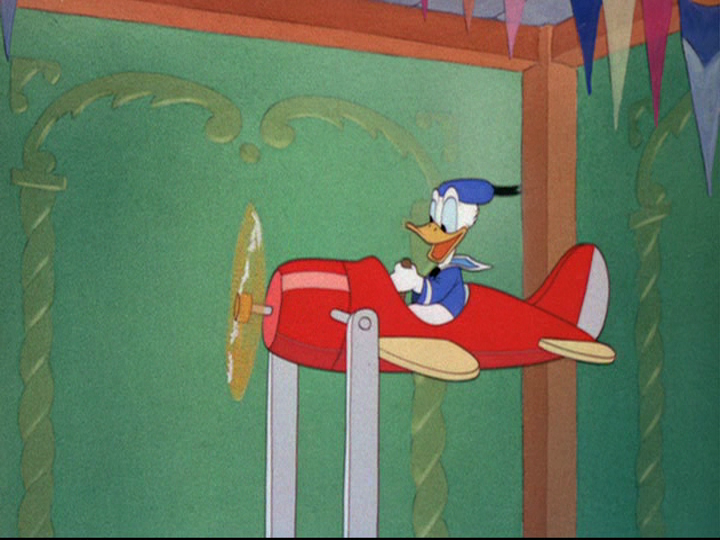
Donald enjoys his ride on the plane in the penny arcade, but his ride is about to go sour

Donald next goes to a ride called “Enjoy the Thrill of Aviation,” and begins to fly a toy plane. As he enjoys the ride, it abruptly stops, letting him know his time is up. Angered, Donald beats the plane with the control stick before it starts again. Once it does start, Donald realizes he threw the control stick away, so the plane takes off wildly, out of his control. Once it crash lands to the ground, Donald slinks away, dizzied by the experience, and leaves the penny arcade, turning green from nausea, letting out a trademark, “Aw, phooey!”

May 1

Posted on

May 1, 1924 – The Alice Comedy Alice’s Wild West Show is Released to Theaters

vlcsnap-2013-04-29-18h36m04s142

“That’s Tubby O’Brien and his gang – – – they’ll bust up the show sure – – -”

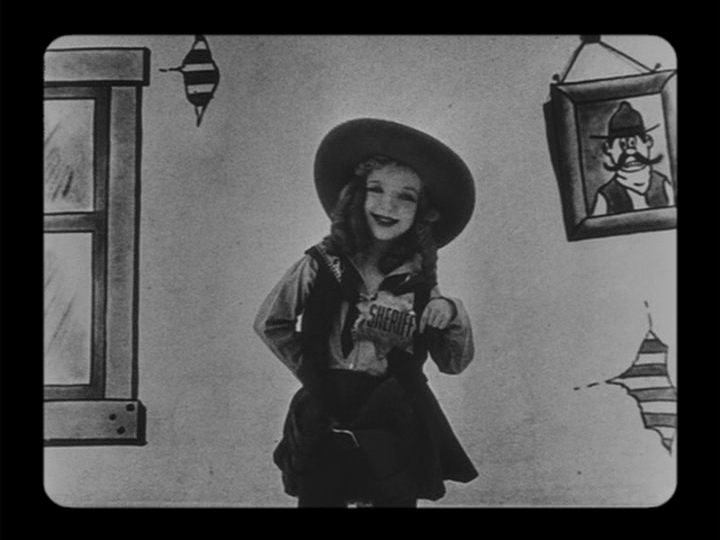
On May 1, 1924, the Alice Comedy Alice’s Wild West Show was released to theaters. It was the fourth Alice Comedy, and stars Virginia Davis as Alice.

All the neighborhood kids have gathered to see the Big Wild West Show, presented by Alice and her friends. They trade various knick-knacks for tickets, and one of Alice’s friends is selling “lemonade.” Finally, the show starts, and Alice gets ready to step on stage. The overture plays, then begins Act 1 of the show. The scene is a cowboy bar, and Alice steps in, having a shoot-out with two cowboys in the bar, which she wins. Unfortunately for Alice, Tubby O’Brien and his gang arrive to disrupt the show. Scared at their appearance, all of Alice’s friends decide to quit the show. She gets an idea, however, and continues the show herself. Tubby tries to distract her, but she will have none of it.

Sheriff Alice surveys the cartoon saloon

Sheriff Alice surveys the cartoon saloon

She then describes her adventure in the cartoon version of the Wild West, with Alice standing up to a tribe of Indians alone. Unfortunately, she is knocked off her stagecoach, and chased into a cave by one Indian, but the Indian soon limps away after fighting with Alice. The audience cheers, but Tubby’s gang boos loudly. Alice continues her story, which takes place in a saloon. Wild Bill “Hiccup” attempts to steal from the saloon’s safe, as Sheriff Alice stands guard. When Hiccup tries to use a bomb to blow up the safe, Alice spots him, and a shoot-out begins in the saloon, leaving Alice as the only person standing in the end. Hiccup slipped out before the end of the shoot-out with the safe, and Alice quickly chases after him in a motorcar. In the end, Alice is able to retrieve the safe and bring it back to the saloon. Tubby and his gang, at the end of the story, begin throwing rotten vegetables at Alice, but quickly run away after Alice chases after him with a large stick. After a scuffle between Alice and Tubby, Tubby runs away crying, and Alice is victorious.

April 30

April 30, 1948 – The Pluto Short Film Bone Bandit is Released to Theaters

vlcsnap-2013-04-29-18h02m11s24

On April 30, 1948, the Pluto short film Bone Bandit was released to theaters. It was directed by Charles Nichols, with story by Art Scott and Sterling Sturdevant. The animation for this short was done by George Nicholas, Jerry Hathcock, George Kreisl, and Sandy Strother.

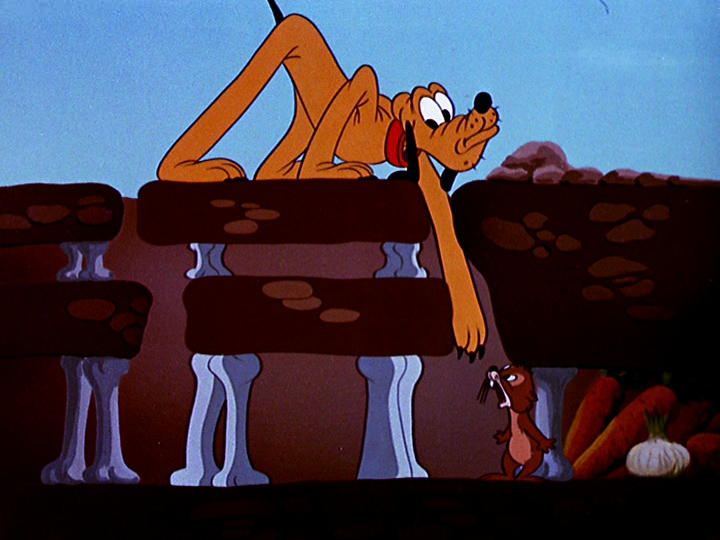
Pluto has just woken up from a nap when he spies his empty bowl. He recalls the places he’s buried bones, and decides to go dig one up. Unfortunately, his bone is buried right next to a patch of goldenrod, to which he is allergic. After he sneezes, he hears a strange noise coming from below, and a gopher pokes his head up from the ground. The gopher collects the goldenrod and disappears before Pluto can catch him. The gopher then sticks his hand above ground, searching for more goldenrod, when he latches on to Pluto’s tail and drags the dog into a hole.

Pluto reaches in to find the gopher, not realizing that all the bones he's buried have been used for the gopher's home

Pluto reaches in to find the gopher, not realizing that all the bones he’s buried have been used for the gopher’s home

When Pluto pulls his tail and the gopher out from the hole, the gopher tries to make amends and quickly scamper away, but Pluto reaches into the hole to catch him. When he finds a bone instead, he happily pulls it up, but the gopher, who used Pluto’s bones to prop up his house, bites his paw. Pluto, however, successfully props up the bone, and the gopher tries to use a carrot in the bone’s place. Pluto sets out to chew on the bone, but more goldenrod nearby causes him to sneeze. The gopher laughs at Pluto’s predicament, but Pluto’s sneeze shoots the bone away from the goldenrod, and Pluto chomps on the bone happily. The gopher, still peeved about his bone being taken away, decides to get back at Pluto by making him sneeze from the goldenrod and taking the bone when he’s sneezing.

After the gopher tries to get away, Pluto runs after him, but the gopher arms himself with more goldenrod. Once the goldenrod is gone, however, the chase is on all over the garden, with Pluto sneezing up a storm through the goldenrod. Pluto lands in the hole leading to the gopher’s home; the carrot the gopher used to prop up a part of his house gives under Pluto’s weight, and the whole house sinks in. Pluto is able to retrieve his bone, and the gopher, unfortunately, has developed an allergy to goldenrod.

April 21

April 21, 1930 – The Mickey Mouse Short Film Fiddling Around is Released to Theaters

vlcsnap-2013-04-20-21h39m20s13

“As an encore, I will play the finale from the overture ‘William Tell.’”

On April 21, 1930, the Mickey Mouse short film Fiddling Around was released to theaters. This short is also known as Just Mickey, which was the short’s original working title. This is also one of the rare instances that Mickey is seen with hair. The pieces performed in the short are Schumann’s “Traumerei” and one of Listz’s “Hungarian Rhapsodies,” as well as the called out finale of the “William Tell Overture.”

Several pairs of curtains part on a large stage, revealing Mickey walking ceremoniously with a fiddle, but he trips at the front of the stage. As the audience laughs, Mickey blushes, but gets on with his performance, except that one of his violin strings breaks. He then musses his hair in an artistic manner before playing highly regarded pieces of classical music. He then breaks into a rather tragic piece, wailing and crying the entire length. He finishes that tune by crying and carrying his violin behind him as he walks offstage. He then comes back to wild applause from the audience. He then comes back on stage to announce his encore from the “William Tell Overture.” His spirited playing has him crawling across the stage, throwing his violin in the air, and breaking it in half. The concert is a rousing success.

April 20

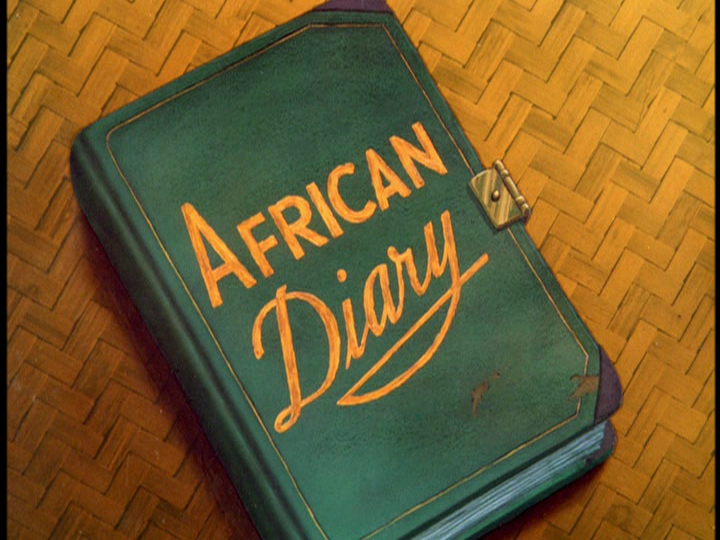
April 20, 1945 – The Goofy Short Film African Diary is Released to Theaters

vlcsnap-2013-04-20-09h01m06s125

“November 23rd. After an uneventful voyage, we sighted Africa.”

On April 20, 1945, the Goofy short film African Diary was released to theaters. Goofy’s theme song, “The World Owes Me a Living,” makes an appearance in this short. It was directed by Jack Kinney, with story by Bill Peed.

The short opens on Goofy’s poorly written diary entry, dated November 23, when he first spots Africa. He lands there the next day at a spot known as the Ivory Coast, portrayed as  a set of piano keys. He gathers members for the safari, and they begin to explore the land, with the narrator still narrating Goofy’s entries. The next entry is February 11, and Goofy is seen with members of the crew, pitching camp near a watering hole. Animals appear at the water, including a zebra, hyena, and a warthog. Goofy also tries to get a drink from the water, but with much difficulty.

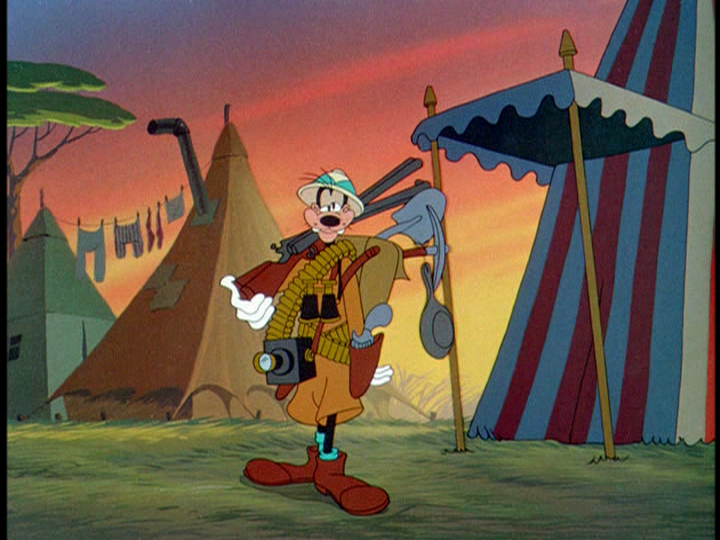
Goofy is ready to head out of safari

Goofy is ready to head out on safari

The sun rises over the camp, and Goofy heads out for a swim in the water; unfortunately, all of the water is gone, and Goofy swims in sand. After his “swim,” he returns to his tent to change for his adventure. On Friday the 13th, Goofy sets out with one member of the safari to go hunt for game. They run across a black rhinoceros, who becomes enraged at their appearance, and decides to attack. Goofy tries to defend himself with his shotgun, when he realizes he may not even have a permit to shoot a rhino, and frantically searches his paperwork. He finally finds the permit, but it is too late, as the rhino gets the shotgun attached to his nose and starts hitting Goofy over the head with it. Goofy does finally get the gun to go off, but it implodes, leaving the muzzle of the gun stuck to the rhino’s horn. The rhino continues to chase Goofy over Africa, and chases the entire safari out of Africa.

April 16

April 16, 1948 – The Donald Duck Short Film Daddy Duck is Released to Theaters

vlcsnap-2013-04-15-21h35m37s223

“You big, bad, nasty bear! Scaring my little baby! I gotcha!”

On April 16, 1948, the Donald Duck short film Daddy Duck was released to theaters. It was directed by Jack Hannah, with story by Jack Cosgiff and Bob McCormick.

Donald is at an adoption agency, ready to adopt a baby. He signs the paperwork, and is given a baby kangaroo named Joey, who takes to Donald immediately. The two hop home, and right off the bat, Donald has a hard time controlling Joey. Donald immediately tries to show that he’s the boss, and the adoption agency keeps calling to remind Donald what he should be doing, like giving Joey a bath. Donald tries to give Joey a bath, but Joey refuses, until he spies the pouch in Donald’s apron. He quickly tucks himself into the pouch, as Donald tries to coerce him into taking a bath. At the end of it all, Donald’s the one that ends up in the tub.

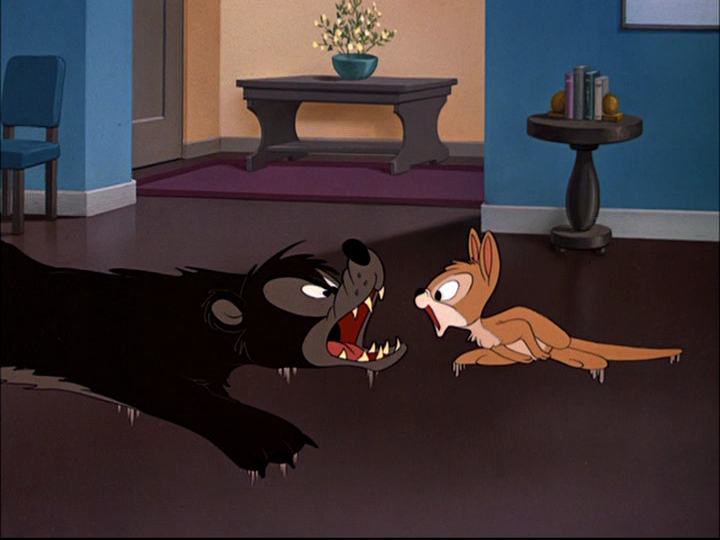
Joey is terrified after coming across Donald's bearskin rug

Joey is terrified after coming across Donald’s bearskin rug

The phone rings again, and Donald is given his next assignment. Joey, however, is having more fun with the waxed floor, when he runs across a bearskin rug. Terrified, he dives back into the apron pouch, and Donald tries to reassure him that the bear rug is no threat by pretending to beat it up. Donald then pretends to be eaten by the bear, and desperate to save his new father, Joey hops into action, grabbing a poker from the fireplace and poking the bear, then chasing after him with a baseball bat. Joey uses a chair to knock Donald out of the bear rug, sending the duck flying into Joey’s rocker. Joey then hugs Donald affectionately, glad that his dad is safe.

April 15

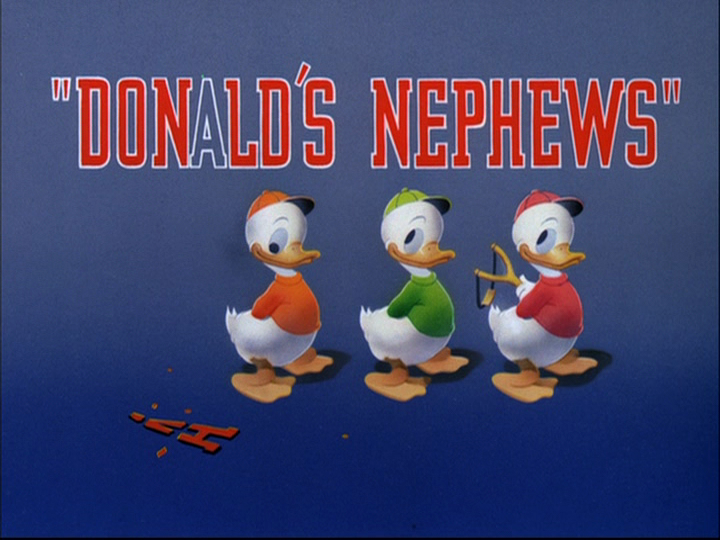
April 15, 1938 – The Donald Duck Short Film Donald’s Nephews is Released to Theaters

vlcsnap-2013-04-14-21h04m29s7

“Dear Brother, I am sending your angel nephews to visit you.”

On April 15, 1938, the Donald Duck short film Donald’s Nephews was released to theaters. This short marks the first on screen performance of Huey, Dewey, and Louie, sent to Donald by his sister Dumbella. The trio were created by Ted Osborne and Al Taliaferro, with their first appearance in a newspaper comic strip on October 17, 1937. The short was directed by Jack King.

Donald reads the message from his sister that his nephews are visiting, with his sister “misinforming” him that they are three angels. The moment they arrive, however, they cause nothing but trouble, from sending Donald flying into a wall and riding their tricycles all over the house in a game of tricycle polo. Through their efforts of destroying the house, Donald comes across a book called Modern Child Training, and decides to use the lessons inside to tame his nephews. The first exercise is that music will tame them, and he goes over to his piano to play. The nephews pick up some other instruments and begin to play “Pop Goes the Weasel” along with Donald, but the joy is short lived, as they use the instruments to harass Donald further.

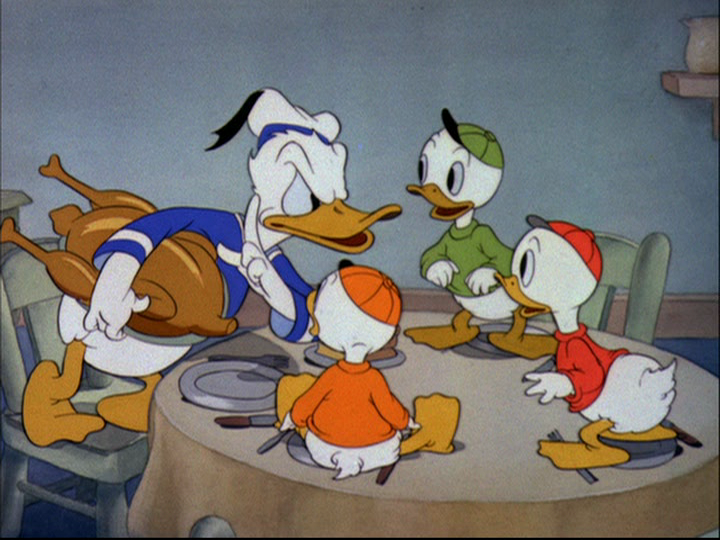
Donald attempts to regain control over his nephews at mealtime

Donald attempts to regain control over his nephews at mealtime

The book advises Donald to never lose his temper, much to their confusion. When Donald goes back to the piano, they continue to play their pranks on their uncle. He reads another lesson in the book that if the kids are quarreling, they must be hungry, and has them sit down for a meal. As he tries to say grace, the three nephews try to steal the food, with Donald getting more and more agitated. The book tells him that “if all else fails, arouse their sympathy.” Donald decides to do just that, and the nephews are alarmed to see their uncle cry. They apologize, and promise to be good boys, although they play another prank on him, replacing the filling of a pie with hot mustard. Donald cries out for water after eating the mustard pie, and the trio delights in soaking him in water and using the fire extinguisher before leaving his house. Dazed, Donald looks down at the book, with the page reading, “After all, little children are only angels without wings.” Donald throws a tantrum and rips the book into pieces.