RSS Feed

Tag Archives: Disneyland

January 30

January 30, 1959 – The Peter Tchaikovsky Story Premieres on Disneyland
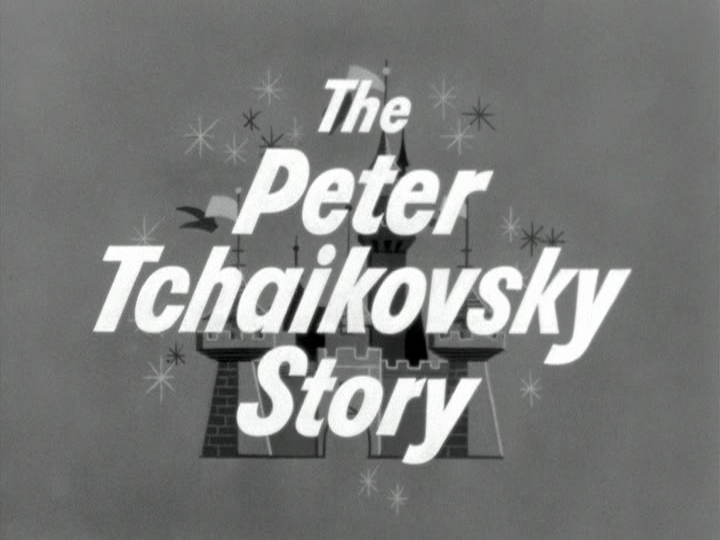
“…for just as Sleeping Beauty was held under an evil spell for a long, long time, just so did an evil spell put Tchaikovsky’s genius to sleep for many years, until something wonderful happened to awaken him to his full powers as a composer.” – Walt Disney

Straight from Fantasyland, audiences were treated on January 30, 1959, with The Peter Tchaikovsky Story, a look at the life of Peter Ilych Tchaikovsky, composer of the ballet Sleeping Beauty, whose score inspired the Disney animators to create the animated feature of the same story. The episode also gave audiences a chance to see early clips from the completed film in widescreen, a first on television. This was also the first television show to be simulcast in stereo. The stereo simulcast required the assistance of radio stations, but unfortunately, this could not be accomplished in all markets. Two versions of this episode were prepared, to accommodate those who would be able to use their stereos. Although the episode was originally shown in black and white, the main story was shot in color. The episode was directed by Charles Barton, and stars Grant Williams as the older Tchaikovsky, Rex Hill as the younger Tchaikovsky, Lilyan Chauvin as Fanny Durbach, Leon Askin as Anton Rubinstein, and Narda Onyx as Desiree Artot. The episode also features Galina Ulanova and the Corps de Ballet of the Bolshoi Theater in a production of Tchaikovsky’s Swan Lake.

As the narrator relates, Peter Ilych Tchaikovsky was born in Votkinsk, a small provincial town in Russia, in 1840. When we first see Tchaikovsky, his siblings are running around the living room while he sits at the piano, playing. At a young age, he had found happiness in music, particularly the music of Mozart, whom he considered his idol. His mother, however, worried about how much time he spent at the piano, and hired a French governess to teach the children. The governess tries to understand the boy’s love of music, but in the end, she tries to tear him away from the piano to have him play in the sunshine. One evening, Tchaikovsky is troubled by the music that seems to play unending in his head. “Whenever the boy’s soul was stirred,” the narrator explains, “the music would throb in his head until it was almost painful.” The governess hears his painful cries, and decides to soothe him by reading him a story he had never heard before – the story of Sleeping Beauty. Unfortunately, the story did little to put him to sleep; it caused his creative juices to flow, and he snuck down to the piano to compose before being caught by the governess. The next day, Tchaikovsky is dismayed to see that the piano has been locked up, and as he tries to find another way to express the music in his head, he breaks the window after tapping emphatically on it, slicing his hand. His parents allow him to play once more, but this happiness would soon be interrupted.
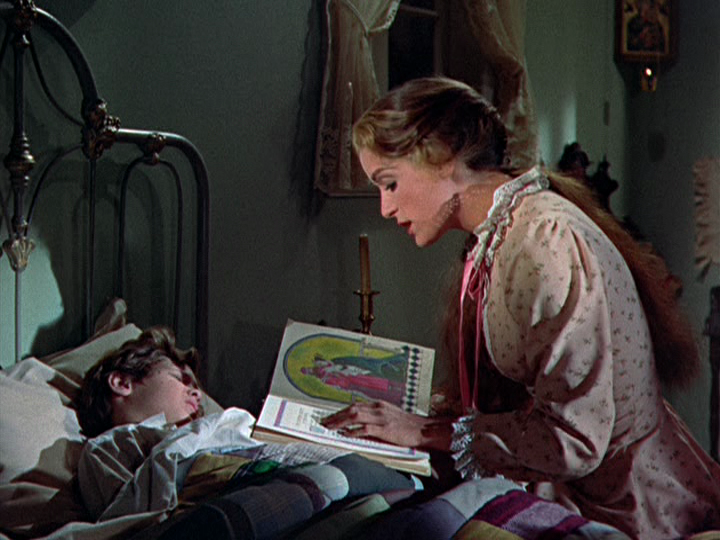
Young Tchaikovsky (Rex Hill) being read the story of Sleeping Beauty by his governess, played by Lilyan Chauvin

“…contentment was never to be Peter’s fate for very long,” the narrator warns the audience. “Soon, he was to suffer the heaviest blow of his young life. His parents decided to prepare him for a government career at school in St. Petersburg.” Tchaikovsky is seen crying as his mother wishes him farewell, telling him to be a good boy and study hard. As she leaves, the audience is told that Tchaikovsky never saw his mother again, for she died soon after. After this crushing blow, “his musical genius withdrew deep inside him. It went to sleep, like Sleeping Beauty in the fairytale. And, strange to say, like Sleeping Beauty, it would stay dormant for a long time before something wonderful happened to awaken it again.” Seventeen years later, we see Tchaikovsky grown up, working as a lowly copy clerk. He toils away, feeling his life lacks meaning, until he sees an advertisement in the newspaper: the opening of a new conservatory of music, led by the great composer, Anton Rubinstein. This stirs something inside him, and Tchaikovsky decides to enroll in the evening classes for piano and composition.

One evening, as he improvises tunes of his own, he is spotted by Rubinstein himself. The composer asks Tchaikovsky if he wishes to make a career of music, to which Tchaikovsky admits he has dreamed of it, but needs to earn his bread. “Bread! Did Bach, Mozart, Beethoven think of bread?” the composer cries. “For music, an artist must be willing to starve.” He gives the young man a test: he plays a theme, and asks him to write variations on it, telling him that not only quality, but quantity counts as well. Inspired, Tchaikovsky works all night on his variations, which unfortunately gets him in trouble at work when he accidentally writes on an official decree with the signature of the prime minister. Immediately dismissed, Tchaikovsky goes back to Rubinstein to submit his variations – all 215 of them. Rubinstein offers to take Tchaikovsky under his wing, an offer Tchaikovsky immediately accepts.
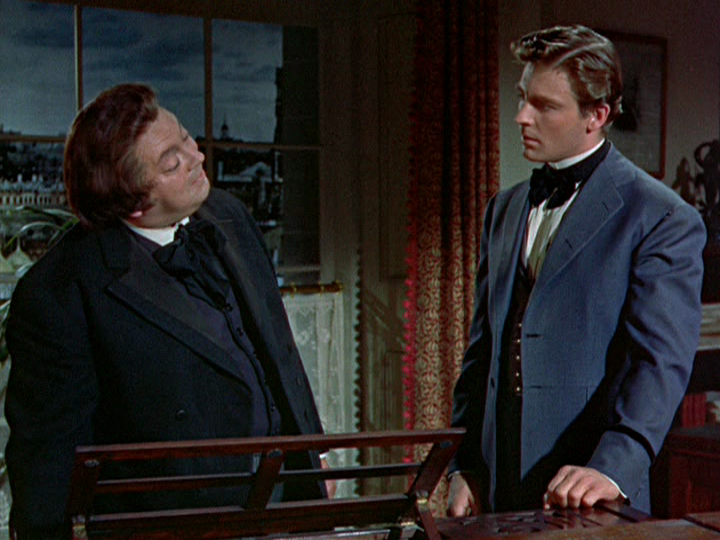
Anton Rubinstein, played by Leon Askin, asks Tchaikovsky, now played by Grant Williams, about his plans in music

Tchaikovsky’s true awakening, the narrator states, was at a performance of the traveling Italian Opera Company, starring a beautiful soprano named Desiree Artot. To try to win her affections, Tchaikovsky writes her a song, which begins a relationship leading to an engagement between the two. This engagement is broken, however, by a letter from Desiree, addressing Tchaikovsky as her dearest friend and informing him that she has married a man in her troupe. Deeply wounded, he vows to never write another note of music, but this was not to be: his genius was too strong to be shut away again. Instead, his love for Desiree was replaced by a new love for the ballet. His first ballet was entitled Swan Lake, and although Tchaikovsky had great hopes for its success, it was a dismal failure. Unable to handle the criticism, Tchaikovsky fled to Europe. He was unable to find any solace while traveling, and so from Naples, he took a steamer back to Russia, where he was troubled by a dream of a memory. He remembered the time in his childhood when his governess soothed him by reading him a fairytale, and how he immediately set to work composing it. Waking with a start, he rummages through his belongings to find the manuscript of Sleeping Beauty someone had sent him, thinking it would be a good idea for a ballet. Inspired once again, he sat down to compose the entire ballet before arriving back in Russia. “And this time,” the narrator says, “his creation was headed for the bright future that was in store for all his wonderful works.”
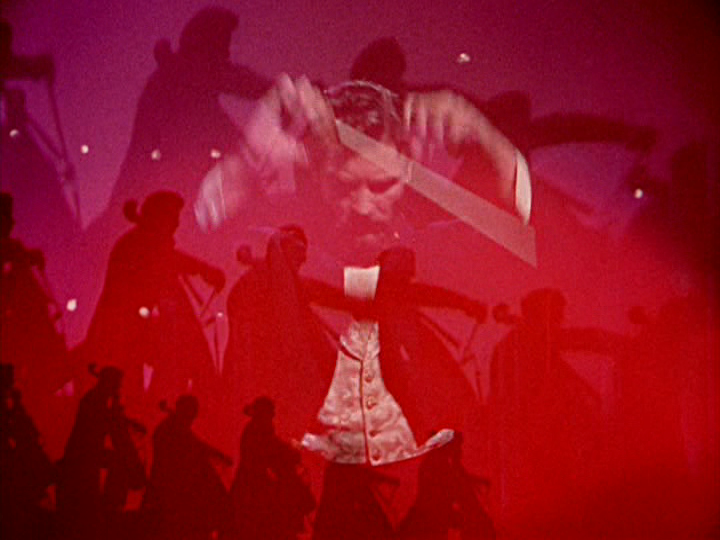
Tchaikovsky conducting the Sleeping Beauty Ballet. The orchestra scenes used are actually reused footage from Fantasia

The rest of the episode is basically an advertisement for the upcoming film version of the story of Sleeping Beauty. “Imagine your living room is a theater,” Disney urges the audience, “and your television set is the theater’s wide screen, as we bring you this romantic sequence from Sleeping Beauty.” In fact, two scenes are played for the audience: the Once Upon a Time sequence, and the rescue of Prince Phillip from the evil clutches of Maleficent, which ends as the evil fairy turns into the dragon. “Well, there’s much more to Sleeping Beauty than the few brief scenes we’ve shown you on this program,” Disney reassures us. “But I can tell you this: like all good fairytales, true love does win out.”

Although not a truly accurate depiction of Tchaikovsky’s life, the episode is a rather good watch, especially to capture the excitement of audiences seeing a new technological advancement when it came to movies. This story of Tchaikovsky’s life is a good story, and told well, even though it comes at the cost of the omission of some facts that may not have been suitable for audiences in that time period.
January 26

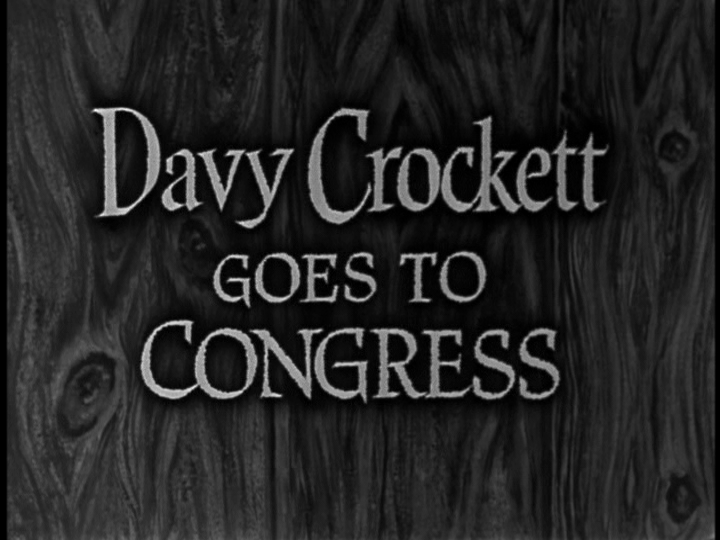
January 26, 1955 – Davy Crockett Goes to Congress Premieres on ABC.

“Now, again from Davy’s own journal, we’d like to present another story of Davy’s fabulous life. This one is called, ‘Davy Crockett Goes to Congress.’” – Walt Disney.

On the evening of January 26, 1955, the second installment of The Adventures of Davy Crockett premiered on the Disneyland television show on ABC. Shown a little over a month after the first installment, the series continued the Davy Crockett craze that had taken over the youth of America. This episode, entitled Davy Crockett Goes to Congress, was directed by Norman Foster, and written by Tom Blackburn. It stars Fess Parker as Davy Crockett, Buddy Ebsen as Georgie Russel, Basil Ruysdael as Andrew Jackson, William Bakewell as Tobias Norton, and former professional wrestler Mike Mazurki as Bigfoot Mason.

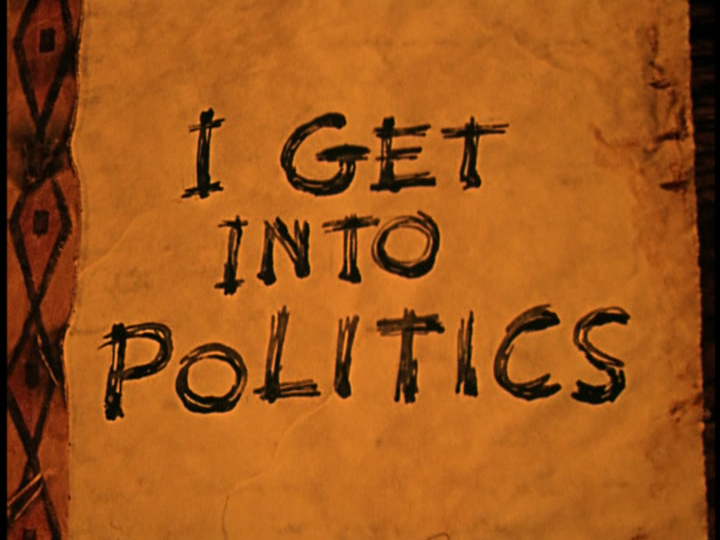
A page from Davy's own journal, as seen in the show, which introduces the story of Davy's political career

The show opens with Davy and his pal Georgie setting out to find a new piece of land to settle. Although they find the perfect spot, Georgie reminds Davy that they need to file a claim for the land. As they approach the settlement, looking for the judge to file their claim, they stumble upon a shooting match. Ever competitive, Davy challenges a man named Bigfoot Mason, wagering $15, the estimated price of the prize cow. They tie with the first round, but with their second shots, Bigfoot believes he won, as it appears that Davy completely missed the target. When it’s discovered that Davy hit the exact spot twice, he makes an unintentional enemy out of Bigfoot. The judge, discovering who Davy is, is thrilled that Davy is in town, as he may be the man that can stop Bigfoot’s schemes. The judge informs Davy and Georgie that Bigfoot and his gang have been running the Indians off of their land and selling it to newcomers who have no idea that the land has been stolen. Davy reminds the judge that there’s a treaty that guarantees the Indians their land, but the judge says that Bigfoot disregards any treaty of that nature. The few people who have tried to stop Bigfoot have disappeared, presumed dead. The judge, knowing Davy’s reputation, asks Davy to be the magistrate and serve a warrant on Bigfoot and his gang. Davy says he’d have to think about it. It doesn’t take long for Davy to decide, as he finds that the Cherokee Charlie Two Shirts has been beaten and run off his land. Davy confronts Bigfoot, and it turns into a no-holds-barred fistfight. Davy emerges victorious, and peace comes over the settlement again as the gang is brought to justice.

During one of the celebrations in town, the judge tells Davy that since the settlement is experiencing a lot of growth, they’ll be getting someone to represent them in Nashville, and the town has picked Davy as the man they want to run for the state legislature. Davy responds, “I’m plumb flutterated by the honor, but, well, I ain’t no politician.” When the judge informs him that his competition is Amos Thorpe – the lawyer who tried to get Bigfoot off, and made a lot of money from the illegal Indian land grabs – Davy considers running. The thing that sets him on his political path, however, is the sad news that his wife, Polly, came down with a fever and died. Consumed by grief and needing a distraction, he decides to run for the spot in the state legislature, proclaiming that he’ll represent the town as honestly as he can. Davy wins by a landslide.

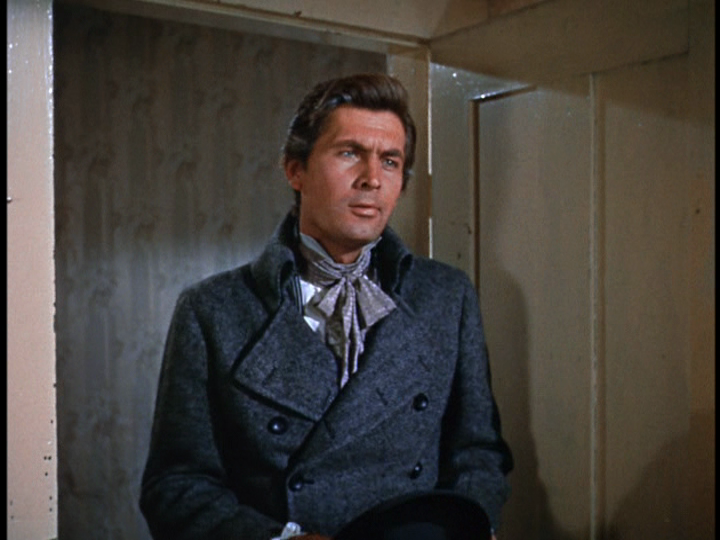
Davy in formal clothes after he's been elected to the state legislature

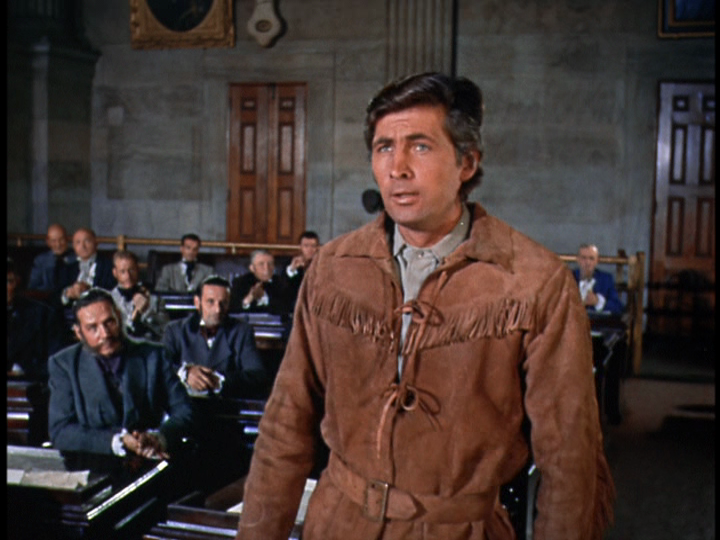
Davy’s political career has been watched closely by his old Major, Tobias Norton, and General Andrew Jackson. Jackson is preparing to run for the presidency, and both he and Norton want Davy to have a seat in Congress. As Jackson puts it to Davy, “I want men I can trust, men I know are with me, men that can get the rest of the country behind me.” Davy responds, “Well, if I was to do what you asked, and I did get in, I wouldn’t be taking orders from you, General. I’d be taking them from them that elected me.” Thanks to a set of books Georgie has been publishing about their adventures together, Davy is able to win the seat in Congress, and surprises the members by showing up in buckskins. Georgie is there to greet him, and Davy tells him off about having to show up as the “king of the wild frontier, thanks to you.” He introduces himself with a strange speech, but promises that he won’t be one of those politicians who doesn’t do anything more than listen, and the next time he stands before them, he’ll “have something to say worth saying.”

Davy’s career hits a snag when Norton tells Davy he’s to go on a speaking tour, calling it a “great service for the country.” Norton adds that people want to make Davy the next president of the United States. Georgie, ever suspicious of Norton, finds out the truth: Norton sent Davy out of the way so he wouldn’t be able to vote against a bill meant to take away all lands from the Indians. Georgie and Davy race back to Washington, where Davy punches Norton out as the former major tries to stall him, and storms in to Congress, giving the last great speech of his political career.

Davy giving a speech in Congress, dressed in his buckskins

Compared to most of the shows on television at the time that featured cowboys and Indians, the Davy Crockett serial was very well made, especially when it came to the matte paintings of Nashville and Washington, D.C., painted by Peter Ellenshaw. Walt Disney sent crews to picturesque areas in North Carolina to do research of the landscape, and it made the serial stand out against all the other shows. There’s also no denying the charm of Fess Parker as Davy Crockett. The last impassioned speech he gives as Congressman Davy Crockett is one that will be remembered.

.

January 16

January 16, 2003 – Disney’s Aladdin: A Musical Spectacular Opens in Disneyland

The sign for the show at the Hyperion Theater.

“Must I yearn forever to be free, free to climb a tree and ponder, free to wander?” – Jasmine, “To Be Free.”

On January 16, 2003, the first performance of Disney’s Aladdin – A Musical Spectacular premiered in the Hyperion Theater at the Hollywood Pictures Backlot in Disneyland’s California Adventure Park. Based on the 1992 hit animated film, the Broadway-style musical uses many special effects and elaborate puppetry to transfer the essence of the animated film to the live-action stage, including Aladdin and Jasmine’s enchanted carpet ride around the theater. The 45-minute show is one of the more popular events in Disneyland.

The Genie and Aladdin. Note the elaborate steps taken to recreate the Genie in costume.

Many of the film’s elements are retained in this stage production: many of the musical numbers by Alan Menken, Howard Ashman, and Sir Tim Rice are performed, and the show includes a new number with lyrics and music by Alan Menken, entitled To Be Free. A cast recording released in 2003 contains many of the instrumental tracks used throughout the show. The cast on the recording includes Miles Wesley as Aladdin, Dee Dee Magno as Jasmine, and Nick Santa Maria as The Genie.

Thanks to the show’s popularity at Disneyland, Aladdin has begun its journey to other stages, heading toward a Broadway production, if the show does well. A version of the show opened at Seattle’s 5th Street Theater in July, 2011, and another production is scheduled from July 5th through the 13th at The Muny Theater in St. Louis. This new production will include songs by Alan Menken and Howard Ashman that had been cut from earlier drafts of the film.

January 8

January 8, 1956 – The Mickey Mouse Club Circus Closes in Disneyland

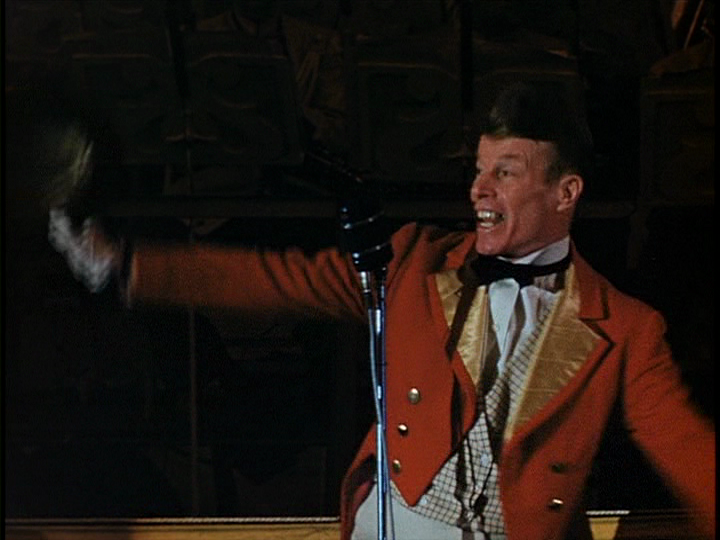
Jimmie Dodd - the Ringleader of the circus

“Fantastic circus. And nobody came. Why? Because they came to see Disneyland.” – Jack Lindquist, Retired Disneyland President

The Mickey Mouse Club Circus—which opened in Disneyland on November 24, 1955—closed on January 8,1956, lasting only one holiday season. Launched almost two months after The Mickey Mouse Club began airing on ABC, the circus grew out of Walt’s lifelong fascination with the Big Top, as shown in his films Dumbo and Toby Tyler, or Ten Weeks with a Circus.

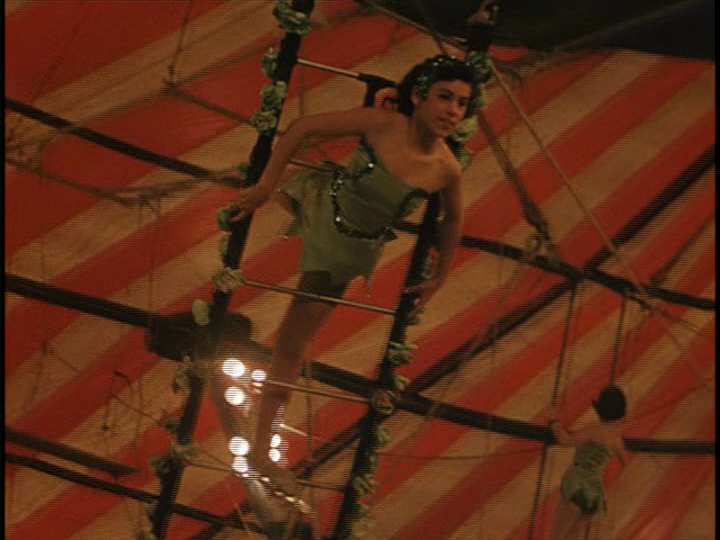
A cast member performing part of the aerial act

The show lasted seventy-five minutes. One of the highlights was an aerial act, led by Mickey Mouse Club member Doreen Tracy. However, during one performance, Tracy forgot her instructor’s warning to never look down, and found herself frozen on top of the platform until a crew member grabbed a ladder to bring her down.

The circus is considered one of Walt’s few failures. Although the cast loved performing the acrobatic stunts, it wasn’t enough to save the show. Eager Mickey Mouse Club fans across the country were not always able to travel to Anaheim to see the cast, and most people who came to Disneyland tended to be more interested in the park’s other features, figuring that they could see a circus back home. After the closing, the tent was then used in Holidayland—ironically, another failed idea of Walt’s—for corporate picnics and other events.

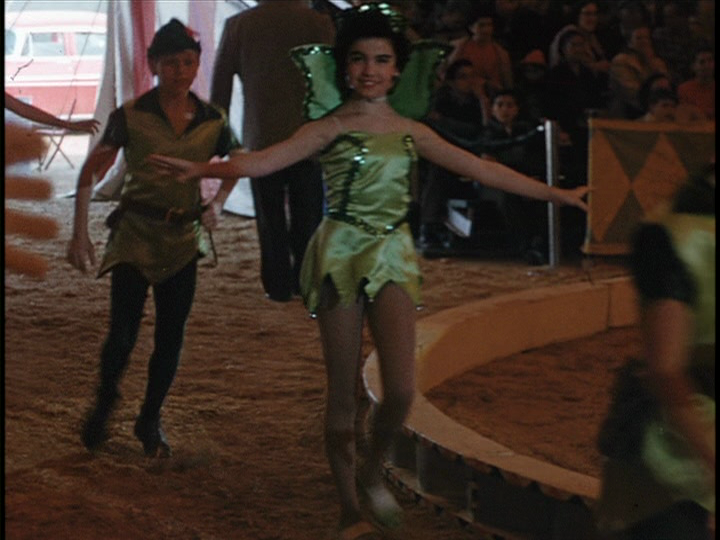
Annette Funicello dressed as Tinkerbell. All the girls wore Tinkerbell costumes, and the boys were dressed as Peter Pan.

Fortunately, the circus closing had no impact on the popularity of The Mickey Mouse Club, and the cast members were able to go on several tours later on, including a trip to Australia in 1959.


January 3

January 3, 1965 – Disneyland 10th Anniversary Episode Premieres on Walt Disney’s Wonderful World of Color.


“Ten years of happiness for fifty million friends.”

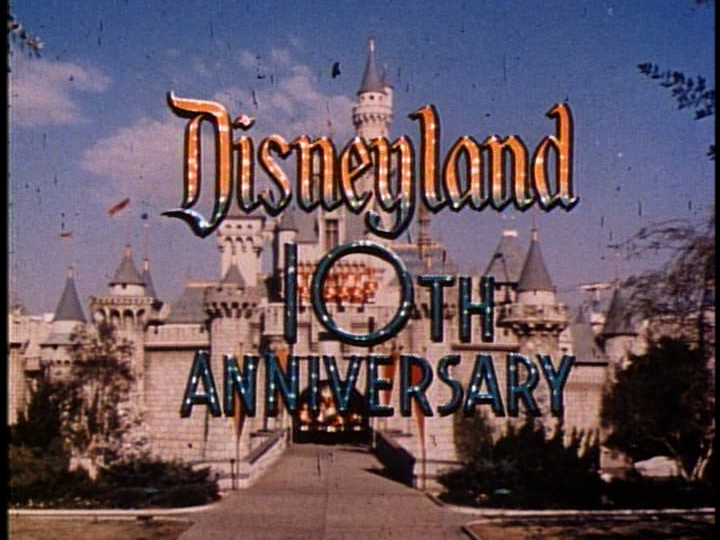
In 1965, six months shy of Disneyland’s actual 10th anniversary, Disney released this special, which gave viewers not only a look at new attractions coming to the park – including what had been submitted to the World’s Fair – but also a brief history of the park and a tour of some of the current attractions. The episode was directed by Hamilton S. Luske, with Special Material provided by Bill Berg. The Anniversary Song featured in the show was written by Richard and Robert Sherman. It has been released on DVD twice, first on the Walt Disney Treasures:  Disneyland, USA and later on Walt Disney Treasures: Your Host, Walt Disney.

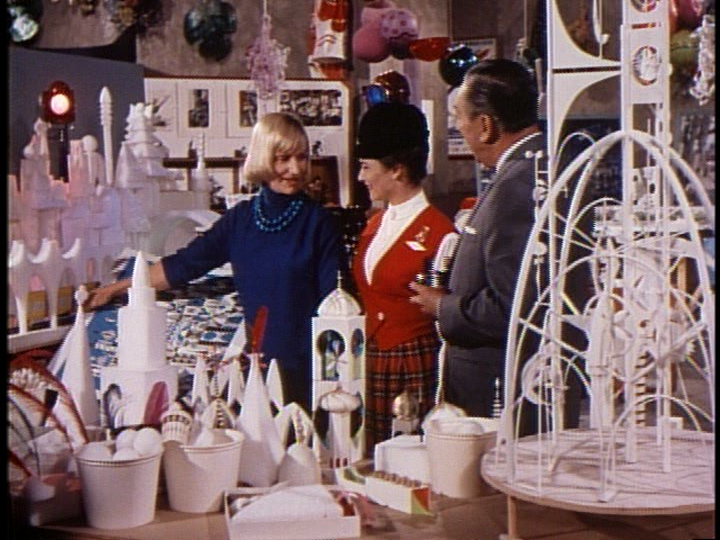
Walt and Julie discussing It's A Small World with Disney Legend Mary Blair.

The episode opens with Walt and Julie Reihm, who had been named Miss Disneyland Tencennial, in the Imagineering Department. As the two go around the room, they meet Disney Legends Mary Blair, John Hench, Marc Davis, Rolly Crump, Blaine Gibson, and Claude Coats, and learn about the upcoming attractions It’s A Small World, Plaza Inn, The Haunted Mansion and The Museum of the Weird, and Pirates of the Caribbean. The audience gets a glimpse into the processes that go into creating an attraction, beginning with preliminary sketches and moving on to scale models, with special variations for each attraction. For instance, for The Haunted Mansion, Walt explains to Julie, the Imagineers are collecting ghosts from all over the world, adding that “[they’re] making it very attractive to them, hoping they’ll want to come and stay at Disneyland, so [they’re] putting in wall-to-wall cobwebs, and we guarantee them creaky doors and creaky floors.” Suddenly Walt realizes that they have only ten seconds to get to Disneyland, and with the help of Tinkerbell, they arrive just in time for the parade in the Magic Kingdom.

The beginning of The Anniversary Song

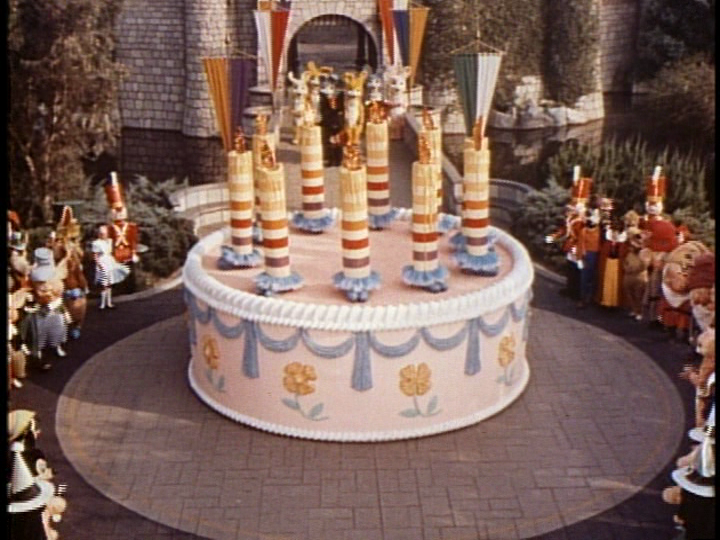
“All the characters of the Magic Kingdom are gathering for the tenth anniversary celebration,” Walt narrates, as toy soldiers begin marching down the castle walkway, followed by a host of Disney characters. Mary Poppins, the newest member of the Disney family, makes a surprise visit, and after a quick dance number, she flies away again. “From now on,” Walt declares, “no Disneyland celebration is going to be complete without Mary Poppins.” Singing a song celebrating the Tencennial, a magic dancing cake and candles open the parade down Main Street, which leads off with children from Anaheim schools in their marching bands and dance troupes.

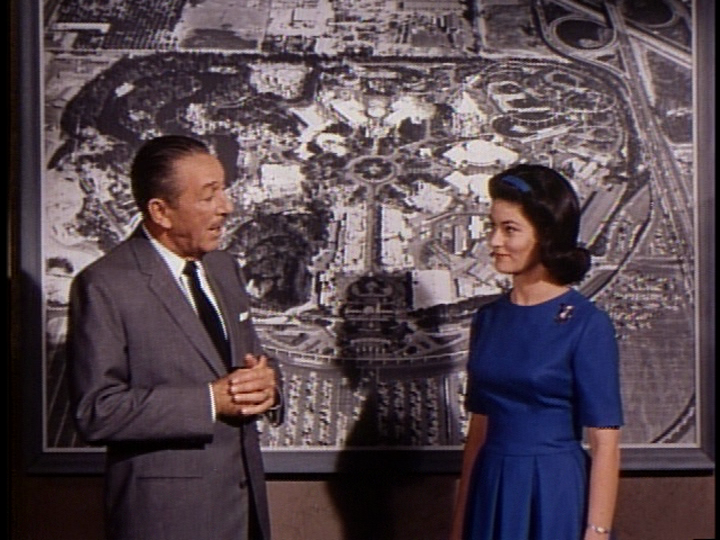
Walt and Julie in front of the aerial view of the park.

The second half of the program is an overview of the previous ten years of the park. “It seems like only yesterday that Disneyland was just an idea and some plans on paper,” Walt reminisces, as he shows the audience an aerial photograph of Disneyland, comparing it with the area when it was just an orange grove and some farm houses. The audience is then taken around Disneyland to the popular attractions that opened between 1955 and 1965, with some little-known facts thrown in to the commentary. Dignitaries and celebrities are seen enjoying attractions at the park, from Prince Bernhard of the Netherlands as a passenger on the Submarine Voyage, to Mary, John, and Hayley Mills exploring the Swiss Family Robinson tree house.

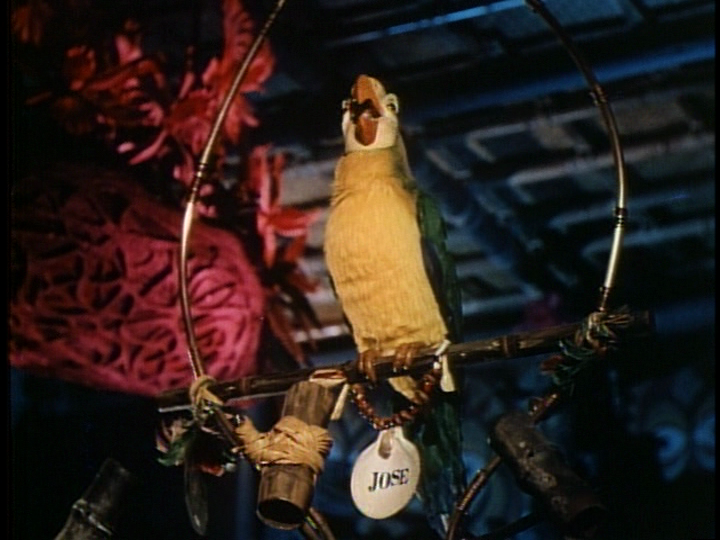
Jose, your host for the Enchanted Tiki Room.

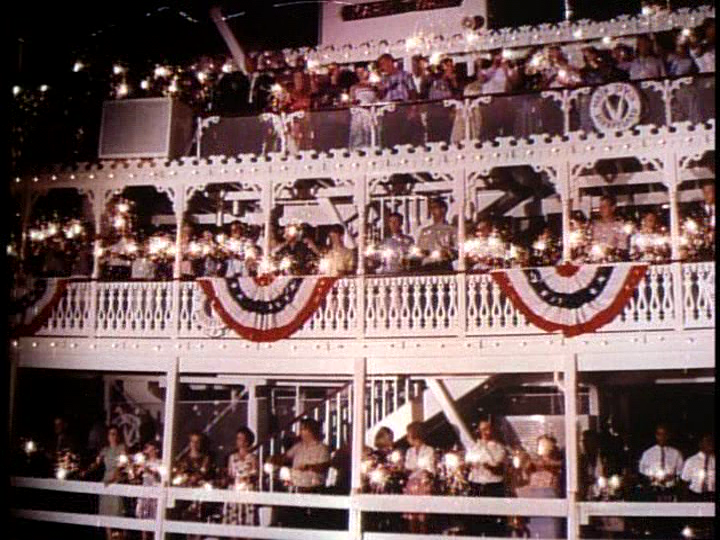
The last two segments offer an in-depth look at the Enchanted Tiki Room, and the traditional Dixieland and Disneyland Celebration on the Big River. The Enchanted Tiki Room segment begins with an explanation of audio-animatronics by the parrot Jose, who narrates as the audience is taken backstage to see all the complicated equipment that powers the entire show, from the electric engineer (or, as Jose puts it, the veterinarian for all the Tiki Room actors) to the relay panel. The audience is then treated to a performance of the birds in the Tiki Room. As we move to the Dixieland and Disneyland Celebration, we see great Dixieland musicians from all over the country perform on boats down the river, including a great performance by the legendary Firehouse Five Plus Two, and ending with a spectacular show on the Mark Twain Riverboat, with cast members and musicians holding sparklers, illuminating the night.

A grand finale for the Dixieland and Disneyland Celebration

This is a fantastic celebratory episode of the show. For those who did not live close to the park, it was a wonderful way to see the popular attractions, and learn secrets of how they were designed. The documentary also does a wonderful job of advertising the park for its 10th Anniversary. The show is, of course, a giant advertisement for the Disney projects, but it is done in a charming way that entices, entertains, and provides some insight into different aspects of the Walt Disney Company. The episode is well worth seeing.