RSS Feed

Tag Archives: Animator

March 9

March 9, 1911 – Animator, Member of Disney’s Nine Old Men, and Disney Legend John Lounsbery is Born
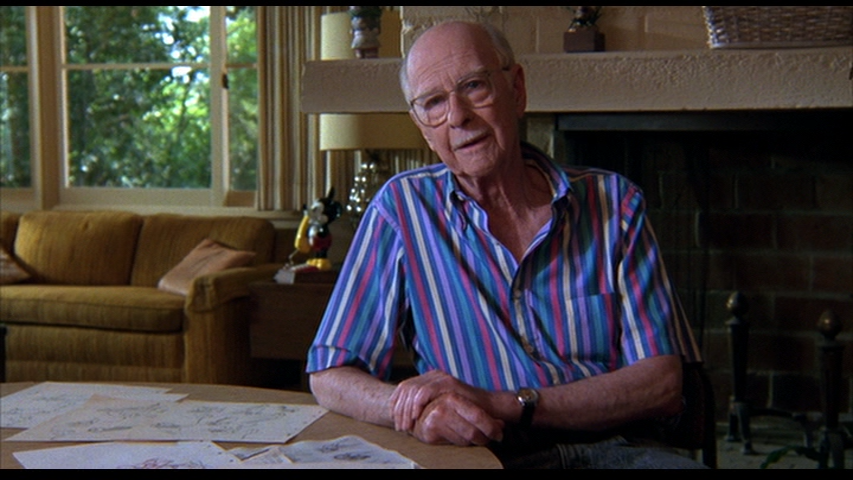
vlcsnap-2013-03-09-09h00m38s147

“…very quiet, gentle guy, and what was surprising is the person seemed so reserved and very encouraging in his comments about my drawings, and then I’d look at his drawings, and they were bold! Powerful! I mean, this guy drew with such conviction…” – Animator Glen Keane

On March 9, 1911, John Lounsbery was born in Cincinnati, Ohio. When he was five, his family moved to Colorado. Lounsbery’s talent for animation was evident at an early age, and he was well known in high school for his caricatures and cartoons.  After attending the Art Institute of Denver, Lounsbery attended the Art Center School of Design in Los Angeles. An instructor there sent him to interview with Walt Disney. Lounsbery was hired on July 2, 1935, to serve as an assistant animator on Snow White and the Seven Dwarfs, and was paired as an assistant to animator Norm Ferguson, who became his mentor and great inspiration. The team would be assigned to the plum role of the Witch in Snow White. After this, Lounsbery animated Honest John and Gideon as part of Ferguson’s team. Lounsbery’s skills flourished under the next animated feature, Fantasia, where he animated the “Dance of the Hours” sequence; his work is particularly noticeable on the animation of Ben Ali, the main alligator. Lounsbery was then named as one of six animation directors on Dumbo, where his focus was on the interaction scenes between Dumbo and Timothy Mouse. During World War II, Lounsbery stayed at the studio and animated feature films including Victory Through Air Power and The Three Caballeros, and once again served as an animating director on the animated sequences of Song of the South.

In the 1950s, Lounsbery continued to serve as an animation director on animated feature films, including Alice in Wonderland and Peter Pan. He also animated several memorable characters in these films, including the Mad Hatter in Alice in Wonderland, and George Darling in Peter Pan. His work on the partnership of Honest John and Gideon in Pinocchio would be seen again in Lady and the Tramp with his work on the characters Tony and Joe. “John Lounsbery was a brilliant draftsman. In Lady and the Tramp he did Tony and Joe and brought these guys completely to life,” animation director John Musker said in an interview. Truly, Lounsbery was considered a wonderful draftsman who could do justice to any scene that was considered “slapstick,” such as the “Scrumps” scene in Sleeping Beauty, where the minstrel gets drunk on the celebratory wine. “[He] simply had a way of drawing that was as sophisticated as a New Yorker cartoon, and yet he loved slapstick,” said animator Will Finn. “He’s an unsung animator in some ways because people don’t hear his name mentioned as often, but his work on the jester [in Sleeping Beauty] is really one of the highlights of the film for me.” In 1970, Lounsbery was promoted to director for Winnie the Pooh and Tigger Too!, and then co-directed The Rescuers with Wolfgang Reitherman and Art Stevens. Unfortunately, Lounsbery died before the films’ release of heart failure during heart surgery. He was named a Disney Legend in 1989.
January 23

January 23, 1900 – Animator and Disney Legend David Hand is Born

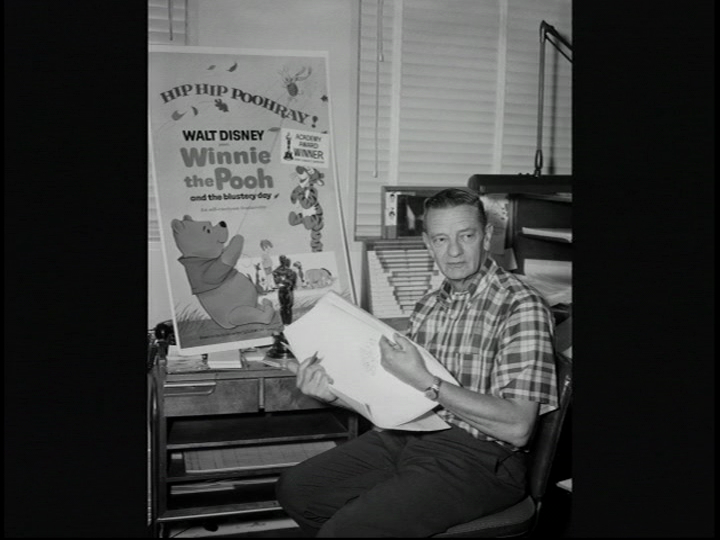
vlcsnap-2013-01-22-20h00m30s88

“[Hand] was cavalier in transforming Walt’s dreams into animation.” – Frank Thomas and Ollie Johnston, from the book Disney Animation: The Illusion of Life

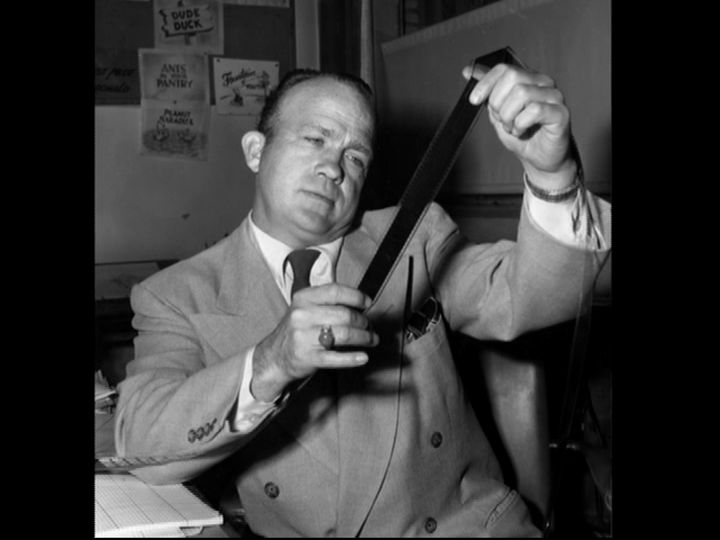
On January 23, 1900, David Dodd Hand was born in Plainfield, New Jersey. He attended the Chicago Art Institute, and joined the J.R. Bray Studio after graduation, later working for Max Fleischer in the “Out of the Inkwell” cartoons. After the release of Steamboat Willie in 1928, Hand applied for work at the Disney Studios, and was hired in 1930. Hand worked on several short films for his first three years with the studio before becoming an animation director, the third in the studio’s history after Burt Gillett and Wilfred Jackson. He was noticed by Disney himself quite early for his ability to recognize quality, and never sacrificed quality for the cost of the film. Hand is noted for working on 70 short film and three animated features. Hand’s last work at the Disney Studio was serving as the animation supervisor for Victory Through Air Power.

In 1944, Hand was invited to set up a new animation studio in England, winning a five-year contract with J. Arthur Rank. Hand became a well-known influence on British animation, and in 1951, he moved back to the United States to pursue a career in industrial filmmaking. In 1986, Hand passed away at the age of 86; in 1994, he was inducted as a Disney Legend.

January 5

January 5, 1913 – Animator, Writer, Director, and Disney Legend Jack Hannah is Born

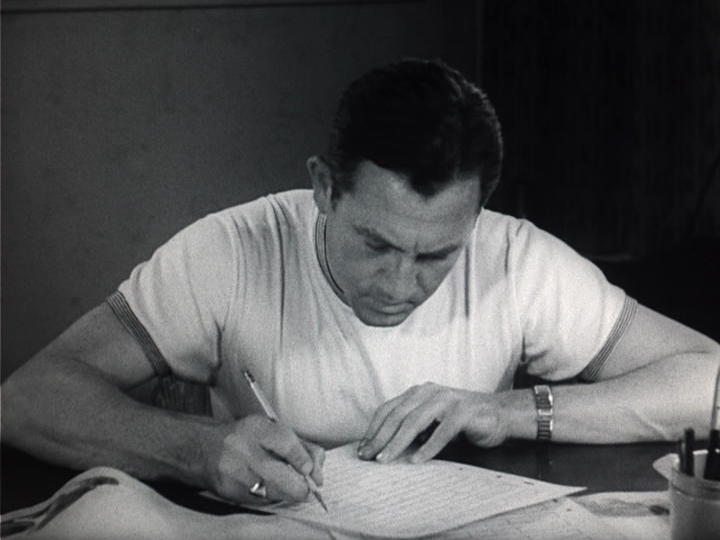
vlcsnap-2013-01-04-20h02m46s143

“He was a character, but he was like a father figure to me, because he really took care of me, not only in just showing me the tricks of the trade, and about Donald, and…Disney animation…he was a kind of rough and tumble kind of guy.” Tony Anselmo, current voice of Donald Duck

On January 5, 1913, Jack Hannah was born in Nogales, Arizona. In 1931, Hannah moved to Los Angeles, California, studying art at the Art Guild Academy; in 1933, he submitted his portfolio to the Walt Disney Studios, and was hired as an in-betweener and a clean-up artist. His first short film with an animator credit was Gulliver Mickey, and he was also a key animator for the Academy Award-winning short film The Old Mill. His introduction to Donald Duck was the short film Modern Inventions; Hannah would soon be associated with the “Gable of the [Disney] stable.” Hannah moved to the story department in 1939, writing many of the Donald Duck stories. For 27 short films, Hannah worked with Carl Barks, the Donald Duck comic book artist, to help shape the character of Donald in films, including Donald Gets Drafted and Donald’s Vacation. In 1943, he became a director of the short films, introducing new antagonists for Donald, including Chip and Dale. Hannah also introduced Donald to the new medium of television, which includes A Day in the Life of Donald Duck and At Home with Donald Duck.

Although Hannah retired in1959, he was asked in 1975 to help develop a new class at the Disney-founded California Institute of the Arts, the Character Animation programs. In 1992, Hannah was honored as a Disney Legend, credited with developing the personality of Donald Duck in the animated short subjects. He and Carl Barks are considered the “fathers” of Donald Duck. Hannah passed away at age 81 in Burbank, California in 1994.

December 3

December 3, 1965 – Director, Screenwriter, Producer, and Voice Actor Andrew Stanton is Born

 vlcsnap-2012-12-02-16h59m56s255

“Without meaning to, I sort of made this epic journey that takes you all over the ocean. That meant every set piece had to be different. The look of being underwater is actually quite simple from a technical standpoint. It was just really tough to dial all the different ingredients just right.”

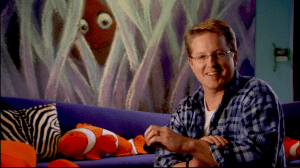
On December 3, 1965, Andrew Stanton was born in Rockport, Massachusetts. As a child, he wanted to be a comic-book artist, which evolved into wanting to become an animator. He attended the famed California Institute of the Arts, and in 1990, he was the second animator to join Pixar Animation Studios; he and Pete Docter were the ninth and tenth employees hired by the young animation studio. He soon began working as a designer and writer on Pixar’s first film, Toy Story. The time spent on Toy Story was rather tense, as the writers were given comments and notes from Jeffery Katzenberg, whose big push was to make the main characters more “edgy;” in following these notes, the film was no longer Pixar’s, and the character of Woody was stripped of all charm. Disney shut down the production, and the Pixar team quickly began rewriting the film they wanted to make, with Stanton sequestering himself in a small office, only to emerge with new pages of script. The film went on to be a success, with Andrew Stanton, along with Joss Whedon, Alec Sokolow, and Joel Cohen garnering an Academy Award Nomination for Best Original Screenplay.

Stanton would go on to co-direct and co-write A Bug’s Life, co-write Toy Story 2, and co-write and Monsters, Inc., before being tapped to direct his first feature film, Finding Nemo. It became highest grossing animated feature on its release (before being taken over by Toy Story 3), and Stanton was awarded the Academy Award for Best Animated Feature.  Stanton’s next major project was 2007’s Wall-E, which he directed and co-wrote. Similar to Finding Nemo, Stanton wanted to pick a setting that would challenge the animators, this time choosing space. The film was another success, winning the Academy Award for Best Animated Feature. After Wall-E, Stanton mostly executively produced several short films for Pixar, and co-wrote Toy Story 3. In 2012, Stanton’s project John Carter was released; he directed and co-wrote the film, adapting it from A Princess of Mars by Edgar Rice Burroughs. Unfortunately, the film received mixed critical reviews, and just barely made back its budget. However, Stanton announced that his next project is back at Pixar, working on a sequel to his hit film, Finding Nemo.

November 17

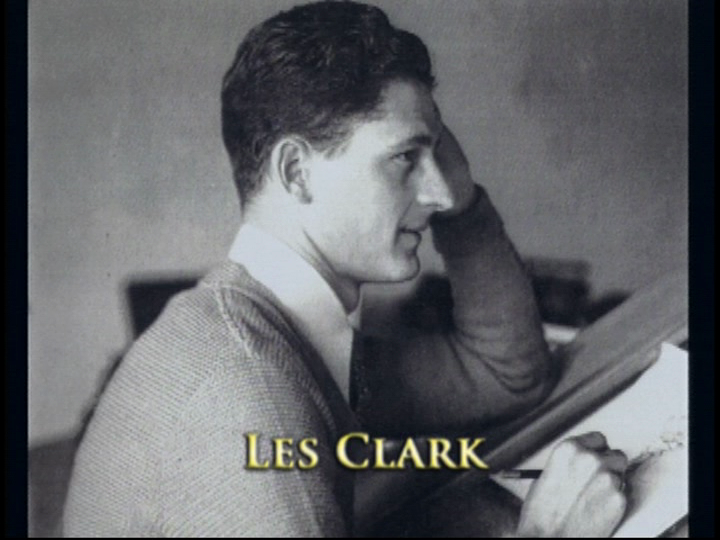
November 17, 1907 – Animator, Member of Disney’s Nine Old Men, and Disney Legend Les Clark is Born

“I remember, I was in the Annie Awards ceremony with Les Clark’s widow, and there was a picture of Walt up there with a drawing of Mickey…and she was like [whispering], ‘Les did that drawing.’”- Animation Director John Musker

On November 17, 1907, Les Clark was born in Ogden, Utah. His family moved to Los Angeles, where he graduated high school. During high school, Clark worked a summer job near the Disney Brothers Studio at a lunch counter that Walt and Roy Disney frequented. When Clark asked Walt for a job one day, Walt asked him to bring in his drawings. “He said I had a good line and why don’t I come to work on Monday,” Clark recalled. “I graduated on a Thursday and went to work [the following] Monday.” In 1927, Clark joined the studio, with Disney warning him that it might be just a temporary position. The temporary position began a lifelong career at Disney, and Clark became one of the first members of the Nine Old Men, Disney’s affectionate name for his top animators.

Clark was adept at drawing Mickey Mouse, able to draw a scene in the debut Mickey Mouse film, Steamboat Willie. One of his notable segments in Snow White and the Seven Dwarfs was the scene where the dwarves dance with Snow White. Clark was also responsible for animating and directing on nearly 20 animated features, including Pinocchio, Dumbo, Saludos Amigos, So Dear to My Heart, 101 Dalmatians, Song of the South, Fun and Fancy Free, Cinderella, Alice in Wonderland, Peter Pan, and Lady and the Tramp. Clark also contributed to more than 100 shorts. After being the sequence director for Sleeping Beauty, Clark moved to directing television specials and educational films, which included Donald in Mathmagic Land and Donald and the Wheel. Clark retired from the Disney Studios in 1976, and passed away in 1979. He was named a Disney Legend in 1989.
November 15

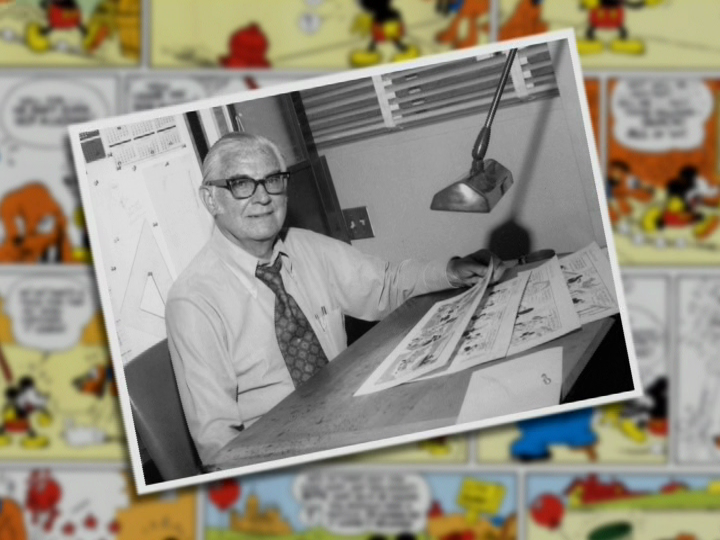
November 15, 1975 – Floyd Gottfredson’s Final Daily Strip is Published

“Floyd played a major role in getting Disney’s (then) new character, Mickey Mouse, known throughout the world by producing Mickey’s daily comic strip.” – Archivist Dave Smith

On November 15, 1975, the final daily strip drawn by comic strip artist Floyd Gottfredson was published. Gottfredson, having drawn the comic as a “temporary assignment” in 1930, retired from the Disney Company on October 1, 1975. The comics began as an adaptation of the short films, evolving into a humorous adventure. As Gottfredson continued the strip, the strip became more gag focused as the size of comics shrank.

November 10

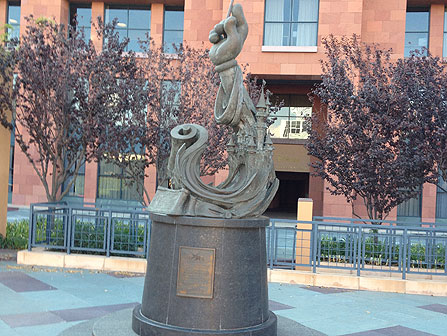
November 10, 1999 – The 1999 Disney Legends Ceremony Takes Place

Image Credit: Disney Insider

“The Walt Disney Company honors those special few who best embody the Company’s unique creative spirit, personified by its founder, as Disney Legends.”

On November 10, 1999, the Disney Legends ceremony took place, honoring nine people who have made a significant contribution to the Disney Company. Among those honored were Tim Allen (Toy Story, The Santa Clause series), Mary Costa (voice of Aurora in Sleeping Beauty), Al Konetzni (character merchandise), Dick Nunis (attractions), and Charlie Ridgway (attractions). Receiving the honor posthumously were Norm Ferguson (animator), Bill Garity (film technique), Yale Gracey (animation and imagineering), and Hamilton Luske (animation).

November 4

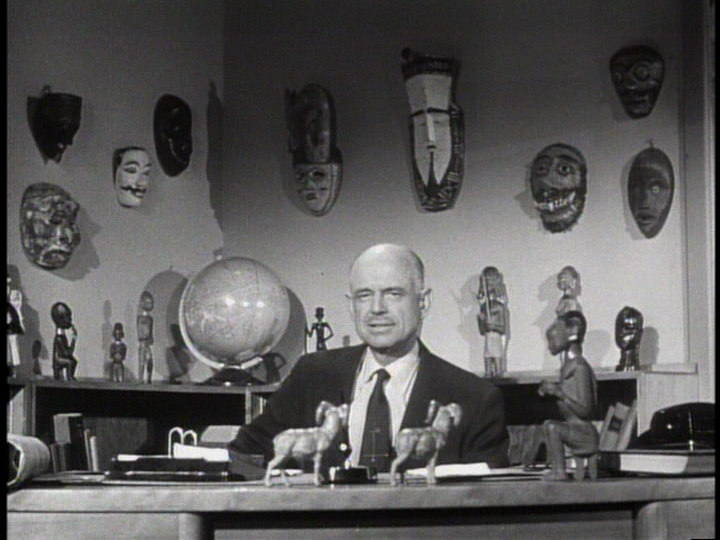
November 4, 1895 – Director, Producer, and Disney Legend Ben Sharpsteen is Born

“Concerning Ben Sharpsteen and his contributions to the development of the Disney organization, I want to say he played a very important part.” – Walt Disney

On November 4, 1895, Ben Sharpsteen was born in Tacoma, Washington, and was raised in Alameda, California. Sharpsteen attended the University of California at Davis to study agriculture, and joined the Marines in 1917 to serve during WWI. After the war, Sharpsteen worked at various studios as an animator, including Paramount, Jefferson Films, and Max Fleischer Studios. After his work was recommended to Disney, Sharpsteen flew from New York to Los Angeles; he was hired and paid one of the highest salaries in the studio, higher even than Disney’s top animator, Ub Iwerks.

For his first six years at Disney, Sharpsteen contributed animation on 97 Mickey Mouse short films and several Silly Symphonies. In 1933, Sharpsteen also established an animation training program within the studio, and began to recruit talented artists. In 1934, he moved to directing on the short films, which led to his role as a sequence director on Snow White and the Seven Dwarfs. He then became a supervising co-director on Pinocchio, and a production supervisor on Fantasia, Cinderella, and Alice in Wonderland. In the 1950s, Sharpsteen worked on several of the True-Life Adventure series, even presenting the series on television on the first episode of the Disney anthology series Disneyland. After working with the Disney Studios for 33 years, he retired in 1962, and passed away on December 20, 1980. He was inducted as a Disney Legend in 1998.

November 1

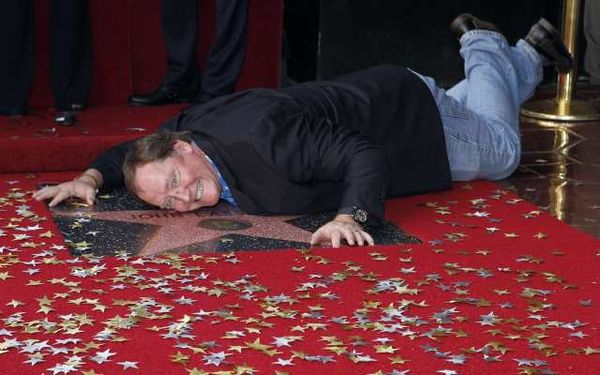
November 1, 2011 – John Lasseter Receives a Star on the Hollywood Walk of Fame

Image Credit: latimes.com

“To be here today, to be getting a star on the Hollywood Walk of Fame, I just can’t believe it.”

On November 1, 2011, animator, director, and Chief Creative Officer of Pixar and Walt Disney Studios John Lasseter was awarded a star on the Hollywood Walk of Fame for his work in the field of animation. His star is located in front of the El Capitan Theater, where every Pixar film has been shown since the company’s first full-length animated feature, Toy Story. Lasseter was joined by his family and his colleagues at Pixar, as well as Pixar voice actors Owen Wilson, Bonnie Hunt, Patton Oswalt, Cheech Marin, Emily Mortimer, Don Rickles, and Pixar favorite John Ratzenberg. Lasseter also gave thanks to the late Steve Jobs, by saying, “[W]ithout Steve, Pixar wouldn’t exist. These films wouldn’t exist. I honor him.”

October 31

October 31, 1912 – Animator, Member of Disney’s Nine Old Men, and Disney Legend Ollie Johnston is Born

“I remember one morning I was lying in bed in our boardinghouse. Frank [Thomas] was shaving, and I was waiting till he finished with the razor…he turns around and says, ‘Oh, by the way, they want you to take a tryout at Disney’s.’ I thought, ‘Gee whiz. Here I am going to art school. My dad just paid my tuition. Oh, well, I’ll try it. I’ll go out there and see if I can’t make some money and pay my own way, go back to art school.’ So I went out and took the tryout. Somehow I made it. After I had been there another two weeks after that, I found out this is the only place I would ever want to be.” – Ollie Johnston

On October 31, 1912, Oliver Martin Johnston, Jr., was born in Palo Alto, California. His father was a professor of romance languages at Stanford University; it was in the Stanford art department that Johnston met Frank Thomas, who became his lifelong friend and co-animator. In his senior year, Johnston transferred to the Chouinard Art Institute in Los Angeles. In 1935, he joined the Walt Disney Studios as an inbetweener on Mickey Mouse cartoons, and worked on early shorts that included Mickey’s Garden and The Tortoise and the Hare. Johnston worked on Snow White and the Seven Dwarfs as an assistant animator. His animation roles soon grew and he got the plum role of directing animator of Bambi and Thumper in Bambi, the evil stepsisters in Cinderella, Mr. Smee in Peter Pan, and the three good fairies in Sleeping Beauty, among others. He retired in 1978, with his last film being The Rescuers, in which he was caricatured as Rufus the cat.

With Frank Thomas, Johnston published the book Disney Animation: The Illusion of Life, which discussed the 12 principles of animation. This book has become a staple in the study of the techniques of animation. Johnston was also known for his love of model trains. He built  his first backyard railroad in 1949, and inspired Walt Disney to become involved in the hobby himself. Johnston was named a Disney Legend in 1989; as the last surviving member of the Nine Old Men, Johnston was awarded the National Medal of Arts in 2005. He passed away on April 14, 2008.