RSS Feed

Tag Archives: 1940s

March 15

March 15, 1940 – The Donald Duck Short, The Riveter, is Released to Theaters
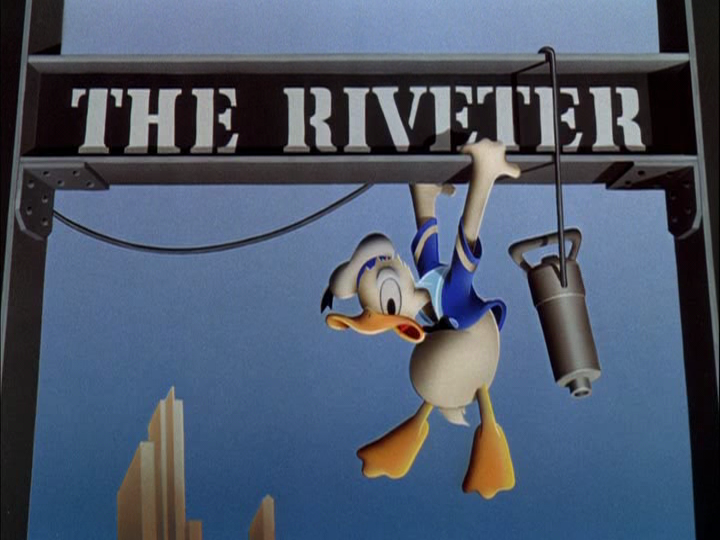
“Oh boy, oh boy! Am I a riveter!”

On March 15, 1940, the Donald Duck short, The Riveter, was released to theaters. Directed by Dick Lundy, and starring the voices of Clarence Nash as Donald and Billy Bletcher as Pete, the short tells the story of Donald eagerly taking a job as a riveter for Pete, even though Donald really has no clue what a riveter is.

It’s a busy day at a construction site, and a fence is seen bulging from some sort of racket. Suddenly, a worker bursts through the fence, with Pete yelling off screen, “Get out! You’re fired!” The worker dashes away, leaving his lunch behind. Pete steps through the hole the worker made through the fence and looks around menacingly before hammering in a sign with his fist: Riveter Wanted. Who should turn the corner at that moment than Donald Duck, who is happily signing “Heigh Ho” from Snow White and the Seven Dwarfs. He walks past the sign, but is suddenly drawn back to it.
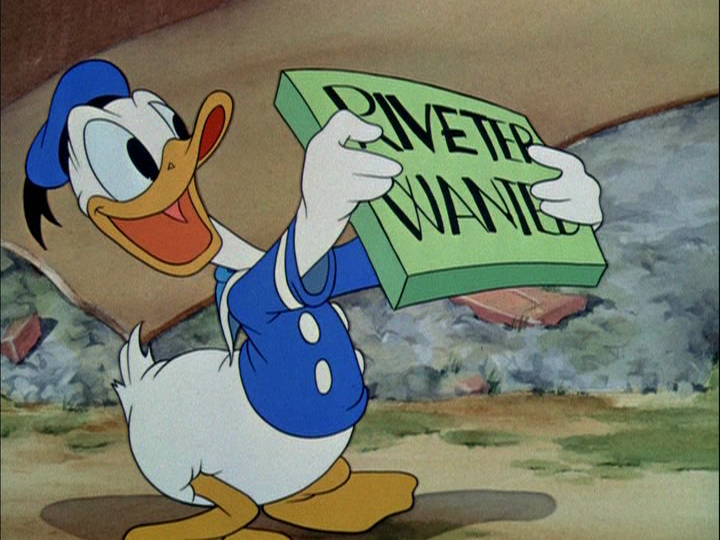
Donald shows Pete the sign, explaining that he's a riveter

Suddenly excited, Donald grabs the sign and decides to apply for the job. He looks up at the outline of the worker that was thrown through the fence and remarks on what a peculiar doorway it is, not realizing the danger he’s going to be in. When Donald applies for the job, Pete laughs at him, but gives him the job when Donald shows Pete he has some backbone. Elated, Donald asks where he starts, and Pete grabs him by the collar, showing him that he’ll stop on the top floor of the skyscraper, which appears to be a hundred stories high. Donald nearly passes out at seeing the great heights he has to go up.

Pete throws Donald into an elevator, and Donald tentatively asks how he gets up to the top. Pete then throws a lever, which zooms the elevator up to the top floor. Donald walks across steel beams, as if dazed, and nearly walks off the edge before getting his act together and crawling back to the safety of the elevator. Unfortunately, the elevator falls beneath him, and he grabs onto a steel beam for dear life. Suddenly he hears Pete yelling at him from the ground to get to work. Donald grumbles at him to shut up, voice very low, but Pete flies up to the top in the elevator and demands to know what he said. Donald mollifies his boss, embarrassed, and Pete goes back down again.
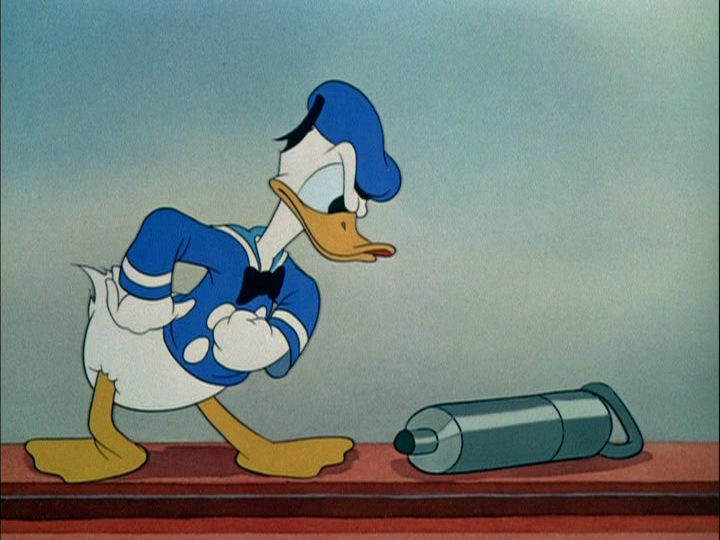
Donald versus the rivet gun

Although Donald had been excited to be a riveter, he looks at the rivet gun curiously, wondering how it works. He smashes the handle of it on the beam, demanding that it do something, which it does when it begins shooting rivets into Donald’s hat, nearly tearing his head off. As Donald tries to gain control of the strange tool, it begins to rivet with him barely hanging on to the handle. When he is able to let go, he decides to give it a good kick, but ends up catching his foot in the handle and having it start to rivet again.

Donald is carried all around the construction site at the rivet gun continues to run, and ends up accidentally riveting Pete’s blueprints to the steel beams. When Pete pulls them out, he is able to pull out only a set of paper dolls made by the rivet gun. Many strange mishaps continue to occur thanks to the rivet gun, and although Donald is able to stop its rampage, the sound of other rivet guns being used makes him nervous and he shakes uncontrollably.
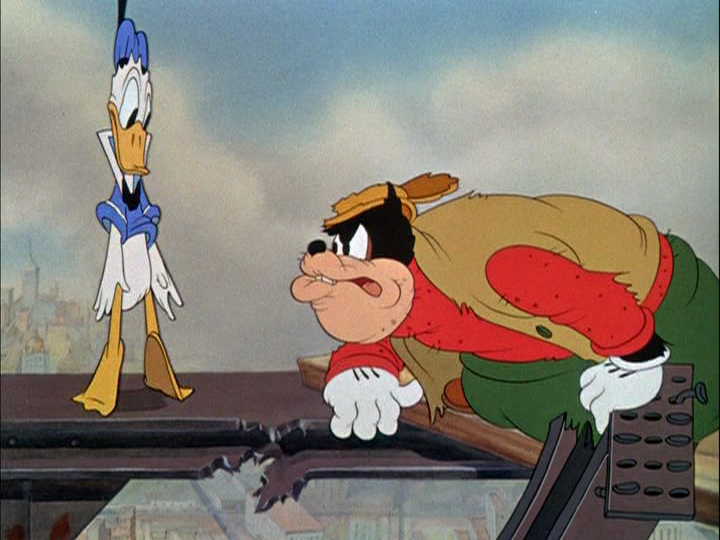
Donald's antics, however, have caused Pete's anger to grow

When Pete calls Donald over to serve him his lunch, Donald is ready to sprinkle some pepper when the rivet guns begin again, making Donald spill pepper all over the place. Pete lets out a loud, powerful sneeze, and loses his lunch in the process. Donald tries to make amends with coffee, but also loses control of it when the rivet guns start up once more. When the rivet gun sounds cause Donald to accidentally destroy Pete’s cigar, Pete has had enough, and begins to chase Donald around the construction site. The chase causes destruction of many parts of the site, but quick-thinking Donald causes Pete to fall into a vat of cement, turning Pete into a fountain as he poses with a water hose. Donald ends the short with laughter.
March 12

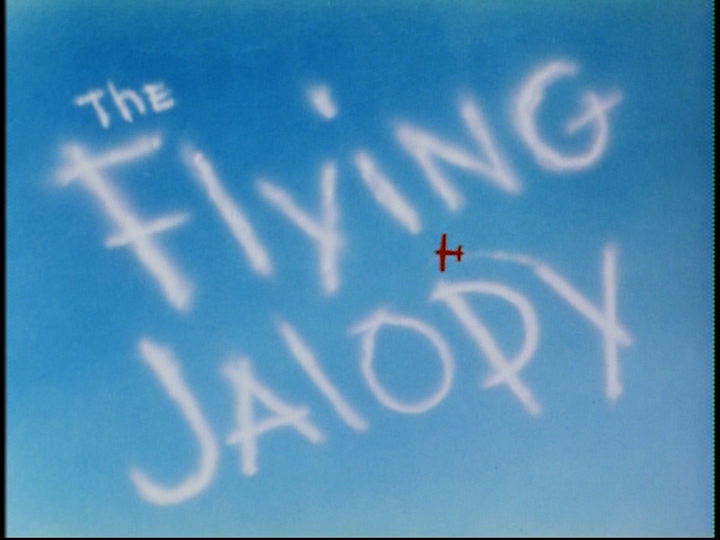
March 12, 1943 – The Donald Duck Short, The Flying Jalopy, is Released to Theaters

“Ah, yes, a little matter of insurance…”

On March 12, 1943, The Flying Jalopy, a Donald Duck short, was released to theaters. Directed by Dick Lundy, the short is about Donald dealing with a shady used plane dealer, who tries to get Donald to have an accident so he can collect on a $10,000 insurance policy. Although Donald is known for being accident-prone, this short is one of the few that shows Donald avoiding a major accident, for the most part.

The short opens with a billboard sign for Ben Buzzard and his used planes (which used to be called “wrecked planes,” but the word “wrecked” is crossed out in bold back strokes). The camera zooms out and shows the airfield where the “used” planes sit as scrap sculptures, except for one last plane that is very Wright Brothers-esque. Donald is seen examining the plane, which has been marked down to a down payment of $59.98. Donald feverishly checks to see if he has enough money, but unfortunately is a bit short of the asking price.

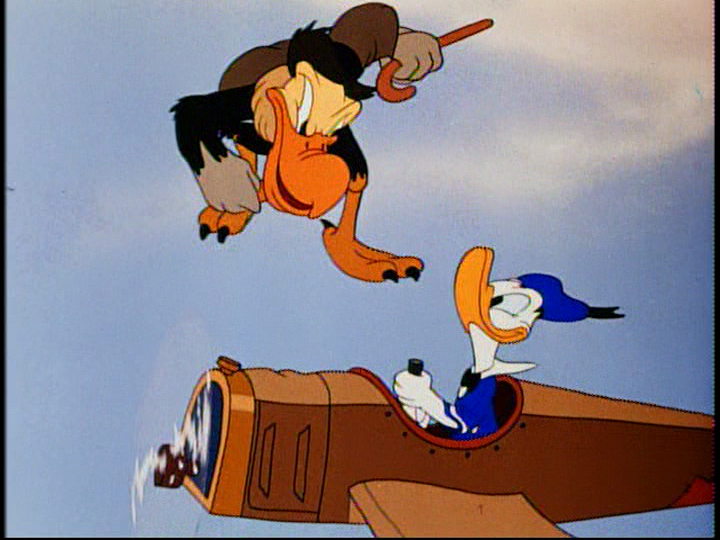
Ben Buzzard, the proprietor, lurks in the office doorway, observing the cash in Donald’s hands. Thinking quickly, he starts the salesman act, pulling Donald back with his cane and asking Donald if he is interested in an airplane. Donald nods excitedly, and Ben launches into his sales pitch. The first one he calls attention to has its wheel burst while they are observing it, but Ben offers Donald the chance to buy it with an offer of no down payment. He hits the tail of the plane with his cane, making the tail fall off. He quickly puts it back on and rushes to get Donald to take a test flight.

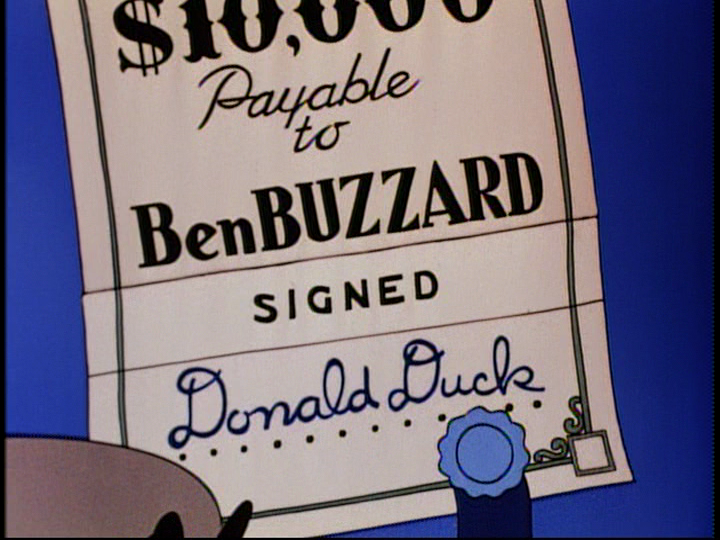
The shady insurance document Ben was able to have Donald sign

As Donald is sitting in the cockpit, ready for his test flight, Ben tells him there is one more thing: an insurance policy he unrolls from his coat pocket. Donald eagerly signs it, as it seems to say that in the event of an accident, he will be paid $10,000. As Ben takes the paper, he unfolds it, revealing that in the event of an accident, $10,000 will be paid to Ben, signed by Donald. To get this money, Ben decides that Donald will have to die.

Ben begins the test flight, breaking the front propeller, and continuing his plan of making Donald have an accident. Unfortunately for him, Donald is able to avoid hitting the side of a cliff, and manages to keep the plane in the air, with Ben watching angrily from the ground as his plans are foiled. Ben swears that he will get Donald, and takes off to the sky.

Donald feels pretty good about his flying skills as he keeps the jalopy in the air

Ben greets Donald in the air, telling the beaming duck that he is rather good at flying, and suggesting a game of Follow the Leader. Donald agrees, and Ben offers to lead. He gracefully dives around the clouds, and Donald tries to follow him, but both of the plane’s wings rip from the body of the plane. Quickly, as Donald begins to plummet to the ground, he grabs the wings floating in the air and reattaches them, and is able once again to keep himself in the air.

Ben sits on a cloud and furiously tries to come up with a plan, only to be blown away by Donald, who is quickly flying by. As Ben dangles in the air from his cane that has caught a part of a cloud, he spies a small opening between two cliffs, which he knows the plane won’t possibly make it through. He then surrounds the cliff tops with cloud cover, and calls Donald over to continue the game. As he slips to the other side, Ben gives an evil grin and brags to the audience with death in his eyes, “He’ll never make it!” Unfortunately for Ben, once again, Donald is able to save himself from danger at the last minute, turning the plane sideways and slipping through quite easily.

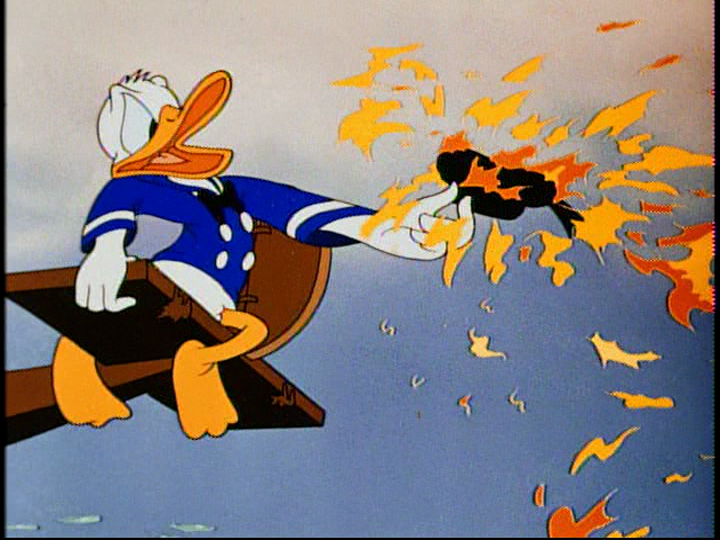
As Donald tries to put out the flames with his hat, he looks in alarm as it catches on fire

Having had enough, Ben cries out that Donald is a dirty cheat, and begins to destroy the plane outright, being done with underhanded plans. It becomes an outright war between the two, especially after Ben opens Donald’s gas tank and sets the stream of gasoline on fire. Donald tries to blow the flames out, but to no avail. Ben, meanwhile, perches on a cloud and laughs, thinking the policy will soon be his. He doesn’t count on Donald flying in his direction, and while Ben tries to make a break for it, he continues to be in the plane’s path. The plane finally meets its demise when the flames reach the gas tank, but all is not lost: Donald safely flies his new plane – Ben, who is trapped inside the last piece of the body of the plane – through the air, laughing all the way.

March 8

March 8, 1946 – The Goofy Short, A Knight for a Day, is Released to Theaters

“Stand by, everybody, as we turn the calendar back 500 years and bring you the 123rd running of the Canterbury tournament at Blunderstone Castle.”

Directed by Jack Hannah, A Knight for a Day was released on March 8, 1946. This short continues the trend of having Goofy play a part in the story, rather than being the regular Goofy audiences were used to from earlier Mickey Mouse shorts. Also, all the characters in Knight for a Day are designed to look like Goofy. The story was written by Bill Peet, with music by in-house composer Oliver Wallace.

Knight for a Day relies on clever puns woven throughout the story, such as the names of the knights: Sir Loinsteak and Sir Cumference. Modern day sports-casting and a medieval setting mix as the audience is taken back in time to attend, the announcer says, the 123rd annual Canterbury jousting tournament. Everyone in town flocks to the castle for this event, and it sells out fast. The winner is to receive honor, glory, and the hand of the beautiful Princess Esmeralda, who is seen watching from her tower.

The squire Cedric, dreaming of the day he can win the favor of the princess through jousting as a knight

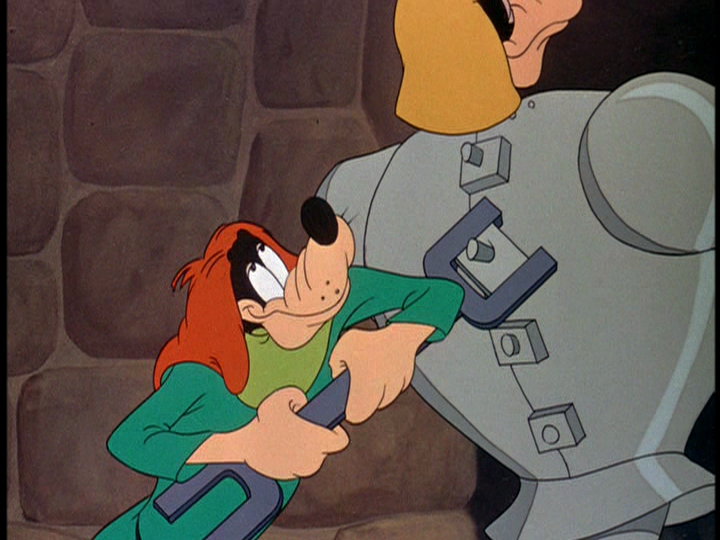
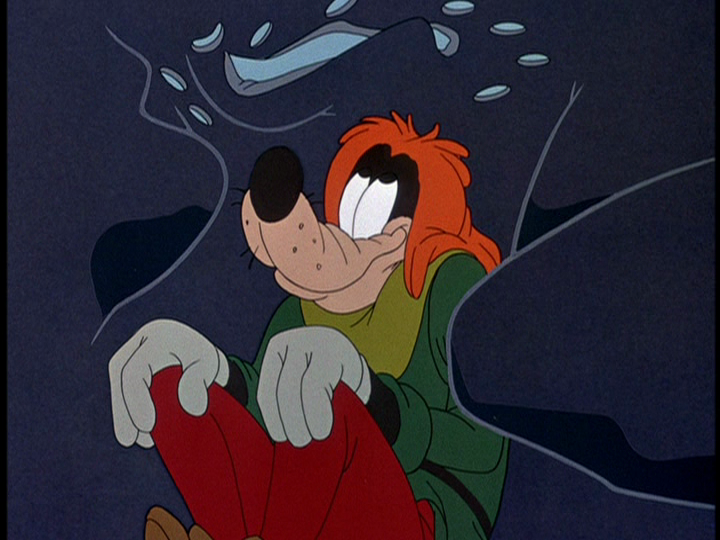
We then head to the dressing room of Sir Loinsteak, whose squire, Cedric, is busy polishing the knight’s suit of armor and preparing him for the fight. Cedric dreams that one day he shall be a knight “and face death for the smile of a lovely princess.” He takes a moment to daydream, but quickly sets back to work preparing the knight.

As the trumpet sounds, Cedric races to help Sir Loinsteak mount his horse, breaking the knight’s sword in his haste. He hides the pieces and continues to prep, but as he tries to shove the knight onto his horse, he pushes the Sir Loinsteak out of his armor (and Cedric into it) and the knight is knocked out cold when he lands on an anvil. Cedric can’t believe that Sir Loinsteak is unable to fight, and then realizes that he is wearing the armor. The narrator tells Cedric that this is his big chance—he can win the honor and glory, not to mention the hand of the fair princess.

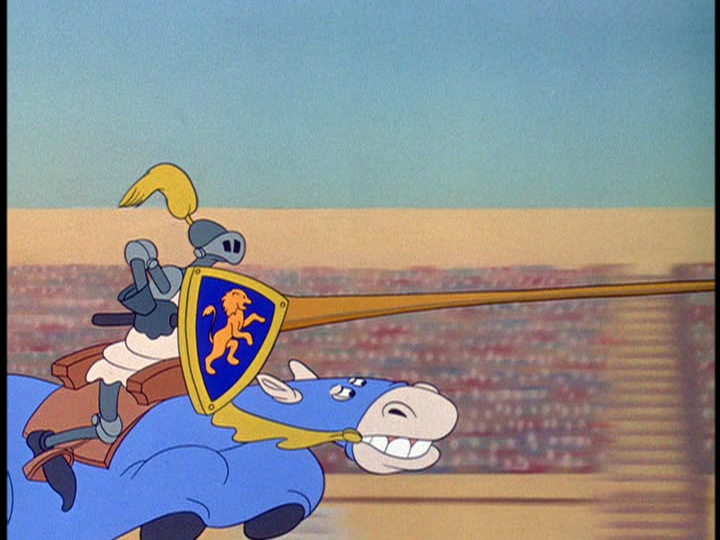
The tournament begins with the champion, Sir Cumference (“Old Iron Pants, they call him”), entering the arena. His horse has hash marks for all the gallant knights who have fallen in battle against him. Cedric enters from the other gate, and is blown a kiss by Princess Esmeralda; the narrator comments that it must be love at first sight. Cedric’s dreamy-eyed gaze is cut short when he notices that the knights are prepared to joust, with shields made of bricks and sharp points at the end of their lances. He quakes in his armor.

Although nervous, Cedric charges with all of his might

The umpire checks his wrist-sundial, and the crowd waits anxiously for his signal to begin. The umpire waves his flag, the trumpet sounds, and off they go into the joust! Cedric charges gallantly forward, but it’s no use again Sir Cumference – Cedric and his horse are pushed out through the castle wall into the moat. Sir Cumference is still the champion, but this does not please the princess, who lets out a loud shout of discontent at this outcome.

Suddenly, Cedric is seen climbing through the hole in the castle wall, still on his horse, ready to try again. The champion puts on his helmet again, charges, and sends Cedric flying into the air and landing in the bleachers. The crowd lifts him back to his horse, infuriating Sir Cumference, who pulls out his sword and charges. Cedric pulls out his sword, too—forgetting that he had destroyed it earlier. Thinking fast, he attaches the arm from his armor to the end of the broken sword and goes full speed ahead, using it to knock the champion out of his seat. He then uses the armor arm to push the challenger back as he tries in vain to hack away at Cedric.

Cedric is able to hide comfortably inside the armor as Sir Cumference beats it relentlessly with a mace

Cedric begins to throw pieces of his armor at Sir Cumfrence, and the fight becomes a no-holds-barred scuffle. Sir Cumference takes out a mace and begins to smash the Cedric’s armor, with Cedric hiding inside. Cedric, however, being a lot smaller than the armor would suggest he is, is able to hide away without being injured. The champion is exhausted from his angry work, and Cedric becomes the new champion when “Old Iron Pants” falls from his horse. The princess leaps from her balcony and begins to shower Cedric with kisses. “What a day for a knight,” the narrator ends, “and what a knight for a day.”


February 28

February 28, 1942 – Pluto Short Film Pluto, Junior is Released to Theaters


Pluto, Junior, a Pluto short film, was released by the Disney Studios on February 28, 1942. Directed by Clyde Geronimi and with the voice talent of Pinto Colvig, the short shows a different side of Pluto as a father to a rambunctious puppy that is so much like him in curiosity and ending up in precarious situations.

The short opens on a sunny day, and snoring is heard as the audience sees a ball rolling back and forth across the lawn. As the camera zooms out, we see Pluto and Junior, fast asleep in their respective doghouses, with the ball rolling in between their snores. Pluto’s snore is a bit too strong, and pushes the ball straight into Junior’s nose, startling him awake. Eyeing the ball bouncing up and down, Junior decides that it’s playtime, only to end up being more bullied by the ball than actually playing with it. The ball slips and lands in Pluto’s mouth, who ends up choking on the toy. Seeing his father awake, Junior barks enthusiastically, hoping his father will want to play. Pluto, however, is too tired, and angrily growls at the puppy, scaring the poor thing.

Junior ends up stuck to a stray balloon in the yard

As the puppy rolls backward from trying to get away from Pluto, he ends up rolling onto a balloon, which sticks to him and causes his ears to stand up from the static electricity. Curious, he turns around to sniff the balloon, and ends up trying to attack it, only to pull away the string and let the balloon fly across the yard, landing in Pluto’s mouth. Pluto unwittingly fills the balloon with air as he snores, and Junior, now thinking the balloon is an enemy, tries to sneak up on it, only to be scared of his own growing reflection in the balloon. Junior finally gets the courage to bite it, and it explodes. The sound makes Pluto shoot through the roof of his doghouse.

Junior, meanwhile, ended up in a patch of dandelions from the force of the explosion, and when he sneezed away the dandelion fluff, a worm landed on his head, and is not happy about his new location. Junior tries to pull the worm from his face, only to have it stuck in more humorous positions, such as around his eye like a monocle. Junior finally flings the worm away, and goes after it like a shot, determined to fight it. The chase goes all over the backyard and up a tree, where a hungry bird is waiting to devour the worm.

The hungry bird comically welcomes the worm to walk straight into his mouth

As the bird tries to chase the worm, it accidentally grabs a hold of Junior’s tail, and Junior angrily chases the bird in revenge. The bird flies around with Junior on its tail, until the puppy falls and lands into a sock on the laundry line, with only a feather as his spoils of war. He looks down to see that the ground is so far away, and begins yelping helplessly. Pluto wakes to see Junior in his precarious position and rushes to try and save him.

As Pluto pulls on the laundry line, the line stops when a knot prevents it from moving. Pluto tries his best to get the line to move, and finds himself being carried out on the line and having to walk it like a tightrope. After one daring swing, he ends up flying through the air and landing in some socks, only to have the socks snap away from their pins. Pluto then uses his tail to stay on the rope, and Junior, impressed, begins to cheer his father on. Still trying to rescue the pup, Pluto tries to pull his way down the laundry line, until Junior is right on top of him. Unfortunately, Junior’s enthusiastic wagging hits Pluto’s nose, and he lets out a mighty sneeze, sending both of them into the laundry tub.


February 26

February 26, 1942 – Walt Disney is Awarded the Irving G. Thalberg Memorial Award, and Fantasia Gets Two Special Oscars

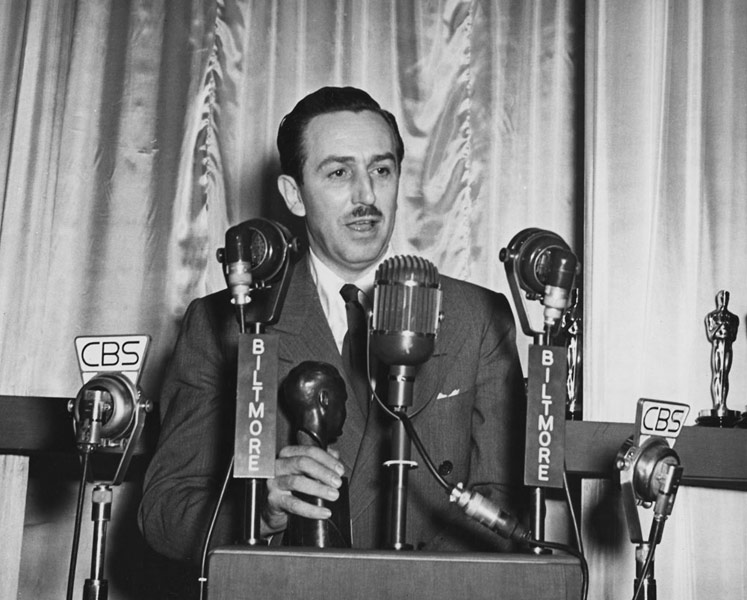
Walt Disney receiving the Irving G. Thalberg Memorial Award

At the 14th Annual Academy Awards, held on February 26, 1942, at the Biltmore Hotel in Los Angeles, it appeared to be a banner year for the Walt Disney Studios. Although Fantasia had not been the commercial success Walt had hoped it would be, it had still been a major innovation when it came to the process of sound in motion pictures. At his awards ceremony, Leopold Stokowski, the conductor of the film, was awarded a special Academy Award; a special Academy Award was presented to Walt Disney, William Garity, John N. A. Hawkins, and the RCA Manufacturing Company for the film, as well. On top of this, Walt Disney was fourth recipient of the Irving G. Thalberg Memorial Award.

The Irving G. Thalberg Award honors those “creative producers whose bodies of work reflect a consistently high quality of motion picture production.” It honors Irving Thalberg, who, at the age of twenty-three, became the vice president and head of production for Louis B. Mayer. Before he died of pneumonia at the age of 37, his work had made MGM one of Hollywood’s most prestigious studios. Disney became the fourth recipient of the award, and although he only had about three feature films and several shorts under his belt, it showed that Disney had made many strides in the fields of animation and motion pictures.

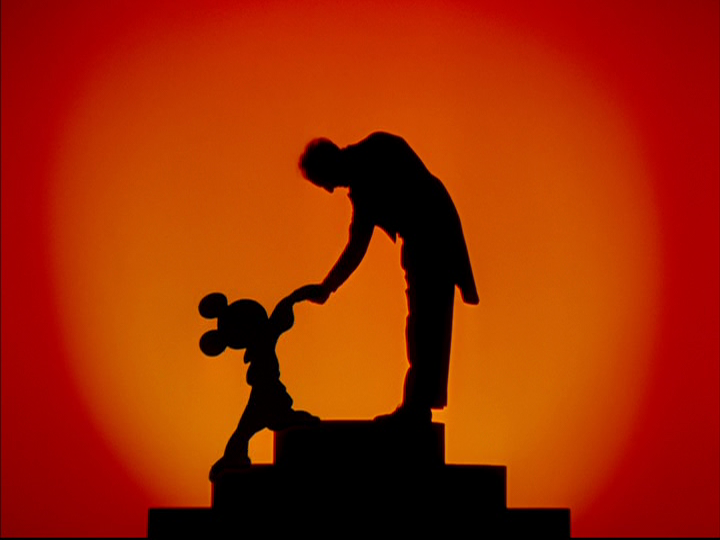
Leopold Stokowski in the iconic image from Fantasia

Leopold Stokowski and his associates were given a special award by the Academy “for their unique achievement in the creation of a new form of visualized music in Walt Disney’s production, Fantasia, thereby widening the scope of the motion picture as entertainment and as an art form.” The other special award—given to Disney, technicians William Garity and John N. A. Hawkins, and RCA—was for “their outstanding contribution to the advancement of the use of sound in motion pictures through the production of Fantasia.” The RCA stereo system that had been honored was truly remarkable for its day, and helped create a concert-like atmosphere for the audience. It was a very expensive system, requiring special equipment to be installed in theaters, which meant that the film originally opened in only 14 theaters.

February 21

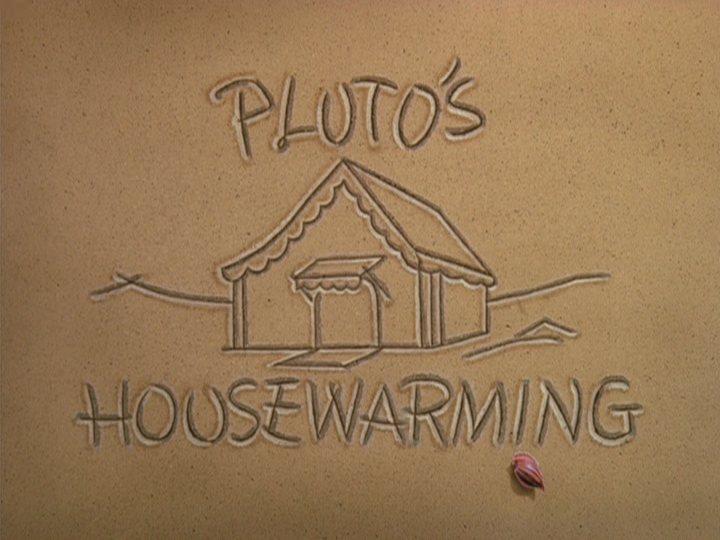
February 21, 1947 – The Pluto Short Pluto’s Housewarming is Released to Theaters

On February 21, 1947, audiences were shown a new Pluto short, Pluto’s Housewarming. Charles Nichols directed the film, from a story by Eric Gurney and Bill de la Torre, and with music by Oliver Wallace. This is one of the few shorts where Pluto does battle with his nemesis Butch the Bulldog, who was introduced in the 1940 short Bone Trouble. As with many of the Pluto stories that dealt with Pluto and another critter, the short relies on charm to carry it through, with much success and usually a new friend for Pluto.

Pluto’s doghouse on the beach has been completed, and shines in the summer sun. Excited about the prospect of moving, Pluto takes all of the bones he’s collected from his dilapidated old shanty, and gives his old house a haughty snort after he and his possessions are out the door. He moves into his new house, giving his bones a quick clean before pushing them inside, and begins to organize them by type into little cubbies built beneath his bed. Realizing that he’s forgotten something, he dashes back to the old place to grab his “Home Sweet Home” sign, kicking dust at the old shack before trotting to his new home.

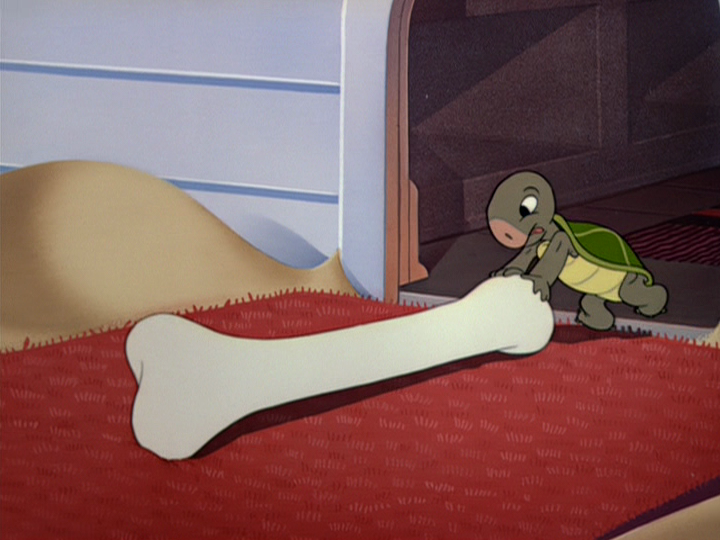
Pluto's enticing new doghouse attracts wildlife, including this tiny turtle

As Pluto heads back, however, he notices that his bones have been tossed out, and is astonished to see a tiny turtle having taken up residence in his new home. The turtle gives Pluto a wave, and continues to set up house. When the turtle tries to push out Pluto’s bowl, Pluto takes a stand against this. Pluto ends up winning this non-aggressive fight by pushing the tiny turtle out onto the beach, only to have the turtle turn around and walk right back in. Pluto ends up carrying the turtle with his teeth in order to dispose of him, throwing him under a crate and leaving him trapped there.

A bit later, Pluto is seen gnawing on a rib bone, when the turtle knocks on the window. As Pluto angrily goes out to dispose of the unwanted squatter, the turtle sneaks in and decides to curl up on the bed, only to find Pluto carrying him away once again. When Pluto comes back, he finds another unwelcome visitor: Butch, the bulldog, who has been chewing on Pluto’s bones in the few moments Pluto was disposing of the other pest. Although Pluto is ready to deal with Butch, Butch seems unconcerned that Pluto is angered by his presence. When Pluto bites Butch, however, Butch goes on the attack.

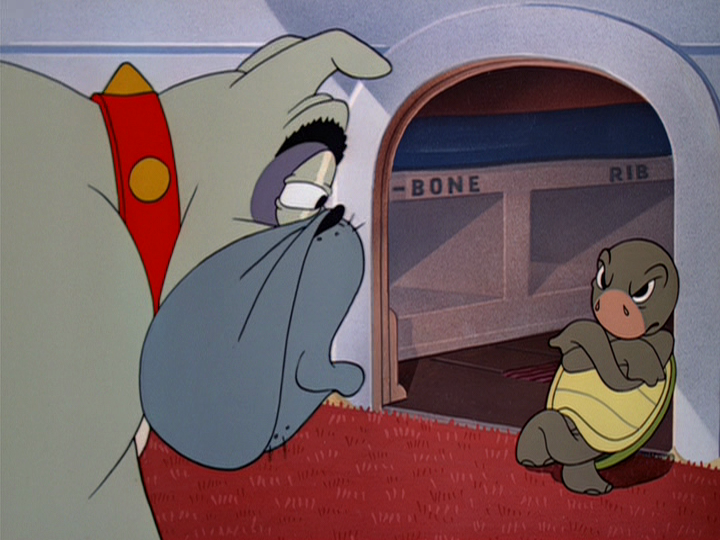
Butch is surprised to see such a creature challenging him for squatter's rights


Pluto manages to hide in his old shack while Butch gets stuck in the doorway. Convinced that Pluto will stay there, Butch returns to the new house and spies the turtle in the doorway, with crossed arms and a glare on his face. The turtle shows Bruce he’s ready to fight, and ends up biting the bulldog on the nose. When Butch tries to retaliate, the only thing Butch can get his teeth around is the turtle’s shell. Butch tires himself out trying to bite the turtle, and the turtle slips out of his shell when Butch isn’t noticing, giving him a nice bite on the foot. The turtle retrieves his shell and uses it to trip up the bulldog.

Meanwhile, Pluto watches nervously from the old shack, and is amazed to see that the tiny turtle has bested Butch. The turtle gives Butch one last present – a bite on the tail – that sends Butch flying down the beach whimpering. The turtle lands in front of Pluto, limp, which causes Pluto to think the poor creature has died in the line of duty. As he begins to cry, one teardrop falls from Pluto’s snout and revives the turtle. The two hug and decide that they both can live in the new doghouse amicably.

February 19

February 19, 1943 – The Mickey Mouse Short Film Pluto and the Armadillo is Released to Theaters

“Down where the mighty Amazon winds its way through the heart of Brazil, we find many strange and exotic species of flora and fauna.”

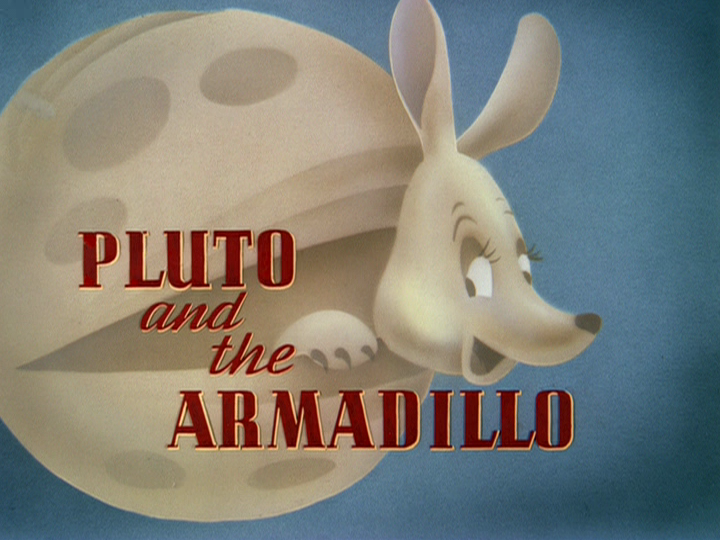
On February 19, 1943, audiences were presented with a new Mickey Mouse short entitled Pluto and the Armadillo. Directed by Clyde Geronimi, the short starred Walt Disney as Mickey Mouse, Pinto Colvig as Pluto, and Fred Shields as the Narrator. Interestingly enough, although listed as a Mickey Mouse short, its main actor is Pluto, and Mickey appears only in two small sections.

Our narrator opens the story by explaining that there are “many strange and exotic species of flora and fauna” near Brazil, and then introduces a hanging armadillo, affectionately nicknamed Tatou. Tatou, the narrator informs the audience, “is a very timid creature, and at the slightest noise, even at the drop of a pin, he snaps into a solid ball, becoming, so to speak, a hard nut to crack.”

Turista Americana and his canine play a game

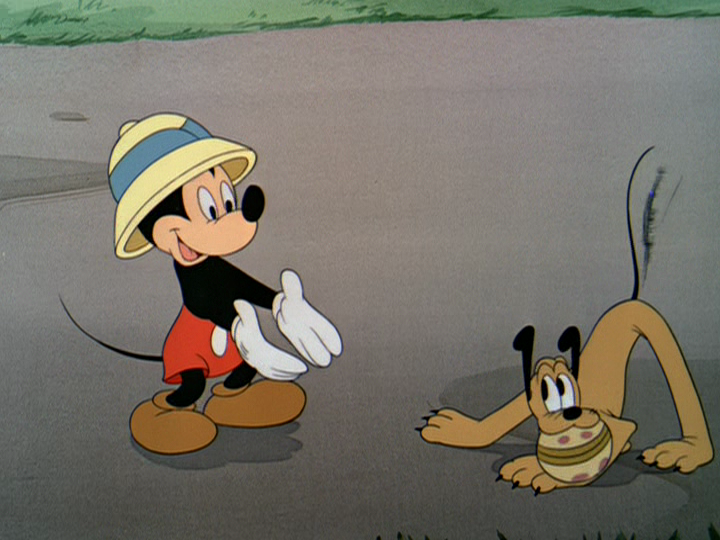
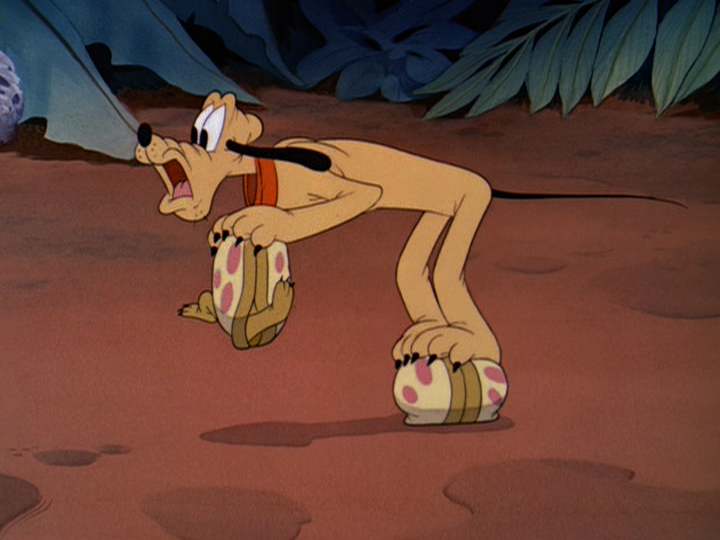
The narrator then moves to the next unusual creature: the turista Americana, or the American Tourist. Mickey and Pluto hop off the Pam Am plane for a fifteen-minute stopover, and Pluto begins to play with a ball that has a strikingly similar design to Tatou’s shell. Mickey throws the ball into some nearby woods, and hits Tatou, who curls up inside his shell. Pluto, thinking Tatou is the ball, goes to retrieve it, but Tatou begins to jump away from Pluto’s mouth. When Pluto gingerly puts out a paw to touch it, Tatou buries himself under ground, then digs a trail away from Pluto, before coming up again and bouncing away from the curious dog and pushing the real ball out from some ferns.

Pluto is confused at the fact that there are now two balls in front of him, and he doesn’t know which one is the one that has been tricking him. Tatou, with a smile on his face, opens his shell slightly to see if Pluto’s still there, and when he gives Pluto a playful wink, Pluto tries to hide while Tatou shuts himself inside again. Although Tatou is being friendly, Pluto’s anger only grows. He tries to capture both of the balls, but the real one is squeezed out of his grasp. Pluto grabs it with his back legs, and both the ball and Tatou begin bouncing as Pluto tries to hold on.

Pluto trying to have a grasp on the situation

Tatou begins to walk away once he slips from Pluto’s grasp, but Pluto rushes around to stop him, determined to find out what exactly this strange creature is. After the two sniff each other out, Pluto determines that he likes Tatou, and the two begin to play a game of underground tag with each other. Tatou hides within a hole, and Pluto, a bit peeved that he ran into some plants and ended up looking like Carmen Miranda, grabs the nearby ball, thinking it’s Tatou, and plays with it rather roughly, causing it to pop. Thinking he’s killed the poor thing, Pluto begins to panic and cry. Tatou, observing from his hiding spot, sees Pluto and starts feeling guilty for making the dog cry. He appears in front of the weeping dog, gives him a lick across the nose, and Pluto instantly cheers at seeing his friend is alive.

The bell is ringing for everyone to get back on the plane, and Mickey is frantically looking for Pluto, who appears to have vanished. He finally spies Pluto and what he thinks is the ball, gathers them up, and drags them onto the plane in the nick of time. As Mickey holds the “ball,” Tatou sticks his head out, startling Mickey, who is very, very confused by the situation as the plane flies away.

February 14

February 14, 1941 – The Mickey Mouse Short The Little Whirlwind is Released to Theaters

“Well, guess I don’t get the cake, huh?”

On February 14, 1941, the Mickey Mouse short The Little Whirlwind was released to theaters. Although most shorts that feature Mickey and Minnie are romantic in nature, this short does not feature a romantic plot between the two. This is ironic, as the short was released on Valentine’s Day. Mickey shows up around Minnie’s house and offers to clean her yard in exchange for her freshly made cake, only to have his efforts thwarted by a mischievous little whirlwind. The short was directed by Riley Thomson, with Walt Disney as the voice of Mickey Mouse and Thelma Boardman as the voice of Minnie Mouse.

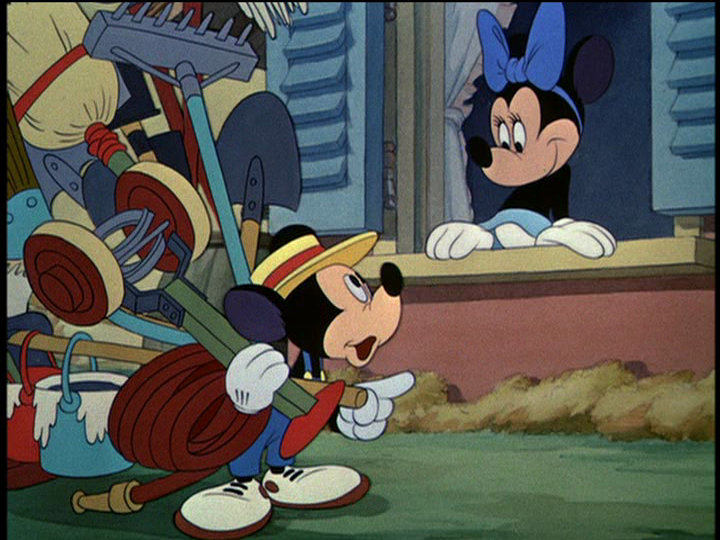
The short opens with Minnie Mouse in her house, placing her freshly made cake on the windowsill. The scent travels down the road, catching Mickey Mouse’s nose and pulling him toward the window, until Minnie removes the cake and shuts the window, causing Mickey to fall to the ground. He knocks on her window, motioning to the cake she’s made. Angrily, she tells him that she has nothing for loafers, but Mickey offers to clean up her yard. Minnie agrees, but adds that there is to be no more clowning around. Excited about the promise of cake, Mickey grabs all the yard tools he can find, saying, “You won’t know the place when I get through!”

Mickey shows his enthusiasm by gathering every tool he can find

As Mickey begins to rake her leaves with gusto, a little whirlwind begins whirring down the path. Spying Mickey doing his yard work, it decides to have a little fun with him, hiding in the leaf basket and moving it when Mickey’s back is turned. Mickey is slightly confused, but tries to place the leaves in the basket again. Mickey and the basket go back and forth, until Mickey decides the best course of action is to nail it to the ground. He tosses the leaves in, only to have them thrown back at his face as the whirlwind escapes into the air, stealing Mickey’s hat.

After Mickey retrieves his hat, the whirlwind continues to play tricks on him, like stuffing leaves down Mickey’s trousers. As the whirlwind gathers the leaves and has them march behind it, Mickey grabs a bag and sneaks around the back of the house to sneak a surprise attack on the troublemaker. While he is able to capture the whirlwind in the bag, and gives the bag a good kick, the little whirlwind fights back and breaks free, squealing down the road while Mickey chases him. Unfortunately, when we see Mickey again, he’s running away from the wrath of Mama Whirlwind. Thanks to Mickey, Mama Whirlwind tears up the entire countryside as she chases him. Mickey gets caught in Mama Whirlwind, and is then dumped into a fountain before she leaves.

The things a Mama Whirlwind will do to protect her baby obviously include undoing all of Mickey's hard work, and then some

True to Mickey’s word, the yard is unrecognizable now. Minnie finishes decorating the cake, placing a big red cherry on top. She is shocked to see the state of her yard, and calls Mickey a louse. Mickey begins to leave, mentioning off-handedly that he must not get the cake after all. Minnie responds that he does, indeed, get the cake, and when he turns back excitedly, he gets the cake all right – thrown right at his head.

January 28

January 28, 1944 – Goofy Short Subject How to Be a Sailor is Released.

“Star light, star bright – gosh, I wish I knew where I was tonight.”

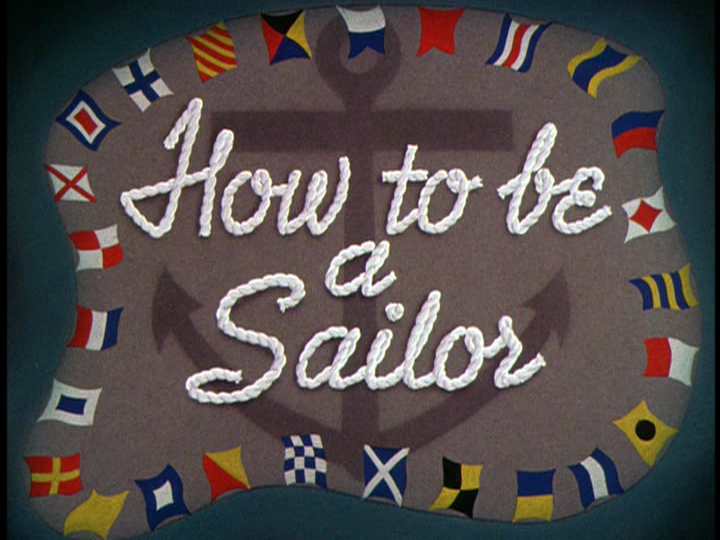
On January 28, 1944, the short How to Be a Sailor was released to theaters. Following in the tradition of the How-To series starring Goofy, the short is an entertaining quick run-through of sailing throughout the ages. The surprising thing about this short is that the ending does deal with World War II, where it is Goofy against the entire Japanese fleet. This section, coupled with the rest of the short, not only gives the audience a good laugh, but also helps establish the feeling of invincibility in the face of fear when it came to the Japanese soldiers and the war. It’s also notable for being the only short of the war shorts to deal with the Navy, as the rest were mostly dealt with Army settings. The short was directed by Jack Kinney, and stars Pinto Colvig as the voice of Goofy, with John McLeish as the narrator.

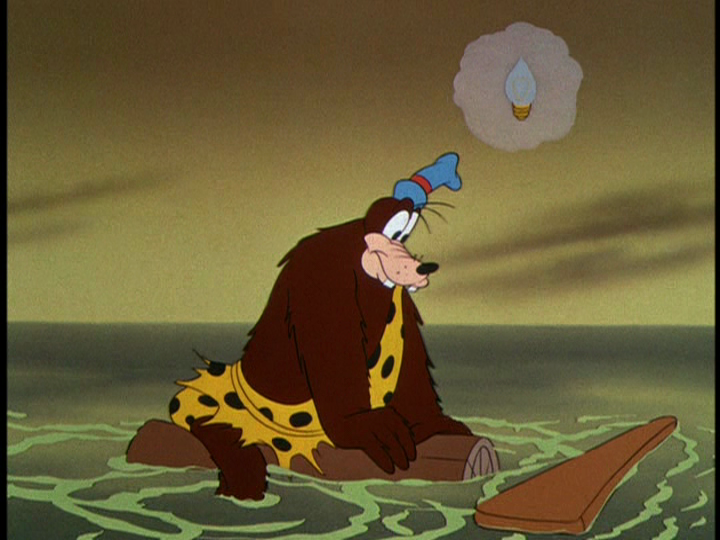
“In the beginning,” the narrator starts off, “the world was all wet. Today, it is still four-fifths wet.” We are introduced to early man – or, early Goofy, as the case would be – who tromps through the woods and through shallow water, before falling into a deep section. Struggling to swim, he comes across a log; he’s unsteady on it, but manages to gain some stability and float along, until he comes across a method of propulsion: a wooden board. Excited, Caveman Goofy takes the board and happily steers himself around in circles.

Caveman Goofy gets an idea of how to propel himself on his log

We fast-forward to Egypt, where we see a boat rowing down the Nile river, and find that Goofy is rowing it by his lonesome, with a contraption that allows him to row the at least twenty oars needed to propel the ship. Soon after, we are sent to visit Viking Goofy, who used the stars as his compass. As Goofy laments that he wish he knew where he was, a constellation of Goofy with a bow and arrow hears his plea and shoots the star arrow, sending Viking Goofy and his boat flying across the ocean to their destination.

The next sequence addresses how 13th Century people viewed the world, and wondered what shape it was in, and the audience sees various shaped globes, ranging from diamonds to cylinders. We then see one of their theories in action: sail West far enough, you would sail off the edge of the world. A Goofy version of King Neptune and two fish peek out from the edge of the world, watching the ship fall, and shake their heads.

Scarier than Pirates of the Caribbean were the Goofy Pirates

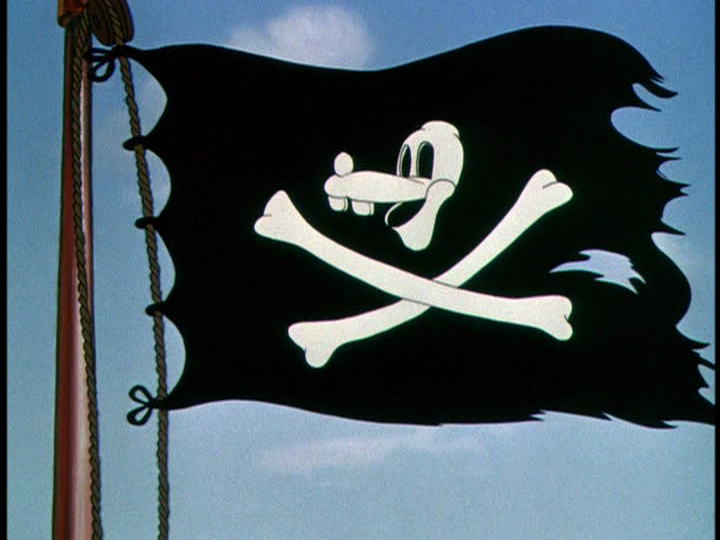
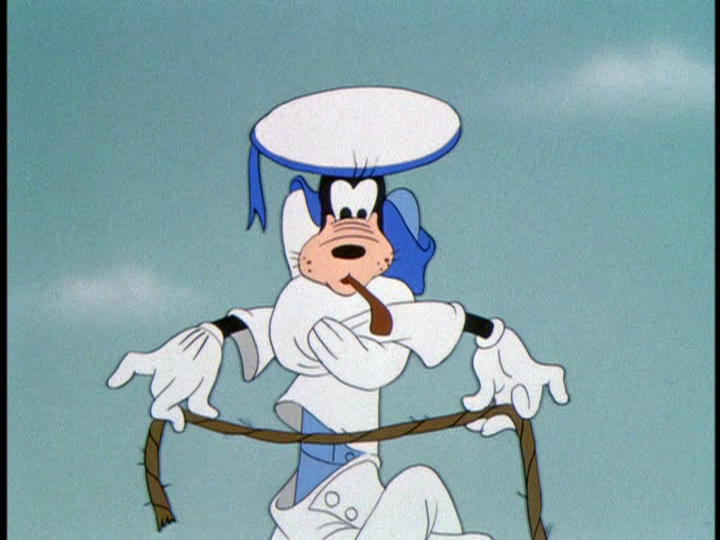
“From the earliest days, sailors were preyed upon by…pirates!” the narrator yelps as the pirate flag is raised. Goofy, a perfect pirate captain with peg-leg and eye-patch, is the victim of a mutiny. His crew pushes out a board, and he is sent to walk the plank, or “feed the sharks.” But a storm hits the next boat the audience sees, and the waves play a game of passing the ship from wave to wave. “For safety’s sake,” the narrator explains, “sailors would lash themselves to the mast.” We then see Goofy tied tightly to the mast, which is unfortunately is struck by lightning and sent crashing through the ship.

The most famous sequence of the short is the flag sequence, where we are taught the alphabet through semaphoring and wigwagging. Goofy tries to keep up with the fast pace of the narrator, but unfortunately wigs where he should have wagged, and his trousers fall around his feet. After hiding behind a sail to fix his situation, he comes out and begins to dance the traditional dances of the sea, including a dance of hoisting the sail, rowing, and being a look out, only he isn’t looking out where he is going. We also see Goofy tying knots, with some literal interpretations by the animators: Goofy ties a square knot (the knots make the shape of a square), then a sheepshank (which “baas” when he pulls on it), and as he slips on the next knot, he knocks himself in the jaw, to which the narrator explains is the “slipknot.”

Goofy finds that knots are a little more complicated than he thought

“And now, through trial and error, the sailor has at last, mastered the sea.” We see sailors on a Navy vessel, dreaming of pin-up girls, when the call to attack is sounded. Goofy picks up a missile to fire, only he slips and is sent out of the ship instead of the weapon, and is seen single-handedly destroying the Japanese fleet, as well as the symbol of the Rising Sun, saving the day.

The real gem of this short is the music, with the use of sea tunes to add humor to the situations. For instance, in the Egypt scene, when Goofy is struggling to row by himself, there is a teasing version of Row, Row, Row Your Boat playing in the background. Goofy, when dancing, also keeps in time with a xylophone version of The Sailor’s Hornpipe, which gives a whimsical addition to the already humorous dancing.

Although considered one of the war shorts, the short can stand up well on its own without the association. The pace is quick, but not overwhelmingly so, and gives the audience one laugh after another. This short is a highly enjoyable piece, and one of the best gems of Goofy’s career.

January 23

January 23, 1948 – Goofy Short Subject, They’re Off, Released to Theaters

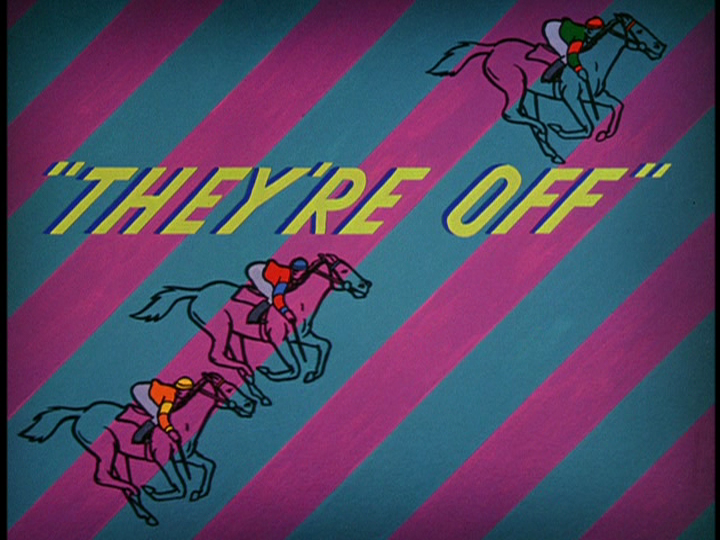
Title Card for the Short, They're Off

Since Tintype I, horses of this line have been noted for their burning speed. And they’re also noted as camera muggers, or lens louses.

On January 23, 1948, the Goofy short, They’re Off, was released to theaters. Following in the tradition of the “How To” films that began with The Art of Skiing in 1941, the short is a tongue-in-cheek how-to on horse racing and betting on the winning horse. The short was directed by Jack Hannah, with story by Reiley Thomson and Campbell Grant, and music by Oliver Wallace.

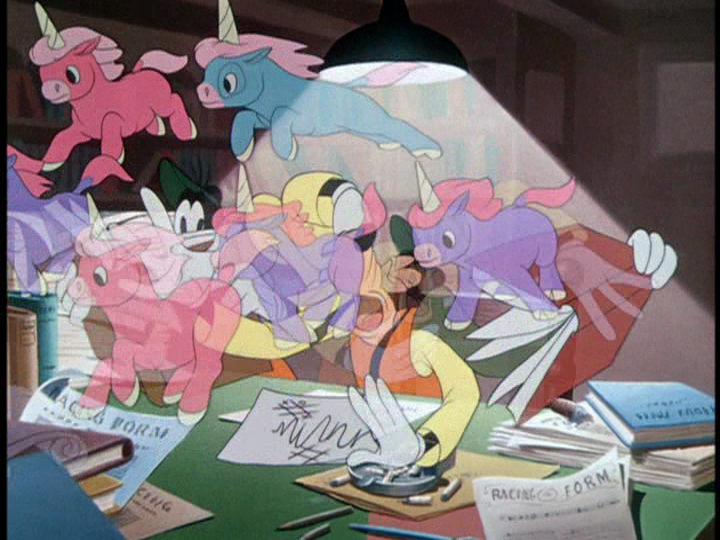
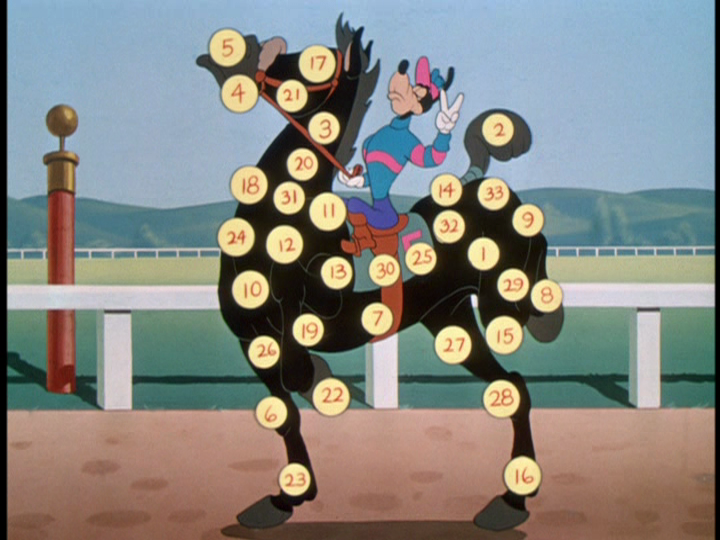
Our narrator begins the film by taking us through the research one must do to identify the winning horse. “Today horse racing has become a science,” he declares, “a science to test the skill of the professional and unprofessional handicapper.” We see Goofy surrounded by mountains of books, periodicals, and newspapers, trying to identify what makes a winning horse. He tries to consider all the elements, including wind velocity, humidity, and rotation of the earth, with comical effect. As the narrator gives a brief history of the thoroughbred, the animators seem to have taken the terms quite literally, such as the horses being referred to as “bang tails,” much to the delight of the audience. Finally Goofy picks his horse, Snapshot III, and now must determine whether this horse has the “fine points of a horse’s conformation,” as the narrator states. Throughout his explanation, the narrator’s voice gradually speeds up, and Goofy ends up overwhelmed and delusional, with animations from How To Ride a Horse and the baby unicorns from Fantasia making a cameo.

Goofy becoming delusional from all of the confusion.

We next see Snapshot III’s pedigree. This is another clever example of wordplay: Snapshot III out of Developer by Hypodeveloper, out of Bromide by Flashbulb and Hypo, out of Tintype by Negative. This wordplay reflects Snapshot’s well-known trait of being a camera mugger or a “lens louse,” a term that causes the horse to glare at the audience.

The day of the big race arrives, and our confident Goofy enters the racetrack, trying desperately not to be swayed by the whisperings of the other bettors and the touts who convince him which horse will win. The narrator explains the many systems people use to pick a winner – again, with the animators taking it quite literally for comic effect. We then see the horses coming out to line up, with Snapshot III taking a jaunty trot down the track.

A confident Snapshot III, shown portraying the perfect conditioning

At this point, we see another Goofy, who has decided to go by luck to pick his horse. With “Eeny, Meeny, Miney, Moe,” he decides that Moe means something, and picks his horse: Old Moe, the 100-1 shot. The score at this point is a comically dour version of The Old Gray Mare, blaring from a brass instrument. Both Goofys place their bets, with the confident researcher stuffing in all of his money, and the play-by-luck Goofy betting only $2.

“The atmosphere is electric,” the narrator observes, although the members of the press, the cameramen, and the jockeys contradict the atmosphere he describes. The race starts, with Snapshot still standing at the gate, calmly eating oats. With a yawn, Snapshot’s jockey tells him to go ahead and start, and he takes off at a fiery speed. The scene grows more tense and chaotic as reporters are typing like crazy, flashbulbs are constantly flashing, and the audience is fighting among themselves. Old Moe and Snapshot are “grappling it out neck and neck,” and the race becomes a photo finish between the two.

The writers and animators must have had a fun time doing this short, with little gags here and there: Jack Hannah, for instance, is seen as the owner of Snapshot III and Insomnia, and writers Reiley Thomson and Campbell Grant are the trainer and owner, respectively, of Crankcase. Even the names of the books are wonderfully tongue-in-cheek, like Know Your Nag and Mother Hubbard’s Selections. Overall, this short is a clever one; while it may not stand out as one of the best, it is definitely one to watch for the subtle gags.