RSS Feed

Tag Archives: 1930s

June 20

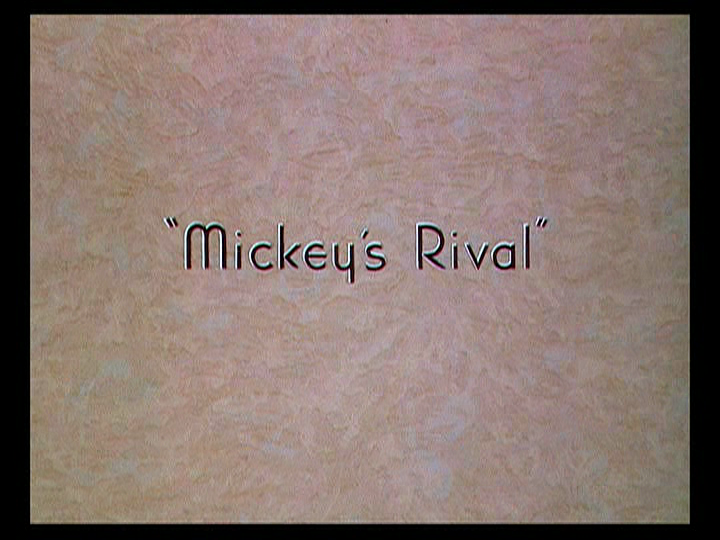
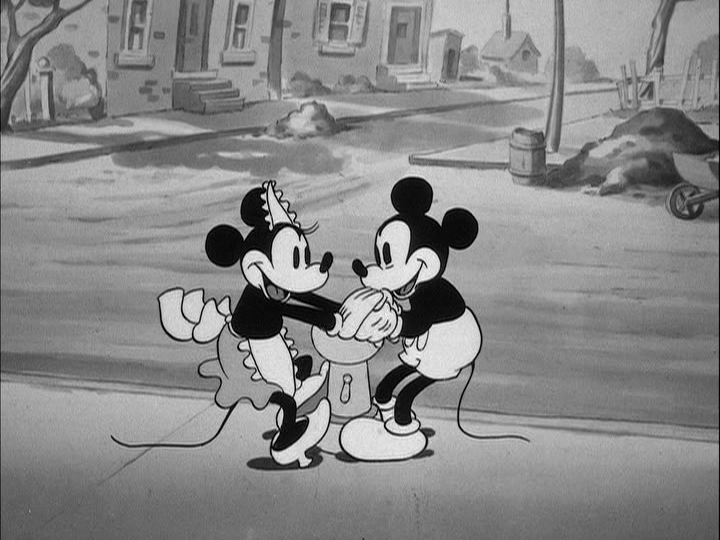
June 20, 1936 – The Mickey Mouse Short Film Mickey’s Rival Premieres in Theaters
“Mickey, I want you to meet Mortimer. He’s a perfect dream!”

On June 20, 1936, the Mickey Mouse short film Mickey’s Rival was released to theaters. The short was directed by Wilfred Jackson, and starred Walt Disney as the voice of Mickey and Marcellite Garner as the voice of Minnie. Oddly enough, Mortimer was the first name suggested for the character of Mickey Mouse, before Walt’s wife Lillian suggested the change to Mickey.

Mickey and Minnie are setting up a picnic, when something zooms down the country road, blowing away everything in its path, including Mickey and the picnic. As the blur slows down, we see that it’s a mouse in a car, and the mouse calls out to Minnie, calling her his “old sweetie.” He quickly reverses, crushing Mickey’s car into a tree, climbs out, and jauntily makes his way over to Minnie.
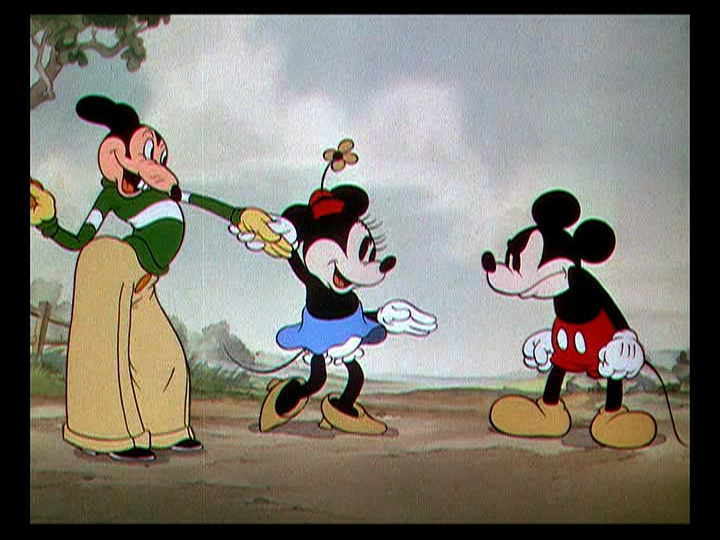
Minnie, charmed by her former flame, introduces him to Mickey

Minnie smiles and gives a fond hello to her old flame, Mortimer Mouse, who seems to be charming her once again. Minnie introduces him to Mickey, who is not charmed in the slightest, and is rather annoyed at this visitor. When Mortimer gives Mickey his hand to shake, Mickey is not amused to see that he’s fallen victim to a practical joke, as the arm he was shaking was a fake one Mortimer stuffed up his sleeve. Mortimer continues to play pranks on Mickey, with Mickey getting more and more frustrated. Mickey’s car is also experiencing some bullying by Mortimer’s car, and leaps away in fright when Mortimer’s car honks angrily.

Minnie and Mickey continue their picnic, with Mortimer as the guest, although Mickey isn’t too pleased with the situation, especially as Minnie begins to feed Mortimer. Mortimer makes a quick meal of Mickey’s food, then spots a bull in a nearby pen. He declares that he will fight the bull in Minnie’s honor, grabbing the red picnic blanket and shoving Mickey nose-first into his cup of coffee. Mortimer stands outside the pen and waves the blanket, with the bull charging head-first into the fence.
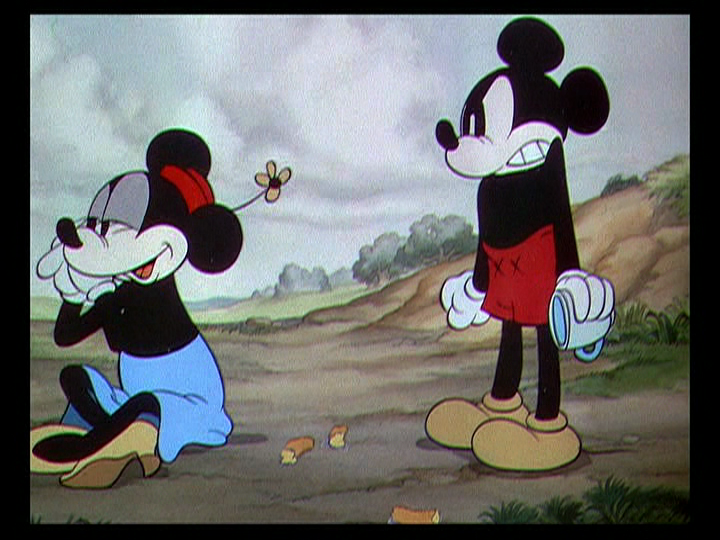
Mickey is not amused by Mortimer’s antics, nor is he pleased by Minnie’s swooning

As Mortimer continues to taunt the bull, Minnie turns to Mickey and asks if Mortimer isn’t just swell, to which Mickey sarcastically retorts that the mouse is a scream before breaking his mug and walking away. Minnie replies that he’s just jealous, and continues to cheer Mortimer on while Mickey walks off and pouts. Mortimer, however, doesn’t realize that the bullpen’s gate has been left open; when he goes to taunt the bull again, the bull rushes straight after him, and Mortimer makes a run for it into his car and speeds away as fast as he can, leaving Minnie draped in the red blanket as the bull charges for her.

When Mickey sees Minnie in danger, he runs after the bull as fast as possible and stops him, while Minnie scrambles up a tree. As the bull charges again, he knocks Minnie from her perch, but Mickey distracts the creature while Minnie escapes again. Mickey taunts the bull, and his car eventually comes to the rescue, driving the bull away. The couple are finally able to escape in the car, but Mickey is still fuming about Mortimer. He asks Minnie if she still thinks Mortimer is funny, to which she replies with a firm “No.” The two are happy together once again as they drive back home.
June 16

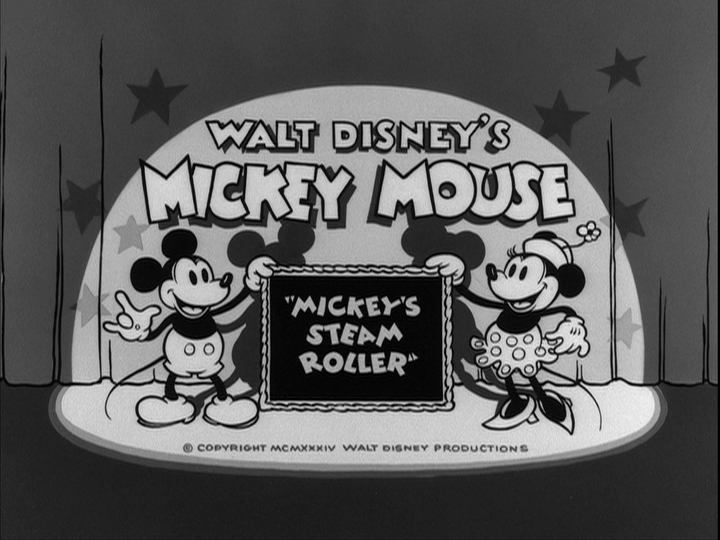
June 16, 1934 – The Mickey Mouse Short Film Mickey’s Steam Roller is Released to Theaters

“Oh, lookee! There’s Uncle Mickey! Yoo-hoo!”

On June 16, 1934, the Mickey Mouse short film Mickey’s Steam Roller was released to theaters. The short was directed by David Hand, and stars Walt Disney as the voice of Mickey Mouse and Marcellite Garner as the voice of Minnie Mouse.

A construction crew is working on a main street, and all the workers wave at the steam roller as it passes by. As it turns a corner, Mickey is seen driving the steam roller, waving back at the crew as he chugs along. Coming the other direction is Minnie Mouse, pushing a stroller that contains Mickey’s two nephews playing patty cake. The two begin punching each other, but when Minnie chastises them, they kiss each other on the cheek and make up, but attempt to fight again when Minnie’s back is turned. She then spots their Uncle Mickey, and all three give a little wave.

Mickey and Minnie flirt with a game involving the phrases written on candy hearts

Mickey pulls up beside them, and the kids cry out that they want “to ride choo-choo,” so Mickey attaches a hook to their stroller, pulls Minnie into the steam roller cab, and takes the kids for a ride, pretending they’ve become part of a train. After a short ride, he pulls the train to a stop and asks Minnie if she would like some candy. When she says yes, he pulls out a candy heart that has “I love you” written on it. He then pulls out another one that says “Kiss me” and asks her to read it out loud. When she does, he moves in on her, but she escapes his clutches, and their flirting continues, with Mickey chasing her down the street.

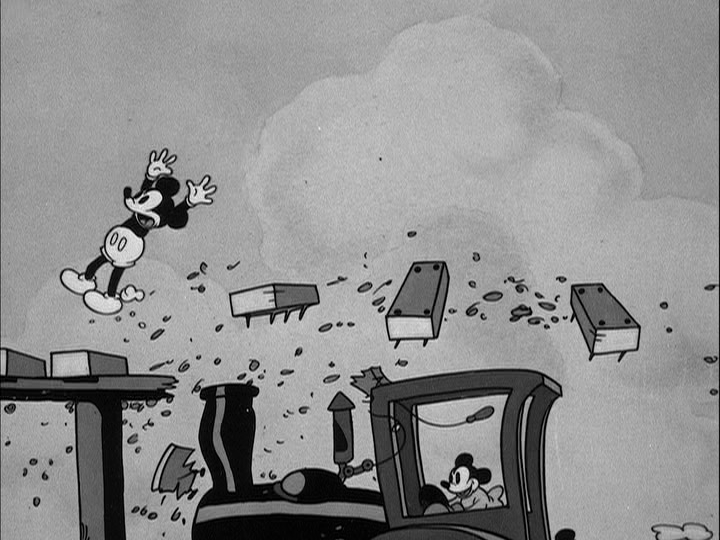
The nephews, seeing an opportunity, decide to climb into the steam roller and take it for a joyride. The steam roller runs faster than they thought, however, and they cling to the inside, while Mickey and Minnie run after them. The two nephews begin to have fun with it, with one bouncing on clouds from the stovepipe. Mickey attempts to rescue them by tying a rope to the steam roller, with the other end attached to a lamppost. Unfortunately, the lamppost isn’t strong enough, and Mickey is taken with it while it starts to drag the string of lamps down the street.

Mickey runs for his life as he is suddenly pursued by the steamroller

One of the nephews cuts the rope with a heated rod, and Mickey scrambles to stop them, ending up being chased by the steam roller down a steep hill. He finally takes refuge in a hotel, and the steam roller ends up crashing into it, knocking the building into oblivion. In the end, Mickey is just relieved to see that his nephews are all right, as they begin to see-saw on a plank of wood that landed on Mickey’s head.

June 13

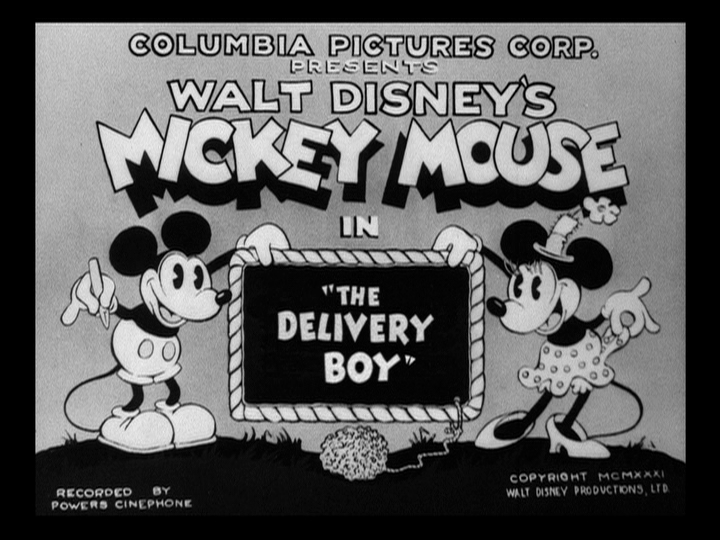
June 13, 1931 – The Mickey Mouse Short The Delivery Boy is Released to Theaters

“In the shade of the old apple tree…”

On June 13, 1931, the Mickey Mouse short film The Delivery Boy was released to theaters. The short was directed by Burt Gillett, and starred the vocals of Walt Disney as Mickey Mouse and Marcellite Garner as Minnie Mouse.

Mickey is seen sitting uncomfortably on an express wagon filled with various musical instruments, with Pluto running alongside excitedly. Mickey is sitting on the keys of a piano, playing a song as he bounces down the path. He stops the wagon as he spies Minnie Mouse, who is doing a load of laundry and singing to herself. Mickey jumps into her yard, with Minnie unaware that he’s been watching her. Unfortunately for her, a goat has been eating her clothes as she wrings them out, and she ends up fighting the goat for her girdle.

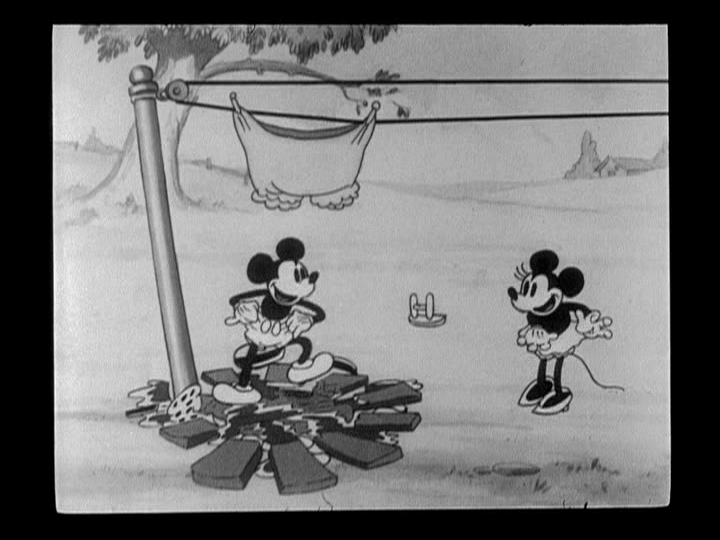
Mickey breaks the washtub after Minnie catches on to his jape, and the two begin to dance

Mickey comes up with a plan to greet Minnie: he ties one end of her bloomers on the laundry line closed, then leaps in and pushes himself as if he were in a boat. He begins to sing behind her, and hides in the bloomers when she turns around. He then pulls on her tail and plays it like a guitar string, but she catches on this time that he’s in the bloomers. She pulls him over on top of the tub and opens the closed end, making Mickey fall and break the washtub. The two then begin to dance to an upbeat song, and although Mickey ends up crashing into a tree, they continue to dance happily.

Pluto, meanwhile, has wandered into a puddle of tar, immediately getting stuck. He tries to pull himself out, but only seems to make his situation worse. While they dance, Minnie gives Mickey a kiss, and he leaps around giddily, ending up punching a beehive as if it were a punching bag before returning her kiss, then leaping away giddily again. He kicks the beehive in the end, which lands on his donkey’s tail, and the bees sting the beast, making it kick the wagon fill of instruments.

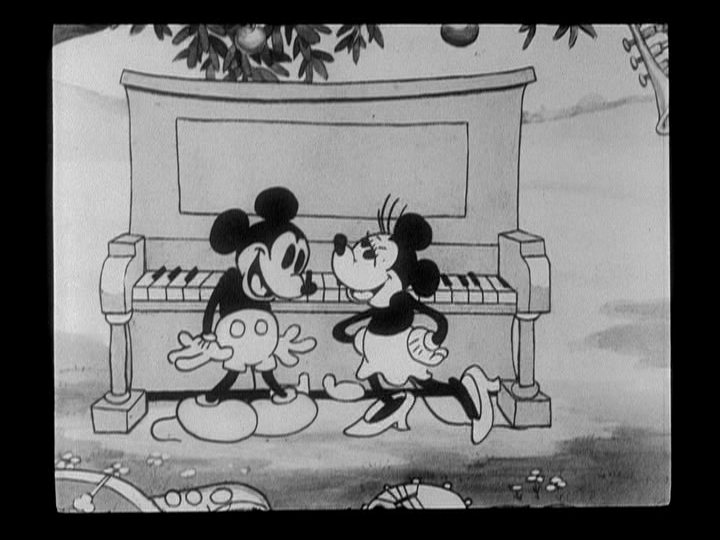
The pair has a very flirtatious conversation as Minnie coaxes him to play the piano

Most of the instruments land in a nearby farm, on the animals’ heads, and the piano lands near Mickey and Minnie. Minnie responds with glee, and asks Mickey if he can play. He responds modestly, and she eggs him on to play something. The two continue flirting, with Mickey saying he has to be coaxed to play the piano. Minnie responds with a smile that she’s coaxing him. He begins to play “Stars and Stripes Forever,” with Minnie joining him, and the two make it a jazzy duet where there share a kiss at the end.

All the farm animals join in on their rendition with the instruments that landed in their barnyard, and Mickey begins to join the barnyard animals in their playing while Minnie carries on with the piano. Pluto, on the other hand, has gotten himself out of the tar, and passes signs that say “Danger! Blasting!” “Achtung! Dynamite!” “Peligro! T.N.T!” and various other languages. But Pluto pays them no mind, and stumbles upon two men lighting a stick of dynamite and throwing it away. Thinking they want to play fetch, Pluto runs after the stick and brings it back. The men dive into a barrel of tar as they try to avoid the blast.

Mickey is oblivious to the surprise his dog has brought him as he continues to play and sing with Minnie and his donkey

As everyone continues dancing merrily, Pluto brings the stick of dynamite to Mickey, who doesn’t notice what Pluto’s brought him. Pluto begins to chew on the stick, but gets distracted by a pack of fleas that have fled from the scene. Suddenly, the dynamite goes off, sending Mickey, Minnie, and the donkey flying sky high. Fortunately, they all land safely and continue dancing.

June 9

Posted on

June 9, 1934 – The Silly Symphony The Wise Little Hen Premieres in Theaters

“Who, me? Oh, no! I’ve got a bellyache!”

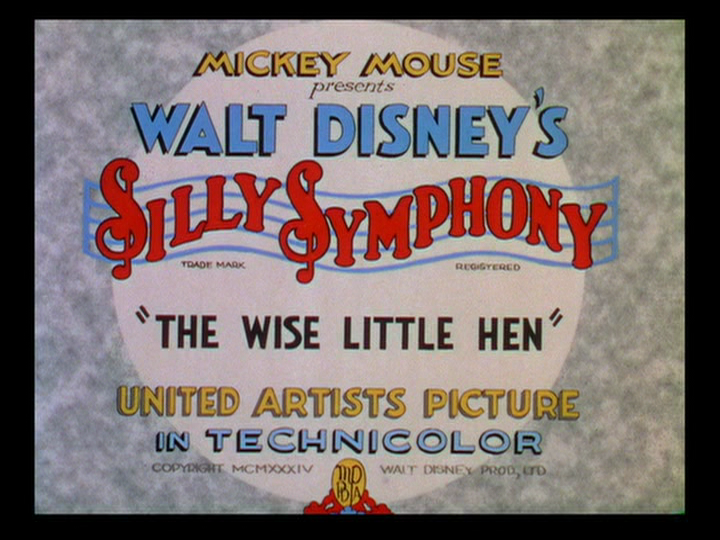
On June 9, 1934, the Silly Symphony The Wise Little Hen premiered in theaters. It was based on the folk tale The Little Red Hen, and was directed by Wilfred Jackson. It is notable for the debut of Donald Duck, voiced by Clarence “Ducky” Nash; it also stars Florence Gill as the Wise Little Hen, and Pinto Colvig as Peter Pig.

“There once was a wise little hen, who worried now and then, for fear that she’d be found in need when winter came again,” begins the narration in song for the short. The hen is seen stepping out her front door while all of her chicks play in the yard. With a basket of corn under her arm, she sets out to plant the kernels, and decides to ask her neighbors to help her plant her corn. She first stops at Peter Pig’s house, where Peter is playing an accordion and dancing a jig. But when she asks him for help, Peter feigns a stomachache and starts moaning. When she’s not looking, Peter sneaks a smile to the audience.

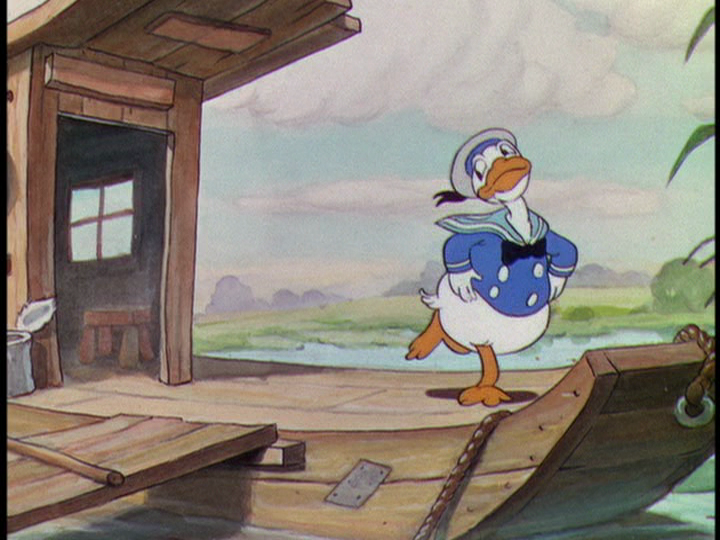
The first appearance of Donald Duck

Upset, but not discouraged, the hen moves on to Donald Duck’s houseboat, where he is also seen jovially dancing. When she asks for help, Donald also feigns a stomachache and begins to moan, also giving the audience a smile when she isn’t looking. Again, she is saddened by this, but decides she’ll just have to do it alone. With the help of her chicks, they dig the rows and plant the corn kernels.

The corn soon sprouts, and the hen and her chicks are excited to see how their crop has grown. She decides to visit Peter Pig and Donald Duck, to ask if they will help her harvest her crop. She finds the two at the “Idle Hour Club,” dancing and singing. When she asks for their help, once again, the two fake stomachaches, and go into their clubhouse, moaning. Part of their clubhouse wall falls down, revealing the two shaking hands and laughing at their supposed deception.

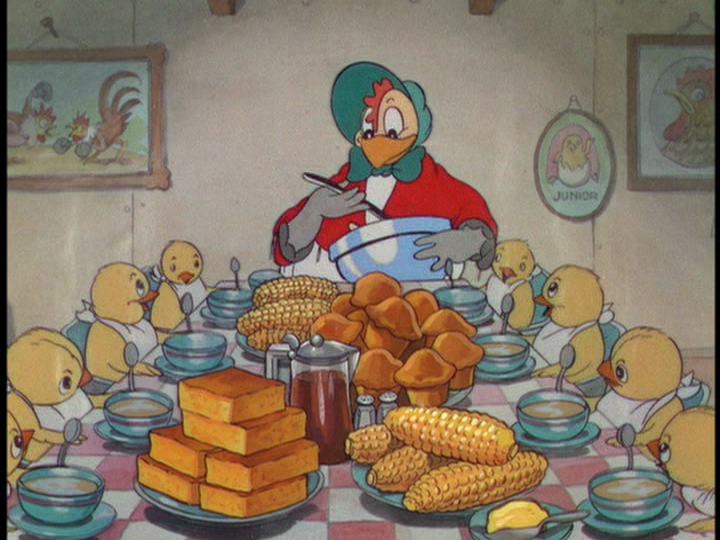
The hen and her chicks enjoying their corn feast that they alone planted and harvested

The hen winks at her chicks, getting an idea. She goes out and harvests her corn, and is soon seen at her oven, cooking and preparing many corn dishes. The entire family is shown around the dinner table, with the table piled high with delicious food, and everyone eating heartily. The Wise Little Hen looks out to see the pig and the duck dancing once again, and they feign stomachaches the moment they spot her, with more symptoms, like seeing spots. The hen asks them if they’ll help her eat her corn, and when they readily agree, she hands them a bottle of castor oil – for tummy aches. The singing narrators let us know that “she’ll eat the corn herself,” with Donald and Peter seen kicking each other for their foolishness.

June 5

Posted on

June 5, 1934 – Mickey Mouse Trademark Granted for Newspaper Cartoon Strips

Image from the original patent file. Image credit: US Patent Office Website

“[After the loss of Oswald], that’s when [Walt] decided that he would never not own his own work again. That was a crucial moment in his life and career. He knew then that he had to own whatever he did. And he held fast to that the rest of his life.” – Leonard Maltin.

On June 5, 1934, the United States Patent Office granted the Walt Disney studios a trademark of Mickey Mouse for use in books and newspaper comics. The registrant is listed as the Walt Disney Productions, Ltd. at the Hyperion Studios. The original trademark has since lapsed, but has been renewed three times, the last time on July 14, 1994.

When Walt lost the Oswald the Lucky Rabbit character to Charles Mintz in 1928, he was careful to make sure he owned all of his work and vowed “Never again will I work for somebody else.” The company is very careful to protect its trademarks, no doubt due to Disney’s fierce protection of his work after Mickey Mouse’s creation.

May 30

Posted on

May 30, 1936 – The Mickey Mouse Short Thru the Mirror is Released to Theaters

“Aw, skip it.” “Skip it? Okay.”

On May 30, 1936, the Mickey Mouse short film Thru the Mirror was released to theaters. Although written as Thru the Mirror on its title card, the official poster for the short has the title spelled Through the Mirror. The short was based on the story Alice Through the Looking Glass by Lewis Carroll. It was directed by Dave Hand and stars Walt Disney as the voice of Mickey.

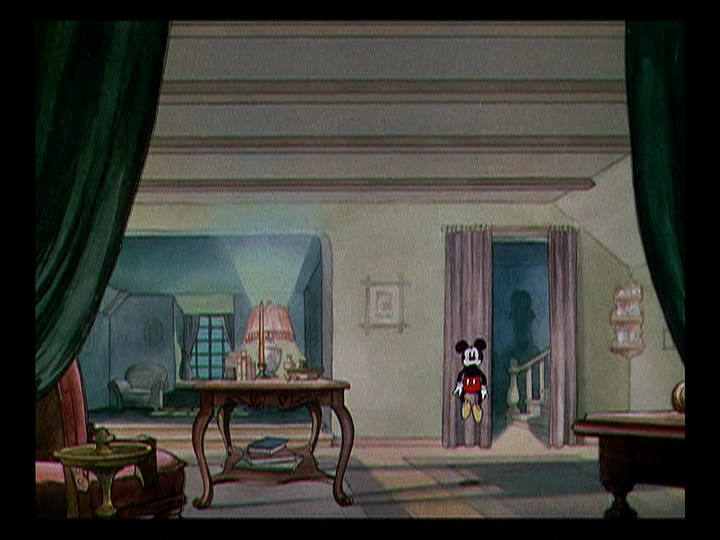
Mickey has fallen asleep reading Alice Through the Looking Glass, and his dream self gets out of bed to try to see if it’s possible for him to go through his own looking glass above his mantle. Finding that it is indeed possible, Mickey walks through the mirror, and looks in amazement at the mirror version of his own home. He jumps into his chair, startled that it is alive, and ends up stepping on the footstool, which has turned into a dog-like creature that bucks Mickey all around the room.

Just as Alice does in the story, Mickey shrinks after eating a piece of strange food

Mickey gets an even bigger shock when it seems that everything he bumps into has come to life. He spies a nutcracker cracking some walnuts, but is surprised to see that it disregards the nut and eats the shell. Mickey takes the walnut and eats it, which first causes him to grow to an alarming size before quickly shrinking to the size of a playing card.

A nearby phone begins to ring, and the phone tells Mickey it’s for him while helping him up to the desk. Their strange conversation ends with Mickey playing jump rope with the telephone cord. The radio, wishing to get involved, begins playing some upbeat music as Mickey begins to perform some tricks, before landing in an ashtray and procuring a top hat and matchstick “cane.”

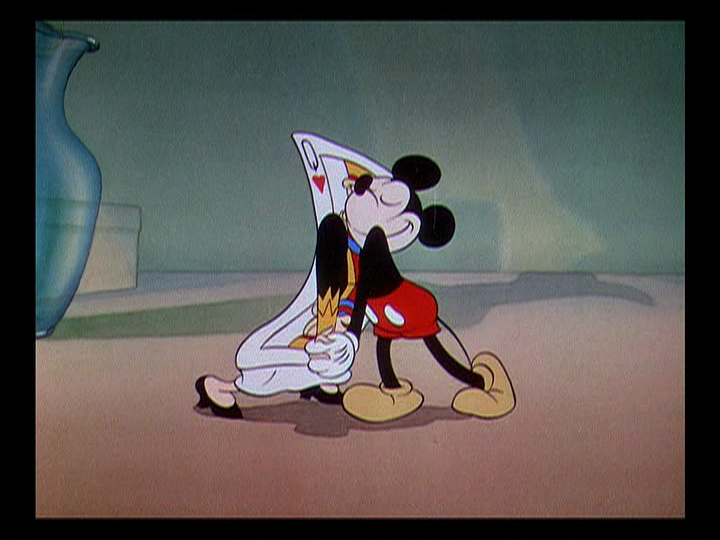
Mickey dances closely with the Queen of Hearts, which infuriates the King of Hearts

After Mickey tap dances on the top of a top hat, he is soon joined by a pair of gloves, and they begin a dance that sends Mickey flying into a deck of cards. He leads the cards into a march, which leads to them all dancing, Mickey with the Queen of Hearts. The Joker alerts the King of Hearts about Mickey’s close dancing with the Queen, and declares a duel with Mickey. Mickey grabs a nearby needle as his weapon, and begins to fight both halves of the King, sending him flying into an inkwell.

Angered by his defeat, the King calls out the cards to chase Mickey, and every single playing card in the place begins to chase the mouse. Mickey holds them off for a bit with an ink pen, but he runs out of ink and escapes through a sock. The cards take off their markings to throw at Mickey, and he gets the idea to blow them away with a nearby fan. Mickey ends up running on the top of a globe, before falling into one of the oceans, and getting thrown out by King Neptune.

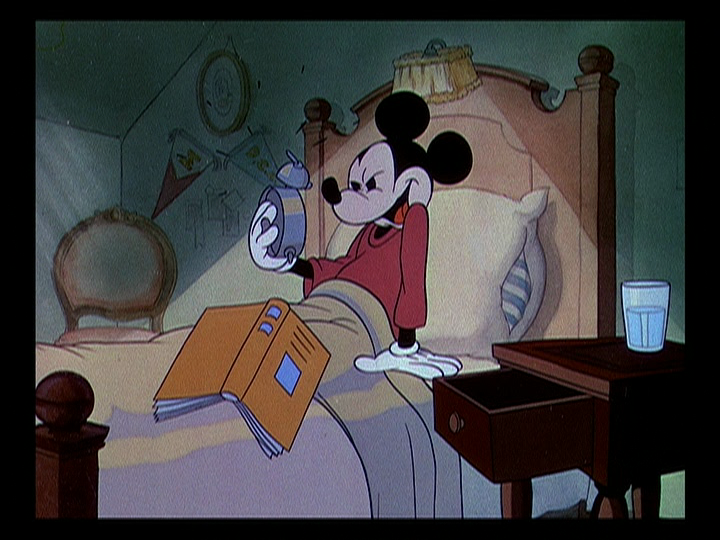
Mickey laughs when he finds he’s been thinking his alarm is his telephone in his sleepy state

Regaining his size quickly, Mickey runs back through the mirror and back into himself, who wakes up and thinks his alarm clock is his phone. He laughs and throws the clock into a drawer before rolling over and going back to sleep.

May 25

Posted on

May 25, 1935 – The Silly Symphony The Cookie Carnival is Released to Theaters

“Here they come, freshly baked, covered with spice and candy flake, marching along in this parade at the Cookie Carnival.”

On May 25, 1935, the Silly Symphony The Cookie Carnival was released to theaters. The idea for the short came from the parades and bathing beauty contests held in Atlantic City during this time. The short was directed by Ben Sharpsteen, and starred the vocal talents of Pinto Colvig (best known as the voice of Goofy) as the wandering gingerbread man.

The short opens on the grand day of the Cookie Carnival, with a gingerbread marching band playing down the street, and one member holding a sign: “Beauties on Parade.” The procession of potential Cookie Queens begins with Miss Peppermint, who is followed by others the likes of Miss Cocoanut and Miss Banana Cake. All sorts of sweet treats have shown up for the festivities.

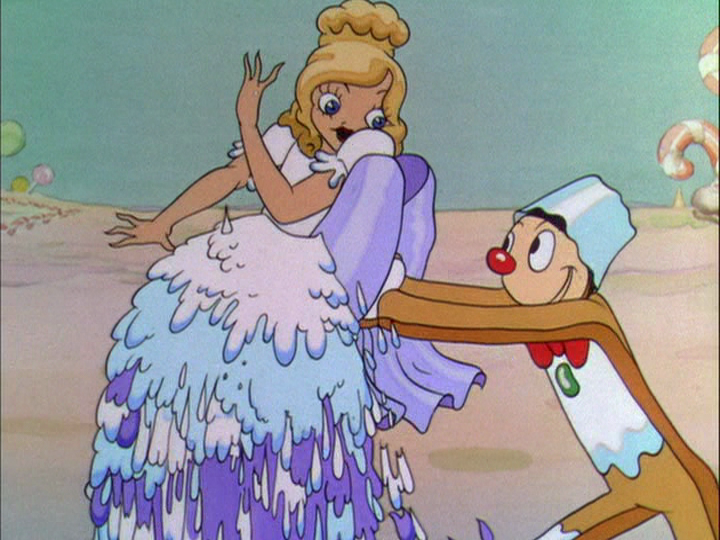
The gingerbread man decorating the girl, helping her to be the next Cookie Queen

On the peppermint railroad tracks, a wandering gingerbread man carrying a hobo sack enters the town, whistling the carnival tune. He hears crying and turns to see a young girl in rags sitting on a stump. He asks her what’s wrong, and she tells him that she’d love to be in the parade, but she doesn’t have anything pretty to wear. He tells her not to be so down, and begins to fix her up in true Cinderella fashion, telling her that she’s going to be the Cookie Queen.

Back at the parade, the judges look at each contestant, but still haven’t selected a queen. As the carnival comes to a close, the gingerbread man places the girl at the end, and upon seeing her, the judges declare her the queen. They knock the gingerbread man down to get to their queen, and the crowd carries her through the street to her throne. The judges then declare that the queen must have a king, and they pull out a collection of potential bachelors, known as the Candy Dates.

The gingerbread man is spotted by the soldiers and has to make a break for it while the Candy Dates are performing

The dates include from the Dandy Candy Kids, the Old-Fashioned Cookies, the Angel Food Cakes, the Devil’s Food Cakes, the Upside-Down Cakes, and the Jolly Rum Cookies. While the Queen is presented with the dates, the gingerbread man, who has been trying to watch the show and see the Queen, has been caught by the soldiers and is chased around the pavilion. Meanwhile the Queen rejects all the dates, and the judges conclude that she should marry one of them, or all three.

The gingerbread man steps out of his hiding place, thinking he’s safe, only to find himself pursued once more. He slips under the red carpet leading to the Queen’s throne, and has his hat broken into pieces as he steps onto the stage, bringing some of the red carpet with him. The Queen tells them to stop, that they shouldn’t crown the King that way, and everyone begins to celebrate the arrival of the new King. The Queen and King are spotted kissing, and they shyly hide behind a lollipop, which melts when they kiss again.

May 23

Posted on

May 23, 1931 – The Silly Symphony The China Plate is Released to Theaters

On May 23, 1931, the Silly Symphony The China Plate was released to theaters. The short was directed by Wilfred Jackson, and while entertaining, this is another example of the stereotypical view Hollywood had of other cultures during this time period.

The short opens on a collection of exquisitely decorated pieces of china: two cups with saucers, a teapot, and a plate. The audience zooms in on the plate, and the figures begin to move. Three Chinese servants prepare to serve food for the Emperor, and as he eats, the bowl slips away from him and knocks into the instruments of the sleeping band, who wake and begin to play. Three maidens appear and begin to dance to the music, and a poor cat that is walking along ends up getting stepped on and accidentally used as an instrument by the band.

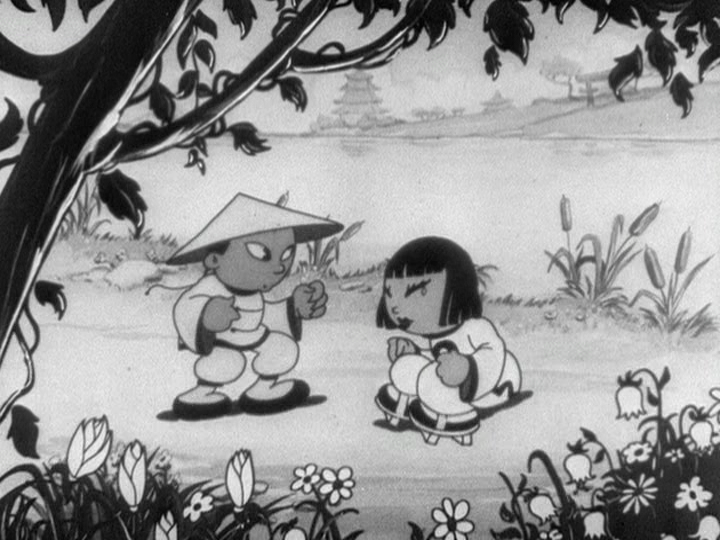
The boy tries to cheer up the crying girl after her fall in the river

As the cat runs away in fright, he knocks into a screen, revealing a frightening face on an umbrella, which is held by another maiden. She gets distracted by the view of a butterfly and seeing the Emperor asleep, chases after it into the garden. As she chases it, the view moves to a young fisherman nearby, who uses a bird to help him catch the fish in the river. The girl accidentally falls into the river as she chases the butterfly, and the boy quickly rescues her and puts her on dry land. He tries to comfort her as she cries, and makes her laugh as he wipes away her tears. She points to the butterfly she was chasing, who is now perched happily on a sundial, and the boy lets her know that she can count on him to catch the elusive insect.

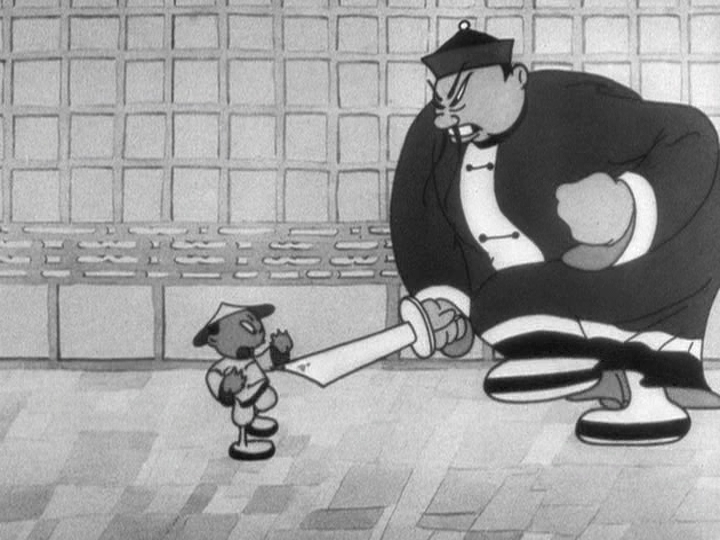
The two begin to chase the butterfly, and it flies into the Emperor’s palace where it tries to perch on the sleeping Emperor’s nose. The boy sees it flying by the chair and leaps up to catch it, inadvertently waking the Emperor. The Emperor, furious at the boy’s actions, grabs a sword, ready to execute him. The boy backs up against a wall where another sword falls down, and the two begin to battle, with the Emperor easily breaking the boy’s sword. The girl tries to plead for mercy, but the Emperor swats her away.

The boy bravely soldiers on, although the Emperor has a huge advantage

The boy continues bravely to fight, even though he has no advantage whatsoever. When it looks like the end with the boy cornered against a pillar, the boy accidentally knocks the vase at the top of the pillar down onto the Emperor’s head, knocking him out cold. The boy grabs the girl’s hand and they flee from the palace, stealing a cart as the Emperor follows close behind in a wheelbarrow. The cart breaks on a rock, but the two continue to run hiding behind a rock. The Emperor doesn’t see them, but thinks they have run into a cave nearby.

The cave, however, turns out to be a dragon, who gobbles up the Emperor and catches the girl in his claw. The boy tries to fight to protect her, but the dragon is too powerful. At one moment, the girl is able to escape, and the two race away once again, with the dragon following close behind. The pair manages to make their way up a hill where a boulder stands precariously on the edge. They push it off, where the dragon accidentally swallows it and is stuck at the bottom. The pair makes it back to the boat, where they embrace.

May 15

Posted on

May 15, 1937 – The Silly Symphony, Little Hiawatha, is Released to Theaters

“Mighty hunter Hiawatha. Mighty warrior Hiawatha. Mighty chieftain Hiawatha. Mighty Little Hiawatha.”

On May 15, 1937, the Silly Symphony, Little Hiawatha, was released to theaters. The short was directed by Dave Hand, and distributed by United Artists. Walt once had the idea of turning the story into a full-length feature film, but the idea was shelved, as it never developed the way Walt wanted, story-wise.

The short opens with a small Indian boy paddling his canoe down the river as the narrator begins to tell the story of Little Hiawatha, as if reciting a poem. As birds begin to sing around him, Little Hiawatha grabs his bow and arrow, with the intent to shoot, but loses his balance when the canoe passes through a small bit of rapids, and the birds fly away. He pulls his canoe up to a patch of rocks on the shore and gets out of the canoe, searching for his prey, and ends up falling in the river.

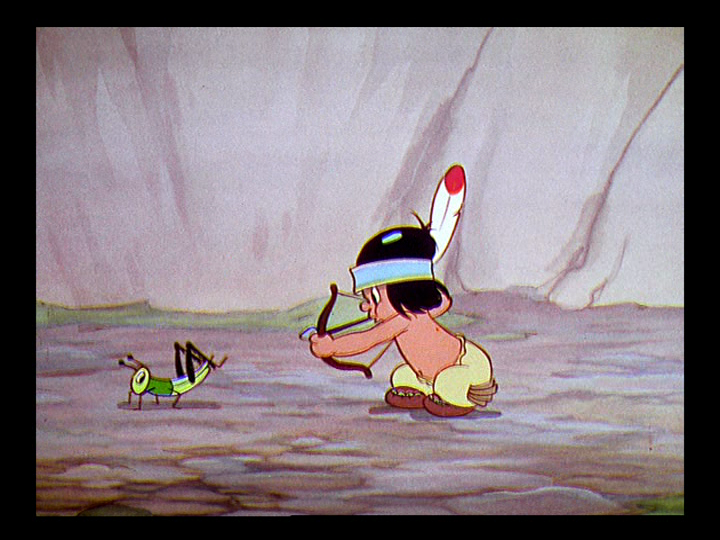
Little Hiawatha begins to track a grasshopper

The animals in the forest spot Little Hiawatha’s fall and begin to laugh. Angered, he pulls out his bow and begins to chase the forest creatures, although the end up taunting him and eluding his capture. He then spots some strange tracks on the ground and, with all the animals watching him curiously, he decides to track the creature, although the tracks were made by a grasshopper instead of anything vicious. Little Hiawatha loses the fight with the grasshopper, causing all the animals to laugh once again.

As Little Hiawatha chases the animals once again, he corners a baby bunny, who stands on a stump, frightened, as the boy begins to cheer. As he draws back his bow, the animals of the forest watch with trepidation, unsure if the boy would actually kill the innocent rabbit. Lucky for the rabbit, Little Hiawatha is touched by the bunny’s sadness, and decides to then duel the rabbit, only the rabbit is too afraid to comply. Annoyed, the boy lets the rabbit get away, much to the joy of the animals in the forest. Angry at his failure, Little Hiawatha breaks his bow and arrow and tosses it aside, but then hears all the animals in the forest cheering. As the boy tries to hide with his shame, he spots bear tracks nearby, and decides to track down the bear.

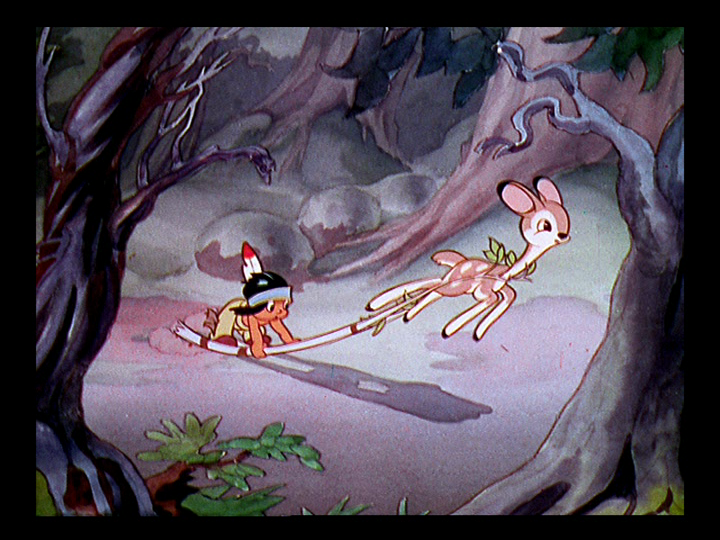
A fawn volunteers his efforts to help Little Hiawatha escape from the bear

As Little Hiawatha is tracking down the bear, a cub crawls out from another side of a boulder, tracking the same tracks. The two run into each other, and flee in fear, but Little Hiawatha turns around to chase the cub, only to run across the mother. He tries to hide from the angry bear, but is almost paralyzed in fear. Three beavers notice that the boy is in trouble and sound out an alarm, causing all the animals in the woods to come to attention. As Little Hiawatha does his best to flee, the animals step in to help as best they can. In the end, Little Hiawatha stopped wishing to hunt the animals, but became their friend instead.


May 12

Posted on

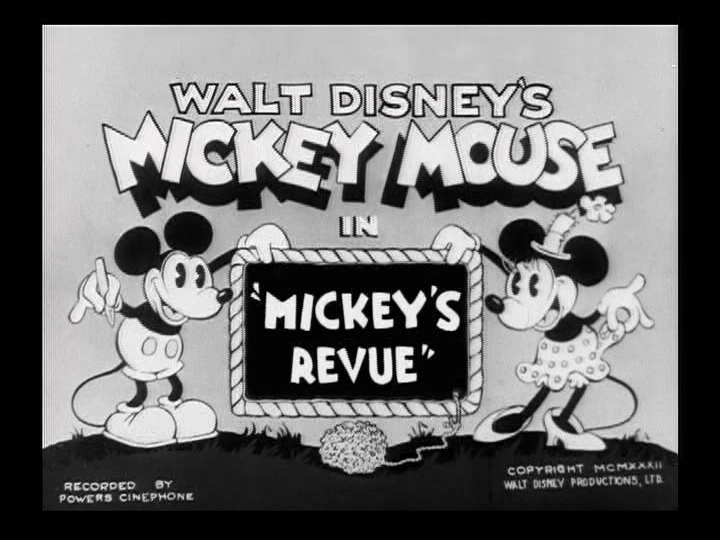
May 12, 1932 – The Mickey Mouse Short Film Mickey’s Revue is Released to Theaters

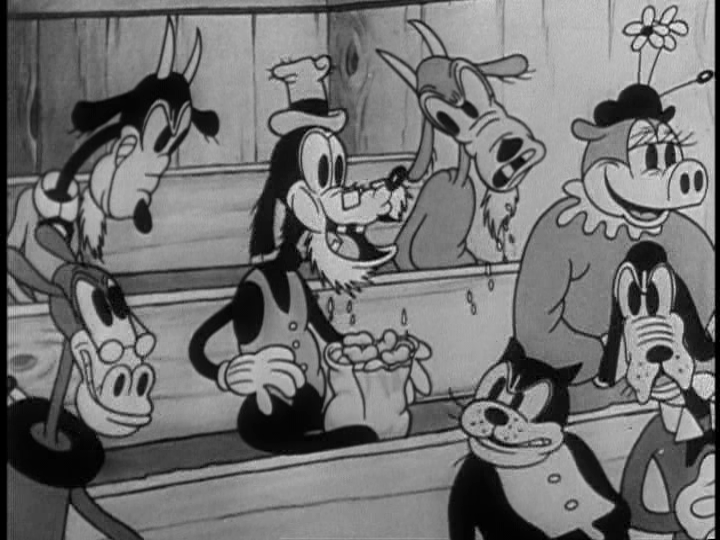
On May 12, 1932, the Mickey Mouse short Mickey’s Revue was released to theaters. It was directed by Wilfred Jackson. This short is best known as the first appearance of the character of Dippy Dawg, who would evolve into Goofy; he is recognizable in this short by his peculiar laugh, which was provided by Pinto Colvig.

The first appearance of Dippy Dawg, later known as Goofy, annoying the audience members around him

The short opens in a theater, where the orchestra is in the middle of a song, with Mickey at the helm as the conductor. As the piece reaches a dramatic part, an audience member (Dippy Dawg) loudly cracks open peanuts and eats with his mouth open, to the annoyance of the other members of the audience surrounding him.

The curtain opens, revealing three actors dressed as flowers, and Minnie tied to a rope, floating as she plays the part of a fairy, while Horace Horsecollar holds her from a fishing rod in the rafters. Minnie taps an actor, who stands up, revealing herself to be Clarabelle Cow. On the other side of the stage, Pluto sneaks on, sniffing the dancer. When the dancer pushes him away, he begins to bark until a hook yanks him off the stage. Dippy Dawg begins to laugh loudly from the audience, again annoying all those around him.

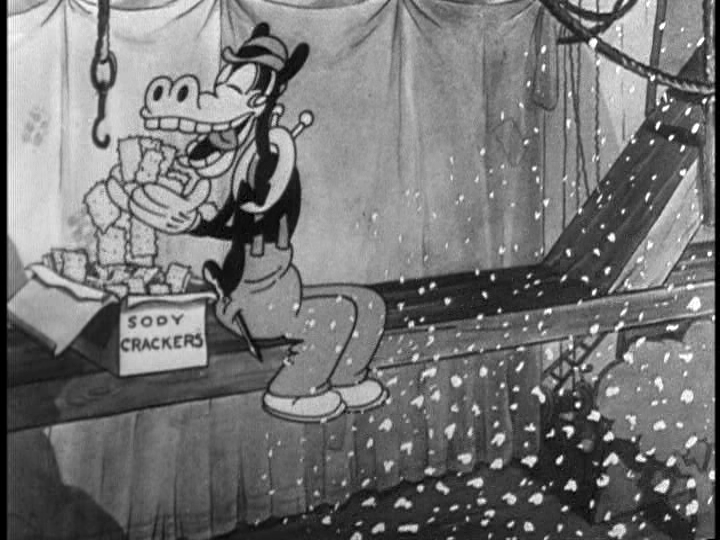
Horace demonstrating how he makes his stage snow

Mickey continues to conduct as the cow dancers begin their ballet. A loud crashing noise sounds, as the band members and stage hand Horace create a storm for the piece. The cow ballerinas look around at the “snow,” then begin to ice skate around the stage (although it is revealed to the audience that the “snow” is just soda crackers Horace chews up and spits out across the stage). As the dancers skate offstage, Pluto is seen crawling on stage, hot on their trail, but is quickly retrieved and pulled off stage.

The curtain falls and the audience applauds wildly before the next act begins. Two dogs begin a rather comical tap dance. As it ends, Pluto is once again seen trailing something, only this time he’s on the trail of a bug, until a lasso appears and pulls him away. Dippy Dawg begins to laugh his peculiar laugh again, but this time, the fed-up audience members hit him over the head with a hammer, knocking him out cold. The two main conspirators begin to laugh in the same manner that Dippy Dawg did, much to the surprise of the rest of the peanut gallery.

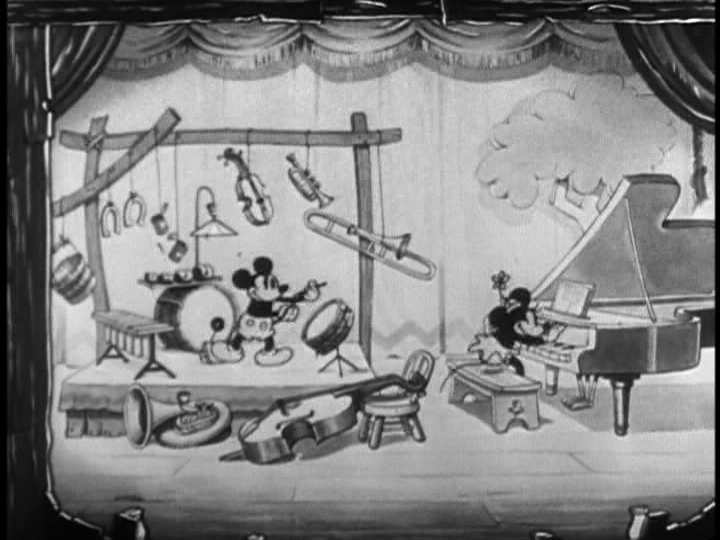
Mickey and Minnie in their grand performance

The curtain opens again to reveal Mickey in a “one-man-band” kind of show, with Minnie accompanying him on the piano. As they play, a family of kittens that has been living under the stage pops out through holes in the floor and begins to play with the instruments, making it livelier than before. Horace has Pluto tied up in the back while he reads a magazine, and Pluto begins to whine, wishing to explore the stage. Seeing the kittens, he leaps forward, throwing Horace from his chair, and dives onto the stage. Pluto’s chase destroys the set and instruments, but the audience still applauds loudly thinking it was a great show.