RSS Feed

Tag Archives: 1930s

August 19

August 19, 1933 – The Silly Symphony Lullaby Land is Released to Theaters
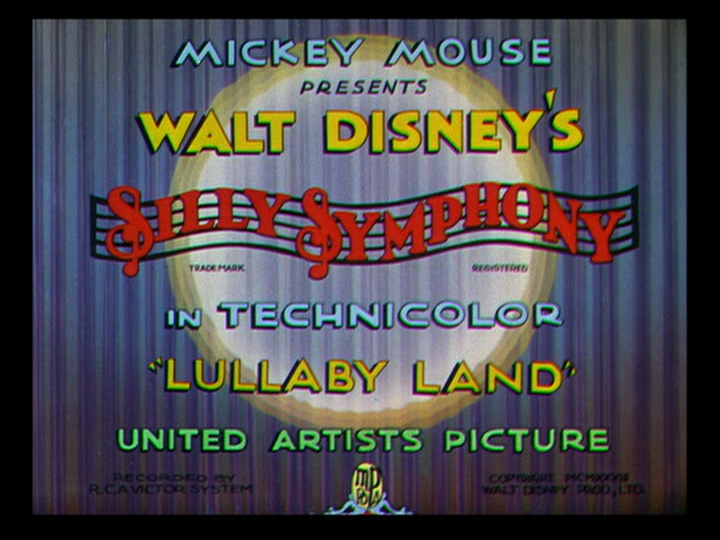
“Into Lullaby Land of Nowhere, sleepyheads always go there.”

 On August 19, 1933, the Silly Symphony Lullaby Land was released to theaters. The title song, composed by Frank Churchill, was eventually released as sheet music, as were many of the popular Silly Symphonies. Lullaby Land was directed by Wilfred Jackson

The short opens with a baby being rocked to sleep by his mother, who begins to sing a lullaby. As she sings, the baby drifts off to sleep and to a dreamland called “Lullaby Land,” accompanied by his stuffed dog that has come to life. The baby begins to explore, finding flowers made of baby powder bottles, bushes made of pacifiers, and trees made of baby rattles. The baby and the dog hear the sound of trumpets, and look to see a parade of baby items march by, including a string of marching diapers and dancing castor oil.
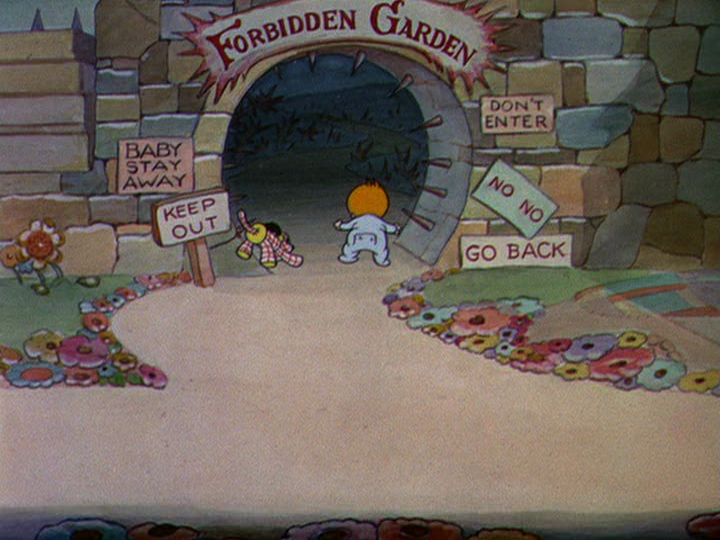
Although there are many signs warning the baby not to enter, his curiosity gets the best of him, and he goes to explore the Forbidden Garden

When the baby and dog follow the parade, the baby notices an area called the “Forbidden Garden,” marked with signs warning him to stay away. Intrigued, the baby wanders in with the dog close at his side. The garden is filled with dangerous objects for a baby, like corkscrews and fountain pens with ink. The dangerous items come to life and begin fighting each other. The baby grabs a hammer and destroys a tree made of pocket watches. The baby then accidentally lights a box of matches and the lit matches chase the baby around the garden.

The song warns the baby that the boogeyman will get him because he didn’t obey. The baby eludes the matches by crossing a small pond on a bar of soap. Three black clouds appearing at the matches’ demise, and the three clouds turn into three boogeymen, who try to scare the baby. The baby runs for his life from the boogeymen chase him who suddenly disappear into the night. As the baby and dog cower behind a tree, the Sandman greets them and helps put the two to sleep with sweet dreams. The short ends with the baby’s mother covering her son with a blanket and finishing her lullaby.
August 18

August 18, 1931 – The Mickey Mouse Short Film Blue Rhythm is Released to Theaters

“I hate to see the evenin’ sun come down.”

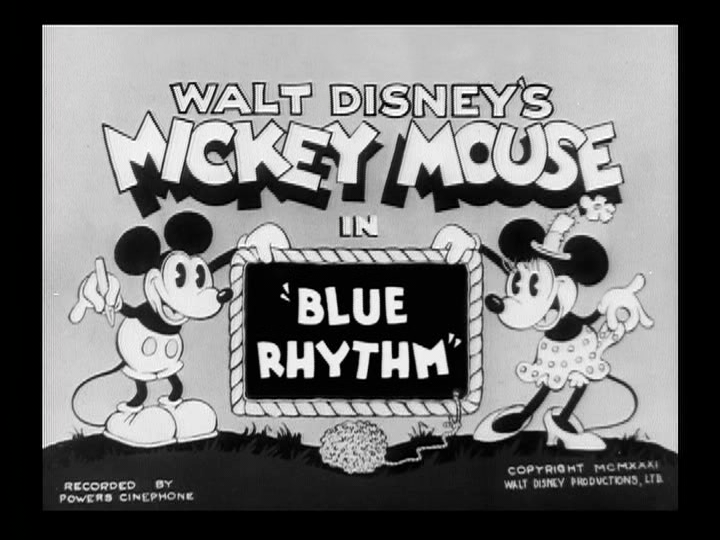
 On August 18, 1931, the Mickey Mouse short film Blue Rhythm was released to theaters. The song used in the short is “Saint Louis Blues,” a jazz standard from 1914, written by W.C. Handy, and famously sung by Bessie Smith and Louis Armstrong. The short was directed by Burt Gillett, and stars Walt Disney as the voice of Mickey Mouse, and Marcellite Garner as the voice of Minnie Mouse.

The curtain opens on a grand stage to reveal Mickey playing a piece on the piano. He soon switches genres of music from classical to jazz, and begins playing around with the piano keys. Minnie enters stage left and begins to walk in time to the music before singing “Saint Louis Blues” rather dramatically. Mickey finds gum under the piano and gets his fingers stuck to it, which causes him some difficulty playing Minnie’s song.

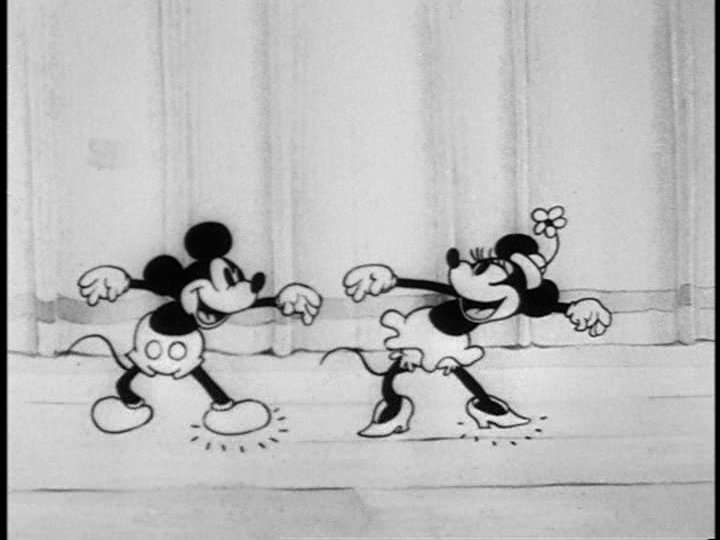
Mickey leaves the piano to join Minnie in scatting and dancing across the stage

Minnie moves on to perform some jazz scatting with Mickey leaving the piano to join her. The two then begin to tap dance across the stage, and leave as the background curtain rises to reveal Horace Horsecollar and other members of the orchestra continuing to play the piece. Mickey appears from a trapdoor and conducts the orchestra. Pluto, playing the trombone, keeps hitting Mickey in the back with the slide, which causes Mickey to break it in half in frustration.

The lights go out, and the orchestra stops in confusion before seeing the spotlight on Mickey, who puts on a crushed top hat and begins to play the clarinet. The orchestra once again continues to play, and the concert ends with the stage falling apart thanks to their spirited playing.

August 13

August 13, 1932 – The Mickey Mouse Short Film Mickey’s Nightmare is Released to Theaters

“God bless Minnie, God bless Pluto, God bless everybody. Amen.”

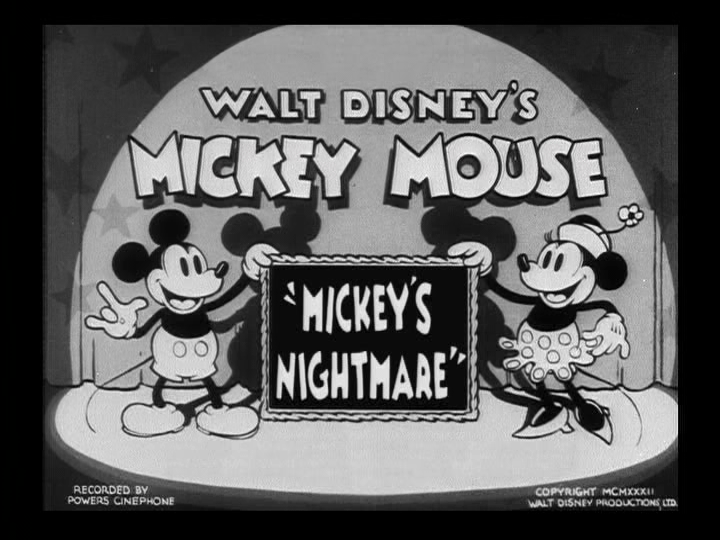
On August 13, 1932, the Mickey Mouse short film Mickey’s Nightmare was released to theaters. The short was directed by Burt Gillett, and stars Pinto Colvig as Pluto and Walt Disney as Mickey Mouse.

Mickey gets ready for bed, giving a kiss to the photo of Minnie on his nightstand before extinguishing his candle. While he snores away, Pluto sneaks onto his bed and begins licking Mickey’s face, which Mickey interprets as Minnie kissing him in his dreams. The dream begins with Mickey presenting Minnie with a rather large diamond engagement ring while wedding bells chime in the background. The happy couple are seen at their wedding, which is soon followed by married bliss at a house in the country with a “heart” motif.

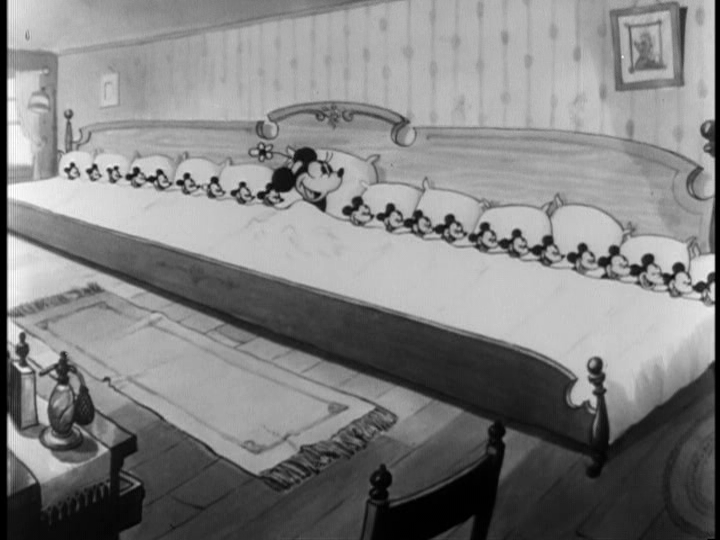
Mickey enters his room in horror to see that he and Minnie have been presented 21 children by the stork

While Mickey is watering the lawn, the shadow of large bird passes overhead, and Mickey looks up in alarm. The bird is actually the stork, bringing a present for the happy couple. Mickey, proud to now be a father, shakes hands with Pluto. Suddenly, more storks appear with more bundles of joy, dropping them down the chimney of the house. Mickey, alarmed, runs inside to see Minnie and 21 children all tucked into one bed. The children greet him and begin to run around wildly. Mickey and Pluto try to escape, but are trapped.

The children begin to wreak havoc around the house, throwing kitchen knives and dressing Pluto in a corset and heels. Mickey tries to stop them, but to no avail: there are just too many children. At one point, the children grab buckets of paint and begin to paint the house, with one using the cat and another using the parrot as paintbrushes. Pluto finds himself painted with stripes; when he tries to hide in the washing machine, one of the children starts it up.

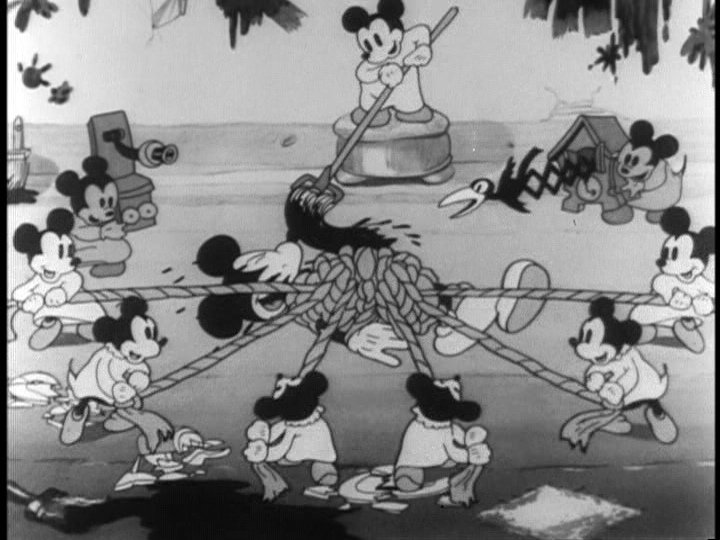
In his nightmare, Mickey is trapped by his children, with one of them painting his face with a mop

Mickey soon finds himself tied up and held hostage by the children as one paints his face with a mop. He awakes to find himself tied in his sheets, with Pluto happily licking his face. He rejoices in the fact that it was all just a nightmare, and gives out a shout of delight.

July 30

July 30, 1932 – The Academy Award Winning Silly Symphony Flowers and Trees is Released to Theaters

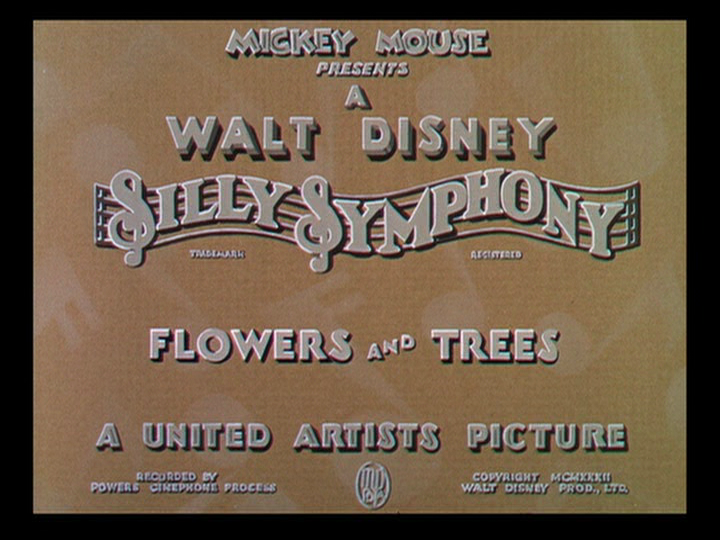
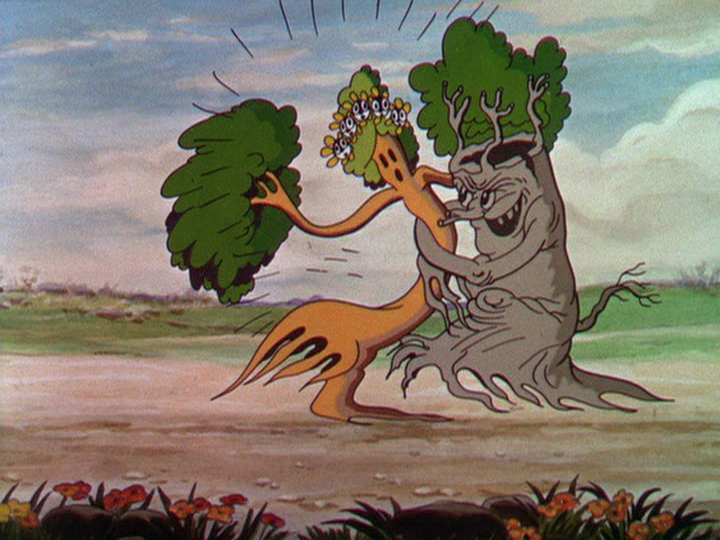
On July 30, 1932, the groundbreaking Silly Symphony Flowers and Trees was released to theaters. The short was directed by Burt Gillett, and became a landmark in Disney animation. Originally conceived in black and white, the short was scrapped at great cost to the studio to be redone in the new Technicolor process. Walt Disney signed an exclusive deal with Technicolor that gave him alone the rights of the process for two years, and after this short, all of the Disney shorts would be released in color. This process helped enhance the quality of Disney’s films, and Flowers and Trees would be awarded an Academy Award for Best Cartoon; at the same ceremony, Walt would be awarded a special Academy Award for the creation of Mickey Mouse.

One spring morning, the trees and flowers wake to the sound of a bird’s chirping, stretching in the morning light. One pair of trees in particular is enjoying the day, while an old stump scares the bird that tries to wake him. One tree begins to play a harp for his love, a beautiful young tree, who dances gracefully to the music while flowers dance around her. The flowers then bring her closer to her love and dance around them before making a heart shaped wreath on the ground. The male tree places it around the female’s head.

The female tree is captured by the stump, and she struggles in vain to escape

She continues to dance, unaware she is being pursued by the jealous, cranky old stump. He grabs her for his own, and the young male tree saves her before beginning a sword fight with the stump. The old stump is defeated, and decides to set the young male tree on fire. The male tries to stomp out the blaze, but to no avail. The plants that can run begin to flee, while others try to help put out the flames. The stump watches will glee as he sees the young couple being engulfed in flames, but soon finds himself victim of the blaze as well.

The flames being to grow in intensity, and the birds flock together to create a hole in the clouds that causes rain to fall and put out the fire. What’s left of the stump is found on the road, a victim of his own plan to destroy the couple, with his vultures swarming around the remains. After the storm clears, the male tree, proposes to the female, and the flowers sound the wedding bells.

July 28

July 28, 1931 – The Silly Symphony The Cat’s Out is Released to Theaters

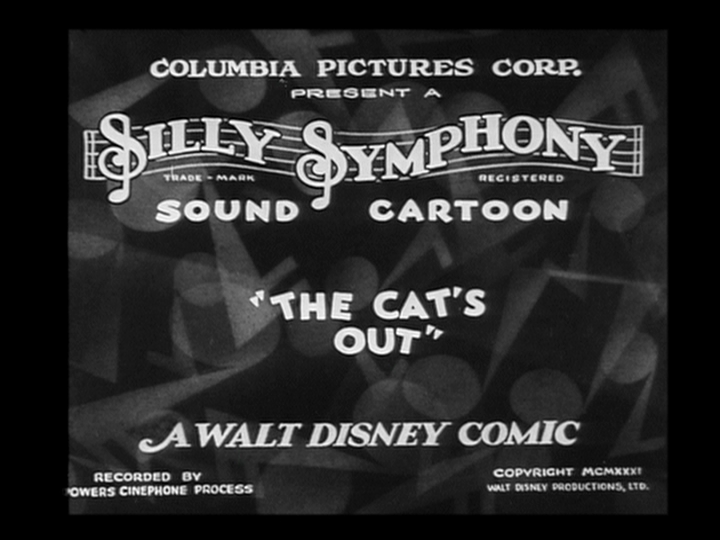
On July 28, 1931, the Silly Symphony The Cat’s Out was released to theaters. It has been copyrighted as The Cat’s Nightmare, but the studio now refers to it by its original name. The short was directed by Wilfred Jackson.

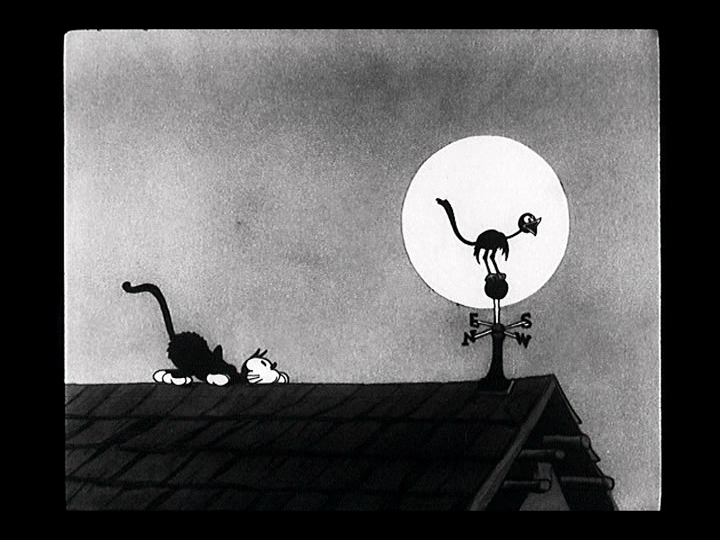
A cat is put out for the night outside a country home, and howls at the door before going off to explore.­­ As he perches on a fence, still howling, neighbors begin to throw shoes, and one lands on the cat’s head. He runs away in a flurry, falls off the fence, and lands in a washtub. After drying himself, the cat hears a bird chirping from its perch on a weathervane.

The cat carefully stalks his prey, which is perched on the weathervane

The cat, now suddenly hungry, stalks the bird, waiting for his chance to attack. He catches the bird by the tail just as it takes off, and tries to remain on the roof by wrapping his tail around the weathervane. Unfortunately, he loses his balance and falls, ripping the vane from the roof. As he lands on the ground, the vane falls soon after, landing on his head. The cat’s lives begin fleeing to heaven, but he is able to grab his last one and save it. The bird he chased shows up, and as he is about to grab it again, it triples in size and begins to taunt the cat.

The cat, annoyed by the taunting, punches the bird. As his feathers fly off, the feathers become more birds, which circle the cat and taunt him mercilessly, trying to peck him with their beaks. Suddenly, the birds disappear, and a herd of owls in the trees scares the cat. He runs to hide behind a bucket, but the water pump, now alive, dumps water on him. The startled cat runs into a pole and knocks down a scarecrow. As the cat hides behind a pumpkin, the scarecrow comes to life and begins to dance. The multiple dancing scarecrows appear and dance together before they merge back into one scarecrow again, who climbs back on his pole.

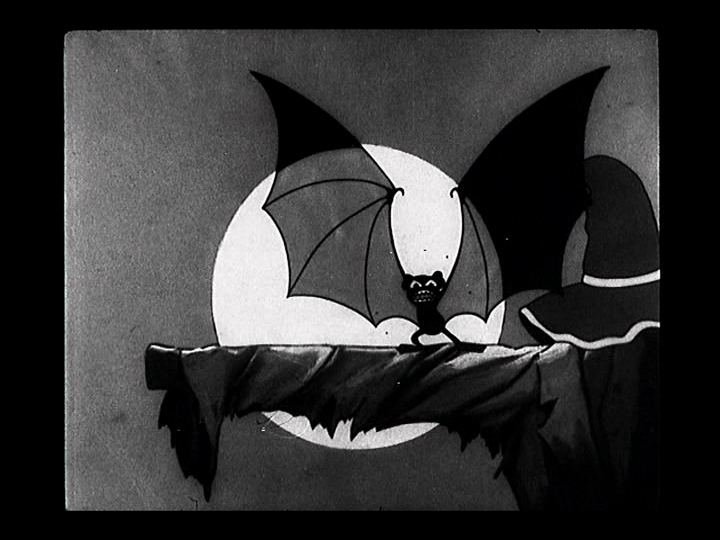
A bat appears from under the scarecrow’s hat and begins to dance in the moonlight, which frightens the already scared cat

From under the scarecrow’s hat, a bat appears and begins to dance in the moonlight. The terrified cat throws the pumpkin at the bat, which turns into a flock of bats that swarm the cat. The cat flees, only to find himself trapped at the mercy of giant spiders. As they attack, he is able to escape them, but everywhere he goes, he finds more trouble: trees come to life and beat him, and the bird laughs at the cat’s misfortune.

The cat wakes to find that it has all been a dream, and it’s now morning. He goes to the door of his house and howls, hoping the owner will let him in. The owner opens the door and the cat steps inside while the owner grabs the bottle of milk, then shoves the cat back outside. Angrily, the cat paws at the welcome mat, then blows his master a raspberry before haughtily walking away.

July 18

July 18, 1932 – The Mickey Mouse Short Film Mickey in Arabia is Released to Theaters


“Alley-oop!”

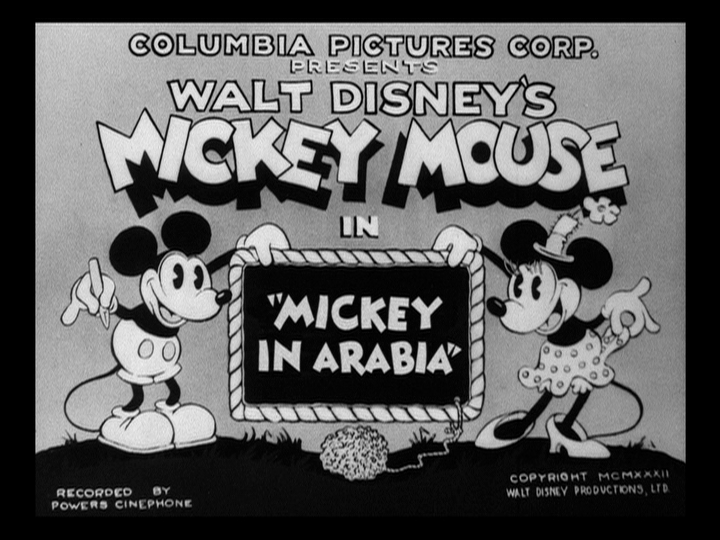
On July 18, 1932, the Mickey Mouse short film Mickey in Arabia was released to theaters. The short was directed by Wilfred Jackson, and stars Walt Disney as Mickey Mouse and Marcellite Garner as Minnie Mouse.

Mickey and Minnie are vacationing in the Middle East, and are seen riding a rather unusual camel through the desert. They enter a city and pull to a stop, looking around at the strange new sights, including a snake charmer taming several cobras. Mickey and Minnie leave the camel to drink from a nearby beer barrel, and the two explore the city and take pictures. As Minnie is setting up a shot, an evil sheik captures  and rides off with her, while Mickey attempts to pursue them on his drunken camel.

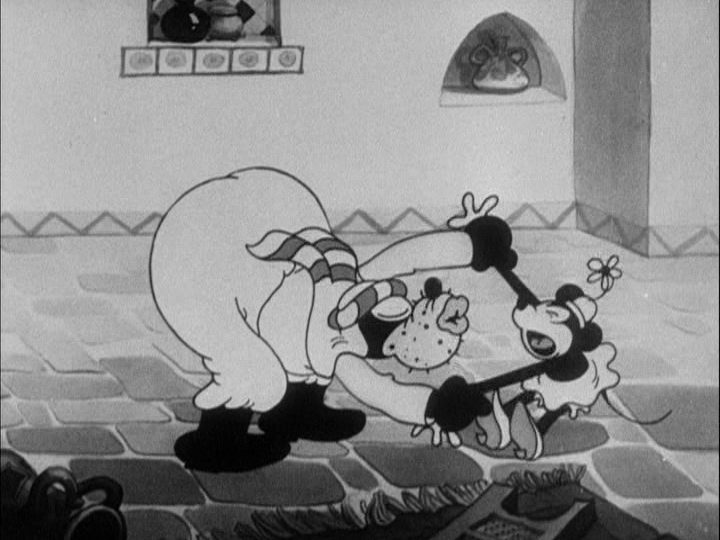
Minnie struggles to avoid kissing the sheik, who has kidnapped her and taken her to his castle

Minnie is taken to the sheik’s castle, where the sheik tries to get Minnie to kiss him, but to no avail. Mickey climbs the castle walls to come to Minnie’s rescue, diving in the room and kicking the sheik out of the way. As he and Minnie try to flee, the sheik’s soldiers stop them at every turn. The sheik, blinded by his turban, pulls out two pistols and begins to fire wildly, while every member of his army hides in terror.

Mickey hides Minnie in a vase and tries to open the door, only to find it locked. The sheik, finally removing his turban from his eyes, throws a sword at Mickey, but misses thanks to Minnie’s scream. Mickey grabs the sword, not realizing he’s grabbed only the hilt, and charges at the sheik. Suddenly realizing that the sword’s blade is missing, Mickey ducks, tripping the evil sheik and sending him flying. Angered, the sheik throws all sorts of swords at the mouse, who dodges them. Mickey hides behind a board, where all the swords land, and throws all of them back at the sheik, tearing the shiek’s clothes to shreds in the process.

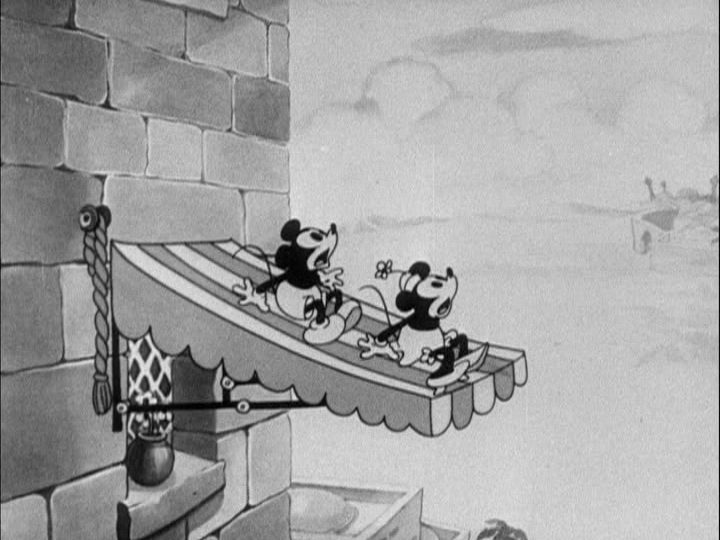
Mickey and Minnie watch in horror as the sheik has followed them and attempts to jump onto their perch

As the sheik pursues them in his holey long-johns, Mickey grabs Minnie and the vase she is hiding in and they flee up a tower. Mickey trips on the roof, sending Minnie flying. He saves her by her hat, but ends up falling from the roof himself. The lucky pair land on a veranda blind. The sheik leaps after them, but Mickey pulls the blind in, and the sheik lands head first in the sand. The guards throw their spears at the two as well, but with another pull of the blind, the spears land on the sheik instead. The happy couple jumps from their perch onto their camel’s back and ride off into the desert.

July 14

July 14, 1934 – The Silly Symphony The Flying Mouse is Released to Theaters

“Please, I wanna fly like the birds!”

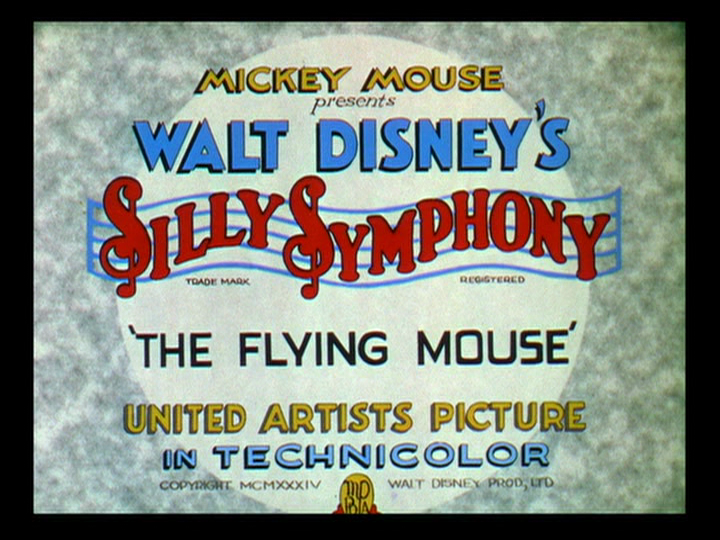
On July 14, 1934, the Silly Symphony The Flying Mouse was released to theaters. It featured a popular song called “You’re Nothin’ But a Nothin’,” composed by Larry Morey and Frank Churchill, which would later be released on sheet music. The short was directed by Dave Hand.

The short opens on a warm spring day at a quaint pumpkin house, with a mother mouse giving her youngest child a bath while her children play see-saw on a mushroom. One of her children is sitting away from everyone, admiring the birds he sees fly high in the sky. His greatest desire is to fly, and he imagines himself soaring through the sky with a beautiful pair of wings. He comes up with the idea to attach leaves to his arms, then calls over for his brothers’ attention. He runs off a branch, attempting to fly, and falls like a rock face-first into a pit of mud. His siblings laugh, but he decides that all he needs is a higher jumping point, and climbs up a flower. As he lifts into the sky, a gust of wind comes his way, and he falls into the tub of water from his sister’s bath, splashing the water everywhere, which causes his sister’s clothes to shrink.

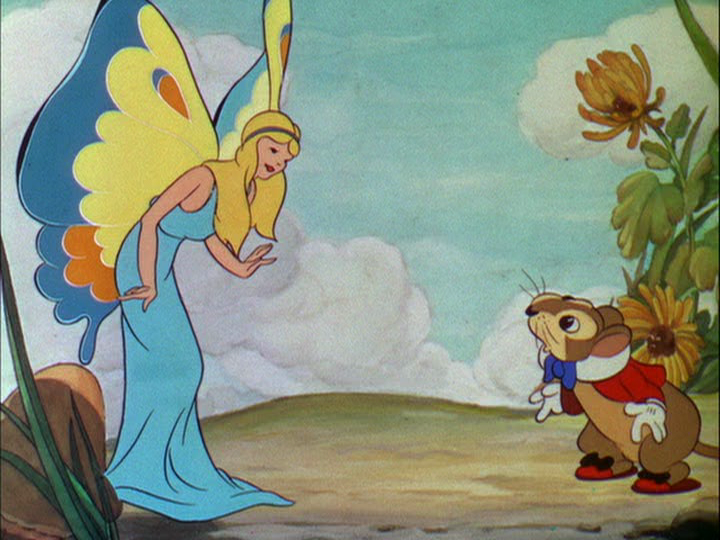
The astonished mouse meets the fairy, who wishes to reward him for his brave deed

After a good spanking from his mother, he runs away to cry as his other siblings laugh at his folly. Suddenly, the mouse hears a cry for help from a beautiful butterfly caught in a spider web, with the spider licking his chops. He saves the butterfly, who turns out to be a beautiful fairy, and offers to grant him one wish for his kindness. Without hesitation, he tells her that he wants to fly. She warns him that mice were never meant to have wings, but after he pleads again, she grants him his wish. He kisses her hand in gratitude, and goes to join the birds in their flying dances. However, although he can fly, he is not welcome at the birds’ party, and is soon all alone. He decides to go surprise his family.

As he flies down, the family members are startled by his shadow, thinking he’s a predator, and they hide inside and throw items at him until he flees. Alone, the mouse ends up in a cave full of bats, who welcome him as one of their own, calling him brother. When the mouse cries that he’s not their brother, they tell him that since he’s not a mouse, and if he’s not a bat, then he’s a nothing. He runs as fast as he can away from the cave, and cries, realizing the wings have only brought him unhappiness. From one of his tears, the fairy reappears, asking why he’s so sad. He tells her he wishes he could die. The fairy tells him to cheer up and be happy that he’s himself, and if he does so, life will smile on him. She then removes his wings, and he’s so happy he kisses her hand once again in gratitude before running home to greet his family.

July 9

Posted on

July 9, 1932 – The Silly Symphony The Bears and the Bees is Released to Theaters

On July 9, 1932, the Silly Symphony short film The Bears and the Bees was released to theaters. The short was directed by Wilfred Jackson.

The short opens in the woods, where a bear and her two cubs are seen sleeping next to a river. The cubs wake up and begin to tussle, in turn waking up their mother, who roars at them before returning to her sleep. The cubs run off to play in the woods, and one of the cubs falls head first onto a rock and gets a rather large bump on his forehead. The other cub runs over and soothes the sibling’s injury before finding a berry bush and pulling off berries for a snack.

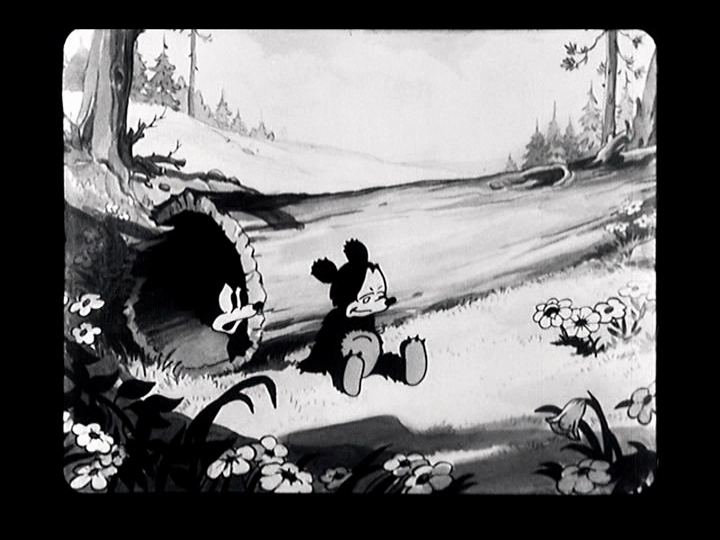
The cubs are bullied by a big black bear and take to hiding in a hollow log nearby

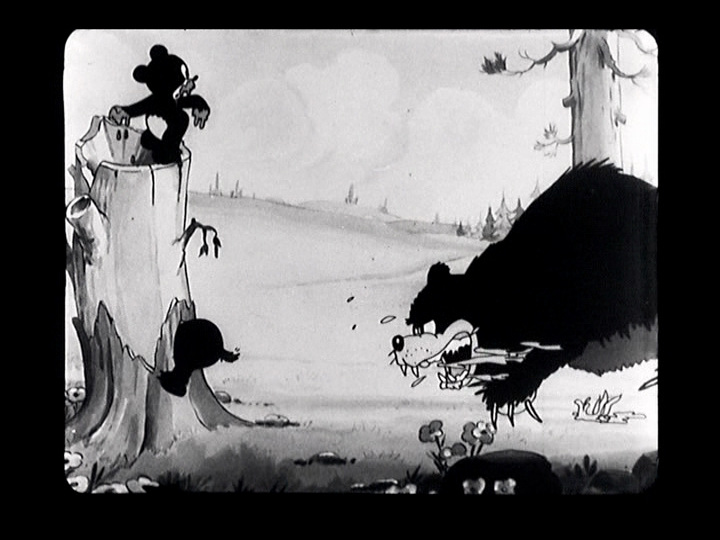
A nearby roaring alerts them, and a large black bear emerges from his cave, growling angrily. He runs to attack the two cubs before eating from what appears to be his berry bush. When the cubs approach to grab just one berry to eat, the black bear startles them and sends them hurrying to a nearby log, where one of them begins to cry at the meanness of the other bear. The other cub tries to cheer the sibling by giving it flowers to eat. When a bee emerges from one of the flowers and begins to buzz around, the cubs follow it curiously.

The cubs spot a flower garden, with bees buzzing all around collecting nectar and taking it back to their hive in a hollowed-out tree. After the bees leave the hive, the cubs poke around inside it, delighted to know that the hive contains honey. They begin to eat the honey in the hive eagerly, until a bee comes back and sees them and sounds the alert to the other bees. Angrily, the swarm grows and immediately heads back to protect the hive.

Meanwhile, the angry black bear has spotted the cubs and their honey, and decides he wants it for himself. He charges at the tree and throws the cubs aside, where they can only watch as the swarm heads for the hive and the black bear. The bees attack the bear, covering him with stings while his head is stuck in the hole in the tree. The bees continue their attack, stinging him with points from a plant and a tree branch, before delivering the final blow, sending the bear running for his life. The cubs take advantage of the bees’ disappearance and continue to eat from the now destroyed hive, enjoying all the leftover honey.

July 8

Posted on

July 8, 1938 – The Donald Duck Short Good Scouts is Released to Theaters

“You call that a tree? Shame on you! I’ll show you a man-sized tree!”

On July 8, 1938, the Donald Duck short film Good Scouts was released to theaters. The short was directed by Jack King, and stars Clarence Nash as the voice of Donald and his nephews.

The short opens at Yellowstone National Park, with Donald and his nephews on a scouting expedition. The group marches through the park and settles on a place to set up camp. One of the nephews excitedly runs off to chop firewood, but Donald stops him before he can really do anything, shaming him for trying to chop down a pine sapling. Donald finds what he considers a “man-sized tree” and prepares to chop it down. The nephew notices a sign on the trunk, indicating that it’s a petrified tree, and tries to stop his uncle, but Donald won’t hear of it. He takes a giant swing, and finds himself reverberating from the impact.

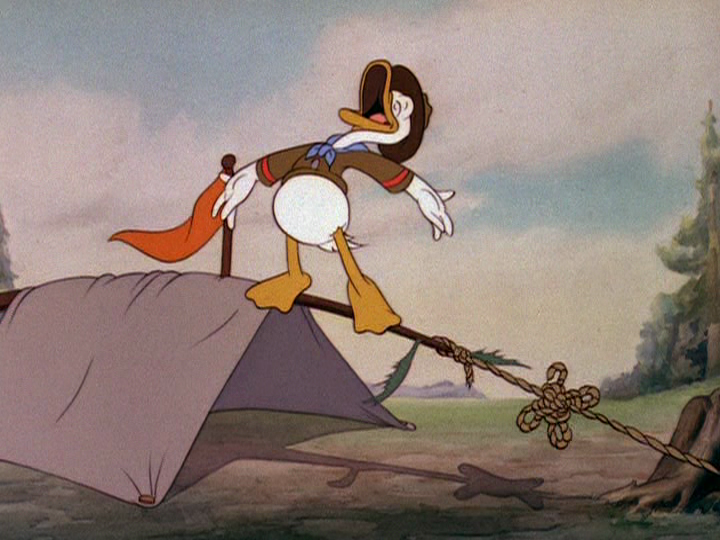
After he stops shaking, Donald looks over to see his nephews struggling to pitch a tent. Berating them and saying they can’t do anything, he pushes them aside and begins to set up the tent, lassoing the top of a pine tree and tying the rope to a rock before knotting it tightly and placing the tent canvas over the bent tree branch. The nephews cheer at their uncle’s victory, but the victory is short-lived when the knot comes undone and sends Donald flying into their food supply. His nephews laugh, and Donald remarks to the audience “That’s gratitude for you.”

As Donald begins to fling the food away, he spies a bottle of ketchup and gets a wicked idea to trick his nephews. He pours the ketchup on himself and pretends he’s dying; the nephews immediately run to their first aid kit and bandage him completely, blinding him and leaving him unable to move his arms and legs properly. Donald stumbles around and lands face-first into a jar of honey. A bear approaches their camp, and with Donald unable to move and covered with honey, the bear begins to lick the honey from Donald’s feet.

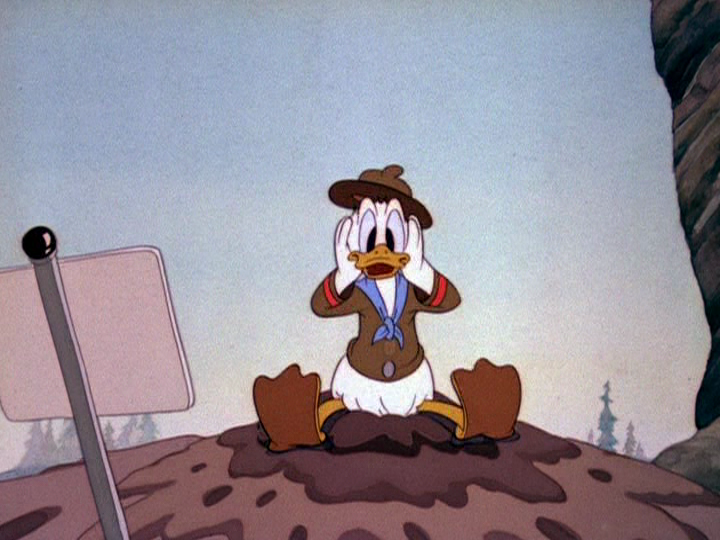
Donald just realized that he has fallen on top of the geyser Old Reliable, and it is just about to be set off

Finding that it is indeed a bear after him and not his nephews, Donald hightails it out of there, with his bandages coming loose. The bear grabs one end of a bandage, pulling Donald back from falling off a cliff. The nephews, hiding from the bear, tell Donald they’ll save him, and use to axe to cut his bandage. What none of them realize is that Donald has fallen right on top of the geyser Old Reliable, right as it’s about to blow. The geyser lets loose, and sends Donald flying back into the reaches of the bear. The boys try various methods to save their uncle, including logs and boulders. A large boulder is sent flying up to the top of the geyser’s spout, and the bear climbs on it to chase Donald.


Later that night, the boys wish their uncle good night before they go to sleep in their tent. Donald, unfortunately, is still trapped at the top of the geyser’s blast, with the bear pursuing him as the moon shines high in the sky. All the poor duck can do is sound his whistle as for help.

June 29

June 29, 1935 – The Silly Symphony Who Killed Cock Robin? is Released to Theaters

“Who killed Cock Robin? Who got him with a shot and put him on the spot? Who killed Cock Robin and vanished like a phantom in the night?”

On June 29, 1935, the Silly Symphony short film Who Killed Cock Robin? was released to theaters. The short was a modern take on the popular nursery rhyme, which was believed to be a satirical comment on the fall of Sir Robert Walpole, who was falsely accused of corruption and imprisoned in the Tower of London. He was eventually released and became the first Prime Minister of Great Britain, but was met once again with opposition and was forced to resign. The short was directed by David Hand, and stars Billy Bletcher as the voice of the judge, and Martha Wentworth as the voice of Jenny Wren. The short is also notable for the many celebrity caricatures; Jenny Wren is a caricature of popular actress Mae West.

The short opens with Cock Robin whistling and playing a guitar outside the home of Miss Jenny Wren. Jenny steps out onto her balcony to listen to the music, and Cock Robin begins to croon. A shadow of a bird with a bow and arrow is seen against the trees, firing an arrow straight into Cock Robin’s chest. He swoons a bit, then plummets to the ground, with everyone looking. Everyone comes out, alarmed at what just happened, and the police are called in to investigate. The medics take Cock Robin away on a stretcher.

The Crow appears as the first witness, but keeps insisting that he doesn’t know anything

The court case begins, with the judge asking who killed Cock Robin. A scared crow is sitting in the witness box, and when asked, answers that he doesn’t know who killed him. When shown Cock Robin’s body, the crow turns deathly white and tries to flee. He reiterates that he knows nothing about the case, and is hauled off to jail as they pull out the next witness, Legs Sparrow. Legs won’t answer the questions, so the next witness, the Cuckoo Bird, is called. The Cuckoo Bird isn’t a reliable witness, however, so they decide to move on, with everyone rather frustrated that nobody knows.

Jenny Wren steps forward as the next witness, entrancing the entire court. She tells the judge that she wants to see justice done, as somebody took out her Robin. When she suggests that somebody ought to be hanged for the crime, the judge, very taken with Miss Wren, demands that all three suspects be hanged for the crime. Out of nowhere, another arrow flies in, taking the judge’s hat and nailing it against a tree. The judge looks up to see the real culprit, Cupid. Cupid informs them all that he shot Cock Robin, but Robin isn’t dead, he’s just fallen for Jenny and landed on his head. Jenny asks Robin to kiss her, and he wakes up, giving her a smooch.