RSS Feed

Tag Archives: Silly Symphony

March 24

March 24, 1934 – The Silly Symphony Funny Little Bunnies is Released to Theaters
vlcsnap-2014-03-22-09h58m31s35

“The storybooks say that far, far away, there’s a green, enchanted dell where the rainbow ends, and everything is gay, and the Easter bunnies dwell.”

On March 24, 1934, the Silly Symphony short film Funny Little Bunnies was released to theaters. This was the only Disney short film that celebrated Easter, and the first film Nine Old Men animator Wolfgang Reitherman animated. It was directed by Wilfred Jackson.

The short begins in a dell, where the rainbow ends. Two rabbits pull aside a curtain of leaves to bring the audience to the world of the “funny little bunnies,” who are gearing up for the Easter season. A first group is seen with sugar, spices, and chocolate, bringing the supplies to a giant pot where the chocolate is melted down and mixed. The chocolate is then placed in egg molds, and once hardened, are taken to be decorated by a “firing squad” holding icing tubes. Several bunnies are also seen carving chocolate bunnies from giant blocks of chocolate. A group blue ribbon of hens are in a choir, laying eggs as they sing. The eggs are placed in a pot to be hardboiled, and are checked by another rabbit with a hammer to see if they are done. Four bunnies whistle a happy tune while painting the inspected eggs, while one bunny is content to create whimsical designs. The rainbow provides the bunnies with their paint, and they are seen happily collecting the colors. Two blind rabbits are seen weaving Easter baskets (although it is soon revealed that they aren’t really blind), and the baskets are then sent to be filled with Easter treats and decorated with ribbons. The bunnies end with skipping off with their creations to deliver them to the children.
January 16

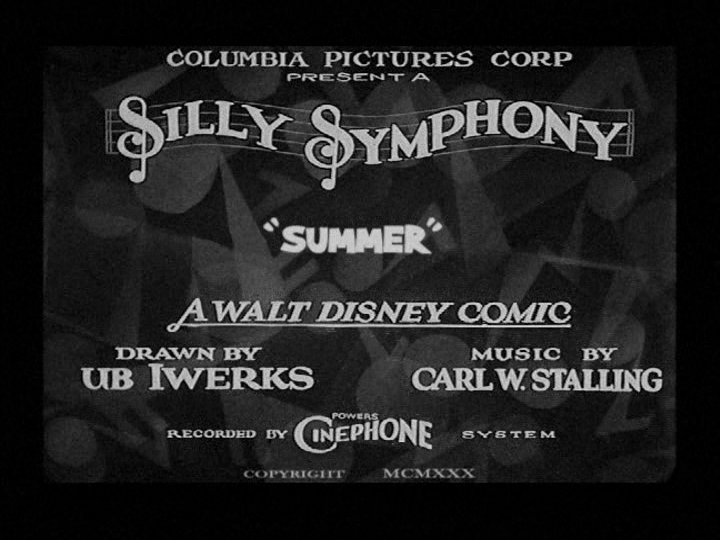
January 16, 1930 – The Silly Symphony Summer is Released to Theaters

vlcsnap-2014-01-16-19h32m07s133

On January 16, 1930, the Silly Symphony Summer was released to theaters. It was the second of a part of a series of seasonal shorts. It was directed by Ub Iwerks.

The short begins with a caterpillar walking out of a corn cob and greeting other caterpillars in a nearby apple. The group of caterpillars then dance merrily through the garden before crawling into a flower. On that same flower, two butterflies emerge from their cocoons and dance as they fly through the air. They land on a stick figure, who scares them away before he, too, starts to dance. He falls off the branch and into the pond below, where several different bugs are celebrating the warm season through dance and song. Two dung beetles are then seen hard at work pushing their mound to their home, which continues to get stuck on several pebbles. The mound slips down a hill and crashes into a tree, which reveals a whole mess of tiny beetles, who being a special circle dance with each other. In the middle of the dance, a flower emerges from the ground, revealing four flies hidden within its petals. The four flies take off and find a spider in his web. They take the spider and the web, and begin to bounce the spider, who takes his revenge by eating the four flies and dancing merrily.

January 5

January 5, 1935 – The Silly Symphony The Tortoise and the Hare is Released to Theaters

vlcsnap-2014-01-05-11h00m53s146

“You don’t talk tootin’, cutie. I’m the very best there is!”

On January 5, 1935, the Silly Symphony The Tortoise and the Hare was released to theaters. It was based on the Aesop fable Hare and the Tortoise. The short won the Academy Award for Best Cartoon in 1934, winning against Columbia’s Holiday Land and Universal’s Jolly Little Elves. It was released as an educational film in 1986, retitled Aesop’s Hare and the Tortoise, with an overview done by Walt Disney from an episode of Disneyland. A sequel to this short was also released in 1936, entitled Toby Tortois Returns. The short was directed by Wilfred Jackson.

The short begins on race day, with everyone turning out to see the big race between Toby Tortoise and Max Hare. Max steps out meet the cheering crowd, while Toby is greeted by laughs. Toby greets Max with a friendly “may the best man win,” with Max replying that of course he will, but promises not to beat Toby too badly. The official starts the race, and Max takes off with a shot, while Toby is still at the starting line. As Max runs by so fast that trees are pulled out from their roots, he stops when he sees Toby galloping slowly with some snails. Max decides to “take a nap” while Toby continues his pace, and when Toby sees the sleeping Hare, he tries to use the situation to his advantage. Max then gets up and speeds past Toby once again.

Max stops racing so he can chat up some girls from the local girls' school

Max stops racing so he can chat up some girls from the local girls’ school

Max stops once he sees the girls of Miss Cottontail’s Girls’ School, thinking that he has plenty of time to chat with the young ladies. The girls see Toby galloping by, and try to stop him to talk. Toby refuses to stop, as he has a race to run. As Toby continues, Max stays with the girls to off his speed skills. Suddenly, a cheer rings out, and Max realizes that he needs to hurry to catch up to Toby. Toby sees Max running full speed and picks up his pace. It’s a fight to the finish, and Toby manages to win in the end. The crowd cheers for Toby and carries them on his shoulders as the victor.

December 27

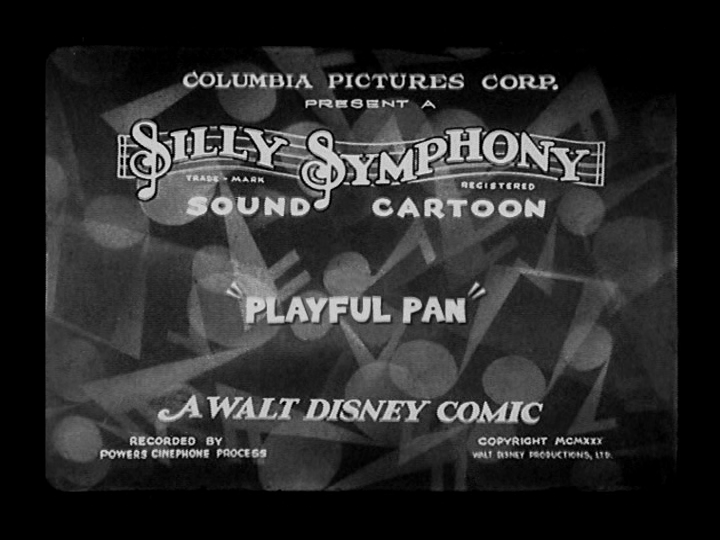
December 27, 1930 – The Silly Symphony Playful Pan is Released to Theaters

vlcsnap-2013-12-27-22h01m45s237

On December 27, 1930, the Silly Symphony Playful Pan was released to theaters. The short was based on the Greek mythological character Pan, the god of the wild. It was directed by Burt Gillett.

The short begins with Pan playing his pipes on a rock in a pond, with the fish dancing around to the melody. The fish follow Pan as he frolics across the pond on rocks and logs. As he lands on the other side of the bank, the flowers begin dancing to his melody. Pan gets all the flowers nearby to participate in the music-making before getting the bugs nearby to dance to the music. The trees and the clouds start dancing as well, with the clouds creating lightning from their moves. Unfortunately, one bolt of lightning cuts down a tree and accidentally starts a fire in the forest. All of the animals scurry away to avoid the flames, and several trees are destroyed by the flames. The animals work together to save each other and try and put out the flames. A raccoon finds Pan and explains the problem, and Pan hurries to find half of the forest in flames. He attempts to manipulate the fire with his pan pipe music, acting as a pied piper to lead them to the pond, where the flames are quickly put out. After relieving the forest of the fire, Pan disappears.

December 10

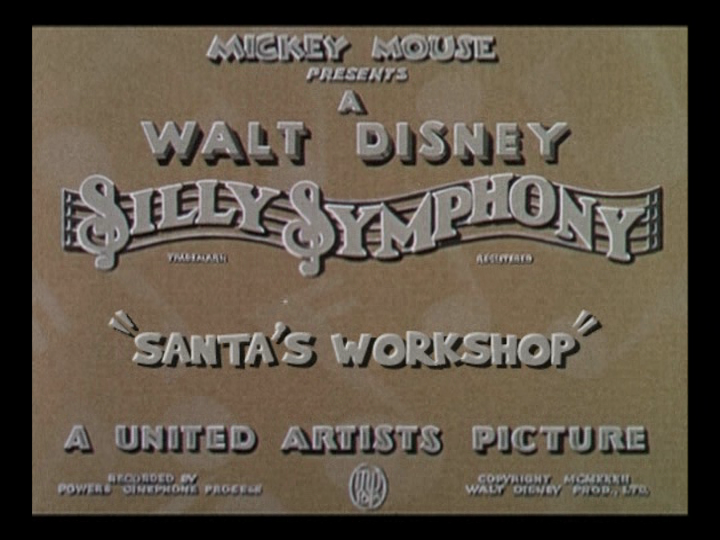
December 10, 1932 – The Silly Symphony Santa’s Workshop is Released to Theaters

vlcsnap-2013-12-10-18h24m25s57

“We’re the merry, merry men of the midnight sun, we work for Santa and have a lot of fun.”

On December 10, 1932, the Silly Symphony Santa’s Workshop was released to theaters. A sequel to this short, The Night Before Christmas, was released in 1933. There are several allusions to popular characters and often used stereotypes of the era, including a Charlie Chaplin wind-up doll. The short was directed by Wilfred Jackson.

At Santa’s Work Shop, all the elves are busy doing the final preparations for December 25th, including bringing mail and cleaning up his sled. Santa is seen reading his letters, and checking to see if the children that send the letters are on the naughty or nice list. An elf takes the letters to the factory, where dozens of elves are making the Christmas presents. An assembly line is seen working on rocking horses, while painters are seen working on blocks, dolls, and chess boards. Each toy goes to Santa for inspection, and he stamps them either with “OK” or “NG.” A marching band of tin soldiers marches through the factory, leading a parade of toys into Santa’s sack. As the sack is filled, Santa has his elves bring it out to his sled, and he bids his elves goodbye as he sets off to deliver the toys.

November 30

November 30, 1935 – The Silly Symphony Cock o’ the Walk is Released to Theaters

vlcsnap-2013-11-30-18h38m38s55

On November 30, 1935, the Silly Symphony Cock o’ the Walk was released to theaters. The music used in the film, “Carioca,” was taken from the RKO film Flying Down to Rio, which was fitting, as 1935 was the last year that United Artists would distribute Disney films, as it would move to RKO the following year after a long courtship. It was directed by Ben Sharpsteen, and marks the debut of composer Albert Hay Malotte.

The short begins with a parade, welcoming home the world’s champion boxer, Cock o’ the Walk, who struts his stuff on a float, followed by all of the hens in the town. One hick rooster is professing his love to a skinny hen, but her attention is lost when she catches the eye of Cock o’ the Walk, who asks her to dance with him. The two begin to dance, and all of the hens in town begin to gossip and join in the dancing. The entire barnyard begins to dance, including chicks, caterpillars, and peacocks.

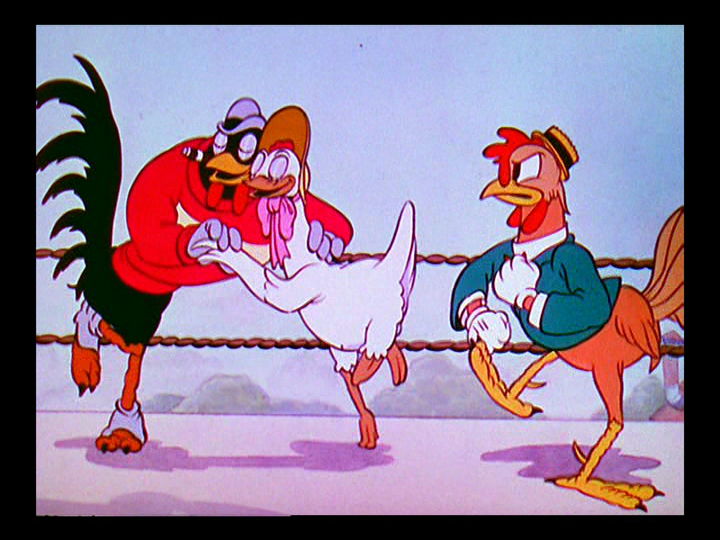
Angered by the champion taking his girl, the hick rooster tries to break them up

Angered by the champion taking his girl, the hick rooster tries to break them up

As Cock o’ the Walk continues to dance with the hick’s girl, the hick decides to put an end to it, and the hens laugh as Cock o’ the Walk mocks him. The hick challenges the champion to a fight, with the hick working more to dodge the advances before getting pummeled. Cock o’ the Walk’s bag is knocked into the skinny hen’s lap as she cheers for the champion, and discovers that Cock o’ the Walk is not only married, but he has 14 baby chicks. Angered at this realization, she slaps him, and tried to revive the hick rooster with a kiss. His strength is renewed, and he beats Cock o’ the Walk, winning the fight and sending the champion flying into his trophies. The short ends with the hick rooster and his skinny hen dancing together happily before he lays a large kiss on her and lets out a loud rooster call.

October 20

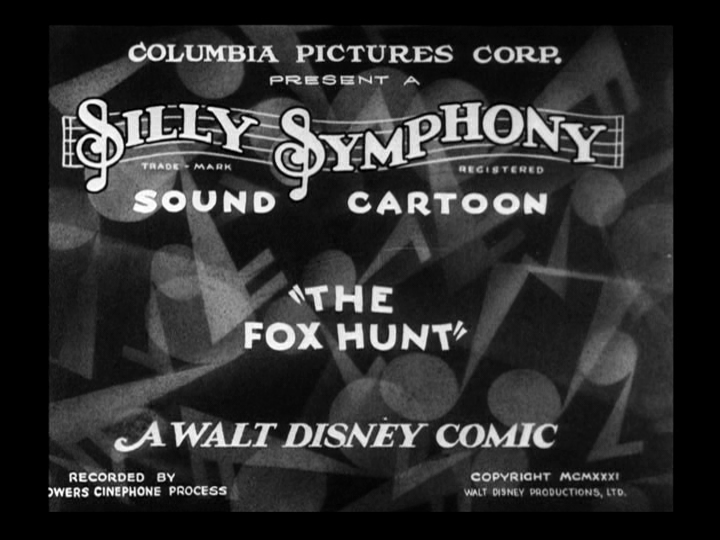
October 20, 1931 – The Silly Symphony The Fox Hunt is Released to Theaters

vlcsnap-2013-10-20-17h41m22s148

“Hooray!”

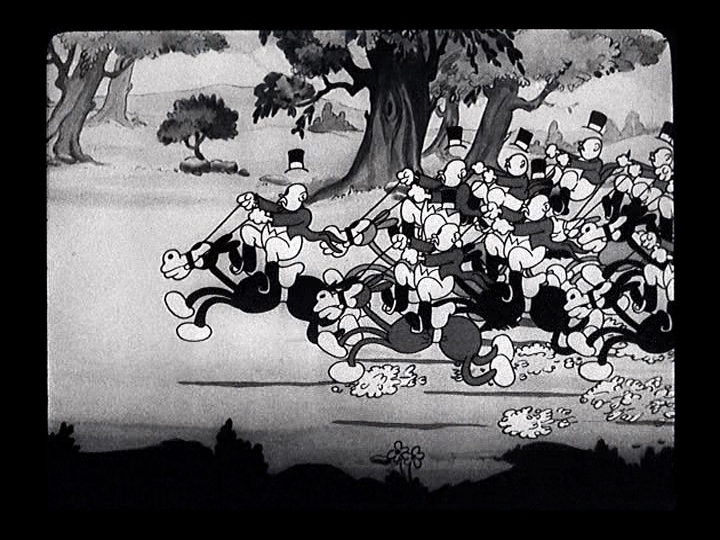
On October 20, 1931, the Silly Symphony The Fox Hunt was released to theaters. The short was remade in 1938 as a Donald Duck and Goofy short. The Silly Symphony was directed by Wilfred Jackson.

Sunlight streams through the trees of the forest, and several birds chirp with the coming of the dawn while a bell rings in the steeple nearby. Two riders sound their horns, and are followed by a long line of riders, finished with two pages holding a fox in a cage, and one page holding on to several leashes of dogs who are ready to begin the chase. The riders stop in front of a blacksmith, who is working hard at his trade. He sends out a horseshoe to his assistant, who begins to shoe the horses while the riders have tea. The horns sound again, and the riders head out for the hunt.

The riders eagerly chase the fox once the hunt begins

The riders eagerly chase the fox once the hunt begins

The gun sounds, and the fox is set free, followed by the herds of dogs and riders. The riders travel at different rhythmic paces, but are soon stopped when the fox jumps over a wall, with each rider accidentally headbutting the next. One rider flips off of his horse and ends up riding a cow instead, and when he falls off the cow, he ends up riding a pig, a porcupine, and a log that is filled with stuck dogs. The rider finally catches the fox by the tail, and traps him in another log. Unfortunately, when he thinks he can pull it out from the log, he pulls out a skunk instead. The appearance of the skunk causes all the riders and dogs to flee; once the crowd is gone, the fox leaves the log and shakes hands with the skunk.

October 14

October 14, 1938 – The Silly Symphony Farmyard Symphony is Released to Theaters

vlcsnap-2013-10-14-20h15m41s85

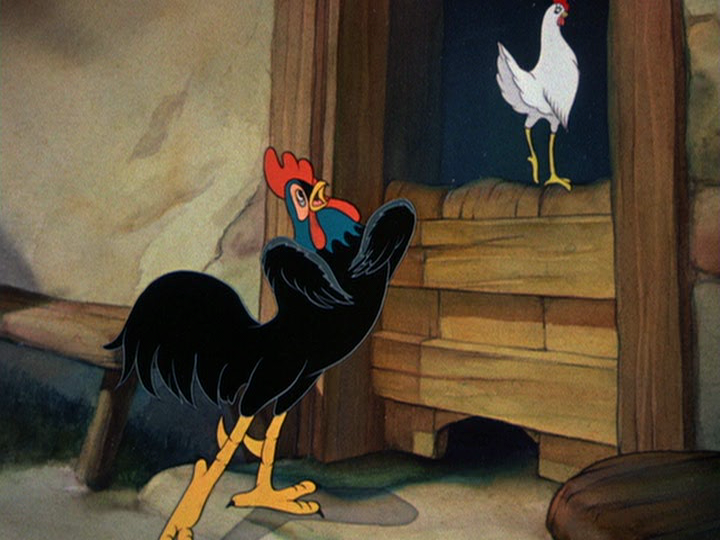
“How are ya, toots?”

On October 14, 1938, the Silly Symphony Farmyard Symphony was released to theaters. It was based on the story of Chanticleer the rooster, a staple in Middle Ages folklore. Interstingly enough, stories of Chanticleer are usually told with Reynard the Fox, a character that the Disney Studios were looking to make a movie about, which eventually led the way to the 1973 film Robin Hood. The songs featured in this film is “La Donna E’mobile” from the opera Rigoletto by Giuseppe Verdi, “The William Tell Overture” by Gioachino Rossini, and Franz Liszt’s Hungarian Rhapsody. The film was directed by Jack Cutting.

The morning breaks over a pleasant farm, and a rooster is heard crowing with the dawn. Doves exit their nest, a bull scratches his back on a fencepost, and other animals wake up to greet the day. As a calf drinks from his mother’s udder, a baby pig, unable to get milk from his own mother, runs to hopefully get some milk. The claf scares the poor pig away, sending him running into the horse pen. The calf and the foal start running around together, until they spy some geese marching to the barn. The rooster crows again, although he has some trouble crowing to begin with. He marches around his domain as the literal cock of the walk, until he hears the hens snoring. He sneaks into the hen house and lets out a loud crow, waking them with a startle.

The rooster woos the hen with some serenading

The rooster woos the hen with some serenading

The rooster is attracted to one of the hens, who flirts with him not-so-subtly, but she also flees from his rather pushy nature of running after her. He then serenades her, and the two end up serenading the farm with a duet, with the whole farm eventually joining in. The opera is interrupted by the farmer and his wife calling the animals for feeding time. The baby pig from the beginning is once again unable to get food, and runs around the farm, trying to find a way to get something to eat, but is chased off by all the animals he encounters. He runs into a building, and knocks out all the corn inside, which is soon eaten the baby pig and all of the chicks.

September 26

September 26, 1936 – The Silly Symphony Three Blind Mouseketeers is Released to Theaters

vlcsnap-2013-09-26-19h01m35s40

“My traps are set in every room; those mice are marching to their doom. This is the end of the Three Mouseketeers!”

On September 26, 1936, the Silly Symphony Three Blind Mouseketeers was released to theaters. It was directed by Dave Hand

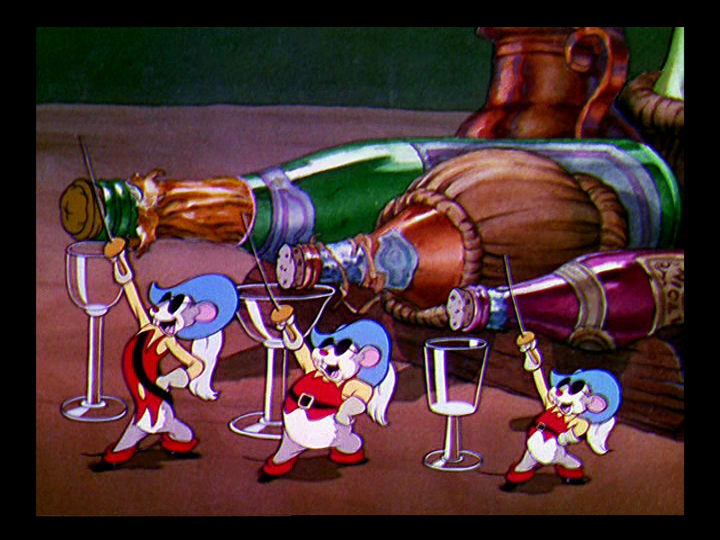
The Three Blind Mouseketeers introduce themselves in song, dancing around and practicing their fencing. They decide to head to the banquet hall to get some cheese, but don’t realize that the evil Captain Katt has set up several traps for them and is hiding in a barrel as he waits for his victory. The three narrowly miss the first trap set in front of the hole in the wall, and separately spring the other traps while retrieving the food, narrowly missing being killed every time. They manage to get away with all off the food, with Captain Katt sleeping in his hiding place, unaware of their victory.

The mice are ready to open champagne, unaware that Captain Katt is sleeping nearby

The mice are ready to open champagne, unaware that Captain Katt is sleeping nearby

As the mice pop open the champagne in victory, they wake Captain Katt, pelting him with the corks from the bottles. He sneaks over to attack the three, and the mice scatter, with one getting trapped under a bowl. Captain Katt then tries to find the mouse under one of the three bowls in front of him, but is unable to. When he finally does, the mouse stabs him in the nose, infuriating him. When he finds that a mouse has been hiding under each one, he goes crazy and chases after them with a hatchet. One of the mice gets his tail stuck in the floor, but is able to use his reflection on a pile of bottles in front of him to make it appear that he has a giant Mouseketeer army at his disposal. Captain Katt is scared away from the banquet hall, and lands in each of his traps as he tries to flee.

September 16

September 16, 1933 – The Silly Symphony The Pied Piper is Released to Theaters

vlcsnap-2013-09-16-19h29m13s195

“In the town of Hamelin, many years ago, the citizens were crying out a tearful tale of woe…”

On September 16, 1933, the Silly Symphony The Pied Piper was released to theaters. The short is based on the German tale The Pied Piper of Hamelin, which has been written by the likes of the Brothers Grimm and Robert Browning. The short was directed by Wilfred Jackson, and the score was done by Leigh Harline.

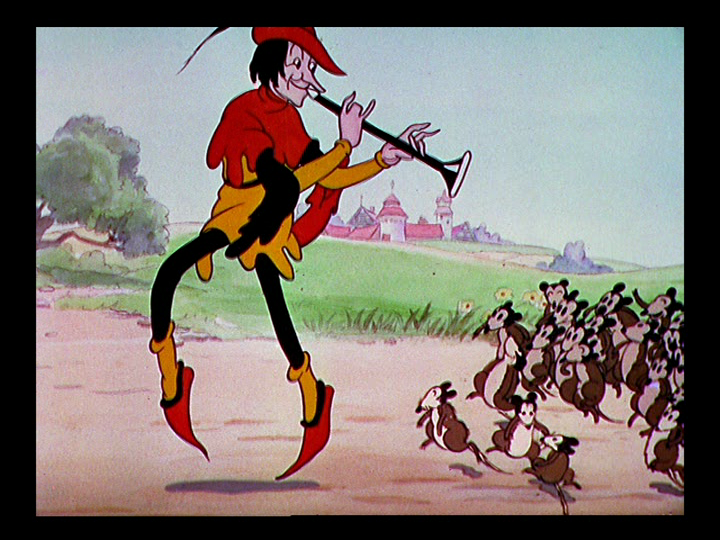
The short begins in the German town of Hamelin, which is under an infestation of rats. The people try all sorts of means to rid themselves of the rats, but to no avail, and the rats begin to devour every bit of food they can find. The citizens complain to the mayor, who agrees that they must get rid of the infestation. As he declares that he will give a large sack of gold to anyone who can get rid of the rats, a Pied Piper, who has just strolled into town, takes on the challenge. The mayor promises him the gold, and the Piper begins to play his instrument. The rats, mesmerized by the tune, follow him away from the town, dancing happily.

The Piper takes the rats skipping out of town, thanks to his magic pipe

The Piper takes the rats skipping out of town, thanks to his magic pipe

The people cheer as he sends the rats on their way, and the Piper makes the rats disappear into an illusion of a giant block of cheese. The Piper heads back to Hamelin to collect his gold, and the mayor refuses to pay, since all the Piper did was “pipe a tune.” Angered, he calls the town dishonest and ungrateful, and declares that he will save the children of the town from becoming such horrible adults. The mayor believes him to be bluffing, but the Piper pipes his magic pipe, calling all the children of the town to leave their chores and follow him. Happily, the children follow him, including two babes just brought by the stork. The townspeople watch in horror as the kids are lead away to the mountains, and the Piper leads them to a place for children called Happyland. They disappear into the mountain, never to be heard from again.