RSS Feed

Tag Archives: Short film

August 30

August 30, 1946 – The Donald Duck Short Film Dumb Bell of the Yukon Premieres in Theaters
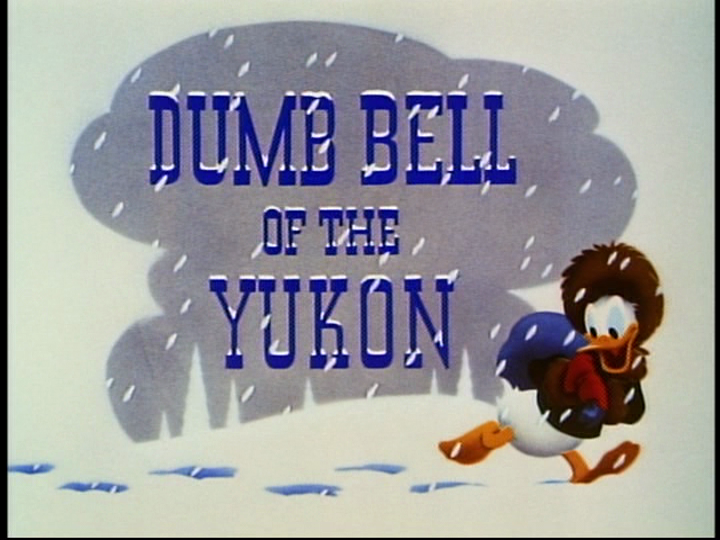
“Dear Donald, in the winter, a young girl’s fancy turns to FUR COATS. Daisy.”

On August 30, 1946, the Donald Duck short Dumb Bell of the Yukon was released in theaters. The short was directed by Jack King, with story by Harry Reeves and Homer Brightman, and Donald Duck voiced by Clarence Nash.

Donald is walking through the snow of the Yukon, reading a postcard from Daisy. She lets him know that she really wants a fur coat, and he searches for a bear to trap. Hearing the sounds of snoring from a nearby cave, he peeks in to see a mother bear snoozing with her cub resting on her stomach. Seeing the cub as the perfect specimen to turn into a fur coat, Donald lures the cub out with the “essence of honey.” Unfortunately, just as he traps the bear, the mother begins searching for her cub in her sleep, grabbing Donald instead.
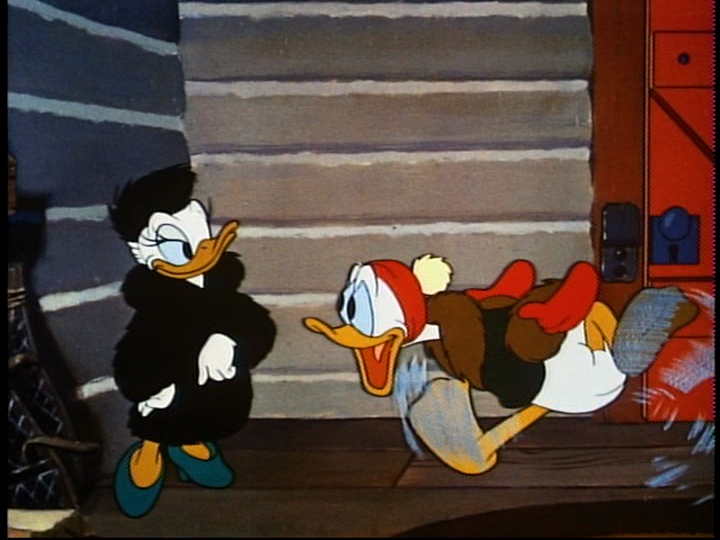
Donald is so distracted with the idea of pleasing Daisy, he imagines that the bear cub is her in a new fur coat

Donald carefully sneaks away, using a rock in the place of the cub, and takes the cub back to his cabin. The cub gives Donald a smile, but Donald is too distracted with the idea of Daisy in a fur coat. He decides that the best way of killing the bear for its fur is to hang it, but the plan goes awry, with Donald getting caught in the noose instead. Meanwhile, back in the cave, the mother wakes up and notices tracks leading to Donald’s cabin. She breaks down the door and searches for her cub.

Donald, who has been chasing the cub around the cabin, thinks he’s caught the cub by the foot, when he’s actually been dragging around the mother bear, who is ready to attack. When the mother chases after Donald, Donald disguises himself as the cub, only to be popped out of his costume when the mother hugs him just a little too tightly. He manages to sneak back in, but at this point, the mother has become suspicious. The real cub sneaks back into the cabin, revealing Donald’s ruse and kicking him into the cupboard, where a jar of honey falls and lands on Donald’s head. The short ends with mother and baby licking the honey off of Donald, much to his chagrin.
August 26

August 26, 1949 – The Goofy Short Film Tennis Racquet is Released to Theaters

“Well, good afternoon, ladies and gentlemen. This is your sportscaster bringing today’s match to you [through] the courtesy of the BBB and BB Ball Company, which we will see in use today on this magnificently kept court, whose grassy lawn lies outspread before my very eyes.”

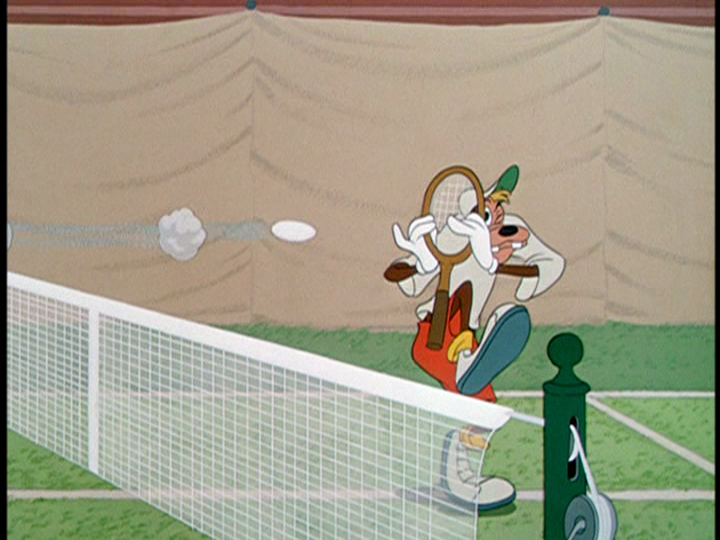
On August 26, 1949, the Goofy short film Tennis Racquet was released to theaters. It was directed by Jack Kinney, with the story by Dick Kinney.

The sportscaster begins his broadcast before the tennis match starts, as the court is being prepared for the match. As he comments on how many people are waiting to watch the match, the camera pans to the road leading to the tennis club, which is completely packed with cars. Unfortunately for the tennis club, however, everyone seems to want to go to the nearby flower show instead. We see audience members crowding into their seats, but only in one small section of the bleachers in front of the sportscaster’s booth.

One of the competitors, Little Joe, uses his tactic of protecting himself to play the game

The contestants Little Joe and Big Ben come out to the field, and when the match starts, the sportscaster goes crazy with the descriptions, while the crowd’s heads follow the ball. The two have different styles of playing the game, the sportscaster notes, with Big Ben delivering hard and fast serves, while Little Joe tries to avoid getting hit by the ball. Little Joe wins the first game, and Big Ben wins the second. After a bit, the crowd cheers, blocking the sportscaster’s view of the game, and he has to ask a spectator for the score. While the two competitors play, a gardener continues to take care of the court, planting trees and spreading out grass seed.

The game’s pace quickens, so the sportscaster decides it’s time to view it in slow motion, with many comical side effects. Moving it back to real time, the game really heats up between the two, until the crowd cheers. The sportscaster is all ready to crown the champ, when he realizes he doesn’t know who the champ is, and has to ask the spectator again. Big Ben is the winner of the match, and Little Joe does not take this news well; however, the short ends with the two shaking hands, while the gardener hauls off the trophy and the contestants in his wheelbarrow.

August 24

August 24, 1945 – The Pluto Short Film The Legend of Coyote Rock is Released to Theaters

“Now this here hombre had one weakness: lamb chop[s].”

On August 24, 1945, the Pluto short film The Legend of Coyote Rock was released to theaters. It was directed by Charles Nichols, with the story by Eric Gurney.

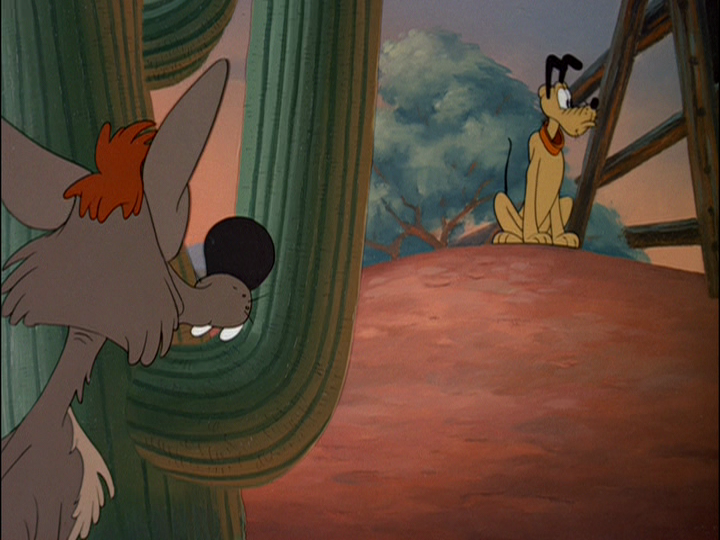
The short is set in the Old West, with a narrator introducing the legends of the rocks in the area, including a rock shaped like a coyote. The coyote in question was one named Bent Tail, who had a voice that “would turn an opera star green with envy.” Bent Tail’s one weakness, however, was lamp chops. He spies a farm with sheep guarded by none other than Pluto, who tends to fall asleep as he counts the sheep. One little black lamb likes to cause mischief, but Pluto warns him that there’s a coyote out there who loves to eat little lambs, and scares him back into the pen.

Bent Tail sneaks up on Pluto, tricking him into leaving his post, leaving the sheep vulnerable to attack

The coyote travels around the desert, hiding behind cacti and various other desert vegetation so he can get close to the sheep. He sneaks up on Pluto, who tries to chase the coyote away, although the coyote has many tricks up sleeve to fool the dog. Pluto is chased out into the desert, and when he realizes he’s left the lambs alone with the coyote, he hightails it back as fast as he can. Unfortunately, Bent Tail is already there, and tricks the lambs out of the pen by calling them out with a “baa” noise. He sends them traveling all the way to his hideout, but the black lamb is able to get free.

Pluto intercepts the coyote chasing the little black lamb, and chases the coyote all over the desert, causing many of the rock formations to collapse, and create Coyote Rock. Pluto falls from a perch and lands on the rock guarding Bent Tail’s hideout, freeing the lambs and they all run back to the pen at the farm, safe and sound once more.

August 22

August 22, 1929 – The First Silly Symphony, The Skeleton Dance, is Released to Theaters

On August 22, 1929, the first Silly Symphony, The Skeleton Dance, was released to theaters. After the success of Steamboat Willie, musical director Carl W. Stalling suggested that Walt work on a cartoon series with an accent on music, rather than character. The short was drawn mostly by Ub Iwerks.

On a dark, windy night in a graveyard, the bells toll midnight. Two cats argue as they stand perched on graves, only to be scared out of their wits when a skeleton appears. The skeleton looks around, then begins to skip merrily around the graveyard, only to be scared by the hoot of an owl. He throws his head at the bird, and it bounces back to his hiding place behind a gravestone.

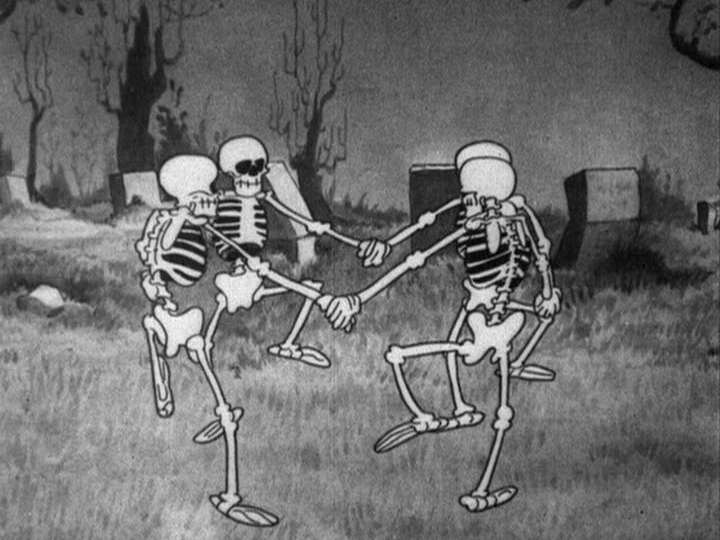
The skeletons come out from the ground for a night of dancing

More skeletons come out to join him, and the four begin to dance as a merry tune is played in the background. One skeleton uses another as a xylophone, playing eerie music on the skeleton’s vertebrae. Another uses a cat’s tail as a sort of cello. After a bit of musical celebration, the rooster crows, signaling that the party is over. The skeletons frantically look around and crash into each other as they dive back into their grave.

August 20

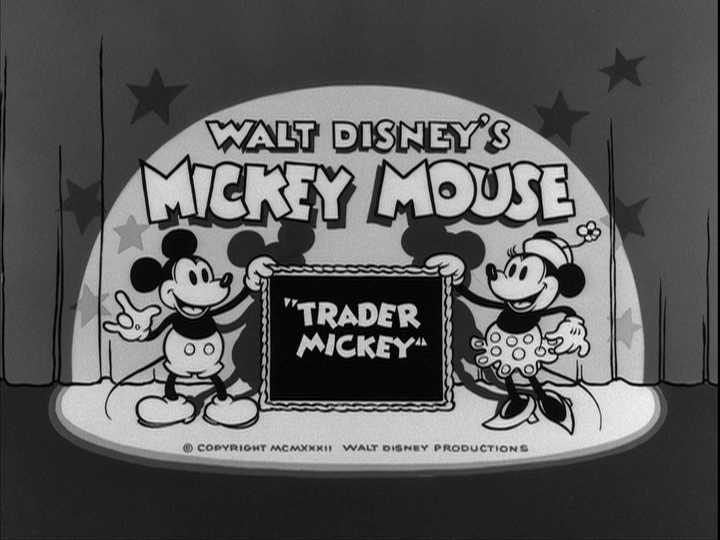
August 20, 1932 – The Mickey Mouse Short Film Trader Mickey is Released to Theaters

“Whoopee!”

On August 20, 1932, the Mickey Mouse short film Trader Mickey was released to theaters. It was the first short film directed by Dave Hand.

Mickey and Pluto are on a paddleboat, traveling down a river filled with hippos, with Mickey playing a merry tune on his banjo. They arrive at a riverbank, and Mickey pulls out a gun to go hunting. When Pluto goes to explore, he comes across a native, who scare the dog. As Pluto howls and runs back, he knocks into Mickey, who accidentally discharges the gun. Mickey and Pluto immediately find themselves surrounded and captured by the natives.

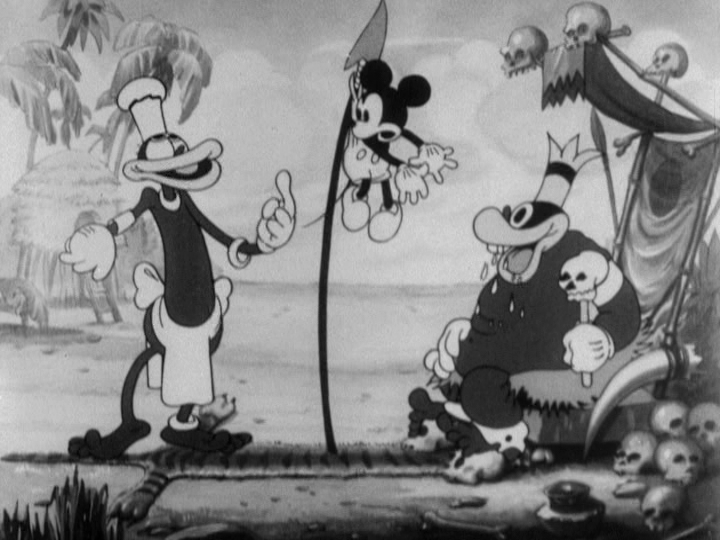
Mickey is brought in front of the chief and the chef, both of which think he’ll make a fantastic entree

Mickey and Pluto are taken directly to the king at his camp, and the chef hurries over, thinking that Mickey would make an excellent meal. He is placed in a pot of hot water, and Pluto is placed on a platter, made up like a suckling pig, complete with apple. The natives begin to go through Mickey’s supplies, not knowing how to use any of the instruments. When the chef attempts to use a saxophone as a spoon, Mickey grabs it from him and begins to play a merry tune. The chef begins to dance, and soon all the natives join in with the music.

Mickey, now out of the pot, entertains the chief with a harmonica. The chief takes it from him and begins to play it, accidentally swallowing it. As the music continues, the native continue to dance, with Mickey and Pluto free to join them. In the end the chief falls into the pot, but laughs and gives out a “Whoopee!”

August 19

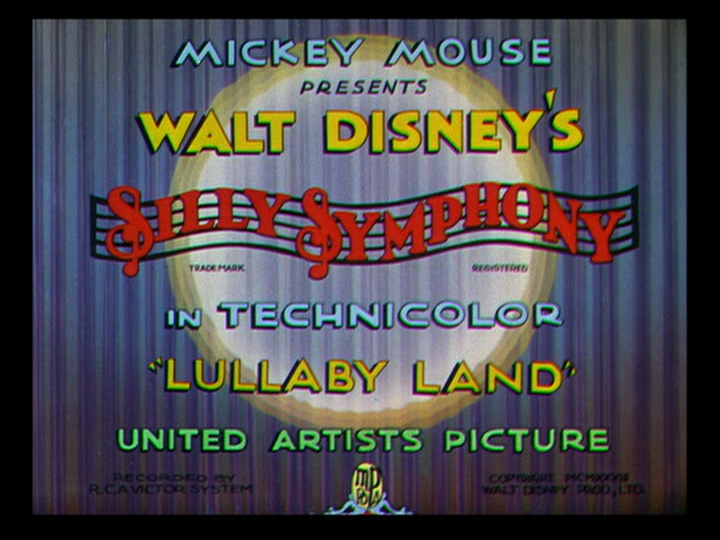
August 19, 1933 – The Silly Symphony Lullaby Land is Released to Theaters

“Into Lullaby Land of Nowhere, sleepyheads always go there.”

 On August 19, 1933, the Silly Symphony Lullaby Land was released to theaters. The title song, composed by Frank Churchill, was eventually released as sheet music, as were many of the popular Silly Symphonies. Lullaby Land was directed by Wilfred Jackson

The short opens with a baby being rocked to sleep by his mother, who begins to sing a lullaby. As she sings, the baby drifts off to sleep and to a dreamland called “Lullaby Land,” accompanied by his stuffed dog that has come to life. The baby begins to explore, finding flowers made of baby powder bottles, bushes made of pacifiers, and trees made of baby rattles. The baby and the dog hear the sound of trumpets, and look to see a parade of baby items march by, including a string of marching diapers and dancing castor oil.

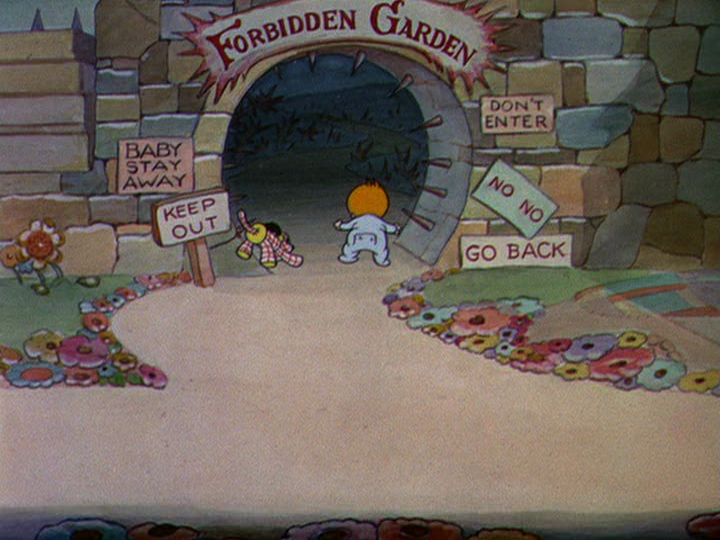
Although there are many signs warning the baby not to enter, his curiosity gets the best of him, and he goes to explore the Forbidden Garden

When the baby and dog follow the parade, the baby notices an area called the “Forbidden Garden,” marked with signs warning him to stay away. Intrigued, the baby wanders in with the dog close at his side. The garden is filled with dangerous objects for a baby, like corkscrews and fountain pens with ink. The dangerous items come to life and begin fighting each other. The baby grabs a hammer and destroys a tree made of pocket watches. The baby then accidentally lights a box of matches and the lit matches chase the baby around the garden.

The song warns the baby that the boogeyman will get him because he didn’t obey. The baby eludes the matches by crossing a small pond on a bar of soap. Three black clouds appearing at the matches’ demise, and the three clouds turn into three boogeymen, who try to scare the baby. The baby runs for his life from the boogeymen chase him who suddenly disappear into the night. As the baby and dog cower behind a tree, the Sandman greets them and helps put the two to sleep with sweet dreams. The short ends with the baby’s mother covering her son with a blanket and finishing her lullaby.

August 18

August 18, 1931 – The Mickey Mouse Short Film Blue Rhythm is Released to Theaters

“I hate to see the evenin’ sun come down.”

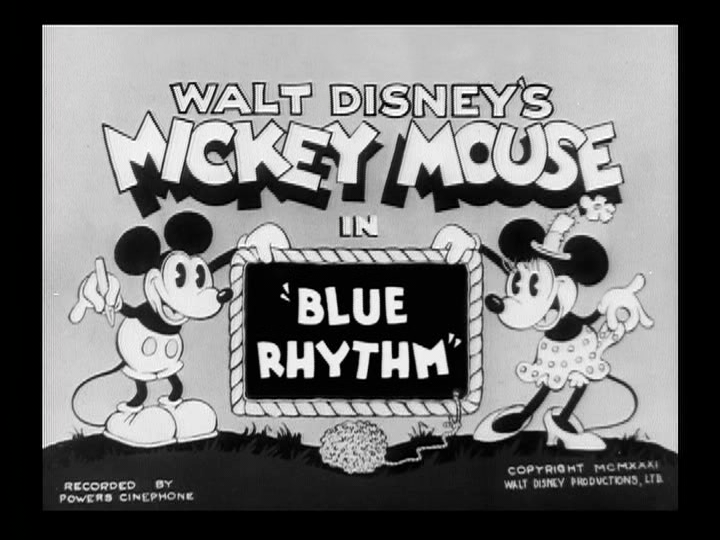
 On August 18, 1931, the Mickey Mouse short film Blue Rhythm was released to theaters. The song used in the short is “Saint Louis Blues,” a jazz standard from 1914, written by W.C. Handy, and famously sung by Bessie Smith and Louis Armstrong. The short was directed by Burt Gillett, and stars Walt Disney as the voice of Mickey Mouse, and Marcellite Garner as the voice of Minnie Mouse.

The curtain opens on a grand stage to reveal Mickey playing a piece on the piano. He soon switches genres of music from classical to jazz, and begins playing around with the piano keys. Minnie enters stage left and begins to walk in time to the music before singing “Saint Louis Blues” rather dramatically. Mickey finds gum under the piano and gets his fingers stuck to it, which causes him some difficulty playing Minnie’s song.

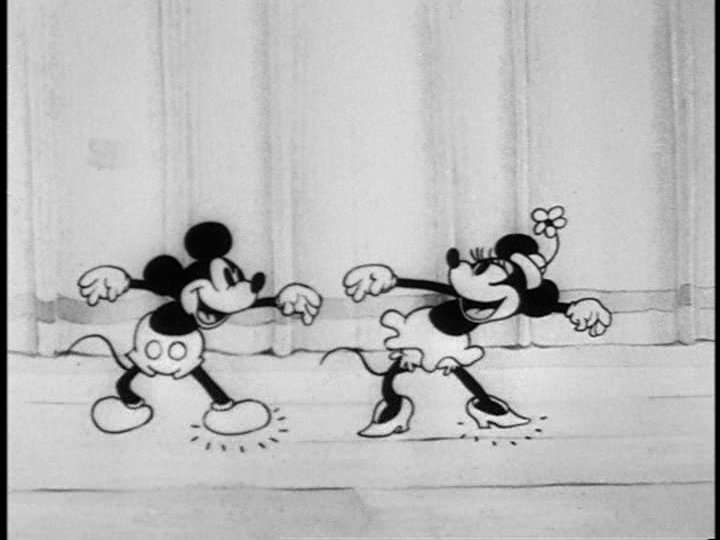
Mickey leaves the piano to join Minnie in scatting and dancing across the stage

Minnie moves on to perform some jazz scatting with Mickey leaving the piano to join her. The two then begin to tap dance across the stage, and leave as the background curtain rises to reveal Horace Horsecollar and other members of the orchestra continuing to play the piece. Mickey appears from a trapdoor and conducts the orchestra. Pluto, playing the trombone, keeps hitting Mickey in the back with the slide, which causes Mickey to break it in half in frustration.

The lights go out, and the orchestra stops in confusion before seeing the spotlight on Mickey, who puts on a crushed top hat and begins to play the clarinet. The orchestra once again continues to play, and the concert ends with the stage falling apart thanks to their spirited playing.

August 13

August 13, 1932 – The Mickey Mouse Short Film Mickey’s Nightmare is Released to Theaters

“God bless Minnie, God bless Pluto, God bless everybody. Amen.”

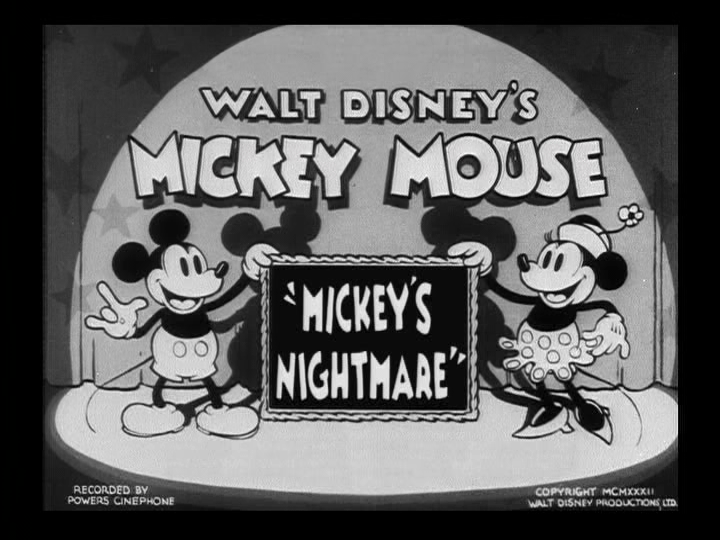
On August 13, 1932, the Mickey Mouse short film Mickey’s Nightmare was released to theaters. The short was directed by Burt Gillett, and stars Pinto Colvig as Pluto and Walt Disney as Mickey Mouse.

Mickey gets ready for bed, giving a kiss to the photo of Minnie on his nightstand before extinguishing his candle. While he snores away, Pluto sneaks onto his bed and begins licking Mickey’s face, which Mickey interprets as Minnie kissing him in his dreams. The dream begins with Mickey presenting Minnie with a rather large diamond engagement ring while wedding bells chime in the background. The happy couple are seen at their wedding, which is soon followed by married bliss at a house in the country with a “heart” motif.

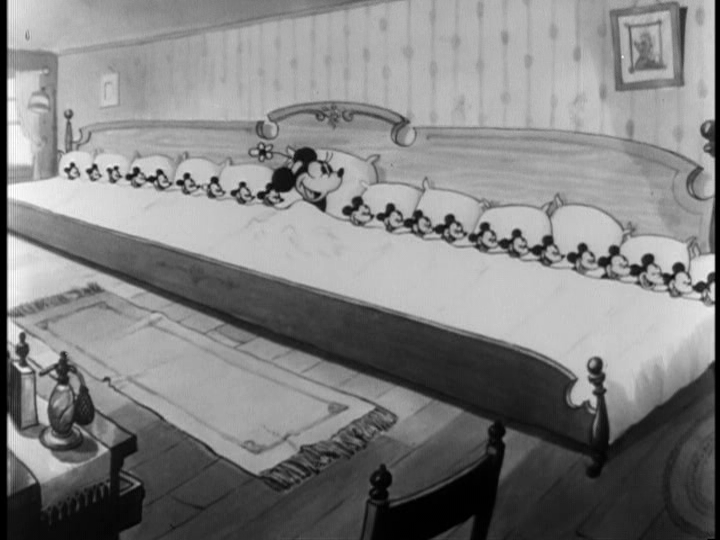
Mickey enters his room in horror to see that he and Minnie have been presented 21 children by the stork

While Mickey is watering the lawn, the shadow of large bird passes overhead, and Mickey looks up in alarm. The bird is actually the stork, bringing a present for the happy couple. Mickey, proud to now be a father, shakes hands with Pluto. Suddenly, more storks appear with more bundles of joy, dropping them down the chimney of the house. Mickey, alarmed, runs inside to see Minnie and 21 children all tucked into one bed. The children greet him and begin to run around wildly. Mickey and Pluto try to escape, but are trapped.

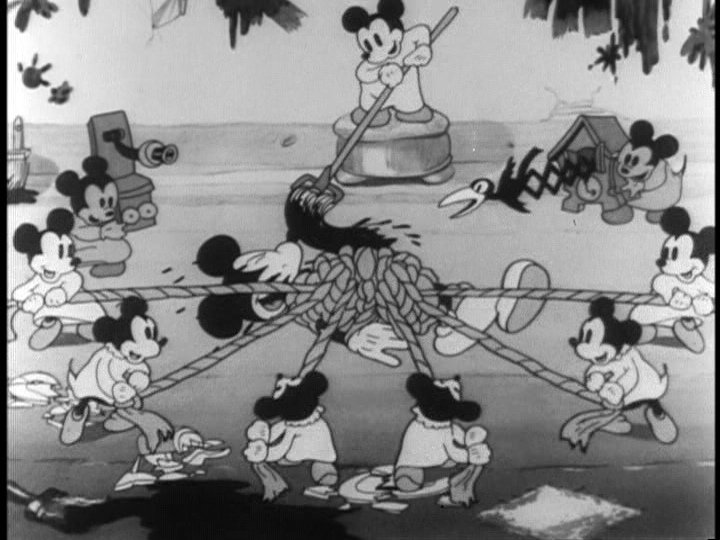
The children begin to wreak havoc around the house, throwing kitchen knives and dressing Pluto in a corset and heels. Mickey tries to stop them, but to no avail: there are just too many children. At one point, the children grab buckets of paint and begin to paint the house, with one using the cat and another using the parrot as paintbrushes. Pluto finds himself painted with stripes; when he tries to hide in the washing machine, one of the children starts it up.

In his nightmare, Mickey is trapped by his children, with one of them painting his face with a mop

Mickey soon finds himself tied up and held hostage by the children as one paints his face with a mop. He awakes to find himself tied in his sheets, with Pluto happily licking his face. He rejoices in the fact that it was all just a nightmare, and gives out a shout of delight.

August 11

August 11, 1995 – The Mickey Mouse Short Runaway Brain is Released to Theaters

“What am I going to do, Pluto?! You need moolah to hula!”

 On August 11, 1995, the Mickey Mouse short Runaway Brain was released alongside the live-action feature film A Kid in King Arthur’s Court. The short was based on an idea by Tim Hauser, and directed by Chris Bailey. Mickey Mouse is voiced by Wayne Allwine, Minnie is voiced by Russi Taylor, Pluto is voiced by Bill Farmer, Dr. Frankenollie is voiced by Kelsey Grammer, and Julius is voiced by Jim Cummings. There are two Disney Easter eggs within this short: the name of the doctor is an homage to the animators Frank Thomas and Ollie Johnston, and Zazu from The Lion King makes a cameo appearance.

It’s a stormy day in suburbia, and Mickey is playing video games in his house when Minnie arrives. She tells him how excited she is about that night, but when he seems more interested in the game he’s playing, she accuses him of forgetting their anniversary. Seeing he has forgotten, Minnie turns away angrily, but Mickey brings her a newspaper, saying he hasn’t forgotten at all. As he tries to show her the ad for miniature golf, she spies the ad below it for a trip to Hawaii, and believes Mickey is taking her there. Mickey sees the price of $999.99 for the trip and has sticker shock, but can’t tell Minnie they aren’t going.

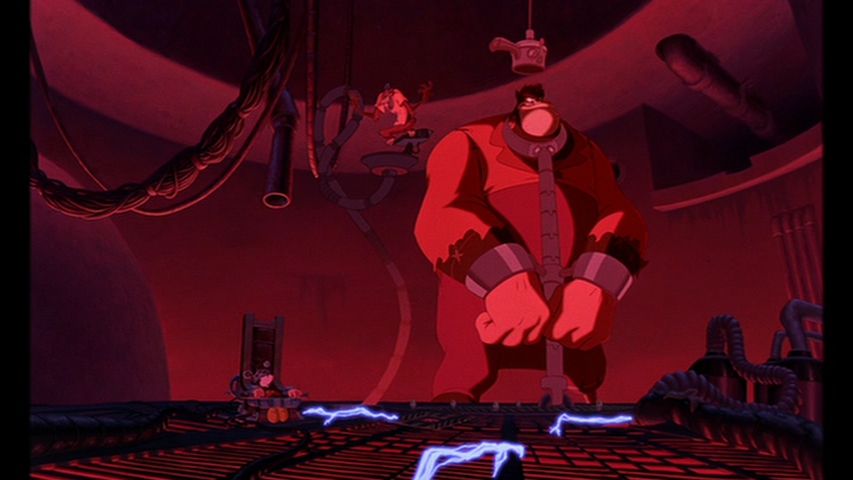
The doctor sets to work switching Mickey’s brain with that of his creation, Julius

As Mickey panics, Pluto brings him the want ads, where Mickey finds an ad that promises “$999.99 for a mindless day’s work” by a Dr. Frankenollie. Mickey quickly grabs his coat and sets off to the job. As he arrives, he is sucked into the doctor’s secret lab and bound in a chair. The doctor greets him, trying to convince Mickey it will be an adventure, and hires him on the spot. The doctor then introduces his Frankenstein-like creation, named Julius, who he calls Mickey’s “co-worker.” The work involved requires the doctor taking Mickey’s brain and switching it with Julius. Although Mickey resists, he can’t get out of the chair, and sits helpless.

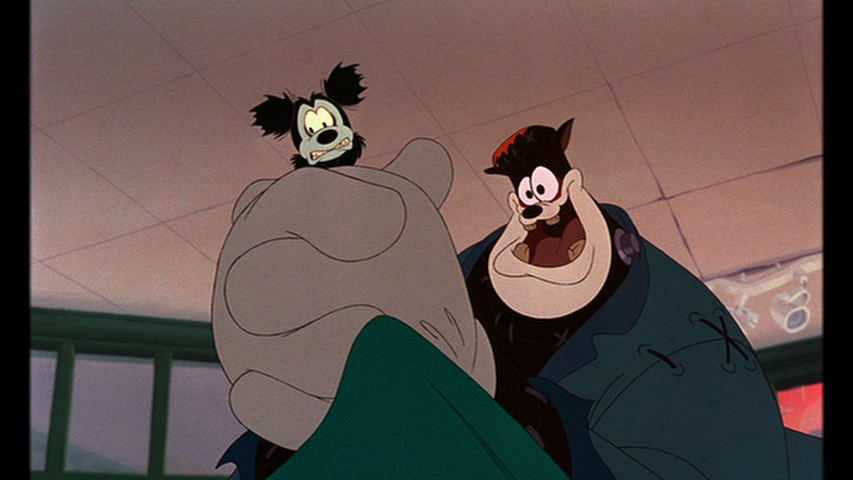
The experiment results in an explosion, and as the smoke clears, Mickey discovers that his brain is in Julius’ body. As he tries to tell the doctor that he’s changed his mind, the doctor turns into ash, having died in the explosion. Julius appears, now in Mickey’s body, looking like a rabid animal. Mickey tries to stop him, but when Julius looks in Mickey’s wallet and sees a picture of Minnie, he is immediately smitten, and runs off to find her. He spots her entering a store to buy a bathing suit for Hawaii, and follows her in.

A triumphant Mickey (in Julius’ body) captures Julius before he attacks Minnie

As Julius is about to grab Minnie, Mickey breaks into the store and grabs him, warning Minnie that Julius is a monster. Minnie, however, unaware of the switch, screams, thinking Mickey is the monster. She grabs Julius and begins to run, but Mickey catches up with them and grabs her, trying to protect her. Mickey is finally able to convince her that he is Mickey, just in Julius’ body, and after he puts her at a safe place, he begins to fight with Julius. The two land on power lines, which forces their brains to switch back. Unfortunately, Julius still is smitten with Minnie, and tries to take her hostage after he throws Mickey off the side of the building.

Mickey suddenly appears with a vacuum, using a window washer’s cart to appear at the roof again, and attacks Julius. He captures the monster with a rope, and after tying it to the moving arm of a nearby billboard, Julius is trapped like a yo-yo, going up and down with the movements of the arm. In the final scene, Mickey and Minnie are sailing off to their anniversary celebration to Hawaii in an inner tube pulled by Julius, who keeps swimming toward Minnie’s picture suspended in front of him on a fishing rod.

August 10

August 10, 1945 – The Donald Duck Short Film Duck Pimples is Released to Theaters

“Are you Mr. D. Duck? I’ve been looking for you.”

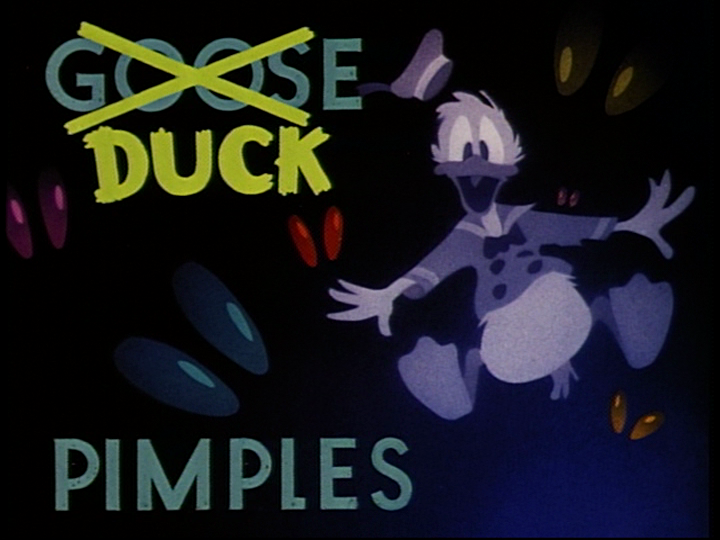
On August 10, 1945, the Donald Duck short film Duck Pimples was released to theaters. The short’s title is a play on the phrase “goose pimples,” with Donald being frightened the entire short. It was directed by Jack Kinney, with story by Virgil Partch and Dick Shaw. Donald Duck is voiced by Clarence Nash, Detective Hennessey is voiced by Billy Bletcher, and Colleen (the woman) is voiced by June Foray.

On a dark, stormy night, Donald is in his living room, listening to a murder mystery radio program. The program scares him so much that he tries to change the channel, but to no avail. Suddenly, Donald’s door opens, and a shady figure appears, saying he’s been looking for Donald. He opens his coat to reveal several books, letting Donald know that if he sells six more, he’ll be able to get a bicycle. The figure disappears like a ghost, leaving his books behind. Donald begins to read one, getting engrossed in the story. Then Donald suddenly finds himself in the story, being accused of being the thief.

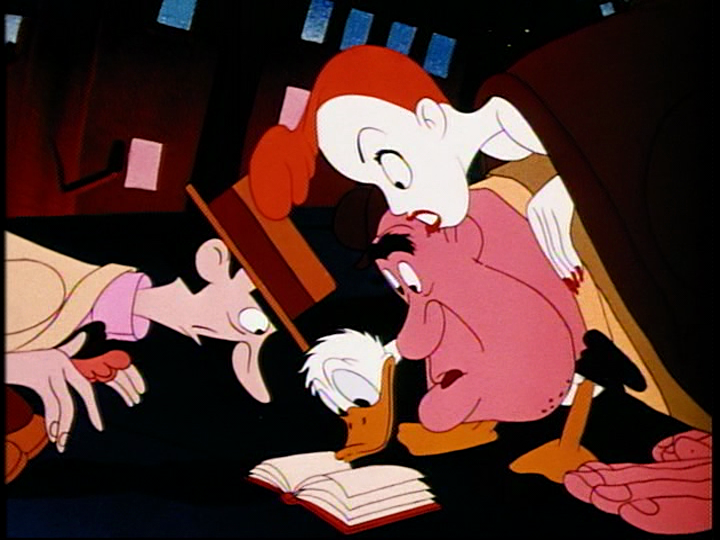
The characters gather around the book, trying to see what comes next in the story

When the woman who lost her pearls goes missing, Donald is accused of kidnapping as well. The case keeps taking strange, comical turns, and Donald struggles to find a way out of his situation as characters pop in and out of the book. The cop keeps threatening Donald, demanding to know where the pearls and the woman are. Suddenly, just as the cop has Donald in a corner, the author appears from the pages of the book and announces Donald’s innocence. When the author reveals that the cop is really the thief, the cop pulls out two pistols and attempts to run, shooting Donald in the process (except the gun is fake, and Donald is just fine). Donald looks around his room, having returned to the present, and little voice tells him it was just his imagination. Donald ends the short with a nervous tick, unconvinced, as a string of pearls shines around his neck.