RSS Feed

Tag Archives: Imagineer

July 29

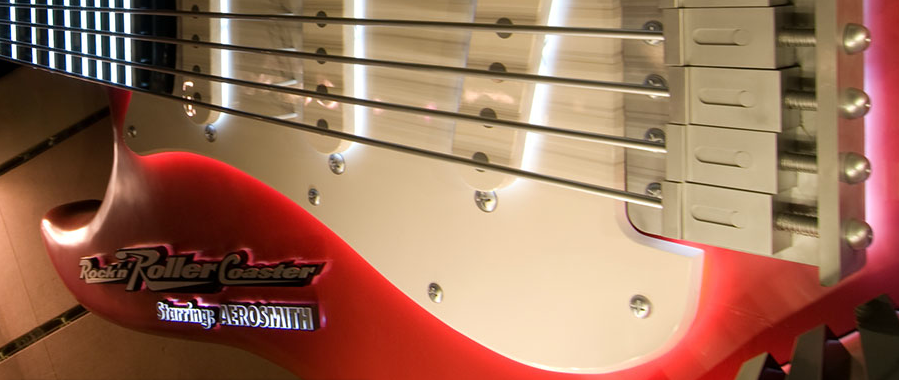
July 29, 1999 – The Rock ‘n’ Roller Coaster Starring Aerosmith Attraction Opens at Disney’s Hollywood Studios

Image Credit: Official Walt Disney World Website

“…how’s everyone going to get to the big bash? The solution: a super-stretch limousine that races across 3,400-feet of roller coaster tracks past Southern California landmarks and slices through the toughest of traffic on the LA freeways.”

On July 29, 1999, the Rock ‘n’ Roller Coaster Starring Aerosmith attraction opened at Disney’s Hollywood Studios at Walt Disney World. It is located at the end of Sunset Boulevard, next to the Twilight Zone Tower of Terror. Known as an “extreme” roller coaster, the ride goes from 0 to 60 in 2.8 seconds. The story that goes with the ride is that Aerosmith is finishing up a practice session, and is running late for their big concert across town. The Rock ‘n’ Roller Coaster, known as their super-stretch limo, will take them there, with guests along for the ride. The attraction has been sponsored by Hanes since 2008.

Guests ride through several areas of “California highway,” ranging from Interstate 5 to U.S. Route 101, all to a soundtrack of Aerosmith songs, some rewritten to accommodate the ride. Each car on the ride plays different songs; Aerosmith worked with the Disney Imagineers to create a soundtrack for each car. To play the soundtrack, each car has a special onboard audio system that includes a 125 speaker, 24 sub-woofer, and 32,000 watts.

July 15

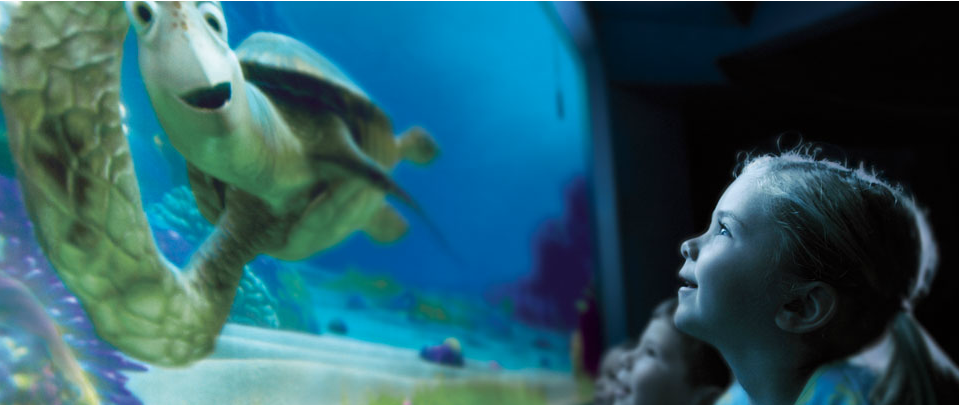
July 15, 2005 – The Turtle Talk with Crush Attraction Opens at Disneyland

Image Credit: Official Disneyland Website

“Have an in-depth chat with Crush, the totally awesome sea turtle from the Disney-Pixar film, Finding Nemo.”

On July 15, 2005, the interactive attraction Turtle Talk with Crush opened in Disney’s California Adventure’s Hollywood Land. The Disneyland version was based on the Walt Disney World attraction that opened on November 16, 2004. The attraction allows guests to have an improvisational conversation with Crush, the sea turtle featured in the Disney-Pixar film Finding Nemo. Guests enter a movie-theater styled room, with children being allowed to sit on the carpet up front for a better view. A moderator gives a brief introduction, and helps Crush to select audience members to chat with. Brief cameos of other Finding Nemo characters may appear during the attraction.

The attraction is a blend of computer animation, image projection, and improvisation, with real-time animation used for the live conversations. Each show is unique, as Crush communicates directly with the audience members; Crush is even able to pick out children to converse with by calling them out by what they wear. The attraction has become popular enough to warrant a copy in Tokyo DisneySea, and the Disney Dream’s Animator’s Palate restaurant.

June 23

June 23, 1963 – The Enchanted Tiki Room Opens in Adventureland at Disneyland

Image credit: Official Disneyland Website

 “…All the birds sing words, and the flowers croon, in the Tiki Tiki Tiki Tiki Tiki Room.”

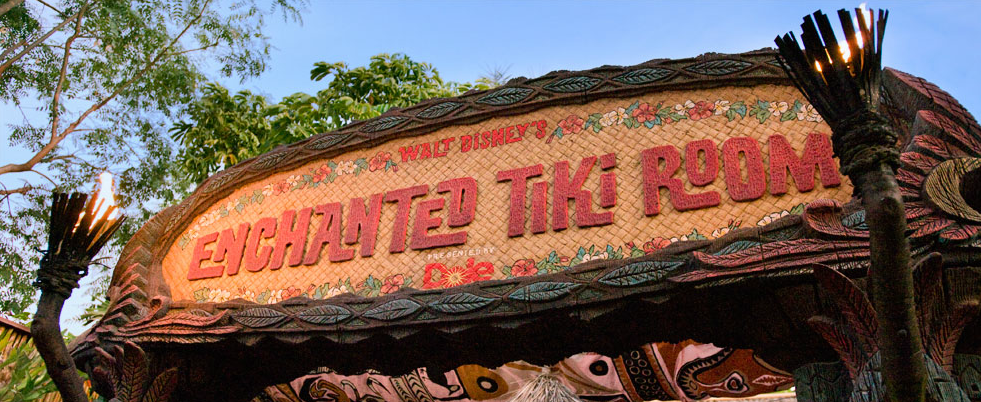
 On June 23, 1963, the Enchanted Tiki Room attraction opened in Disneyland’s Adventureland. The attraction, the first to feature Audio-Animatronics, was designed by WED Enterprises (now known as Walt Disney Imagineering). It was first sponsored by United Airlines, and passed to the Dole Food Company in 1976. Dole continues to host the attraction to this day.

The hosts of the show are four birds of different nationalities: the Mexican bird, Jose (voiced by Wally Boag); the Irish bird, Michael (Fulton Burley); the French bird, Pierre (Ernie Newton); and the German bird, Fritz (Thurl Ravenscroft). There are more than 150 Audio-Animatronic characters—including birds, flowers, and Tiki statues–that serenade the audience during the 15-minute show.

The attraction was first conceived as a dinner show, but the idea was shelved so that more guests could experience the room. The Tiki Room was originally controlled by an underground room with floor-to-ceiling computers, as seen in the Disneyland Tenth Anniversary Special. The attraction was closed for renovations in 2004, opening again in March 2005 for the park’s 50th anniversary, with new Audio-Animatronic figures replacing the old ones, and a new infrastructure designed by the 21st century Imagineers. The attraction is still as popular as ever, and has been replicated at Walt Disney World and Tokyo Disneyland.

June 17

June 17, 2008 – Toy Story Midway Mania Opens at Disney’s California Adventure

Image credit: Official Disneyland Website

 “Andy’s got some new games and the toys are taking over!”

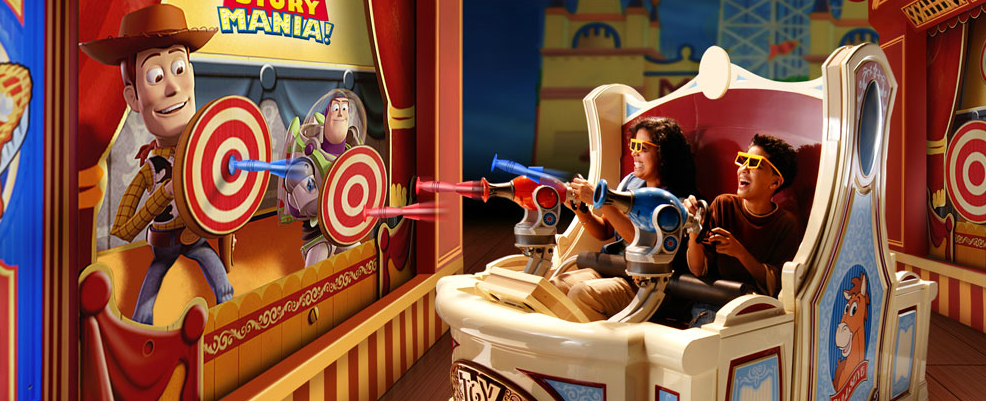
 On June 17, 2008, the Toy Story Midway Mania attraction opened in Disneyland’s California Adventure Park in the Paradise Pier area. This was the first time that an attraction was designed and built at both American parks simultaneously. It is one of the most technologically sophisticated attractions built by Disney Imagineers: guests never have the same ride twice due to the nature of the attraction.

Guests wear 3-D glasses and travel through environments based on carnival midway games. There are five games in total in this attraction. After a practice game, where guests practice how to shoot with Woody and Rex, guests participate in “Hamm & Eggs” hosted by Hamm, followed by “Rex and Trixie’s Dino Darts,” “Green Army Men Shooting Camp,” “Buzz Lightyear’s Flying Tossers,” and “Woody’s Rootin’ Tootin’ Shootin’ Gallery.” There are also chances for guests to unlock “Easter eggs,” which reveal new targets for more points. The attraction is also notable for the Audio-Animatronic Mr. Potato Head, voiced by Don Rickles; the character is one of the most sophisticated in terms of technology, as it is able to identify people in the audience, sing, and tell jokes.

March 24

March 24, 1901 – Birth of Disney Legend, Ub Iwerks
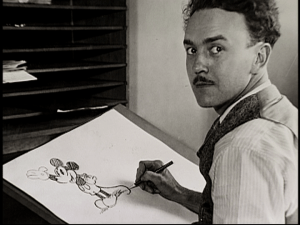
“Ub helped make this art form of animation grow from a novelty, something in the penny arcades, to the art form we know of today. He really laid the groundwork for a lot of the work we do today. Walt and Ub recognized that you could make animation truly three dimensional, and a hundred percent believable.”- John Lasseter

There is so much that there could and should be said about Ub Iwerks. He was a true animation renaissance man, dabbling in all forms of the art form, from creating Mickey Mouse to developing the Xerox Process. Sometimes, however, Ub is overlooked by those who are only casually aware of Disney history. However, you could not have had Walt and Walt’s success without Ub’s hand. As Ub Iwerks is one of my heroes, I hope that this post does him justice – there is a lot more that could be said about this truly remarkable man.

Ubbe Ert Iwwerks was born on March 24, 1901, as an only child of Dutch and German descent. His father, Eert Ubbe Iwwerks, was an amateur inventor, whose inventions no doubt left an impression on young Ub. In the age of progress of his youth, Ub was fascinated with the new idea of bringing moving pictures to life. When Ub was 14, his father abandoned the family, and Ub had to take on the new responsibility of providing for his mother. Ub would never speak of his father again. He worked odd jobs to support the family, and drew in his spare time. At age 18, he enrolled at the Fine Arts Institute, determined to become an artist.
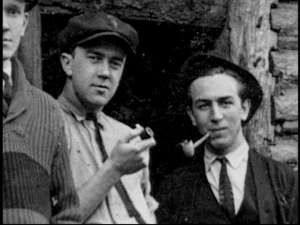
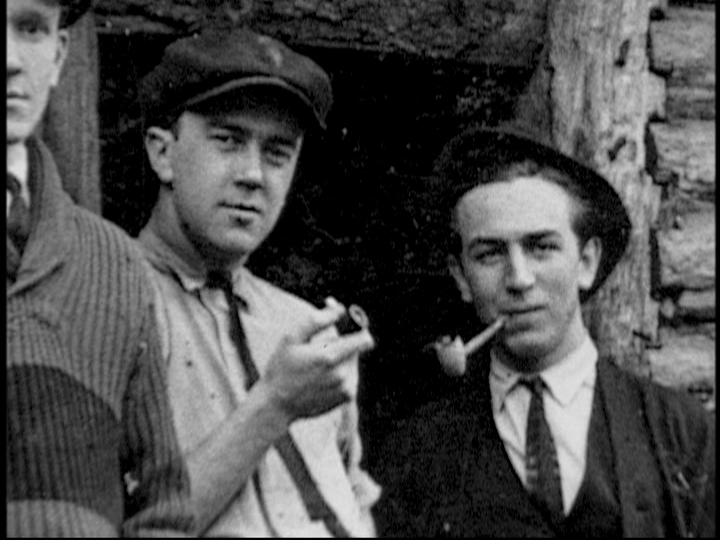
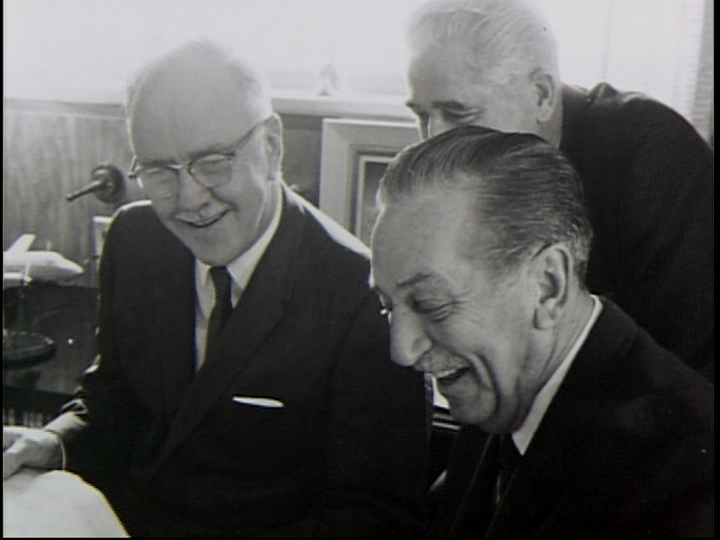
Ub and Walt after meeting at the Pesman-Ruben Commercial Art Studio

While working at the Pesman-Ruben Commercial Art Studio, where Ub’s unique skills as a draftsman were gaining attention, Ub met a young man named Walt Disney. Ub and Walt became fast friends, sharing a similar background and a passion for animation, and decided to set up shot for themselves. Unfortunately, they quickly found that they weren’t going to be successful on their own, and business closed down after a month. They then decided to work at the Kansas City Slide Company, where they were able to learn more about motion picture production, particularly animated images. Although an innovative idea at the time, animation wasn’t a profitable business. Walt and Ub decided to try their hand at an animated commercial. They were commissioned to create cartoons known as Laugh-O-Grams, which helped the pair create their own company again, this time known as Laugh-O-Grams, Incorporated. Ub’s draftsmanship proved to be one of the keys to the studio’s success, and they soon came up with the idea for the Alice comedies. But before they could develop the idea, their money ran out, and Ub got a job back at the Kansas City Film Ad Service, while Walt decided to go out to Hollywood.
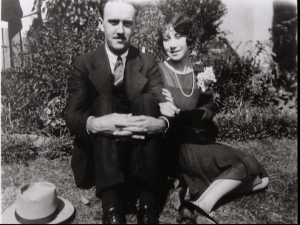
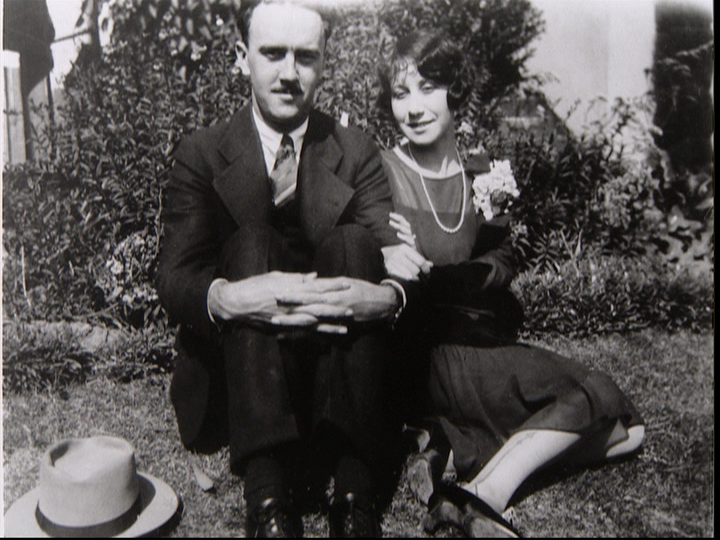
Ub and Mildred Henderson, who met on a blind date in 1926; they married in 1927

Ub had been promoted to the head of the art department at the Kansas City Film Ad Service when Walt invited him out to Hollywood, and he decided to take the trip out there with his mother. Once he arrived, he became the top animator of the Disney Brothers Studio, and the highest paid employee, even above Walt. The two began their production of the Alice Comedies, which became very popular. After the Alice Comedies had worn out their welcome, Ub and Walt were tasked by Charles Mintz to design a new character, which would become Oswald the Lucky Rabbit, Universal’s first cartoon series. The cartoon was a huge success, and Ub was finally able to have a social life after working so hard for so long. In 1926, he met Mildred Henderson on a blind date, and in January 1927, Ub and Mildred married.

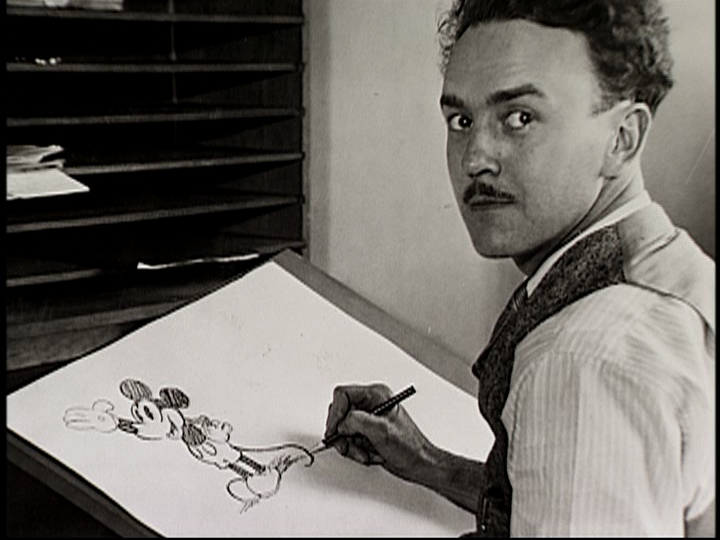
In 1928, Charles Mintz offered Ub a job, in hopes of stealing Oswald away from Walt. Though Ub turned the offer down, he learned that the other artists in the studio had agreed to join with Mintz. He warned Walt, but Walt couldn’t believe it. When Walt came back from the loss of Oswald in New York, the two decided secretly that they needed a new character. Although the story of how Mickey Mouse came to be is still shrouded in mystery, it was very clear that Ub was the one who first drew Mickey, and in two weeks, Ub completed the first Mickey Mouse cartoon, Plane Crazy. Ub’s work led to a growth of personality animation, rather than just straight character animation, as had been seen before. Ub said in an interview that Mickey was based on Douglas Fairbanks Sr., making him heroic and dashing, never a sissy. After the creation of Steamboat Willie, the first synchronized sound cartoon, Mickey’s popularity soared.

Ub included a lot of barnyard humor when he created many of the Mickey Mouse shorts. Due to the udder jokes he liked to use, the censorship board asked that the cows be given modest skirts to wear. And while Mickey’s popularity grew, another animated series began to take shape, known as the Silly Symphony. The first short film, The Skeleton Dance, was drawn by Ub, who seemed to be thoroughly inspired by the music for the short. The entire film, minus one or two scenes, was animated by Ub, who experimented with many elements of perspective and shape. Ub’s animation skills were praised by the animation community, and Ub continued to experiment with each new short he animated.
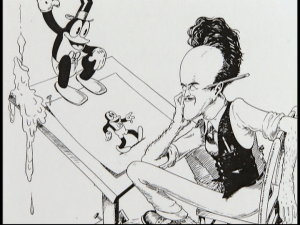
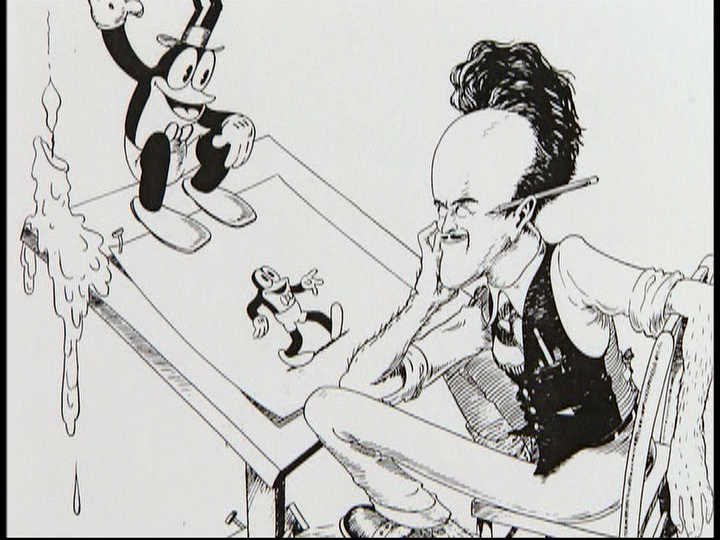
A caricature of Ub Iwerks and his creation, Flip the Frog

In 1929, tensions grew between Ub and Walt, as Walt began to take control of the artistic direction of the company, which caused Ub some concern. When Walt, who was getting all the attention for Mickey Mouse, began to interfere with Ub’s artistic ideas, Ub was tempted to leave Walt to set up his own studio. Ub finally decided that it was time for him to leave Walt and explore his own opportunities. He created his own new character, known as Flip the Frog. The animation style was very different than what he had done at the Disney Studio, with new kinds of gags and a distorted realism. Another character created by Ub was Willie Whopper, a chubby boy who had surrealistic adventures. His studio was a success, and Ub continued to push the envelope artistically, to the delight of audiences.

Ub created his own cartoon series known as the ComiColor series, in which he was able to use his technical and inventive skills to create new areas of techniques in animation. His created his own version of the three-dimensional camera, with $300 and parts from a 1920s Chevrolet, around the same time the Disney Studios were inventing their multi-plane camera. Unfortunately, while Ub was starting to make great strides with his animation technique, the Hays code was passed, and many of the adult jokes that were contained in his cartoons had to be cut. Also, Ub’s characters imitated life a little too much for Depression audiences, who wanted an escape from their troubles, not a reminder of them. MGM, Ub’s cartoons distributor, was a little disturbed with the cartoons that were being sent to them. The distribution contract with MGM was dissolved in 1934, and Ub was forced to close the studio in 1938, and retired from animation, deciding to venture into the challenge of technical innovations in the arena of animation.
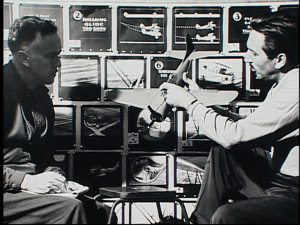
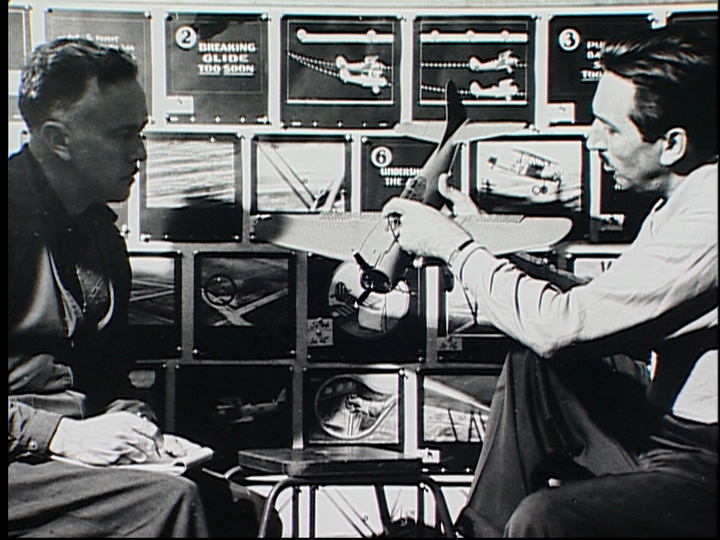
Ub (R) and Walt after Ub rejoined the studio, studying methods for the World War II projects

Finding that Ub was now available, Walt asked Ub to come back to the studio. Ub agreed, returning to the studio in 1940, and welcoming the chance to collaborate with Walt in an entirely new way. At this point, the studio was helping the war effort, which put a tight strain on the budget. Disney needed to come up with new technological advances to make the production of animated films more cost effective. Named as the head of the Photographic Effects lab, Ub received one of his first assignments, to expand upon the idea from more than twenty years ago in the Alice Comedies – combining live action and cartoon – for the movie The Three Caballeros.

Ub’s most recognized technical achievement was for the film One Hundred and One Dalmatians, where he changed not only the style of Disney animation, but also the speed at which things were animated, thanks to the Xerox Process (see January 25th article for more information). The process adapted the Xerox method to animated cells, displacing the inking process altogether and allowing the animator’s intended lines to appear directly on the screen. This process helped the Disney films’ success all the way into the 1980s.
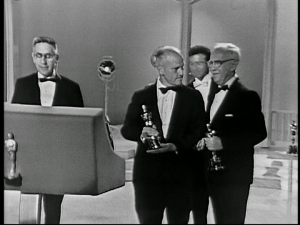
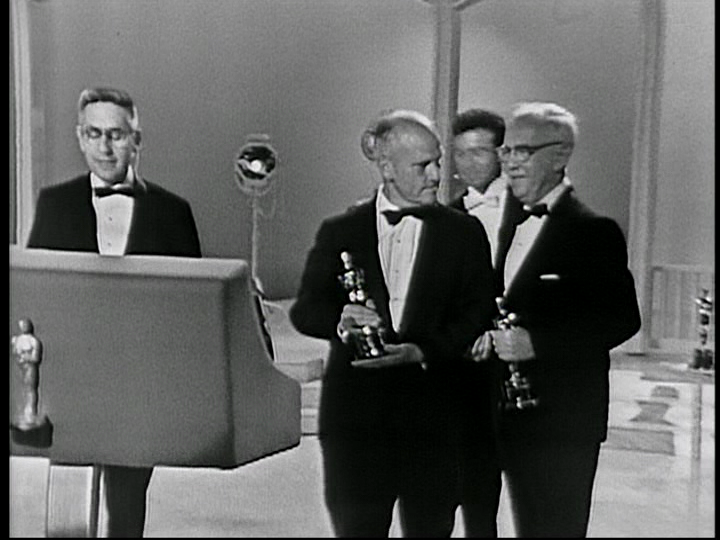
Ub (L) winning a special Academy Award for the sodium matte traveling process used successfully in Mary Poppins

In 1956, Ub invented a sodium traveling matte process, which helped pave the way for creating live action animation combinations, and was first successfully used in Mary Poppins. Ub went on to win a special Class One Scientific Academy Award for the sodium matte traveling process. Not only was Ub recognized for his work at Disney, but Alfred Hitchcock also asked him to create the effects in the movie The Birds with the sodium matte process. John Lasseter once remarked on Ub’s technical advancements, “A lot of the work that Ub did was to take people’s suspension of belief to another level, to where they never thought they were looking at drawings anymore.”

Ub’s advances were numerous, ranging from technical achievements in films (like the split screen technique in The Parent Trap), to creating a quicker editing system for television. Much of his work in the Disney parks, including bringing to life the audio animatronics found throughout the parks, is still used today.
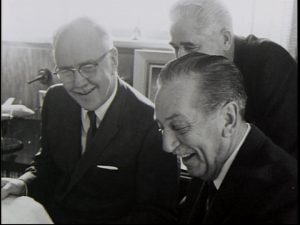
Ub and Walt, two parts of the whole that made up the success of the Disney Studios

Walt’s death greatly affected Ub, as the two were lifelong friends and collaborators, although their relationship was not an easy one at times. Don Iwerks, Ub’s son, remarked that, upon hearing of Walt’s death, Ub remarked, “That’s the end of an era.” The following five years after Walt’s death, Ub continued to push the boundaries of the field. In July on 1971, Ub passed away of a heart attack at age 70. He was honored as a Disney Legend in 1989 for all of his achievements.
February 27

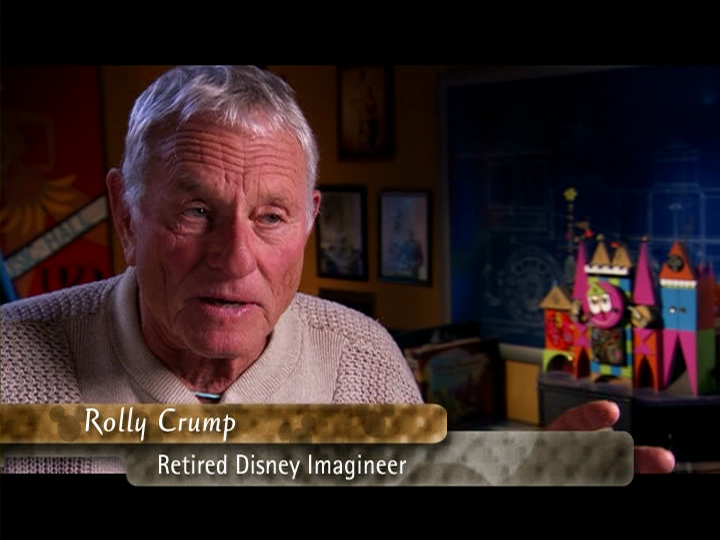
February 27, 1930 – Birth of Imagineer and Disney Legend Rolly Crump

To get a handle on this spirited, multi-talented Disney designer, think: Leonardo da Vinci’s Universal Man.

Born February 27, 1930, in Alhambra, California, Roland “Rolly” Crump became one of the most imaginative people in the Imagineering field. He began working at Disney in 1952, leaving a job as a dipper in a ceramic factory to become an inbetweener artist. He eventually became an assistant animator, with his work including the films Peter Pan, Lady and the Tramp, and Sleeping Beauty.

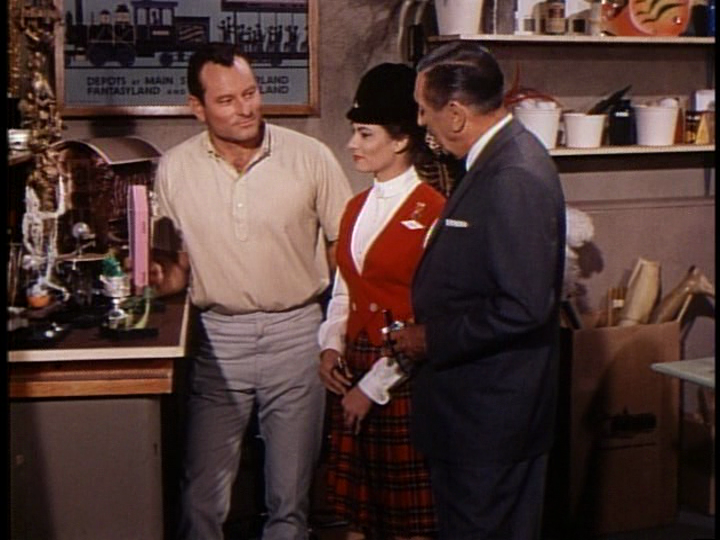
Crump (L) on the 10th Anniversary Show, explaining the upcoming attraction known as the Museum of the Weird

In 1959, Crump moved over to WED Enterprises, designing some of the most popular attractions at Disneyland, including The Haunted Mansion and the Enchanted Tiki Room. Crump even appeared on the Disneyland 10th Anniversary episode, where he explained the idea of a Museum of the Weird (which eventually morphed into part of the Haunted Mansion), where the Imagineers would collect weird things from around the world. “I did a candle man that was melting, I did a chair that stood up and talked,” Crump said of the humble beginnings of the Museum of the Weird. “And while I’m working on all of this, the management at WED and the art directors said, ‘That stuff’s too weird, Walt’s not gonna like that.’ They put all my stuff on a table against a wall in a corner. Finally Walt said, ‘Well, is that it?’ And Dick Irvine said, ‘Yes, Walt, that’s it.’ He said, ‘What’s this stuff in the corner?’ He and I both sat in front of this stuff, and I took him through it. He said, ‘It’s weird.’…The next morning I come to work at 7:30, Walt’s sitting at my chair in the same clothes he was wearing when he left that afternoon the day before, and he said, ‘I didn’t sleep last night…because of all the weird stuff you showed me.’”

Crump also was a key designer for many of the Disney attractions at the New York World’s Fair, particularly the Tower of the Four Winds Marquee for the It’s A Small World attraction. Crump designed the animated clock for the attraction when it was moved to Disneyland.

In 1970, Crump left Disney to become a consultant at other theme parks, including Busch Gardens in Florida and California. In 1976, he returned to Disney as a project designer for Epcot, particularly the “Wonders of Life” and “The Land” pavilions. He left again in 1981, launching the Mariposa Design Group, which created many themed attractions around the world. In 1992, he came back to Disney again, and he again worked with the Epcot pavilions, redesigning and refurbishing the lands there. Crump then retired from Disney in 1996, although he continues to create and dream up new interesting attractions. He was inducted as a Disney Legend at the 2004 ceremony.


February 11

February 11, 1918 – Birth of Disney Legend Blaine Gibson

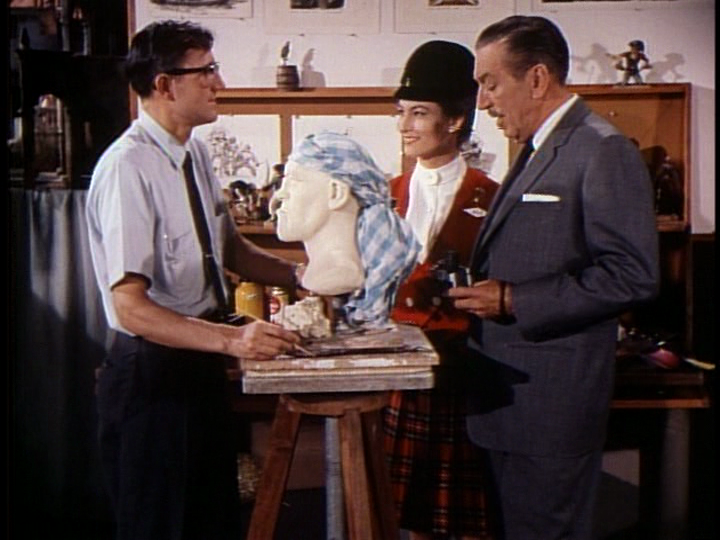
Gibson (L) showing Julie Reihm and Walt Disney one of the scultpures for the Pirates of the Caribbean attraction

“…I was told Walt was expecting me to work on these projects. So I said to myself, ‘what the heck’ and went (to Walt Disney Imagineering). I was never sorry after that.” – Blaine Gibson

Born February 11, 1918, in Colorado, Blaine Gibson joined the Walt Disney studios in 1939, working as an inbetweener and assistant animator. Gibson built up an impressive resume working on the films Fantasia, Bambi, Song of the South, and Peter Pan, just to name a few. Gibson would work on sculpting in his spare time, and when Walt saw an art exhibit with Gibson’s sculptures in 1954, he asked him to help work on special projects for the upcoming Disneyland.

In 1961, after doing part-time work for WED Enterprises, Gibson left the animation arena and began sculpting full time. Gibson ended up heading the sculpture department, working on most of the heads of the Audio-Animatronics characters, including 41 presidents for the Hall of Presidents at Walt Disney World (the last being Bill Clinton), and the pirates for the Pirates of the Caribbean attraction. Gibson makes an appearance in the Wonderful World of Color episode Disneyland 10th Anniversary, showing Disney and Julie Reihm one of the heads of the pirates he’s been working on. Reihm notes that the pirate looks rather angry, to which Gibson responds, “Well, he has to be a tough guy. The pirates were pretty tough.”

The Partners statue Gibson designed, located in the hub of Disneyland

One of the most recognizable works of Gibson’s is the “Partners” statue in the Central Hub of Disneyland, which depicts Walt Disney holding hands with Mickey Mouse. It was finished in 1993, the same year Gibson was named a Disney Legend, and the statue has become a symbol of Disneyland itself. Gibson retired from the company in 1983, but continues to consult on projects, including The Great Movie Ride in Walt Disney World.


January 17

January 17, 1913 – Birth of Disney Legend Claude Coats.

Claude Coats (L) showing the Pirates attraction to Julie Reihm and Walt Disney.

“His energy, curiosity and drive to create new experiences for our Disney park guests made him a leader and a teacher for all of us. He was a genuine one-of-a-kind.” – Marty Sklar, Walt Disney Imagineering President.

Claude Coats had a prolific career at the Walt Disney Studios: He began with creating the fantastical watercolor backgrounds in Pinocchio, and eventually became one of the lead developers of Walt Disney World attractions, including several World Showcase Pavilions at EPCOT Center. One of the few employees to receive a 50-year service award, Coats retired in 1984 after 54 years with Disney.

Born January 17, 1913, in San Francisco, Coats was raised in Los Angeles, and attended the University of Southern California, graduating with a Bachelor Degree in Fine Arts in 1934. He attended the Chouinard Art Institute, studying watercolor painting and becoming an active member of the California Water Color Society. Through the society, he was hired by Disney as an apprentice background painter in June 1935. Coats worked on backgrounds and color stylings of such films as Snow White and the Seven Dwarfs, Fantasia, Dumbo, Saludos Amigos, Make Mine Music, Lady and the Tramp, Cinderella, and Peter Pan. His watercolor background work on Pinocchio, however, continues to be lauded by animation critics and art collectors alike. Coats took the paintings of the village and Geppetto’s workshop by artist Gustaf Tenggren, and turned them into backgrounds “with the most appetizing appeal,” said animation historian, John Culhane. Coats’ eye for color was also used on several acclaimed short films, including The Old Mill and Ferdinand the Bull, both Academy Award winners.

Coats took on a new role in1955, when he became one of the elite artists brought in to work with WED Enterprises (now known as Walt Disney Imagineering). As part of the development team for several attractions, beginning with Mr. Toad’s Wild Ride, Coats helped bring Disney’s vision for Disneyland into being. He worked on several popular attractions, including The Haunted Mansion, Pirates of the Caribbean, Snow White’s Scary Adventures, and Submarine Voyage. Coats and Imagineer Herb Ryman were tasked with the darker rides in Fantasyland, including Peter Pan’s Flight. Coats also used his skills while working on the The 1964 New York World’s Fair attractions, including The Carousel of Progress and It’s a Small World.

Coats appeared in the Disneyland 10th Anniversary Episode on Walt Disney’s Wonderful World of Color (see the January 3rd entry), introduced by Walt as “the Imagineer in charge of the pirate project.” He explains staging a scene in the Pirates of the Caribbean attraction, where one character is being forced to walk the plank, to Walt and Julie Reihm during the episode.

Coats went on to design attractions for Walt Disney World, including The Mickey Mouse Review, Universe of Energy, and several World Showcase pavilions. He also worked on the international parks, including the Cinderella Castle Mystery Tour for Tokyo Disneyland. After 54 years of work for the Disney Company, Coats retired in November 1984, and was inducted as a Disney Legend at the October 22, 1991 ceremony. He passed away in Burbank, California, on January 9, 1992.