RSS Feed

Tag Archives: Disney Legend

February 4

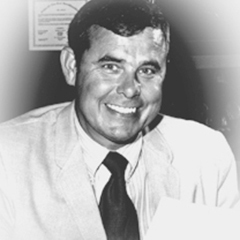
February 4, 1932 – Birth of Disney Legend Bob Allen

Image credit: Disney Legends at Disney Insider

“He was a great, great lover of people, and he showed it. When you met Bob Allen, he acted like you were the first person he ever met.” – Joe Potter, Disney Legend and former Vice President for EPCOT Planning.

Born on February 4, 1932, Disney Legend Bob Allen is best known for his work with Walt Disney World, becoming the Vice President of the park in 1977, as well as being one of Disney’s greatest goodwill ambassadors. He was born in Corona, California, and served in the Navy for four years around the time of the Korean War. After the war, he attended Long Beach State College, majoring in physical education. On a whim, he decided to apply for a job at Disneyland, and in 1955, he began to work in the park as a ride operator. His job was on the Casey Jr. attraction, where he blew a whistle if someone fell off the ride.

Allen moved around to various positions while working at the park, and by 1963, he was the production coordinator at Disneyland. In 1964, Allen moved to Denver, Colorado, spending two years as the manager of the Celebrity Sports Center, a sports facility built by a group of celebrity investors, including Walt Disney and Art Linkletter. Allen also worked as the project manager for the proposed Mineral King resort. Four years later, Allen came back to Disneyland as the director of General Services.

Allen helped prepare for the opening of Walt Disney World in Florida. In 1970, he moved to Florida to work as the director of General Services, and was soon promoted to Vice President of the Resorts Division. On January 1, 1977, Allen was promoted to Vice President of Walt Disney World. Under Allen’s leadership, Walt Disney World was able to thrive, and he continued to work on its long-range plans until his death on November 8, 1987. He was named a Disney Legend at the October 16, 1996, ceremony.


January 29

January 29, 1915 – Birth of Disney Legend and Storyman Bill Peet

“As Bill Peet himself once said, ‘There were 40 people who were assigned to these jobs in the golden age of Disney animation. Now they were all being performed by one man…me, Bill Peet.’” – Neal Gabler, author of Walt Disney: Triumph of the American Imagination.

Bill Peet was born on January 29, 1915, in Grandview, Indiana. He showed promise as an artist at an early age, never imagining he could make a living out of bringing fanciful stories to life. “My favorite room in the house was the attic,” Peet wrote in his autobiography, “where I enjoyed filling fat five-cent tablets with a hodgepodge of drawings. Drawing became my number one hobby as soon as I could manipulate a crayon or pencil well enough to put my favorite things on paper…I must have drawn fairly well or I couldn’t have enjoyed it so much.” His drawing hobby, however, got him in trouble at school—he recalled that his margins were so full of drawings, he obviously didn’t pay a lot of attention to his teachers. During high school, he won a scholarship to the Herron Art Institute, now part of Indiana University.

In 1937, Peet moved out West to find work. Jobs were scarce as this was the middle of the Great Depression, but he heard that Disney was looking for artists, so he tried his luck. Peet was hired to be an in-betweener artist, which meant he assisted with the final drawings of characters for Snow White and the Seven Dwarfs. Being an in-betweener meant one was at the bottom rung of the animating ladder, and Peet was very frustrated. He was driven, and he knew that his place was in the story department. He was given his chance about a year later, and the chances he got were highly regarded. One of his scenes was in Dumbo, where the baby elephant is bathed by his mother, and it is regarded as one the best early examples of Peet’s work. From that time, he was one of Disney’s main storymen. As animator Will Finn put it, “[Peet’s] fingerprints are all over the Disney classics as a storyman, from pretty much Pinocchio on.”

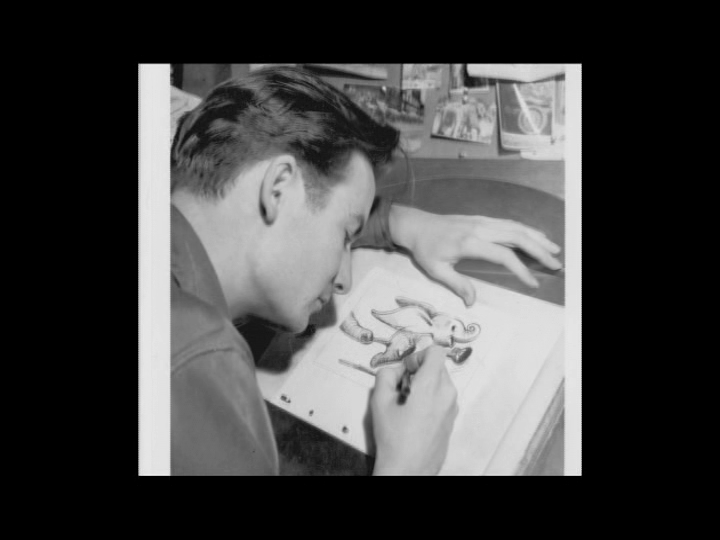
Peet working on a scene in the film Dumbo

Whenever there was a story problem in the feature films, Walt Disney would bring it to Peet to fix. Peet’s ability to handle the story department helped free Disney’s interests when he began to diversify between the new medium of television, the parks, and the live action films. While Peet worked on story for films, starting on Fantasia and Sleeping Beauty, his best work was on the film One Hundred and One Dalmatians, where he was the sole developer of the story. Compared to the newer films, like Beauty and the Beast, where there were fifteen people working on the story and storyboards, Peet did all the work by himself. Disney Historian Brian Sibley noted that “Peet was a master storyteller, and he structured [One Hundred and One Dalmatians] to make it a story that is so focused, so controlled…that you follow the story with an effortlessness…so much so, in fact, that Dodie Smith wrote to Bill Peet and said that he had, in fact, improved on her book. Which is quite a complement when you think about it.”

There was always a contentious relationship between Disney and Peet. Peet brought in the 1938 novel The Sword in the Stone to Disney’s attention, and Disney asked Peet to write the screenplay. After Peet complied, Disney approved the film for production. The film, however, did not do very well, which caused Disney to become more critical of Peet’s methods. When Peet began to work on The Jungle Book, which he also had proposed to Disney, he read and reread the book, coming up with the story sketches. The version of the film Peet came up with, however, was not the kind of film Disney wanted to see. The two men, both highly imaginative and stubborn, could not reach an agreement on the film, and after twenty-seven years together, Peet left the studio and never returned.

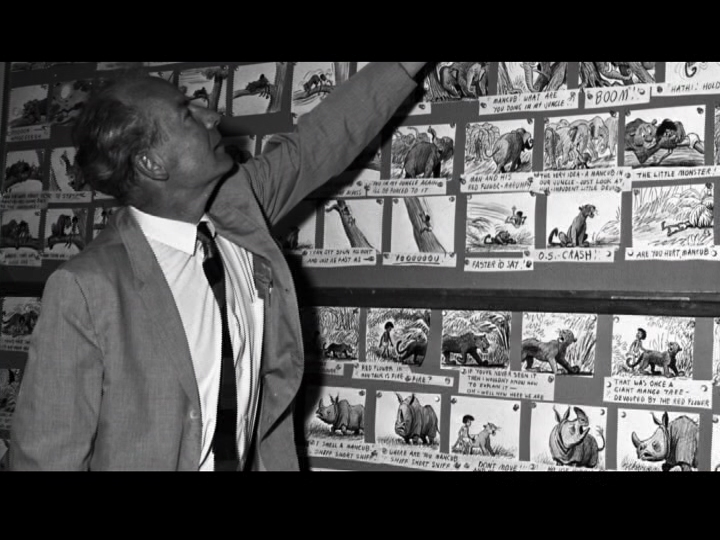
Peet with the storyboards for the last film he worked on, The Jungle Book

After leaving Disney, Peet began a successful career as a children’s book author. “When it came time for the used book sales,” Peet wrote in his autobiography, “my illustrated [schoolbooks] were best sellers. The kids loved my drawings and I suppose those books could be considered the very first ones I ever illustrated for children.” He wrote over thirty-five stories, which were translated into several languages. In 1989, he released his autobiography, which won several awards, including being named a Caldecott Honor Book. Peet was inducted into the Disney Legends at the October 16, 1996 ceremony. Bill Peet died in 2002 at the age of 87.

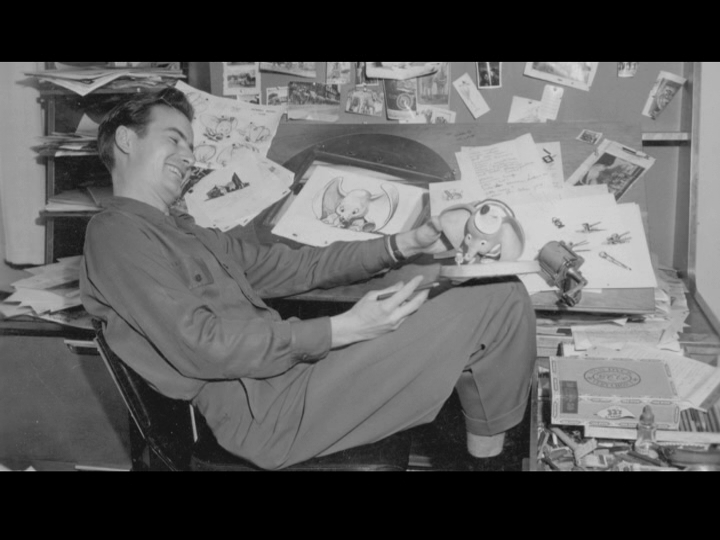
A young Peet working with a maquette of the main character Dumbo

Peet had an amazing ability to structure a story. While researching the sketches for One Hundred and One Dalmatians, animator Andreas Deja remarked that he “follow[ed] the sketches and you go, ‘Well, I’ll be…this is impossible. They didn’t change a thing.’ [The scenes] are exactly the way Bill Peet had envisioned it.” Coming from humble beginnings and rising through the ranks at a brisk pace, it’s interesting to see not only the talent that Peet had been born with, but how innate his instincts were when it came to story. Without Peet’s skills to carry on while Walt Disney’s interests diversified, there probably wouldn’t have been Disney animation in the ’60s, which led to the Disney Renaissance. Based on all of the influence Bill Peet had, one could argue that he helped keep the story of Disney animation alive for decades to come.

January 18

January 18, 1941 – Birth of Disney Legend David Stollery.

David Stollery's title card from the serial Annette.

“I wonder how many Celica-driving ‘Mickey Mouse Club’ fans ever knew that ‘Marty’ designed their car?” – Tim Considine, Disney Legend and actor.

David John Stollery III was born January 18, 1941, in Los Angeles, into a show-business family, his father having been a radio announcer, and his mother a radio star while living in Portland, Oregon. At age seven, Stollery began his acting career by landing a role in a touring production of Medea, and was later voted Child Actor of the Year for his role in the production On Borrowed Time, starring actor Victor Moore. He appeared in several films, beginning with an uncredited role in the 1949 film A Connecticut Yankee in King Arthur’s Court, and getting his big boost as a feature actor in the 1951 film, Darling, How Could You! His Disney roles, however, gave him the most prominence as an actor.

Walt Disney saw Stollery perform on an episode of The Ray Milland Show, playing a young genius, and was convinced that the boy would be perfect for the role of Marty Markham in the upcoming Mickey Mouse Club serial, “The Adventures of Spin and Marty,” co-starring Tim Considine as Spin. The serial was very popular, and Stollery was quickly signed for two more “Spin and Marty” serials: “The Further Adventures of Spin and Marty” in 1956, and “The New Adventures of Spin and Marty” in 1957. Stollery also appeared in a serial starring Annette Funicello, simply titled “Annette,” in which he played the character Mike Martin. He also acted in two feature films for Disney: Westward Ho the Wagons! in 1956, and Ten Who Dared in 1960.

Stollery as Marty Markham in The Adventures of Spin and Marty.

Unlike most child actors, Stollery did not pursue acting as a fulltime career, instead opting to study design at the Art Center College of Design, and becoming an auto designer for General Motors. In 1973, he was hired by Toyota to manage the automotive design group, Calty Design Research, designing the second generation of the A40 Series Toyota Celica in 1978.

Stollery has mostly stayed out of the spotlight since his Disney days. His most recent on-screen appearance was a documentary in 2005 on the Walt Disney Treasures set, The Adventures of Spin and Marty, in which Stollery and co-star Tim Considine explore the property that was used as the set for the Triple R Ranch and share their memories of performing on the show. He was inducted into the Disney Legends at the October 9, 2006 ceremony.

January 17

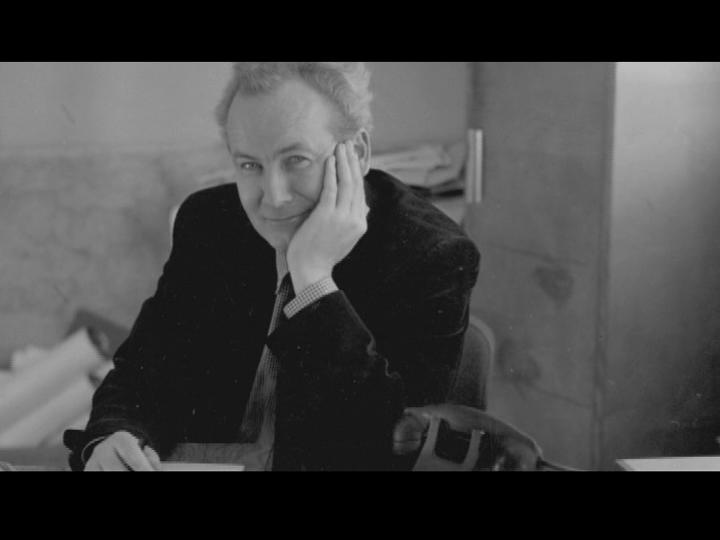
January 17, 1913 – Birth of Disney Legend Claude Coats.

Claude Coats (L) showing the Pirates attraction to Julie Reihm and Walt Disney.

“His energy, curiosity and drive to create new experiences for our Disney park guests made him a leader and a teacher for all of us. He was a genuine one-of-a-kind.” – Marty Sklar, Walt Disney Imagineering President.

Claude Coats had a prolific career at the Walt Disney Studios: He began with creating the fantastical watercolor backgrounds in Pinocchio, and eventually became one of the lead developers of Walt Disney World attractions, including several World Showcase Pavilions at EPCOT Center. One of the few employees to receive a 50-year service award, Coats retired in 1984 after 54 years with Disney.

Born January 17, 1913, in San Francisco, Coats was raised in Los Angeles, and attended the University of Southern California, graduating with a Bachelor Degree in Fine Arts in 1934. He attended the Chouinard Art Institute, studying watercolor painting and becoming an active member of the California Water Color Society. Through the society, he was hired by Disney as an apprentice background painter in June 1935. Coats worked on backgrounds and color stylings of such films as Snow White and the Seven Dwarfs, Fantasia, Dumbo, Saludos Amigos, Make Mine Music, Lady and the Tramp, Cinderella, and Peter Pan. His watercolor background work on Pinocchio, however, continues to be lauded by animation critics and art collectors alike. Coats took the paintings of the village and Geppetto’s workshop by artist Gustaf Tenggren, and turned them into backgrounds “with the most appetizing appeal,” said animation historian, John Culhane. Coats’ eye for color was also used on several acclaimed short films, including The Old Mill and Ferdinand the Bull, both Academy Award winners.

Coats took on a new role in1955, when he became one of the elite artists brought in to work with WED Enterprises (now known as Walt Disney Imagineering). As part of the development team for several attractions, beginning with Mr. Toad’s Wild Ride, Coats helped bring Disney’s vision for Disneyland into being. He worked on several popular attractions, including The Haunted Mansion, Pirates of the Caribbean, Snow White’s Scary Adventures, and Submarine Voyage. Coats and Imagineer Herb Ryman were tasked with the darker rides in Fantasyland, including Peter Pan’s Flight. Coats also used his skills while working on the The 1964 New York World’s Fair attractions, including The Carousel of Progress and It’s a Small World.

Coats appeared in the Disneyland 10th Anniversary Episode on Walt Disney’s Wonderful World of Color (see the January 3rd entry), introduced by Walt as “the Imagineer in charge of the pirate project.” He explains staging a scene in the Pirates of the Caribbean attraction, where one character is being forced to walk the plank, to Walt and Julie Reihm during the episode.

Coats went on to design attractions for Walt Disney World, including The Mickey Mouse Review, Universe of Energy, and several World Showcase pavilions. He also worked on the international parks, including the Cinderella Castle Mystery Tour for Tokyo Disneyland. After 54 years of work for the Disney Company, Coats retired in November 1984, and was inducted as a Disney Legend at the October 22, 1991 ceremony. He passed away in Burbank, California, on January 9, 1992.

January 14

January 14, 1905 – Birth of Disney Legend Sterling Holloway.

“To be in the same recording studio with Sterling Hollowway was a great treat. I mean, the man was a consummate artist.” – Paul Winchell, the original voice of Tigger.

In Disney’s animated film history, there is no voice more recognizable than that of Sterling Holloway, whose charming tenor brought to life some of film’s most beloved characters, including his most famous role of the silly old bear, Winnie the Pooh.

Holloway was born on January 14, 1905, in Cedartown, Georgia. At age 15, he left Georgia to attend the American Academy of Dramatic Arts in New York, where he also found work in vaudeville and on the radio. He moved to Hollywood in 1926, working in silent films. With the advent of talking films, many actors found themselves out of a job, but Holloway was saved by his voice, which gained him many roles in comedies. Among the actors Holloway worked with were Fred MacMurray, Clark Gable, Marlene Dietrich, and Dick Powell.

In 1941, Holloway had his first role with the Disney Studios, playing the messenger stork in Dumbo. This led to several other voice roles in the feature films, including adult Flower in Bambi, the Cheshire Cat in Alice in Wonderland, and the narrator of the Peter and the Wolf segment in the package film Peter and the Wolf. He also voiced the character Kaa in The Jungle Book, where he sang the song “Trust in Me.” Holloway also narrated various short films, such as the World War II propaganda short The Pelican and the Snipe, The Little House, and Lambert, The Sheepish Lion. One of his showcase shorts, however, is the 1953 classic, Ben and Me, which received an Academy Award nomination. Holloway played the character Amos, who contributed greatly to Benjamin Franklin’s career.

Holloway with Walt Disney

Holloway’s most beloved role, however, is that of Winnie the Pooh. In 1966, Holloway first voiced the role in the featurette Winnie the Pooh and the Honey Tree, which was later added as a segment in the 1977 film The Many Adventures of Winnie the Pooh. Around the same time, Holloway also made his way onto TV screens, starring in episodes of The Twilight Zone and The Baileys of Balboa. For Disney, he narrated a special called “Christmas at Walt Disney World,” as well as a combination animation and live-action special called “The Restless Sea.”

Holloway was inducted into the Disney Legends on October 22, 1991. On November 22, 1992, Holloway passed away at the age of 87, leaving behind a legacy of beloved Disney film characters.

January 10

January 10, 1930 – Disney Legend Roy Edward Disney is born.

“Roy was, yes, a Disney, but he was remarkable because he lived his own life and was well-known for sailing around the world. And he certainly took us all on an adventure.” – Don Hahn, Producer of Beauty and the Beast.

Only child of Roy O. Disney (Walt Disney’s brother) and Edna Francis Disney, Roy Edward Disney was born in 1930. He grew up at the studio while his father dealt with the business side of running it. In 1951, Disney graduated from Pomona College with a degree in English, and began working in his uncle’s company in 1954 as an assistant film editor on the True-Life Adventure films. He worked in various roles within the company; as producer, writer, director, and production coordinator for episodes of Walt Disney’s Wonderful World of Color; as a writer for shows such as Zorro; and as a cinematographer for Perri.

In 1967, Disney joined the company’s Board of Directors. Ten years later, he resigned as an executive from the company because of disagreements over corporate decisions, but retained his seat on the Board. In 1984, however, Disney resigned as Chairman of the Board, citing decisions being made over a corporate takeover battle. “And we finally came to the conclusion that we can’t do anything on the inside because I’m the lone voice of dissent on this board,” Disney explained. “So I resigned from the board of directors. And it got enormous amounts of attention.” Indeed, Disney stock jumped 15 percent the week that Disney resigned, topping off at about $58 a share.

Disney’s resignation brought about a shift in the company, with Ron Miller stepping down from his role of CEO. The hostile takeover attempt involved taking the company apart and selling it off piecemeal, but Disney fought against this plan with a group of investors. Disney also helped bring Michael Eisner and Frank Wells to the company as CEO and President of the Walt Disney Company, respectively. Disney then came back to the company as vice chairman and head of the animation department. “I came back to the company in 1984 and, [in a] rather cavalier way at the time, said to Michael [Eisner], ‘Why don’t you let me have the Animation Department, because I may be the only guy right now, with all these new people coming in, who at least understands the process and knows most of the people.’”

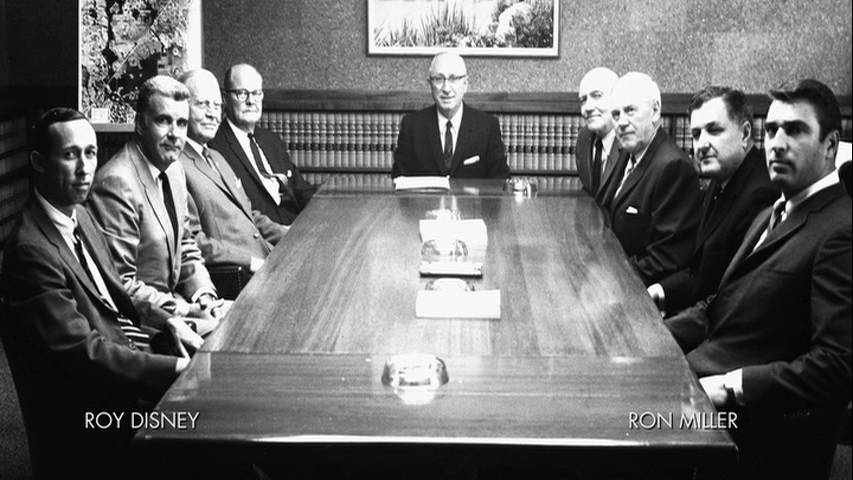
Roy (L) with the Board of Directors.

“We wouldn’t be watching movies from Pixar and Disney, or possibly Dreamworks for that matter, if it weren’t for a few amazing things that Roy Disney did during that time,” Don Hahn remarked. Disney helped to reinvigorate the then-failing Animation Department, beginning with the decision to release one new animated film a year, to helping bring in the Computer Animation Postproduction System (CAPS) to change the way films are animated.

One of Disney’s other projects was a sequel to his uncle’s 1940 film, Fantasia. Walt Disney had always planned to make a sequel, and Disney continued his work, acting as Executive Producer on the project. Production began in 1990, and the film was released in 2000. The film is a combination of the company’s past and its future, a sort of metaphor for Roy E. Disney’s time at the Walt Disney Corporation.

In 2003, Disney once again resigned from the board of directors because of tensions between him and Eisner, citing complaints of Eisner’s style of micromanagement, a refusal to create a successful succession plan, and the perception that Disney had become a soulless conglomerate. Disney then established the website SaveDisney.com to force Eisner out and replace him with new blood. Eisner stepped down on March 13, 2005, and Disney rejoined the company as the non-voting Director Emeritus and consultant.

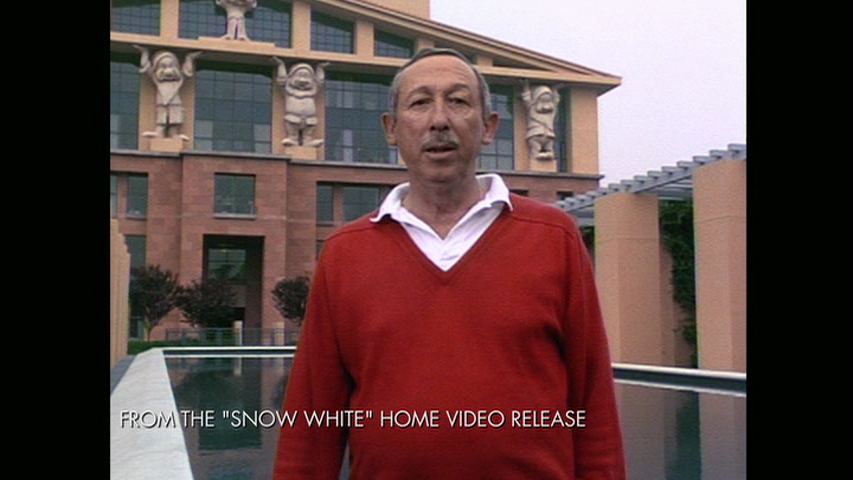
Roy introducing the Snow White home video in 1994.

Peter Schneider, Former President of Walt Disney Animation Studios, had this to say about Disney: “People always talked about Roy as the idiot nephew. That was his nickname. Nothing could be further from the truth. He was smart, unassuming, and powerful. You could easily underestimate him, but you did so at your own peril.” In fact, Disney did a lot to change the company during the period known as the Disney Renaissance. On October 16, 1998, Disney was inducted as a Disney Legend based on his long and varied work with the company. After a long battle with cancer, Disney passed away on December 16, 2009. An animation studio in Burbank was dedicated in his honor on May 7, 2010.

Writer Patrick Pacheco remarked about Disney, “I think he had a lot to prove and I think he proved it…He wasn’t the type of guy to go out and say, ‘Yeah, I’m the guy that did this.’ But on so many levels, he’s the guy that did this.” Disney was able to help change the animation landscape through the simple act of resigning from the board and bringing in Eisner, Wells, and Katzenberg. His dedication to the art of animation and the Disney name truly helped bring the company back from near demise in the late 1980s and the 1990s.

January 2

January 2, 1898 – Birth of Disney Legend Dick Huemer

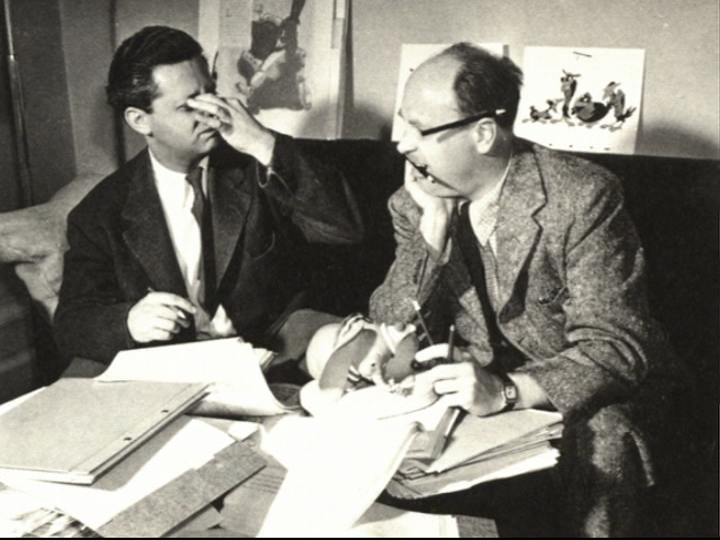
Disney Legends Joe Grant and Dick Huemer

“Meet Dick Huemer. He goes to operas.”

Dick Huemer, animator in the Golden Age of Animation, was a “jack-of-all-trades” within the Disney Company, but is best known for his work with Disney Legend Joe Grant on Fantasia and Dumbo. In 1916, as a student at the Art Students League and living in the Bronx, Huemer saw a help wanted sign on a door for the Barre Studio, one of the first film studios dedicated to animation. Huemer’s response:

“I had done a lot of illustrating, in yearbooks and things like that. One day, out of curiosity, I just walked upstairs and there was this plump little guy sitting there – a very genial character with a French accent. I told him I’d seen his sign and would like to be a cartoonist. He said, ‘All right – go into the next room, they’ll put you to work.’ And that’s how I got into the business. Because in those days, who knew about animated cartoons? I don’t believe the name had even been coined yet.”

Huemer then moved on to become the animation director at the Max Fleischer Studio and the Charles Mintz Studio, before joining the Walt Disney Studio in 1933 as an animator. He contributed to twenty-five cartoons as an animator before directing two classic shorts – The Whalers and Goofy and Wilbur – and then progressed to working on feature films.

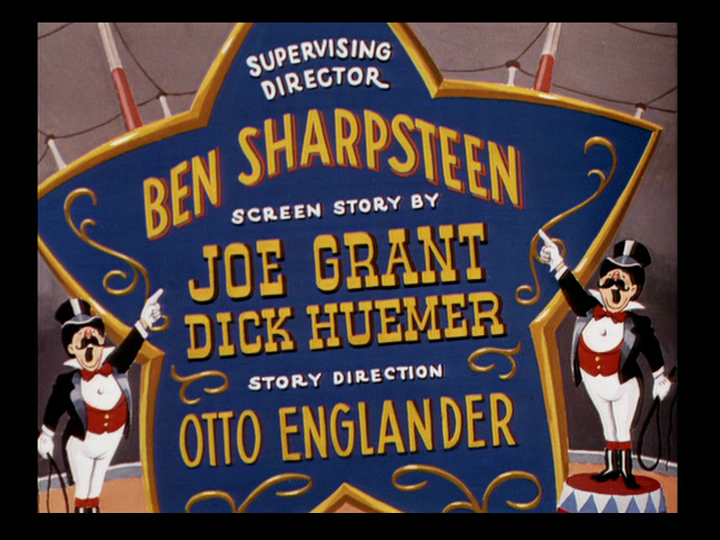
Disney assigned Huemer and Joe Grant to be the story directors on Fantasia because Huemer was an opera fan, and Grant had a lot of experience in character design. Ward Kimball recalled, “We owe it mostly to Dick Huemer for the fact that Walt Disney was weaned away from John Philip Sousa and introduced to the classics. Walt learned all about Beethoven, Tchaikovsky, and Stravinsky through Dick Huemer’s tutelage.” Huemer and Grant also adapted the screenplay for Dumbo, and Huemer continued his work on the story for the feature films Saludos Amigos, Make Mine Music, and Alice in Wonderland.

Huemer left the Disney Studios in 1948 to freelance on his own comic strip called Buck O’Rue, but returned to the studio in 1951 to work in early television shows and the story department until 1955. From 1955 to his retirement in 1973, Huemer wrote the True-Life Adventures comic strip. In 1978, in recognition of his contributions to the art of animation and his continued excellence, he received an Annie Award from the International Animated Film Society. Huemer passed away on November 30, 1979, and was inducted as a Disney Legend on October 10, 2007.

Writing about Dick Huemer is a pleasure, as he is one of the idols of the Golden Age of Animation. I grew up with and still enjoy watching Fantasia — it’s a treat to see how someone who appreciated opera and classical music used his love to create a wonderful film. It was interesting to read his thoughts on the film, especially when it wasn’t a huge hit with audiences upon its release. “Actually, we blamed the public,” Huemer said in an interview, explaining the shock the Studio felt when Fantasia didn’t do well. “What the hell’s the matter with them! This is a fine thing that will never be done again. It never was. It never will. It can’t be. You can’t afford to do that…I think somehow if we were to do it today that it would be an entirely different thing pictorially.” Through his words, you can tell that it was a labor of love for Huemer, and it’s a shame he isn’t around to see the following the film has today.

The most admirable trait I find in Huemer is how much he loved what he did, and how he transferred that love so smoothly into his work. He compared those involved in the Golden Age of Animation to the artist Rubens: “Rubens had a staff of about fifteen guys who were working on his paintings and they were dedicated people. They were artists, they loved doing it, and that’s why they were there. And they knew that they were doing the right thing.” Huemer, too, is a prime example of an artist who loved what he did and knew he was doing the right thing.

January 1

Welcome to 2012, the first post of the year as well as the first post of the blog! Of the many areas I could have spoken about today, I could not decide between these two. Read and enjoy!

January 1, 1904 – Birth of Disney Legend Grace Bailey
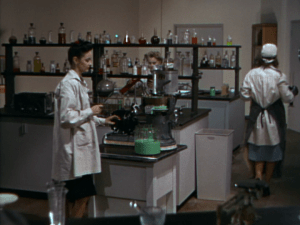
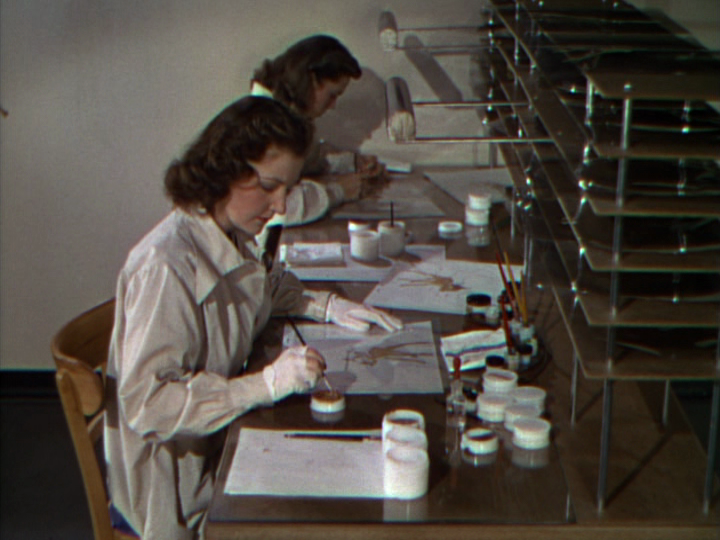
Disney Legend Grace Bailey Turner, born Elizabeth Grace Randall, is known for her work in the Ink and Paint department. She began working at Walt Disney Studios in 1932, rising through the ranks of the department to painting supervisor, then inking supervisor, and finally head of the department in 1954. She held this position until she retired in 1972, after 40 years of work with the company. She died on August 23, 1983, and was inducted posthumously into the Disney Legends on October 12, 2000.

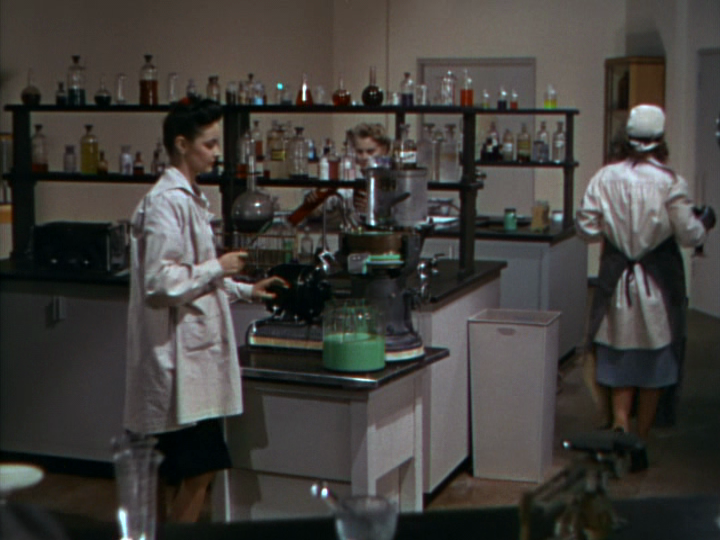
After the success of Flowers and Trees, Disney’s first Technicolor animated short, Bailey was tasked with the important duty of expanding the studio’s catalog of colors. Walt had made a deal with Technicolor to have exclusivity of the three-color process in animation for two years, and one can only imagine the challenges Bailey faced when dreaming up new colors. Betty Kimball, former Studio painter, said in an interview that “[e]verything was so unscientific back then. We were just creating, and it was fun.”
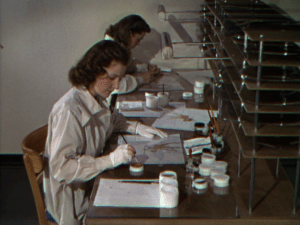
I was rather excited that my first post could be on Grace Bailey, for several reasons. Firstly, many people voiced complain that there are no important women in Disney’s history – my answer is that they’re not looking hard enough. Although the Ink and Paint Department was mostly, if not all, women, this does not mean their work was thought of as any less important. After watching scenes from The Reluctant Dragon, it’s easy to see that there was a lot of work that went into mixing and creating the new hues to bring animation to a higher level. The Ink and Paint department was highly important when it came to an animated film: inking could take about 12 months to learn properly, and one had to be very precise to preserve not only the animator’s original drawing, but also the emotion the animator wished to invoke.  To say that women did not have an important role, or that there were hardly any important women, seems to ignore all of the work these women did. Bailey was an important part of Disney history, and I’m proud to put her in the spotlight today.

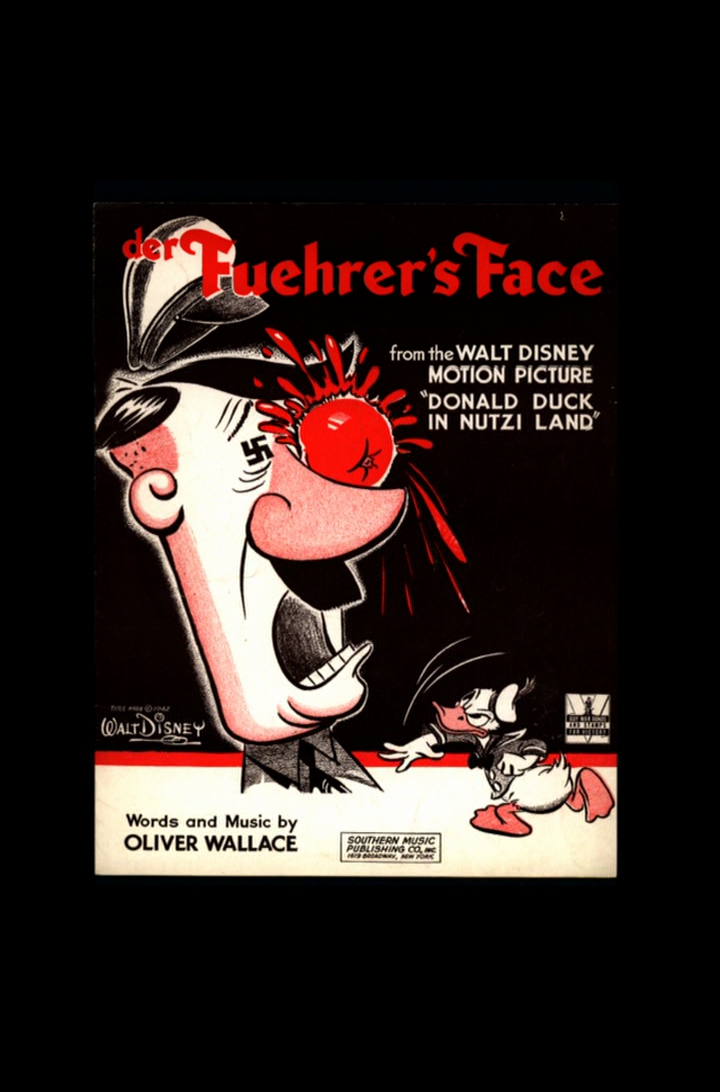
January 1, 1943 – Release of Der Fuhrer’s Face to Theaters
A prime example of homefront propaganda from World War II, Der Fueher’s Face was released to movie theaters on January 1st and was not only immensely popular, but it also won the Academy Award for Best Animated Short Film at the 15th Academy Awards. Directed by Jack Kinney, the short, in which Donald Duck has a nightmare that he resides in a country controlled by the Nazis, was originally called Donald Duck in Nutzi Land. The name was changed, however, when the title song for the short, written by Oliver Wallace, became a runaway hit after a record by Spike Jones was released (although the film preceded the record). According to Disney Legend Joe Grant, the short was inspired by the Charlie Chaplin film, Modern Times, especially the scene with Donald working on the belt line.

In this excerpt from the introduction to the short, film critic Leonard Maltin explains:

“It’s easy to see why the film was so popular. It’s very, very funny, reducing the serious tenets of Hitler’s Nazism to slapstick absurdities. And it gave audiences a chance to think, as Donald does, about the freedoms they might have taken for granted.”

As was common of propaganda films of the time, there are caricatures of Hirohito, Mussolini, and Nazi soldiers. This was a common tactic that is still seen today: the enemy is mocked to reduce the public fear and make the enemy less fear-inspiring. It was a good way to allow panicked Americans at that point a chance to laugh in the face of their fears.

One rumor that persisted about the film is that it was banned from being released to the public after the war. While the short was kept out of general circulation for many years because of its propagandistic content, it was released on the DVD set On the Front Lines in the third wave of Walt Disney Treasures, and was released again on the DVD set The Chronological Donald, Volume Two.

I find the work of the Disney Studios during WWII fascinating, from the propaganda shorts to the training films. All of these films helped Americans through their fear with laughter, and encouraged them to buy war bonds and support the troops through other methods. This short in particular conveys the message that Americans needed to be thankful for the freedoms they had and understand why they were fighting. America had been trying to stay out of the war until Pearl Harbor; these films helped rally the American Spirit.

One thing that also interests me about this short is the use of Donald Duck. Donald was an international star at this point, received well all over the world. Donald’s character works well for this kind of satire. His inability to keep from muttering under his breath as he deals with the insanity of Nutzi Land suits the story and creates a more humorous impact than if the usually cheerful, uncomplaining Mickey Mouse had been the main character. Audiences would have been sad to see our favorite mouse in Hitler’s clutches.

With grumpy, grousing Donald as the main character, Der Fueher’s Face allowed audiences to find humor in the face of fear.