RSS Feed

Tag Archives: Academy Award winning

March 25

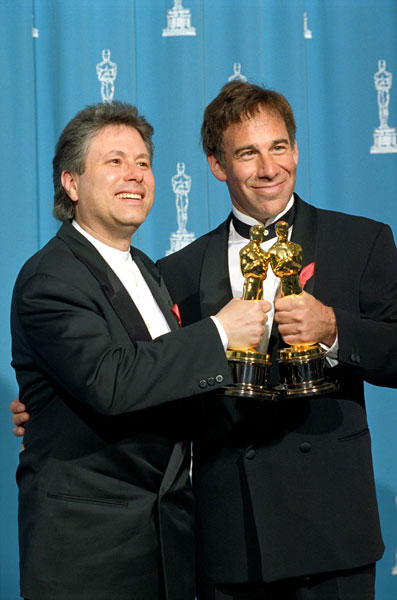
March 25, 1996 – Alan Menken and Stephen Schwartz Win the Academy Award for “Colors of the Wind” and Best Original Musical or Comedy Score for Pocahontas.

Image credit: The Academy Awards website

“The emotion of the lyrics [for “Colors of the Wind”], as well as the emotion of the music, was very powerful, and also defined the movie, and what the movie was going to be about.”  – James Pentecost, Producer of Pocahontas

On March 25, 1996, the 68th Academy Awards were held in Los Angeles, California. That night, Alan Menken and Stephen Schwartz took home two Oscars for the Disney animated film Pocahontas: one for the score, and one for the song “Colors of the Wind.” Pocahontas was up against stiff competition: “Colors of the Wind” competed against “Dead Man Walking” from the movie of the same name, “Have You Ever Really Loved a Woman” from Don Juan DeMarco, “Moonlight” from Sabrina, and “You’ve Got A Friend in Me” from a little film named Toy Story. The score was against the scores from Sabrina by John Williams, The American President by Marc Shaiman, Toy Story by Randy Newman, and Unstrung Heroes by Thomas Newman. It would be Alan Menken’s seventh and eighth Academy Award wins, and Stephen Schwartz’s first and second.

Menken remarked in a documentary about the process of the music for Pocahontas: “First of all, I went to another collaboration with Stephen Schwartz, and so the very first thing we wrote…[plays the underscore of the song]. We listened to a lot of Indian music from various tribes and came up with certain tonalities.” “Colors of the Wind” was one of the first songs that Menken and Schwartz wrote together, and it helped the rest of the staff understand the direction of the film, as it was written during early development. The song was a rare example of a balance between the lyrics and the music, with Schwartz remarking, “…maybe that’s why it’s so satisfying for both Alan and myself.”

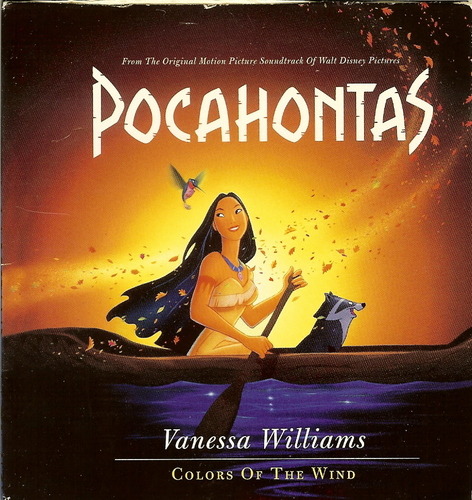
The cover for the single version of "Colors of the Wind," sung by Vanessa Williams. Image credit: amazon.com

“Colors of the Wind” was performed by Judy Kuhn in the film, and was released as a pop version for the end credits, sung by Vanessa Williams. The pop version reached a peak position of #4 on the U.S. Billboard Top 100. Menken has said about the song: “The song is a message song. It’s about respecting the environment and respecting our world, and it says, ‘Can you paint with all the colors of the wind?’ Can you see in the world around us all the rich array of blessings?”

March 24

March 24, 1901 – Birth of Disney Legend, Ub Iwerks
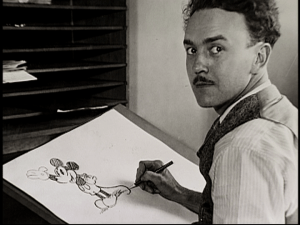
“Ub helped make this art form of animation grow from a novelty, something in the penny arcades, to the art form we know of today. He really laid the groundwork for a lot of the work we do today. Walt and Ub recognized that you could make animation truly three dimensional, and a hundred percent believable.”- John Lasseter

There is so much that there could and should be said about Ub Iwerks. He was a true animation renaissance man, dabbling in all forms of the art form, from creating Mickey Mouse to developing the Xerox Process. Sometimes, however, Ub is overlooked by those who are only casually aware of Disney history. However, you could not have had Walt and Walt’s success without Ub’s hand. As Ub Iwerks is one of my heroes, I hope that this post does him justice – there is a lot more that could be said about this truly remarkable man.

Ubbe Ert Iwwerks was born on March 24, 1901, as an only child of Dutch and German descent. His father, Eert Ubbe Iwwerks, was an amateur inventor, whose inventions no doubt left an impression on young Ub. In the age of progress of his youth, Ub was fascinated with the new idea of bringing moving pictures to life. When Ub was 14, his father abandoned the family, and Ub had to take on the new responsibility of providing for his mother. Ub would never speak of his father again. He worked odd jobs to support the family, and drew in his spare time. At age 18, he enrolled at the Fine Arts Institute, determined to become an artist.
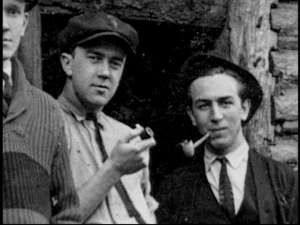
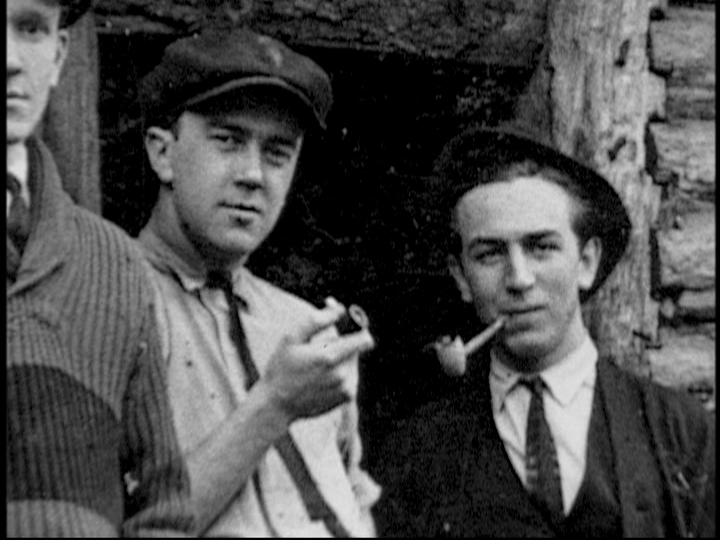
Ub and Walt after meeting at the Pesman-Ruben Commercial Art Studio

While working at the Pesman-Ruben Commercial Art Studio, where Ub’s unique skills as a draftsman were gaining attention, Ub met a young man named Walt Disney. Ub and Walt became fast friends, sharing a similar background and a passion for animation, and decided to set up shot for themselves. Unfortunately, they quickly found that they weren’t going to be successful on their own, and business closed down after a month. They then decided to work at the Kansas City Slide Company, where they were able to learn more about motion picture production, particularly animated images. Although an innovative idea at the time, animation wasn’t a profitable business. Walt and Ub decided to try their hand at an animated commercial. They were commissioned to create cartoons known as Laugh-O-Grams, which helped the pair create their own company again, this time known as Laugh-O-Grams, Incorporated. Ub’s draftsmanship proved to be one of the keys to the studio’s success, and they soon came up with the idea for the Alice comedies. But before they could develop the idea, their money ran out, and Ub got a job back at the Kansas City Film Ad Service, while Walt decided to go out to Hollywood.
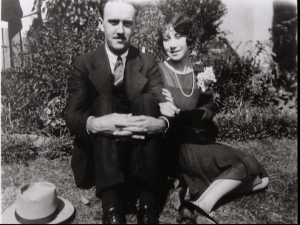
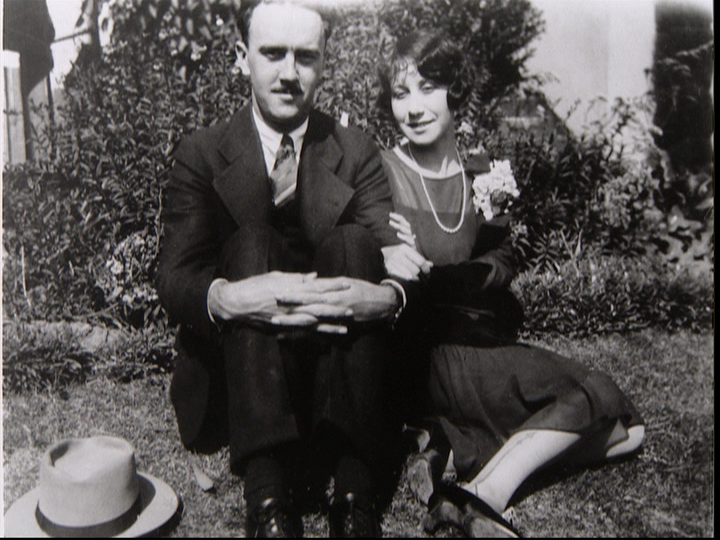
Ub and Mildred Henderson, who met on a blind date in 1926; they married in 1927

Ub had been promoted to the head of the art department at the Kansas City Film Ad Service when Walt invited him out to Hollywood, and he decided to take the trip out there with his mother. Once he arrived, he became the top animator of the Disney Brothers Studio, and the highest paid employee, even above Walt. The two began their production of the Alice Comedies, which became very popular. After the Alice Comedies had worn out their welcome, Ub and Walt were tasked by Charles Mintz to design a new character, which would become Oswald the Lucky Rabbit, Universal’s first cartoon series. The cartoon was a huge success, and Ub was finally able to have a social life after working so hard for so long. In 1926, he met Mildred Henderson on a blind date, and in January 1927, Ub and Mildred married.

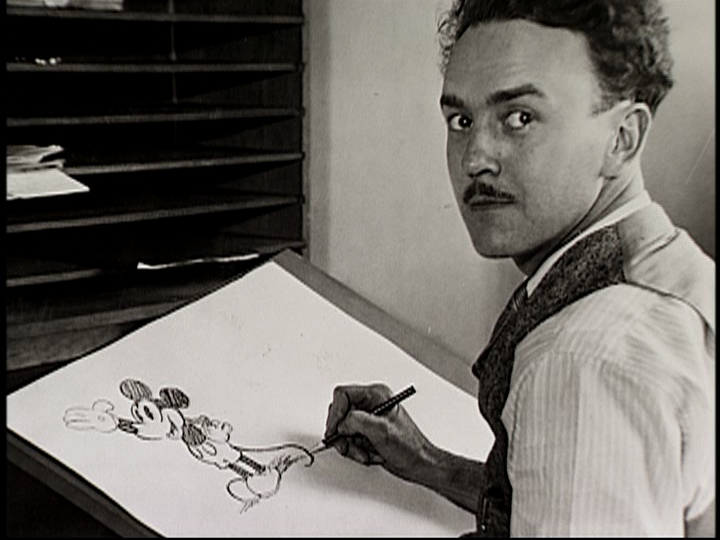
In 1928, Charles Mintz offered Ub a job, in hopes of stealing Oswald away from Walt. Though Ub turned the offer down, he learned that the other artists in the studio had agreed to join with Mintz. He warned Walt, but Walt couldn’t believe it. When Walt came back from the loss of Oswald in New York, the two decided secretly that they needed a new character. Although the story of how Mickey Mouse came to be is still shrouded in mystery, it was very clear that Ub was the one who first drew Mickey, and in two weeks, Ub completed the first Mickey Mouse cartoon, Plane Crazy. Ub’s work led to a growth of personality animation, rather than just straight character animation, as had been seen before. Ub said in an interview that Mickey was based on Douglas Fairbanks Sr., making him heroic and dashing, never a sissy. After the creation of Steamboat Willie, the first synchronized sound cartoon, Mickey’s popularity soared.

Ub included a lot of barnyard humor when he created many of the Mickey Mouse shorts. Due to the udder jokes he liked to use, the censorship board asked that the cows be given modest skirts to wear. And while Mickey’s popularity grew, another animated series began to take shape, known as the Silly Symphony. The first short film, The Skeleton Dance, was drawn by Ub, who seemed to be thoroughly inspired by the music for the short. The entire film, minus one or two scenes, was animated by Ub, who experimented with many elements of perspective and shape. Ub’s animation skills were praised by the animation community, and Ub continued to experiment with each new short he animated.
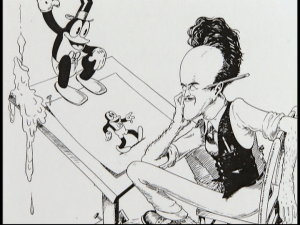
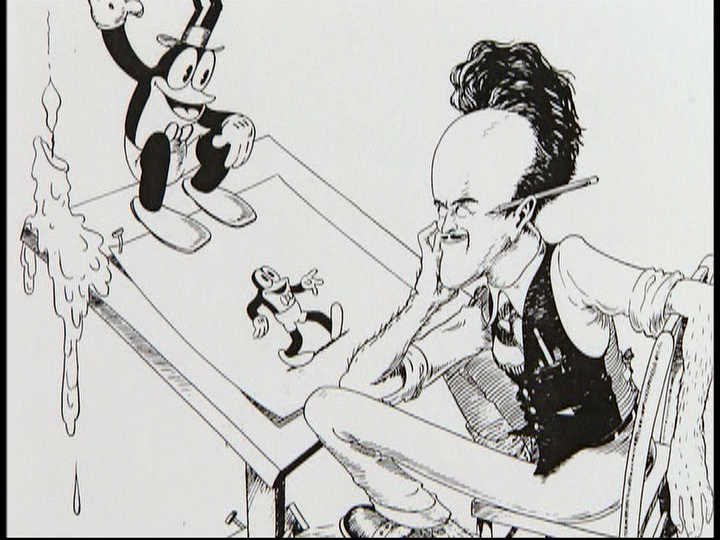
A caricature of Ub Iwerks and his creation, Flip the Frog

In 1929, tensions grew between Ub and Walt, as Walt began to take control of the artistic direction of the company, which caused Ub some concern. When Walt, who was getting all the attention for Mickey Mouse, began to interfere with Ub’s artistic ideas, Ub was tempted to leave Walt to set up his own studio. Ub finally decided that it was time for him to leave Walt and explore his own opportunities. He created his own new character, known as Flip the Frog. The animation style was very different than what he had done at the Disney Studio, with new kinds of gags and a distorted realism. Another character created by Ub was Willie Whopper, a chubby boy who had surrealistic adventures. His studio was a success, and Ub continued to push the envelope artistically, to the delight of audiences.

Ub created his own cartoon series known as the ComiColor series, in which he was able to use his technical and inventive skills to create new areas of techniques in animation. His created his own version of the three-dimensional camera, with $300 and parts from a 1920s Chevrolet, around the same time the Disney Studios were inventing their multi-plane camera. Unfortunately, while Ub was starting to make great strides with his animation technique, the Hays code was passed, and many of the adult jokes that were contained in his cartoons had to be cut. Also, Ub’s characters imitated life a little too much for Depression audiences, who wanted an escape from their troubles, not a reminder of them. MGM, Ub’s cartoons distributor, was a little disturbed with the cartoons that were being sent to them. The distribution contract with MGM was dissolved in 1934, and Ub was forced to close the studio in 1938, and retired from animation, deciding to venture into the challenge of technical innovations in the arena of animation.
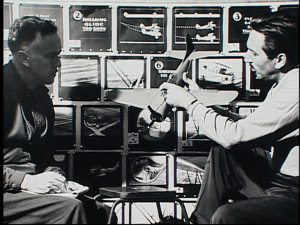
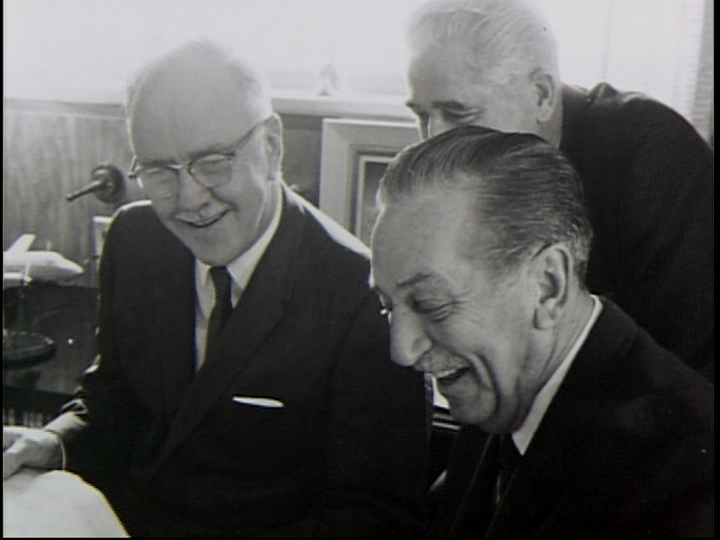
Ub (R) and Walt after Ub rejoined the studio, studying methods for the World War II projects

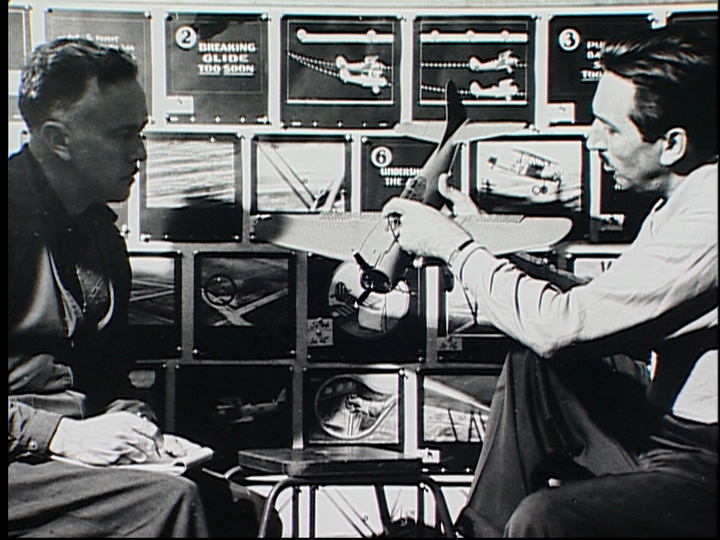
Finding that Ub was now available, Walt asked Ub to come back to the studio. Ub agreed, returning to the studio in 1940, and welcoming the chance to collaborate with Walt in an entirely new way. At this point, the studio was helping the war effort, which put a tight strain on the budget. Disney needed to come up with new technological advances to make the production of animated films more cost effective. Named as the head of the Photographic Effects lab, Ub received one of his first assignments, to expand upon the idea from more than twenty years ago in the Alice Comedies – combining live action and cartoon – for the movie The Three Caballeros.

Ub’s most recognized technical achievement was for the film One Hundred and One Dalmatians, where he changed not only the style of Disney animation, but also the speed at which things were animated, thanks to the Xerox Process (see January 25th article for more information). The process adapted the Xerox method to animated cells, displacing the inking process altogether and allowing the animator’s intended lines to appear directly on the screen. This process helped the Disney films’ success all the way into the 1980s.
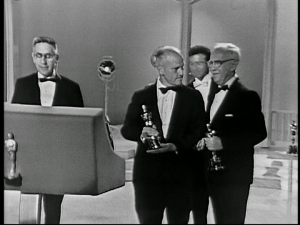
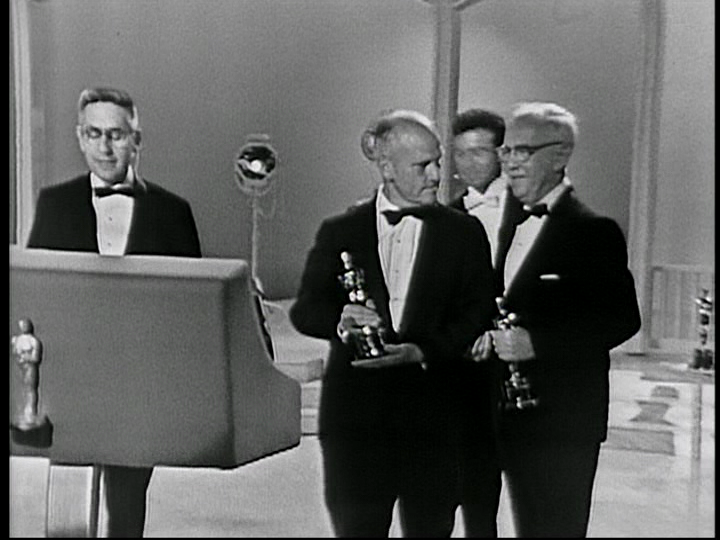
Ub (L) winning a special Academy Award for the sodium matte traveling process used successfully in Mary Poppins

In 1956, Ub invented a sodium traveling matte process, which helped pave the way for creating live action animation combinations, and was first successfully used in Mary Poppins. Ub went on to win a special Class One Scientific Academy Award for the sodium matte traveling process. Not only was Ub recognized for his work at Disney, but Alfred Hitchcock also asked him to create the effects in the movie The Birds with the sodium matte process. John Lasseter once remarked on Ub’s technical advancements, “A lot of the work that Ub did was to take people’s suspension of belief to another level, to where they never thought they were looking at drawings anymore.”

Ub’s advances were numerous, ranging from technical achievements in films (like the split screen technique in The Parent Trap), to creating a quicker editing system for television. Much of his work in the Disney parks, including bringing to life the audio animatronics found throughout the parks, is still used today.
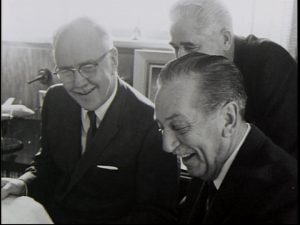
Ub and Walt, two parts of the whole that made up the success of the Disney Studios

Walt’s death greatly affected Ub, as the two were lifelong friends and collaborators, although their relationship was not an easy one at times. Don Iwerks, Ub’s son, remarked that, upon hearing of Walt’s death, Ub remarked, “That’s the end of an era.” The following five years after Walt’s death, Ub continued to push the boundaries of the field. In July on 1971, Ub passed away of a heart attack at age 70. He was honored as a Disney Legend in 1989 for all of his achievements.
March 16

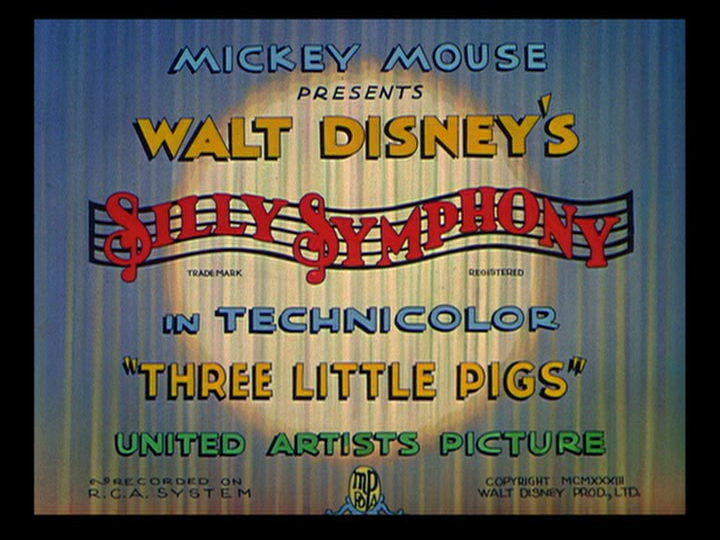
March 16, 1934 – The Silly Symphony The Three Little Pigs Wins the Academy Award


“…[The Three Little Pigs] sent a message of optimism to moviegoers who’d been battered by the Great Depression.” – Film Critic Leonard Maltin.

The 6th Academy Awards were held at The Ambassador Hotel on March 16, 1934, and the Disney Studios walked away with the Academy Award for Best Animated Short film for the wildly popular Silly Symphony The Three Little Pigs. It was in competition with the Universal Studios short The Merry Old Soul, as well as the Walt Disney and United Artists Mickey Mouse short Building a Building (see entry for January 7).

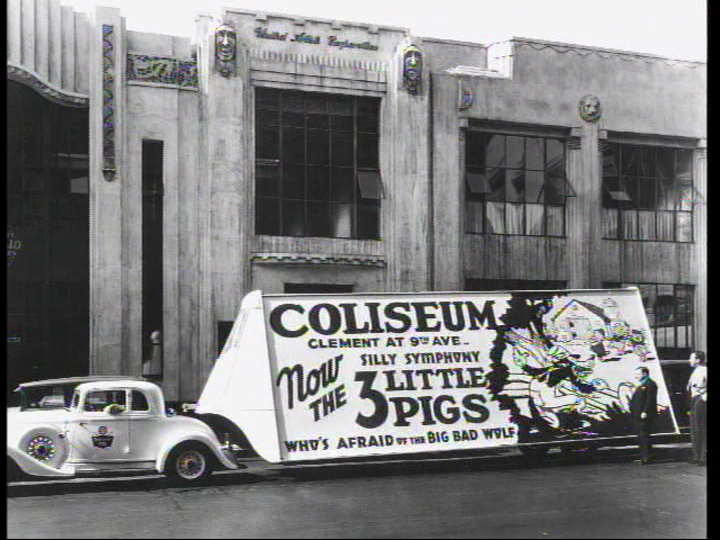
This is one of the billboards advertising the short at the Coliseum. The short was able to get top billing after a while due to its success

The short, although well done in its own right, was popular due to being released at the right time. It was considered groundbreaking in its characterization and musical score, but Depression-weary audiences adopted the song “Who’s Afraid of the Big Bad Wolf” as their fight song. The short’s immense success kept it in theaters for months with top billing, even after feature films had long left the theater. The success of the short, including the Academy Award, led to a major merchandising campaign, as well as three sequels: The Big Bad Wolf, Three Little Wolves, and The Practical Pig.

February 29

February 29, 1940 – The Last Silly Symphony, The Ugly Duckling, Wins the Academy Award for Best Animated Short Subject

At the 12th Academy Awards, held at The Coconut Grove in Los Angeles on February 29, 1940, the Walt Disney Studios and RKO Radio were awarded an Academy Award for their final Silly Symphony, The Ugly Duckling. The short was up against Detouring America by Warner Brothers, Place on Earth by MGM, and The Pointer, also by the Walt Disney Studios and RKO Radio.

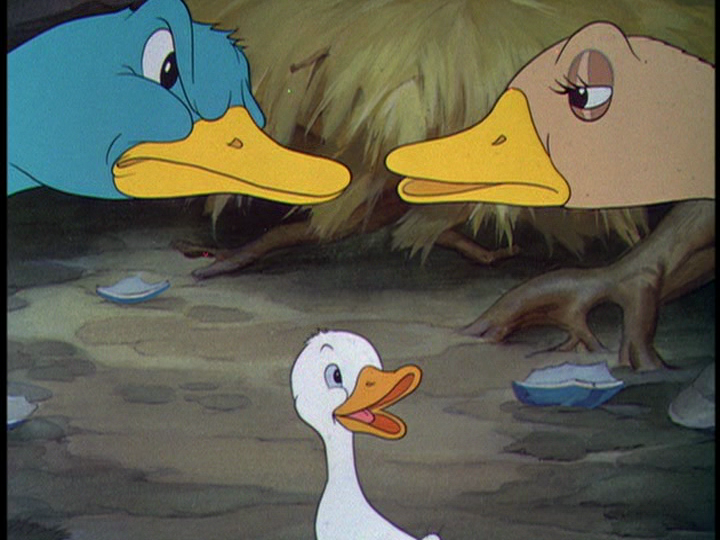
First released April 7, 1939, it was a remake of the 1931 Silly Symphony of the same name, and was the only Silly Symphony ever remade. The story and animation were significantly different from the 1931 short, which shows the tremendous strides in animation the Disney Studios had made in those nine years. Instead of the slapstick and gags they relied so heavily on in the early days of the studio, the 1939 version shows how they were able to make their character emote and become fully fleshed out.

The scene when the father and mother discover the odd looking duckling. Notice the characterization of the characters, which was rather nonexistant in the 1931 short

The plot of this short is based on the Hans Christian Andersen tale, and tells the story through music of a duckling shunned by his family, as he is considered by his parents to be ugly. The duckling, ashamed, tries to find a mother that will accept him the way he is. It’s easy to see, after watching this short, why it would win an Academy Award – it truly was a high note for the Silly Symphonies in which to go out.


February 26

February 26, 1942 – Walt Disney is Awarded the Irving G. Thalberg Memorial Award, and Fantasia Gets Two Special Oscars

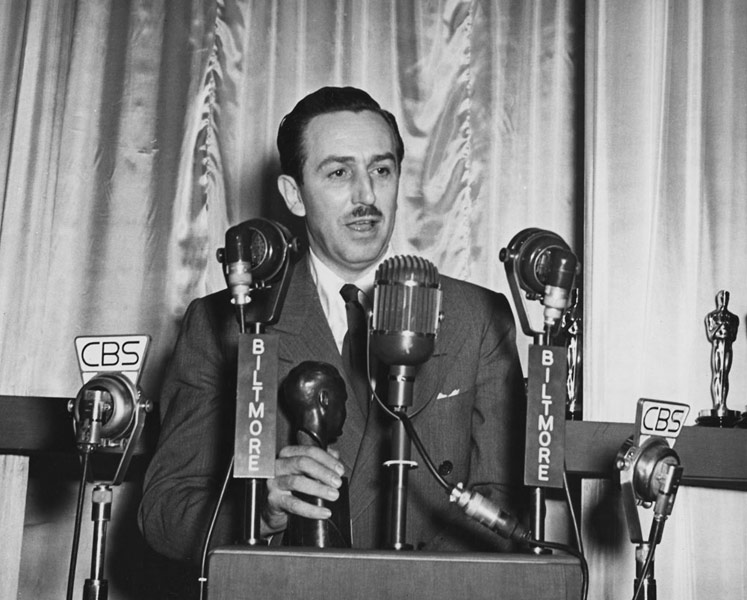
Walt Disney receiving the Irving G. Thalberg Memorial Award

At the 14th Annual Academy Awards, held on February 26, 1942, at the Biltmore Hotel in Los Angeles, it appeared to be a banner year for the Walt Disney Studios. Although Fantasia had not been the commercial success Walt had hoped it would be, it had still been a major innovation when it came to the process of sound in motion pictures. At his awards ceremony, Leopold Stokowski, the conductor of the film, was awarded a special Academy Award; a special Academy Award was presented to Walt Disney, William Garity, John N. A. Hawkins, and the RCA Manufacturing Company for the film, as well. On top of this, Walt Disney was fourth recipient of the Irving G. Thalberg Memorial Award.

The Irving G. Thalberg Award honors those “creative producers whose bodies of work reflect a consistently high quality of motion picture production.” It honors Irving Thalberg, who, at the age of twenty-three, became the vice president and head of production for Louis B. Mayer. Before he died of pneumonia at the age of 37, his work had made MGM one of Hollywood’s most prestigious studios. Disney became the fourth recipient of the award, and although he only had about three feature films and several shorts under his belt, it showed that Disney had made many strides in the fields of animation and motion pictures.

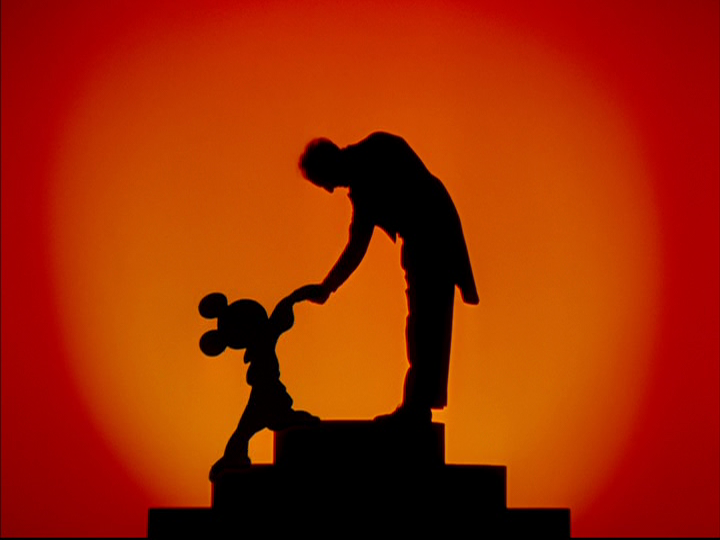
Leopold Stokowski in the iconic image from Fantasia

Leopold Stokowski and his associates were given a special award by the Academy “for their unique achievement in the creation of a new form of visualized music in Walt Disney’s production, Fantasia, thereby widening the scope of the motion picture as entertainment and as an art form.” The other special award—given to Disney, technicians William Garity and John N. A. Hawkins, and RCA—was for “their outstanding contribution to the advancement of the use of sound in motion pictures through the production of Fantasia.” The RCA stereo system that had been honored was truly remarkable for its day, and helped create a concert-like atmosphere for the audience. It was a very expensive system, requiring special equipment to be installed in theaters, which meant that the film originally opened in only 14 theaters.

February 22

February 22, 2009 – Pixar’s Wall-E Wins the Academy Award for Best Animated Feature

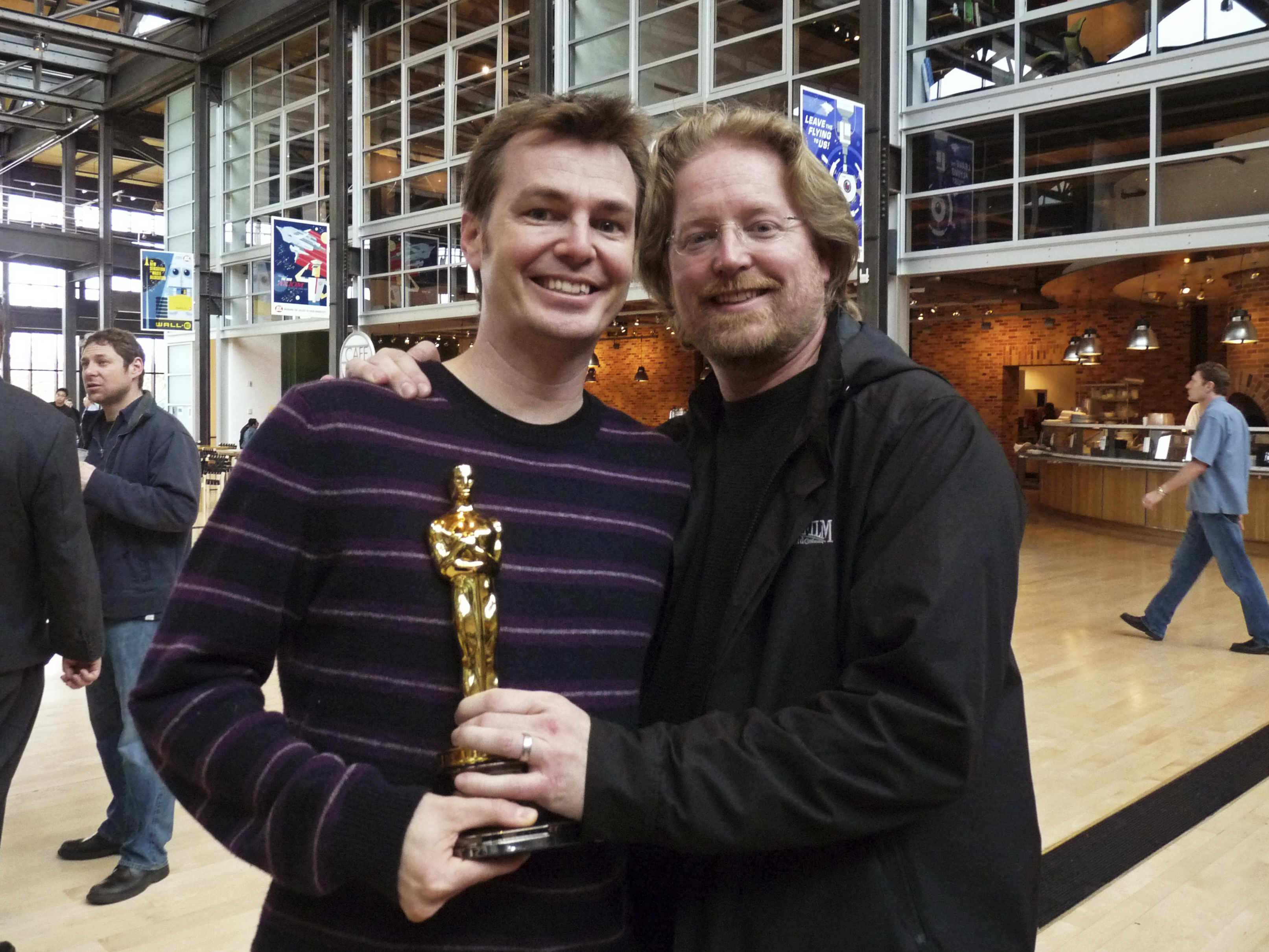
Andrew Stanton (R) with the Wall-E Academy Award. Image Credit: Wikipedia

“[We’ve] been trying for four years to make the best film possible and have it recognized in that regard in something like this – it’s huge.” – Andrew Stanton at the Academy Awards

At the 81st Academy Awards, broadcast February 22, 2009, the Pixar film Wall-E won the Academy Award for Best Animated Feature. The film was also nominated for Best Original Screenplay (written by Andrew Stanton, Jim Reardon, and Pete Docter), Best Original Score (by Thomas Newman), Best Original Song (Down to Earth by Peter Gabriel and Thomas Newman), Best Sound Editing (by Ben Burtt and Matthew Wood), and Best Sound Mixing (by Tom Meyer, Michael Semanick, and Ben Burtt). This award would be the fourth win for Pixar in this category since the creation of the Best Animated Feature category in 2001. Many critics voiced their surprise that Wall-E was not nominated for Best Picture, as it was one of the highest rated films of 2008, with a 96 percent approval rating on the online rating site, Rotten Tomatoes. Only three animated films were nominated in the Best Animated Feature category that year: Wall-E, Disney’s Bolt, and Dreamworks’ Kung Fu Panda.

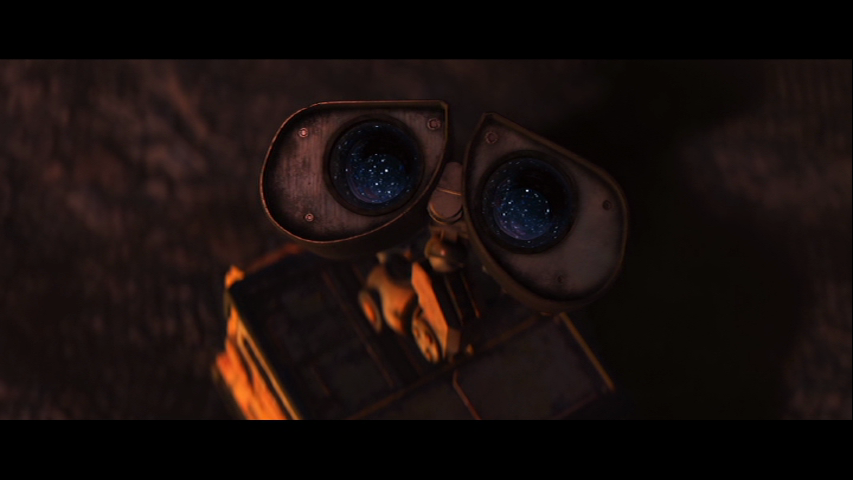
Image from one of the first advertisements for Wall-E

In an advertisement for the film, shortly after the release of Ratatouille, Andrew Stanton described a lunch with three of the other main players at Pixar: John Lasseter, Pete Docter, and Joe Ranft. “In the summer of 1994,” he begins, “there was a lunch…Toy Story was almost complete, and we thought, ‘Well, jeez, if we’re going to make another movie, we gotta get started now.’ So at that lunch, we knocked around a bunch of ideas that eventually became A Bug’s Life, Monsters, Inc., Finding Nemo…the last one we talked about that day was the story of a robot, named Wall-E.”

Released on June 27, 2008, the film posed the question: What if mankind had to leave Earth 700 years in the future, and somebody forgot to turn off the last robot? The film includes the voices of Ben Burtt as Wall-E and Elissa Knight as EVE, with Jeff Garlin as the Captain, John Ratzenberger as John, and Kathy Najimy as Mary. The film went on to become the ninth highest grossing film of 2008, with a total domestic gross of $223,808,164.

January 1

Welcome to 2012, the first post of the year as well as the first post of the blog! Of the many areas I could have spoken about today, I could not decide between these two. Read and enjoy!

January 1, 1904 – Birth of Disney Legend Grace Bailey

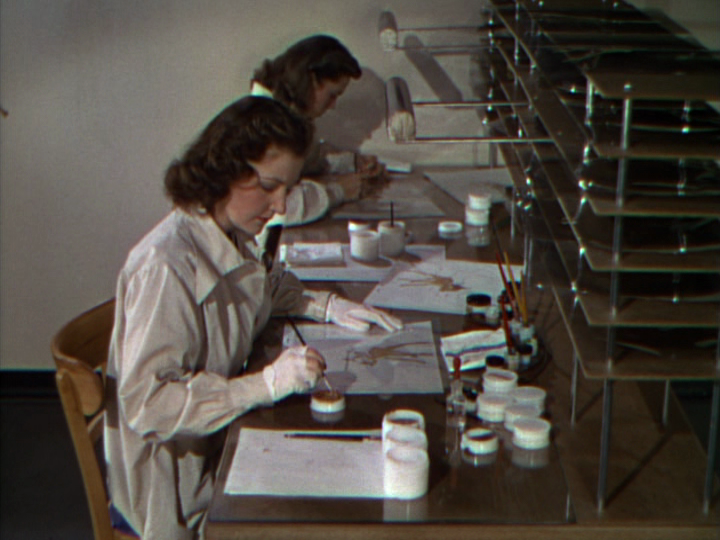
Disney Legend Grace Bailey Turner, born Elizabeth Grace Randall, is known for her work in the Ink and Paint department. She began working at Walt Disney Studios in 1932, rising through the ranks of the department to painting supervisor, then inking supervisor, and finally head of the department in 1954. She held this position until she retired in 1972, after 40 years of work with the company. She died on August 23, 1983, and was inducted posthumously into the Disney Legends on October 12, 2000.

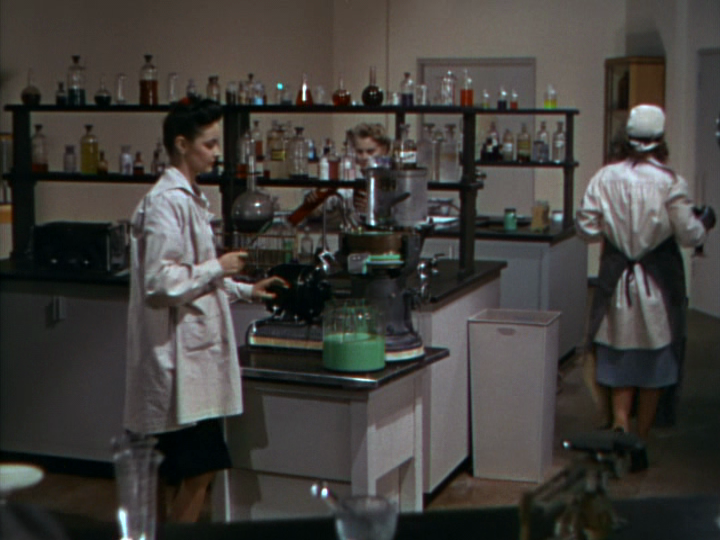
After the success of Flowers and Trees, Disney’s first Technicolor animated short, Bailey was tasked with the important duty of expanding the studio’s catalog of colors. Walt had made a deal with Technicolor to have exclusivity of the three-color process in animation for two years, and one can only imagine the challenges Bailey faced when dreaming up new colors. Betty Kimball, former Studio painter, said in an interview that “[e]verything was so unscientific back then. We were just creating, and it was fun.”

I was rather excited that my first post could be on Grace Bailey, for several reasons. Firstly, many people voiced complain that there are no important women in Disney’s history – my answer is that they’re not looking hard enough. Although the Ink and Paint Department was mostly, if not all, women, this does not mean their work was thought of as any less important. After watching scenes from The Reluctant Dragon, it’s easy to see that there was a lot of work that went into mixing and creating the new hues to bring animation to a higher level. The Ink and Paint department was highly important when it came to an animated film: inking could take about 12 months to learn properly, and one had to be very precise to preserve not only the animator’s original drawing, but also the emotion the animator wished to invoke.  To say that women did not have an important role, or that there were hardly any important women, seems to ignore all of the work these women did. Bailey was an important part of Disney history, and I’m proud to put her in the spotlight today.

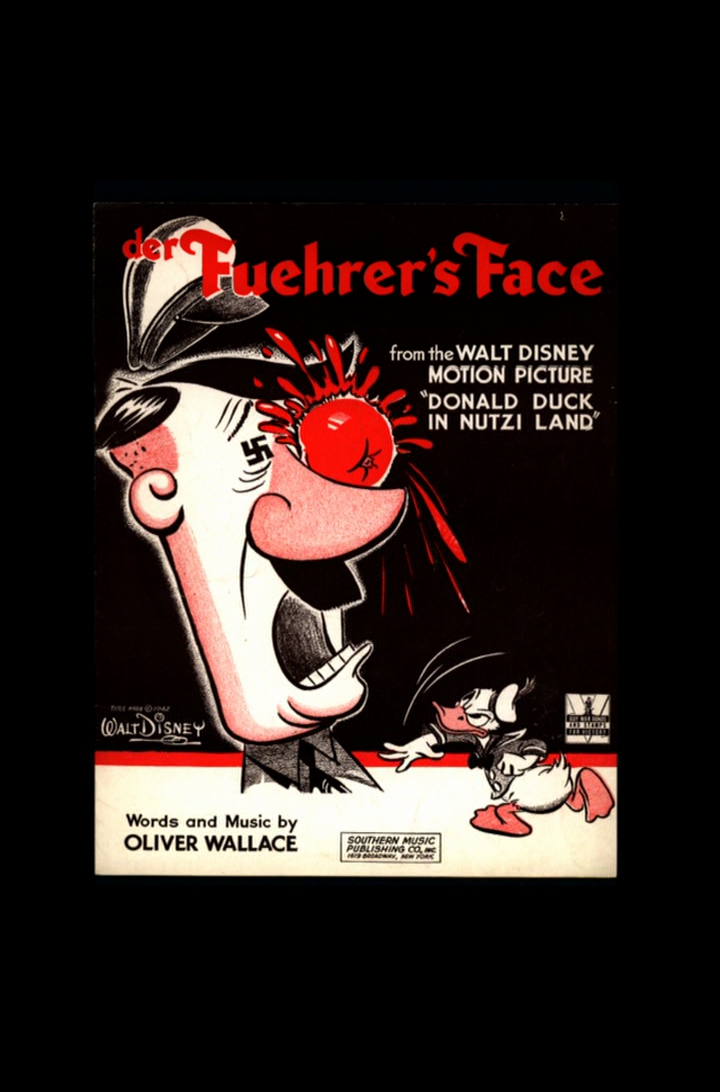
January 1, 1943 – Release of Der Fuhrer’s Face to Theaters

A prime example of homefront propaganda from World War II, Der Fueher’s Face was released to movie theaters on January 1st and was not only immensely popular, but it also won the Academy Award for Best Animated Short Film at the 15th Academy Awards. Directed by Jack Kinney, the short, in which Donald Duck has a nightmare that he resides in a country controlled by the Nazis, was originally called Donald Duck in Nutzi Land. The name was changed, however, when the title song for the short, written by Oliver Wallace, became a runaway hit after a record by Spike Jones was released (although the film preceded the record). According to Disney Legend Joe Grant, the short was inspired by the Charlie Chaplin film, Modern Times, especially the scene with Donald working on the belt line.

In this excerpt from the introduction to the short, film critic Leonard Maltin explains:

“It’s easy to see why the film was so popular. It’s very, very funny, reducing the serious tenets of Hitler’s Nazism to slapstick absurdities. And it gave audiences a chance to think, as Donald does, about the freedoms they might have taken for granted.”

As was common of propaganda films of the time, there are caricatures of Hirohito, Mussolini, and Nazi soldiers. This was a common tactic that is still seen today: the enemy is mocked to reduce the public fear and make the enemy less fear-inspiring. It was a good way to allow panicked Americans at that point a chance to laugh in the face of their fears.

One rumor that persisted about the film is that it was banned from being released to the public after the war. While the short was kept out of general circulation for many years because of its propagandistic content, it was released on the DVD set On the Front Lines in the third wave of Walt Disney Treasures, and was released again on the DVD set The Chronological Donald, Volume Two.

I find the work of the Disney Studios during WWII fascinating, from the propaganda shorts to the training films. All of these films helped Americans through their fear with laughter, and encouraged them to buy war bonds and support the troops through other methods. This short in particular conveys the message that Americans needed to be thankful for the freedoms they had and understand why they were fighting. America had been trying to stay out of the war until Pearl Harbor; these films helped rally the American Spirit.

One thing that also interests me about this short is the use of Donald Duck. Donald was an international star at this point, received well all over the world. Donald’s character works well for this kind of satire. His inability to keep from muttering under his breath as he deals with the insanity of Nutzi Land suits the story and creates a more humorous impact than if the usually cheerful, uncomplaining Mickey Mouse had been the main character. Audiences would have been sad to see our favorite mouse in Hitler’s clutches.

With grumpy, grousing Donald as the main character, Der Fueher’s Face allowed audiences to find humor in the face of fear.