RSS Feed

Tag Archives: 1990s

March 26

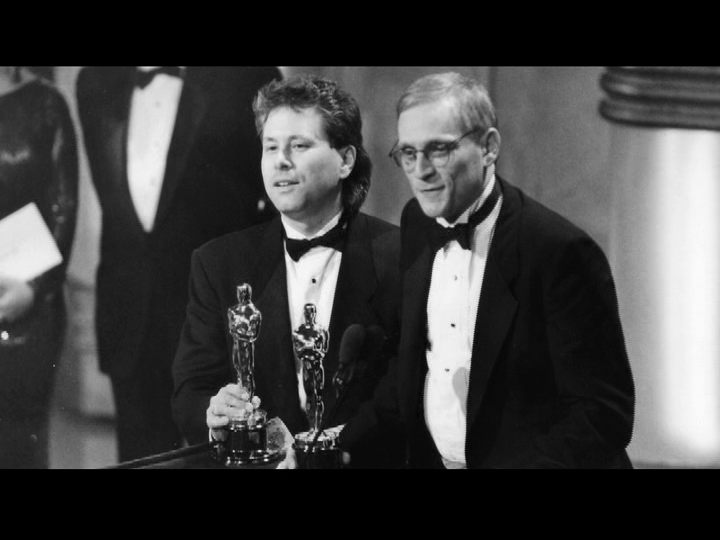
March 26, 1990 – Alan Menken and Howard Ashman Win the Academy Award for Best Original Score and Best Original Song for The Little Mermaid.

“We were adapting Hans Christian Andersen’s fairytale in the style of Disney. And so, in a sense, we were pastiching Disney. In order to pastiche Disney, we naturally brought in styles from the outside. Calypso and reggae were clearly a new style to bring in.” – Alan Menken

The 62nd Academy Awards were held in Los Angeles, California on March 26, 1990. Disney scored a great success that night with the musical team of Alan Menken and Howard Ashman, who won the Academy Award for the score for The Little Mermaid, and the song “Under the Sea.” Their competition was The Fabulous Baker Boys by Dave Grusin, Field of Dreams by James Horner, Indiana Jones and the Last Crusade by John Williams, and Born on the Fourth of July, also by John Williams. “Under the Sea” competed against “After All” from Chances Are, “I Love to See You Smile” from Parenthood, “The Girl Who Used To Be Me” from Shirley Valentine, and another Ashman/Menken song, “Kiss the Girl.”

Ashman had been brought to Jeffery Katzenberg’s attention through David Geffen, and after meeting Ashman, everyone was excited to work with him on The Little Mermaid project. Ashman brought along Alan Menken, who had worked with him on the musical Little Shop of Horrors. The collaboration between Ashman and Menken helped usher in a new era of Disney animation, bringing elements of Broadway to the animated form. As Director John Musker remarked on the partnership between Ashman and Menken, “One of the great things with Howard and Alan’s music, I think, is the wittiness of it. It isn’t dumbed down for any audience.” Jodi Benson, the voice actress for Ariel added, “They approached it like a Broadway musical. It is something totally different; the characters actually run out of words, can’t express themselves anymore, and it has to come out in song.”


March 25

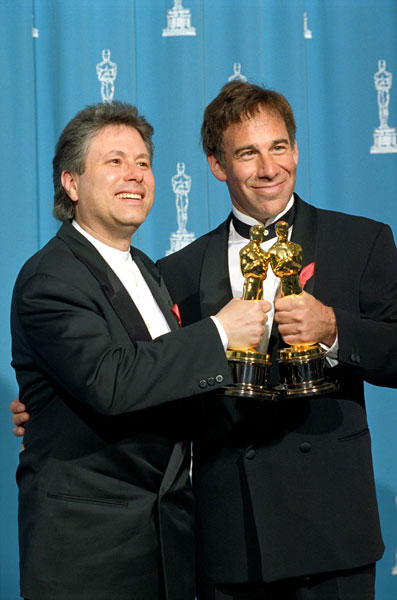
March 25, 1996 – Alan Menken and Stephen Schwartz Win the Academy Award for “Colors of the Wind” and Best Original Musical or Comedy Score for Pocahontas.

Image credit: The Academy Awards website

“The emotion of the lyrics [for “Colors of the Wind”], as well as the emotion of the music, was very powerful, and also defined the movie, and what the movie was going to be about.”  – James Pentecost, Producer of Pocahontas

On March 25, 1996, the 68th Academy Awards were held in Los Angeles, California. That night, Alan Menken and Stephen Schwartz took home two Oscars for the Disney animated film Pocahontas: one for the score, and one for the song “Colors of the Wind.” Pocahontas was up against stiff competition: “Colors of the Wind” competed against “Dead Man Walking” from the movie of the same name, “Have You Ever Really Loved a Woman” from Don Juan DeMarco, “Moonlight” from Sabrina, and “You’ve Got A Friend in Me” from a little film named Toy Story. The score was against the scores from Sabrina by John Williams, The American President by Marc Shaiman, Toy Story by Randy Newman, and Unstrung Heroes by Thomas Newman. It would be Alan Menken’s seventh and eighth Academy Award wins, and Stephen Schwartz’s first and second.

Menken remarked in a documentary about the process of the music for Pocahontas: “First of all, I went to another collaboration with Stephen Schwartz, and so the very first thing we wrote…[plays the underscore of the song]. We listened to a lot of Indian music from various tribes and came up with certain tonalities.” “Colors of the Wind” was one of the first songs that Menken and Schwartz wrote together, and it helped the rest of the staff understand the direction of the film, as it was written during early development. The song was a rare example of a balance between the lyrics and the music, with Schwartz remarking, “…maybe that’s why it’s so satisfying for both Alan and myself.”

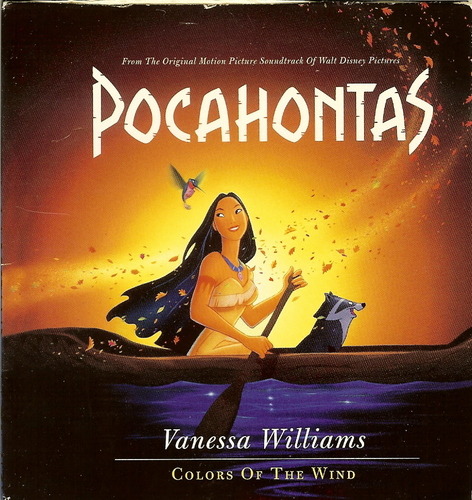
The cover for the single version of "Colors of the Wind," sung by Vanessa Williams. Image credit: amazon.com

“Colors of the Wind” was performed by Judy Kuhn in the film, and was released as a pop version for the end credits, sung by Vanessa Williams. The pop version reached a peak position of #4 on the U.S. Billboard Top 100. Menken has said about the song: “The song is a message song. It’s about respecting the environment and respecting our world, and it says, ‘Can you paint with all the colors of the wind?’ Can you see in the world around us all the rich array of blessings?”

March 6

March 6, 1992 – Tim Burton’s Short Film, Frankenweenie, is Released With the Live-Action Film, Blame it on the Bellboy.

“I guess we can’t punish Victor for bringing Sparky back from the dead.”

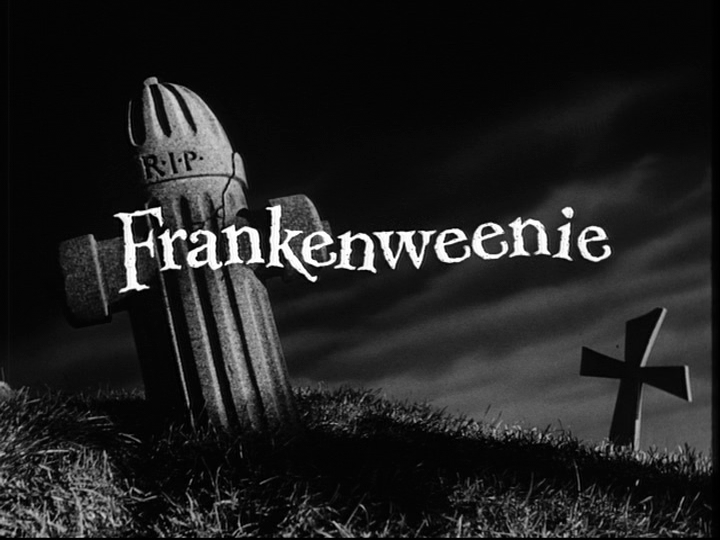
Tim Burton’s Frankenweenie, although completed in 1984, was released on a double bill with the live-action film, Blame it on the Bellboy, on March 6, 1992. Filmed in black and white, the short is an homage to horror films of the 1930s, with Mary Shelley’s Frankenstein as its base inspiration. The short is the story of a young boy named Victor Frankenstein, who brings his dog back to life after a tragic accident. The short was directed by Tim Burton, with the screenplay by Lenny Ripps, and stars Barret Oliver as Victor Frankenstein, Shelley Duvall as Susan Frankenstein, Daniel Stern as Ben Frankenstein, and Sparky as himself. Tim Burton was fired from Disney after the film was finished; studio heads felt the film was too scary for young audiences and that resources had been wasted making the short. A new full-length version of this short, which will be closer to Tim Burton’s original story idea, is set for release in October 2012.

The short opens with a film entitled “MONSTERS from Long Ago” by Victor Frankenstein, starring Sparky as the titular monster. The camera pans out to see the Frankenstein family and some friends watching a home movie. Meanwhile the son, Victor, goes outside to play with his dog, Sparky. Victor throws a baseball and Sparky, running to retrieve it, is struck by a car.

Victor is inspired by his teacher's science experiment

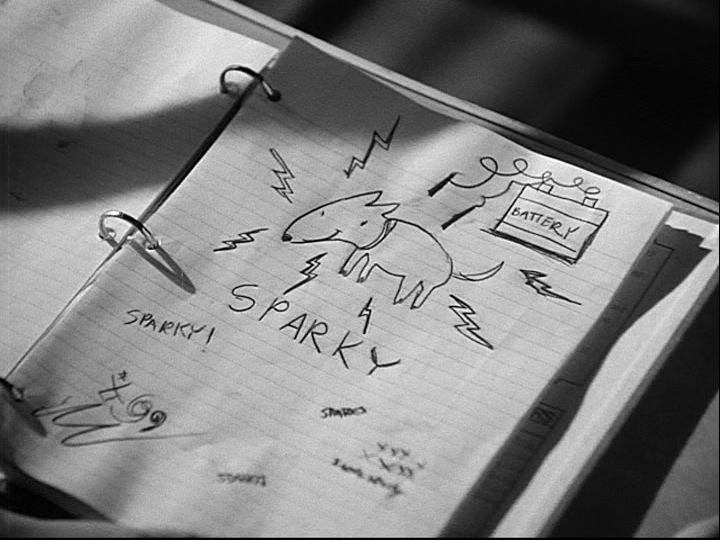
The next scene shows Victor and his parents in a pet cemetery, paying their last respects to Sparky. Victor falls into a deep depression. When his friends ask if he’ll get another dog, Victor says that he doubts that he could ever find another one like Sparky. In science class, Victor is unable to pay attention, as he draws pictures of Sparky in his notebook. The science teacher, however, is about to give a lesson on electricity and the central nervous system, pulling out a frog corpse. When the teacher proposes introducing electricity into the frog’s system, Victor suddenly pays attention. Seeing the frog’s legs move, Victor is inspired, thinking that this is the way to bring Sparky back.

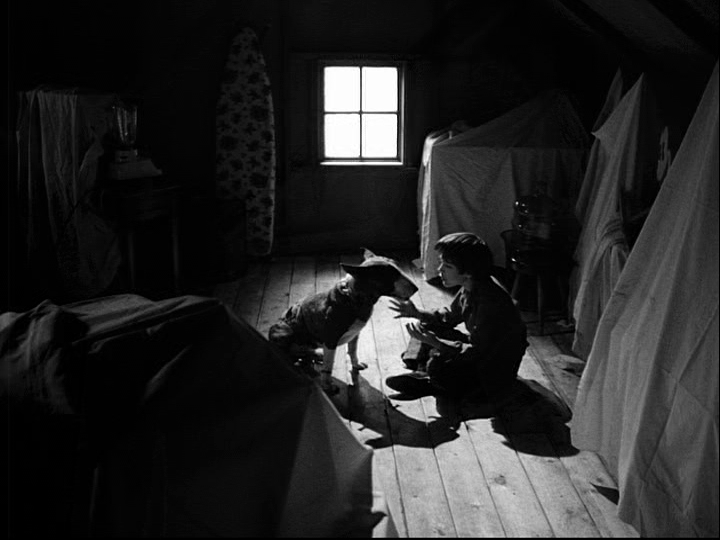
Victor reads several books for research, including Life After Death, On Death and Dying, Modern Chemistry, and Electricity and the Creation of Life. He then begins gathering appliances in the house, beginning with the toaster, until he has constructed a lab in his attic. One night, after pretending to be ready for bed, Victor pulls a shovel out from under his bed and sneaks out to the pet cemetery to dig up Sparky. He hurries home through the rain with Sparky’s corpse and sets about trying to bring the dog back to life, in the same manner as his namesake, Dr. Frankenstein. But nothing seems to happen. Victor brings the corpse back downstairs, believing that he has failed, until he feels the dog licking his hand.

Ben Frankenstein discovers Sparky and Victor hiding out in the attic, unbeknownst to the pair

The next morning, Victor claims he doesn’t feel very well and asks to stay home from school. His parents see right through his charade, and send him off, but Victor waits until they both leave for work, then stays home to play with Sparky, who stays hidden away in the attic. While Victor naps, however, Sparky leaves the attic and goes outside to explore. He climbs into the open window of the next-door neighbor’s shed, only to scare the poor man inside, who sets Sparky into accidentally terrorizing the neighborhood before running back inside the house. Victor’s parents are questioned about their dog when they come home from work, and the father offers to check their house for any dogs. He discovers that Sparky is, in fact, alive. He drags the mother inside to see for herself that Sparky has been brought back to life.

The family sits around the kitchen table, wondering how to deal with this situation, and the implications of it. They are unable to sleep that night, wondering how exactly does a parent deal with their son playing God. They decide to keep Sparky in the house and walk him at night, so people don’t see him and become alarmed. The neighbors, however, start to ignore the Frankensteins, as they know something strange is going on. The father decides that they might as well just introduce the neighbors to Sparky that night, for “the longer they wait, the worse it will be.”

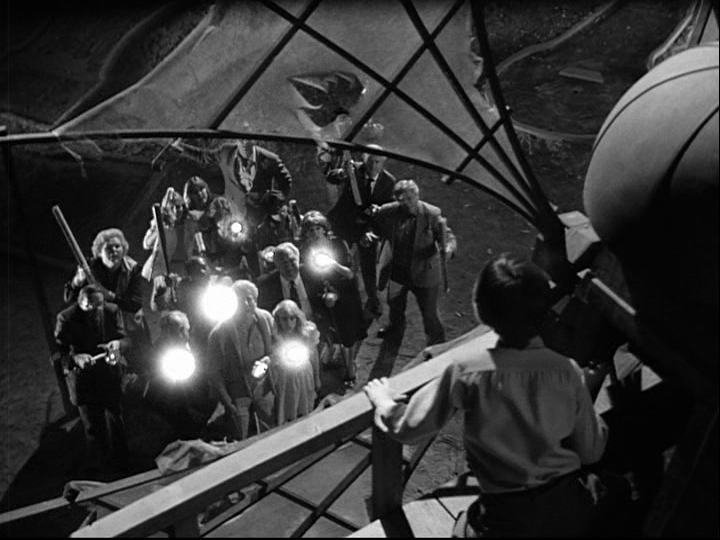
The angry mob of neighbors stands outside the old miniature golf course windmill, demanding "the monster"

The neighbors are seen gathered in the Frankenstein’s living room, with Mr. Frankenstein trying to reassure them that they’ve been seeing the same plain old Sparky. Upon seeing Sparky, however, the neighbors immediately lose their heads in fright, and Sparky runs out the dog door. Victor follows the dog, and the neighbors decide that their best course of action is to kill Sparky. Sparky escapes into the ruins of an old miniature golf course, and runs up to the windmill, with Victor calling his name from the gate. Victor slips through the gate and tries to retrieve Sparky. The neighbors stand as an angry mob outside the windmill, demanding to have their vengeance, while one neighbor pulls out a lighter and sets the old windmill ablaze. Victor and Sparky are trapped inside the burning building, and while everyone stands and watches with horror, they are suddenly amazed to see Sparky pull Victor out of the windmill. As his parents pull Victor away, the windmill suddenly begins to fall apart, trapping Sparky in the wreckage. Victor can only watch as Sparky dies once more.

Lights flash, and Victor is surrounded by car headlights, with one neighbor proclaiming that if Victor brought Sparky back to life before, he can do it again. Inspired by Sparky’s bravery at saving Victor, everyone is ready to start their engines and use their car batteries to give Sparky a jumpstart. Their plan is a success, and Sparky once again is brought back to life.

February 24

February 24, 1997 – Pixar and Disney Jointly Agree on the Production of Five Feature Films

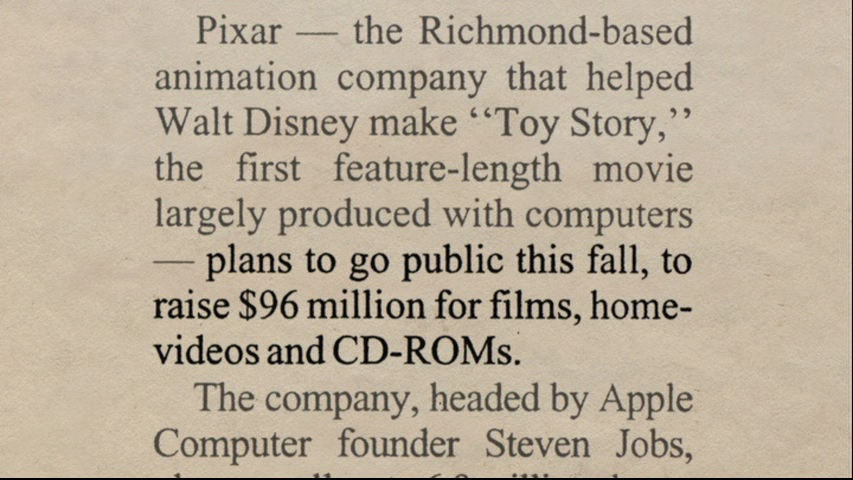
This newspaper article around the time Pixar went public described the reason for the need to become a studio, one that would be addressed in the extended contract

“We got the money in the bank, and then shortly after, Disney came to us and said, ‘We want to extend the contract.’ And Steve [Jobs] said, ‘Okay, we will extend it if we can be fifty-fifty partners.’ And they said, ‘Okay, we’ll do that.’” – Ed Catmull

After the success of Toy Story, which provided more income to the once-struggling Pixar Studios, a new agreement was signed on February 24, 1997, for a new five-film deal. This deal gave Pixar more of an equal share of the assets from their films. This extended deal only served to further prove that Pixar had something amazing to offer Disney and the film industry in general.

When Pixar signed the first three-film contract with Disney in 1991, the studio was cash-strapped and needed the deal, so they had agreed to a 10 to 15 percent share of their films’ profits so that Disney would fully finance the films. This left most of the profits and merchandising with Disney. “Financially, if one film did not do well,” Steve Jobs explained about the first contract, “we would be wiped off the face of the planet.” Jobs began to push Michael Eisner for a new contract a few months after the release of Toy Story, when he was confident in the film’s success both commercially and as a groundbreaking achievement for Pixar. Jobs realized at that point that Pixar needed to become a studio, instead of a production company, and to accomplish this, they would need capital. Their best option was to go public, and Pixar became the highest initial public offering (IPO) of 1995.

The success of Toy Story helped to make Pixar's IPO the highest of the year

Toy Story had given Pixar a massive success, and with the added bonus of their IPO, Pixar was able to co-finance their films, work on getting a higher percentage of the films’ profits, and get the proper credit for their work. Jobs offered Eisner the one bargaining chip he had: more films. Eisner could not say no, and in 1997, Pixar’s Chief Financial Officer, Lawrence Levy, and the similar representative for Disney, Robert Moore, signed a 42-page contract for five feature films (the first one being A Bug’s Life, which was beginning production and still known as Bugs), in which the production costs would be split 50-50, and Pixar would receive 50 percent of the profits, along with home video and tie-in product receipts, and equal advertising with Disney for the films. When Jobs and Eisner announced the extension of the contract, the Pixar stock jumped 50 percent.

February 12

February 12, 1993 – Homeward Bound: The Incredible Journey is Generally Released to Theaters

“It’s my responsibility. I had a responsibility to Sassy to love her and protect her, the same as I have to you, and to Peter, and the same as you have to Jamie.”

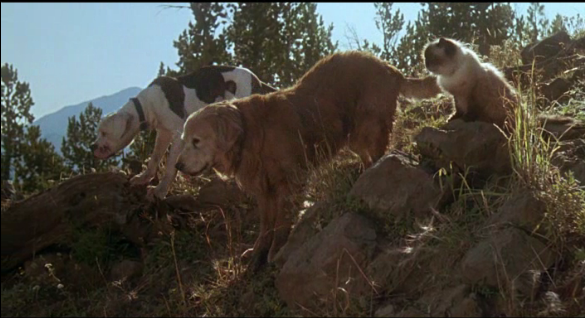
On February 12, 1993, the Walt Disney Studios had their general release of the family film Homeward Bound: The Incredible Journey. The film is a remake of the 1963 Disney film The Incredible Journey, which in turn was based on the best-selling book by Sheila Burnford. The story is of three pets – Chance, an American bulldog puppy; Sassy, a Himalayan cat; and Shadow, a golden retriever – who, afraid they’ve been abandoned by their owners, begin a journey back to their home through the California wilderness. Although the film was set in California, the filming was done in eastern Oregon. In contrast to the original film, the animals in the film speak, although this is one of the rare films were the animals mouths are not made to move in synchronization with what they say. The film stars Michael J. Fox as the voice of Chance (and the narrator of the film), Sally Field as the voice of Sassy, and Don Ameche as the voice of Shadow.  The film also stars Robert Hays as Bob Seaver, Kim Greist as Laura Seaver, Benj Thall as Peter Seaver, Veronica Lauren as Hope Seaver, and Kevin Chevalia as Jamie Seaver. It was directed by Duwayne Dunham, with the screenplay by Caroline Thompson and Linda Woolverton.

The film opens with Chance explaining his past: he was abandoned as a puppy, left to fend for himself on the streets before getting caught and sent to the pound. He was adopted by the newly combined Seaver family (Bob Seaver married Laura, a widow with three children). Chance calls it the place where he got his second chance, and his name; where he was provided with “lots of space, fresh air, plenty of interesting things to explore, and all the underwear [he] could eat.” He introduces the two other pets, Sassy the cat, and Shadow the dog, as well as their humans. Chance explains that the daughter Hope belongs to Sassy, the youngest boy Jamie belongs to Chance (although Chance explains that he doesn’t really need anybody), and Peter, the eldest, belongs to Shadow.
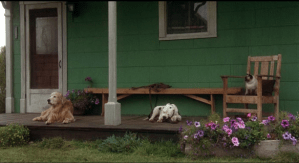
The pets on the porch of Kate's ranch. Shadow (L) eagerly awaits Peter's return, while Chance (M) believes they've been dumped.

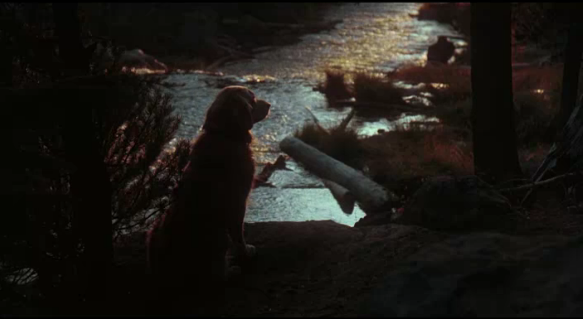
The family must go to San Francisco for a little while, leaving the pets behind with a family friend named Kate at her ranch. Peter is not happy with having to leave Shadow behind, asking his new stepfather Bob, “What if he thinks I’ve abandoned him or something?” Bob responds that the time will pass before they know it, and everything will be okay. The pets, however, don’t understand what’s going on: Chance believes they’ve been abandoned, but it doesn’t seem to faze him much, since it had happened to him before. Kate leaves to go on a cattle drive, leaving a note behind for her neighbor about taking care of the pets, but part of the note falls under a table, and the neighbor mistakenly believes Kate took the pets with her. Shadow senses that something is wrong, and decides that he has to get back to Peter. “Something is keeping Peter from coming to me, so I’m gonna go to him,” he explains, and jumps the fence. Sassy follows him reluctantly, and Chance only follows, as he’s been chased by a turkey most of the time on the ranch, and decides to go where it’s turkey-less. “And so began the most perilous journey of our lives,” Chance narrates.

Shadow reassures the two that home is just over the mountain, but when they look over, they notice only more mountains and an expansive wilderness. But they continue, with Chance beginning to admire Shadow’s unwavering faith in Peter. As they begin, they have many brushes with nature, including a skunk and a protective mother bear. When they reach a river, Shadow and Chance have no problem swimming across, but as Sassy tries to climb a log to get to the other side, the log falls, sending Sassy traveling with the current. Although Shadow and Chance race along the riverside and Shadow tries to go into the river to catch her, Sassy ends up going over the waterfall into the rapids. The two dogs wait overnight to see if she’ll come out alive, with Shadow blaming himself for letting Sassy drown. The next morning, Shadow bids Sassy farewell, and the two continue on their journey. A birdwatcher in the woods, however, comes across Sassy washed up on the shore, and takes her in, cleaning her up and feeding her.
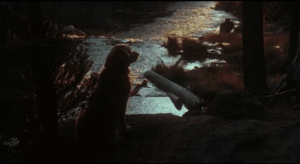
Shadow sits near the waterfall, blaming himself for what he believes is Sassy's death

Kate comes home to find that her neighbor believes she took the pets with her, and panics, having to call the family and let them know that the pets are gone. The children are devastated, and Peter blames Bob for making them go to San Francisco and leave the pets behind. Meanwhile, the two dogs come across their next challenge: a mountain lion has been following their tracks. Inspired by the time Chance used a see-saw to catapult Sassy in the backyard, Shadow comes up with a plan to send the lion flying, throwing it into the river. Their triumphant barking alerts Sassy, who is nearby with the birdwatcher, and she runs in their direction, with the three reuniting.

The three run across a lost little girl in the woods, and decide to watch over her during the night, while a search party wanders around, calling out the little girl’s name. In the morning, Shadow hears their calls and alerts them to where the girl is. The rangers with the search party recognize the pets from the posters Bob has made, and decide to take the pets with them to a nearby animal shelter. They alert the family that the pets have been found, but Chance thinks he’s being sent back to the pound and panics, causing Sassy to escape. She comes back to help Shadow and Chance break out, and they run away just as their family is on their way.

The pets look down on their hometown, relieved that they are so close to their family

The pets see home just over the top of a mountain, and travel through train depot, carefully crossing over the tracks, when Shadow falls into a hole as the beam he walks across breaks. At first Chance and Sassy think he may have died from the fall, but he wakes up and tries to walk, finding out his leg is badly injured. The two try to coax Shadow out of the hole, but the walls are slick with mud, and eventually, with the answer that he’s just too old, Shadow lies back on the ground and gives up. Chance tries to tell him that they need him, but Shadow says the only thing they need is to learn to say goodbye.

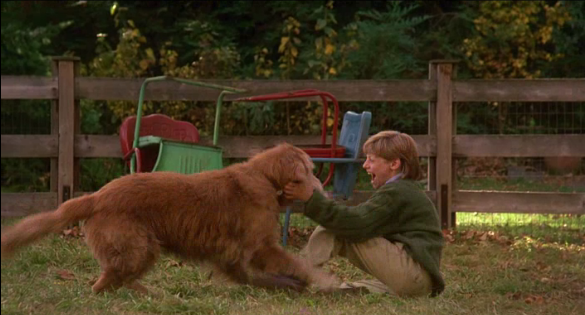
Later, when the family has returned home, still mending from what they believe is their loss, Jamie hears barking in the backyard. He calls out Chance’s name, and Chance comes over the hill, running to Jamie. Sassy appears next, running to Hope. Peter waits for Shadow to appear, but doesn’t see him, and angrily states that Shadow was just too old. Just as he turns to go in the house, a limping Shadow appears, and begins running to make his way back to Peter. Safe and sound, Chance realizes that here, he has the things he never knew he needed: a family, friends, and a home filled with love.
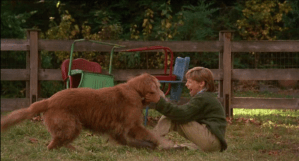
The joyful reunion of Peter and Shadow