RSS Feed

Tag Archives: 1940s

January 19

January 19, 1949 – So Dear to My Heart is Released to Theaters.

“The greatest wealth a man may acquire is the wisdom he gains from living.”

A film brimming with nostalgia and turn-of-the-century charm, So Dear to My Heart was released to theaters on January 19, 1949, by RKO Radio Pictures. Based on the book Midnight and Jeremiah, by Sterling North, the film is about a boy named Jeremiah Kincaid, who trades his dreams of raising a prize-winning horse for the goal of raising a black lamb named Danny to be a champion at the county fair. The film was directed by Harold Schuster, with screenplay by John Tucker Battle. The cast includes Bobby Driscoll as Jeremiah Kincaid, Beulah Bondi as Granny Kincaid, Burl Ives as Uncle Hiram, and Luana Patton as Tildy, with John Beal providing the narration as the older Jeremiah.

The story opens in an attic, where the audience is taken inside an old scrapbook, observing the seasons and essentially going back in time to an old farm in 1903. The community, especially Jeremiah, is excited that the train stopping in their town contains the famous racehorse, Dan Patch. Jeremiah dreams of raising a horse just like Dan Patch, and he tries to convince Granny to trade their old mule for a mare, for “If we had a mare, we could get a colt,” Jeremiah argues. However, he changes his mind when he helps Granny take care of the new lambs in the barn. Twin lambs had been born: one black, and one white. When the mother shuns the black lamb, Jeremiah wants to adopt it, to which Granny tries to convince him otherwise but she finally agrees to let him keep it when she sees the affection Jeremiah has for the creature.

One of the examples of how much Jeremiah cares for Danny.

The lamb, now called Danny (after Dan Patch), causes nothing but headaches for Granny, breaking screen doors and rocking chairs, and Jeremiah is so consumed with taking care of Danny that he neglects his chores. Fortunately, Jeremiah has a strong ally in his Uncle Hiram, who tries to convince Granny to let Danny compete for the blue ribbon at the county fair. Uncle Hiram’s isn’t able to convince her, however, so Jeremiah plans to raise the money to pay for travel to the fair on his own by finding a bee’s hive and selling wild honey. Jeremiah and his friend, Tildy, find the hive and with Uncle Hiram’s help, bring back two tubs full of wild honey.

Burl Ives (L) as Uncle Hiram, Bobby Driscoll (C) as Jeremiah Kincaid, and Luana Patten (R) as Tildy.

Just as things are looking up for Jeremiah, he arrives home to find that Tildy accidentally let Danny escape into the woods and is unable to find him. Jeremiah runs out looking for him during a dangerous thunderstorm, but is dragged home by Granny. As Jeremiah sulks in bed, Granny begins to lecture Jeremiah on how he no longer loves the lamb, but the material things the lamb could provide: money and blue ribbons. Granny adds that God may not provide Danny mercy throughout the night, telling him that “the Lord giveth, and the Lord taketh away.” The next morning, Jeremiah leaves at daybreak, and finds Danny, who had curled up in a log to survive the night. After he returns to the farm with Danny, he tells Tildy that they aren’t going to the fair, causing her to cry. When Granny questions him, he sheepishly tells her that he made a promise to God that if He would keep Danny safe through the storm, he wouldn’t go to the fair. Granny, touched by this turnaround in Jeremiah’s attitude, declares that she prayed that if God kept Danny safe, they would go to the fair, and since she’s known God longer, He wouldn’t mind if they go. And so the family heads off to the fair, with Danny groomed and looking impeccable, with Jeremiah certain that Danny will win the prize. The ending of the film is one of the most charming endings in Disney’s live-action film history.

The film itself is a mixture of live-action and animation, with the animation providing bookends to live-action segments rather than being interwoven in the film. The animation sections are interesting segments in themselves; a character named the Wise Old Owl, who provides some spirited advice, gives lessons of perseverance through the biblical stories of David and Goliath, and the walls of Jericho, as well as the historical stories of Christopher Columbus and Robert the Bruce. Although the animated sequences may seem a bit intrusive to the overall film, Walt Disney once explained that he “saw the cartoon characters as figments of a small boy’s imagination, and I think they were justified.”

One of the animated scrapbook segments from the film, acting more as Jeremiah's imagination than reality.

The music for the film doesn’t stand out as it would in a true movie musical, but it establishes the time period in which the film is set. Uncle Hiram, played by Burl Ives, provides many amusing ad-libbed songs. The opening song, “So Dear to My Heart,” was written by Ticker Freeman and Irving Taylor; “County Fair” was written by Robert Wells and Mel Torme; “It’s Watcha Do with Whatcha Got” was written by Don Raye and Gene DePaul. “Ol’ Dan Patch,” “Lavender Blue (Dilly Dilly),” and “Stick-to-it-ivity” were written by Eliot Daniel and Larry Morey. The song “Lavender Blue (Dilly Dilly),” based on an old English folk song, was nominated for the Academy Award for song in 1949, but lost out to “Baby, It’s Cold Outside” from Neptune’s Daughter.

Bobby Driscoll and Luana Patten were under contract with Disney, having already done the film Song of the South for the company. Driscoll himself received many positive reviews for his performance, and was awarded a special Academy Award as the “Outstanding Juvenile Actor of 1949” for his work in this film, and the non-Disney film The Window.

Luana Patten (L) and Bobby Driscoll. They were the first two contract players for the Walt Disney Studios; this was their second film together.

An interesting fact about this film concerns animator Ward Kimball: an avid railroad enthusiast, he was given the train station used on set and installed it at his Southern California home, where he would surprise the neighbors by driving around in his full-size train.

Overall, the film is a gem in the Disney library, and one that should not be missed. Because of uncertain marketing in 1948, the film didn’t make a huge profit, but it received highly positive reviews, and still shines with the well-known Disney charm.

January 15

January 15, 1943 – Education for Death is Released to Theaters

“He sees no more than the party wants him to; he says nothing but what the party wants him to say; and he does nothing but what the party wants him to do.”

Surely the grimmest film the studio produced during World War II, Education for Death: The Making of a Nazi, was premiered in theaters on January 15, 1943. Based on the bestselling book by Gregor Ziemer, the short was directed by Clyde Geronimi and principally animated by Ward Kimball. It was narrated in English by then-popular radio personality Art Smith; however, the dialogue in the short is in German. This helps to provide a sense of distance between the viewer and the characters, further heightening the fear of the Nazi doctrine in Americans. Disney Legend Joe Grant said that by making the short, the studios hoped to make it “visible to people what was going on. And you couldn’t do it in a better way than with the graphics in a cartoon. It wasn’t a cartoon, it was actually an editorial. I think it did the job.”

The story centers on a young German boy named Hans, and how he grows up in this new Nazi order, becoming a brainwashed believer of the Nazi ideology. The story begins with Hans’ parents standing in front of a soldier, registering their child’s birth. They present birth certificates dating all the way back to their great-grandparents, proving that they are pure Aryan. The mother wishes to name her child Hans, which, fortunately, is not on the forbidden name list (which includes Franklin and Winston as its top two forbidden names). The parents are then given a hereditary passport, with twelve lines, giving them “a subtle hint that Germany needs soldiers.” As a reward for giving birth, the couple is given a copy of Germany’s bestseller, Mein Kampf.

The hereditary passport: note Hans' name at the top, with more room for future names. His mother was expected to produce a large family for Germany's sake.

The next segment is of one of the doctored fairy tales presented to Hans in kindergarten. As this film was shown to general audiences, the animators tried to present at least one moment of humor in this otherwise dark film. The fairy tale in question is the story of Sleeping Beauty, with the Wicked Witch representing democracy, vanquished by the Prince (Hitler) before he wakes the Princess (Germany) with a kiss. The Princess, however, is anything but beautiful; instead, she is portrayed as an obese Wagnerian woman holding a stein and able to sing only the words “Heil Hitler!” “Prince Hitler” is anything but dashing: He struggles to carry Germany and barely manages to plop her on his horse (with a little comedic help). The moral of this story, the narrator tells us, “seems to be that Hitler got Germany on her feet, climbed into the saddle, and took her for a ride.” It could be argued that the comedy was so strong here to show the audience the absurdity of what German children were being taught in schools.

The caricatures of Germany as the Princess, and "Prince Hitler," taking Germany for a ride.

The most emotional part of this short is the classroom scene. The students begin their day giving a pledge to a portrait of Hitler that they will fight, obey, and die for their Fuehrer. The classroom also has portraits of Hermann Goering and Joseph Goebbels (also slightly caricatured for comedic effect, although the effect is very subtle). The teacher then gives the class a lesson in “natural history,” in which a fox chases a rabbit, corners the poor creature, and devours him. When asked what his thoughts are on the subject, Hans answers, “The poor rabbit.” The teacher is furious, calling Hans an idiot, and making him sit in the corner with the dunce cap while the students are encouraged to mock him and laugh at him. The poor boy thinks he has disappointed the Fuehrer and Herren Goering and Goebbels with his answer. The teacher asks for the correct answers, which include:

The world belongs to the strong!

And to the brutal!

The rabbit is a coward and deserves to die! We spit on the rabbit!

These answers fire up Hans, who, when asked again for his opinion, declared tearfully that he hates the rabbit, and that the world has no room for weaklings. “This lesson is the basis for the Nazi creed,” the narrator declares, “for Germany will likewise destroy all weak and cowardly nations.” The film then switches to scenes of book burning and desecration of churches, with the Bible being replaced by Mein Kampf, and the crucifix being replaced with a sword bearing the swastika. The short ends with Hans marching along in Nazi lockstep, and we watch as he grows up, still heiling and marching.. “In him,” we are told, “is planted no seed of laughter, hope, tolerance, or mercy. He sees no more than the party wants him to; he says nothing but what the party wants him to say; and he does nothing but what the party wants him to do.” The soldiers are all seen with blinders, muzzles, and heavy chains around their necks. The ending of this short is one of the bleakest endings ever put on film.

Wearing blinders, muzzles, and chains, these boys have become perfect unquestioning soldiers for the Nazi warped ideology.

The short is highly staged for dramatic impact, using shadows and silhouettes to highlight the threat the party imposed on the characters. The film was meant to shock and appall audiences, and suffice it to say, the animators did their job well. This short is still an effective piece of propaganda—spreading ideas or information to further or damage a cause—meant to show the American public what Nazism was and why we were at war with Germany. While touches of humor provided small breaks between the grim messages, the film still got its point across and served its purpose well.

January 1

Welcome to 2012, the first post of the year as well as the first post of the blog! Of the many areas I could have spoken about today, I could not decide between these two. Read and enjoy!

January 1, 1904 – Birth of Disney Legend Grace Bailey

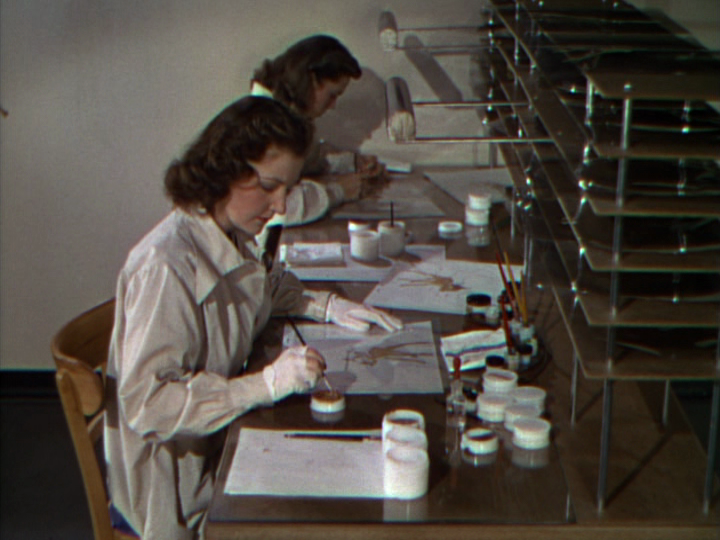
Disney Legend Grace Bailey Turner, born Elizabeth Grace Randall, is known for her work in the Ink and Paint department. She began working at Walt Disney Studios in 1932, rising through the ranks of the department to painting supervisor, then inking supervisor, and finally head of the department in 1954. She held this position until she retired in 1972, after 40 years of work with the company. She died on August 23, 1983, and was inducted posthumously into the Disney Legends on October 12, 2000.

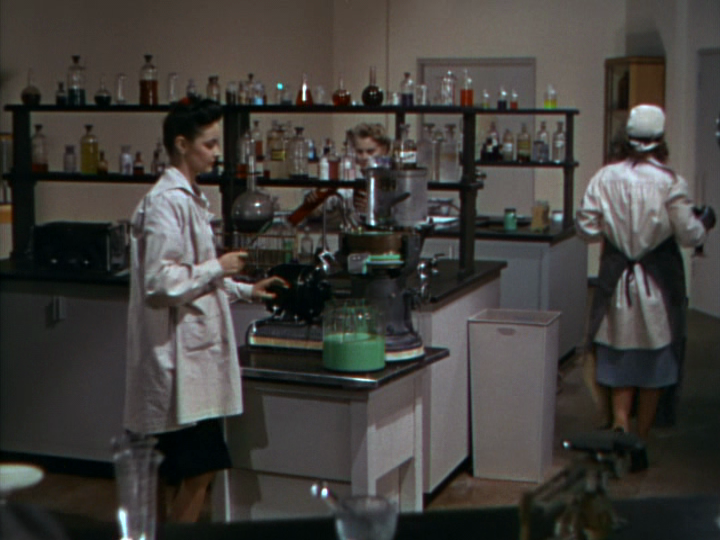
After the success of Flowers and Trees, Disney’s first Technicolor animated short, Bailey was tasked with the important duty of expanding the studio’s catalog of colors. Walt had made a deal with Technicolor to have exclusivity of the three-color process in animation for two years, and one can only imagine the challenges Bailey faced when dreaming up new colors. Betty Kimball, former Studio painter, said in an interview that “[e]verything was so unscientific back then. We were just creating, and it was fun.”

I was rather excited that my first post could be on Grace Bailey, for several reasons. Firstly, many people voiced complain that there are no important women in Disney’s history – my answer is that they’re not looking hard enough. Although the Ink and Paint Department was mostly, if not all, women, this does not mean their work was thought of as any less important. After watching scenes from The Reluctant Dragon, it’s easy to see that there was a lot of work that went into mixing and creating the new hues to bring animation to a higher level. The Ink and Paint department was highly important when it came to an animated film: inking could take about 12 months to learn properly, and one had to be very precise to preserve not only the animator’s original drawing, but also the emotion the animator wished to invoke.  To say that women did not have an important role, or that there were hardly any important women, seems to ignore all of the work these women did. Bailey was an important part of Disney history, and I’m proud to put her in the spotlight today.

January 1, 1943 – Release of Der Fuhrer’s Face to Theaters

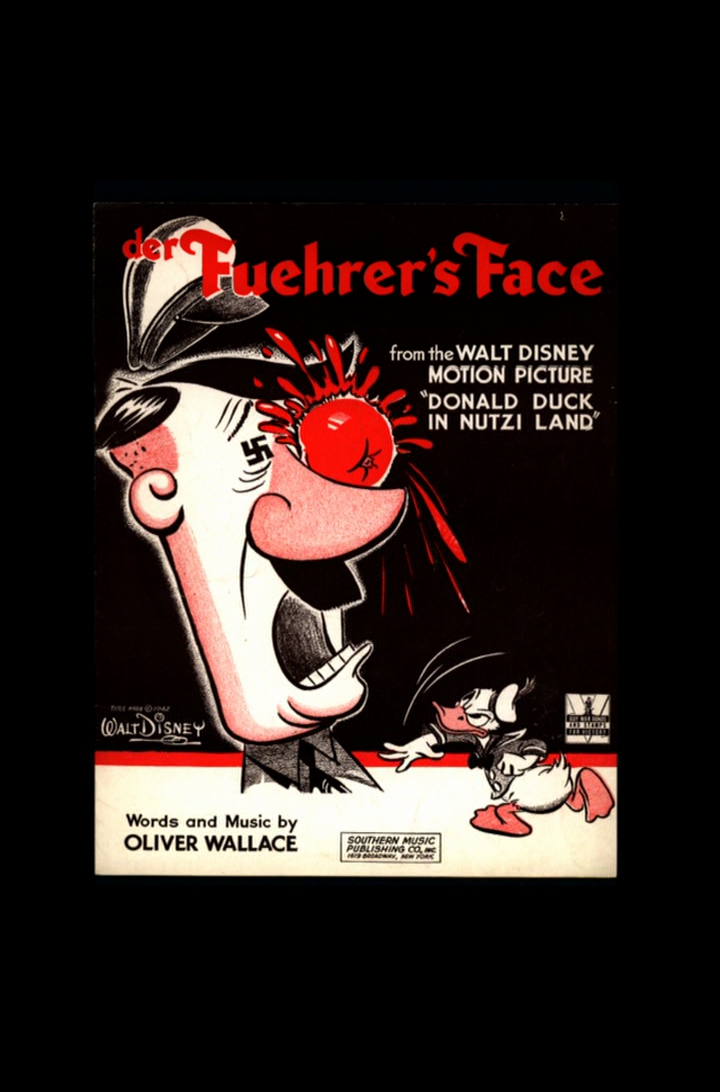
A prime example of homefront propaganda from World War II, Der Fueher’s Face was released to movie theaters on January 1st and was not only immensely popular, but it also won the Academy Award for Best Animated Short Film at the 15th Academy Awards. Directed by Jack Kinney, the short, in which Donald Duck has a nightmare that he resides in a country controlled by the Nazis, was originally called Donald Duck in Nutzi Land. The name was changed, however, when the title song for the short, written by Oliver Wallace, became a runaway hit after a record by Spike Jones was released (although the film preceded the record). According to Disney Legend Joe Grant, the short was inspired by the Charlie Chaplin film, Modern Times, especially the scene with Donald working on the belt line.

In this excerpt from the introduction to the short, film critic Leonard Maltin explains:

“It’s easy to see why the film was so popular. It’s very, very funny, reducing the serious tenets of Hitler’s Nazism to slapstick absurdities. And it gave audiences a chance to think, as Donald does, about the freedoms they might have taken for granted.”

As was common of propaganda films of the time, there are caricatures of Hirohito, Mussolini, and Nazi soldiers. This was a common tactic that is still seen today: the enemy is mocked to reduce the public fear and make the enemy less fear-inspiring. It was a good way to allow panicked Americans at that point a chance to laugh in the face of their fears.

One rumor that persisted about the film is that it was banned from being released to the public after the war. While the short was kept out of general circulation for many years because of its propagandistic content, it was released on the DVD set On the Front Lines in the third wave of Walt Disney Treasures, and was released again on the DVD set The Chronological Donald, Volume Two.

I find the work of the Disney Studios during WWII fascinating, from the propaganda shorts to the training films. All of these films helped Americans through their fear with laughter, and encouraged them to buy war bonds and support the troops through other methods. This short in particular conveys the message that Americans needed to be thankful for the freedoms they had and understand why they were fighting. America had been trying to stay out of the war until Pearl Harbor; these films helped rally the American Spirit.

One thing that also interests me about this short is the use of Donald Duck. Donald was an international star at this point, received well all over the world. Donald’s character works well for this kind of satire. His inability to keep from muttering under his breath as he deals with the insanity of Nutzi Land suits the story and creates a more humorous impact than if the usually cheerful, uncomplaining Mickey Mouse had been the main character. Audiences would have been sad to see our favorite mouse in Hitler’s clutches.

With grumpy, grousing Donald as the main character, Der Fueher’s Face allowed audiences to find humor in the face of fear.