RSS Feed

Tag Archives: 1920s

November 18

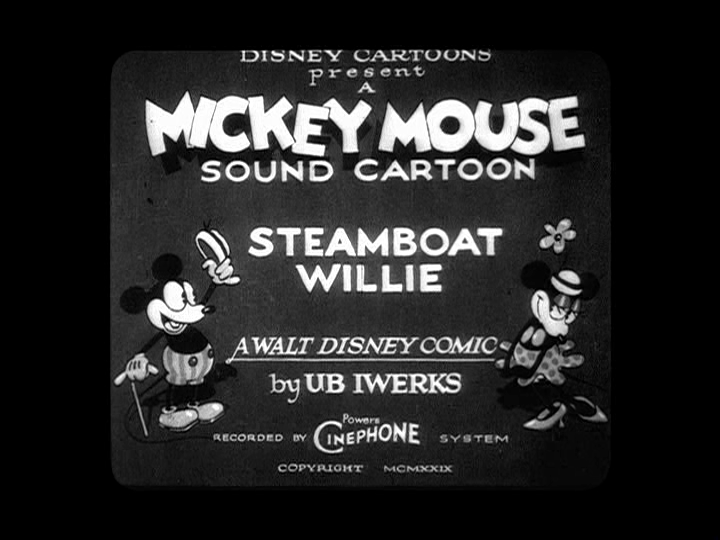
November 18, 1928 – The First Mickey Mouse Short Film, Steamboat Willie, Premieres
“I only hope that we never lose sight of one thing – that it was all started by a mouse.” – Walt Disney

On November 18, 1928, the first Mickey Mouse short film, Steamboat Willie, premiered in theaters. Not only is it notable for being the first Mickey Mouse short film released (although not the first Mickey Mouse short produced), but it is also notable for being one of the first cartoons with synchronized sound, and the first to have a fully post-produced soundtrack. When Walt Disney was unable to get a deal with RCA or Western Electric for the film, he turned to Pat Powers and his bootleg Powers Cinephone process. The initial recording session was a disaster, which ended with Disney hiring a 15-piece band to play, and Walt Disney voicing all of the characters. The film’s title was a parody of a Buster Keaton film called Steamboat Bill Jr. The Disney film premiered at the Colony Theater in New York, and was an instant success, skyrocketing Mickey and the Disney Studios to stardom.

A steamboat is heading down the river, with Mickey at the wheel, whistling a “Steamboat Bill.” Pete appears behind him, yells at him for taking control of the boat, and sends the mouse flying onto the lower deck. The boat reaches Podunk Landing and the cargo is loaded quickly. A frantic Minnie Mouse sprints to catch the boat before it leaves, only to just miss it. Luckily, Mickey hears her cries and uses the hook on the boat to bring her aboard. She drops her guitar and sheet music, which is soon devoured by a nearby goat.
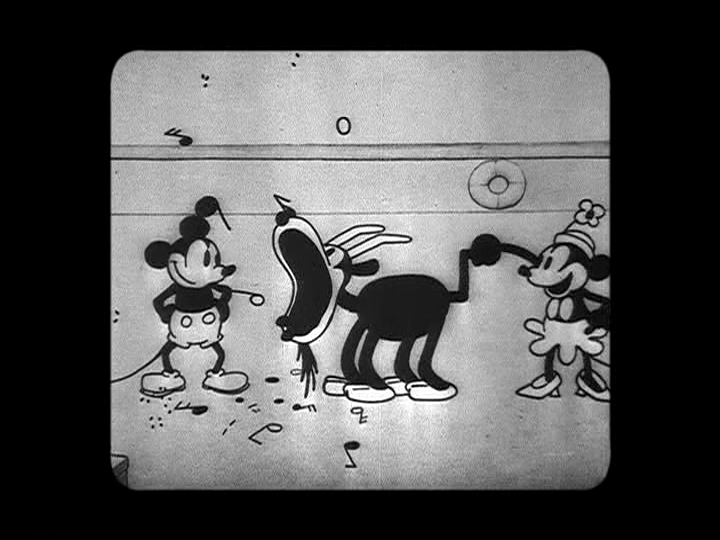
After the goat eats Minnie’s sheet music, the two use the goat to play the tune “Turkey in the Straw”

As Mickey tries to pull the guitar away from the goat, he and Minnie come to the conclusion that the goat can be worked like a turn-crank record player. Using whatever materials he can find, including an animal menagerie, the two begin their own rendition of “Turkey in the Straw.” After the performance, Mickey turns around to find Pete waiting for him angrily, and is sent to the galley to peel potatoes.
October 30

October 30, 1929 – The Silly Symphony Short Film Hell’s Bells is Released to Theaters

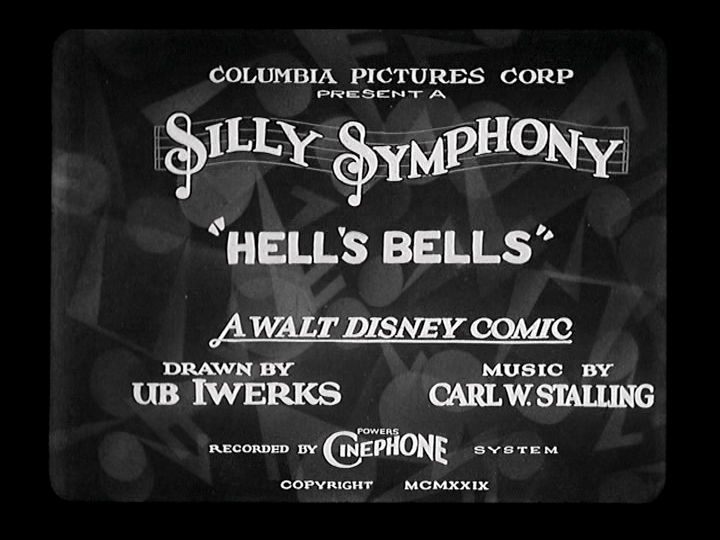
On October 30, 1929, the Silly Symphony short film Hell’s Bells was released to theaters. The short was drawn by Ub Iwerks, and is also notable for being Iwerks’ first foray into directing. The music for the short was done by Carl Stalling; the piece heavily featured in the short is “Funeral March of a Marionette” by Charles-Francois Gounod.

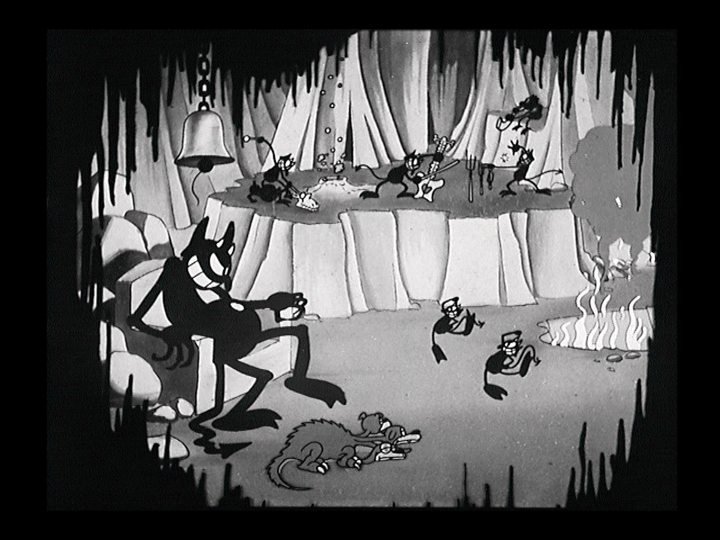
The short first erupts into a blaze of fire, which reveals an underground cavern populated by bats, spiders, and other strange creatures that introduce themselves to the camera one by one. Satan is then seen sitting in his chair, being entertained by dancing musical demons, who use skulls, volcanoes, and even each other to create the music. A troupe of demons also dance around merrily, with comical results. Satan claps with delight before ringing a bell, alerting the other demons to bring their master dinner.

Satan sits on his throne, listening to the entertaining music performed by his minions

After enjoying his dish, Satan grabs a demon and feeds him to his three-headed dog, laughing at the result. He tries to grab the other demon to feed his pet, but the demon manages to escape Satan’s grasp, sending him flying into the fiery pits below.

October 17

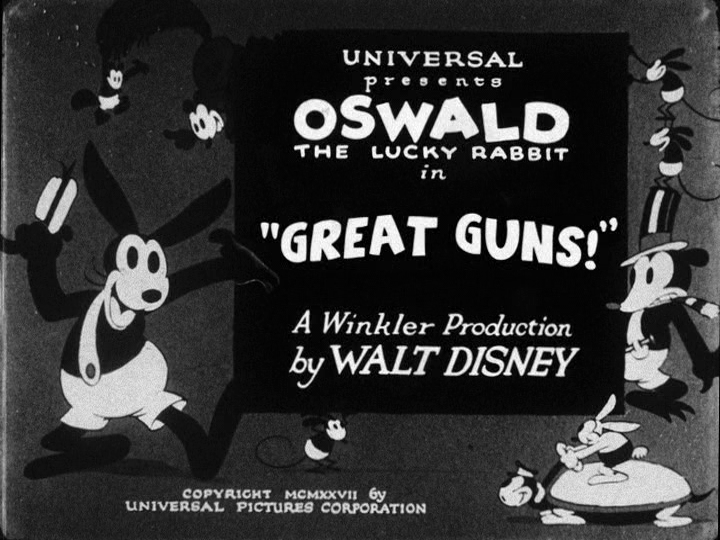
October 17, 1927 – The Oswald the Lucky Rabbit Short Film Great Guns! is Released to Theaters

On October 17, 1927, the Oswald the Lucky Rabbit short film was released to theaters. It was the fourth Oswald cartoon released by Disney.

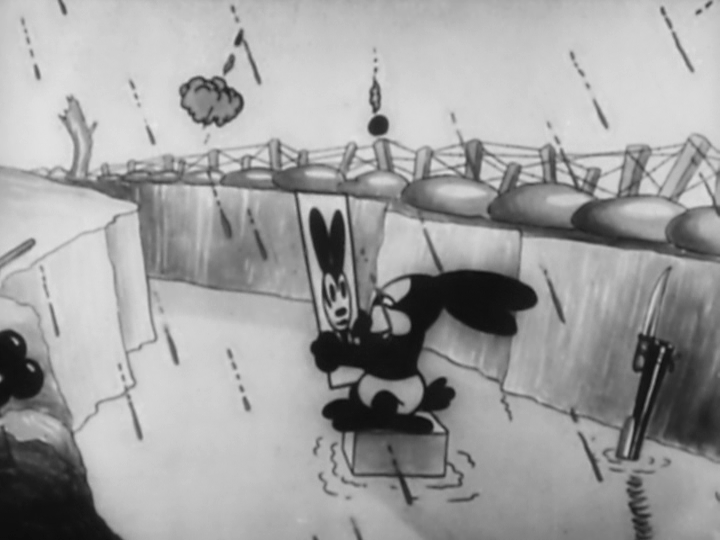
A newsboy runs down the street, holding up a newspaper with the headline of war. The factories’ whistles and bells sound, and everyone rushes to the recruiting office, including Oswald. He stops in front of his girlfriend’s house, calling to her, and as she comes out, she marvels at how impressive he looks as a soldier. As the trumpets sound, the two share one last kiss before he leaves. The scene soon changes to Oswald kissing a photo of his girl while stuck in a trench, bombs flying everywhere.

Oswald distracts himself from war by kissing the picture of his girlfriend while stuck in a trench

Cannons are shooting from all around, and neither side can get over the walls of the trench. Oswald seems oblivious to all the warfare as he continues to kiss his girlfriend’s picture, which annoys a pilot flying overhead. To get Oswald’s attention, he drops a bomb so that it tears a hole right through the picture. Maddened, Oswald gets in his own plane and chases after the pilot. The two fight in the air before crashing to the ground and continuing their fight with their fists. As Oswald gives the other pilot a good thrashing, he is stopped by a high-ranking officer for the other side, and sheepishly tries to walk away.

The officer chases Oswald, and tries to blow the rabbit up with a cannon – only to find that it is too short range. Thinking quickly, Oswald uses an elephant nearby as a cannon to fire back at the officer. Unfortunately, the elephant is blown to bits, leaving Oswald vulnerable again, but not for long, as he bats back the cannonballs with his ears.  Oswald himself is soon blown to smithereens, but his girlfriend shows up as an army nurse and uses a martini shaker to bring him back to his whole self. Oswald revived, the two share a kiss.

September 19

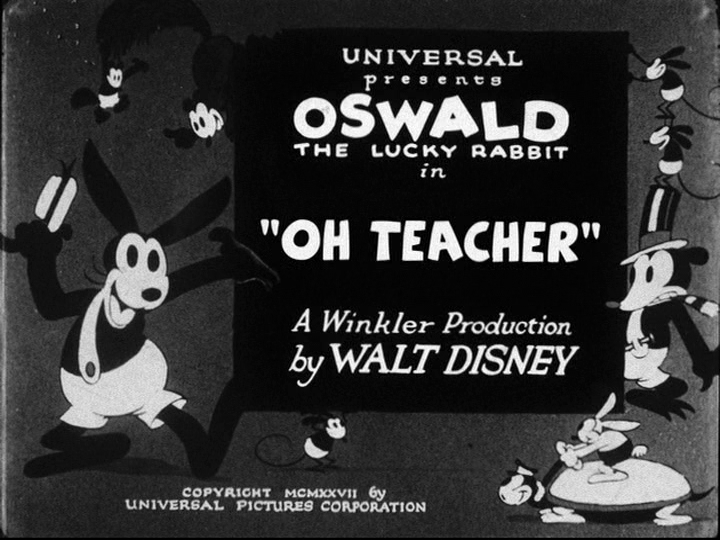
September 19, 1927 – The Oswald the Lucky Rabbit Short Oh Teacher Premieres in Theaters

On September 19, 1927, the Oswald the Lucky Rabbit short film Oh Teacher was released in theaters. It was the second Oswald short released after Trolley Troubles.

Oswald is seen riding his bike, swinging his schoolbooks around on their strap. As he rides by, he picks up a flower and begins to play a game of “She Loves Me, She Loves Me Not,” which turns out in his favor. He stops at his girlfriend’s, letting her sit in the sidecar of his bike, and the two ride off for school.

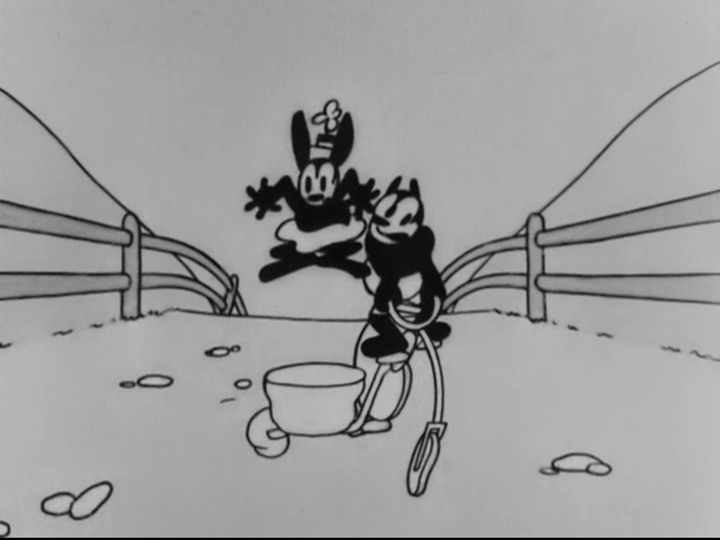
The troublemaker loses control of the bike as it winds down a rocky road

Near the schoolhouse, a mother pig stands with her child, kisses him goodbye, then places him on a hook to be picked up by the school trolley. A troublemaker grabs the child’s tail on the trolley, using it to pull him and his bike along. The conductor gets angry and uses exhaust fumes to brush the kid off. As the troublemaker sits in the middle of the road, he spies Oswald riding down the path, and decides to play a prank, pushing Oswald from his bike. The troublemaker quickly takes control of the bike (and Oswald’s girlfriend), but is unable to control it as it careens down a rocky path.

Oswald chases after the bike, but is unable to stop it as it crashes into a pole, splitting the sidecar from the bike. Oswald’s girlfriend, helpless, is sent on a one-way trip into the river, where she tries to keep her head above water and screams for help. In a clever gag, Oswald uses the cry for “help” to take him to his girlfriend, reaching out to her from the bank. The troublemaker, however, climbs on Oswald and saves the girl, taking the credit for Oswald’s hard work. The girl falls for the troublemaker, and Oswald challenges the troublemaker to a fight, which he loses.

The school bell rings, and all the students march inside. At recess, Oswald waits for the troublemaker to show his face, ready to clobber him. Once again, a fight begins between the two, with Oswald accidentally winning, and having his girlfriend fall in love with him again.

September 5

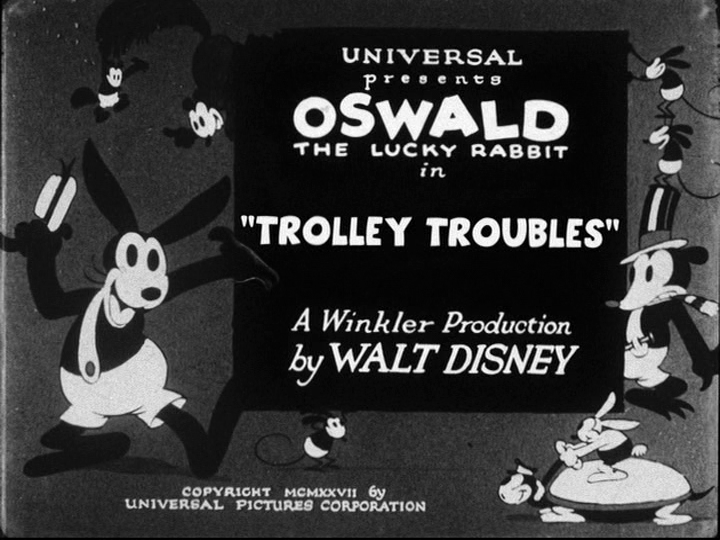
September 5, 1927 – The Oswald Short Film Trolley Troubles is Released

On September 5, 1927, the Oswald short film Trolley Troubles was released to theaters. It is known for being the first appearance of Oswald; an earlier Oswald short, Poor Papa, was rejected for release, as the distributers had expected a different kind of character rather than the older, more heavyset version Disney had produced. Trolley Troubles, however, was a success for Universal, and for Walt Disney and Ub Iwerks.

At the station, Oswald is cleaning up his trolley while children are causing mischief around him. Finally, when the trolley is wound up and ready to go, Oswald chases the kids away, but one kid sneaks aboard as Oswald drives away. Loading up the trolley at the first station he passes, Oswald and his passengers head merrily into town with many track gags along the way.

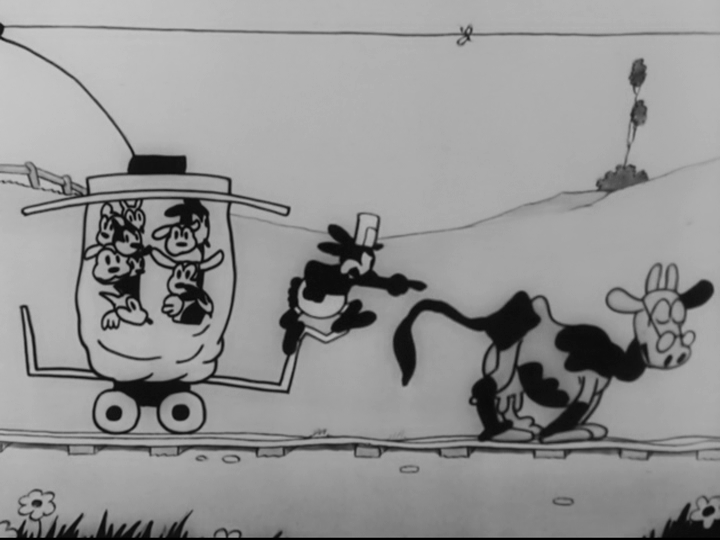
Oswald loses his temper at the stubborn cow standing in the middle of the tracks

At one point, a cow stands in the middle of the tracks, and although Oswald clanks his bell, the cow is undeterred. Oswald shouts at the cow, but the cow ignores him. Oswald then tries to calmly reason with the cow, but the cow still won’t budge. Oswald then backs up the trolley and goes full speed ahead, but fails to knock the cow from the tracks. The cow then steps sideways across the tracks, purposefully blocking the way, but Oswald gets an idea, and has the trolley go under the cow. The trolley passengers laugh at how Oswald has outsmarted the animal.

Oswald finds himself going up a very steep hill, but the trolley is unable to keep going, no matter how much Oswald pulls or pushes it. A nearby goat sees Oswald studying the trolley and decides to head-butt him, which causes the trolley to move. Although initially angry, Oswald gets the idea of using the goat to push the trolley up the hill. The plan is a success, until they realize that the hill is just as steep going down on the other side, and there seems to be no way to slow the trolley. Oswald rushes to pull the brake, but it rips off in his hands.  Passengers fall out at every curve of the track as the trolley goes over and around several hills. Oswald prays for the trolley to stop, and it finally does when it falls off the broken track and lands in the river. Oswald then paddles himself to safety on top of the trolley.

August 22

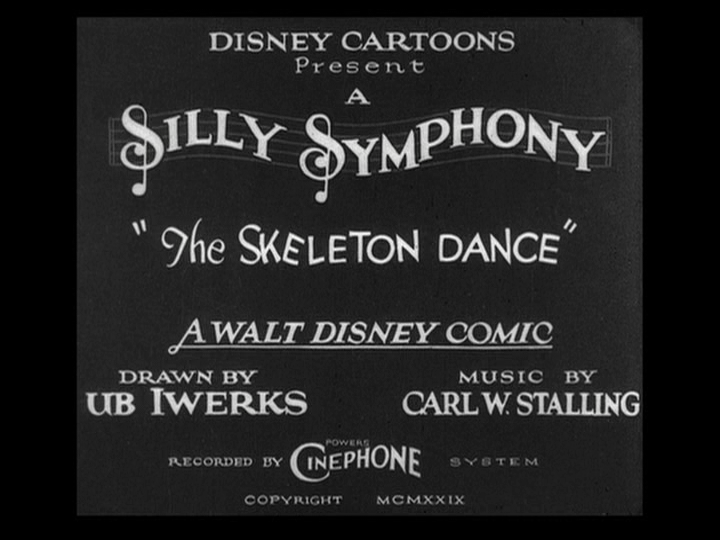
August 22, 1929 – The First Silly Symphony, The Skeleton Dance, is Released to Theaters

On August 22, 1929, the first Silly Symphony, The Skeleton Dance, was released to theaters. After the success of Steamboat Willie, musical director Carl W. Stalling suggested that Walt work on a cartoon series with an accent on music, rather than character. The short was drawn mostly by Ub Iwerks.

On a dark, windy night in a graveyard, the bells toll midnight. Two cats argue as they stand perched on graves, only to be scared out of their wits when a skeleton appears. The skeleton looks around, then begins to skip merrily around the graveyard, only to be scared by the hoot of an owl. He throws his head at the bird, and it bounces back to his hiding place behind a gravestone.

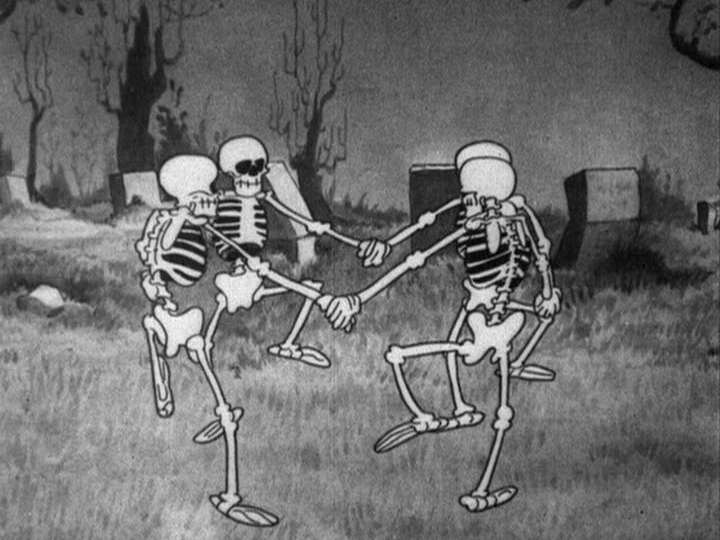
The skeletons come out from the ground for a night of dancing

More skeletons come out to join him, and the four begin to dance as a merry tune is played in the background. One skeleton uses another as a xylophone, playing eerie music on the skeleton’s vertebrae. Another uses a cat’s tail as a sort of cello. After a bit of musical celebration, the rooster crows, signaling that the party is over. The skeletons frantically look around and crash into each other as they dive back into their grave.

July 25

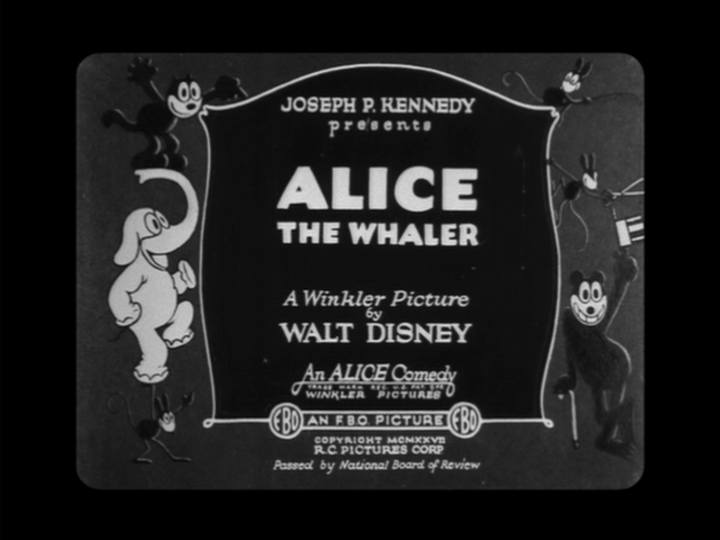
July 25, 1927 – The Alice Comedy Alice the Whaler is Released to Theaters

“Thar she blows!”

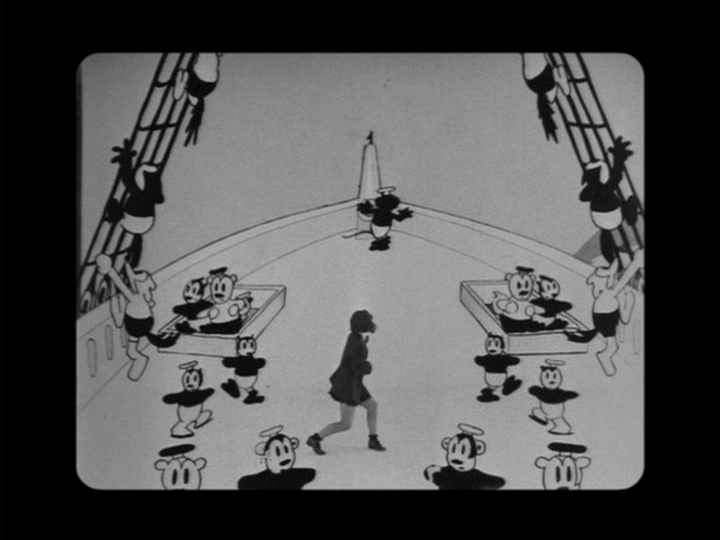
On July 25, 1927, the Alice Comedy Alice the Whaler was released to theaters. This was the third to last Alice Comedy produced by the Disney Studios, and stars the fourth and final actress to play Alice, Lois Hardwick.

It’s a turbulent day at sea, but Alice and her crew are having a merry time on the ship’s deck, dancing and playing sea shanties. One of the members of the crew is doing a wonderful job miming, up to the point where, as he pretends to pull on a rope, he pulls down an anvil that lands smack on his head, which causes Alice to laugh. In the kitchen, members of the crew are hard at work, with the chef capturing the chicken trying to escape from the pot, and a mouse hard at work peeling potatoes. The mouse tries to save the dishes that keep falling out of the cupboard due to the ship’s rocking, but they end up crashing to the floor in a giant mess. When the chef sees the broken dishes, he demands that he head out to get eggs.

Alice and her crew gather to their stations when a whale is spotted nearby

The mouse stands on the top of the mast, trying to catch any of the birds that are flying past, and ends up on the back of one. He smacks it on the head to beat it into submission, and finally gets it to land on the deck. He demands that it lay eggs, but it can’t, until the mouse finds a way for it to do so. Delivering the eggs to the chef, the chef then demands that the mouse go get some milk; when he attempts to beat the mouse for his insubordination, the chef ends up breaking the eggs. The mouse goes to the goat to milk her, but the rocking of the boat makes this a rather difficult task, until the mouse nails the goat’s feet to the floor. Julius, Alice’s feline friend, spots whales frolicking in the waves, and everyone quickly sets to work. The harpoon is let loose, and the whale leaps in pain as it gets caught on the tail. Unfortunately for the crew, the short ends with the ship being dragged across the ocean by the whale.

July 13

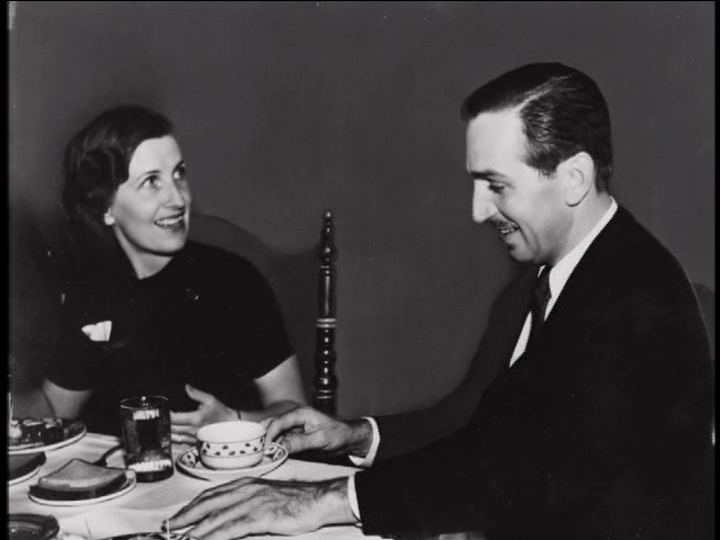
July 13, 1925 – Walter Elias Disney Marries Lillian Bounds

“We shared a wonderful, exciting life, and we loved every minute of it. He was a wonderful husband to me, and wonderful and joyful father and grandfather.” – Lillian Bounds Disney

On July 13, 1925, Walt Disney married Lillian Bounds in a small ceremony at Bounds’ brother’s house, with Lillian wearing a lavender gown. They had a year-long courtship beforehand, with Walt coming by Lillian’s house often, long drives in his beloved Moon roadster, and dinner at Hollywood tearooms, and Walt proposed indirectly by asking Lillian to pitch in to either buy a new car or a ring; when Lillian said that she wanted the ring, Walt (with Roy’s help) bought a ¼ carat diamond on a platinum band surrounded by sapphires for seventy-five dollars. The couple remained married for 41 years, until Walt’s death in 196.

June 25

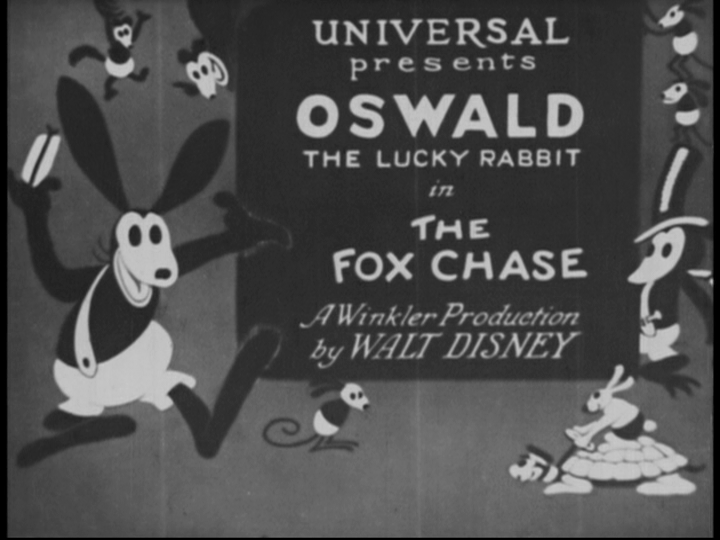
June 25, 1928 – The Oswald the Lucky Rabbit Short The Fox Chase is Released to Theaters

On June 28, 1928, the Oswald the Lucky Rabbit short The Fox Chase was released to theaters. It was the 22nd Oswald short film, and was one of the last Oswald shorts produced by Disney. It was produced at the same time that Walt Disney and Ub Iwerks were working in secret on the first Mickey Mouse cartoon, Plane Crazy. The Oswald short would later be remade as The Fox Hunt in 1931.

It’s the day of the big fox chase, and Oswald seems to be having trouble controlling his horse. The fox in question is standing in front of the dogs, taunting them as they wait behind the starting line. The horn sounds, and everyone stands at attention, waiting for the signal. The gun fires, and everyone heads out.

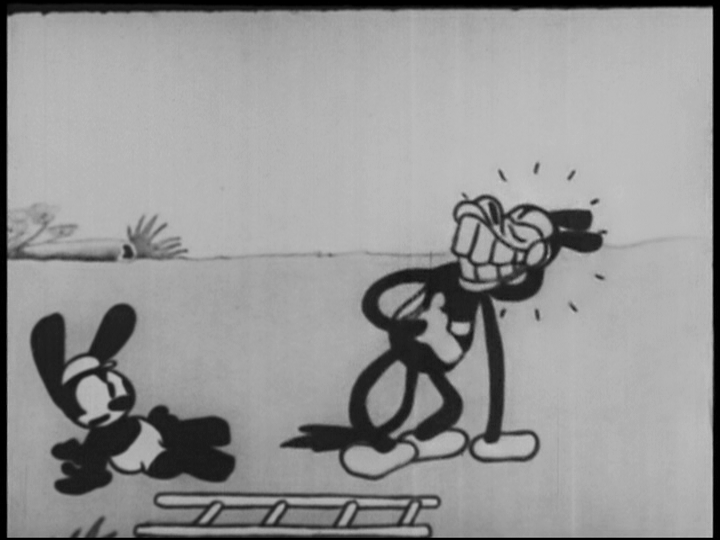
Oswald’s horse has a good laugh at Oswald’s expense while the rabbit is unable to mount

Unfortunately for Oswald, his horse is unable to head out with everyone else, and bucks Oswald off, laughing at the rabbit’s misfortune. As Oswald tries to leap onto his steed, the horse blocks him, and Oswald once again finds himself on the ground. After several failed attempts, Oswald tries to be clever by tying the horse’s tail to a nearby ladder and using it to mount, but the horse foils him again, and Oswald is dragged across the field, still clutching the ladder.

While the fox is having a good time outsmarting the dogs chasing him, Oswald is still trying to mount his horse. The horse finally stops, and Oswald, his legs completely stretched out, is no longer in the mood for games. He finally mounts the temperamental horse and continues with the chase. The fox is still able to outsmart his pursuers, but ends up running right past Oswald, who turns around suddenly. As horse and rider tumble over a stump, Oswald has become the “horse,” with his horse riding him. With another strange turn of events, Oswald then ends up riding one of the dogs chasing the fox, and jumps up and down with joy that he’s almost caught the cunning critter.

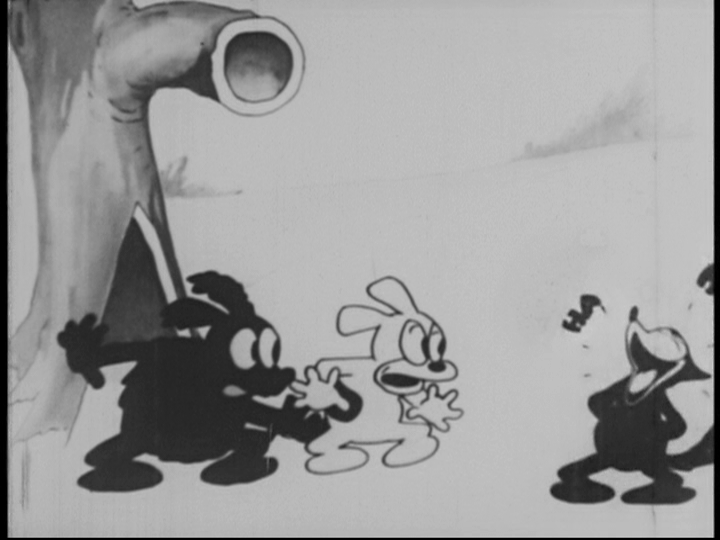
The two dogs that surprise the fox by hiding in the tree are fooled once again, and watch with surprise as the fox laughs at them

Two other dogs spot the fox heading their way and hide in a nearby tree, jumping out as the fox runs by, and all three start fighting. The fox manages to sneak out and laughs at the two dogs’ folly. The fox hides in a log and manages to keep outsmarting the dogs. When Oswald comes along, he comes up with an idea to drive the fox out, only to discover that a skunk has been hiding in the log instead. When Oswald and the two dogs run away in fear, the skunk turns to the audience and reveals that he’s only wearing a costume, and is really the fox, who laughs, as he’s won the chase.

May 28

Posted on

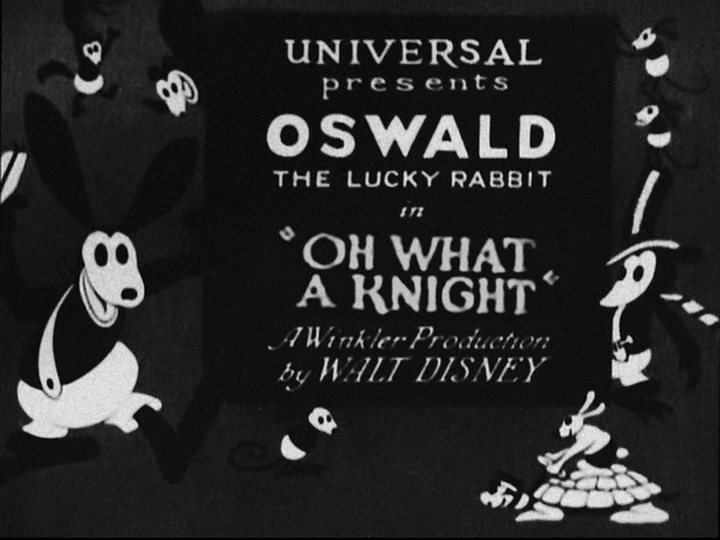
May 28, 1928 – The Oswald the Lucky Rabbit Short Oh What a Knight is Released to Theaters

On May 28, 1928, the Oswald short film Oh What a Knight was released to theaters. The short contains some impressive shadow animation, done by Ub Iwerks, as well as some interesting gags, animated by Hugh Harman and Ham Hamilton. This short was restored by the American Film Institute, and is one of the best preserved Oswald shorts in existence today.

The audience’s first shot of Oswald is with him riding a donkey and playing an accordion rather boisterously. Unfortunately, as the donkey dances to the music, he trips, sending both rider and donkey flying down the side of a hill. The donkey hits a rock right in front of an alligator-filled moat, with Oswald ending up on shore, but the donkey diving straight into the water. The donkey narrowly manages to escape being eaten, but loses his tail in the process; as the alligator laughs at the donkey’s misfortune, the joke ends up on him, as the donkey pulls his tail out to its full length again.

Oswald and Ortensia shyly look away after a steamy kiss, while Ortensia’s father appears looking appalled, unbeknownst to the pair

Meanwhile, Oswald whistles out a tune, which catches the attention of Ortensia the Cat, who stands on the balcony and swoons, sending him a kiss. He offers to play her a song on his accordion, but it is so waterlogged that it will no longer play. With the help of his donkey, Oswald climbs up to the balcony to greet his love, only to have her try to send him away, as she warns him that the king is nearby. He gives her a kiss that makes her swoon once more, only to have the king enter, looking not too terribly pleased. As Oswald attempts another kiss, he falls off the balcony, but is able to comically make his way back so that he may rescue Ortensia.

Inside, Oswald grabs a sword, ready to fight to free Ortensia. In a daring move, Oswald hands his sword to his shadow, who continues to do battle with the king while Oswald steals a kiss from his lady fair, which gives him enough courage to go back and take his place back in the fight. Oswald continues to break from the fight to steal kisses from Ortensia, but still manages to best the king, even when his situation looks grim. After freeing Ortensia from her ball and chain, Oswald uses it as a bowling ball to knock down the king and his minions.

Ortenisa’s skirt allows the two to float to safety while sharing yet another kiss

Thinking they are finally free, Oswald opens the tower door, only to be greeted by a hungry lion. The couple flees the tower by jumping from the window. Ortensia is able to use her skirts as a parachute, and the couple kisses as they float down to safety.