RSS Feed

Tag Archives: Silly Symphony

April 28

April 28, 1930 – The Silly Symphony Night is Released to Theaters.

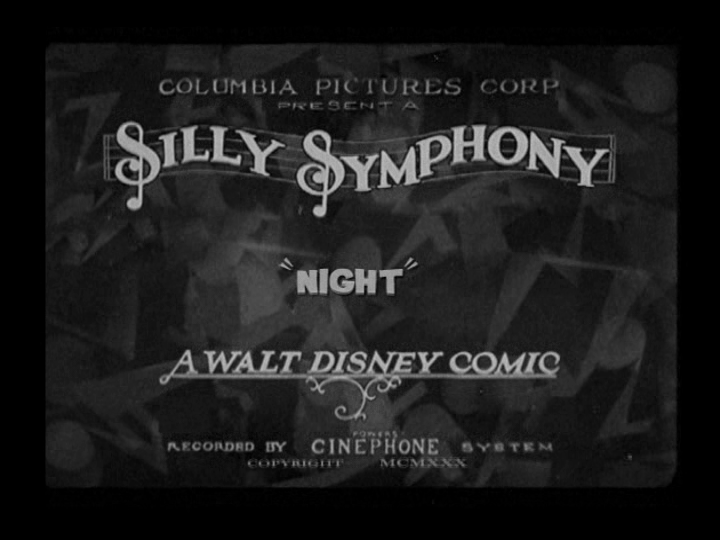
On April 28, 1930, the Silly Symphony Night was released to theaters. Known as the early version of the award-winning short The Old Mill, the story set to music is of assorted animals in the evening near a river. It was directed by Walt Disney, and includes “Moonlight Sonata” by Beethoven among its collection of classical music used throughout the short.

The short opens on a moonlit night at a mill near a river, with the grass swaying in time to the background music. The moon gives the world a big smile, and begins singing along with the music playing. An owl flies past, flapping its wings in time with the tune, and calls out to his mate, who flies down to meet him on a branch. The two begin to dance; unfortunately, the male begins to kiss the female, who does not respond positively to his advances.

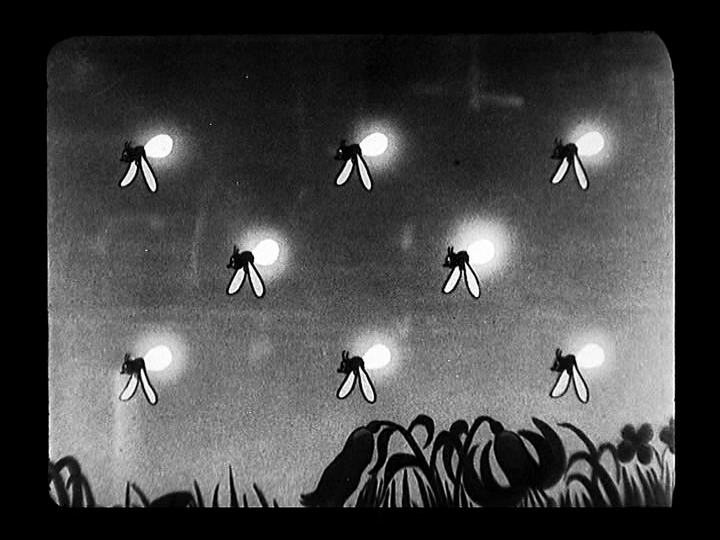
The fireflies lighting up the night in time with the music

The “bug ballet” begins with some bugs are flying around a lamp, with one teasing the candle’s flame, only to find itself burned. Fireflies begin to light up in rhythm to the new song playing, with two silly fireflies performing for the audience. Afterward, three mosquitoes begin some sort of skulking dance, which ends with them crossing over a stream and landing on a frog’s head, biting the poor frog before they fly away. The frog gets his revenge, however, by eating all mosquitoes in rhythm before dancing across the pond himself to meet his lady friend.

Around the mill’s wheel, the frog romantically rocks his lady frog while a group of other frogs croak a lullaby for the couple. The main male frog professes his love in song, while the female frog smiles and hides her face in cute embarrassment. The two begin to dance across the lily pads together, only to fall over the edge of a waterfall, ending the short with a loud, dramatic splash.

April 20

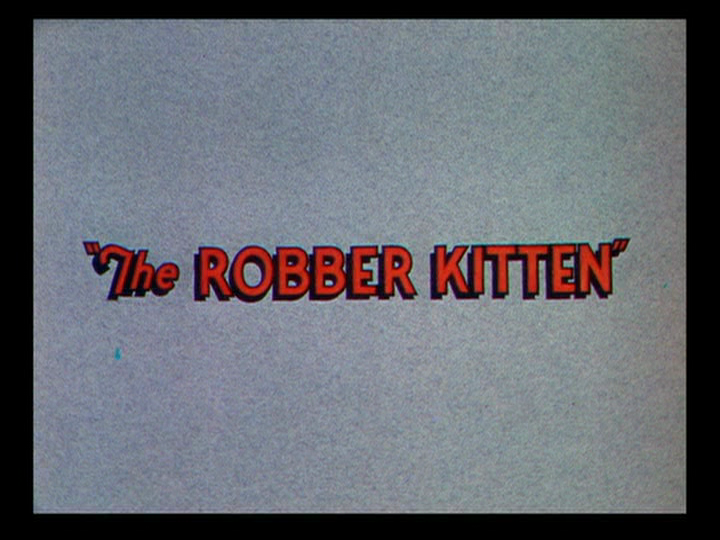
April 20, 1935 – The Silly Symphony, The Robber Kitten, is Released to Theaters

“I never took a bath, and I never will, oh, Dirty Bill!”

On April 20, 1935, the Silly Symphony, The Robber Kitten, was released to theaters. It was directed by Dave Hand, with the story written by William Cottrell; the short stars Billy Bletcher, best known as the voice of Pegleg Pete, as the voice of Dirty Bill the robber.

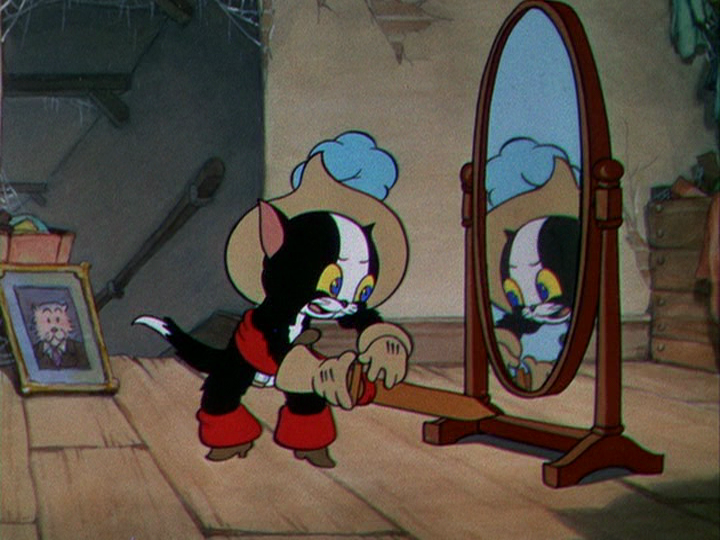
Ambrose continues his game of robber by threatening his own reflection

The Silly Symphony opens on a coach robbery, a voice telling the passengers to put their hands up. The camera zooms out to reveal a kitten named Ambrose holding two pop-guns, playing robbery with his toys. He continues to threaten his toys, and ends up shooting them because they won’t “give up the money.” Ambrose continues to play robber, until his mother is heard hollering his name from downstairs. Ambrose dismisses his mother’s call, telling no one in particular that Ambrose is no name for him, and from now on, his name is Butch.

Downstairs, his mother is preparing his bath. Ambrose sneers into the mirror and tells himself that robbers don’t take baths. He decides to run away to become a real robber, narrowly avoiding his mother as he steals cookies before heading out the open window to freedom from baths, only to land in a rain barrel. He shakes the water off before grabbing his hobby-horse and riding down the road. Unfortunately for Ambrose, his mother sees him through the kitchen window and demands that he come back, but he ignores her and rides away.

Ambrose sneaks up on Dirty Bill, attempting to rob the criminal

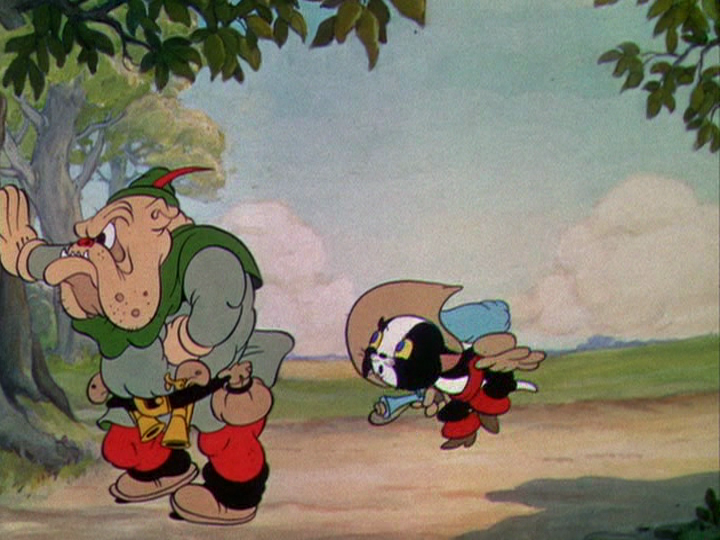
Meanwhile, the robber Dirty Bill is sitting in the woods, staring at his own face on a wanted poster and laughing. Ambrose spots him and attempts to rob him, but as Dirty Bill reaches for a real gun rather than Ambrose’s pop gun, Ambrose’s voice breaks. Dirty Bill turns around to see that Ambrose is only a kid, and asks Ambrose if he would really rob another robber. Ambrose is impressed that he’s really around a robber on a wanted poster.

Dirty Bill offers Ambrose a seat, and Ambrose copies the older robber exactly before asking if Dirty Bill’s mother ever made him take a bath. Dirty Bill brags in song that he’s never taken a bath, nor will he ever do so. Teasing him, Dirty Bill asks the kitten if he’s pulled any big jobs lately. Wanting to impress the robber, Ambrose tells him that of course he has, and begins to tell Dirty Bill about holding up a stagecoach (going back to the game of the morning). Unfortunately for Ambrose, his imagination and story-telling skills are too good, making the robber believe that the bag of cookies Ambrose is carrying is filled with treasure, and Dirty Bill attempts to steal it from the kitten.

Thinking the kitten is actually holding treasure, Dirty Bill suddenly turns violent

When Ambrose tries to convince Dirty Bill that he really is only holding cookies, Dirty Bill pulls out a knife, lusting for what he thinks is treasure. Scared out of his wits, Ambrose leaps out of his clothing, leaving the cookies behind as well, and sprints as fast as he can home and into the bathtub, where his mother is waiting to punish him. Sheepishly, he greets his mother, and plays with the bubbles in the tub, his robber days now behind him.

April 14

April 14, 1934 – The Silly Symphony, The Big Bad Wolf, is Released to Theaters
“There’s danger in them woods. Beware! The big Bad Wolf is lurking there!”

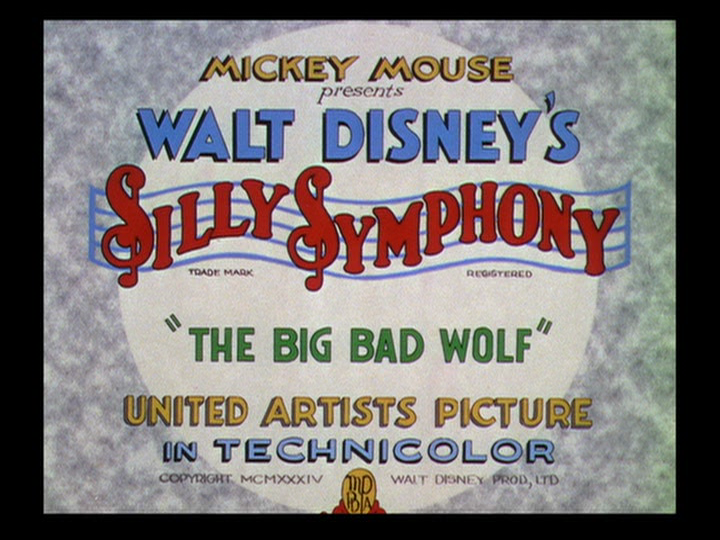
On April 14, 1934, the Silly Symphony, The Big Bad Wolf, was released to theaters. Capitalizing on the popularity of The Three Little Pigs Silly Symphony, it marks the return of the Three Little Pigs and the Big Bad Wolf, but the short was not nearly as successful as its parent Silly Symphony, and is today still considered inferior to the original, despite some clever gags. It was directed by Burt Gillett, and stars the vocals of Billy Bletcher as the Big Bad Wolf, Pinto Colvig as the Practical Pig, Dorothy Compton as the Fifer Pig, and Mary Moder as the Fiddler Pig.

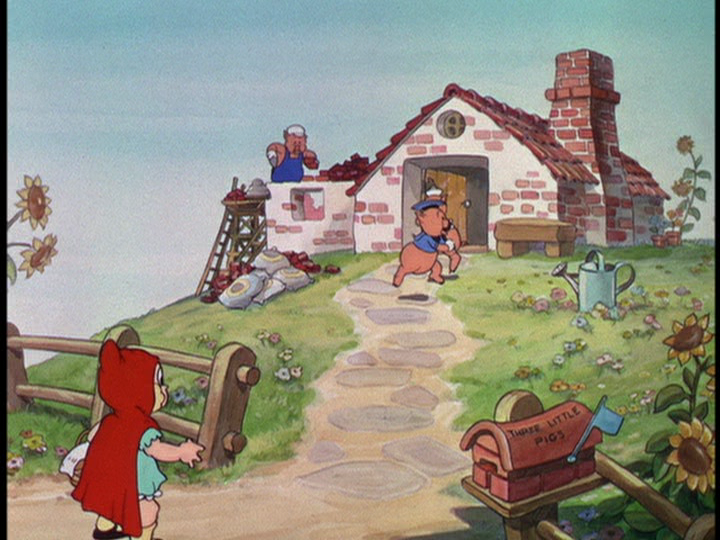
Little Red passes by the brick house of the Three Little Pigs

Little Red Riding Hood is skipping down the path to her grandmother’s house, and passes by the Three Little Pigs’ house, with the Practical Pig hard at work on an addition to the brick house, while his two brothers play their instruments and dance. The brothers greet Little Red Riding Hood, and when she explains that she is on her way to Grandma’s house, the two pigs tell her to take a shortcut through the woods. The Practical Pig, alarmed at their advice, tells her not to go through the woods, because the Big Bad Wolf is lurking there.

The two brothers begin to laugh at the Practical Pig’s advice, calling the wolf a sissy and offering to go along with Little Red to protect her before singing “Who’s Afraid of the Big Bad Wolf?” The Practical Pig just shakes his head at their folly, but continues to work on the house. Just as the three begin their journey on the short cut, the Big Bad Wolf is seen sneaking through the forest, disguised as a bush. He spies the three skipping merrily down the path, and leaves his disguise to climb up a tree and set his new plan in motion.
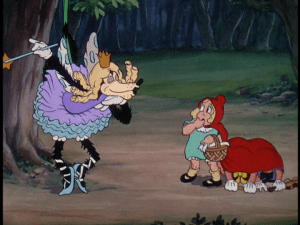
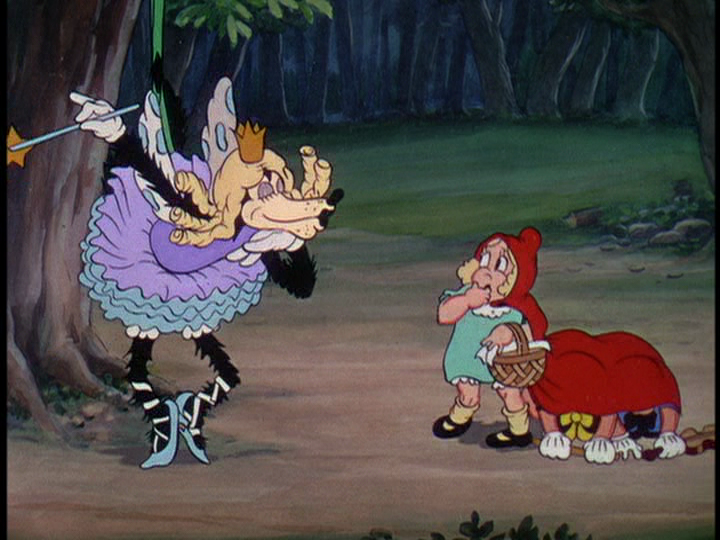
"Goldilocks, the Fairy Queen" lands in front of a frightened trio

The three are stopped suddenly by a “fairy” falling from the sky (the wolf in disguise), and the two pigs hide underneath the shivering Red’s cloak. The “fairy” introduces herself as Goldilocks, the fairy queen, and begins flying around, telling them that they’re safe with her. Unfortunately, the suspenders the Wolf used to help him fly are attached to a broken branch, which splits and lands on his head, knocking off his disguise. Alarmed, the three take off running but are separated, with the Wolf hot on Little Red’s tail. Fortunately for her, he gets stuck between two trees, giving her a chance to get away. The Wolf isn’t angry for long, for he comes up with another plan.

Using another shortcut, the Wolf reaches Grandma’s before Little Red, and peers through the window to see Grandma in bed, knitting. When she hears a knock at the door, she tells the visitor to come inside, and the Wolf enters, laughing menacingly. Grandma leaps out of bed and locks herself in the closet, with the Wolf trying to open the doors. Outside, Little Red is seen speeding through the front gate, stopping at the door to calm herself down before she enters what she thinks is the safety of Grandma’s house. Alerted by the knocking at the door, the Wolf quickly stops trying to get Grandma, and focuses his attention on getting the girl. He quickly disguises himself in Grandma’s robe and bonnet and slips into bed before calling Little Red in. Little Red notices what big eyes Grandma has, and what a big nose Grandma has (to which the Wolf looks at the audience and asks, “How am I doing?”). When Little Red points out the big mouth Grandma has, the Wolf strikes, chasing her around the room.
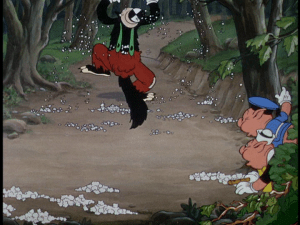
The two pigs watch the Wolf howling with pain back into the woods

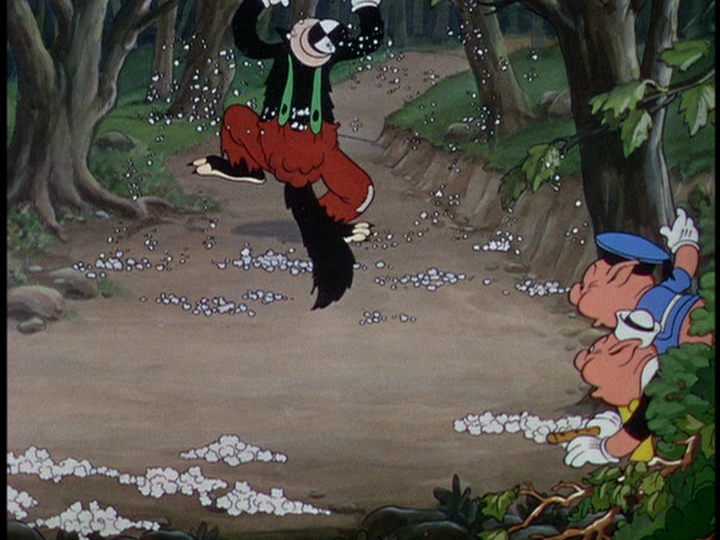
Meanwhile, the two pigs have made it back home and alerted their brother about Little Red’s predicament. The Practical Pig runs to his collection of “Wolf Exterminators” and begins to load them into his bag before setting off for Grandma’s, leaving the two pigs cowering in the doorway. As the Wolf continues to chase Little Red, Grandma uses an umbrella to scoop the girl up and pull her into the closet for safety, with the Wolf once again trying to open the doors. The Practical Pig arrives just in time, and sneaks in while the Wolf isn’t noticing, and begins to place popcorn kernels down the Wolf’s pants, and then grabs some hot coals from the fire. Placing the shovel with coals in with the kernels, the Wolf cries out in pain and leaps through the ceiling of the house, and runs back into the woods, with the popcorn kernels popping wildly.

The two other pigs show up just in time to see the Wolf running away, and shake hands in happiness that the Wolf has been bested again. Inside Grandma’s house, Little Red and the Practical Pig are playing the piano while Grandma knits, with the two other pigs dancing and singing “Who’s Afraid of The Big Bad Wolf?” once more.
March 28

March 28, 1936 – The Silly Symphony, Elmer Elephant, is Released to Theaters

“Elmer’s got a funny nose, looks just like a rubber hose!”

On March 28, 1936, the Silly Symphony, Elmer Elephant, was released to theaters. Directed by Wilfred Jackson, the short film tells the story of an elephant named Elmer, who is cruelly teased about his appearance, particularly his nose, but is able to use his nose to save the day from a runaway fire. Elmer would go on to be a popular merchandising character, and even had his own short-running Silly Symphony comic.

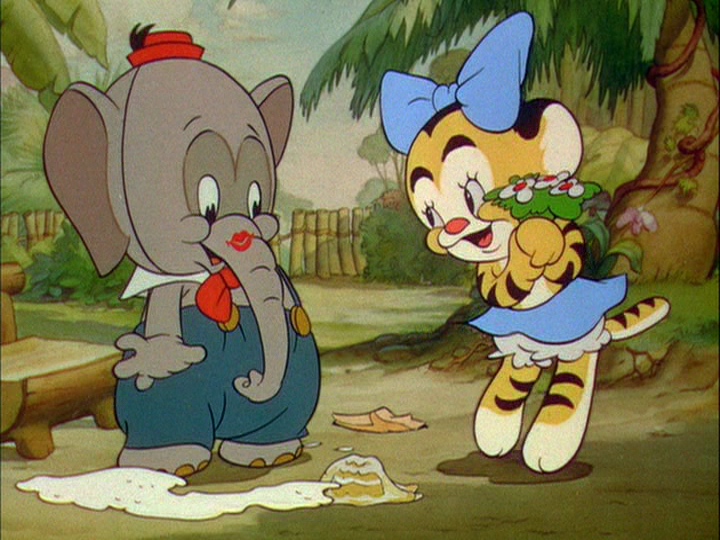
As the story opens, Elmer is seen skipping through the jungle, holding a bouquet of flowers, which he adds to as he passes by a flower bush. He knocks on the door to Tillie Tiger’s house, where the song “Happy Birthday” is heard being sung to Tillie. Elmer peeks in and sees the kids skipping in a circle around Tillie, and then they implore her to blow out the candles on her birthday cake. She agrees, but is unable to extinguish the birthday candles. Sweetly, she asks Joey the Hippo to do it for her, and he agrees.

Elmer and Tillie, with Tillie fawning over the flowers he brought for her

Just as Joey is preparing to let out massive breath of air, Elmer appears on the other side of the table, and is rewarded with Tillie’s cake in his face, as Joey left the candles on the plate, still burning brightly. While the kids laugh, Tillie pulls out a napkin and cleans away the cake from Elmer’s face. Tillie spots the flowers in Elmer’s hand, and begins to coo over them, calling them “the nicest present of all.” She gives him a kiss on the nose, which causes him to react comically.

Some of the boys get together and begin to whisper as Tillie scuttles up to her tree house, telling everyone to have a good time and that she will be right back. As Elmer sits down to wait, the boys appear, holding various long objects as “noses” and pretending they have big, floppy ears. Poor Elmer is so embarrassed that he tries to tuck away his nose. The boys bully him, pulling on his nose and sending him flying down a hill and back into the jungle, when all the party guests appear and begin to sing their taunts to him.

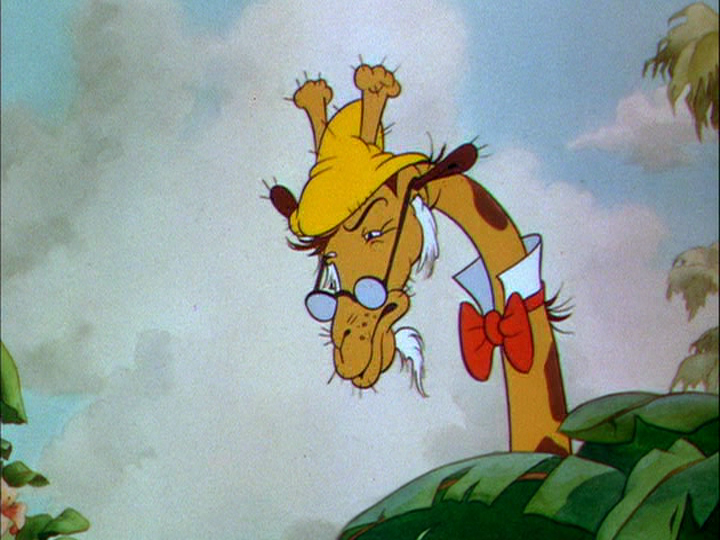
The kindly Old Giraffe, giving Elmer some well-needed advice

Elmer walks away from the party, very upset, when he runs into an elderly giraffe, who asks him what’s the matter. When Elmer explains, the giraffe tells him that “They used to make fun of me too, son, but I don’t care.” He then points out the pelicans nearby in an attempt to make Elmer feel better about his nose.

Just then, sirens are heard in the distance, with the crazy fire truck heading straight for Tillie’s. Tillie is seen trying to beat away the flames with a broom, yelling at her guests to help her get down from the tree house. The boys pull out a blanket for her to jump into, but the flames pull her back and they jump into the outstretched blanket, turning it to ashes. The fire team finally arrives at Tillie’s place, but can’t stop the flames from chasing them down the ladder. The flames trap Tillie up a pole, where she screams for help.

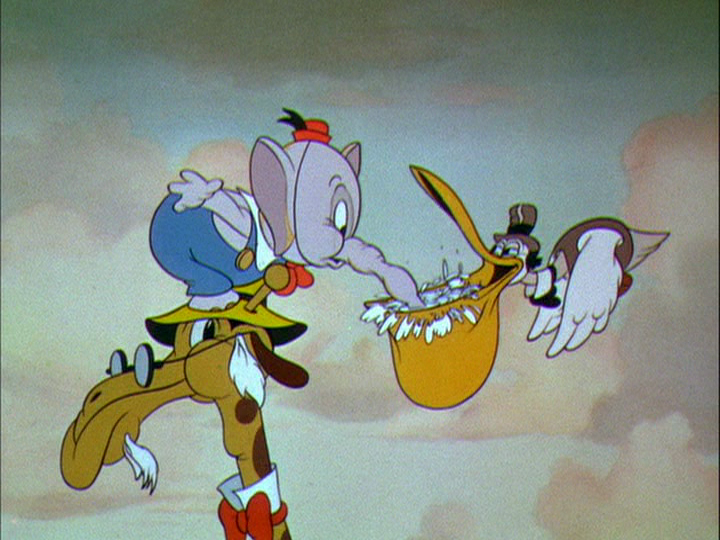
The Old Giraffe, Elmer, and the pelicans use their perceived flaws to work together and save the day

Having observed all of this from the Old Giraffe’s head, Elmer slides down his neck and begins to run at breakneck speed to save Tillie. The Old Giraffe follows, along with the pelicans, and they all work together to put out the flames: the Old Giraffe holds Elmer up to the top of the tree house, the pelicans provide the water, and Elmer uses his nose as a hose. Although the flames are stubborn, Elmer uses some fancy moves to extinguish the flames.

Stuck on her precarious perch, where four little flames are taking apart the pole one splinter at a time, Tillie calls out for Elmer. Elmer comes to her rescue, extinguishing the flames and grabbing the pole Tillie’s holding onto before it completely breaks apart. Tillie calls Elmer her hero, and the two share a kiss, with Elmer using his nose to pull her closer, and one of his ears to keep the moment a bit more private.

March 22

March 22, 1935 – The Silly Symphony, The Golden Touch, is Released to Theaters

“Is this the great man that bellowed, ‘Give me gold, not advice?’”

On March 22, 1935, the Silly Symphony, The Golden Touch, was released to theaters. Based on the tale of King Midas, it was directed by Walt Disney himself, who thought that this would be an easy task. Finding it was more work than he thought, Walt did not direct another short again. The music was written by Frank Churchill, and stars Billy Bletcher as the voice of King Midas.

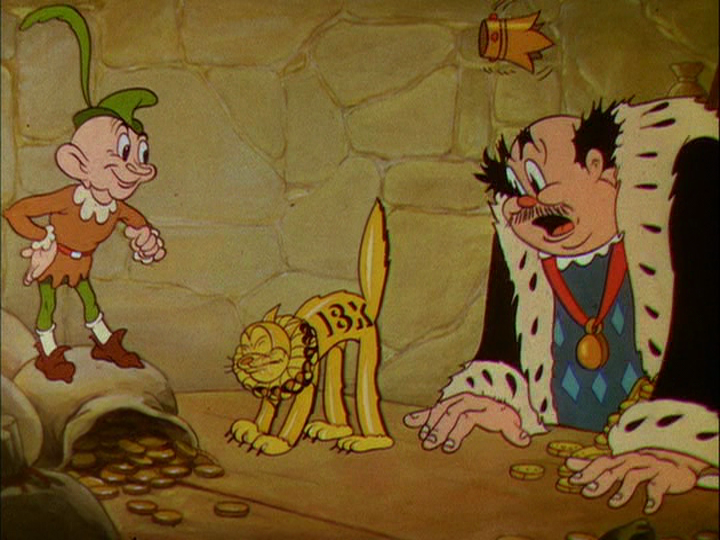
Midas is shocked when Goldie easily turns his cat into gold

The short opens in the vaults of the kingdom, where King Midas is happily counting his gold. He introduces himself to the audience, stating that he never cared for women or wine, but instead loves and worships gold. He then wishes that he could have everything he touched turn to gold. No sooner has he made this wish when a strange creature appears named Goldie. Midas is afraid that Goldie is there to steal his gold, but Goldie tells Midas that he, Goldie, doesn’t want it, and shows Midas that he can turn things to gold with a single touch. Midas offers everything he owns for the golden touch, but Goldie warns Midas that this would be a curse rather than a blessing. Midas doesn’t want Goldie’s advice, so Goldie finally gives the king what he wishes.

Now armed with the golden touch, Midas is determined to test it out. He chases his cat up the stairs of the castle, and as Midas runs into a tree, the tree suddenly turns to gold, dropping 18K apples, and the 18K cat as well. Midas skips around gleefully, incredibly happy that he has the golden touch, and begins touching everything he can, from flowers to fountains.

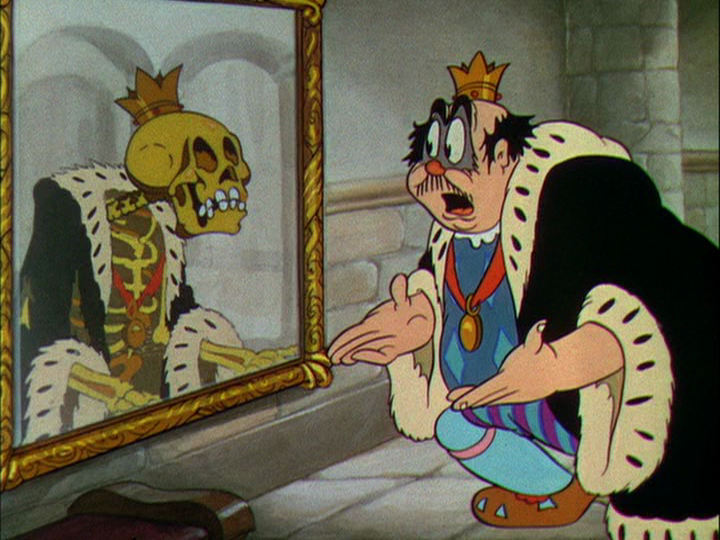
The king becomes delusional from hunger and fear, seeing himself as a golden corpse.

Some time later, a hungry King Midas sits down to eat a hearty meal, only to find that he is unable to eat anything, as it all turns to gold. Angered, he begins to turn all of the food to gold, and seems to go mad over the fact that Goldie had been right about it being a curse. He moans that the richest king in the world must now starve to death, and is chased by illusions of death. He locks himself in his counting room and calls out for Goldie, who appears, laughing.

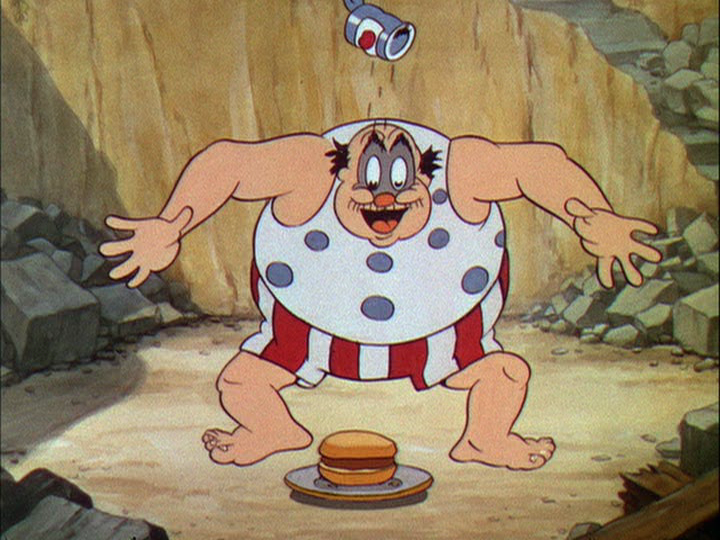
Midas, thrilled to see that Goldie has appeared, begs the creature to take away the curse, so he can eat once more. He offers everything he has, and even offers his kingdom for a hamburger. Goldie laughs and teases, “With or without onions?” The king begs for just a plain old hamburger, and Goldie finally agrees to take back the curse, in exchange for everything the king possesses.
"My kingdom for a hamburger!"

As Goldie disappears, Midas looks around wildly, before seeing his entire kingdom disappear before his eyes, as well as his clothes, save for his undershirt and boxers, with his crown now nothing more than a tin can. As promised, his hamburger appears in front of him, and as he sits down to eat it, he pauses, afraid that he still possesses the golden touch. He is relieved to find that it has indeed been taken away, and that Goldie also gave him onions.

March 20

March 20, 1930 – The Silly Symphony, Cannibal Capers, is Released to Theaters

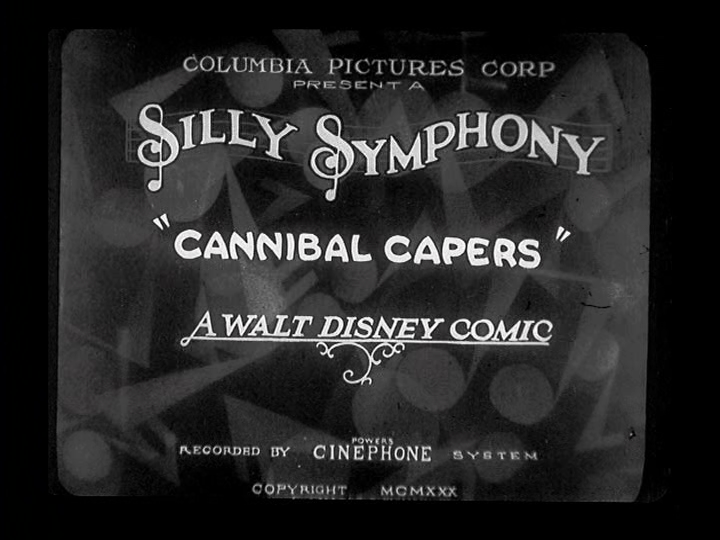
On March 20, 1930, the Silly Symphony, Cannibal Capers, was released to theaters. Directed by Burt Gillett, it was a good representation of the humor and style of movies back in the ’30s. It was normal for people to see stereotypes not just in cartoons, but also in live action films. This is the only Silly Symphony that, when shown on the Mickey Mouse Club show in the ’50s, had its ending edited out. The plot description below is of the original full short.

The Silly Symphony opens with what appears to be trees swaying in the breeze. As the camera pulls out, we see that it isn’t trees, but four cannibals, dancing and singing. They perform a dance for the audience of other cannibals, and another is seen drumming on a drum, a shield, a set of human skulls, and even his own teeth. As he grabs two of the skulls and uses them as castanets, “Habanera” from the opera Carmen begins to play.

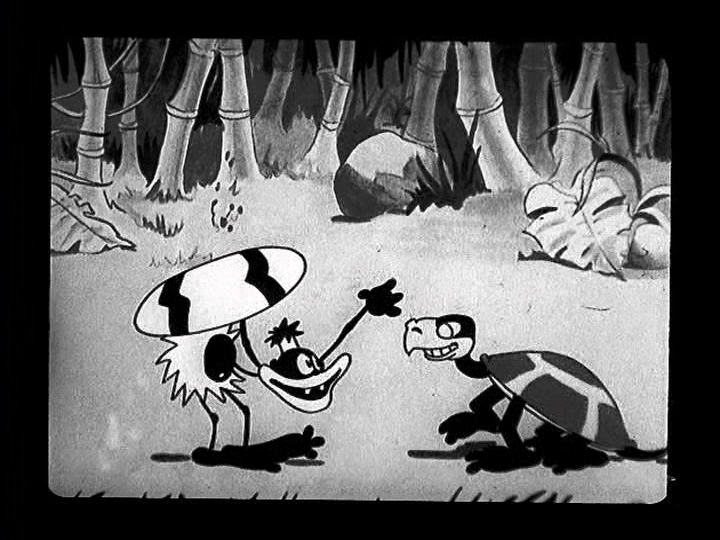
The cannibal and the turtle dancing together

The scene switches to another cannibal, who does a sort of hula, causing his grass skirt to fall to the ground. He pulls it up and begins to dance again, with the same result. Angered, he pushes his stomach to the ground, so that his skirt won’t fall anymore. He continues to dance merrily after that. The camera then moves to a turtle who is dancing to the music, and runs into a cannibal. The cannibal, using his shield like a shell, imitates the dancing of the turtle, which turns into a game of patty-cake.

In the main village, the chef is preparing the pot for a great feast, when he spots the cannibal dancing with the turtle. Although the turtle and cannibal retreat into their shells, the chef picks up the cannibal, intending to feed him to the village. The tribe cheers as the cannibal is thrown into the pot of boiling water, but are shocked when he calmly steps out and begins to cool himself down with the shield.

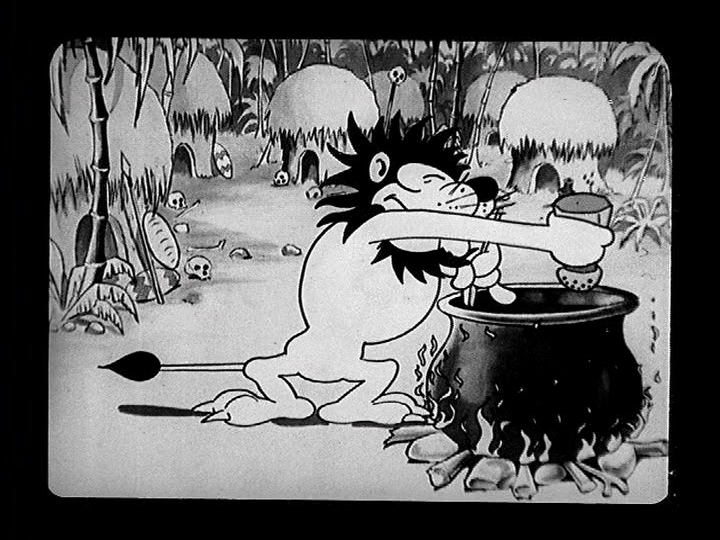
The lion preparing the cannibal for consumption

A lion roars at the edge of the village, and the cannibals flee into their homes. The cannibal that was in the pot continues to hide inside, thinking he’s safe. The lion, however, grabs a spoon, the salt, and the pepper, and begins to cook the cannibal to his liking. The lion tries to eat the cannibal, but the cannibal outsmarts him.

As the cannibal runs away, the lion pursues him. Once the lion bites down on the cannibal, however, he loses his teeth. Seeing this as an opportunity, the cannibal decides to wear the teeth and teach the defenseless lion a lesson. The cannibal chases the lion out of the village, and the cannibals are seen laughing.

March 16

March 16, 1934 – The Silly Symphony The Three Little Pigs Wins the Academy Award


“…[The Three Little Pigs] sent a message of optimism to moviegoers who’d been battered by the Great Depression.” – Film Critic Leonard Maltin.

The 6th Academy Awards were held at The Ambassador Hotel on March 16, 1934, and the Disney Studios walked away with the Academy Award for Best Animated Short film for the wildly popular Silly Symphony The Three Little Pigs. It was in competition with the Universal Studios short The Merry Old Soul, as well as the Walt Disney and United Artists Mickey Mouse short Building a Building (see entry for January 7).

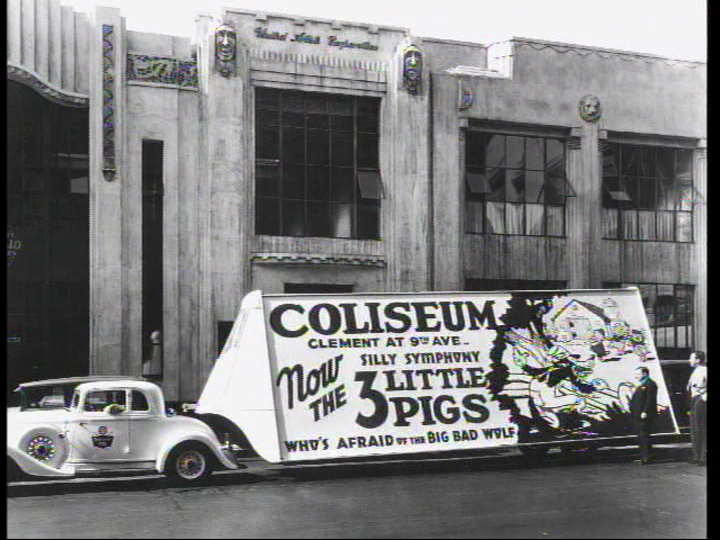
This is one of the billboards advertising the short at the Coliseum. The short was able to get top billing after a while due to its success

The short, although well done in its own right, was popular due to being released at the right time. It was considered groundbreaking in its characterization and musical score, but Depression-weary audiences adopted the song “Who’s Afraid of the Big Bad Wolf” as their fight song. The short’s immense success kept it in theaters for months with top billing, even after feature films had long left the theater. The success of the short, including the Academy Award, led to a major merchandising campaign, as well as three sequels: The Big Bad Wolf, Three Little Wolves, and The Practical Pig.

March 11

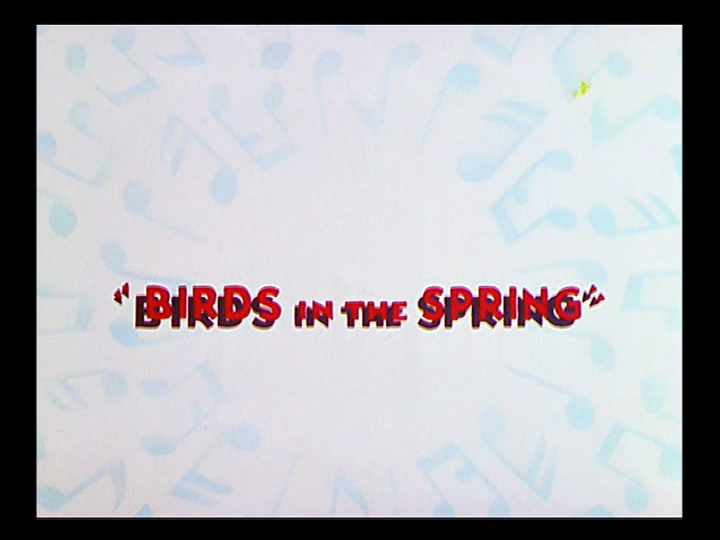
March 11, 1933 – The Silly Symphony Short Film, Birds in the Spring, is Released to Theaters

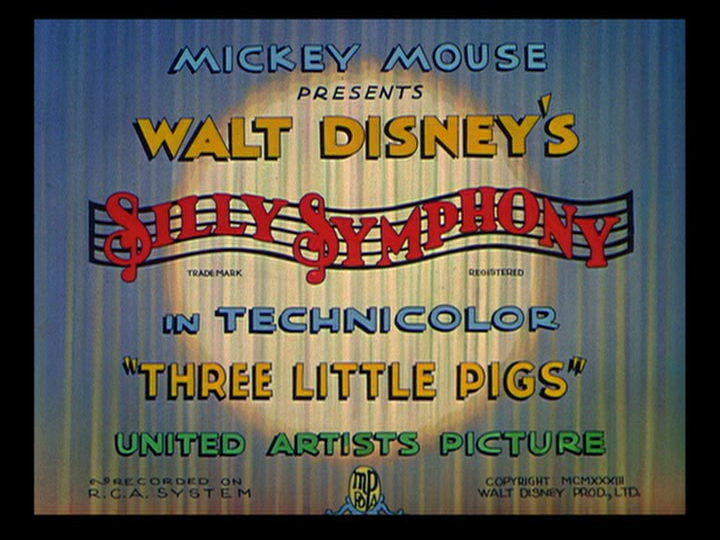
The Silly Symphony short, Birds in the Spring, was released in theaters on March 11, 1933 by United Artists. Directed by Dave Hand, with music by Bert Lewis, the short tells the story of a baby bird whose thirst for curiosity brings him a day full of adventures. The title card of the Silly Symphony attests to the popularity of Mickey Mouse in the early 1930s, as it states: “Mickey Mouse Presents Walt Disney’s Silly Symphonies.” It had been believed that, as far as animation, people would only want to see Mickey Mouse cartoons, and Mickey’s name on the title card would ensure an audience. Luckily, the Silly Symphonies were popular in their own right.

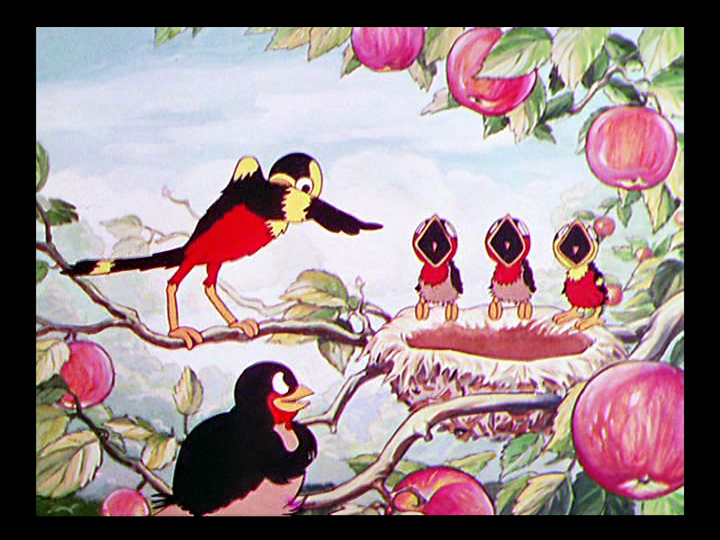
The scene opens on a beautiful spring day, in a field full of apple trees in bloom. Birds are flying about, chirping their songs as they flit around the branches, with some being romantic, while others are working on building nests. A nervous mother is seen in her nest, wondering when her eggs are going to hatch. She flips the eggs and sits on them again, hoping they will hatch soon. The father paces back and forth on a branch, looking equally anxious. Without warning, the first egg hatches underneath the mother, and the proud parents cheer when all three eggs hatch to reveal healthy chicks. The father gathers all the birds in the field to come see his newborns.

The babies have singing lessons with their father

The newborns begin to cry for food, and as they do, we suddenly see the time elapse, with the newborns becoming healthy young birds, who are learning to sing instead of crying for food. A bee buzzes around the nest, attracting the attention of the only male baby bird (named Otto, according to the Disney Archives), and causing him to depart from the music lesson to catch a quick snack. Otto hurries back to sing the final note in the song, only to let out a buzzing sound instead. Otto’s father’s disposition turns sour at this development, and while Otto tries to sing, he is still only able to let out the buzzing noise from the bee inside him.

After the bee escapes from Otto’s insides, the father decides it’s time for a flying lesson. He tries to impress his children with his grace, only to end up flying into a tree, making them laugh. Nevertheless, they follow him in their flying lesson, making a chain by grabbing each other’s tails as they fly through the air. When they let go, the birds surprise themselves by being able to fly, but unfortunately they also quickly fall. Otto then finds himself separated from the others, but decides it’s a better time to explore than to go home.

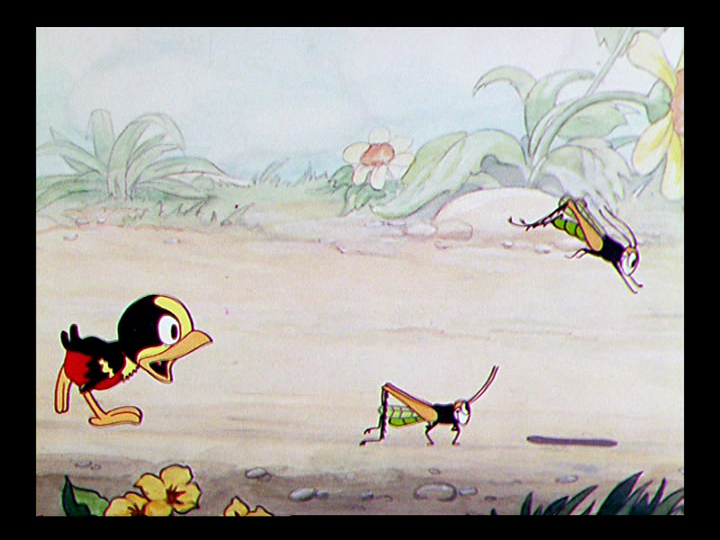
Otto excitedly watches grasshoppers at play

Otto’s first part of the adventure involves two grasshoppers playing leapfrog, and he follows them with great interest. He tries to eat one, but the grasshopper continues to jump, taking the poor baby bird with him until he jumps out of Otto’s mouth and spits in his face. Otto, not really fazed by the reaction, then follows a hummingbird, and tries to eat the way the hummingbird does, only to get poked by another hummingbird when he is inside the blossom.

Otto’s next adventure begins with a simple rattle in the bushes. He sees what is making the noise and shakes the rattle, only to find that the rattle belongs to a rattlesnake, one that is very hungry. The snake hypnotizes the baby bird, but Otto falls into nearby pond, breaking the spell. He begins to flee, with the snake following with great vigor. Otto tries to fly over the water, but his flying still needs a lot of work, and the snake is rather faster – even faster on land. Otto manages to get the snake to tie himself in knots to escape.

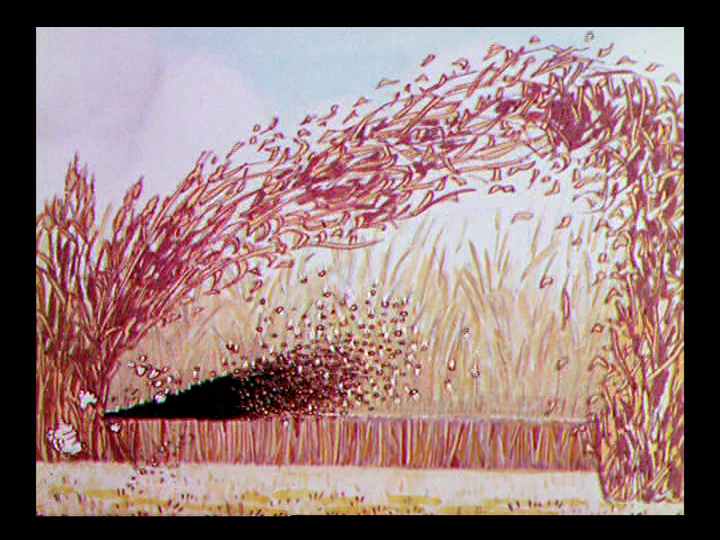
The bees harvesting wheat while trying to attack Otto

Otto attempts to dive for cover in a beehive, only to have the swarm inside chase him out and pursue him angrily, destroying everything in their path. Otto lets out frantic chirps, which alerts his family nearby, and the father races to his rescue. The birds manage to hide under their nest while the bees race past. Otto’s curiosity comes at a price, as his father takes the baby over his knee and spanks him for running away.

February 29

February 29, 1940 – The Last Silly Symphony, The Ugly Duckling, Wins the Academy Award for Best Animated Short Subject

At the 12th Academy Awards, held at The Coconut Grove in Los Angeles on February 29, 1940, the Walt Disney Studios and RKO Radio were awarded an Academy Award for their final Silly Symphony, The Ugly Duckling. The short was up against Detouring America by Warner Brothers, Place on Earth by MGM, and The Pointer, also by the Walt Disney Studios and RKO Radio.

First released April 7, 1939, it was a remake of the 1931 Silly Symphony of the same name, and was the only Silly Symphony ever remade. The story and animation were significantly different from the 1931 short, which shows the tremendous strides in animation the Disney Studios had made in those nine years. Instead of the slapstick and gags they relied so heavily on in the early days of the studio, the 1939 version shows how they were able to make their character emote and become fully fleshed out.

The scene when the father and mother discover the odd looking duckling. Notice the characterization of the characters, which was rather nonexistant in the 1931 short

The plot of this short is based on the Hans Christian Andersen tale, and tells the story through music of a duckling shunned by his family, as he is considered by his parents to be ugly. The duckling, ashamed, tries to find a mother that will accept him the way he is. It’s easy to see, after watching this short, why it would win an Academy Award – it truly was a high note for the Silly Symphonies in which to go out.


February 10

February 10, 1934 – The Silly Symphony The Grasshopper and the Ants is Released to Theaters

“Oh, the world owes me a living…”

In 1934, the Disney Studios released what was to become another wildly popular Silly Symphony, The Grasshopper and the Ants. Based on the fable by Aesop, it was adapted by William Cottrell, directed by Wilfred Jackson, and starred Pinto Colvig as the Grasshopper. Colvig is better known as the original voice of Goofy, and the song in this short, “The World Owes Me a Living,” would become a theme song for Goofy in later shorts. The song was composed by Larry Morey and Leigh Harline, and was so popular that sheet music for the piece was published. The short is also notable for being the first instance of a character turning blue from the cold. Although this is a common idea these days to show how cold the weather is, the Technicolor process was still new in 1934, therefore any color change to show emotion would have been relatively fresh.

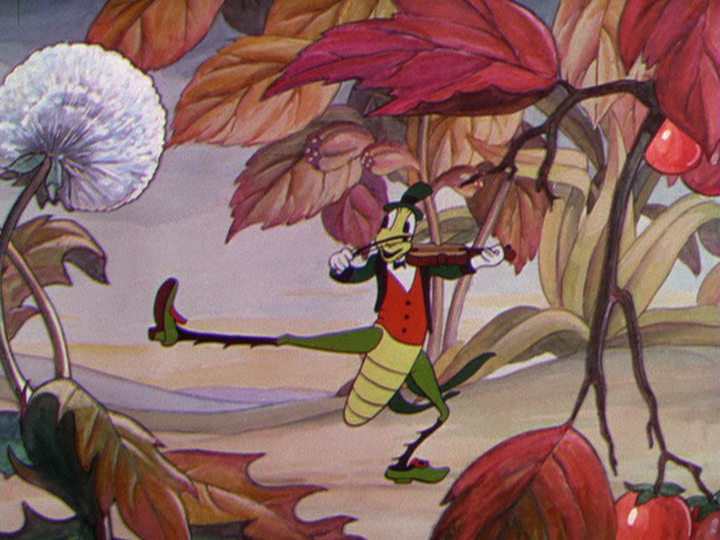
The first shot we see is of the Grasshopper skipping down a flower-filled path, playing his fiddle merrily. As he stops for something to eat and drink, we see that the Grasshopper is actually quite wasteful, taking one bite of a leaf before throwing it away to grab another. He becomes distracted, however, when he sees a hive of ants busily working to store food for the winter, doing such chores as picking off the individual kernels from an ear of corn to chopping up slices of carrots, making it easier to bring the food inside their hollow tree.

The Grasshopper gets a young ant to shirk his work to sing and dance

The Grasshopper begins to laugh at their efforts, and calls over an ant to join him. “Listen,” he tells the ant, “the Good Book says the Lord provides. There’s food on every tree. I see no reason to worry and work, no sir, not me.” With that, he goes into the theme song for this short, “The World Owes Me a Living,” enticing the ant to “play and sing and dance,” to which the impressionable ant agrees, imitating the Grasshopper’s dancing. Unfortunately for the ant, the Queen arrives, shocked to see an ant shirking its duty. The ant, embarrassed at being caught, rushes back to his work at breakneck speed.

The Grasshopper greets the Queen and tries to entice her the way he did the ant, but the Queen is firm. “You’ll change that tune when winter comes and the ground is covered with snow,” she warns him. But the Grasshopper assures her that winter’s a long way off, and begins to sing again. The Queen leaves him to his foolishness, and the Grasshopper continues to sing and dance, and not “spoil his Sunday pants like the other foolish ants.”

The Grasshopper begins to dance his way through the seasons, caring little for the upcoming winter

As he continues to fiddle and dance, the seasons quickly change from summer to autumn, with the leaves beginning to fall. The scene begins to grow more desolate, but the Grasshopper continues to blithely fiddle and dance, unaware that all he considers food is quickly disappearing with the changing of the seasons.

As heavy winds begin to blow, we see the ants finishing up their food gathering, and rushing inside their hollow tree for shelter before it begins to snow. The Grasshopper is seen wandering the snowy fields, searching for any morsel of food, but sadly, the trees are all bare. Finally, he spots one lone leaf on a branch, and just as he is about to grab and devour it, a strong gust of wind swoops in and blows it out of reach. He begins to turn blue from the cold as he keeps walking in the heavy snows, looking for food and shelter. At last, he spies the ants’ tree, and makes his way to the door, spying through the window.

The last piece of food the Grasshopper can find

Inside, every ant is well fed and merry, clinking glasses and enjoying the fruits of their labor. The Grasshopper knocks on the door, but is so weak from hunger and the cold that he faints just before they open the door. The ants carry him inside and warm him while feeding him soup. The Queen makes her way over to the Grasshopper, looking angry at his presence. He tries to make amends for his previous lackadaisical attitude, begging her to not throw him out. “With ants,” she tells him, “just those who work may stay. So take your fiddle.” The Grasshopper, visibly upset, takes his fiddle from her and begins to leave. But the Queen has other ideas: “And play,” she says, giving him the opportunity to earn his keep by entertaining the ants during the long winter. The Grasshopper is more than willing to meet her terms, adding a new verse to his song about his whole change of attitude.