RSS Feed

Tag Archives: Black and white

September 17

September 17, 1932 – The Mickey Mouse Short Film The Whoopee Party Premieres in Theaters
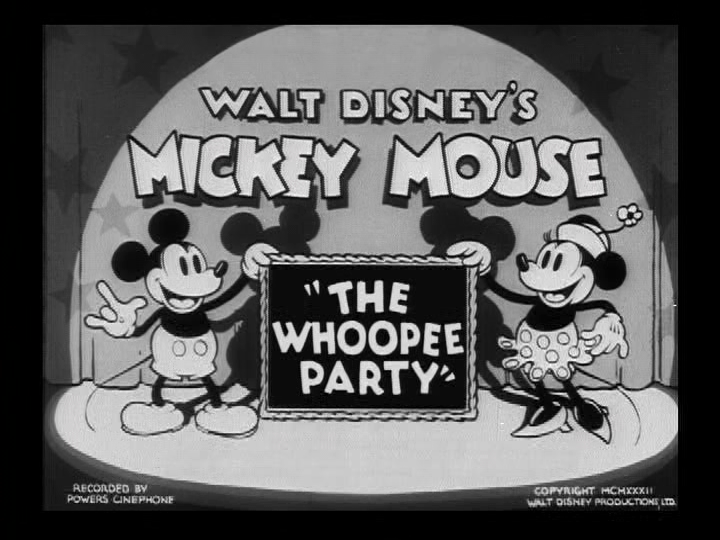
“We’re the kitchen mechanics, we fix all the refreshments.”

On September 17, 1932, the Mickey Mouse short film The Whoopee Party was released to theaters. The short features two popular pieces of music in the 20s and early 30s: “The Maple Leaf Rag” by Scott Joplin, and “Runnin’ Wild” by A.H. Gibbs, Joe Grey, and Leo Wood (mostly known for Marilyn Monroe’s performance in the 1959 comedy film Some Like It Hot). It was directed by Wilfred Jackson, and stars Walt Disney as the voice of Mickey Mouse, Marcellite Garner as the voice of Minnie Mouse, and Pinto Colvig as the voice of Goofy.

A splendid party is taking place, with a whole cast of characters dancing happily to the music. Minnie is at the piano playing and singing, while Clarabelle Cow accompanies her on the violin. Mickey, Goofy, and Horace Horsecollar are in the kitchen, preparing snacks for the party and singing their own version of the song as the “Kitchen Mechanics.”
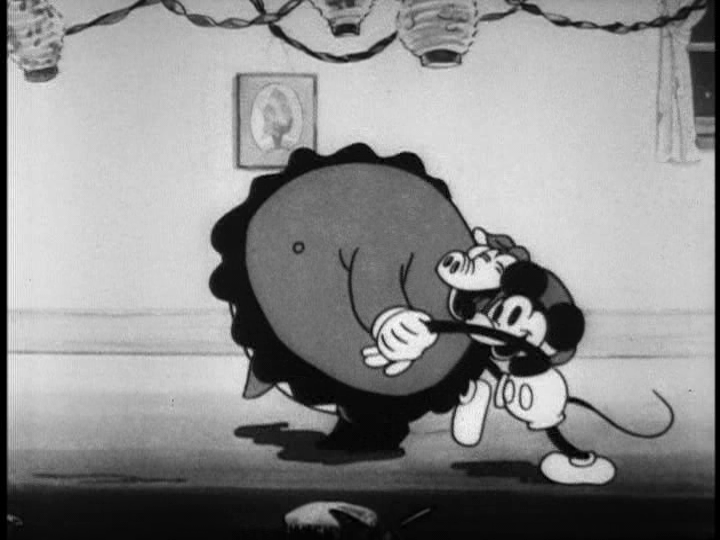
Mickey asks a rather shy pig to dance with him, and when she agrees, the two begin to dance wildly to the music

After Minnie finishes her first song, the Kitchen Mechanics come out and announce with great fanfare that the food is ready. The guests immediately swarm the table, and the band strikes up again, playing Scott Joplin’s “Maple Leaf Rag.” The guests dance and eat, and Mickey asks a rather shy pig to dance with him. The furniture and the food get involved in the dancing as well, with everyone having a wonderful time, yelling “Whoopee!” and throwing confetti.

Goofy attaches a glove to the end of his noisemaker, and uses it to scare Clarabelle as she dances. In retaliation, she places a horseshoe in a boxing glove, attaches it to her own noisemaker, and uses it to punch Goofy, sending him flying into a fishbowl. The song then changes to “Running Wild” as Mickey uses various household objects to help create the music.
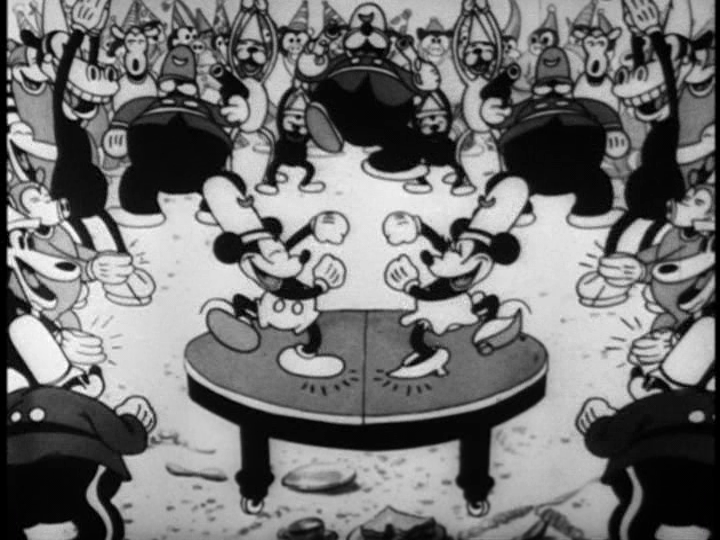
The party is so successful, even the police join in with the celebrations

Suddenly, a patrol car is sent to Mickey’s house, with the police dashing inside. At first, it appears that they’re using force to subdue the party, but when the audience is taken inside, the police have joined the party, dancing wildly and blowing their whistles in time with the music. The short ends with Mickey and Minnie lifting their hats and letting out another loud “Whoopee!”
September 5

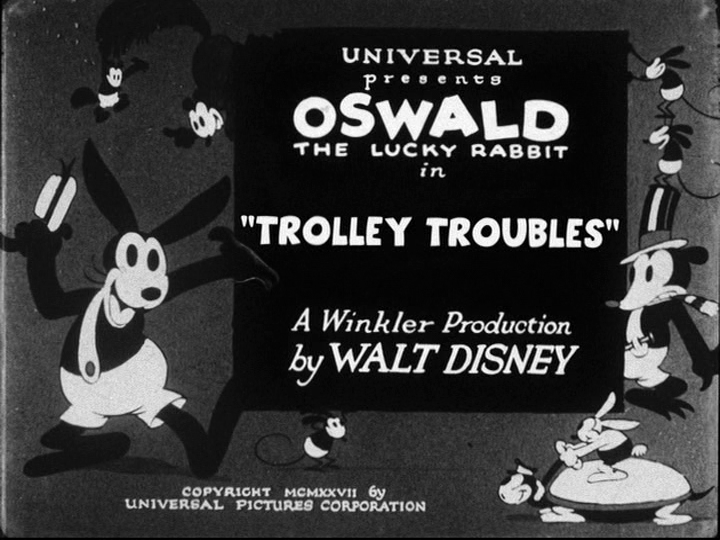
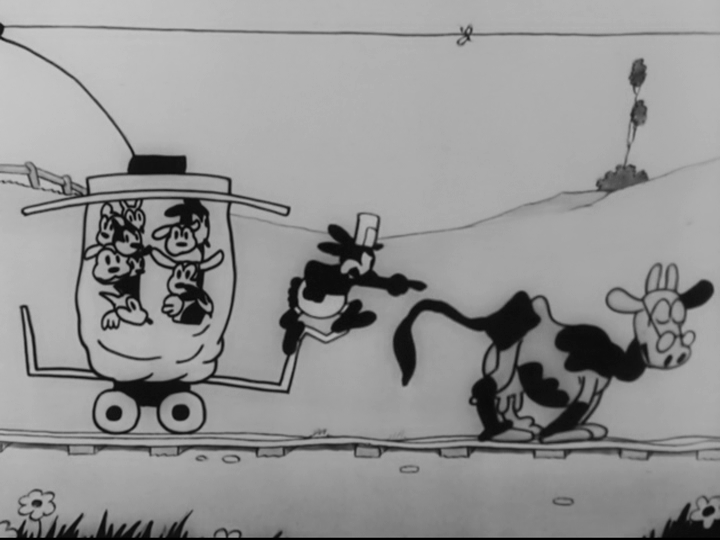
September 5, 1927 – The Oswald Short Film Trolley Troubles is Released

On September 5, 1927, the Oswald short film Trolley Troubles was released to theaters. It is known for being the first appearance of Oswald; an earlier Oswald short, Poor Papa, was rejected for release, as the distributers had expected a different kind of character rather than the older, more heavyset version Disney had produced. Trolley Troubles, however, was a success for Universal, and for Walt Disney and Ub Iwerks.

At the station, Oswald is cleaning up his trolley while children are causing mischief around him. Finally, when the trolley is wound up and ready to go, Oswald chases the kids away, but one kid sneaks aboard as Oswald drives away. Loading up the trolley at the first station he passes, Oswald and his passengers head merrily into town with many track gags along the way.

Oswald loses his temper at the stubborn cow standing in the middle of the tracks

At one point, a cow stands in the middle of the tracks, and although Oswald clanks his bell, the cow is undeterred. Oswald shouts at the cow, but the cow ignores him. Oswald then tries to calmly reason with the cow, but the cow still won’t budge. Oswald then backs up the trolley and goes full speed ahead, but fails to knock the cow from the tracks. The cow then steps sideways across the tracks, purposefully blocking the way, but Oswald gets an idea, and has the trolley go under the cow. The trolley passengers laugh at how Oswald has outsmarted the animal.

Oswald finds himself going up a very steep hill, but the trolley is unable to keep going, no matter how much Oswald pulls or pushes it. A nearby goat sees Oswald studying the trolley and decides to head-butt him, which causes the trolley to move. Although initially angry, Oswald gets the idea of using the goat to push the trolley up the hill. The plan is a success, until they realize that the hill is just as steep going down on the other side, and there seems to be no way to slow the trolley. Oswald rushes to pull the brake, but it rips off in his hands.  Passengers fall out at every curve of the track as the trolley goes over and around several hills. Oswald prays for the trolley to stop, and it finally does when it falls off the broken track and lands in the river. Oswald then paddles himself to safety on top of the trolley.

August 22

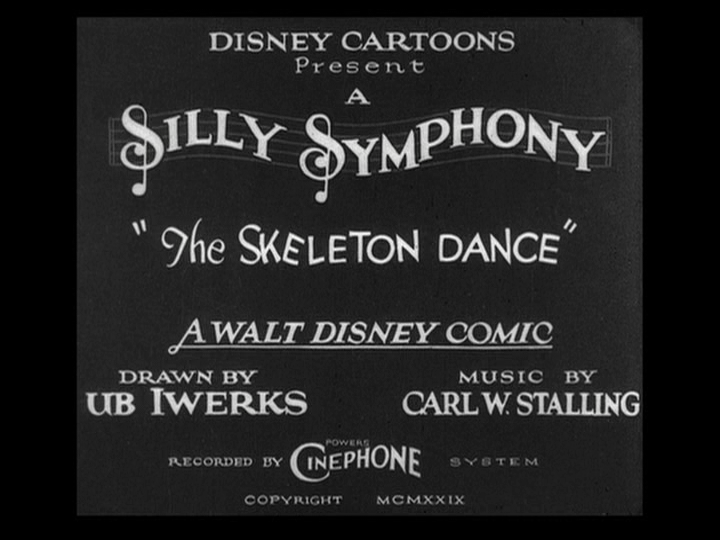
August 22, 1929 – The First Silly Symphony, The Skeleton Dance, is Released to Theaters

On August 22, 1929, the first Silly Symphony, The Skeleton Dance, was released to theaters. After the success of Steamboat Willie, musical director Carl W. Stalling suggested that Walt work on a cartoon series with an accent on music, rather than character. The short was drawn mostly by Ub Iwerks.

On a dark, windy night in a graveyard, the bells toll midnight. Two cats argue as they stand perched on graves, only to be scared out of their wits when a skeleton appears. The skeleton looks around, then begins to skip merrily around the graveyard, only to be scared by the hoot of an owl. He throws his head at the bird, and it bounces back to his hiding place behind a gravestone.

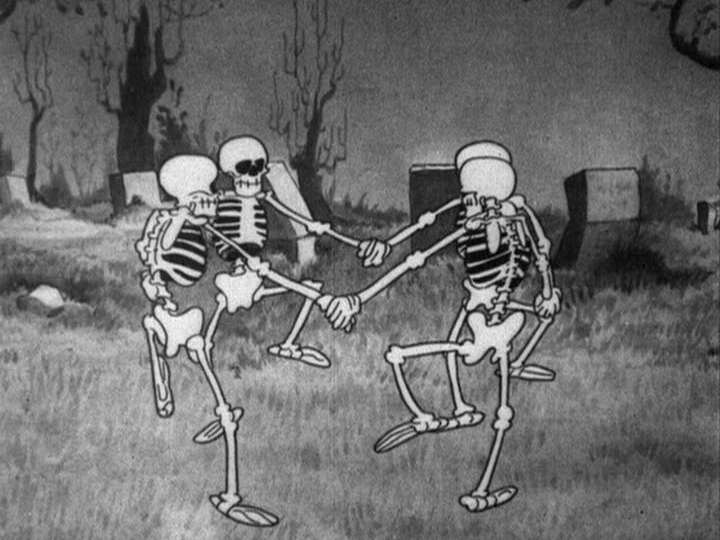
The skeletons come out from the ground for a night of dancing

More skeletons come out to join him, and the four begin to dance as a merry tune is played in the background. One skeleton uses another as a xylophone, playing eerie music on the skeleton’s vertebrae. Another uses a cat’s tail as a sort of cello. After a bit of musical celebration, the rooster crows, signaling that the party is over. The skeletons frantically look around and crash into each other as they dive back into their grave.

August 20

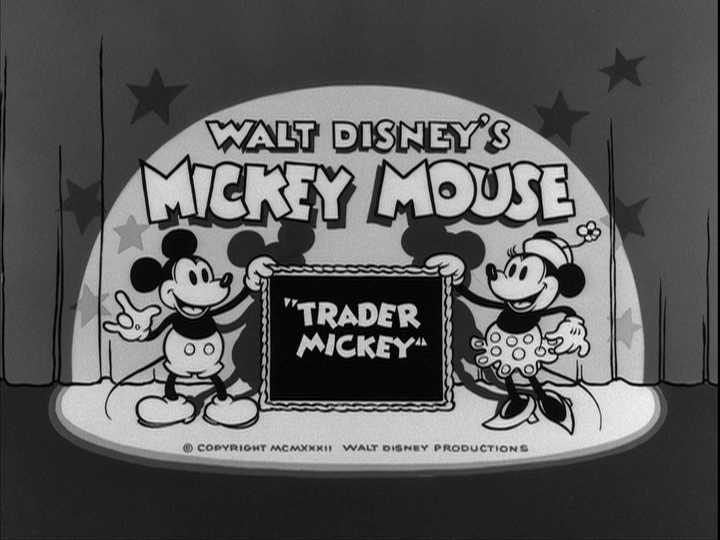
August 20, 1932 – The Mickey Mouse Short Film Trader Mickey is Released to Theaters

“Whoopee!”

On August 20, 1932, the Mickey Mouse short film Trader Mickey was released to theaters. It was the first short film directed by Dave Hand.

Mickey and Pluto are on a paddleboat, traveling down a river filled with hippos, with Mickey playing a merry tune on his banjo. They arrive at a riverbank, and Mickey pulls out a gun to go hunting. When Pluto goes to explore, he comes across a native, who scare the dog. As Pluto howls and runs back, he knocks into Mickey, who accidentally discharges the gun. Mickey and Pluto immediately find themselves surrounded and captured by the natives.

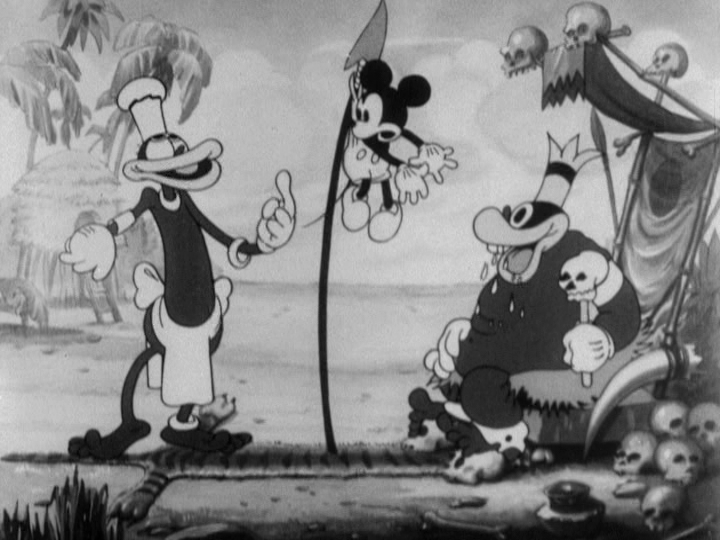
Mickey is brought in front of the chief and the chef, both of which think he’ll make a fantastic entree

Mickey and Pluto are taken directly to the king at his camp, and the chef hurries over, thinking that Mickey would make an excellent meal. He is placed in a pot of hot water, and Pluto is placed on a platter, made up like a suckling pig, complete with apple. The natives begin to go through Mickey’s supplies, not knowing how to use any of the instruments. When the chef attempts to use a saxophone as a spoon, Mickey grabs it from him and begins to play a merry tune. The chef begins to dance, and soon all the natives join in with the music.

Mickey, now out of the pot, entertains the chief with a harmonica. The chief takes it from him and begins to play it, accidentally swallowing it. As the music continues, the native continue to dance, with Mickey and Pluto free to join them. In the end the chief falls into the pot, but laughs and gives out a “Whoopee!”

August 18

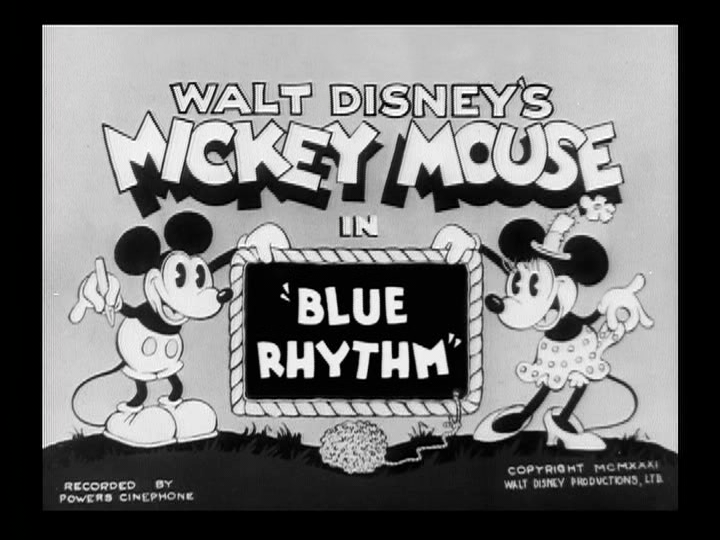
August 18, 1931 – The Mickey Mouse Short Film Blue Rhythm is Released to Theaters

“I hate to see the evenin’ sun come down.”

 On August 18, 1931, the Mickey Mouse short film Blue Rhythm was released to theaters. The song used in the short is “Saint Louis Blues,” a jazz standard from 1914, written by W.C. Handy, and famously sung by Bessie Smith and Louis Armstrong. The short was directed by Burt Gillett, and stars Walt Disney as the voice of Mickey Mouse, and Marcellite Garner as the voice of Minnie Mouse.

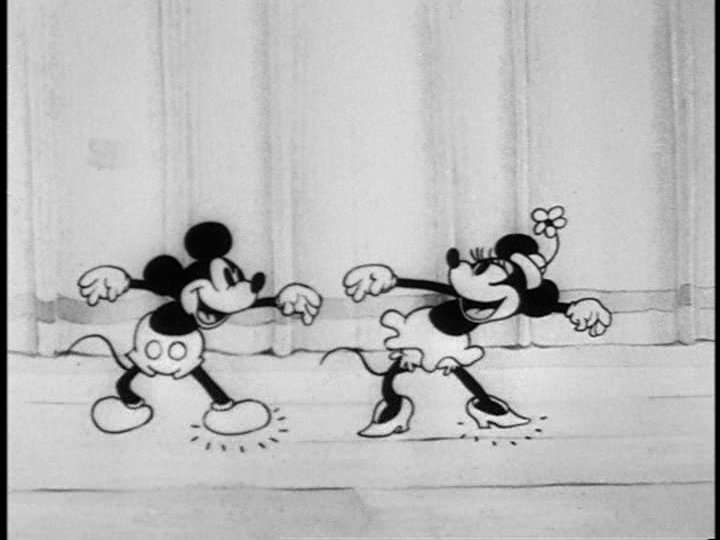
The curtain opens on a grand stage to reveal Mickey playing a piece on the piano. He soon switches genres of music from classical to jazz, and begins playing around with the piano keys. Minnie enters stage left and begins to walk in time to the music before singing “Saint Louis Blues” rather dramatically. Mickey finds gum under the piano and gets his fingers stuck to it, which causes him some difficulty playing Minnie’s song.

Mickey leaves the piano to join Minnie in scatting and dancing across the stage

Minnie moves on to perform some jazz scatting with Mickey leaving the piano to join her. The two then begin to tap dance across the stage, and leave as the background curtain rises to reveal Horace Horsecollar and other members of the orchestra continuing to play the piece. Mickey appears from a trapdoor and conducts the orchestra. Pluto, playing the trombone, keeps hitting Mickey in the back with the slide, which causes Mickey to break it in half in frustration.

The lights go out, and the orchestra stops in confusion before seeing the spotlight on Mickey, who puts on a crushed top hat and begins to play the clarinet. The orchestra once again continues to play, and the concert ends with the stage falling apart thanks to their spirited playing.

August 13

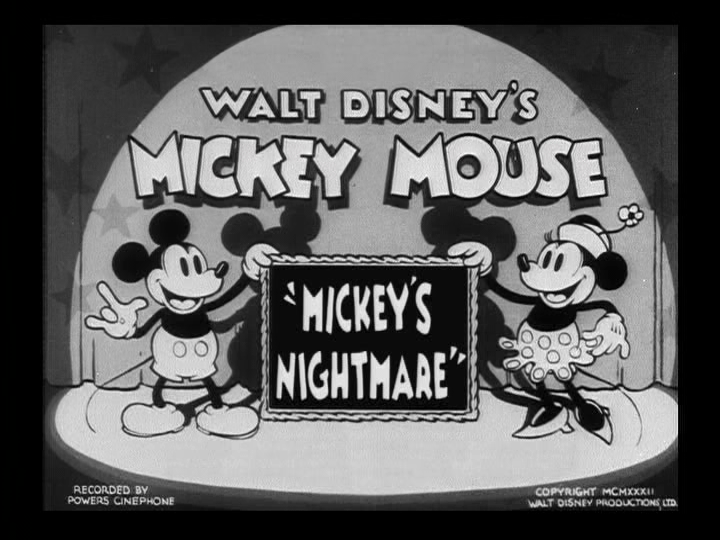
August 13, 1932 – The Mickey Mouse Short Film Mickey’s Nightmare is Released to Theaters

“God bless Minnie, God bless Pluto, God bless everybody. Amen.”

On August 13, 1932, the Mickey Mouse short film Mickey’s Nightmare was released to theaters. The short was directed by Burt Gillett, and stars Pinto Colvig as Pluto and Walt Disney as Mickey Mouse.

Mickey gets ready for bed, giving a kiss to the photo of Minnie on his nightstand before extinguishing his candle. While he snores away, Pluto sneaks onto his bed and begins licking Mickey’s face, which Mickey interprets as Minnie kissing him in his dreams. The dream begins with Mickey presenting Minnie with a rather large diamond engagement ring while wedding bells chime in the background. The happy couple are seen at their wedding, which is soon followed by married bliss at a house in the country with a “heart” motif.

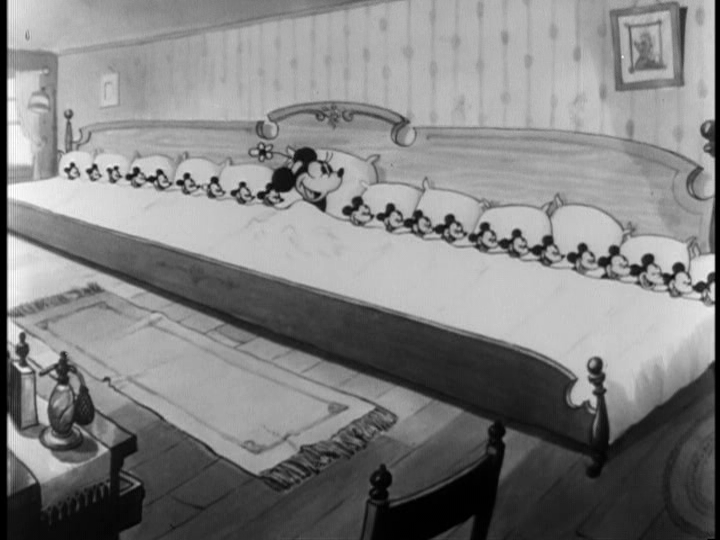
Mickey enters his room in horror to see that he and Minnie have been presented 21 children by the stork

While Mickey is watering the lawn, the shadow of large bird passes overhead, and Mickey looks up in alarm. The bird is actually the stork, bringing a present for the happy couple. Mickey, proud to now be a father, shakes hands with Pluto. Suddenly, more storks appear with more bundles of joy, dropping them down the chimney of the house. Mickey, alarmed, runs inside to see Minnie and 21 children all tucked into one bed. The children greet him and begin to run around wildly. Mickey and Pluto try to escape, but are trapped.

The children begin to wreak havoc around the house, throwing kitchen knives and dressing Pluto in a corset and heels. Mickey tries to stop them, but to no avail: there are just too many children. At one point, the children grab buckets of paint and begin to paint the house, with one using the cat and another using the parrot as paintbrushes. Pluto finds himself painted with stripes; when he tries to hide in the washing machine, one of the children starts it up.

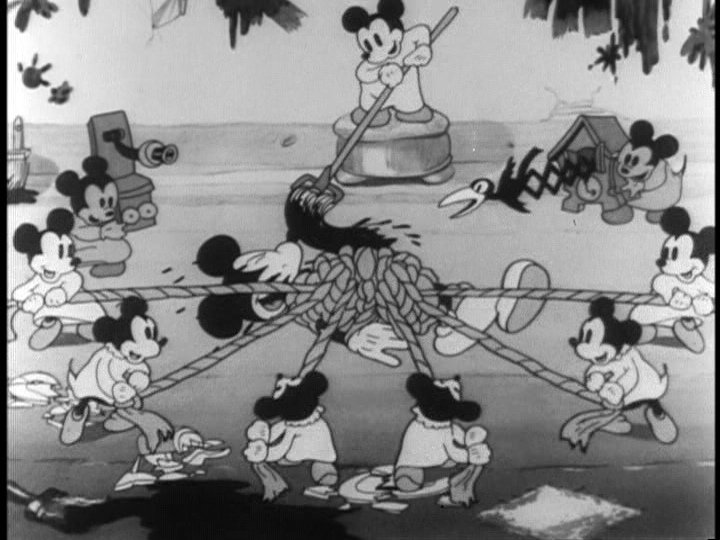
In his nightmare, Mickey is trapped by his children, with one of them painting his face with a mop

Mickey soon finds himself tied up and held hostage by the children as one paints his face with a mop. He awakes to find himself tied in his sheets, with Pluto happily licking his face. He rejoices in the fact that it was all just a nightmare, and gives out a shout of delight.

July 28

July 28, 1931 – The Silly Symphony The Cat’s Out is Released to Theaters

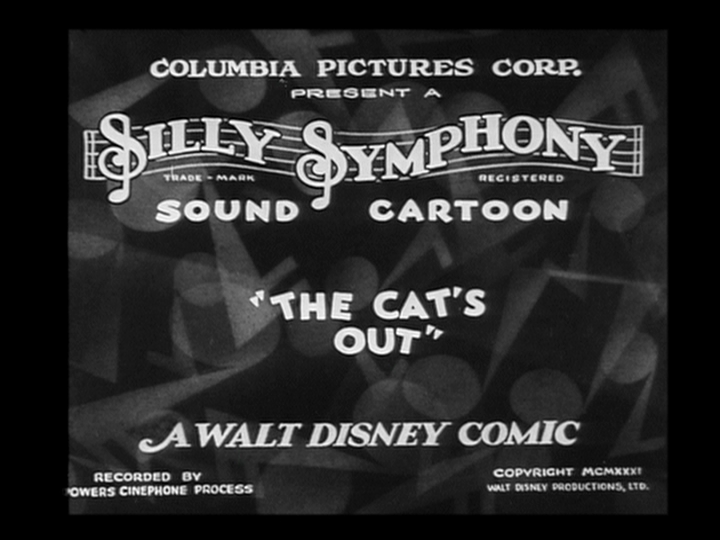
On July 28, 1931, the Silly Symphony The Cat’s Out was released to theaters. It has been copyrighted as The Cat’s Nightmare, but the studio now refers to it by its original name. The short was directed by Wilfred Jackson.

A cat is put out for the night outside a country home, and howls at the door before going off to explore.­­ As he perches on a fence, still howling, neighbors begin to throw shoes, and one lands on the cat’s head. He runs away in a flurry, falls off the fence, and lands in a washtub. After drying himself, the cat hears a bird chirping from its perch on a weathervane.

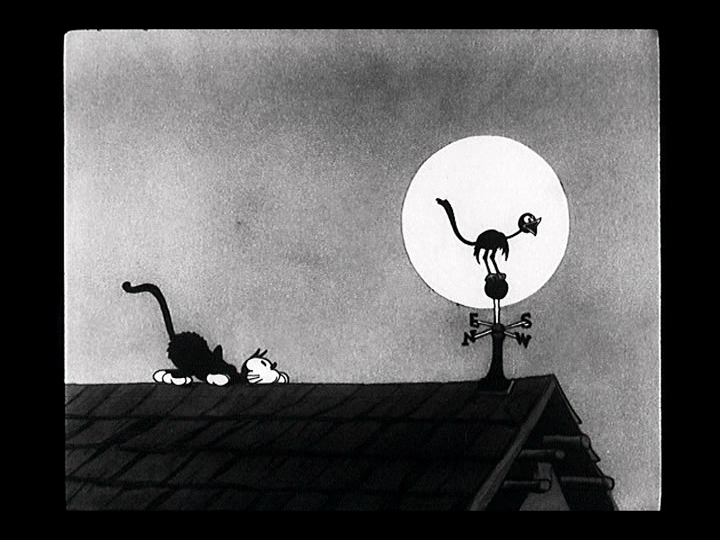
The cat carefully stalks his prey, which is perched on the weathervane

The cat, now suddenly hungry, stalks the bird, waiting for his chance to attack. He catches the bird by the tail just as it takes off, and tries to remain on the roof by wrapping his tail around the weathervane. Unfortunately, he loses his balance and falls, ripping the vane from the roof. As he lands on the ground, the vane falls soon after, landing on his head. The cat’s lives begin fleeing to heaven, but he is able to grab his last one and save it. The bird he chased shows up, and as he is about to grab it again, it triples in size and begins to taunt the cat.

The cat, annoyed by the taunting, punches the bird. As his feathers fly off, the feathers become more birds, which circle the cat and taunt him mercilessly, trying to peck him with their beaks. Suddenly, the birds disappear, and a herd of owls in the trees scares the cat. He runs to hide behind a bucket, but the water pump, now alive, dumps water on him. The startled cat runs into a pole and knocks down a scarecrow. As the cat hides behind a pumpkin, the scarecrow comes to life and begins to dance. The multiple dancing scarecrows appear and dance together before they merge back into one scarecrow again, who climbs back on his pole.

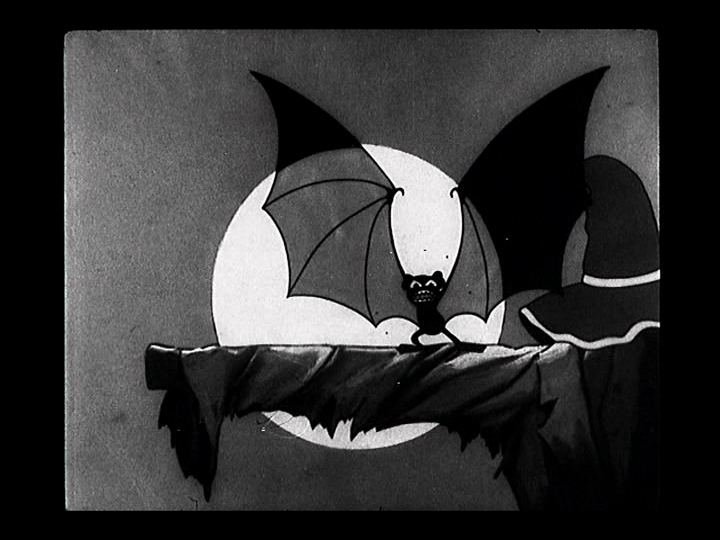
A bat appears from under the scarecrow’s hat and begins to dance in the moonlight, which frightens the already scared cat

From under the scarecrow’s hat, a bat appears and begins to dance in the moonlight. The terrified cat throws the pumpkin at the bat, which turns into a flock of bats that swarm the cat. The cat flees, only to find himself trapped at the mercy of giant spiders. As they attack, he is able to escape them, but everywhere he goes, he finds more trouble: trees come to life and beat him, and the bird laughs at the cat’s misfortune.

The cat wakes to find that it has all been a dream, and it’s now morning. He goes to the door of his house and howls, hoping the owner will let him in. The owner opens the door and the cat steps inside while the owner grabs the bottle of milk, then shoves the cat back outside. Angrily, the cat paws at the welcome mat, then blows his master a raspberry before haughtily walking away.

July 25

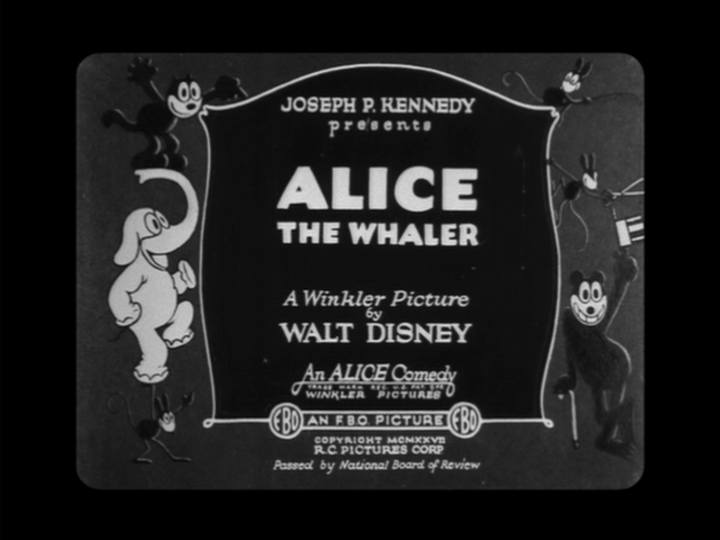
July 25, 1927 – The Alice Comedy Alice the Whaler is Released to Theaters

“Thar she blows!”

On July 25, 1927, the Alice Comedy Alice the Whaler was released to theaters. This was the third to last Alice Comedy produced by the Disney Studios, and stars the fourth and final actress to play Alice, Lois Hardwick.

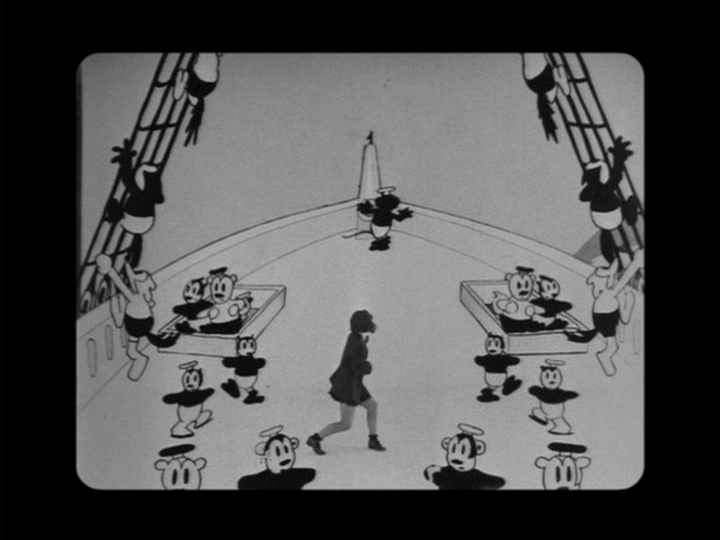
It’s a turbulent day at sea, but Alice and her crew are having a merry time on the ship’s deck, dancing and playing sea shanties. One of the members of the crew is doing a wonderful job miming, up to the point where, as he pretends to pull on a rope, he pulls down an anvil that lands smack on his head, which causes Alice to laugh. In the kitchen, members of the crew are hard at work, with the chef capturing the chicken trying to escape from the pot, and a mouse hard at work peeling potatoes. The mouse tries to save the dishes that keep falling out of the cupboard due to the ship’s rocking, but they end up crashing to the floor in a giant mess. When the chef sees the broken dishes, he demands that he head out to get eggs.

Alice and her crew gather to their stations when a whale is spotted nearby

The mouse stands on the top of the mast, trying to catch any of the birds that are flying past, and ends up on the back of one. He smacks it on the head to beat it into submission, and finally gets it to land on the deck. He demands that it lay eggs, but it can’t, until the mouse finds a way for it to do so. Delivering the eggs to the chef, the chef then demands that the mouse go get some milk; when he attempts to beat the mouse for his insubordination, the chef ends up breaking the eggs. The mouse goes to the goat to milk her, but the rocking of the boat makes this a rather difficult task, until the mouse nails the goat’s feet to the floor. Julius, Alice’s feline friend, spots whales frolicking in the waves, and everyone quickly sets to work. The harpoon is let loose, and the whale leaps in pain as it gets caught on the tail. Unfortunately for the crew, the short ends with the ship being dragged across the ocean by the whale.

July 18

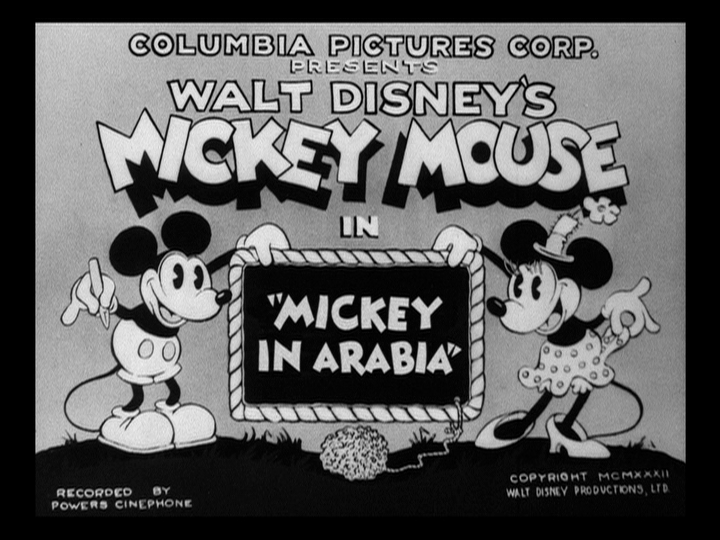
July 18, 1932 – The Mickey Mouse Short Film Mickey in Arabia is Released to Theaters


“Alley-oop!”

On July 18, 1932, the Mickey Mouse short film Mickey in Arabia was released to theaters. The short was directed by Wilfred Jackson, and stars Walt Disney as Mickey Mouse and Marcellite Garner as Minnie Mouse.

Mickey and Minnie are vacationing in the Middle East, and are seen riding a rather unusual camel through the desert. They enter a city and pull to a stop, looking around at the strange new sights, including a snake charmer taming several cobras. Mickey and Minnie leave the camel to drink from a nearby beer barrel, and the two explore the city and take pictures. As Minnie is setting up a shot, an evil sheik captures  and rides off with her, while Mickey attempts to pursue them on his drunken camel.

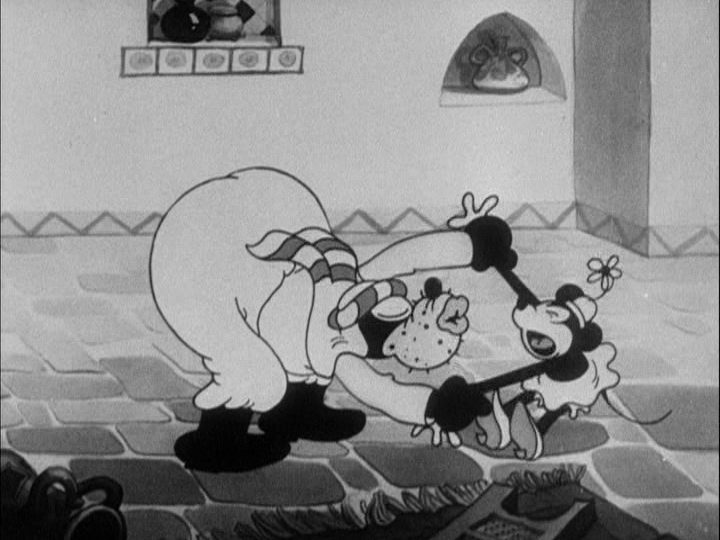
Minnie struggles to avoid kissing the sheik, who has kidnapped her and taken her to his castle

Minnie is taken to the sheik’s castle, where the sheik tries to get Minnie to kiss him, but to no avail. Mickey climbs the castle walls to come to Minnie’s rescue, diving in the room and kicking the sheik out of the way. As he and Minnie try to flee, the sheik’s soldiers stop them at every turn. The sheik, blinded by his turban, pulls out two pistols and begins to fire wildly, while every member of his army hides in terror.

Mickey hides Minnie in a vase and tries to open the door, only to find it locked. The sheik, finally removing his turban from his eyes, throws a sword at Mickey, but misses thanks to Minnie’s scream. Mickey grabs the sword, not realizing he’s grabbed only the hilt, and charges at the sheik. Suddenly realizing that the sword’s blade is missing, Mickey ducks, tripping the evil sheik and sending him flying. Angered, the sheik throws all sorts of swords at the mouse, who dodges them. Mickey hides behind a board, where all the swords land, and throws all of them back at the sheik, tearing the shiek’s clothes to shreds in the process.

Mickey and Minnie watch in horror as the sheik has followed them and attempts to jump onto their perch

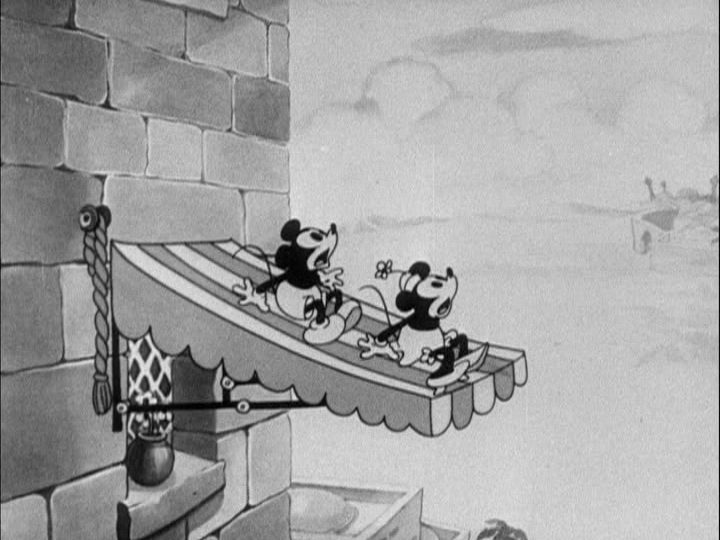
As the sheik pursues them in his holey long-johns, Mickey grabs Minnie and the vase she is hiding in and they flee up a tower. Mickey trips on the roof, sending Minnie flying. He saves her by her hat, but ends up falling from the roof himself. The lucky pair land on a veranda blind. The sheik leaps after them, but Mickey pulls the blind in, and the sheik lands head first in the sand. The guards throw their spears at the two as well, but with another pull of the blind, the spears land on the sheik instead. The happy couple jumps from their perch onto their camel’s back and ride off into the desert.

July 9

Posted on

July 9, 1932 – The Silly Symphony The Bears and the Bees is Released to Theaters

On July 9, 1932, the Silly Symphony short film The Bears and the Bees was released to theaters. The short was directed by Wilfred Jackson.

The short opens in the woods, where a bear and her two cubs are seen sleeping next to a river. The cubs wake up and begin to tussle, in turn waking up their mother, who roars at them before returning to her sleep. The cubs run off to play in the woods, and one of the cubs falls head first onto a rock and gets a rather large bump on his forehead. The other cub runs over and soothes the sibling’s injury before finding a berry bush and pulling off berries for a snack.

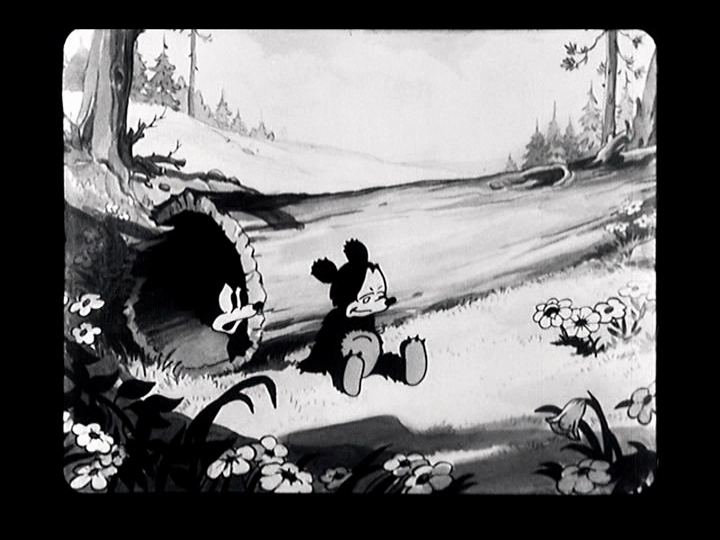
The cubs are bullied by a big black bear and take to hiding in a hollow log nearby

A nearby roaring alerts them, and a large black bear emerges from his cave, growling angrily. He runs to attack the two cubs before eating from what appears to be his berry bush. When the cubs approach to grab just one berry to eat, the black bear startles them and sends them hurrying to a nearby log, where one of them begins to cry at the meanness of the other bear. The other cub tries to cheer the sibling by giving it flowers to eat. When a bee emerges from one of the flowers and begins to buzz around, the cubs follow it curiously.

The cubs spot a flower garden, with bees buzzing all around collecting nectar and taking it back to their hive in a hollowed-out tree. After the bees leave the hive, the cubs poke around inside it, delighted to know that the hive contains honey. They begin to eat the honey in the hive eagerly, until a bee comes back and sees them and sounds the alert to the other bees. Angrily, the swarm grows and immediately heads back to protect the hive.

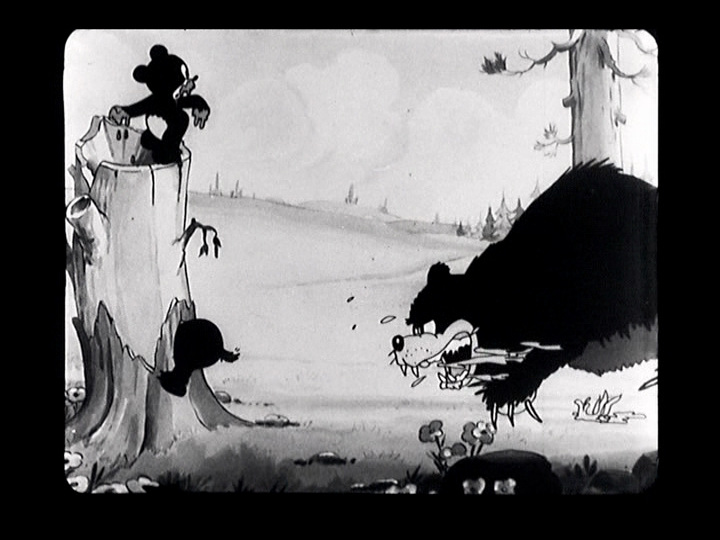
Meanwhile, the angry black bear has spotted the cubs and their honey, and decides he wants it for himself. He charges at the tree and throws the cubs aside, where they can only watch as the swarm heads for the hive and the black bear. The bees attack the bear, covering him with stings while his head is stuck in the hole in the tree. The bees continue their attack, stinging him with points from a plant and a tree branch, before delivering the final blow, sending the bear running for his life. The cubs take advantage of the bees’ disappearance and continue to eat from the now destroyed hive, enjoying all the leftover honey.