RSS Feed

Tag Archives: Births

February 16

February 16, 1904 – Birth of Song of the South Actor, James Baskett

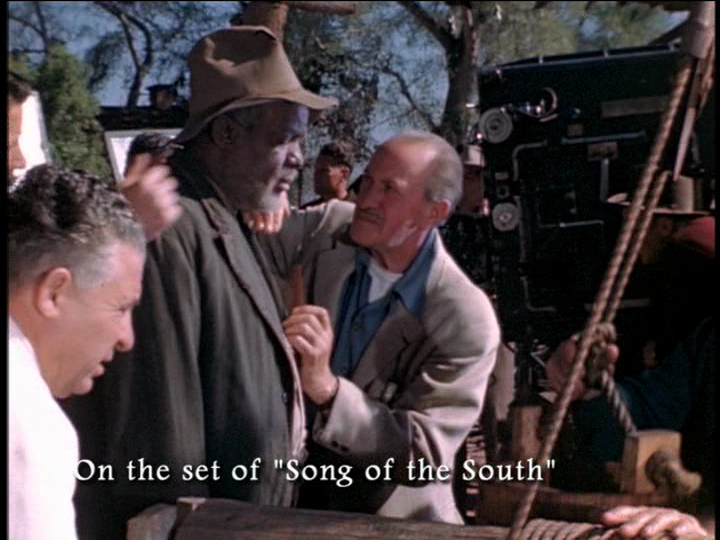
James Baskett (C), preparing for a scene in Song of the South

“[Baskett was] the best actor, I believe, to be discovered in years.” – Walt Disney

On February 16, 1904, James Baskett was born in Indianapolis, Indiana. In 1939, he moved to Los Angeles and had a supporting role in the film Straight to Heaven, followed by more supporting roles in Revenge of the Zombies in 1943 and The Heavenly Body in 1944. In 1944, he was asked to join the Amos ‘n’ Andy radio show, playing the lawyer Gaby Gibson.

In 1945, after spying an advertisement for open auditions, Baskett auditioned for a bit part in Disney’s upcoming film Song of the South, originally called Uncle Remus and based on the Joel Chandler Harris Uncle Remus stories, originally published in 1881. Baskett had little experience in film, but impressed Walt so much that he was offered the lead role of Uncle Remus. Baskett was also the voice of Brer Fox in the animated sequences, and the voice of Brer Rabbit when Johnny Lee was unable to do the voice for a sequence due to another commitment. Film critic Leonard Maltin remarked that Baskett was “ideal as Uncle Remus, eliciting just the right kind of warmth and humor, and later poignancy, from the character.”

After the film’s release, Walt continued to stay in contact with Baskett. This friendship led to Walt lobbying the Academy to give Baskett an Oscar for his portrayal, for Walt said Baskett worked “almost wholly without direction” and had devised the characterization of Remus himself. On March 20, 1948, Baskett was awarded an honorary Academy Award “for his able and heartwarming characterization of Uncle Remus, friend and storyteller to the children of the world, in Walt Disney’s Song of the South.” This made Baskett the first actor in a Disney film to win an Academy Award, as well as the first African-American man to win an Oscar. On July 9, 1948, only a few short months after this victory, Baskett died of heart disease at the age of 44. His wife, Margaret, wrote Walt Disney a thankful letter, telling Walt that he had been a “friend in deed and [we] certainly have been in need.”

Although Song of the South was the only film Baskett appeared in, due to his untimely death in 1948, the role, and film, are an important part of Disney history that should not be forgotten or brushed aside. Baskett, in my opinion, should be honored by Disney as a Disney Legend – without the warmth Baskett presented as Uncle Remus, Zip-a-Dee-Doo-Dah would not have been as memorable as it is now. The film is a victim of selective judgment by the critics: Gone With the Wind is lauded, although it truly does deal with slavery, whereas this film is set in the period of Reconstruction. Baskett’s portrayal of Uncle Remus shows a man who continues to keep a cheerful disposition, no matter what hand life has dealt him, and is truly respected by every other person in the film, from Bobby Driscoll’s Johnny, to Lucile Watson’s Grandmother. The range of emotion Baskett shows, including the dramatic scene after Jonny is attacked by a bull, only adds proof to what Walt told his sister Ruth, that Baskett was one of the greatest actors to be discovered in a long time. Baskett certainly could have achieved a lot had he lived longer, and it is a crime to let his legacy die, along with the technical and artistic merit of Song of the South by hiding this film away from the public. Baskett should be honored as a Disney Legend for his portrayal, plain and simple. He played Uncle Remus the way he should have been played: with warmth, wisdom, and a wonderful human being.


February 15

February 15 1899 – Birth of Disney Legend and Wife of Walt Disney, Lillian Disney

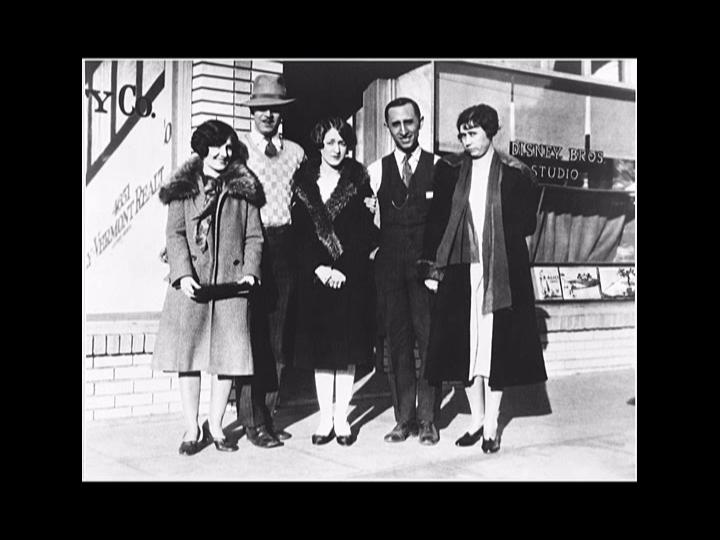
Lillian, far left, stands with Walt, his sister Ruth, Roy, and Roy's wife Edna, in a shot from 1925

“I think my dad fell in love with her almost immediately … she was an independent little lady.” – Diane Disney Miller

Lillian Bounds Disney, wife of Walt Disney, was born in Spalding, Idaho, in 1899 as the tenth and youngest child of the family. In 1923, she traveled to Los Angeles to visit her sister, and a friend of hers recommended her for a job at the Disney Brothers Studio as an ink and paint girl. There was one condition: “Don’t flirt with the boss,” her friend warned her. “He’s all business.” Lillian, however, had no intention of flirting with Walt; this was not a love-at-first-sight romance for either of them, for Walt was too consumed with the business, and Lillian was not impressed with the shabbiness of his clothes. She took the job due to its proximity to her sister’s house and the salary of fifteen dollars a week.

Walt would drive Lillian and another coworker home after long days at the studio. Lillian later said, “When Walt started dropping the other girl off first so he could talk to me, I knew he was interested.” She also admitted that during these rides home, she started to see Walt differently, looking at him “like he was a somebody.” One evening as he dropped her off, he informed her, “I’m going to buy a new suit. When I get it, would it be all right if I called on you?” Lillian said that it would, and when Walt got his new suit in celebration of a check for their films, he arrived at her house and asked her eagerly about the suit. They dated steadily after that, and on July 13, 1925, Walt and Lillian were married. From then on, Lillian worked at the studio only in times of emergency.

One of the major contributions attributed to Lillian involved Walt’s famous creation, Mickey Mouse. While the story of Mickey’s creation has been shrouded in legend and mystery, the one common factor is that Lillian came up with the name for the new character. Walt wanted to name the mouse Mortimer, but Lillian decided that the better name would be Mickey, and he agreed.

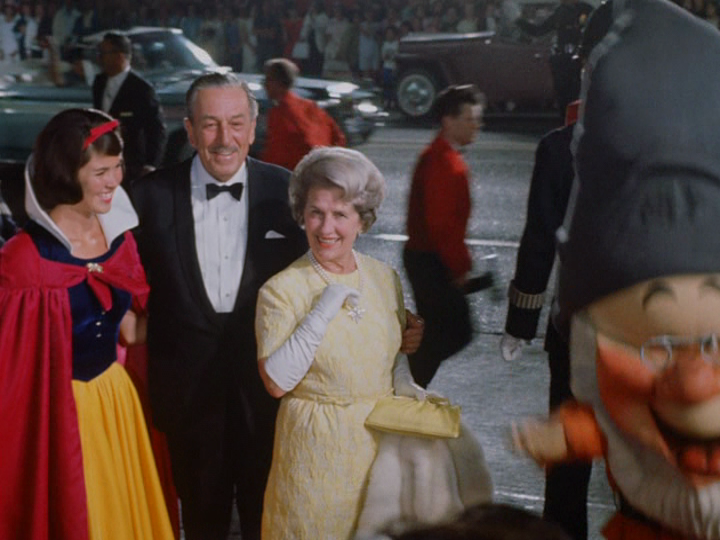
Lillian accompanying Walt to the premiere of Mary Poppins

Lillian was not one to meekly listen to Walt, nor was she one to care about what the press reported about him. Walt once told a reporter that Lillian didn’t care what reporters would say about him. “I keep reporters away from her,” he explained. “She’s given them the lowdown.” Perhaps the success to their long marriage was the fact that Lillian was never overly impressed by Walt and his accomplishments. She did worry when he worked long hours, but overall, she didn’t regard him as a genius, as most people did. Walt, however, would show her affection by either physical actions, such as wrapping an arm around her, or learning how to dance so they could dance together during social functions.

After Walt’s death, Lillian stepped in the public arena to lend support to the Florida Project, which would be renamed Walt Disney World in his honor. She attended the dedication ceremony in 1971, saying, “I think Walt would have approved,” when asked what Walt would have thought of the park. She continued her late husband’s support of education by providing financial gifts to the California Institute of the Arts, particularly to remodel a campus theater in 1993, which was renamed the Walt Disney Modular Theater. In 1987, Lillian announced a $50 million gift to build a symphonic hall for the Los Angeles Philharmonic Orchestra, now known as the Walt Disney Concert Hall. The building was designed by architect Frank Gehry and opened in 2003.

In 1969, Lillian remarried to John L. Truyens, but he unfortunately died in 1981. Lillian herself passed away on December 16, 1997, after suffering a stroke at the age of 98. She was named a Disney Legend in 2003, honoring all of her contributions in support of the company’s growth.

February 11

February 11, 1918 – Birth of Disney Legend Blaine Gibson

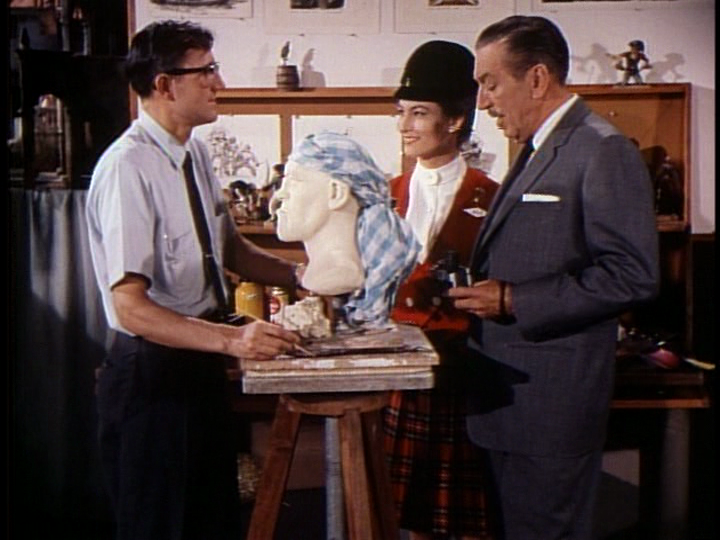
Gibson (L) showing Julie Reihm and Walt Disney one of the scultpures for the Pirates of the Caribbean attraction

“…I was told Walt was expecting me to work on these projects. So I said to myself, ‘what the heck’ and went (to Walt Disney Imagineering). I was never sorry after that.” – Blaine Gibson

Born February 11, 1918, in Colorado, Blaine Gibson joined the Walt Disney studios in 1939, working as an inbetweener and assistant animator. Gibson built up an impressive resume working on the films Fantasia, Bambi, Song of the South, and Peter Pan, just to name a few. Gibson would work on sculpting in his spare time, and when Walt saw an art exhibit with Gibson’s sculptures in 1954, he asked him to help work on special projects for the upcoming Disneyland.

In 1961, after doing part-time work for WED Enterprises, Gibson left the animation arena and began sculpting full time. Gibson ended up heading the sculpture department, working on most of the heads of the Audio-Animatronics characters, including 41 presidents for the Hall of Presidents at Walt Disney World (the last being Bill Clinton), and the pirates for the Pirates of the Caribbean attraction. Gibson makes an appearance in the Wonderful World of Color episode Disneyland 10th Anniversary, showing Disney and Julie Reihm one of the heads of the pirates he’s been working on. Reihm notes that the pirate looks rather angry, to which Gibson responds, “Well, he has to be a tough guy. The pirates were pretty tough.”

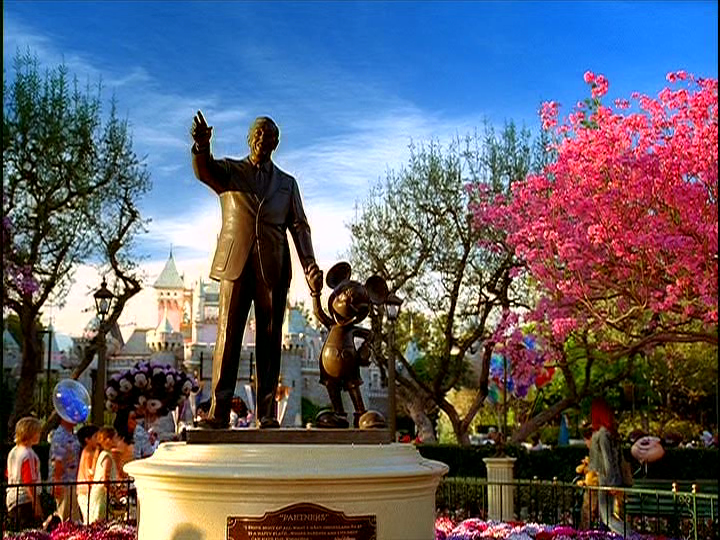
The Partners statue Gibson designed, located in the hub of Disneyland

One of the most recognizable works of Gibson’s is the “Partners” statue in the Central Hub of Disneyland, which depicts Walt Disney holding hands with Mickey Mouse. It was finished in 1993, the same year Gibson was named a Disney Legend, and the statue has become a symbol of Disneyland itself. Gibson retired from the company in 1983, but continues to consult on projects, including The Great Movie Ride in Walt Disney World.


February 7

February 7, 1947 – Birth of Disney Legend Wayne Allwine, Former Special Effects Technician and Former Voice of Mickey Mouse

“Wayne was fond of saying, ‘We only carry the torch of these characters for a while, and then we pass it on.’ Well, he just carried it a little bit higher than anyone else.” – Bill Farmer, current voice of Goofy.

Wayne Allwine, best known as the third voice actor of Mickey Mouse, was born on February 7, 1947, in Glendale California. Active on stage and screen from an early age, Allwine ended up performing in bands until 1966, when he began to work for Disney in the mailroom, which was known as “traffic” in those days. Allwine recounts how he got the job at Disney, as well as how he became Mickey Mouse:


“I had wanted to work for Disney since I was a kid, but didn’t know how to get in. Well, one of the bands I was playing with, Tom Jackman’s father – Tom was the leader of the band – his father Bob Jackman ran the music department. And Bob gave me an application and a recommendation, and I started in the mailroom…way, way back when. And the thing that’s funny is a little known fact: Bob Jackman, after Pinto Colvig had left the studio, Bob supplied the voice for Goofy in several of the cartoons. So, in essence, Goofy hired the future Mickey…

“But I started out carrying mail. I saw Walt a couple of times, but we only spokeonce. He was very sick. [But] it was a magic time, it really was. 1966. John McCarthy was running traffic, as the mailroom was called back then, and just said, ‘Take a walk around, see what you wanna do.’ So I walked around, and the first thing I thought of, ‘Well, I’ve done some acting. Wardrobe looks like fun.’ Cause I love clothes, love clothes. Did that for a while. Went back into traffic and said, ‘Gee, I don’t really know what I wanna do, Mac. I might leave. I might leave for a while and just see what’s on the outside.’

“So great. I left, and I got a call about two months after I left, saying, ‘Would you like to come in and learn Jimmy MacDonald’s job?’ Now, at the time, I didn’t know who Jimmy was. ‘Sure. What am I supposed to do?’ ‘Follow Jimmy. Do everything he does.’

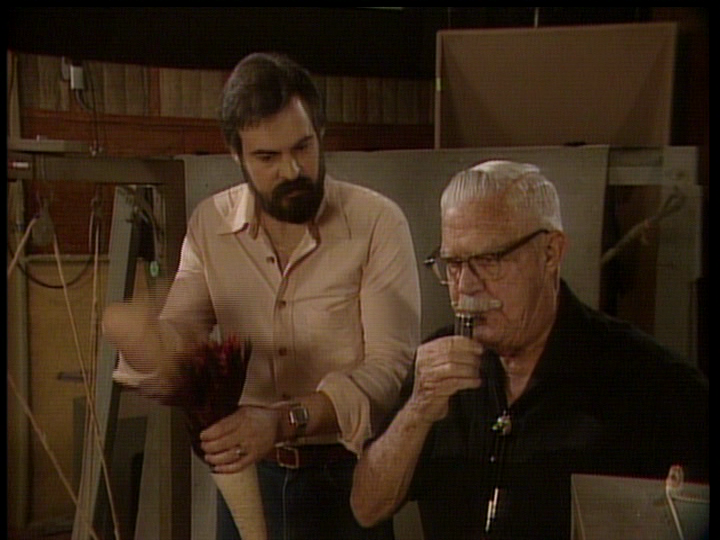
“So, I followed Jimmy, and I learned how to do sound effects. Jimmy only voiced Mickey for radio interviews; I think he was on the Dave Letterman show twice. But other than that, he didn’t do Mickey…he was having a rough time and couldn’t really voice Mickey any longer. And the studio had an open audition. An actor didn’t show up. There was a call from the soundstage: ‘Send the kid down. He works with MacDonald.’ Three months later Lou Debney stopped me and said, ‘Kid, you gotta join the Screen Actors Guild. They’re gonna use you.’

 “And that’s how I became Mickey Mouse.”

Allwine provided the voice for Mickey in Mickey’s Christmas Carol (1983), Who Framed Roger Rabbit (1988), Runaway Brain (1995), and The Three Musketeers (2004). He also voiced the character in the television shows Mickey’s Mouse Works, House of Mouse, and Mickey Mouse Clubhouse, as well as in the video game series, Kingdom Hearts. “The main piece of advice that Jim gave me about Mickey helped me keep things in perspective,” Allwine recalled in a 2004 interview with Leonard Maltin. “He said, ‘Just remember, kid, you’re only filling in for the boss.’ And that’s the way he treated doing Mickey for years and years…Mickey’s the real star. You know, you just have to love the little guy while you have him, because he won’t be yours forever.”

Allwine (L) working with some of the special effects tools designed by Jimmy MacDonald (R)

In addition to his voice acting, Allwine was an accomplished sound effects technician, winning an Emmy and a Golden Reel Award for his work in Steven Spielberg’s Amazing Stories, and another Golden Reel Award in 1986 for his contributions to the Disney animated feature The Great Mouse Detective.

One of the little known facts about Allwine is that in real life, he was married to the voice of Minnie Mouse, Russi Taylor. “It was just a total friendship, and the next thing you knew, we were just sort of like, always together,” Taylor said of how their relationship developed. On October 13, 2008, the couple were inducted as Disney Legends.

Mickey (Allwine) and Minnie (Taylor) together

On May 18, 2009, Allwine passed away at the age of 62. The game Kingdom Hearts 358/2 Days, his last vocal project as Mickey, was dedicated in his memory. “Wayne’s dedication to preserving the legacy of the character who began with Walt Disney himself was steadfast,” Tony Anselmo, voice of Donald Duck and close friend, said about Allwine. “He was one of the kindest men I ever knew, a true gentlemen, and funnier than any professional comedian. A truly gifted and talented man.” Allwin’s voice is still heard at parks around the world, as well as on television on the show Mickey Mouse Clubhouse. “It’s a great honor,” Allwine said of voicing Mickey. “It’s a great honor to represent what Walt loved so dearly, and what Jimmy kept alive so well.”


February 4

February 4, 1932 – Birth of Disney Legend Bob Allen

Image credit: Disney Legends at Disney Insider

“He was a great, great lover of people, and he showed it. When you met Bob Allen, he acted like you were the first person he ever met.” – Joe Potter, Disney Legend and former Vice President for EPCOT Planning.

Born on February 4, 1932, Disney Legend Bob Allen is best known for his work with Walt Disney World, becoming the Vice President of the park in 1977, as well as being one of Disney’s greatest goodwill ambassadors. He was born in Corona, California, and served in the Navy for four years around the time of the Korean War. After the war, he attended Long Beach State College, majoring in physical education. On a whim, he decided to apply for a job at Disneyland, and in 1955, he began to work in the park as a ride operator. His job was on the Casey Jr. attraction, where he blew a whistle if someone fell off the ride.

Allen moved around to various positions while working at the park, and by 1963, he was the production coordinator at Disneyland. In 1964, Allen moved to Denver, Colorado, spending two years as the manager of the Celebrity Sports Center, a sports facility built by a group of celebrity investors, including Walt Disney and Art Linkletter. Allen also worked as the project manager for the proposed Mineral King resort. Four years later, Allen came back to Disneyland as the director of General Services.

Allen helped prepare for the opening of Walt Disney World in Florida. In 1970, he moved to Florida to work as the director of General Services, and was soon promoted to Vice President of the Resorts Division. On January 1, 1977, Allen was promoted to Vice President of Walt Disney World. Under Allen’s leadership, Walt Disney World was able to thrive, and he continued to work on its long-range plans until his death on November 8, 1987. He was named a Disney Legend at the October 16, 1996, ceremony.


January 29

January 29, 1915 – Birth of Disney Legend and Storyman Bill Peet

“As Bill Peet himself once said, ‘There were 40 people who were assigned to these jobs in the golden age of Disney animation. Now they were all being performed by one man…me, Bill Peet.’” – Neal Gabler, author of Walt Disney: Triumph of the American Imagination.

Bill Peet was born on January 29, 1915, in Grandview, Indiana. He showed promise as an artist at an early age, never imagining he could make a living out of bringing fanciful stories to life. “My favorite room in the house was the attic,” Peet wrote in his autobiography, “where I enjoyed filling fat five-cent tablets with a hodgepodge of drawings. Drawing became my number one hobby as soon as I could manipulate a crayon or pencil well enough to put my favorite things on paper…I must have drawn fairly well or I couldn’t have enjoyed it so much.” His drawing hobby, however, got him in trouble at school—he recalled that his margins were so full of drawings, he obviously didn’t pay a lot of attention to his teachers. During high school, he won a scholarship to the Herron Art Institute, now part of Indiana University.

In 1937, Peet moved out West to find work. Jobs were scarce as this was the middle of the Great Depression, but he heard that Disney was looking for artists, so he tried his luck. Peet was hired to be an in-betweener artist, which meant he assisted with the final drawings of characters for Snow White and the Seven Dwarfs. Being an in-betweener meant one was at the bottom rung of the animating ladder, and Peet was very frustrated. He was driven, and he knew that his place was in the story department. He was given his chance about a year later, and the chances he got were highly regarded. One of his scenes was in Dumbo, where the baby elephant is bathed by his mother, and it is regarded as one the best early examples of Peet’s work. From that time, he was one of Disney’s main storymen. As animator Will Finn put it, “[Peet’s] fingerprints are all over the Disney classics as a storyman, from pretty much Pinocchio on.”

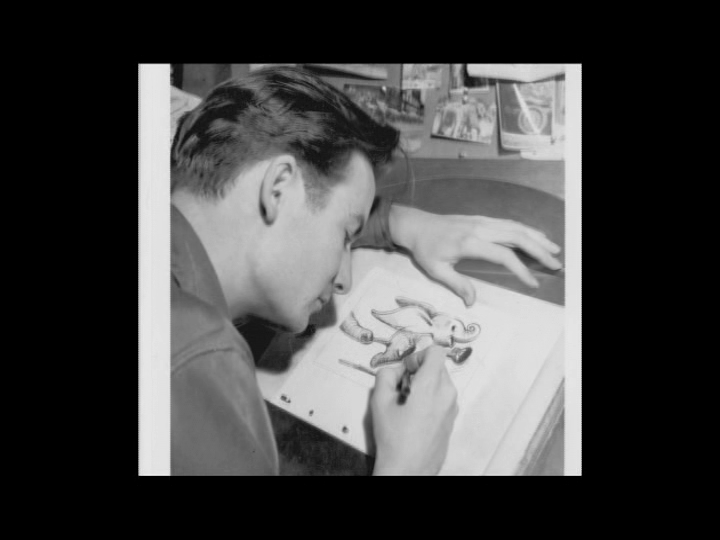
Peet working on a scene in the film Dumbo

Whenever there was a story problem in the feature films, Walt Disney would bring it to Peet to fix. Peet’s ability to handle the story department helped free Disney’s interests when he began to diversify between the new medium of television, the parks, and the live action films. While Peet worked on story for films, starting on Fantasia and Sleeping Beauty, his best work was on the film One Hundred and One Dalmatians, where he was the sole developer of the story. Compared to the newer films, like Beauty and the Beast, where there were fifteen people working on the story and storyboards, Peet did all the work by himself. Disney Historian Brian Sibley noted that “Peet was a master storyteller, and he structured [One Hundred and One Dalmatians] to make it a story that is so focused, so controlled…that you follow the story with an effortlessness…so much so, in fact, that Dodie Smith wrote to Bill Peet and said that he had, in fact, improved on her book. Which is quite a complement when you think about it.”

There was always a contentious relationship between Disney and Peet. Peet brought in the 1938 novel The Sword in the Stone to Disney’s attention, and Disney asked Peet to write the screenplay. After Peet complied, Disney approved the film for production. The film, however, did not do very well, which caused Disney to become more critical of Peet’s methods. When Peet began to work on The Jungle Book, which he also had proposed to Disney, he read and reread the book, coming up with the story sketches. The version of the film Peet came up with, however, was not the kind of film Disney wanted to see. The two men, both highly imaginative and stubborn, could not reach an agreement on the film, and after twenty-seven years together, Peet left the studio and never returned.

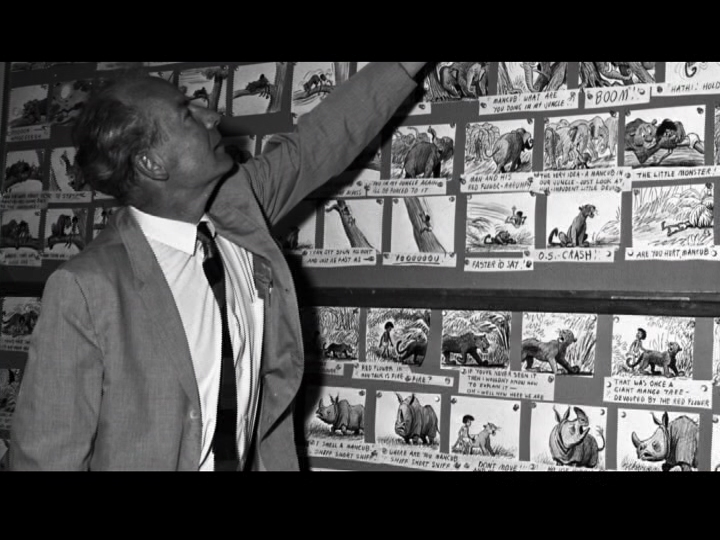
Peet with the storyboards for the last film he worked on, The Jungle Book

After leaving Disney, Peet began a successful career as a children’s book author. “When it came time for the used book sales,” Peet wrote in his autobiography, “my illustrated [schoolbooks] were best sellers. The kids loved my drawings and I suppose those books could be considered the very first ones I ever illustrated for children.” He wrote over thirty-five stories, which were translated into several languages. In 1989, he released his autobiography, which won several awards, including being named a Caldecott Honor Book. Peet was inducted into the Disney Legends at the October 16, 1996 ceremony. Bill Peet died in 2002 at the age of 87.

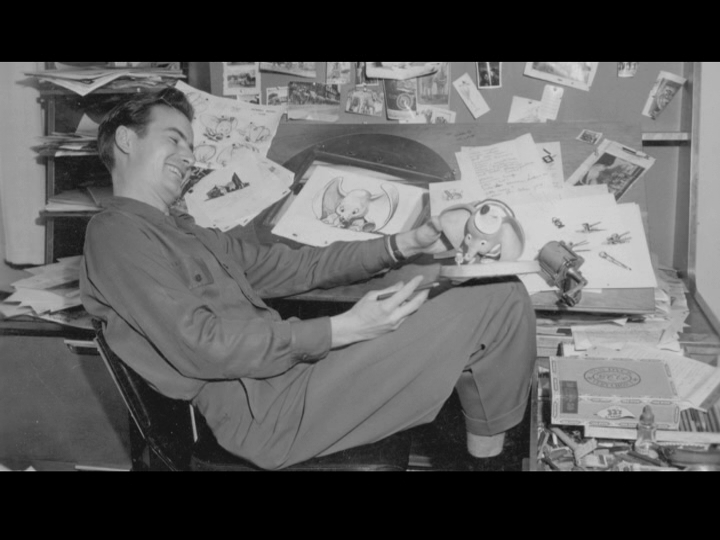
A young Peet working with a maquette of the main character Dumbo

Peet had an amazing ability to structure a story. While researching the sketches for One Hundred and One Dalmatians, animator Andreas Deja remarked that he “follow[ed] the sketches and you go, ‘Well, I’ll be…this is impossible. They didn’t change a thing.’ [The scenes] are exactly the way Bill Peet had envisioned it.” Coming from humble beginnings and rising through the ranks at a brisk pace, it’s interesting to see not only the talent that Peet had been born with, but how innate his instincts were when it came to story. Without Peet’s skills to carry on while Walt Disney’s interests diversified, there probably wouldn’t have been Disney animation in the ’60s, which led to the Disney Renaissance. Based on all of the influence Bill Peet had, one could argue that he helped keep the story of Disney animation alive for decades to come.

January 18

January 18, 1941 – Birth of Disney Legend David Stollery.

David Stollery's title card from the serial Annette.

“I wonder how many Celica-driving ‘Mickey Mouse Club’ fans ever knew that ‘Marty’ designed their car?” – Tim Considine, Disney Legend and actor.

David John Stollery III was born January 18, 1941, in Los Angeles, into a show-business family, his father having been a radio announcer, and his mother a radio star while living in Portland, Oregon. At age seven, Stollery began his acting career by landing a role in a touring production of Medea, and was later voted Child Actor of the Year for his role in the production On Borrowed Time, starring actor Victor Moore. He appeared in several films, beginning with an uncredited role in the 1949 film A Connecticut Yankee in King Arthur’s Court, and getting his big boost as a feature actor in the 1951 film, Darling, How Could You! His Disney roles, however, gave him the most prominence as an actor.

Walt Disney saw Stollery perform on an episode of The Ray Milland Show, playing a young genius, and was convinced that the boy would be perfect for the role of Marty Markham in the upcoming Mickey Mouse Club serial, “The Adventures of Spin and Marty,” co-starring Tim Considine as Spin. The serial was very popular, and Stollery was quickly signed for two more “Spin and Marty” serials: “The Further Adventures of Spin and Marty” in 1956, and “The New Adventures of Spin and Marty” in 1957. Stollery also appeared in a serial starring Annette Funicello, simply titled “Annette,” in which he played the character Mike Martin. He also acted in two feature films for Disney: Westward Ho the Wagons! in 1956, and Ten Who Dared in 1960.

Stollery as Marty Markham in The Adventures of Spin and Marty.

Unlike most child actors, Stollery did not pursue acting as a fulltime career, instead opting to study design at the Art Center College of Design, and becoming an auto designer for General Motors. In 1973, he was hired by Toyota to manage the automotive design group, Calty Design Research, designing the second generation of the A40 Series Toyota Celica in 1978.

Stollery has mostly stayed out of the spotlight since his Disney days. His most recent on-screen appearance was a documentary in 2005 on the Walt Disney Treasures set, The Adventures of Spin and Marty, in which Stollery and co-star Tim Considine explore the property that was used as the set for the Triple R Ranch and share their memories of performing on the show. He was inducted into the Disney Legends at the October 9, 2006 ceremony.

January 17

January 17, 1913 – Birth of Disney Legend Claude Coats.

Claude Coats (L) showing the Pirates attraction to Julie Reihm and Walt Disney.

“His energy, curiosity and drive to create new experiences for our Disney park guests made him a leader and a teacher for all of us. He was a genuine one-of-a-kind.” – Marty Sklar, Walt Disney Imagineering President.

Claude Coats had a prolific career at the Walt Disney Studios: He began with creating the fantastical watercolor backgrounds in Pinocchio, and eventually became one of the lead developers of Walt Disney World attractions, including several World Showcase Pavilions at EPCOT Center. One of the few employees to receive a 50-year service award, Coats retired in 1984 after 54 years with Disney.

Born January 17, 1913, in San Francisco, Coats was raised in Los Angeles, and attended the University of Southern California, graduating with a Bachelor Degree in Fine Arts in 1934. He attended the Chouinard Art Institute, studying watercolor painting and becoming an active member of the California Water Color Society. Through the society, he was hired by Disney as an apprentice background painter in June 1935. Coats worked on backgrounds and color stylings of such films as Snow White and the Seven Dwarfs, Fantasia, Dumbo, Saludos Amigos, Make Mine Music, Lady and the Tramp, Cinderella, and Peter Pan. His watercolor background work on Pinocchio, however, continues to be lauded by animation critics and art collectors alike. Coats took the paintings of the village and Geppetto’s workshop by artist Gustaf Tenggren, and turned them into backgrounds “with the most appetizing appeal,” said animation historian, John Culhane. Coats’ eye for color was also used on several acclaimed short films, including The Old Mill and Ferdinand the Bull, both Academy Award winners.

Coats took on a new role in1955, when he became one of the elite artists brought in to work with WED Enterprises (now known as Walt Disney Imagineering). As part of the development team for several attractions, beginning with Mr. Toad’s Wild Ride, Coats helped bring Disney’s vision for Disneyland into being. He worked on several popular attractions, including The Haunted Mansion, Pirates of the Caribbean, Snow White’s Scary Adventures, and Submarine Voyage. Coats and Imagineer Herb Ryman were tasked with the darker rides in Fantasyland, including Peter Pan’s Flight. Coats also used his skills while working on the The 1964 New York World’s Fair attractions, including The Carousel of Progress and It’s a Small World.

Coats appeared in the Disneyland 10th Anniversary Episode on Walt Disney’s Wonderful World of Color (see the January 3rd entry), introduced by Walt as “the Imagineer in charge of the pirate project.” He explains staging a scene in the Pirates of the Caribbean attraction, where one character is being forced to walk the plank, to Walt and Julie Reihm during the episode.

Coats went on to design attractions for Walt Disney World, including The Mickey Mouse Review, Universe of Energy, and several World Showcase pavilions. He also worked on the international parks, including the Cinderella Castle Mystery Tour for Tokyo Disneyland. After 54 years of work for the Disney Company, Coats retired in November 1984, and was inducted as a Disney Legend at the October 22, 1991 ceremony. He passed away in Burbank, California, on January 9, 1992.

January 14

January 14, 1905 – Birth of Disney Legend Sterling Holloway.

“To be in the same recording studio with Sterling Hollowway was a great treat. I mean, the man was a consummate artist.” – Paul Winchell, the original voice of Tigger.

In Disney’s animated film history, there is no voice more recognizable than that of Sterling Holloway, whose charming tenor brought to life some of film’s most beloved characters, including his most famous role of the silly old bear, Winnie the Pooh.

Holloway was born on January 14, 1905, in Cedartown, Georgia. At age 15, he left Georgia to attend the American Academy of Dramatic Arts in New York, where he also found work in vaudeville and on the radio. He moved to Hollywood in 1926, working in silent films. With the advent of talking films, many actors found themselves out of a job, but Holloway was saved by his voice, which gained him many roles in comedies. Among the actors Holloway worked with were Fred MacMurray, Clark Gable, Marlene Dietrich, and Dick Powell.

In 1941, Holloway had his first role with the Disney Studios, playing the messenger stork in Dumbo. This led to several other voice roles in the feature films, including adult Flower in Bambi, the Cheshire Cat in Alice in Wonderland, and the narrator of the Peter and the Wolf segment in the package film Peter and the Wolf. He also voiced the character Kaa in The Jungle Book, where he sang the song “Trust in Me.” Holloway also narrated various short films, such as the World War II propaganda short The Pelican and the Snipe, The Little House, and Lambert, The Sheepish Lion. One of his showcase shorts, however, is the 1953 classic, Ben and Me, which received an Academy Award nomination. Holloway played the character Amos, who contributed greatly to Benjamin Franklin’s career.

Holloway with Walt Disney

Holloway’s most beloved role, however, is that of Winnie the Pooh. In 1966, Holloway first voiced the role in the featurette Winnie the Pooh and the Honey Tree, which was later added as a segment in the 1977 film The Many Adventures of Winnie the Pooh. Around the same time, Holloway also made his way onto TV screens, starring in episodes of The Twilight Zone and The Baileys of Balboa. For Disney, he narrated a special called “Christmas at Walt Disney World,” as well as a combination animation and live-action special called “The Restless Sea.”

Holloway was inducted into the Disney Legends on October 22, 1991. On November 22, 1992, Holloway passed away at the age of 87, leaving behind a legacy of beloved Disney film characters.

January 12

January 12, 1957 – John Lasseter is Born

“There’s something about John that you kind of get the feeling that [the fact that something’s never been done before] doesn’t matter. I mean, [just because it hasn’t] been done before, doesn’t mean it can’t be done.” – Glen Keane, animator (The Little Mermaid, Tangled)

John Lasseter was born on January 12, 1957, in Hollywood, California, and was raised in Whittier. When he was growing up, cartoons were seen as “kidstuff,” and part of growing up was to leave the childish things behind, but Lasseter refused to shed his love of animation. “I even watched them when it wasn’t cool in high school,” Lasseter reminisced. During his freshman year, Lasseter found a book in the library that would set him on the path of his passion: The Art of Animation, by Bob Thomas. “When I was growing up, I loved cartoons more than anything else. And when I was in high school, I found this book, this old, ratty book, called The Art of Animation. And it was about the Disney Studios and how they made animated films,” Lasseter said. “And it was one of those things that just dawned on me: people make cartoons for a living. They actually get paid to make cartoons. And I thought, ‘That’s what I wanna do.’ Right then, right there, it was like I knew that’s what I wanted to do.”

Soon after reading the book, Lasseter went to the movies to see a re-release of Disney’s The Sword in the Stone, and after seeing it, he proclaimed to his mother, an art teacher, that he wanted to be an animator for Disney. She encouraged his dream, and Lasseter began to send letters and drawings to the studio, receiving letters of support back. In 1975, Lasseter applied to the California Institute of the Arts (CalArts), was accepted into the first program that taught Disney-style character animation, taught by Disney’s great collaborators of the 1930s, the Nine Old Men. Lasseter found himself in an atmosphere where he didn’t have to hide his love of animation anymore, and was surrounded by those who had the same passion. His classmates included Brad Bird (director of The Incredibles), John Musker (co-director of The Little Mermaid), and Tim Burton.

Lasseter's class at CalArts, dated March 1976

There was no denying Lasseter’s talent at CalArts. Two of his student films won back-to-back Student Academy Awards: Lady and the Lamp in 1979, and Nitemare in 1980. His success brought him his dream job: he became a junior animator at the Disney Studios. Animator Glen Keane remarked that it was “. . . so great to meet John. There was this immediate sharing of information of your passion and excitement for animation, and he knew a lot about the history and the past.” To outsiders, Lasseter was touted as a new rising star. But inside the studio, animation had grown dormant. Budget cuts were taking their toll on animated films, leaving Lasseter brokenhearted. “This was not what I always dreamed Disney was,” he remembered.

The turning point came when employees of the studio were shown a screening of the 1982 film Tron. Lasseter and Keane became excited about the potential they saw in the use of computers for animation. They were able to get approval to experiment with a combination of computer background and 2D animated characters, first working on a 30-second test clip based on Maurice Sendak’s Where the Wild Things Are. Soon after, Lasseter got approval to work with his story team on a feature film based on the short story The Brave Little Toaster, which would mark his feature directorial debut. After eight months of development, Lasseter had a pitch meeting with the then-head of the studio, Ron Miller. Miller didn’t react favorably to the story, telling Lasseter that “[t]he only reason to do computer animation is if [they] could do it faster or cheaper.” A few mintues later, Lasseter was called down to a manager’s office with this simple but staggering message: “Well, John, your project is now complete, so your employment with the Disney Studios is now terminated.”

Don Hahn (producer for Beauty and the Beast) remarked, “He got fired, because, honestly, the studio didn’t know what to do with him. Even at that early day, this Disney Studio that he dreamed about working at, turned out to be a really dysfunctional place, in reality. And he was a born director, he was a born leader, and his expectation and passion excelled what the studio was doing then.” In 1983, while attending a computer conference in Long Beach, Lasseter ran into Ed Catmull, a speaker at the conference, and a comrade in the passion for 3D computer animation. Lasseter didn’t have the heart to tell Catmull he’d been fired from Disney, but did admit that Brave Little Toaster had been shelved. This was a great opportunity for them both, as Catmull, then working at Lucasfilm, needed to bring on someone who was a real animator. John was hired on the spot under the title of “interface designer,” so as not to alarm George Lucas, as they weren’t sure he would approve of hiring an animator for the technical team.

The Lucasfilm group.

Lasseter inspired the team to create software that would imitate the squash and stretch technique that had been taught in traditional animation courses. Inspired by the design of Mickey Mouse, as well as the limitations of what the computer could do, Lasseter created a character named Andre, made entirely of geometric shapes. The group at Lucasfilm’s first short film, The Adventures of Andre and Wally B, was premiered at the 1984 SIGGRAPH computer convention, and the crowd went wild over it. Lasseter made his way into the spotlight in 1989, when he and Bill Reeves won Oscars for Best Animated Short Subject for Tin Toy, the first ever awarded to a computer-animated film. “With each subsequent short film,” Steve Jobs explained, “John got more ambitious, and the team got more experience, and the software got better.”

To save Pixar, Lasseter pitched to Disney an idea for a half-hour Christmas special based on the award-winning short. Disney, on the other hand, was trying to lure Lasseter back to direct a feature film. But Lasseter was determined to stay with the struggling company. Eventually, Pixar and Disney reached a deal for a full-length animated feature: a story from a toy’s point of view, done in a 3D plastic world. The Pixar staff was elated, and Lasseter later recalled, “Ignorance is bliss. We did not know what we didn’t know.” After many trials and tribulations, including an entire scrapping of the “jumped-through-Disney’s-hoops” version of the film, Toy Story was released in theaters on Thanksgiving Weekend, 1995. Lasseter was awarded a special achievement Oscar for creating the first computer-animated feature film. The animation community was blown away, and audiences fell in love with the story.

Lasseter being presented with a special achievement Oscar.

Lasseter continued to push his animators with the next film, A Bug’s Life. Determined to beat the “second-product syndrome,” the animators pulled out all of the stops, and A Bug’s Life became the highest grossing animated film of 1998. After the international promotional tour of the film, Lasseter came home for a well-deserved break, while a secondary team began work on a direct-to-video sequel to Toy Story, which would be the first project not supervised by Lasseter. However, the film was not very good, although Disney had said it was good enough to release theatrically, and Lasster was asked to come in and help fix it. Nine months before its release, Lasseter scrapped the entire film over the course of a weekend and rewrote it. Jim Murphy, an animator at Pixar, had this to say about the rewrite: “John came back and pitched the story to the animation department. Just in that pitch, he totally fired everyone up and inspired everyone to really do the impossible.” In the end, Toy Story 2 was another success for Lasseter and Pixar, becoming one of those rare sequels considered as good as, or better, than the first film.

With Disney’s acquisition of Pixar in 2006, Disney finally got Lasseter back, only this time Lasseter was named the Chief Creative Officer of both studios, as well as the Principal Creative Advisor at Walt Disney Imagineering. He has acted in many roles since then, including executive producer for films including WALL-E and Tangled, director for Ponyo and Cars 2, and creative consultant on The Muppets. In 2007, Lasseter was inducted into the American Academy of Arts and Sciences, in honor of all of his achievements in the field of computer animation.

"So it’s become this way of working that the art challenges technology, technology inspires the art."

John Lasseter is one of my heroes, and a true example of why you should never let go of your dreams. There is so much to say on Lasseter’s influence, and it was hard to not start to write the entire history of Pixar, as the two go hand in hand. It’s interesting to see the development of a kid who tried to not be seen going to see a Disney film as a teenager, to one of the most influential people in the field of animation. The amount of dedication he and the other members of Pixar have put in their films, including their focus on story as much as their focus on the medium, is truly inspirational.