RSS Feed

Tag Archives: 2000s

March 23

March 23, 2000 – The Musical Aida Premieres on Broadway

“This is the story of a love that flourished in a time of hate.”

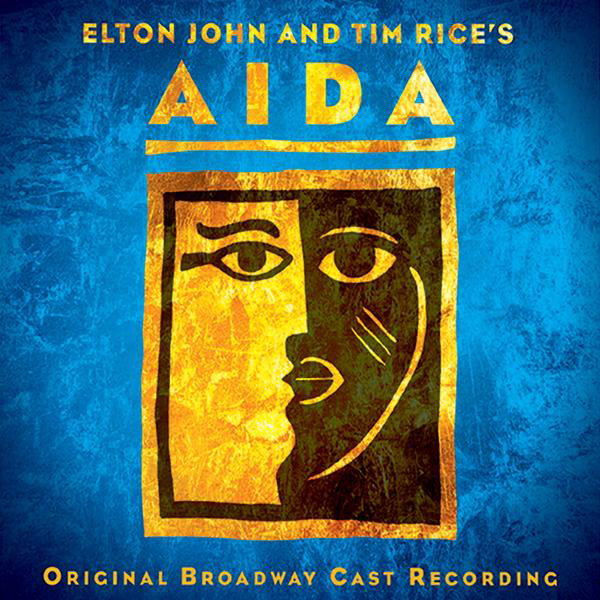
On March 23, 2000, the musical Aida premiered on Broadway. The music was written by Elton John, with lyrics by Tim Rice, and was produced by Walt Disney Theatrical. Based on the opera by Giuseppe Verdi, it tells the story of a forbidden love between the Egyptian military commander Radames and the captured Nubian princess Aida. The original cast starred Heather Headley as Aida, Adam Pascal as Radames, and Sherie Rene Scott as Amneris. Aida would go on to win the Tony Award for Best Original Musical Score, Best Actress in a Musical (for Heather Headley), Best Scenic Design, and Best Lighting Design.

The film began as a possible animated feature for Disney, conceived as another vehicle for Sirs Elton John and Tim Rice after their great success with The Lion King, but John suggested that it was a better story for a full-fledged musical production. The first production of the musical took place in Atlanta in September of 1998. It was revised after the showing there and shown in Chicago in November of 1999. After more revisions and recastings, the show premiered on Broadway on March 23, and closed on September 4, 2004, as the 34th longest-running show in Broadway’s history with 30 previews and 1,852 performances. A recording was released with the original Broadway cast on June 6, 2000; it won the Grammy Award for Best Musical Show Album.

March 13

March 13, 2007 – The Meet the Robinsons Single, “Little Wonders,” is Released

Image credit: Wikipedia

 “These little wonders, these twists and turns of fate.”

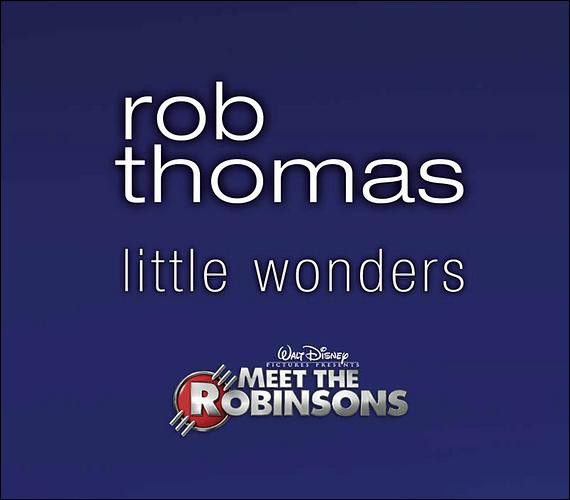
On March 13, 2007, as stated on iTunes, the second single for the Disney animated film Meet the Robinsons, called “Little Wonders,” was released. Written and performed by Rob Thomas, it was featured in the final scene of the film. It peaked at number 58 on the Billboard Hot 100, 57 on the Billboard Digital Songs, 11 on the Billboard Adult Contemporary, and 5 on the Billboard Adult Pop Songs.

Rob Thomas, on his Cradlesong album tour (I attended the Northern Virginia/DC leg of this tour), explained why he wrote the song:

“I wrote this song for my best friend who passed away recently, my dog Tyler, and years ago, I was with him when I was…supposed to write a song in between the last solo record and the last Matchbox record, and it was for this film, and I was finishing up being on the road and I was in a hotel in Phoenix. So my dog makes me take him for a walk and it’s a miserable night and it’s cold, and I’m upset probably about nothing at all in particular, just upset, and so I harness him up and I go outside, and I’m miserable. Again, probably for no reason. Miserable. And I look down, and I want some solidarity…but no man, I look down, and he’s [my dog is as] happy as he’s ever been his entire life, and he’s like ‘Dad, we’re freakin’ walking!’ My first thought was like, ‘Traitor’. Right? Immediately, ‘Traitor.’ I’m gonna trade him in and get a new dog, but then, I realize that this little guy knew more about life that I did cause right then, there was a moment that was happening. There was something going on and I was missing it and he wasn’t. And so this song was written about that. It’s about not letting those moments go by. Sometimes, you have an expectation, sometimes you’re waiting for something else to happen and while you’re waiting for something else to happen, life is passing you by, and these little moments are going by, just like us, right now, right here in Fairfax, man, this moment, don’t let it pass by, man. I love this night, I don’t want to forget it. Thank you very much for it. So this song goes out to Tyler.”

March 10

March 10, 2009 – The Official Disney Fan Club, D23, is Announced at the Disney Annual Meeting

Image Credit: D23 Website

“Are You 23?” – The teaser released to fans before the D23 announcement

At Disney’s annual meeting on March 10, 2009, CEO Robert Iger announced the formation of a new official club for devoted fans. The D, naturally, stands for Disney, with the 23 representing 1923, the year Walt Disney arrived in Hollywood and founded the earliest version of the Disney Studios. The goal of the club is to provide fans an inside look at the past, present, and future of Disney Studio projects.

The image used on the cover of the first issue of Disney Twenty-Three

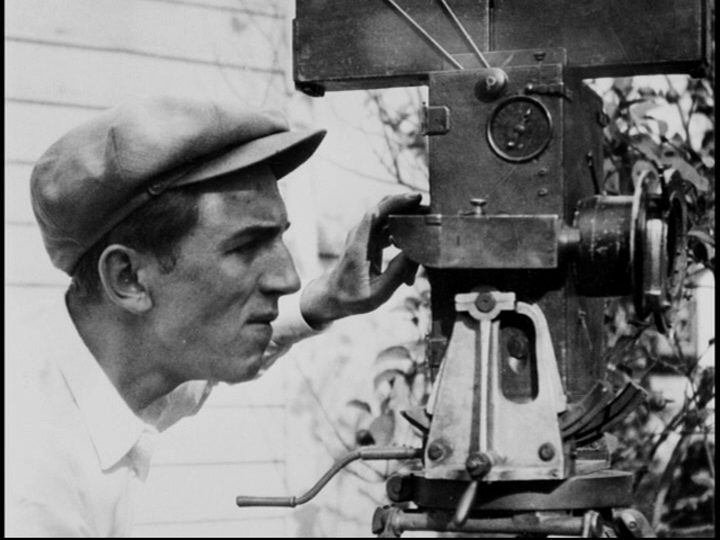
The first issue of the quarterly magazine, Disney Twenty-Three, featured a famous black-and-white image of Walt behind a camera, and included articles about the beginning of Disney archives by Dave Smith, a behind-the-scenes look at Tim Burton’s Alice in Wonderland, Pixar’s UP, the Broadway version of The Little Mermaid, and the design of the most exclusive accommodations at Disneyland and Walt Disney World. The charter membership also included a special gift from the archives—a limited-edition print of the new Mickey Mouse portrait, and a certificate of membership, as well as special offers and a special store on the online Disney Store. D23 also has a website with information, special videos, and other tidbits of history.

As a member of D23, I can tell you that the information the magazine provides is mind-blowing for any Disney fan. The scope of information each issue is broad; members can read about something from the parks in one article, to a special Disney project in another (an example being the Annie Leibovitz portraits of famous Disney scenes), to a behind-the-scenes look at a new movie. For anyone who loves Disney history and wishes to learn more, D23 is highly recommended.

February 22

February 22, 2009 – Pixar’s Wall-E Wins the Academy Award for Best Animated Feature

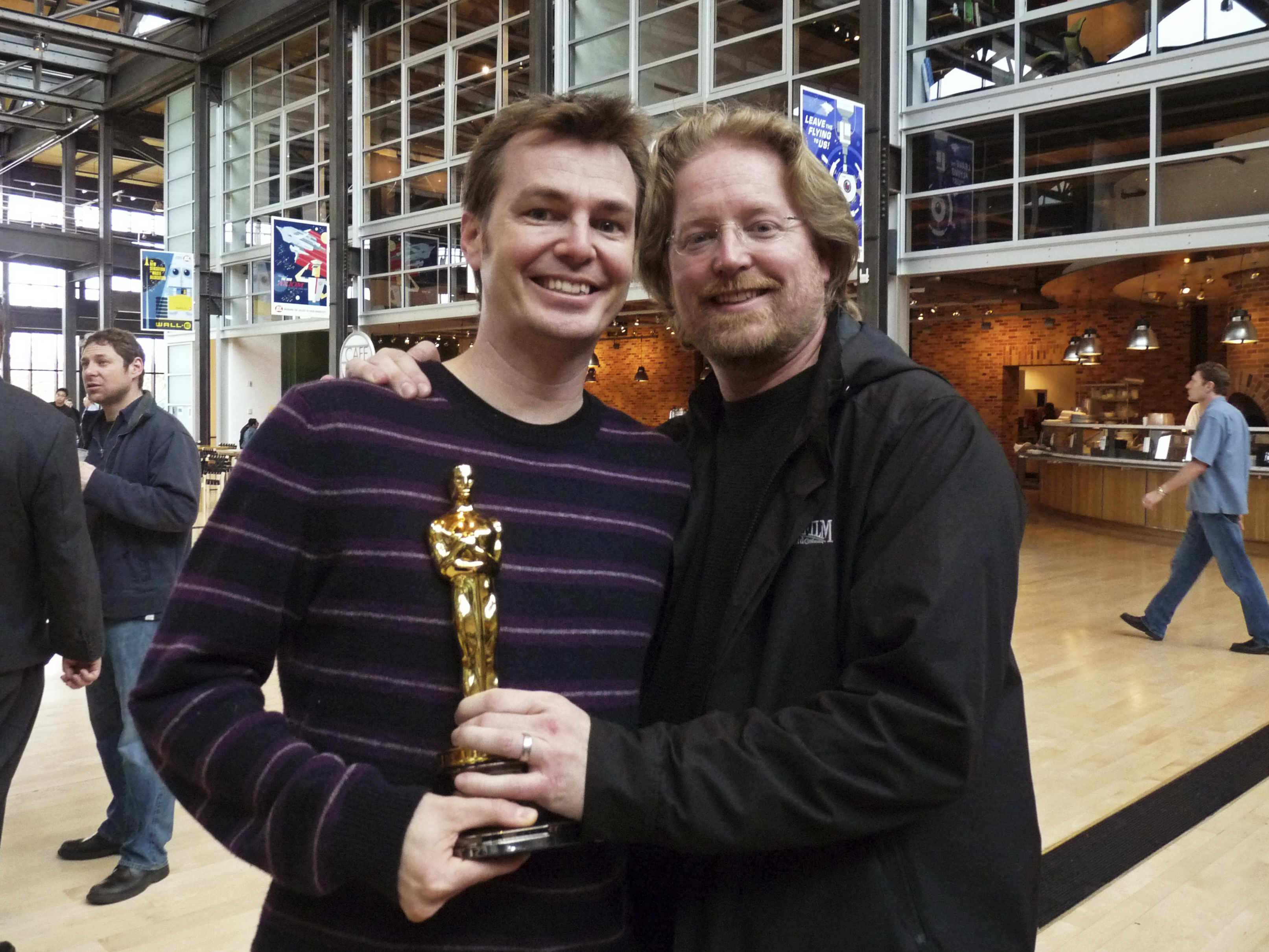
Andrew Stanton (R) with the Wall-E Academy Award. Image Credit: Wikipedia

“[We’ve] been trying for four years to make the best film possible and have it recognized in that regard in something like this – it’s huge.” – Andrew Stanton at the Academy Awards

At the 81st Academy Awards, broadcast February 22, 2009, the Pixar film Wall-E won the Academy Award for Best Animated Feature. The film was also nominated for Best Original Screenplay (written by Andrew Stanton, Jim Reardon, and Pete Docter), Best Original Score (by Thomas Newman), Best Original Song (Down to Earth by Peter Gabriel and Thomas Newman), Best Sound Editing (by Ben Burtt and Matthew Wood), and Best Sound Mixing (by Tom Meyer, Michael Semanick, and Ben Burtt). This award would be the fourth win for Pixar in this category since the creation of the Best Animated Feature category in 2001. Many critics voiced their surprise that Wall-E was not nominated for Best Picture, as it was one of the highest rated films of 2008, with a 96 percent approval rating on the online rating site, Rotten Tomatoes. Only three animated films were nominated in the Best Animated Feature category that year: Wall-E, Disney’s Bolt, and Dreamworks’ Kung Fu Panda.

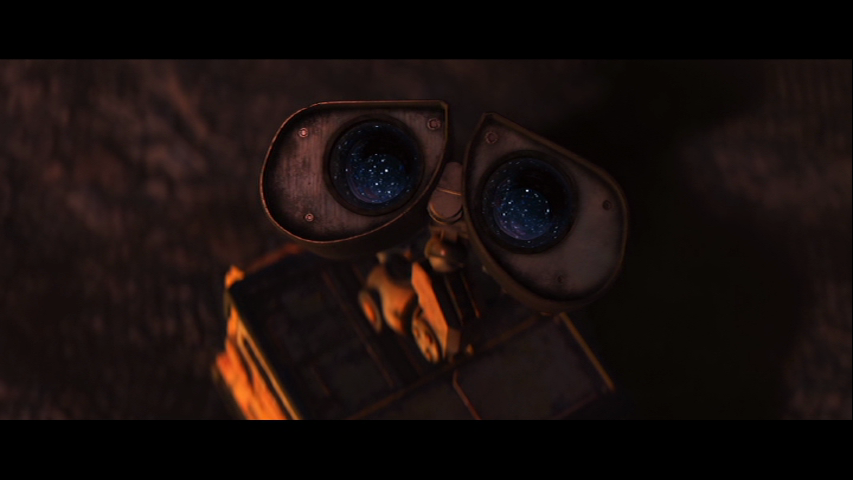
Image from one of the first advertisements for Wall-E

In an advertisement for the film, shortly after the release of Ratatouille, Andrew Stanton described a lunch with three of the other main players at Pixar: John Lasseter, Pete Docter, and Joe Ranft. “In the summer of 1994,” he begins, “there was a lunch…Toy Story was almost complete, and we thought, ‘Well, jeez, if we’re going to make another movie, we gotta get started now.’ So at that lunch, we knocked around a bunch of ideas that eventually became A Bug’s Life, Monsters, Inc., Finding Nemo…the last one we talked about that day was the story of a robot, named Wall-E.”

Released on June 27, 2008, the film posed the question: What if mankind had to leave Earth 700 years in the future, and somebody forgot to turn off the last robot? The film includes the voices of Ben Burtt as Wall-E and Elissa Knight as EVE, with Jeff Garlin as the Captain, John Ratzenberger as John, and Kathy Najimy as Mary. The film went on to become the ninth highest grossing film of 2008, with a total domestic gross of $223,808,164.

February 8

February 8, 2001 – Disneyland’s California Adventure Opens

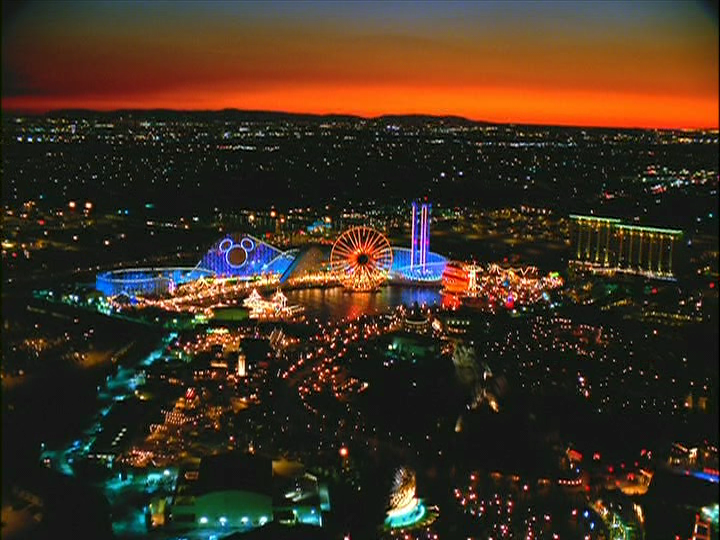
Nightime view of California Adventure in Anaheim, California

“Discover the Disney stories and characters you love in ways you’ve never imagined!”

Opening February 8, 2001, Disneyland’s California Adventure is a theme park in Disneyland, located in Anaheim, California. It was part of a group of changes in Disneyland, and consists of the districts Hollywood Pictures Backlot, The Golden State, “a bug’s land,” Cars Land, and Paradise Pier.

The announcement of California Adventure claimed that it would be a 55-acre park with three districts: one focused on the glitz of old Hollywood, one focused on the nature of California, and one would have a boardwalk feel to it. These lands would later become Hollywood Pictures Backlot, The Golden State, and Paradise Pier, respectively. The success of the Pixar films allowed the building of “a bug’s land” and Cars Land, as well as adding them to other aspects of the park. The early announcement also included Disney’s Grand Californian Hotel and the Disneyland Center, which is a themed retail, dining, and entertainment complex. It was planned to be built in the parking lot of Disneyland.

Paradise Pier, including the roller coaster California Screamin'. Image taken from the Disneyland Park Blog

There are many magical attractions in the California Adventure Park. In the Hollywood Pictures Backlot, guests can get a fright at the Twilight Zone Tower of Terror, have a slapstick adventure with the Muppets at Muppet*Vision 3D, or converse with 150-year-old turtle at Turtle Talk with Crush, from Finding Nemo. Paradise Pier boasts the California Screamin’ rollercoaster, as well as Toy Story Mania!, a 4D midway ride. The Golden State lets guests explore the landscape of California with the Soarin’ Over California Ride, but also gives adults a taste of California wineries with Wine Country Trattoria. “a bug’s land,” based on the hit Pixar film A Bug’s Life, allows younger guests to get a taste of what it’s like to be a bug, and they are able to view the 3D film It’s Tough to Be a Bug. Cars Land is a new 12-acre land that will open in 2012, and will feature locations that were in the Pixar film Cars, including Mater’s Junkyard Jamboree.

January 24

January 24, 2006 – Disney Announces an Agreement to Purchase Pixar for $7.4 Billion

The major players: John Lasseter (L), Steve Jobs, Bob Iger, and Ed Catmull

“…We had to return to the glory days of animation. So I began focusing on how to do that, and it really begins with finding the right people. The more I thought about it, the more I realized that Pixar had more of the right people than probably any other place in the world, from an animation perspective.” – Bob Iger, CEO, the Walt Disney Company.

On January 24, 2006, new CEO Bob Iger announced that Disney had agreed to acquire Pixar for 287.5 million shares of Disney stock, which equaled about $7.4 billion. Because Steve Jobs owned 49.8 percent of Disney shares, his vote was the only one that mattered, and it became a done deal. “We’re convinced that Bob really understands Pixar,” Jobs said in an interview on On The Money, “and we think that we have some appreciation of Disney and love the unique Disney assets, like being able to get the characters in the theme parks and really express them through all of Disney’s incredible assets. And we think we understand how to keep Pixar being Pixar, and how to spread some of that culture around…a few other parts of Disney as well, ’cause we think we’ve got something pretty good going here.”

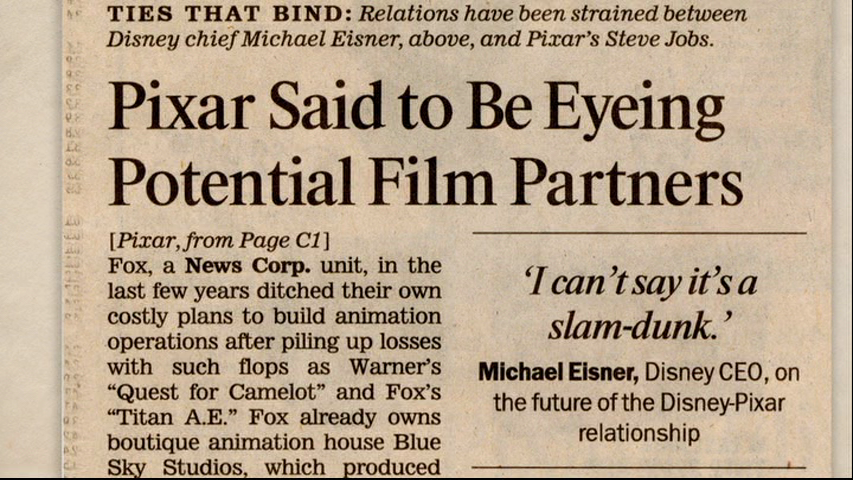
The road to this acquisition was not a smooth one by any means. Although Pixar had been the studio with hit after hit, Jobs was involved in a feud with the Walt Disney Company over the negotiations of their contract. It was public knowledge that Michael Eisner and Steve Jobs were not getting along. Jobs had reached out to Roy Disney for a conversation to share his grievances. Unfortunately for Disney, Jobs had come up with his own solution: After Pixar had completed the terms of the 1997 contract, Pixar would provide no more films for Disney, as long as Eisner was in charge.

Newspaper article declaring Pixar's search for a new distribution partner

As Pixar and Disney approached the end of their deal with no clear solution in sight, the anxious Pixar employees tried to figure out what to do. If they merged with a larger company, they could lose the independent spirit that had made them what they were. The employees “wanted to be an independent company,” Ed Catmull explained, “whereas if we were to become independent, we’d have to take on marketing and distribution, and get another partner, and it would change the culture in ways that we didn’t necessarily want…it was actually unfortunate at that time, because we’d had this phenomenal relationship with Disney all these years, where we were an independent company and they did the distribution and the marketing.” Another source of contention was the fact that Disney could make sequels without Pixar’s involvement. Pixar was heartbroken by this, as they regarded the characters they created like their children – this plan through Disney would make them more like dollar signs than anything else.

Things changed in 2005, when a corporate shakeup within Disney resulted in Eisner’s resignation, and the appointment of Bob Iger as the new CEO of the company. Iger was well known for his accomplishments in the development of Hong Kong Disneyland. Although he could deal well with overseas affairs, it was the domestic affair with Steve Jobs that was more difficult. But Iger was convinced that he would be able to repair the fractured relationship, since Jobs had said that the problem had been between him and Eisner, not the Walt Disney Company as a whole.

Iger’s focus on the rift took a serious turn when he attended the opening of Hong Kong Disneyland in September 2005, a month before he officially became CEO. Iger said that as he watched the opening parade, “[i]t hit me that the characters that were in the parade all came from films that had been made prior to the mid-90s, except for some of the Pixar characters. I felt that I needed to think even more out of the box than I had been thinking, and I had a much greater sense of urgency. I became CEO October 1st. I called Steve around that time and I said I thought we ought to talk, I had some bigger ideas, and that began a long period of discussion, because it was very serious for both sides. He really needed to feel comfortable that Pixar was in the right hands, and, more importantly, respect the talent and the culture.”

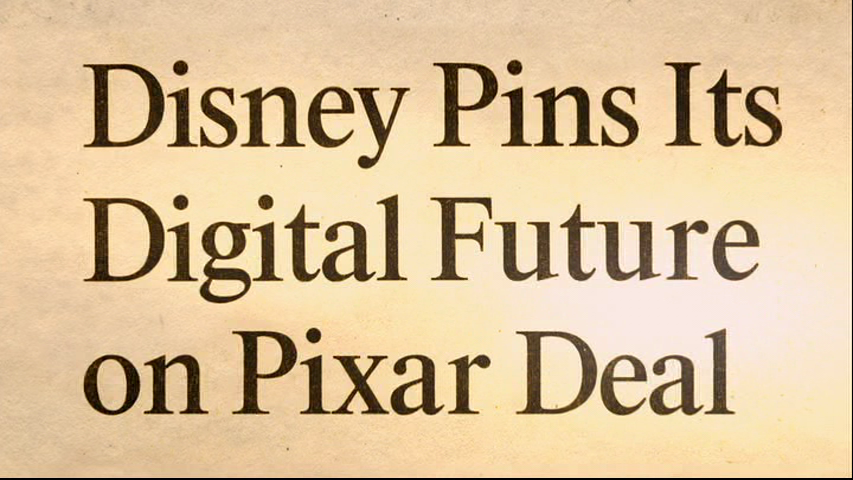
Another newspaper headline, this time with the good news that Pixar and Disney would continue their partnership

Expectations had been high that Iger could repair the fractured relationship, and with the announcement on January 24, Iger had proven that Disney was the best partner there could be for Pixar. The acquisition deal gave Steve Jobs a seat on the board as the largest shareholder, made John Lasseter Chief Creative Officer and principal creative advisor at Walt Disney Imagineering, and elevated Ed Catmull to President of Disney and Pixar Animation Studios. “It feels like this is the true culmination of the building of Pixar and this amazing company into something which will continue on and continue to make waves in the future,” Catmull said about the deal.

January 20

January 20, 2006 – High School Musical Premieres on Disney Channel

“This could be the start of something new.”

At 8 p.m., January 20, 2006, the television movie, High School Musical, premiered on the Disney Channel. It became the most successful Disney Channel Original Movie ever produced, and was followed with a television sequel (High School Musical 2) and a feature film, (High School Musical 3: Senior Year), as well as best-selling albums and various international spinoffs. The movie was directed by Kenny Ortega, with screenplay by Peter Barsocchini. The cast includes Zac Efron as Troy Bolton, Vanessa Hudgens as Gabriella Montez, Ashley Tisdale as Sharpay Evans, Lucas Grabeel as Ryan Evans, Corbin Bleu as Chad Danforth, and Monique Coleman as Taylor McKessie.

With a plot reminiscent of Shakespeare’s Romeo & Juliet, the story centers on basketball star and team captain Troy Bolton and shy genius Gabriella Montez, who meet at a New Year’s Party after being pushed to sing karaoke together. Through the song they sing, they begin to develop an attraction to each other, finally exchanging phone numbers before going their separate ways.

Troy (Zac Efron) and Gabriella (Vanessa Hudgens) reluctantly singing together at the party.

Fortuitously, Gabriella’s mother is transferred to Albuquerque, New Mexico, where Troy lives and attends East High School. The two are excited to see each other again, and Troy beings to show Gabriella around the school, while explaining that his singing at the party was not something he did often, nor do his friends know about his musical abilities. The two pause in front of the sign-up sheet for the winter musical, where they run into Sharpay Evans, the Drama Club president. Sharpay has an obvious crush on Troy, and is immediately suspicious of Gabriella, thinking the girl could be a threat to her winning the lead in the musical. With her brother Ryan, they do an Internet search on Gabriella, discovering her past academic achievements, and revealing them to Taylor McKessie, captain of the Scholastic Decathlon Team, who immediately tries to recruit a reluctant Gabriella.

After seeing Gabriella again, and remembering the fun he had singing with her at the party, Troy has trouble concentrating at basketball practice, and decides to check out the auditions. He runs into Gabriella there, but both are two shy to step forward to audition, and by the time they get the courage to do so, the drama teacher Mrs. Darbus immediately turns them down, telling them they are too late, auditions are over. But soon after, she overhears them singing with the composer of the winter musical, and reconsiders, giving them a call-back audition.

Troy and Gabriella singing together once again.

Troy’s call-back for the musical starts a chain of events at the school, with students revealing their secret hobbies, from a basketball player’s love of baking, to a scholastic high-achiever’s hobby of “poppin’ and lockin’.” Troy’s best friend, Chad Danforth, becomes alarmed as people, including Troy, disrupt the status quo, and Chad worries that Troy’s lack of focus will cost them the upcoming championship game. Chad teams up with Taylor, who has been unsuccessful in getting Gabriella to join the Scholastic Decathlon Team, to get Troy and Gabriella to focus on upcoming competitions and forget about the call-back auditions. They scheme to trick Troy into saying that Gabriella isn’t important to him, while Gabriella watches on a wi-fi link Taylor has set up. Crushed, Gabriella decides to join the Scholastic Decathlon Team after all, refusing to audition with or even talk to Troy.

The Scholastic Decathlon Team tricking Gabriella with the live feed from the basketball team.

Chad and Taylor, overwhelmed with guilt for ruining their relationship, finally confess their scheme; Troy goes to Gabriella’s house and they make up, and the pair once again continues to rehearse for call-backs, this time with support from their friends. Sharpay, infuriated at this outcome, convinces Ms. Darbus to reschedule the call-backs to coincide with the basketball game and the Scholastic Decathlon, leaving Troy and Gabriella unable to audition. But the basketball team and the Decathlon team decide to work together on a plan that would allow the pair to audition without missing their competitions.

The premiere broadcast had 7.7 million viewers, and has been seen by more than 225 million viewers globally. It launched the careers of Efron and Hudgens, and several of the cast members released solo albums. The movie also spawned a successful touring concert, from November 29, 2006, to January 28, 2007, with most of the cast reprising their roles, except for Efron, who was replaced by Drew Seeley (whose tenor voice had been used to blend with Efron’s baritone in the film’s soundtrack). The film’s popularity has no doubt ushered in a new age of Disney Channel programming, and defined a new generation of Disney fans.
January 16

January 16, 2003 – Disney’s Aladdin: A Musical Spectacular Opens in Disneyland

The sign for the show at the Hyperion Theater.

“Must I yearn forever to be free, free to climb a tree and ponder, free to wander?” – Jasmine, “To Be Free.”

On January 16, 2003, the first performance of Disney’s Aladdin – A Musical Spectacular premiered in the Hyperion Theater at the Hollywood Pictures Backlot in Disneyland’s California Adventure Park. Based on the 1992 hit animated film, the Broadway-style musical uses many special effects and elaborate puppetry to transfer the essence of the animated film to the live-action stage, including Aladdin and Jasmine’s enchanted carpet ride around the theater. The 45-minute show is one of the more popular events in Disneyland.

The Genie and Aladdin. Note the elaborate steps taken to recreate the Genie in costume.

Many of the film’s elements are retained in this stage production: many of the musical numbers by Alan Menken, Howard Ashman, and Sir Tim Rice are performed, and the show includes a new number with lyrics and music by Alan Menken, entitled To Be Free. A cast recording released in 2003 contains many of the instrumental tracks used throughout the show. The cast on the recording includes Miles Wesley as Aladdin, Dee Dee Magno as Jasmine, and Nick Santa Maria as The Genie.

Thanks to the show’s popularity at Disneyland, Aladdin has begun its journey to other stages, heading toward a Broadway production, if the show does well. A version of the show opened at Seattle’s 5th Street Theater in July, 2011, and another production is scheduled from July 5th through the 13th at The Muny Theater in St. Louis. This new production will include songs by Alan Menken and Howard Ashman that had been cut from earlier drafts of the film.