RSS Feed

Tag Archives: Music

May 2

Posted on

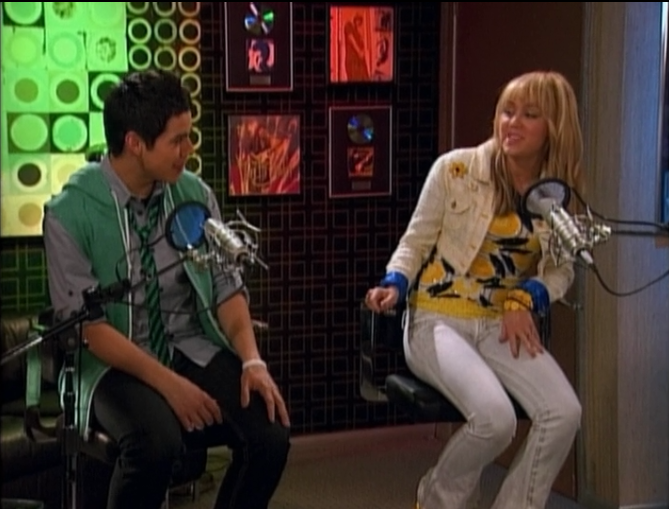
May 2, 2009 – The Miley Cyrus and David Archuleta Duet “I Wanna Know You” Premieres on Radio Disney

“I wanna find out what you know, and maybe someday down the road, I’ll sit back and say to myself, yeah, I thought so.”

On May 2, 2009, a 6:00 P.M. Eastern Standard Time, Radio Disney had the world premiere of “I Wanna Know You,” sung by Miley Cyrus as Hannah Montana and American Idol contestant David Archuleta. The song was featured in a new episode of Hannah Montana the following day. The song entered the U.S. Singles Top 100 Chart at number 74, and charted for only a week.

David Archuleta guest starred on the episode “Promma Mia” as himself; Hannah agreed to go to the prom with an awkward student named Aaron, but decided to ditch him to sing the duet with Archuleta. In the end, Hannah decides to go back to the prom and fulfill her commitment with Aaron instead. The song was then released on the Hannah Montana 3 soundtrack on July 3, 2009.

April 18

April 18, 1994 – Beauty and the Beast: The Broadway Musical Opens on Broadway

“When we’re human again, only human again, when we’re knickknacks and whatnots no more…”

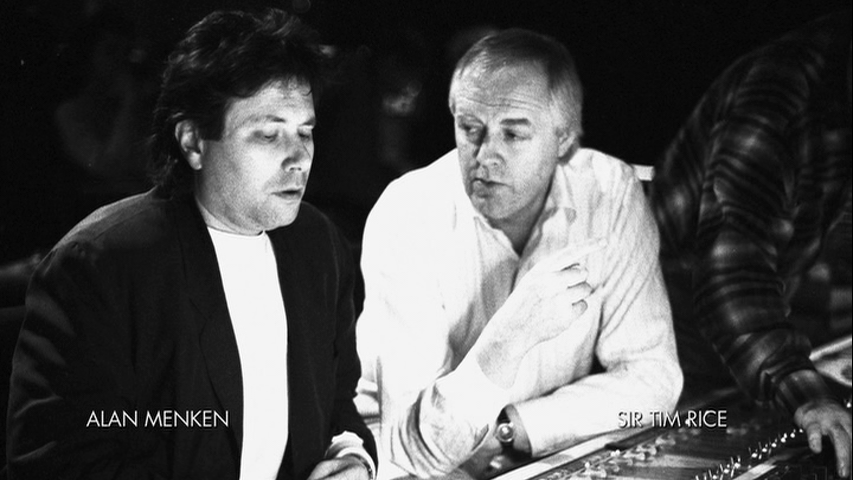
On April 18, 1994, the Beauty and the Beast Broadway musical, Disney’s first musical on Broadway, opened at the Palace Theater on Broadway. Based on the hit 1991 animated film, the musical took most of the songs and plot from the film version, but added some new songs, including a new Howard Ashman and Alan Menken song written for, but never used in, the film (the song, “Human Again,” would be added to the animated film when it was rereleased in 2002). Other new songs added to the film were written by Alan Menken and Sir Tim Rice.

The original cast starred Susan Egan as Belle, Terrence Mann as the Beast, Tom Bosley as Maurice, Burke Moses as Gaston, Gary Beach as Lumiere, and Heath Lamberts as Cogsworth. The show would go on to receive nine Tony Award nominations in 1994, but won only one, for costume. The original cast recording was released on April 26, 1994. The musical ran until 2007, becoming Broadway’s eighth-longest running production. The success of the musical led to worldwide productions, including an Australian production featuring Hugh Jackman as Gaston.

March 29

March 29, 1993 – Aladdin Wins The Academy Award for Best Original Score and Best Original Song, “A Whole New World.”

“With ‘A Whole New World,’ that’s where my whole style took a move into a new place, working with Tim [Rice]. That was also where I gained some confidence that there can be new chapters in my life.” – Alan Menken

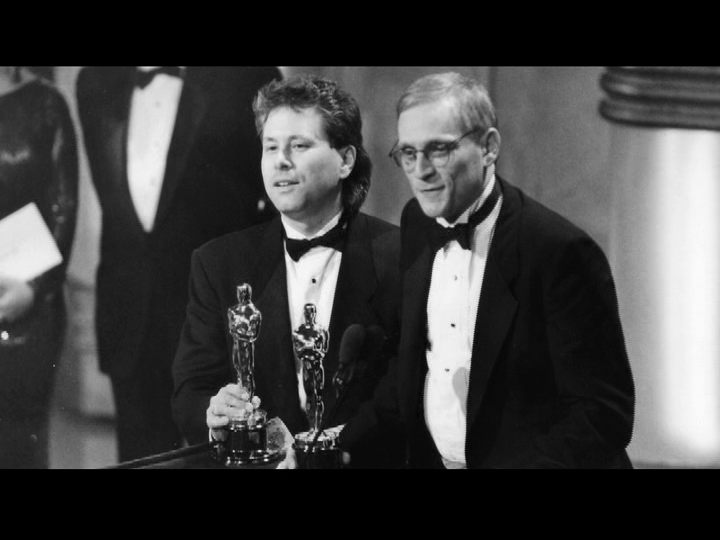
The 65th Academy Awards were held on March 29, 1993, in Los Angeles, California. The Disney Studios struck gold again in the categories of Best Original Score and Best Original Song, winning for the animated blockbuster, Aladdin. Alan Menken won for his score for the film, competing against Jerry Goldsmith’s Basic Instinct, John Barry’s Chaplin, Richard Robbins’ Howards End, and Mark Isham’s A River Runs Through It. The song “A Whole New World,” with music by Alan Menken and lyrics by Sir Tim Rice, won for Best Original Song, competing against “I Have Nothing” and “Run to You” from The Bodyguard, “Beautiful Maria of My Soul” from The Mambo Kings, and “Friend Like Me,” also from Aladdin.

Aladdin was the idea of the lyricist Howard Ashman, and was one of his last projects before he died in 1991. Unfortunately, many of the elements in the movie were not working in the opinion of the higher ups (including Jeffery Katzenberg), so many of the songs written by Ashman and Menken were cut; fortunately, “Friend Like Me” is one of the songs that not only stayed intact, but was nominated for Best Original Song. Menken feared that once Ashman was gone, his career would be over. It was suggested that he work with lyricist Tim Rice, and the two dove right in, working on the marketplace song (“One Jump Ahead”), and a song for the magic carpet ride (“A Whole New World”). “A Whole New World” was performed by Lea Salonga and Brad Kane in the film, with a pop version released as a single, performed by Peabo Bryson and Regina Belle. The song was an immense hit, peaking at #1 on the Billboard Hot 100 chart.

March 27

March 27, 1995 – The Lion King is Awarded Two Academy Awards: Best Original Score and Best Song for “Can You Feel the Love Tonight”

Image credit: imdb

 “There’s a rhyme and reason to the wild outdoors, when the heart of this star-crossed voyager beats in time with yours…”

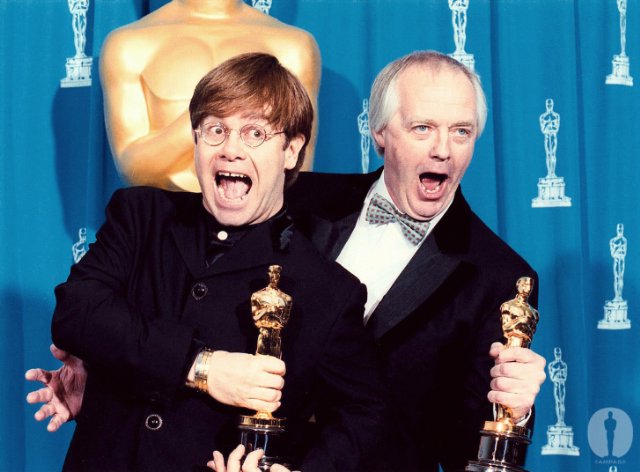
The 67th Academy Awards were held on March 27, 1995, in Los Angeles, California. The Disney Studios continued their good fortune in the categories of Best Original Score and Best Original Song, winning for the animated blockbuster, The Lion King. Hans Zimmer won the award for Best Score, beating out Alan Silvestri’s score for Forrest Gump, Elliot Goldenthal’s Interview with the Vampire, and Thomas Newman’s Little Women and The Shawshank Redemption. Sirs Elton John and Tim Rice won for the song “Can You Feel the Love Tonight,” competing against “Look What Love Has Done” from Junior and “Make Up Your Mind” from The Paper, as well as “Circle of Life” and “Hakuna Matata” from The Lion King.

The version of “Can You Feel the Love Tonight” that exists in the film and the pop version sung by Sir Elton John over the end credits are vastly different lyrically. The song was originally going to be a comic song sung by Timon and Pumbaa (Nathan Lane and Ernie Sabella). After that idea was scrapped, the song was going to be cut from the film, but John insisted that it remain, following the new format of Disney songs beginning when the characters run out of words and can only use song to describe how they feel. The pop version became a hit, peaking at #4 on the Billboard Hot 100 Chart, and is one of the most recognizable Disney songs ever written.

March 26

March 26, 1990 – Alan Menken and Howard Ashman Win the Academy Award for Best Original Score and Best Original Song for The Little Mermaid.

“We were adapting Hans Christian Andersen’s fairytale in the style of Disney. And so, in a sense, we were pastiching Disney. In order to pastiche Disney, we naturally brought in styles from the outside. Calypso and reggae were clearly a new style to bring in.” – Alan Menken

The 62nd Academy Awards were held in Los Angeles, California on March 26, 1990. Disney scored a great success that night with the musical team of Alan Menken and Howard Ashman, who won the Academy Award for the score for The Little Mermaid, and the song “Under the Sea.” Their competition was The Fabulous Baker Boys by Dave Grusin, Field of Dreams by James Horner, Indiana Jones and the Last Crusade by John Williams, and Born on the Fourth of July, also by John Williams. “Under the Sea” competed against “After All” from Chances Are, “I Love to See You Smile” from Parenthood, “The Girl Who Used To Be Me” from Shirley Valentine, and another Ashman/Menken song, “Kiss the Girl.”

Ashman had been brought to Jeffery Katzenberg’s attention through David Geffen, and after meeting Ashman, everyone was excited to work with him on The Little Mermaid project. Ashman brought along Alan Menken, who had worked with him on the musical Little Shop of Horrors. The collaboration between Ashman and Menken helped usher in a new era of Disney animation, bringing elements of Broadway to the animated form. As Director John Musker remarked on the partnership between Ashman and Menken, “One of the great things with Howard and Alan’s music, I think, is the wittiness of it. It isn’t dumbed down for any audience.” Jodi Benson, the voice actress for Ariel added, “They approached it like a Broadway musical. It is something totally different; the characters actually run out of words, can’t express themselves anymore, and it has to come out in song.”


March 25

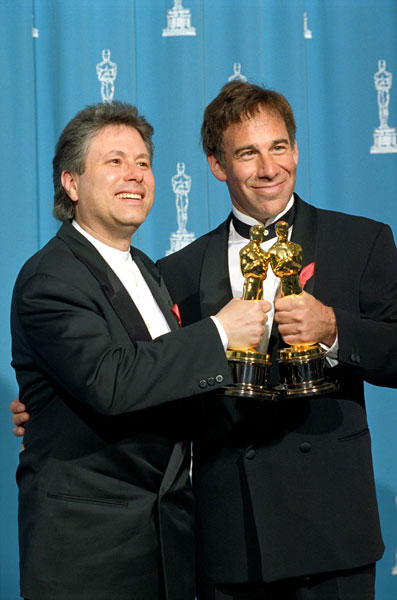
March 25, 1996 – Alan Menken and Stephen Schwartz Win the Academy Award for “Colors of the Wind” and Best Original Musical or Comedy Score for Pocahontas.

Image credit: The Academy Awards website

“The emotion of the lyrics [for “Colors of the Wind”], as well as the emotion of the music, was very powerful, and also defined the movie, and what the movie was going to be about.”  – James Pentecost, Producer of Pocahontas

On March 25, 1996, the 68th Academy Awards were held in Los Angeles, California. That night, Alan Menken and Stephen Schwartz took home two Oscars for the Disney animated film Pocahontas: one for the score, and one for the song “Colors of the Wind.” Pocahontas was up against stiff competition: “Colors of the Wind” competed against “Dead Man Walking” from the movie of the same name, “Have You Ever Really Loved a Woman” from Don Juan DeMarco, “Moonlight” from Sabrina, and “You’ve Got A Friend in Me” from a little film named Toy Story. The score was against the scores from Sabrina by John Williams, The American President by Marc Shaiman, Toy Story by Randy Newman, and Unstrung Heroes by Thomas Newman. It would be Alan Menken’s seventh and eighth Academy Award wins, and Stephen Schwartz’s first and second.

Menken remarked in a documentary about the process of the music for Pocahontas: “First of all, I went to another collaboration with Stephen Schwartz, and so the very first thing we wrote…[plays the underscore of the song]. We listened to a lot of Indian music from various tribes and came up with certain tonalities.” “Colors of the Wind” was one of the first songs that Menken and Schwartz wrote together, and it helped the rest of the staff understand the direction of the film, as it was written during early development. The song was a rare example of a balance between the lyrics and the music, with Schwartz remarking, “…maybe that’s why it’s so satisfying for both Alan and myself.”

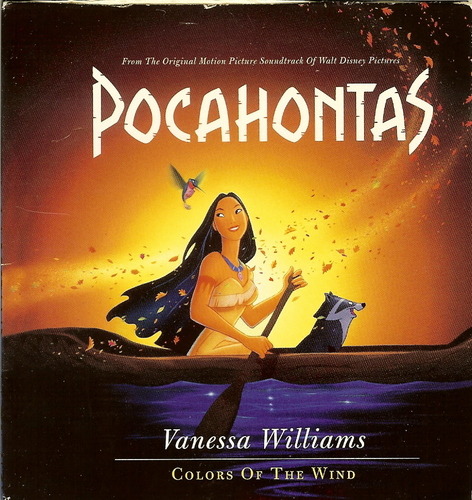
The cover for the single version of "Colors of the Wind," sung by Vanessa Williams. Image credit: amazon.com

“Colors of the Wind” was performed by Judy Kuhn in the film, and was released as a pop version for the end credits, sung by Vanessa Williams. The pop version reached a peak position of #4 on the U.S. Billboard Top 100. Menken has said about the song: “The song is a message song. It’s about respecting the environment and respecting our world, and it says, ‘Can you paint with all the colors of the wind?’ Can you see in the world around us all the rich array of blessings?”

March 13

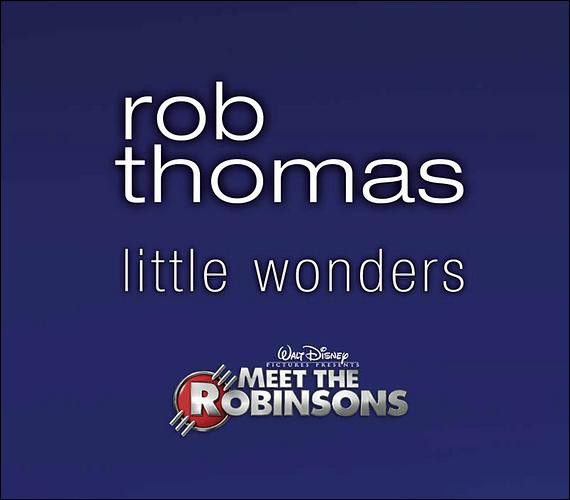
March 13, 2007 – The Meet the Robinsons Single, “Little Wonders,” is Released

Image credit: Wikipedia

 “These little wonders, these twists and turns of fate.”

On March 13, 2007, as stated on iTunes, the second single for the Disney animated film Meet the Robinsons, called “Little Wonders,” was released. Written and performed by Rob Thomas, it was featured in the final scene of the film. It peaked at number 58 on the Billboard Hot 100, 57 on the Billboard Digital Songs, 11 on the Billboard Adult Contemporary, and 5 on the Billboard Adult Pop Songs.

Rob Thomas, on his Cradlesong album tour (I attended the Northern Virginia/DC leg of this tour), explained why he wrote the song:

“I wrote this song for my best friend who passed away recently, my dog Tyler, and years ago, I was with him when I was…supposed to write a song in between the last solo record and the last Matchbox record, and it was for this film, and I was finishing up being on the road and I was in a hotel in Phoenix. So my dog makes me take him for a walk and it’s a miserable night and it’s cold, and I’m upset probably about nothing at all in particular, just upset, and so I harness him up and I go outside, and I’m miserable. Again, probably for no reason. Miserable. And I look down, and I want some solidarity…but no man, I look down, and he’s [my dog is as] happy as he’s ever been his entire life, and he’s like ‘Dad, we’re freakin’ walking!’ My first thought was like, ‘Traitor’. Right? Immediately, ‘Traitor.’ I’m gonna trade him in and get a new dog, but then, I realize that this little guy knew more about life that I did cause right then, there was a moment that was happening. There was something going on and I was missing it and he wasn’t. And so this song was written about that. It’s about not letting those moments go by. Sometimes, you have an expectation, sometimes you’re waiting for something else to happen and while you’re waiting for something else to happen, life is passing you by, and these little moments are going by, just like us, right now, right here in Fairfax, man, this moment, don’t let it pass by, man. I love this night, I don’t want to forget it. Thank you very much for it. So this song goes out to Tyler.”

January 22

January 22, 1930 – Carl Stalling Leaves Walt Disney Studios to Join Ub Iwerks
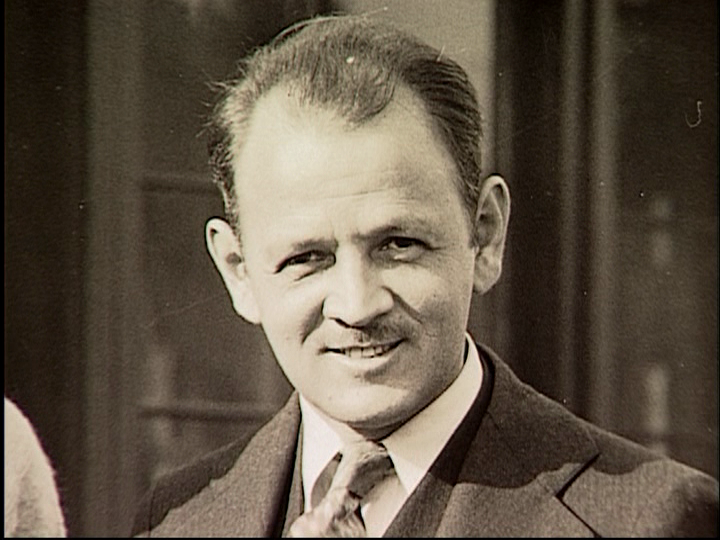
Musical Director, Carl Stalling

The January 21 entry credited Ub Iwerks as the man who invented the Xerox Process, eliminating the need for the Ink and Paint department, and saving the Disney’s animation department from financial ruin. However, 30 years before, Iwerks had decided that it would be best for him to leave the Disney Studio. He was privately approached by a representative of Pat Powers, the studio’s sound distributor, who offered Iwerks a chance to form his own studio. The morning of the 21st of January,1930, Iwerks approached Roy Disney, letting him know that he was leaving as soon as possible, citing personal problems with Walt as his reason. Iwerks’ departure was a sign of things to come, with the first consequence being the departure of the studio’s musical director, Carl Stalling.
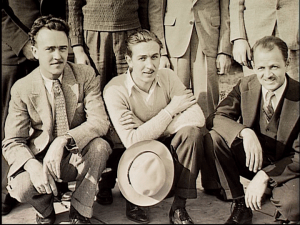
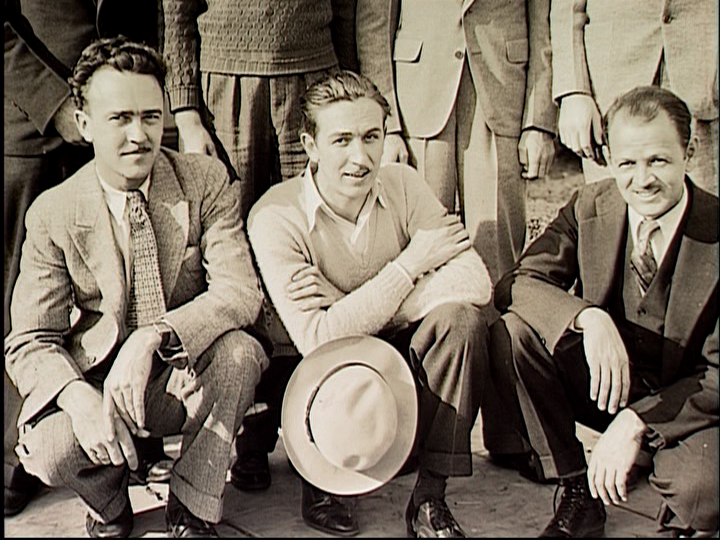
Happier times at the Disney Studios: Ub Iwerks (L), Walt Disney (C), and Carl Stalling (R)

Carl Stalling had been a good friend of Walt Disney’s when living in Kansas City, and had composed several scores for Disney’s cartoons, including Plane Crazy and the Gallopin’ Gaucho. Stalling’s biggest contribution to the studio, however, was the idea of the Silly Symphony. Stalling had approached Disney after the success of Steamboat Willie, proposing a cartoon short built on a music foundation. These shorts wouldn’t have a recurring character from short to short, but would tell a different story each time. Stalling also helped write the song “Minnie’s Yoo Hoo” with Walt (see January 11th entry), which ended up causing another problem for the studio once Iwerks decided to leave.

When Stalling heard that Iwerks had left, he assumed, as Pat Powers had, that the studio wouldn’t be able to survive. Stalling was uncomfortable with Iwerks’ leaving, and was upset with the way he perceived Walt was running the studio. Stalling, unfortunately, had underestimated Walt’s contribution to the popularity of Mickey Mouse and the success of the studio. The morning Iwerks left, Stalling approached Roy Disney (Walt was away in New York) and gave his grievances, which included royalties from “Minnie’s Yoo Hoo” and the liability in the recording studio. Roy gave Stalling an offer: Disney would buy Stalling’s share in the recording studio. Stalling agreed, but early the next morning he returned, saying he was very unhappy and had personal problems with Walt, and like Iwerks, needed to leave immediately. He demanded his back pay, brandishing legal notices he had written himself. Roy had no choice but to have the accounting office give Stalling a check and send him on his way.

Walt had been deeply stung by Iwerks’ and Stallings’ departures, as these men had been with him since the beginning. Powers had believed that Iwerks was the true talent behind the success of Mickey; indeed, Iwerks was responsible for the drawings and the design, but it was Walt who created the stories and helped with the character’s personality. For Powers, and Stalling, not realizing the importance of Walt’s contribution to the character was a grave mistake.
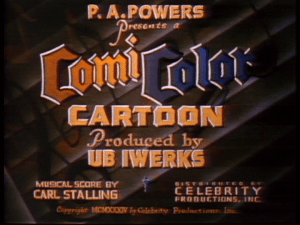
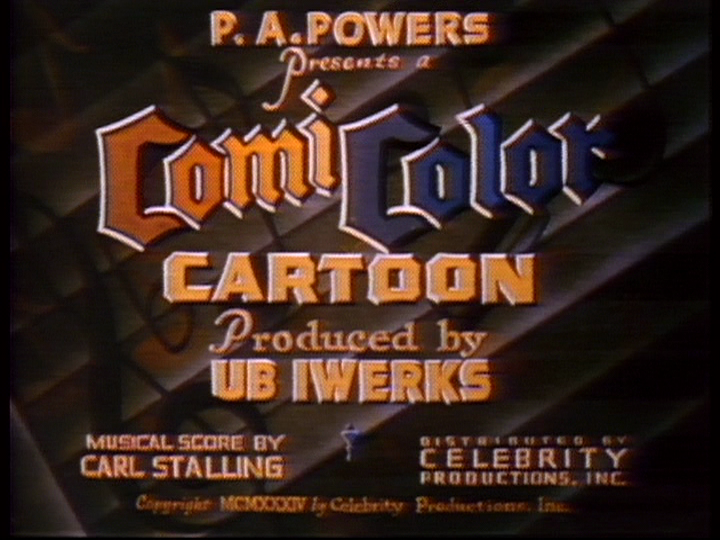
One of Iwerks' ComiColor shorts, with musical score by Carl Stalling

In retrospect, the dissolution of the Iwerks-Disney partnership was a good thing for Iwerks and for Stalling. Iwerks was able to express himself creatively with his studio and work on many new technical innovations to help create more believable animation; when his studio closed in 1938, Iwerks was able to go back to the Disney Studio and develop special effects, including the multiplane camera and the Xerox Process. Stalling joined the Warner Brothers Studio in 1936, becoming a full-time composer for the Looney Tunes. His most famous works for the studio were The Rabbit of Seville and A Corny Concerto. This bleak moment in the Disney Studio history led to the brilliant creative output of all three: Disney, Iwerks, and Stalling.