May 25, 1932 – The Mickey Mouse Short Film Mickey’s Revue is Released to Theaters
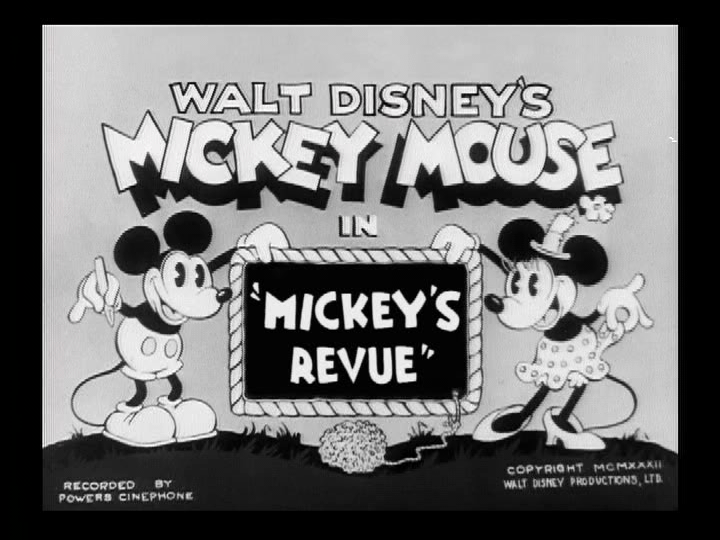
On May 25, 1932, the Mickey Mouse short film Mickey’s Revue was released to theaters. This short is notable for being Goofy’s first appearance, where he is a member of the audience, with his well-known laugh being the first sound he makes. The short was directed by Wilfred Jackson.
The band plays in the theater, with Mickey as the conductor. Meanwhile, an audience member is loudly cracking open peanuts and chomping them, much to the annoyance of the rest of the audience. The curtain then opens on the show, with Minnie playing a fairy (hoisted by Horace Horsecollar) and waving her magic wand on the flower dancers. Pluto appears on the side of the stage, barking at the dancers, until he is whisked away by a hook. The noisy audience member begins to laugh loudly, creating irritation around the audience again.
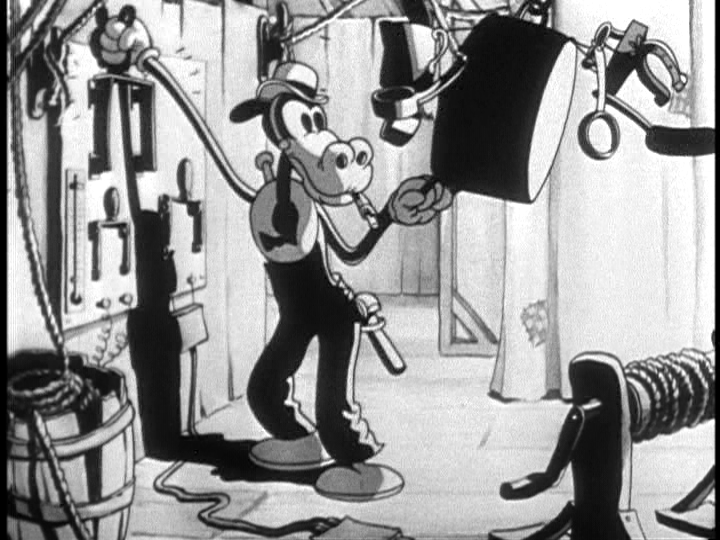
Horace Horsecollar creates a stormy scene for the dance performance
The scene changes in the show, and the dancers begin to skate around in the “snow,” which is just Horace chewing up some soda crackers. The curtain falls, and the audience cheers loudly. The next act begins with two dachshunds performing a tap show. Underneath the stage, a cat and her kittens are awakened by the tapping and peer through holes in the stage to see what is going on. Pluto still continues to wander onto the stage, getting pulled off by various means each time. The audience member’s laugh is now growing on two of the crowd members’ nerves, and they hit him on the head with a mallet, knocking him out before they surprising break out into the same kind of laughter they found so annoying.
The third act begins, with Minnie at the piano and Mickey playing various instruments in a one-man-band kind of performance. The kittens from under the stage have wandered amongst the instruments, and begin to play around, creating lively music alongside Mickey and Minnie. Pluto whines backstage, as he wants to chase the kittens, but Horace has him tied to a chair. Finally, Pluto breaks free from Horace, rushing onto the stage and breaking the piano and all of the instruments in the process. This does not prevent a successful end to the show, however, and the audience wildly applauds.
 disneydetail