February 5, 1953 – Peter Pan is Released to Theaters 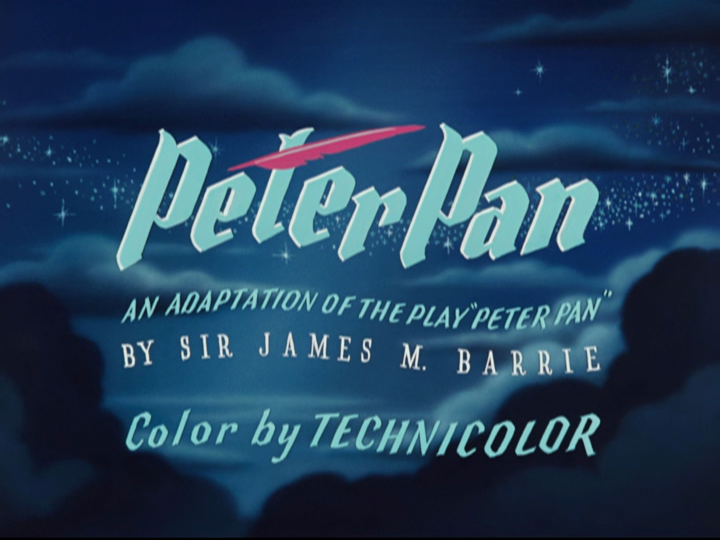
“The Disney version of Peter Pan has another interesting first: it’s the first time a boy was shown as Peter Pan. There’d been a tradition, from the time of Maude Adams on the stage…of women playing Peter Pan. But it was…a tradition that was broken by Walt Disney by showing Peter Pan as a boy. Now, it’s an animated boy, but was really a boy’s voice and he was depicted as a boy, which is what he’s supposed to be.” – Leonard Maltin, Film Critic.
The road to Peter Pan’s release on February 5, 1953, was a long one: production started as early as 1935, with Walt planning to make it his second animated film after Snow White and the Seven Dwarfs. Disney acquired rights to Sir James M. Barrie’s play from the Great Ormond Street Hospital in London (to which Barrie had bequeathed the copyright) in 1939, but the advent of World War II halted production of the film.
In the 1950s, Disney decided it was time to bring the film back into production. Starring Bobby Driscoll as Peter, Kathryn Beaumont as Wendy, Hans Conried as Captain Hook and Mr. Darling, and Bill Thompson as Mr. Smee, the film was directed by Hamilton Luske, Clyde Geronimi, and Wilfred Jackson.
Disney first learned of the story of the boy who never grew up when he saw a touring production of Peter Pan in 1913, and he later starred as Peter Pan in a local production of the play. With almost two decades in development at Disney, the story went through many different treatments, ranging from a first, very dark version—much darker than the original play, and more sinister than a typical Disney feature—to the final product. Disney was determined to release Peter Pan as an animated feature. “The cartoon method gave us many advantages over the stagecraft of Barrie’s day,” Disney once said, “which no amount of pixie dust could cure.” Through animation, many of the play’s conventions could be abandoned: Nana could be shown as a dog instead of a person in a dog costume, the characters could fly realistically without any visible wires or tricks, and the biggest change of all, Tinker Bell was a fully formed physical character, rather than a speck of light traveling across the screen. Through the casting of Bobby Driscoll as the title character, Disney was also able to present Peter as the boy he was supposed to be, rather than a woman playing a young boy. The film was a success upon its first run in 1953, and was rereleased several times in theaters, with its first video release in 1990.
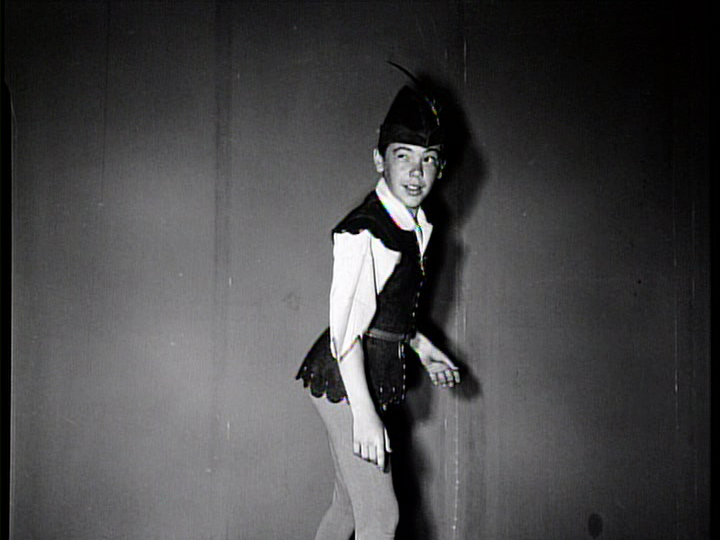
Bobby Driscoll, voice of Peter Pan, dressed for the live-action reference film
Although the actors are only heard on screen as the characters, they actually had to film a second, live-action version of the film for the animators to study. The actors dressed up and performed various scenes to show the animators the action taking place and the small, yet significant, details with each action, such as a turn of the head or how Captain Hook would hang from a cliff by one hand. “The audience always got confused when we talked about live-action help,” animator Frank Thomas explained, “and we’d say, ‘Well, an artist needs a model, you gotta have something to guide you.’ But it’s also very helpful in little ways of a guy turning and looking back over his shoulder, how far did he turn his head. And you find if you’ve got the real person do it, you saw their arm here would come out as he’d turn, or have something come up to his chin, or some little thing you hadn’t thought of. And very often, that would make the scene come alive.”

Hans Conried as Captain Hook, in a live-action reference still
Frank Thomas was assigned the role of animating Captain Hook, with Milt Kahl animating Peter Pan, and Marc Davis designing and animating Tinker Bell, a character with no lines. “She’s a pure pantomime character, which in itself I think is rather interesting,” Marc Davis said. The various story sketches of Tinker Bell over the years changed in little details, but throughout all the concept drawings, she was a representation of the current ideal of feminine beauty. One persistent rumor is that Tinker Bell was based on Marilyn Monroe. Monroe was just beginning her career when Peter Pan was in production; the Disney animators wouldn’t have been aware of her enough to base a character on her. The actual person who stood in as the live reference model for the pixie was actress Margaret Kerry, who won the role after performing the scene where Tinker Bell preens in a mirror, only to be alarmed at the size of her hips. “They knew that I had the imagination that they needed,” Kerry said, speaking of her audition.
The music of Peter Pan is rather interesting, as many songs were used but ended up on the cutting room floor. One song that is still heard throughout the score, although the actual song was cut, is the crocodile’s theme, also known as “Never Smile at a Crocodile,” which would later go on to be used in a first season episode of The Muppet Show, starring Sandy Duncan. The most famous song from the film, “The Second Star to the Right,” was actually not written for the film; on the contrary, the song was written for Alice in Wonderland, and was known as “Beyond the Laughing Sky.” Another song that was written, but eventually replaced, was known as “The Pirate Song,” which had been storyboarded and demo recorded. The song was sung by the pirates as they try to convince the Lost Boys to join Captain Hook’s crew. The song was eventually replaced by “The Elegant Captain Hook,” which was a shorter song, but has a bit more of a jolly feeling around it.
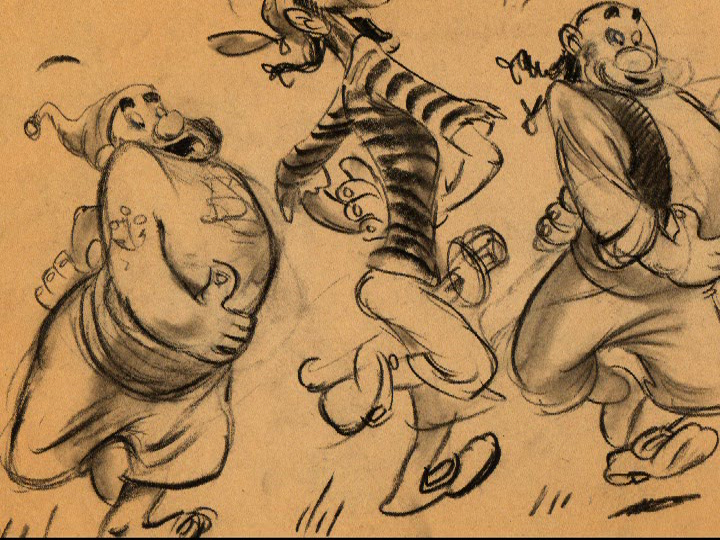
A storyboard picture from the cut song "The Pirate Song," which was replaced by "The Elegant Captain Hook"
The color stylings went through many artists’ hands during the development process. In the 1930s and 1940s, renowned British artist David Hall created beautiful watercolor treatments of the story; he also did extensive work on Alice in Wonderland for the studio. The color styling that is the final film, however, was the work of Disney artist Mary Blair. Her concept art not only influences the color pallet of the film, but also helped identify the moods of certain scenes, including the scene in Mermaid Lagoon where the skies suddenly darken upon the arrival of Captain Hook. Blair’s art for this film was so popular that Disney released a pin set of images from her concept art to honor the 50th anniversary of the film in 2003.
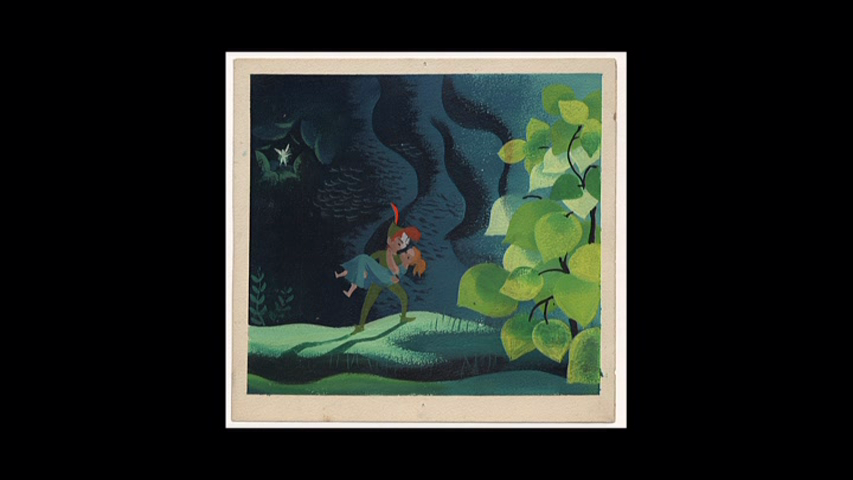
An example of concept art by Disney artist Mary Blair. Notice the color stylings of the characters, and how they compare with the color palate of the film
The story begins with a look at the Darling family, and the narrator explains what each member thinks of the story of Peter Pan. Mary Darling, the mother, believes Peter to be the spirit of youth. George Darling, the father, “Well, Mr. Darling was a practical man,” the narrator informs us. John and Michael Darling believe that Peter is a real person, making him the hero in all of their nursery games. Wendy Darling, the eldest child, not only believes in Peter Pan, but is also regarded as the expert on Peter and all of his adventures. And Nana, the nursemaid, “being a dog, kept all her opinions to herself, and viewed the whole affair with a certain…tolerance.” Mr. Darling, annoyed by Wendy’s constant stories of Peter Pan, decides that it’s time for her to grow up, and that this night would be her last in the nursery. Wendy doesn’t want to leave, especially since Nana has stolen Peter Pan’s shadow, and Wendy wants the nursery window left unlocked in case Peter returns to retrieve it. A worried Mrs. Darling tries to diffuse the situation, and as she and Mr. Darling rush off to a party, her fears are confirmed—the audience sees Peter on the roof of the Darling house.

The most famous image of Peter perched on the roof of the Darling's house
When the children are asleep, Peter enters the nursery and searches for his shadow. Tinker Bell, Peter’s companion, finds it in a drawer, and as it escapes, she is trapped inside. Peter’s pursuit of his shadow around the room turns into a brawl that wakes Wendy. When she sees him trying (and failing) to reattach his shadow with soap, she offers to sew the shadow back on. As she sews, she asks how he lost his shadow in the first place. Peter replies that he comes by the house to listen to the stories. When Wendy tells him that there will be no more stories because she has to grow up and leave the nursery, an angry Peter decides that the only course of action is to take her away to Never Land, where she can continue telling stories to him and the Lost Boys. Thrilled, Wendy offers to give Peter a kiss – an action that causes an alarmed Tinker Bell to finally break out of the drawer and attack Wendy, pulling her hair. As Peter tries to catch Tinker Bell, he accidentally wakes Michael and John, who, excited about the prospect of playing games and fighting pirates, beg to go to Never Land too. Peter agrees to take them all, and teaches them how to fly with faith, trust, and a little bit of pixie dust, and off they go into the London night sky.
The audience’s first view Never Land is a pirate ship, where the crew is sitting restless, wishing that Captain Hook would give up his silly pursuit of Peter Pan and take them back to open waters to pillage and plunder again. Hook instead comes up with a plan to capture the Indian princess, Tiger Lily, and force her to tell them where Peter Pan’s hide out is. In an exchange with his first mate, Mr. Smee, Captain Hook reveals the reason for his pursuit: once when he and Peter Pan were fighting, Peter cut off Hook’s hand (which the pirate has since replaced with a hook) and fed it to a crocodile, who liked the taste of Hook so much that he follows him around hoping to devour the rest of him. Smee tries to talk Hook out of his vendetta, but the moment another crewmember announces sight of Peter Pan, Hook decides to attack him with cannon. Peter orders Tinker Bell to take Wendy and her brothers to safety as he distracts Hook, but Tinker Bell rushes off with other plans.
Tinker Bell finds her way quickly to the hideout of the Lost Boys, and tells them that Peter has sent orders to shoot the fast approaching “Wendy Bird.” Eager to please their leader, the boys rush out and throw various sticks and stones at Wendy, and she falls to the ground. Luckily, Peter arrives just in time to catch her. When the Lost Boys reveal Tinker Bell’s lie, Peter banishes the fairy forever, but makes it a week when Wendy makes a plea on Tink’s behalf. He offers to show Wendy the island, while John leads the Lost Boys on a search for the Indians.

Captain Hook and Smee with the captured Tiger Lily. The coloring was taken from a piece of concept art by Mary Blair
As Peter and Wendy visit the Mermaid Lagoon, they find Hook in a rowboat with the missing princess, and discover that unless Tiger Lily reveals Peter Pan’s hideout, Hook will drown her. Following a sword fight with Hook, which ends with the pirate hanging on a cliff by his hook, with the crocodile waiting impatiently and hungrily below, Peter saves Tiger Lily and takes her back to her camp, with Wendy, forgotten by Peter, trying to fly behind them.
That evening, as Hook sits in his cabin with a horrible cold, humiliated by losing once again to Peter Pan, Smee tells him that “the cook told [him], that the first mate told him, that he heard Pan has banished Tinker Bell.” This reinvigorates Hook, who plans to use Tinker Bell’s jealousy to help him discover Peter Pan’s hideout: “a jealous female can be tricked into anything.” Meanwhile, the Indians are rewarding Peter’s bravery by giving him the name of Chief Little Flying Eagle, and everyone begins to celebrate – all except Wendy, who is sent to go get firewood. Wendy returns to see Tiger Lily flirting with Peter, and she storms away from the party. Tinker Bell, moping nearby, is captured by Smee, who tells her that Hook would like to have a word with her.
Hook tries to charm Tinker Bell, first telling her that he admits defeat and plans to leave Never Land forever, then adding in that Peter has his faults, including bringing Wendy to the island. When he mentions that he knows Wendy has come between Tinker Bell and Peter, she begins to cry, and Hook knows that he has her where he wants her. Under the ruse that the pirates will take Wendy away with them to “save Peter from himself,” Hook tricks Tinker Bell into telling him when Peter is, and then locks her away so she can’t warn Peter of the upcoming attack.

Peter trying to appease Wendy's jealousy after the celebration
Back at the hideout, Wendy, still jealous of Peter’s attention to Tiger Lily, rebuffs him and his show-off attitude. As she gets the Lost Boys ready for bed, she tells her brothers that they will head home in the morning. She tries to act as everyone’s mother, and the Lost Boys decide that they want to return with Wendy, to have a mother as well. An upset Peter tells them that they can leave if they want to grow up, but they can never return to Never Land. Before they can leave, however, they are caught by the pirates and taken to the ship. As the pirates try to convince the Lost Boys to sign up to be pirates, Wendy declares that they will never be pirates—Peter will save them. Hook tells her that a “present” he left in the hideout for Peter (with the tag reading “To Peter with love from Wendy. Do not open till 6 o’clock.”) is a bomb that will blow Peter to smithereens. Upon hearing this, Tinker Bell breaks free from her cell and speeds away to save Peter, managing to tear the bomb away from him as it blows up, destroying his hideout and nearly killing Tinker Bell herself. Peter pleads with her not to die, telling her she means more to him than anything in this world. Hearing the explosion and believing Peter to be dead, Hook makes Wendy walk the plank. The pirates listen for a splash, but when they hear nothing, the entire crew is spooked, believing that their ship is haunted. Peter, alive and well, and joined by Tinker Bell, cuts through Hook’s sails, and the fight to the finish between Hook and Pan begins.
 disneydetail