RSS Feed

Tag Archives: Voice Actor

September 11

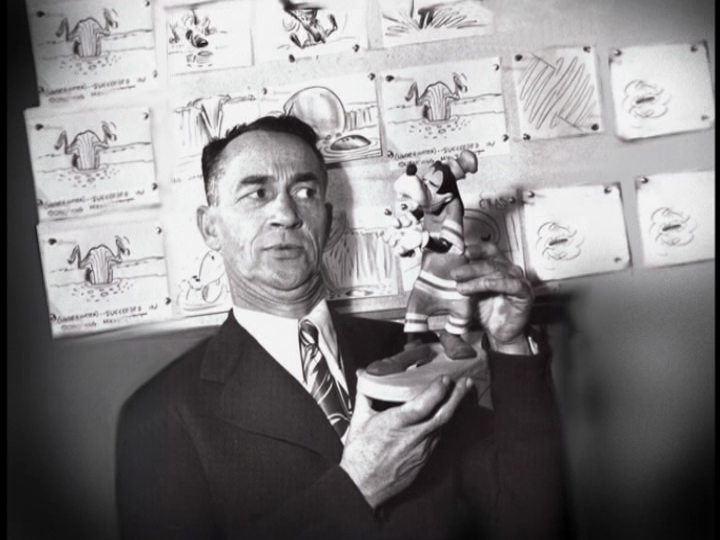
September 11, 1892 – Voice Actor, Story Man, and Disney Legend Pinto Colvig is Born

“[Goofy is] the epitome of all the hicks in the world and the easiest to portray. I guess that’s because I’m a corn-fed hick myself.”

On September 11, 1892, Vance DeBar “Pinto” Colvig was born in Jacksonville, Oregon. The youngest of seven children and a self-professed class clown, Colvig spent his youth performing with carnivals and vaudeville acts. He enrolled in Oregon State College in 1911, taking every spring off to perform with the circus. He quit school in 1913 to join the circus full-time. In 1921, he headed to Hollywood, scoring a job with Mack Sennett, Hollywood’s king of comedy at the time.

In 1930, he came to work at the Walt Disney Studios as a story man, but is well-known and regarded for his vocal range, which was used for several characters, including the Practical Pig in The Three Little Pigs, the grasshopper in The Grasshopper and the Ants (he also wrote the song “The World Owes Me a Living,” with the song now closely tied to Goofy), and his most well-known role, Goofy. Colvig also had two roles in the feature film Snow White and the Seven Dwarfs: Grumpy and Sleepy. After the release of Snow White, Colvig and Disney had a falling out, which led to Colvig heading to work at Max Fleischer’s studio in Miami. In 1941, he came back to Disney, voicing Goofy for the rest of his time there. Colvig died in 1967, and was honored as a Disney Legend in 1993.

May 10

Posted on

May 10, 1956 – Disney Legend Paige O’Hara is Born

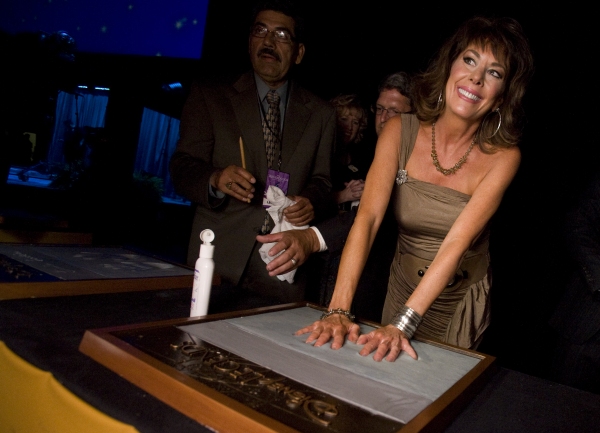
Paige O’Hara at the Disney Legends Awards. Photo credit: broadwayworld.com

“I had been a Disney fanatic from the time I was little. As soon as I heard about [Beauty and the Beast], I called my agent and said, ‘I have to be seen for this…I knew [Belle] was my part. It was just one of those things you know.” – Paige O’Hara

Paige O’Hara, best known as the voice of Belle in the 1991 classic animated film Beauty and the Beast, was born on May 10, 1956, in Ft. Lauderdale, Florida. She made her first professional appearance in the Broadway revival of Showboat as the character Ellie May Chipley. Since then, O’Hara has gone on to star in the title role in The Mystery of Edwin Drood, and Ado Annie in the national tour of Oklahoma.

O’Hara auditioned five times for the part of Belle, and as the film became wildly successful, it thrust O’Hara into the spotlight. She continued to voice the character in two sequels: Beauty and the Beast: The Enchanted Christmas and Belle’s Magical World, as well as voicing the character in the Kingdom Hearts video games. O’Hara was also given a cameo in the 2007 film Enchanted as a character in a soap opera. O’Hara was awarded as a Disney Legend on August 19, 2011. “She was a first, in a lot of ways, for a Disney Princess,” O’Hara has remarked on her character, “and was ahead of her time in the film and for Disney. I think that’s why, almost 20 years later, people still love her.”

May 4

Posted on

May 4, 1944 – Disney Legend and Current Voice of Minnie Mouse, Russi Taylor, is Born.

“When I was a little girl, I was with my mom and my brother and it was late at night at Disneyland. We had just come off the Mark Twain Riverboat and were getting some popcorn. I looked over and saw Walt sitting on a bench, so we introduced ourselves and shared our popcorn with him. At one point during our chat, he asked me what I wanted to do when I grew up, and I said, ‘I want to work for you!’ So he said, ‘Okay!’ – and now I do!” – Russi Taylor

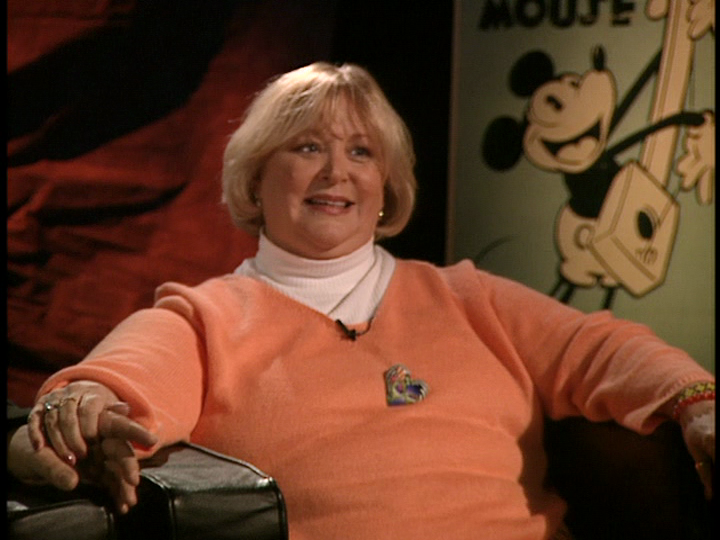
Russi Taylor was born on May 4, 1944, in Cambridge, Massachusetts, and grew up wanting to work as a movie actress. However, she found the work tedious, and decided to try voice acting, as she had had a good ear for languages and accents ever since she was a child. She auditioned for the role of Minnie Mouse in 1986, and has held the role ever since – longer than any voice actress in the role.

When Taylor was asked in an interview by Leonard Maltin how she got the role of Minnie, Taylor explained that Minnie hadn’t spoken in a long time, and when she was in Mickey’s Christmas Carol, the writers didn’t know that Minnie could speak, which was why she didn’t say anything. In 1986, they decided to give Minnie a comeback, and Taylor auditioned against almost 160 others for the role. She had prepared for the role by listening to Minnie from the cartoons in the ’30s and ’40s, and when asked to improvise as Minnie, Taylor performed the balcony scene from Shakespeare’s Romeo and Juliet.

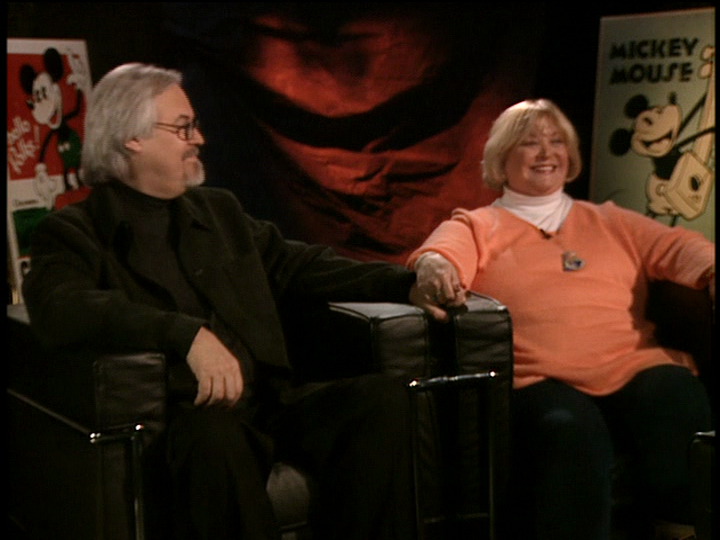
Taylor (L) with husband, Wayne Allwine, the voice of Mickey Mouse

A prime example of life imitating art, Taylor married Wayne Allwine, the voice for Mickey Mouse, in 1991. They were working on a project for Radio Disney, and one night had dinner together, and soon became inseparable. “It was just a total friendship,” Taylor explained. “The next thing you knew, we were just sort of always together.” She remained married to Allwine until his death in 2009.

Taylor has a broad resume as a voice actress; for Disney, she voiced Huey, Dewey, Louie, and Webby in Ducktales, as well as Drizella and the Fairy Godmother in the Cinderella sequels. Taylor is also the voice of Martin Prince, twins Sherri and Terri, and Üter in The Simpsons, and was the voice of Baby Gonzo in the Muppet Babies series. Taylor was named as a Disney Legend, along with Allwine, in 2008, and continues to voice Minnie in many Disney projects.


April 15

April 15, 1917 – Birth of Actor Hans Conried

Hans Conried as Captain Hook

“Hans Conried was inspired casting, you have to say, as Captain Hook. He was a consummate actor and had been one of the busiest and best radio actors throughout the ’30s and ’40s, so he was well schooled in how to act a part vocally.” – Leonard Maltin

Born on April 15, 1917, in Baltimore, Maryland, Hans Conried would go on to be one of the most recognizable vocal actors in Hollywood, with his most famous role, outside of the Disney Studio work, as the voice of Snidely Whiplash in the Rocky and Bullwinkle cartoon series. He studied acting at Columbia University, and after working in radio, he moved into films in 1939. Conried’s first role for the Disney Studios was in 1951, for The Walt Disney Christmas Show, in which he played the Slave in the Magic Mirror.

His recognizable and distinctive radio voice landed him one of his most well-known roles: the dual role of Captain Hook and Mr. Darling in the 1953 film adaptation of Peter Pan. Not only did he bring the vocal chops to the role, but he also acted out the role in a live-action version of the film meant for the animators to observe. After this role, Conried would go on to provide the voice of Thomas Jefferson in the 1953 short Ben and Me. Conried was also hired by the studio to appear on screen in the third installment of the Davy Crockett series, Davy Crockett at the Alamo, as the gambler Thimblerig who takes Davy and George Russel to Texas. Conried would also appear in The Cat from Outer Space as Dr. Heffel and as Professor Whatley in The Shaggy D.A. Conried passed away on January 5, 1982, and left behind a diverse collection of work. Although he has not been named as a Disney Legend, Conried’s recognizable talent through his role as Captain Hook makes him an important part of Disney History.

February 18

February 18, 1967 – Birth of Disney Legend, Animator, and Current Voice of Donald Duck, Tony Anselmo
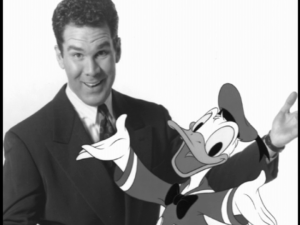
“The legacy is in my heart and soul that, I feel that it’s an honor to be the guy who gets to be the keeper of the keys or the carrier, or what have you, of this legacy. I love that so much, that’s so important to me. That’s the best part [about being Donald] for me. It’s fun. It can actually be a lot of work, you know, and you have to do long sessions, especially if there’s a lot of tantrums.”

Born February 18, 1967, in Salt Lake City, Utah, Tony Anselmo loved animation from an early age. “I would write the animators, you know, Frank Thomas, and Ollie Johnston, and Jack [Hannah] about what it took to be a Disney animator,” Anselmo explained, “and they would write back, very generously with advice.” While in high school, he took night classes in figure drawing and acting, and submitted his portfolio to the studio. After Ollie Johnston and Jack Hannah saw it, they sent him to the California Institute of the Arts, where he spent three years studying animation under Hannah’s direction. “At that time, I remember telling people I wanted to be an animator, and they didn’t know what that was,” Anselmo recalled. “Since The Little Mermaid, I think there’s been a popularity of what animation is, and everybody wants to be a part of it, but before that it was a very, sort of a cultish thing, where there were very few of us who knew what Disney animation was, and who those people were, the Nine Old Men and California Institute of the Arts.”

After graduating from CalArts, Anselmo was placed into a training program with famed animator Eric Larson for eight months, studying Disney style animation and being given animation tests. After that, Anselmo became and inbetweener at the studio. Anselmo credits Jack Hannah for his entering the studio; coincidentally, Hannah became the director of the Donald Duck unit under Walt Disney, so the old director of Donald hired the new voice of the duck.
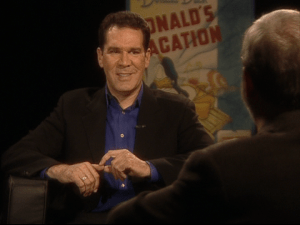
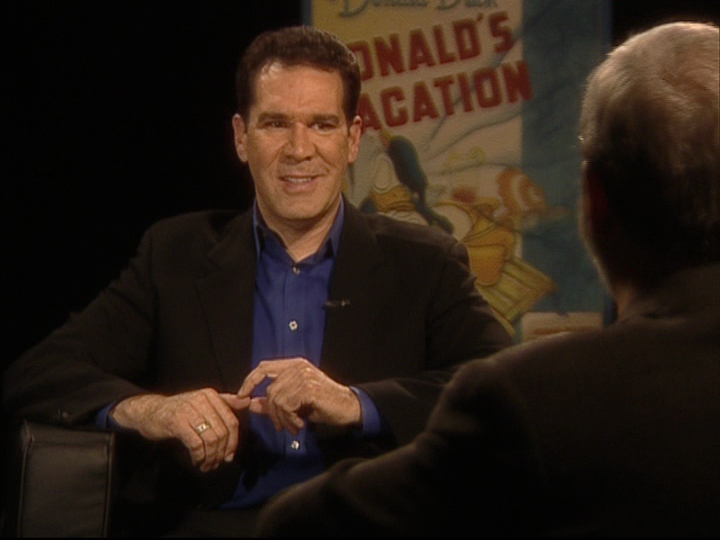
Anselmo being interviewed by Leonard Maltin in 2005

When asked how he became the voice of Donald, Anselmo responded that “It wasn’t anything I actually intended to do, but…it really was a small family, everybody knew everybody. And the first day I was on the lot, I was walking up Dopey Drive, and a man came down the steps of the animation building, five-foot-two and white hair [Clarence Nash, longtime voice of Donald Duck], and he passed me and he goes, ‘Good morning’ [in Donald’s voice], and I, in a split second, I had never met him before, and I had never seen who did Donald’s voice, so to hear that distinctive voice coming out of a man who I hadn’t met before was shocking, but at the same moment it was like, that’s Donald Duck! It would have been like being at MGM and seeing Clark Gable.

“Clarence was a good friend. And, doing voices and being the class clown, Donald was a voice that I couldn’t do. And I asked [Nash], for fun, ‘How do you do that?’ And he showed me, and I couldn’t do it. But I would practice from time to time – any voice person will tell you that the best place to practice is in the car, or in the shower – and one day it kind of clicked in, and I thought, ‘Okay, I think that I did it.’ The next time I saw Clarence I said, ‘Is this it?’ and goes, ‘That’s it!’ But it was just the sound, and there’s much more to it. You know, how to enunciate as much as possible. There’s certain words you use, certain words you try not to use, or you use something that means the same thing.

“It wasn’t until…he was supposed to the Rose Parade. In his fiftieth year, I think Ducky got the attention and the acclaim that he had, I think, always deserved. To celebrate Donald’s fiftieth birthday, he put his hand and footprints at the Chinese Theater, he was on the Tonight Show, the Academy Awards, and he was supposed to do the Rose Parade, and I didn’t know that he was sick; he had gotten leukemia. And I went to the Rose Parade and he wasn’t in the car, and Margie Nash called and said he was in the hospital. So I went to the hospital to visit…and he said, ‘You’re gonna do this.’ It all came at the same time and I thought, ‘You’re dying, and you want me to do that? No, I don’t want you to die, and no, I want you to do this.’

“The odd thing about it was, for a period of about six months before that, I thought it was just because we were friends and he thought it was fun, he would come in my room in the animation building when I was drawing, and he would say, ‘Try this,’ or ‘What would you do if Donald had to be in this situation, what would you say?’ or ‘Say this,’ and I would go, ‘Okay,’ and I thought it was fun. I really didn’t think he was spending the time, you know…I felt like he had taken me under his wing, to use a corny phrase, but I didn’t know why he was spending so much time with me. And it wasn’t until he was ill in the hospital and he told me, that it was like, ‘Oh.’ So, I’m very protective of it. It’s a legacy of not only Clarence and Jack, who were dear friends of mine, who I respected, and miss, but Walt Disney, and a legacy that I wanted to be a part of. It’s something that I watch over and I’m very protective of it, because I want to keep the integrity of not only the sound of it, but the integrity of the personality of Donald, what he does, what he doesn’t do. It’s not just the way Donald sounds, it’s how he reacts to any given situation. He would react differently to the same situation as Mickey or Goofy would act differently.”

In 1990, Anselmo put both of his skills to good use by animating and voicing Donald in Disney’s version of Mark Twain’s The Prince and the Pauper. He continues voicing Donald in various Disney projects, most recently the Kinect Disneyland Adventures game, and has said, “Pending natural disaster, I expect to be doing Donald the rest of my life.” He was named a Disney Legend in 2009 at the D23 Expo in Anaheim.
February 16

February 16, 1904 – Birth of Song of the South Actor, James Baskett

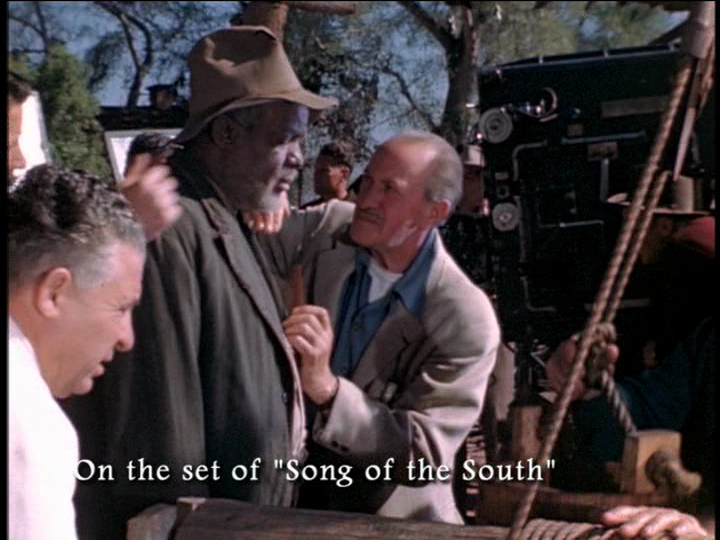
James Baskett (C), preparing for a scene in Song of the South

“[Baskett was] the best actor, I believe, to be discovered in years.” – Walt Disney

On February 16, 1904, James Baskett was born in Indianapolis, Indiana. In 1939, he moved to Los Angeles and had a supporting role in the film Straight to Heaven, followed by more supporting roles in Revenge of the Zombies in 1943 and The Heavenly Body in 1944. In 1944, he was asked to join the Amos ‘n’ Andy radio show, playing the lawyer Gaby Gibson.

In 1945, after spying an advertisement for open auditions, Baskett auditioned for a bit part in Disney’s upcoming film Song of the South, originally called Uncle Remus and based on the Joel Chandler Harris Uncle Remus stories, originally published in 1881. Baskett had little experience in film, but impressed Walt so much that he was offered the lead role of Uncle Remus. Baskett was also the voice of Brer Fox in the animated sequences, and the voice of Brer Rabbit when Johnny Lee was unable to do the voice for a sequence due to another commitment. Film critic Leonard Maltin remarked that Baskett was “ideal as Uncle Remus, eliciting just the right kind of warmth and humor, and later poignancy, from the character.”

After the film’s release, Walt continued to stay in contact with Baskett. This friendship led to Walt lobbying the Academy to give Baskett an Oscar for his portrayal, for Walt said Baskett worked “almost wholly without direction” and had devised the characterization of Remus himself. On March 20, 1948, Baskett was awarded an honorary Academy Award “for his able and heartwarming characterization of Uncle Remus, friend and storyteller to the children of the world, in Walt Disney’s Song of the South.” This made Baskett the first actor in a Disney film to win an Academy Award, as well as the first African-American man to win an Oscar. On July 9, 1948, only a few short months after this victory, Baskett died of heart disease at the age of 44. His wife, Margaret, wrote Walt Disney a thankful letter, telling Walt that he had been a “friend in deed and [we] certainly have been in need.”

Although Song of the South was the only film Baskett appeared in, due to his untimely death in 1948, the role, and film, are an important part of Disney history that should not be forgotten or brushed aside. Baskett, in my opinion, should be honored by Disney as a Disney Legend – without the warmth Baskett presented as Uncle Remus, Zip-a-Dee-Doo-Dah would not have been as memorable as it is now. The film is a victim of selective judgment by the critics: Gone With the Wind is lauded, although it truly does deal with slavery, whereas this film is set in the period of Reconstruction. Baskett’s portrayal of Uncle Remus shows a man who continues to keep a cheerful disposition, no matter what hand life has dealt him, and is truly respected by every other person in the film, from Bobby Driscoll’s Johnny, to Lucile Watson’s Grandmother. The range of emotion Baskett shows, including the dramatic scene after Jonny is attacked by a bull, only adds proof to what Walt told his sister Ruth, that Baskett was one of the greatest actors to be discovered in a long time. Baskett certainly could have achieved a lot had he lived longer, and it is a crime to let his legacy die, along with the technical and artistic merit of Song of the South by hiding this film away from the public. Baskett should be honored as a Disney Legend for his portrayal, plain and simple. He played Uncle Remus the way he should have been played: with warmth, wisdom, and a wonderful human being.


January 14

January 14, 1905 – Birth of Disney Legend Sterling Holloway.

“To be in the same recording studio with Sterling Hollowway was a great treat. I mean, the man was a consummate artist.” – Paul Winchell, the original voice of Tigger.

In Disney’s animated film history, there is no voice more recognizable than that of Sterling Holloway, whose charming tenor brought to life some of film’s most beloved characters, including his most famous role of the silly old bear, Winnie the Pooh.

Holloway was born on January 14, 1905, in Cedartown, Georgia. At age 15, he left Georgia to attend the American Academy of Dramatic Arts in New York, where he also found work in vaudeville and on the radio. He moved to Hollywood in 1926, working in silent films. With the advent of talking films, many actors found themselves out of a job, but Holloway was saved by his voice, which gained him many roles in comedies. Among the actors Holloway worked with were Fred MacMurray, Clark Gable, Marlene Dietrich, and Dick Powell.

In 1941, Holloway had his first role with the Disney Studios, playing the messenger stork in Dumbo. This led to several other voice roles in the feature films, including adult Flower in Bambi, the Cheshire Cat in Alice in Wonderland, and the narrator of the Peter and the Wolf segment in the package film Peter and the Wolf. He also voiced the character Kaa in The Jungle Book, where he sang the song “Trust in Me.” Holloway also narrated various short films, such as the World War II propaganda short The Pelican and the Snipe, The Little House, and Lambert, The Sheepish Lion. One of his showcase shorts, however, is the 1953 classic, Ben and Me, which received an Academy Award nomination. Holloway played the character Amos, who contributed greatly to Benjamin Franklin’s career.

Holloway with Walt Disney

Holloway’s most beloved role, however, is that of Winnie the Pooh. In 1966, Holloway first voiced the role in the featurette Winnie the Pooh and the Honey Tree, which was later added as a segment in the 1977 film The Many Adventures of Winnie the Pooh. Around the same time, Holloway also made his way onto TV screens, starring in episodes of The Twilight Zone and The Baileys of Balboa. For Disney, he narrated a special called “Christmas at Walt Disney World,” as well as a combination animation and live-action special called “The Restless Sea.”

Holloway was inducted into the Disney Legends on October 22, 1991. On November 22, 1992, Holloway passed away at the age of 87, leaving behind a legacy of beloved Disney film characters.